
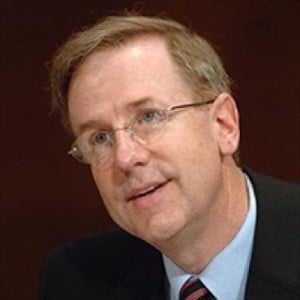
Board Member, Center for Equal Opportunity
Roger Clegg is a Board Member at and former President and General Counsel of the Center for Equal Opportunity. He focuses on legal issues arising from civil rights laws--including the regulatory impact on business and the problems in higher education created by affirmative action. A former Deputy Assistant Attorney General in the Reagan and Bush administrations, Clegg held the second highest positions in both the Civil Rights Division (1987-91) and in the Environment and Natural Resources Division (1991-93). He has held several other positions at the U.S. Justice Department, including Assistant to the Solicitor General (1985-87), Associate Deputy Attorney General (1984-85), and Acting Assistant Attorney General in the Office of Legal Policy (1984). Clegg is a graduate of Yale University Law School (1981).
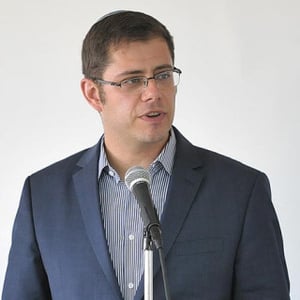
Professor of Law and Director, Center for the Middle East and International Law, George Mason University Antonin Scalia Law School
Professor of Law Eugene Kontorovich is one of the world’s preeminent experts on universal jurisdiction and maritime piracy, as well as international law and the Israel-Arab conflict. He is also the Director of Scalia Law School's Center for the Middle East and International Law. Professor Kontorovich joined the Scalia Law School from Northwestern University Pritzker School of Law where he was a Professor of Law from 2011 to 2018 and an Associate Professor from 2007 to 2011. Previously, he was a Visiting Professor at the University of Chicago from 2005 to 2007 and an Assistant Professor at George Mason School of Law from 2003 to 2007.
Professor Kontorovich has published over thirty major scholarly articles and book chapters in leading law reviews and peer-reviewed journals in the United States and Europe, including the American Journal of International Law, International Review of Law & Economics, Stanford Law Review, California Law Review, University of Pennsylvania Law Review, and Virginia Law Review. His scholarship has been cited in leading foreign relations and international law
His expertise is often sought out and quoted by major news organizations such the New York Times, Wall Street Journal, NPR News, The New Yorker, Los Angeles Times, and numerous television and radio programs. Prof. Kontorovich’s popular writings have appeared in the New York Times, Wall Street Journal, Los Angeles Times, POLITICO, Commentary, Haaretz, and numerous other leading publications. He is also a regular contributor to the Washington Post’s Volokh Conspiracy legal blog.
He attended the University of Chicago for college and law school. After law school, he clerked for Judge Richard Posner on the United States Court of Appeals for the Seventh Circuit. He has been honored with a fellowship at the Institute for Advanced Study in Princeton, in 2011-12, and with the Federalist Society’s prestigious Bator Award, given annually to a young scholar (under 40), for outstanding scholarship and teaching.

Thomas M. Siebel Senior Fellow, The Hoover Institution, Stanford University; Gary T. Schwartz Distinguished Professor of Law Emeritus, UCLA School of Law
Eugene Volokh is the Thomas M. Siebel Senior Fellow at the Hoover Institution (Stanford), as well as the Gary T. Schwartz Distinguished Professor of Law Emeritus and Distinguished Research Professor at UCLA School of Law. He recently retired from teaching at UCLA, after 30 years there, and is now focusing on research.
Volokh is the author of the textbooks The First Amendment and Related Statutes (8th ed. 2023), and Academic Legal Writing (5th ed. 2016), as well as over 100 academic law journal articles, mostly on First Amendment law. He is a member of The American Law Institute; the editor-in-chief of the Journal of Free Speech Law; and the creator and coauthor of The Volokh Conspiracy, a leading legal blog founded in 2002 (hosted at the Washington Post from 2014 to 2017 and now at Reason Magazine).
Thomas M. Siebel Senior Fellow, The Hoover Institution, Stanford University; Gary T. Schwartz Distinguished Professor of Law Emeritus, UCLA School of Law
Eugene Volokh is the Thomas M. Siebel Senior Fellow at the Hoover Institution (Stanford), as well as the Gary T. Schwartz Distinguished Professor of Law Emeritus and Distinguished Research Professor at UCLA School of Law. He recently retired from teaching at UCLA, after 30 years there, and is now focusing on research.
Volokh is the author of the textbooks The First Amendment and Related Statutes (8th ed. 2023), and Academic Legal Writing (5th ed. 2016), as well as over 100 academic law journal articles, mostly on First Amendment law. He is a member of The American Law Institute; the editor-in-chief of the Journal of Free Speech Law; and the creator and coauthor of The Volokh Conspiracy, a leading legal blog founded in 2002 (hosted at the Washington Post from 2014 to 2017 and now at Reason Magazine).

U.S. Court of Appeals, First Circuit
David Barron was appointed to the United States Court of Appeals for the First Circuit in May 2014. He graduated from Harvard College in 1989 and Harvard Law School in 1994. From 1989 to 1991, he worked as a newspaper reporter. After graduating from law school, he clerked for Judge Stephen R. Reinhardt of the United States Court of Appeals for the Ninth Circuit, from 1994 to 1995, and for Justice John Paul Stevens of the United States Supreme Court, from 1995 to 1996. He then worked as an attorney advisor for the Office of Legal Counsel of the United States Department of Justice, from 1996 to 1999. In 1999, Barron became an Assistant Professor at Harvard Law School. He became a full Professor at Harvard Law School in 2004, where he worked until he rejoined the Justice Department as Acting Assistant Attorney General for the Office of Legal Counsel, from 2009 to 2010. He then returned to the Harvard Law School faculty in 2010, where he was named the S. William Green Professor of Public Law in 2011, and worked until his appointment to the federal bench in 2014. Currently, Barron is the Honorable S. William Green Visiting Professor of Public Law at Harvard Law School. Barron has published articles in the Harvard Law Review, the Stanford Law Review, and the Yale Law Journal. His book, Waging War, won the 2017 William E. Colby Award.
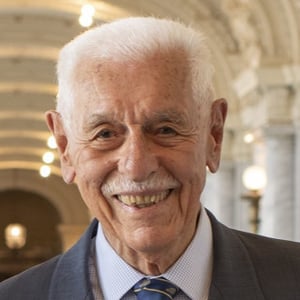
Judge, United States Court of Appeals, Ninth Circuit
Judge Carlos Bea serves as a judge on the United States Court of Appeals for the Ninth Circuit. He received his Bachelor's Degree from Stanford University in 1956 and his J.D. from Stanford Law School in 1958. Judge Bea was born in San Sebastian, Spain, and immigrated with his family to Cuba in 1939. In 1952, he represented Cuba on the Cuban National basketball team in the Helsinki Olympics. Judge Bea became a naturalized citizen of the United States in 1958. He engaged in private practice in San Francisco, principally in the area of civil trials (jury and non-jury), from 1959-75 at Dunne, Phelps & Mills and from 1975-90 at Carlos Bea, A Law Corporation. He taught courses in civil litigation advocacy at Hastings College of Law and Stanford Law School. From 1990 to 2003, Judge Bea served as a judge of the San Francisco Superior Court. He was nominated by President George W. Bush to the United States Court of Appeals for the Ninth Circuit and was confirmed in 2003.
Judge Bea and his wife Louise reside in San Francisco, where they raised their four sons, Sebastian, Alexander, Nicholas, and Dominic.

Laurence A. Tisch Professor of Law and Director, Classical Liberal Institute, New York University School of Law; Director, Classical Liberal Institute, Civitas Institute University of Texas at Austin
Richard A. Epstein is the Laurence A. Tisch Professor of Law, at New York University, a senior research fellow at the Civitas Institute at the University of Texas Austin, and a senior Lecturer, the University of Chicago. He received an LL.D., h.c . from the University of Ghent, 2003 , and an LLD h.c . from the University of Siegen in 2018 and the Bradley Prize in 2011. He has been a member of the American Academy of Arts and Sciences since 1985. He has edited both the Journal of Legal Studies (1981-1991) and the Journal of Law and Economics (1991-2001). He is also a founder and director of the Classical Liberal Institute at NYU Law School. His most recent book is The Classical Liberal Constitution: The Uncertain Quest for Limited Government (2014). His other books include Takings: Private Property and the Power of Eminent Domain ( 1985); Bargaining with the State (1993); Simple Rules for a Complex World (1995); Principles for a Free Society: Reconciling Individual Liberty and the Common Good (1998); Skepticism and Freedom: A Modern Theory of Classical Liberalism (2003); Design for Liberty: Private Property, Public Administration and the Rule of Law (2011), and most recently, The Myth of Birthright citizenship—and Beyond (2026). He has taught courses in , administrative law, antitrust, constitutional, contracts, environmental law, land use planning; real property, torts and water law. He has written and spoken extensively on a wide range of topics, and is writes a regular column for Defining Ideas.

Associate Justice, Supreme Court of the United States
Associate Justice Brett Kavanaugh was born in Washington, D.C., on February 12, 1965. He married Ashley Estes in 2004, and they have two daughters - Margaret and Liza. He received a B.A. from Yale College in 1987 and a J.D. from Yale Law School in 1990. He served as a law clerk for Judge Walter Stapleton of the U.S. Court of Appeals for the Third Circuit from 1990-1991, for Judge Alex Kozinski of the U.S. Court of Appeals for the Ninth Circuit from 1991-1992, and for Justice Anthony M. Kennedy of the U.S. Supreme Court during the 1993 Term. In 1992-1993, he was an attorney in the Office of the Solicitor General of the United States. From 1994 to 1997 and for a period in 1998, he was Associate Counsel in the Office of Independent Counsel. He was a partner at a Washington, D.C., law firm from 1997 to 1998 and again from 1999 to 2001. From 2001 to 2003, he was Associate Counsel and then Senior Associate Counsel to President George W. Bush. From 2003 to 2006, he was Assistant to the President and Staff Secretary for President Bush. He was appointed a Judge of the United States Court of Appeals for the District of Columbia Circuit in 2006. President Donald J. Trump nominated him as an Associate Justice of the Supreme Court, and he took his seat on October 6, 2018.
President, The William and Flora Hewlett Foundation; Lecturer in, Stanford Law School
Larry Kramer joined Stanford Law School in 2004 as Richard E. Lang Professor of Law and Dean. As the school’s 12th dean, he has spearheaded significant educational reforms, including dramatically expanding joint degree programs as part of a multidisciplinary approach to legal studies, enlarging the clinical education program to promote reflective lawyering, revamping programs to foster a public service ethos, and building the international law program to support a growing emphasis on globalization in legal practice.
Dean Kramer has written and taught in such varied fields as constitutional law, conflict of laws, civil procedure, federalism and its history, and the role of courts in society. He is a fellow of the American Academy of Arts and Sciences and a member of the American Philosophical Society and the American Law Institute. In December 2008, Equal Justice Works named Dean Kramer to its Board of Directors. He has appointments (by courtesy) with the Stanford University Department of History and with the Graduate School of Business. Before joining the Stanford faculty, Dean Kramer served as Associate Dean for Research and Academics and Russell D. Niles Professor of Law at New York University School of Law; professor of law at the University of Chicago and University of Michigan law schools; and consultant for Mayer, Brown, Rowe & Maw LLP. Early in his career, Dean Kramer clerked for Justice William J. Brennan Jr. of the U.S. Supreme Court and Judge Henry J. Friendly of the U.S. Court of Appeals for the Second Circuit.
Jacob E. Davis and Jacob E. Davis II Chair in Law, Moritz Colleg, The Ohio State University
Professor Shane came to Ohio State in 2003 from Carnegie Mellon University's H. John Heinz III School of Public Policy and Management. He is an internationally recognized scholar in administrative law, with a specialty in separation of powers law, and has co-authored leading casebooks on each subject. He has served on the faculty at the University of Iowa College of Law and was dean at the University of Pittsburgh School of Law.
In addition to his outstanding law teaching and scholarship, Professor Shane has received a National Science Foundation grant for interdisciplinary study related to cyberspace and democracy. At Ohio State, he provides strong leadership in interdisciplinary scholarship and teaching.

Professor, University of Minnesota Law School
Ilan Wurman is the Julius E. Davis Professor of Law at the University of Minnesota, where he teaches administrative law and constitutional law. He previously taught at Arizona State University. He writes primarily on the Fourteenth Amendment, administrative law, separation of powers, and constitutionalism. His academic writing has appeared in the Yale Law Journal, the Stanford Law Review, the University of Chicago Law Review, the University of Pennsylvania Law Review, the Virginia Law Review, the Duke Law Journal, the Minnesota Law Review, the Notre Dame Law Review, and the Texas Law Review among other journals.
Professor Wurman is the author of a casebook, Administrative Law Theory and Fundamentals: An Integrated Approach (Foundation Press 2d ed. 2024). He is also the author of A Debt Against the Living: An Introduction to Originalism (Cambridge 2017), and The Second Founding: An Introduction to the Fourteenth Amendment (Cambridge 2020). His next book, The Constitution of 1789: A New Introduction, is also forthcoming with Cambridge University Press.
Professor Wurman practices law with the firm Tully Bailey. He has litigated a variety of administrative law and constitutional law cases, including cases involving COVID-19 restrictions, transmission lines, and Appointments Clause challenges. He also devised winning public nuisance theories to force city governments to address the increasingly challenging public camping crises throughout the country.
U.S. Court of Appeals, First Circuit
David Barron was appointed to the United States Court of Appeals for the First Circuit in May 2014. He graduated from Harvard College in 1989 and Harvard Law School in 1994. From 1989 to 1991, he worked as a newspaper reporter. After graduating from law school, he clerked for Judge Stephen R. Reinhardt of the United States Court of Appeals for the Ninth Circuit, from 1994 to 1995, and for Justice John Paul Stevens of the United States Supreme Court, from 1995 to 1996. He then worked as an attorney advisor for the Office of Legal Counsel of the United States Department of Justice, from 1996 to 1999. In 1999, Barron became an Assistant Professor at Harvard Law School. He became a full Professor at Harvard Law School in 2004, where he worked until he rejoined the Justice Department as Acting Assistant Attorney General for the Office of Legal Counsel, from 2009 to 2010. He then returned to the Harvard Law School faculty in 2010, where he was named the S. William Green Professor of Public Law in 2011, and worked until his appointment to the federal bench in 2014. Currently, Barron is the Honorable S. William Green Visiting Professor of Public Law at Harvard Law School. Barron has published articles in the Harvard Law Review, the Stanford Law Review, and the Yale Law Journal. His book, Waging War, won the 2017 William E. Colby Award.
Judge, United States Court of Appeals, Ninth Circuit
Judge Carlos Bea serves as a judge on the United States Court of Appeals for the Ninth Circuit. He received his Bachelor's Degree from Stanford University in 1956 and his J.D. from Stanford Law School in 1958. Judge Bea was born in San Sebastian, Spain, and immigrated with his family to Cuba in 1939. In 1952, he represented Cuba on the Cuban National basketball team in the Helsinki Olympics. Judge Bea became a naturalized citizen of the United States in 1958. He engaged in private practice in San Francisco, principally in the area of civil trials (jury and non-jury), from 1959-75 at Dunne, Phelps & Mills and from 1975-90 at Carlos Bea, A Law Corporation. He taught courses in civil litigation advocacy at Hastings College of Law and Stanford Law School. From 1990 to 2003, Judge Bea served as a judge of the San Francisco Superior Court. He was nominated by President George W. Bush to the United States Court of Appeals for the Ninth Circuit and was confirmed in 2003.
Judge Bea and his wife Louise reside in San Francisco, where they raised their four sons, Sebastian, Alexander, Nicholas, and Dominic.
Laurence A. Tisch Professor of Law and Director, Classical Liberal Institute, New York University School of Law; Director, Classical Liberal Institute, Civitas Institute University of Texas at Austin
Richard A. Epstein is the Laurence A. Tisch Professor of Law, at New York University, a senior research fellow at the Civitas Institute at the University of Texas Austin, and a senior Lecturer, the University of Chicago. He received an LL.D., h.c . from the University of Ghent, 2003 , and an LLD h.c . from the University of Siegen in 2018 and the Bradley Prize in 2011. He has been a member of the American Academy of Arts and Sciences since 1985. He has edited both the Journal of Legal Studies (1981-1991) and the Journal of Law and Economics (1991-2001). He is also a founder and director of the Classical Liberal Institute at NYU Law School. His most recent book is The Classical Liberal Constitution: The Uncertain Quest for Limited Government (2014). His other books include Takings: Private Property and the Power of Eminent Domain ( 1985); Bargaining with the State (1993); Simple Rules for a Complex World (1995); Principles for a Free Society: Reconciling Individual Liberty and the Common Good (1998); Skepticism and Freedom: A Modern Theory of Classical Liberalism (2003); Design for Liberty: Private Property, Public Administration and the Rule of Law (2011), and most recently, The Myth of Birthright citizenship—and Beyond (2026). He has taught courses in , administrative law, antitrust, constitutional, contracts, environmental law, land use planning; real property, torts and water law. He has written and spoken extensively on a wide range of topics, and is writes a regular column for Defining Ideas.
Associate Justice, Supreme Court of the United States
Associate Justice Brett Kavanaugh was born in Washington, D.C., on February 12, 1965. He married Ashley Estes in 2004, and they have two daughters - Margaret and Liza. He received a B.A. from Yale College in 1987 and a J.D. from Yale Law School in 1990. He served as a law clerk for Judge Walter Stapleton of the U.S. Court of Appeals for the Third Circuit from 1990-1991, for Judge Alex Kozinski of the U.S. Court of Appeals for the Ninth Circuit from 1991-1992, and for Justice Anthony M. Kennedy of the U.S. Supreme Court during the 1993 Term. In 1992-1993, he was an attorney in the Office of the Solicitor General of the United States. From 1994 to 1997 and for a period in 1998, he was Associate Counsel in the Office of Independent Counsel. He was a partner at a Washington, D.C., law firm from 1997 to 1998 and again from 1999 to 2001. From 2001 to 2003, he was Associate Counsel and then Senior Associate Counsel to President George W. Bush. From 2003 to 2006, he was Assistant to the President and Staff Secretary for President Bush. He was appointed a Judge of the United States Court of Appeals for the District of Columbia Circuit in 2006. President Donald J. Trump nominated him as an Associate Justice of the Supreme Court, and he took his seat on October 6, 2018.
President, The William and Flora Hewlett Foundation; Lecturer in, Stanford Law School
Larry Kramer joined Stanford Law School in 2004 as Richard E. Lang Professor of Law and Dean. As the school’s 12th dean, he has spearheaded significant educational reforms, including dramatically expanding joint degree programs as part of a multidisciplinary approach to legal studies, enlarging the clinical education program to promote reflective lawyering, revamping programs to foster a public service ethos, and building the international law program to support a growing emphasis on globalization in legal practice.
Dean Kramer has written and taught in such varied fields as constitutional law, conflict of laws, civil procedure, federalism and its history, and the role of courts in society. He is a fellow of the American Academy of Arts and Sciences and a member of the American Philosophical Society and the American Law Institute. In December 2008, Equal Justice Works named Dean Kramer to its Board of Directors. He has appointments (by courtesy) with the Stanford University Department of History and with the Graduate School of Business. Before joining the Stanford faculty, Dean Kramer served as Associate Dean for Research and Academics and Russell D. Niles Professor of Law at New York University School of Law; professor of law at the University of Chicago and University of Michigan law schools; and consultant for Mayer, Brown, Rowe & Maw LLP. Early in his career, Dean Kramer clerked for Justice William J. Brennan Jr. of the U.S. Supreme Court and Judge Henry J. Friendly of the U.S. Court of Appeals for the Second Circuit.
Jacob E. Davis and Jacob E. Davis II Chair in Law, Moritz Colleg, The Ohio State University
Professor Shane came to Ohio State in 2003 from Carnegie Mellon University's H. John Heinz III School of Public Policy and Management. He is an internationally recognized scholar in administrative law, with a specialty in separation of powers law, and has co-authored leading casebooks on each subject. He has served on the faculty at the University of Iowa College of Law and was dean at the University of Pittsburgh School of Law.
In addition to his outstanding law teaching and scholarship, Professor Shane has received a National Science Foundation grant for interdisciplinary study related to cyberspace and democracy. At Ohio State, he provides strong leadership in interdisciplinary scholarship and teaching.
Professor, University of Minnesota Law School
Ilan Wurman is the Julius E. Davis Professor of Law at the University of Minnesota, where he teaches administrative law and constitutional law. He previously taught at Arizona State University. He writes primarily on the Fourteenth Amendment, administrative law, separation of powers, and constitutionalism. His academic writing has appeared in the Yale Law Journal, the Stanford Law Review, the University of Chicago Law Review, the University of Pennsylvania Law Review, the Virginia Law Review, the Duke Law Journal, the Minnesota Law Review, the Notre Dame Law Review, and the Texas Law Review among other journals.
Professor Wurman is the author of a casebook, Administrative Law Theory and Fundamentals: An Integrated Approach (Foundation Press 2d ed. 2024). He is also the author of A Debt Against the Living: An Introduction to Originalism (Cambridge 2017), and The Second Founding: An Introduction to the Fourteenth Amendment (Cambridge 2020). His next book, The Constitution of 1789: A New Introduction, is also forthcoming with Cambridge University Press.
Professor Wurman practices law with the firm Tully Bailey. He has litigated a variety of administrative law and constitutional law cases, including cases involving COVID-19 restrictions, transmission lines, and Appointments Clause challenges. He also devised winning public nuisance theories to force city governments to address the increasingly challenging public camping crises throughout the country.
Senior Research Associate, National Institute for Labor Relations Research
Stan Greer serves as senior research associate for the National Institute for Labor Relations Research. Mr. Greer holds a bachelor’s degree (1983) from Georgetown University in Washington, D.C., and a master’s degree (1986) from the University of Pittsburgh.
Partner, Faegre Drinker Biddle & Reath LLP
Brian J. Paul is an appellate lawyer and leads law teams in high-stakes commercial litigation. He has briefed and argued everything from weighty abstract constitutional issues to dollars-and-cents business issues and everything in-between, both on appeal and in trial courts around the country. A member of the American Law Institute, recent past-president of the Seventh Circuit Bar Association and top-tier ranked Chambers appellate lawyer, Brian had one client say about him: “Brian is one of the most respected and skilled appellate lawyers, not only in Indianapolis but across the country. He is trusted to deliver timely guidance on complex issues.” Another said: “He is excellent. I enjoyed working with him. He is able to put things into layman’s terms and explains things really well. His written and oral advocacy are short, crisp and to the point.”
Clients hire Brian to digest the complex, and make the complex simple and compelling for busy, generalist judges. In his writing, he strives to cut through jargon and legalese, and distill things down to what’s important. In his oral advocacy, by intense preparation, he strives to be the advocate whom judges trust for the right answers. In the dozens of cases he has argued, Brian has helped clients win on both sides of the “v.” His recent representations include:
Michigan State Representative, 37th House District
State Representative Vicki Barnett is serving her second term in the Michigan House. She represents the 37th House District, which includes the cities of Farmington and Farmington Hills.
Before coming to the House, Barnett served on the Farmington Hills City Council from 1995 to 2003 and as Mayor of Farmington Hills from 2003 to 2007. As mayor, Barnett worked with state and federal officials to improve police, fire and emergency communications and crafted legislation to encourage economic redevelopment in metropolitan areas.
Barnett is a graduate of the University of Michigan-Dearborn, receiving her master’s in business administration in 1991. A former investment consultant, Barnett also served as the president of the Michigan Municipal League, chair of the Data Advisory Council for the Southeast Michigan Council of Governments, and as a board member of the National League of Cities.
Barnett and her husband, Mark, live in Farmington Hills. They have two grown children, Samantha and Jordan.
Member, Devaney Jacob Wilson, PLLC
Dennis is a former Board Member of the National Labor Relations Board and Commissioner of the U.S.International Trade Commission. He served as a presidential appointee under four U.S. presidents. His labor and employment practice focuses on traditional labor law, including representation of clients with respect to matters arising under the National Labor Relations Act. He also represents employers in defense of discrimination claims and with respect to collective bargaining agreement negotiation and administration. He counsels employers on all FMLA, ADA, FLSA, ELCRA and other state and federal employment laws, assists in formulating personnel policies, and with respect to litigation before courts, administrative agencies and arbitration tribunals.
Dennis also counsels clients on international trade issues. In 2001, as a Commissioner of the U.S. International Trade Commission, Dennis participated in perhaps the most significant “Section 201” safeguards case ever brought before the Commission. He has also been involved in anti-dumping and countervailing duty proceedings, as well as with respect to U.S. unfair trade cases. Dennis was actively involved in many of the significant international trade initiatives of the last several decades, including creation of the World Trade Organization (WTO), the North American Free Trade Agreement (NAFTA), the Free Trade Area of the Americas (FTAA), bilateral free trade agreements, U.S.-Japan trade relations, and WTO Accession and economic sanctions reform. Dennis also provides advice to employers with respect to executive branch trade issues and before the U.S. Congress.
Dennis is a graduate of Georgetown University Law Center and holds undergraduate and graduate degrees from the University of Maryland. He has served as a visiting professor at several prestigious law schools. Dennis has practiced law for 33 years, 21 of which were in private practice in Washington D.C. and the Detroit area.
Senior Research Associate, National Institute for Labor Relations Research
Stan Greer serves as senior research associate for the National Institute for Labor Relations Research. Mr. Greer holds a bachelor’s degree (1983) from Georgetown University in Washington, D.C., and a master’s degree (1986) from the University of Pittsburgh.
Member, Kienbaum Opperwall Hardy & Pelton, PLC
Mr. Pelton is a founding member of the firm, and serves as its managing member. He has represented employers in litigation and concerning traditional labor matters for 25 years. He has tried, arbitrated, and mediated cases throughout the country. He has also enjoyed representing clients on election law issues and previously served on the Michigan Board of State Canvassers. Mr. Pelton is currently a member of the Michigan Board of Law Examiners having been appointed by the Governor on nomination by the Michigan Supreme Court.
Mr. Pelton has been identified by Chambers USA as a leader in the employment field in Michigan. He is also listed in The Best Lawyers in America in the employment and labor field.
At Syracuse University College of Law, Mr. Pelton served as an Executive Editor of the Law Review. He has conducted many workshops and client seminars on employment and labor law topics, has lectured on wage and hour issues for the prestigious National Employment Law Institute, and has served as an adjunct faculty member at Wayne State University Law School. He is a contributing author of Employment Law in Michigan: An Employer's Guide and State of the Law in Michigan: Employment and Labor Law, both published by the Institute of Continuing Legal Education. Mr. Pelton served as a Commissioner of the State Bar of Michigan, appointed by the Michigan Supreme Court, and serves on the Federalist Society's Labor and Employment Practice Group National Executive Committee.
Michigan State Representative, 65th House District
State Rep. Mike Shirkey was first elected to the Michigan House in November 2010. He represents the 65th District, which includes Springport, Tompkins, Rives, Blackman, Henrietta, Leoni, Waterloo, Grass Lake, Norvell, Columbia and Liberty townships in Jackson County. The district also includes Cambridge Township in Lenawee County and the City of Eaton Rapids along with Hamlin and Brookfield townships in Eaton County.
Shirkey earned a bachelor's degree from General Motors Institute (GMI) in 1978, and a master of science in mechanical engineering from the University of Wisconsin at Madison in 1979.
Mike is the founder and owner of Orbitform, a leading engineering company that manufactures forming, fastening, joining and assembly equipment for a wide range of industries and applications. The company provides world-class prototype engineering services for assembly of parts and specialized forming and fastening. Mike also worked for General Motors in various management and engineering roles for 13 years.
Mike served on the Columbia Central School Board in the 1980s and '90s. Shirkey also is the past board chair of Allegiance Health System and is a current board member.
Asstant Research Scientist, Institute for Research on Labor, Emp, and the Economy
Roland Zullo, PhD, is a labor relations professor and privatization expert at the University of Michigan.
Michigan State Representative, 37th House District
State Representative Vicki Barnett is serving her second term in the Michigan House. She represents the 37th House District, which includes the cities of Farmington and Farmington Hills.
Before coming to the House, Barnett served on the Farmington Hills City Council from 1995 to 2003 and as Mayor of Farmington Hills from 2003 to 2007. As mayor, Barnett worked with state and federal officials to improve police, fire and emergency communications and crafted legislation to encourage economic redevelopment in metropolitan areas.
Barnett is a graduate of the University of Michigan-Dearborn, receiving her master’s in business administration in 1991. A former investment consultant, Barnett also served as the president of the Michigan Municipal League, chair of the Data Advisory Council for the Southeast Michigan Council of Governments, and as a board member of the National League of Cities.
Barnett and her husband, Mark, live in Farmington Hills. They have two grown children, Samantha and Jordan.
Member, Devaney Jacob Wilson, PLLC
Dennis is a former Board Member of the National Labor Relations Board and Commissioner of the U.S.International Trade Commission. He served as a presidential appointee under four U.S. presidents. His labor and employment practice focuses on traditional labor law, including representation of clients with respect to matters arising under the National Labor Relations Act. He also represents employers in defense of discrimination claims and with respect to collective bargaining agreement negotiation and administration. He counsels employers on all FMLA, ADA, FLSA, ELCRA and other state and federal employment laws, assists in formulating personnel policies, and with respect to litigation before courts, administrative agencies and arbitration tribunals.
Dennis also counsels clients on international trade issues. In 2001, as a Commissioner of the U.S. International Trade Commission, Dennis participated in perhaps the most significant “Section 201” safeguards case ever brought before the Commission. He has also been involved in anti-dumping and countervailing duty proceedings, as well as with respect to U.S. unfair trade cases. Dennis was actively involved in many of the significant international trade initiatives of the last several decades, including creation of the World Trade Organization (WTO), the North American Free Trade Agreement (NAFTA), the Free Trade Area of the Americas (FTAA), bilateral free trade agreements, U.S.-Japan trade relations, and WTO Accession and economic sanctions reform. Dennis also provides advice to employers with respect to executive branch trade issues and before the U.S. Congress.
Dennis is a graduate of Georgetown University Law Center and holds undergraduate and graduate degrees from the University of Maryland. He has served as a visiting professor at several prestigious law schools. Dennis has practiced law for 33 years, 21 of which were in private practice in Washington D.C. and the Detroit area.
Senior Research Associate, National Institute for Labor Relations Research
Stan Greer serves as senior research associate for the National Institute for Labor Relations Research. Mr. Greer holds a bachelor’s degree (1983) from Georgetown University in Washington, D.C., and a master’s degree (1986) from the University of Pittsburgh.
Member, Kienbaum Opperwall Hardy & Pelton, PLC
Mr. Pelton is a founding member of the firm, and serves as its managing member. He has represented employers in litigation and concerning traditional labor matters for 25 years. He has tried, arbitrated, and mediated cases throughout the country. He has also enjoyed representing clients on election law issues and previously served on the Michigan Board of State Canvassers. Mr. Pelton is currently a member of the Michigan Board of Law Examiners having been appointed by the Governor on nomination by the Michigan Supreme Court.
Mr. Pelton has been identified by Chambers USA as a leader in the employment field in Michigan. He is also listed in The Best Lawyers in America in the employment and labor field.
At Syracuse University College of Law, Mr. Pelton served as an Executive Editor of the Law Review. He has conducted many workshops and client seminars on employment and labor law topics, has lectured on wage and hour issues for the prestigious National Employment Law Institute, and has served as an adjunct faculty member at Wayne State University Law School. He is a contributing author of Employment Law in Michigan: An Employer's Guide and State of the Law in Michigan: Employment and Labor Law, both published by the Institute of Continuing Legal Education. Mr. Pelton served as a Commissioner of the State Bar of Michigan, appointed by the Michigan Supreme Court, and serves on the Federalist Society's Labor and Employment Practice Group National Executive Committee.
Michigan State Representative, 65th House District
State Rep. Mike Shirkey was first elected to the Michigan House in November 2010. He represents the 65th District, which includes Springport, Tompkins, Rives, Blackman, Henrietta, Leoni, Waterloo, Grass Lake, Norvell, Columbia and Liberty townships in Jackson County. The district also includes Cambridge Township in Lenawee County and the City of Eaton Rapids along with Hamlin and Brookfield townships in Eaton County.
Shirkey earned a bachelor's degree from General Motors Institute (GMI) in 1978, and a master of science in mechanical engineering from the University of Wisconsin at Madison in 1979.
Mike is the founder and owner of Orbitform, a leading engineering company that manufactures forming, fastening, joining and assembly equipment for a wide range of industries and applications. The company provides world-class prototype engineering services for assembly of parts and specialized forming and fastening. Mike also worked for General Motors in various management and engineering roles for 13 years.
Mike served on the Columbia Central School Board in the 1980s and '90s. Shirkey also is the past board chair of Allegiance Health System and is a current board member.
Asstant Research Scientist, Institute for Research on Labor, Emp, and the Economy
Roland Zullo, PhD, is a labor relations professor and privatization expert at the University of Michigan.
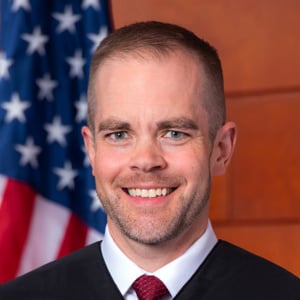
Judge, Iowa Court of Appeals
Judge Samuel P. Langholz was appointed to the Iowa Court of Appeals by Governor Kim Reynolds in 2023. Before his appointment, he practiced law in the Iowa Executive Branch for nearly thirteen years, serving as Chief Deputy Attorney General, Assistant Solicitor General, Senior Legal Counsel to the Governor, Chief Administrative Law Judge, and State Public Defender. He also previously worked in private practice at a law firm in Des Moines. He began his legal career as a judicial law clerk to Judge Steven M. Colloton on the U.S. Court of Appeals for the Eighth Circuit.
Judge Langholz earned his law degree from the University of Iowa College of Law with highest distinction and Order of the Coif in 2008 and his undergraduate degree from Washington and Lee University magna cum laude in 2002. He was raised and graduated from high school in Clear Lake. Judge Langholz is married and has two sons.
Justice, Iowa Supreme Court
Justice Mansfield, Des Moines, was appointed to the Supreme Court in 2011.
Justice Mansfield was born and raised in Massachusetts. He received his undergraduate degree from Harvard in 1978, and his law degree from Yale in 1982. After law school he clerked for the U.S. Court of Appeals, Fifth Circuit.
Justice Mansfield worked as an attorney in private practice until his appointment to the Iowa Court of Appeals in 2009. Justice Mansfield also has been an adjunct professor of law at Drake University since 1997.
Justice Mansfield is a member of the Iowa State Bar Association, having served as Chair of the Trade Regulation Section from 2004-2006. He is a member of the Polk County Bar Association and the Iowa Judges Association. Justice Mansfield also serves on the board of directors of Goodwill Industries of Central Iowa, and is a past Chairperson of this organization.
Executive Director, American Civil Liberties Union of Iowa
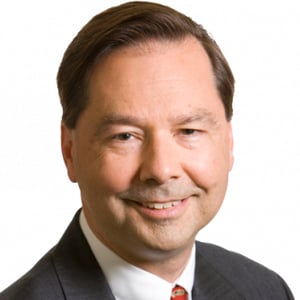
Senior Legal Fellow, Edwin Meese III Institute for the Rule of Law, Advancing American Freedom

Magner v. Gallagher - Post-Order SCOTUScast
Roger B. Clegg
SCOTUScast 03-06-12 featuring Roger Clegg
On February 10, 2012, the Supreme Court case Magner v. Gallagher was dismissed by agreement...
Kiobel v. Royal Dutch Petroleum and Mohamad v. Rajoub - Post-Argument SCOTUScast
Eugene Kontorovich
SCOTUScast 03-06-12 featuring Eugene Kontorovich
On February 28, 2012 the Supreme Court heard oral argument in Kiobel v. Royal Dutch Petroleum and Mohamad...
Writing Law Review Articles
Eugene Volokh
2012 National Student Symposium
On March 3, 2012, Prof. Eugene Volokh of UCLA School of Law delivered a lecture...
Writing Law Review Articles
Eugene Volokh
2012 National Student Symposium
On March 3, 2012, Prof. Eugene Volokh of UCLA School of Law delivered a lecture...
Panel 1: The Rule of Law and the Administrative State
David Barron, Carlos T. Bea, Richard A. Epstein, Brett M. Kavanaugh, Larry Kramer, Michael Reynolds, Peter M. Shane, Ilan Wurman
2012 National Student Symposium
The rule of law, whatever that term describes, is one of the central concepts in...
Panel 1: The Rule of Law and the Administrative State
David Barron, Carlos T. Bea, Richard A. Epstein, Brett M. Kavanaugh, Larry Kramer, Michael Reynolds, Peter M. Shane, Ilan Wurman
2012 National Student Symposium
The rule of law, whatever that term describes, is one of the central concepts in...
The Case for Right to Work Laws
Stanley Greer, Brian J. Paul
Indianapolis Lawyers Chapter
On March 2, 2012, the Indianapolis Lawyers Chapter of the Federalist Society hosted an event...
Right to Work: Right or Wrong for Michigan?
Vicki Barnett, Dennis Devaney, Stanley Greer, Eric J. Pelton, Mike Shirkey, Roland Zullo
Michigan Lawyers Chapter
The Michigan Lawyers Chapter hosted this panel on March 1, 2012, at Wayne State University Law School...
Right to Work: Right or Wrong for Michigan?
Vicki Barnett, Dennis Devaney, Stanley Greer, Eric J. Pelton, Mike Shirkey, Roland Zullo
Michigan Lawyers Chapter
The Michigan Lawyers Chapter hosted this panel on March 1, 2012, at Wayne State University Law School...
Voter Identification and the Right to Vote
Samuel Langholz, Edward Mansfield, Ben Stone, Hans A. Von Spakovsky
Iowa Lawyers Chapter
In recent years, states across the country have considered or implemented stricter voter identification requirements,...