
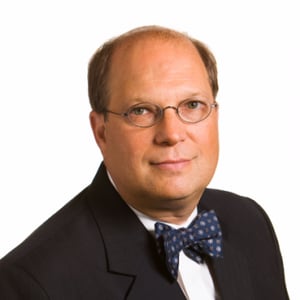
Professorial Lecturer in Law, The George Washington University
Paul Rosenzweig is an accomplished writer and speaker with a national reputation in cyber security and homeland security. He is the founder of Red Branch Consulting PLLC, a homeland security consulting company. He is also a Senior Advisor to The Chertoff Group. Mr. Rosenzweig formerly served as Deputy Assistant Secretary for Policy in the Department of Homeland Security.
He is a Professorial Lecturer in Law at George Washington University, and a Senior Fellow in the Tech, Law & Security Program at the American University, Washington College of Law. He serves as an advisor to and former member of the American Bar Association Standing Committee on Law and National Security, and a Contributing Editor of the Lawfare blog. He is a member of the ABA Cybersecurity Legal Task Force and of the United States Court of Appeals for the District of Columbia Circuit Advisory Committee on Admissions and Grievances. He serves, as well, as a Hearing Committee Member of the District of Columbia Board of Professional Responsibility. In 2011 he was a Carnegie Fellow in National Security Journalism at the Medill School of Journalism, Northwestern University.
Mr. Rosenzweig is a cum laude graduate of the University of Chicago Law School. He has an M.S. in Chemical Oceanography from the Scripps Institution of Oceanography, University of California at San Diego and a B.A from Haverford College. Following graduation from law school he served as a law clerk to the Honorable R. Lanier Anderson, III of the United States Court of Appeals for the Eleventh Circuit.
He is the author of Cyber Warfare: How Conflicts in Cyberspace are Challenging America and Changing the World and of three video lecture series from The Great Courses, Thinking About Cybersecurity: From Cyber Crime to Cyber Warfare; The Surveillance State: Big Data, Freedom, and You; and Investigating American Presidents.
He is the co-author (with James Jay Carafano) of Winning the Long War: Lessons from the Cold War for Defeating Terrorism and Preserving Freedom and co-editor (with Jill D. Rhodes and Robert S. Litt) of the Cybersecurity Handbook (3rd ed.). He is also co-editor (with Timothy McNulty and Ellen Shearer) of two books, Whistleblowers, Leaks and the Media: The First Amendment and National Security, and National Security Law in the News: A Guide for Journalists, Scholars, and Policymakers. Mr. Rosenzweig is a member of the Literary Society of Washington.

Chief Scientist, Computer Science and Telecommunications Board, The National Academy of Sciences
Dr. Herbert Lin is chief scientist at the Computer Science and Telecommunications Board, National Research Council of the National Academies, where he has been study director of major projects on public policy and information technology. These studies include a 1996 study on national cryptography policy (Cryptography's Role in Securing the Information Society), a 1991 study on the future of computer science (Computing the Future), a 1999 study of Defense Department systems for command, control, communications, computing, and intelligence (Realizing the Potential of C4I: Fundamental Challenges), a 2000 study on workforce issues in high-technology (Building a Workforce for the Information Economy), a 2002 study on protecting kids from Internet pornography and sexual exploitation (Youth, Pornography, and the Internet), a 2004 study on aspects of the FBI's information technology modernization program (A Review of the FBI's Trilogy IT Modernization Program), a 2005 study on electronic voting (Asking the Right Questions About Electronic Voting), a 2005 study on computational biology (Catalyzing Inquiry at the Interface of Computing and Biology), a 2007 study on privacy and information technology (Engaging Privacy and Information Technology in a Digital Age), a 2007 study on cybersecurity research (Toward a Safer and More Secure Cyberspace), a 2009 study on healthcare informatics (Computational Technology for Effective Health Care: Immediate Steps and Strategic Directions), a 2009 study on offensive information warfare(Technology, Policy, Law, and Ethics Regarding U.S. Acquisition and Use of Cyberattack Capabilities), and a 2010 study on cyber deterrence (Proceedings of a Workshop on Deterring Cyberattacks: Informing Strategies and Developing Options for U.S. Policy).
Prior to his NRC service, he was a professional staff member and staff scientist for the House Armed Services Committee (1986-1990), where his portfolio included defense policy and arms control issues. He received his doctorate in physics from MIT.
Avocationally, he is a longtime folk and swing dancer and a poor magician. Apart from his CSTB work, he is published in cognitive science, science education, biophysics, and arms control and defense policy. He also consults on K-12 math and science education.

Executive Vice President, The Federalist Society
Dean Reuter is Executive Vice President at the Federalist Society for Law and Public Policy Studies. He has served in two federal government agency Offices of the Inspector General, as Counsel to the Inspector General and Deputy Inspector General, responsible for policing the use of federal funds granted and contracted through those agencies. As such, he helped conduct and oversee criminal investigations across the country. He is the principal author of the non-fiction book, The Hidden Nazi: The Untold Story of America's Deal with the Devil, and editor of Liberty’s Nemesis: The Unchecked Expansion of the State and Confronting Terror: 9/11 and the Future of American National Security. He was appointed by the President and served as Vice-Chairman of the Board of Directors of the Corporation for National and Community Service, and recently served as an appointee on the U.S. Commission on Presidential Scholars. He is a graduate of Hood College (BA with Honors) and the University of Maryland School of Law.
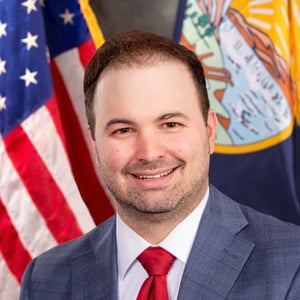
Solicitor General, Montana Attorney General's Office
Christian is currently Solicitor General of Montana, where he serves as the chief litigator and principal legal advisor to Montana Attorney General Austin Knudsen. In that capacity, he manages litigation before the federal district courts, courts of appeal, and the United States Supreme Court, as well as the Montana Supreme Court. He previously served in the Trump Administration as Senior Counsel to the Assistant Secretary for Civil Rights at the U.S. Department of Education. Prior to government service, he was a public interest constitutional litigator at Mountain States Legal Foundation and a fellow at the Institute for Justice. He clerked for Justice Caleb Stegall on the Kansas Supreme Court. He also served as Director of Publications for the Federalist Society's national headquarters.
Christian earned his B.A. in Political Science in 2009 from the University of Pennsylvania before attending the University of Kansas School of Law. Christian is admitted to practice law in Kansas and Montana. A Kansas native, he is a die-hard fan of the Kansas Jayhawks, Kansas City Chiefs, and Kansas City Royals.
Christian is a member of the Federalism & Separation of Powers Practice Group's Executive Committee.
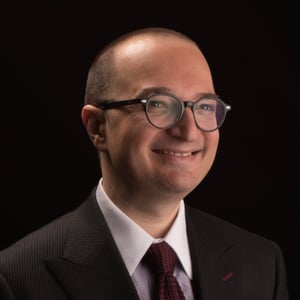
Professor of Law, University of Baltimore School of Law (on leave); Senior Counsel, U.S. Department of Justice
Professor Dolin’s scholarship centers on patent law with a specific focus on how the patent regime affects innovation, especially in bio-pharmaceutical areas. His work in these areas includes a number of scholarly articles, presentations, amicus briefs, and congressional testimony.
Dr. Dolin is currently on leave from his academic duties while he serves as Senior Counsel in the Civil Rights Division of the United States Department of Justice.
From January 2020 to January 2022, Professor Dolin served as a resident Associate Justice of the Supreme Court of the Republic of Palau. In this role, he (together with other members of the Court) heard appeals in civil, criminal, administrative, and constitutional law matters.
Prior to joining the University of Baltimore School of Law, Professor Dolin held visiting appointments in other law schools. He also served as a law clerk to the Hon. Pauline Newman, of the U.S. Court of Appeals for the Federal Circuit and the late Hon. H. Emory Widener Jr., of the U.S. Court of Appeals for the Fourth Circuit.
Rumors that he has a real Russian bear in his office are entirely true.
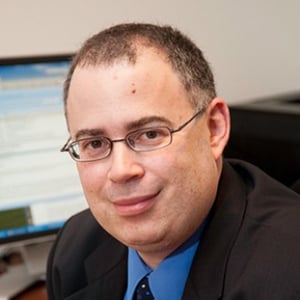
Vice Dean and Professor of Law, Villanova University School of Law
Professor Michael Risch joined the Villanova faculty in 2010 from the West Virginia University College of Law, where he directed the Entrepreneurship, Innovation and Law Program. Prior to joining the West Virginia faculty, he served as an Olin Fellow in Law at Stanford Law School. Professor Risch’s teaching and scholarship focus on intellectual property and internet law, with an emphasis on patents, trade secrets and information access. His articles have been published in the Stanford Law Review and Duke Law Journal, among others; online in the Yale Law Journal Online and PENNumbra; and less formally at the Madisonian, Prawfsblawg, and Patently-O blogs. Two of his articles have been cited by the United States Supreme Court. Professor Risch received his A.B. with honors and distinction in Public Policy and with distinction in Quantitative Economics from Stanford University, and his J.D. with high honors from the University of Chicago Law School. Prior to entering academia, he was a partner at intellectual property boutique Russo & Hale LLP in Palo Alto, California.

Fellow, Center for Law and the Biosciences, Stanford Law School
Jacob S. Sherkow is a Fellow at Stanford Law School's Center for Law and the Biosciences. Jake's current research focuses on the intersection of patent law, biotechnology, and agency regulation. His legal scholarship has appeared or is forthcoming in the Michigan Law Review, the Iowa Law Review, the BYU Law Review, the Michigan Telecommunications & Technology Law Review, and the Yale Law Journal Online, while his science scholarship has appeared in Science, Nature Biotechnology, and PLoS ONE. In addition, Jake is the author of popular pieces in the New York Times, the Los Angeles Times, the Baltimore Sun, the Houston Chronicle, and the Cleveland Plain-Dealer.
Prior to joining CLB, Jake was a patent litigation associate at Gibson, Dunn & Crutcher in New York where he, and a team of attorneys, won the Frank Wheat Memorial Award for pro bono service. Jake was also a law clerk for Judge Nicholas G. Garaufis on the U.S. District Court for the Eastern District of New York and an intern for Judge Paul L. Friedman on the U.S. District District Court for the District of Columbia.
Jake graduated cum laude from the University of Michigan Law School in 2008, where he served as an editor of the Michigan Law Review and was the recipient of the Fred L. Leckie and James N. Adler Scholarships. Jake holds a Masters in Biotechnology from Columbia University; his thesis focused on social, legal, and ethical aspects of race-specific heart medications. He also holds a Bachelor of Science from McGill University, where he majored in Molecular Biology and English Literature.
In addition to his legal training, Jake has several years of experience as a research scientist in molecular biology. He has held scientific research positions at Columbia University, the University of Edinburgh, McGill University, the Montreal General Hospital, the Montreal Neurological Institute, and Mount Sinai Medical Center.

Associate Dean for Academic Affairs, Austin E. Owen Research Scholar & Professor of Law, The University of Richmond School of Law
Dean Kristen Jakobsen Osenga teaches and writes in the areas of patent law, antitrust, and legislation and regulation. Some of her recent scholarship focuses on standard development organizations, patent eligible subject matter, patent licensing firms, litigation and remedies for patent infringement, and patent law reform. She has written numerous law review articles on these and other topics, as well as book chapters and op eds on various aspects of patent law. Additionally, she has spoken on these issues at many academic conferences and bar events. Dean Osenga is Chief Policy Counselor for the Inventors Defense Alliance, as well as an active member of the Federal Circuit Bar Association and the American Intellectual Property Law Association.
Dean Osenga received a B.S. degree in Biomedical Engineering from the University of Iowa, an M.S. degree in Electrical Engineering from Southern Illinois University – Carbondale, and a J.D. from the University of Illinois College of Law, where she graduated magna cum laude. After law school, she practiced at the law firm of Finnegan, Henderson, Farabow, Garrett, & Dunner LLP, (now Finnegan) where she did patent prosecution and litigation. She then clerked for the Judge Richard Linn of the U.S. Court of Appeals for the Federal Circuit. After clerking, she entered academia, teaching first at Chicago-Kent College of Law and then at the University of Richmond, where she has been since 2006. She has also been a Visiting Professor at Emory University School of Law and at William & Mary School of Law.

Retired
Tom Gede retired in 2023 as a principal in Morgan Lewis Consulting LLC and of counsel to the firm. He currently consults on a variety of legal and policy matters for both public and private clients. Tom has a national reputation and distinguished background in federal Indian law. Prior to retirement, he represented clients in complex governmental matters in litigation, administrative and regulatory proceedings, including high-profile matters involving state governments. A former senior deputy in the California Attorney General’s office, Tom was amicus coordinator and Supreme Court counsel, and argued cases in the US Supreme Court, the California Supreme Court, and numerous state and federal appellate courts.
Tom also served as executive director of the Conference of Western Attorneys General (CWAG), coordinating activities on key legal and policy issues, such as federal Indian law, energy, environmental, public lands, financial services, and telecommunications, for the attorneys general of 18 western states and territories. In 2016, Tom was elected as a Member of the American Law Institute (ALI), and served as an Adviser on the Restatement of the Law Third - The Law of American Indians. Tom also taught federal Indian law as an adjunct law professor at the University of the Pacific - McGeorge School of Law. He served as an assistant editor for and the author of the Indian gaming chapter in CWAG’s American Indian Law Deskbook (2d & 3d eds.). He has been engaged in Indian gaming and Indian law matters for more than three decades, having focused on the gaming compacts with Indian tribes, as well as complex civil and criminal jurisdiction, land, natural resources, water and law enforcement issues in Indian country. He has testified before Congress on American Indian and Native Alaskan issues. In 2012 he was appointed by Speaker John Boehner to serve on the United States Indian Law and Order Commission, where he examined criminal justice issues in Indian country and Alaska, resulting in the issuance of an important report to the President and Congress.
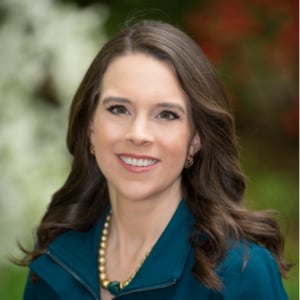
President, JCN
Carrie Campbell Severino is the president of the JCN, and co-author with Mollie Hemingway of the bestselling book Justice on Trial: The Kavanaugh Confirmation and the Future of the Court. As a go-to expert on the confirmation process, Mrs. Severino has been extensively quoted in the media. She regularly appears on television, including FOX, CNN, MSNBC, C-SPAN, and ABC’s This Week.
Severino writes and speaks on a wide range of judicial issues, including the constitutional limits on government, the federal nomination process, and state judicial selection. She has testified before Congress on constitutional questions and briefed Senators on judicial nominations, and regularly files briefs in high-profile Supreme Court cases. She was a law clerk to Supreme Court Justice Clarence Thomas and to Judge David B. Sentelle of the U.S. Court of Appeals for the D.C. Circuit, and is a graduate of Harvard Law School (J.D.), Duke University (B.A., Biology), and Michigan State University (M.A., Linguistics).

Tazewell Taylor Professor of Law and William H. Cabell Research Professor, William & Mary Law School
Jonathan H. Adler joined the William & Mary law faculty as the Tazwell Taylor Professor of Law and William H. Cabell Research Professor in 2025. Prior to joining the faculty, he was the inaugural Johan Verheij Memorial Professor of Law and the founding Director of the Coleman P. Burke Center for Environmental Law at the Case Western Reserve University School of Law.
Professor Adler is the author or editor of seven books, including Climate Liberalism: Perspectives on Liberty, Property and Pollution (Palgrave, 2023), Marijuana Federalism: Uncle Sam and Mary Jane (Brookings Institution Press, 2020), Business and the Roberts Court (Oxford University Press, 2016) and Rebuilding the Ark: New Perspectives on Endangered Species Act Reform (AEI Press, 2011).
His articles have appeared in publications ranging from the Harvard Environmental Law Review and Yale Journal on Regulation to the Wall Street Journal, New York Times, and Washington Post. He has testified before Congress a dozen times, and his work has been cited in the U.S. Supreme Court. A 2024 study identified Professor Adler as the seventh most cited legal academic in administrative and environmental law from 2019 to 2023.
Professor Adler is a contributing editor to Civitas Outlook and a regular contributor to the popular legal blog, The Volokh Conspiracy. A regular commentator on constitutional and regulatory issues, he has appeared on numerous radio and television programs, ranging from the PBS Newshour and National Public Radio to the Fox News Channel and Entertainment Tonight.
Professor Adler is a senior fellow at the Property & Environment Research Center in Bozeman, Montana. In 2018, Professor Adler was elected to membership in the American Law Institute and helped co-found the organization Checks and Balances. In 2024, Professor Adler was appointed a public member of the Administrative Conference of the United States.
Professor Adler clerked for the Honorable David B. Sentelle on the U.S. Court of Appeals for the District of Columbia Circuit.
Vice-chair, U.S. Commission on Civil Rights, and Adjunct Scholar, American Enterprise Institute
Abigail Thernstrom is the vice-chair of the U.S. Commission on Civil Rights, and an adjunct scholar at the American Enterprise Institute. She was a senior fellow at the Manhattan Institute in New York from 1993 to 2009, and a member of the Massachusetts State Board of Education for more than a decade until her third term ended in November 2006. She also serves on the board of advisors of the U.S. Election Assistance Commission. She received her Ph.D. in 1975 from the Department of Government, Harvard University.
In 2007 she and her husband, Stephan Thernstrom, along with James Q. Wilson, Martin Feldstein, and John Bolton, were the recipients of a Bradley Foundation prizes for Outstanding Intellectual Achievement.
Thernstrom and her husband, Harvard historian Stephan Thernstrom, are the co-authors of No Excuses: Closing the Racial Gap in Learning (Simon & Schuster, October 2003), which has been awarded the 2007 Fordham Foundation prize for “for distinguished scholarship,” and was named by both the Los Angeles Times and the American School Board Journal as one of the best books of 2003.
They also collaborated on America in Black and White: One Nation, Indivisible (Simon & Schuster), which the New York Times Book Review, in its annual end-of-the-year issue, named as one of the notable books of 1997.
They are the editors of a Beyond the Color Line: New Perspectives on Race and Ethnicity. Their lengthy review of William G. Bowen and Derek Bok's much-noticed work, The Shape of the River, appeared in the June 1999 issue of the UCLA Law Review.
Whose Votes Count? Affirmative Action and Minority Voting Rights (Harvard University Press) won four awards, including the American Bar Association's Certificate of Merit, and the Anisfield-Wolf prize for the best book on race and ethnicity. It was named the best policy studies book of that year by the Policy Studies Organization (an affiliate of the American Political Science Association), and won the Benchmark Book Award from the Center for Judicial Studies. Along with her husband, she also won the 2004 Peter Shaw Memorial Award given by National Association of Scholars.
She is currently completing a book entitled Voting Rights and Wrongs: The Elusive Quest for Racially Fair Elections, and is working, as well, with her husband on another book with the tentative title of Don’t Call it Segregation: The Myth of Contemporary Apartheid. She (and two co-authors) submitted an amicus brief in Parents Involved in Community Schools v. Seattle, challenging the constitutionality of Seattle's racial balancing plan.
Her frequent media appearances have included Fox News Sunday, Good Morning America, and This Week with George Stephanopoulos. For some years, she was a stringer for The Economist, and continues to write for a variety of journals and newspapers, including the Wall Street Journal, the Los Angeles Times, the New York Times and the (London) Times Literary Supplement.
She serves on several boards, and from 1992 to 1997 was a member of the Aspen Institute's Domestic Strategy Group.
Professor of Law, Emory University School of Law
Charles A. Shanor was president of the student government at Rice University and a Rhodes Scholar. After earning both his BA and MA (in jurisprudence) from Oxford University, he received his JD from the University of Virginia.
Before joining the Emory faculty in 1975, he served as a law clerk to Judge Elbert P. Tuttle of the U.S. Court of Appeals for the Fifth Circuit and practiced with the Atlanta law firm of Sutherland, Asbill & Brennan. After three years as General Counsel of the U.S. Equal Employment Opportunity Commission in Washington, D.C., he returned to Emory in 1990, where he teaches and writes about the areas of employment discrimination, constitutional law and counterterrorism law.
Professor Shanor is a Fellow of the American College of Labor and Employment Lawyers and was Secretary of the American Bar Association Labor and Employment Section in 2008.
Professor Shanor served in a part-time of counsel position in the Washington, D.C. and Atlanta offices of Paul, Hastings, Janofsky and Walker from 1990-1997. He continues to do occasional consulting, expert witness and appellate work on employment discrimination and constitutional law matters.
Associate, Williams and Connolly
James McDonald is an Associate at Williams and Connolly LLP.
Mr. McDonald also serves as a visiting professor at the University of Tulsa School of Law, where he has taught classes in constitutional law, foreign relations law, the federal court system, and the Supreme Court.
During the 2009 Supreme Court term, Mr. McDonald served as a law clerk for Chief Justice John G. Roberts, Jr., Supreme Court of the United States. Prior to that, Mr. McDonald served as Deputy Associate Counsel, Office of the White House Counsel, and in 2007-2008, he served as a law clerk for Judge Jeffrey S. Sutton, United States Court of Appeals for the Sixth Circuit.
Mr. McDonald earned his A.B., Cum Laude, in economics, from Harvard University in 2004 and his J.D. from the University of Virginia School of Law in 2007. While at the University of Virginia School of Law, he was the Articles Development Editor for the Virginia Law Review.
Member, Dykema Gossett PLLC
Christopher D. Kratovil is a member of Dykema’s Litigation practice in the firm’s Dallas office. Prior to joining Dykema, Mr. Kratovil was a partner at K&L Gates. Mr. Kratovil is a former law clerk to the Honorable Edith H. Jones, Chief Judge of the United States Court of Appeals for the Fifth Circuit.
Mr. Kratovil focuses his practice on appellate matters, representing clients in complex commercial disputes before tribunals ranging from small town Texas trial courts to the U.S. Supreme Court, with a particular concentration on matters in the U.S. Court of Appeals for the Fifth Circuit and in the Texas courts of appeals. He has considerable experience in federal and state mandamus practice, including serving as the lead draftsman of the winning briefs in the landmark Fifth Circuit case that authorized the use of mandamus to compel convenience-based venue transfers, In re Volkswagen II, 545 F.3d 304 (5th Cir. 2008)(en banc).
In addition to his extensive appellate work, Mr. Kratovil regularly handles case dispositive briefing and argument, jury charges, complex motions, research intensive legal issues and error preservation in the trial courts. He also regularly assists in the white collar defense of clients accused of financial, securities and tax crimes. Mr. Kratovil is the author of several high-profile amicus curiae briefs, including on behalf United States Senator John Cornyn and, separately, for the Texas state representative who sponsored the so-called “Pole Tax” user fee on patrons of adult entertainment.
A frequent author and lecturer, Mr. Kratovil earned a B.A. magna cum laude from University of Notre Dame and a J.D. with honors from University of Texas at Austin School of Law, where he was an editor of the Texas Law Review. He has been recognized repeatedly as a “Rising Star” by Texas Monthly and was recently named one of the “Best Lawyers in Dallas” by D Magazine.
Legal Director & General Counsel, Criminal Justice Legal Foundation
Kent S. Scheidegger has been the Legal Director of the Criminal Justice Legal Foundation since December 1986. He also served as Chairman of the Criminal Law Practice Group of the Federalist Society 2003 to 2005. His articles on criminal and constitutional law have been published in law reviews, national legal publications, and congressional reports. Legal arguments authored by Mr. Scheidegger have been cited and incorporated in several precedent-setting United States Supreme Court decisions.
After receiving a degree in physics with honors from New Mexico State University in 1976, Mr. Scheidegger served for six years in the United States Air Force as a Nuclear Research Officer. He took his law degree with distinction from the University of the Pacific, McGeorge School of Law in 1982 and practiced civil law in Northern California. He was general counsel of California Cooler, Inc. from 1984 until 1986, when he joined the Foundation.

Director, Berkeley Research Group LLC
Walter J. Mix III heads the financial services practice at Berkeley Research Group. He is also a former commissioner of the California Department of Financial Institutions (DFI). He previously served as a banking executive at Union Bank of California.
Mr. Mix works with the firm’s domestic and foreign bank clients on corporate governance, risk management, strategic planning, and financial advisory assignments. He has significant experience in strategic planning, mergers and acquisitions, enterprise risk management, regulatory compliance, and capital planning. He has also advised clients on reengineering and implementing technology to improve profitability. In addition, he performs litigation and expert services based on his extensive expertise in financial services. He speaks frequently before bankers’ groups and regulatory seminars.
In his position as commissioner of the DFI, he reorganized the organization and improved its efficiency and effectiveness. Mr. Mix worked with financial institutions on more than 60 mergers and acquisitions and the formation of 50 de novo institutions. He reengineered the examination processes for banking and other licensees. He was instrumental in the development and passage of California’s identity theft law and many other laws, including the interstate banking and branching law and cooperative supervisory agreements for domestic and foreign banks. Mr. Mix also spearheaded proposals designed to enhance financial institutions’ electronic banking and commerce capabilities.
He joined BRG from LECG, LLC and before that The Secura Group; he served as managing director in both firms. Mr. Mix is a graduate of the University of California, Riverside and earned a master’s degree with a concentration in economics and public policy from Rutgers University. Mr. Mix serves as chairman of the International Bankers Association of California.
Commissioner, United States Securities and Exchange Commission
Hester M. Peirce was appointed by President Donald J. Trump to the U.S. Securities and Exchange Commission and was sworn in on January 11, 2018.
Prior to joining the SEC, Commissioner Peirce conducted research on the regulation of financial markets at the Mercatus Center at George Mason University. She was a Senior Counsel on the U.S. Senate Committee on Banking, Housing, and Urban Affairs, where she advised Ranking Member Richard Shelby and other members of the Committee on securities issues. Commissioner Peirce served as counsel to SEC Commissioner Paul S. Atkins. She also worked as a Staff Attorney in the SEC’s Division of Investment Management. Commissioner Peirce was an associate at Wilmer, Cutler & Pickering (now WilmerHale) and clerked for Judge Roger Andewelt on the Court of Federal Claims.
Commissioner Peirce earned her bachelor’s degree in Economics from Case Western Reserve University and her JD from Yale Law School.
Executive Vice President, The Federalist Society
Dean Reuter is Executive Vice President at the Federalist Society for Law and Public Policy Studies. He has served in two federal government agency Offices of the Inspector General, as Counsel to the Inspector General and Deputy Inspector General, responsible for policing the use of federal funds granted and contracted through those agencies. As such, he helped conduct and oversee criminal investigations across the country. He is the principal author of the non-fiction book, The Hidden Nazi: The Untold Story of America's Deal with the Devil, and editor of Liberty’s Nemesis: The Unchecked Expansion of the State and Confronting Terror: 9/11 and the Future of American National Security. He was appointed by the President and served as Vice-Chairman of the Board of Directors of the Corporation for National and Community Service, and recently served as an appointee on the U.S. Commission on Presidential Scholars. He is a graduate of Hood College (BA with Honors) and the University of Maryland School of Law.

Who Runs the Internet? The Role of Nations, NGOs, and the UN in International Internet Governance, and What It Means for International and National Security - Podcast
Paul Rosenzweig, Herbert Lin, Dean Reuter
International & National Security Law Practice Group Podcast
To listen, please right click on the audio file you wish to hear and then...
The Myriad Decision and Patented Innovation in the Biotech Industry - Podcast
Christian Corrigan, Gregory Dolin, Michael Risch, Jacob S. Sherkow, Kristen Osenga
Intellectual Property Practice Group and George Mason University School of Law's Center for the Protection of Intellectual Property Podcast
On June 13, the Supreme Court decided ACLU v. Myriad Technologies, one of the more...
Adoptive Couple v. Baby Girl - Post-Decision SCOTUScast
Thomas F. Gede
SCOTUScast 7-10-13 featuring Tom Gede
On June 25, 2013, the Supreme Court announced its decision in Adoptive Couple v. Baby...
Hollingsworth v. Perry and United States v. Windsor - Post-Decision SCOTUScast
Carrie Campbell Severino, Jonathan H. Adler
SCOTUScast 7-8-13 featuring Carrie Severino and Jonathan Adler
On June 26, 2013, the Supreme Court announced its decision in Hollingsworth v. Perry and United...
Shelby County v. Holder - Post-Decision SCOTUScast
Abigail Thernstrom
SCOTUScast 7-8-13 featuring Abigail Thernstrom
On June 25, 2013, the Supreme Court announced its decision in Shelby County v. Holder....
University of Texas Southwestern Medical Center v. Nassar - Post-Decision SCOTUScast
Charles Shanor
SCOTUScast 7-5-13 featuring Charles Shanor
On June 24, 2013, the Supreme Court announced its decision in University of Texas Southwestern...
Tarrant Regional Water District v. Herrmann- Post-Decision SCOTUScast
James M. McDonald
SCOTUScast 7-5-13 featuring James McDonald
On June 13, 2013, the Supreme Court issued its opinion in Tarrant Regional Water District...
American Express Co. v. Italian Colors Restaurant - Post-Decision SCOTUScast
Chris Kratovil
SCOTUScast 7-3-13 featuring Christopher Kratovil
On June 20, 2013the Supreme Court announced its decision in American Express Co. v. Italian...
Salinas v. Texas - Post-Decision SCOTUScast
Kent Scheidegger
SCOTUScast 7-2-13 featuring Kent Scheidegger
On June 17, 2013, the Supreme Court announced its decision in Salinas v. Texas. This case...
Due Process in the Banking Industry - Podcast
Walter J. Mix, Hester M. Peirce, Dean Reuter
Financial Services & E-Commerce Practice Group Podcast
The bank regulators require larger banking organizations to prepare and file financial projections assuming various...