
Managing Director, Beacon Global Strategies LLC
From 2011-2013, Mr. Allen served as the Majority Staff Director of the House Permanent Select Committee on Intelligence (HPSCI). Under Chairman Mike Rogers’ (R-MI) direction, the HPSCI restored the process of an annual intelligence authorization bill to fund and give direction to the seventeen elements of the intelligence community, enacting measures for fiscal years 2011, 2012, and 2013. The HPSCI also led the House of Representatives’ consideration of cyber security legislation, passing the Cyber Information Sharing Protection Act (CISPA) with bipartisan majorities in 2012 and 2013.
Prior to joining the HPSCI, he was director for the Bipartisan Policy Center’s successor to the 9/11 Commission, the National Security Preparedness Group, co-chaired by former Congressman Lee Hamilton and former Governor Tom Kean.
Previously, Mr. Allen served in the White House for seven years in a variety of national security policy and legislative roles. At the National Security Council (NSC), he served as Special Assistant to the President and Senior Director for Counter-proliferation Strategy from June 2007 to January 2009 under National Security Advisor Steve Hadley. As Senior Director, he contributed to the development of the U.S. government’s policy on counter-proliferation issues, including on the Iranian, Syrian, and North Korean nuclear files; missile defense; civilian nuclear cooperation including the U.S.-India Civilian Nuclear Cooperation Agreement; U.S. exports controls; bio-defense; and WMD and terrorism.
As the Special Assistant to the President and Senior Director for Legislative Affairs from March 2005 to June 2007, Mr. Allen was the NSC’s chief liaison with the national security committees of Congress and led the confirmation teams of DNI nominees Negroponte and McConnell and CIA Director General Michael Hayden.
From December 2001 to February 2005, Mr. Allen worked in the legislative affairs office of the White House’s Homeland Security Council. As Special Assistant to the President for Legislative Affairs, Mr. Allen was part of team that managed the White House effort to enact the Intelligence Reform and Terrorism Prevention Act of 2004, which created the Office of the Director of National Intelligence.
At the beginning of the Bush Administration, Mr. Allen worked in the Bureau of Legislative Affairs at the Department of State. Mr. Allen received his L.L.M. with distinction in International Law from the Georgetown University Law Center, his J.D. from the University of Alabama (cum laude), and his B.A. from Vanderbilt University.
In addition to his work at the Bipartisan Policy Center, in 2009, Mr. Allen taught National Security Policymaking at the George Washington University Elliott School of International Affairs and served as an advisor for the congressionally-created Commission on WMD and Terrorism co-chaired by Senators Bob Graham and Jim Talent. Mr. Allen was the Intelligence Team Lead for the Romney for President Transition Team.
Mr. Allen is the author of Blinking Red: Crisis and Compromise in American Intelligence After 9/11. (Potomac Books, September 2013).
Executive Vice President, Chief Legal Officer, Gates Corporation
Matthew R. A. Heiman joined the Company in May 2026 and has served as the Company’s Chief Legal Officer and Corporate Secretary since June 2026. As Chief Legal Officer, Mr. Heiman is responsible for all legal functions for Gates, including securities and corporate governance, M&A, litigation, commercial, regulatory, compliance, patents and trademarks, real estate, employment and labor, sustainability and environmental matters. Prior to joining Gates, Mr. Heiman held senior legal leadership roles at Waystar, where he served as Chief Legal & Administrative Officer from 2023 to 2025 and as General Counsel and Corporate Secretary from 2020 to 2023. Prior to that, he was with Johnson Controls, where he served as Vice President, Corporate Secretary, and Associate General Counsel. Mr. Heiman has been a Senior Fellow for the National Security Institute at George Mason University’s Antonin Scalia School of Law since 2018.
Columnist, Bloomberg View
Eli Lake is a Bloomberg View columnist who writes about politics and foreign affairs. He was previously the senior national security correspondent for the Daily Beast. Lake also covered national security and intelligence for the Washington Times, the New York Sun and UPI, and was a contributing editor at the New Republic. In 2005 and 2006, Lake lived in Cairo as a correspondent for the New York Sun. He has traveled to war zones in Sudan, Iraq and Gaza. Lake is one of the few journalists to report from all three members of President George W. Bush’s axis of evil: Iraq, Iran and North Korea.
Partner, Wilmer Cutler Pickering Hale and Dorr LLP
Benjamin Powell is widely recognized as one of the country’s top authorities on handling cybersecurity, data breach and related investigation matters. He is a leading attorney in handling complex regulatory matters relating to international investment and mergers, including matters involving the Committee on Foreign Investment in the United States (CFIUS) and the Defense Security Service (DSS). He also is regularly asked to be lead counsel on major investigations and strategic counseling across a variety of sensitive regulatory matters for the world’s most prominent companies.
Mr. Powell handles matters relating to international investment and mergers, including matters involving the Committee on Foreign Investment in the United States (CFIUS), is widely recognized as one of the country’s top experts on handling cybersecurity, data breach, and related investigation matters, and regularly handles major investigations and strategic counseling for the world’s most prominent companies. He is also frequently retained to perform due diligence on major domestic corporate transactions requiring expertise in government regulatory issues, including government contracting, security clearance issues with the Defense Security Service (DSS), export control and related issues. He is regularly named as one of Washington’s Top Lawyers in surveys of best attorneys in DC. The Wall Street Journal calls him one of Washington’s “big legal guns” and The Legal 500 calls him an “exceptional lawyer” who “provides clear guidance on complex technological issues.” He is recognized as a CFIUS expert in the 2013 and 2014 editions of Chambers USA: America's Leading Lawyers in Business.
Mr. Powell has performed due diligence on some of the largest recent corporate transactions and successfully guided companies through some the most complex CFIUS filings for companies in a range of industries. He has counseled companies and handled investigations for many of the most sensitive cybersecurity and data breach incidents in recent years. He has represented clients in civil and criminal litigation involving privacy and surveillance issues at the state and federal level. He has also served as lead counsel on matters for companies facing difficult regulatory, congressional, and public policy issues across a range of industry sectors and subjects. Mr. Powell regularly handles matters involving the Defense Security Service, including the structuring of Special Security Agreements and Proxy Agreements, related to corporate security clearances and classified government contracting.
Mr. Powell was unanimously confirmed by the United States Senate as General Counsel to the Director of National Intelligence. His background includes serving as General Counsel to the first three Directors of National Intelligence, Special Assistant to the President and associate White House Counsel, Air Force officer, work at the Federal Bureau of Investigation, corporate counsel at a software company in Silicon Valley, and part of the trial team that obtained the largest antitrust jury verdict in US history. He joined the firm in 2009.

Executive Vice President, The Federalist Society
Dean Reuter is Executive Vice President at the Federalist Society for Law and Public Policy Studies. He has served in two federal government agency Offices of the Inspector General, as Counsel to the Inspector General and Deputy Inspector General, responsible for policing the use of federal funds granted and contracted through those agencies. As such, he helped conduct and oversee criminal investigations across the country. He is the principal author of the non-fiction book, The Hidden Nazi: The Untold Story of America's Deal with the Devil, and editor of Liberty’s Nemesis: The Unchecked Expansion of the State and Confronting Terror: 9/11 and the Future of American National Security. He was appointed by the President and served as Vice-Chairman of the Board of Directors of the Corporation for National and Community Service, and recently served as an appointee on the U.S. Commission on Presidential Scholars. He is a graduate of Hood College (BA with Honors) and the University of Maryland School of Law.
Wayne A. Abernathy, Wild Bells
Wayne A. Abernathy is a former U.S. Treasury Assistant Secretary for Financial Institutions under President George W. Bush, receiving the Alexander Hamilton Award in recognition of his service. In that office he was also a member of the Board of Directors of the Securities Investor Protection Corporation. Prior to his work at the Treasury, Mr. Abernathy served as Staff Director of the Senate Banking Committee, under Chairman Phil Gramm.
Following his service at the Treasury, Mr. Abernathy worked for 15 years on the staff of the American Bankers Association, as Executive Vice President for Financial Institutions Policy and Regulatory Affairs.
Previous experience with the Senate Banking Committee includes serving as Staff Director of the Subcommittee on Securities during 1995-1998. From 1989 until 1994, Mr. Abernathy was a Republican economist for the committee. He previously worked as a senior legislative assistant for Senator Gramm during 1987-1989 and as an economist for the Banking Committee’s Subcommittee on International Finance and Monetary Policy during 1981-1986, under Chairman Jake Garn.
Mr. Abernathy earned his bachelor’s degree in International Studies from The Johns Hopkins University in 1978. In 1980, he received a master’s degree in International Studies from the School of Advanced International Studies of The Johns Hopkins University.
Retired, Winston & Strawn LLP
Jerry Loeser is of counsel in the Chicago office of Winston & Strawn, and his practice focuses on banking regulation. He has extensive experience in counseling financial services clients on, among other things, bank acquisitions, privacy, financial modernization, the USA PATRIOT Act, Basel II and III, lending limits, capital, trust, affiliate transactions, and Federal Reserve, OCC, FDIC, and CFPB regulations.
Prior to working at large corporate law firms, Jerry was chief regulatory and compliance counsel for Comerica Bank, where he also served as senior vice president and deputy general counsel and as general counsel of its retail bank division. Before that, he served as chief regulatory in-house counsel at Wells Fargo & Co. Jerry began his legal career advising the Board of Governors of the Federal Reserve System in Washington, D.C.
Mr. Mirengoff is a retired attorney in Washington, D.C. and is a blogger at powerlineblog.com.

Thomas M. Siebel Senior Fellow, The Hoover Institution, Stanford University; Gary T. Schwartz Distinguished Professor of Law Emeritus, UCLA School of Law
Eugene Volokh is the Thomas M. Siebel Senior Fellow at the Hoover Institution (Stanford), as well as the Gary T. Schwartz Distinguished Professor of Law Emeritus and Distinguished Research Professor at UCLA School of Law. He recently retired from teaching at UCLA, after 30 years there, and is now focusing on research.
Volokh is the author of the textbooks The First Amendment and Related Statutes (8th ed. 2023), and Academic Legal Writing (5th ed. 2016), as well as over 100 academic law journal articles, mostly on First Amendment law. He is a member of The American Law Institute; the editor-in-chief of the Journal of Free Speech Law; and the creator and coauthor of The Volokh Conspiracy, a leading legal blog founded in 2002 (hosted at the Washington Post from 2014 to 2017 and now at Reason Magazine).
Associate Professor of Law, University of Georgia School of Law
Sonja R. West joined the University of Georgia School of Law in the fall of 2006. She specializes in constitutional law, media law and the U.S. Supreme Court.
Prior to joining the Georgia Law faculty, Prof. West taught as the Hugo Black Faculty Fellow at the University of Alabama School of Law. She has also served as a judicial clerk for U.S. Supreme Court Justice John Paul Stevens and Judge Dorothy W. Nelson of the U.S. Court of Appeals for the 9th Circuit. Her other professional experience includes several years as an associate attorney for the Los Angeles law firms Gibson, Dunn & Crutcher and Davis Wright Tremaine, where she represented media clients on a variety of First Amendment and intellectual property issues at the trial and appellate levels.
Prof. West's work has been published in numerous law reviews and journals including the Harvard Law Review, the UCLA Law Review, the Michigan Law Review and the Washington University Law Review.
Having earned a B.A. in journalism and communication studies with honors and distinction from the University of Iowa, Prof. West worked as a reporter in Illinois, Iowa and Washington, D.C., before entering law school. She graduated with high honors from the University of Chicago Law School, where she served as executive editor of The University of Chicago Law Review and was inducted into the Order of the Coif.
Of Counsel, Stanley Law Group
Stephen Gardner serves of counsel to the Dallas-based Stanley Law Group, a plaintiffs firm. Previously, Mr. Gardner was Director of Litigation for the Washington, DC based advocacy group Center for Science in the Public Interest 2004-2014); Of Counsel to the National Consumer Law Center (2002-2006); Assistant Dean of Clinical Education at Southern Methodist University School of Law (1994-1995); Visiting Assistant Professor of Law at Southern Methodist University School of Law (1992-1995); Assistant Attorney General in the Consumer Protection Division of the State of Texas (1984-1991); Assistant Attorney General in the Bureau of Consumer Frauds of the State of New York (1982-1984); Students Attorney at the University of Texas (1981-1982); and a staff attorney at the legal aid office in Austin, now part of Texas RioGrande Legal Services (1976-1981). He is a frequent author and speaker on consumer advocacy issues.
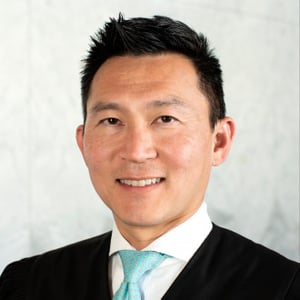
Judge, United States Court of Appeals, Ninth Circuit
Kenneth Kiyul Lee is a judge on the U.S. Court of Appeals for the Ninth Circuit. He was appointed in June 2019 and is based in San Diego, California.
Prior to his appointment, he was a partner at the law firm of Jenner & Block in Los Angeles. Judge Lee previously served as an Associate Counsel to President George W. Bush and as Special Counsel to Senator Arlen Specter, then-chair of the Senate Judiciary Committee. He started his legal career at Wachtell, Lipton, Rosen & Katz in New York.
Judge Lee received his J.D. from Harvard Law School, magna cum laude, and his A.B. from Cornell University, summa cum laude. He clerked for Judge Emilio M. Garza of the U.S. Court of Appeals for the Fifth Circuit.
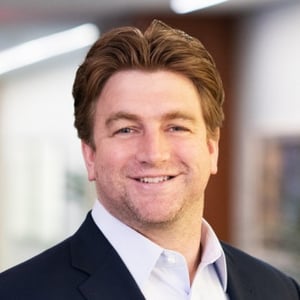
Founding Partner, Lodestar Law and Economics PLLC
Josh is the founder of Lodestar Law and Economics, PLLC. On January 1, 2013, the U.S. Senate unanimously confirmed Wright as a Commissioner of the Federal Trade Commission (FTC). He is a leading scholar in antitrust law, economics, intellectual property, regulation, and consumer protection, and has published more than 100 articles and book chapters, co-authored a leading antitrust casebook, and edited several book volumes focusing on these issues. Commentators have recognized Wright as “widely considered his generation’s greatest mind on antitrust law,” and his academic work ranks him as one of the most cited antitrust academics in the world. Wright was also awarded the Paul M. Bator Award by the Federalist Society in 2014 to “an academic who demonstrated excellence in legal scholarship, a commitment to teaching, a concern for students, and who has made a significant public impact.” Wright also served as the Executive Director of the Global Antitrust Institute, the world’s premiere academic institute focused upon antitrust education for judges and regulators and has taught hundreds of judges and thousands of regulators from dozens of countries.
Wright’s practice focuses upon helping clients solve complex competition, consumer protection, and regulatory problems by providing legal and economic analysis, strategic advice and counseling, and economic expert testimony.
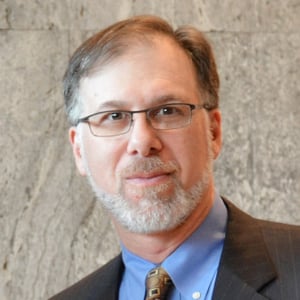
Partner, Schaerr | Jaffe LLP
Erik Jaffe has been involved in appeals on a broad range of legal issues, including First Amendment challenges to campaign finance reform, Commerce Clause challenges to Health Care Reform and other federal legislation, Equal Protection Clause challenges to affirmative action in education, First Amendment challenges to school vouchers, Fifth Amendment challenges to takings of property, Second Amendment challenges to restrictions on gun ownership, and a wide variety of cases involving patents, copyrights, ERISA, securities fraud, federal preemption, environmental regulation, and other state and federal constitutional and statutory matters. He has represented businesses and non-profit groups, Judges, Senators, former government officials, Nobel Prize winners, and a broad cross-section of private individuals. Mr. Jaffe has been involved in over 120 Supreme Court matters, including filing over 30 cert. petitions, representing half-a-dozen parties on the merits, and filing over 70 amicus briefs at both the cert. and merits stages.
A 1990 graduate of the Columbia University School of Law, Mr. Jaffe was a law clerk to Judge Douglas H. Ginsburg of the United States Court of Appeals for the District of Columbia Circuit from 1990 to 1991. Following that clerkship he spent five years in litigation practice with the Washington, D.C. law firm of Williams & Connolly. In the summer of 1996 he left Williams & Connolly to clerk for Supreme Court Justice Clarence Thomas. At the end of that clerkship he started his own practice, and he was a sole practitioner from 1997 to 2018. He joined the firm of Schaerr | Jaffe LLP in 2018.

Milton R. Underwood Chair in Free Enterprise, Vanderbilt University Law School
Brian Fitzpatrick is the Milton R. Underwood Chair in Free Enterprise and Professor of Law at Vanderbilt Law School, where his research focuses on class action litigation, federal courts, judicial selection, and constitutional law. He is best known for his empirical studies of class action settlements as well as his book The Conservative Case for Class Actions (University of Chicago Press, 2019). Professor Fitzpatrick joined Vanderbilt's law faculty in 2007 after serving as the John M. Olin Fellow at New York University School of Law. He graduated first in his class from Harvard Law School and went on to clerk for Judge Diarmuid O'Scannlain on the U.S. Court of Appeals for the Ninth Circuit and Justice Antonin Scalia on the U.S. Supreme Court. After his clerkships, Professor Fitzpatrick practiced commercial and appellate litigation for several years at Sidley Austin in Washington, D.C., and served as Special Counsel for Supreme Court Nominations to U.S. Senator John Cornyn. Before earning his law degree, Fitzpatrick graduated summa cum laude with a bachelor's of science in chemical engineering from the University of Notre Dame. He has received the Hall-Hartman Outstanding Professor Award, which recognizes excellence in classroom teaching, for his Civil Procedure and Federal Courts courses.
Assistant Professor of Law, Ave Maria School of Law
 Professor Govern began his legal career as an Army Judge Advocate, serving 20 years during peacetime and war in assignments that spanned the world. He has also served as an Assistant Professor of Law at the United States Military Academy and has taught at California University of Pennsylvania. Professor Govern has published widely and spoken frequently on international and comparative law, national security and homeland security law, military operations, and professional ethics.
H. Ross & Helen Workman Research Scholar, Director, Program in I, University of Illinois College of Law
Professor Jay P. Kesan's academic interests are in the areas of technology, law, and business. Specifically, his work focuses on patent law, intellectual property, entrepreneurship, cyberlaw, digital government (e-gov), agricultural biotechnology law, and biofuels regulation. His recent publications can be found on SSRN (Social Science Research Network).
At the University of Illinois, Professor Kesan is appointed in the College of Law, the Institute of Genomic Biology, the Department of Electrical & Computer Engineering, the Information Trust Institute, the Coordinated Science Laboratory, the College of Business, and the Department of Agricultural & Consumer Economics.
He directs the Program in Intellectual Property & Technology Law at the College of Law. At the Institute of Genomic Biology (IGB), he is group leader of the Business, Economics & Law of Genomic Biology (BioBEL) theme, and he directs research on biofuel law & regulation at the Energy Biosciences Institute (EBI).
Most recently, he served as a Thomas A. Edison Scholar at the U.S. Patent and Trademark Office (USPTO).
His recent awards include: Honorable Mention ($1,000 Award), Competition on Cyberdeterrence conducted by the National Research Council for work on “Thinking Through Active Defense in Cyberspace,” 2011; Microsoft Research Awards in 2011 and 2012 for work on technology standards and patent policy; Best Paper Award for Contributions to Foundations of Electronic Governance at the 4th International Conference on Theory and Practice of Electronic Governance (ICEGOV), Beijing, China, Oct. 25-28, 2010; Best Paper Award for "An Empirical Examination of Open Standards Development" (with R. Shah), 41st Hawaii International Conference on System Sciences (HICSS), 2008; Best Paper Award for "An Empirical Study of Open Standards" (with R. Shah) published in the Proceedings of the 8th Annual International Conference on Digital Government Research, 2007; and IBM Faculty Award in 2006.
His books include: Adopting Open Source Software, A Practical Guide (with Fitzgerald, Russo, Shaikh and Succi), MIT Press (2011); The Commercial Law of Intellectual Property (with Alces, Frisch and See), Aspen Publishing Co. (2003-2014 Cumm. Supp.) (treatise); Intellectual Property in Business Organizations (with Ghosh and Gruner), Lexis-Nexis Publishing Co. (2d ed. 2012) (unique and first-of-its-kind casebook on transactional IP); Defining Values for Research & Technology(Greenough, McConnaughay and Kesan (eds.)), Rowman & Littlefield Publishing (Fall 2006); Intellectual Property: Private Rights, the Public Interest, and the Regulation of Creative Activity (with Ghosh, Gruner & Reis), West Publishing Co. (2d ed. 2010) (casebook); Agricultural Biotechnology and Intellectual Property: Seeds of Change, Kesan (ed.), CABI Publishing Co., Oxford (2007).
He has received numerous, multi-year research grants/awards for his work in the areas of intellectual property and technology regulation from the National Science Foundation, The National Academy of Sciences—Board of Science, Technology and Economic Policy (STEP), the private sector, the U.S. Department of Agriculture, the Energy Biosciences Institute, the Federal Judicial Center, the Net Institute, the Coleman Foundation, and the University of Illinois Campus Research Board.
Professor Kesan continues to be professionally active in the areas of patent litigation and technology entrepreneurship. He was appointed by federal judges to serve as a special master in patent litigations, and has served as a technical and legal expert and/or counsel in patent matters. He also serves on the boards of directors/advisors of start-up technology companies.
He participated twice in panels at the Federal Trade Commission and the Department of Justice Hearings on the Implications of Competition and Patent Law and Policy. He testified about biofuel regulation issues before the U.S. House of Representatives Subcommittee on Energy and Environment, House Committee on Science, Space, and Technology. He has also worked with the U.S. Department of Commerce and the U.S. Civilian Research & Development Foundation on their intellectual property protection and technology commercialization activities in the former Soviet Union countries.
He is regular radio commentator for “Legal Issues in the News,” WILL-AM-FM Illinois Public Radio.
Professor Kesan was a JSPS Invited Fellow and visiting associate professor at the University of Tokyo, Japan and has also served as a Foreign Research Fellow at the Institute of Intellectual Property (IIP) in Tokyo, Japan. He has also taught as a visiting faculty at Georgetown University, DePaul University, Florida State University, and Seattle University.
He serves as faculty editor-in-chief of the University of Illinois Journal of Law, Technology & Policy, which published its inaugural issue in Spring 2001. He has also developed an online course on "Legal Issues in Technology Entrepreneurship," supported by a grant from the Coleman Foundation.
Professor Kesan received his J.D. summa cum laude from Georgetown University, where he received several awards including Order of the Coif and served as associate editor of the Georgetown Law Journal. After graduation, he clerked for Judge Patrick E. Higginbotham of the United States Court of Appeals for the Fifth Circuit.
Prior to attending law school, Jay Kesan – who also holds a Ph.D. in electrical and computer engineering – worked as a research scientist at the IBM T.J. Watson Research Center in New York. He is a registered patent attorney and practiced at the former firm of Pennie & Edmonds LLP in the areas of patent litigation and patent prosecution. In addition, he has published numerous scientific papers, and he has obtained several patents in the U.S. and abroad.
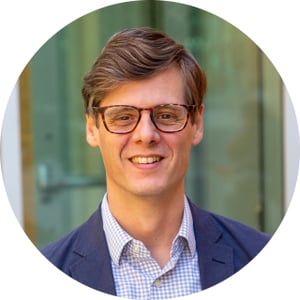
Chief Economist, Abundance Institute
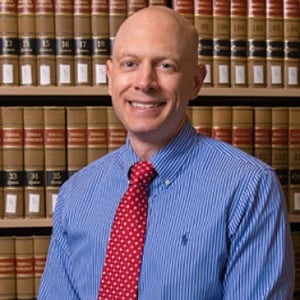
Chancellor Professor, University of Massachusetts Dartmouth School of Law
Peltz-Steele received his law degree from Duke University and a bachelor’s in journalism and Spanish from Washington & Lee University. Peltz-Steele has won awards in teaching, research, and public service. He practiced commercial law in Baltimore and Washington, D.C., and taught law for more than thirteen years before coming to UMass Law in 2011.
Peltz-Steele is author, co-author, or co-editor of qualitative and quantitative research in law and mass communication in journals and books, of treatises in law and development and access to information, and of textbooks in tort law and freedom of information. He is especially active in international media law and policy, having presented papers on five continents and having published in foreign journals and multinational collaborations. His current research focuses on comparative transparency in the context of development and in the private sector. Peltz-Steele serves in various roles in public service organizations, including the legal education committee of the American Bar Association, International Law Section.

Welcome & Panel I: How to Manage the Intelligence Community
Michael Allen, Matthew R. A. Heiman, Eli Lake, Ben Powell, Dean Reuter
2015 National Security Symposium
Since September 11, 2001, the intelligence community has been at the center of key national...
Consumer Financial Protection Bureau Update - May 2015 - Podcast
Wayne A. Abernathy, Julius L. Loeser
Financial Services & E-Commerce Practice Group Podcast
Members of the Federalist Society’s Financial Services & E-Commerce Practice Group Executive Committee provided an...
Mach Mining v. Equal Employment Opportunity Commission - Post-Decision SCOTUScast
Paul E. Mirengoff
SCOTUScast 5-21-15 featuring Paul Mirengoff
On April 29, 2015, the Supreme Court issued its decision in Mach Mining v. Equal...
Non-Media Speech: Is it Free? - Podcast
Eugene Volokh, Sonja R. West
Free Speech & Election Law Practice Group Podcast
The First Amendment reads, in part, "Congress shall make no law . . .abridging the...
Food Labeling: Genetically Modified Organisms - Podcast
Stephen Gardner, Kenneth Kiyul Lee
Litigation Practice Group Podcast
There has been a recent surge in consumer class action lawsuits challenging "all natural" labels...
The FTC and FCC: Regulatory Overlap - Podcast
Joshua D. Wright
Telecommunications & Electronic Media Practice Group Podcast
With the Federal Communications Commission's recent net neutrality regulations, the FCC has potentially entered into...
Williams-Yulee v. The Florida Bar - Post-Decision SCOTUScast
Erik S. Jaffe, Brian T. Fitzpatrick
SCOTUScast 5-14-15 featuring Brian Fitzpatrick and Erik Jaffe
On January 20, 2015, the Supreme Court heard oral argument in Williams-Yulee v. The Florida...
Department of Homeland Security v. MacLean - Post-Decision SCOTUScast
Kevin H. Govern
SCOTUScast 5-13-15 featuring Kevin Govern
On January 21, 2015, the Supreme Court issued its decision in Department of Homeland Security...
Does Patent Litigation Need a Federal Solution? - Podcast
Jay Kesan, Eli Dourado
Intellectual Property Practice Group Podcast
The America Invents Act, the first substantial legislative changes to patent law, took effect two...
United States v. Wong and United States v. June - Post-Decision SCOTUScast
Richard J. Peltz-Steele
SCOTUScast 5-12-15 featuring Richard Peltz-Steele
On April 22, 2015, the Supreme Court issued its decision in two related cases: United...