
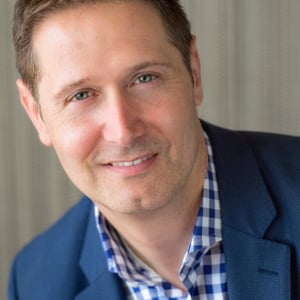
President, Recording Industry Association of America (RIAA).
Mitch Glazier is President, Recording Industry Association of America (RIAA).
Glazier guides the industry’s strategic policy initiatives and helps coordinate the activities of the association. In his more than 10-year tenure at the RIAA, Glazier has helped manage a variety of initiatives that have played a vital role in the music industry’s transition to the digital age. This includes the 2008 PRO-IP Act, which established the country’s first Intellectual Property Enforcement Coordinator in the Executive Office of the President, and the Higher Education Opportunity Act of 2008, which provided colleges and universities with meaningful tools to reduce the illegal downloading of copyrighted works on college campuses.
Glazier has also been instrumental in managing a variety of state initiatives that have helped the legal online marketplace for music to begin to prosper, including the enactment of laws in several states that ensure copyright protections extend to digital storage devices and subscription services. He has spearheaded the promotion and expansion of artist and industry programs such as RIAA’s sponsorship of a weekly “Monday Open Mic” night at Nashville’s iconic Bluebird Café to showcase emerging artists and songwriters.
Before joining RIAA, Glazier served as Chief Counsel for intellectual property to the Judiciary Committee in the U.S. House of Representatives. A native of Illinois, Glazier served as law clerk to the Honorable Judge Wayne R. Andersen, United States District Court for the Northern District of Illinois, and practiced law at the Chicago firm Neal, Gerber & Eisenberg as an associate in commercial litigation. He graduated from Northwestern University and Vanderbilt Law School. Glazier serves on the boards of Musicians on Call, the American Association of People with Disabilities, and the Internet Education Foundation.
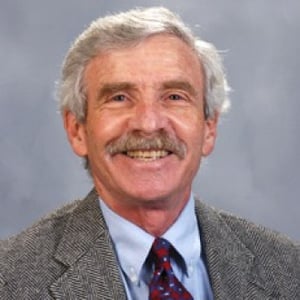
Robert Kavesh Professorship in Economics, Leonard N. Stern School of Business, New York University
Lawrence J. White has been with New York University Leonard N. Stern School of Business for more than 35 years. His primary research areas of interest include financial regulation, antitrust, network industries, international banking and applied microeconomics.
Professor White has published numerous articles in the Journal of Business, Journal of Economic Perspectives, Journal of Economic Literature, Journal of Political Economy, American Economic Review, Review of Economics and Statistics, Quarterly Journal of Economics, and other leading journals in economics, finance, and law. He is the author of The S&L Debacle: Public Policy Lessons for Bank and Thrift Regulation, among other books, and he is the co-editor (with John Kwoka) of the 6th of edition of The Antitrust Revolution. He contributed chapters to both of the NYU Stern books on the financial crisis - Restoring Financial Stability and Regulating Wall Street. He is the co-author (with Stern's Viral Acharya, Matthew Richardson, and Stijn Van Nieuwerburgh) of Guaranteed to Fail: Fannie Mae, Freddie Mac, and the Debacle of Mortgage Finance.
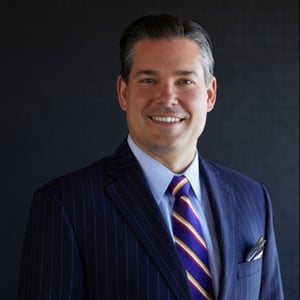
Partner, Graves Garrett Greim LLC
Edward “Eddie” Greim focuses his practice on complex commercial litigation, free speech and election law, and internal investigations and whistleblower claims. He has been recognized for his successful representation of businesses and individuals in commercial litigation while also being named a “go-to” lawyer on policy and constitutional issues.
Eddie was named a Constitutional and Election Law Trailblazer by the National Law Journal in 2020. His free speech and election law practice has included numerous constitutional challenges to election and campaign finance laws; representation of clients in state and federal ethics and campaign finance enforcement actions and investigations; initiative petition drafting and litigation; litigation and advice regarding First Amendment protections for petition circulation; representation of not-for-profit clients before state regulators; litigation of state and federal redistricting issues; and advice on campaign and election law compliance.
Eddie complements his trial work in complex, high-profile commercial and constitutional cases with oral advocacy and briefing in important appeals. Recognized as a Missouri Lawyers Media POWER 30 Appellate Attorney in 2021, he has argued before the Missouri and Kansas supreme courts multiple times, other state appellate courts across the country, and before the Sixth, Seventh, Eighth, and Tenth U.S. Courts of Appeals.
Eddie’s notable work for clients includes:
Recovering substantial compensation and injunctive relief for plaintiffs, in complex multiyear litigation, as lead counsel in the first and only nationwide class action certified against the Internal Revenue Service for violating taxpayer protection statutes when it targeted hundreds of groups based on their political viewpoints.
Successful First Amendment challenge to Missouri’s 2016 campaign finance restrictions.
Successful challenge to a vast, multiyear, secret criminal investigation into Wisconsin political groups and nonprofits, and follow-up challenge to expose role of state ethics board which secretly aided the investigation and was later dissolved by the legislature.
U.S. Supreme Court amicus brief for the National Republican Redistricting Trust in the 2019 Rucho litigation, and federal and state redistricting litigation and advice since 2011.
Challenges under the First Amendment in federal court, and in briefing to the Michigan Supreme Court on state constitutional grounds, to unprecedented emergency powers claimed by Michigan Governor in 2020.
Representation of numerous public officials and private citizens who are subject to “lawfare” attacks based on their political viewpoints or policy objectives.
Oversight of multiple internal investigations.
Eddie received his law degree from Harvard Law School in 2002, where he taught on the Board of Student Advisers, received the Dean’s Award for Leadership, and served as President of the Harvard Catholic Law Students Association. He received two bachelor’s degrees, summa cum laude, in economics and political science from the University of Missouri.
A native of Excelsior Springs, Missouri, Eddie lives in Kansas City with his family. He enjoys Missouri and military history. On many weekends, he can be found with his wife and daughters exploring sites of local interest. He enjoys reading and debating and has given presentations or organized discussions at numerous gatherings, formal and informal, of professional and personal interest.
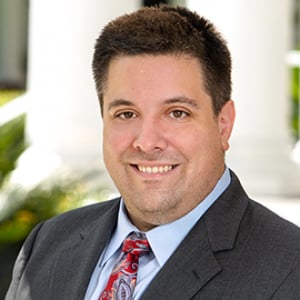
Sheila M. McDevitt Professor of Law and Faculty Director of the Election Law Center, Florida State University College of Law
Professor Morley joined FSU Law in 2018, and teaches and writes in the areas of election law, constitutional law, remedies, and the federal courts. He is best known for his work on election emergencies and post-election litigation, nationwide and other defendant-oriented injunctions, the jurisdiction of the federal courts and their equitable powers more generally. He has testified before congressional committees, made presentations to election officials for the U.S. Election Assistance Commission and participated in bipartisan blue-ribbon groups to develop election reforms. The governor of Florida also appointed Professor Morley to the Criminal Punishment Code Task Force, to propose potential revisions to the legislature.
The U.S. Supreme Court has cited several of his articles, and he was counsel of record for the successful Petitioner in a landmark campaign finance case. Professor Morley has appeared on C-SPAN, Court TV, Fox News and numerous local news programs, and has been quoted in the Washington Post, Los Angeles Times, Roll Call, Politico, U.S. News and World Report, and a wide range of other national publications. His work has been published in many of the nation’s top law reviews, including the Georgetown Law Journal, Northwestern University Law Review, Boston University Law Review and Emory Law Journal.
Before joining FSU Law, Professor Morley was a Climenko Fellow and Lecturer in Law at Harvard Law School. Prior to his experience in academia, he served in government as special assistant to the General Counsel of the Army at the Pentagon, as well as a law clerk for Judge Gerald B. Tjoflat of the U.S. Court of Appeals for the Eleventh Circuit. During his tenure with the Army General Counsel’s office, he was awarded the Meritorious Civilian Service Award and the Army Staff Lapel Pin. He also worked as an associate at Williams & Connolly LLP and the Supreme Court & Appellate group of Winston & Strawn, LLP, both in Washington, D.C.
Professor Morley earned his J.D. from Yale Law School in 2003, where he was a senior editor on the Yale Law Journal; served on the moot court board; and received the Thurman Arnold Prize for Best Oralist in the Morris Tyler Moot Court of Appeals.
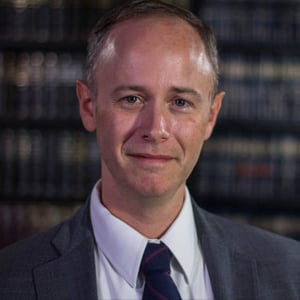
Vice President and Legal Director, National Right to Work Legal Defense and Education Foundation, Inc.
William Messenger is Foundation Vice President and Legal Director. He was a staff attorney for over twenty years and, during that time, represented individuals in numerous cases that sought to expand worker freedom of choice. This includes acting as lead counsel in three cases before the United States Supreme Court. In 2018, Messenger argued Janus v. AFSCME Council 31, where the Supreme Court held it violates the First Amendment for governments and unions to compel individuals to financially support unions and their speech. Originally from Youngstown Ohio, Messenger attended Ohio University as an undergraduate and then the George Washington University School of Law.

Senior Fellow and Director of Constitutional Studies, Manhattan Institute
Ilya Shapiro is a senior fellow and director of constitutional studies at the Manhattan Institute and a contributing editor of City Journal. Previously he was executive director and senior lecturer at the Georgetown Center for the Constitution, and before that a vice president of the Cato Institute.
Shapiro is the author of Lawless: The Miseducation of America’s Elites (2025) and Supreme Disorder: Judicial Nominations and the Politics of America’s Highest Court (2020), coauthor of Religious Liberties for Corporations? (2014), and editor of 11 volumes of the Cato Supreme Court Review (2008-18). He has contributed to a variety of academic, popular, and professional publications, including the Wall Street Journal, Harvard Journal of Law & Public Policy, Washington Post, Los Angeles Times, USA Today, National Review, and Newsweek. He also regularly provides commentary for various media outlets, writes the Shapiro’s Gavel newsletter on Substack, and once appeared on the Colbert Report.
Shapiro has testified many times before Congress and state legislatures and has filed more than 500 amicus curiae “friend of the court” briefs in the Supreme Court. He lectures regularly on behalf of the Federalist Society, is a member of the board of fellows of the Jewish Policy Center, was an inaugural Washington Fellow at the National Review Institute, and has been an adjunct law professor at the George Washington University and University of Mississippi. He is also the chairman of the board of advisers of the Mississippi Justice Institute, a barrister in the Edward Coke Appellate Inn of Court, and a former member of the Virginia Advisory Committee to the U.S. Commission on Civil Rights.
Earlier in his career, Shapiro was a special assistant/adviser to the Multi-National Force in Iraq on rule-of-law issues and practiced at Patton Boggs and Cleary Gottlieb. Before entering private practice, he clerked for Judge E. Grady Jolly of the U.S. Court of Appeals for the Fifth Circuit. He holds an AB from Princeton University, an MSc from the London School of Economics, and a JD from the University of Chicago Law School.

Tammy McCutchen is a leading authority on federal and state wage-hour laws and prevailing wage laws. She counsels businesses on wage-hour compliance, including conducting internal audits on independent contractor status, overtime exemptions, and other pay practices. She also represents employers during investigations by the U.S. Department of Labor and serves as an expert witness in wage-hour class actions. She was a founding officer of ComplianceHR, a law and technology company, where she created AI-based applications to evaluate independent contractor and overtime exempt status.
Ms. McCutchen served as Administrator of the U.S. Department of Labor’s Wage and Hour Division, appointed by President Bush and confirmed by the Senate in 2001. She was the primary architect of the 2004 revisions to the overtime exemption regulations, the first major changes to the regulations in 55 years.
Before joining DOL, she was senior counsel for the Hershey Company in Hershey, Pennsylvania.
Ms. McCutchen has been a volunteer leader of the Federalist Society since 1989. She served in leadership roles for the Northwestern Student Chapter and Chicago Lawyers Chapter. She currently serves in leadership for the Labor & Employment Practice Group, the Regulatory Transparency Project, and the Knoxville, TN Lawyers Chapter. She served on the Editorial Advisory Board of Law360, the Labor Committee of the U.S. Chamber of Commerce, the Small Business Legal Advisory Board of the National Federation of Independent Business, and a Policy Fellow at the ACU Foundation.
Ms. McCutchen is a graduate of Western Illinois University and Northwestern University School of Law. She clerked for the Hon. Daniel Manion on the U.S. Court of Appeals for the Seventh Circuit.
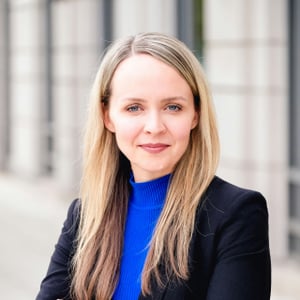
Professor of Law and Faculty Director for the Georgetown Center for the Constitution, Georgetown University Law Center
Stephanie Barclay is a Professor of Law at Georgetown Law School, and the Faculty Director of the Georgetown Center for the Constitution. Her research focuses on the role our different democratic institutions play in protecting minority rights, particularly at the intersection of free speech and religious exercise. Barclay‘s work is published or is forthcoming in leading journals such as the Harvard Law Review, the Chicago Law Review, the University of Pennsylvania Law Review, and the Yale Law Journal Forum. One of her articles was also selected for the 2020 Stanford/Harvard/Yale Junior Faculty Forum. Her work has been featured in many media outlets, including The New York Times, The Wall Street Journal, The Washington Post, USA Today, Bloomberg BNA, The Hill, and Law 360. And her work has also been cited by the U.S. Supreme Court.
Prior to joining Georgetown, Barclay was twice voted Professor of the Year. Barclay has also litigated constitutional cases at both the trial and appellate level, including before the U.S. Supreme Court. Barclay served as a law clerk to Judge N. Randy Smith on the U.S. Court of Appeals for the Ninth Circuit, and to Justice Neil M. Gorsuch of the U.S. Supreme Court.
Barclay is a Faculty Affiliate at the Constitutional Law Center at Stanford Law School; and she is a Nootbaar Fellow at the Nootbaar Institute on Law, Religion, and Ethics at Pepperdine University. She currently serves as the Chair for the AALS Law and Religion Section and as a Member of the Executive Committee for the AALS Constitutional Law Section. She graduated summa cum laude from BYU Law School, where she was elected to the Order of the Coif. She is completing a Ph.D. in Law at Oxford University as a Clarendon Scholar and a Tang Scholar.
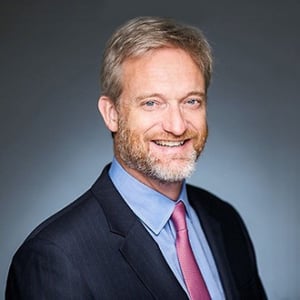
Principal, BGR Government Affairs
Lester Munson joined BGR’s International practice after a 26-year career on Capitol Hill and in the Executive Branch. He most recently served as the Staff Director for Chairman Bob Corker of the Senate Foreign Relations Committee, where he led policy, oversight, legislative and communications efforts for a staff of 25 and negotiated committee priorities with the White House, the State Department and Congressional leadership.
In the past two and a half years, the committee has passed into law several bills regarding U.S. policy toward Ukraine and Russia, including major sanctions legislation, has engaged in efforts to fundamentally reform, reauthorize, or modify key foreign assistance programs, including food aid, PEPFAR, arms transfers, and has taken up legislation on the most important foreign policy and national security issues of the day, including the negotiations over the Iranian nuclear program, authorizations for the use of military force, and various international treaties and agreements.
Previously, Mr. Munson was Chief of Staff in Senator Mark Kirk’s (R-Ill.), Washington, DC office. During Lester’s tenure, Senator Kirk became the leading Republican voice in the Senate on Iran and other national security issues.
During the Bush Administration, Mr. Munson was a Deputy Assistant Administrator at the U.S. Agency for International Development, where he focused on legislative affairs as well as global health issues. He led legislative efforts to develop and implement the President’s Emergency Plan for AIDS Relief (PEPFAR) and won an award for his contribution to the creation of the President’s Malaria Initiative.
Prior to serving in the Bush Administration, at the Senate Foreign Relations Committee, Mr. Munson was the Republican Communications Director and oversaw foreign assistance oversight and legislation. At the House International Relations Committee, he was the Communications Director and Professional Staff Member for Asia-Pacific issues as well as African affairs.
Mr. Munson is a 1989 graduate of the University of Chicago and holds a Master’s degree from St. John’s College in Annapolis. He is married with two children.
Henry A. Kissinger Distinguished Professor, Henry A. Kissinger Center for Global Affairs, John Hopkins School of Advanced International Studies
Founder and Principal, Johnson-IP Strategy & Consulting
Philip S. Johnson is Founder and Principal of Johnson-IP Strategy & Consulting. He previously served as Senior Vice President - Law Department and Chief Intellectual Property Counsel of Johnson & Johnson, having joined the corporation in January 2000 after 27 years in private practice. In this position, he managed about 110 patent and trademark attorneys worldwide. Phil is Chair of the Board of Directors of the American Intellectual Property Law Education Foundation, Vice President and President Elect of the Intellectual Property Owners Association, and a member of the Board of the Intellectual Property Owners Association Education Foundation (Past President). He is also a member of the Steering Committee of the Coalition for 21st Century Patent Reform, of the Association of Corporate Patent Counsel (Past President) and of PhRMA’s IP Focus Group (Chair Emeritus). Previously, Phil served as President of INTERPAT.
Before joining Johnson & Johnson, Phil was a senior partner and co-chair of IP litigation at Woodcock Washburn in Philadelphia, where he specialized in intellectual property issues affecting major pharmaceutical, medical device and consumer product companies. Phil has served as trial counsel in over 100 patent cases, including over 50 resulting in reported decisions of the federal district courts and/or of the Federal Circuit Court of Appeals. Phil regularly testifies before both the House and Senate Judiciary Committees on the subject of patent law reform and, more recently, abusive patent litigation. Phil served as a member of Chief Judge Michel’s Advisory Council on Patent Reform, and was recognized in the Congressional Record as a member of the Minority Whip’s “Kitchen Cabinet” for the America Invents Act. Thereafter, Phil served as IPO’s representative on the ABA-AIPLA-IPO committee of six experts (“COSE”) formed at Director Kappos’ request to propose to the USPTO implementing regulations for the PGR-IPR post-grant proceedings created by the AIA.
Phil co-authored “Compensatory Damages Issues In Patent Infringement Cases, A Pocket Guide for Federal District Court Judges,” published by the Federal Judicial Center, and has served that Center as a faculty member on its IP-related judicial education programming. Phil was also featured in the Landslide Publication March/April 2013 issue. The New Jersey Intellectual Property Law Association awarded Phil with its 2013 Jefferson Medal, presented on June 7, 2013.
Phil received his Bachelor of Science degree, cum laude with distinction in biology from Bucknell University, and his J.D. degree from Harvard Law School, where his third year advisor was now-Supreme Court Justice Stephen Breyer.
Professor of Law, Antonin Scalia Law School, George Mason University
Adam Mossoff is Professor of Law at Antonin Scalia Law School, George Mason University. He has published extensively on why patents, copyrights, and other intellectual property rights have been—and should be—legally secured to innovators and creators as property rights. His scholarship has been relied on by the United States Supreme Court, by lower federal courts, and by U.S. federal agencies. He has been invited to testify numerous times before the U.S. Senate and the House of Representatives on intellectual property legislation. His writings on intellectual property policy have also appeared in the Wall Street Journal, New York Times, Forbes, Investors Business Daily, and in other media outlets. His journal articles can be downloaded here.
Professor Mossoff is a longstanding member of the Executive Committee of the Intellectual Property Practice Group of the Federalist Society, on which he served as Chairperson from 2016-2018, and he is Chair of the Intellectual Property Working Group of the Regulatory Transparency Project of the Federalist Society. He is a Senior Fellow and Chair of the Forum for Intellectual Property at the Hudson Institute, a Visiting Intellectual Property Fellow at the Heritage Foundation, and a member of the Board of Directors of the Center for Intellectual Property Understanding. He is a member of the Intellectual Property Rights Policy Committee of ANSI and he has served as Chair and Vice-Chair of the Intellectual Property Committee of the IEEE-USA, on which he remains a member in good standing.
Dana Rao is the Vice President of Intellectual Property and Litigation at Adobe Systems. He oversees all aspects of Adobe’s intellectual property and litigation matters, including procuring, licensing, and defending Adobe’s patents, trademarks, and copyrights, and managing all aspects of Adobe’s litigation practice.
Before Adobe, Dana was an Associate General Counsel of Patents at Microsoft Corporation, focusing on their Windows Phone and Xbox patent issues. Dana began his legal career at Fenwick & West, focusing on patent prosecution, licensing, and litigation. Dana received his undergraduate degree from Villanova University in Electrical Engineering, and received his law degree from The George Washington University School of Law, where he graduated Order of the Coif.
Partner, Fenwick & West LLP
Robert Sachs is President at Robert R. Sachs PC and concentrates his practice on strategic patent counseling and prosecution for software technologies. Bob has extensive experience in developing patent portfolios for companies of all sizes, from startups to multi-nationals.
He is the primary evaluator for standards essential patents on today's most important audio, video, and communications technologies, including 3GPP-LTE, IEEE 802.11, MPEG-4 AAC, DVB-MHP, OCAP, Digital Radio Mondiale, AMR-NB, AMR-WB, AMR-WB+, G.711, G.729, AGORA-C, and NFC-IP. He conducts and supervises patent evaluations in US, as well as Europe, Japan, China, South Korea, Mexico and Canada.
One of Bob’s areas of expertise is patentable subject matter: the question of what kinds of inventions are eligible for patent protection, and particularly whether software and life sciences related inventions are patentable. This issue has become the new battleground in the development of the patent law, with several important cases having been recently decided by the Supreme Court and the Court of Appeals for the Federal Circuit. While most authors and scholars take a results-oriented approach to this question, Bob instead starts with the first principles of creativity and innovation that drive humans to solve functional problems. From that understanding, software and life sciences inventions are squarely in the domain of what the patent law is designed to protect.
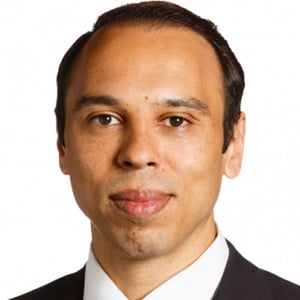
Vice President of Domestic and Economic Policy, The Heritage Foundation
Roger Severino is Vice President of Economic and Domestic Policy, and the Joseph C. and Elizabeth A. Anderlik Fellow at The Heritage Foundation.
Severino is a national authority on civil rights, conscience and religious freedom, the administrative state, and information privacy, particularly as applied to health care law and policy. Find his tweets at @RogerSeverino_.
Severino spearheaded the HHS Accountability Project while a Senior Fellow at EPPC from 2021 to 2023. Previously, Severino was Director of HHS’ Office for Civil Rights, where he led a team of over 250 staff enforcing our nation’s civil rights, conscience and religious freedom, and health information privacy laws. He served from 2017 to 2021 and was the longest-serving OCR director of the past three decades.
Prior to joining HHS, Severino served for two years as Director of the DeVos Center for Religion and Civil Society at Heritage, advocating for life, family, and religious-freedom policies. Before that, he was a trial attorney for seven years at the U.S. Department of Justice’s Civil Rights Division where he enforced the Fair Housing Act and the Civil Rights Act of 1964. Severino started his legal career at the Becket Fund for Religious Liberty, where he was Legal Counsel and Chief Operations Officer and defended the rights of people of all faiths under federal and international law.
Severino has been profiled in The New York Times, The Atlantic, The Wall Street Journal, and The Hill and has appeared on Fox News, CNN, MSNBC, NPR, and PBS, among others. In 2020, The New York Times dubbed him and his wife Carrie, “a conservative power couple” to be reckoned with.
Severino holds a JD from Harvard Law School, a master’s degree in public policy, with highest distinction, from Carnegie Mellon University, and a bachelor’s degree in business from the University of Southern California. He was appointed by President Trump to the Administrative Conference of the United States and is a member of the District of Columbia and the Commonwealth of Virginia bars.
As OCR director, Severino founded the federal government’s first division dedicated exclusively to conscience and religious freedom compliance and enforcement. He enforced the Weldon Amendment for the first time against a state (California) after it coerced families and religious organizations into paying for abortion insurance coverage, leading to a $200 million federal funding disallowance. He also enforced laws protecting pro-life pregnancy resource centers from discrimination by states hostile to their message and enforced laws prohibiting forced participation in abortions by medical professionals.
With respect to civil rights, Severino protected older persons and people with disabilities from being denied life-saving care due to discriminatory “quality of life” judgments, especially during the COVID-19 pandemic. He also achieved a landmark sexual harassment resolution with Michigan State University in the wake of the Larry Nassar sexual assault scandal and protected the rights of non-English speakers to have equal access to health and human services.
In the area of health privacy, he secured the largest HIPAA monetary settlement in history and achieved the largest number of enforcement resolutions both in a single year and across four years. He also facilitated the transformational use of Skype, Zoom, and Facetime for delivery of telehealth during the COVID-19 pandemic and beyond.
His regulatory reform activities resulted in a comprehensive conscience protection regulation and proposed a life-affirming disability rights regulation. He achieved regulatory savings of $3.6 billion in health care industry costs over five years and identified and proposed an additional $3.2 billion in cost savings from the repeal of ineffective and unnecessary regulatory burdens.
Severino is a Spanish speaker who teaches salsa and west coast swing in his spare time.
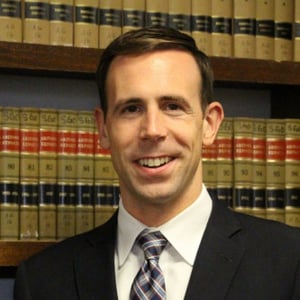
Shareholder, Greenberg Traurig, LLP
Dominic E. Draye has litigated at every level of the state and federal judiciary—from state trial court to the Supreme Court of the United States. His practice focuses on constitutional, regulatory, and environmental matters, and he has represented clients in both the public and private sectors. In the federal appellate courts, Mr. Draye has represented clients in the Second, Fifth, Seventh, Ninth, and D.C. Circuits.
Before joining Greenberg, Mr. Draye served as the Solicitor General of Arizona, where he briefed and argued the State’s highest-profile civil and criminal appeals and served as lead counsel for several multi-state coalitions litigating over agency rulemaking in the D.C. Circuit. Prior to government service, Mr. Draye was a litigator in the Washington, D.C., office of Kirkland & Ellis LLP, where his practice focused on legal issues and appeals.
Mr. Draye is a sought-after speaker on topics of administrative and constitutional law. He clerked for Hon. Edith H. Jones on the United States Court of Appeals for the Fifth Circuit and attended the University of Pennsylvania Law School.

Assistant Attorney General, Colorado Attorney General's Office
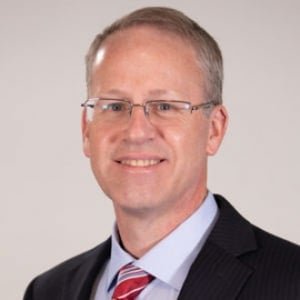
Senior Attorney, DC, Pacific Legal Foundation
Steve Simpson joined PLF in 2019 to head up its Separation of Powers practice group.
Steve’s career in public interest law started at the Institute for Justice in 2001, where he litigated free speech, campaign finance, and economic liberty cases. Among other high-profile cases in which Steve was involved, he was co-counsel in Arizona Free Enterprise Club’s Freedom Club PAC v. Bennett, IJ’s successful Supreme Court challenge to Arizona’s public financing law for political campaigns. He was the lead litigator in SpeechNow.org v. FEC, a joint effort between IJ and the Institute for Free Speech that led to the creation of super PACs. And he was co-counsel in Swedenburg v. Kelly, IJ’s successful Supreme Court challenge to New York’s ban on the interstate shipping of wine.
In 2013, Steve moved into the policy arena as the Ayn Rand Institute’s director of Legal Studies, where he spent five years writing and speaking on a wide variety of legal and cultural issues. From there, he moved back into law as senior litigation counsel at the New Civil Liberties Alliance in Washington, D.C.
Steve has spoken and written on a wide variety of legal and policy issues. He has testified in Congress and briefed congressional staffers. He has been interviewed on scores of television and radio programs, including PBS News Hour, Stossel, and The Rubin Report. His writings have appeared in many publications, including The Wall Street Journal and The Washington Post. In 2014, Steve was a Lincoln Fellow at the Claremont Institute. He is the editor of Defending Free Speech (ARI Press, 2016).
Steve earned his law degree magna cum laude from New York Law School in 1994. Following law school, he clerked for a federal district judge in the Southern District of Florida and spent several years as a litigator at Shearman & Sterling.
When he’s not at work or spending time with his wife and three daughters, Steve can usually be found mucking around in the woods at his cabin on Shenandoah Mountain.
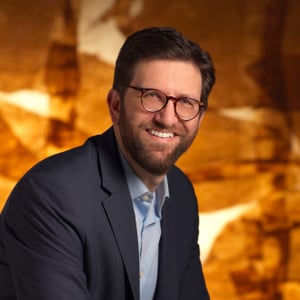
Joseph Tartakovsky, Author of The Lives of the Constitution: Ten Exceptional Minds that Shaped America's Supreme Law.
Joseph Tartakovsky is author of The Lives of the Constitution: Ten Exceptional Minds that Shaped America’s Supreme Law (2018) and the former Deputy Solicitor General of Nevada. His writing has appeared in the New York Times, Wall Street Journal, and Los Angeles Times.
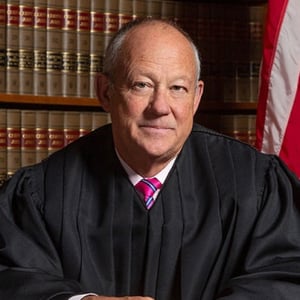
Judge, United States Court of Appeals, Tenth Circuit
Judge Tymkovich, of Denver, Colorado, was nominated to the Tenth Circuit Court of Appeals by President George W. Bush, and confirmed in April 2003. On October 1, 2015 he became Chief Circuit Judge and held this position until October 2022. He was Chair of the US Judicial Conference’s Committee on Judicial Resources from 2011 to 2015. Since 2008 he has been an adjunct professor of law at the University of Colorado School of Law, teaching Election Law. He is a member of the Doyle Inn of Court, the American Law Institute, and the International Society of Barristers. Since he joined the Circuit, Judge Tymkovich has hosted judicial delegations from Russia, Kazakhstan, and Afghanistan, and has also represented the United States in programs at Kiev and Yalta in Ukraine.
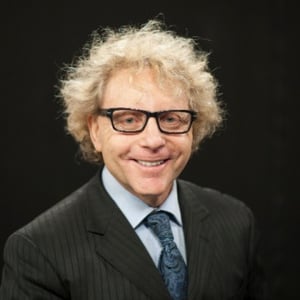
Distinguished Fellow and Director of Forum on Law, Culture & Society, NYU Law School
Thane Rosenbaum is an essayist, law professor, and author of the novels, How Sweet It Is!, The Stranger Within Sarah Stein, The Golems of Gotham, Second Hand Smoke, and Elijah Visible. His articles, reviews and essays appear frequently in the New York Times, Wall Street Journal, Washington Post, Haaretz, Huffington Post and Daily Beast, among other national publications.
He moderates an annual series of discussions on culture, world events and politics at the 92nd Street Ycalled The Talk Show.
He is a Distinguished Fellow at New York University School of Law where he directs the Forum on Law, Culture & Society.
He is the author of Payback: The Case for Revenge and The Myth of Moral Justice: Why Our Legal System Fails to Do What's Right. He is the editor of the anthology, Law Lit, from Atticus Finch to "The Practice,": A Collection of Great Writing about the Law. His forthcoming book is entitled The High Cost of Free Speech: Rethinking the First Amendment.

Music Licensing
Mitch Glazier, Lawrence J. White
Intellectual Property Practice Group Teleforum
The system for licensing musical works in the U.S. and internationally is fractionalized, complex, regulated,...
New Developments in Wisconsin’s John Doe Investigations
Edward D. Greim
Free Speech & Election Law Practice Group
Between 2010 and 2013, a team of Wisconsin state officials assembled by the Milwaukee County...
Husted v. A. Philip Randolph Institute - Post-Argument SCOTUScast
Michael T. Morley
SCOTUScast featuring Michael Morley
On January 10, 2018, the Supreme Court heard argument in Husted v. A. Philip Randolph...
Preview: Janus v. American Federation of State, County, and Municipal Employees
William L. Messenger, Ilya Shapiro
Labor & Employment Law Practice Group Teleforum
Janus v. American Federation of State, County, and Municipal Employees is scheduled for oral argument...
Encino Motorcars v. Navarro - Post-Argument SCOTUScast
Tammy Dee McCutchen
SCOTUScast featuring Tammy McCutchen
On January 17, 2018, the Supreme Court heard oral argument in Encino Motorcars v. Navarro,...
Courthouse Steps: Myrick v. Warren - Gay Marriage Conscience Protections
Stephanie Barclay
Religious Liberties Practice Group Teleforum
A little-known case just concluded this week, but it may have big implications for the...
American Grand Strategy in the Age of Trump
Lester Munson, Hal Brands
International & National Security Law Practice Group Teleforum
American foreign policy is in a state of upheaval. The rise of Donald Trump and...
Should Congress Amend Section 101 of the Patent Act?
Philip Johnson, Adam Mossoff, Dana S. Rao, Robert Sachs
Intellectual Property Practice Group
This Teleforum addresses whether there is a need to amend Section 101 of the Patent...
Conscience and Religious Freedom Division
Roger Severino
Religious Liberties Practice Group Teleforum
On January 18, the Department of Health and Human Services (HHS) announced the creation of...
Free Speech Absolutism: Have We Gone Too Far?
Dominic Draye, Joseph A. Peters, Steve Simpson, Joseph Tartakovsky, Timothy M. Tymkovich, Thane Rosenbaum
2018 Annual Western Chapters Conference
No clause in the Constitution draws more judicial encomia to liberty than the Free Speech...