
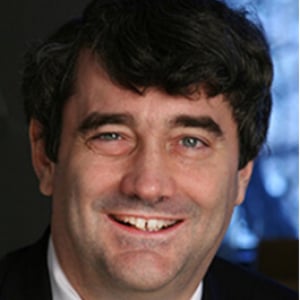
Clayton J. and Henry R. Barber Professor of Law, Northwestern University Pritzker School of Law and Co-Chairman, Board of Directors, The Federalist Society
STEVEN GOW CALABRESI is the Clayton J. & Henry R. Barber Professor at Northwestern Pritzker School of Law. He has also co-taught in the Fall semester at Yale Law School from 2013 to the present. Calabresi clerked for Justice Antonin Scalia and Judges Robert H. Bork and Ralph K. Winter. He was a Special Assistant to Attorney General Meese from 1985 to 1987 and worked with Ken Cribb as his deputy in 1987 on the second floor of the West Wing of the Reagan White House. Calabresi has written books on presidential power and comparative constitutional law and the origins of judicial review. He and Gary Lawson are the co-editors of a casebook on U.S. Constitutional Law, and Calabresi is also the co-editor of a casebook on comparative constitutional law. He has written over seventy law review articles since 1990.
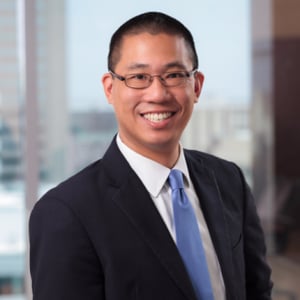
Chair, Issues & Appeals, Hunton Andrews Kurth LLP
The former Solicitor General of West Virginia, Mr. Lin has been on the front lines of many precedent-setting cases in appellate courts across the country, including in a US Supreme Court victory that George Will called “the court’s most severe rebuke of a president” since the Truman administration. Having argued more than 60 appeals, he brings to clients a well-honed ability to identify the most persuasive issues for appeal and a practiced understanding of how best to frame complex legal questions in appellate courts.
With experience in the private sector and multiple branches of government, Mr. Lin’s practice has spanned a wide range of issues, including major questions of constitutional and administrative law at the federal and state levels. On behalf of more than two dozen states, he won a stay from the US Supreme Court of the EPA’s Clean Power Plan. Described by the New York Times as an “unprecedented” order, the stay was the first time the Supreme Court had ever put a regulation on hold before review by a federal appeals court. In that same case, Elbert argued before the en banc DC Circuit in an historic proceeding that one commenter quoted in E&E News compared to “the NBA All-Star Game.” At the state level, Elbert led the effort that persuaded the West Virginia Supreme Court of Appeals to overturn an injunction of the state’s right-to-work law.
In 2013, Mr. Lin was appointed the Solicitor General of West Virginia. During his four-and-a-half year tenure, he served as a member of the Attorney General’s senior management team, oversaw all civil and criminal appeals, and argued nearly two dozen cases in federal and state appellate courts. He authored more than twenty-five briefs in the US Supreme Court and more than forty-five formal Opinions of the Attorney General.
Earlier in his career, Mr. Lin served as a trial attorney in the Federal Programs Branch of the US Department of Justice’s Civil Division, where he received a Special Service Award. He has also been a law clerk at all three levels of the federal judiciary: for Justice Clarence Thomas on the US Supreme Court; for Judge William H. Pryor Jr. on the US Court of Appeals for the Eleventh Circuit; and for Senior Judge Robert E. Keeton on the US District Court for the District of Massachusetts.
Mr. Lin speaks regularly on a wide variety of topics, including constitutional law, administrative law, environmental law, state and federal relations, the US Supreme Court, and appellate practice. He has testified before Congress, and has spoken at the national conventions of the American Bar Association, the Association of Corporate Counsel, the National Asian Pacific American Bar Association, the Federalist Society, Americans for Prosperity, and the American Legislative Exchange Council. He is an elected member of the American Law Institute, a public member of the Administrative Conference of the United States, and a fellow of the American Academy of Appellate Lawyers.
Mr. Lin is admitted to practice in the following federal courts: the Supreme Court of the United States; the First, Second, Third, Fourth, Fifth, Sixth, Seventh, Eighth, Ninth, Eleventh, D.C., and Federal Circuits; the District of Massachusetts; the Northern and Southern Districts of West Virginia; and the Eastern and Western Districts of Virginia.
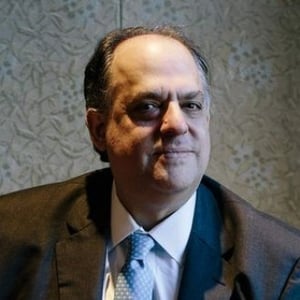
Director of Litigation and Senior Attorney, Hamilton Lincoln Law Institute
Theodore H. Frank is director at the Hamilton Lincoln Law Institute and the Center for Class Action Fairness. Frank founded and ran CCAF as a non-profit, public interest law firm in 2009.
Frank has won several landmark appeals and tens of millions of dollars for consumers and other plaintiffs through his class action work. Adam Liptak of The New York Times calls Frank “the leading critic of abusive class action settlements” and the American Lawyer Litigation Daily referred to him as “the indefatigable scourge of underwhelming class action settlements.”
Previously, Frank clerked for the Honorable Frank H. Easterbrook on the Seventh Circuit Court of Appeals, and was a litigator at firms in Washington and Los Angeles and a resident fellow at the American Enterprise Institute. Frank is a frequent public speaker and has testified before Congress multiple times on legal issues. He has been profiled by The Wall Street Journal, Forbes, GQ, and the ABA Journal, among other publications.
In 2008, Frank was elected to membership in the American Law Institute. He also serves on the Executive Committee of the Federalist Society Litigation Practice Group. Frank graduated from The University of Chicago Law School in 1994 with high honors and as a member of the Order of the Coif and the Law Review. He is a member of the District of Columbia Bar and the state bars of California and Illinois.
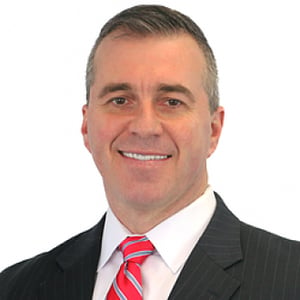
Founder and Partner, Dowd Scheffel PLLC
Matthew Dowd focuses his skills on complex appellate and trial litigation, with an emphasis on patent and intellectual property issues. Through his years of practice, Mr. Dowd has successfully worked on numerous high-stakes and eclectic legal matters, focusing primarily on all stages of complex patent matters (AIA proceedings, litigation, prosecution, and counseling). Mr. Dowd's expertise and leadership are regularly consulted, as he is frequently asked to comment in the press on leading intellectual property issues.
Mr. Dowd has substantial experience with Hatch-Waxman litigation, including all stages of opinion analysis, litigation, and appeals. His technical background in medicinal chemistry is ideally suited for litigating pharmaceutical patents. He has represented clients in a range of trial forums for patent disputes, such as the Eastern District of Texas and the District of Delaware, as well as the Patent Trial and Appeal Board at the USPTO.
He has argued and briefed numerous appeals before the U.S. Court of Appeals for the Federal Circuit and other courts involving issues such as patent law, Hatch-Waxman, administrative law, Fifth Amendment takings, contract claims, government employment issues, and criminal law. In 2018, Mr. Dowd is co-counsel with the Hon. Richard Posner (ret.) of U.S. Court of Appeals for the Seventh Circuit in an appeal before the U.S. Court of Appeals for the Fourth Circuit.
In 2013, Mr. Dowd represented Nobel Laureate James Watson, co-discoverer of the DNA double helix, as amicus curiae in the groundbreaking 2013 Supreme Court gene patent case. Mr. Dowd has over 15 years of experience representing clients before the U.S. Patent and Trademark Office.
Mr. Dowd is also well-known for his successful pro bono representation in the "free-range kids" case. The case was widely reported in the national, local, and international news.
Mr. Dowd attended The George Washington University Law School, graduating with high honors and being awarded Order of the Coif. While attending law school and before, Mr. Dowd worked full-time as a registered patent agent at the renowned IP boutique Sterne, Kessler, Goldstein & Fox.
After law school, Mr. Dowd clerked for the Honorable Paul R. Michel, Chief Judge (ret.) of the U.S. Court of Appeals for the Federal Circuit. While a law clerk, Mr. Dowd gained an insider's perspective on the appellate process. Understanding the appellate process is critical to maximizing success at the earlier stages of a case.
Mr. Dowd is currently appointed as a Professorial Lecturer in Law at The George Washington University Law School. He teaches appellate advocacy and is the coach for the student moot court team for the AIPLA Giles Sutherland Rich Moot Court Competition.
Prior to his legal career, Mr. Dowd spent four years in a Ph.D. program in medical chemistry, studying organic chemistry, pharmacology, and pharmaceutical drug design. During his Ph.D. program, Mr. Dowd's research discovered a novel structure-activity relationship for nicotinic ligands with potential utility in treating Alzheimer's and Parkinson's diseases. Mr. Dowd attended The College of William and Mary, in Williamsburg, VA, and Regis High School in New York City.
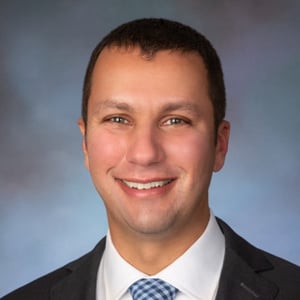
Partner, Duane Morris LLP
Brian Pandya is Partner at Duane Morris LLP. A member of the firm’s Trial Practice Group, Brian represents technology, manufacturing, and healthcare companies in high-stakes litigation, arbitrations, investigations and appeals. He has served as lead trial counsel in a range of intellectual property, antitrust, complex commercial and white-collar matters. He also regularly counsels clients on cybersecurity and national security issues, particularly matters concerning emerging technologies and artificial intelligence.
Before joining Duane Morris, Brian served at the U.S. Department of Justice as Deputy Associate Attorney General from 2019-21, where he oversaw investigations and litigation undertaken by the Antitrust Division and Civil Division and served on several high-profile task forces and trial teams. Brian was also previously a litigation and IP partner at another prominent Washington, DC firm.
Brian clerked for Judge Leonard Davis on the United States District Court for the Eastern District of Texas. He is a two-time recipient of the Federal Circuit Bar Association’s Pro Bono Advocacy Award for work on behalf of military veterans and has served as volunteer federal public defender in the Eastern District of Virginia, among many other bar and community engagements.
Brian graduated cum laude from the University of Michigan Law School, where he was articles editor of the Michigan Telecommunications and Technology Law Review, and with honors and high distinction in mechanical engineering from Penn State University, where he received the Ralph Dorn Hetzel Memorial Award.
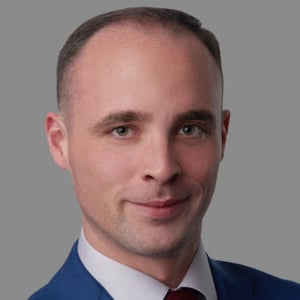
Co-Director, IBM PolicyLab
Ryan Hagemann is a Technology Policy Executive at IBM. He was previously a senior policy fellow at the International Center for Law & Economics. Before joining the International Center for Law & Economics, he was a senior fellow at the Niskanen Center, where he also served as the senior director for policy and director of technology policy. His policy expertise focuses on regulatory governance of emerging technologies, as well as a broader research portfolio that includes genetic modification and regenerative medicine, bioengineering and healthcare IT, artificial intelligence, autonomous vehicles, commercial drones, the Internet of Things, and other issues at the intersection of technology, regulation, and the digital economy. His work on “soft law” governance systems, autonomous vehicles, and commercial drones has been featured in numerous academic journals, and his research and comments have been cited by The New York Times, MIT Technology Review, and The Atlantic, among other outlets. He has been published in The Wall Street Journal, Wired, National Review, The Washington Examiner, U.S. News & World Report, The Hill, and elsewhere.
Ryan graduated from Boston University with a B.A. in international relations, foreign policy, and security studies and holds a Master of Public Policy in science and technology policy from George Mason University.
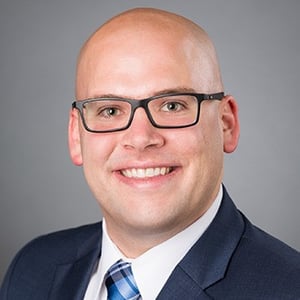
Senior Director of Strategy and Research, The Center for Growth and Opportunity at Utah State University
Christopher Koopman is the Senior Director of Strategy and Research at The Center for Growth and Opportunity at Utah State University. He previously served as a Senior Research Fellow and Director of the Technology Policy Program at the Mercatus Center at George Mason University. He specializes in regulation, competition, and innovation. His research and commentary has appeared in the Wall Street Journal, New York Times, Washington Post, USA Today, Bloomberg,and NPR. He is also a contributor at The Hill, and was named to Forbes' 30 Under 30 2016 for law and policy.
Koopman earned his J.D. from Ave Maria University and his LL.M. in law and economics at George Mason University where he now teaches in both the economics department and the George Mason University School of Law.
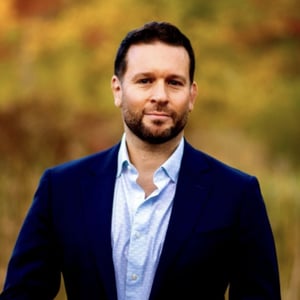
Professor of Law and Public Policy, Pepperdine University Caruso School of Law
Greg McNeal is an award winning entrepreneur, professor, and investor. He co-founded AirMap, a multinational aerospace and defense company honored as one of the “World’s Most Innovative Companies” by Fast Company and ranked as an Inc.com 25 Most Disruptive Company. The company also received a Los Angeles Business Journal Innovation Award, and a Consumer Electronics Show “Innovation Award.” The company was acquired in 2021.
He invests in and advises companies and entrepreneurs in SAAS, Defense, AI, and entertainment. The companies he founded or serves on the corporate board of have raised over $100 million in funding with his direct participation in the process. Those investors include Microsoft, Flexport, Sony, Qualcomm, Rakuten, Baidu, Airbus, and top global financial services and venture capital funds including Greycroft, Social Capital, General Catalyst, Lux Capital, Bullpen Capital, Bay Bridge Ventures, Teamworthy Ventures, Operate Studio, TenOneTen, Temasek, Macquarie Group, Graph Ventures and many others. The companies he advises have raised substantially more funding, in part due to his advice and mentorship.
He is a tenured Professor of Law and Public Policy at Pepperdine University and a faculty member with the Palmer Center for Entrepreneurship and the Law and teaches courses in technology, public policy, internet, and privacy law.
As a public policy and legal expert, Greg has worked with the White House, the Department of Defense, the State Department, and independent regulatory agencies on matters related to technology, law and policy. He has on multiple occasions testified before Congress and state legislatures about entrepreneurship and emerging technology and has aided state legislators, cities, municipalities, and executive branch officials in drafting legislation and ordinances related to technological advances and has been appointed by Cabinet officials to serve on Federal Rulemaking Committees.
He is a frequent keynote speaker at industry events and academic conferences related to technology, law, and public policy. He advises venture capital firms and other investors, start-ups, law enforcement, consulting firms, and Fortune 500 companies about the legal and regulatory issues associated with emerging technologies.
He regularly appears on television and radio to discuss technology and business, wrote a column on business and technology for Forbes and has authored Op-Eds for the New York Times, the Washington Post, and The Washington Times, among others. In his early career he worked on national security, international criminal law and counterterrorism matters and served as an Army officer.
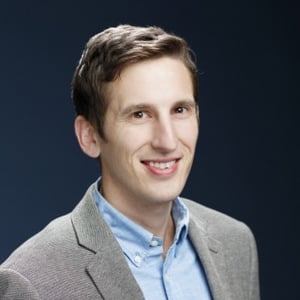
Legal Fellow, Center for Constitutional Studies, Cato Institute
Brent Skorup is a legal fellow in the Cato Institute’s Robert A. Levy Center for Constitutional Studies.
Before joining Cato, he was a senior research fellow at the Mercatus Center at the George Mason University. His research areas include free speech, technology law, Fourth Amendment protections, regulation, and property law. Skorup has published pieces in economics and law journals and in popular media, including The Wall Street Journal, The New York Times, Bloomberg Law, Reuters, and Wired. He’s appeared as a TV and radio interview guest for news outlets like C‑SPAN, NPR, CBS News, ABC News, and CNBC Asia.
The Pennsylvania Supreme Court, a dissenting opinion at the Illinois Supreme Court, and the ALI's Restatement of the Law of Property have cited his legal research and he has testified as a technology and legal expert in legislative hearings in several states. Skorup has been appointed to several federal and state advisory bodies and he is currently a member of the Texas Advanced Air Mobility Advisory Committee.
Skorup has a BA in economics from Wheaton College and a law degree from the George Mason University School of Law, where he was articles editor for the Civil Rights Law Journal. He was a legal clerk at the FCC’s wireless bureau and Office of General Counsel and at the Energy and Commerce Committee in the U.S. House of Representatives.
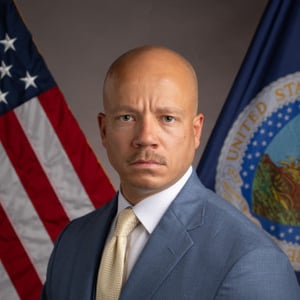
Assistant Secretary for Civil Rights, U.S. Department of Agriculture
Devon Westhill is the Assistant Secretary for Civil Rights at the U.S. Department of Agriculture. The U.S. Senate confirmed President Donald Trump’s nomination of Westhill on October 7, 2025.
Westhill returns to the USDA where he previously headed the civil rights office as Deputy Assistant Secretary in President Trump’s first term. His previous government appointments also include service at the U.S. Department of Labor, liaison to the Administrative Conference of the U.S., and liaison to the White House Initiative on Historically Black Colleges and Universities. Prior to returning to government service, Westhill was President and General Counsel of a nonprofit civil rights organization.
Westhill has testified on civil rights matters before Congress, federal agencies, and as an expert witness in federal court. He has spoken hundreds of times at college campuses, conferences, and on radio and TV programs, and he is frequently quoted in print publications, and his writing has appeared in numerous national outlets. A U.S. Navy veteran, Westhill earned his BA from the University of North Carolina at Chapel Hill and his JD from the University of Florida.

Richard and Frances Mallery Professor of Law and Faculty Director, Constitutional Law Center, Stanford Law School
Michael W. McConnell is the Richard and Frances Mallery Professor and Faculty Director of the Constitutional Law Center at Stanford Law School, and a Senior Fellow at the Hoover Institution. From 2002 to 2009, he served as a Circuit Judge on the United States Court of Appeals for the Tenth Circuit. He was nominated by President George W. Bush, a Republican, and confirmed by a Democratic Senate by unanimous consent. McConnell has previously held chaired professorships at the University of Chicago and the University of Utah, and visiting professorships at Harvard and NYU. He teaches courses on constitutional law, constitutional history, First Amendment, and interpretive theory. He has published widely in the fields of constitutional law and theory, especially church and state, equal protection, and separation of powers. His book, “The President Who Would Not Be King: Executive Power Under the Constitution,” was published by Princeton University Press in 2020, based on the Tanner Lectures in Human Values, which he delivered at Princeton in 2019. His latest book, co-authored with Nathan Chapman, “Agreeing to Disagree: How the Establishment Clause Protects Religious Diversity and Freedom of Conscience,” was published by Oxford University Press in mid-2023. McConnell has argued sixteen cases in the United States Supreme Court, most recently Carney v. Adams (2020). defending a provision of the Delaware Constitution requiring political balance on that state’s courts. More recently, he was co-counsel in Gonzalez v. Google. He earned his B.A. from Michigan State University and his J.D. from the University of Chicago, and has received honorary degrees from Notre Dame University and Michigan State. He served as law clerk to Supreme Court Justice William J. Brennan, Jr. and D.C. Circuit Chief Judge J. Skelly Wright. He has been Assistant General Counsel of the Office of Management & Budget, Assistant to the Solicitor General of the Department of Justice, and a member of the President’s Intelligence Oversight Board. He is Senior of Counsel to the law firm Wilson, Sonsini, Goodrich & Rosati, and is co-chair of Meta’s Oversight Review Board.
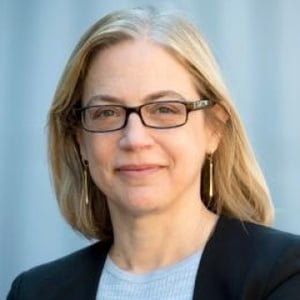
Harlan Fiske Stone Professor of Constitutional Law, Columbia Law School
A leading administrative and constitutional law scholar, Gillian Metzger ’96 writes and teaches in the areas of administrative law, constitutional law, and federal courts, with an emphasis on federalism and privatization. In 2023-2024, she served as Acting Assistant Attorney General and Deputy Assistant Attorney General in the Office of Legal Counsel in the Department of Justice.
Metzger's recent work covers topics ranging from constitutional attacks on the administrative state to appropriations, administrative law under the Roberts Court, and the role of administrative agencies in a polarized world. In 2015, Metzger won the American Bar Association Administrative Law Section Annual Scholarship Award for “The Constitutional Duty to Supervise,” which examined presidential control and oversight of the modern administrative state. She is a co-editor of Gellhorn & Byse’s Administrative Law: Cases and Comments, 13th ed. (Foundation Press, 2023), a seminal administrative law casebook.
Professor Metzger was recently elected to the American Academy of Arts & Sciences and is a Senior Fellow of the Administrative Conference of the United States. In 2020, she was awarded Columbia University's Faculty Mentorship Award and in 2014, the Law School’s graduating class awarded Metzger the Willis L.M. Reese Prize for Excellence in Teaching, recognizing, among many other accomplishments, her commitment to mentoring new generations of law students.
In 2012, Metzger helped launch Columbia Law School’s Center for Constitutional Governance (CCG)—where she now serves as faculty director—a nonpartisan legal and policy organization devoted to the study of constitutional structure and authority. CCG brings together a diverse group of constitutional scholars to explore policy areas such as health care, civil rights, immigration, financial regulation, and national security.
Metzger also has co-authored and filed numerous amicus briefs in major constitutional and administrative law challenges before the Supreme Court and other courts. Most recently, Metzger filed a brief in Seila Law Center v. CFPB, a separation of powers challenge, and in Kisor v. Wilkie, a case involving judicial deference to agencies. She has also filed briefs in cases involving reproductive rights and the Affordable Care Act, among others.
Previously, Metzger served as vice dean of intellectual life at Columbia Law School. Before joining the Law School, she worked as an attorney with the Brennan Center for Justice. Metzger also clerked for U.S. Supreme Court Justice Ruth Bader Ginsburg ’59 and Judge Patricia M. Wald of the U.S. Circuit Court of Appeals for the District of Columbia. In 2018, Metzger moderated a panel discussion with Justice Ginsburg on impact litigation at Columbia Law School.
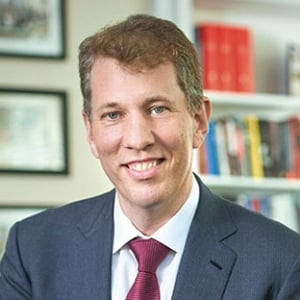
Dean and Eric M. and Laurie B. Roth Professor of Law New York University School of Law, New York University School of Law
Trevor Morrison is currently the Dean and Eric M. and Laurie B. Roth Professor of Law at New York University School of Law. He was previously the Liviu Librescu Professor of Law at Columbia Law School, where he was also faculty co-director of the Center for Constitutional Governance and faculty co-chair of the Hertog Program on Law and National Security. Before that, he was on the faculty of Cornell Law School.
Dean Morrison spent 2009 in the White House, where he served as associate counsel to President Barack Obama. Drawing on both his scholarship and work experience, he has developed particular renown for his expertise in constitutional law as practiced in the executive branch.
Dean Morrison's research and teaching interests are in constitutional law (especially separation of powers and federalism), federal courts, and the law of the executive branch. His scholarship has appeared in the Harvard Law Review, the Yale Law Journal, the Columbia Law Review, the Michigan Law Review, the Cornell Law Review, and the Journal of Empirical Legal Studies, among others.
Before entering academia, he was a law clerk to Judge Betty B. Fletcher of the U.S. Court of Appeals for the Ninth Circuit (1998-99) and to Justice Ruth Bader Ginsburg of the U.S. Supreme Court (2002-03). Between those clerkships, he was a Bristow Fellow in the U.S. Justice Department's Office of the Solicitor General (1999-2000), an attorney-advisor in the Justice Department's Office of Legal Counsel (2000-01), and an associate at Wilmer, Cutler & Pickering (now WilmerHale) (2001-02).
Dean Morrison received a B.A. (hons.) in history from the University of British Columbia in 1994, and a J.D. from Columbia Law School in 1998. He was also a Richard Hofstadter Fellow in History at Columbia University. Dean Morrison is a Fellow of the American Academy of Arts and Sciences and a member of the American Law Institute, the Council on Foreign Relations, and the U.S. State Department’s Advisory Committee on International Law. In 2016, President Obama appointed him as chairperson of the Public Interest Declassification Board.
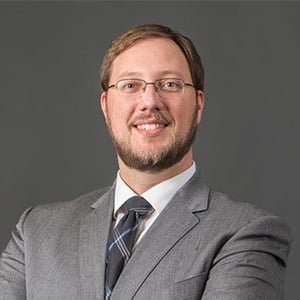
Laurence H. Silberman Chair in Constitutional Governance and Senior Fellow, American Enterprise Institute; Co-Director, Antonin Scalia Law School’s C. Boyden Gray Center for the Study of the Administrative State
Adam J. White is the Laurence H. Silberman Chair in Constitutional Governance and senior fellow at the American Enterprise Institute, where he focuses on the Supreme Court and the administrative state. Concurrently, he codirects the Antonin Scalia Law School’s C. Boyden Gray Center for the Study of the Administrative State.
Mr. White practiced constitutional and administrative law, particularly in the regulation of energy and financial markets. He started his legal career as a law clerk for Judge David B. Sentelle at the US Court of Appeals for the DC Circuit.
Mr. White has written for the Wall Street Journal, the New York Times, the Washington Post, National Affairs, Commentary, Harvard Journal of Law & Public Policy, and Notre Dame Law Review, among other publications. He is a regular contributor to the Yale Journal on Regulation’s Notice and Comment blog, and for many years, he was one of the Weekly Standard’s lead writers on constitutional law and the Supreme Court.
Mr. White has testified often before Congress, including before the Senate’s Committees on the Judiciary; Commerce, Science, and Transportation; and Homeland Security and Governmental Affairs and before the House’s Judiciary and Financial Services Committees. In 2018, the Senate Committee on the Judiciary called him to testify in Brett Kavanaugh’s Supreme Court confirmation hearings to advise senators on Kavanaugh’s approach to administrative law.
In 2021, he served on the Presidential Commission on the Supreme Court of the United States, where he criticized “Court packing” and other efforts to restructure the Supreme Court. In 2017, he was appointed to serve on the Administrative Conference of the United States. He also serves on the leadership council for the American Bar Association’s Administrative Law and Regulatory Practice Section, which he will chair in 2023–24. Before joining AEI, he was a research fellow at Stanford University’s Hoover Institution and an adjunct fellow at the Manhattan Institute.
Mr. White has a JD from Harvard Law School and a bachelor of business administration from the College of Business at the University of Iowa.

Thomas M. Siebel Senior Fellow, The Hoover Institution, Stanford University; Gary T. Schwartz Distinguished Professor of Law Emeritus, UCLA School of Law
Eugene Volokh is the Thomas M. Siebel Senior Fellow at the Hoover Institution (Stanford), as well as the Gary T. Schwartz Distinguished Professor of Law Emeritus and Distinguished Research Professor at UCLA School of Law. He recently retired from teaching at UCLA, after 30 years there, and is now focusing on research.
Volokh is the author of the textbooks The First Amendment and Related Statutes (8th ed. 2023), and Academic Legal Writing (5th ed. 2016), as well as over 100 academic law journal articles, mostly on First Amendment law. He is a member of The American Law Institute; the editor-in-chief of the Journal of Free Speech Law; and the creator and coauthor of The Volokh Conspiracy, a leading legal blog founded in 2002 (hosted at the Washington Post from 2014 to 2017 and now at Reason Magazine).
Andrew Varcoe was formerly a partner at Boyden Gray & Associates in Washington, D.C. From 2014 to 2017, Mr. Varcoe was Deputy General Counsel at the Biotechnology Innovation Organization (BIO), the trade association for the biotechnology industry. He previously served as an attorney in the Office of the General Counsel of the U.S. Department of Agriculture (USDA) in Washington, D.C., and Harrisburg, Pennsylvania. While at USDA, he briefed, argued, and mediated cases in the federal courts of appeals and helped manage USDA’s and its agencies’ nationwide appellate litigation docket, working closely with trial and appellate lawyers at the U.S. Department of Justice. Before joining USDA, Mr. Varcoe was an associate and then counsel at Wilmer Cutler Pickering Hale and Dorr LLP (previously Wilmer, Cutler & Pickering). Mr. Varcoe served as a law clerk to Justice Francis X. Spina of the Massachusetts Supreme Judicial Court (from 1999 to 2000), and to Judge Edith H. Jones of the U.S. Court of Appeals for the Fifth Circuit (from 2001 to 2002).
Mr. Varcoe received his J.D. cum laude in 1999 from Harvard Law School, where he was a research assistant to Professor Martha Minow and an editor of the Harvard Journal of Law & Public Policy. Mr. Varcoe graduated with honors in 1995 from the University of Chicago, where he was Student Ombudsperson (a mediator, reporting to the President of the University, who investigated and resolved student grievances) and a member of Phi Beta Kappa.
In 2018 and 2019, Mr. Varcoe served as Chairman of the Executive Committee of the Federalist Society’s Environmental Law and Property Rights Practice Group.

Milton R. Underwood Chair in Free Enterprise, Vanderbilt University Law School
Brian Fitzpatrick is the Milton R. Underwood Chair in Free Enterprise and Professor of Law at Vanderbilt Law School, where his research focuses on class action litigation, federal courts, judicial selection, and constitutional law. He is best known for his empirical studies of class action settlements as well as his book The Conservative Case for Class Actions (University of Chicago Press, 2019). Professor Fitzpatrick joined Vanderbilt's law faculty in 2007 after serving as the John M. Olin Fellow at New York University School of Law. He graduated first in his class from Harvard Law School and went on to clerk for Judge Diarmuid O'Scannlain on the U.S. Court of Appeals for the Ninth Circuit and Justice Antonin Scalia on the U.S. Supreme Court. After his clerkships, Professor Fitzpatrick practiced commercial and appellate litigation for several years at Sidley Austin in Washington, D.C., and served as Special Counsel for Supreme Court Nominations to U.S. Senator John Cornyn. Before earning his law degree, Fitzpatrick graduated summa cum laude with a bachelor's of science in chemical engineering from the University of Notre Dame. He has received the Hall-Hartman Outstanding Professor Award, which recognizes excellence in classroom teaching, for his Civil Procedure and Federal Courts courses.
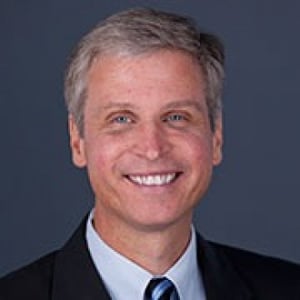
Frank Edwards Tyler Distinguished Professor of Law, University of Kansas School of Law
Stephen Ware is the author of four books, over 50 law review articles, and many other publications. His writings have been cited by the Supreme Court of the United States and in at least 36 other cases. Ware teaches and writes on: Arbitration, Mediation, and Alternative Dispute Resolution, Bankruptcy, Insolvency, and Debt Collection, Contracts and Commercial Law, and Judicial Selection, each with an international or comparative dimension.
Ware has testified before both houses of the U.S. Congress, several state legislatures and, as an expert witness, in court. He is a frequent guest lecturer and speaker at academic and professional conferences—having given such presentations throughout the U.S. and in several other countries. He has appeared on numerous television and radio stations and been quoted in The New York Times, Wall Street Journal, USA Today, Financial Times, National Law Journal and many other news outlets. He is an elected member of the American Law Institute (ALI) and has served, at various times in his career, on the editorial board of the Journal of Legal Education and as an arbitrator for the American Arbitration Association.
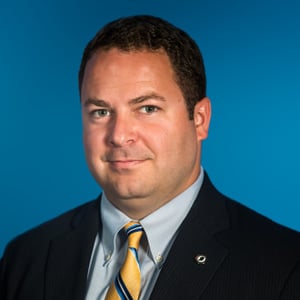
Former Director, State Courts, The Federalist Society for Law and Public Policy Studies
Peter Bisbee served as Director of State Courts for the Federalist Society. In this capacity, he lead a comprehensive effort to promote the discussion on the role of courts in states across the country. Peter also executed the Society’s government and coalition outreach efforts at the national level as Deputy Director of External Relations, working as a liaison to Congress and other public policy organizations. He previously served as Director of Membership at the Society, where he managed relations with the Society’s network of over 70,000 individuals, created outreach campaigns to increase engagement, and developed the organization's recordkeeping and communication systems. Peter holds a B.A. from the University of Michigan in History and lives in Virginia with his wife and daughter.
Joel A. Katz Distinguished Professor of Law, University of Tennessee College of Law
Professor Plank joined the UT faculty in 1994 and became the Joel A. Katz Distinguished Professor of Law in 2004. His scholarly interests include the nature of property, the relationship between bankruptcy and non-bankruptcy law, and the historical development and comparison of commercial law and property law systems. He is a nationally recognized expert on mortgage backed and asset backed securities. Before joining the UT faculty, he was a partner with Kutak Rock LLP specializing in real estate finance, commercial finance, bankruptcy, and securities, in particular serving as issuer’s counsel and bankruptcy counsel in securitization transactions. Since joining the UT faculty he has served as an expert witness on securitization and other bankruptcy and commercial law matters, and as a consultant for securitization law firms, providing advice on bankruptcy, commercial law, and real estate issues in connection with securitizations and other transactions. During the 2002-2003 academic year, Professor Plank was a visiting Professor of Law at the Notre Dame Law School.
Professor Plank graduated with honors from Princeton University with a degree in history and a Certificate of Proficiency in Russian Area Studies and then served three years in the United States Marine Corps, including eight months in Vietnam as an infantry platoon commander. He graduated 5th in his class from the University of Maryland School of Law, where he was Editor-in-Chief of the Maryland Law Review. He was a law clerk for the Chief Judge of the Maryland Court of Appeals, an associate with Piper & Marbury in Baltimore, MD, and an assistant attorney general for the State of Maryland. Initially, his practice included a wide variety of transactions and litigation, including a four month trial on the constitutionality of the Maryland public school finance system and oral arguments in the United States Supreme Court and federal and state appellate courts. He then concentrated his practice in real estate, commercial finance, public finance and securities transactions.
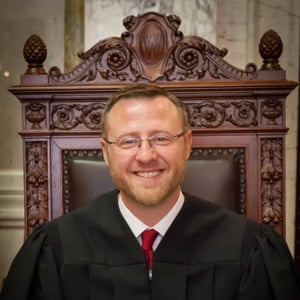
Wisconsin Court of Appeals, District II
Brian Hagedorn is a judge on the Wisconsin Court of Appeals, District II. He was appointed by Republican Governor Scott Walker on July 31, 2015. Hagedorn won election to a full six-year term in 2017. His current term will expire on July 31, 2023.
Hagedorn earned an undergraduate degree in philosophy from Trinity International University in 2000 and his J.D. from Northwestern University School of Law in 2006. While at Northwestern, Hagedorn was the president of the school's chapter of the Federalist Society.
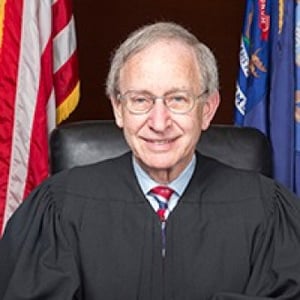
Justice, Michigan Supreme Court
Stephen Markman was appointed Justice of the Michigan Supreme Court on October 1, 1999. He served as the Chief Justice from 2017-2019. Before his appointment, he served as Judge on the Michigan Court of Appeals from 1995-1999. Prior to this, he practiced law with the firm of Miller, Canfield, Paddock & Stone in Detroit.
From 1989-1993, Justice Markman served as United States Attorney, or federal prosecutor, in Michigan, after having been nominated by President George H. W. Bush and confirmed by the United States Senate. From 1985-1989, he served as Assistant Attorney General of the United States, after having been nominated by President Ronald Reagan and confirmed by the United States Senate. In that position, he headed the Department of Justice’s Office of Legal Policy, which served as the principal policy development office within the Department, and which coordinated the federal judicial selection process. Prior to this, he served for seven years as Chief Counsel of the United States Senate Subcommittee on the Constitution, and as Deputy Chief Counsel of the United States Senate Judiciary Committee.
Justice Markman has authored articles for such publications as the University of Michigan Journal of Law Reform, the Detroit College of Law Review, the Stanford Law Review, the University of Chicago Law Review, the American Criminal Justice Law Review, the Barrister’s Law Journal, the Harvard Journal of Law & Public Policy, and the American University Law Review. He has also served as a contributing editor of National Review magazine, and has authored chapters in such books as “In the Name of Justice: The Aims of the Criminal Law,” “Still the Law of the Land,” and “Originalism: A Quarter Century of Debate.”
Justice Markman has taught constitutional law at Hillsdale College since 1993. He has served on the Board of Directors of the Western Michigan University Thomas M. Cooley Law School. He traveled to Ukraine on two occasions on behalf of the State Department, to provide assistance in the development of that nation’s post-Soviet constitution. He is a Fellow of the Michigan Bar Foundation, a Master of the Bench of the Inns of Court, and a member of the One Hundred Club. He has spoken before hundreds of youth, civic, charitable, and legal groups throughout Michigan and nationally, and has coached Little League baseball and basketball. He lives with his wife Mary Kathleen in Mason, and has two sons, James and Charles.
Justice Markman was re-elected to the Supreme Court in 2000, 2004, and 2012. His present term expires January 1, 2021.
Adrian P. Schoone Fellow in Wisconsin Law and Legal Institutions and Adjunct Professor of Law, Marquette University Law School
Joseph A. Ranney is the Adrian P. Schoone Fellow in Wisconsin Law and Legal Institutions at Marquette University Law School and a partner with the firm DeWitt Ross & Stevens in Madison, Wisconsin. He is the author of several books, including Trusting Nothing to Providence: A History of Wisconsin's Legal System, honored by the American Library Association as a notable book on state and local government.
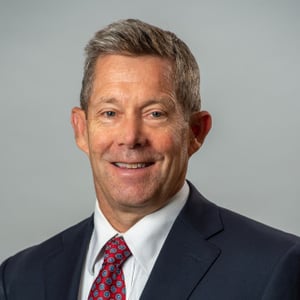
Chief Judge, United States Court of Appeals, Sixth Circuit
JEFFREY S. SUTTON is the Chief Judge of the United States Court of Appeals for the Sixth Circuit. He has served as Chair of the Federal Judicial Conference Committee on Rules of Practice and Procedure, Chair of the Advisory Committee on Appellate Rules, and Chair of the Supreme Court Fellows Commission. He currently serves as Chair of the Executive Committee of the Judicial Conference of the United States. Since 1993, Chief Judge Sutton has been an adjunct professor at The Ohio State University College of Law, where he teaches seminars on State Constitutional Law, the United States Supreme Court, and Appellate Advocacy. He also teaches a class on State Constitutional Law at Harvard Law School. Among other publications, he is the author of Who Decides? States as Laboratories of Constitutional Experimentation and 51 Imperfect Solutions: States and the Making of American Constitutional Law. He is the co-author of a casebook, State Constitutional Law: The Modern Experience, as well as The Law of Judicial Precedent. He is also the co-editor of The Essential Scalia: On the Constitution, the Courts, and the Rule of Law. In 2006, Chief Judge Sutton was elected to the American Law Institute, and in 2017 he was elected to its Council.

Special Prosecutors in the U.S.
Steven G. Calabresi
Criminal Law & Procedure and Federalism & Separation of Powers Practice Groups Teleforum
On May 13, the Wall Street Journal published an op-ed by Steve Calabresi, co-founder of...
Courthouse Steps: Murphy v. National Collegiate Athletic Association Decided
Elbert Lin
Federalism & Separation of Powers Practice Group Teleforum
On Monday, May 14, 2018, the Supreme Court decision came down in Murphy v. National...
Preview: Frank v. Gaos
Theodore "Ted" Frank
Litigation Practice Group Teleforum
On April 30, the Supreme Court granted cert in Frank v. Gaos, an appeal of...
Courthouse Steps: SAS Institute Inc. v. Iancu Decided
Matthew J. Dowd, Brian Pandya
Intellectual Property Practice Group and Regulatory Transparency Project Teleforum
When Congress directs the Patent Office to resolve “any” patent claims a petitioner challenges, must...
Emerging Technology in Transportation
Ryan Hagemann, Christopher L. Koopman, Gregory S. McNeal, Brent Skorup, Devon Westhill
Regulatory Transparency Project & Capitol Hill Chapter Event
On Friday, May 18, 2018, the Regulatory Transparency Project and Capitol Hill Chapter of the...
Necessary & Proper Episode 18: NYU Panel - History of Balance Between the President and Congress
Michael W. McConnell, Gillian E. Metzger, Trevor Morrison, Adam White
On March 29, 2018, the New York University Federalist Society Student Chapter hosted a panel titled "The...
ALDF v. Wasden: The Ninth Circuit and Idaho’s “Ag-Gag” Law
Eugene Volokh, Andrew R. Varcoe
Environmental Law & Property Rights Teleforum
Early this year, a Ninth Circuit panel issued a split decision in an Idaho case...
The Case for Political Appointment of Judges
Brian T. Fitzpatrick, Stephen J. Ware, Peter Bisbee
State Courts Project Teleforum
Join us in a discussion with our experts, Professor Brian Fitzpatrick and Professor Stephen Ware,...
U.S. Bank National Association v. Village at Lakeridge
Thomas Eldridge Plank
SCOTUScast featuring Tom Plank
On March 5, 2018, the Supreme Court decided U.S. Bank National Association v. Village at...
New Federalism
Brian K. Hagedorn, Steve J. Markman, Joseph Ranney, Jeffrey S. Sutton
Inaugural Wisconsin Lawyers Chapters Conference
Justice Brennan’s 1977 article “State Constitutions and the Protection of Individual Rights,” provoked many litigators...