
Judge William Hawley Atwell Chair of Constitutional Law, SMU Dedman School of Law
Professor Carpenter is the Judge William Hawley Atwell Chair of Constitutional Law. He previously served as the Charles J. and Inez Wright Murray Distinguished Visiting Professor of Law at SMU, teaching Constitutional Law I as well as LGBT Rights and the Law. This fall he will teach Constitutional Law II.
Prior to joining SMU, Professor Carpenter taught for 16 years at the University of Minnesota, where he served as a Distinguished University Teaching Professor and the Earl R. Larson Professor of Civil Rights and Civil Liberties Law. He won multiple teaching awards. He is also an editor of Constitutional Commentary.
The Texas native received his B.A. degree in history, magna cum laude, from Yale College and received his J.D., with honors, from the University of Chicago Law School, where he was editor-in-chief of the University of Chicago Law Review. After serving as a law clerk for Fifth Circuit Judge Edith Jones, he practiced at the firms Vinson & Elkins LLP in Houston, and at Howard, Rice, Nemerovski, Canady, Falk & Rabkin, P.C. in San Francisco.
As the author of numerous articles and an award-winning book —FLAGRANT CONDUCT: THE STORY OF LAWRENCE V. TEXAS (W.W. Norton & Co., 2012), about the landmark U.S. Supreme Court case that invalidated America's sodomy laws — he is often asked by the media to comment on constitutional law, the First Amendment, and LGBT Rights and the Law. Since 2005, he has been an active blogger on the popular legal blog, The Volokh Conspiracy, which is hosted by the Washington Post.
Of Counsel, Christian Legal Society's Center for Law & Religious Freedom
Kim Colby has worked for Christian Legal Society’s Center for Law and Religious Freedom since graduating from Harvard Law School in 1981. She has represented religious groups in several appellate cases, including two cases heard by the United States Supreme Court. She has filed numerous amicus briefs in federal and state courts. In 1984, she assisted in congressional passage of the Equal Access Act, 20 U.S.C. § 4071, et seq., which protects the right of secondary school students to meet for prayer and Bible study on campus. Ms. Colby has prepared several CLS publications addressing issues about religious expression in public schools, including released time programs, implementation of the Equal Access Act, and teachers’ religious expression.
Ms. Colby graduated summa cum laude from the University of Illinois with a major in American History and a particular interest in slavery in colonial North America.
Senior Public Policy Advisor, Wiley Rein LLP
Nova Daly, an experienced international investment and trade policy professional, has held senior leadership positions at the U.S. Departments of the Treasury and Commerce, the White House, and the U.S. Senate. Drawing on his experience in the management, development, and implementation of the U.S. economic and national security policies and programs, he provides both high-level insight and deep operational experience to help clients navigate the policy and regulatory environment surrounding cross-border business activities, especially through the Committee on Foreign Investment in the United States (CFIUS).
Global Public Policy, AT&T, Director
Ms. Geffroy is based in AT&T’s Washington, DC office. She represents AT&T in a wide range of cybersecurity and national security policy issues. Ms. Geffroy also serves as a Senior Fellow with the George Washington University Center for Cyber and Homeland Security.
Prior to assuming her current role, Ms. Geffroy’s experience included serving as Chief Counsel to the House Permanent Select Committee on Intelligence and as Counselor to Board Member Elisebeth Collins on the Privacy and Civil Liberties Oversight Board. As Chief Counsel, Ms. Geffroy led the Committee’s efforts to pass cyber threat information sharing legislation, developed and implemented the Committee’s legislative and parliamentary operations and managed the legal issues arising in the Committee’s regular oversight of the seventeen Intelligence Community elements. Ms. Geffroy also served as an attorney in the U.S. Department of Justice Office of Legislative Affairs where she represented the Department in legislative and oversight matters before Congress on various national security, criminal, and civil matters.
Ms. Geffroy began her career in private practice with a law firm in Washington, D.C. She holds an LL.M. in International and Comparative Law from Georgetown University Law School, a J.D. from Suffolk University Law School, and a BA in Business Administration from Michigan State University. She lives in Alexandria, VA with her husband and four children.
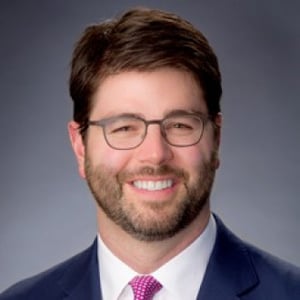
Partner, Wilkinson Barker Knauer LLP
Mr. Johnson provides advice and advocacy to clients navigating the complex terrain at the intersection of technology and security. Having served in a wide variety of national security and cybersecurity leadership roles on Capitol Hill, in the national security and intelligence communities, in the regulatory arena, and in the Executive Branch, Mr. Johnson focuses in particular on improving the effectiveness and efficiency of government-industry collaboration.
Mr. Johnson was Secretary Penny Pritzker’s Senior Adviser for Cybersecurity and Technology at the U.S. Department of Commerce, where he coordinated the Department’s cybersecurity initiatives and the Department’s support for the Commission on Enhancing National Cybersecurity. He was also the Department’s representative for National Security Council staff deliberations on cybersecurity, encryption, and other policy issues at the intersection of technology and security.
Previously, Mr. Johnson was appointed by Federal Communications Commission (FCC) Chairman Tom Wheeler as the FCC’s first Chief Counsel for Cybersecurity. In this position, he helped develop the FCC’s cybersecurity mission, focusing on creating new legal mechanisms for government collaboration with private sector stakeholders to improve the security and reliability of communications infrastructure. He was also the primary drafter of the charter for the Cybersecurity Forum for Independent and Executive Branch Regulators, a coordinating body of regulatory agencies which is presently chaired by the FCC.
Prior to his time at the FCC, Mr. Johnson was Senator John D. Rockefeller IV’s designated counsel on the Senate Intelligence Committee and counsel for defense, foreign policy, and international trade. In these roles, he was a leading staffer on bipartisan Senate cybersecurity initiatives and the primary staff drafter of the legislation that codified the National Institute of Standards and Technology’s collaborative process to work with industry to develop and update the widely-praised Cybersecurity Framework.
Before his government service, Mr. Johnson worked for a major Washington-based law firm, where he practiced in the areas of international trade, defense, and security. Earlier, he served as an Army officer in Germany, Korea, and the Balkans. He is a graduate of the University of Georgia School of Law, where he was the editor-in-chief of the Georgia Journal of International and Comparative Law, and he received a master of science degree in international relations from the London School of Economics and Political Science. He received his bachelor’s degree from Harvard, where he graduated cum laude, cross-enrolled at MIT for service as Executive Officer of its Army ROTC Paul Revere Battalion, and played varsity football.
Clete lives in Alexandria, Va. with his wife, Sheila, and their two children.
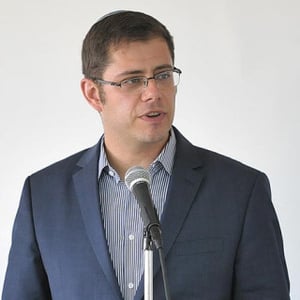
Professor of Law and Director, Center for the Middle East and International Law, George Mason University Antonin Scalia Law School
Professor of Law Eugene Kontorovich is one of the world’s preeminent experts on universal jurisdiction and maritime piracy, as well as international law and the Israel-Arab conflict. He is also the Director of Scalia Law School's Center for the Middle East and International Law. Professor Kontorovich joined the Scalia Law School from Northwestern University Pritzker School of Law where he was a Professor of Law from 2011 to 2018 and an Associate Professor from 2007 to 2011. Previously, he was a Visiting Professor at the University of Chicago from 2005 to 2007 and an Assistant Professor at George Mason School of Law from 2003 to 2007.
Professor Kontorovich has published over thirty major scholarly articles and book chapters in leading law reviews and peer-reviewed journals in the United States and Europe, including the American Journal of International Law, International Review of Law & Economics, Stanford Law Review, California Law Review, University of Pennsylvania Law Review, and Virginia Law Review. His scholarship has been cited in leading foreign relations and international law
His expertise is often sought out and quoted by major news organizations such the New York Times, Wall Street Journal, NPR News, The New Yorker, Los Angeles Times, and numerous television and radio programs. Prof. Kontorovich’s popular writings have appeared in the New York Times, Wall Street Journal, Los Angeles Times, POLITICO, Commentary, Haaretz, and numerous other leading publications. He is also a regular contributor to the Washington Post’s Volokh Conspiracy legal blog.
He attended the University of Chicago for college and law school. After law school, he clerked for Judge Richard Posner on the United States Court of Appeals for the Seventh Circuit. He has been honored with a fellowship at the Institute for Advanced Study in Princeton, in 2011-12, and with the Federalist Society’s prestigious Bator Award, given annually to a young scholar (under 40), for outstanding scholarship and teaching.
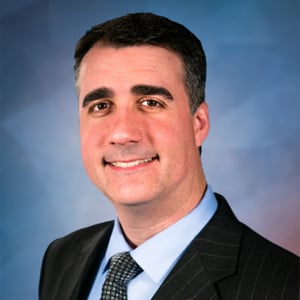
Director, Faculty Programs & Division Administrator, The Federalist Society
Anthony Deardurff serves as Director of Faculty Programs & Division Administrator. He previously practiced complex commercial and appellate litigation in the Washington, D.C. office of WilmerHale, LLP, and clerked on both the U.S. Court of Appeals for the Eleventh Circuit and the U.S. District Court for the Southern District of Texas. Mr. Deardurff earned his J.D. cum laude from Notre Dame Law School and his B.A. summa cum laude from the University of Dallas, where he was elected to Phi Beta Kappa. He holds a license to practice in both Illinois and the District of Columbia.
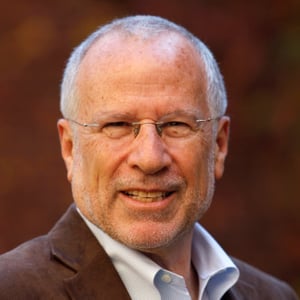
David and Mary Harrison Distinguished Professor of Law, University of Virginia School of Law
Frederick Schauer is David and Mary Harrison Distinguished Professor of Law at the University of Virginia, and previously was Frank Stanton Professor of the First Amendment at Harvard University. A Fellow of the American Academy of Arts and Sciences and recipient of a Guggenheim Fellowship, Schauer is the author of The Law of Obscenity (BNA, 1976), Free Speech: A Philosophical Enquiry (Cambridge, 1982), Playing By the Rules: A Philosophical Examination of Rule-Based Decision-Making in Law and in Life (Oxford, 1991), Profiles, Probabilities, and Stereotypes (Harvard, 2003), Thinking Like a Lawyer: A New Introduction to Legal Reasoning (Harvard, 2009), and The Force of Law (Harvard, 2015). The editor of Karl Llewellyn, The Theory of Rules (Chicago, 2011), and a founding editor of Legal Theory, he has chaired the Section on Constitutional Law of the Association of American Law Schools and the Committee on Philosophy and Law of the American Philosophical Association. In 2005 he wrote the Foreword to the Harvard Law Review’s Supreme Court issue, and has written widely on freedom of speech, constitutional interpretation, evidence, legal reasoning, and the philosophy of law.
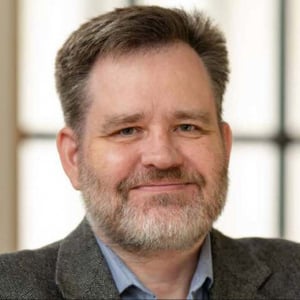
David Boies Professor of Law, Yale Law School
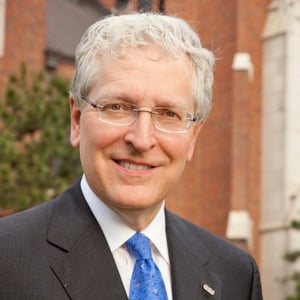
President, Oklahoma City University
Robert Henry is the 17th president of Oklahoma City University. He is a member of the Council on Foreign Relations, a member of the American Bar Association, serving as Chair of the Middle East and North Africa Council, board member of the Rule of Law Initiative, and was a board member of the Committee for the Africa Law Initiative Council. He is a member of the Judicial Advisory Board of the American Society of International Law. Henry is also a member of the American Law Institute, the Oklahoma Bar Association, the National Conference of Commissioners on Uniform State Law and the William J. Holloway Jr. American Inn of the Court, Master of the Court. He has served on the Civil Justice Reform Act Advisory Group, the Oklahoma Constitutional Revision Committee and the National Association of Attorneys General (Committees on Agricultural Law, Civil Rights, and Supreme Court Advocacy).
He returns to OCU after having served as Chief Judge of the United States Court of Appeals for the Tenth Circuit. Henry has a long-standing relationship with OCU, serving as Dean of the OCU School of Law and tenured Professor of Law from 1991-1994. He taught graduate and undergraduate courses at OCU and has been a frequent guest lecturer.
Henry has been a lifelong advocate for common and higher education. He co-authored the legislation that established the Oklahoma School of Science and Mathematics (OSSM), established the Sen. Penny Williams Lecture in Arts and Sciences at OSSM, and established the Henry Family Lecture Series at the University of Oklahoma College of Law and was the co-founder of the Oklahoma Symposium.
Henry has served on the Court of Appeals for 16 years. Prior to his appointment to the Court by President William J. Clinton, Henry served as Attorney General of the State of Oklahoma. He served ten years as a state representative in the Oklahoma House of Representatives, where he was Chair of the Majority Caucus, and Chair of the Committees on the Judiciary, Common Education and Appropriations and Budget Committee - General Government and Judiciary.
In addition to teaching at OCU, Henry also taught at the University of Oklahoma Honors College, Oxford Program; University of Oklahoma College of Law, served as Distinguished Judge in Residence, University of Tulsa College of Law and taught Business Law at Oklahoma Baptist University. He was a former chairman of the Board of Trustees of St. Gregory's College. He practiced law in Shawnee, Oklahoma for ten years.
Henry serves on the Committee on International Judicial Relations of the Judicial Conference of the United States, which he chaired from July 2005 – May 2008. He has also served on the Committee on Codes of Conduct of the Judicial Conference of the United States. He is also a Director and Honorary Lifetime Member of the Tenth Judicial Circuit's Historical Society Committee, and a member of the Tenth Judicial Circuit Court of Appeals Lawyer's Advisory Committee. He serves on the Board of Directors of the VERA Institute of Justice in New York; the Foundation for the Future, based in Amman, Jordan; and the Oklahoma Medical Research Foundation; on the Board of Visitors of the University of Oklahoma International Programs Center and Honors College; and on the Board of Advisors of the Jasmine Moran Foundation Children's Museum and the Columbia University National State Attorneys General Program.
The recipient of many honors and awards, Henry was inducted into the 2008 Oklahoma Hall of Fame. He was named "The Honored One," Oklahoma Sovereignty Symposium, Supreme Court of Oklahoma, 2008; received Certificate of Appreciation, US Department of State, 2008 and the Certificate of Gratitude, Council of Judges of the Russian Federation and Justice for substantial contribution to the development of relations between American and Russian Judges. Henry received the Distinguished Alumni award, University of Oklahoma Arts & Sciences, 2004; the E.T. Dunlap Award for Public Service, Southeastern Oklahoma University, 1998; Humanitarian of the Year Award, National Conference of Community and Justice, 1996. In 1993, Henry received the Myrtle Wreath Award for Humanitarianism, Oklahoma City Chapter of Hadassah; Conservationist of the Year, Oklahoma Wildlife Federation, 1989; Oklahoma Human Rights Award, Oklahoma Human Rights Commission, 1988; and Outstanding Young Oklahoman, Oklahoma Jaycees, 1988; the A. C. Hamlin Award, National Black Caucus of State Legislatures, 1984.
Henry has authored numerous chapters in a variety of volumes including: "Civil Rights Movement" in The Encyclopedia of Oklahoma History and Culture; "The Rehnquist Court: A Schwartzian Critique," in The Rehnquist Court: Farewell to the Old Order?; and "The Play and The Players," in The Burger Court: Counter-Revolution or Confirmation?. He was the principal author and narrator for the Oklahoma Educational Television Authority's series on arts and culture, "The People's Art," which received "Best of the Best" (program production) and also named 2008's finest news and information program for 2008 by the National Educational Telecommunications Association (NETA). In addition, Henry has authored scores of law review articles, scholarly journal articles and other published works. Henry serves as outside evaluator, reader, and columnist for World Literature Today Magazine, University of Oklahoma Press, Oklahoma Today, and Oklahoma Gazette.
Henry is married to Dr. Jan Ralls Henry, an Oklahoma City dentist, who will serve as first lady of Oklahoma City University. President and Dr. Henry reside in Wilson House on the OCU campus.
He has two children and four stepchildren: Rachel Henry, a recent graduate of the Tisch School of the Arts at New York University; Joshua Henry, a junior at OCU; Amie Bostian, a speech therapist in Edmond; Scott Ralls, a graphic designer in Seattle; Greg Ralls, an airline pilot in Edmond; and Daniel Ralls, an architect in Seattle.
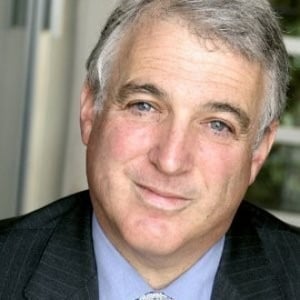
Partner, Spencer Fane LLP
Andy Lester has a civil litigation and appellate practice in both state and federal court. His fields of emphasis include complex business, civil rights, commercial, constitutional, and state and local government law. He has faced off against the White House over the use of Executive Privilege, has appeared as counsel before committees of the United States Senate and the United States House of Representatives, and has been a featured guest on television shows such as Hardball with Chris Matthews and The Situation Room with Wolf Blitzer. He has also served as Acting General Counsel for the Oklahoma House of Representatives, and has twice served as Chief Counsel to Special House Committees investigating public corruption.
While in law school, Lester served on President Ronald Reagan’s Transition Team for the Equal Employment Opportunity Commission. In 2002, he chaired Governor Brad Henry’s Law Enforcement/Corrections Transition Team and, as a member of the Budget/Finance Transition Team, helped write Governor Henry’s first State budget.
He is a former United States Magistrate Judge for the Western District of Oklahoma, and has served as Adjunct Professor at Oklahoma City University School of Law, having taught State & Local Government, Employment Law, Criminal Law, and International Law. Lester has written over 100 articles and papers on professional and public policy issues, and has published one book, Constitutional Law and Democracy, a collection of speeches he gave in 1993 in the former Soviet Union.
Lester is a former member of the Oklahoma State Regents for Higher Education, and in 2019 was named a State Regent Emeritus. He served on the board of Eureka College (President Reagan’s alma mater), is a former chairman of the Oklahoma Advisory Committee for the United States Commission on Civil Rights, and is a past president, past board chairman, and current board member of the Tenth Circuit Historical Society. He co-chaired the bipartisan Oklahoma Death Penalty Review Commission, which conducted the first-ever independent, objective, and thorough review of the state’s entire capital punishment system.
In 2012, Lester was named Citizen of the Year of Edmond, Oklahoma. He is a past president of the Rotary Club of Edmond, and in 2011 was named Rotarian of the Year.
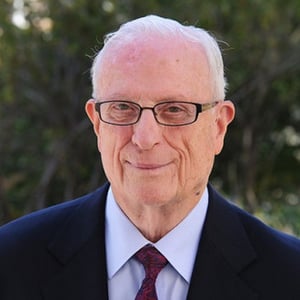
Of Counsel, Crowe & Dunlevy
Highly distinguished and respected, William G. Paul serves as an of counsel attorney in the Firm’s Oklahoma City office. His areas of practice encompass alternative dispute resolution, commercial transactions, corporate governance, and trusts and estates law.
William’s prestige and respect are evidenced by his leadership in various professional organizations. He has served as president of both the Oklahoma and American Bar Associations, the American Bar Endowment, the Oklahoma County Bar Association, and the National Conference of Bar Presidents to name a few.
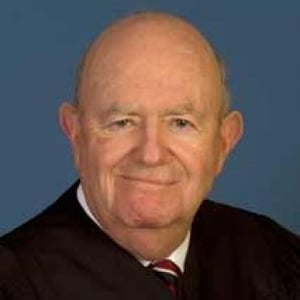
Judge, United States Court of Appeals, District of Columbia Circuit
LAURENCE HIRSCH SILBERMAN, senior circuit judge; recipient of the Presidential Medal of Freedom, June 19, 2008; born in York, PA, October 12, 1935; son of William Silberman and Anna (Hirsch); married to Rosalie G. Gaull on April 28, 1957 (deceased), married Patricia Winn on January 5, 2008; children: Robert Steven Silberman, Katherine DeBoer Fischer, and Anne Gaull Otis; B.A., Dartmouth College, 1957; LL.B., Harvard Law School, 1961; admitted to Hawaii Bar, 1962; District of Columbia Bar, 1973; associate, Moore, Torkildson and Rice, 1961–64; partner (Moore, Silberman and Schulze), Honolulu, 1964–67; attorney, National Labor Relations Board, Office of General Counsel, Appellate Division, 1967–69; Solicitor, Department of Labor, 1969–70; Under Secretary of Labor, 1970–73; partner, Steptoe and Johnson, 1973–74; Deputy Attorney General of the United States, 1974–75; Ambassador to Yugoslavia, 1975–77; President’s Special Envoy on ILO Affairs, 1976; senior fellow, American Enterprise Institute, 1977–78; visiting fellow, 1978–85; managing partner, Morrison and Foerster, 1978–79 and 1983–85; executive vice president, Crocker National Bank, 1979–83; lecturer, University of Hawaii, 1962–63; board of directors, Commission on Present Danger, 1978–85, Institute for Educational Affairs, New York, NY, 1981–85, member: General Advisory Committee on Arms Control and Disarmament, 1981–85; Defense Policy Board, 1981–85; vice chairman, State Department’s Commission on Security and Economic Assistance, 1983–84; American Bar Association (Labor Law Committee, 1965–72, Corporations and Banking Committee, 1973, Law and National Security Advisory Committee, 1981–85); Hawaii Bar Association Ethics Committee, 1965–67; Council on Foreign Relations, 1977–present; Judicial Conference Committee on Court Administration and Case Management, 1994; member, U.S. Foreign Intelligence Surveillance Act Court of Review, 1996–2003; Adjunct Professor of Law (Administrative Law and Labor Law) Georgetown Law Center, 1987–94; 1997; Adjunct Professor of Law, Harvard Law School, 1994-95, Adjunct Professor of Law, New York University Law School, 1995–96; Distinguished Visitor from the Judiciary, Georgetown Law Center, 2003–2019; co-chairman of the President’s Commission on The Intelligence Capabilities of the United States Regarding Weapons of Mass Destruction, 2004–05; appointed to the U.S. Court of Appeals for the District of Columbia Circuit by President Reagan on October 28, 1985.
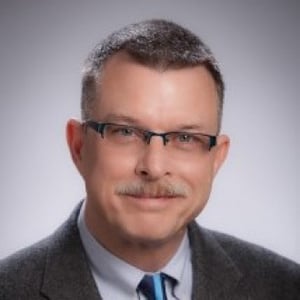
Founder and Senior Director, Institutional Religious Freedom Alliance
Stanley Carlson-Thies is the Founder and Senior Director of the Institutional Religious Freedom Alliance (IRFA), a division of the Center for Public Justice. As part of this role, he convenes the Coalition to Preserve Religious Freedom, a multi-faith alliance of social-service, education, and religious freedom organizations that advocates for the religious freedom of faith-based organizations to Congress and the federal government. In addition he is also a Senior Fellow at the Canadian think tank Cardus.
From 2009-2010 he served on a task force of President Obama’s Advisory Council on Faith-Based and Neighborhood Partnerships, helping to draft recommendations on how to clarify the church-state rules that apply to federal funding of social-service providers, and has consulted with federal departments and several states.
He served with the White House Office of Faith-Based & Community Initiatives from its inception in February 2001 until mid-May 2002. He assisted with writing “Unlevel Playing Field: Barriers to Participation by Faith-Based and Community Organizations in Federal Social Service Programs,” a report released by the White House in August 2001, and “Rallying the Armies of Compassion,” the initial blueprint for President George W. Bush’s faith and community agenda.
Previously, he was Director of Social Policy Studies for CPJ and directed CPJ’s project to track the implementation and impact of the Charitable Choice provision of the 1996 federal welfare reform law. Following his term in the White House, he returned to CPJ as the Director of Faith-based Policy Studies.
He received the William Bentley Ball Life and Religious Liberty Defense Award from the Center for Law and Religious Freedom and the Christian Legal Society in October 2004. He was named as one of 12 advocates who are “reinterpreting God and country” by the National Journal in May 2004. He holds a doctorate in political science from the University of Toronto. His dissertation is on the role of Protestants and Catholics in the development of Dutch politics in the 19th and 20th centuries. Besides the United States, he has lived in Canada, the Netherlands, and Japan, where he was born of missionary parents. He lives in Annapolis, Maryland, with his wife, Christiane. They are the proud parents of Simon.
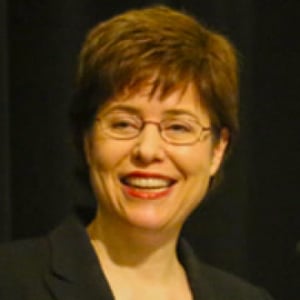
Nonresident Senior Fellow in Governance Studies, The Brookings Institute
Melissa Rogers is a nonresident senior fellow in Governance Studies. She recently served as special assistant to the president and executive director of the White House Office of Faith-based and Neighborhood Partnerships, during the Obama administration. Melissa previously served as chair of the inaugural Advisory Council on Faith-based and Neighborhood Partnerships. Prior to that she was director of the Center for Religion and Public Affairs at Wake Forest University Divinity School. She has also served as executive director of the Pew Forum on Religion and Public Life and general counsel of the Baptist Joint Committee for Religious Liberty. Her area of expertise includes the First Amendment's religion clauses, religion in American public life, and the interplay of religion, policy, and politics. Rogers co-authored a case book on religion and law for Baylor University Press, Religious Freedom and the Supreme Court (2008). She holds a J.D. from University of Pennsylvania Law School and a B.A. from Baylor University.
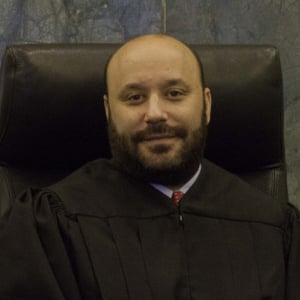
Judge, United States District Court, Eastern District of Arkansas
Lee Philip Rudofsky is a judge on the United States District Court for the Eastern District of Arkansas. Prior to his 2019 appointment by President Trump, Judge Rudofsky served as the Solicitor General of Arkansas, an Assistant General Counsel at Walmart, a Senior Litigation Associate at Kirkland & Ellis, and counsel to several Republican political campaigns. Today, in addition to his judicial service, Judge Rudofsky teaches law school classes on founding-era constitutional history and, separately, speaks to students across the country about the October 7th Massacre and the subsequent Israeli response. In 2024, Judge Rudofsky helped establish an annual judicial education mission to Israel that offers American judges the opportunity to learn first-hand about the Israeli legal system, Israeli society, and legal issues related to the Israel-Hamas war.
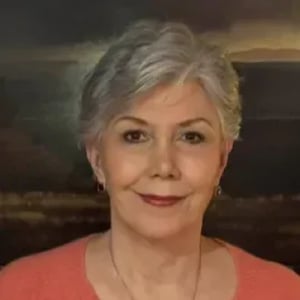
Chairman, Center for Equal Opportunity
Linda Chavez is Chairman of the Center for Equal Opportunity. She has published opinions and columns in newspapers across the country and appears regularly on cable news. Chavez is the author of the three books: Out of the Barrio: Toward a New Politics of Hispanic Assimilation, An Unlikely Conservative: The Transformation of an Ex-Liberal, and Betrayal: How Union Bosses Shake Down Their Members and Corrupt American Politics. She has been honored by the Library of Congress as a "Living Legend" and as nominee for Secretary of Labor by President George W. Bush.
Chavez has held many appointed positions and has served on numerous corporate and nonprofit boards. Among her appointed positions has been Chairman, National Commission on Migrant Education (1988-1992); White House Director of Public Liaison (1985); Staff Director of the U.S. Commission on Civil Rights (1983-1985); and member of the Administrative Conference of the United States (1984-1986). Chavez was also the Republican nominee for U.S. Senator from Maryland in 1986 and was elected by the United Nations' Human Rights Commission to serve a four-year term as U.S. Expert to the U.N. Sub-commission on the Prevention of Discrimination and Protection of Minorities.
Chavez earned her BA from the University of Colorado.
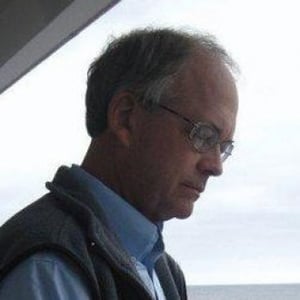
Senior Fellow, Center for Equal Opportunity
Eastland is an accomplished journalist who was editor of The Virginian-Pilot in Norfolk, Va., before working in the Reagan administration as a speechwriter for Attorney General William French Smith and as director of public affairs for Attorney General Edwin Meese.
Eastland was later a resident scholar at the Ethics and Public Policy Center and the editor of Forbes MediaCritic. In 2001, he became publisher of The Weekly Standard and, in 2013, an executive editor. He is now a contributing editor at the magazine. Eastland has published seven books, including two on race preferences, Counting by Race (1979) and Ending Affirmative Action (1996). "The Center has done exceptional work on matters involving race and ethnicity," said Eastland, "and I look forward to contributing to its efforts in behalf of equal protection under the law."
CEO president and general counsel Roger Clegg recalled his work with Eastland during their days together in the Reagan Justice Department: "Terry is an expert on the media, a skilled editor, and a brilliant writer." CEO chairman and founder Linda Chavez said, "Eastland's writing on affirmative action has been among the most incisive and compelling on the issue over the years and will add depth to CEO's work in this arena."
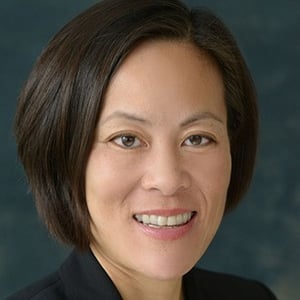
Director, Educational Opportunities Project, Lawyers’ Committee for Civil Rights Under Law
Brenda Shum is Director of the Educational Opportunities Project at the Lawyers' Committee for Civil Rights Under law where she oversees complex litigation, public policy advocacy, and programs designed to ensure educational equity for all students and to eliminate discriminatory practices in schools. sHer practice focuses on the enforcement of civil rights in both K-12 and higher education systems. She is part of the legal team representing underrepresented minority students and applicants defending race conscious admissions policies at Harvard and the University of North Carolina. She was one of the lead counsel in successful litigation which challenged Maryland's failure to desegregate its discriminatory system of higher education, and she served as part of the legal team that settled a lawsuit against the Louisiana State Department of Education which challenged the state's failure to address disability discrimination in New Orleans charter schools. As Director of the Educational Opportunities Project, Brenda works to ensure that federal and state policy protects our most vulnerable students, including students of color, students with disabilities, low-income students, and English Language Learners. Brenda serves on the steering committee for the National Coalition for School Diversity, the Education Civil Rights Alliance, and the Dignity in Schools Campaign. She also oversees the Parental Readiness and Empowerment Program, an initiative designed to support parents and families in becoming more effective advocates for their children, and Let Us Learn, an initiative that protects the right of all students to enroll in public school regardless of immigration status.
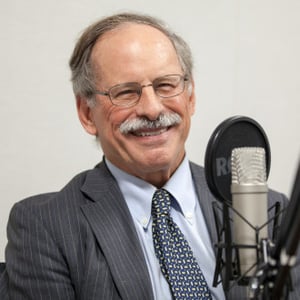
Freelance Journalist and Author
Stuart Taylor, Jr. is a Washington writer focusing on legal and policy issues and a National Journal contributing editor. He occasionally practices law.
Taylor has coauthored three books. All have been acclaimed by commentators across the ideological spectrum. In January 2017, KC Johnson and Taylor authored The Campus Rape Frenzy: The Attack on Due Process at America's Universities. In 2012, Richard Sander and Taylor authored Mismatch: How Affirmative Action Hurts Students It's Intended to Help, and Why Universities Won't Admit It. In 2007, Taylor and Johnson authored Until Proven Innocent: Political Correctness and the Shameful Injustices of the Duke Lacrosse Rape Fraud. Sander and Taylor have also filed amicus briefs in Supreme Court cases involving admissions preferences.
Since 1980, Taylor has done reporting and commentary about issues ranging from the biggest Supreme Court cases to race, voting rights, mindlessly excessive criminal penalties, guilt-presuming campus rape processes, journalistic bias, the death penalty, war powers, gerrymandering, guns, polarization, civil liberties, national security, torture, campaign finance, education, impeachment, and other issues. He has often been called one of the nation's best legal journalists and is known for challenging both liberal and conservative conventional wisdom.
Taylor was a reporter for The New York Times from 1980-1988, covering legal affairs and then the Supreme Court. He wrote commentaries and long features for The American Lawyer, Legal Times and their affiliates from 1989-1997, and for National Journal and Newsweek from 1998 through 2010. He has written (less often) on a freelance basis for numerous publications since 2010. He has written op-eds for The Washington Post, The New York Times, The Wall Street Journal, The Los Angeles Times, USA Today, and The New York Daily News and longer commentaries for RealClearPolitics, The Atlantic, The New Republic, the (late) Weekly Standard, National Review, Slate, The Daily Beast, Harper’s, Reader’s Digest, Time and other magazines. He has been interviewed on all major television and radio networks. He taught “Law and the News Media” at Stanford Law School in 2011 and 2012 and practices law on occasion.
Taylor graduated from Princeton University in 1970 with an A.B. in History. After working as a reporter for the Baltimore Evening Sun and Sun from 1971-1974, he moved to Harvard Law School, was a Harvard Law Review note editor, and graduated in 1977 at the top of his class, with high honors. He also won a Frederick Sheldon Traveling Fellowship and traveled around the world in 1977-1978 while studying freedom of the press in the United Kingdom and Kenya.
Taylor practiced law with Wilmer, Cutler & Pickering, in Washington, D.C., from 1977-1980 before returning to journalism in 1980 by joining the Washington Bureau of The New York Times.
Taylor's journalism honors include the 2009 Northern California Innocence Project Media Award for his work on the Duke lacrosse rape fraud; a 2002 National Headliner Award for best special magazine column on one subject; and a share of The American Lawyer’s National Magazine Award for a March 1990 special issue on the drug war. He was a National Magazine Award finalist in 1993 and 1997 and was nominated by The New York Times for a Pulitzer Prize in 1988.
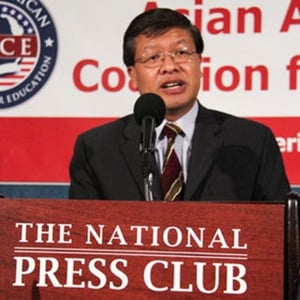
President, Asian American Coalition for Education
Mr. Yukong Zhao is a distinguished Chinese American civil-rights activist, the President of the Asian American Coalition for Education, and the author of the book, The Chinese Secrets For Success: Five Inspiring Confucian Values.
In May 2015 Mr. Zhao and other Asian American leaders united 64 Asian American organizations and filed a civil-rights complaint against Harvard University. As the largest joint action taken by Asian-American communities in recent history, the plaintiffs contend that the complaint helped expose Ivy League colleges’ systematic discrimination against Asian American applicants to the national and world stage. The complaint is currently under the investigation by the U.S. Department of Justice.
In addition to continuing the fight for Asian American children's equal education rights, Mr. Zhao also writes columns in Orlando Sentinel, Forbes, The World Journal, Sing Tao Daily and IndiaWest to promote Chinese culture and advance Asian American social progress.

Senior Research Fellow, Center for Equal Opportunity
In D.C. area for over 20 years, Althea Nagai, Ph.D., is a research fellow at the Center for Equal Opportunity. She has conducted numerous statistical analyses on racial and ethnic preferences in higher education, including racial and ethnic preferences in undergraduate education at five public universities in Virginia, the University of Michigan, two Arizona universities, the University of Wisconsin-Madison, two Ohio universities, and various law and medical schools. In addition, she has written two essays for CEO focusing on Asian Americans, “Too Many Asian Americans,” and “Harvard Investigates Harvard.”
She has also has done work on other statistical studies in the field of social policy. Her first study was a content analysis and critique of the national history standards with John Fonte and Lynne Cheney. She has also conducted studies on marriage, religion, and family structure; on adolescent risk behavior; on philanthropy and social change; and on American elites (American Elites, with Robert Lerner and Stanley Rothman, 1996 Yale University Press).
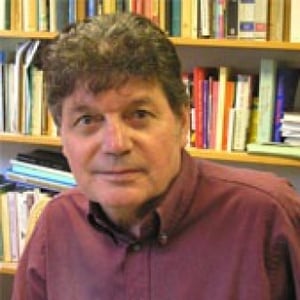
Professor of Social and Political Theory, University of Buckingham
Norman Patrick Barry was an English political philosopher best known as an exponent of classical liberalism. For much of his career he was a professor of social and political theory at the University of Buckingham. He passed away in October 2008.

Laurence A. Tisch Professor of Law and Director, Classical Liberal Institute, New York University School of Law; Director, Classical Liberal Institute, Civitas Institute University of Texas at Austin
Richard A. Epstein is the Laurence A. Tisch Professor of Law, at New York University, a senior research fellow at the Civitas Institute at the University of Texas Austin, and a senior Lecturer, the University of Chicago. He received an LL.D., h.c . from the University of Ghent, 2003 , and an LLD h.c . from the University of Siegen in 2018 and the Bradley Prize in 2011. He has been a member of the American Academy of Arts and Sciences since 1985. He has edited both the Journal of Legal Studies (1981-1991) and the Journal of Law and Economics (1991-2001). He is also a founder and director of the Classical Liberal Institute at NYU Law School. His most recent book is The Classical Liberal Constitution: The Uncertain Quest for Limited Government (2014). His other books include Takings: Private Property and the Power of Eminent Domain ( 1985); Bargaining with the State (1993); Simple Rules for a Complex World (1995); Principles for a Free Society: Reconciling Individual Liberty and the Common Good (1998); Skepticism and Freedom: A Modern Theory of Classical Liberalism (2003); Design for Liberty: Private Property, Public Administration and the Rule of Law (2011), and most recently, The Myth of Birthright citizenship—and Beyond (2026). He has taught courses in , administrative law, antitrust, constitutional, contracts, environmental law, land use planning; real property, torts and water law. He has written and spoken extensively on a wide range of topics, and is writes a regular column for Defining Ideas.
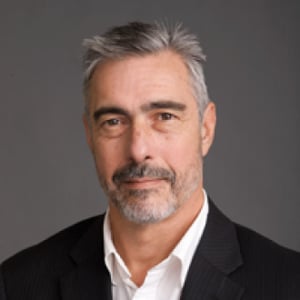
Professor of Law, Georgetown Law
After graduating from law school, where he served on the Harvard Law Review and won the Sears Prize, Professor Peller clerked for the Honorable Morris Lasker of the U.S. District Court for the Southern District of New York. He was a member of the University of Virginia Law faculty from 1982-1988 prior to joining the Georgetown faculty. He has taught Constitutional Law, Contracts, Torts, Civil Rights, Bargain, Exchange & Liability, Criminal Procedure, Radical Legal Thought, and Jurisprudence at Georgetown. His writings are primarily in the field of legal theory and legal history. His most recent book is Critical Race Consciousness: Reconsidering American Ideologies of Racial Justice (Paradigm 2012).
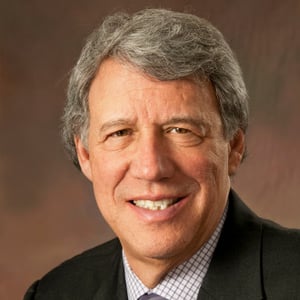
Edward H. Levi Distinguished Service Professor of Law, University of Chicago Law School
Geoffrey R. Stone is the Edward H. Levi Distinguished Service Professor at the University of Chicago. Mr. Stone joined the faculty in 1973, after serving as a law clerk to Supreme Court Justice William J. Brennan, Jr. He later served as Dean of the Law School (1987-1994) and Provost of the University of Chicago (1994-2002).
Stone is the author of many books on constitutional law, including Sex and the Constitution: Sex, Religion and Law from America’s Origins to the Twenty-First Century (2017); Speaking Out: Reflections of Law, Liberty and Justice (2010 & 2016); Top Secret: When Our Government Keeps Us in the Dark (2007), War and Liberty: An American Dilemma (2007), Perilous Times: Free Speech in Wartime (2004), and Eternally Vigilant: Free Speech in the Modern Era(Chicago 2002). He is also an editor of two leading casebooks, Constitutional Law (7th ed. 2013) and The First Amendment (5th ed. 2016). Stone is an editor of The Supreme Court Reviewand chief editor of a twenty-volume series, Inalienable Rights, which is being published by the Oxford University Press.
Stone was appointed by President Obama to serve on the President’s Review Group on Intelligence and Communications Technologies, which evaluated the government’s foreign intelligence surveillance programs in the wake of Edward Snowden’s leaks. He is a Fellow of the American Academy of Arts and Sciences, a member of the America Law Institute, the National Advisory Council of the American Civil Liberties Union, a member of the American Philosophical Society, and a member of the Board of Advisors of the Council for Democracy and Technology. He has served as Chair of the Board of the American Constitution Society and Chair of the Board of the Chicago Children’s Choir.
Stone has also written amicus briefs for constitutional scholars in a number of Supreme Court cases, including Obergefell v. Hodges, Whole Woman’s Heath v. Hellerstadt, Lawrence v. Texas, United States v. Windsor, United States v. Stevens, and Rasul v. Bush. He was also one of the lawyers who represented President Bill Clinton in the Supreme Court in Clinton v. Jones.
Shareholder, Ogletree, Deakins, Nash, Smoak & Stewart
Chris Murray is Co-Chair of the firm’s Arbitration and Alternative Dispute Resolution Practice Group. In this role, he assists attorneys throughout the firm and clients nationwide to create, roll out, and enforce effective employment arbitration agreements and other ADR programs. Mr. Murray has extensive experience with class/collective action waivers in employment arbitration. Mr. Murray was part of the Ogletree team that successfully defended the use of such waivers in the Fifth Circuit’s landmark decision in D.R. Horton, Inc. v. N.L.R.B. Since then, he has successfully defended the enforceability of class action waivers in numerous subsequent cases and submitted an amicus brief on the subject on behalf of several major employers’ associations in the Supreme Court’s Murphy Oil case. Mr. Murray assists clients and the Firm’s attorneys to draft or revise arbitration programs focused on a client’s specific needs and goals and in light of changing law and evolving best practices.

Courthouse Steps: Masterpiece Cakeshop v. Colorado CRC Decided
Dale A. Carpenter, Kim Colby
Religious Liberties Practice Group Teleforum
Masterpiece Cakeshop v. Colorado CRC, one of the most highly publicized of the term, was decided 7-2...
Supply Chain: The Role of Chinese Equipment in U.S. Tech
Nova Daly, Sarah Roland Geffroy, Clete D. Johnson
International & National Security Law and Telecommunications & Electronic Media Practice Group Teleforum
“Supply chain security” has been a hot topic in Congress and federal agencies in recent...
Jesner v. Arab Bank, PLC - Post-Decision SCOTUScast
Eugene Kontorovich
SCOTUScast featuring Eugene Kontorovich
On April 24, 2018, the Supreme Court decided Jesner v. Arab Bank, PLC, a case...
Speak Freely: Why Universities Must Defend Free Speech
Anthony M. Deardurff, Frederick Schauer, Keith E. Whittington
Co-Sponsored by the Free Speech & Election Law Practice Group and the Faculty Division
In Speak Freely, Prof. Whitting ton argues that universities have a distinctive and important mission...
Lawyers & the U.S. Justice System [Archive Collection]
Robert H. Henry, Andy Lester, William G. Paul, Laurence H. Silberman
Oklahoma City Lawyers Chapter
On June 22, 1999, the Oklahoma City Federalist Society Chapter hosted a panel discussion on...
White House Faith and Opportunity Initiative Executive Order
Stanley Carlson-Thies, Melissa Rogers
Religious Liberties Practice Group Teleforum
On May 3, 2018, President Trump signed an executive order establishing a White House Faith...
Wilson v. Sellers - Post-Decision SCOTUScast
Lee Rudofsky
SCOTUScast featuring Lee Rudofsky
On April 17, 2018, the Supreme Court decided Wilson v. Sellers, a case involving the...
Are U.S. Colleges and Universities Barring Asian Applicants Based on their Race?
Linda L. Chavez, Terry H. Eastland, Brenda Shum, Stuart S. Taylor, Yukong Zhao, Althea Nagai
Regulatory Transparency Project
On May 22, the Regulatory Transparency Project and the Center for Equal Opportunity co-sponsored a...
Panel I: The Classical Theory of Law [Archive Collection]
Norman P. Barry, Janice L. Calabresi, Richard A. Epstein, Gary Peller, Geoffrey R. Stone
1987 National Student Symposium
On April 3, 1987, the University of Chicago chapter hosted the Sixth Annual National Student...
Courthouse Steps: Epic Systems Corp. v. Lewis Decided
Christopher C. Murray
Labor & Employment Law Practice Group Teleforum
On May 21, the Supreme Court decided Epic Systems v. Lewis; a consolidated case with...