

Director, GW Regulatory Studies Center & Distinguished Professor of Practice, Trachtenberg School of Public Policy & Public Administration, The George Washington University
Susan Dudley is the Founder and Director of the George Washington University Regulatory Studies Center, established in 2009 to raise awareness of regulations’ effects and improve regulatory policy through research, education, and outreach. She is also a distinguished professor of practice in the Trachtenberg School of Public Policy and Public Administration. She is past-president of the Society for Benefit Cost Analysis, a senior fellow of the Administrative Conference of the United States, and on the Regulatory Transparency Project Regulatory Practice Working Group. Her book, Regulation: A Primer, with Jerry Brito, is available on Amazon.com.
From April 2007 through January 2009, Professor Dudley served as the Presidentially-appointed Administrator of the Office of Information and Regulatory Affairs in the U.S. Office of Management and Budget and was responsible for the review of draft executive branch regulations under Executive Order 12866, the collection of federal-government-wide information under the Paperwork Reduction Act, the development and implementation of government-wide policies in the areas of information policy, privacy, and statistical policy, and international regulatory cooperation efforts.
Prior to OIRA, she directed the Regulatory Studies Program at the Mercatus Center at George Mason University, and taught courses on regulation at the George Mason University School of Law. Earlier in her career, Professor Dudley served as an economist at OIRA, as well as the Environmental Protection Agency and the Commodity Futures Trading Commission. She was also a consultant to government and private clients at Economists Incorporated. She holds a Master of Science degree from the Sloan School of Management at MIT and a Bachelor of Science degree (summa cum laude) in Resource Economics from the University of Massachusetts, Amherst.
Samuel Candler Dobbs Professor of Economics Emeritus, Emory University
Paul H. Rubin is the Samuel Candler Dobbs Professor of Economics Emeritus in the Economics Department of Emory University and a former Professor of Law and Economics at the School of Law. He served as editor-in-chief of Managerial and Decision Economics. In addition, he is associated with the Mont Peleron Society, the Independent Institute, and the American Enterprise Institute, and a Fellow of the Public Choice Society and former President of the Southern Economics Association. Professor Rubin was Senior Economist at the Council of Economic Advisers under President Reagan, Chief Economist at the U.S. Consumer Product Safety Commission, Director of Advertising Economics at the Federal Trade Commission, and Vice-President of Glassman-Oliver Economic Consultants, Inc., a litigation consulting firm in Washington. He has taught economics at the University of Georgia, City University of New York, VPI, and law and economics at George Washington University Law School. Professor Rubin has written or edited several books, and has published over one hundred articles and chapters on economics, law, and regulation.
Much of Professor Rubin's writing is in law and economics, with a focus on tort, crime and contract issues. His areas of research interest include law and economics, industrial organization, transaction cost economics, government and business, public choice, regulation and price theory, and evolution and economics. His work has been cited in the professional literature over 11,100 times. He has consulted widely on litigation related matters, and has addressed numerous business, professional, policy and academic audiences. He has testified three times before Congress, and has served as an advisor on tort issues to the Congressional Budget Office.
Professor Rubin is the author of the well known paper "Why Is the Common Law efficient?" Journal of Legal Studies, 1977, which has been reprinted eight times, in English, Spanish and French.
Senior Vice President, Spectrum Strategy & Technology Policy, Qualcomm
Dean Brenner is Senior Vice President, Government Affairs for Qualcomm Incorporated. He directs Qualcomm’s global spectrum acquisitions and strategy and is responsible for global technology policy. He represents Qualcomm before the Federal Communications Commission and other agencies of the United States and Canadian governments responsible for spectrum and telecommunications policy and interacts with spectrum regulators around the world. He also leads Qualcomm’s policy initiatives relating to mobile healthcare.
Mr. Brenner led Qualcomm’s bidding team in recent spectrum auctions in India (the 2.3 GHz band), the United States (the 700 MHz band), and the United Kingdom (the L Band). In addition, he was responsible for obtaining the regulatory approvals for Qualcomm’s sale of 700 MHz spectrum to AT&T in 2011. In 2006, he obtained the regulatory approvals to launch FLO TV, a mobile TV service. He has spoken at conferences on spectrum policy in the United States, Canada, South Korea, Belgium, Great Britain, and elsewhere around the world. He joined Qualcomm in November 2003.
Mr. Brenner received his A.B. degree, magna cum laude with distinction in public policy studies, from Duke in 1982. He won a prize for the best paper on communications policy, and he was a recipient for four years of a CBS Scholarship. He received his J.D., cum laude, from Georgetown University in 1985. He is admitted to the Bars of the District of Columbia, Maryland, and the U.S. Supreme Court, the U.S. Courts of Appeal for the D.C., Third, and Eleventh Circuits, and the U.S. District Court for the District of Columbia.
Mr. Brenner is a member of the Federal Advisory Board for Space-Based Positioning, Navigation, & Timing, which advises the Executive Branch on policy matters impacting the Global Positioning System. He is also a member of the Board of Governors of 4G Americas, the Board for Jewish Life at Duke University, and the Board of Trustees of the Field School. He lives in Washington, DC with his wife Robin Shaffert and their two sons, Michael and Steven.

Director (Group Manager), Technology and Innovation Policy, Toyota North America
Hilary Cain is Director of Technology and Innovation Policy for Toyota. In this position, she handles policy issues relating to connected and automated vehicle technology, including artificial intelligence, data privacy, cybersecurity, and telecommunications.
Prior to joining Toyota, Cain was on the staff of the U.S. House of Representatives’ Committee on Science, Space, and Technology. She served as Staff Director of the Subcommittee on Technology and Innovation with jurisdiction over matters relating to competitiveness, technology, standards, and innovation. Previously, as a Counsel to the Committee, she handled parliamentary, procedural, and jurisdictional matters and participated in the development and implementation of legislative strategy. Before joining the Committee staff, Cain served as Legislative Director and Ways and Means Counsel for individual Members of Congress.
She holds a J.D. and a M.A. in Public Affairs from the University of Texas, and a B.A. in Political Science with honors from the University of Washington.

Vice President & Associate General Counsel, NCTA- The Internet & Television Association
Danielle J. Piñeres is a Vice President & Associate General Counsel at NCTA – The Internet & Television Association, where she focuses on wireless spectrum policy issues. Prior to her employment at NCTA, Ms. Piñeres worked as an associate with the law firm of Harris, Wiltshire & Grannis LLP in Washington, D.C., where she practiced in the areas of telecommunications (including spectrum regulation), international trade and foreign investment, and appellate litigation. Before joining HWG, Ms. Piñeres clerked for the Honorable Emily C. Hewitt at the United States Court of Federal Claims. Ms. Piñeres received her J.D. magna cum laude from the Georgetown University Law Center.

Professor of Law, University of Michigan Law School
Christopher J. Walker is a Professor of Law at the University of Michigan. Prior to joining Michigan law faculty in 2022, he spent a decade teaching at The Ohio State University Moritz College of Law. He previously clerked for Justice Anthony Kennedy of the U.S. Supreme Court, worked on the Civil Appellate Staff at the U.S. Department of Justice, and served on the Senate Judiciary Committee staff for the Gorsuch Supreme Court confirmation. Professor Walker’s research focuses on administrative law, regulation, and law and policy at the agency level. Outside the law school, he chaired the American Bar Association’s Section of Administrative Law and Regulatory Practice in 2020-21 and served as one of forty Public Members of the Administrative Conference of the United States from 2016-2022, and he continues to serve in both organizations in various capacities. He also works of counsel at the U.S. Chamber Litigation Center. In 2022, he received the Federalist Society’s Joseph Story Award.

Executive Director, State and Local Legal Center
Lisa Soronen is the Executive Director of the SLLC. Prior to joining the SLLC, Lisa worked for the National School Boards Association, the Wisconsin Association of School Boards, and clerked for the Wisconsin Court of Appeals. She earned her J.D. at the University of Wisconsin Law School and is a graduate of Central Michigan University.
Senior Counsel and VP, Appellate Advocacy, Alliance Defending Freedom
John Bursch is senior counsel and vice president of appellate advocacy with Alliance Defending Freedom. Bursch has argued 12 U.S. Supreme Court cases and more than 30 state supreme court cases since 2011, and a recent study concluded that among all frequent Supreme Court advocates who did not work for the federal government, he had the 3rd highest success rate for persuading justices to adopt his legal position.
Bursch served as solicitor general for the state of Michigan from 2011-2013. He has argued multiple Michigan Supreme Court cases in eight of the last ten terms and has successfully litigated hundreds of matters nationwide, including six with at least $1 billion at stake. As part of his private firm, Bursch Law PLLC, he has represented Fortune 500 companies, foreign and domestic governments, top public officials, and industry associations in high-profile cases, primarily on appeal. He was inducted into the American Academy of Appellate Lawyers and serves as a member of the American Law Institute. His work has resulted in repeated listings in Michigan Super Lawyers and Best Lawyers.
Before entering private practice, Bursch served as a law clerk to the Honorable James B. Loken on the U.S. Court of Appeals for the 8th Circuit. He received his J.D. magna cum laude in 1997 from the University of Minnesota Law School, where he served as Chief Note & Comment Editor for the Minnesota Law Review. Prior to that, he attended Western Michigan University, where he received degrees in mathematics and music performance summa cum laude.
Welpton & Wise Professor of Law, University of Nebraska College of Law
Professor Rick Duncan is the Welpton & Wise Professor of Law at the University Of Nebraska College Of Law. He is a graduate of the Cornell Law School and served as an editor of the Cornell Law Review. He teaches Constitutional Law with a special emphasis on the law of religious freedom, free speech, and federalism. Duncan has written numerous books, articles, and commentaries on a wide variety of legal topics. His recent publications include an article on Justice Scalia’s legacy, another on Kermit Gosnell and Roe v. Wade, a piece on the Electoral College and Federalism, a 2019 piece on Masterpiece Cakeshop and the First Amendment, and three recent articles on the “no compelled speech” doctrine as a First Amendment defense against authoritarianism and tyranny. His most recent article, on School Choice and the First Amendment, will be published in 2023 in Case Western Law Review. He is also the co-author of a book on Secured Transactions under Article 9 of the UCC. He served as Chairman of the Nebraska Advisory Committee to the U.S. Commission on Civil Rights during the Reagan Administration. He also loves to speak at Federalist Society meetings around the country on life, liberty, and the pursuit of federalism.
Duncan has five children, five grandchildren, and a wonderful wife who help him pursue happiness. He loves lifting weights (particularly going heavy on the incline bench press), attending Broadway musicals and plays, including Hamilton: An American Musical which he has seen 12 times (possibly a Nebraska record). He regularly reads both the Bible and the New York Times because it is important to keep up with what both sides have to say. He loves following major league baseball, especially the San Diego Padres. And his favorite legal aphorism is “first come rights then comes government to secure those rights.”

Vice President of Regulatory and Corporate Affairs, Cogeco Inc.
Paul Beaudry is Vice President, Regulatory and Corporate Affairs at Cogeco Inc. He leads Cogeco’s regulatory function in Canada and the United States, and represents the company in proceedings before the CRTC, the Federal Communications Commission and other government departments and regulatory agencies. He also oversees compliance with regulatory requirements imposed on the company at each level of government, in both countries. In addition, Paul leads Cogeco’s Sustainability team and the strategy for public disclosure of ESG matters. He joined Cogeco in November 2020 and has since held progressively larger leadership roles within the organization.
Prior to joining Cogeco, Paul served as Director of Regulatory Affairs at TELUS in Calgary. He also practiced competition and foreign investment law at Stikeman Elliott LLP and Ogilvy Renault LLP (now Norton Rose Fulbright) and served as a senior policy advisor to Canada’s Minister of Industry.
Paul is a graduate of the University of Montreal Faculty of Law and is a member of the Quebec Bar. He serve on the boards of the Institut national de santé publique du Québec, the Cable Public Affairs Channel (CPAC), La Fondation La Rue des Femmes and the Canadian chapter of the International Institute of Communications. He also sits on the Governors Council of Golf Canada.

Chief Executive Officer, OUTtv
Brad Danks is the CEO of OUTtv a Canadian specialty channel and OTT Platform that broadcasts in Canada and around the World. His day to day activities include overseeing all aspects of the channel including all matters relating to dealing with cable companies and affiliates, programming acquisitions and sales, marketing and sales and new media. In addition, he is deeply involved in the development and financing of new film and television properties. He is also an educator that teaches Entertainment and Media issues at a number of institutions and is an Adjunct Professor of Law at the University of Victoria.

Senior Research Fellow, Center for Growth and Opportunity
William Rinehart is a Senior Research Fellow at the Center for Growth and Opportunity at Utah State University.
He specializes in telecommunication, Internet, and data policy, with a focus on emerging technologies and innovation. His work has appeared in The Wall Street Journal, Bloomberg, Wired, Morning Consult, The Hill, Forbes, Reason, Marginal Revolution, Overlawyered, and on BBC Radio and NPR, just to name a few. Rinehart speaks regularly on topics related to tech policy and has been cited in regulatory orders from the FCC as well as Supreme Court petitions.
Rinehart came to the Center from the American Action Forum, where he served as Director of Technology and Innovation Policy. He was also previously a Research Fellow at TechFreedom and the Director of Operations at the International Center for Law & Economics. Additionally, he worked for the Institute for Policy and Civic Engagement as the Research Assistant in Technology and Civic Engagement. Rinehart is currently a Frédéric Bastiat Fellow at the Mercatus Center and previously a Fellow at the Internet Law & Policy Foundry. Additionally, he served on the Federal Communications Commission’s Broadband Deployment Committee and Consumer Advocacy Committee.

Chief Policy Counsel, Council on Criminal Justice and Senior Advisor, Right on Crime
Marc A. Levin is the Chief Policy Counsel for the Council on Criminal Justice (counciloncj.org) and Senior Advisor for Right on Crime.
An attorney and accomplished author on legal and public policy issues, Marc began the Foundation’s criminal justice program in 2005. This work contributed to nationally praised policy changes that have been followed by dramatic declines in crime and incarceration in Texas. Building on this success, in 2010, Levin developed the concept for the Right on Crime initiative, a TPPF project in partnership with Prison Fellowship and the American Conservative Union Foundation. Right on Crime has become the national clearinghouse for conservative criminal justice reforms and has contributed to the adoption of policies in dozens of states that fight crime, support victims, and protect taxpayers.
In 2014, Levin was named one of the “Politico 50” in the magazine’s annual “list of thinkers, doers, and dreamers who really matter in this age of gridlock and dysfunction.”
Marc has testified on criminal justice policy on four occasions before Congress and has testified before legislatures in states including Texas, Nevada, Kansas, Wisconsin, and California. He also has met personally with leaders such as U.S. Presidents, Speakers of the House, and the Justice Commtitee of the United Kingdom Parliament to share his ideas on criminal justice reform. In 2007, he was honored in a resolution unanimously passed by the Texas House of Representatives that stated, “Mr. Levin’s intellect is unparalleled and his research is impeccable.”
Since 2005, Marc has published dozens of policy papers on topics such as sentencing, probation, parole, reentry, and overcriminalization which are available on the TPPF website. Levin’s articles on law and public policy have been featured in publications such as the Wall Street Journal, USA Today, Texas Review of Law & Politics, National Law Journal, New York Daily News, Jerusalem Post, Toronto Star, Atlanta Journal-Constitution, Philadelphia Inquirer, San Francisco Chronicle, Washington Times, Los Angeles Daily Journal, Charlotte Observer, Dallas Morning News, Houston Chronicle, Austin American-Statesman, San Antonio Express-News and Reason Magazine.
In 1999, Marc graduated with honors from the University of Texas with a B.A. in Plan II Honors and Government. In 2002, Marc received his J.D. with honors from the University of Texas School of Law. Marc was a Charles G. Koch Summer Fellow in 1996. He served as a law clerk to Judge Will Garwood on the U.S. Court of Appeals for the Fifth Circuit and Staff Attorney at the Texas Supreme Court.

Senior Research Scientist, Columbia University School of Social Work
Vincent Schiraldi has extensive experience in public life, founding the policy think tank, the Justice Policy Institute, then moving to government as director of the juvenile corrections in Washington DC, and then as Commissioner of the New York City Department of Probation. Most recently Schiraldi served as Senior Advisor to the New York City Mayor’s Office of Criminal Justice. Schiraldi gained a national reputation as a fearless reformer who emphasized the humane and decent treatment of the men, women, and children under his correctional supervision. He pioneered efforts at community-based alternatives to incarceration in NYC and Washington DC. Schiraldi received a MSW from New York University, and a Bachelor of Arts from Binghamton University.
Professor of Law, University of Michigan Law School
Christopher J. Walker is a Professor of Law at the University of Michigan. Prior to joining Michigan law faculty in 2022, he spent a decade teaching at The Ohio State University Moritz College of Law. He previously clerked for Justice Anthony Kennedy of the U.S. Supreme Court, worked on the Civil Appellate Staff at the U.S. Department of Justice, and served on the Senate Judiciary Committee staff for the Gorsuch Supreme Court confirmation. Professor Walker’s research focuses on administrative law, regulation, and law and policy at the agency level. Outside the law school, he chaired the American Bar Association’s Section of Administrative Law and Regulatory Practice in 2020-21 and served as one of forty Public Members of the Administrative Conference of the United States from 2016-2022, and he continues to serve in both organizations in various capacities. He also works of counsel at the U.S. Chamber Litigation Center. In 2022, he received the Federalist Society’s Joseph Story Award.
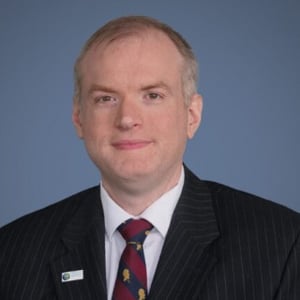
Attorney, Competitive Enterprise Institute
Devin Watkins is an attorney at the Competitive Enterprise Institute. Devin Watkins previously worked at the Cato Institute as a legal associate and interned at the Institute for Justice. At the Cato Institute, Watkins worked on a variety of Supreme Court cases, and one of the briefs he worked on was cited by the Court. His op-eds have appeared in National Review Online, The Hill, Time, and The Federalist among others.
Watkins holds a Juris Doctor cum laude from George Mason University's Antonin Scalia Law School, where he was the development editor on the Mason Law Review. Prior to his legal career Watkins was a senior software developer at Intel and WebMD. He graduated with a Bachelor of Science in Computer Science from Stevens Institute of Technology in Hoboken, New Jersey.
Watkins is a member of the Virginia State Bar, the District of Columbia Bar, the U.S. District Court for the District of Columbia Bar, and the U.S. Court of Appeals for the District of Columbia Circuit Bar.
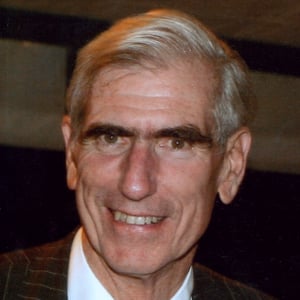
Founding Partner, Boyden Gray & Associates
Ambassador C. Boyden Gray is the founding partner of Boyden Gray & Associates, a law and strategy firm in Washington, D.C., focused on constitutional and regulatory issues.
Mr. Gray worked in the White House for twelve years, first as counsel to the Vice President during the Reagan administration and then as White House Counsel to President George H.W. Bush. In the Reagan administration, he was Counsel to the Presidential Task Force on Regulatory Relief, for which he wrote the original Executive Order 12291 requiring cost-benefit analysis and White House review of regulations (later renumbered as current EO 12866). In the George H.W. Bush Administration, Mr. Gray was in charge of judicial selection and was also instrumental in the enactment of the Clean Air Act Amendments of 1990, the Energy Policy Act of 1992, and a cap-and-trade system for acid rain emissions. In 1993, he received the Presidential Citizens Medal. Under President George W. Bush, Mr. Gray was U.S. Ambassador to the European Union and U.S. Special Envoy to Europe for Eurasian Energy.
Mr. Gray practiced law for 25 years at the law firm of Wilmer, Cutler & Pickering and was chairman of the Administrative Law and Regulatory Practice Section of the American Bar Association from 2000 to 2002. Early in his career, Mr. Gray helped to develop the Business Roundtable and served as its first counsel. He is an adjunct professor at Antonin Scalia Law School and a former adjunct professor at NYU Law School (teaching energy and environmental law). Mr. Gray is on the Board of Directors of the Atlantic Council, the Federalist Society, Reason Foundation, and the Trust for the National Mall.
Mr. Gray earned his A.B. magna cum laude from Harvard, where he was an editor of the Crimson, and his J.D. with high honors from the University of North Carolina at Chapel Hill, where he was editor-in-chief of the Law Review. Mr. Gray served in the United States Marine Corps, and after law school, he clerked for Earl Warren, Chief Justice of the United States Supreme Court.

Book Review: The Capitalism Paradox: How Cooperation Enables Free Market Competition
Susan E. Dudley, Paul H. Rubin
In this teleforum, Paul Rubin, the world’s leading expert on cooperative capitalism, will discuss his...
Spectrum Wars
Dean Brenner, Hilary Cain, Danielle Piñeres, Christopher J. Walker
With the advent of mobile devices, ubiquitous home laptop, tablet and iPad computers, content streaming...
Nieves v. Bartlett - Post-Decision SCOTUScast
Lisa Soronen
SCOTUScast featuring Lisa Soronen
On May 28, 2019, the Supreme Court decided Nieves v. Bartlett, a case that considers...
Courthouse Steps Oral Argument: Title VII Cases
John J. Bursch
On October 8, 2019, the U.S. Supreme Court will hear a trio of Title VII...
Necessary & Proper Episode 48: The Electoral College
Richard F. Duncan
Recorded at University of St. Thomas School of Law on September 19, this event focused...
Vertical Integration in Broadcasting: A Cause for Concern?
Paul Beaudry, Brad Danks, William Rinehart
The broadcasting market used to be straightforward. It functioned on a linear model consisting of...
Rethinking Probation & Parole: How Much Supervision is Too Much?
Marc Levin, Vincent Schiraldi
Criminal Law & Procedure Practice Group Teleforum
Given that half of those admitted to prison are revoked from probation or parole, there...
Deep Dive Episode 72 – The Net Neutrality Saga: Mozilla v. FCC
Regulatory Transparency Project's Fourth Branch Podcast
Earlier in October, the D.C. Circuit issued its long-awaited opinion in Mozilla v. Federal Communications...
Litigation Update: Gundy v. U.S.
Christopher J. Walker, Devin Watkins
Last term in Gundy v. U.S., without Justice Kavanaugh the Court was split between a...
Update on Climate Change Litigation
C. Boyden Gray
States and municipalities have brought litigation in state court arguing that energy companies should be...