

Tazewell Taylor Professor of Law and William H. Cabell Research Professor, William & Mary Law School
Jonathan H. Adler joined the William & Mary law faculty as the Tazwell Taylor Professor of Law and William H. Cabell Research Professor in 2025. Prior to joining the faculty, he was the inaugural Johan Verheij Memorial Professor of Law and the founding Director of the Coleman P. Burke Center for Environmental Law at the Case Western Reserve University School of Law.
Professor Adler is the author or editor of seven books, including Climate Liberalism: Perspectives on Liberty, Property and Pollution (Palgrave, 2023), Marijuana Federalism: Uncle Sam and Mary Jane (Brookings Institution Press, 2020), Business and the Roberts Court (Oxford University Press, 2016) and Rebuilding the Ark: New Perspectives on Endangered Species Act Reform (AEI Press, 2011).
His articles have appeared in publications ranging from the Harvard Environmental Law Review and Yale Journal on Regulation to the Wall Street Journal, New York Times, and Washington Post. He has testified before Congress a dozen times, and his work has been cited in the U.S. Supreme Court. A 2024 study identified Professor Adler as the seventh most cited legal academic in administrative and environmental law from 2019 to 2023.
Professor Adler is a contributing editor to Civitas Outlook and a regular contributor to the popular legal blog, The Volokh Conspiracy. A regular commentator on constitutional and regulatory issues, he has appeared on numerous radio and television programs, ranging from the PBS Newshour and National Public Radio to the Fox News Channel and Entertainment Tonight.
Professor Adler is a senior fellow at the Property & Environment Research Center in Bozeman, Montana. In 2018, Professor Adler was elected to membership in the American Law Institute and helped co-found the organization Checks and Balances. In 2024, Professor Adler was appointed a public member of the Administrative Conference of the United States.
Professor Adler clerked for the Honorable David B. Sentelle on the U.S. Court of Appeals for the District of Columbia Circuit.
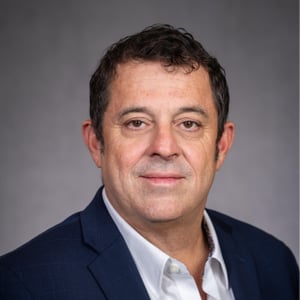
Senior Fellow for Law, Economics, and Technology, The Heritage Foundation; Professor, Florida International University
Mario Loyola is a Senior Fellow for Law, Economics, and Technology at The Heritage Foundation.
Loyola served in the Trump Administration as Associate Director for Regulatory Reform at the White House Council on Environmental Quality. In that role, he was one of the principal drafters of the One Federal Decision policy, which helped to streamline the permitting and environmental review of large infrastructure projects. While at CEQ, he was a member of the U.S. delegation to the USMCA free trade negotiations with Mexico and Canada, as well as the United Nations conference on biodiversity on the high seas. Loyola initially joined the White House in February 2017 as a Presidential Speechwriter, employing his expertise in many areas of foreign and domestic policy.
After beginning his career in M&A and corporate finance law, Loyola served in the Bush 43 Administration as a special assistant to the Undersecretary of Defense for Policy. He left that position to start writing on national defense issues in magazines such as National Review and The Weekly Standard, reporting from the front lines of the war on terrorism in Lebanon, Israel, and Iraq. He finished the Bush Administration as Foreign and Defense Counsel to the U.S. Senate Republican Policy Committee, then under the chairmanship of Senator Kay Bailey Hutchison of Texas. He subsequently moved to Texas and joined the Texas Public Policy Foundation, where he specialized in energy, environment, and federalism.
Loyola is a frequent contributor to The Wall Street Journal, National Review, and The Atlantic, among others. He teaches environmental and administrative law at Florida International University, where he is Founding Director of the Environmental Finance and Risk Management program in FIU’s prestigious Institute of Environment. He received a bachelor’s degree in European history from the University of Wisconsin–Madison and a J.D. from Washington University School of Law.
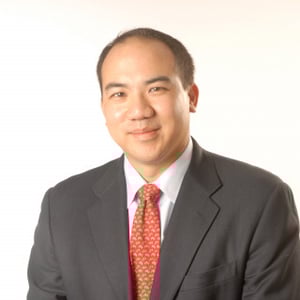
Maurice A. Deane Distinguished Professor of Constitutional Law and Faculty Director of International Programs, Hofstra University School of Law
Professor Ku’s primary research interest is the relationship of international law to constitutional law. He has also conducted academic research on a wide range of topics including international dispute resolution, international criminal law, and China’s relationship with international law. He teaches courses such as U.S. constitutional law, U.S. foreign affairs law, transnational law, and international trade and business law. Since 2014, he has served as the faculty director of international programs, overseeing Hofstra Law’s study abroad, exchange and LL.M. programs. Professor Ku also teaches Constitutional Law in our online degree programs: Master of Laws in American Law and Master of Arts in American Legal Studies. He has also been selected as the John DeWitt Gregory Research Scholar and as a Hofstra Law Research Fellow. He is a member of the American Law Institute.
He is the co-author, with John Yoo, of Taming Globalization: International Law, the U.S. Constitution, and the New World Order (Oxford University Press 2012). He also has published more than 40 law review articles, book chapters and symposia essays. He has given dozens of academic lectures and workshops at major universities and conferences in the United States, Europe and Asia.
He co-founded the leading international law weblog Opinio Juris, which is read daily by thousands worldwide. His essays and op-eds have been published in major news publications such as the Wall Street Journal, the Los Angeles Times, and the NYTimes.com. He has been frequently interviewed for television news programs and quoted in print and electronic media. He has also signed or submitted amicus briefs to national and international courts and served as an expert witness in both domestic and international proceedings.
Before joining the Hofstra Law faculty, Professor Ku served as a law clerk to the Honorable Jerry E. Smith of the U.S. Court of Appeals for the Fifth Circuit and as an Olin Fellow and Lecturer in Law at the University of Virginia Law School. Professor Ku also practiced as an associate at the New York City law firm of Debevoise & Plimpton, specializing in litigation and arbitration arising out of international disputes. He has been a visiting professor at the College of William & Mary Marshall- Wythe School of Law in Williamsburg, Virginia; a Fulbright Distinguished Lecturer in Law at East China University of Political Science and Law in Shanghai, China; and a Taiwan Fellow at National Taiwan University in Taipei, Taiwan. He is a member of the New York Bar and a graduate of Yale College and Yale Law School.

Senior Fellow and Director of Constitutional Studies, Manhattan Institute
Ilya Shapiro is a senior fellow and director of constitutional studies at the Manhattan Institute and a contributing editor of City Journal. Previously he was executive director and senior lecturer at the Georgetown Center for the Constitution, and before that a vice president of the Cato Institute.
Shapiro is the author of Lawless: The Miseducation of America’s Elites (2025) and Supreme Disorder: Judicial Nominations and the Politics of America’s Highest Court (2020), coauthor of Religious Liberties for Corporations? (2014), and editor of 11 volumes of the Cato Supreme Court Review (2008-18). He has contributed to a variety of academic, popular, and professional publications, including the Wall Street Journal, Harvard Journal of Law & Public Policy, Washington Post, Los Angeles Times, USA Today, National Review, and Newsweek. He also regularly provides commentary for various media outlets, writes the Shapiro’s Gavel newsletter on Substack, and once appeared on the Colbert Report.
Shapiro has testified many times before Congress and state legislatures and has filed more than 500 amicus curiae “friend of the court” briefs in the Supreme Court. He lectures regularly on behalf of the Federalist Society, is a member of the board of fellows of the Jewish Policy Center, was an inaugural Washington Fellow at the National Review Institute, and has been an adjunct law professor at the George Washington University and University of Mississippi. He is also the chairman of the board of advisers of the Mississippi Justice Institute, a barrister in the Edward Coke Appellate Inn of Court, and a former member of the Virginia Advisory Committee to the U.S. Commission on Civil Rights.
Earlier in his career, Shapiro was a special assistant/adviser to the Multi-National Force in Iraq on rule-of-law issues and practiced at Patton Boggs and Cleary Gottlieb. Before entering private practice, he clerked for Judge E. Grady Jolly of the U.S. Court of Appeals for the Fifth Circuit. He holds an AB from Princeton University, an MSc from the London School of Economics, and a JD from the University of Chicago Law School.
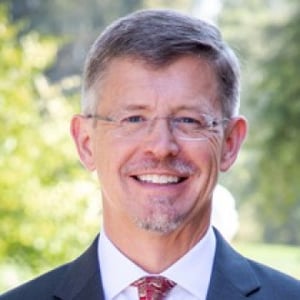
John D. Ayer Chair in Business Law and Martin Luther King Jr. Professor of Law, UC Davis School of Law
Professor Dodge is a leading expert on international law, international transactions, and international dispute resolution. He served as Counselor on International Law to the Legal Adviser at the U.S. Department of State from 2011 to 2012 and as Co-Reporter for the American Law Institute’s Restatement (Fourth) of Foreign Relations Law from 2012 to 2018. He is currently a member of the State Department’s Advisory Committee on International Law and an Adviser to the American Law Institute’s Restatement (Third) of the Conflict of Laws.
Professor Dodge is co-author (with Detlev Vagts, Hannah Buxbaum, and Harold Koh) of the casebook Transnational Business Problems (6th ed. Foundation Press 2019) and co-editor (with David Sloss and Michael Ramsey) of International Law in the U.S. Supreme Court: Continuity and Change (Cambridge University Press 2011), which won the American Society of International Law’s 2012 certificate of merit. He has more than 60 other publications in books and law reviews, including the Columbia Law Review, the Duke Law Journal, the Georgetown Law Journal, the Harvard Law Review, the Michigan Law Review, and the Yale Law Journal. The U.S. Supreme Court and the Supreme Court of Canada have relied on his work, as have state courts and lower federal courts in the United States.
Professor Dodge teaches International Business Transactions, International Litigation and Arbitration, Conflict of Laws, and Contracts. He has won the Rutter Distinguished Teaching Award both at UC Davis and at UC Hastings, where he was previously Roger J. Traynor Professor of Law.
Professor Dodge received his B.A. in History, summa cum laude, from Yale University in 1986. After teaching English in Tianjin, China, he attended Yale Law School, where he was a Notes Editor of the Yale Law Journal, served as Director of the Lowenstein International Human Rights Project, and earned his J.D. in 1991. Professor Dodge clerked for Judge William A. Norris of the U.S. Court of Appeals for the Ninth Circuit and for Justice Harry A. Blackmun of the U.S. Supreme Court. From 1993 to 1995, he was an attorney at Arnold & Porter in Washington, D.C.
He is a member of the American Law Institute.
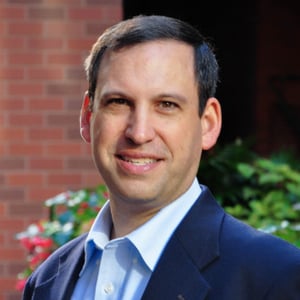
President, Becket Fund for Religious Liberty; Professor of Law and Co-Director of the Center for Religious Liberty, Catholic University; Visiting Professor, Harvard Law School
Mark joined the Becket team in 2011 and splits his time as Associate Professor at The Catholic University of America, Columbus School of Law, and as Visiting Professor at Harvard Law School. Mark teaches constitutional law, religious liberty, torts, and evidence. He has been voted Teacher of the Year three years in a row by the Law School’s Student Bar Association.
Mark has broad experience litigating First Amendment religious exercise and free speech cases. He has represented the winning parties in a variety of Supreme Court First Amendment cases including Hobby Lobby, Little Sisters, Wheaton College, and Holt. In January 2014, Mark argued before the Supreme Court in McCullen v. Coakley, a First Amendment challenge to a Massachusetts speech restriction outside of abortion clinics. The Justices ruled in favor of his clients 9-0. Mark also led a successful eight-year litigation battle against Governor Blagojevich’s effort to force religious pharmacists to distribute the morning-after and week-after pills.
Mark’s academic writing focuses on the First and Fourteenth Amendments, and has appeared in a variety of prestigious journals, including the Harvard Law Review.
Mark is a widely sought after speaker on constitutional issues, particularly concerning abortion and the First Amendment. Professor Rienzi has been invited to discuss these issues at Harvard Law School, Columbia University Law School, Georgetown University Law Center, Boston College Law School, Notre Dame Law School, the National Press Club, and the Capitol. He has been quoted on constitutional law issues on NPR, in the Washington Times, The New York Daily News, and the Chicago Sun-Times. Mark has also been featured on the Kelly File, Fox News Sunday, Your World with Neil Cavuto, Geraldo at Large, CNN Tonight, CNN Live, Andrea Mitchell Reports, and Wall Street Journal Live.
Prior to joining Becket, Mark served as counsel for the litigation department and the intellectual property litigation practice group of WilmerHale LLP. His practice focused on complex civil and appellate litigation with a particular emphasis on intellectual property and First Amendment issues. Prior to joining WilmerHale, he served as law clerk to the Hon. Stephen F. Williams, senior circuit judge for the U.S. Court of Appeals for the D.C. Circuit. Prior to that, Mark was an editor of the Harvard Law Review, and earned his J.D. from Harvard Law School and B.A. from Princeton University, both with honors.
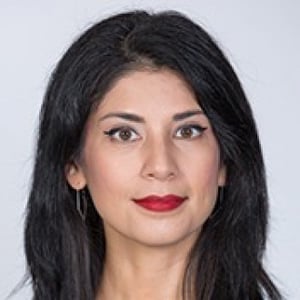
Professor of Law and Michael R. Klein Distinguished Scholar Chair, University of Miami School of Law
Mary Anne Franks, Professor of Law and Michael R. Klein Distinguished Scholar Chair, is a nationally and internationally recognized expert on the intersection of civil rights and technology. She teaches classes on criminal law, criminal procedure, First Amendment law, Second Amendment law, family law, and law and technology. Professor Franks is also an Affiliated Faculty member of the University of Miami Department of Philosophy and an Affiliate Fellow of the Yale Law School Information Society Project (ISP).
Dr. Franks is the author of the award-winning book, The Cult of the Constitution: Our Deadly Devotion to Guns and Free Speech (Stanford Press, 2019). In 2020, she was awarded a grant from the Knight Foundation to support research for her second book, Fearless Speech (expected 2022). Her scholarship has appeared in the Harvard Law Review, the California Law Review, and UCLA Law Review, among others. Dr. Franks has also authored numerous articles for the popular press, including the New York Times, the Atlantic, the Washington Post, and Newsweek. She has delivered more than a hundred lectures to a range of audiences around the world, including law schools, domestic violence organizations, law firms, and tech companies. She was named a member of the American Law Institute in October 2018.
Dr. Franks is the President and Legislative & Tech Policy Director of the Cyber Civil Rights Initiative, a nonprofit organization dedicated to combating online abuse and discrimination. In 2013, she drafted the first model criminal statute on nonconsensual pornography (sometimes referred to as “revenge porn”), which has served as the template for multiple state laws and for pending federal legislation on the issue. She also served as the reporter for the Uniform Law Commission’s 2018 Uniform Civil Remedies for the Unauthorized Disclosure of Intimate Images Act. Dr. Franks is a principal investigator for a 2020 National Science Foundation grant project, COVID-19 and sexual cyberviolence: Impact on general users and vulnerable populations. She regularly advises legislators, tech industry leaders, and advocacy organizations on issues relating to online privacy, sexual exploitation, extortion, harassment, and threats.
Dr. Franks holds a J.D. from Harvard Law School as well as a doctorate and a master’s degree from Oxford University, where she studied as a Rhodes Scholar. She previously taught at the University of Chicago Law School as a Bigelow Fellow and Lecturer in Law and at Harvard University as a lecturer in social studies and philosophy.
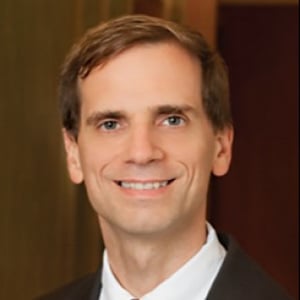
Judge, United States Court of Appeals, District of Columbia Circuit
Judge Katsas was appointed to the D.C. Circuit in December 2017. He graduated from Princeton University and Harvard Law School, where he was an executive editor on the Harvard Law Review. Between 1989 and 1992, he served as a law clerk to Judge Edward Becker on the Third Circuit, to then-Judge Clarence Thomas on the D.C. Circuit, and to Justice Thomas on the Supreme Court. Between 1992 and 2001, he was an associate and then partner in the Washington office of Jones Day, where he specialized in appellate and complex civil litigation. Between 2001 and 2009, he served in many senior positions in the Department of Justice, including as Assistant Attorney General for the Civil Division and as Acting Associate Attorney General. In 2009, he returned to Jones Day. From January to December 2017, he served as Deputy Assistant to the President and Deputy Counsel to the President.
Before joining the bench, Judge Katsas argued more than 75 appeals, including three cases in the Supreme Court, 13 cases in the D.C. Circuit, and cases in every other federal court of appeals. By appointment of the Chief Justice, he served on the Advisory Committee on Appellate Rules from 2013 to 2017. In 2016, he was elected to membership in the American Academy of Appellate Lawyers.
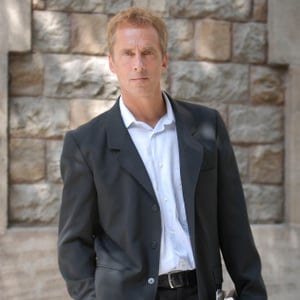

Thomas M. Siebel Senior Fellow, The Hoover Institution, Stanford University; Gary T. Schwartz Distinguished Professor of Law Emeritus, UCLA School of Law
Eugene Volokh is the Thomas M. Siebel Senior Fellow at the Hoover Institution (Stanford), as well as the Gary T. Schwartz Distinguished Professor of Law Emeritus and Distinguished Research Professor at UCLA School of Law. He recently retired from teaching at UCLA, after 30 years there, and is now focusing on research.
Volokh is the author of the textbooks The First Amendment and Related Statutes (8th ed. 2023), and Academic Legal Writing (5th ed. 2016), as well as over 100 academic law journal articles, mostly on First Amendment law. He is a member of The American Law Institute; the editor-in-chief of the Journal of Free Speech Law; and the creator and coauthor of The Volokh Conspiracy, a leading legal blog founded in 2002 (hosted at the Washington Post from 2014 to 2017 and now at Reason Magazine).
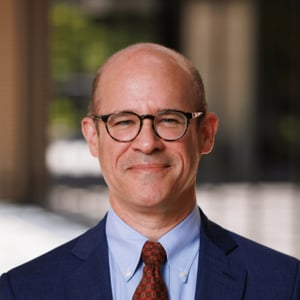
Professor of Law, Stanford Law School
Orin S. Kerr is a Professor of Law at Stanford Law School, where he teaches and writes in the areas of criminal procedure and computer crime law. Kerr earned mechanical engineering degrees from Princeton University and Stanford University before graduating with a J.D. from Harvard Law School. He is a former law clerk to Justice Anthony M. Kennedy at the United States Supreme Court and Judge Leonard I. Garth of the U.S. Court of Appeals for the Third Circuit.
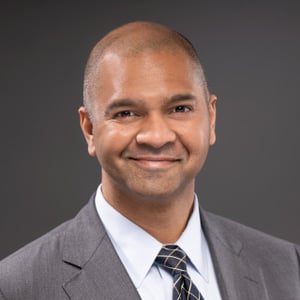
Senior Fellow, Stand Together Trust
Vikrant Reddy is a senior fellow at Stand Together Trust, specializing in the area of criminal justice reform. Reddy previously served as a senior policy analyst at the Texas Public Policy Foundation (TPPF), where he managed the launch of TPPF’s national Right on Crime initiative in 2010. He has worked as a research assistant at the Cato Institute, as a judicial clerk to the Hon. Gina M. Benavides in Texas, and as an attorney in private practice. He is a member of the State Bar of Texas, and he serves on the Executive Committee of the Criminal Law Practice Group of the Federalist Society. He is also an appointee to the U.S. Commission on Civil Rights Texas State Advisory Committee.
Reddy’s research and scholarly opinions have appeared in a range of national media outlets, including USA Today, National Review, The Federalist, and others.
Reddy earned his law degree from the Southern Methodist University School of Law. He received his undergraduate degree from the University of Texas at Austin.
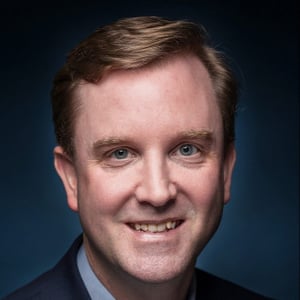
Deputy Counsel, Wisconsin Institute for Law and Liberty
Dan Lennington serves as Deputy Counsel at the Wisconsin Institute for Law & Liberty (WILL), where he directs the Equality Under the Law Project. Started in early 2021, the EUL Project has represented dozens of individuals and businesses nationwide, successfully advocating for race neutrality in both public and private programs.
Before joining WILL, Dan served as Assistant Deputy Attorney General in Wisconsin and Assistant U.S. Attorney in Oklahoma. He is a graduate of Hillsdale College.
Dan can be reached at dan@will-law.org. More information about the EUL Project can be found at www.defendequality.org.
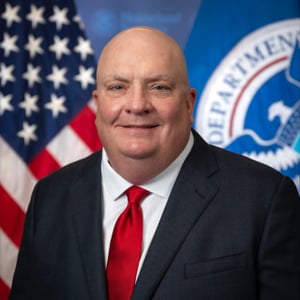
Acting Assistant Commissioner of Customs and Border Protection, Office of Professional Responsibility, U.S. Department of Homeland Security
Brian M. Fish is currently the Senior Advisor to the General Counsel at the Department of Homeland Security where he works on immigration and law enforcement issues. Previously, he was a trial attorney with the United States Immigration and Customs Enforcement, where he represented the Department of Homeland Security in removal hearings before the U.S. Immigration Court. Additionally, he was a Special Assistant United States Attorney and a Baltimore City homicide prosecutor. He is a member of the Federalist Society's Criminal Law & Procedure Practice Group Executive Committee and the President of its Baltimore Lawyers Chapter. He earned his B.A. from LaSalle University in 1992 and his J.D. from Loyola University New Orleans School of Law in 1998.
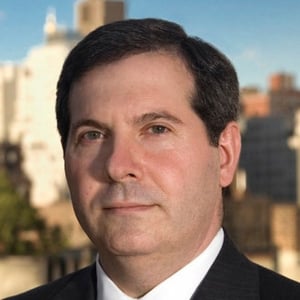
Partner, DeMarco Law, PLLC
Joseph V. DeMarco is a partner at DeMarco Law, PLLC where he focuses on counseling clients on complex issues involving information privacy and security, theft of intellectual property, computer intrusions, on-line fraud, and the lawful use of new technology. His years of experience in private practice and in government handling the most difficult cybercrime investigations handled by the United States Attorney’s Office have made him one of the nation’s most sought-after lawyers on Internet crime and the law relating to emerging technologies. In addition to his counsel practice, Mr. DeMarco serves as an Arbitrator, resolving complex commercial and high-technology disputes between businesses. He is on the National Panel of Neutrals of the American Arbitration Association (AAA) and Federal Arbitration, Inc. (FedArb).
From 1997 to 2007, Mr. DeMarco served an Assistant United States Attorney for the Southern District of New York, where he founded and headed the Computer Hacking and Intellectual Property (CHIPs) Program, a group of five prosecutors dedicated to investigating and prosecuting violations of federal cybercrime laws and intellectual property offenses. Under his leadership, CHIPs prosecutions grew from a trickle in 1997 to a top priority of the United States Attorney’s Office, encompassing all forms of criminal activity affecting e-commerce and critical infrastructures including computer hacking crimes; transmission of Internet worms and viruses; electronic theft of trade secrets; illegal use of “spyware”; web-based frauds; unlawful Internet gambling; and criminal copyright and trademark infringement offenses. As a recognized thought leader in the field, Mr. DeMarco was frequently asked to counsel prosecutors and law enforcement agents regarding novel investigative and surveillance techniques and methodologies, and regularly provided advice to the United States Attorney concerning the Office’s most sensitive computer-related investigations. In 2001, Mr. DeMarco also served as a visiting Trial Attorney at the Department of Justice Computer Crimes and Intellectual Property Section in Washington, D.C., where he focused his work on Internet privacy, gaming, and theft of intellectual property.
Since 2002, Mr. DeMarco has served as an Adjunct Professor at Columbia Law School, where he teaches the upper-class Internet and Computer Crimes seminar. He has been invited to speak throughout the world on cybercrime, e-commerce, and IP enforcement. He has lectured on the subject of cybercrime at Harvard Law School, the Practicing Law Institute, the National Advocacy Center, and at the FBI Academy in Quantico, Virginia, and has served as an instructor on cybercrime to judges attending the New York State Judicial Institute.
Prior to joining the United States Attorney’s Office, Mr. DeMarco was a litigation associate at Cravath, Swaine & Moore in New York City, where he concentrated his work on intellectual property, antitrust, and securities law issues for various high-technology clients. Prior to that, Mr. DeMarco served as law clerk to the Honorable J. Daniel Mahoney, United States Circuit Judge for the Second Circuit Court of Appeals.
Mr. DeMarco holds a J.D. magna cum laude from New York University School of Law. At NYU he was a member of the NYU Law Review. He received his B.S.F.S. summa cum laude from the Edmund A. Walsh School of Foreign Service at Georgetown University.
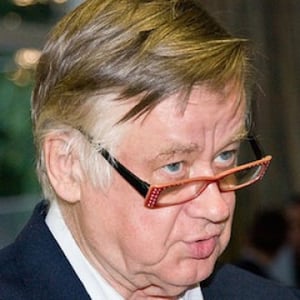
Senior Editor, The American Spectator
Tom Bethell was a senior editor of The American Spectator and author of The Politically Incorrect Guide to Science, The Noblest Triumph: Property and Prosperity Through the Ages, and most recently Questioning Einstein: Is Relativity Necessary? (2009).

President, Columbia University
Lee C. Bollinger became Columbia University’s 19th president in 2002 and is the longest serving Ivy League president. Under his leadership, Columbia stands again at the very top rank of great research universities, distinguished by comprehensive academic excellence, an innovative and sustainable approach to global engagement, two of the largest capital campaigns in the history of higher education, and the institution’s most ambitious campus expansion in over a century.
President Bollinger is Columbia’s first Seth Low Professor of the University, a member of the Columbia Law School faculty, and one of the nation's foremost First Amendment scholars. Each fall semester, he teaches “Freedom of Speech and Press” to Columbia undergraduate students. He has two books coming out in 2021: National Security, Leaks and Freedom of the Press: The Pentagon Papers Fifty Years On, co-edited with Geoffrey R. Stone, which will be published by Oxford University Press; and Regardless of Frontiers: Global Freedom of Expression in a Troubled World, co-edited with Agnès Callamard, which will be published by Columbia University Press.
As president of the University of Michigan, Bollinger led the school’s historic litigation in Grutter v. Bollinger and Gratz v. Bollinger, Supreme Court decisions that upheld and clarified the importance of diversity as a compelling justification for affirmative action in higher education. He speaks and writes frequently about the value of racial, cultural, and socioeconomic diversity to American society through opinion columns, media interviews, and public appearances around the country. Columbia remains one of the most diverse universities among its peer institutions and has seen the number of applicants to Columbia College and the selectivity of admissions at the school reach record levels.
As Columbia’s president, Bollinger conceived and led the University’s most ambitious expansion in over a century with the creation of the Manhattanville campus in West Harlem, the first campus plan in the nation to receive the U.S. Green Building Council’s highest certification for sustainable development. An historic community benefits agreement emerging from the city and state review process for the new campus provides Columbia’s local neighborhoods with decades of investment in the community’s health, education and economic growth. The first two buildings, the Jerome L. Greene Science Center and the Lenfest Center for the Arts, opened in the spring of 2017. The third, the Forum, which hosts conferences, meetings, and symposia, opened in September of 2018.
Bollinger’s commitment to excellence in architecture is evident across Columbia’s campuses, from Renzo Piano’s master plan for Manhattanville, to the recently opened Roy and Diana Vagelos Education Center at Columbia University Irving Medical Center, designed by Diller Scofidio + Renfro, to Rafael Moneo’s design for the Northwest Corner Building on the historic Morningside campus, to the Campbell Sports Center at Baker Field designed by Steven Holl.
Among Bollinger’s signal achievements at Columbia are the development of a network of nine Columbia Global Centers on four continents and the creation of new venues on the University’s home campus supporting global conversations and scholarship, including the World Leaders Forum and the Committee on Global Thought.
From November 1996 to 2002, Bollinger was president of the University of Michigan, where he also served as a law professor and dean of the law school.
He is a fellow of both the American Academy of Arts and Sciences and the American Philosophical Society. He is widely published on legal and constitutional issues involving free speech and press, and his books include: The Free Press Century, Uninhibited, Robust, and Wide-Open: A Free Press for a New Century; Eternally Vigilant: Free Speech in the Modern Era; Images of a Free Press; and The Tolerant Society: Freedom of Speech and Extremist Speech in America.
Bollinger has received the National Humanitarian Award from the National Conference for Community and Justice and the National Equal Justice Award from the NAACP Legal Defense and Educational Fund for his leadership on affirmative action. He also received the Clark Kerr Award, the highest award conferred by the faculty of the University of California, Berkeley, for his service to higher education, especially on matters of freedom of speech and diversity. He is the recipient of multiple honorary degrees from universities in this country and abroad.
Bollinger is a director of Graham Holdings Company (formerly The Washington Post Company) and serves as a member of the Pulitzer Prize Board. From 2007 to 2012, he was director of the Federal Reserve Bank of New York, where he also served as chair from 2010 to 2012.
After graduating from the University of Oregon and Columbia Law School, where he was an Articles Editor of Columbia Law Review, Bollinger served as law clerk for Judge Wilfred Feinberg on the United States Court of Appeals for the Second Circuit and for Chief Justice Warren Burger on the United States Supreme Court. He joined the University of Michigan Law School faculty in 1973.
Bollinger was born in Santa Rosa, California and raised there and in Baker, Oregon. He is married to artist Jean Magnano Bollinger, and they have two children and five grandchildren.

Laurence A. Tisch Professor of Law and Director, Classical Liberal Institute, New York University School of Law; Director, Classical Liberal Institute, Civitas Institute University of Texas at Austin
Richard A. Epstein is the Laurence A. Tisch Professor of Law, at New York University, a senior research fellow at the Civitas Institute at the University of Texas Austin, and a senior Lecturer, the University of Chicago. He received an LL.D., h.c . from the University of Ghent, 2003 , and an LLD h.c . from the University of Siegen in 2018 and the Bradley Prize in 2011. He has been a member of the American Academy of Arts and Sciences since 1985. He has edited both the Journal of Legal Studies (1981-1991) and the Journal of Law and Economics (1991-2001). He is also a founder and director of the Classical Liberal Institute at NYU Law School. His most recent book is The Classical Liberal Constitution: The Uncertain Quest for Limited Government (2014). His other books include Takings: Private Property and the Power of Eminent Domain ( 1985); Bargaining with the State (1993); Simple Rules for a Complex World (1995); Principles for a Free Society: Reconciling Individual Liberty and the Common Good (1998); Skepticism and Freedom: A Modern Theory of Classical Liberalism (2003); Design for Liberty: Private Property, Public Administration and the Rule of Law (2011), and most recently, The Myth of Birthright citizenship—and Beyond (2026). He has taught courses in , administrative law, antitrust, constitutional, contracts, environmental law, land use planning; real property, torts and water law. He has written and spoken extensively on a wide range of topics, and is writes a regular column for Defining Ideas.
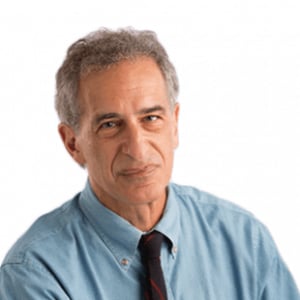
Thomas G. Long Professor of Law, University of Michigan Law School
Bill Miller, the Thomas G. Long Professor of Law, has been a member of the Michigan Law faculty since 1984. His research centers on saga Iceland, from whence the materials studied in his course Bloodfeuds and which provides the sources for his Bloodtaking and Peacemaking: Feud, Law, and Society in Saga Iceland (1990).
He also has written about emotions, mostly unpleasant ones involving self-assessment, and select vices and virtues. Thus his books: Humiliation (1993); The Anatomy of Disgust (1997)—named the best book of 1997 in anthropology/sociology by the Association of American Publishers; The Mystery of Courage (2000); Faking It (2003), which deals with anxieties of role, identity, and posturings of authenticity; Losing It (2011), where he turns a jaundiced eye toward aging and decline; and the latest in the grim series to appear Jan. 2020: Outrageous Fortune: Gloomy Reflections on Luck and Life. The Chicago Tribune named Losing It to its list of best books of the year; Macleans magazine of Canada also listed it in its top 10 nonfiction books of 2011. Eye for an Eye (2006) is an extended treatment of the law of the talion. Audun and the Polar Bear: Luck, Law, and Largesse in a Medieval Tale of Risky Business (2008) offers an expansive interpretation of a superbly crafted short Icelandic tale. "Why is your axe bloody:" A Reading of Njáls Saga is exactly what the subtitle indicates; yet another book on a saga, Hrafnkel or the Ambiguities: Hard Cases, Hard Choices, appeared in 2017. He also has been a visiting professor at Yale, the University of Chicago, the University of Bergen, the University of Tel Aviv, and Harvard, and in 2008, was the Carnegie Centenary Trust Professor at the University of St. Andrews, where he is now also an honorary professor of history.
Professor of Philosophy (emeritus), Bowling Green State University
Jeffrey Paul is a retired professor of philosophy at Bowling Green State University, the Associate Director of the Social Philosophy and Policy Center, and a Research Professor at the Freedom Center.
Jeffrey Paul is a retired professor of philosophy at Bowling Green State University, the Associate Director of the Social Philosophy and Policy Center, and a Research Professor at the Freedom Center. His research and teaching focus on ethics, political philosophy, and law.
Research Interests:
Jeffrey is the co-editor, with Richard A. Epstein, of Labor Law and the Employment Market (Transaction, 1985). He has published essays on ethics and political philosophy in The Monist, Philosophical Review, the Personalist, Pacific Philosophical Quarterly, the Review of Metaphysics, Reason Papers, Orbis, the Journal of Medical Ethics, the History of Political Thought, the Hastings Center Report, and in John Gray and Z.A. Pelczynski’s collection Conceptions of Liberty in Political Theory.
His collection Reading Nozick was published by Rowman and Allanheld in 1981. He is Associate Editor of Social Philosophy & Policy, as well as a coeditor of many collections of essays on moral and political philosophy published by Cambridge University Press.
Jeffrey founded the Social Philosophy and Policy Center at Bowling Green State University with Fred D. Miller, Jr., in 1981. He is presently Associate Director of the Center.
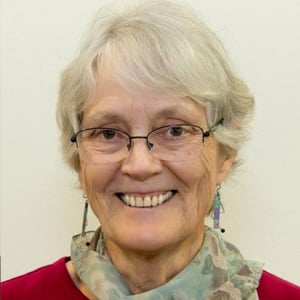
Lohse Chair in Water and Natural Resources & Professor Emerita of Law, The University of Arizona James E. Rogers College of Law
Carol M. Rose is the Ashby Lohse Chair in Water and Natural Resources at the University of Arizona James E. Rogers College of Law and was previously the Gordon Bradford Tweedy Professor of Law and Organization at Yale Law School.
Rose graduated from Antioch College with a B.A. (1962) and received an M.A. from the University of Chicago (1963), a Ph.D. in History from Cornell University (1969) and a J.D. from the University of Chicago Law School (1977).
In 2010, Rose was awarded the Brigham–Kanner Property Rights Prize, awarded by the College of William & Mary School of Law annually to an individual whose work has advanced the cause of private property rights. Rose's notable works include Perspectives on Property Law (Aspen 3d ed. 2014) (with Robert Ellickson and Henry E. Smith) and Property and Persuasion: Essays on the History, Theory, and Rhetoric of Ownership (Westview Press 1994).

California v. Texas - Post-Decision SCOTUScast
Jonathan H. Adler, Mario Loyola
Featuring Jonathan Adler and Mario Loyola
On June 17th, 2021 the Supreme Court decided California v. Texas, a case which concerned...
Nestle USA, Inc. v. Doe - Post-Decision SCOTUScast
Julian Ku, Ilya Shapiro, William S. Dodge
Featuring Julian Ku, William S. Dodge, and Ilya Shapiro
On June 17, 2021 the Supreme Court issued its 8-1 decision in Nestle USA, Inc....
Fulton v. City of Philadelphia - Post-Decision SCOTUScast
Mark L. Rienzi
Featuring Mark L. Rienzi
On June 17th, 2021 the Supreme Court unanimously decided Fulton v. City of Philadelphia for...
Free Speech and Compelled Speech: First Amendment Challenges to a Marketplace of Ideas
Mary Anne Franks, Gregory G. Katsas, Jed Rubenfeld, Eugene Volokh
Freedom of Thought Six-Part Series: Part 1
Section 230 has been understood to shield internet platforms from liability for content posted by...
Van Buren v. United States - Post-Decision SCOTUScast
Orin S. Kerr
featuring Orin Kerr
On June 3, 2021 the Supreme Court decided Van Buren v. United States. The issue...
Terry v. United States - Post-Decision SCOTUScast
Vikrant P. Reddy
On June 14th, 2021, the Supreme Court decided Terry v. U.S. The issue before the...
Litigation Update: Vitolo v. Guzman
Daniel Lennington
On May 27, 2021, the Sixth Circuit issued a decision in Vitolo v. Guzman. Over a...
United States v. Palomar-Santiago - Post-Decision SCOTUScast
Brian M. Fish
featuring Brian Fish
On May 24, 2021 the Supreme Court decided United States v. Palomar-Santiago. The issue was...
Courthouse Steps Decision Webinar: Van Buren v. United States
Joseph V. DeMarco
On June 3, 2021, the U.S. Supreme Court decided Van Buren v. United States. Writing for...
Panel I: The Idea of Property [Archive Collection]
Tom Bethell, Lee C. Bollinger, David M. Di Rita, Richard A. Epstein, William Ian Miller, Jeffrey Paul, Carol M. Rose
1989 National Student Symposium
On March 10-11, 1989, the Federalist Society's University of Michigan student chapter hosted the eighth...