
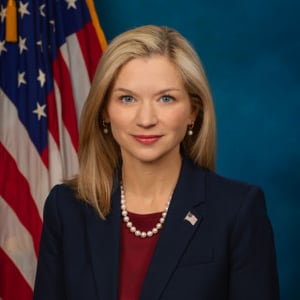
U.S. Attorney, U.S. Attorney's Office for the District of Utah
Melissa Holyoak was nominated by President Trump to serve as U.S. Attorney for the District of Utah on January 29, 2026. Holyoak was appointed on November 17, 2025 by Attorney General Pam Bondi to serve as Interim U.S. Attorney for the District of Utah.
Prior to that, Holyoak served as a Commissioner of the Federal Trade Commission from March 25, 2024 until her appointment as U.S. Attorney. During her FTC tenure, Commissioner Holyoak strove to vigorously enforce the antitrust and consumer protection laws while acting within the agency’s constitutional and statutory remit. She spoke widely about a range of FTC priorities, including improving competition enforcement, effectively applying existing laws to emerging trends in technology, and protecting children and teens online. She also published numerous statements about FTC matters.
Holyoak brings extensive experience as a litigator and leader. She served as Solicitor General with the Utah Attorney General’s Office where she oversaw the civil appeals, criminal appeals, constitutional defense and special litigation, and antitrust and data privacy divisions. She also managed multistate matters including those involving consumer protection and antitrust claims.
Before taking on that role, she served as president and general counsel of Hamilton Lincoln Law Institute, a Washington, D.C.-based public interest law firm and in other public interest attorney positions with the Competitive Enterprise Institute and the Center for Class Action Fairness. Holyoak represented class members challenging unfair class actions and consumers fighting regulatory abuse in federal district courts and appellate courts across the country.
Holyoak has argued in the Fifth, Seventh, Eighth, Ninth, Tenth and D.C. Circuits. She is a former prosecutor and attorney with O’Melveny & Myers LLP. She graduated from the University of Utah S.J. Quinney College of Law in 2003 as a member of the Order of the Coif and the Law Review. Holyoak is a member of the bars of Utah, D.C., and Missouri (inactive). Her husband Dr. Joshua Holyoak is a urologist and together they have four beautiful children.

Counsel, Lehotsky Keller LLP
Clayton Kozinski is experienced in managing legal and regulatory frameworks and complex litigation analysis.
Before joining Lehotsky Keller LLP, Mr. Kozinski was general counsel of the Cicero Institute, where he managed legal issues for five non-profit corporations in California and Texas. Mr. Kozinski was also a member of D.E. Shaw & Co., L.P.’s initial class of litigation investment analysts. While there, he advised on over $100 million in capital deployment on issues of complex litigation.
Mr. Kozinski was a law clerk for Justices Anthony Kennedy and Neil Gorsuch on the Supreme Court of the United States and Judge Brett Kavanaugh on the U.S. Court of Appeals for the D.C. Circuit.

Managing Counsel, Privacy and Product, Cruise
Gabe Ledeen is a trusted in-house counsel with deep experience advising sophisticated technical and business leaders on privacy and issues related to artificial intelligence and machine learning. In 2019, he joined Cruise, a leader in the development of autonomous vehicle technology, to build and manage the privacy and product counseling functions. Prior to Cruise, Gabe was in-house at Facebook where he first counseled on privacy regulatory issues and later spent two years as lead product counsel for AI. Gabe began his legal career as an associate at Jones Day after clerking for Judge A. Raymond Randolph on the U.S. Court of Appeals for the D.C. Circuit.
Gabe graduated cum laude from Rice University with a BA in Philosophy and Cognitive Science with a neuroscience concentration. He earned his law degree from Stanford Law School where he served on the Afghanistan Legal Education Project, was a senior editor for the Stanford Law and Policy Review, and was a founding member of the Stanford Law Veterans Organization.
Prior to law school, Gabe was a Marine logistics officer and deployed twice to al Anbar province, Iraq in 2006 and 2007 with the 3rd Battalion, 3rd Marine Regiment.

Managing Partner, venBio Partners
Aaron Royston, M.D., M.B.A. is a Managing Partner at venBio with a background in life science investing, healthcare strategy, and as an entrepreneur. Since joining venBio, he has been involved in launching and investing in a number of venBio companies including Apellis Pharmaceuticals (IPO 2017), Menlo Therapeutics (IPO 2018), Akero Therapeutics (IPO 2019), Harmony Biosciences (IPO 2020), RayzeBio, Artiva Biotherapeutics, Neurogastrx, Impel NeuroPharma, and Swift Health Systems. Prior to joining venBio, Dr. Royston was a member of the investment team at Vivo Capital, a life science venture capital firm. Previously, he worked at Bain & Company, where he advised biotechnology companies on a range of strategic and operational issues. Earlier in his career, he coordinated clinical research at Mount Sinai Medical Center, where his research has been published and presented in multiple medical journals and conferences.
Dr. Royston received his B.S. in biological sciences from Duke University, and his M.D. and M.B.A. degrees from the University of Pennsylvania. While a student, he founded and launched a technology company that was acquired after receiving multiple awards and funding from the New York City Economic Development Corporation. In 2010, he was recognized by the United States White House as a Champion of Change for his work in Technology and Innovation. Dr. Royston is active in the community and serves on the board of SFBWS, an environmental non-profit authorized by Congress to support the education, interpretation, and research of the U.S. Fish and Wildlife Service.
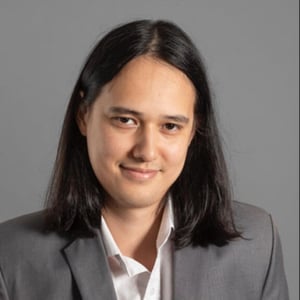
Co-Founder and CEO, Clearview AI
Hoan Ton-That is the CEO and co-founder of Clearview AI, which is based in New York City and has created the next generation of facial recognition technology. Clearview AI's bias-free algorithm can accurately find any face out of three billion images it has collected from the public internet. It is used by law enforcement to solve crimes, including financial fraud, human trafficking, and crimes against children.
A self-taught engineer, Mr. Ton-That is of Vietnamese and Australian heritage. His father's family was descended from the Royal Family of Vietnam. As a student, Mr. Ton-That was ranked #1 solo competitor in Australia’s Informatics Olympiad. He was ranked #2 guitarist under age 16 in Australia’s National Eisteddfod Music Competition.
At the age of 19, Mr. Ton-That moved from Australia to San Francisco to focus on his career in technology. He created over twenty iPhone and Facebook applications with over 10 million installations, some of which ranked in the App Store’s Top 10. Mr. Ton-That moved to New York City in 2016.
In 2017, Mr. Ton-That co-founded Clearview AI, where he developed the technology, raised capital, and built the team and product.
Pronouns: he/him.

General Partner, Trust Ventures
Salen is a leading expert on navigating the collision points of innovation and regulation. A former law professor at the University of Chicago and founder of its Innovation Clinic, he has advised startups on regulatory strategy across industries. Previously, Salen practiced law at the international law firms of Kirkland & Ellis and Sidley Austin, and advised low-income entrepreneurs in overcoming barriers at the Institute for Justice.

Head of Policy & General Counsel, Crypto, Andreessen Horowitz (a16z)
Miles Jennings joined the a16z Crypto team as General Counsel in August 2021.
Miles was most recently a partner at Latham & Watkins, where he focused on working with startups and investors in heavily regulated sectors including life sciences and, most importantly, crypto. He has been the go-to, trusted advisor for countless startups and crypto projects, guiding them from incorporation through financings, acquisitions, token offerings, and governance matters.
Miles’ experience within the sector stretches back to 2017, when he first began working with ConsenSys, a firm client, and he quickly became one of the most sought-after legal minds working in crypto. During his time at Latham, he co-chaired its global blockchain and cryptocurrency task force, which was composed of over 80 lawyers around the globe. In addition, he worked regularly with almost every venture firm operating in crypto, designing several of the investment structures they use today, and he was counsel to dozens of startups in the sector, including Aave, Bitwise, Avalanche, Element, Idle, Connext, 3Box, and Aztec. Miles was also an editor of Latham’s Global Fintech & Payments blog and has published several articles relating to legal matters relevant to crypto startups.

Former President & CEO, The Federalist Society for Law and Public Policy Studies
Eugene B. Meyer, former President and CEO of the Federalist Society, has served as Executive Director, CEO, and/or President of the organization for more than 40 years. He is responsible for shepherding the organization from a small group of law students to a community of 90,000 lawyers, law students, academics, judges, and others interested in the rule of law. The Society now includes a Student Chapter at nearly every ABA-accredited law school in the country and Lawyers Chapters in 220 major cities across the nation. Gene earned his B.A. in history at Yale in 1975 and his M.A. in political science from the London School of Economics in 1976. Gene currently serves on the boards of the U.S. Chess Center, the Holman Foundation, the Sarah Scaife Foundation, and the advisory board of the Adam Smith Society. He holds the title of International Chess Master.
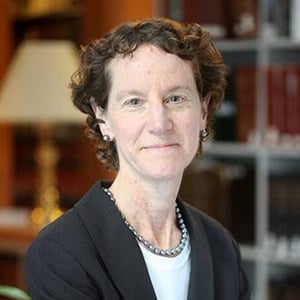
Partner, Arnold & Porter
Debbie Feinstein heads the firm's Global Antitrust group, and brings a wealth of experience to her practice in advising clients on a range of antitrust challenges before US antitrust authorities. She recently re-joined the firm from the US Federal Trade Commission (FTC), where she was Director of the Bureau of Competition. In that capacity, she was responsible for supervising the investigation and enforcement of the US antitrust laws against anticompetitive mergers and conduct. During her tenure from 2013 to 2017, the FTC had substantial litigation success and a number of major merger wins, including challenges to Sysco Corp.'s acquisition of rival US Foods Inc., and Staples Inc.'s merger with Office Depot Inc. She had previously served at the FTC from 1989 to 1991 as Assistant to the Director of the Bureau of Competition and Attorney Advisor.
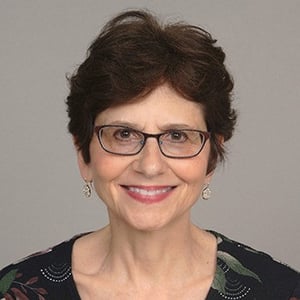
Distinguished Fellow, Institute for Technology Law & Policy, Georgetown Law
Jessica Rich, former Director of the FTC’s Bureau of Consumer Protection, spent more than two and a half decades battling deceptive and fraudulent business practices at the Federal Trade Commission. She is widely recognized as one of the most knowledgeable and well-respected consumer champions in the United States. Rich led the expansion of the FTC’s expertise in technology through the creation of the Office of Technology Research and Investigations (OTech). She also oversaw the development of influential FTC policy reports, including reports on the Internet of Things, Big Data, data brokers, mobile apps, and cross-device tracking.
Most recently, Rich served as the Vice President of Consumer Policy and Mobilization at Consumer Reports, where she led the organization's efforts to address the most urgent threats and pain points consumers face today, such as data privacy and security, health care costs, food safety, corporate accountability, and fairness and transparency in financial markets. She is a graduate of New York University Law School (1987) and Harvard University (1983).
Rich’s work at the Institute includes writing in her areas of expertise, participating in policy convenings, and serving as a resource to the Georgetown Law community.

Partner, Gibson, Dunn & Crutcher, LLP
Svetlana S. Gans is a partner in the Washington, D.C. office of Gibson, Dunn & Crutcher, LLP where she helps clients navigate complex consumer protection, privacy, and competition related regulatory proceedings before the U.S. Federal Trade Commission (FTC), , U.S. Department of Justice Antitrust Division, State Attorneys General and other enforcement bodies. Ms. Gans also assists on litigation matters and provides strategic counseling and advice related to public policy issues.
Before joining Gibson Dunn, she served as the Vice President & Associate General Counsel at NCTA, the Internet & Television Association, where she helped lead the association’s consumer protection and competition policy work. Prior to joining NCTA, Ms. Gans served with distinction as Chief of Staff to Acting Chairman Maureen K. Ohlhausen at the FTC. As the agency chief of staff, Ms. Gans managed and oversaw agency operations, including bureau and office heads reporting to the Chairman, a seven-member office staff, and an agency budget of over $300 million. She also served as the Acting Chairman’s key advisor on consumer protection and competition investigations and litigation, working with a diverse team of attorneys and economists to preserve competition and protect U.S. consumers. She created, executed, and oversaw several strategic initiatives for the agency, including the agency process reform, regulatory reform, and data security transparency initiatives. Previously, Ms. Gans had the unique experience of serving in both litigating bureaus of the FTC: the Bureau of Competition and the Bureau of Consumer Protection.
Prior to her time in government, Ms. Gans worked as an antitrust associate at major law firms. Her practice focused on defending consumer product, financial services, and trade association clients in regulatory and private investigations alleging conspiracy and violations of antitrust and consumer protection laws.
Ms. Gans has been an active leader in the ABA Antitrust Law Section (“Section”) for two decades, and currently serves as the Section’s Marketing Officer. Ms. Gans helped create the Section’s Young Lawyer Representative Program, now in its 10th year, and the Section’s Law Ambassador Program, each aimed at developing and promoting the next generation of consumer protection and competition attorneys. Ms. Gans is also active in the Federal Communications Bar Association, currently serving as Co-Chair of the Diversity Pipeline Initiative and the Women’s Leadership Committee.
Ms. Gans received her law degree with high honors from the University of Denver College of Law. During law school, Ms. Gans served as a Judicial Intern to the Honorable John L. Kane, Jr. and as an Honors Program Paralegal for the United States Department of Justice Antitrust Division, Merger Taskforce. Ms. Gans earned her undergraduate degree cum laude from Boston University.
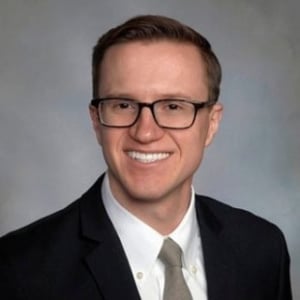
Chief Counsel for the Administrative State, Regulatory Reform, and Antitrust, House Committee on the Judiciary
Adam Cella is currently the Chief Counsel for the Administrative State, Regulatory Reform, and Antitrust at the House Committee on the Judiciary. Formerly, he was an attorney-advisor at the U.S. Federal Trade Commission. Prior to joining the FTC, he was an associate at Axinn, Veltrop & Harkrider LLP.
Transfer Pricing Senior Associate, PricewaterhouseCoopers LLP

Professor of Law, Maurer School of Law, Indiana University of Bloomington
Professor David Gamage is a scholar of tax law and policy and also of health law and policy. He has written extensively on tax and budget policy at both the U.S. state and federal levels, as well as on tax theory, fiscal federalism, and the intersections between taxation and health care. Professor Gamage consistently ranks in the top five of the SSRN Tax Professor Rankings.
Gamage has authored or coauthored over fifty scholarly articles and essays. His scholarship has appeared in a range of journals, including the peer-edited Tax Law Review and Public Finance Review, and the flagship law reviews of the University of Chicago, the University of California, and Northwestern Law Schools. His casebook, Taxation: Law, Planning, and Policy, is published by Carolina Academic Press.
From 2010 through 2012, Gamage served as special counsel to the U.S. Department of the Treasury, Office of Tax Policy. In that position, he administered the individual income tax portfolio of the Treasury Department's Tax Legislative Counsel, and he oversaw the drafting of all individual income tax regulations and executive branch initiatives related to the individual income tax. Gamage's position primarily involved the drafting and implementation of tax provisions of the Affordable Care Act ("Obamacare"). Since returning to academia in 2012, Gamage has served on a tax reform commission for the state of California and has regularly advised other state and federal policymakers on tax and health policy.
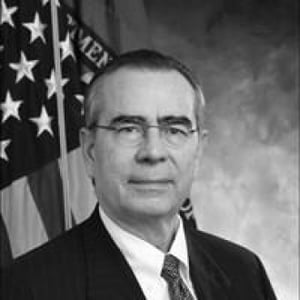
Senior Policy Advisor, PwC
L.G. “Chip” Harter: L.G. "Chip" Harter is a senior policy advisor to PwC. He served the Department of the Treasury as Deputy Assistant Secretary of Tax Policy for International Tax Affairs from September 2017 through November 2020. As Deputy Assistant Secretary for International Tax Affairs, Mr. Harter was responsible for all international tax matters at Treasury. He played a central role in representing the Treasury in the legislative process for the Tax Cuts and Jobs Act (TCJA), which was signed into law in December 2017. Mr. Harter then led the development and issuance of an integrated set of regulations to implement the new international provisions of the TCJA, including regulations to implement the Global Intangible Low Tax Income (GILTI) regime, the Base Erosion Anti-Avoidance Tax (BEAT), and the Foreign Derived Intangible Income (FDII) regime.
Mr. Harter also represented the United States in tax negotiations at the Organisation for Economic Cooperation and Development (OECD). At the OECD, he led the efforts to revise long-standing international tax rules that provide for the allocation of taxing rights over multinational businesses, representing the United States in negotiations over the designs of the Pillar 1 and Pillar 2 proposals.
In recognition of these services, Mr. Harter was awarded the Treasury Medal. Prior to joining the Treasury, Mr. Harter served for 18 years as a principal in the Washington National Tax Service of PwC. Prior to joining PwC, Mr. Harter served 18 years, first as an associate and then as a partner, with the international law firm of Baker& McKenzie. He is a member of the District of Columbia Bar.
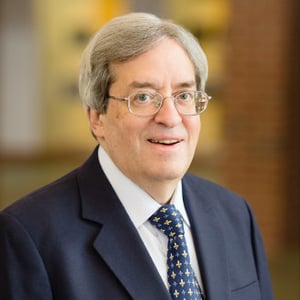
Guy Raymond Jones Chair in Law, University of Illinois
Professor Richard Kaplan, the Guy Raymond Jones Chair in Law, graduated from Indiana University with highest honors and earned his law degree from Yale University. He practiced law in Houston with Baker & Botts, specializing in U.S. tax consequences of international transactions, before joining the faculty in 1979. An internationally recognized expert on U.S. taxation and tax policy, he has lectured in these areas on three continents, testified before the U.S. Congress on several occasions, and written innovative course books on income taxation and international taxation.
Professor Kaplan developed one of the first law school courses on elder law, an emerging specialty dealing with the legal implications of extended life, and is the co-author of Elder Law in a Nutshell (7th ed. 2019). He has served as faculty advisor for the Elder Law Journal since its inception in 1992. He has also been recognized with the Outstanding Professor in the College of Law several times and has received the Campus Award for Excellence in Graduate and Professional Teaching at the University of Illinois. Professor Kaplan is a fellow of the Employee Benefits Research Institute and a member of the National Academy of Social Insurance.
President, Hoppe Strategies
After serving 29 years on Capitol Hill, Dave Hoppe returned to the private sector as president of Hoppe Strategies, a strategic planning, lobbying and political consulting firm.
Hoppe brings a wealth of experience to this job, having dealt with legislative development and strategy at the highest levels on Capitol Hill. He directed Whip offices in both the House and Senate, and led the Senate Majority Leader’s office during the Clinton and Bush 43 administrations. Both positions oversaw and coordinated the flow of legislation through Congress, and both required working with political personalities on both sides of the aisle as well as the White House, to achieve passage for each bill. Hoppe recently reprised this role for Sen. Jon Kyl in the Senate Whip Office.
Additionally, Hoppe was the lead staff member on such historic Constitutional and structural events as the power shift in the Senate (when one Senator changed his party affiliation, throwing into chaos the entire Senate committee structure and requiring extensive negotiations between both parties), and the Senate impeachment trial of President Clinton. These events give him a unique perspective on the interaction of political agendas with legislative outcomes.
Other Hill positions held by Hoppe include Chief of Staff to Rep. Jack Kemp during his presidential bid, and Chief of Staff to Sen. Dan Coats who was appointed to replace former Senator Dan Quayle. Sen. Coats was required to conduct two statewide campaigns in a 4-year period in order to confirm his Senate appointment and then to retain the seat, unusual demands which impacted the work of his Senate office. Early in his Hill career, Hoppe served as energy and environmental policy analyst for the Republican Study Committee.
Among the highlights of Hoppe’s years on House leadership staff were the passage of the Economic Recovery Tax Act of 1981 and the Omnibus Budget Reconciliation Act of 1981, both key elements of the first Reagan administration. During his tenure with Rep. Jack Kemp, the Tax Reform Act of 1986 was passed and signed into law. He was also involved with the Balanced Budget Act of 1997, the Economic Growth and Tax Relief Reconciliation Act of 2001, the Individuals with Disabilities Education Act of 1997, and numerous other issues including welfare reform, tax policies and education reform.
In 2003, Hoppe left the Hill to work for the public affairs firm Quinn Gillespie & Associates, serving as President of QGA 2007-2011, when he returned briefly to the Senate to direct the Whip office for Sen. Kyl. Currently Hoppe is a Senior Policy Advisor at Squire Patton Boggs, he also serves as a Senior Advisor to the Bipartisan Policy Center, and is an advisor to the Jack Kemp Foundation. He is an emeritus member of the Board for Easter Seals of DC, Maryland and Northern Virginia, was Chairman of the Government Affairs Committee for the National Down Syndrome Society, and serves on the national board of SourceAmerica and of the Coalition to Promote Self Determination, a group of organizations working to empower disabled individuals to achieve greater independence.
He holds a B.A. in Government from the University of Notre Dame, and an M.A. in International Relations from Johns Hopkins School of Advanced International Studies. He is married and has three children.

Partner, Kahn, Dees, Donovan & Kahn, LLP
George Mason University Foundation Professor of Law, Antonin Scalia Law School, George Mason University
TODD J. ZYWICKI is George Mason University Foundation Professor of Law at Antonin Scalia Law School at George Mason University and Research Fellow of the George Mason Law and Economics Center. During the Fall 2023 semester he served as the Visiting Scholar in Conservative Thought and Policy for the Bruce Benson Center for the Study of Western Civilization at the University of Colorado-Boulder. From 2020-2021 he was Chair of the Consumer Financial Protection Bureau Taskforce on Federal Consumer Financial Law. In 2021 he was inducted to the American College of Consumer Financial Services Lawyers. He is also a Senior Fellow of the F.A. Hayek Program for the Advanced Study of Politics, Philosophy, and Economics at George Mason University and a former Senior Fellow of the Cato Institute. From 2015-2017 he was Executive Director of the George Mason Law and Economics Center. He served as Co-Editor of the Supreme Court Economic Review from 2006-2017. From 2003-2004, Professor Zywicki served as the Director of the Office of Policy Planning at the Federal Trade Commission. He has also taught at Vanderbilt University Law School, Georgetown University Law Center, Boston College Law School, Mississippi College School of Law, and China University of Political Science and Law.
Professor Zywicki clerked for Judge Jerry E. Smith of the U.S. Court of Appeals for the Fifth Circuit and worked as an associate at Alston & Bird in Atlanta, Georgia, where he practiced bankruptcy and commercial law. He received his J.D. from the University of Virginia, where he was executive editor of the Virginia Tax Review and John M. Olin Scholar in Law and Economics. Professor Zywicki also received an M.A. in Economics from Clemson University and an A.B. cum Laude with high honors in his major from Dartmouth College.
Professor Zywicki is also a Lone Mountain Fellow of the Property and Environment Research Center, a Fellow of the International Centre for Economic Research in Turin, Italy, and a former Senior Fellow of the Goldwater Institute. During the Fall 2008 Semester Professor Zywicki was the Searle Fellow of the George Mason University School of Law and was a 2008-09 W. Glenn Campbell and Rita Ricardo-Campbell National Fellow and the Arch W. Shaw National Fellow at the Hoover Institution on War, Revolution and Peace. He has lectured and consulted with government officials around the world, including Iceland, Italy, Japan, and Guatemala. In 2006 Professor Zywicki served as a Member of the United States Department of Justice Study Group on “Identifying Fraud, Abuse and Errors in the United States Bankruptcy System.”
Professor Zywicki is the author of more than 130 articles in leading law reviews and peer-reviewed economics journals. He is one of the Top 10 most-cited law professors in the field of Commercial Law and one of the Top 25 law professors on Twitter as measured by engagement levels. He is one of the Top 50 Most Downloaded Law Authors at the Social Science Research Network. He has testified multiple times before Congress on issues of consumer bankruptcy law and consumer credit and is a frequent commentator on legal issues in the print and broadcast media, including the Wall Street Journal, New York Times, The Washington Post, The Washington Times, Nightline, The Newshour with Jim Lehrer, Neil Cavuto Show, Fox & Friends, Smerconish, Fox News @ Night with Shannon Bream, Fox Business, CNN, CNBC, Bloomberg News, BBC, The Diane Rehm Show, Lou Dobbs Show, Jerry Doyle Show, and The Laura Ingraham Show.
Professor Zywicki is former Chairman and a current member of the Board of Directors of the Competitive Enterprise Institute, and is a member of the Board of Directors of the Institute for Humane Studies, Bill of Rights Institute, the Executive Committee for the Federalist Society's Financial Institutions and E-Commerce Practice Group, the Board of Trustees of the Foundation for Research on Economics and the Environment. He formerly served on the Governing Board and the Advisory Council for the Financial Services Research Program at George Washington University School of Business. He is currently the Chair of the Academic Advisory Council for the following organizations: The Bill of Rights Institute, the film “We the People in IMAX,” and the McCormick-Tribune Foundation “Freedom Museum” in Chicago, Illinois. He is a member of the Board of Visitors of Ralston College and was a member of the Board of Trustees of Yorktown University. From 2005-2009 he served as an elected Alumni Trustee of the Dartmouth College Board of Trustees.

Attorney General, Commonwealth of Kentucky
Daniel Cameron is the CEO of the 1792 Exchange, working to protect free exercise, free speech, and free enterprise and help American corporations return to the winning formula of producing great products and services, not pushing agendas.
Daniel previously served as the 51st Attorney General of Kentucky from 2019 to 2023. He was the first black American elected to a standalone statewide office in Kentucky’s history. Daniel then went on to win the Republican nomination for governor of Kentucky.
He grew up in Elizabethtown, Kentucky and attended the University of Louisville, where he played football for the Cardinals. After graduating from Brandeis School of Law, he clerked for a federal judge. Daniel later served as legal counsel to United States Senator Mitch McConnell.
Daniel and his wife are blessed with two sons: Theodore and Bennett. They reside in Louisville, Kentucky, a place they proudly call home.

Judge, United States Court of Appeals, Sixth Circuit
John K. Bush is a Circuit Judge on the United States Court of Appeals for the Sixth Circuit. His chambers are in Louisville, Kentucky. Prior to joining the court, Judge Bush was a partner in the Louisville office of Bingham Greenebaum Doll LLP, where he also was co-chair of the firm’s litigation department. He began his legal practice in the Washington, D.C. office of Gibson Dunn & Crutcher LLP.
Judge Bush served as a law clerk for Judge J. Smith Henley of the United States Court of Appeals for the Eighth Circuit. He was graduated summa cum laude from Vanderbilt University in 1986, and cum laude from Harvard Law School in 1989.
Justice, Supreme Court of Tennessee
Justice Sarah Campbell was confirmed to the Tennessee Supreme Court in 2022. She previously served as an Associate Solicitor General in the Tennessee Attorney General’s Office and as an associate at the law firm of Williams & Connolly LLP in Washington, DC. Justice Campbell earned her law degree from Duke University School of Law, a Master of Public Policy degree from Duke University, and her undergraduate degree from the University of Tennessee, where she received the Torchbearer Award. She served as a law clerk for Justice Samuel A. Alito, Jr. on the United States Supreme Court and Judge William H. Pryor Jr. on the U.S. Court of Appeals for the Eleventh Circuit.

Partner, Arnold & Porter
John Elwood is the head of Arnold & Porter’s Appellate and Supreme Court practice. He has argued before the Supreme Court nine times, and appeared before most of the federal courts of appeals. He has successfully argued cases across a broad cross-section of subjects, with particular experience in environmental law, the False Claims Act, government contracting, and federal criminal law
Mr. Elwood’s work has earned him recognition as one of Washington’s top Supreme Court lawyers (Washingtonian, 2013), as one of “a small group of lawyers” with an “outsized influence at the U.S. Supreme Court” (Reuters, 2014), and as one of the country’s most innovative lawyers (Financial Times, 2014). Chambers USA reports that “[t]he much-admired John Elwood is praised for his advocacy skills” (2013), and describes Mr. Elwood as “phenomenal” (2014), “incredibly talented” (2012), and “a much-loved and widely respected lawyer who is quick on his feet” (2010).
Before joining the firm, Mr. Elwood served in senior-level positions in the U.S. Department of Justice. Beginning as an Assistant to the Solicitor General, and continuing with the firm, he has briefed more than 20 merits cases before the Supreme Court of the United States, and has briefed approximately 135 cases at the certiorari stage. As the senior Deputy in the Office of Legal Counsel, he advised the White House and federal agencies on a range of constitutional, statutory, and regulatory issues.
Solicitor General of Kentucky
Matt Kuhn serves as the Solicitor General of Kentucky. As Solicitor General, he oversees the office's civil and criminal appellate litigation and supervises the office's filing of amicus briefs. Since joining the Attorney General's office, he has argued in the Supreme Court of the United States, the United States Court of Appeals for the Sixth Circuit, and the Supreme Court of Kentucky. Before joining the Attorney General's office, he served as Chief Deputy General Counsel to the Governor of Kentucky. He also worked in private practice at Jones Day in Washington, D.C. and Stoll Keenon Ogden in Louisville, and served as a law clerk for Judge Raymond Gruender of the United States Court of Appeals for the Eighth Circuit. He is a graduate of Furman University and Columbia Law School.
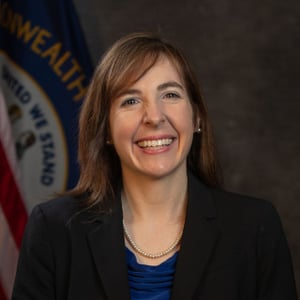
Auditor of Public Accounts, Commonwealth of Kentucky
Allison Ball is the 48th Auditor of Public Accounts for the Commonwealth of Kentucky. Prior to being elected Auditor, Ball served two terms as Kentucky State Treasurer. Before that, she spent four years as Assistant Floyd County Attorney, prosecuting child abuse and juvenile delinquency cases. When first appointed to office, Ball was the youngest statewide elected official in the country.
Ball has a rich Kentucky history; her family has been in Eastern Kentucky since the 1790s, and she holds a degree from the University of Kentucky College of Law.
She is a fierce watchdog for Kentucky taxpayer dollars. As Auditor, Ball protects against waste, fraud, and abuse.
As Treasurer, she returned more unclaimed property than any Treasurer in state history and established a savings and investment program for people with disabilities. She has been a national leader for improved financial literacy; Ball established the Kentucky Financial Empowerment Commission, and she successfully advocated for a financial literacy high school graduation requirement.
A Floyd County native, Ball and her husband, Dr. Asa James Swan, have two children, Levi and Marigold. Upon birth of her son, she was the first Kentucky Constitutional Officer to give birth while in office.

Principal Deputy Solicitor General, Director of Tenth Amendment Litigation, Virginia Office of the Attorney General
Kevin Gallagher currently serves as Principal Deputy Solicitor General and Director of Tenth Amendment Litigation at the Virginia Office of the Attorney General. In this role, he represents the governor, the attorney general, and government agencies of Virginia in appeals in the United States Supreme Court, the Fourth Circuit, and the Virginia Supreme Court, and in strategic litigation in district courts and federal courts of appeals throughout the United States.
Prior to working in state government, Kevin worked at the law firm Wilmer Cutler Pickering Hale and Dorr LLP from 2015 to 2022, most recently as Counsel. He clerked for the Honorable Alice M. Batchelder of the United States Court of Appeals for the Sixth Circuit in 2014-15, attended the University of Virginia School of Law for law school, and completed undergraduate study at Grove City College with majors in political science and history and a minor in national security.
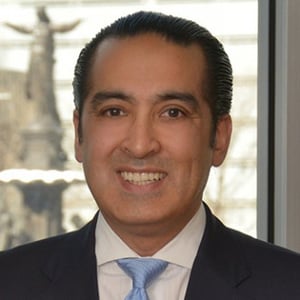
Judge, United States Court of Appeals, Sixth Circuit
John B. Nalbandian serves as a United States Circuit Judge from Kentucky on the U.S. Court of Appeals for the Sixth Circuit. He was nominated and confirmed to that position in 2018. Prior to that, Judge Nalbandian was a partner in the litigation practice group of Taft Stettinius & Hollister LLP in Cincinnati, where he served as the firm’s lead appellate lawyer and also practiced complex litigation in state and federal courts. Judge Nalbandian was board certified by the Ohio State Bar Association as a specialist in appellate law. Prior to joining Taft, Judge Nalbandian practiced for five years in the appellate section of Jones Day in Washington, DC. Upon graduation from law school, Judge Nalbandian clerked for the Honorable Jerry E. Smith of the U.S. Court of Appeals for the Fifth Circuit in Houston. While in private practice, he also served as a board member of the State Justice Institute, a nonprofit organization established by the federal government to improve the administration of justice in state courts. He served as President of the Cincinnati Lawyers Chapter of the Federalist Society. He has also been involved in his community as a board member of the Greater Cincinnati Minority Counsel Program, and as a board member of the Asian Pacific Bar Association of Southwest Ohio. Judge Nalbandian earned his B.S., magna cum laude, from the Wharton School at the University of Pennsylvania and his J.D. from the University of Virginia School of Law, where he was inducted into the Order of the Coif and served as managing editor of the Virginia Law Review.
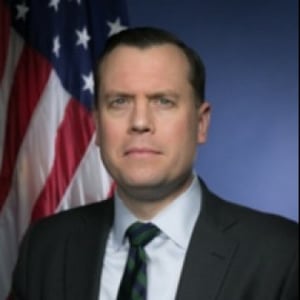
Attorney General of Kentucky
On November 7, 2023, Russell Coleman was elected the 52nd Attorney General of Kentucky, winning 117 out of 120 counties.
Prior to that, Coleman spent most of the past two decades in public service. In 2017, he was nominated by President Trump and unanimously confirmed by the Senate to be the United States Attorney for the Western District of Kentucky. In that capacity, he was the chief federal law enforcement officer for Kentucky's 53 western counties ranging from Louisville to the Jackson Purchase Region.
Coleman previously served as a Partner in the law firm of Frost, Brown, Todd; as a prosecutor in the Oldham Commonwealth's Attorney's Office; and as Legal Counsel to U.S. Senator Mitch McConnell.
A former FBI Special Agent, he was assigned to multiple field offices and served a temporary assignment in Iraq in support of the Global War on Terror. A significant spinal cord injury cut short his career with the FBI. After substantial therapy at Louisville’s Frazier Rehab Institute, Coleman learned to walk again.
Coleman was raised in Graves, Daviess, and Logan Counties, graduating from Logan County High School. He received both his undergraduate and law degrees from the University of Kentucky.
Russell lives in Oldham County with his wife, Ashley, and their three children.
Assistant United States Attorney, Eastern District of Kentucky
Mrs. Leonhard has served as an Assistant United States Attorney since 2006, prosecuting a wide variety of criminal cases, including violent crime, drug trafficking, immigration, child pornography, and white-collar crime. Prior to joining the Office, she clerked for U.S. District Judge David L. Bunning. Mrs. Leonhard graduated from Northern Kentucky University’s Chase College of Law, where she was a member and editor of the Northern Kentucky Law Review and a member of the Moot Court Board. She received her undergraduate degree from the University of Cincinnati, where she was a member of Phi Beta Kappa, in 2001.
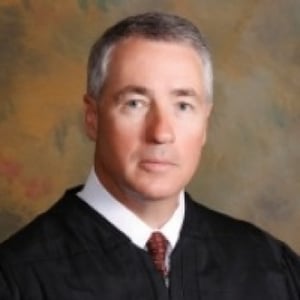
Chief Judge, United States District Court for the Eastern District of Kentucky
Judge Danny C. Reeves is a United States District Judge for the Eastern District of Kentucky, a position he has held since 2001. Prior to his appointment to the bench, Judge Reeves was a partner in the Lexington, Kentucky office of Bingham Greenebaum Doll LLP (formerly Greenebaum Doll & McDonald PLLC), where he practiced civil litigation from 1983 to 2001. Judge Reeves began his legal career as a law clerk to the Honorable Eugene E. Siler, Jr., then of the United States District Court for the Eastern and Western Districts of Kentucky from 1981 to 1983. He received his J.D. from Salmon P. Chase College of Law, Northern Kentucky University in 1981 and his B.A. from Eastern Kentucky University in 1978.
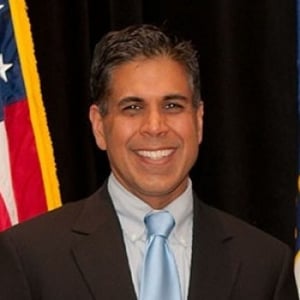
Judge, United States Court of Appeals, Sixth Circuit
Amul R. Thapar serves as a judge on the United States Court of Appeals for the Sixth Circuit. His judicial career began in 2007 when President George W. Bush nominated him to serve on the Eastern District of Kentucky, making him the first South Asian Article III judge in American history. In 2017, he became President Donald J. Trump’s first appellate court nominee.
Before joining the bench, Judge Thapar served as the United States Attorney for the Eastern District of Kentucky. While United States Attorney, Judge Thapar worked on the Attorney General’s Advisory Committee (“AGAC”) and chaired the AGAC’s Controlled Substances and Asset Forfeiture subcommittee. He also served on the Terrorism and National Security subcommittee, the Violent Crime subcommittee, and the Child Exploitation working group.
Judge Thapar has worked in private practice, at Williams & Connolly in Washington, D.C., and Squire, Sanders & Dempsey in Cincinnati, Ohio. He also served as an Assistant United States Attorney in both the Southern District of Ohio and the District of Columbia.
Judge Thapar received his undergraduate degree from Boston College and his law degree from the University of California, Berkeley. After graduating, Judge Thapar worked as a law clerk to the Honorable S. Arthur Spiegel of the United States District Court for the Southern District of Ohio, and the Honorable Nathaniel R. Jones of the United States Court of Appeals for the Sixth Circuit.
Judge Thapar has also published in the Yale Law Journal, Michigan Law Review, and Catholic University Law Review. He teaches courses on originalism, the Federalists and Anti-Federalists, and legal writing at Notre Dame Law School, the University of Virginia School of Law, and Vanderbilt Law School.

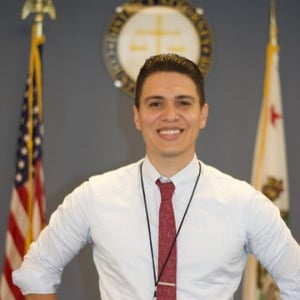

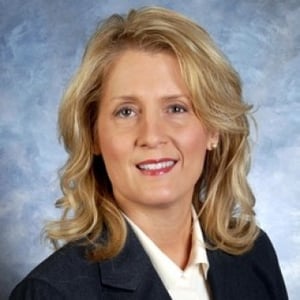
Panel I: Privacy for and from the Digital Person
Daniel A. Bojorquez, Melissa Holyoak, Clayton Kozinski, Gabriel Ledeen, Aaron Royston, Hoan Ton-That
A National Symposium on Law and Technology
Featuring: Melissa Holyoak, Solicitor General, State of Utah Clayton Kozinski, Counsel, Lehotsky Keller LLP Aaron Royston, Managing Partner,...
Opening and a Conversation on Regulation as Opportunity
Salen Churi, Miles Jennings, Ann McDonald, Eugene B. Meyer
A National Symposium on Law and Technology
Convocation Eugene B. Meyer, President and CEO, The Federalist Society A Conversation on Regulation as Opportunity...
Deep Dive Episode 204 – The FTC in the Current Administration: Buckle Your Seatbelts
Debbie Feinstein, Jessica Rich, Svetlana Gans, Adam Cella
Regulatory Transparency Project's Fourth Branch Podcast
The last few months have seen significant changes at the Federal Trade Commission. The new...
Making Sense of Significant Potential Tax Reforms: From Global Minimums to Personal Estates
Richard Benson, David Gamage, L.G. "Chip" Harter, Richard L. Kaplan
Chicago Lawyers Chapter and Regulatory Transparency Project
A sharply divided Congress is facing significant challenges in order to raise revenue and meet...
How to Fix the Budget Mess
David Hoppe, Seth B. Zirkle
Evansville Lawyers Chapter
The Evansville Lawyers Chapter is honored to host Dave Hoppe, President, Hoppe Strategies, for a...
Government-Mandated Vaccine Requirements: OSHA, Jacobson, and the Legacy of Buck v. Bell
Todd J. Zywicki
Polk County - Online Event
Featuring: Todd J. Zywicki, George Mason University Foundation Professor of Law, Antonin Scalia Law School, George...
Closing Remarks by Hon. Daniel Cameron
Daniel Cameron
Fifth Annual Kentucky Chapters Conference
Featuring: Hon. Daniel Cameron, Attorney General, Commonwealth of Kentucky * * * * * As always,...
Panel 3: Supreme Court Preview
John K. Bush, Sarah Keeton Campbell, John P. Elwood, Matthew Kuhn
Fifth Annual Kentucky Chapters Conference
This panel discussed the upcoming Supreme Court term, which began on October 4, 2021....
Panel 2: Separation of Powers During Emergencies
Allison Joy Ball, Kevin Gallagher, John B. Nalbandian, Robin L. Webb
Fifth Annual Kentucky Chapters Conference
Featuring: Hon. Allison Joy Ball, State Treasurer, Commonwealth of Kentucky Kevin Gallagher, Counsel, Wilmer Hale...
Panel 1: Criminal Justice Reform
Russell M. Coleman, Elaine K. Leonhard, Danny C. Reeves, Amul R. Thapar
Fifth Annual Kentucky Chapters Conference
Featuring: Jesse Barrett, Partner, SouthBank Legal: LaDue | Curran | Kuehn Russell Coleman, Partner, Frost...