

Senior Fellow, Ethics and Public Policy Center
Stanley Kurtz is a Senior Fellow at the Ethics and Public Policy Center. On a wide range of issues, from K-12 and higher education reform, to the challenges of democratization abroad, to urban-suburban policies, to the shaping of the American left’s agenda, Mr. Kurtz is a key contributor to American public debates. Mr. Kurtz has written on these and other issues for various journals, particularly National Review Online (where he is a contributing editor).
Mr. Kurtz has published two influential books on President Obama’s political history and policy agenda: Radical-in-Chief: Barack Obama and the Untold Story of American Socialism (Threshold) and Spreading the Wealth: How Obama is Robbing the Suburbs to Pay for the Cities (Sentinel). He has also led the campaign to reform federal subsidies to academic programs of “area studies” under Title VI of the Higher Education Act.
Mr. Kurtz received his undergraduate degree from Haverford College and his Ph.D. in social anthropology from Harvard University. He later taught at Harvard, winning several teaching awards for his work in a Great Books Program. He was also Dewey Prize Lecturer in Psychology at the University of Chicago.
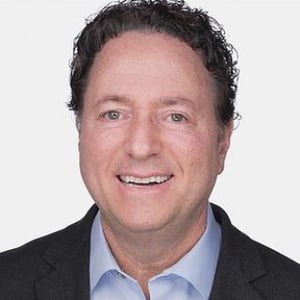
President, Committee for Justice
Curt Levey is President of the Committee For Justice, an organization devoted to advancing constitutionally limited government and individual liberty. He is a veteran of Supreme Court and other judicial confirmation battles and serves on the executive committee of the Federalist Society's Civil Rights Practice Group.
After graduating Harvard Law School with honors and clerking for the U.S. Court of Appeals for the Sixth Circuit, Mr. Levey served as Director of Legal & Public Affairs at the Center for Individual Rights (CIR). There he worked on landmark Supreme Court cases, including the University of Michigan affirmative action cases and the successful constitutional challenge to the Violence Against Women Act. After CIR, Mr. Levey headed the Title IX policy group at the U.S. Department of Education.
Before attending law school, Mr. Levey earned an M.S. and B.A. in computer science from Brown University and worked in the field of artificial intelligence (AI). He invented a new type of AI technology, for which he wrote a successful patent application.
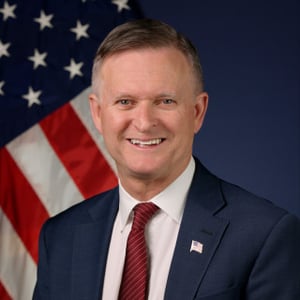
Deputy Secretary of Transportation, US Department of Transportation
Steven G. Bradbury was sworn in as the Deputy Secretary of Transportation on March 13, 2025, following his confirmation by the U.S. Senate on March 11, 2025. In this role, he oversees the Department’s operating administrations and spearheads initiatives to ensure a safe, efficient, and modern transportation system that strengthens economic productivity and global competitiveness. Deputy Secretary Bradbury also assists Secretary Duffy in managing the Department’s activities, including its workforce of over 58,000 employees and an annual budget exceeding $109 billion.
Bradbury previously served as the 23rd General Counsel of the Department of Transportation from 2017 to 2021, as the Acting Deputy Secretary from 2019, and as Acting Secretary of Transportation in 2021. As General Counsel, he was the chief legal officer, advising on all legal matters and ensuring the integrity and compliance of the Department’s policies and programs.
Before rejoining DOT, Bradbury was a Distinguished Fellow at The Heritage Foundation from December 2022 to March 2025. He has extensive experience in the public and private sector, having served as Principal Deputy and Acting Assistant Attorney General at the U.S. Department of Justice and as a partner at Kirkland & Ellis LLP and Dechert LLP. Earlier in his career, he clerked for Justice Clarence Thomas and Judge James L. Buckley.
Bradbury holds a J.D., magna cum laude, from the University of Michigan Law School and a B.A. in English from Stanford University.
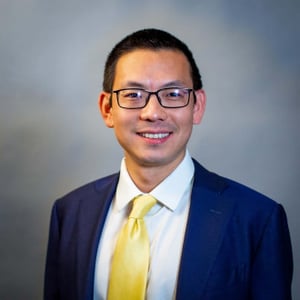
Litigation Counsel, New Civil Liberties Alliance
Sheng Li is Litigation Counsel for the New Civil Liberties Alliance. Prior to joining NCLA, Sheng served as Counselor to the Administrator of Wage and Hour at the U.S. Department of Labor. In that role, he led numerous efforts to remove or simplify unduly burdensome regulations. He has also worked in the private sector as a litigation associate at Patterson Belknap Webb & Tyler and at Kirkland & Ellis.
Sheng is a graduate of Johns Hopkins University and Yale Law School, where he was managing editor of the Yale Journal of International Law. After graduating law school, Sheng served as law clerk to the Hon. Danny J. Boggs on the U.S. Court of Appeals for the Sixth Circuit.
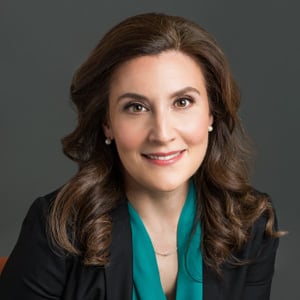
Board Member, U.S. Privacy and Civil Liberties Oversight Board
Beth A. Williams is a Board Member of the United States Privacy and Civil Liberties Oversight Board, an agency whose mission is to ensure that the federal government's efforts to prevent terrorism are balanced with the need to protect privacy and civil liberties.
Prior to her Board service, Ms. Williams was the Assistant Attorney General for the Office of Legal Policy at the United States Department of Justice from August 2017 to December 2020. In that role, she served as the primary policy advisor to the Attorney General and the Deputy Attorney General, and as the Chief Regulatory Officer for the Department. Ms. Williams also led the judicial nomination process for the Department, assisting in the selection and confirmation of more than 230 Article III judges to the bench.
Prior to becoming Assistant Attorney General, Ms. Williams was a litigation and appellate partner at a national law firm, where her practice focused on complex commercial, securities, appellate, and First Amendment litigation. From 2005-2006, Ms. Williams served as Special Counsel to the United States Senate Committee on the Judiciary, where she assisted with the confirmation of Chief Justice John G. Roberts, Jr. and Associate Justice Samuel A. Alito, Jr. to the United States Supreme Court.
Ms. Williams clerked for the Hon. Richard C. Wesley on the United State Court of Appeals for the Second Circuit. She graduated from Harvard College magna cum laude, with a degree in History and Literature, and she earned her law degree from Harvard Law School, where she served as Executive Editor of the Harvard Journal of Law and Public Policy.
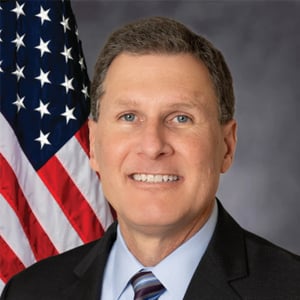
United States Attorney, Eastern District of California
Mr. Grant was appointed by Attorney General Pam Bondi to serve as the United States Attorney for the Eastern District of California beginning on August 11, 2025. Pursuant to 28 U.S.C. § 546(d), he was further appointed by the district court effective December 9, 2025.
Mr. Grant is a veteran of the Department of Justice, having served twice in Washington, D.C.: from 1991 to 1993 as an Attorney-Adviser in the Office of Legal Counsel, and from 2017 to 2021 as a Deputy Assistant Attorney General in the Environment and Natural Resources Division (ENRD). During his tenure at ENRD, he supervised more than a hundred Department litigators advancing the interests of the United States and its agencies in both enforcement and defensive matters, both civil and criminal.
In addition to his service in the Department, Mr. Grant has decades of experience in private practice in Washington, D.C. and Sacramento. That experience includes arguments in the U.S. Supreme Court, the California Supreme Court, and numerous other federal and state courts.
Mr. Grant served as a law clerk to Chief Justice Warren E. Burger (retired) and Associate Justice Clarence Thomas during the Supreme Court’s October 1994 Term. Earlier he served as a law clerk to Judge Edith H. Jones of the U.S. Court of Appeals for the Fifth Circuit in Houston, Texas.
Mr. Grant grew up in Modesto, California and raised his family in Sacramento County. He attended the University of California, Berkeley, from which he earned a bachelor’s degree in economics (1986) and a law degree (1990).
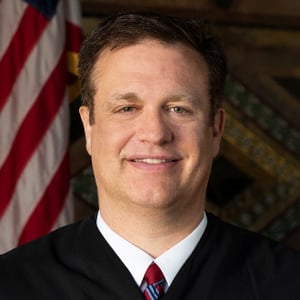
Judge, United States Court of Appeals, Ninth Circuit
Judge Nelson was confirmed to the Ninth Circuit in October 2018, as the youngest Circuit Judge to serve from Idaho and he has chambers in his hometown of Idaho Falls. Prior to his confirmation, Judge Nelson served for nine years as General Counsel of Idaho Falls-based Melaleuca, Inc., a consumer goods company. He previously worked in Washington, DC, where he served in all three branches of the federal government, including as Special Counsel for Supreme Court nominations to the Ranking Member of the Senate Judiciary Committee; Deputy General Counsel to the White House Office of Management and Budget; Deputy Assistant Attorney General in the Environment and Natural Resources Division of the United States Department of Justice; and a law clerk to Judge Henderson of the United States Court of Appeals for the D.C. Circuit. He has argued in most of the federal courts of appeals and worked on dozens of Supreme Court briefs. He started in the Washington, DC office of Sidley Austin as an appellate lawyer, after clerking for Judges Mosk and Brower of the Iran-U.S. Claims Tribunal at The Hague, and for now-Judge Tom Griffith, then-Senate Legal Counsel, during the impeachment trial of President Clinton. Judge Nelson earned his B.A. from Brigham Young University and his J.D., with honors, from BYU Law School. Judge Nelson has been a member of the Federalist Society since 1998.

Executive Director & Chief Legal Counsel, Our Children's Trust
Julia Olson graduated from the University of California, Hastings College of the Law, with a J.D. in 1997. For the first part of her 22-year career, Julia represented grassroots conservation groups working to protect the environment, organic agriculture, and human health. After becoming a mother, and realizing the greatest threat to her children and children everywhere was climate change, she focused her work on representing young people and elevating their voices on the issue that will most determine the quality of their lives and the well-being of all future generations. Julia founded Our Children’s Trust in 2010 to lead this strategic legal campaign on behalf of the world’s youth against governments everywhere. Julia leads Juliana v. the United States, the constitutional climate change case brought by 21 youth against the U.S. government for violating their Fifth Amendment rights to life, liberty, property, and public trust resources. Julia and OCT are recipients of the Rose-Walters Prize for Global Environmental Activism. She received the Kerry Rydberg Award for Environmental Activism in 2017 and is a member of Rachel's Network Circle of Advisors. To rejuvenate, Julia loves being high up in the mountains with her family and her dog or playing tunes on her ukulele with friends.
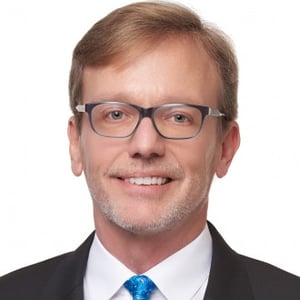
Managing Partner and Co-Founder, EducationCounsel
With extensive background in providing legal, policy, strategic planning, and advocacy services to educators throughout the country, Mr. Coleman focuses principally on issues of access, diversity, inclusion, and institutional quality in post-secondary education.
Mr. Coleman is a 1984 honors graduate of Duke University School of Law and a 1981 Phi Beta Kappa graduate of the University of Virginia. Mr. Coleman served as Deputy Assistant Secretary of the U.S. Department of Education’s Office for Civil Rights from June 1997 until January 2000, following his tenure as Senior Policy Advisor to the Assistant Secretary for Civil Rights. He has testified before the U.S. Senate and the U.S. Commission on Civil Rights; he has served as an adjunct professor at two law schools and at two graduate schools of education. He currently teaches at the USC Rossier School of Education.
He is a current member of GLSEN’s Board of Directors; a Board member of the National Council for State Authorization Reciprocity (NC-SARA); and a Board member of the Lab School of Washington, which serves students with learning differences. He is a past Chairperson of the Board of Directors for the Institute for Higher Education Policy. Mr. Coleman leads the legal and policy work of the College Board's Access and Diversity Collaborative that he helped establish in 2004, and has been a principal author of numerous amicus briefs filed in federal courts on issues associated with the educational benefits of student diversity and the consideration of race in admissions, as well as the rights of transgender students to a non-discriminatory school environments.
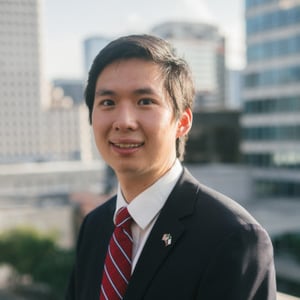
District Judge, State of Texas
Cory Liu is a state district judge in Austin, Texas. He previously served as assistant general counsel to Texas Governor Greg Abbott. Mr. Liu clerked for Judge Andrew Oldham on the U.S. Court of Appeals for the Fifth Circuit and Judge Danny Boggs on the U.S. Court of Appeals for the Sixth Circuit. He was Editor-in-Chief of the Harvard Journal of Law & Public Policy and is a graduate of Harvard Law School and the University of Chicago.

Legal Fellow, Center for the Separation of Powers, Pacific Legal Foundation
Alison Somin joined Pacific Legal Foundation in May 2020 as a legal fellow in the Center for the Separation of Powers and part of the equality before the law practice group.
Before joining the Pacific Legal Foundation team, Alison was a special assistant and counsel for over a decade to Gail Heriot, a member of the bipartisan United States Commission on Civil Rights. She also has deep roots in the liberty movement. Alison was a Koch Associate at the National Federation for Independent Business Legal Foundation and, during law school, completed summer clerkships at the Institute for Justice and the Charles G. Koch Charitable Foundation. She holds a J.D. from Emory University School of Law and an A.B. in history from Dartmouth College.
Her work has been published in the San Francisco Chronicle, the Daily Journal, Texas Journal of Law and Politics, and The Federalist Society’s Engage magazine and blog.
She lives in northern Virginia with her husband Ilya; two children; and golden retriever Willow. In her spare time, she enjoys reading, baking and cooking, children’s art projects, and training and exercising Willow.

Partner, Oliver Wyman
Douglas Elliott is a Partner at Oliver Wyman in New York, where he focuses on financial regulation and associated public policy issues and their implications for the financial sector.
He analyzes a wide range of issues and has published papers on such diverse topics as “Financial Institutions in an Age of Populism,” “Data Rights in Finance,” and “Tackling Global Market Fragmentation in Banking.” He has also written extensively on the impacts of capital and liquidity requirements, including a 150-page literature review in 2016, which followed on an earlier study for the IMF. Recently he addressed the finance ministers and central bank governors of the 28 EU member states on the topic of “Rebooting Capital Markets Union.”
Prior to joining the firm, he was a Fellow in Economic Studies at The Brookings Institution, generally ranked as the world’s top think tank. He primarily analyzed financial institutions and markets and their regulation, along with extensive analysis of the Euro Crisis. He has twice been a Visiting Scholar at the International Monetary Fund. Mr. Elliott also worked as a consultant for the IMF, the World Bank, and the Asian Development Bank. Prior to Brookings, he was a financial institutions investment banker for two decades, principally at J.P. Morgan.
He has testified multiple times before both houses of Congress and participated in numerous speaking engagements, as well as appearing widely in the major media outlets. The New York Times has described his analyses as “refreshingly understandable” and “without a hint of dogma or advocacy.”
Mr. Elliott graduated from Harvard College magna cum laude with an A.B. in Sociology in 1981. In 1984, he graduated from Duke University with an M.A. in Computer Science.
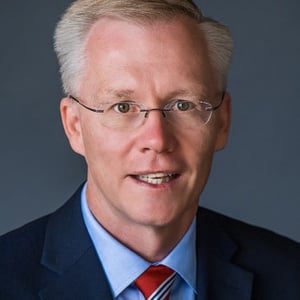
Executive Director, Milken Institute Center for Financial Markets
Michael S. Piwowar is the executive director of the Milken Institute Center for Financial Markets. Dr. Piwowar served as a Commissioner at the U.S. Securities and Exchange Commission from August 15, 2013 to July 6, 2018. He was first appointed to the SEC by President Barack Obama and was designated Acting Chairman of the Commission by President Donald Trump from January 23, 2017 to May 4, 2017. He was previously the Republican chief economist for the U.S. Senate Committee on Banking, Housing, and Urban Affairs under Senators Mike Crapo (R-ID) and Richard Shelby (R-AL) and served as the lead Republican economist on the four SEC-related titles of the Dodd-Frank Act and the JOBS Act. During the financial crisis and its immediate aftermath, Dr. Piwowar served in a one-year fixed-term position at the White House as a senior economist at the President’s Council of Economic Advisers (CEA) in both the George W. Bush and Barack Obama Administrations. Before joining the White House, Dr. Piwowar worked as a Principal at the Securities Litigation and Consulting Group (SLCG). He received a B.A. in Foreign Service and International Politics from the Pennsylvania State University, an M.B.A. from Georgetown University, and a Ph.D. in Finance from the Pennsylvania State University.
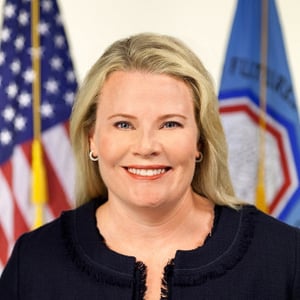
Former Commissioner, The Commodity Futures Trading Commission
Dawn Stump is a senior leader and regulatory expert in domestic and international financial services. Her experience and thought leadership have tactically identified potential risks and initiated regulatory and systemic solutions to protect industries, infrastructures, and economies. Based on her global perspective and industry expertise, Dawn is able to raise critical financial services issues to the board level and/or the global stage as business environments fluctuate. She is widely respected for her leadership, bipartisanism, and consensus building among senior government officials, senior regulatory ministry officials, corporate, and academic leaders worldwide.
Recently, she completed her term as a Commissioner of the CFTC, the independent U.S. agency that regulates the $200+ Trillion derivatives market. As one of five Commissioners, she helped to shape the priorities of the agency while overseeing policy direction and internal planning. Dawn prioritized sector resilience in evolving global markets through robust regulatory strategies necessary during market volatility and changing economic environments. Within the agency, she also championed the importance of enterprise-wide risk management practices. Specifically, Dawn initiated new agency wide data protection procedures for the consistent handling of data intake and strengthening of responses to potential cyber intrusions.
Previously, as Senior Vice President of the Futures Industry Association and concurrently Executive Director of its Americas Advisory Board, Dawn advised its President and global Board of Directors on the impacts of public policy changes on the industry and association members. Earlier, she was Vice President of Government Affairs for NYSE Euronext where she developed regulatory compliance policies alongside her international counterparts to ensure adherence across jurisdictions. Her leadership was critical to the establishment of a new U.S. based derivative exchange/clearing house.
During her early career in public service, she served as majority and minority senior professional staff for the U.S. Senate Committee on Agriculture, Nutrition & Forestry, U.S. House of Representatives Committee on Agriculture, and initially on the staff of U.S. Senator Phil Gramm. She was actively involved in negotiating the reform of derivatives regulations contained in the Dodd-Frank Act and efforts to conduct oversight of commodity and financial derivatives, under the jurisdiction of the CFTC.
Dawn shares her professional expertise as a member of the 3-person Advisory Council to the Women In Derivative’s (WIND) Board of Directors and through committee service for the National Charity League. She earned a Bachelor of Science from Texas Tech University in Lubbock, Texas and is a past President of the Texas Tech Alumni Association’s Washington, DC Chapter. Dawn and her husband have two children and live in the greater Washington, DC area.
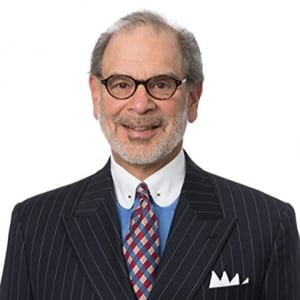
Executive Director, The Financial Technology and Cybersecurity Center
Thomas P. Vartanian is the Executive Director of the Financial Technology & Cybersecurity Center, an author, financial services advisor, expert witness, and board mentor. He is the former Executive Director of the Program on Financial Regulation & Technology at George Mason University’s Antonin Scalia Law School, where he was also a Professor of Law. Between 1983 and 2018, he chaired the Financial Institution’s practices at two international law firms, Dechert LLP and Fried Frank LLP, through four financial crises. Both as a regulator and private practitioner, he has represented parties in a majority of the 50 largest financial institution failures in American history.
Mr. Vartanian served in the Reagan Administration during the S&L crisis as General Counsel of the Federal Home Loan Bank Board and the FSLIC. Prior to that, he served in the Carter Administration in the Office of the Comptroller of the Currency as Special Assistant to the Chief Counsel. Since departing government service, he has advised many subsequent presidential administrations on financial institution issues.
Mr. Vartanian is a futurist and expert in financial technology who has been described by clients in Chambers as “one of the best financial services lawyers in America.” Mr. Vartanian was Chairman of the American Bar Association’s Cyberspace Law Committee between 1998 and 2002, where he chaired an international task force of lawyers from twenty countries which released a seminal report in London in 2000 on the novel issues created by doing business in Cyberspace. He is currently a member of the American Association of Bank Directors’ Task Force on Bank Director Personal Liability Mitigation.
Mr. Vartanian has authored more than four hundred articles and eight books, including his new book, 200 Years of American Financial Panics: Crashes, Recessions, Depressions, and the Technology That Will Change It All chronicling the country’s tumultuous financial history and the impact that technology will have on its future.
He is a frequent lecturer and media commentator on the financial services industry, having appeared on Bloomberg TV, CNN, Fox News, Newsmax, PBS and various local and national radio shows. He has also taught financial services and digital commerce law at Georgetown Law School, George Washington Law School, and Boston University School of Law, and has been a guest lecturer at Harvard Law School.
In 2008, Mr. Vartanian was named “Washingtonian of the Year” based on his use of music and sports to raise money for charities in the D.C. metropolitan area. As a musician, he appeared in the first production in the United States in 1970 of Joseph and the Amazing Technicolor Dreamcoat. His classic rock band, The Johnny Esquire Band, has helped raise approximately $5,000,000 for charities in the Washington D.C. area over the last twenty-five years. Mr. Vartanian also founded and plays for the Washington All Stars, a senior baseball team that has raised more than $500,000 for Special Olympics.
His next book, The Unhackable Internet, will be published in early 2023.
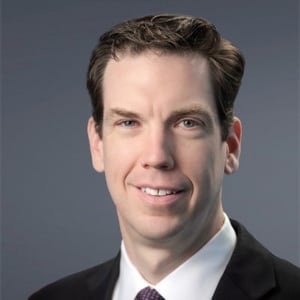
Partner, Fusion Law, PLLC
Paul is the founding partner of Fusion Law, PLLC. He has extensive experience with state, federal, and global regulators building coalitions and implementing policies to promote innovation in financial services. He is responsible for designing and implementing the first state (Arizona) and federal (CFPB) FinTech sandboxes in the United States. He also designed the CFPB no-action letter and trial disclosure policies. He helped found the first global regulatory innovation coalition (Global Financial Innovation Network) and led the founding of the first U.S. regulatory innovation coalition (American Consumer Financial Innovation Network). He served on the Financial Stability Oversight Council subcommittee on digital assets. He also has drafted state-level laws on blockchain and utility tokens.
Paul also has significant enforcement and litigation experience. He led many multi-state consumer protection enforcement matters as Civil Litigation Division Chief at the Arizona Attorney General’s Office.
Prior to his government service, Paul practiced law in the areas of securities litigation and transactional work for approximately six years at two well-known law firms. He also clerked on the U.S. Court of Appeals for the Fourth Circuit.
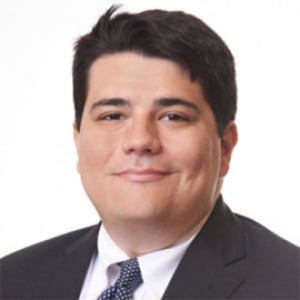
Assistant Professor of Law, Liberty University School of Law
Eric Bolinder joined Liberty University as an Assistant Professor of Law after a 10-year career in public interest litigation, working both as counsel at Cause of Action Institute and managing policy counsel at Americans for Prosperity Foundation.
Most notably, Professor Bolinder argued Loper Bright at the D.C. Circuit and was part of the team that took it from the district court to the Supreme Court. In 2024, the Supreme Court decided Loper Bright, overturning the 40-year precedent of Chevron deference. Professor Bolinder was also part of a team that successfully defended an FTC claim for equitable relief at trial, resulting in no monetary judgment against his clients.
At Cause of Action Institute, Professor Bolinder litigated exclusively against the federal government on both plaintiff actions challenging government regulations and as defense counsel in an agency enforcement proceeding.
At Americans for Prosperity Foundation, Professor Bolinder drove community efforts to plan engagement with strategic litigation opportunities. He also led a team dedicated to government oversight: filing FOIA requests and litigation, connecting with Hill staff, and producing investigative reports.
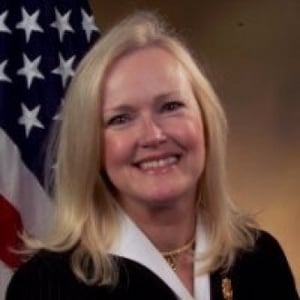
Founder, Law Office of Eileen J. O'Connor PLLC
After nearly 30 years as a national tax specialist with the IRS and major accounting firms, Eileen J. O’Connor, now an attorney in private practice, was Assistant Attorney General for the Justice Department’s Tax Division for six years during the administration of President George W. Bush and a member of then-President-elect Trump’s Treasury Department Transition Team. She focuses on federal administrative and tax law.
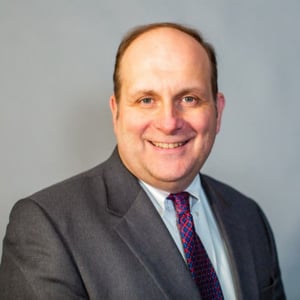
Senior Litigation Counsel, New Civil Liberties Alliance
Mr. Vecchione is a Senior Litigation Counsel for the non-profit New Civil Liberties Alliance representing clients against the Administrative State. He was previously President and CEO of the non-profit Cause of Action Institute, also advancing the constitutional order. He practiced at a number of D.C. area firms, including the eponymous John J. Vecchione Law, PLLC. Mr. Vecchione focuses his practice on strategic litigation in the federal district and appellate courts, including the Supreme Court of the United States. He is an experienced trial and appellate advocate having tried cases and argued appeals across the country. He is a member of the bars of the State of New York, the District of Columbia, and the Commonwealth of Virginia, as well as the Supreme Court of the United States and many federal courts. His cases are reported in scores of published opinions. He has also published pieces advancing the freedom agenda and constitutional order in the Wall Street Journal, the Washington Times and many other forums. He lives in Virginia with his wife Rebecca, sons Tommy and Joe.
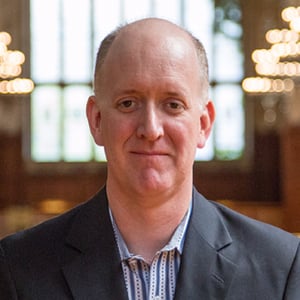
Richard W. Pogue Professor of Law, University of Michigan Law School
Professor Daniel Crane is the Richard W. Pogue Professor of Law. He served as the associate dean for faculty and research from 2013 to 2016. He teaches Contracts, Antitrust, Antitrust and Intellectual Property, and Legislation and Regulation.
Crane previously was a professor of law at Yeshiva University's Benjamin N. Cardozo School of Law and a visiting professor at New York University School of Law and the University of Chicago Law School. In spring 2009, he taught antitrust law on a Fulbright Scholarship at the Universidade Católica Portuguesa in Lisbon.
Crane's work has appeared in the University of Chicago Law Review, the California Law Review, the Michigan Law Review, the Georgetown Law Journal, and the Cornell Law Review, among other journals. He is the author of several books on antitrust law, including Antitrust (Aspen, 2014), The Making of Competition Policy: Legal and Economic Sources (Oxford University Press, 2013), and The Institutional Structure of Antitrust Enforcement (Oxford University Press, 2011).

Senior Fellow, R Street Institute
Prior to R Street, Adam spent 12 years as a senior fellow at the Mercatus Center at George Mason University. Before the Mercatus Center, he served as the president of the Progress and Freedom Foundation. Adam has also worked for the Adam Smith Institute, the Heritage Foundation and the Cato Institute.
Adam has published 10 books on a wide range of topics, including online child safety, internet governance, intellectual property, telecommunications policy, media regulation and federalism.
In 2008, Adam received the Family Online Safety Institute’s “Award for Outstanding Achievement.”
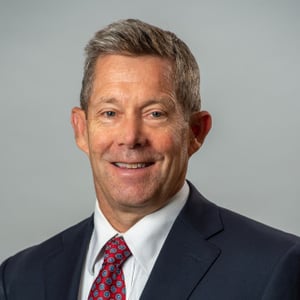
Chief Judge, United States Court of Appeals, Sixth Circuit
JEFFREY S. SUTTON is the Chief Judge of the United States Court of Appeals for the Sixth Circuit. He has served as Chair of the Federal Judicial Conference Committee on Rules of Practice and Procedure, Chair of the Advisory Committee on Appellate Rules, and Chair of the Supreme Court Fellows Commission. He currently serves as Chair of the Executive Committee of the Judicial Conference of the United States. Since 1993, Chief Judge Sutton has been an adjunct professor at The Ohio State University College of Law, where he teaches seminars on State Constitutional Law, the United States Supreme Court, and Appellate Advocacy. He also teaches a class on State Constitutional Law at Harvard Law School. Among other publications, he is the author of Who Decides? States as Laboratories of Constitutional Experimentation and 51 Imperfect Solutions: States and the Making of American Constitutional Law. He is the co-author of a casebook, State Constitutional Law: The Modern Experience, as well as The Law of Judicial Precedent. He is also the co-editor of The Essential Scalia: On the Constitution, the Courts, and the Rule of Law. In 2006, Chief Judge Sutton was elected to the American Law Institute, and in 2017 he was elected to its Council.

The Making of Taking Poletown | Taking Poletown [The FedSoc Films Podcast]
In 2021, we released our award-winning film, Taking Poletown: A Community’s Fight Over Economic Justice...
Issue Update: Critical Race Theory Legislation Across the States
Stanley Kurtz
This webinar will explore issues raised by the raft of state and federal initiatives on...
Courthouse Steps: Cummings v. Premier Rehab Keller
Curt Levey
On April 28, 2022, The U.S. Supreme Court decided Cummings v. Premier Rehab Keller. The...
Due Process Protections in Agency Enforcement Actions
Steven Gill Bradbury, Sheng Li, Beth A. Williams
In February of 2019, then General Counsel of the Department of Transportation (DOT), Steven Bradbury,...
From Russia Without Love: U.S. Energy Policy, Environmental Goals, Foreign Wars, and the Administrative State
Tristan Abbey, Eric Grant, Ryan D. Nelson, Julia Olson
The United States is – perhaps now more than ever before – a global energy...
College Admissions: Fair or Fixed?
Art Coleman, Cory R. Liu, Alison E. Somin
As the Supreme Court prepares to hear two cases this fall that challenge race preferential...
The Government’s Arms Around Cryptocurrency: Hug or Stranglehold?
Douglas Elliott, Michael Piwowar, Dawn Stump, Thomas P. Vartanian, Paul N. Watkins
As the cryptocurrency industry grows, state and federal governments are considering how that industry should...
Hollywood’s Recent Best Picture Winner Shines a Spotlight on the Harms of the Administrative State
Eric R. Bolinder, Eileen J. O'Connor, John J. Vecchione
A Hollywood depiction of the lives of fishermen tells a real life story about how...
Explainer Episode 36 – Restrictions on Direct Car Sales
Daniel A. Crane, Adam Thierer
Regulatory Transparency Project's Fourth Branch Podcast
In this episode, Adam Thierer interviews Professor Daniel Crane regarding state restrictions on direct car...
The Importance of State Constitutions | The Drafting of America’s First Constitutions [The FedSoc Films Podcast]
Jeffrey S. Sutton
How important are state constitutions today? In this episode of the FedSoc Films Podcast, Samantha...