Tech Roundup Episode 5 – Section 230
Regulatory Transparency Project's Fourth Branch Podcast


In this episode, experts discuss Section 230 of the Communications Decency Act, which protects platforms from liability for the content produced by users. Some legislators have recently floated the idea of enforcing 'platform neutrality' in a way that, according to critics, threatens the sort of free speech Section 230 is meant to protect. The experts featured in this episode have a lively discussion on these and other topics.
Featuring:
Visit our website – RegProject.org – to learn more, view all of our content, and connect with us on social media.
Senior Legal Fellow, The Future of Free Speech, Vanderbilt University
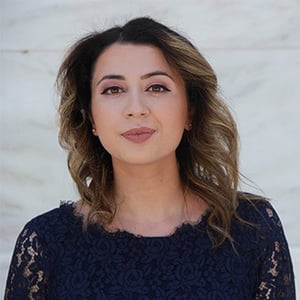
Ashkhen Kazaryan is a renowned expert in First Amendment law and technology policy, specializing in digital free speech, artificial intelligence, and the intersection of constitutional rights with emerging technologies. As a Senior Legal Fellow at the Future of Free Speech at Vanderbilt University, she leads initiatives to protect free expression and shape policies that uphold the First Amendment in the digital age.
Previously, Ashkhen was the lead for North and Latin America on the content regulation team at Meta, where she also served as the company’s policy lead on Section 230. She has also been a Senior Fellow at Stand Together and the Director of Civil Liberties at TechFreedom, where she worked extensively on platform liability, free speech, and internet governance. She is currently Fellow for the First Amendment at the Freedom Forum.
Ashkhen earned her specialist in law degree summa cum laude from Lomonosov Moscow State University in 2012 and later received a master of law degree from Yale Law School in 2016. During her time at Yale, she contributed as an articles editor for the Yale Journal of Law and Feminism, a senior editor for the Yale Law and Policy Review, and an editor for the Yale Journal of Law and Technology, while also serving as co-chair of the Public Interest Fellowship.
Assistant Professor of Cybersecurity Law, The United States Naval Academy
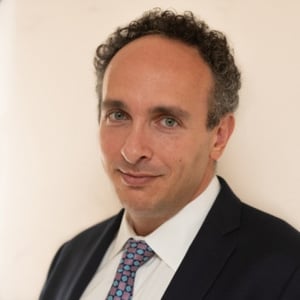
Jeff Kosseff is an Assistant Professor of Cybersecurity Law at the United States Naval Academy. He is the author of Cybersecurity Law (Wiley), the first comprehensive textbook on U.S. cybersecurity laws and regulations, and in spring 2019 he published The Twenty-Six Words that Created the Internet (Cornell University Press), a nonfiction narrative history of Section 230 of the Communications Decency Act. He currently is writing a third book, also for Cornell University Press, tentatively titled United States of Anonymous, about the history of the First Amendment right to anonymous speech in the United States, from the Federalist Papers to online postings. He received a 2019 Andrew Carnegie Fellowship to research and write the book.
His articles about cybersecurity and Internet law have appeared in Iowa Law Review, Wake Forest Law Review, IEEE Security & Privacy, Computer Law and Security Review, Columbia Science and Technology Law Review, and other publications. In October 2017, he testified about online sex trafficking and Section 230 before the House Judiciary Committee's Subcommittee on Crime, Terrorism, Homeland Security, and Investigations. In March 2017, he testified about Section 702 of the Foreign Intelligence Surveillance Act before the House Judiciary Committee.
Jeff has practiced cybersecurity and privacy law, and clerked for Judge Milan D. Smith, Jr. of the U.S. Court of Appeals for the Ninth Circuit and for Judge Leonie M. Brinkema of the U.S. District Court for the Eastern District of Virginia. He is a graduate of Georgetown University Law Center and the University of Michigan. Before becoming a lawyer, he was a journalist for The Oregonian and was a finalist for the Pulitzer Prize for national reporting.
Senior Research Fellow in Regulatory Policy, The Heritage Foundation
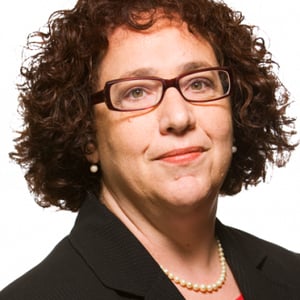
iane Katz, who has analyzed and written on public policy issues for more than two decades, is a research fellow in regulatory policy at The Heritage Foundation.
A veteran journalist and policy analyst from Detroit, Katz joined Heritage’s Thomas A. Roe Institute for Economic Policy Studies in August 2010.
She previously was director of risk, environment and energy policy for three years at the Fraser Institute, an independent policy research and educational organization in Canada. From 2002 to 2008, she was director of science, environment and technology for the Mackinac Center for Public Policy, a free market think tank in Midland, Mich.
As a member of the editorial board of the Detroit News for nine years, Katz specialized in writing about science and the environment, telecommunications and technology, and the auto industry. She also covered national issues as a reporter in the newspaper’s Washington bureau. Her work won top honors from the Michigan Press Association in 1994, 1996, 1997 and 1998.
Katz’s analyses and commentary have been published by The Wall Street Journal, The Washington Times, National Review, The Weekly Standard and Reason Magazine in addition to dozens of regional and local newspapers.
She has testified before Congress and several state legislatures. The State Policy Network, a coalition of more than 50 think tanks across the United States, appointed her to represent it on the American Legislative Exchange Council.
Katz was awarded fellowships by the Jack R. Howard Science Institute for Journalists at the California Institute of Technology, the Paul Miller Washington Reporting Fellowship of the National Press Foundation and programs at the Kinship Conservation Institute and the Political Economy Research Center.
She holds a bachelor’s degree in philosophy from Thomas Jefferson College and a master’s degree in journalism from the University of Michigan.
Katz currently resides in Detroit. Her daughter, Natalie, attends McGill University in Montreal.