Necessary & Proper Episode 100: Legislative or Executive? The Curious Case of the Library of Congress
The recent dismissal of the Librarian of Congress and the Register of Copyrights by President Trump raises fundamental questions about the scope of the President’s removal authority and the constitutional status of these offices. Do these officials exercise executive power such that they must be removable at will? Or has Congress validly restricted removal in pursuit of independence?
This panel will examine the legal and historical foundations of both positions, tracing the development of the Library of Congress and the Copyright Office, their placement within the legislative branch, and the President’s authority to remove them—if any. The discussion will examine whether these offices lie within the President’s removal authority or whether Congress has validly constrained that power.
Our panel will consider the constitutional text, structural implications, and historical practice governing the removal of these unique officers.
Featuring:
*******
As always, the Federalist Society takes no position on particular legal or public policy issues; all expressions of opinion are those of the speaker.
Adelbert H. Sweet Professor of Law, Stanford Law School
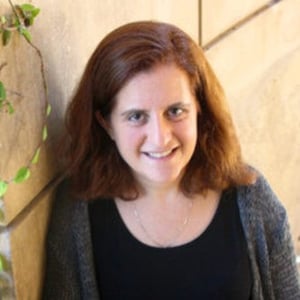
Anne Joseph O’Connell is a lawyer and social scientist (with graduate training in economics and political science) whose research and teaching focus on administrative law and the federal bureaucracy. Outside of the law school, she was a presidentially appointed member of the Council of the Administrative Conference of the United States, an independent federal agency dedicated to improving regulatory procedures, from October 2022 to January 2025. O’Connell is an elected fellow of the American Academy of Arts and Sciences and the National Academy of Public Administration and an elected member of the American Law Institute. She frequently consults with congressional staff, nonprofit organizations, and others, and has testified before Congress. She is a fellow at the Center for Advanced Study in the Behavioral Sciences for the 2024-2025 academic year.
At Stanford Law School, O’Connell teaches Administrative Law, Advanced Administrative Law, and Constitutional Law. The class of 2020 chose her to receive the Hurlbut Award, which is given to one professor “who strives to make teaching an art.” She co-chaired the steering committee for Stanford University’s Faculty Women’s Forum, which works to enable all women faculty to thrive, from August 2022 to January 2024 and jointly conducted two surveys on COVID’s impacts on faculty for FWF. Prior to joining Stanford University in 2018, O’Connell was the George Johnson Professor of Law at the University of California, Berkeley. While there, she received the Distinguished Teaching Award (the campus’s most prestigious honor for teaching) in 2016 and Berkeley Law’s Rutter Award for Teaching Distinction in 2012. From April 2013 to July 2015, she served as associate dean for faculty development and research under three different deans. In 2013-2014, O’Connell was co-president of the Society for Empirical Legal Studies (co-organizing the 2014 Conference on Empirical Legal Studies).
Before joining the Berkeley Law faculty in 2004, O’Connell clerked for Justice Ruth Bader Ginsburg of the U.S. Supreme Court during the October 2003 term. From 2001 to 2003, she was a trial attorney for the Federal Programs Branch of the U.S. Department of Justice’s Civil Division, receiving commendations for her work. She clerked for Judge Stephen F. Williams of the U.S. Court of Appeals for the D.C. Circuit from 2000 to 2001. A Truman Scholar, O’Connell worked for a number of federal agencies in earlier years, including the Department of Defense (Offices of the General Counsel and Inspector General), Federal Trade Commission (Bureau of Competition), Department of Justice (Office of Legal Counsel), and U.S. Army (RDE). She is a member of the New York bar and served as a volunteer for the Biden-Harris Campaign’s policy team.
Associate Professor, UNH Franklin Pierce School of Law
Zvi S. Rosen is an Associate Professor at UNH Franklin Pierce School of Law and the Faculty Director of the Franklin Pierce Society for Intellectual Property. He has served as a Assistant Professor at the Southern Illinois University School of Law, as a Visiting Assistant Professor at the Maurice A. Deane School of Law at Hofstra University, and as a Visiting Scholar and Professorial Lecturer in Law at George Washington University School of Law.
In 2015-2016, he was the Abraham L. Kaminstein Scholar in Residence at the U.S. Copyright Office. Mr. Rosen received his J.D. from Northwestern University School of Law in 2005 and LLM in Intellectual Property in 2006 from the George Washington University Law School. He has practiced at Fried, Frank, Harris, Shriver & Jacobson LLP as well as smaller firms and his own practice, and clerked for the Hon. Thomas B. Bennett of the U.S. Bankruptcy Court for the Northern District of Alabama. He has written extensively on the development of modern copyright and trademark law, as well as on bankruptcy law.
Attorney, Competitive Enterprise Institute
Devin Watkins is an attorney at the Competitive Enterprise Institute. Devin Watkins previously worked at the Cato Institute as a legal associate and interned at the Institute for Justice. At the Cato Institute, Watkins worked on a variety of Supreme Court cases, and one of the briefs he worked on was cited by the Court. His op-eds have appeared in National Review Online, The Hill, Time, and The Federalist among others.
Watkins holds a Juris Doctor cum laude from George Mason University's Antonin Scalia Law School, where he was the development editor on the Mason Law Review. Prior to his legal career Watkins was a senior software developer at Intel and WebMD. He graduated with a Bachelor of Science in Computer Science from Stevens Institute of Technology in Hoboken, New Jersey.
Watkins is a member of the Virginia State Bar, the District of Columbia Bar, the U.S. District Court for the District of Columbia Bar, and the U.S. Court of Appeals for the District of Columbia Circuit Bar.
Partner, Patrick Doerr
Mr. Rando has represented clients in matters involving computer hardware and software, silicon chip manufacturing, biotechnology, medical devices, pharmaceuticals, chemical compounds, food additives, alternative energy, AI, autonomous vehicles, blockchain, consumer electronics, communications, internet, and e-commerce. He has appeared in courts across the country, including the Southern and Eastern Districts of New York and multiple U.S. Courts of Appeals.
As appellate counsel, Mr. Rando has served as counsel of record or co-counsel in more than 30 amicus briefs filed before the U.S. Supreme Court and Federal Circuit on issues of patent law, statutory interpretation, separation of powers, and constitutional law. Noteworthy filings include eBay Inc. v. MercExchange (2006), Oil States v. Greene’s Energy (2017), American Axle v. Neapco (2021), Amgen v. Sanofi (2023), and Cellect v. Vidal (2024).
Mr. Rando is a Fellow of the Academy of Court-Appointed Masters, having served by judicial appointment as Special Master in numerous complex patent cases, including multi-day Markman hearings and post-discovery proceedings. He also serves as a court-appointed Mediator and Neutral in both patent and commercial disputes.
He has played an active role in judicial and legislative engagement. Mr. Rando co-developed and conducted lecture series for the SDNY and EDNY Patent Pilot Program Judges and Clerks, covering the America Invents Act and Section 101 eligibility post-Alice and Mayo. He represented both the Federal Bar Association (FBA) and New York Intellectual Property Law Association (NYIPLA) at the Tillis/Coons Section 101 Patent Reform Roundtable, and submitted written testimony to the U.S. Senate Judiciary Committee in 2019.
Mr. Rando is a former president of the NYIPLA (2023–2024) and has held nearly every leadership position in the organization. He also served as Chair of the FBA’s Intellectual Property Law Section and was a founding member and president of the FBA’s EDNY Chapter. He is a founding member of the Association of Amicus Counsel, and an active contributor to the Federalist Society IP Practice Group Executive Committee.
He frequently lectures at CLE programs, universities, and legal associations on IP, constitutional law, and appellate advocacy. He has been quoted extensively in publications such as Law360, Bloomberg Law, WIPR, and National Law Journal. His scholarly publications include articles in The Federal Lawyer, Touro Law Review, and IPWatchdog.