Article: The FCC, Still Lawless
Note from the Editor: The Federalist Society takes no positions on particular legal and public policy matters. Any expressions of opinion are those of the author. We welcome responses to the views presented here. To join the debate, please email us at [email protected].
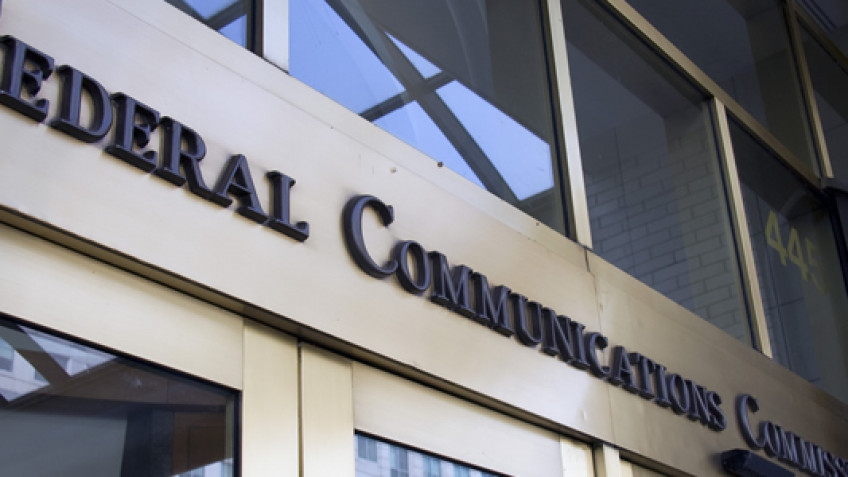
Today The Hill published my op-ed, “The FCC, Still Lawless.” The piece is all about the FCC’s abuse of its enforcement powers by imposing fines and penalties without first adopting and publishing knowable, predictable rules. The agency can’t expect those it regulates to be mind readers. When it does so, it violates well-established rule of law norms.
Here are the first four paragraphs. I hope you will read the entire piece:
On the second day of this now nearly gone year, I published an essay, "A Question for 2015: Is the FCC Unlawful?" In it, I stated that "there are reasons why this year will be a propitious time to examine – even more intensely than in the past – the FCC and its actions through just such a lawfulness frame of reference."
Sadly, upon examination, the tendencies of the Obama administration's Federal Communications Commission (FCC) to exercise power in a lawless manner have become more manifest as the year has progressed.
The long and short of it is that, this year, the agency increasingly has arrogated to itself the power to impose sanctions upon those it regulates for actions the regulated parties could not have known in advance to be unlawful. This conduct ignores fundamental rule of law and due process norms because the agency is asserting authority to penalize regulated parties without adopting, in advance, knowable, predictable rules.
These rule of law norms weren't invented yesterday. Indeed, it is especially useful to recall this year – the 800th anniversary of Magna Carta – that our Constitution's conception of "due process of law" is generally acknowledged to be an inheritance from the Great Charter.
President, The Free State Foundation
Randolph J. May is Founder and President of The Free State Foundation. The Free State Foundation is an independent, non-profit free market-oriented think tank founded in 2006.
From October 1999-May 2006, May was a Senior Fellow and Director of Communications Policy Studies at The Progress & Freedom Foundation, a Washington, DC-based think tank. Prior to joining PFF, he practiced communications, administrative, and regulatory law as a partner at major national law firms. From 1978 to 1981, May served as Assistant General Counsel and Associate General Counsel at the Federal Communication Commission.
May has held numerous leadership positions in bar associations. He is a past Chair of the American Bar Association’s Section of Administrative Law and Regulatory Practice. He is a Fellow of the National Academy of Public Administration. Mr. May also has served as a Public Member of the Administrative Conference of the United States and currently is a Senior Fellow at ACUS.
Mr. May has published more than two hundred articles and essays on communications, administrative and constitutional law topics. He is author of A Call for a Radical New Communications Policy: Proposals for Free Market Reform, and co-author of #CommActUpdate: A Communications Law Fit for the Digital Age and The Constitutional Foundations of Intellectual Property. Mr. May is editor of two books, Communications Law and Policy in the Digital Age: The Next Five Years and New Directions in Communications Policy. In addition, he is the co-editor of two other books, Net Neutrality or Net Neutering: Should Broadband Internet Services Be Regulated? and Communications Deregulation and FCC Reform. In the past, Mr. May has written regular columns on legal and regulatory affairs for Legal Times and the National Law Journal, leading national legal periodicals.
He received his A.B. from Duke University and his J.D. from Duke Law School, where he serves as a member of the Board of Visitors.