Facts of the Case
During the American Revolution, Virginia created laws allowing the state to seize property of Loyalists. In 1781, Denny Martin, a British subject, inherited land from his uncle, a Loyalist. The following year, the Virginia legislature voided the land grant and transferred the land back to Virginia. Virginia granted a portion of this land to David Hunter. A federal treaty dictated that Lord Fairfax was entitled to the property.
The Virginia Supreme Court upheld Virginia's law permitting the confiscation of property, even though it conflicted with the federal treaty. The U.S. Supreme Court reversed and remanded, holding that the treaty superseded state law under the Supremacy Clause of Article VI. On remand, the Virginia Court of Appeals declined to follow the ruling and argued that the law granting the Supreme Court appellate review over state court decisions, section 25 of the Judiciary Act (the Act), was unconstitutional.
Questions
Is Section 25 of the Judiciary Act, which grants the U.S. Supreme Court appellate review over state court cases involving federal law, unconstitutional?
Conclusions
-
No. Article VI of the US Constitution (the Supremacy Clause), combined with the grant of appellate jurisdiction in Article III, gives federal courts the power to review state court decisions that interpret federal law or the Constitution.
The Court rejected the claim that Virginia and the national government were equal sovereigns. Relying on the Supremacy Clause, Justice Story held that federal interpretations of federal law should supersede state interpretations. He reasoned that there should be uniform and predictable outcomes across all states.

Private Attorneys General: Bridging Gaps in Law Enforcement?
Should private attorneys general enforce laws? Proponents argue that this approach allows individuals and private...

The Labor Law Enigma: Article III, Judicial Power, and the National Labor Relations Board
Federalist Society Review, Volume 24
Axon Enterprises v. FTC[1] wasn’t supposed to be about labor law. In fact, it wasn’t...
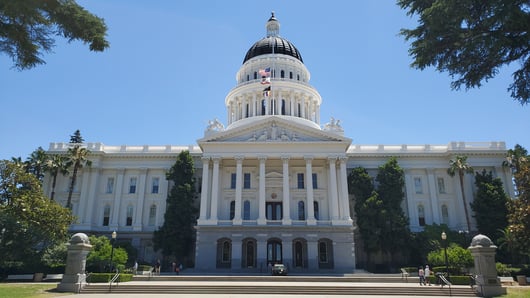
The Separation of Powers, From Washington to Sacramento
A Regulatory Transparency Project Webinar
Are state governors subject to the same separation of powers restrictions as the federal president?...

Young Legal Scholars Paper Presentations
20th Annual Federalist Society Faculty Conference
The winners of our Young Legal Scholars Paper Competition will present their papers, and various...
An Originalist Take on Diversity Jurisdiction - Podcast
Litigation Practice Group Podcast
Ahead of the Supreme Court's hearing of oral arguments in Mississippi v. AU Optronics on...