Facts of the Case
Gitlow, a socialist, was arrested in 1919 for distributing a “Left Wing Manifesto" that called for the establishment of socialism through strikes and class action of any form. Gitlow was convicted under New York’s Criminal Anarchy Law, which punished advocating the overthrow of the government by force. At his trial, Gitlow argued that since there was no resulting action flowing from the manifesto's publication, the statute penalized utterances without propensity to incitement of concrete action. The appellate division affirmed his conviction, as did the New York Court of Appeals, the highest court in that state.
Questions
Does the First Amendment prevent a state from punishing political speech that directly advocates the government's violent overthrow?
Conclusions
-
In an opinion authored by Justice Edward Sanford, the Court concluded that New York could prohibit advocating violent efforts to overthrow the government under the Criminal Anarchy Law. Citing Schenck and Abrams, the Court reasoned the government could punish speech that threatens its basic existence because of the national security implications. Despite the small scale of Gitlow’s actions, the majority was not persuaded that they were too insignificant to have an impact.
The Supreme Court previously held, in Barron v. Baltimore (1833), that the Constitution's Bill of Rights applied only to the federal government. Gitlow partly reversed that precedent and established that while the Bill of Rights was designed to limit the power of the federal government, the incorporation principle allows it to be applied to states.
In dissent, Justice Oliver Wendell Holmes held that Gitlow had not violated the clear and present danger test used in Schenck. Since Gitlow’s call to action was abstract and would not resonate with a large number of people, Holmes concluded that there was not sufficient imminence to warrant punishing the speech.
[Archive Collection] Panel III: Freedom of Speech and Press: Permissible and Impermissible Content Based Restrictions
1986 National Student Symposium
On March 7-8, 1986, The Federalist Society hosted its annual National Student Symposium at Stanford...
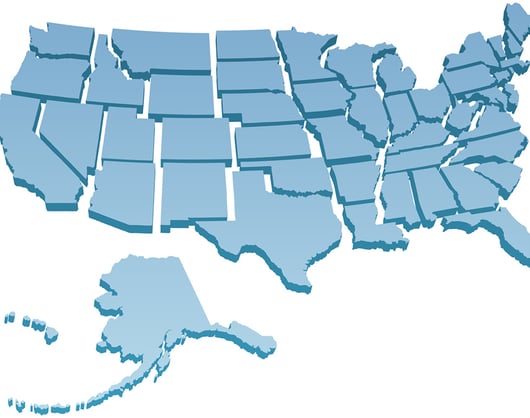
Principles of State Constitutional Interpretation
Federalist Society Review, Volume 23
State constitutionalism—the practice of state courts deciding cases on independent state constitutional grounds—is a vital...
Panel II: How Effective Are Bills of Rights in Protecting Freedom and Civil Liberties? [Archive Collection]
1991 National Student Symposium
On March 1-2, 1991, the Federalist Society's Yale Law School student chapter hosted the annual...
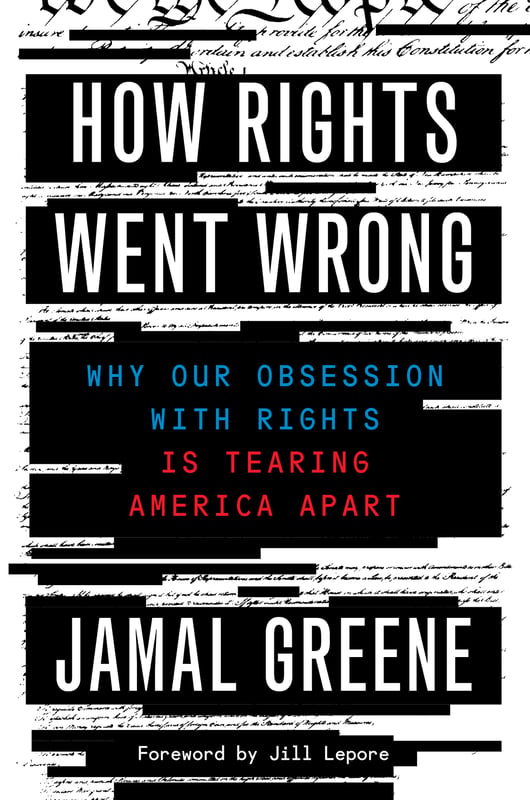
Which Rights Are We Mediating?
Federalist Society Review, Volume 21
A review of How Rights Went Wrong: Why Our Obsession With Rights Is Tearing America...
Panel I: The Political Process and the First Amendment [Archive Collection]
1986 National Student Symposium
On March 7-8, 1986, The Federalist Society hosted its annual National Student Symposium at Stanford...
Book Review: The Right to Try
Engage, Volume 17, Issue 1
Note from the Editor: This book review discusses the controversial concept of the constitutional “right...
Debate on Obamacare
California-Berkeley Student Chapter
On March 10, 2011, the California-Berkeley Student Chapter hosted this debate on Obamacare between Prof. Richard Epstein of NYU School...
Supreme Court October Term 2009: What Is in Store?
October 5th marks the first day of the 2009 Supreme Court term. Thus far the...
The Great Debate: Attorney General Ed Meese III - July 9, 1985
Speech by Attorney General Edwin Meese III before the American Bar Association on July 9, 1985
? Attorney General Edwin Meese III Before the American Bar Association July 9, 1985, Washington,...