Facts of the Case
Adarand, a contractor specializing in highway guardrail work, submitted the lowest bid as a subcontractor for part of a project funded by the United States Department of Transportation. Under the terms of the federal contract, the prime contractor would receive additional compensation if it hired small businesses controlled by "socially and economically disadvantaged individuals." [The clause declared that "the contractor shall presume that socially and economically disadvantaged individuals include Black Americans, Hispanic Americans, Native Americans, Asian Pacific Americans, and other minorities...." Federal law requires such a subcontracting clause in most federal agency contracts]. Another subcontractor, Gonzales Construction Company, was awarded the work. It was certified as a minority business; Adarand was not. The prime contractor would have accepted Adarand's bid had it not been for the additional payment for hiring Gonzales.
Questions
Is the presumption of disadvantage based on race alone, and consequent allocation of favored treatment, a discriminatory practice that violates the equal protection principle embodied in the Due Process Clause of the Fifth Amendment?
Conclusions
-
Yes. Overruling Metro Broadcasting (497 US 547), the Court held that all racial classifications, whether imposed by federal, state, or local authorities, must pass strict scrutiny review. In other words, they "must serve a compelling government interest, and must be narrowly tailored to further that interest." The Court added that compensation programs which are truly based on disadvantage, rather than race, would be evaluated under lower equal protection standards. However, since race is not a sufficient condition for a presumption of disadvantage and the award of favored treatment, all race-based classifications must be judged under the strict scrutiny standard. Moreover, even proof of past injury does not in itself establish the suffering of present or future injury. The Court remanded for a determination of whether the Transportation Department's program satisfied strict scrutiny.
The Twin Commands: Streamlining Equality Litigation Based on Students for Fair Admissions
Federalist Society Review, Volume 25
Each year, government contracting programs dole out tens of billions of dollars to businesses that...

Hispanic-Serving Institutions and Emerging Constitutional Issues
Federalist Society Review, Volume 24
In 2019, Florida Gulf Coast University’s (FGCU) “Florida Educational Equity Report” noted that FGCU “continues...
The Use of Race in the Biden-Harris Administration, and Legal Challenges to Race-Based Policymaking
Since taking office in January 2021, the Biden Administration and its Executive Branch agencies have...
Panel VI: 1995 National Student Symposium, The Original Meaning of the Fourteenth Amendment [Archive Collection]
1995 National Student Symposium
On April 7-9, 1995, the Federalist Society held its fourteenth annual National Student Symposium at...

Gender Based Board Quotas, the Fourteenth Amendment, and Meland v. Weber
In-House Counsel Working Group, Civil Rights Practice Group, and Regulatory Transparency Project Teleforum
On June 21, 2021, the Court of Appeals for the Ninth Circuit ruled a shareholder-plaintiff...

The Race Card in ARPA’s Food Supply Deck
Federalist Society Review, Volume 22
It is an old aphorism that a prudent person should not watch the making of...
Litigation Update: Vitolo v. Guzman
On May 27, 2021, the Sixth Circuit issued a decision in Vitolo v. Guzman. Over a...

A Discussion: Students for Fair Admissions v. President and Fellows of Harvard College
In Students for Fair Admissions v. President and Fellows of Harvard College, petitioning Asian-American students...
Litigation Update: Wisconsin Equal Protection and Race Based Scholarships
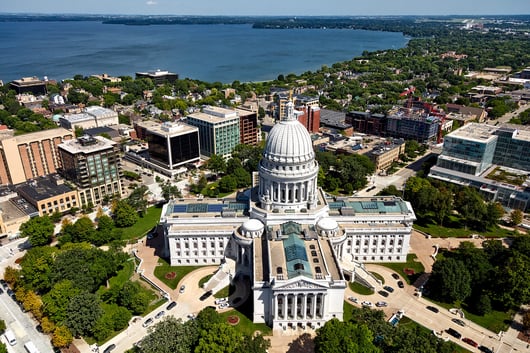
A biracial Wisconsin couple—Konkanok Rabieba and Richard Freihoefer—is suing the state of Wisconsin over its Minority Grant...

Courthouse Steps Oral Argument Webinar: FCC v. Prometheus Radio Project
On January 19, 2021, the U.S. Supreme Court heard oral arguments in Federal Communications Commission...

Public Contracting Litigation After Croson: Data, Disparities, & Discrimination
Federalist Society Review, Volume 22
What causes racial disparities, and what, if anything, can and should be done to remedy...
Showcase Panel IV: Originalism and Precedent
2019 National Lawyers Convention
On November 16, 2019, the Federalist Society hosted the fourth showcase panel of the 2019...
Hardie v. NCAA: Can the NCAA Bar Convicted Felons from Coaching in NCAA-Certified Recruiting Tournaments? - Podcast
Civil Rights Practice Group Podcast
Hardie v. NCAA is a recently argued case from the Ninth Circuit. It involves a...
Litigation: How Justice Scalia's Writing Style Affected American Jurisprudence
2016 National Lawyers Convention
In addition to being a brilliant legal thinker, Justice Scalia was widely regarded as a...
Fisher v. UT–Austin and the Future of Racial Preferences in College Admissions
Federalist Society Review, Volume 17, Issue 2
Note from the Editor: This article discusses the Supreme Court’s recent decision in Fisher v. University...
25 Years of Justice Clarence Thomas - Podcast
Practice Groups Podcast
On July 1, 1991, President George H. W. Bush nominated Clarence Thomas for the Supreme...
Racial Preferences in Federal Government Contracting – Rothe Development Corporation v. Department of Defense - Podcast
Civil Rights Practice Group Podcast
On March 10, 2016, the D.C. Circuit Court of Appeals heard oral arguments in Rothe...

Supreme Court Preview: Fisher
An "Honest" Affirmative Action Defense?
In the long running case of Fisher v. University of Texas at Austin, insufficient notice...

Anecdotes as Evidence: Proving Public Contracting Discrimination in a Strict Scrutiny World
Engage Volume 16, Issue 2
Note from the Editor: This article is about the use of anecdotal evidence to justify...
Challenging Racial Preferences in Government Contracts - Podcast
Civil Rights Practice Group Podcast
While the Supreme Court in City of Richmond v. J.A. Croson Co. (1989) and Adarand...
The Parade of Horribles Lives: Schuette v. Coalition to Defend Affirmative Action, Integration, and Immigrant Rights and Fight for Equality By Any Means Necessary
Engage Volume 14, Issue 3 October 2013
Note from the Editor: This article is about the U.S. Supreme Court case Schuette v....
Executive Order 13583: Establishing a Coordinated Government-Wide Initiative to Promote Diversity
Engage Volume 14, Issue 2 July 2013
Note from the Editor: This article is about Executive Order (EO) 13583—Establishing a Coordinated Government-Wide...
Schuette v. Coalition to Defend Affirmative Action Oral Argument Courthouse Steps - Podcast
Civil Rights Practice Group Podcast
On Tuesday, October 15, the Supreme Court heard oral arguments in Schuette v. Coalition to Defend...
Shelby County Going Forward - Podcast
Civil Rights Practice Group and Free Speech & Election Law Practice Group Podcast
On Tuesday, June 25, the U.S. Supreme Court decided Shelby County v. Holder, a Voting Rights...
Race, Sex, and the Dodd-Frank Financial Regulation Bill
New Federal Initiatives Project
Brought to you by the Civil Rights Practice GroupThe Federalist Society takes no position on...
Panel 3 - Originalism, Precedent and Judicial Restraint
2010 National Student Symposium
We often hear much about the perils of “judicial activism” and how a judge’s proper...
Rothe Development Corp. v. Department of Defense
Civil Rights Practice Group
On Election Day, November 4, 2008, a panel of the Federal Circuit Court of Appeals...
Showcase Panel I: Judicial Selection: Federal and State
2008 National Lawyers Convention
Is the process we use for selecting judges broken at both the federal and the...
The Meese Department of Justice: Its Accomplishments and Its Relevance Today
The Legacy of the Department of Justice Under Attorney General Edwin Meese, III
In honor of former Attorney General Edwin Meese III, the Federalist Society held an all...
Narrow Tailoring the Federal Transportation DBE Program
Under the Supreme Court’s strict scrutiny test, governments must have both a compelling interest to...
Racial Profiling, Equal Protection, and the War Against Terrorism
by Roger Clegg, Center for Equal Opportunity and Keith Noreika, Covington & Burling SummaryIn this...
Reflections on Judicial Independence
Federalism & Separation of Powers Practice Group Newsletter - Volume 2, Issue 1, Spring 1998
Before I address judicial independence, I want to recognize the tremendous contribution that the Federalist...
Department of Education v. Academic Standards
Civil Rights Practice Group Newsletter - Volume 1, Issue 3, Fall 1997
On July 14, the U.S. Department of Education's Office of Civil Rights announced that it...
Supreme Court Roundup: A Review of October Term 1995
Federalism & Separation of Powers Practice Group Newsletter - Volume 1, Issue 2, Spring 1997
In the last issue of this newsletter, we examined in detail the major federalist decision...
US v. Virginia: The New and Improved Equal Protection Clause
Civil Rights Practice Group Newsletter - Volume 1, Issue 2, Spring 1997
Last summer's 7-1 Supreme Court decision in the Virginia Military Institute (VMI) case, United States...
The Supreme Court Closes in on Racial Gerrymandering but Questions Remain
Civil Rights Practice Group Newsletter - Volume 1, Issue 1, Fall 1996
A closely divided U.S. Supreme Court has extended the emerging pattern of condemnation of race-based...
Department of Education Chafes under Court Restrictions on Racial Preferences
Civil Rights Practice Group Newsletter - Volume 1, Issue 1, Fall 1996
A top official of the Clinton Administration's Department of Education recently sent an open letter...

Sagebrush Rebel: Reagan’s Battle with Environmental Extremists and Why It Matters Today
Cheesecake Factory 1201 16th Street (Tabor Center)Denver, Colorado 80202