
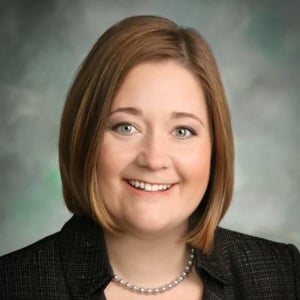
Attorney General, Office of the Iowa Attorney General
In November 2022, Brenna Bird was elected as Iowa Attorney General – the first Republican to hold the office since 1979.
Before taking office as Iowa Attorney General, Brenna served as a prosecutor for six years, first as the Fremont County Attorney and then since 2018 as the Guthrie County Attorney. She was elected by her fellow county attorneys to leadership roles with the Iowa County Attorney Association, and served as the Association's President.
Brenna has also engaged in the private practice of law, worked in the Iowa Governor’s Office and the U.S. House of Representatives, and taught as an adjunct professor at the University of Iowa College of Law.
Born and raised on an Iowa farm, where she was homeschooled. Brenna graduated from Drake University and went on to receive her J.D. from the University of Chicago Law School, where she served as symposium editor of the school’s law journal. In addition to her law studies, Brenna also helped entrepreneurs on Chicago’s South Side start their own businesses.
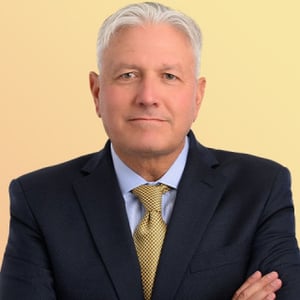
Partner, King & Spalding
A partner in the firm’s Government Advocacy and Public Policy group, J.C. helps companies and trade associations navigate legal, political and regulatory issues commonly associated with doing business in Europe and the United States. He is recognized by clients for his strong, bipartisan relationships with Members of Congress, State Attorneys General, congressional staff and senior government officials across key regulatory and executive branch agencies. He is trusted for his ability to rapidly synthesize complex information and communicate its strategic implications to policymakers and senior institutional stakeholders as well as his candid evaluation of options and potential for success.
As former counsel to the Senate Banking Committee, J.C has developed a deep expertise in financial services, fintech, and emerging technology policy. He has a proven track record of influencing federal legislation, regulatory frameworks, and agency rulemaking impacting digital assets, banking, payments, and technology platforms. J.C. regularly interfaces with financial regulators on a wide array of policy and institution-specific issues, and as co-chair of the firm’s State Attorneys General practice, delivers results on high-impact legal work at the intersection of law, policy and regulation.
J.C. is skilled in developing and executing comprehensive advocacy strategies, shaping legislative language, and positioning clients to successfully navigate complex and evolving policy environments at the federal, state and international levels. As President of the Parliamentary Intelligence-Security Forum, he has briefed policymakers throughout Europe, Africa, Latin America, and the Indo-Pacific. JC also advises international clients seeking to invest, expand, or operate in the United States.
President George W. Bush appointed J.C. to a six-year term as U.S. representative to the World Bank’s International Centre for Settlement of Investment Disputes (ICSID). Mayor Muriel Bowser also appointed J.C. to the District of Columbia; Board of Elections, in which capacity he also served on the U.S. Election Assistance Commission Standards Board. He is currently chairman of the Board of Visitors of The Catholic University Columbus School of Law and President of the Parliamentary Intelligence-Security Forum, where he is a regular speaker on cryptocurrency, artificial intelligence and critical minerals.
Earlier in his career, J.C. established the Boggs Scholarship for Public Service at the University of Delaware in honor of his grandfather and namesake, former U.S. Congressman, Senator and Governor of Delaware, J. Caleb Boggs. He has also served on numerous corporate and non-profit boards, including Jobs for Delaware Graduates (Chairman); The Reserve Trust Company (Vice Chairman), Global Center for Social Entrepreneurship Network (Secretary), Republican National Lawyers Association (President), Kimball Union Academy (Chairman of the Committee on Trustees), and AAA Mid-Atlantic.
J.C. enjoys open-water swimming and is member of U.S. Masters Swimming and the historic Serpentine Swimming Club situated in London's Hyde Park. He has competed in swimming events across all 50 states, ten Canadian provinces and around the world.
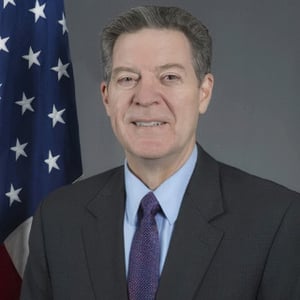
Former Senator of Kansas and Ambassador-at-Large for International Religious Freedom
Samuel Dale Brownback is an American attorney, politician, and diplomat who served as a United States senator from Kansas from 1996 to 2011 and as the 46th governor of Kansas from 2011 to 2018. Brownback also served as the United States Ambassador-at-Large for International Religious Freedom during the administration of President Donald Trump and was a candidate for the Republican nomination for President in 2008.
Born in Garnett, Kansas, Brownback grew up on a family farm in Parker, Kansas. He graduated from Kansas State University with a degree in agricultural economics in 1978 and received a J.D. from the University of Kansas in 1982. He worked as an attorney in Manhattan, Kansas, before being appointed Secretary of Agriculture of Kansas in 1986 by Democratic Governor John W. Carlin. Brownback ran for Congress in 1994 and defeated Carlin in the general election in a landslide. He represented Kansas's 2nd congressional district for a single term before running in a 1996 special election for the U.S. Senate seat previously held by Bob Dole. He won the election and was reelected by large margins in 1998 and 2004.
Class of 1965 Associate Professor of Financial Regulation, Associate Professor of Legal Studies & Business Ethics, The Wharton School of the University of Pennsylvania
Peter Conti-Brown is an assistant professor of legal studies and business ethics at The Wharton School of the University of Pennsylvania. A financial historian and a legal scholar, Professor Conti-Brown studies central banking, financial regulation, and public finance, with a particular focus on the history and policies of the US Federal Reserve System. He is author of the book The Power and Independence of the Federal Reserve (Princeton University Press 2016), the editor of two other books, and author or co-author of a dozen articles on central banking, financial regulation, and bank corporate governance. He has been widely quoted in print and online media on central banking and has testified before the US Senate Banking Committee on reforming the Federal Reserve. He holds degrees from Harvard College, Stanford Law School, and Princeton University’s Department of History. He is currently at work on a single-volume, comprehensive history of the US Federal Reserve.
Professor Conti-Brown is married and the father of two children.
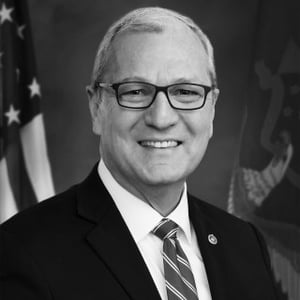
United States Senator, North Dakota, U.S. Senate
Kevin Cramer was elected to the United States Senate on November 6, 2018 after serving three terms as North Dakota’s At-Large Member of the United States House of Representatives. He is the first Republican to hold this Senate seat in his lifetime. He serves on the Armed Services, Environment and Public Works, Veterans Affairs, and Banking, Housing and Urban Affairs Committees.
While a member of the House, Cramer made constituent outreach a top priority, describing interacting with the public as “the best part of public service.” According to Legistorm, the Capitol Hill government issues website, Cramer held more town halls than any other Member during several of his years in the House.
Cramer has had a distinguished career in public service. In 2003, then-Governor John Hoeven appointed Cramer to the Public Service Commission, and in 2004 he was elected to the position. As a North Dakota Public Service Commissioner, Cramer helped oversee the most dynamic economy in the nation. He worked to ensure North Dakotans enjoy some of the lowest utility rates in the United States, enhancing their competitive position in the global marketplace. An energy policy expert, Cramer understands America’s energy security is integral to national and economic security.
A strong advocate for the free market system, Cramer has a proven record of cutting and balancing budgets encouraging the private sector through limited, common sense regulations and limited government.
Cramer has a Bachelor of Arts degree from Concordia College in Moorhead, Minnesota, a Master’s degree in Management from the University of Mary in Bismarck, North Dakota, and was conferred the degree of Doctor of Leadership, honoris causa, by the University of Mary on May 4, 2013.
He is a native of Kindred, North Dakota, where he received his primary and secondary education. Kevin and his wife, Kris, have two adult sons, Isaac, who passed away in early 2018, and Ian; two adult daughters, Rachel and Annie; a teenage son, Abel; three granddaughters, Lyla, Willa, and Eve; and three grandsons, Beau, Nico, and Chet.
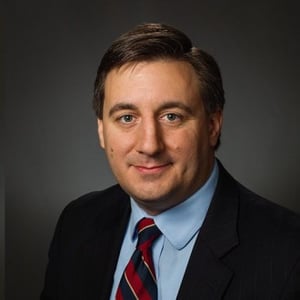
Senior Counsel, Senior Vice President of Corporate Engagement, Alliance Defending Freedom
Jeremy Tedesco serves as senior counsel and senior vice president of corporate engagement for Alliance Defending Freedom. In this role, Tedesco leads ADF’s efforts to combat corporate cancel culture and build a business ethic that respects free speech, religious freedom, and human dignity.
Immediately preceding his current role, Tedesco served as senior vice president for communications, during which time he was a lead convener of the Philadelphia Statement, a movement dedicated to restoring free speech and civil discourse. Tedesco also launched a regular video series called Freedom Matters, profiling ADF clients, cases, and issues. The program included 24 videos in its first year, which more than 31 million people viewed.
Previously, Tedesco litigated First Amendment cases at the highest levels. He was part of the legal team that represented cake artist Jack Phillips in Masterpiece Cakeshop v. Colorado Civil Rights Commission before the U.S. Supreme Court and argued Phillips’ case at the Colorado Court of Appeals. He was also the lead brief writer in two other U.S. Supreme Court wins, Reed v. Town of Gilbert and Arizona Christian School Tuition Organization v. Winn. Tedesco has also argued six times before five different federal appellate courts and founded and directed the ADF Center for Conscience Initiatives, where he led efforts to protect individuals from government-coerced speech.
Numerous media outlets, including The Wall Street Journal, Fox News, CNN, The New York Times, USA Today, PBS, NPR, and National Review, have interviewed Tedesco or published his comments.
Tedesco earned his Juris Doctor in 2004 from the Regent University School of Law.
Attorney General, Office of the Iowa Attorney General
In November 2022, Brenna Bird was elected as Iowa Attorney General – the first Republican to hold the office since 1979.
Before taking office as Iowa Attorney General, Brenna served as a prosecutor for six years, first as the Fremont County Attorney and then since 2018 as the Guthrie County Attorney. She was elected by her fellow county attorneys to leadership roles with the Iowa County Attorney Association, and served as the Association's President.
Brenna has also engaged in the private practice of law, worked in the Iowa Governor’s Office and the U.S. House of Representatives, and taught as an adjunct professor at the University of Iowa College of Law.
Born and raised on an Iowa farm, where she was homeschooled. Brenna graduated from Drake University and went on to receive her J.D. from the University of Chicago Law School, where she served as symposium editor of the school’s law journal. In addition to her law studies, Brenna also helped entrepreneurs on Chicago’s South Side start their own businesses.
Partner, King & Spalding
A partner in the firm’s Government Advocacy and Public Policy group, J.C. helps companies and trade associations navigate legal, political and regulatory issues commonly associated with doing business in Europe and the United States. He is recognized by clients for his strong, bipartisan relationships with Members of Congress, State Attorneys General, congressional staff and senior government officials across key regulatory and executive branch agencies. He is trusted for his ability to rapidly synthesize complex information and communicate its strategic implications to policymakers and senior institutional stakeholders as well as his candid evaluation of options and potential for success.
As former counsel to the Senate Banking Committee, J.C has developed a deep expertise in financial services, fintech, and emerging technology policy. He has a proven track record of influencing federal legislation, regulatory frameworks, and agency rulemaking impacting digital assets, banking, payments, and technology platforms. J.C. regularly interfaces with financial regulators on a wide array of policy and institution-specific issues, and as co-chair of the firm’s State Attorneys General practice, delivers results on high-impact legal work at the intersection of law, policy and regulation.
J.C. is skilled in developing and executing comprehensive advocacy strategies, shaping legislative language, and positioning clients to successfully navigate complex and evolving policy environments at the federal, state and international levels. As President of the Parliamentary Intelligence-Security Forum, he has briefed policymakers throughout Europe, Africa, Latin America, and the Indo-Pacific. JC also advises international clients seeking to invest, expand, or operate in the United States.
President George W. Bush appointed J.C. to a six-year term as U.S. representative to the World Bank’s International Centre for Settlement of Investment Disputes (ICSID). Mayor Muriel Bowser also appointed J.C. to the District of Columbia; Board of Elections, in which capacity he also served on the U.S. Election Assistance Commission Standards Board. He is currently chairman of the Board of Visitors of The Catholic University Columbus School of Law and President of the Parliamentary Intelligence-Security Forum, where he is a regular speaker on cryptocurrency, artificial intelligence and critical minerals.
Earlier in his career, J.C. established the Boggs Scholarship for Public Service at the University of Delaware in honor of his grandfather and namesake, former U.S. Congressman, Senator and Governor of Delaware, J. Caleb Boggs. He has also served on numerous corporate and non-profit boards, including Jobs for Delaware Graduates (Chairman); The Reserve Trust Company (Vice Chairman), Global Center for Social Entrepreneurship Network (Secretary), Republican National Lawyers Association (President), Kimball Union Academy (Chairman of the Committee on Trustees), and AAA Mid-Atlantic.
J.C. enjoys open-water swimming and is member of U.S. Masters Swimming and the historic Serpentine Swimming Club situated in London's Hyde Park. He has competed in swimming events across all 50 states, ten Canadian provinces and around the world.
Former Senator of Kansas and Ambassador-at-Large for International Religious Freedom
Samuel Dale Brownback is an American attorney, politician, and diplomat who served as a United States senator from Kansas from 1996 to 2011 and as the 46th governor of Kansas from 2011 to 2018. Brownback also served as the United States Ambassador-at-Large for International Religious Freedom during the administration of President Donald Trump and was a candidate for the Republican nomination for President in 2008.
Born in Garnett, Kansas, Brownback grew up on a family farm in Parker, Kansas. He graduated from Kansas State University with a degree in agricultural economics in 1978 and received a J.D. from the University of Kansas in 1982. He worked as an attorney in Manhattan, Kansas, before being appointed Secretary of Agriculture of Kansas in 1986 by Democratic Governor John W. Carlin. Brownback ran for Congress in 1994 and defeated Carlin in the general election in a landslide. He represented Kansas's 2nd congressional district for a single term before running in a 1996 special election for the U.S. Senate seat previously held by Bob Dole. He won the election and was reelected by large margins in 1998 and 2004.
Class of 1965 Associate Professor of Financial Regulation, Associate Professor of Legal Studies & Business Ethics, The Wharton School of the University of Pennsylvania
Peter Conti-Brown is an assistant professor of legal studies and business ethics at The Wharton School of the University of Pennsylvania. A financial historian and a legal scholar, Professor Conti-Brown studies central banking, financial regulation, and public finance, with a particular focus on the history and policies of the US Federal Reserve System. He is author of the book The Power and Independence of the Federal Reserve (Princeton University Press 2016), the editor of two other books, and author or co-author of a dozen articles on central banking, financial regulation, and bank corporate governance. He has been widely quoted in print and online media on central banking and has testified before the US Senate Banking Committee on reforming the Federal Reserve. He holds degrees from Harvard College, Stanford Law School, and Princeton University’s Department of History. He is currently at work on a single-volume, comprehensive history of the US Federal Reserve.
Professor Conti-Brown is married and the father of two children.
United States Senator, North Dakota, U.S. Senate
Kevin Cramer was elected to the United States Senate on November 6, 2018 after serving three terms as North Dakota’s At-Large Member of the United States House of Representatives. He is the first Republican to hold this Senate seat in his lifetime. He serves on the Armed Services, Environment and Public Works, Veterans Affairs, and Banking, Housing and Urban Affairs Committees.
While a member of the House, Cramer made constituent outreach a top priority, describing interacting with the public as “the best part of public service.” According to Legistorm, the Capitol Hill government issues website, Cramer held more town halls than any other Member during several of his years in the House.
Cramer has had a distinguished career in public service. In 2003, then-Governor John Hoeven appointed Cramer to the Public Service Commission, and in 2004 he was elected to the position. As a North Dakota Public Service Commissioner, Cramer helped oversee the most dynamic economy in the nation. He worked to ensure North Dakotans enjoy some of the lowest utility rates in the United States, enhancing their competitive position in the global marketplace. An energy policy expert, Cramer understands America’s energy security is integral to national and economic security.
A strong advocate for the free market system, Cramer has a proven record of cutting and balancing budgets encouraging the private sector through limited, common sense regulations and limited government.
Cramer has a Bachelor of Arts degree from Concordia College in Moorhead, Minnesota, a Master’s degree in Management from the University of Mary in Bismarck, North Dakota, and was conferred the degree of Doctor of Leadership, honoris causa, by the University of Mary on May 4, 2013.
He is a native of Kindred, North Dakota, where he received his primary and secondary education. Kevin and his wife, Kris, have two adult sons, Isaac, who passed away in early 2018, and Ian; two adult daughters, Rachel and Annie; a teenage son, Abel; three granddaughters, Lyla, Willa, and Eve; and three grandsons, Beau, Nico, and Chet.
Senior Counsel, Senior Vice President of Corporate Engagement, Alliance Defending Freedom
Jeremy Tedesco serves as senior counsel and senior vice president of corporate engagement for Alliance Defending Freedom. In this role, Tedesco leads ADF’s efforts to combat corporate cancel culture and build a business ethic that respects free speech, religious freedom, and human dignity.
Immediately preceding his current role, Tedesco served as senior vice president for communications, during which time he was a lead convener of the Philadelphia Statement, a movement dedicated to restoring free speech and civil discourse. Tedesco also launched a regular video series called Freedom Matters, profiling ADF clients, cases, and issues. The program included 24 videos in its first year, which more than 31 million people viewed.
Previously, Tedesco litigated First Amendment cases at the highest levels. He was part of the legal team that represented cake artist Jack Phillips in Masterpiece Cakeshop v. Colorado Civil Rights Commission before the U.S. Supreme Court and argued Phillips’ case at the Colorado Court of Appeals. He was also the lead brief writer in two other U.S. Supreme Court wins, Reed v. Town of Gilbert and Arizona Christian School Tuition Organization v. Winn. Tedesco has also argued six times before five different federal appellate courts and founded and directed the ADF Center for Conscience Initiatives, where he led efforts to protect individuals from government-coerced speech.
Numerous media outlets, including The Wall Street Journal, Fox News, CNN, The New York Times, USA Today, PBS, NPR, and National Review, have interviewed Tedesco or published his comments.
Tedesco earned his Juris Doctor in 2004 from the Regent University School of Law.
Former Senator of Kansas and Ambassador-at-Large for International Religious Freedom
Samuel Dale Brownback is an American attorney, politician, and diplomat who served as a United States senator from Kansas from 1996 to 2011 and as the 46th governor of Kansas from 2011 to 2018. Brownback also served as the United States Ambassador-at-Large for International Religious Freedom during the administration of President Donald Trump and was a candidate for the Republican nomination for President in 2008.
Born in Garnett, Kansas, Brownback grew up on a family farm in Parker, Kansas. He graduated from Kansas State University with a degree in agricultural economics in 1978 and received a J.D. from the University of Kansas in 1982. He worked as an attorney in Manhattan, Kansas, before being appointed Secretary of Agriculture of Kansas in 1986 by Democratic Governor John W. Carlin. Brownback ran for Congress in 1994 and defeated Carlin in the general election in a landslide. He represented Kansas's 2nd congressional district for a single term before running in a 1996 special election for the U.S. Senate seat previously held by Bob Dole. He won the election and was reelected by large margins in 1998 and 2004.
Governor, State of Georgia
Under Gov. Nathan Deal’s leadership, Georgia has risen to become the No. 1 place in the nation in which to do business, a goal achieved by creating the Competitiveness Initiative, reforming our tax code, shaping our educational system to support our workforce needs and recruiting businesses to relocate here.
As Georgia’s 82nd governor since January 2011, he has cut state taxes, eliminated state agencies, reduced the state government workforce, saved HOPE from the brink of bankruptcy, championed education innovations and implemented significant cost-saving reforms in our criminal justice system. He fought to increase public safety on our waterways, improved our workforce by aiding veterans and technical college students and enacted stricter rules on lobbying to boost public trust.
Though he has reduced the size of state government, Gov. Deal has prioritized education and child safety funding as state revenues rebound from the Great Recession. In 2014, the governor increased k-12 spending by more than half a billion dollars, the largest increase in education in seven years, and in his 2015 State of the State address he proposed the creation of a new Opportunity School District to rescue failing schools. As concerned about our children’s safety as he is about their education, Gov. Deal has also started a three-year plan to add nearly 500 new child welfare case workers at DFCS.
Gov. Deal’s public service to his state spans four decades. The Sandersville native served in the U.S. Army at Fort Gordon in Augusta after graduating with a law degree from Mercer University, and then began a private law practice in Gainesville, the hometown of his wife, Sandra Dunagan Deal. While his wife taught in Hall County public schools, the governor began a long span of service to his community as prosecutor, judge, state senator and U.S. congressman.
During his 17 years in Congress, Deal rose to chair the Health Subcommittee of Energy and Commerce, where he became a noted expert on entitlement reform and health care policy.
Deal ended his congressional career to campaign for governor, becoming the Republican nominee in August 2010 and then winning the governorship in November of that year. In November 2014, Deal was re-elected to a second term in office. He was sworn in again as governor on Jan. 12, 2015.
The governor and first lady have four adult children and six grandchildren.
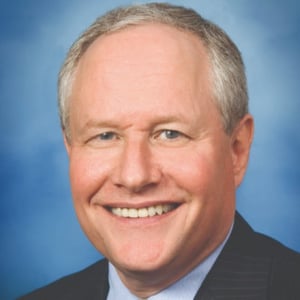
Editor, The Weekly Standard
William Kristol is the editor of The Weekly Standard. He is also a regular panelist on Fox News Sunday, a contributor for the Fox News Channel, and a monthly columnist for the Washington Post. Before starting the Weekly Standard in 1995, Mr. Kristol led the Project for the Republican Future, where he helped shape the strategy that produced the 1994 Republican congressional victory. Prior to that, Mr. Kristol served as chief of staff to Vice President Dan Quayle during the first Bush Administration, and to Education Secretary William Bennett under President Reagan. Before coming to Washington in 1985, Mr. Kristol was on the faculty of Harvard University’s Kennedy School of Government and the Department of Political Science at the University of Pennsylvania.
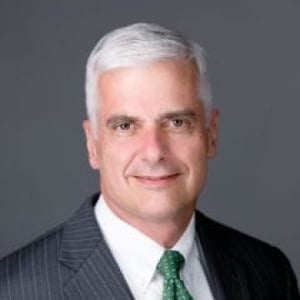
David McIntosh is a leader for the principles of limited constitutional government and individual freedom. He is president of the Club for Growth, the leading advocate for economic liberty.
Former Congressman David McIntosh represented Indiana's 2nd Congressional District in the United States Congress from 1995-2001. As a Freshman, David chaired the Subcommittee on Regulatory Relief. He passed the Congressional Review Act and held extensive oversight and field hearings to build a record of public support for regulatory relief initiatives in energy, biotechnology, pharmaceutical, healthcare, transportation and technology sectors. Another issue that he championed was the elimination of the marriage penalty in the Federal Tax Code.
David served during the Reagan administration as special assistant to Attorney General Edwin Meese III, and as special assistant to President Reagan for Domestic Affairs. During the first Bush administration, he served as executive director of the President's Council on Competitiveness and assistant to the Vice President. The Competitiveness Council coordinated the cost/benefit review of major regulations and promoted legal reform measures.
David is a co-founder of the Federalist Society for Law and Public Policy and serves on the Board of Directors. He remains active with several free market and conservative think tanks and grassroots organizations. David has also had stints at the Hudson Institute and as a Professor of Economics at Ball State School of Business.
Prior to the Club for Growth, David was a partner at Mayer Brown, LLP in Washington, DC.
David graduated from the University of Chicago Law School in 1983, and Yale University, BA, cum laude, in 1980. He and his wife, Ruthie, are the proud parents of Ellie age 17 and Davey age 13.
Governor, State of Nebraska
Governor Pete Ricketts was sworn in as Nebraska’s 40th Governor on January 8, 2015. Governor Ricketts was first elected to office upon winning the Nebraska gubernatorial election on November 4, 2014. Prior to his election as governor, he worked to support Nebraska entrepreneurs and startup companies.
Born in Nebraska City and raised in Omaha, Ricketts is the son of an entrepreneur and a public school teacher. Governor Ricketts and his wife, First Lady Susanne Shore, have been married for 18 years and live in Omaha with their three children, juniors Roscoe and Margot and freshman Eleanor.
Ricketts graduated from Westside High School before attending the University of Chicago where he earned his bachelor’s degree in biology and an MBA in marketing and finance. After graduate school, Ricketts returned to Omaha and worked for Union Pacific before working as a customer services representative in his family’s business, a company that would eventually become known as Ameritrade. He went on to hold leadership roles in the company including Senior Vice President of Strategy and Business Development, Senior Vice President of Product Development, Senior Vice President of Marketing, President, and Chief Operating Officer (COO). He is also a past board member of TD Ameritrade’s Board of Directors.
Ricketts is the founder of Drakon, LLC that supports local entrepreneurs and startup companies. He also serves as a director for the Chicago Cubs baseball team.
Driven by a desire to give back to his community and create education and job opportunities, Governor Ricketts has taken on leadership roles in local and state associations and organizations. Currently, he serves on the boards of the Mid-America Council of the Boy Scouts and the Christian Urban Education Service (CUES). Additionally, he serves as a director for the Children’s Scholarship Fund Foundation, a director of the Nebraska Game and Parks Foundation, a member of the Board of Advisors of Opportunity Education Foundation, a member of the Archbishop’s Committee for Development, a member of the Knights of Columbus, and a Knight of the Holy Sepulchre. Governor Ricketts and his family attend St. Margaret Mary’s church.
Governor, State of Wisconsin
Born on November 2, 1967 to Llew and Pat Walker in Colorado Springs, Colorado, Scott spent his early years in Plainfield, Iowa, where Llew served as pastor of a local church.
The family moved to Delavan, Wisconsin, in 1977 when Scott’s father was called to pastor a church there. Scott was involved in sports, band, church, and achieved the rank of Eagle Scout, remaining active in the Boy Scouts of America to this day.
In 1986, Scott moved to Milwaukee to attend Marquette University. While still in school, he worked for IBM before leaving to work full-time in financial development for the American Red Cross.
Scott was elected to the State Assembly in 1993. While there, he chaired several committees and authored important pieces of legislation. He was re-elected four times.
In 2002, Scott was elected as Milwaukee County Executive and went to work reforming the scandal-ridden county government. For the next eight years, Scott faithfully kept his promise to spend taxpayer money as if it were his own. He cut the county’s debt by 30 percent, reduced the county workforce by more than 25 percent, and authored nine consecutive budgets without increasing the property tax levy from the previous year.
Walker was first inaugurated as Governor on January 3, 2011, and immediately set our state on a path toward government reform and fiscal order. When he took office, Wisconsin faced a projected $3.6 billion deficit, more than $800 million in unpaid bills, and the loss of nearly 134,000 jobs over the previous four years. Governor Walker made tough, but prudent, decisions to ensure our children and grandchildren were not buried under a mountain of economically crippling debt; he paid the bills, balanced the budget, cut taxes, and put in place reforms that are growing jobs in Wisconsin.
Governor Walker was sworn in to his second term on January 5, 2015. He is focused on continuing to move Wisconsin forward with his vision of freedom and prosperity for all who live in this great state. He will continue to reform education to ensure accountability for all schools receiving public funds, as well as make sure no school district in the state is required to adopt the Common Core standards. He will also continue cutting bureaucratic red tape so government is more effective, more efficient, and more accountable.
Scott is married to Tonette, and they have two sons in college. They are active in the community and their church.
Former Senator of Kansas and Ambassador-at-Large for International Religious Freedom
Samuel Dale Brownback is an American attorney, politician, and diplomat who served as a United States senator from Kansas from 1996 to 2011 and as the 46th governor of Kansas from 2011 to 2018. Brownback also served as the United States Ambassador-at-Large for International Religious Freedom during the administration of President Donald Trump and was a candidate for the Republican nomination for President in 2008.
Born in Garnett, Kansas, Brownback grew up on a family farm in Parker, Kansas. He graduated from Kansas State University with a degree in agricultural economics in 1978 and received a J.D. from the University of Kansas in 1982. He worked as an attorney in Manhattan, Kansas, before being appointed Secretary of Agriculture of Kansas in 1986 by Democratic Governor John W. Carlin. Brownback ran for Congress in 1994 and defeated Carlin in the general election in a landslide. He represented Kansas's 2nd congressional district for a single term before running in a 1996 special election for the U.S. Senate seat previously held by Bob Dole. He won the election and was reelected by large margins in 1998 and 2004.
Governor, State of Georgia
Under Gov. Nathan Deal’s leadership, Georgia has risen to become the No. 1 place in the nation in which to do business, a goal achieved by creating the Competitiveness Initiative, reforming our tax code, shaping our educational system to support our workforce needs and recruiting businesses to relocate here.
As Georgia’s 82nd governor since January 2011, he has cut state taxes, eliminated state agencies, reduced the state government workforce, saved HOPE from the brink of bankruptcy, championed education innovations and implemented significant cost-saving reforms in our criminal justice system. He fought to increase public safety on our waterways, improved our workforce by aiding veterans and technical college students and enacted stricter rules on lobbying to boost public trust.
Though he has reduced the size of state government, Gov. Deal has prioritized education and child safety funding as state revenues rebound from the Great Recession. In 2014, the governor increased k-12 spending by more than half a billion dollars, the largest increase in education in seven years, and in his 2015 State of the State address he proposed the creation of a new Opportunity School District to rescue failing schools. As concerned about our children’s safety as he is about their education, Gov. Deal has also started a three-year plan to add nearly 500 new child welfare case workers at DFCS.
Gov. Deal’s public service to his state spans four decades. The Sandersville native served in the U.S. Army at Fort Gordon in Augusta after graduating with a law degree from Mercer University, and then began a private law practice in Gainesville, the hometown of his wife, Sandra Dunagan Deal. While his wife taught in Hall County public schools, the governor began a long span of service to his community as prosecutor, judge, state senator and U.S. congressman.
During his 17 years in Congress, Deal rose to chair the Health Subcommittee of Energy and Commerce, where he became a noted expert on entitlement reform and health care policy.
Deal ended his congressional career to campaign for governor, becoming the Republican nominee in August 2010 and then winning the governorship in November of that year. In November 2014, Deal was re-elected to a second term in office. He was sworn in again as governor on Jan. 12, 2015.
The governor and first lady have four adult children and six grandchildren.
Editor, The Weekly Standard
William Kristol is the editor of The Weekly Standard. He is also a regular panelist on Fox News Sunday, a contributor for the Fox News Channel, and a monthly columnist for the Washington Post. Before starting the Weekly Standard in 1995, Mr. Kristol led the Project for the Republican Future, where he helped shape the strategy that produced the 1994 Republican congressional victory. Prior to that, Mr. Kristol served as chief of staff to Vice President Dan Quayle during the first Bush Administration, and to Education Secretary William Bennett under President Reagan. Before coming to Washington in 1985, Mr. Kristol was on the faculty of Harvard University’s Kennedy School of Government and the Department of Political Science at the University of Pennsylvania.
David McIntosh is a leader for the principles of limited constitutional government and individual freedom. He is president of the Club for Growth, the leading advocate for economic liberty.
Former Congressman David McIntosh represented Indiana's 2nd Congressional District in the United States Congress from 1995-2001. As a Freshman, David chaired the Subcommittee on Regulatory Relief. He passed the Congressional Review Act and held extensive oversight and field hearings to build a record of public support for regulatory relief initiatives in energy, biotechnology, pharmaceutical, healthcare, transportation and technology sectors. Another issue that he championed was the elimination of the marriage penalty in the Federal Tax Code.
David served during the Reagan administration as special assistant to Attorney General Edwin Meese III, and as special assistant to President Reagan for Domestic Affairs. During the first Bush administration, he served as executive director of the President's Council on Competitiveness and assistant to the Vice President. The Competitiveness Council coordinated the cost/benefit review of major regulations and promoted legal reform measures.
David is a co-founder of the Federalist Society for Law and Public Policy and serves on the Board of Directors. He remains active with several free market and conservative think tanks and grassroots organizations. David has also had stints at the Hudson Institute and as a Professor of Economics at Ball State School of Business.
Prior to the Club for Growth, David was a partner at Mayer Brown, LLP in Washington, DC.
David graduated from the University of Chicago Law School in 1983, and Yale University, BA, cum laude, in 1980. He and his wife, Ruthie, are the proud parents of Ellie age 17 and Davey age 13.
Governor, State of Nebraska
Governor Pete Ricketts was sworn in as Nebraska’s 40th Governor on January 8, 2015. Governor Ricketts was first elected to office upon winning the Nebraska gubernatorial election on November 4, 2014. Prior to his election as governor, he worked to support Nebraska entrepreneurs and startup companies.
Born in Nebraska City and raised in Omaha, Ricketts is the son of an entrepreneur and a public school teacher. Governor Ricketts and his wife, First Lady Susanne Shore, have been married for 18 years and live in Omaha with their three children, juniors Roscoe and Margot and freshman Eleanor.
Ricketts graduated from Westside High School before attending the University of Chicago where he earned his bachelor’s degree in biology and an MBA in marketing and finance. After graduate school, Ricketts returned to Omaha and worked for Union Pacific before working as a customer services representative in his family’s business, a company that would eventually become known as Ameritrade. He went on to hold leadership roles in the company including Senior Vice President of Strategy and Business Development, Senior Vice President of Product Development, Senior Vice President of Marketing, President, and Chief Operating Officer (COO). He is also a past board member of TD Ameritrade’s Board of Directors.
Ricketts is the founder of Drakon, LLC that supports local entrepreneurs and startup companies. He also serves as a director for the Chicago Cubs baseball team.
Driven by a desire to give back to his community and create education and job opportunities, Governor Ricketts has taken on leadership roles in local and state associations and organizations. Currently, he serves on the boards of the Mid-America Council of the Boy Scouts and the Christian Urban Education Service (CUES). Additionally, he serves as a director for the Children’s Scholarship Fund Foundation, a director of the Nebraska Game and Parks Foundation, a member of the Board of Advisors of Opportunity Education Foundation, a member of the Archbishop’s Committee for Development, a member of the Knights of Columbus, and a Knight of the Holy Sepulchre. Governor Ricketts and his family attend St. Margaret Mary’s church.
Governor, State of Wisconsin
Born on November 2, 1967 to Llew and Pat Walker in Colorado Springs, Colorado, Scott spent his early years in Plainfield, Iowa, where Llew served as pastor of a local church.
The family moved to Delavan, Wisconsin, in 1977 when Scott’s father was called to pastor a church there. Scott was involved in sports, band, church, and achieved the rank of Eagle Scout, remaining active in the Boy Scouts of America to this day.
In 1986, Scott moved to Milwaukee to attend Marquette University. While still in school, he worked for IBM before leaving to work full-time in financial development for the American Red Cross.
Scott was elected to the State Assembly in 1993. While there, he chaired several committees and authored important pieces of legislation. He was re-elected four times.
In 2002, Scott was elected as Milwaukee County Executive and went to work reforming the scandal-ridden county government. For the next eight years, Scott faithfully kept his promise to spend taxpayer money as if it were his own. He cut the county’s debt by 30 percent, reduced the county workforce by more than 25 percent, and authored nine consecutive budgets without increasing the property tax levy from the previous year.
Walker was first inaugurated as Governor on January 3, 2011, and immediately set our state on a path toward government reform and fiscal order. When he took office, Wisconsin faced a projected $3.6 billion deficit, more than $800 million in unpaid bills, and the loss of nearly 134,000 jobs over the previous four years. Governor Walker made tough, but prudent, decisions to ensure our children and grandchildren were not buried under a mountain of economically crippling debt; he paid the bills, balanced the budget, cut taxes, and put in place reforms that are growing jobs in Wisconsin.
Governor Walker was sworn in to his second term on January 5, 2015. He is focused on continuing to move Wisconsin forward with his vision of freedom and prosperity for all who live in this great state. He will continue to reform education to ensure accountability for all schools receiving public funds, as well as make sure no school district in the state is required to adopt the Common Core standards. He will also continue cutting bureaucratic red tape so government is more effective, more efficient, and more accountable.
Scott is married to Tonette, and they have two sons in college. They are active in the community and their church.

Debanking: The Newest Threat to Free Speech and Religious Liberty?
Brenna Bird, J.C. Boggs, Sam Brownback, Peter Conti-Brown, Kevin Cramer, Jeremy Tedesco
In June 2023, the Coutts bank closed the account of British politician Nigel Farage. While...
Debanking: The Newest Threat to Free Speech and Religious Liberty?
Brenna Bird, J.C. Boggs, Sam Brownback, Peter Conti-Brown, Kevin Cramer, Jeremy Tedesco
In June 2023, the Coutts bank closed the account of British politician Nigel Farage. While...
The Role of Congress and the State: A Governor's Perspective
Sam Brownback, Nathan Deal, William Kristol, David M. McIntosh, Pete Ricketts, Scott Walker
2015 National Lawyers Convention Annual Dinner
This panel was held during the 2015 National Lawyers Convention Annual Dinner on Thursday, November...
The Role of Congress and the State: A Governor's Perspective
Sam Brownback, Nathan Deal, William Kristol, David M. McIntosh, Pete Ricketts, Scott Walker
2015 National Lawyers Convention Annual Dinner
This panel was held during the 2015 National Lawyers Convention Annual Dinner on Thursday, November...