

CEO, Catawba Digital Economic Zone
Joseph McKinney launched his career in electoral politics by participating in local, state and national political campaigns. In 2014, Joseph entered the blockchain space and was shortly thereafter introduced to key leaders in the Zone development sector.
In 2015, Joseph founded the Startup Societies Foundation, a nonprofit Zone policy think tank, the mother organization of the Institute for Competitive Governance. He also serves as CEO of Nuhanse Network and is currently writing his first book on innovative Zones.

Co-Director, IBM PolicyLab
Ryan Hagemann is a Technology Policy Executive at IBM. He was previously a senior policy fellow at the International Center for Law & Economics. Before joining the International Center for Law & Economics, he was a senior fellow at the Niskanen Center, where he also served as the senior director for policy and director of technology policy. His policy expertise focuses on regulatory governance of emerging technologies, as well as a broader research portfolio that includes genetic modification and regenerative medicine, bioengineering and healthcare IT, artificial intelligence, autonomous vehicles, commercial drones, the Internet of Things, and other issues at the intersection of technology, regulation, and the digital economy. His work on “soft law” governance systems, autonomous vehicles, and commercial drones has been featured in numerous academic journals, and his research and comments have been cited by The New York Times, MIT Technology Review, and The Atlantic, among other outlets. He has been published in The Wall Street Journal, Wired, National Review, The Washington Examiner, U.S. News & World Report, The Hill, and elsewhere.
Ryan graduated from Boston University with a B.A. in international relations, foreign policy, and security studies and holds a Master of Public Policy in science and technology policy from George Mason University.
Co-Director, IBM PolicyLab
Ryan Hagemann is a Technology Policy Executive at IBM. He was previously a senior policy fellow at the International Center for Law & Economics. Before joining the International Center for Law & Economics, he was a senior fellow at the Niskanen Center, where he also served as the senior director for policy and director of technology policy. His policy expertise focuses on regulatory governance of emerging technologies, as well as a broader research portfolio that includes genetic modification and regenerative medicine, bioengineering and healthcare IT, artificial intelligence, autonomous vehicles, commercial drones, the Internet of Things, and other issues at the intersection of technology, regulation, and the digital economy. His work on “soft law” governance systems, autonomous vehicles, and commercial drones has been featured in numerous academic journals, and his research and comments have been cited by The New York Times, MIT Technology Review, and The Atlantic, among other outlets. He has been published in The Wall Street Journal, Wired, National Review, The Washington Examiner, U.S. News & World Report, The Hill, and elsewhere.
Ryan graduated from Boston University with a B.A. in international relations, foreign policy, and security studies and holds a Master of Public Policy in science and technology policy from George Mason University.

Co-Founder and Co-CEO, Institute for Progress
Caleb Watney is the co-founder and co-CEO of the Institute for Progress.
Caleb manages the metascience and immigration policy teams at IFP. His research focuses on policy levers the U.S. could use to rebuild state capacity and increase long-term rates of innovation.
Previously, Caleb worked as the director of innovation policy at the Progressive Policy Insitute, a technology policy fellow at the R Street Institute, and a graduate research fellow at the Mercatus Center. His commentary has been published in The Washington Post, The Atlantic, Politico, Lawfare, and the National Review. He has also been cited in the New York Times, The Economist, Vox, Ars Technica, and the National Journal. He received his master’s in economics from George Mason University and a bachelor of business administration from Sterling College.
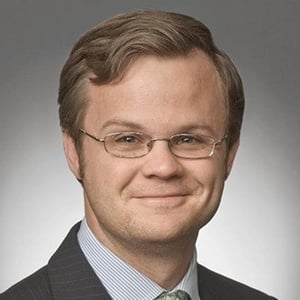
Head of Policy, Regulatory, and Legal, Skyryse
William Goodwin is the Head of Policy, Regulatory, and Legal at Skyryse. Prior to Skyryse, he was the Head of Legal and Policy at AirMap, a start-up powering the future of low altitude-flight, where he managed the legal and policy teams. Prior to AirMap, he was an attorney with Morrison Foerster, an international law firm, and a member of the firm’s UAS/Drone Group, where he counseled clients regarding some of the unique product liability, licensing, and regulatory risks that arise in the drone context.
Mr. Goodwin is a frequent speaker on legal and policy issues associated with drones and has advised state legislators, city officials, and university administrators to regarding laws and policies related to UAS. Prior to his legal career, he worked in political network visualization and state and local government consulting.
He holds a J.D. from the UCLA School of Law, an M.A. in Political Philosophy from Claremont Graduate University and a B.A. in Classics from the University of Southern California.
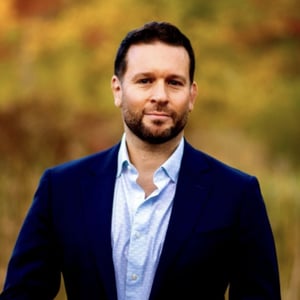
Professor of Law and Public Policy, Pepperdine University Caruso School of Law
Greg McNeal is an award winning entrepreneur, professor, and investor. He co-founded AirMap, a multinational aerospace and defense company honored as one of the “World’s Most Innovative Companies” by Fast Company and ranked as an Inc.com 25 Most Disruptive Company. The company also received a Los Angeles Business Journal Innovation Award, and a Consumer Electronics Show “Innovation Award.” The company was acquired in 2021.
He invests in and advises companies and entrepreneurs in SAAS, Defense, AI, and entertainment. The companies he founded or serves on the corporate board of have raised over $100 million in funding with his direct participation in the process. Those investors include Microsoft, Flexport, Sony, Qualcomm, Rakuten, Baidu, Airbus, and top global financial services and venture capital funds including Greycroft, Social Capital, General Catalyst, Lux Capital, Bullpen Capital, Bay Bridge Ventures, Teamworthy Ventures, Operate Studio, TenOneTen, Temasek, Macquarie Group, Graph Ventures and many others. The companies he advises have raised substantially more funding, in part due to his advice and mentorship.
He is a tenured Professor of Law and Public Policy at Pepperdine University and a faculty member with the Palmer Center for Entrepreneurship and the Law and teaches courses in technology, public policy, internet, and privacy law.
As a public policy and legal expert, Greg has worked with the White House, the Department of Defense, the State Department, and independent regulatory agencies on matters related to technology, law and policy. He has on multiple occasions testified before Congress and state legislatures about entrepreneurship and emerging technology and has aided state legislators, cities, municipalities, and executive branch officials in drafting legislation and ordinances related to technological advances and has been appointed by Cabinet officials to serve on Federal Rulemaking Committees.
He is a frequent keynote speaker at industry events and academic conferences related to technology, law, and public policy. He advises venture capital firms and other investors, start-ups, law enforcement, consulting firms, and Fortune 500 companies about the legal and regulatory issues associated with emerging technologies.
He regularly appears on television and radio to discuss technology and business, wrote a column on business and technology for Forbes and has authored Op-Eds for the New York Times, the Washington Post, and The Washington Times, among others. In his early career he worked on national security, international criminal law and counterterrorism matters and served as an Army officer.
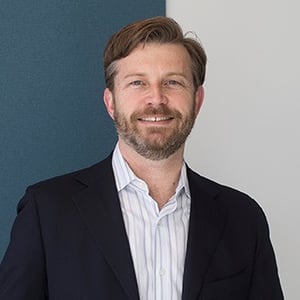
Senior Executive & Director, Center for City Solutions, National League of Cities
Brooks Rainwater is the senior executive and director of the National League of Cities’ (NLC) Center for City Solutions. Rainwater drives the organization’s research agenda, community engagement efforts, and leadership education programming to help city leaders create strong local economies, safe and vibrant neighborhoods, world-class infrastructure, and a sustainable environment.
As an advocate for strong local leadership, Rainwater leads a team of experts across the field of urban policy, and regularly advises cities both in the United States and globally on critical issues faced now and yet to come. He has published a wide variety of reports and articles on innovative solutions that lead to vibrant and successful cities.
Rainwater speaks regularly across the country and overseas on issues facing city leaders. Under his leadership of the Center, it has grown and developed a host of new programs from land use and equitable development to alternative energy and resilience to urban innovation and enhanced city governance strategies.
Rainwater’s research and interests include advancements in technology and city innovation, the sharing economy, and how the rise of state preemption is impacting local authority. His expertise is a draw for media outlets, including the TODAY Show, Wall Street Journal, The Washington Post, CNN, NPR, and the New York Times. Rainwater also frequently contributes to publications such as Fast Company, Forbes, CityLab, Business Insider, TechCrunch, and Fortune.
Prior to joining NLC, Rainwater was Director of Public Policy for the American Institute of Architects (AIA). While there he developed the Local Leaders research series and spearheaded the Cities as a Lab initiative focused on the key role cities play as creative instigators of innovative practices.
Rainwater serves on numerous boards with current and past service to the STAR Communities Board, the American Library Association Public Policy Advisory Council, the International Advisory Board for the City of Rotterdam, and the Arlington County Environment and Energy Conservation Commission.
Co-Director, IBM PolicyLab
Ryan Hagemann is a Technology Policy Executive at IBM. He was previously a senior policy fellow at the International Center for Law & Economics. Before joining the International Center for Law & Economics, he was a senior fellow at the Niskanen Center, where he also served as the senior director for policy and director of technology policy. His policy expertise focuses on regulatory governance of emerging technologies, as well as a broader research portfolio that includes genetic modification and regenerative medicine, bioengineering and healthcare IT, artificial intelligence, autonomous vehicles, commercial drones, the Internet of Things, and other issues at the intersection of technology, regulation, and the digital economy. His work on “soft law” governance systems, autonomous vehicles, and commercial drones has been featured in numerous academic journals, and his research and comments have been cited by The New York Times, MIT Technology Review, and The Atlantic, among other outlets. He has been published in The Wall Street Journal, Wired, National Review, The Washington Examiner, U.S. News & World Report, The Hill, and elsewhere.
Ryan graduated from Boston University with a B.A. in international relations, foreign policy, and security studies and holds a Master of Public Policy in science and technology policy from George Mason University.
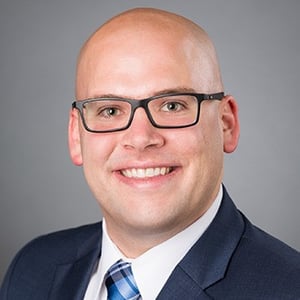
Senior Director of Strategy and Research, The Center for Growth and Opportunity at Utah State University
Christopher Koopman is the Senior Director of Strategy and Research at The Center for Growth and Opportunity at Utah State University. He previously served as a Senior Research Fellow and Director of the Technology Policy Program at the Mercatus Center at George Mason University. He specializes in regulation, competition, and innovation. His research and commentary has appeared in the Wall Street Journal, New York Times, Washington Post, USA Today, Bloomberg,and NPR. He is also a contributor at The Hill, and was named to Forbes' 30 Under 30 2016 for law and policy.
Koopman earned his J.D. from Ave Maria University and his LL.M. in law and economics at George Mason University where he now teaches in both the economics department and the George Mason University School of Law.
Professor of Law and Public Policy, Pepperdine University Caruso School of Law
Greg McNeal is an award winning entrepreneur, professor, and investor. He co-founded AirMap, a multinational aerospace and defense company honored as one of the “World’s Most Innovative Companies” by Fast Company and ranked as an Inc.com 25 Most Disruptive Company. The company also received a Los Angeles Business Journal Innovation Award, and a Consumer Electronics Show “Innovation Award.” The company was acquired in 2021.
He invests in and advises companies and entrepreneurs in SAAS, Defense, AI, and entertainment. The companies he founded or serves on the corporate board of have raised over $100 million in funding with his direct participation in the process. Those investors include Microsoft, Flexport, Sony, Qualcomm, Rakuten, Baidu, Airbus, and top global financial services and venture capital funds including Greycroft, Social Capital, General Catalyst, Lux Capital, Bullpen Capital, Bay Bridge Ventures, Teamworthy Ventures, Operate Studio, TenOneTen, Temasek, Macquarie Group, Graph Ventures and many others. The companies he advises have raised substantially more funding, in part due to his advice and mentorship.
He is a tenured Professor of Law and Public Policy at Pepperdine University and a faculty member with the Palmer Center for Entrepreneurship and the Law and teaches courses in technology, public policy, internet, and privacy law.
As a public policy and legal expert, Greg has worked with the White House, the Department of Defense, the State Department, and independent regulatory agencies on matters related to technology, law and policy. He has on multiple occasions testified before Congress and state legislatures about entrepreneurship and emerging technology and has aided state legislators, cities, municipalities, and executive branch officials in drafting legislation and ordinances related to technological advances and has been appointed by Cabinet officials to serve on Federal Rulemaking Committees.
He is a frequent keynote speaker at industry events and academic conferences related to technology, law, and public policy. He advises venture capital firms and other investors, start-ups, law enforcement, consulting firms, and Fortune 500 companies about the legal and regulatory issues associated with emerging technologies.
He regularly appears on television and radio to discuss technology and business, wrote a column on business and technology for Forbes and has authored Op-Eds for the New York Times, the Washington Post, and The Washington Times, among others. In his early career he worked on national security, international criminal law and counterterrorism matters and served as an Army officer.

Legal Fellow, Center for Constitutional Studies, Cato Institute
Brent Skorup is a legal fellow in the Cato Institute’s Robert A. Levy Center for Constitutional Studies.
Before joining Cato, he was a senior research fellow at the Mercatus Center at the George Mason University. His research areas include free speech, technology law, Fourth Amendment protections, regulation, and property law. Skorup has published pieces in economics and law journals and in popular media, including The Wall Street Journal, The New York Times, Bloomberg Law, Reuters, and Wired. He’s appeared as a TV and radio interview guest for news outlets like C‑SPAN, NPR, CBS News, ABC News, and CNBC Asia.
The Pennsylvania Supreme Court, a dissenting opinion at the Illinois Supreme Court, and the ALI's Restatement of the Law of Property have cited his legal research and he has testified as a technology and legal expert in legislative hearings in several states. Skorup has been appointed to several federal and state advisory bodies and he is currently a member of the Texas Advanced Air Mobility Advisory Committee.
Skorup has a BA in economics from Wheaton College and a law degree from the George Mason University School of Law, where he was articles editor for the Civil Rights Law Journal. He was a legal clerk at the FCC’s wireless bureau and Office of General Counsel and at the Energy and Commerce Committee in the U.S. House of Representatives.
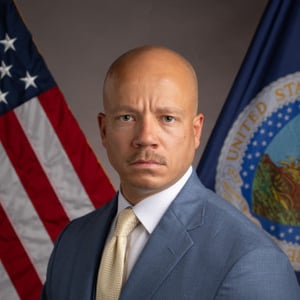
Assistant Secretary for Civil Rights, U.S. Department of Agriculture
Devon Westhill is the Assistant Secretary for Civil Rights at the U.S. Department of Agriculture. The U.S. Senate confirmed President Donald Trump’s nomination of Westhill on October 7, 2025.
Westhill returns to the USDA where he previously headed the civil rights office as Deputy Assistant Secretary in President Trump’s first term. His previous government appointments also include service at the U.S. Department of Labor, liaison to the Administrative Conference of the U.S., and liaison to the White House Initiative on Historically Black Colleges and Universities. Prior to returning to government service, Westhill was President and General Counsel of a nonprofit civil rights organization.
Westhill has testified on civil rights matters before Congress, federal agencies, and as an expert witness in federal court. He has spoken hundreds of times at college campuses, conferences, and on radio and TV programs, and he is frequently quoted in print publications, and his writing has appeared in numerous national outlets. A U.S. Navy veteran, Westhill earned his BA from the University of North Carolina at Chapel Hill and his JD from the University of Florida.
Co-Director, IBM PolicyLab
Ryan Hagemann is a Technology Policy Executive at IBM. He was previously a senior policy fellow at the International Center for Law & Economics. Before joining the International Center for Law & Economics, he was a senior fellow at the Niskanen Center, where he also served as the senior director for policy and director of technology policy. His policy expertise focuses on regulatory governance of emerging technologies, as well as a broader research portfolio that includes genetic modification and regenerative medicine, bioengineering and healthcare IT, artificial intelligence, autonomous vehicles, commercial drones, the Internet of Things, and other issues at the intersection of technology, regulation, and the digital economy. His work on “soft law” governance systems, autonomous vehicles, and commercial drones has been featured in numerous academic journals, and his research and comments have been cited by The New York Times, MIT Technology Review, and The Atlantic, among other outlets. He has been published in The Wall Street Journal, Wired, National Review, The Washington Examiner, U.S. News & World Report, The Hill, and elsewhere.
Ryan graduated from Boston University with a B.A. in international relations, foreign policy, and security studies and holds a Master of Public Policy in science and technology policy from George Mason University.
Senior Director of Strategy and Research, The Center for Growth and Opportunity at Utah State University
Christopher Koopman is the Senior Director of Strategy and Research at The Center for Growth and Opportunity at Utah State University. He previously served as a Senior Research Fellow and Director of the Technology Policy Program at the Mercatus Center at George Mason University. He specializes in regulation, competition, and innovation. His research and commentary has appeared in the Wall Street Journal, New York Times, Washington Post, USA Today, Bloomberg,and NPR. He is also a contributor at The Hill, and was named to Forbes' 30 Under 30 2016 for law and policy.
Koopman earned his J.D. from Ave Maria University and his LL.M. in law and economics at George Mason University where he now teaches in both the economics department and the George Mason University School of Law.
Professor of Law and Public Policy, Pepperdine University Caruso School of Law
Greg McNeal is an award winning entrepreneur, professor, and investor. He co-founded AirMap, a multinational aerospace and defense company honored as one of the “World’s Most Innovative Companies” by Fast Company and ranked as an Inc.com 25 Most Disruptive Company. The company also received a Los Angeles Business Journal Innovation Award, and a Consumer Electronics Show “Innovation Award.” The company was acquired in 2021.
He invests in and advises companies and entrepreneurs in SAAS, Defense, AI, and entertainment. The companies he founded or serves on the corporate board of have raised over $100 million in funding with his direct participation in the process. Those investors include Microsoft, Flexport, Sony, Qualcomm, Rakuten, Baidu, Airbus, and top global financial services and venture capital funds including Greycroft, Social Capital, General Catalyst, Lux Capital, Bullpen Capital, Bay Bridge Ventures, Teamworthy Ventures, Operate Studio, TenOneTen, Temasek, Macquarie Group, Graph Ventures and many others. The companies he advises have raised substantially more funding, in part due to his advice and mentorship.
He is a tenured Professor of Law and Public Policy at Pepperdine University and a faculty member with the Palmer Center for Entrepreneurship and the Law and teaches courses in technology, public policy, internet, and privacy law.
As a public policy and legal expert, Greg has worked with the White House, the Department of Defense, the State Department, and independent regulatory agencies on matters related to technology, law and policy. He has on multiple occasions testified before Congress and state legislatures about entrepreneurship and emerging technology and has aided state legislators, cities, municipalities, and executive branch officials in drafting legislation and ordinances related to technological advances and has been appointed by Cabinet officials to serve on Federal Rulemaking Committees.
He is a frequent keynote speaker at industry events and academic conferences related to technology, law, and public policy. He advises venture capital firms and other investors, start-ups, law enforcement, consulting firms, and Fortune 500 companies about the legal and regulatory issues associated with emerging technologies.
He regularly appears on television and radio to discuss technology and business, wrote a column on business and technology for Forbes and has authored Op-Eds for the New York Times, the Washington Post, and The Washington Times, among others. In his early career he worked on national security, international criminal law and counterterrorism matters and served as an Army officer.
Legal Fellow, Center for Constitutional Studies, Cato Institute
Brent Skorup is a legal fellow in the Cato Institute’s Robert A. Levy Center for Constitutional Studies.
Before joining Cato, he was a senior research fellow at the Mercatus Center at the George Mason University. His research areas include free speech, technology law, Fourth Amendment protections, regulation, and property law. Skorup has published pieces in economics and law journals and in popular media, including The Wall Street Journal, The New York Times, Bloomberg Law, Reuters, and Wired. He’s appeared as a TV and radio interview guest for news outlets like C‑SPAN, NPR, CBS News, ABC News, and CNBC Asia.
The Pennsylvania Supreme Court, a dissenting opinion at the Illinois Supreme Court, and the ALI's Restatement of the Law of Property have cited his legal research and he has testified as a technology and legal expert in legislative hearings in several states. Skorup has been appointed to several federal and state advisory bodies and he is currently a member of the Texas Advanced Air Mobility Advisory Committee.
Skorup has a BA in economics from Wheaton College and a law degree from the George Mason University School of Law, where he was articles editor for the Civil Rights Law Journal. He was a legal clerk at the FCC’s wireless bureau and Office of General Counsel and at the Energy and Commerce Committee in the U.S. House of Representatives.
Assistant Secretary for Civil Rights, U.S. Department of Agriculture
Devon Westhill is the Assistant Secretary for Civil Rights at the U.S. Department of Agriculture. The U.S. Senate confirmed President Donald Trump’s nomination of Westhill on October 7, 2025.
Westhill returns to the USDA where he previously headed the civil rights office as Deputy Assistant Secretary in President Trump’s first term. His previous government appointments also include service at the U.S. Department of Labor, liaison to the Administrative Conference of the U.S., and liaison to the White House Initiative on Historically Black Colleges and Universities. Prior to returning to government service, Westhill was President and General Counsel of a nonprofit civil rights organization.
Westhill has testified on civil rights matters before Congress, federal agencies, and as an expert witness in federal court. He has spoken hundreds of times at college campuses, conferences, and on radio and TV programs, and he is frequently quoted in print publications, and his writing has appeared in numerous national outlets. A U.S. Navy veteran, Westhill earned his BA from the University of North Carolina at Chapel Hill and his JD from the University of Florida.
Co-Director, IBM PolicyLab
Ryan Hagemann is a Technology Policy Executive at IBM. He was previously a senior policy fellow at the International Center for Law & Economics. Before joining the International Center for Law & Economics, he was a senior fellow at the Niskanen Center, where he also served as the senior director for policy and director of technology policy. His policy expertise focuses on regulatory governance of emerging technologies, as well as a broader research portfolio that includes genetic modification and regenerative medicine, bioengineering and healthcare IT, artificial intelligence, autonomous vehicles, commercial drones, the Internet of Things, and other issues at the intersection of technology, regulation, and the digital economy. His work on “soft law” governance systems, autonomous vehicles, and commercial drones has been featured in numerous academic journals, and his research and comments have been cited by The New York Times, MIT Technology Review, and The Atlantic, among other outlets. He has been published in The Wall Street Journal, Wired, National Review, The Washington Examiner, U.S. News & World Report, The Hill, and elsewhere.
Ryan graduated from Boston University with a B.A. in international relations, foreign policy, and security studies and holds a Master of Public Policy in science and technology policy from George Mason University.

Senior Director, Government Affairs, Consumer Technology Association
Jamie Boone is the senior director of government affairs for the Consumer Technology Association, serving as an advocate for the consumer technology industry on Capitol Hill. Her core areas of policy expertise include self-driving vehicles and vehicle technology, privacy, and drones. She is a passionate thought leader on public policy for automated and connected vehicles, and has spoken at CES, SXSW, and on various policy panels across the DC area. Jamie is an experienced legislative and policy professional, having previously served as a longtime aide for Congressman Bill Shuster, last acting as his deputy chief of staff. She serves on the Board of Directors for the Women’s High Tech Coalition. Jamie earned a Bachelor of Arts from Susquehanna University in Pennsylvania before moving to Washington, D.C., where she currently lives with her husband.

Tech Roundup Episode 16 – The Catawba Digital Economic Zone
Joseph McKinney, Ryan Hagemann
Regulatory Transparency Project's Fourth Branch Podcast
In February 2022, the Catawba Nation of South Carolina voted to approve the first tribal...
Deep Dive Episode 51 – Emerging Tech and Regulation
Ryan Hagemann, Caleb Watney, William Goodwin, Gregory S. McNeal, Brooks Rainwater
Regulatory Transparency Project's Fourth Branch Podcast
This Deep Dive episode brings you the audio from the final panel at the Pepperdine Law...
Emerging Technology in Transportation
Ryan Hagemann, Christopher L. Koopman, Gregory S. McNeal, Brent Skorup, Devon Westhill
Regulatory Transparency Project & Capitol Hill Chapter Event
On Friday, May 18, 2018, the Regulatory Transparency Project and Capitol Hill Chapter of the...
Emerging Technology in Transportation
Ryan Hagemann, Christopher L. Koopman, Gregory S. McNeal, Brent Skorup, Devon Westhill
Regulatory Transparency Project & Capitol Hill Chapter Event
On Friday, May 18, 2018, the Regulatory Transparency Project and Capitol Hill Chapter of the...
Self-Driving Vehicles: Addressing the Challenges of Groundbreaking Innovation
Ryan Hagemann, Jamie Boone
Regulatory Transparency Project Teleforum
Self-driving vehicles may be on American roads sooner than many think. As a result, the...