
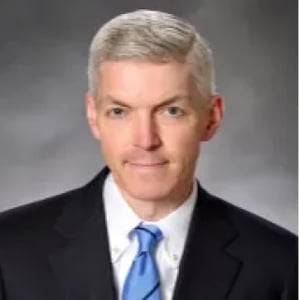
Executive Vice President, Chief Legal Officer, Gates Corporation
Matthew R. A. Heiman joined the Company in May 2026 and has served as the Company’s Chief Legal Officer and Corporate Secretary since June 2026. As Chief Legal Officer, Mr. Heiman is responsible for all legal functions for Gates, including securities and corporate governance, M&A, litigation, commercial, regulatory, compliance, patents and trademarks, real estate, employment and labor, sustainability and environmental matters. Prior to joining Gates, Mr. Heiman held senior legal leadership roles at Waystar, where he served as Chief Legal & Administrative Officer from 2023 to 2025 and as General Counsel and Corporate Secretary from 2020 to 2023. Prior to that, he was with Johnson Controls, where he served as Vice President, Corporate Secretary, and Associate General Counsel. Mr. Heiman has been a Senior Fellow for the National Security Institute at George Mason University’s Antonin Scalia School of Law since 2018.
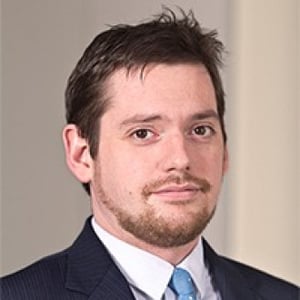
Senior Fellow, Cato Institute
Julian Sanchez is a senior fellow at the Cato Institute and studies issues at the busy intersection of technology, privacy, and civil liberties, with a particular focus on national security and intelligence surveillance. Before joining Cato, Sanchez served as the Washington editor for the technology news site Ars Technica, where he covered surveillance, intellectual property, and telecom policy. He has also worked as a writer for The Economist’s blog Democracy in America and as an editor for Reason magazine, where he remains a contributing editor.
Sanchez has written on privacy and technology for a wide array of national publications, ranging from the National Review to The Nation, and is a founding editor of the policy blog Just Security. He studied philosophy and political science at New York University.
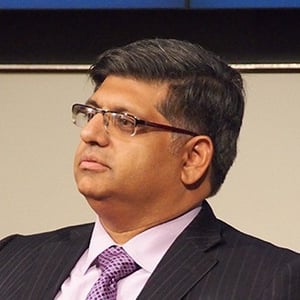
Attorney & former Senior Policy Advisor, Department of Homeland Security
Faisal is a lawyer living in Vermont with his children. Faisal is a former Republican who served in the George W Bush Administration Senior Policy Advisor to the Under at the Department of Homeland Security. Prior to that, Faisal worked at the White House Office of Homeland Security and then later the Homeland Security Council as associate counsel. Prior to his appointment at the White House, Faisal served as the Deputy General Counsel for Policy at the Office of Personnel Management. Faisal Gill also served in the United States Navy Judge Advocate General’s Corps.
He has a BA and JD from American University in Washington, DC.
It was reported that Faisal was one of the prominent Muslim Americans that NSA was spying on.
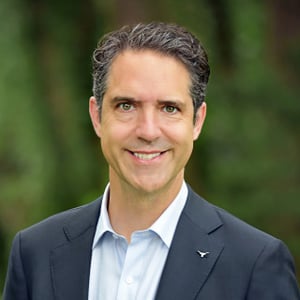
James A. Baker III Chair in the Rule of Law and World Affairs and Associate Dean for Academic Affairs, The University of Texas at Austin School of Law
Bobby Chesney holds the James Baker Chair and also serves as the Associate Dean for Academic Affairs at the University of Texas School of Law. In addition, he is the Director of the Robert S. Strauss Center for International Security and Law, a University-wide research unit bridging across disciplines to improve understanding of international security issues.
In 2009, Professor Chesney served in the Justice Department in connection with the Detention Policy Task Force created by Executive Order 13493. He also previously served the Intelligence Community as an associate member of the Intelligence Science Board and as a member of the Advanced Technology Board. In addition to his current positions at the University of Texas, he is a member of the American Law Institute, and a senior editor for the Journal of National Security Law & Policy, and a former non-resident Senior Fellow of the Brookings Institution.
Professor Chesney is a co-founder and contributor to www.lawfareblog.com, the leading source for analysis, commentary, and news relating to law and national security. In addition to his blogging at Lawfare, those interested in national security law should consider following Professor Chesney on Twitter (@bobbychesney) as well as subscribing to the National Security Law Podcast (which he co-hosts with his colleague Steve Vladeck). Professor Chesney's scholarship focuses on U.S. national security policies and institutions, encompassing both domestic and international law issues. His articles may be downloaded from SSRN here.
Professor Chesney is a magna cum laude graduate of both Texas Christian University and Harvard Law School. After law school he clerked for the Honorable Lewis A. Kaplan of the United States District Court for the Southern District of New York and the Honorable Robert D. Sack of the United States Court of Appeals for the Second Circuit. He then practiced with the firm Davis Polk & Wardwell in New York (litigation), before beginning his academic career with Wake Forest University School of Law. There he received a teacher of the year award from the student body in one year, and from the school's dean in another. In 2008 he came to the University of Texas School of Law as a visiting professor, and then joined UT on a permanent basis in 2009. He became the Associate Dean for Academic Affairs in 2011.
Professor Chesney teaches a variety of courses, including: Constitutional Law, National Security Law, Foundations of Cybersecurity: Law, Institutions, and Policy; Law of the Intelligence Community; History of U.S. Counterterrorism Law & Policy: 1970 to Present; Evidence, Civil Procedure, and an array of seminars. He is from San Antonio.
Executive Vice President, Chief Legal Officer, Gates Corporation
Matthew R. A. Heiman joined the Company in May 2026 and has served as the Company’s Chief Legal Officer and Corporate Secretary since June 2026. As Chief Legal Officer, Mr. Heiman is responsible for all legal functions for Gates, including securities and corporate governance, M&A, litigation, commercial, regulatory, compliance, patents and trademarks, real estate, employment and labor, sustainability and environmental matters. Prior to joining Gates, Mr. Heiman held senior legal leadership roles at Waystar, where he served as Chief Legal & Administrative Officer from 2023 to 2025 and as General Counsel and Corporate Secretary from 2020 to 2023. Prior to that, he was with Johnson Controls, where he served as Vice President, Corporate Secretary, and Associate General Counsel. Mr. Heiman has been a Senior Fellow for the National Security Institute at George Mason University’s Antonin Scalia School of Law since 2018.
Partner, Davis Polk & Wardwell LLP
Kenneth Wainstein is a partner at Davis Polk & Wardwell, where he focuses his practice on corporate internal investigations and civil and criminal enforcement proceedings. Ken spent over 20 years in a variety of law enforcement and national security positions in the government. Between 1989 and 2001, Ken served as an Assistant U.S. Attorney in both the Southern District of New York and the District of Columbia, where he handled criminal prosecutions ranging from public corruption to gang prosecution cases and held a variety of supervisory positions, including Acting United States Attorney. In 2001, he was appointed Director of the Executive Office for U.S. Attorneys, where he provided oversight and support to the 94 U.S. Attorneys’ Offices. Between 2002 and 2004, Ken served as General Counsel of the Federal Bureau of Investigation and then as Chief of Staff to Director Robert S. Mueller III. In 2004, Ken was appointed and then confirmed as United States Attorney for the District of Columbia, where he had the privilege to lead the largest United States Attorney’s Office in the country. In 2006, the U.S. Senate confirmed Ken as the first Assistant Attorney General for National Security. In that position, Ken established and led the new National Security Division, which consolidated DOJ’s law enforcement and intelligence activities on counterterrorism and counterintelligence matters. In 2008, after 19 years at the Justice Department, Ken was named Homeland Security Advisor by President George W. Bush. In this capacity, he coordinated the nation’s counterterrorism, homeland security, infrastructure protection, and disaster response and recovery efforts. He advised the President, convened and chaired meetings of the Cabinet Officers on the Homeland Security Council, and oversaw the inter-agency coordination process for homeland security and counterterrorism programs.

Assistant Professor of Law, American University Washington College of Law
Jennifer Daskal joined American University Washington College of Law (WCL) in 2013 as an Assistant Professor of Law. She teaches and writes in the fields of criminal law, national security law, and constitutional law. From 2009-2011, Prof. Daskal was counsel to the Assistant Attorney General for National Security at the Department of Justice and, among other things, served on the Secretary of Defense and Attorney General-led Detention Policy Task Force. Prior to joining DOJ, she was the senior counterterrorism counsel at Human Rights Watch, worked as a staff attorney for the Public Defender Service for the District of Columbia, and clerked for the Honorable Jed S. Rakoff. She spent two years before joining WCL’s faculty as a national security law fellow and adjunct professor at Georgetown Law Center.
Prof. Daskal is a graduate of Brown University, Harvard Law School, and Cambridge University, where she was a Marshall Scholar. Recent publications include The Un-Territoriality of Data, 326 Yale L.J. 326 (2015); Pre-Crime Restraints: The Explosion of Targeted, Non-Custodial Prevention, 99 Cornell L. Rev. 327 (2014); After the AUMF, 5 Harvard Nat'l Sec. L. J. 115 (2014) (co-authored with Steve Vladeck); and The Geography of the Battlefield: A Framework for Detention and Targeting Outside the ‘Hot’ Conflict Zone, 171 Penn. L. Rev. 1165 (2013). Prof. Daskal has published op-eds in the New York Times, Washington Post, International Herald Tribune, L.A. Times, and Salon.com, and she has appeared on BBC, C-Span, CNN, MSNBC, and NPR, among other media outlets. She is an Executive Editor of and regular contributor to the Just Security blog.
Professor of the Practice of Law and Executive Director, Center on Law, Ethics and National Security, Duke University Law School
Charles J. Dunlap Jr. joined the Duke Law faculty in July 2010 where he is currently a professor of the practice of law and Executive Director of the Center on Law, Ethics and National Security. His teaching and scholarly writing focus on national security, law of armed conflict, the use of force under international law, civil-military relations, cyberwar, airpower, military justice, and ethical issues related to the practice of national security law.
Dunlap retired from the Air Force in June 2010, having attained the rank of major general during a 34-year career in the Judge Advocate General Corps. In his capacity as Deputy Judge Advocate General spanning from May 2006 to March 2010, he assisted the Judge Advocate General in the professional supervision of more than 2,200 judge advocates, 350 civilian lawyers, 1,400 enlisted paralegals, and 500 civilians around the world. In addition to overseeing an array of military justice, operational, international, and civil law functions, he provided legal advice to commanders and civilian leaders at all levels.
In the course of his career, Dunlap has been involved in various high-profile interagency and policy matters, including his testimony before the U.S. House of Representatives concerning the Military Commissions Act of 2006.
Dunlap previously served as the senior lawyer (staff judge advocate) at Air Combat Command Headquarters at Langley Air Force Base in Virginia, at Air Education and Training Command Headquarters at Randolph Air Force Base in Texas, and at U.S. Strategic Command, Omaha, Nebraska, among other leadership posts. Additionally, he served on the faculty of the Air Force Judge Advocate General School where he taught various civil and criminal law topics. An experienced trial lawyer, he also spent two years as a military trial judge for a 22-state circuit. He served tours in the United Kingdom and Korea, and deployed for operations in the Middle East and Africa. He also led military-to-military delegations to Colombia, Uruguay, South Africa, and the Czech Republic.
A prolific author and accomplished public speaker, Dunlap’s commentary on a wide variety of national security topics has been published in leading newspapers and military journals. His 2001 essay written for Harvard University’s Carr Center on “lawfare,” a concept he defines as “the use or misuse of law as a substitute for traditional military means to accomplish an operational objective,” has been highly influential among military scholars and in the broader legal academy.
Dunlap is also the author of the prize-winning essay, “The Origins of the Military Coup of 2012”, originally published in 1992, which was selected for the 40th Anniversary Edition of Parameters (Winter 2010-2011).
Dunlap’s legal scholarship has been published in the Stanford Law Review, the Yale Journal of International Affairs, the Harvard Law’s National Security Journal, the Wake Forest Law Review, the Fletcher Forum of World Affairs, the University of Nebraska Law Review, the Texas Tech Law Review, Temple Law’s Journal of International & Comparative Law, the University of North Carolina’s Journal of International Law, the Connecticut Law Review, the Tennessee Law Review, and the Vanderbilt Journal of Transnational Law, among others.
He’s also authored numerous articles and opinion pieces in a range of publications including The Atlantic, the New York Times, the Washington Post, the Washington Times, the Air Force Times, Strategic Studies Quarterly, the Georgetown Journal of International Affairs, Business Insider, the Journal of Genocide Research, The Hill, Small Wars Journal, and the blogs, Lawfare and Just Security.
Maj Gen Dunlap founded his blog Lawfire in 2015 and has since written over 300 posts on a wide variety of subjects.
Dunlap's wife, Joy, was a vice president of the National Association of Broadcasters, and later a deputy director of Government Relations for the Military Officers Association of America. She served as the elected president of Duke Campus Club, and is a recipient of the prestigious Order of the Emerald by Kappa Delta sorority. Her blog, Speaking Joyfully, won 3rd place in the blog category at the 2021 Blue Ridge Mountains Christian Writers Conference. They reside in Durham.
Executive Vice President, Chief Legal Officer, Gates Corporation
Matthew R. A. Heiman joined the Company in May 2026 and has served as the Company’s Chief Legal Officer and Corporate Secretary since June 2026. As Chief Legal Officer, Mr. Heiman is responsible for all legal functions for Gates, including securities and corporate governance, M&A, litigation, commercial, regulatory, compliance, patents and trademarks, real estate, employment and labor, sustainability and environmental matters. Prior to joining Gates, Mr. Heiman held senior legal leadership roles at Waystar, where he served as Chief Legal & Administrative Officer from 2023 to 2025 and as General Counsel and Corporate Secretary from 2020 to 2023. Prior to that, he was with Johnson Controls, where he served as Vice President, Corporate Secretary, and Associate General Counsel. Mr. Heiman has been a Senior Fellow for the National Security Institute at George Mason University’s Antonin Scalia School of Law since 2018.

Professor Emeritus of Law, Antonin Scalia Law School, George Mason University
Jeremy A. Rabkin is a Professor Emeritus of Law at the Antonin Scalia Law School, George Mason University. Before joining the faculty in June 2007, he was for over two decades a professor in the Department of Government at Cornell University. Professor Rabkin serves on the board of directors of the Center for Individual Rights, a public interest law firm based in Washington, D.C. Previously he was a board member of the U.S. Institute of Peace and the board of academic advisors of the American Enterprise Institute.
Professor Rabkin’s books include Law Without Nations? (Princeton University Press, 2005). He authored “If You Need a Friend, Don’t Call a Cosmopolitan,” a chapter in Varieties of Sovereignty and Citizenship (Sigal R. Ben-Porath & Rogers M. Smith eds., University of Pennsylvania Press, 2012). His articles have appeared in major law reviews and political science journals and his journalistic contributions in a range of magazines and newspapers, including the Washington Post and the Wall Street Journal.
Assistant Professor of Law, American University Washington College of Law
Jennifer Daskal joined American University Washington College of Law (WCL) in 2013 as an Assistant Professor of Law. She teaches and writes in the fields of criminal law, national security law, and constitutional law. From 2009-2011, Prof. Daskal was counsel to the Assistant Attorney General for National Security at the Department of Justice and, among other things, served on the Secretary of Defense and Attorney General-led Detention Policy Task Force. Prior to joining DOJ, she was the senior counterterrorism counsel at Human Rights Watch, worked as a staff attorney for the Public Defender Service for the District of Columbia, and clerked for the Honorable Jed S. Rakoff. She spent two years before joining WCL’s faculty as a national security law fellow and adjunct professor at Georgetown Law Center.
Prof. Daskal is a graduate of Brown University, Harvard Law School, and Cambridge University, where she was a Marshall Scholar. Recent publications include The Un-Territoriality of Data, 326 Yale L.J. 326 (2015); Pre-Crime Restraints: The Explosion of Targeted, Non-Custodial Prevention, 99 Cornell L. Rev. 327 (2014); After the AUMF, 5 Harvard Nat'l Sec. L. J. 115 (2014) (co-authored with Steve Vladeck); and The Geography of the Battlefield: A Framework for Detention and Targeting Outside the ‘Hot’ Conflict Zone, 171 Penn. L. Rev. 1165 (2013). Prof. Daskal has published op-eds in the New York Times, Washington Post, International Herald Tribune, L.A. Times, and Salon.com, and she has appeared on BBC, C-Span, CNN, MSNBC, and NPR, among other media outlets. She is an Executive Editor of and regular contributor to the Just Security blog.
Professor of the Practice of Law and Executive Director, Center on Law, Ethics and National Security, Duke University Law School
Charles J. Dunlap Jr. joined the Duke Law faculty in July 2010 where he is currently a professor of the practice of law and Executive Director of the Center on Law, Ethics and National Security. His teaching and scholarly writing focus on national security, law of armed conflict, the use of force under international law, civil-military relations, cyberwar, airpower, military justice, and ethical issues related to the practice of national security law.
Dunlap retired from the Air Force in June 2010, having attained the rank of major general during a 34-year career in the Judge Advocate General Corps. In his capacity as Deputy Judge Advocate General spanning from May 2006 to March 2010, he assisted the Judge Advocate General in the professional supervision of more than 2,200 judge advocates, 350 civilian lawyers, 1,400 enlisted paralegals, and 500 civilians around the world. In addition to overseeing an array of military justice, operational, international, and civil law functions, he provided legal advice to commanders and civilian leaders at all levels.
In the course of his career, Dunlap has been involved in various high-profile interagency and policy matters, including his testimony before the U.S. House of Representatives concerning the Military Commissions Act of 2006.
Dunlap previously served as the senior lawyer (staff judge advocate) at Air Combat Command Headquarters at Langley Air Force Base in Virginia, at Air Education and Training Command Headquarters at Randolph Air Force Base in Texas, and at U.S. Strategic Command, Omaha, Nebraska, among other leadership posts. Additionally, he served on the faculty of the Air Force Judge Advocate General School where he taught various civil and criminal law topics. An experienced trial lawyer, he also spent two years as a military trial judge for a 22-state circuit. He served tours in the United Kingdom and Korea, and deployed for operations in the Middle East and Africa. He also led military-to-military delegations to Colombia, Uruguay, South Africa, and the Czech Republic.
A prolific author and accomplished public speaker, Dunlap’s commentary on a wide variety of national security topics has been published in leading newspapers and military journals. His 2001 essay written for Harvard University’s Carr Center on “lawfare,” a concept he defines as “the use or misuse of law as a substitute for traditional military means to accomplish an operational objective,” has been highly influential among military scholars and in the broader legal academy.
Dunlap is also the author of the prize-winning essay, “The Origins of the Military Coup of 2012”, originally published in 1992, which was selected for the 40th Anniversary Edition of Parameters (Winter 2010-2011).
Dunlap’s legal scholarship has been published in the Stanford Law Review, the Yale Journal of International Affairs, the Harvard Law’s National Security Journal, the Wake Forest Law Review, the Fletcher Forum of World Affairs, the University of Nebraska Law Review, the Texas Tech Law Review, Temple Law’s Journal of International & Comparative Law, the University of North Carolina’s Journal of International Law, the Connecticut Law Review, the Tennessee Law Review, and the Vanderbilt Journal of Transnational Law, among others.
He’s also authored numerous articles and opinion pieces in a range of publications including The Atlantic, the New York Times, the Washington Post, the Washington Times, the Air Force Times, Strategic Studies Quarterly, the Georgetown Journal of International Affairs, Business Insider, the Journal of Genocide Research, The Hill, Small Wars Journal, and the blogs, Lawfare and Just Security.
Maj Gen Dunlap founded his blog Lawfire in 2015 and has since written over 300 posts on a wide variety of subjects.
Dunlap's wife, Joy, was a vice president of the National Association of Broadcasters, and later a deputy director of Government Relations for the Military Officers Association of America. She served as the elected president of Duke Campus Club, and is a recipient of the prestigious Order of the Emerald by Kappa Delta sorority. Her blog, Speaking Joyfully, won 3rd place in the blog category at the 2021 Blue Ridge Mountains Christian Writers Conference. They reside in Durham.
Executive Vice President, Chief Legal Officer, Gates Corporation
Matthew R. A. Heiman joined the Company in May 2026 and has served as the Company’s Chief Legal Officer and Corporate Secretary since June 2026. As Chief Legal Officer, Mr. Heiman is responsible for all legal functions for Gates, including securities and corporate governance, M&A, litigation, commercial, regulatory, compliance, patents and trademarks, real estate, employment and labor, sustainability and environmental matters. Prior to joining Gates, Mr. Heiman held senior legal leadership roles at Waystar, where he served as Chief Legal & Administrative Officer from 2023 to 2025 and as General Counsel and Corporate Secretary from 2020 to 2023. Prior to that, he was with Johnson Controls, where he served as Vice President, Corporate Secretary, and Associate General Counsel. Mr. Heiman has been a Senior Fellow for the National Security Institute at George Mason University’s Antonin Scalia School of Law since 2018.
Professor Emeritus of Law, Antonin Scalia Law School, George Mason University
Jeremy A. Rabkin is a Professor Emeritus of Law at the Antonin Scalia Law School, George Mason University. Before joining the faculty in June 2007, he was for over two decades a professor in the Department of Government at Cornell University. Professor Rabkin serves on the board of directors of the Center for Individual Rights, a public interest law firm based in Washington, D.C. Previously he was a board member of the U.S. Institute of Peace and the board of academic advisors of the American Enterprise Institute.
Professor Rabkin’s books include Law Without Nations? (Princeton University Press, 2005). He authored “If You Need a Friend, Don’t Call a Cosmopolitan,” a chapter in Varieties of Sovereignty and Citizenship (Sigal R. Ben-Porath & Rogers M. Smith eds., University of Pennsylvania Press, 2012). His articles have appeared in major law reviews and political science journals and his journalistic contributions in a range of magazines and newspapers, including the Washington Post and the Wall Street Journal.
Chairman of the Securities and Exchange Commission
Paul S. Atkins was sworn into office as the 34th Chairman of the Securities and Exchange Commission on April 21, 2025, after being nominated by President Donald J. Trump on January 20, 2025, and confirmed by the U.S. Senate on April 9, 2025.
Prior to returning to the SEC, Chairman Atkins was most recently chief executive of Patomak Global Partners, a company he founded in 2009. Chairman Atkins helped lead efforts to develop best practices for the digital asset sector. He served as an independent director and non-executive chairman of the board of BATS Global Markets, Inc. from 2012 to 2015.
Chairman Atkins was appointed by President George W. Bush to serve as a Commissioner of the SEC from 2002 to 2008. During his tenure, he advocated for transparency, consistency, and the use of cost-benefit analysis at the agency. Chairman Atkins also represented the SEC at meetings of the President’s Working Group on Financial Markets and the U.S.-EU Transatlantic Economic Council. From 2009 to 2010, he was appointed a member of the Congressional Oversight Panel for the Troubled Asset Relief Program.
Before serving as an SEC Commissioner, Chairman Atkins was a consultant on securities and investment management industry matters, especially regarding issues of strategy, regulatory compliance, risk management, new product development, and organizational control.
From 1990 to 1994, Chairman Atkins served on the staff of two chairmen of the SEC, Richard C. Breeden and Arthur Levitt, ultimately as chief of staff and counselor, respectively. He received the SEC’s 1992 Law and Policy Award for work regarding corporate governance matters.
Chairman Atkins began his career as a lawyer in New York, focusing on a wide range of corporate transactions for U.S. and foreign clients, including public and private securities offerings and mergers and acquisitions. He was resident for 2½ years in his firm's Paris office and admitted as conseil juridique in France.
A member of the New York and Florida bars, Chairman Atkins received his J.D. from Vanderbilt University School of Law in 1983 and was Senior Student Writing Editor of the Vanderbilt Law Review. He received his A.B., Phi Beta Kappa, from Wofford College in 1980.
Originally from Lillington, North Carolina, Chairman Atkins grew up in Tampa, Florida. He and his wife Sarah have three sons.
Executive Vice President, Chief Legal Officer, Gates Corporation
Matthew R. A. Heiman joined the Company in May 2026 and has served as the Company’s Chief Legal Officer and Corporate Secretary since June 2026. As Chief Legal Officer, Mr. Heiman is responsible for all legal functions for Gates, including securities and corporate governance, M&A, litigation, commercial, regulatory, compliance, patents and trademarks, real estate, employment and labor, sustainability and environmental matters. Prior to joining Gates, Mr. Heiman held senior legal leadership roles at Waystar, where he served as Chief Legal & Administrative Officer from 2023 to 2025 and as General Counsel and Corporate Secretary from 2020 to 2023. Prior to that, he was with Johnson Controls, where he served as Vice President, Corporate Secretary, and Associate General Counsel. Mr. Heiman has been a Senior Fellow for the National Security Institute at George Mason University’s Antonin Scalia School of Law since 2018.
Sam Harris Professor of Corporate Law, Corporate Finance, and Securities Law, Yale Law School
Jonathan R. Macey is Sam Harris Professor of Corporate Law, Corporate Finance, and Securities Law at Yale University, and Professor in the Yale School of Management. From 1991 – 2004, Professor Macey was J. DuPratt White Professor of Law, Director of the John M. Olin Program in Law and Economics at Cornell Law School, and Professor of Law and Business at the Cornell University Johnson Graduate School of Business. Professor Macey earned his B.A. cum laude from Harvard in 1977, and his J.D. from Yale Law School in 1982, where he was Article and Book Review editor of The Yale Law Journal. In 1996, Professor Macey received a Ph.D. honoris causa from the Stockholm School of Economics. Following law school, Professor Macey was law clerk to Judge Henry J. Friendly on the U.S. Court of Appeals for the Second Circuit.
Professor Macey is the author of several books including the two-volume treatise, Macey on Corporation Laws, published in 1998 (Aspen Law & Business), and co-author of two leading casebooks, Corporations: Including Partnerships and Limited Liability Companies (2003 Thomson West), which is in its eighth edition, and Banking Law and Regulation (2002 Aspen Law & Business), which is now in its third edition. He also is the author of over 100 scholarly articles. His recent articles have appeared in the Banking Law Journal, the University of Chicago Law Review, the Stanford Law Review, The Yale Law Journal, the Cornell Law Review, the Journal of Law and Economics, and the Brookings Wharton Papers on Financial Institutions. He has published numerous editorials in such publications as The Wall Street Journal, Forbes, The Los Angeles Times, and The National Law Journal.
Professor Macey has taught at major universities throughout the world, including Bocconi University (Milan), the University of Tokyo; the University of Toronto; the University of Turin, the University of Amsterdam Department of Finance, and the Stockholm School of Economics, Department of Law. He also has been Professor of Law at the University of Chicago (1990) and Visiting Professor of Law at Harvard Law School (1999). Professor Macey is a Senior Research Fellow at the International Centre for Economic Research (ICER) in Turin, Italy. Professor Macey also serves on the Academic Advisory Board (Comitato Scientifico) of the Associazione Disiano Preite for the study of corporate law (per lo studio del diritto dell’impresa). In 1995, Professor Macey was awarded the Paul M. Bator prize for excellence in Teaching, Scholarship and Public Service by the Federalist Society for Law and Public Policy. In 1996, he received a Ph.D., honoris causa from the Stockholm School of Economics. And in 1998, he received the D.P. Jacobs prize for the most significant paper in volume 6 of the Journal of Financial Intermediation for his paper (co-authored with Maureen O’Hara), “The Law & Economics of Best Execution.”
In 1999 Professor Macey was made an honorary Fellow of the Society For Advanced Legal Studies. In 2000, Professor Macey became a member of the Legal Advisory Committee to the Board of Directors of the New York Stock Exchange. In 2001 Professor Macey was appointed a Bertil Daniellson Distinguished Visiting Professor in Banking and Finance at the Stockholm School of Economics. In 2002 Professor Macey was appointed to the Economic Advisory Board of the National Association of Securities Dealers (NASD). In 2004 Professor Macey was awarded a Teaching Award by the Yale Law Women in recognition of his “commitment to excellence in teaching, mentoring and inspiring.” In 2005 Professor Macey became a member of the Board of Editors of Thomson West Publishing Company.
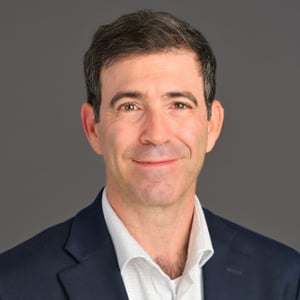
DeMuth Chair of Business Law, University of Colorado Law School
Andrew A. Schwartz joined the Colorado Law faculty in 2008 and was promoted to full professor in 2017. He teaches and publishes on corporate, securities and contract law, and has become an internationally recognized expert on investment crowdfunding. In 2017, Professor Schwartz served as a Fulbright Research Scholar and visiting professor at the University of Auckland Law School in New Zealand.
Professor Schwartz earned an Sc.B. in Civil Engineering from Brown University and a J.D. from Columbia University, where he served on the Columbia Law Review and was named a James Kent Scholar (top honors) all three years. Before entering academia, he clerked for Judge William A. Fletcher of the U.S. Court of Appeals for the Ninth Circuit and Judge Naomi Reice Buchwald of the U.S. District Court for the Southern District of New York. Following his clerkships, Professor Schwartz practiced corporate law in New York at Wachtell, Lipton, Rosen & Katz.
Professor Schwartz is the author of one book, Investment Crowdfunding, forthcoming from the Oxford University Press, as well as more than forty scholarly publications. His major articles have appeared in leading flagship law reviews including the UCLA Law Review, Minnesota Law Review, and Notre Dame Law Review, top specialty journals such as the Yale Journal on Regulation and Harvard Business Law Review, and peer-reviewed journals like the New Zealand Law Review.
Professor Schwartz has won numerous national awards for his scholarship, including the AALS Scholarly Paper Competition and the Federalist Society Young Legal Scholars Paper Competition. At Colorado Law, Professor Schwartz has received the Provost's Award for Faculty Achievement, the Gilbert Goldstein Faculty Fellowship, and the Outstanding New Faculty Award. His research is frequently cited and relied upon by courts and commentators across the country and around the world, including numerous citations by the Delaware Court of Chancery, the nation's leading venue for corporate law.
Chairman of the Securities and Exchange Commission
Paul S. Atkins was sworn into office as the 34th Chairman of the Securities and Exchange Commission on April 21, 2025, after being nominated by President Donald J. Trump on January 20, 2025, and confirmed by the U.S. Senate on April 9, 2025.
Prior to returning to the SEC, Chairman Atkins was most recently chief executive of Patomak Global Partners, a company he founded in 2009. Chairman Atkins helped lead efforts to develop best practices for the digital asset sector. He served as an independent director and non-executive chairman of the board of BATS Global Markets, Inc. from 2012 to 2015.
Chairman Atkins was appointed by President George W. Bush to serve as a Commissioner of the SEC from 2002 to 2008. During his tenure, he advocated for transparency, consistency, and the use of cost-benefit analysis at the agency. Chairman Atkins also represented the SEC at meetings of the President’s Working Group on Financial Markets and the U.S.-EU Transatlantic Economic Council. From 2009 to 2010, he was appointed a member of the Congressional Oversight Panel for the Troubled Asset Relief Program.
Before serving as an SEC Commissioner, Chairman Atkins was a consultant on securities and investment management industry matters, especially regarding issues of strategy, regulatory compliance, risk management, new product development, and organizational control.
From 1990 to 1994, Chairman Atkins served on the staff of two chairmen of the SEC, Richard C. Breeden and Arthur Levitt, ultimately as chief of staff and counselor, respectively. He received the SEC’s 1992 Law and Policy Award for work regarding corporate governance matters.
Chairman Atkins began his career as a lawyer in New York, focusing on a wide range of corporate transactions for U.S. and foreign clients, including public and private securities offerings and mergers and acquisitions. He was resident for 2½ years in his firm's Paris office and admitted as conseil juridique in France.
A member of the New York and Florida bars, Chairman Atkins received his J.D. from Vanderbilt University School of Law in 1983 and was Senior Student Writing Editor of the Vanderbilt Law Review. He received his A.B., Phi Beta Kappa, from Wofford College in 1980.
Originally from Lillington, North Carolina, Chairman Atkins grew up in Tampa, Florida. He and his wife Sarah have three sons.
Executive Vice President, Chief Legal Officer, Gates Corporation
Matthew R. A. Heiman joined the Company in May 2026 and has served as the Company’s Chief Legal Officer and Corporate Secretary since June 2026. As Chief Legal Officer, Mr. Heiman is responsible for all legal functions for Gates, including securities and corporate governance, M&A, litigation, commercial, regulatory, compliance, patents and trademarks, real estate, employment and labor, sustainability and environmental matters. Prior to joining Gates, Mr. Heiman held senior legal leadership roles at Waystar, where he served as Chief Legal & Administrative Officer from 2023 to 2025 and as General Counsel and Corporate Secretary from 2020 to 2023. Prior to that, he was with Johnson Controls, where he served as Vice President, Corporate Secretary, and Associate General Counsel. Mr. Heiman has been a Senior Fellow for the National Security Institute at George Mason University’s Antonin Scalia School of Law since 2018.
Sam Harris Professor of Corporate Law, Corporate Finance, and Securities Law, Yale Law School
Jonathan R. Macey is Sam Harris Professor of Corporate Law, Corporate Finance, and Securities Law at Yale University, and Professor in the Yale School of Management. From 1991 – 2004, Professor Macey was J. DuPratt White Professor of Law, Director of the John M. Olin Program in Law and Economics at Cornell Law School, and Professor of Law and Business at the Cornell University Johnson Graduate School of Business. Professor Macey earned his B.A. cum laude from Harvard in 1977, and his J.D. from Yale Law School in 1982, where he was Article and Book Review editor of The Yale Law Journal. In 1996, Professor Macey received a Ph.D. honoris causa from the Stockholm School of Economics. Following law school, Professor Macey was law clerk to Judge Henry J. Friendly on the U.S. Court of Appeals for the Second Circuit.
Professor Macey is the author of several books including the two-volume treatise, Macey on Corporation Laws, published in 1998 (Aspen Law & Business), and co-author of two leading casebooks, Corporations: Including Partnerships and Limited Liability Companies (2003 Thomson West), which is in its eighth edition, and Banking Law and Regulation (2002 Aspen Law & Business), which is now in its third edition. He also is the author of over 100 scholarly articles. His recent articles have appeared in the Banking Law Journal, the University of Chicago Law Review, the Stanford Law Review, The Yale Law Journal, the Cornell Law Review, the Journal of Law and Economics, and the Brookings Wharton Papers on Financial Institutions. He has published numerous editorials in such publications as The Wall Street Journal, Forbes, The Los Angeles Times, and The National Law Journal.
Professor Macey has taught at major universities throughout the world, including Bocconi University (Milan), the University of Tokyo; the University of Toronto; the University of Turin, the University of Amsterdam Department of Finance, and the Stockholm School of Economics, Department of Law. He also has been Professor of Law at the University of Chicago (1990) and Visiting Professor of Law at Harvard Law School (1999). Professor Macey is a Senior Research Fellow at the International Centre for Economic Research (ICER) in Turin, Italy. Professor Macey also serves on the Academic Advisory Board (Comitato Scientifico) of the Associazione Disiano Preite for the study of corporate law (per lo studio del diritto dell’impresa). In 1995, Professor Macey was awarded the Paul M. Bator prize for excellence in Teaching, Scholarship and Public Service by the Federalist Society for Law and Public Policy. In 1996, he received a Ph.D., honoris causa from the Stockholm School of Economics. And in 1998, he received the D.P. Jacobs prize for the most significant paper in volume 6 of the Journal of Financial Intermediation for his paper (co-authored with Maureen O’Hara), “The Law & Economics of Best Execution.”
In 1999 Professor Macey was made an honorary Fellow of the Society For Advanced Legal Studies. In 2000, Professor Macey became a member of the Legal Advisory Committee to the Board of Directors of the New York Stock Exchange. In 2001 Professor Macey was appointed a Bertil Daniellson Distinguished Visiting Professor in Banking and Finance at the Stockholm School of Economics. In 2002 Professor Macey was appointed to the Economic Advisory Board of the National Association of Securities Dealers (NASD). In 2004 Professor Macey was awarded a Teaching Award by the Yale Law Women in recognition of his “commitment to excellence in teaching, mentoring and inspiring.” In 2005 Professor Macey became a member of the Board of Editors of Thomson West Publishing Company.
DeMuth Chair of Business Law, University of Colorado Law School
Andrew A. Schwartz joined the Colorado Law faculty in 2008 and was promoted to full professor in 2017. He teaches and publishes on corporate, securities and contract law, and has become an internationally recognized expert on investment crowdfunding. In 2017, Professor Schwartz served as a Fulbright Research Scholar and visiting professor at the University of Auckland Law School in New Zealand.
Professor Schwartz earned an Sc.B. in Civil Engineering from Brown University and a J.D. from Columbia University, where he served on the Columbia Law Review and was named a James Kent Scholar (top honors) all three years. Before entering academia, he clerked for Judge William A. Fletcher of the U.S. Court of Appeals for the Ninth Circuit and Judge Naomi Reice Buchwald of the U.S. District Court for the Southern District of New York. Following his clerkships, Professor Schwartz practiced corporate law in New York at Wachtell, Lipton, Rosen & Katz.
Professor Schwartz is the author of one book, Investment Crowdfunding, forthcoming from the Oxford University Press, as well as more than forty scholarly publications. His major articles have appeared in leading flagship law reviews including the UCLA Law Review, Minnesota Law Review, and Notre Dame Law Review, top specialty journals such as the Yale Journal on Regulation and Harvard Business Law Review, and peer-reviewed journals like the New Zealand Law Review.
Professor Schwartz has won numerous national awards for his scholarship, including the AALS Scholarly Paper Competition and the Federalist Society Young Legal Scholars Paper Competition. At Colorado Law, Professor Schwartz has received the Provost's Award for Faculty Achievement, the Gilbert Goldstein Faculty Fellowship, and the Outstanding New Faculty Award. His research is frequently cited and relied upon by courts and commentators across the country and around the world, including numerous citations by the Delaware Court of Chancery, the nation's leading venue for corporate law.

Government Surveillance: Security v. Liberty?
Matthew R. A. Heiman, Julian Sanchez, Faisal Gill
Regulatory Transparency Project's Fourth Branch Video
Modern surveillance activities by the United States government have taken place since World War I...
Topics
Welcome to the “Deep Dive Podcast”
Welcome to the newly branded Deep Dive podcast series by the Federalist Society’s Regulatory Transparency...
Topics
Economic Law & Policy as a Tool of National Security
Economic policy traditionally focused on employment, wages, GDP growth, regulations, and taxes. In recent years,...
Tragedy in El Paso: Is This Domestic Terrorism, And Do We Need New Laws?
Robert Chesney, Matthew R. A. Heiman, Kenneth L. Wainstein
The recent mass murder of 22 people in El Paso, Texas has been described as...
Panel 1: Legal Authorities for the U.S. Role in Syria: Does Congress Need to Weigh In?
Jennifer Daskal, Charles J. Dunlap, Matthew R. A. Heiman, Jeremy A. Rabkin
The U.S. Role in Syria: Legal and Policy Questions in a Challenging Conflict
On May 23, 2019, the National Security Institute and the Federalist Society co-hosted an event...
Panel 1: Legal Authorities for the U.S. Role in Syria: Does Congress Need to Weigh In?
Jennifer Daskal, Charles J. Dunlap, Matthew R. A. Heiman, Jeremy A. Rabkin
The U.S. Role in Syria: Legal and Policy Questions in a Challenging Conflict
On May 23, 2019, the National Security Institute and the Federalist Society co-hosted an event...
Corporate Responsibility: Maximizing Shareholder Benefit v. Social Justice
Paul S. Atkins, Matthew R. A. Heiman, Jonathan R. Macey, Andrew A. Schwartz
Seventh Annual Executive Branch Review Conference
The seventh annual Executive Branch Review Conference took place on May 8, 2019, at the...
Corporate Responsibility: Maximizing Shareholder Benefit v. Social Justice
Paul S. Atkins, Matthew R. A. Heiman, Jonathan R. Macey, Andrew A. Schwartz
Seventh Annual Executive Branch Review Conference
The seventh annual Executive Branch Review Conference took place on May 8, 2019, at the...
Topics
Defending the Nation in Cyberspace
Last week, General Keith Alexander, former director of NSA, and Jamil Jaffer, founder of the...
Topics
Untangling The Guantanamo Military Commissions
Shortly after the September 11, 2001 terrorist attacks, (then-former) Attorney General William Barr told the Senate...