
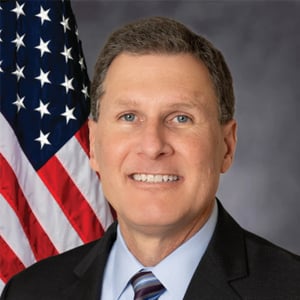
United States Attorney, Eastern District of California
Mr. Grant was appointed by Attorney General Pam Bondi to serve as the United States Attorney for the Eastern District of California beginning on August 11, 2025. Pursuant to 28 U.S.C. § 546(d), he was further appointed by the district court effective December 9, 2025.
Mr. Grant is a veteran of the Department of Justice, having served twice in Washington, D.C.: from 1991 to 1993 as an Attorney-Adviser in the Office of Legal Counsel, and from 2017 to 2021 as a Deputy Assistant Attorney General in the Environment and Natural Resources Division (ENRD). During his tenure at ENRD, he supervised more than a hundred Department litigators advancing the interests of the United States and its agencies in both enforcement and defensive matters, both civil and criminal.
In addition to his service in the Department, Mr. Grant has decades of experience in private practice in Washington, D.C. and Sacramento. That experience includes arguments in the U.S. Supreme Court, the California Supreme Court, and numerous other federal and state courts.
Mr. Grant served as a law clerk to Chief Justice Warren E. Burger (retired) and Associate Justice Clarence Thomas during the Supreme Court’s October 1994 Term. Earlier he served as a law clerk to Judge Edith H. Jones of the U.S. Court of Appeals for the Fifth Circuit in Houston, Texas.
Mr. Grant grew up in Modesto, California and raised his family in Sacramento County. He attended the University of California, Berkeley, from which he earned a bachelor’s degree in economics (1986) and a law degree (1990).
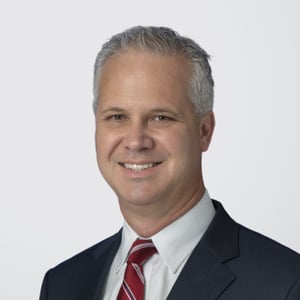
Partner, Hunton Andrews Kurth
Mr. Leopold is a Partner with the law firm of Hunton Andrews Kurth in Washington, DC. He is the former Senate-confirmed general counsel of the U.S. EPA from 2018-2020, and he previously was a litigator at the U.S. Department of Justice, Environment and Natural Resources Division form 2007-2013. As EPA General Counsel, he counseled on the development and defense of EPA’s most significant rulemakings, including the Affordable Clean Energy Rule, the Navigable Waters Protection Rule, and the Safe Affordable Fuel‐Efficient (SAFE) Vehicles Rule, as well as several pesticide actions. He was personally involved in defending EPA in litigation, including the County of Maui v. Hawaii Wildlife Fund in the U.S. Supreme Court. Mr. Leopold’s prior government service also includes working in Florida as general counsel of the Florida Department of Environmental Protection. He now represents clients in regulatory advocacy before federal agencies, litigates federal environmental actions, and defends clients with EPA enforcement issues.
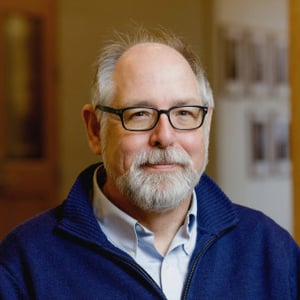
Emmett Visiting Assistant Clinical Professor of Law in Environmental Law, Harvard Law School
Andrew Mergen is a Visiting Assistant Clinical Professor of Law and Faculty Director of the Emmett Environmental Law & Policy Clinic. Prior to joining the Harvard Law School faculty, Andrew Mergen served in the Appellate Section of the Environment & Natural Resources Division (ENRD) at the United States Department of Justice. Professor Mergen began his career at the Justice Department in the Honors Program and concluded his career as Chief of ENRD’s Appellate Section. He has presented oral arguments in all 13 federal courts of appeals, including two en banc courts, and before several state intermediate and supreme courts. He has also worked on over a dozen merits cases in the Supreme Court of the United States. In addition, in 2009, Professor Mergen assisted the Office of White House Counsel on the confirmation of the Honorable Sonia Sotomayor as Associate Justice of the Supreme Court. During his career at the Justice Department, Professor Mergen received the Attorney General’s Award for Distinguished Service three times. He also received ENRD’s Muskee-Chafee Award, honoring his work’s significant contribution to protecting the environment.
Before entering clinical teaching, Professor Mergen taught at several law schools including, Harvard Law School (Advanced Environmental Law), the University of Michigan Law School (Natural Resources Law) and the William S. Richardson School of Law, University of Hawaii-Manoa (Administrative Law). Professor Mergen has written about federal water rights in “A Misplaced Sensitivity: The Draft Opinions in Wyoming v. United States” (68 Colo. L. Rev. 683 (1997), with Sylvia F. Liu); energy development on public lands in “Surface Tension: The Problem of Federal Private Split Estates” (33 Land & Water L. Rev. 419 (1998)); climate change and the Endangered Species Act in “The Role of Climate Change in ESA Listing Decisions” (53 Rocky Mt. Min. L. Fdn. 67 (2016), with Murray Feldman) and the accommodation of Native American sacred sites on federal land in “Finding the Path Forward for Indigenous Sacred and Cultural Spaces on Federal Public Land,” 68 Nat. Resources & Energy L. Inst. 32-1 (2022). Professor Mergen is a graduate of the University of Wisconsin—Madison and the George Washington University Law School.

Senior Vice President of Programs, Earthjustice
Sam Sankar is Earthjustice’s Senior Vice President for Programs. Sam leads our Program Leadership Team, which develops Earthjustice’s strategy for carrying out our mission through litigation, lobbying and regulatory advocacy, and communications.
Sam has been working on environmental issues throughout his career, which has included service as a line attorney at the Justice Department’s Environment and Natural Resources Division, as a senior executive at General Electric, and as deputy chief counsel of a presidential commission formed to investigate the 2010 Deepwater Horizon oil spill. He has also worked as a boat captain, machinist, and senior advisor to The Nature Conservancy.
Sam received his B.S. in civil engineering from Cornell University, an M.S. in environmental engineering from Stanford University, and his law degree from the University of California, Berkeley. After law school, he clerked for Judge William Fletcher of the Ninth Circuit, Judge Louis Pollak of the Eastern District of Pennsylvania, and Justice Sandra Day O’Connor of the U.S. Supreme Court.
Sam lives in Washington, D.C., with his wife and two children.
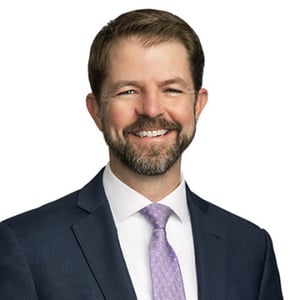
Partner, Baker Botts LLP
Drawing from two decades of experience in senior government, in-house corporate, and private law firm roles, Jeff Wood helps clients with federal enforcement, compliance, litigation, permitting, and policy challenges primarily in the energy and environmental fields.
Prior to joining Baker Botts, Mr. Wood served for almost two years as the Acting Assistant Attorney General (AAG) for the Justice Department's Environment and Natural Resources Division (ENRD). In that capacity, Mr. Wood led ENRD and its more than 600 attorneys and staff representing EPA, Departments of the Interior, Energy, and Defense, and other agencies in civil and criminal enforcement and defensive environmental, energy, and natural resources litigation.
As the top official in ENRD, Mr. Wood managed a complex organization with an annual budget exceeding $200 million and a docket of more than 6,000 cases and matters. E&E News noted that “Wood maintains a strong relationship with ENRD's career staff” (Greenwire, Oct. 31, 2018). He previously served on the staff of the United States Senate Committee on Environment and Public Works.
At the Justice Department, Mr. Wood oversaw the Division's civil and criminal enforcement programs and was responsible for developing legal strategies and approving briefs in key cases including filings before the Supreme Court and Courts of Appeals in coordination with the Office of Solicitor General. In this role, Mr. Wood held the highest level security clearance and worked closely with top leadership at DOJ, EPA, the Interior Department, USDA, the Energy Department, Transportation Department, FERC, NRC and across the Executive Branch, including the White House.
With many years of both private law firm and in-house legal experience, Mr. Wood has handled complex environmental enforcement, regulatory, policy, and litigation matters for electric utilities, energy companies, maritime companies, mining companies, real estate developers, financial institutions, industrial companies and manufacturers, business coalitions, associations, small businesses, and individual property owners. Drawing from his experiences in-house, Mr. Wood brings a common-sense, cost-effective, client-focused approach to his work every day.
With a strong national reputation, Mr. Wood is a frequent speaker on environmental law and policy matters, with recent speeches and presentations at the Environmental Law Institute, Harvard Law School, Vanderbilt Law School, American University Law School, American Bar Association Environmental Law Conferences, the Texas Environmental SuperConference, Air Force Judge Advocate General School's Advanced Environmental Law Course, Baker Institute's Center for Energy Studies (Rice University), and many other venues. He frequently appears in national news to share insights on significant environmental law and policy issues, including recent quotes in the New York Times, Washington Post, Wall Street Journal, Bloomberg, Law360, and E&E News, among others.
United States Attorney, Eastern District of California
Mr. Grant was appointed by Attorney General Pam Bondi to serve as the United States Attorney for the Eastern District of California beginning on August 11, 2025. Pursuant to 28 U.S.C. § 546(d), he was further appointed by the district court effective December 9, 2025.
Mr. Grant is a veteran of the Department of Justice, having served twice in Washington, D.C.: from 1991 to 1993 as an Attorney-Adviser in the Office of Legal Counsel, and from 2017 to 2021 as a Deputy Assistant Attorney General in the Environment and Natural Resources Division (ENRD). During his tenure at ENRD, he supervised more than a hundred Department litigators advancing the interests of the United States and its agencies in both enforcement and defensive matters, both civil and criminal.
In addition to his service in the Department, Mr. Grant has decades of experience in private practice in Washington, D.C. and Sacramento. That experience includes arguments in the U.S. Supreme Court, the California Supreme Court, and numerous other federal and state courts.
Mr. Grant served as a law clerk to Chief Justice Warren E. Burger (retired) and Associate Justice Clarence Thomas during the Supreme Court’s October 1994 Term. Earlier he served as a law clerk to Judge Edith H. Jones of the U.S. Court of Appeals for the Fifth Circuit in Houston, Texas.
Mr. Grant grew up in Modesto, California and raised his family in Sacramento County. He attended the University of California, Berkeley, from which he earned a bachelor’s degree in economics (1986) and a law degree (1990).
Partner, Hunton Andrews Kurth
Mr. Leopold is a Partner with the law firm of Hunton Andrews Kurth in Washington, DC. He is the former Senate-confirmed general counsel of the U.S. EPA from 2018-2020, and he previously was a litigator at the U.S. Department of Justice, Environment and Natural Resources Division form 2007-2013. As EPA General Counsel, he counseled on the development and defense of EPA’s most significant rulemakings, including the Affordable Clean Energy Rule, the Navigable Waters Protection Rule, and the Safe Affordable Fuel‐Efficient (SAFE) Vehicles Rule, as well as several pesticide actions. He was personally involved in defending EPA in litigation, including the County of Maui v. Hawaii Wildlife Fund in the U.S. Supreme Court. Mr. Leopold’s prior government service also includes working in Florida as general counsel of the Florida Department of Environmental Protection. He now represents clients in regulatory advocacy before federal agencies, litigates federal environmental actions, and defends clients with EPA enforcement issues.
Emmett Visiting Assistant Clinical Professor of Law in Environmental Law, Harvard Law School
Andrew Mergen is a Visiting Assistant Clinical Professor of Law and Faculty Director of the Emmett Environmental Law & Policy Clinic. Prior to joining the Harvard Law School faculty, Andrew Mergen served in the Appellate Section of the Environment & Natural Resources Division (ENRD) at the United States Department of Justice. Professor Mergen began his career at the Justice Department in the Honors Program and concluded his career as Chief of ENRD’s Appellate Section. He has presented oral arguments in all 13 federal courts of appeals, including two en banc courts, and before several state intermediate and supreme courts. He has also worked on over a dozen merits cases in the Supreme Court of the United States. In addition, in 2009, Professor Mergen assisted the Office of White House Counsel on the confirmation of the Honorable Sonia Sotomayor as Associate Justice of the Supreme Court. During his career at the Justice Department, Professor Mergen received the Attorney General’s Award for Distinguished Service three times. He also received ENRD’s Muskee-Chafee Award, honoring his work’s significant contribution to protecting the environment.
Before entering clinical teaching, Professor Mergen taught at several law schools including, Harvard Law School (Advanced Environmental Law), the University of Michigan Law School (Natural Resources Law) and the William S. Richardson School of Law, University of Hawaii-Manoa (Administrative Law). Professor Mergen has written about federal water rights in “A Misplaced Sensitivity: The Draft Opinions in Wyoming v. United States” (68 Colo. L. Rev. 683 (1997), with Sylvia F. Liu); energy development on public lands in “Surface Tension: The Problem of Federal Private Split Estates” (33 Land & Water L. Rev. 419 (1998)); climate change and the Endangered Species Act in “The Role of Climate Change in ESA Listing Decisions” (53 Rocky Mt. Min. L. Fdn. 67 (2016), with Murray Feldman) and the accommodation of Native American sacred sites on federal land in “Finding the Path Forward for Indigenous Sacred and Cultural Spaces on Federal Public Land,” 68 Nat. Resources & Energy L. Inst. 32-1 (2022). Professor Mergen is a graduate of the University of Wisconsin—Madison and the George Washington University Law School.
Senior Vice President of Programs, Earthjustice
Sam Sankar is Earthjustice’s Senior Vice President for Programs. Sam leads our Program Leadership Team, which develops Earthjustice’s strategy for carrying out our mission through litigation, lobbying and regulatory advocacy, and communications.
Sam has been working on environmental issues throughout his career, which has included service as a line attorney at the Justice Department’s Environment and Natural Resources Division, as a senior executive at General Electric, and as deputy chief counsel of a presidential commission formed to investigate the 2010 Deepwater Horizon oil spill. He has also worked as a boat captain, machinist, and senior advisor to The Nature Conservancy.
Sam received his B.S. in civil engineering from Cornell University, an M.S. in environmental engineering from Stanford University, and his law degree from the University of California, Berkeley. After law school, he clerked for Judge William Fletcher of the Ninth Circuit, Judge Louis Pollak of the Eastern District of Pennsylvania, and Justice Sandra Day O’Connor of the U.S. Supreme Court.
Sam lives in Washington, D.C., with his wife and two children.
Partner, Baker Botts LLP
Drawing from two decades of experience in senior government, in-house corporate, and private law firm roles, Jeff Wood helps clients with federal enforcement, compliance, litigation, permitting, and policy challenges primarily in the energy and environmental fields.
Prior to joining Baker Botts, Mr. Wood served for almost two years as the Acting Assistant Attorney General (AAG) for the Justice Department's Environment and Natural Resources Division (ENRD). In that capacity, Mr. Wood led ENRD and its more than 600 attorneys and staff representing EPA, Departments of the Interior, Energy, and Defense, and other agencies in civil and criminal enforcement and defensive environmental, energy, and natural resources litigation.
As the top official in ENRD, Mr. Wood managed a complex organization with an annual budget exceeding $200 million and a docket of more than 6,000 cases and matters. E&E News noted that “Wood maintains a strong relationship with ENRD's career staff” (Greenwire, Oct. 31, 2018). He previously served on the staff of the United States Senate Committee on Environment and Public Works.
At the Justice Department, Mr. Wood oversaw the Division's civil and criminal enforcement programs and was responsible for developing legal strategies and approving briefs in key cases including filings before the Supreme Court and Courts of Appeals in coordination with the Office of Solicitor General. In this role, Mr. Wood held the highest level security clearance and worked closely with top leadership at DOJ, EPA, the Interior Department, USDA, the Energy Department, Transportation Department, FERC, NRC and across the Executive Branch, including the White House.
With many years of both private law firm and in-house legal experience, Mr. Wood has handled complex environmental enforcement, regulatory, policy, and litigation matters for electric utilities, energy companies, maritime companies, mining companies, real estate developers, financial institutions, industrial companies and manufacturers, business coalitions, associations, small businesses, and individual property owners. Drawing from his experiences in-house, Mr. Wood brings a common-sense, cost-effective, client-focused approach to his work every day.
With a strong national reputation, Mr. Wood is a frequent speaker on environmental law and policy matters, with recent speeches and presentations at the Environmental Law Institute, Harvard Law School, Vanderbilt Law School, American University Law School, American Bar Association Environmental Law Conferences, the Texas Environmental SuperConference, Air Force Judge Advocate General School's Advanced Environmental Law Course, Baker Institute's Center for Energy Studies (Rice University), and many other venues. He frequently appears in national news to share insights on significant environmental law and policy issues, including recent quotes in the New York Times, Washington Post, Wall Street Journal, Bloomberg, Law360, and E&E News, among others.
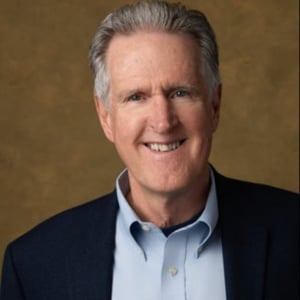
Senior Legal Counsel, Pacific Legal Foundation
Before becoming an attorney, James had been a productive member of society working as an exploration geologist in the late 1970s throughout the southwestern United States. However, after several years of dealing with irrational government bureaucrats and environmental policies untethered from reality, James decided that what the world needs is more lawyers — if they are willing to fight for rationality in regulatory regimes, property rights, and liberty.
James attended the University of Arizona College of Law in Tucson, where he served as an editor for the Law Review and received a J.D. degree in 1983. He had previously received a Masters degree in geological sciences from Brown University and an undergraduate degree from Hamilton College in New York. James received the Professional Achievement Award from the University of Arizona Alumni Association in 2018.
James has worked with Pacific Legal Foundation since 1983, litigating cases from Alaska to Florida. He is a member of the Federalist Society’s Environmental Law and Property Rights Practice Group’s Executive Committee, a member of the American College of Real Estate Lawyers, and an honorary member of Owners Counsel of America, an organization comprised of eminent domain attorneys who represent property owners. The Owners Counsel awarded James its Crystal Eagle award in 2013. In 2022, James was awarded the Brigham-Kanner Property Rights Prize at the William & Mary College of Law. The prize is awarded annually to an individual whose work has advanced the cause of property rights and has contributed to the overall awareness of the important role property rights occupy in the broader scheme of individual liberty.
In 2001, James successfully argued a major property rights case, Palazzolo v. Rhode Island, before the United States Supreme Court, a case which affirmed that rights in regulated property do not disappear when land is bought and sold. He has written extensively on all aspects of property rights and environmental law and frequently speaks on these subjects throughout the nation.
When James is not suing the government he enjoys skiing faster than he should, bicycling, hiking, swimming, and spending quality time with his wife, family, and grandchild.
Mr. Burling’s book Nowhere to Live: The Hidden Story of America’s Housing Crisis is available now on Amazon.
James is a member of the bar only in the states of Alaska and California.

Associate Dean and William T. Schwartz Distinguished Professor of Law, University of Wyoming College of Law
Sam Kalen joined the University of Wyoming College of Law faculty in 2009, and he is the William T. Schwartz Distinguished Professor of Law and Associate Dean, as well as the founder and co-director of the School’s Center for Law and Energy Resources in the Rockies. Sam earned his B.A. from Clark University in Worcester, Mass., his J.D. from Washington University School of Law in St. Louis, and he spent a year studying legal history and constitutional thought in a PhD program at the University of Virginia. Before joining UW, Sam taught as a visitor or adjunct at a number of other law schools, he also served in the Solicitor’s Office at the Department of the Interior during the Clinton administration, and he practiced for many years with a Washington, D.C., law firm. Immediately after law school, he clerked at the Missouri Supreme Court.
Sam is passionate about teaching and writing in a variety of areas that impact environmental, public lands and natural resources, energy, and administrative law. He spent years practicing in each of these areas, including working with Indigenous Peoples and Tribal Nations, and attempts to explore these areas in both the classroom and in his scholarship. He is the author and co-author of numerous law review articles, including one that was cited and quoted in a Supreme Court opinion. His most recent law review article appeared in Maryland Law Review, on "Public Land Management’s Future Place: Envisioning a Paradigm Shift" (Vol 82, page 240, 2023). He also is a co-author of the American Bar Association’s Endangered Species Basic Practice Series book (2nd edition), a co-author of Natural Resources Law and Policy (3rd ed. Foundation Press), and a co-author Energy Follies: Missteps, Fiascos, and Successes of America’s Energy Policy (Cambridge U. Press 2018).
Sam alternates teaching a variety of courses, including Environmental Law, Administrative Law, Legislation, Legal History, Public Lands & Natural Resources, Energy Law, Energy & Climate Law & Policy, and Indian Law. He also has taught field courses, including courses exploring energy and natural resource issues in Wyoming, as well as a course on Public Lands and Natural Resources in Grand Teton National Park. Professor Kalen also has worked collaboratively with the University’s Haub School of Environment and Natural Resources.
Partner, Baker Botts LLP
Drawing from two decades of experience in senior government, in-house corporate, and private law firm roles, Jeff Wood helps clients with federal enforcement, compliance, litigation, permitting, and policy challenges primarily in the energy and environmental fields.
Prior to joining Baker Botts, Mr. Wood served for almost two years as the Acting Assistant Attorney General (AAG) for the Justice Department's Environment and Natural Resources Division (ENRD). In that capacity, Mr. Wood led ENRD and its more than 600 attorneys and staff representing EPA, Departments of the Interior, Energy, and Defense, and other agencies in civil and criminal enforcement and defensive environmental, energy, and natural resources litigation.
As the top official in ENRD, Mr. Wood managed a complex organization with an annual budget exceeding $200 million and a docket of more than 6,000 cases and matters. E&E News noted that “Wood maintains a strong relationship with ENRD's career staff” (Greenwire, Oct. 31, 2018). He previously served on the staff of the United States Senate Committee on Environment and Public Works.
At the Justice Department, Mr. Wood oversaw the Division's civil and criminal enforcement programs and was responsible for developing legal strategies and approving briefs in key cases including filings before the Supreme Court and Courts of Appeals in coordination with the Office of Solicitor General. In this role, Mr. Wood held the highest level security clearance and worked closely with top leadership at DOJ, EPA, the Interior Department, USDA, the Energy Department, Transportation Department, FERC, NRC and across the Executive Branch, including the White House.
With many years of both private law firm and in-house legal experience, Mr. Wood has handled complex environmental enforcement, regulatory, policy, and litigation matters for electric utilities, energy companies, maritime companies, mining companies, real estate developers, financial institutions, industrial companies and manufacturers, business coalitions, associations, small businesses, and individual property owners. Drawing from his experiences in-house, Mr. Wood brings a common-sense, cost-effective, client-focused approach to his work every day.
With a strong national reputation, Mr. Wood is a frequent speaker on environmental law and policy matters, with recent speeches and presentations at the Environmental Law Institute, Harvard Law School, Vanderbilt Law School, American University Law School, American Bar Association Environmental Law Conferences, the Texas Environmental SuperConference, Air Force Judge Advocate General School's Advanced Environmental Law Course, Baker Institute's Center for Energy Studies (Rice University), and many other venues. He frequently appears in national news to share insights on significant environmental law and policy issues, including recent quotes in the New York Times, Washington Post, Wall Street Journal, Bloomberg, Law360, and E&E News, among others.

Vice President of Law & Policy, Property and Environment Research Center
Jonathan Wood is vice president of law and policy at the Property and Environment Research Center (PERC). An attorney, Jonathan has litigated environmental and property-rights cases in the Supreme Court of the United States, federal and state appellate courts, and trial courts across the country. His writing has appeared in the Wall Street Journal, Washington Post, National Review, Reason, and other outlets. And his research has been published in journals such as Environmental Law Reporter, Yale Journal on Regulation Notice & Comment, Pace Environmental Law Review, and California Western Law Review.
Prior to coming to PERC, Jonathan was a senior attorney at Pacific Legal Foundation, where he litigated cases concerning the Endangered Species Act, Clean Water Act, and other federal environmental laws. He was co-counsel for forest landowners in Weyerhaeuser Co. v. U.S. Fish and Wildlife Service, in which the Supreme Court ruled unanimously that private land could not be arbitrarily regulated as critical habitat under the ESA. He also led a successful effort to reform regulation of threatened species to better align the incentives of private landowners with the interests of rare species.
Jonathan has testified before several congressional committees on wildlife conservation and endangered species topics. He has also appeared on national television and radio, including NPR’s All Things Considered, C-Span’s Washington Journal, Stossel, Fox News, and Hill.TV.
Jonathan has a law degree from the New York University School of Law, a masters degree in economic policy from the London School of Economics, and a bachelor’s degree in economics from the University of Texas. He is on the executive committee for the Federalist Society’s Environmental Law and Property Rights Practice Group and a steering committee member for the Environmental Law Institute’s Emerging Leaders Initiative.
Senior Legal Counsel, Pacific Legal Foundation
Before becoming an attorney, James had been a productive member of society working as an exploration geologist in the late 1970s throughout the southwestern United States. However, after several years of dealing with irrational government bureaucrats and environmental policies untethered from reality, James decided that what the world needs is more lawyers — if they are willing to fight for rationality in regulatory regimes, property rights, and liberty.
James attended the University of Arizona College of Law in Tucson, where he served as an editor for the Law Review and received a J.D. degree in 1983. He had previously received a Masters degree in geological sciences from Brown University and an undergraduate degree from Hamilton College in New York. James received the Professional Achievement Award from the University of Arizona Alumni Association in 2018.
James has worked with Pacific Legal Foundation since 1983, litigating cases from Alaska to Florida. He is a member of the Federalist Society’s Environmental Law and Property Rights Practice Group’s Executive Committee, a member of the American College of Real Estate Lawyers, and an honorary member of Owners Counsel of America, an organization comprised of eminent domain attorneys who represent property owners. The Owners Counsel awarded James its Crystal Eagle award in 2013. In 2022, James was awarded the Brigham-Kanner Property Rights Prize at the William & Mary College of Law. The prize is awarded annually to an individual whose work has advanced the cause of property rights and has contributed to the overall awareness of the important role property rights occupy in the broader scheme of individual liberty.
In 2001, James successfully argued a major property rights case, Palazzolo v. Rhode Island, before the United States Supreme Court, a case which affirmed that rights in regulated property do not disappear when land is bought and sold. He has written extensively on all aspects of property rights and environmental law and frequently speaks on these subjects throughout the nation.
When James is not suing the government he enjoys skiing faster than he should, bicycling, hiking, swimming, and spending quality time with his wife, family, and grandchild.
Mr. Burling’s book Nowhere to Live: The Hidden Story of America’s Housing Crisis is available now on Amazon.
James is a member of the bar only in the states of Alaska and California.
Associate Dean and William T. Schwartz Distinguished Professor of Law, University of Wyoming College of Law
Sam Kalen joined the University of Wyoming College of Law faculty in 2009, and he is the William T. Schwartz Distinguished Professor of Law and Associate Dean, as well as the founder and co-director of the School’s Center for Law and Energy Resources in the Rockies. Sam earned his B.A. from Clark University in Worcester, Mass., his J.D. from Washington University School of Law in St. Louis, and he spent a year studying legal history and constitutional thought in a PhD program at the University of Virginia. Before joining UW, Sam taught as a visitor or adjunct at a number of other law schools, he also served in the Solicitor’s Office at the Department of the Interior during the Clinton administration, and he practiced for many years with a Washington, D.C., law firm. Immediately after law school, he clerked at the Missouri Supreme Court.
Sam is passionate about teaching and writing in a variety of areas that impact environmental, public lands and natural resources, energy, and administrative law. He spent years practicing in each of these areas, including working with Indigenous Peoples and Tribal Nations, and attempts to explore these areas in both the classroom and in his scholarship. He is the author and co-author of numerous law review articles, including one that was cited and quoted in a Supreme Court opinion. His most recent law review article appeared in Maryland Law Review, on "Public Land Management’s Future Place: Envisioning a Paradigm Shift" (Vol 82, page 240, 2023). He also is a co-author of the American Bar Association’s Endangered Species Basic Practice Series book (2nd edition), a co-author of Natural Resources Law and Policy (3rd ed. Foundation Press), and a co-author Energy Follies: Missteps, Fiascos, and Successes of America’s Energy Policy (Cambridge U. Press 2018).
Sam alternates teaching a variety of courses, including Environmental Law, Administrative Law, Legislation, Legal History, Public Lands & Natural Resources, Energy Law, Energy & Climate Law & Policy, and Indian Law. He also has taught field courses, including courses exploring energy and natural resource issues in Wyoming, as well as a course on Public Lands and Natural Resources in Grand Teton National Park. Professor Kalen also has worked collaboratively with the University’s Haub School of Environment and Natural Resources.
Partner, Baker Botts LLP
Drawing from two decades of experience in senior government, in-house corporate, and private law firm roles, Jeff Wood helps clients with federal enforcement, compliance, litigation, permitting, and policy challenges primarily in the energy and environmental fields.
Prior to joining Baker Botts, Mr. Wood served for almost two years as the Acting Assistant Attorney General (AAG) for the Justice Department's Environment and Natural Resources Division (ENRD). In that capacity, Mr. Wood led ENRD and its more than 600 attorneys and staff representing EPA, Departments of the Interior, Energy, and Defense, and other agencies in civil and criminal enforcement and defensive environmental, energy, and natural resources litigation.
As the top official in ENRD, Mr. Wood managed a complex organization with an annual budget exceeding $200 million and a docket of more than 6,000 cases and matters. E&E News noted that “Wood maintains a strong relationship with ENRD's career staff” (Greenwire, Oct. 31, 2018). He previously served on the staff of the United States Senate Committee on Environment and Public Works.
At the Justice Department, Mr. Wood oversaw the Division's civil and criminal enforcement programs and was responsible for developing legal strategies and approving briefs in key cases including filings before the Supreme Court and Courts of Appeals in coordination with the Office of Solicitor General. In this role, Mr. Wood held the highest level security clearance and worked closely with top leadership at DOJ, EPA, the Interior Department, USDA, the Energy Department, Transportation Department, FERC, NRC and across the Executive Branch, including the White House.
With many years of both private law firm and in-house legal experience, Mr. Wood has handled complex environmental enforcement, regulatory, policy, and litigation matters for electric utilities, energy companies, maritime companies, mining companies, real estate developers, financial institutions, industrial companies and manufacturers, business coalitions, associations, small businesses, and individual property owners. Drawing from his experiences in-house, Mr. Wood brings a common-sense, cost-effective, client-focused approach to his work every day.
With a strong national reputation, Mr. Wood is a frequent speaker on environmental law and policy matters, with recent speeches and presentations at the Environmental Law Institute, Harvard Law School, Vanderbilt Law School, American University Law School, American Bar Association Environmental Law Conferences, the Texas Environmental SuperConference, Air Force Judge Advocate General School's Advanced Environmental Law Course, Baker Institute's Center for Energy Studies (Rice University), and many other venues. He frequently appears in national news to share insights on significant environmental law and policy issues, including recent quotes in the New York Times, Washington Post, Wall Street Journal, Bloomberg, Law360, and E&E News, among others.
Vice President of Law & Policy, Property and Environment Research Center
Jonathan Wood is vice president of law and policy at the Property and Environment Research Center (PERC). An attorney, Jonathan has litigated environmental and property-rights cases in the Supreme Court of the United States, federal and state appellate courts, and trial courts across the country. His writing has appeared in the Wall Street Journal, Washington Post, National Review, Reason, and other outlets. And his research has been published in journals such as Environmental Law Reporter, Yale Journal on Regulation Notice & Comment, Pace Environmental Law Review, and California Western Law Review.
Prior to coming to PERC, Jonathan was a senior attorney at Pacific Legal Foundation, where he litigated cases concerning the Endangered Species Act, Clean Water Act, and other federal environmental laws. He was co-counsel for forest landowners in Weyerhaeuser Co. v. U.S. Fish and Wildlife Service, in which the Supreme Court ruled unanimously that private land could not be arbitrarily regulated as critical habitat under the ESA. He also led a successful effort to reform regulation of threatened species to better align the incentives of private landowners with the interests of rare species.
Jonathan has testified before several congressional committees on wildlife conservation and endangered species topics. He has also appeared on national television and radio, including NPR’s All Things Considered, C-Span’s Washington Journal, Stossel, Fox News, and Hill.TV.
Jonathan has a law degree from the New York University School of Law, a masters degree in economic policy from the London School of Economics, and a bachelor’s degree in economics from the University of Texas. He is on the executive committee for the Federalist Society’s Environmental Law and Property Rights Practice Group and a steering committee member for the Environmental Law Institute’s Emerging Leaders Initiative.

Partner, Earth & Water Law
Susan Bodine is a partner at Earth & Water Law.
Susan Bodine is a former Assistant Administrator for EPA’s Office of Enforcement and Compliance Assurance (OECA). Prior to this position, Susan served as Chief Counsel for the Senate Committee on Environment and Public Works and previously worked for the House Committee on Transportation and Infrastructure.
This is Susan’s second position at EPA, having served as Assistant Administrator for the Office of Solid Waste and Emergency Response (now the Office of Land and Emergency Management) from 2006 to 2009.
Susan has also practiced environmental law at Covington and Burling LLP and at Barnes and Thornburg LLP.
Susan is a graduate of Princeton University and the University of Pennsylvania School of Law.
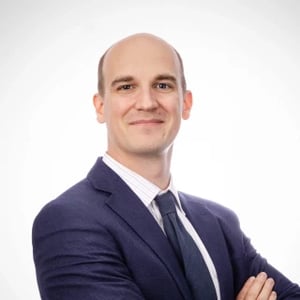
Managing Partner, Boyden Gray PLLC
Michael Buschbacher is the managing partner of Boyden Gray PLLC. He represents public and private companies, trade associations, non-profits, and individuals in high-stakes litigation and administrative proceedings, with a particular focus on environmental and energy matters.
In addition to trial-level work, Mr. Buschbacher maintains an active appellate practice, both as merits counsel and as counsel for amici curiae. He has written amicus briefs quoted by the Seventh and Ninth Circuits. And his Supreme Court advocacy has been cited by The New Yorker, The New York Times, and E&E News. Mr. Buschbacher’s commentary on legal issues has been published in The Wall Street Journal, Newsweek, and The American Conservative.
Before joining the firm, Mr. Buschbacher served at the U.S. Department of Justice as counsel to the Assistant Attorney General for the Environment and Natural Resources Division. There, he advised senior Department leadership, served as the lead attorney on several lawsuits, and helped draft policy memoranda for the Department on the proper scope and procedure for environmental enforcement. Prior to serving in the government, Mr. Buschbacher was an associate in the D.C. office of Sidley Austin.
Mr. Buschbacher is a former clerk to Judge Alice M. Batchelder of the U.S. Court of Appeals for the Sixth Circuit and to Magistrate Judge Paul R. Cherry of the U.S. District Court for the Northern District of Indiana.
Mr. Buschbacher holds a B.A. in Music and Germanic Studies from Indiana University and a J.D., magna cum laude, from Notre Dame Law School.
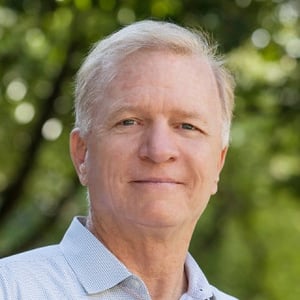
Executive Director, Environmental Integrity Project
Eric has served as Executive Director since he co-founded the organization in 2002. Previously, Eric served as director of EPA’s Office of Civil Enforcement from 1997 to 2002, where he received a Presidential Rank Award, as well as the John Marshall award from the Justice Department for his leadership in negotiating an industry-wide cleanup of petroleum refineries. Eric’s career at EPA began in 1990, and included an appointment as special assistant to the Deputy Administrator. Prior to his service at EPA, Eric worked as an environmental attorney for two and a half years at Morgan, Lewis & Bockius, and spent six years on Capitol Hill working for various members of Congress. Eric received his law degree from Georgetown University, and his B.A. from Vanderbilt University.
United States Senate, Alaska
Dan Sullivan was sworn in as Alaska’s eighth United States Senator on January 6, 2015. Sullivan serves on four Senate committees vital to Alaska: the Commerce, Science and Transportation Committee; the Armed Services Committee; the Environment and Public Works Committee; and the Veterans' Affairs Committee.
Prior to his election to the U.S. Senate, Sullivan served as Alaska’s Attorney General and Commissioner of the Alaska Department of Natural Resources. As Alaska's Attorney General, Sullivan’s number one priority was protecting Alaskans, their physical safety, financial well-being, and individual rights – particularly Alaska’s most vulnerable. During his tenure he spearheaded a comprehensive statewide strategy – the “Choose Respect” campaign – to combat Alaska’s high rates of domestic violence and sexual assault. Under Sullivan’s leadership, the Department of Law also undertook an aggressive strategy of initiating and intervening in litigation aimed at halting federal government overreach into the lives of Alaskans and their economy.
As Commissioner of the Alaska Department of Natural Resources, Sullivan managed one of the largest portfolios of oil, gas, minerals, renewable energy, timber, land, and water in the world. Working closely with Alaska’s Governor and state legislature, Sullivan developed numerous strategies that spurred responsible resource development, energy security, and a dramatic increase in good-paying jobs across a number of critical sectors in the Alaska economy. He also developed a comprehensive plan to streamline and reform the state’s regulatory and permitting system.
Sullivan is one of a select number of Alaskan attorneys who has held judicial clerkships on both the highest federal and state courts in Alaska. He served as a judicial law clerk for Judge Andrew Kleinfeld of the United States Court of Appeals for the Ninth Circuit in Fairbanks, Alaska and for Chief Justice Warren Matthews of the Alaska Supreme Court in Anchorage, Alaska. Sullivan also served as a judicial law clerk/intern for Judge James L. Buckley on the United States Court of Appeals for the District of Columbia Circuit.
Sullivan has a distinguished record of military and national security service. He is currently an infantry officer and Lieutenant Colonel in the U.S. Marine Corps Reserves. Over the past 21 years, Sullivan has served in a variety of command and staff billets on active duty and in the reserves, including: TRAP Force Commander and 81mm mortar Platoon Commander, 31st Marine Expeditionary Unit (Special Operations Capable); Weapons Company Executive Officer, Second Battalion, Fifth Marines; Commanding Officer, Delta Company, Anti-Terrorism Battalion; Executive Officer, Echo Company, Fourth Reconnaissance Battalion; and Commanding Officer, 6thAir Naval Gunfire Liaison Company (ANGLICO). In 2004, Sullivan was recalled to active duty for a year and a half to serve as a staff officer to the Commander of U.S. Central Command, General John Abizaid, spending substantial time deployed in the Middle East, the Horn of Africa, and Central Asia. In July 2013, Sullivan was recalled to active duty to serve with a Joint Task Force in Afghanistan focusing on dismantling terrorist networks and criminalizing the Taliban insurgency.
Sullivan served in the Administration of President George W. Bush as the U.S. Assistant Secretary of State for Economic, Energy, and Business under Secretary of State Condoleezza Rice. He focused on fighting terrorist financing, and implementing policies relating to international energy, economic, trade, finance, transportation, telecommunications, and Arctic issues. Sullivan also served as a Director in the International Economics Directorate of the National Security Council staff at the White House.
Sullivan earned a B.A. in Economics from Harvard University in 1987 and a joint law and Masters of Science in Foreign Service from Georgetown University in 1993. Dan and his wife Julie Fate Sullivan were married over 20 years ago in Julie’s hometown of Fairbanks, Alaska. They have three teenage daughters: Meghan, Isabella and Laurel.
Assistant Administrator (Nominee), United States Environmental Protection Agency
Professor David M. Uhlmann has been nominated by President Biden to serve as assistant administrator for enforcement and compliance assurance at the U.S. Environmental Protection agency. If confirmed by the United States Senate, Professor Uhlmann will take a leave of absence from Michigan Law so that he can lead federal criminal, civil, and administrative enforcement of the environmental laws, including the Clean Air Act, the Clean Water Act, hazardous waste laws, the Safe Drinking Water Act, and the Toxic Substances Control Act.
Professor Uhlmann is an internationally recognized expert on environmental law, leading authority on criminal enforcement of the environmental laws in the United States, and highly-regarded advocate for environmental stewardship and corporate sustainability programs. At Michigan Law he is the Jeffrey F. Liss Professor from Practice and the director of the Environmental Law and Policy Program. Professor Uhlmann previously served for 17 years as a federal prosecutor, including seven years as chief of the Environmental Crimes Section at the U.S. Department of Justice. In that role, he led prosecution of environmental and wildlife crimes nationwide, coordinated national legislative, policy, and training initiatives regarding criminal enforcement, and chaired the Justice Department’s Environmental Crimes Policy Committee. He earned a reputation for prosecuting polluters aggressively and fairly, presided over expansion of the environmental crimes program, and strengthened relationships with the Environmental Protection Agency, the Coast Guard, and other law enforcement partners. His work as lead prosecutor in United States v. Elias is chronicled in The Cyanide Canary. He received numerous Justice Department and EPA awards for his precedent-setting prosecutions, including the first environmental justice criminal trial.
Professor Uhlmann served from 2017 to 2020 as the Counselor to the Michigan Law alumnus Larry D. Thompson, the Compliance Monitor and Independent Auditor appointed by the Justice Department and EPA in the wake of the Volkswagen diesel scandal. In addition to advising the monitor, Professor Uhlmann made numerous presentations to the Volkswagen and Audi boards regarding environmental law in the United States, corporate accountability, and promoting environmental stewardship and an ethical culture. Professor Uhlmann has testified before Congress about the use of environmental protections to address shortcomings in worker safety laws and redressing environmental harm in corporate settlements; he has lectured widely about corporate crime and the exercise of prosecutorial discretion in cases involving corporate wrongdoing. Professor Uhlmann’s views on corporate accountability for the Gulf oil spill and the VW diesel scandal, the urgency of climate disruption, and the need to promote a sustainable future for all Americans have been published in The New York Times, The Atlantic, the American Constitution Society’s Issue Briefs series, and numerous top law reviews. Professor Uhlmann leads the efforts of nearly 400 Michigan Law students participating in the Environmental Crimes Project, the first comprehensive empirical study of criminal enforcement under U.S. pollution laws. At Michigan Law, Professor Uhlmann has hosted conferences, lecture series, and pro bono projects, led campus-wide sustainability efforts, and mentored a next generation of environmental lawyers committed to public service and public interest work.
Professor Uhlmann is a fellow in the American College of Environmental Lawyers, which invited him to join their Board of Regents earlier this year. He was named a “Conservation Hero” by the Michigan League of Conservation Voters and selected by the University of Michigan to be a Distinguished Faculty Fellow in Sustainability. Uhlmann received his JD from Yale Law School and his BA in history and political science with high honors from Swarthmore College. Following law school, he clerked for U.S. District Court Judge Marvin H. Shoob in Atlanta, Georgia.
Partner, Baker Botts LLP
Drawing from two decades of experience in senior government, in-house corporate, and private law firm roles, Jeff Wood helps clients with federal enforcement, compliance, litigation, permitting, and policy challenges primarily in the energy and environmental fields.
Prior to joining Baker Botts, Mr. Wood served for almost two years as the Acting Assistant Attorney General (AAG) for the Justice Department's Environment and Natural Resources Division (ENRD). In that capacity, Mr. Wood led ENRD and its more than 600 attorneys and staff representing EPA, Departments of the Interior, Energy, and Defense, and other agencies in civil and criminal enforcement and defensive environmental, energy, and natural resources litigation.
As the top official in ENRD, Mr. Wood managed a complex organization with an annual budget exceeding $200 million and a docket of more than 6,000 cases and matters. E&E News noted that “Wood maintains a strong relationship with ENRD's career staff” (Greenwire, Oct. 31, 2018). He previously served on the staff of the United States Senate Committee on Environment and Public Works.
At the Justice Department, Mr. Wood oversaw the Division's civil and criminal enforcement programs and was responsible for developing legal strategies and approving briefs in key cases including filings before the Supreme Court and Courts of Appeals in coordination with the Office of Solicitor General. In this role, Mr. Wood held the highest level security clearance and worked closely with top leadership at DOJ, EPA, the Interior Department, USDA, the Energy Department, Transportation Department, FERC, NRC and across the Executive Branch, including the White House.
With many years of both private law firm and in-house legal experience, Mr. Wood has handled complex environmental enforcement, regulatory, policy, and litigation matters for electric utilities, energy companies, maritime companies, mining companies, real estate developers, financial institutions, industrial companies and manufacturers, business coalitions, associations, small businesses, and individual property owners. Drawing from his experiences in-house, Mr. Wood brings a common-sense, cost-effective, client-focused approach to his work every day.
With a strong national reputation, Mr. Wood is a frequent speaker on environmental law and policy matters, with recent speeches and presentations at the Environmental Law Institute, Harvard Law School, Vanderbilt Law School, American University Law School, American Bar Association Environmental Law Conferences, the Texas Environmental SuperConference, Air Force Judge Advocate General School's Advanced Environmental Law Course, Baker Institute's Center for Energy Studies (Rice University), and many other venues. He frequently appears in national news to share insights on significant environmental law and policy issues, including recent quotes in the New York Times, Washington Post, Wall Street Journal, Bloomberg, Law360, and E&E News, among others.
Assistant Professor of Business Law, Michigan Ross School of Law
Jeremy Kress is an Assistant Professor of Business Law at Michigan Ross and Co-Faculty Director of the University of Michigan’s Center on Finance, Law & Policy. His research focuses on bank regulation, systemic risk, and financial stability. Professor Kress' written work has appeared or is forthcoming in the Duke Law Journal, Northwestern University Law Review, Southern California Law Review, and Yale Journal on Regulation, among other journals.
Before entering academia, Professor Kress was an attorney in the banking regulation and policy group at the Federal Reserve Board of Governors in Washington, D.C. In that capacity, he drafted rules to implement the Dodd-Frank Act and Basel III, and he advised the Board on the legal permissibility of bank mergers and acquisitions.
Professor Kress has testified before Congress and serves as a member of the Federal Reserve Bank of New York’s Education and Industry Forum on Financial Services Culture. He frequently comments on financial regulatory matters in the press. Professor Kress has been featured in media outlets including the Wall Street Journal, New York Times, Financial Times, Washington Post, Bloomberg News, NPR's Marketplace, Politico, Yahoo Finance, and American Banker.
Professor Kress teaches Legal Issues in Finance & Banking at Michigan Ross, and he has taught Financial Regulation at Michigan Law School. He was named one of Poets & Quants’ “Top 50 Undergraduate Professors of 2020” and won Michigan Ross’ Neary Teaching Excellence Award in 2019.
Professor Kress graduated cum laude from Harvard Law School and from the Harvard Kennedy School, where he was a Presidential Scholar. He holds a BBA from Michigan Ross.

Resident Scholar, American Enterprise Institute
Paul H. Kupiec is a resident scholar at the American Enterprise Institute (AEI), where he studies systemic risk and the management and regulations of banks and financial markets. He also follows the work of financial regulators such as the Federal Reserve and examines the impact of financial regulations on the US economy.
Before joining AEI, Kupiec was an associate director of the Division of Insurance and Research within the Center for Financial Research at the Federal Deposit Insurance Corporation (FDIC), where he oversaw research on bank risk measurement and the development of regulatory policies such as Basel III. Kupiec was also director of the Center for Financial Research at the FDIC and chairman of the Research Task Force of the Basel Committee on Banking Supervision. He has previously worked at the International Monetary Fund (IMF), Freddie Mac, J.P. Morgan, and for the Division of Research and Statistics at the Board of Governors of the Federal Reserve System.
Kupiec has edited many professional journals, including the Journal of Financial Services Research, Journal of Risk, and Journal of Investment Management.
He has a bachelor of science degree in economics from George Washington University and a doctorate in economics — with a specialization in finance, theory, and econometrics — from the University of Pennsylvania.

Associate Professor of Legal Studies & Business Ethics; Co-Director, Wharton Initiative on Financial Policy and Regulation, The Wharton School, University of Pennsylvania
Christina Parajon Skinner is an expert on financial regulation. Her research focuses on central banking, the debt markets, separation of powers, corporate governance, and law and macroeconomics. Professor Skinner’s work is international and comparative in scope, drawing on her experience as an academic and central bank lawyer in the United Kingdom. Her research has been published or is forthcoming in the Columbia Law Review, the Duke Law Journal, the Vanderbilt Law Review, and the Georgetown Law Journal, among other leading academic journals. Professor Skinner has also contributed to financial regulatory policy working groups, including those convened by the Federal Reserve Bank of New York, the Financial Stability Board, and the U.K. Banking Standards Board.
Prior to joining the faculty at Wharton, Professor Skinner served as legal counsel at the Bank of England, in the Financial Stability Division of the Bank’s Legal Directorate. Her work there focused principally on matters of bank resolution, financial market infrastructure, and macroprudential policy. Previously, Professor Skinner was an Academic Visitor at the University of Oxford, Faculty of Law and a Visiting Fellow at the London School of Economics, Law Department. From 2014-2016, she was a post-doctoral fellow and lecturer in Law at Columbia Law School.
Professor Skinner received her J.D. from Yale Law School, and an A.B. from the School of Public and International Affairs at Princeton University, with a concentration in international economics. She received certificates of proficiency in European Politics and Society, and Spanish Language and Culture.
She is married with five children.
Director, Stanford Graduate School of Business
Graham Steele is the director of the Corporations and Society Initiative at Stanford Graduate School of Business. Prior to joining Stanford GSB, Graham was a member of the staff of the Federal Reserve Bank of San Francisco.
From 2015 to 2017, Graham was the Minority Chief Counsel for the Senate Committee on Banking, Housing & Urban Affairs. From 2010 to 2015 he was a Legislative Assistant for United States Senator Sherrod Brown (D-OH), handling the Senator’s work as a member of the Senate Banking Committee. He also spent four years as the staff director of the Subcommittee on Financial Institutions & Consumer Protection. Prior to joining Senator Brown’s staff, Graham was a policy counsel at Public Citizen’s Congress Watch in Washington, D.C.
Graham received his bachelors degree in political science from the University of Rochester and his law degree from The George Washington University Law School. He is a member of the Massachusetts State Bar. He is originally from Brookline, Massachusetts.
Partner, Baker Botts LLP
Drawing from two decades of experience in senior government, in-house corporate, and private law firm roles, Jeff Wood helps clients with federal enforcement, compliance, litigation, permitting, and policy challenges primarily in the energy and environmental fields.
Prior to joining Baker Botts, Mr. Wood served for almost two years as the Acting Assistant Attorney General (AAG) for the Justice Department's Environment and Natural Resources Division (ENRD). In that capacity, Mr. Wood led ENRD and its more than 600 attorneys and staff representing EPA, Departments of the Interior, Energy, and Defense, and other agencies in civil and criminal enforcement and defensive environmental, energy, and natural resources litigation.
As the top official in ENRD, Mr. Wood managed a complex organization with an annual budget exceeding $200 million and a docket of more than 6,000 cases and matters. E&E News noted that “Wood maintains a strong relationship with ENRD's career staff” (Greenwire, Oct. 31, 2018). He previously served on the staff of the United States Senate Committee on Environment and Public Works.
At the Justice Department, Mr. Wood oversaw the Division's civil and criminal enforcement programs and was responsible for developing legal strategies and approving briefs in key cases including filings before the Supreme Court and Courts of Appeals in coordination with the Office of Solicitor General. In this role, Mr. Wood held the highest level security clearance and worked closely with top leadership at DOJ, EPA, the Interior Department, USDA, the Energy Department, Transportation Department, FERC, NRC and across the Executive Branch, including the White House.
With many years of both private law firm and in-house legal experience, Mr. Wood has handled complex environmental enforcement, regulatory, policy, and litigation matters for electric utilities, energy companies, maritime companies, mining companies, real estate developers, financial institutions, industrial companies and manufacturers, business coalitions, associations, small businesses, and individual property owners. Drawing from his experiences in-house, Mr. Wood brings a common-sense, cost-effective, client-focused approach to his work every day.
With a strong national reputation, Mr. Wood is a frequent speaker on environmental law and policy matters, with recent speeches and presentations at the Environmental Law Institute, Harvard Law School, Vanderbilt Law School, American University Law School, American Bar Association Environmental Law Conferences, the Texas Environmental SuperConference, Air Force Judge Advocate General School's Advanced Environmental Law Course, Baker Institute's Center for Energy Studies (Rice University), and many other venues. He frequently appears in national news to share insights on significant environmental law and policy issues, including recent quotes in the New York Times, Washington Post, Wall Street Journal, Bloomberg, Law360, and E&E News, among others.

An Environmental Law Revolution: Will DOGE and the Second Trump Administration Achieve Lasting Positive Change?
Eric Grant, Matthew Z. Leopold, Andrew Mergen, Sambhav Sankar, Jeffrey H. Wood
Theories of Presidential Power Series
Since Inauguration Day, President Trump and his Cabinet have taken a range of important executive...
An Environmental Law Revolution: Will DOGE and the Second Trump Administration Achieve Lasting Positive Change?
Eric Grant, Matthew Z. Leopold, Andrew Mergen, Sambhav Sankar, Jeffrey H. Wood
Theories of Presidential Power Series
Since Inauguration Day, President Trump and his Cabinet have taken a range of important executive...
Topics
The D.C. Circuit's Approach to Stays on EPA Rules
The D.C. Circuit rarely stays EPA rules as it considers challenges to them, and seldom...
The Public Lands Rule: Will A New “Conservation and Landscape Health” Paradigm for Federal Lands Survive Judicial Review?
James S. Burling, Sam Kalen, Jeffrey H. Wood, Jonathan Wood
The Bureau of Land Management (BLM) recently adopted comprehensive new land management regulations known as...
The Public Lands Rule: Will A New “Conservation and Landscape Health” Paradigm for Federal Lands Survive Judicial Review?
James S. Burling, Sam Kalen, Jeffrey H. Wood, Jonathan Wood
The Bureau of Land Management (BLM) recently adopted comprehensive new land management regulations known as...
Topics
Environmental Law Visits Bedford Falls at the National Lawyers Convention
It’s almost that time of year when TV channel-flippers (like me) invariably stumble across “It’s...
Environmental Enforcement: Policies, Priorities, and the Rule of Law
Susan P. Bodine, Michael Buschbacher, Eric Schaeffer, Dan Sullivan, David Uhlmann, Jeffrey H. Wood
Regulatory Transparency Project
Registration is now closed. We will take walk-ins at the door. Online attendees: the livestream...
Topics
Environmental Law After West Virginia v. EPA: Can the Biden Administration’s “Whole of Government” Approaches Survive Judicial Review?
On Saturday morning, a panel of distinguished scholars and practitioners will debate whether the Biden...
Topics
What May Be Lurking in the Future of Environmental Law After West Virginia v. EPA
In West Virginia v. EPA, decided in June, the Supreme Court struck down EPA’s attempt...
Breakout Panel: Climate Risk a New Regulatory Risk? Implications for Financial Regulatory Control of the Financial System
Jeremy Kress, Paul H. Kupiec, Christina P. Skinner, Graham Steele, Jeffrey H. Wood
Tenth Annual Executive Branch Review
Deploying a “whole-of-government approach” to climate change, the Biden Administration has sought to disincentivize the...