

Executive Vice President, Chief Legal Officer, Gates Corporation
Matthew R. A. Heiman joined the Company in May 2026 and has served as the Company’s Chief Legal Officer and Corporate Secretary since June 2026. As Chief Legal Officer, Mr. Heiman is responsible for all legal functions for Gates, including securities and corporate governance, M&A, litigation, commercial, regulatory, compliance, patents and trademarks, real estate, employment and labor, sustainability and environmental matters. Prior to joining Gates, Mr. Heiman held senior legal leadership roles at Waystar, where he served as Chief Legal & Administrative Officer from 2023 to 2025 and as General Counsel and Corporate Secretary from 2020 to 2023. Prior to that, he was with Johnson Controls, where he served as Vice President, Corporate Secretary, and Associate General Counsel. Mr. Heiman has been a Senior Fellow for the National Security Institute at George Mason University’s Antonin Scalia School of Law since 2018.
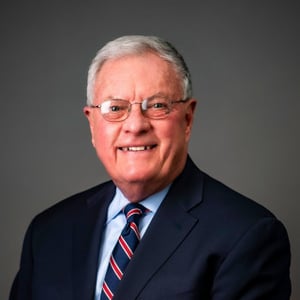
Co-Chair, Center for American Security
General Keith Kellogg was born in Dayton, Ohio, grew up in California, and 23 global and stateside military moves later, settled in Virginia, where he serves as co-Chair of the Center for American Security at AFPI. Kellogg is a highly decorated, retired three-star Army General and has extensive experience in the military and international business. Most recently, he was the National Security Advisor to former Vice President Mike Pence. He also served as the Chief of Staff and Executive Secretary of the National Security Council. Kellogg has wide-ranging experience in Europe, the Pacific, the Middle East, and Africa. He has served as an author and contributor on Fox News and CNN. Kellogg graduated from Santa Clara University with a degree in Political Science and went on to receive his master’s degree in International Studies from Kansas University. Kellogg and his wife, Paige, have three children, and love nothing more than having their four grandchildren stay with them and spoil them with anything they want. It drives their parents nuts.
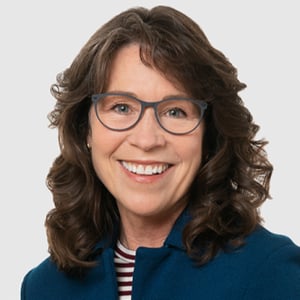
Director of Foreign and Defense Policy Studies, American Enterprise Institute
Kori Schake leads foreign and defense policy studies at the American Enterprise Institute. She is the author of Safe Passage: the Transition from British to American Hegemony, and with Jim Mattis the editor of Warriors and Citizens: American Views on Our Military. Dr. Schake has taught at Stanford, Johns Hopkins SAIS, and West Point. She has also had a distinguished career in government, working at the US State Department, the US Department of Defense, and the National Security Council.
Senior Counselor, The Cohen Group
Over the course of a 34-year career in the Foreign Service, Ambassador Jeffrey Davidow became one of America's most senior and well-respected diplomats. He has extensive experience in both Latin America and Africa, having served as US Ambassador to Mexico, Venezuela, and Zambia. He also headed the State Department's efforts in Latin America, serving as Assistant Secretary of State for Western Hemisphere Affairs. He retired in 2003 from the US State Department with the rank of Career Ambassador, the highest position in the Foreign Service which, by law, can be held by no more than five individuals at one time.
In 1993, President Clinton nominated Ambassador Davidow to be US Ambassador to Venezuela, a position he held until 1996. From 1996 to 1998, he was the State Department's chief policymaker for the Western Hemisphere, serving as Assistant Secretary of State for that region. President Clinton nominated Ambassador Davidow again in 1998, this time as US Ambassador to Mexico. Ambassador Davidow held this post from 1998 until 2002. After leaving Mexico in September 2002, he became a Visiting Fellow at the John F. Kennedy School of Government and the David Rockefeller Center for Latin American Studies.
Ambassador Davidow joined the US Foreign Service in 1969 and began his career at the American Embassy in Guatemala. He later became the head of the liaison office at the US Embassy in Zimbabwe and later returned to the US to act as the Director of the Office of Southern African Affairs in 1985. He also pursued a fellowship at Harvard University. In 1988, President Ronald Reagan nominated him to be US Ambassador to Zambia, a position he held until 1990. After his ambassadorship to Zambia, he served as Deputy Assistant Secretary of State for Africa. Ambassador Davidow spent many years involved in multiple negotiations in southern Africa - Angola, Namibia, Mozambique, Zimbabwe, and South Africa itself - that helped bring relative peace to that region.
Since leaving the Foreign Service, Ambassador Davidow has served as President of the Institute of the Americas in San Diego. Established in 1983, the Institute of the Americas is a leading institution in United States-Canada-Latin America cooperation. The Institute, best known for its energy and technology programs, brings together business and government leaders and representatives of civil society in forums designed to seek ways in which public and private entities can collaborate, clarify rules and regulations so private enterprise can flourish, promote the development of infrastructure through public-private funding, and implement effective policies for managing economic growth in Latin America.
Ambassador Davidow is also an accomplished public speaker and author. He has published articles in Foreign Policy and Foreign Affairs and authored two books, one on international negotiations and the other, The US and Mexico: The Bear and the Porcupine, a bestseller in Mexico and a prominent textbook at American universities. He speaks frequently on hemispheric policy and on Mexican developments for organizations such as the North American Forum, the Trilateral Commission, the Woodrow Wilson Center, the Pacific Council, the Chinese Academy of Social Sciences, the InterAmerican Development Bank, and many university and other groups. He also served as an adviser to President Obama for the 2009 Summit of the Americas.
A native of Massachusetts, Ambassador Davidow received a BA from the University of Massachusetts in 1965 and an MA from the University of Minnesota in 1967. He also did postgraduate work in India in 1968 on a Fulbright travel grant.
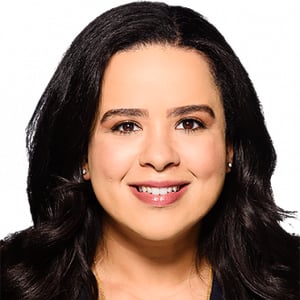
Senior Policy Analyst, Latin America and the Western Hemisphere, The Heritage Foundation
Ana Rosa Quintana leads The Heritage Foundation’s efforts on U.S. policy toward Latin America.
She has authored numerous policy studies included but not limited to Mexico, Central America, Cuba, Colombia and Venezuela. She has written articles for a wide range of outlets including The Atlantic, Real Clear World, the National Interest, The Hill, and various publications. She has presented at the State Department and other U.S. government agencies. Her work has been cited in media venues such as The Washington Post, The Wall Street Journal, Bloomberg Business, The Guardian, and she has been a commentator on media outlets like Fox News, MSNBC, and Al Jazeera. She has also testified multiple times before the U.S. Congress.
Quintana holds a Master of Arts degree in global affairs and a bachelor’s degree in political science, both from Florida International University. She also received certificates in National Security, Latin American and Caribbean studies. She was a scholar in the university’s Jack D. Gordon Institute for Public Policy and Citizenship Studies. She’s fluent in Spanish and studied in Minas Gerais, Brazil, on a scholarship sponsored by the Department of Defense.
She was formerly a National Security Fellow with the Foundation for Defense of Democracies and a former Penn Kemble Democracy Forum Fellow with the National Endowment for Democracy.
Prior to joining Heritage, she was a student trainee at the Defense Intelligence Agency. She also held internships at Virginia-based International Relief and Development, where she worked on rule of law issues in Latin America, and at the U.S. Agency for International Development, where she worked on civilian-military cooperation.
Of Counsel, DLA Piper LLP (US)
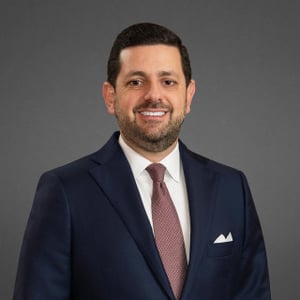
Harout J. Samra – a Board Certified Specialist in International Law – focuses his practice on international dispute resolution and arbitration matters, including international civil litigation in US courts.
Harout has represented clients from both the public and private sectors, including foreign governments, public officials and clients from a variety of industries. He has experience in international arbitrations administered under the International Chamber of Commerce (ICC), International Centre for Dispute Resolution (ICDR), United Nations Commission on International Trade Law (UNCITRAL), China International Economic and Trade Arbitration Commission (CIETAC), Bogota Chamber of Commerce, Madrid Court of Arbitration and International Centre for Settlement of Investment Disputes (ICSID) arbitration rules.
Harout currently serves as a member of the Florida Supreme Court Judicial Nominating Commission, by appointment of Governor Ron DeSantis. He previously served, by appointment of Governor Rick Scott, as a member of the Florida Third District Court of Appeal Judicial Nominating Commission, and was elected as Chair of the Commission from 2018-2019.

Professor Emeritus, Paul M. Hebert Law Center, Louisiana State University
In memoriam
Dr. John Baker is Professor Emeritus of Law, and previously the Dale E. Bennett Professor of Law, at Louisiana State University Law School. He is currently Visiting Professor at Peking University School of Transnational Law (via Zoom) and has been Visiting Professor at The Center for the Constitution, Georgetown Law School (2013-2020). He has also been a Visiting Fellow at Oriel College, the University of Oxford (2012-2014) and taught at Blackfriars Hall, Oxford in 2014. Dr. Baker has also been an adjunct Fellow at the Heritage Foundation (Spring, 2008) and a Distinguished Scholar at the Catholic University of America Law School (2011-12). He has taught at Tulane Law School, George Mason Law School, Pepperdine Law School, New York Law School, Hong Kong University, and the University of Dallas, School of Management and also taught and/or lectured in 17 foreign countries. Notable among his foreign visits are the
following: Visiting Professor at the University of Lyon III (France) (1999-2011); Visiting Professor at the Universidad de los Andes, Chile (2012), as a Fulbright Specialist (2006); and a Fulbright Scholar at various universities in the Philippines. Dr. Baker received his J.D., with honors, from the University of Michigan Law School and his B.A., magna cum laude, from the University of Dallas. He also earned a Ph.D. in Political Thought from the University of London. Baker has taught over a dozen different subjects, mostly courses in public law. His main areas of interest are Constitutional Law (particularly federalism and separation of powers), Criminal Law, Anti-Terrorism Law, International Law, Health Care Law, Mediation, and Comparative Law.
In addition to law review articles and book chapters, Dr. Baker’s academic publications include Hall's Criminal Law: Cases and Materials (with Benson, Force and George; 5th ed. Michie, 1993); An Introduction to the Law of the United States (ed. with Levasseur; University Press of America, 1992). He has also published on Forbes.com, FoxNews.com, in The Washington Times, and a number of times in The Wall Street Journal. He argues in federal court, including two oral arguments in the U.S. Supreme Court. For many years, he co-taught courses for the Federalist Society on separation of powers with the late Supreme Court Justice Antonin Scalia. In September 2016, he co-taught a Supreme Court seminar in China with Justice Samuel Alito. Following law school, he served as a law clerk in federal district court and as an assistant district attorney in New Orleans before joining LSU in 1975. While a professor, he has been as a consultant to USAID, USIA (since rolled into the State Department), the Justice Department, the U.S. Senate Judiciary Subcommittee on Separation of Powers, and the Office of Planning in the White House. He served on an ABA Task Force which issued the report, The Federalization of Crime (1998) and later as a consultant to the “Bi-Partisan Task Force on the Over- federalization of Crime” (2012-2014) created by the U.S. House Judiciary Subcommittee on Crime. Dr. Baker was a co-founder of the first iteration (1995) of Stratfor Inc., a global intelligence agency. He co-authored its first book: The Intelligence Edge (with Friedman, Friedman and Chapman; Crown Books/Random House 1997). In 2022, he began a short, weekly video podcast available on YouTube and Rumble, The Baker Brief.

Judge, United States Court of Appeals, Ninth Circuit
Judge Carlos Bea serves as a judge on the United States Court of Appeals for the Ninth Circuit. He received his Bachelor's Degree from Stanford University in 1956 and his J.D. from Stanford Law School in 1958. Judge Bea was born in San Sebastian, Spain, and immigrated with his family to Cuba in 1939. In 1952, he represented Cuba on the Cuban National basketball team in the Helsinki Olympics. Judge Bea became a naturalized citizen of the United States in 1958. He engaged in private practice in San Francisco, principally in the area of civil trials (jury and non-jury), from 1959-75 at Dunne, Phelps & Mills and from 1975-90 at Carlos Bea, A Law Corporation. He taught courses in civil litigation advocacy at Hastings College of Law and Stanford Law School. From 1990 to 2003, Judge Bea served as a judge of the San Francisco Superior Court. He was nominated by President George W. Bush to the United States Court of Appeals for the Ninth Circuit and was confirmed in 2003.
Judge Bea and his wife Louise reside in San Francisco, where they raised their four sons, Sebastian, Alexander, Nicholas, and Dominic.

Dr. John Eastman is the former Henry Salvatori Professor of Law & Community Service and former Dean at Chapman University's Dale E. Fowler School of Law, where he had been a member of the faculty since 1999, specializing in Constitutional Law, Legal History, and Property. He is a founding director of the Center for Constitutional Jurisprudence, a public interest law firm affiliated with the Claremont Institute that he founded in 1999. He has a Ph.D. in Government from the Claremont Graduate School and a J.D. from the University of Chicago Law School, and a B.A. in Politics and Economics from the University of Dallas. He serves as the Chairman of the Board of the National Organization for Marriage.
Prior to joining the Chapman law faculty, Dr. Eastman served as a law clerk to the Honorable Clarence Thomas, Associate Justice, Supreme Court of the United States, and to the Honorable J. Michael Luttig, Judge, United States Court of Appeals for the Fourth Circuit and practiced law with the national law firm of Kirkland & Ellis. Dr. Eastman has also represented numerous clients in important constitutional law matters and has argued before the Supreme Court. On behalf of the Claremont Institute Center for Constitutional Jurisprudence, he has participated as amicus curiae before the Supreme Court of the United States, U.S. Courts of Appeals, and State Supreme Courts in more than one hundred cases of constitutional significance, including Boy Scouts of America v. Dale, Zelman v. Simmons-Harris (the school vouchers case), Kelo v. New London, Ct. (eminent domain), and Van Orden v. Perry (the 10 Commandments case). He has also appeared as an expert legal commentator on numerous television and radio programs, including C-SPAN, Fox News, PBS, NewsHour, and The O'Reilly Factor.
A.N. Yiannopoulos Professor in Comparative Law, Tulane University Law School
Professor of Law and Director, Program in Law and Government, Vanderbilt University Law School
Rob Mikos specializes in federalism and criminal law issues. His most recent scholarship analyzes the power struggles between the state and federal governments and their implications for law and public policy, addressing issues ranging from marijuana legalization to immigration reform. He has also written on the political safeguards of federalism, accuracy in criminal sanctions, the economics of private precautions against crime, and remedies in private law. Professor Mikos earned his J.D. summa cum laude from the University of Michigan Law School, where he served as articles editor on the Michigan Law Review and won numerous awards, including the Henry M. Bates Memorial Scholarship. After graduation, he clerked for Chief Judge Michael Boudin of the U.S. Court of Appeals for the First Circuit. Professor Mikos has taught at the University of California at Davis, where he was twice nominated for the school’s Distinguished Teaching Award, as well as at Notre Dame and the University of Michigan. He teaches courses in Federalism, Constitutional Law, Federal Criminal Law, and Drug Law and Policy.
Professor, Florida State University College of Law
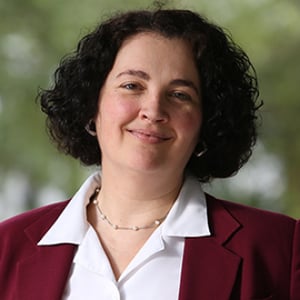
Professor Ryan teaches in the areas of environmental and natural resources law, property and land use, water law, negotiation, and federalism. She has presented widely in the United States, Europe, and Asia, including the Ninth Circuit Judicial Conference, the National Association of Attorneys General, the United States Forest Service, and the United Nations Institute for Training and Research. She has advised National Sea Grant multilevel governance studies involving Chesapeake Bay and consulted with multiple institutions on developing sustainability programs. She has been featured in the Chicago Tribune, the London Financial Times, the Associated Press, Thomson-Reuters Beijing, the Huffington Post, National Public Radio, and NBC and CBS Television News. She is the author of many scholarly works, including Federalism and the Tug of War Within (Oxford University Press 2012).
Prior to law school, Ryan served as a U.S. Forest Service ranger on the Mono Lake District of the Inyo National Forest, east of Yosemite National Park. While a law student, she was an editor of the Harvard Law Review and a Hewlett Fellow at the Harvard Negotiation Research Project. She clerked for Judge James R. Browning, of the U.S. Court of Appeals for the Ninth Circuit, before practicing environmental, land use, and local government law in San Francisco. She began her academic career at the College of William & Mary, and then joined the faculty at the Northwestern School of Law at Lewis & Clark College. Ryan served as a Fulbright Scholar in China, where she taught American law, studied Chinese governance, and lectured throughout the country. She has also lectured at universities in Japan, Vietnam and India. She joined the Florida State University College of Law faculty in 2015.

U.S. Out of Africa? Then What?
Last month, the last American troops left Niger, following withdrawal of U.S. troops in Chad...
Panel II: The Future of Foreign Policy: What Should be the US’s Grand Strategy Going Forward
Matthew R. A. Heiman, Lt. General Keith Kellogg, Kori Schake
With conflict rising across the globe and a presidential election this year, the United States...
USMCA in Practice: What it Means for the Future of US-Mexico Relations
Jeffrey Davidow, Ana Rosa Quintana, Harout J. Samra
The new United States-Mexico-Canada Agreement (USMCA) entered into force in the United States on July...
Topics
The United Nations' Misguided Approach to Healthcare Access
Intellectual property (IP) protections promote innovation and spur research and development into life-saving drugs and...
Federalism: Competitive versus Cooperative Federalism
John S. Baker, Carlos T. Bea, John C. Eastman, Jörg Fedtke, Robert Mikos, Erin Ryan
The American system of federalism is at the heart of many disagreements over important constitutional...