
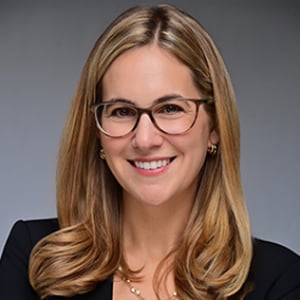
Partner, Clement & Murphy
A seasoned trial and appellate advocate, Danielle Sassoon represents individuals and corporations in high-stakes white-collar, appellate, and commercial matters. Danielle joined the firm after serving as interim United States Attorney for the Southern District of New York, following over eight years as an Assistant United States Attorney. During her time at the SDNY, Danielle handled some of the Office’s most sensitive and consequential cases. As Chief of Appeals for the Criminal Division, Danielle supervised and argued dozens of appeals before the U.S. Court of Appeals for the Second Circuit. As a leader in the SDNY, Danielle oversaw hundreds of cases, advised on complex legal and strategic issues, and managed over 200 lawyers across the SDNY’s civil and criminal divisions.
As a prosecutor, Danielle handled high-profile investigations and criminal trials, including against Samuel Bankman-Fried, for perpetrating a multi-billion-dollar cryptocurrency fraud, and against Lawrence Ray, for racketeering conspiracy, sex trafficking, and other offenses related to his abuse and exploitation of his daughter’s college roommates. As a prosecutor, Danielle was awarded the FBI Director’s Award for Outstanding Criminal Investigation and the Women in Federal Law Enforcement Top Prosecutor Award.
Following law school, Danielle clerked for Judge J. Harvie Wilkinson III of the U.S. Court of Appeals for the Fourth Circuit and for Associate Justice Antonin Scalia of the U.S. Supreme Court.
Danielle serves as a Senior Fellow at the Manhattan Institute.
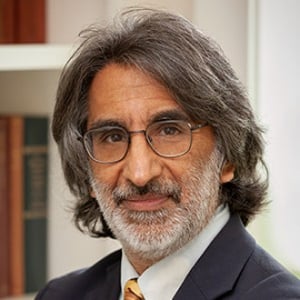
Sterling Professor of Law, Yale Law School
Akhil Reed Amar is Sterling Professor of Law and Political Science at Yale University, where he teaches constitutional law in both Yale College and Yale Law School. After graduating from Yale College, summa cum laude, in 1980 and from Yale Law School in 1984, and clerking for Judge (later Justice) Stephen Breyer, Amar joined the Yale faculty in 1985 at the age of 26. He is Yale’s only living professor to have won the University’s unofficial triple crown — the Sterling Chair for scholarship, the DeVane Medal for teaching, and the Lamar Award for alumni service.
Amar’s work has won awards from both the American Bar Association and the Federalist Society, and he has been cited by Supreme Court justices across the spectrum in more than 50 cases — tops among scholars under age 70. According to both Fred Shapiro’s landmark 2021 study of lifetime scholarly citations and Heinonline’s most recent tabulation of lifetime law-review citations, Amar is America’s second most-cited legal scholar still under age 70. He is a member of the American Academy of Arts and Sciences and has written widely for popular publications, including The New York Times, The Washington Post, The Wall Street Journal, Time, and The Atlantic. He was an informal consultant to the popular TV show The West Wing and his scholarship has been showcased on many broadcasts, including The Colbert Report, Morning Joe, AC360, Velshi, Fox News @ Night with Shannon Bream, Fareed Zakaria GPS, Erin Burnett Outfront, and Constitution USA with Peter Sagal.
He is the author of more than a hundred law review articles and several books, including The Bill of Rights (1998 — winner of the Yale University Press Governors’ Award), America’s Constitution (2005 — winner of the ABA’s Silver Gavel Award), America’s Unwritten Constitution (2012 — named one of the year’s 100 best nonfiction books by The Washington Post), and The Constitution Today (2016 — named one of the year’s top ten nonfiction books by Time magazine). The first volume of his ambitious trilogy on American constitutional history from the Founding to the present, The Words That Made Us: America’s Constitutional Conversation, 1760-1840, came out in May 2021. The second volume, Born Equal: Remaking America’s Constitution, 1840-1920, will be published in September 2025 and is already available for pre-order. All together, his nonfiction books have won two starred reviews from Publishers Weekly and three starred reviews from Kirkus—tops, it is believed, among legal scholars under age 70. Together with Vikram David Amar (YLS ’88), he has a bi-weekly column on the Supreme Court on the distinguished website SCOTUSblog. Along with Andy Lipka, he co-hosts a popular and free weekly podcast, Amarica’s Constitution, whose listeners are eligible for CLE credit in most American jurisdictions. A wide assortment of his articles and op-eds and video links to many of his public lectures and free online courses may be found at akhilamar.com.
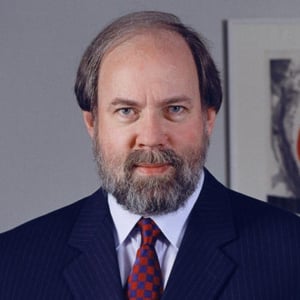
U.S. Court of Appeals, Seventh Circuit
Frank H. Easterbrook is a judge of the United States Court of Appeals for the Seventh Circuit and a Senior Lecturer at the Law School of the University of Chicago. He was Chief Judge from 2006–2013. Before joining the court in 1985, he was the Lee andBrena Freeman Professor of Law at the University of Chicago, where he taught and wrote in antitrust, securities, corporate law, jurisprudence, and criminal procedure. He has published The Economic Structure of Corporate Law (with Daniel R. Fischel) and about 100 scholarly articles. He served as Co-Editor of the Journal of Law and Economics from 1982 to 1991 and as a member of the Judicial Conference’s Standing Committee on Rules of Practice and Procedure from 1991 to 1997. Before joining the faculty of the Law School in 1979, Judge Easterbrook was Deputy Solicitor General of the United States. He holds degrees from Swarthmore College (B.A. with high honors, 1970) and the University of Chicago (J.D. cum laude, 1973), and is a member of the American Academy of Arts and Sciences, the American Law Institute, the Mont Pelerin Society, Phi Beta Kappa, and the Order of the Coif.
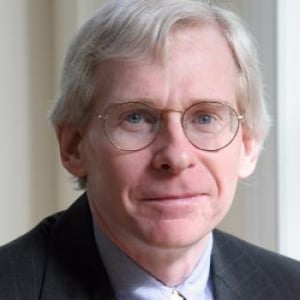
James Madison Distinguished Professor of Law and Class of 1941 Research Professor of Law, University of Virginia School of Law
Professor John C. Harrison is the James Madison Distinguished Professor of Law and Class of 1941 Research Professor of Law at the University of Virginia School of Law. He joined the faculty at University of Virginia in 1993 as an associate professor of law after a distinguished career with the U.S. Department of Justice. His teaching subjects include constitutional history, federal courts, remedies, corporations, civil procedure, legislation and property. In 2008 he was on leave from the Law School to serve as counselor on international law in the Office of the Legal Adviser at the U.S. Department of State.
A 1977 graduate of the University of Virginia, Harrison earned his law degree in 1980 at Yale, where he served as editor of the Yale Law Journal and editor and articles editor of the Yale Studies in World Public Order. He was an associate at Patton Boggs & Blow in Washington, D.C., and clerked for Judge Robert Bork on the U.S. Court of Appeals for the District of Columbia Circuit. He worked with the Department of Justice from 1983-93, serving in numerous capacities, including deputy assistant attorney general in the Office of Legal Counsel (1990-93).
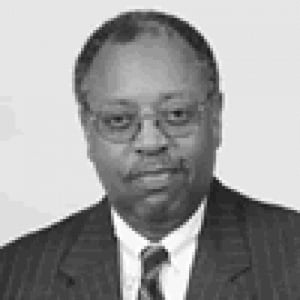
United States District Court, Eastern District of New York
William Francis Kuntz II is a United States district judge on the United States District Court for the Eastern District of New York. The United States Senate confirmed him on October 3, 2011. He received his judicial commission on October 4, 2011.
Judge Kuntz was a commercial litigator in private practice in New York, and had been a partner at the law firm of Baker Hostetler since 2005. He has been a partner at several law firms in New York during his career, including Torys LLP from 2001 to 2004, Seward & Kissel LLP from 1994 to 2001, and Milgrim, Thomajan, Jacobs & Lee from 1986 to 1994. In addition, he worked as Counsel at Constantine Cannon from 2004 to 2005, and as an associate at Shearman & Sterling LLP from 1978 to 1986. Since 1987, Kuntz has served as a Commissioner of the New York City Civilian Complaint Review Board, supervising hundreds of investigations into allegations of abuse by members of the New York City Police Department. From 1987 to 2003, he was an adjunct associate professor of law at Brooklyn Law School, teaching a course in American legal history. He received his A.B. from Harvard College in 1972 and his J.D. from Harvard Law School in 1977. Kuntz also received an M.A. and Ph.D. in American History from Harvard University in 1974 and 1979, respectively.
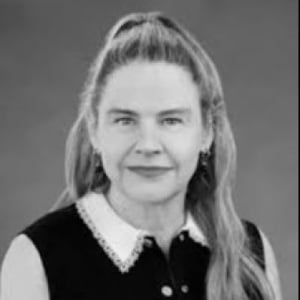
Ralph V. Whitworth Professor in Law, Georgetown University Law Center
Professor Nourse is one of the nation’s leading scholars of Congress, the separation of powers, and statutory interpretation. In addition to her scholarship, she has practiced as an attorney in the White House, the Department of Justice, the Senate, and in private practice. The story of her pioneering work on gender equality is told in Equal: Women Reshape American Law.
Her most recent book is “The Impeachments of Donald Trump: An Introduction to Constitutional Argument” (West 2021). In 2016, Harvard Press published her Misreading Law, Misreading Democracy, on the limits of textualism. She is one of the most-cited scholars on interpretation in the country and has recently co-authored Yale’s revised leading casebook, Statutes, Regulation & Interpretation (West 2024).
Professor Nourse has published widely on the power of the President and the separation of powers, Reclaiming the Constitutional Text from Originalism: The Case of Executive Power, 106 Calif. L. Rev. 1 (2018), and constitutional rights, In Reckless Hands (Norton 2008), the story of Skinner v. Oklahoma and American eugenics.
President Biden appointed Professor Nourse to serve as Vice-Chair of the United States Commission on Civil Rights in 2023, with her term expiring in 2029.
Professor Nourse previously served as Chief Counsel to then Vice President Biden under the Obama Administration. Prior to that role, she practiced as an appellate litigator in the Department of Justice and as Special Counsel to the Senate Judiciary Committee.
Professor Nourse has held chairs at Emory University and the University of Wisconsin. She has been a visiting professor at Yale, NYU, University of Maryland, and Northwestern.
She began her legal career in New York, clerking for legendary trial judge of the Southern District of New York, Edward Weinfeld, and practicing at Paul, Weiss, Rifkind Wharton & Garrison. She left private practice to serve as junior counsel to the Senate-Iran Contra Committee. After serving on the appellate staff of the Civil Division, she was hired as a legal expert for then Senator Joseph Biden.
Professor Nourse is the co-Founder of the Supreme Court Interpretation Lab, which uses big data to analyze trends in Supreme Court analyses. She formerly served as Executive Director of the Georgetown Law Center on Congressional Studies.

Executive Vice President, The Federalist Society
Dean Reuter is Executive Vice President at the Federalist Society for Law and Public Policy Studies. He has served in two federal government agency Offices of the Inspector General, as Counsel to the Inspector General and Deputy Inspector General, responsible for policing the use of federal funds granted and contracted through those agencies. As such, he helped conduct and oversee criminal investigations across the country. He is the principal author of the non-fiction book, The Hidden Nazi: The Untold Story of America's Deal with the Devil, and editor of Liberty’s Nemesis: The Unchecked Expansion of the State and Confronting Terror: 9/11 and the Future of American National Security. He was appointed by the President and served as Vice-Chairman of the Board of Directors of the Corporation for National and Community Service, and recently served as an appointee on the U.S. Commission on Presidential Scholars. He is a graduate of Hood College (BA with Honors) and the University of Maryland School of Law.
Sterling Professor of Law, Yale Law School
Akhil Reed Amar is Sterling Professor of Law and Political Science at Yale University, where he teaches constitutional law in both Yale College and Yale Law School. After graduating from Yale College, summa cum laude, in 1980 and from Yale Law School in 1984, and clerking for Judge (later Justice) Stephen Breyer, Amar joined the Yale faculty in 1985 at the age of 26. He is Yale’s only living professor to have won the University’s unofficial triple crown — the Sterling Chair for scholarship, the DeVane Medal for teaching, and the Lamar Award for alumni service.
Amar’s work has won awards from both the American Bar Association and the Federalist Society, and he has been cited by Supreme Court justices across the spectrum in more than 50 cases — tops among scholars under age 70. According to both Fred Shapiro’s landmark 2021 study of lifetime scholarly citations and Heinonline’s most recent tabulation of lifetime law-review citations, Amar is America’s second most-cited legal scholar still under age 70. He is a member of the American Academy of Arts and Sciences and has written widely for popular publications, including The New York Times, The Washington Post, The Wall Street Journal, Time, and The Atlantic. He was an informal consultant to the popular TV show The West Wing and his scholarship has been showcased on many broadcasts, including The Colbert Report, Morning Joe, AC360, Velshi, Fox News @ Night with Shannon Bream, Fareed Zakaria GPS, Erin Burnett Outfront, and Constitution USA with Peter Sagal.
He is the author of more than a hundred law review articles and several books, including The Bill of Rights (1998 — winner of the Yale University Press Governors’ Award), America’s Constitution (2005 — winner of the ABA’s Silver Gavel Award), America’s Unwritten Constitution (2012 — named one of the year’s 100 best nonfiction books by The Washington Post), and The Constitution Today (2016 — named one of the year’s top ten nonfiction books by Time magazine). The first volume of his ambitious trilogy on American constitutional history from the Founding to the present, The Words That Made Us: America’s Constitutional Conversation, 1760-1840, came out in May 2021. The second volume, Born Equal: Remaking America’s Constitution, 1840-1920, will be published in September 2025 and is already available for pre-order. All together, his nonfiction books have won two starred reviews from Publishers Weekly and three starred reviews from Kirkus—tops, it is believed, among legal scholars under age 70. Together with Vikram David Amar (YLS ’88), he has a bi-weekly column on the Supreme Court on the distinguished website SCOTUSblog. Along with Andy Lipka, he co-hosts a popular and free weekly podcast, Amarica’s Constitution, whose listeners are eligible for CLE credit in most American jurisdictions. A wide assortment of his articles and op-eds and video links to many of his public lectures and free online courses may be found at akhilamar.com.
U.S. Court of Appeals, Seventh Circuit
Frank H. Easterbrook is a judge of the United States Court of Appeals for the Seventh Circuit and a Senior Lecturer at the Law School of the University of Chicago. He was Chief Judge from 2006–2013. Before joining the court in 1985, he was the Lee andBrena Freeman Professor of Law at the University of Chicago, where he taught and wrote in antitrust, securities, corporate law, jurisprudence, and criminal procedure. He has published The Economic Structure of Corporate Law (with Daniel R. Fischel) and about 100 scholarly articles. He served as Co-Editor of the Journal of Law and Economics from 1982 to 1991 and as a member of the Judicial Conference’s Standing Committee on Rules of Practice and Procedure from 1991 to 1997. Before joining the faculty of the Law School in 1979, Judge Easterbrook was Deputy Solicitor General of the United States. He holds degrees from Swarthmore College (B.A. with high honors, 1970) and the University of Chicago (J.D. cum laude, 1973), and is a member of the American Academy of Arts and Sciences, the American Law Institute, the Mont Pelerin Society, Phi Beta Kappa, and the Order of the Coif.
James Madison Distinguished Professor of Law and Class of 1941 Research Professor of Law, University of Virginia School of Law
Professor John C. Harrison is the James Madison Distinguished Professor of Law and Class of 1941 Research Professor of Law at the University of Virginia School of Law. He joined the faculty at University of Virginia in 1993 as an associate professor of law after a distinguished career with the U.S. Department of Justice. His teaching subjects include constitutional history, federal courts, remedies, corporations, civil procedure, legislation and property. In 2008 he was on leave from the Law School to serve as counselor on international law in the Office of the Legal Adviser at the U.S. Department of State.
A 1977 graduate of the University of Virginia, Harrison earned his law degree in 1980 at Yale, where he served as editor of the Yale Law Journal and editor and articles editor of the Yale Studies in World Public Order. He was an associate at Patton Boggs & Blow in Washington, D.C., and clerked for Judge Robert Bork on the U.S. Court of Appeals for the District of Columbia Circuit. He worked with the Department of Justice from 1983-93, serving in numerous capacities, including deputy assistant attorney general in the Office of Legal Counsel (1990-93).
United States District Court, Eastern District of New York
William Francis Kuntz II is a United States district judge on the United States District Court for the Eastern District of New York. The United States Senate confirmed him on October 3, 2011. He received his judicial commission on October 4, 2011.
Judge Kuntz was a commercial litigator in private practice in New York, and had been a partner at the law firm of Baker Hostetler since 2005. He has been a partner at several law firms in New York during his career, including Torys LLP from 2001 to 2004, Seward & Kissel LLP from 1994 to 2001, and Milgrim, Thomajan, Jacobs & Lee from 1986 to 1994. In addition, he worked as Counsel at Constantine Cannon from 2004 to 2005, and as an associate at Shearman & Sterling LLP from 1978 to 1986. Since 1987, Kuntz has served as a Commissioner of the New York City Civilian Complaint Review Board, supervising hundreds of investigations into allegations of abuse by members of the New York City Police Department. From 1987 to 2003, he was an adjunct associate professor of law at Brooklyn Law School, teaching a course in American legal history. He received his A.B. from Harvard College in 1972 and his J.D. from Harvard Law School in 1977. Kuntz also received an M.A. and Ph.D. in American History from Harvard University in 1974 and 1979, respectively.
Ralph V. Whitworth Professor in Law, Georgetown University Law Center
Professor Nourse is one of the nation’s leading scholars of Congress, the separation of powers, and statutory interpretation. In addition to her scholarship, she has practiced as an attorney in the White House, the Department of Justice, the Senate, and in private practice. The story of her pioneering work on gender equality is told in Equal: Women Reshape American Law.
Her most recent book is “The Impeachments of Donald Trump: An Introduction to Constitutional Argument” (West 2021). In 2016, Harvard Press published her Misreading Law, Misreading Democracy, on the limits of textualism. She is one of the most-cited scholars on interpretation in the country and has recently co-authored Yale’s revised leading casebook, Statutes, Regulation & Interpretation (West 2024).
Professor Nourse has published widely on the power of the President and the separation of powers, Reclaiming the Constitutional Text from Originalism: The Case of Executive Power, 106 Calif. L. Rev. 1 (2018), and constitutional rights, In Reckless Hands (Norton 2008), the story of Skinner v. Oklahoma and American eugenics.
President Biden appointed Professor Nourse to serve as Vice-Chair of the United States Commission on Civil Rights in 2023, with her term expiring in 2029.
Professor Nourse previously served as Chief Counsel to then Vice President Biden under the Obama Administration. Prior to that role, she practiced as an appellate litigator in the Department of Justice and as Special Counsel to the Senate Judiciary Committee.
Professor Nourse has held chairs at Emory University and the University of Wisconsin. She has been a visiting professor at Yale, NYU, University of Maryland, and Northwestern.
She began her legal career in New York, clerking for legendary trial judge of the Southern District of New York, Edward Weinfeld, and practicing at Paul, Weiss, Rifkind Wharton & Garrison. She left private practice to serve as junior counsel to the Senate-Iran Contra Committee. After serving on the appellate staff of the Civil Division, she was hired as a legal expert for then Senator Joseph Biden.
Professor Nourse is the co-Founder of the Supreme Court Interpretation Lab, which uses big data to analyze trends in Supreme Court analyses. She formerly served as Executive Director of the Georgetown Law Center on Congressional Studies.
Executive Vice President, The Federalist Society
Dean Reuter is Executive Vice President at the Federalist Society for Law and Public Policy Studies. He has served in two federal government agency Offices of the Inspector General, as Counsel to the Inspector General and Deputy Inspector General, responsible for policing the use of federal funds granted and contracted through those agencies. As such, he helped conduct and oversee criminal investigations across the country. He is the principal author of the non-fiction book, The Hidden Nazi: The Untold Story of America's Deal with the Devil, and editor of Liberty’s Nemesis: The Unchecked Expansion of the State and Confronting Terror: 9/11 and the Future of American National Security. He was appointed by the President and served as Vice-Chairman of the Board of Directors of the Corporation for National and Community Service, and recently served as an appointee on the U.S. Commission on Presidential Scholars. He is a graduate of Hood College (BA with Honors) and the University of Maryland School of Law.
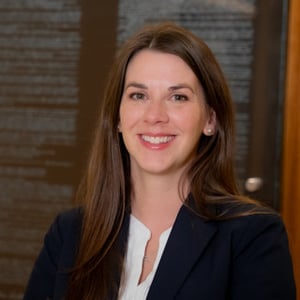
Vice President, Practice Groups, The Federalist Society
Adjunct Professor, George Washington University
Howard W. Cox is a former federal prosecutor, criminal investigator and Senior Intelligence Service officer. After almost 40 years of federal service, he retired as the Assistant Inspector General for Investigations of the Central Intelligence Agency. In this capacity, Mr. Cox supervised criminal, civil and administrative investigations conducted by the Office of Inspector General (OIG). Prior to his employment with the CIA, Mr. Cox was the Assistant Deputy Chief of the Computer Crime and Intellectual Property Section of the Department of Justice, where he was responsible for supervising criminal prosecutions of federal hacking and identity theft cases. While at the Department of Justice, Mr. Cox received the Attorney General’s Distinguished Service Award.
Prior to his service with the Department of Justice, Mr. Cox served as a manager, attorney and criminal investigator at OIG offices at the US Postal Service, the Department of Defense, and the General Services Administration. He also served as Staff Counsel for the US Senate Permanent Subcommittee on Investigations. Prior to his federal civilian service, Mr. Cox was also a Captain and trial attorney in the US Army’s Judge Advocate General’s Corps. Mr. Cox also served as Law Secretary to the Hon. Sherwin D. Lester, NJ Superior Court.
Mr. Cox is an adjunct professor at George Washington University, where he teaches graduate level courses in computer forensics. He is also an instructor with the Graduate School USA, and the Federal Law Enforcement Training Center, where he teaches courses related to procurement fraud and electronic search and seizure. Mr. Cox received his AB degree from Seton Hall University, South Orange, NJ. He received his law degree from Georgetown University Law Center, Washington, DC.
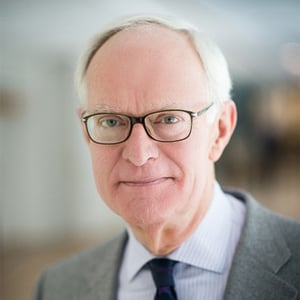
Distinguished Fellow, Hudson Institute
Christopher DeMuth is a distinguished fellow at Hudson Institute. He was president of the American Enterprise Institute for Public Policy Research (AEI) from 1986 to 2008 and was the D.C. Searle Senior Fellow at AEI from 2008 to 2011.
Mr. DeMuth was raised in Kenilworth, Illinois, and attended the Lawrenceville School (1964), Harvard College (A.B. 1968), and the University of Chicago Law School (J.D. 1973). He served as staff assistant to President Richard M. Nixon from 1969 to 1970, working first for Daniel P. Moynihan (then assistant to the President for Urban Affairs) on urban policy matters and then as chairman of the White House Task Force on Environmental Policy. Following law school, he practiced regulatory, antitrust, and general corporate law with Sidley & Austin in Chicago (1973-1976) and was associate general counsel of the Consolidated Rail Corporation (Conrail) in Philadelphia (1976-1977).
From 1977 to 1981, Mr. DeMuth was lecturer in public policy at the Kennedy School of Government at Harvard University, and director of the Harvard Faculty Project on Regulation. There he taught courses on law, economics, and regulatory policy and conducted and sponsored research on health, safety, environmental, and economic regulation.
Returning to Washington in 1981, Mr. DeMuth served as administrator for information and regulatory affairs in the U.S. Office of Management and Budget, and as executive director of the Presidential Task Force on Regulatory Relief during President Ronald Reagan’s first term of office. From 1984 to 1986, he was managing director of Lexecon Inc., a law-and-economics consulting firm; in 1986, he was also publisher and editor-in-chief of Regulation magazine. He was elected president of the American Enterprise Institute in December 1986.
Many of Mr. DeMuth’s articles, lectures, and occasional talks are posted on his website (https://www.ccdemuth.com).
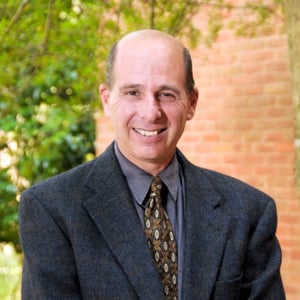
Sandra Day O'Connor Professor of Law & Professor of Government, William & Mary Law School
Neal Devins is the Sandra Day O’Connor Professor of Law and Professor of Government at the College of William and Mary. He is the author of several books and more than 100 articles and book chapters on courts, constitutional law, and law & politics. His books include The Company They Keep (Oxford 2019) (with Larry Baum), The Democratic Constitution (Oxford 2d ed. 2015) (with Louis Fisher), Political Dynamics of Constitutional Law (West 6th ed. 2019) (with Louis Fisher), and Shaping Constitutional Values: The Supreme Court, Elected Government, and the Abortion Dispute (Johns Hopkins University Press 1996). His articles have appeared in The Yale Law Journal, The Stanford Law Review, The Columbia Law Review, The Michigan Law Review, The California Law Review, The Virginia Law Review, The University of Pennsylvania Law Review, The University of Chicago Law Review, The New York University Law Review, and several other journals and magazines. Professor Devins is also the author of op-eds appearing in The Wall Street Journal, The New York Times, The Washington Post, The Los Angeles Times, Slate, and several other newspapers. He has testified before House and Senate committees on budget reform and the separation of powers. Professor Devins is a graduate of Georgetown University (A.B. 1978) and Vanderbilt Law School (J.D. 1982).
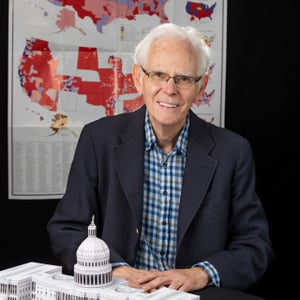
David Mayhew, Sterling Professor of Political Science Emeritus, Yale University
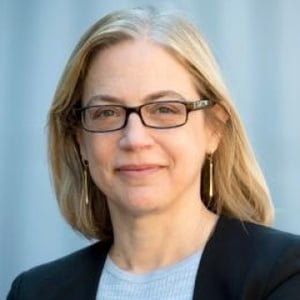
Harlan Fiske Stone Professor of Constitutional Law, Columbia Law School
A leading administrative and constitutional law scholar, Gillian Metzger ’96 writes and teaches in the areas of administrative law, constitutional law, and federal courts, with an emphasis on federalism and privatization. In 2023-2024, she served as Acting Assistant Attorney General and Deputy Assistant Attorney General in the Office of Legal Counsel in the Department of Justice.
Metzger's recent work covers topics ranging from constitutional attacks on the administrative state to appropriations, administrative law under the Roberts Court, and the role of administrative agencies in a polarized world. In 2015, Metzger won the American Bar Association Administrative Law Section Annual Scholarship Award for “The Constitutional Duty to Supervise,” which examined presidential control and oversight of the modern administrative state. She is a co-editor of Gellhorn & Byse’s Administrative Law: Cases and Comments, 13th ed. (Foundation Press, 2023), a seminal administrative law casebook.
Professor Metzger was recently elected to the American Academy of Arts & Sciences and is a Senior Fellow of the Administrative Conference of the United States. In 2020, she was awarded Columbia University's Faculty Mentorship Award and in 2014, the Law School’s graduating class awarded Metzger the Willis L.M. Reese Prize for Excellence in Teaching, recognizing, among many other accomplishments, her commitment to mentoring new generations of law students.
In 2012, Metzger helped launch Columbia Law School’s Center for Constitutional Governance (CCG)—where she now serves as faculty director—a nonpartisan legal and policy organization devoted to the study of constitutional structure and authority. CCG brings together a diverse group of constitutional scholars to explore policy areas such as health care, civil rights, immigration, financial regulation, and national security.
Metzger also has co-authored and filed numerous amicus briefs in major constitutional and administrative law challenges before the Supreme Court and other courts. Most recently, Metzger filed a brief in Seila Law Center v. CFPB, a separation of powers challenge, and in Kisor v. Wilkie, a case involving judicial deference to agencies. She has also filed briefs in cases involving reproductive rights and the Affordable Care Act, among others.
Previously, Metzger served as vice dean of intellectual life at Columbia Law School. Before joining the Law School, she worked as an attorney with the Brennan Center for Justice. Metzger also clerked for U.S. Supreme Court Justice Ruth Bader Ginsburg ’59 and Judge Patricia M. Wald of the U.S. Circuit Court of Appeals for the District of Columbia. In 2018, Metzger moderated a panel discussion with Justice Ginsburg on impact litigation at Columbia Law School.
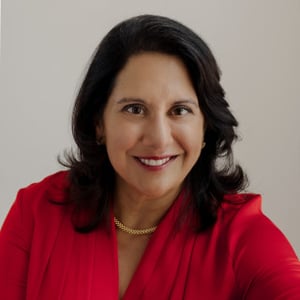
Judge, United States Court of Appeals, District of Columbia Circuit
Judge Rao was appointed to the United States Court of Appeals for the District of Columbia Circuit in March 2019. She graduated from Yale College in 1995 and the University of Chicago Law School in 1999. Following graduation, she served as a law clerk to Judge J. Harvie Wilkinson III of the U.S. Court of Appeals for the Fourth Circuit and, in the 2001 October Term, as law clerk to Justice Clarence Thomas of the U.S. Supreme Court. Between her clerkships, Judge Rao served as counsel for nominations and constitutional law to the U.S. Senate Committee on the Judiciary. In 2002, she joined the international arbitration group of Clifford Chance LLP in London, England. From 2005-2006, she served as Special Assistant and Associate White House Counsel to President George W. Bush. From 2006 to 2017, Judge Rao was a professor at the Antonin Scalia Law School at George Mason University, where she taught constitutional law, legislation and statutory interpretation, and the history and foundations of the administrative state. In 2014, she founded the Center for the Study of the Administrative State, a non-profit Center that promotes academic scholarship and public policy debates about administrative law. In July 2017, she was appointed to serve as the Administrator of the Office of Information and Regulatory Affairs in the Office of Management Budget. She served in this position until her appointment to the D.C. Circuit.
Executive Vice President, The Federalist Society
Dean Reuter is Executive Vice President at the Federalist Society for Law and Public Policy Studies. He has served in two federal government agency Offices of the Inspector General, as Counsel to the Inspector General and Deputy Inspector General, responsible for policing the use of federal funds granted and contracted through those agencies. As such, he helped conduct and oversee criminal investigations across the country. He is the principal author of the non-fiction book, The Hidden Nazi: The Untold Story of America's Deal with the Devil, and editor of Liberty’s Nemesis: The Unchecked Expansion of the State and Confronting Terror: 9/11 and the Future of American National Security. He was appointed by the President and served as Vice-Chairman of the Board of Directors of the Corporation for National and Community Service, and recently served as an appointee on the U.S. Commission on Presidential Scholars. He is a graduate of Hood College (BA with Honors) and the University of Maryland School of Law.
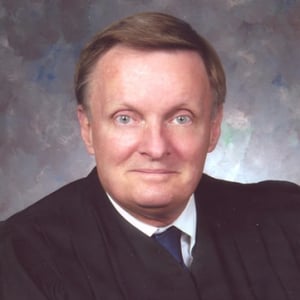
Judge, United States Court of Appeals, Fifth Circuit
Judge Smith was appointed U.S. Circuit Judge for the Fifth Circuit by President Reagan and entered on duty in January 1988. He attended public schools in Lubbock, Texas, and graduated from Yale University, receiving a B.A. in 1969 and a J.D. in 1972.
Judge Smith was a Law Clerk to U.S. District Judge Halbert Woodward, Northern District of Texas, 1972-1973; with the Houston law firm of Fulbright & Jaworski as an Associate, 1973-1981, and as Partner, 1981-1984; and as City Attorney, City of Houston, 1984-1988. He was Chairman, Civil Service Commission, City of Houston, 1982-1984; and a Director, Harris County Housing Authority, 1978-1980.
Judge Smith lives in Houston and is married to Mary Jane Smith and has four children: Ruth Ann, Clark, J.J., and Brandon. He formerly was Chair of the Advisory Committee on Federal Rules of Evidence of the Judicial Conference of the United States. He assists LexisNexis/Matthew Bender & Co. in periodic revisions of several chapters of Moore’s Federal Practice.
Distinguished Fellow, Hudson Institute
Christopher DeMuth is a distinguished fellow at Hudson Institute. He was president of the American Enterprise Institute for Public Policy Research (AEI) from 1986 to 2008 and was the D.C. Searle Senior Fellow at AEI from 2008 to 2011.
Mr. DeMuth was raised in Kenilworth, Illinois, and attended the Lawrenceville School (1964), Harvard College (A.B. 1968), and the University of Chicago Law School (J.D. 1973). He served as staff assistant to President Richard M. Nixon from 1969 to 1970, working first for Daniel P. Moynihan (then assistant to the President for Urban Affairs) on urban policy matters and then as chairman of the White House Task Force on Environmental Policy. Following law school, he practiced regulatory, antitrust, and general corporate law with Sidley & Austin in Chicago (1973-1976) and was associate general counsel of the Consolidated Rail Corporation (Conrail) in Philadelphia (1976-1977).
From 1977 to 1981, Mr. DeMuth was lecturer in public policy at the Kennedy School of Government at Harvard University, and director of the Harvard Faculty Project on Regulation. There he taught courses on law, economics, and regulatory policy and conducted and sponsored research on health, safety, environmental, and economic regulation.
Returning to Washington in 1981, Mr. DeMuth served as administrator for information and regulatory affairs in the U.S. Office of Management and Budget, and as executive director of the Presidential Task Force on Regulatory Relief during President Ronald Reagan’s first term of office. From 1984 to 1986, he was managing director of Lexecon Inc., a law-and-economics consulting firm; in 1986, he was also publisher and editor-in-chief of Regulation magazine. He was elected president of the American Enterprise Institute in December 1986.
Many of Mr. DeMuth’s articles, lectures, and occasional talks are posted on his website (https://www.ccdemuth.com).
Sandra Day O'Connor Professor of Law & Professor of Government, William & Mary Law School
Neal Devins is the Sandra Day O’Connor Professor of Law and Professor of Government at the College of William and Mary. He is the author of several books and more than 100 articles and book chapters on courts, constitutional law, and law & politics. His books include The Company They Keep (Oxford 2019) (with Larry Baum), The Democratic Constitution (Oxford 2d ed. 2015) (with Louis Fisher), Political Dynamics of Constitutional Law (West 6th ed. 2019) (with Louis Fisher), and Shaping Constitutional Values: The Supreme Court, Elected Government, and the Abortion Dispute (Johns Hopkins University Press 1996). His articles have appeared in The Yale Law Journal, The Stanford Law Review, The Columbia Law Review, The Michigan Law Review, The California Law Review, The Virginia Law Review, The University of Pennsylvania Law Review, The University of Chicago Law Review, The New York University Law Review, and several other journals and magazines. Professor Devins is also the author of op-eds appearing in The Wall Street Journal, The New York Times, The Washington Post, The Los Angeles Times, Slate, and several other newspapers. He has testified before House and Senate committees on budget reform and the separation of powers. Professor Devins is a graduate of Georgetown University (A.B. 1978) and Vanderbilt Law School (J.D. 1982).
David Mayhew, Sterling Professor of Political Science Emeritus, Yale University
Harlan Fiske Stone Professor of Constitutional Law, Columbia Law School
A leading administrative and constitutional law scholar, Gillian Metzger ’96 writes and teaches in the areas of administrative law, constitutional law, and federal courts, with an emphasis on federalism and privatization. In 2023-2024, she served as Acting Assistant Attorney General and Deputy Assistant Attorney General in the Office of Legal Counsel in the Department of Justice.
Metzger's recent work covers topics ranging from constitutional attacks on the administrative state to appropriations, administrative law under the Roberts Court, and the role of administrative agencies in a polarized world. In 2015, Metzger won the American Bar Association Administrative Law Section Annual Scholarship Award for “The Constitutional Duty to Supervise,” which examined presidential control and oversight of the modern administrative state. She is a co-editor of Gellhorn & Byse’s Administrative Law: Cases and Comments, 13th ed. (Foundation Press, 2023), a seminal administrative law casebook.
Professor Metzger was recently elected to the American Academy of Arts & Sciences and is a Senior Fellow of the Administrative Conference of the United States. In 2020, she was awarded Columbia University's Faculty Mentorship Award and in 2014, the Law School’s graduating class awarded Metzger the Willis L.M. Reese Prize for Excellence in Teaching, recognizing, among many other accomplishments, her commitment to mentoring new generations of law students.
In 2012, Metzger helped launch Columbia Law School’s Center for Constitutional Governance (CCG)—where she now serves as faculty director—a nonpartisan legal and policy organization devoted to the study of constitutional structure and authority. CCG brings together a diverse group of constitutional scholars to explore policy areas such as health care, civil rights, immigration, financial regulation, and national security.
Metzger also has co-authored and filed numerous amicus briefs in major constitutional and administrative law challenges before the Supreme Court and other courts. Most recently, Metzger filed a brief in Seila Law Center v. CFPB, a separation of powers challenge, and in Kisor v. Wilkie, a case involving judicial deference to agencies. She has also filed briefs in cases involving reproductive rights and the Affordable Care Act, among others.
Previously, Metzger served as vice dean of intellectual life at Columbia Law School. Before joining the Law School, she worked as an attorney with the Brennan Center for Justice. Metzger also clerked for U.S. Supreme Court Justice Ruth Bader Ginsburg ’59 and Judge Patricia M. Wald of the U.S. Circuit Court of Appeals for the District of Columbia. In 2018, Metzger moderated a panel discussion with Justice Ginsburg on impact litigation at Columbia Law School.
Judge, United States Court of Appeals, District of Columbia Circuit
Judge Rao was appointed to the United States Court of Appeals for the District of Columbia Circuit in March 2019. She graduated from Yale College in 1995 and the University of Chicago Law School in 1999. Following graduation, she served as a law clerk to Judge J. Harvie Wilkinson III of the U.S. Court of Appeals for the Fourth Circuit and, in the 2001 October Term, as law clerk to Justice Clarence Thomas of the U.S. Supreme Court. Between her clerkships, Judge Rao served as counsel for nominations and constitutional law to the U.S. Senate Committee on the Judiciary. In 2002, she joined the international arbitration group of Clifford Chance LLP in London, England. From 2005-2006, she served as Special Assistant and Associate White House Counsel to President George W. Bush. From 2006 to 2017, Judge Rao was a professor at the Antonin Scalia Law School at George Mason University, where she taught constitutional law, legislation and statutory interpretation, and the history and foundations of the administrative state. In 2014, she founded the Center for the Study of the Administrative State, a non-profit Center that promotes academic scholarship and public policy debates about administrative law. In July 2017, she was appointed to serve as the Administrator of the Office of Information and Regulatory Affairs in the Office of Management Budget. She served in this position until her appointment to the D.C. Circuit.
Executive Vice President, The Federalist Society
Dean Reuter is Executive Vice President at the Federalist Society for Law and Public Policy Studies. He has served in two federal government agency Offices of the Inspector General, as Counsel to the Inspector General and Deputy Inspector General, responsible for policing the use of federal funds granted and contracted through those agencies. As such, he helped conduct and oversee criminal investigations across the country. He is the principal author of the non-fiction book, The Hidden Nazi: The Untold Story of America's Deal with the Devil, and editor of Liberty’s Nemesis: The Unchecked Expansion of the State and Confronting Terror: 9/11 and the Future of American National Security. He was appointed by the President and served as Vice-Chairman of the Board of Directors of the Corporation for National and Community Service, and recently served as an appointee on the U.S. Commission on Presidential Scholars. He is a graduate of Hood College (BA with Honors) and the University of Maryland School of Law.
Judge, United States Court of Appeals, Fifth Circuit
Judge Smith was appointed U.S. Circuit Judge for the Fifth Circuit by President Reagan and entered on duty in January 1988. He attended public schools in Lubbock, Texas, and graduated from Yale University, receiving a B.A. in 1969 and a J.D. in 1972.
Judge Smith was a Law Clerk to U.S. District Judge Halbert Woodward, Northern District of Texas, 1972-1973; with the Houston law firm of Fulbright & Jaworski as an Associate, 1973-1981, and as Partner, 1981-1984; and as City Attorney, City of Houston, 1984-1988. He was Chairman, Civil Service Commission, City of Houston, 1982-1984; and a Director, Harris County Housing Authority, 1978-1980.
Judge Smith lives in Houston and is married to Mary Jane Smith and has four children: Ruth Ann, Clark, J.J., and Brandon. He formerly was Chair of the Advisory Committee on Federal Rules of Evidence of the Judicial Conference of the United States. He assists LexisNexis/Matthew Bender & Co. in periodic revisions of several chapters of Moore’s Federal Practice.
Associate Professor of Law, Cumberland School of Law, Samford University
Brannon P. Denning is Associate Professor of Law at Samford University’s Cumberland School of Law in Birmingham, Alabama. Prior to joining the Cumberland School of Law in 2003, Professor Denning taught at the Southern Illinois University School of Law in Carbondale, Illinois for four years. At Cumberland, Professor Denning teaches Constitutional Law I & II, the First Amendment, and Professional Responsibility. During the Summer of 2005, he was a visiting professor at the University of Tennessee College of Law.
Professor Denning has written extensively on the Commerce Clause, the dormant Commerce Clause doctrine, the constitutional amending process, the confirmation process, the Second Amendment, and on foreign affairs matters. His articles have appeared in the American Journal of International Law, Constitutional Commentary, Foreign Affairs, the Minnesota Law Review, the William and Mary Law Review, and the Wisconsin Law Review, among other journals and periodicals. He has also collaborated with Yale law professor Boris I. Bittker on a treatise on the Commerce Clause and is co-editor of a one-of-a-kind coursebook on gun control and gun rights.
Professor Denning earned a B.A. in political science, magna cum laude, from the University of the South in Sewanee, Tennessee. He received a J.D., magna cum laude, from the University of Tennessee in 1995, and an LL.M. from Yale University in 1999.
The University of Tennessee College of Law, Visiting Professor, 2005. Taught Constitutional Law during the Summer Term.
Cumberland School of Law, Samford University, Associate Professor, 2003-present. Tenure awarded Spring, 2005.
Southern Illinois University School of Law, Assistant Professor, 1999-2003.
Taught constitutional law, legal ethics, Illinois constitutional law, and Introduction to Legislative and Administrative Process. Tenure awarded Spring, 2003.
Yale Law School, Research Associate & Senior Fellow, 1997-1998.
Collaborated with Professor Boris I. Bittker researching and writing Bittker on the Regulation of Interstate and Foreign Commerce (Aspen Law & Business).
Baker, Donelson, Bearman & Caldwell, P.C., Associate, 1995-1997.
Member of health law group in the Memphis, Tennessee office of the state’s largest law firm.
Yale Law School, LL.M., 1999
The University of Tennessee College of Law, J.D., magna cum laude, Order of the Coif, 1995
The University of the South, Sewanee, Tennessee, B.A., magna cum laude, Phi Beta Kappa, 1992
Sterling Professor of Law, Yale Law School
Akhil Reed Amar is Sterling Professor of Law and Political Science at Yale University, where he teaches constitutional law in both Yale College and Yale Law School. After graduating from Yale College, summa cum laude, in 1980 and from Yale Law School in 1984, and clerking for Judge (later Justice) Stephen Breyer, Amar joined the Yale faculty in 1985 at the age of 26. He is Yale’s only living professor to have won the University’s unofficial triple crown — the Sterling Chair for scholarship, the DeVane Medal for teaching, and the Lamar Award for alumni service.
Amar’s work has won awards from both the American Bar Association and the Federalist Society, and he has been cited by Supreme Court justices across the spectrum in more than 50 cases — tops among scholars under age 70. According to both Fred Shapiro’s landmark 2021 study of lifetime scholarly citations and Heinonline’s most recent tabulation of lifetime law-review citations, Amar is America’s second most-cited legal scholar still under age 70. He is a member of the American Academy of Arts and Sciences and has written widely for popular publications, including The New York Times, The Washington Post, The Wall Street Journal, Time, and The Atlantic. He was an informal consultant to the popular TV show The West Wing and his scholarship has been showcased on many broadcasts, including The Colbert Report, Morning Joe, AC360, Velshi, Fox News @ Night with Shannon Bream, Fareed Zakaria GPS, Erin Burnett Outfront, and Constitution USA with Peter Sagal.
He is the author of more than a hundred law review articles and several books, including The Bill of Rights (1998 — winner of the Yale University Press Governors’ Award), America’s Constitution (2005 — winner of the ABA’s Silver Gavel Award), America’s Unwritten Constitution (2012 — named one of the year’s 100 best nonfiction books by The Washington Post), and The Constitution Today (2016 — named one of the year’s top ten nonfiction books by Time magazine). The first volume of his ambitious trilogy on American constitutional history from the Founding to the present, The Words That Made Us: America’s Constitutional Conversation, 1760-1840, came out in May 2021. The second volume, Born Equal: Remaking America’s Constitution, 1840-1920, will be published in September 2025 and is already available for pre-order. All together, his nonfiction books have won two starred reviews from Publishers Weekly and three starred reviews from Kirkus—tops, it is believed, among legal scholars under age 70. Together with Vikram David Amar (YLS ’88), he has a bi-weekly column on the Supreme Court on the distinguished website SCOTUSblog. Along with Andy Lipka, he co-hosts a popular and free weekly podcast, Amarica’s Constitution, whose listeners are eligible for CLE credit in most American jurisdictions. A wide assortment of his articles and op-eds and video links to many of his public lectures and free online courses may be found at akhilamar.com.
U.S. Court of Appeals, Seventh Circuit
Frank H. Easterbrook is a judge of the United States Court of Appeals for the Seventh Circuit and a Senior Lecturer at the Law School of the University of Chicago. He was Chief Judge from 2006–2013. Before joining the court in 1985, he was the Lee andBrena Freeman Professor of Law at the University of Chicago, where he taught and wrote in antitrust, securities, corporate law, jurisprudence, and criminal procedure. He has published The Economic Structure of Corporate Law (with Daniel R. Fischel) and about 100 scholarly articles. He served as Co-Editor of the Journal of Law and Economics from 1982 to 1991 and as a member of the Judicial Conference’s Standing Committee on Rules of Practice and Procedure from 1991 to 1997. Before joining the faculty of the Law School in 1979, Judge Easterbrook was Deputy Solicitor General of the United States. He holds degrees from Swarthmore College (B.A. with high honors, 1970) and the University of Chicago (J.D. cum laude, 1973), and is a member of the American Academy of Arts and Sciences, the American Law Institute, the Mont Pelerin Society, Phi Beta Kappa, and the Order of the Coif.
James Madison Distinguished Professor of Law and Class of 1941 Research Professor of Law, University of Virginia School of Law
Professor John C. Harrison is the James Madison Distinguished Professor of Law and Class of 1941 Research Professor of Law at the University of Virginia School of Law. He joined the faculty at University of Virginia in 1993 as an associate professor of law after a distinguished career with the U.S. Department of Justice. His teaching subjects include constitutional history, federal courts, remedies, corporations, civil procedure, legislation and property. In 2008 he was on leave from the Law School to serve as counselor on international law in the Office of the Legal Adviser at the U.S. Department of State.
A 1977 graduate of the University of Virginia, Harrison earned his law degree in 1980 at Yale, where he served as editor of the Yale Law Journal and editor and articles editor of the Yale Studies in World Public Order. He was an associate at Patton Boggs & Blow in Washington, D.C., and clerked for Judge Robert Bork on the U.S. Court of Appeals for the District of Columbia Circuit. He worked with the Department of Justice from 1983-93, serving in numerous capacities, including deputy assistant attorney general in the Office of Legal Counsel (1990-93).
United States District Court, Eastern District of New York
William Francis Kuntz II is a United States district judge on the United States District Court for the Eastern District of New York. The United States Senate confirmed him on October 3, 2011. He received his judicial commission on October 4, 2011.
Judge Kuntz was a commercial litigator in private practice in New York, and had been a partner at the law firm of Baker Hostetler since 2005. He has been a partner at several law firms in New York during his career, including Torys LLP from 2001 to 2004, Seward & Kissel LLP from 1994 to 2001, and Milgrim, Thomajan, Jacobs & Lee from 1986 to 1994. In addition, he worked as Counsel at Constantine Cannon from 2004 to 2005, and as an associate at Shearman & Sterling LLP from 1978 to 1986. Since 1987, Kuntz has served as a Commissioner of the New York City Civilian Complaint Review Board, supervising hundreds of investigations into allegations of abuse by members of the New York City Police Department. From 1987 to 2003, he was an adjunct associate professor of law at Brooklyn Law School, teaching a course in American legal history. He received his A.B. from Harvard College in 1972 and his J.D. from Harvard Law School in 1977. Kuntz also received an M.A. and Ph.D. in American History from Harvard University in 1974 and 1979, respectively.
Ralph V. Whitworth Professor in Law, Georgetown University Law Center
Professor Nourse is one of the nation’s leading scholars of Congress, the separation of powers, and statutory interpretation. In addition to her scholarship, she has practiced as an attorney in the White House, the Department of Justice, the Senate, and in private practice. The story of her pioneering work on gender equality is told in Equal: Women Reshape American Law.
Her most recent book is “The Impeachments of Donald Trump: An Introduction to Constitutional Argument” (West 2021). In 2016, Harvard Press published her Misreading Law, Misreading Democracy, on the limits of textualism. She is one of the most-cited scholars on interpretation in the country and has recently co-authored Yale’s revised leading casebook, Statutes, Regulation & Interpretation (West 2024).
Professor Nourse has published widely on the power of the President and the separation of powers, Reclaiming the Constitutional Text from Originalism: The Case of Executive Power, 106 Calif. L. Rev. 1 (2018), and constitutional rights, In Reckless Hands (Norton 2008), the story of Skinner v. Oklahoma and American eugenics.
President Biden appointed Professor Nourse to serve as Vice-Chair of the United States Commission on Civil Rights in 2023, with her term expiring in 2029.
Professor Nourse previously served as Chief Counsel to then Vice President Biden under the Obama Administration. Prior to that role, she practiced as an appellate litigator in the Department of Justice and as Special Counsel to the Senate Judiciary Committee.
Professor Nourse has held chairs at Emory University and the University of Wisconsin. She has been a visiting professor at Yale, NYU, University of Maryland, and Northwestern.
She began her legal career in New York, clerking for legendary trial judge of the Southern District of New York, Edward Weinfeld, and practicing at Paul, Weiss, Rifkind Wharton & Garrison. She left private practice to serve as junior counsel to the Senate-Iran Contra Committee. After serving on the appellate staff of the Civil Division, she was hired as a legal expert for then Senator Joseph Biden.
Professor Nourse is the co-Founder of the Supreme Court Interpretation Lab, which uses big data to analyze trends in Supreme Court analyses. She formerly served as Executive Director of the Georgetown Law Center on Congressional Studies.
Executive Vice President, The Federalist Society
Dean Reuter is Executive Vice President at the Federalist Society for Law and Public Policy Studies. He has served in two federal government agency Offices of the Inspector General, as Counsel to the Inspector General and Deputy Inspector General, responsible for policing the use of federal funds granted and contracted through those agencies. As such, he helped conduct and oversee criminal investigations across the country. He is the principal author of the non-fiction book, The Hidden Nazi: The Untold Story of America's Deal with the Devil, and editor of Liberty’s Nemesis: The Unchecked Expansion of the State and Confronting Terror: 9/11 and the Future of American National Security. He was appointed by the President and served as Vice-Chairman of the Board of Directors of the Corporation for National and Community Service, and recently served as an appointee on the U.S. Commission on Presidential Scholars. He is a graduate of Hood College (BA with Honors) and the University of Maryland School of Law.

The Decades of Our Discontent: Judge J. Harvie Wilkinson III Reflects on the Sixties and Today
Danielle Sassoon
A Review of: All Falling Faiths: Reflections on the Promise & Failure of the 1960s,...
The Second Amendment in the Lower Courts: A Litigation Update
Birmingham, AlabamaShowcase Panel II: Rules Versus Standards in Constitutional and Statutory Interpretation
Akhil Reed Amar, Frank H. Easterbrook, John C. Harrison, William Kuntz, Victoria Nourse, Dean Reuter
Justice Scalia believed that the rule of law required a law of rules rather than...
Showcase Panel II: Rules Versus Standards in Constitutional and Statutory Interpretation
Akhil Reed Amar, Frank H. Easterbrook, John C. Harrison, William Kuntz, Victoria Nourse, Dean Reuter
Justice Scalia believed that the rule of law required a law of rules rather than...
Showcase Panel II: Rules Versus Standards in Constitutional and Statutory Interpretation
2016 National Lawyers Convention
Washington, DCFisher v. UT–Austin and the Future of Racial Preferences in College Admissions
Elizabeth Slattery
Note from the Editor: This article discusses the Supreme Court’s recent decision in Fisher v. University...
StingRay Technology and Reasonable Expectations of Privacy in the Internet of Everything
Howard W. Cox
Note from the Editor: This article discusses cell site simulators, also known as StingRays, and...
CANCELLED - Hurtful and Demeaning Speech on the University Campus
Houston, TexasShowcase Panel II: The Living Congress: Adaptation or Decline?
Christopher C. DeMuth, Neal E. Devins, David Mayhew, Gillian E. Metzger, Neomi Rao, Dean Reuter, Jerry E. Smith
Clearly, we live in a very different society from that of the founding period. Size...
Showcase Panel II: The Living Congress: Adaptation or Decline?
Christopher C. DeMuth, Neal E. Devins, David Mayhew, Gillian E. Metzger, Neomi Rao, Dean Reuter, Jerry E. Smith
Clearly, we live in a very different society from that of the founding period. Size...