
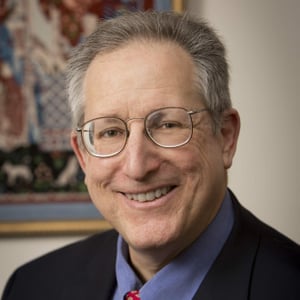
Knight Professor of Constitutional Law and the First Amendment, Yale Law School
Jack M. Balkin is Knight Professor of Constitutional Law and the First Amendment at Yale Law School. He is the founder and director of Yale’s Information Society Project, an interdisciplinary center that studies law and new information technologies. He also directs the Abrams Institute for Freedom of Expression, and the Knight Law and Media Program at Yale. Professor Balkin is a member of the American Academy of Arts and Sciences, and founded and edits the group blog Balkinization (http://balkin.blogspot.com/). He is the author of over 100 articles and the author or editor of eleven books. His scholarship ranges over many different subjects, including constitutional theory, technology and Internet law, freedom of speech, jurisprudence, cultural evolution, the theory of ideology, and musical and legal interpretation. His most recent books are Democracy and Dysfunction (University of Chicago Press, 2019)(with Sanford Levinson); Living Originalism (Harvard, Belknap Press, 2011), and Constitutional Redemption: Political Faith in an Unjust World (Harvard University Press 2011).

George C. Dix Professor in Constitutional Law, Northwestern University Pritzker School of Law
John O. McGinnis is a graduate of Harvard College and Harvard Law School where he was an editor of the Harvard Law Review. He also has an MA degree from Balliol College, Oxford, in philosophy and theology. Professor McGinnis clerked on the U.S. Court of Appeals for the District of Columbia. From 1987 to 1991, he was deputy assistant attorney general in the Office of Legal Counsel at the Department of Justice. He is the author of Accelerating Democracy: Transforming Government Through Technology (Princeton 2013) and Originalism and the Good Constitution (Harvard 2013) (with M. Rappaport). He is a past winner of the Paul Bator award given by the Federalist Society to an outstanding academic under 40. He has been listed by the United States on the roster of panelists who may be called upon to decide World Trade Organization Disputes.
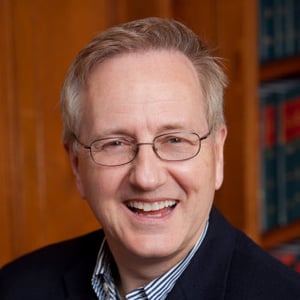
Alexander M. Bickel Professor of Public Law, Yale Law School
Degrees from Davidson College, B.A. summa cum laude, 1973; Harvard University, M.A., 1974; Yale Law School, J.D, 1978. Clerked for Edward Weinfeld, 1978-79; Attorney at Shea & Gardner, 1979-82; Law Professor since 1982, tenured at Georgetown and Yale, visiting professor at Stanford, NYU, Toronto, Harvard, Columbia, Penn, Fordham, Vanderbilt. Author of casebooks on legislation and sexuality, gender and law, as well as monographs on statutory interpretation and the rights of sexual and gender minorities. Author of dozens of articles, by one empirical count a top ten most cited law professors.
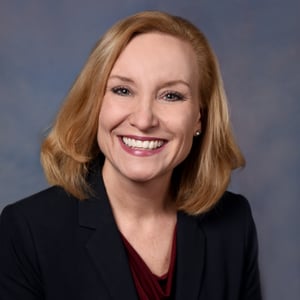
Judge, United States Court of Appeals, Sixth Circuit
The Honorable Joan L. Larsen is a judge of the United States Court of Appeals for the Sixth Circuit. She was nominated by the President on May 8, 2017 and confirmed by the Senate on November 1, 2017. Before her appointment to the federal bench, Judge Larsen served two terms as a Justice of the Michigan Supreme Court, where she was the court’s liaison to Michigan’s drug, sobriety, mental health and veteran’s courts.
Before becoming a judge, Judge Larsen was a faculty member at the University of Michigan Law School, where she was also Special Counsel to the Dean and received the L. Hart Wright Award for Excellence in Teaching. Judge Larsen's research and teaching interests included constitutional law, criminal procedure, statutory interpretation, and presidential power. Judge Larsen continues to assist the law school as the adviser to the Henry M. Campbell Moot Court Competition.
Judge Larsen began her legal career as a law clerk to the Hon. David B. Sentelle of the United States Court of Appeals for the D.C. Circuit and to Justice Antonin Scalia of the Supreme Court of the United States. Following her clerkships, she joined the law firm of Sidley Austin, where she was a member of the Constitutional, Criminal, and Civil Litigation Section. She later served as Deputy Assistant Attorney General in the United States Department of Justice, Office of Legal Counsel.
Judge Larsen graduated first in her class from Northwestern University School of Law, where she served as articles editor of the Northwestern University Law Review and earned the John Paul Stevens Award for Academic Excellence. She received her B.A., with highest honors, from the University of Northern Iowa.
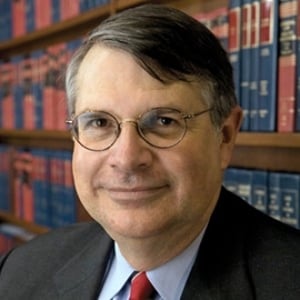
Charles Evans Hughes Professor of Law, Columbia Law School
THOMAS W. MERRILL is the Charles Evans Hughes Professor of Law at Columbia Law School. He previously taught at Northwestern University School of Law and Yale Law School. He has undergraduate degrees from Grinnell College and Oxford University, where he studied as a Rhodes Scholar, and a law degree from the University of Chicago. He clerked on the D.C. Circuit (for Chief Judge David Bazelon) and the U.S. Supreme Court (for Justice Harry Blackmun). From 1987-1990 he served as Deputy Solicitor General, U.S. Department of Justice. Professor Merrill’s writings related to property include Property: Principles and Policies (Foundation Press Second Edition, 2012) (with Henry E. Smith); Property: The Oxford Introductions to U.S. Law (Oxford U. Press, 2010); Property: Takings (Foundation Press, 2002)(with David Dana); and numerous articles, including “The Economics of Public Use” (Cornell Law Review 1986); “The Landscape of Constitutional Property” (Virginia Law Review 2000); and “The Character of the Governmental Action” (Vermont Law Review 2012). He is a member of the American Academy of Arts and Sciences.
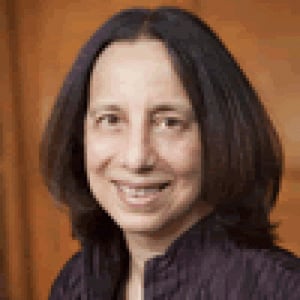
Nicholas deB. Katzenbach Professor of Law, Yale Law School
Reva Siegel is the Nicholas deB. Katzenbach Professor of Law at Yale University. Professor Siegel’s writing draws on legal history to explore questions of law and inequality, and to analyze how courts interact with representative government and popular movements in interpreting the Constitution. She is currently writing on the role of social movement conflict in guiding constitutional change, addressing this question in recent articles on the enforcement of Brown, originalism and the Second Amendment, the "de facto ERA," and reproductive rights. Her publications include Before Roe v. Wade: Voices That Shaped the Abortion Debate Before the Supreme Court’s Ruling, (with Linda Greenhouse, 2nd ed. 2012); The Constitution in 2020 (edited with Jack Balkin, 2009);Processes of Constitutional Decisionmaking (with Brest, Levinson, Balkin & Amar, 2006) and Directions in Sexual Harassment Law (edited with Catharine A. MacKinnon, 2004). Professor Siegel received her B.A., M.Phil, and J.D. from Yale University, clerked for Judge Spottswood Robinson on the D.C. Circuit, and began teaching at the University of California at Berkeley. She is a member of the American Academy of Arts and Sciences, and is active in the American Society for Legal History, the American Association of Law Schools, and the American Constitution Society, serving on the board of the national organization and as faculty advisor of Yale’s chapter.
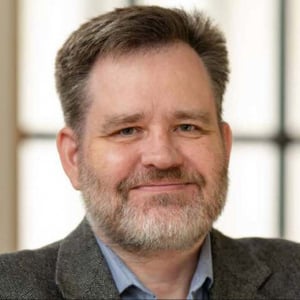
David Boies Professor of Law, Yale Law School
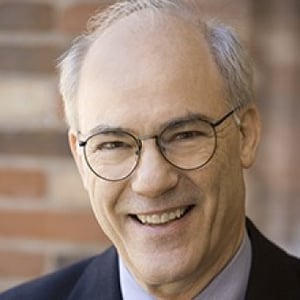
Walter E. Meyer Professor Emeritus of Property and Urban Law and Professorial Lecturer in Law, Yale Law School
Robert C. Ellickson was appointed Walter E. Meyer Professor of Property and Urban Law at Yale Law School in 1988. He has published numerous articles in legal and public policy journals on topics such as land use and housing policy, land tenure systems, social norms, homelessness, and the organization of households, community associations, and cities. Professor Ellickson’s books include Order Without Law: How Neighbors Settle Disputes (1991) (awarded the Order of the Coif Triennial Book Award in 1996), The Household: Informal Order Around the Hearth (2008), Land Use Controls: Cases and Materials (4th edition 2013, with Vicki Been, Roderick M. Hills, Jr. and Christopher Serkin), and Perspectives on Property Law (4th edition 2014, with Carol M. Rose and Henry E. Smith). He has written about ancient systems of land tenure and also periodically teaches a seminar on the history of development of the City of New Haven. Robert Ellickson was a member of the USC Law Faculty in 1970–1981, and the Stanford Law Faculty in 1981–88. He also has been a visiting professor at the Harvard and University of Chicago Law Schools. He was a founding member and later a director of the American Law and Economics Association, and served as its President in 2000–01. In 2016, the Association awarded him the Ronald H. Coase Medal in recognition of his scholarly contributions. Professor Ellickson served as an adviser during the American Law Institute’s preparation of the Restatement, Third, Property—Servitudes, and currently serves in the same capacity for the Restatement (Fourth) of Property. He is a fellow of the American Academy of Arts and Sciences, and, in 2008, received the William & Mary Law School’s Brigham-Kanner Property Rights Prize for Property Scholarship. At Yale Law School he has served as Deputy Dean (1991–92) and, during the reconstruction of the Sterling Law buildings, as chairman of the Building Committee. Prior to entering teaching in 1970, he worked for a Presidential commission on housing policy and then for Levitt & Sons, the homebuilding firm. Professor Ellickson is married to Lynn Hammer and has two children. For many decades he competed in competitive Scrabble tournaments and, during intervals when fortune smiled, was ranked as one of the top 20 players in the United States.

Frances and George Skestos Professor of Law, University of Michigan Law School
Adam C. Pritchard, the Frances and George Skestos Professor of Law, teaches corporate and securities law. He is the author, with Stephen J. Choi, of Securities Regulation: Cases and Analysis, currently in its fifth edition. His research focuses on securities class actions, Securities and Exchange Commission (SEC) enforcement, and the history of securities law in the U.S. Supreme Court. His articles have appeared in the Journal of Law and Economics, American Law and Economics Review, the Journal of Empirical Legal Studies, the Journal of Finance, the Journal of Law, Economics, and Organizations, and various law reviews. Professor Pritchard holds BA and JD degrees from the University of Virginia, as well as an MPP from the Harris School of Public Policy at the University of Chicago. While at Virginia, he was an Olin Fellow in Law and Economics and served as articles development editor of the Virginia Law Review. After graduation, he clerked for the Hon. J. Harvie Wilkinson III of the U.S. Court of Appeals for the Fourth Circuit and served as a Bristow Fellow in the Office of the Solicitor General at the U.S. Department of Justice. After working in private practice, Professor Pritchard served as senior counsel in the Office of the General Counsel of the SEC, where he wrote appellate briefs and studied the effect of recent reforms in the areas of securities fraud litigation. He received the SEC's Law and Policy Award for his work in United States v. O'Hagan, in which the U.S. Supreme Court upheld the misappropriation theory of insider trading. Professor Pritchard has been a visiting professor at the Northwestern University School of Law, the Georgetown University Law Center, and the University of Iowa School of Law. He also has been a visiting scholar at the SEC and a visiting fellow in capital market studies at the Cato Institute. He was previously a member of the FINRA National Adjudicatory Council and the Nasdaq Listing Qualifications Panel.
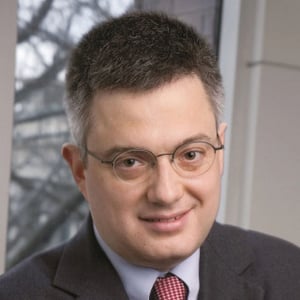
Fessenden Professor of Law, Harvard Law School
Henry E. Smith is the Fessenden Professor of Law at Harvard Law School, where he directs the Project on the Foundations of Private Law. Previously, he taught at the Northwestern University School of Law and was the Fred A. Johnston Professor of Property and Environmental Law at Yale Law School. He holds an A.B. from Harvard, a Ph.D. in Linguistics from Stanford, and a J.D. from Yale. After law school he clerked for the Hon. Ralph K. Winter, United States Court of Appeals for the Second Circuit. Smith has written primarily on the law and economics of property, intellectual property, and remedies, with a focus on how property-related institutions lower information costs and constrain strategic behavior. He teaches primarily in the areas of property, intellectual property, equity, restitution, and remedies. His books include The Oxford Introductions to U.S. Law: Property (2010, coauthored with Thomas W. Merrill), Property: Principles and Policies (3th ed., 2022, coauthored with Thomas W. Merrill & Maureen E. Brady), and Principles of Patent Law (7th ed., 2018, co-authored with John M. Golden, F. Scott Kieff, and Pauline Newman). He is the co-editor of The Research Handbook on the Economics of Property Law (2011, with Kenneth Ayotte), Philosophical Foundations of Property Law (2013, with James Penner), Perspectives on Property Law (4th ed., 2014, with Robert C. Ellickson and Carol M. Rose), Equity and Law: Fusion and Fission (2019, with John C.P. Goldberg & P.G. Turner), Philosophical Foundations of the Law of Equity (2020, with Dennis Klimcuk & Irit Samet), and The Oxford Handbook of the New Private Law (2020, with Andrew S. Gold, John C.P. Goldberg, Daniel B. Kelly & Emily Sherwin). In 2015-2016, Smith served as the President of the Society for Institutional and Organizational Economics, and in 2014, the American Law Institute named him Reporter for a Fourth Restatement of Property.
Alexander M. Bickel Professor of Public Law, Yale Law School
Degrees from Davidson College, B.A. summa cum laude, 1973; Harvard University, M.A., 1974; Yale Law School, J.D, 1978. Clerked for Edward Weinfeld, 1978-79; Attorney at Shea & Gardner, 1979-82; Law Professor since 1982, tenured at Georgetown and Yale, visiting professor at Stanford, NYU, Toronto, Harvard, Columbia, Penn, Fordham, Vanderbilt. Author of casebooks on legislation and sexuality, gender and law, as well as monographs on statutory interpretation and the rights of sexual and gender minorities. Author of dozens of articles, by one empirical count a top ten most cited law professors.
Judge, United States Court of Appeals, Sixth Circuit
The Honorable Joan L. Larsen is a judge of the United States Court of Appeals for the Sixth Circuit. She was nominated by the President on May 8, 2017 and confirmed by the Senate on November 1, 2017. Before her appointment to the federal bench, Judge Larsen served two terms as a Justice of the Michigan Supreme Court, where she was the court’s liaison to Michigan’s drug, sobriety, mental health and veteran’s courts.
Before becoming a judge, Judge Larsen was a faculty member at the University of Michigan Law School, where she was also Special Counsel to the Dean and received the L. Hart Wright Award for Excellence in Teaching. Judge Larsen's research and teaching interests included constitutional law, criminal procedure, statutory interpretation, and presidential power. Judge Larsen continues to assist the law school as the adviser to the Henry M. Campbell Moot Court Competition.
Judge Larsen began her legal career as a law clerk to the Hon. David B. Sentelle of the United States Court of Appeals for the D.C. Circuit and to Justice Antonin Scalia of the Supreme Court of the United States. Following her clerkships, she joined the law firm of Sidley Austin, where she was a member of the Constitutional, Criminal, and Civil Litigation Section. She later served as Deputy Assistant Attorney General in the United States Department of Justice, Office of Legal Counsel.
Judge Larsen graduated first in her class from Northwestern University School of Law, where she served as articles editor of the Northwestern University Law Review and earned the John Paul Stevens Award for Academic Excellence. She received her B.A., with highest honors, from the University of Northern Iowa.
Charles Evans Hughes Professor of Law, Columbia Law School
THOMAS W. MERRILL is the Charles Evans Hughes Professor of Law at Columbia Law School. He previously taught at Northwestern University School of Law and Yale Law School. He has undergraduate degrees from Grinnell College and Oxford University, where he studied as a Rhodes Scholar, and a law degree from the University of Chicago. He clerked on the D.C. Circuit (for Chief Judge David Bazelon) and the U.S. Supreme Court (for Justice Harry Blackmun). From 1987-1990 he served as Deputy Solicitor General, U.S. Department of Justice. Professor Merrill’s writings related to property include Property: Principles and Policies (Foundation Press Second Edition, 2012) (with Henry E. Smith); Property: The Oxford Introductions to U.S. Law (Oxford U. Press, 2010); Property: Takings (Foundation Press, 2002)(with David Dana); and numerous articles, including “The Economics of Public Use” (Cornell Law Review 1986); “The Landscape of Constitutional Property” (Virginia Law Review 2000); and “The Character of the Governmental Action” (Vermont Law Review 2012). He is a member of the American Academy of Arts and Sciences.
Nicholas deB. Katzenbach Professor of Law, Yale Law School
Reva Siegel is the Nicholas deB. Katzenbach Professor of Law at Yale University. Professor Siegel’s writing draws on legal history to explore questions of law and inequality, and to analyze how courts interact with representative government and popular movements in interpreting the Constitution. She is currently writing on the role of social movement conflict in guiding constitutional change, addressing this question in recent articles on the enforcement of Brown, originalism and the Second Amendment, the "de facto ERA," and reproductive rights. Her publications include Before Roe v. Wade: Voices That Shaped the Abortion Debate Before the Supreme Court’s Ruling, (with Linda Greenhouse, 2nd ed. 2012); The Constitution in 2020 (edited with Jack Balkin, 2009);Processes of Constitutional Decisionmaking (with Brest, Levinson, Balkin & Amar, 2006) and Directions in Sexual Harassment Law (edited with Catharine A. MacKinnon, 2004). Professor Siegel received her B.A., M.Phil, and J.D. from Yale University, clerked for Judge Spottswood Robinson on the D.C. Circuit, and began teaching at the University of California at Berkeley. She is a member of the American Academy of Arts and Sciences, and is active in the American Society for Legal History, the American Association of Law Schools, and the American Constitution Society, serving on the board of the national organization and as faculty advisor of Yale’s chapter.
David Boies Professor of Law, Yale Law School
Alexander M. Bickel Professor of Public Law, Yale Law School
Degrees from Davidson College, B.A. summa cum laude, 1973; Harvard University, M.A., 1974; Yale Law School, J.D, 1978. Clerked for Edward Weinfeld, 1978-79; Attorney at Shea & Gardner, 1979-82; Law Professor since 1982, tenured at Georgetown and Yale, visiting professor at Stanford, NYU, Toronto, Harvard, Columbia, Penn, Fordham, Vanderbilt. Author of casebooks on legislation and sexuality, gender and law, as well as monographs on statutory interpretation and the rights of sexual and gender minorities. Author of dozens of articles, by one empirical count a top ten most cited law professors.
Judge, United States Court of Appeals, Sixth Circuit
The Honorable Joan L. Larsen is a judge of the United States Court of Appeals for the Sixth Circuit. She was nominated by the President on May 8, 2017 and confirmed by the Senate on November 1, 2017. Before her appointment to the federal bench, Judge Larsen served two terms as a Justice of the Michigan Supreme Court, where she was the court’s liaison to Michigan’s drug, sobriety, mental health and veteran’s courts.
Before becoming a judge, Judge Larsen was a faculty member at the University of Michigan Law School, where she was also Special Counsel to the Dean and received the L. Hart Wright Award for Excellence in Teaching. Judge Larsen's research and teaching interests included constitutional law, criminal procedure, statutory interpretation, and presidential power. Judge Larsen continues to assist the law school as the adviser to the Henry M. Campbell Moot Court Competition.
Judge Larsen began her legal career as a law clerk to the Hon. David B. Sentelle of the United States Court of Appeals for the D.C. Circuit and to Justice Antonin Scalia of the Supreme Court of the United States. Following her clerkships, she joined the law firm of Sidley Austin, where she was a member of the Constitutional, Criminal, and Civil Litigation Section. She later served as Deputy Assistant Attorney General in the United States Department of Justice, Office of Legal Counsel.
Judge Larsen graduated first in her class from Northwestern University School of Law, where she served as articles editor of the Northwestern University Law Review and earned the John Paul Stevens Award for Academic Excellence. She received her B.A., with highest honors, from the University of Northern Iowa.
Charles Evans Hughes Professor of Law, Columbia Law School
THOMAS W. MERRILL is the Charles Evans Hughes Professor of Law at Columbia Law School. He previously taught at Northwestern University School of Law and Yale Law School. He has undergraduate degrees from Grinnell College and Oxford University, where he studied as a Rhodes Scholar, and a law degree from the University of Chicago. He clerked on the D.C. Circuit (for Chief Judge David Bazelon) and the U.S. Supreme Court (for Justice Harry Blackmun). From 1987-1990 he served as Deputy Solicitor General, U.S. Department of Justice. Professor Merrill’s writings related to property include Property: Principles and Policies (Foundation Press Second Edition, 2012) (with Henry E. Smith); Property: The Oxford Introductions to U.S. Law (Oxford U. Press, 2010); Property: Takings (Foundation Press, 2002)(with David Dana); and numerous articles, including “The Economics of Public Use” (Cornell Law Review 1986); “The Landscape of Constitutional Property” (Virginia Law Review 2000); and “The Character of the Governmental Action” (Vermont Law Review 2012). He is a member of the American Academy of Arts and Sciences.
Nicholas deB. Katzenbach Professor of Law, Yale Law School
Reva Siegel is the Nicholas deB. Katzenbach Professor of Law at Yale University. Professor Siegel’s writing draws on legal history to explore questions of law and inequality, and to analyze how courts interact with representative government and popular movements in interpreting the Constitution. She is currently writing on the role of social movement conflict in guiding constitutional change, addressing this question in recent articles on the enforcement of Brown, originalism and the Second Amendment, the "de facto ERA," and reproductive rights. Her publications include Before Roe v. Wade: Voices That Shaped the Abortion Debate Before the Supreme Court’s Ruling, (with Linda Greenhouse, 2nd ed. 2012); The Constitution in 2020 (edited with Jack Balkin, 2009);Processes of Constitutional Decisionmaking (with Brest, Levinson, Balkin & Amar, 2006) and Directions in Sexual Harassment Law (edited with Catharine A. MacKinnon, 2004). Professor Siegel received her B.A., M.Phil, and J.D. from Yale University, clerked for Judge Spottswood Robinson on the D.C. Circuit, and began teaching at the University of California at Berkeley. She is a member of the American Academy of Arts and Sciences, and is active in the American Society for Legal History, the American Association of Law Schools, and the American Constitution Society, serving on the board of the national organization and as faculty advisor of Yale’s chapter.
David Boies Professor of Law, Yale Law School
Walter E. Meyer Professor Emeritus of Property and Urban Law and Professorial Lecturer in Law, Yale Law School
Robert C. Ellickson was appointed Walter E. Meyer Professor of Property and Urban Law at Yale Law School in 1988. He has published numerous articles in legal and public policy journals on topics such as land use and housing policy, land tenure systems, social norms, homelessness, and the organization of households, community associations, and cities. Professor Ellickson’s books include Order Without Law: How Neighbors Settle Disputes (1991) (awarded the Order of the Coif Triennial Book Award in 1996), The Household: Informal Order Around the Hearth (2008), Land Use Controls: Cases and Materials (4th edition 2013, with Vicki Been, Roderick M. Hills, Jr. and Christopher Serkin), and Perspectives on Property Law (4th edition 2014, with Carol M. Rose and Henry E. Smith). He has written about ancient systems of land tenure and also periodically teaches a seminar on the history of development of the City of New Haven. Robert Ellickson was a member of the USC Law Faculty in 1970–1981, and the Stanford Law Faculty in 1981–88. He also has been a visiting professor at the Harvard and University of Chicago Law Schools. He was a founding member and later a director of the American Law and Economics Association, and served as its President in 2000–01. In 2016, the Association awarded him the Ronald H. Coase Medal in recognition of his scholarly contributions. Professor Ellickson served as an adviser during the American Law Institute’s preparation of the Restatement, Third, Property—Servitudes, and currently serves in the same capacity for the Restatement (Fourth) of Property. He is a fellow of the American Academy of Arts and Sciences, and, in 2008, received the William & Mary Law School’s Brigham-Kanner Property Rights Prize for Property Scholarship. At Yale Law School he has served as Deputy Dean (1991–92) and, during the reconstruction of the Sterling Law buildings, as chairman of the Building Committee. Prior to entering teaching in 1970, he worked for a Presidential commission on housing policy and then for Levitt & Sons, the homebuilding firm. Professor Ellickson is married to Lynn Hammer and has two children. For many decades he competed in competitive Scrabble tournaments and, during intervals when fortune smiled, was ranked as one of the top 20 players in the United States.
Frances and George Skestos Professor of Law, University of Michigan Law School
Adam C. Pritchard, the Frances and George Skestos Professor of Law, teaches corporate and securities law. He is the author, with Stephen J. Choi, of Securities Regulation: Cases and Analysis, currently in its fifth edition. His research focuses on securities class actions, Securities and Exchange Commission (SEC) enforcement, and the history of securities law in the U.S. Supreme Court. His articles have appeared in the Journal of Law and Economics, American Law and Economics Review, the Journal of Empirical Legal Studies, the Journal of Finance, the Journal of Law, Economics, and Organizations, and various law reviews. Professor Pritchard holds BA and JD degrees from the University of Virginia, as well as an MPP from the Harris School of Public Policy at the University of Chicago. While at Virginia, he was an Olin Fellow in Law and Economics and served as articles development editor of the Virginia Law Review. After graduation, he clerked for the Hon. J. Harvie Wilkinson III of the U.S. Court of Appeals for the Fourth Circuit and served as a Bristow Fellow in the Office of the Solicitor General at the U.S. Department of Justice. After working in private practice, Professor Pritchard served as senior counsel in the Office of the General Counsel of the SEC, where he wrote appellate briefs and studied the effect of recent reforms in the areas of securities fraud litigation. He received the SEC's Law and Policy Award for his work in United States v. O'Hagan, in which the U.S. Supreme Court upheld the misappropriation theory of insider trading. Professor Pritchard has been a visiting professor at the Northwestern University School of Law, the Georgetown University Law Center, and the University of Iowa School of Law. He also has been a visiting scholar at the SEC and a visiting fellow in capital market studies at the Cato Institute. He was previously a member of the FINRA National Adjudicatory Council and the Nasdaq Listing Qualifications Panel.
Fessenden Professor of Law, Harvard Law School
Henry E. Smith is the Fessenden Professor of Law at Harvard Law School, where he directs the Project on the Foundations of Private Law. Previously, he taught at the Northwestern University School of Law and was the Fred A. Johnston Professor of Property and Environmental Law at Yale Law School. He holds an A.B. from Harvard, a Ph.D. in Linguistics from Stanford, and a J.D. from Yale. After law school he clerked for the Hon. Ralph K. Winter, United States Court of Appeals for the Second Circuit. Smith has written primarily on the law and economics of property, intellectual property, and remedies, with a focus on how property-related institutions lower information costs and constrain strategic behavior. He teaches primarily in the areas of property, intellectual property, equity, restitution, and remedies. His books include The Oxford Introductions to U.S. Law: Property (2010, coauthored with Thomas W. Merrill), Property: Principles and Policies (3th ed., 2022, coauthored with Thomas W. Merrill & Maureen E. Brady), and Principles of Patent Law (7th ed., 2018, co-authored with John M. Golden, F. Scott Kieff, and Pauline Newman). He is the co-editor of The Research Handbook on the Economics of Property Law (2011, with Kenneth Ayotte), Philosophical Foundations of Property Law (2013, with James Penner), Perspectives on Property Law (4th ed., 2014, with Robert C. Ellickson and Carol M. Rose), Equity and Law: Fusion and Fission (2019, with John C.P. Goldberg & P.G. Turner), Philosophical Foundations of the Law of Equity (2020, with Dennis Klimcuk & Irit Samet), and The Oxford Handbook of the New Private Law (2020, with Andrew S. Gold, John C.P. Goldberg, Daniel B. Kelly & Emily Sherwin). In 2015-2016, Smith served as the President of the Society for Institutional and Organizational Economics, and in 2014, the American Law Institute named him Reporter for a Fourth Restatement of Property.
Walter E. Meyer Professor Emeritus of Property and Urban Law and Professorial Lecturer in Law, Yale Law School
Robert C. Ellickson was appointed Walter E. Meyer Professor of Property and Urban Law at Yale Law School in 1988. He has published numerous articles in legal and public policy journals on topics such as land use and housing policy, land tenure systems, social norms, homelessness, and the organization of households, community associations, and cities. Professor Ellickson’s books include Order Without Law: How Neighbors Settle Disputes (1991) (awarded the Order of the Coif Triennial Book Award in 1996), The Household: Informal Order Around the Hearth (2008), Land Use Controls: Cases and Materials (4th edition 2013, with Vicki Been, Roderick M. Hills, Jr. and Christopher Serkin), and Perspectives on Property Law (4th edition 2014, with Carol M. Rose and Henry E. Smith). He has written about ancient systems of land tenure and also periodically teaches a seminar on the history of development of the City of New Haven. Robert Ellickson was a member of the USC Law Faculty in 1970–1981, and the Stanford Law Faculty in 1981–88. He also has been a visiting professor at the Harvard and University of Chicago Law Schools. He was a founding member and later a director of the American Law and Economics Association, and served as its President in 2000–01. In 2016, the Association awarded him the Ronald H. Coase Medal in recognition of his scholarly contributions. Professor Ellickson served as an adviser during the American Law Institute’s preparation of the Restatement, Third, Property—Servitudes, and currently serves in the same capacity for the Restatement (Fourth) of Property. He is a fellow of the American Academy of Arts and Sciences, and, in 2008, received the William & Mary Law School’s Brigham-Kanner Property Rights Prize for Property Scholarship. At Yale Law School he has served as Deputy Dean (1991–92) and, during the reconstruction of the Sterling Law buildings, as chairman of the Building Committee. Prior to entering teaching in 1970, he worked for a Presidential commission on housing policy and then for Levitt & Sons, the homebuilding firm. Professor Ellickson is married to Lynn Hammer and has two children. For many decades he competed in competitive Scrabble tournaments and, during intervals when fortune smiled, was ranked as one of the top 20 players in the United States.
Frances and George Skestos Professor of Law, University of Michigan Law School
Adam C. Pritchard, the Frances and George Skestos Professor of Law, teaches corporate and securities law. He is the author, with Stephen J. Choi, of Securities Regulation: Cases and Analysis, currently in its fifth edition. His research focuses on securities class actions, Securities and Exchange Commission (SEC) enforcement, and the history of securities law in the U.S. Supreme Court. His articles have appeared in the Journal of Law and Economics, American Law and Economics Review, the Journal of Empirical Legal Studies, the Journal of Finance, the Journal of Law, Economics, and Organizations, and various law reviews. Professor Pritchard holds BA and JD degrees from the University of Virginia, as well as an MPP from the Harris School of Public Policy at the University of Chicago. While at Virginia, he was an Olin Fellow in Law and Economics and served as articles development editor of the Virginia Law Review. After graduation, he clerked for the Hon. J. Harvie Wilkinson III of the U.S. Court of Appeals for the Fourth Circuit and served as a Bristow Fellow in the Office of the Solicitor General at the U.S. Department of Justice. After working in private practice, Professor Pritchard served as senior counsel in the Office of the General Counsel of the SEC, where he wrote appellate briefs and studied the effect of recent reforms in the areas of securities fraud litigation. He received the SEC's Law and Policy Award for his work in United States v. O'Hagan, in which the U.S. Supreme Court upheld the misappropriation theory of insider trading. Professor Pritchard has been a visiting professor at the Northwestern University School of Law, the Georgetown University Law Center, and the University of Iowa School of Law. He also has been a visiting scholar at the SEC and a visiting fellow in capital market studies at the Cato Institute. He was previously a member of the FINRA National Adjudicatory Council and the Nasdaq Listing Qualifications Panel.
Fessenden Professor of Law, Harvard Law School
Henry E. Smith is the Fessenden Professor of Law at Harvard Law School, where he directs the Project on the Foundations of Private Law. Previously, he taught at the Northwestern University School of Law and was the Fred A. Johnston Professor of Property and Environmental Law at Yale Law School. He holds an A.B. from Harvard, a Ph.D. in Linguistics from Stanford, and a J.D. from Yale. After law school he clerked for the Hon. Ralph K. Winter, United States Court of Appeals for the Second Circuit. Smith has written primarily on the law and economics of property, intellectual property, and remedies, with a focus on how property-related institutions lower information costs and constrain strategic behavior. He teaches primarily in the areas of property, intellectual property, equity, restitution, and remedies. His books include The Oxford Introductions to U.S. Law: Property (2010, coauthored with Thomas W. Merrill), Property: Principles and Policies (3th ed., 2022, coauthored with Thomas W. Merrill & Maureen E. Brady), and Principles of Patent Law (7th ed., 2018, co-authored with John M. Golden, F. Scott Kieff, and Pauline Newman). He is the co-editor of The Research Handbook on the Economics of Property Law (2011, with Kenneth Ayotte), Philosophical Foundations of Property Law (2013, with James Penner), Perspectives on Property Law (4th ed., 2014, with Robert C. Ellickson and Carol M. Rose), Equity and Law: Fusion and Fission (2019, with John C.P. Goldberg & P.G. Turner), Philosophical Foundations of the Law of Equity (2020, with Dennis Klimcuk & Irit Samet), and The Oxford Handbook of the New Private Law (2020, with Andrew S. Gold, John C.P. Goldberg, Daniel B. Kelly & Emily Sherwin). In 2015-2016, Smith served as the President of the Society for Institutional and Organizational Economics, and in 2014, the American Law Institute named him Reporter for a Fourth Restatement of Property.
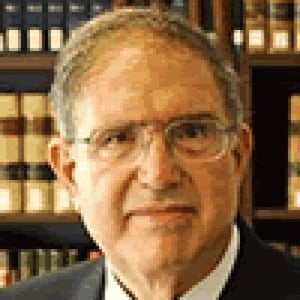
Professor of Law, George Mason University School of Law
With his work in regulatory takings and other aspects of property law, professor of law Steven Eagle plays an important role in the ongoing dialogue among American legal scholars, lawyers, and judges on the proper interpretation of property rights in the Constitution. He is the author of a leading property treatise and scholarly and popular articles and teaches in programs for judges and the practicing bar.
Professor Eagle came to George Mason in 1987 and also has taught at the law schools of Vanderbilt University, the University of Toledo, and Pace University. He earned his B.B.A. from the City College of New York (1965) and his J.D. from Yale Law School (1970). Professor Eagle teaches the first-year course, Property, Land Use Planning, and an advanced constitutional law seminar on property rights.
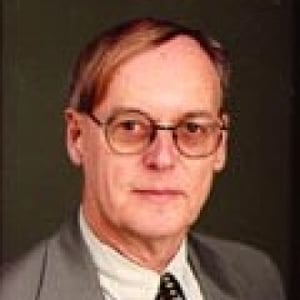
Milton R. Underwood Professor of Law Emeritus and Professor of History Emeritus, Vanderbilt University
James Ely is a renowned legal historian and property rights expert whose career accomplishments were recognized with both the Brigham-Kanner Property Rights Prize and the Owner's Counsel of American Crystal Eagle Award in 2006. He is the author of several books that have received widespread critical acclaim from legal scholars and historians, including The Guardian of Every Other Right: A Constitutional History of Property Rights, The Fuller Court: Justices, Rulings and Legacy in which he examines the work of the Supreme Court between 1888 and 1910, Railroads and American Law in which he systematically explores the way that the rise of the railroad shaped American legal culture, and The Contract Clause: A Constitutional History. He also is the author of numerous articles dealing with the rights of property owners. He served as an editor of both the Oxford Companion to the Supreme Court, and the second edition of the Oxford Guide to Supreme Court Decisions. Professor Ely received the Tennessee History Book Award in 2002 for A History of the Tennessee Supreme Court. Between 1987 and 1999, he served as an associate editor of the American Journal of Legal History. Since Professor Ely joined Vanderbilt faculty in 1972, he has been frequently recognized by students as one of the law school's outstanding teachers.

Professor of Law, Antonin Scalia Law School, George Mason University
ILYA SOMIN is Professor of Law at George Mason University and the B. Kenneth Simon Chair in Constitutional Studies at the Cato Institute. His research focuses on constitutional law, property law, democratic theory, federalism, and migration rights. He is the author of Free to Move: Foot Voting, Migration, and Political Freedom (Oxford University Press, revised and expanded edition, 2022), Democracy and Political Ignorance: Why Smaller Government is Smarter (Stanford University Press, revised and expanded second edition, 2016), and The Grasping Hand: Kelo v. City of New London and the Limits of Eminent Domain (University of Chicago Press, 2015, rev. paperback ed., 2016), coauthor of A Conspiracy Against Obamacare: The Volokh Conspiracy and the Health Care Case (Palgrave Macmillan, 2013), and co-editor of Eminent Domain: A Comparative Perspective (Cambridge University Press, 2017). Democracy and Political Ignorance has been translated into Italian and Japanese.
Somin’s work has appeared in numerous scholarly journals, including the Yale Law Journal, Stanford Law Review, Northwestern University Law Review, Georgetown Law Journal, Critical Review, and others. Somin has also published articles in a variety of popular press outlets, including the New York Times, Washington Post, Wall Street Journal, Los Angeles Times, CNN, NBC, The Atlantic, USA Today, Boston Globe, US News and World Report, South China Morning Post, National Law Journal and Reason. He has been quoted or interviewed by the New York Times, Washington Post, Wall Street Journal, Time, Newsweek, The Economist, the Christian Science Monitor, the Financial Times, The Guardian, the Associated Press, CBS, MSNBC, NPR, BBC, Reuters, the Canadian Broadcasting Corporation, the Australian Broadcasting Corporation, Radio Free Europe/Radio Liberty, Al Jazeera, and the Voice of America, among other media.
Somin’s writings have been cited in decisions by the United States Supreme Court, multiple state supreme courts and lower federal courts, and the Supreme Court of Israel. He is co-counsel for the plaintiffs in VOS Selections, Inc. v. Trump, a case challenging the constitutionality of President Trump’s “Liberation Day” tariffs. Somin has testified on the use of drones for targeted killing in the War on Terror before the US Senate Judiciary Subcommittee on the Constitution, Civil Rights, and Human Rights. In 2009, he testified on property rights issues at the United States Senate Judiciary Committee confirmation hearings for Supreme Court Justice Sonia Sotomayor. Somin writes regularly for the popular Volokh Conspiracy law and politics blog, now affiliated with Reason magazine (previously affiliated with the Washington Post from 2014 to 2017). From 2006 to 2013, he served as Co-Editor of the Supreme Court Economic Review, one of the country’s top-rated law and economics journals.
Somin has served as a visiting professor at the University of Pennsylvania Law School. He has also been a visiting professor or scholar at the Georgetown University Law Center, the University of Hamburg, Germany, the University of Torcuato Di Tella in Buenos Aires, Argentina, Uriel Reichman University in Israel, and Zhengzhou University in China. He is a University Affiliate of the Schar School of Policy and Government at George Mason University, and an affiliated faculty member of the George Mason University Institute for Immigration Research. Before joining the faculty at George Mason, Somin was the John M. Olin Fellow in Law at Northwestern University Law School in 2002-2003. In 2001-2002, he clerked for the Hon. Judge Jerry E. Smith of the U.S. Court of Appeals for the Fifth Circuit. Professor Somin earned his B.A., Summa Cum Laude, at Amherst College, M.A. in Political Science from Harvard University, and J.D. from Yale Law School.
Professor of Law, George Mason University School of Law
With his work in regulatory takings and other aspects of property law, professor of law Steven Eagle plays an important role in the ongoing dialogue among American legal scholars, lawyers, and judges on the proper interpretation of property rights in the Constitution. He is the author of a leading property treatise and scholarly and popular articles and teaches in programs for judges and the practicing bar.
Professor Eagle came to George Mason in 1987 and also has taught at the law schools of Vanderbilt University, the University of Toledo, and Pace University. He earned his B.B.A. from the City College of New York (1965) and his J.D. from Yale Law School (1970). Professor Eagle teaches the first-year course, Property, Land Use Planning, and an advanced constitutional law seminar on property rights.
Milton R. Underwood Professor of Law Emeritus and Professor of History Emeritus, Vanderbilt University
James Ely is a renowned legal historian and property rights expert whose career accomplishments were recognized with both the Brigham-Kanner Property Rights Prize and the Owner's Counsel of American Crystal Eagle Award in 2006. He is the author of several books that have received widespread critical acclaim from legal scholars and historians, including The Guardian of Every Other Right: A Constitutional History of Property Rights, The Fuller Court: Justices, Rulings and Legacy in which he examines the work of the Supreme Court between 1888 and 1910, Railroads and American Law in which he systematically explores the way that the rise of the railroad shaped American legal culture, and The Contract Clause: A Constitutional History. He also is the author of numerous articles dealing with the rights of property owners. He served as an editor of both the Oxford Companion to the Supreme Court, and the second edition of the Oxford Guide to Supreme Court Decisions. Professor Ely received the Tennessee History Book Award in 2002 for A History of the Tennessee Supreme Court. Between 1987 and 1999, he served as an associate editor of the American Journal of Legal History. Since Professor Ely joined Vanderbilt faculty in 1972, he has been frequently recognized by students as one of the law school's outstanding teachers.
Professor of Law, Antonin Scalia Law School, George Mason University
ILYA SOMIN is Professor of Law at George Mason University and the B. Kenneth Simon Chair in Constitutional Studies at the Cato Institute. His research focuses on constitutional law, property law, democratic theory, federalism, and migration rights. He is the author of Free to Move: Foot Voting, Migration, and Political Freedom (Oxford University Press, revised and expanded edition, 2022), Democracy and Political Ignorance: Why Smaller Government is Smarter (Stanford University Press, revised and expanded second edition, 2016), and The Grasping Hand: Kelo v. City of New London and the Limits of Eminent Domain (University of Chicago Press, 2015, rev. paperback ed., 2016), coauthor of A Conspiracy Against Obamacare: The Volokh Conspiracy and the Health Care Case (Palgrave Macmillan, 2013), and co-editor of Eminent Domain: A Comparative Perspective (Cambridge University Press, 2017). Democracy and Political Ignorance has been translated into Italian and Japanese.
Somin’s work has appeared in numerous scholarly journals, including the Yale Law Journal, Stanford Law Review, Northwestern University Law Review, Georgetown Law Journal, Critical Review, and others. Somin has also published articles in a variety of popular press outlets, including the New York Times, Washington Post, Wall Street Journal, Los Angeles Times, CNN, NBC, The Atlantic, USA Today, Boston Globe, US News and World Report, South China Morning Post, National Law Journal and Reason. He has been quoted or interviewed by the New York Times, Washington Post, Wall Street Journal, Time, Newsweek, The Economist, the Christian Science Monitor, the Financial Times, The Guardian, the Associated Press, CBS, MSNBC, NPR, BBC, Reuters, the Canadian Broadcasting Corporation, the Australian Broadcasting Corporation, Radio Free Europe/Radio Liberty, Al Jazeera, and the Voice of America, among other media.
Somin’s writings have been cited in decisions by the United States Supreme Court, multiple state supreme courts and lower federal courts, and the Supreme Court of Israel. He is co-counsel for the plaintiffs in VOS Selections, Inc. v. Trump, a case challenging the constitutionality of President Trump’s “Liberation Day” tariffs. Somin has testified on the use of drones for targeted killing in the War on Terror before the US Senate Judiciary Subcommittee on the Constitution, Civil Rights, and Human Rights. In 2009, he testified on property rights issues at the United States Senate Judiciary Committee confirmation hearings for Supreme Court Justice Sonia Sotomayor. Somin writes regularly for the popular Volokh Conspiracy law and politics blog, now affiliated with Reason magazine (previously affiliated with the Washington Post from 2014 to 2017). From 2006 to 2013, he served as Co-Editor of the Supreme Court Economic Review, one of the country’s top-rated law and economics journals.
Somin has served as a visiting professor at the University of Pennsylvania Law School. He has also been a visiting professor or scholar at the Georgetown University Law Center, the University of Hamburg, Germany, the University of Torcuato Di Tella in Buenos Aires, Argentina, Uriel Reichman University in Israel, and Zhengzhou University in China. He is a University Affiliate of the Schar School of Policy and Government at George Mason University, and an affiliated faculty member of the George Mason University Institute for Immigration Research. Before joining the faculty at George Mason, Somin was the John M. Olin Fellow in Law at Northwestern University Law School in 2002-2003. In 2001-2002, he clerked for the Hon. Judge Jerry E. Smith of the U.S. Court of Appeals for the Fifth Circuit. Professor Somin earned his B.A., Summa Cum Laude, at Amherst College, M.A. in Political Science from Harvard University, and J.D. from Yale Law School.

New Views of Originalism
Bar Watch Bulletin August 9 & 10, 2008
The American Bar Association's Annual Meeting will be taking place from August 7-12 in New...
Panel IV: Tradition and the People's Constitution
William N. Eskridge, Joan Larsen, Thomas W. Merrill, Reva Siegel, Keith E. Whittington
The Federalist Society's Student Division presented this panel at the 2008 Annual Student Symposium on...
Panel IV: Tradition and the People's Constitution
William N. Eskridge, Joan Larsen, Thomas W. Merrill, Reva Siegel, Keith E. Whittington
The Federalist Society's Student Division presented this panel at the 2008 Annual Student Symposium on...
Panel III: The People's Common Law: Is Law & Economics Anti-Democratic?
Robert C. Ellickson, Adam Christopher Pritchard, Brian Simpson, Henry Smith
The Federalist Society's Student Division presented this panel at the 2008 Annual Student Symposium on...
Panel III: The People's Common Law: Is Law & Economics Anti-Democratic?
Robert C. Ellickson, Adam Christopher Pritchard, Brian Simpson, Henry Smith
The Federalist Society's Student Division presented this panel at the 2008 Annual Student Symposium on...
Panel IV: Tradition and the People's Constitution
2008 Annual Student Symposium
Ann Arbor, MIPanel III: The People's Common Law: Is Law & Economics Anti-Democratic?
2008 National Student Symposium
Ann Arbor, MIPanel II: Post Kelo Reform
David Dana, Steven J. Eagle, James W. Ely, Ilya Somin
This panel discussion took place on January 4, 2008, at the Federalist Society's 10th Annual...
Panel II: Post Kelo Reform
David Dana, Steven J. Eagle, James W. Ely, Ilya Somin
This panel discussion took place on January 4, 2008, at the Federalist Society's 10th Annual...