
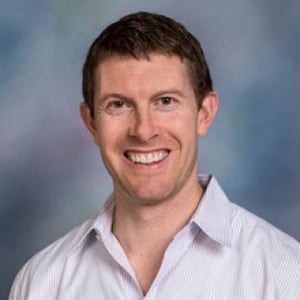
Baker Botts Fellow in Energy & Environmental Regulatory Affairs, Baker Institute for Public Policy, Rice University
Gabriel Collins is the Baker Botts Fellow in Energy & Environmental Regulatory Affairs at Rice University's Baker Institute. He was previously an associate attorney at Baker Hostetler, LLP, and is the co-founder of the China SignPost™ (洞察中国) analysis portal. Collins has worked in the Department of Defense as a China analyst and as a private sector global commodity researcher, authoring more than 100 commodity analysis reports, both for private clients and for publication.
Collins’ research portfolio is global. His work currently focuses on legal, environmental and economic issues relating to water — including the food-water-energy nexus — as well as unconventional oil and gas development, and the intersection between global commodity markets and a range of environmental, legal and national security issues. His analysis draws from a broad swath of geospatial and other data streams, and often incorporates insights from sources in Chinese, Russian and Spanish.
Collins received his B.A. from Princeton University and a J.D. from the University of Michigan Law School. He is licensed to practice law in Texas.

Managing Director, SCF Partners
Daniel G. West invests in energy services, equipment, and technology companies at SCF Partners in Houston, Texas. He provides equity capital and strategic growth assistance to entrepreneurs and leaders of both start-up ventures and established, growing businesses.
Prior to joining the private sector, Mr. West served as an infantry officer in the United States Marine Corps. As a platoon commander with the 22nd Marine Expeditionary Unit aboard the USS Mesa Verde, he led the Tactical Recovery of Aircraft and Personnel force in support of the NATO aerial campaign over Libya. He then served as executive officer of India Company, 3rd Battalion, 9th Marines as it mentored Afghan forces to assume lead security responsibility and executed counter-narcotics missions in Marjah, Helmand Province, Afghanistan. He also served as a clerk for Judge Laurence H. Silberman on the U.S. Court of Appeals for the D.C. Circuit.
Mr. West holds degrees in law, business administration, and economics from Harvard University, where he served as an editor of the Harvard Law Review and taught undergraduate courses in economics and government. He is a member of the Executive Committee of the International & National Security Law Practice Group of the Federalist Society and a term member of the Council on Foreign Relations.
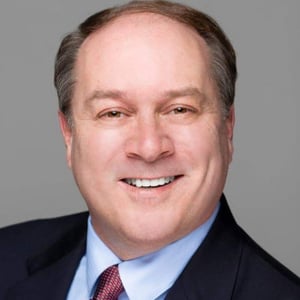
Of Counsel, Fisher & Phillips, LLP
Greg Grisham has over 25 years of successful experience counseling and representing employers in all aspects of workplace law in Tennessee and across the United States.
He has helped employers avoid claims, charges and lawsuits with a focus on preventative practices. Preventative practices include counseling in situations involving discipline, termination, demotion, promotion and other workplace changes in the terms and conditions of employment, harassment investigations, wage and hour compliance, FMLA Compliance, Reasonable Accommodation assessment, supervisor training and the review of employment policies and procedures. In addition, Greg's practice includes the representation of business entities subject to Title III of the Americans with Disabilities Act in Public Accommodation cases.
Greg has successfully litigated hundreds of administrative charges, employment lawsuits, and arbitration demands on behalf of employers, including federal and state law claims alleging discrimination, harassment, retaliation, wrongful termination, defamation, invasion of privacy, breach of contract, wage and hour violations and ERISA violations, among others. He also represents employers before the National Labor Relations Board in unfair labor practice proceedings. He represents employers in the enforcement of post-employment restrictive covenants such as non-compete, non-solicitation and non-disclosure agreements and related trade secret litigation. Greg's practice also includes the defense of property owners and property management companies in federal and state Housing Discrimination charges and litigation. He also advises Tennessee Public Charter Schools on education law and workplace compliance matters.
Greg has extensive experience working with insurance carriers and their insureds in the defense of EPLI claims. He is a regular speaker at public seminars on workplace law issues and has authored numerous articles on a variety of labor and employment law related topics.
Greg holds an AV Preeminent Peer Review rating from Martindale-Hubbell and has been selected for inclusion in Mid-South Super Lawyers and Best Lawyers in America for Employment Litigation-Management side. Greg was elected as a 2016 Fellow to the College of Labor and Employment Lawyers and has been selected to the “Top 20 Lawyers in Traditional Labor & Employment Law” list in conjunction with Human Resource Executive Magazine and LawDragon’s 2017 and 2018 “Most Powerful Employment Attorneys” lists and specialty guides. Greg was also named a Fellow in the American Bar Foundation in 2017.
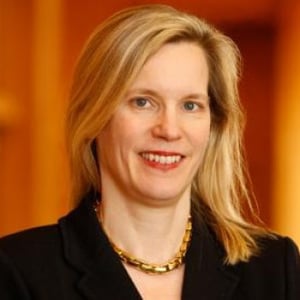
John S. Battle Professor of Law, University of Virginia School of Law
Julia D. Mahoney teaches courses in property, government finance, constitutional law and nonprofit organizations. A graduate of Yale Law School, she joined the University of Virginia faculty as an associate professor in 1999 and is now John S. Battle Professor of Law. She has also taught at the University of Southern California Law School and the University of Chicago Law School, and before entering the legal academy, practiced law at the New York firm Wachtell, Lipton, Rosen & Katz. Her scholarly articles include works on land preservation, eminent domain, health care reform and property rights in human biological materials.
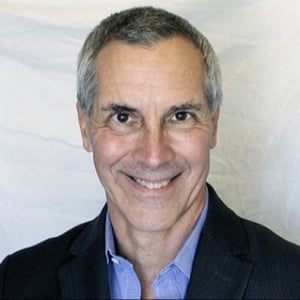
Assistant Professor of Law, University of Akron School of Law
Professor Horvath joined the Akron faculty as an assistant professor of law in 2020. His scholarly interest focus on the ways in which constitutional, statutory, and regulatory inputs intersect with the health care enterprise to determine the access to and quality of U.S. medical care. His teaching includes Torts and various topics in Health Care law. Prior to joining the Akron faculty, Professor Horvath was a post-doctoral Fellow in Public Law at the University of California, Berkeley, School of Law. He also clerked for Judge John T. Noonan, Jr. on the Ninth Circuit Court of Appeals. Professor Horvath earned his J.D. at Berkeley Law, where he served as Editor-in-Chief of the California Law Review. He earned his M.D. at Temple University Medical School.
Professor Horvath's scholarship has explored gaps in the regulation of drug-device combination products through FDA approval and tort law, statutory and regulatory determinants of FDA-approved high-risk medical device failures, and ways in which drug labeling might be improved. His work has been published in Washington Law Review, BYU Law Review, California Law Review, Albany Law Review, Cincinnati Law Review, and the Annals of Health Law and Life Sciences.
Prior to his legal career, Professor Horvath was a cardiologist who specialized in the treatment of heart rhythm disorders. He authored or co-authored over twenty article that were published in the Journal of the American College of Cardiology, Circulation, Archives of Internal Medicine, and other medical journals.

Professor of Law, Antonin Scalia Law School, George Mason University
Adam Mossoff is Professor of Law at Antonin Scalia Law School, George Mason University. He has published extensively on why patents, copyrights, and other intellectual property rights have been—and should be—legally secured to innovators and creators as property rights. His scholarship has been relied on by the United States Supreme Court, by lower federal courts, and by U.S. federal agencies. He has been invited to testify numerous times before the U.S. Senate and the House of Representatives on intellectual property legislation. His writings on intellectual property policy have also appeared in the Wall Street Journal, New York Times, Forbes, Investors Business Daily, and in other media outlets. His journal articles can be downloaded here.
Professor Mossoff is a longstanding member of the Executive Committee of the Intellectual Property Practice Group of the Federalist Society, on which he served as Chairperson from 2016-2018, and he is Chair of the Intellectual Property Working Group of the Regulatory Transparency Project of the Federalist Society. He is a Senior Fellow and Chair of the Forum for Intellectual Property at the Hudson Institute, a Visiting Intellectual Property Fellow at the Heritage Foundation, and a member of the Board of Directors of the Center for Intellectual Property Understanding. He is a member of the Intellectual Property Rights Policy Committee of ANSI and he has served as Chair and Vice-Chair of the Intellectual Property Committee of the IEEE-USA, on which he remains a member in good standing.
Associate Professor, University of Akron School of Law
Professor Camilla A. Hrdy is Associate Professor of Law and Director of Faculty Research & Development at The University of Akron School of Law.
Her primary teaching areas are Intellectual Property Law, Trade Secret Law, Trademark Law, Patent Law, State and Local Government Law, and Civil Procedure (Due Process and Federalism).
Professor Hrdy’s research has focused on the role of federal, state, and local governments in promoting innovation and economic development; the history of United States patent law; the law and policy of trade secrets and unfair competition; and the relationship between intellectual property law, innovation, and human well-being.
Her articles have appeared or will soon appear in various law journals, including Stanford Law Review, Boston College Law Review, Florida Law Review, Colorado Law Review, Wisconsin Law Review, Lewis & Clark Law Review, and Berkeley Law & Technology Journal. She is a three-time recipient of the Thomas G. Byers Outstanding Faculty Scholarly Publication.
She is also a regular blogger on the IP scholarship blog, Written Description, where she writes on IP scholarship related to trade secrets, trademarks, patents, IP theory, the history of intellectual property in America, and numerous other topics.
Professor Hrdy holds a J.D. from Berkeley Law, a B.A. from Harvard University, and an M.Phil. in from the University of Cambridge, Department of History & Philosophy of Science. She received Harvard’s Hoopes prize, and a Redhead Prize from the University of Cambridge Department of History & Philosophy of Science.
Before coming to Akron Law, she was a resident fellow at the Yale Law School Information Society Project and a teaching fellow at the University of Pennsylvania Law School Center for Innovation, Technology & Competition.
She clerked for U.S. District Judge Janis Graham Jack in the Southern District of Texas.

Executive Vice President, Chief Legal Officer, Gates Corporation
Matthew R. A. Heiman joined the Company in May 2026 and has served as the Company’s Chief Legal Officer and Corporate Secretary since June 2026. As Chief Legal Officer, Mr. Heiman is responsible for all legal functions for Gates, including securities and corporate governance, M&A, litigation, commercial, regulatory, compliance, patents and trademarks, real estate, employment and labor, sustainability and environmental matters. Prior to joining Gates, Mr. Heiman held senior legal leadership roles at Waystar, where he served as Chief Legal & Administrative Officer from 2023 to 2025 and as General Counsel and Corporate Secretary from 2020 to 2023. Prior to that, he was with Johnson Controls, where he served as Vice President, Corporate Secretary, and Associate General Counsel. Mr. Heiman has been a Senior Fellow for the National Security Institute at George Mason University’s Antonin Scalia School of Law since 2018.
Senior Counselor, The Brunswick Group
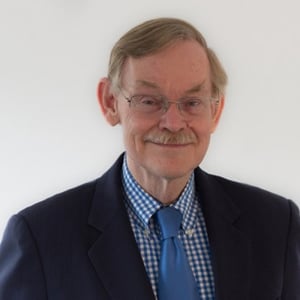
Robert B. Zoellick is a Principal of Brunswick Group’s Geopolitical advisory offer and a Senior Fellow at the Belfer Center for Science and International Affairs at Harvard University’s Kennedy School of Government. In addition, Zoellick serves on the boards of Temasek, Singapore’s Sovereign Wealth Fund, and Twitter, Inc., and is on the Advisory Board of Swiss Re. He is a member of the boards of the Peterson Institute for International Economics and the Carnegie Endowment, chairs the Global Tiger Initiative, and is a member of the Global Leadership Council of Mercy Corps, a global humanitarian agency.
Zoellick was the President of the World Bank Group from 2007-12, U.S. Trade Representative from 2001 to 2005, and Deputy Secretary of State from 2005 to 2006. From 1985 to 1993, Zoellick served as Counselor to the Secretary of the Treasury and Under Secretary of State, as well as White House Deputy Chief of Staff.
Zoellick is a recipient of the Distinguished Service Award, the Department of State’s highest honor, the Alexander Hamilton Award of the Department of the Treasury, and the Medal for Distinguished Public Service of the Department of Defense. The German government awarded him the Knight Commanders Cross for his achievements in the course of German unification. The Mexican and Chilean governments awarded him their highest honors for non-citizens, the Aztec Eagle and the Order of Merit, for recognition of his work on free trade, development, and the environment.
Zoellick holds a J.D. magna cum laude from the Harvard Law School, a master's degree in public policy from Harvard's Kennedy School of Government, and a bachelor's degree from Swarthmore College.

Associate, Jones Day
Katie Roholt Lane represents clients at critical stages of high-stakes regulatory and constitutional litigation. Her practice also consists of developing case strategy at the trial and appellate levels, briefing legal issues, and conducting motions practice. Katie currently represents clients in litigation arising under the Administrative Procedure Act (APA), the Telephone Consumer Protection Act (TCPA), and the Medicare Act.
In addition to her litigation practice, Katie provides strategic planning and regulatory compliance advice to companies seeking to navigate the complex U.S. regulations that impact domestic and international industries. She has represented clients in rulemakings and consultations before regulatory authorities, including the Federal Communications Commission (FCC) and the Federal Trade Commission (FTC) often seeking to eliminate the regulatory barriers to industry innovation.
Katie also maintains an active pro bono practice that focuses on briefing constitutional and statutory issues before the U.S. Supreme Court and federal appellate courts. She was part of the team that represented The American Legion in its landmark victory at the U.S. Supreme Court in The American Legion v. American Humanist Association, 139 S. Ct. 2067 (2019).
Katie is president of the Federalist Society's D.C. Young Lawyers Chapter.
United States Senator, Tennessee
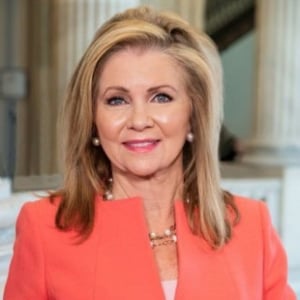
U.S. Senator Marsha Blackburn was sworn in to the Senate in January 2019. Marsha Blackburn was elected to the U.S. Senate in 2018, and is currently serving her first term representing the state of Tennessee. Before her election to the Senate, Marsha represented Tennessee’s 7th Congressional District.
Marsha’s public service is dedicated to promoting opportunities for women and making America a more prosperous place to live. Marsha’s leadership philosophy is based on her experiences in the private sector as a small business woman and author, as well as being a mother and grandmother.
Marsha went to college on a 4-H scholarship and worked her way through school selling books for the Southwestern Company as one of their first female sales associates, and later as one of their first female sales managers.
She then became Director of Retail Fashion and Special Events for the Castner Knott Company, which was a Nashville-based regional department store. Later, Marsha founded her own business, Marketing Strategies, which focused on the retail marketplace, as well as electronic and print media.
Marsha began her career in public service in 1995 when she was named executive director of the Tennessee Film, Entertainment, and Music Commission. In 1998, she was elected to the Tennessee State Senate. In the state legislature, she earned a reputation for fiscal responsibility and government accountability by identifying waste and offering realistic solutions to Tennessee’s budget challenges.
While serving in the Tennessee Senate, Marsha led a statewide grassroots campaign to defeat a proposed state income tax. The tax was defeated, and Marsha’s leadership earned her a reputation as an anti-tax champion. In 2014, the people of Tennessee passed an amendment to the state constitution to expressly prohibit a state income tax – a fitting cap to a 14-year battle.
In 2002, Marsha was elected to represent the people of Tennessee’s 7th Congressional District based on her record in the state legislature. She brought her Tennessee values to Washington, DC, and became a leader in the fight for small, efficient federal government that is accountable to its citizens. As a Congressman, Marsha was often selected by her colleagues to lead the charge for principled conservativism. Her congressional career was also noted for her Chairmanship of the Energy and Commerce Committee’s Subcommittee on Communications and Technology, as well as bipartisan expertise in defending songwriters’ and performers’ rights.
Marsha is a member of numerous charitable organizations and is an active member of her church, Christ Presbyterian.
Marsha and her husband Chuck live in Williamson County, Tennessee. They have two children, Mary Morgan (Paul) Ketchel and Chad (Hillary) Blackburn, and two grandsons. Originally from Laurel, Mississippi, Marsha is a graduate of Mississippi State University.

Director, Technology Licensing Office & Director, Catalysts, Office of Strategic Alliances & Technology Transfer, MIT
Lesley is formerly the director of the Office of Technology Management at the University of Illinois at Urbana-Champaign (UIUC), where she had responsibility for the oversight of all technology transfer activities across the university. In this position, Lesley demonstrated leadership in all phases of the commercialization of technology and intellectual property, ranging from proof of concept programs to enable the launch of startup companies through patenting and licensing processes. She played a major role in developing a thriving innovation ecosystem at UIUC, marked by strong corporate engagement. Beyond her university focus, Lesley has been a prominent speaker nationally and internationally on the economic importance of technology transfer.
Lesley holds bachelor’s and master’s degrees in education from the University of Edinburgh and the University of Georgia, respectively, and an MBA from UIUC.
Professor of Law, Antonin Scalia Law School, George Mason University
Adam Mossoff is Professor of Law at Antonin Scalia Law School, George Mason University. He has published extensively on why patents, copyrights, and other intellectual property rights have been—and should be—legally secured to innovators and creators as property rights. His scholarship has been relied on by the United States Supreme Court, by lower federal courts, and by U.S. federal agencies. He has been invited to testify numerous times before the U.S. Senate and the House of Representatives on intellectual property legislation. His writings on intellectual property policy have also appeared in the Wall Street Journal, New York Times, Forbes, Investors Business Daily, and in other media outlets. His journal articles can be downloaded here.
Professor Mossoff is a longstanding member of the Executive Committee of the Intellectual Property Practice Group of the Federalist Society, on which he served as Chairperson from 2016-2018, and he is Chair of the Intellectual Property Working Group of the Regulatory Transparency Project of the Federalist Society. He is a Senior Fellow and Chair of the Forum for Intellectual Property at the Hudson Institute, a Visiting Intellectual Property Fellow at the Heritage Foundation, and a member of the Board of Directors of the Center for Intellectual Property Understanding. He is a member of the Intellectual Property Rights Policy Committee of ANSI and he has served as Chair and Vice-Chair of the Intellectual Property Committee of the IEEE-USA, on which he remains a member in good standing.
Dinsmore & Shohl LLP, Partner
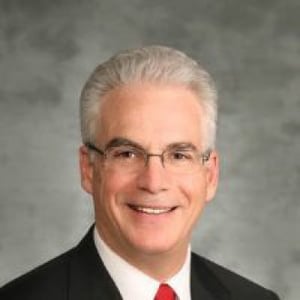
Brian is chair of Dinsmore’s IP Transactions and Licensing Group. He is a past president of the Licensing Executives Society (USA and Canada), Inc. (LES), the leading professional society devoted to commercial transactions and licensing of intangible property. He continues to serve LES as senior vice president for public policy. He has extensive experience in a wide variety of commercial transactions involving intangible property, and is known for creative licensing strategies to promote collaboration and resolve IP-related disputes.
He is a registered patent attorney with more than 30 years of experience before the U.S. Patent and Trademark Office and in structuring global IP portfolios and strategies. He has extensive experience in contested proceedings before the USPTO Patent Trial and Appeal Board (interferences, Inter Partes Reviews and Post Grant Reviews), as well as contested matters in federal courts and the International Trade Commission. His wide-ranging experience affords a broad, informed perspective and facilitates creative approaches to intellectual property management, licensing, and enforcement.
In addition to his leadership of LES, Brian served on the LES Board of Directors 2007 – 2018. In his ongoing role as senior vice president for public policy he is responsible for coordinating the society’s public policy positions, amicus briefs, and congressional outreach. He works with legislators, the executive branch, and the courts toward consistent, reliable, and prudent IP laws and policies that advance innovation and economic development. He has also served LES as trustee for education, and has long served as an author, editor, and faculty member of LES educational programs focusing on best practices in IP licensing.
He is also active in the global society, LES International (LESI). Among his various roles in LESI, he has served as co-chair of the External Relations Committee, coordinating public policy and advocacy for effective IP laws and policies among the 33 regional LES societies, and with various non-governmental organizations such as WIPO and EPO. In 2019, he received the LES International President’s Service Recognition Award.
Brian also serves as Chair of the Board of Directors of the Bayh Dole Coalition, a 501(c)(4) corporation dedicated to promoting and preserving the Bayh Dole Act. He is a member of the Founding Board of Directors of the United States Intellectual Property Alliance (USIPA), an organization dedicated to raising public awareness of, and appreciation for, the role of IP in fostering innovation for the public good; and he has served on the DC Bar Intellectual Property Section Steering Committee (2013 – 2016).
In 2016, Brian testified before the U.S. Senate Committee on Small Business and Entrepreneurship on the effects of the America Invents Act on small business and entrepreneurs in a hearing entitled “An Examination of Changes to the U.S. Patent System & Impacts on America's Small Businesses.”
With his longstanding and diverse patent practice, in both private practice and in-house, Brian advises corporate leaders and entrepreneurs in effective IP procurement practices, and in maximizing value from IP assets. He has been retained as a testifying witness in IP and licensing disputes by the U.S. Department of Justice, the U.S. Department of the Treasury, and by various private enterprises.
Brian has been acknowledged by IAM magazine as among its “IAM Strategy 300”, the world’s leading IP strategists, and among “The World's Leading Patent and Technology Licensing Lawyers.”
He earned B.S. and M.S. degrees from the Department of Chemistry, Rochester Institute of Technology, Rochester, NY; and Juris Doctor from Syracuse University, College of Law, Syracuse, NY (1986).
Brian has served his alma mater as president of the RIT Alumni Association 2005 – 2009; and now serves on the RIT Board of Trustees as a member of its Executive Committee, chair of its Student Life Committee, and vice-chair of its Committee on Trustees. In 2013, Brian was awarded RIT’s Outstanding Alumnus Award, and in 2005 he was awarded the Distinguished Alumnus Award by RIT’s College of Science.
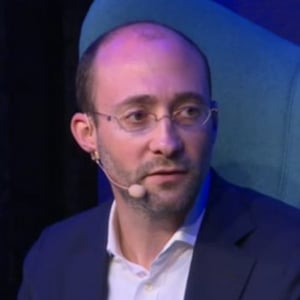
Vice President, Global Head IP Affairs, Novartis
Corey Salsberg is the Vice President of Global Head IP Affairs in Novartis. He leads the Global IP Affairs function for Novartis, a multinational Fortune Global 200 healthcare company and world leader in innovative medicines and biosimilars.
Corey is a member of the Steering Committee and founder of the WIPO-World Economic Forum Inventors Assistance Program (IAP), an innovative international program aimed at providing pro bono IP services to under-resourced inventors and small businesses in developing countries.
Furthermore, he is one of architects of the Patent Information Initiative for Medicines (Pat-INFORMED), a voluntary global online database of patent information now co-sponsored and hosted by WIPO and the International Federation of Pharmaceutical Manufacturers (IFPMA).
Globally recognized thought leader, advocate, and speaker on IP, innovation and related topics. Recent engagements include testimony before the US Senate Judiciary, keynote address at the 7th Annual IBA World Life Sciences Conference, and many others.
Corey is a Stanford University of Law School graduate and Yale University undergraduate.

Former President & CEO, The Federalist Society for Law and Public Policy Studies
Eugene B. Meyer, former President and CEO of the Federalist Society, has served as Executive Director, CEO, and/or President of the organization for more than 40 years. He is responsible for shepherding the organization from a small group of law students to a community of 90,000 lawyers, law students, academics, judges, and others interested in the rule of law. The Society now includes a Student Chapter at nearly every ABA-accredited law school in the country and Lawyers Chapters in 220 major cities across the nation. Gene earned his B.A. in history at Yale in 1975 and his M.A. in political science from the London School of Economics in 1976. Gene currently serves on the boards of the U.S. Chess Center, the Holman Foundation, the Sarah Scaife Foundation, and the advisory board of the Adam Smith Society. He holds the title of International Chess Master.
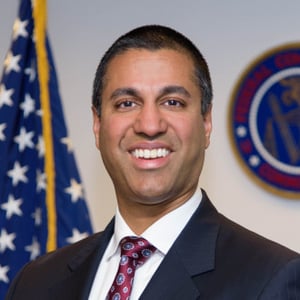
Nonresident Fellow, American Enterprise Institute
Ajit Pai, a former chairman of the Federal Communications Commission (FCC), is a nonresident fellow at the American Enterprise Institute, where he focuses on issues pertaining to technology and innovation, telecommunications regulatory policy, and market-based incentives for investment in broadband deployment. Concurrently, he is a partner at Searchlight Capital Partners, a global investment firm.
Mr. Pai’s distinguished career at the FCC includes two leadership roles following presidential appointments. He was appointed commissioner by President Barack Obama in 2012, designated chairman by President Donald Trump in 2017, and twice confirmed by the US Senate. While at the helm of the FCC, Mr. Pai had a transformative impact on the future of US technology and communications policy, implementing major initiatives to help close the digital divide; advance US leadership in 5G and other wireless technologies; promote innovation; protect consumers, public safety, and national security; and make the agency itself more open, transparent, and data-driven.
Earlier in his career, Mr. Pai served in various public-sector positions in the FCC’s Office of General Counsel, the US Department of Justice, the US Senate Judiciary Committee, and the US District Court for the Eastern District of Louisiana. He also worked as a partner at Jenner & Block and associate general counsel at Verizon Communications.
Mr. Pai graduated with honors from Harvard University, where he received a bachelor’s degree, and from the University of Chicago Law School, where he received a law degree and was an editor on the University of Chicago Law Review.
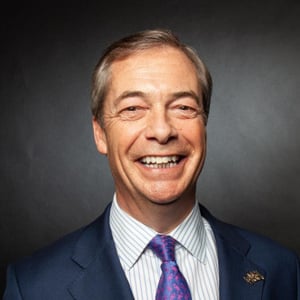
Former Member of the European Parliament, South East England Constituency

Professor Emeritus of Law, Antonin Scalia Law School, George Mason University
Jeremy A. Rabkin is a Professor Emeritus of Law at the Antonin Scalia Law School, George Mason University. Before joining the faculty in June 2007, he was for over two decades a professor in the Department of Government at Cornell University. Professor Rabkin serves on the board of directors of the Center for Individual Rights, a public interest law firm based in Washington, D.C. Previously he was a board member of the U.S. Institute of Peace and the board of academic advisors of the American Enterprise Institute.
Professor Rabkin’s books include Law Without Nations? (Princeton University Press, 2005). He authored “If You Need a Friend, Don’t Call a Cosmopolitan,” a chapter in Varieties of Sovereignty and Citizenship (Sigal R. Ben-Porath & Rogers M. Smith eds., University of Pennsylvania Press, 2012). His articles have appeared in major law reviews and political science journals and his journalistic contributions in a range of magazines and newspapers, including the Washington Post and the Wall Street Journal.

Stevenson Bernard Professor, George Washington University Law School
The Honorable F. Scott Kieff is the Stevenson Bernard Professor at George Washington University Law School and a Visiting Fellow at Stanford University’s Hoover Institution.
He served as Commissioner of the U.S. International Trade Commission from 2013-2017. He also served during the Bush, Obama, and Trump Administrations in the part-time leadership of the national security defense-intelligence community.
He was previously a professor of law and medicine at Washington University in Saint Louis and a Senior Fellow at Hoover. A former law clerk to U.S. Circuit Judge Giles S. Rich, he is a graduate of Penn Law School and MIT, where he studied molecular biology and microeconomics. He was elected to the European Academy of Sciences and Arts in 2012 and the Academia Europaea in 2024.
His private sector work through Kieff Strategies LLC (www.kieffstrategies.com) provides neutral services including mediation and compliance, and expert services including crisis management, advising, and testimony.

Founder, Libertas-West Project
Karen Lugo is a constitutional law consultant and national security analyst. She was Director of the Center for Tenth Amendment at Texas Public Policy Foundation from 2013 to 2015. When living in California, she was Co-Director of the Center for Constitutional Jurisprudence Center. From 2005 – 2012, she was a clinical visiting and adjunct professor at Chapman University School of Law where she co-taught the advanced Constitutional Law Clinic. Karen has co-authored and written circuit-level and Supreme Court amicus briefs on such issues as FISA Surveillance, Healthcare Reform, Arizona’s Border Security, Gay Marriage, The Ten Commandments, Eminent Domain, Christian Clubs on University Campuses, and Material Support for Terrorists.
Karen is the founder of the Libertas-West Project, a center for study Islamic integration and radicalization issues. In this capacity, she consulted with the Center for Security Policy to write a book on local over-watch of mosque construction and community engagement called: Mosques in America: A Guide to Accountable Permit Hearings and Continuing Citizen Oversight.
Karen writes and speaks for European and American groups on the importance of basing assimilation efforts on principles of Western exceptionalism. She presented a policy brief to the French Conseil d’Etat analyzing the legal implications of banning the burqa. Ms. Lugo has written one of the most comprehensive overviews of sharia law in American courts, American Family Law and Sharia-Compliant Marriages, for the Federalist Society law journal, Engage. She has written several white papers on the American Law for American Courts legislation and sharia tribunals in America.
Ms. Lugo was an appointee to the California Advisory Committee to the U.S. Commission on Civil Rights. She also taught a Human Rights law course on the contrast between French and English Enlightenment theories in Strasbourg, France.
Until moving from California, Ms. Lugo was a member of the David Horowitz Freedom Center Board of Directors. She was also a regular guest on the Orange County PBS local issues debate program, Inside OC, and she is a contributor to Pajamas Media, National Review Online, City Journal, American Spectator, American Greatness, Townhall.com, American Thinker, Daily Caller, and Family Security Matters. She has been interviewed by dozens of radio hosts and has spoken for civic groups on constitutional and cultural concerns.
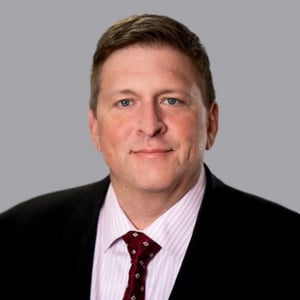
Attorney, Berman Law Group
A resident of Los Angeles, Matthew was born and raised outside of Boston. Growing up in a family of lawyers, he swore he would never be one. After receiving his bachelor's degree and graduating with distinction in his major from Trinity College (Hartford, CT), he was first an entrepreneur in Boston before moving to Los Angeles, where he became a management and marketing executive. He has produced TV commercials and digital media; built domestic and international sales channels for publishing and entertainment products; and developed e-commerce strategies for a variety of consumer products and services. One day he found himself in the middle of an LGBT focused hate crime, and in the process of helping the victim seek justice, discovered a passion for the law and advocacy – and realized you should never say “never.”
A series of subsequent events brought him to law school in South Florida, where he graduated number one in his class and summa cum laude from the Shepard Broad College of Law at Nova Southeastern University in Fort Lauderdale in 2009. Along the way he was editor in chief of the Nova Law Review and received the Student Bar Association’s Award for Academic Excellence, an honor chosen by his fellow students.
Since being admitted to the Florida Bar his career has focused on mass torts, class actions, catastrophic injury, and products liability as a plaintiff’s attorney. Notably, Matthew was a key part of helping to shape and draft the litigation that became In re: Checking Account Overdraft Litigation, which resulted in over $1.3 billion in settlements from dozens of U.S. banks that charged customers unjustified overdraft fees. He was also a key part of shaping and drafting the Florida litigation that became In re: Chinese Manufactured Drywall Product Liability Litigation, which resulted in a $1 billion settlement for thousands of homeowners who unwittingly had defective drywall installed in their homes in the wake of Hurricane Katrina and the mid-2000’s building boom. In 2014, he was appointed co-class counsel in the Red Bull false advertising class action in the Southern District of New York and led the oral argument for the approval of an innovative settlement that provided an option for reimbursement or 4-packs of Red Bull shipped directly to class members.
In 2018 Matthew moved back to Los Angeles, became a member of the California Bar, and subsequently joined Berman Law Group to oversee their complex litigation and west coast operations.

Associate, Wiley Rein LLP
Tatiana Sainati's practice covers complex commercial litigation, arbitration, and the Foreign Corrupt Practices Act (FCPA). She represents corporate clients involved in commercial and international litigations and arbitrations, including government contracts, healthcare, intellectual property, personal injury and other contract and tort disputes positioned in domestic and international courts and tribunals.
Prior to joining Wiley, Tatiana served as a Legal Adviser to Judge Rosemary Barkett on the Iran-United States Claims Tribunal in the Hague, advising on complex, politically sensitive state-to-state cases, and as a law clerk to the Honorable M. Margaret McKeown on the U.S. Court of Appeals for the Ninth Circuit.

Grove Human Rights Scholar, Hunter College
Dr. Teng Biao is an academic lawyer, currently Grove Human Rights Scholar at Hunter College. He co-founded two human rights NGOs in Beijing –the Open Constitution Initiative, and China Against the Death Penalty. He is one of the earliest promoters of the Rights Defense Movement in China, and the manifesto Charter 08, for which Dr. Liu Xiaobo was awarded the Nobel Peace Prize. His research includes human rights, criminaljustice, social movement and political transition in China. Teng is working on two books, one is on China’s human rights movement, and another on China’s threat to global human rights and freedom.
Faculty Director Emeritus, New York University School of Law
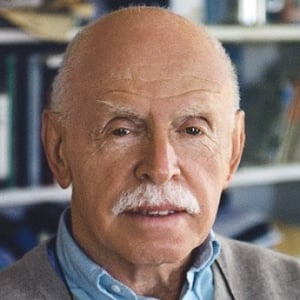
Jerome A. Cohen, a professor at NYU School of Law since 1990 and U.S.-Asia Law Institute Faculty Director Emeritus, is a leading American expert on Chinese law and government. A pioneer in the field, Prof. Cohen began studying and teaching about China’s legal system in the early 1960s and from 1964 to 1979 introduced the teaching of Asian law into the curriculum of Harvard Law School, where he served as Jeremiah Smith Professor, Associate Dean and Director of East Asian Legal Studies. Prof. Cohen served for several years as C.V. Starr Senior Fellow and Director of Asia Studies at the Council on Foreign Relations, where he currently is an Adjunct Senior Fellow. In addition, he has published hundreds of scholarly articles on various topics as well as a book, China Today, co-authored with his wife, Joan Lebold Cohen, and a regular series of journalistic opinion pieces for various newspapers. Today, Prof. Cohen continues his research and writing on Asian law, specifically focusing on legal institutions, criminal justice reform, dispute resolution, human rights and the role of international law relating to China and Taiwan.
Jerry has his and his wife's name in the chair professor of Harvard Law School in 2018 and received a honorary doctor degree from Yale University in 2020.
Professor of Law, Catholic University of America
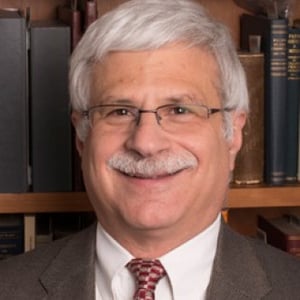
Robert Destro served as Assistant Secretary for the Bureau of Democracy, Human Rights, and Labor (DRL). He has a long history as a human rights advocate and civil rights attorney with expertise in elections, employment, and constitutional law. Destro has served on the faculty at Catholic University’s Columbus School of Law since 1982 and served as its interim dean from 1999 to 2001. He was founding director of the Interdisciplinary Program in Law and Religion and served as the Director of the Institute for Policy Research and Catholic Studies from June 2017 to September 2019. He served as a commissioner on the U.S. Commission on Civil Rights from 1983-1989. His legal work includes collaboration with the Peace Research Institute Oslo in a fifteen-year dialogue among Muslim, Christian, and Jewish leaders in the legal, business, and religious fields in the United States and the Middle East as well as efforts promoting the release of political prisoners and prisoners of conscience in the Middle East. He has served as voting rights counsel for the Ohio Secretary of State and has advocated for the first amendment rights of individuals and organizations.
He earned a B.A. from Miami University, Ohio, and a J.D. from the University of California at Berkeley. He is an active member of the Bar in Ohio and California.
The rest of his bio including his publications are available on the Catholic University Faculty page linked here.

China, the U.S., and Global Climate Policy: Cooperation, or Competition?
Gabriel Collins, Daniel G. West
The Biden Administration recently made headlines by announcing a greenhouse gas emissions reduction target for...
Civil Liberties and COVID-19 Shelter in Place Orders
J. Gregory Grisham, Julia D. Mahoney
On November 19, 2020, the Federalist Society's Regulatory Transparency Project and the Memphis Lawyers Chapter...
Deep Dive Episode 143 – Pandemics & Patents: Do Patents Help or Hinder Medical Innovation?
George Horvath, Adam Mossoff, Camilla Hrdy
On October 28, 2020 the Federalist Society's Akron Student Chapter hosted George Horvath and Adam...
Book Review: America in the World: A History of U.S. Diplomacy and Foreign Policy
Matthew R. A. Heiman, Robert Zoellick
Ranging from Benjamin Franklin, Alexander Hamilton, and Thomas Jefferson to Henry Kissinger, Ronald Reagan, and...
A Conversation with Senator Marsha Blackburn
Kaytlin Roholt Lane, Marsha Blackburn
The DC Young Lawyers Chapter hosted Sen. Marsha Blackburn of Tennessee, a member of the...
Deep Dive Episode 118 – Can Patents and Bayh-Dole Fuel Innovation in the Time of COVID-19?
Lesley Millar-Nicholson, Adam Mossoff, Brian O'Shaughnessy, Corey Salsberg
Activists and politicians have responded to the worldwide COVID-19 pandemic by calling for the elimination...
Address by Ajit Pai
Eugene B. Meyer, Ajit V. Pai
Ajit Pai, Chairman of the U.S. Federal Communications Commission, gave an address at the Federalist...
World Politics After Brexit: A Conversation with Nigel Farage
Nigel Farage, Jeremy A. Rabkin
Nigel Farage has been campaigning for Britain’s withdrawal from the European Union since 1999, when...
COVID-19 and Suing the Chinese Communist Party (CCP) and the Chinese Government?
F. Scott Kieff, Karen J. Lugo, Matthew T. Moore, Tatiana Sainati
The first lawsuit against the Chinese government seeking damages for personal and property injuries was filed in...
The Chinese Government's Record of Human Rights: Marking the June 4th Anniversary of Tiananmen Square
Teng Biao, Jerome A. Cohen, Robert A. Destro
On June 4th, 1989, after several weeks of pro-democracy protests, the Chinese Communist Party (CCP)...