
Partner, Willkie Farr & Gallagher LLP
Francis J. Menton, Jr. is a partner in the Litigation Department and Co-Chair of the Business Litigation Practice Group of Willkie Farr & Gallagher LLP in New York. Mr. Menton specializes in complex and technical commercial litigation, principally contract and securities claims. He has a nationwide trial practice, and has tried cases in state and federal courts including Colorado, Kansas, Massachusetts, Michigan, New York, Puerto Rico, Texas, Virginia, and Washington.
Mr. Menton is the author of "New Opportunities for Defendants in Securities Class Actions," Engage (Fall 2007), "Can You Protect Yourself Against Identity Theft?" New York Law Journal (April 29, 2002), and "Top Ten Federal Government Efforts to Suppress Free Speech," Federalist Society Free Speech and Election Law News (Summer 2000, 1999, 1998). He also authored "Evaluating Claims Under The Securities Litigation Reform Act of 1995," New York Law Journal (January 6, 1996).
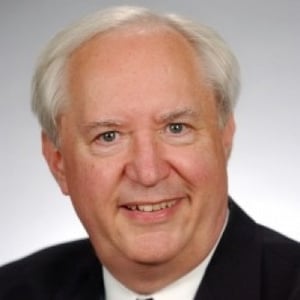
Oppenheim Professor Emeritus of Antitrust and Trade Regulation Law, George Washington University Law School
Thomas D. Morgan is Oppenheim Professor of Antitrust and Trade Regulation Law Emeritus at George Washington University. He was Dean of the Emory University School of Law and on the faculties of the University of Illinois and Brigham Young University. He is co-author of Problems and Materials on Professional Responsibility (14th Ed. 2022), with Professors Mitt Regan and John Dzienkowski. Professor Morgan served as an Associate Reporter for both the American Law Institute’s Restatement of the Law (Third): The Law Governing Lawyers and the American Bar Association’s Ethics 2000 Commission. He is an Executive Committee member of the Federalist Society’s Professional Responsibility and Legal Education Practice Group and a member of the ABA Business Law Section’s Professional Responsibility committee. His book, “The Vanishing American Lawyer” (2010), was published by Oxford University Press.
President, Illinois State Bar Association, and Shareholder, Webb, P.C.
While experienced in a wide range of matters, Mr. Thies concentrates his practice in the areas of business representation and general litigation. In this regard, he has advised large and small businesses as to many substantive areas of the law and litigated in jurisdictions throughout the state of Illinois, from trial courts to the Illinois Supreme Court. Among other matters, he has handled national and state-wide class actions in state and federal jurisdictions.
Of note, Mr. Thies was co-counsel on behalf of the successful appellant in two significant Illinois Consumer Fraud Act putative class actions litigated in the Illinois Supreme Court, Shannon v. Boise Cascade Corporation, 208 Ill.2d 517, and Oliveira v. Amoco Oil Company, 201 Ill.2d 134. He was also lead defense counsel in the resolution of four related putative class actions filed in multiple federal and state jurisdictions in Illinois (the lead case receiving final settlement approval in the U.S. District Court for the Northern District of Illinois).
In the area of employment and labor, Mr. Thies has handled cases in numerous forums and has led labor negotiations. Besides practicing before federal and state courts, he also practices before a number of administrative bodies including the Illinois Human Rights Commission, the Equal Employment Opportunity Commission, the National Labor Relations Board, and similar labor/management forums. He successfully litigated (and was lead counsel in) the case of Mills vs. Health Care Service Corporation, 171 F.3d 450 in the Seventh Circuit Court of Appeals, which established new law in the area of reverse gender discrimination. The Mills case has been cited more than 200 times by courts across the nation.

Executive Vice President, The Federalist Society
Dean Reuter is Executive Vice President at the Federalist Society for Law and Public Policy Studies. He has served in two federal government agency Offices of the Inspector General, as Counsel to the Inspector General and Deputy Inspector General, responsible for policing the use of federal funds granted and contracted through those agencies. As such, he helped conduct and oversee criminal investigations across the country. He is the principal author of the non-fiction book, The Hidden Nazi: The Untold Story of America's Deal with the Devil, and editor of Liberty’s Nemesis: The Unchecked Expansion of the State and Confronting Terror: 9/11 and the Future of American National Security. He was appointed by the President and served as Vice-Chairman of the Board of Directors of the Corporation for National and Community Service, and recently served as an appointee on the U.S. Commission on Presidential Scholars. He is a graduate of Hood College (BA with Honors) and the University of Maryland School of Law.

President, Cass & Associates, PC
Ronald A. Cass is Dean Emeritus of Boston University School of Law (where he was Dean from 1990-2004), President of Cass & Associates, PC, former Vice-Chairman and Commissioner of the U.S. International Trade Commission, former faculty member at Boston University School of Law and the University of Virginia Law School, and Distinguished Senior Fellow at the C. Boyden Gray Center for the Study of the Administrative State. Dean Cass also sits as an arbitrator for commercial, international, and intellectual property rights disputes, and is a former United States member of the Panel of Conciliators of the International Centre for Settlement of Investment Disputes. He is a member of the Council of the Administrative Conference of the United States and has received seven presidential appointments, spanning Presidents Ronald Reagan to Donald J. Trump.
As a law professor, lecturer, and scholar, Dean Cass has been teaching and writing about a wide array of legal issues on topics such as administrative law and regulation, antitrust, constitutional law, communications, intellectual property, international trade, separation of powers, and legal process. He has published more than 160 scholarly books, chapters, articles, and papers, including a leading casebook on administrative law. Dean Cass has taught judges as well as students in schools of law, economics, business, and public policy and has held academic appointments in the United States, Europe, and Latin America.
In addition to his academic work, Dean Cass has participated in numerous important legal cases as an amicus, consultant, or expert, and has advised businesses, law firms, investment funds, and government agencies on a range of trade, antitrust, intellectual property, and regulatory issues. He has a broad range of affiliations with professional groups, and has received numerous honors, fellowships and awards.
Dean Cass is a graduate of the University of Virginia and the University of Chicago Law School.
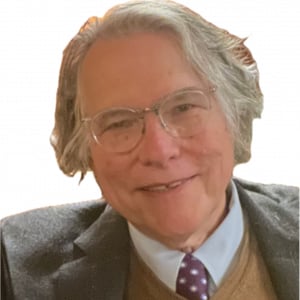
Partner, Earth and Water Law; retired Yale Law School professor (1981-2025), Yangtze River Distinguished Professor, Guangzhou Law School, ChinaDistinguished Adjunct Professor at Antonin Scalia Law School
E. Donald Elliott is a Florence Rogatz Visiting Professor of Law at Yale Law School and a leading academic scholar, as well as practitioner, in the fields of administrative and environmental law. He is “one of the most well-known, well-regarded environmental law professors in the nation,” according to John Cruden, former President of the Environmental Law Institute and Assistant Attorney General, Environment and Natural Resources Division, U.S. Department of Justice during the Obama administration. Elliott has been on the Yale Law faculty since 1981 and currently teaches courses in environmental law, energy law, administrative law and civil procedure. He is also senior of counsel in the Washington D.C. office of Covington & Burling LLP, and co-chair of the firm's Environmental Practice Group. From 2003 until he joined Covington in 2013, he was a partner in Willkie Farr & Gallagher LLP, chairing the firm’s worldwide Environment, Health and Safety Department.
From 1989 to 1991, Elliott served as Assistant Administrator and General Counsel of the U.S. Environmental Protection Agency (EPA). In 1993, he was named to the first endowed chair in environmental law and policy at any major American law school, the Julien and Virginia Cornell Chair in Environmental Law and Litigation at Yale Law School. From 2003-2009, he was a member of the National Academy of Sciences Board on Environmental Studies and Toxicology, which advises the federal government on environmental issues. Elliott also testifies frequently in Congress on environmental issues.
He has served as a consultant on improving the relationship of law and science to the Federal Courts Study Committee, which was chartered by Congress to make recommendations for improving the federal courts, and to the Carnegie Commission for Law, Science and Government. He co-chaired the National Environmental Policy Institute’s Committee on Improving Science at EPA.
Elliott is a Senior Fellow of the Administrative Conference of the United States (ACUS) and an elected member of the American College of Environmental Lawyers and the American Law Institute. He serves on the Board of the Connecticut Fund for the Environment and as chair of its legal committee, as well on the Advisory Board for NYU’s Institute for Policy Integrity. He is a former member of the boards of the Environmental Law Institute, and the Center for Clean Air Policy. He is the author or coauthor of seven books and has published more than 70 articles in professional journals. He was named one of the top 25 environmental attorneys in the United States by the National Law Journal and is highly ranked in Chambers USA: Leading Lawyers for Business; Best Lawyers in America; D.C. Super Lawyers; Who’s Who in American Law; and Who’s Who in the World.
He earned both his B.A., summa cum laude and Phi Beta Kappa, and his J.D. from Yale. Following graduation, he was a law clerk for Gerhard Gesell in the U.S. District Court for the District of Columbia, and for Chief Judge David Bazelon of the U.S. Court of Appeals for the District of Columbia Circuit.
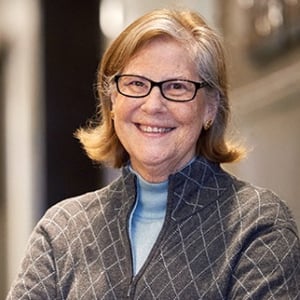
Professor of Practice and Distinguished Scholar in Residence; Co-Director of the Legislative and Regulatory Process Clinic, New York University School of Law
Sally Katzen served in the Clinton administration as administrator of the Office of Information and Regulatory Affairs in the Office of Management and Budget (OMB), as deputy assistant to the president for economic policy and deputy director of the National Economic Council in the White House, and then as the deputy director for management at OMB. She served as the head of the Agency Review Group for the Obama/Biden transition with responsibility for the Executive Office of the President and all government-wide agencies. She has taught both undergraduates and at various law schools. She is a member of the American Law Institute and the National Academy of Public Administration, has served on multiple panels for the National Academy of Sciences, testified frequently before Congress, and is on the board of several non-profit organizations. Before joining the Clinton administration, Katzen was a partner in the Washington, DC, law firm of Wilmer, Cutler & Pickering, specializing in regulatory and legislative matters, while serving in leadership roles in the American Bar Association (including chair of the Section on Administrative Law and Regulatory Practice and as DC delegate to the ABA’s House of Delegates), as president of the Federal Communications Bar Association and as president of the Women’s Legal Defense Fund. She graduated from Smith College and the University of Michigan Law School, where she was the first woman editor-in-chief of the Law Review. She clerked for Judge J. Skelly Wright of the United States Court of Appeals for the District of Columbia Circuit and served in the Carter administration as the general counsel of the Council on Wage and Price Stability in the Executive Office of the President.
Professor of Practice in Administrative Law, American University Washington College of Law
Jeffrey Lubbers is a Professor of Practice in Administrative Law and is also active in WCL's Law and Government Program. He holds expertise in administrative law; government structure and procedures; and regulatory policy and procedures. In addition to teaching Administrative Law, he also teaches the Washington Lawyer Seminar, the one required course in the LLM in Law and Government Program. He also serves as WCL's liaison to Japanese Law Schools, having taught at WCL's "sister school," Ritsumeikan University School of Law in Kyoto, for five summers. From 1982-1995, Professor Lubbers was the research director of the Administrative Conference of the United States. He has published two books: A Guide to Federal Agency Rulemaking (4th ed., ABA Press, 2006) andFederal Administrative Procedure Sourcebook (4th ed., ABA Press, 2008). He is also the editor of the ABA's Developments in Administrative Law and Regulatory Practice (10 vols., 1998-2008).
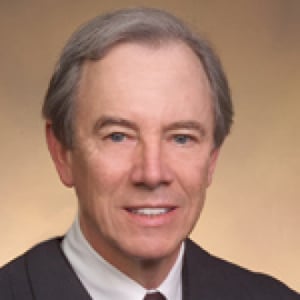
Judge, United States Court of Appeals, D.C. Circuit
Judge Randolph was confirmed by the Senate and appointed to the United States Court of Appeals for the District of Columbia Circuit by President George H. W. Bush in July 1990.
Judge Randolph received his B.S. degree in 1966 from Drexel University, majoring in economics and basic engineering. At Drexel, he was president of the debate society, vice president of the Student Senate, and a member of the varsity wrestling squad. In 1969, he received his J.D. from the University of Pennsylvania, summa cum laude. Judge Randolph ranked first in his law school class all three years and was managing editor of the Law Review.
After graduation, Judge Randolph served as a law clerk to Judge Henry J. Friendly of the United States Court of Appeals for the Second Circuit in New York.
Admitted to the California Bar in 1970 (and to the District of Columbia bar in 1973), Judge Randolph worked as Assistant to the Solicitor General, U.S. Department of Justice, in Washington, D.C., 1970-1973.
After two years in private practice, Judge Randolph was named Deputy Solicitor General of the United States, a position he held from 1975-1977.
In 1979, Judge Randolph was appointed Special Counsel to the Committee on Standards of Official Conduct (the Ethics Committee) of the United States House of Representatives, remaining in this position until 1980.
In the 1980s, Judge Randolph held a number of positions while in private practice, including Special Assistant Attorney General for the states of New Mexico (1985 90), Utah (1986-1990) and Montana (1983-1990). He also served as a Member of the Advisory Panel of the Federal Courts Study Committee.
From 1971-1990, Judge Randolph argued 23 times in the United States Supreme Court, winning 20 of his cases.
As an Adjunct Professor of Law at Georgetown University Law Center from 1974-1978 he taught courses in civil procedure and injunctions. In 1992 he taught a course in constitutional law. He is a Distinguished Adjunct Professor of Law at George Mason School of Law and for the past ten years has been teaching First Amendment law. He also serves on the Judicial Advisory Board of the George Mason University Law and Economics Center.
From 1993 through 1995 Judge Randolph was a member of the Committee on Codes of Conduct of the Judicial Conference of the United States, and from 1995 to 1998 served as the Committee's chairman. He also served as the judicial liaison to the American Bar Association’s Administrative Law Section.
Judge Randolph is a member of the Board of Visitors at Drexel University Law School and was named to the “Drexel One Hundred” as a leading alumnus. In 2002 he was presented the James Wilson Award by the University of Pennsylvania Law School. In November 2005 he delivered the Fifth Annual Barbara K. Olson Memorial Lecture at the Annual Lawyers Convention of the Federalist Society. He has published numerous articles, the most recent of which is in the June 2006 issue of the Harvard Journal of Law and Public Policy.
Judge Randolph is married to the Honorable Eileen J. O’Connor, formerly Assistant Attorney General, Tax Division, U.S. Department of Justice. His son John Trevor Randolph is an investment banker in New York. His daughter Cynthia Lee Randolph is an artist living in San Francisco.
President, Cass & Associates, PC
Ronald A. Cass is Dean Emeritus of Boston University School of Law (where he was Dean from 1990-2004), President of Cass & Associates, PC, former Vice-Chairman and Commissioner of the U.S. International Trade Commission, former faculty member at Boston University School of Law and the University of Virginia Law School, and Distinguished Senior Fellow at the C. Boyden Gray Center for the Study of the Administrative State. Dean Cass also sits as an arbitrator for commercial, international, and intellectual property rights disputes, and is a former United States member of the Panel of Conciliators of the International Centre for Settlement of Investment Disputes. He is a member of the Council of the Administrative Conference of the United States and has received seven presidential appointments, spanning Presidents Ronald Reagan to Donald J. Trump.
As a law professor, lecturer, and scholar, Dean Cass has been teaching and writing about a wide array of legal issues on topics such as administrative law and regulation, antitrust, constitutional law, communications, intellectual property, international trade, separation of powers, and legal process. He has published more than 160 scholarly books, chapters, articles, and papers, including a leading casebook on administrative law. Dean Cass has taught judges as well as students in schools of law, economics, business, and public policy and has held academic appointments in the United States, Europe, and Latin America.
In addition to his academic work, Dean Cass has participated in numerous important legal cases as an amicus, consultant, or expert, and has advised businesses, law firms, investment funds, and government agencies on a range of trade, antitrust, intellectual property, and regulatory issues. He has a broad range of affiliations with professional groups, and has received numerous honors, fellowships and awards.
Dean Cass is a graduate of the University of Virginia and the University of Chicago Law School.
Partner, Earth and Water Law; retired Yale Law School professor (1981-2025), Yangtze River Distinguished Professor, Guangzhou Law School, ChinaDistinguished Adjunct Professor at Antonin Scalia Law School
E. Donald Elliott is a Florence Rogatz Visiting Professor of Law at Yale Law School and a leading academic scholar, as well as practitioner, in the fields of administrative and environmental law. He is “one of the most well-known, well-regarded environmental law professors in the nation,” according to John Cruden, former President of the Environmental Law Institute and Assistant Attorney General, Environment and Natural Resources Division, U.S. Department of Justice during the Obama administration. Elliott has been on the Yale Law faculty since 1981 and currently teaches courses in environmental law, energy law, administrative law and civil procedure. He is also senior of counsel in the Washington D.C. office of Covington & Burling LLP, and co-chair of the firm's Environmental Practice Group. From 2003 until he joined Covington in 2013, he was a partner in Willkie Farr & Gallagher LLP, chairing the firm’s worldwide Environment, Health and Safety Department.
From 1989 to 1991, Elliott served as Assistant Administrator and General Counsel of the U.S. Environmental Protection Agency (EPA). In 1993, he was named to the first endowed chair in environmental law and policy at any major American law school, the Julien and Virginia Cornell Chair in Environmental Law and Litigation at Yale Law School. From 2003-2009, he was a member of the National Academy of Sciences Board on Environmental Studies and Toxicology, which advises the federal government on environmental issues. Elliott also testifies frequently in Congress on environmental issues.
He has served as a consultant on improving the relationship of law and science to the Federal Courts Study Committee, which was chartered by Congress to make recommendations for improving the federal courts, and to the Carnegie Commission for Law, Science and Government. He co-chaired the National Environmental Policy Institute’s Committee on Improving Science at EPA.
Elliott is a Senior Fellow of the Administrative Conference of the United States (ACUS) and an elected member of the American College of Environmental Lawyers and the American Law Institute. He serves on the Board of the Connecticut Fund for the Environment and as chair of its legal committee, as well on the Advisory Board for NYU’s Institute for Policy Integrity. He is a former member of the boards of the Environmental Law Institute, and the Center for Clean Air Policy. He is the author or coauthor of seven books and has published more than 70 articles in professional journals. He was named one of the top 25 environmental attorneys in the United States by the National Law Journal and is highly ranked in Chambers USA: Leading Lawyers for Business; Best Lawyers in America; D.C. Super Lawyers; Who’s Who in American Law; and Who’s Who in the World.
He earned both his B.A., summa cum laude and Phi Beta Kappa, and his J.D. from Yale. Following graduation, he was a law clerk for Gerhard Gesell in the U.S. District Court for the District of Columbia, and for Chief Judge David Bazelon of the U.S. Court of Appeals for the District of Columbia Circuit.
Professor of Practice and Distinguished Scholar in Residence; Co-Director of the Legislative and Regulatory Process Clinic, New York University School of Law
Sally Katzen served in the Clinton administration as administrator of the Office of Information and Regulatory Affairs in the Office of Management and Budget (OMB), as deputy assistant to the president for economic policy and deputy director of the National Economic Council in the White House, and then as the deputy director for management at OMB. She served as the head of the Agency Review Group for the Obama/Biden transition with responsibility for the Executive Office of the President and all government-wide agencies. She has taught both undergraduates and at various law schools. She is a member of the American Law Institute and the National Academy of Public Administration, has served on multiple panels for the National Academy of Sciences, testified frequently before Congress, and is on the board of several non-profit organizations. Before joining the Clinton administration, Katzen was a partner in the Washington, DC, law firm of Wilmer, Cutler & Pickering, specializing in regulatory and legislative matters, while serving in leadership roles in the American Bar Association (including chair of the Section on Administrative Law and Regulatory Practice and as DC delegate to the ABA’s House of Delegates), as president of the Federal Communications Bar Association and as president of the Women’s Legal Defense Fund. She graduated from Smith College and the University of Michigan Law School, where she was the first woman editor-in-chief of the Law Review. She clerked for Judge J. Skelly Wright of the United States Court of Appeals for the District of Columbia Circuit and served in the Carter administration as the general counsel of the Council on Wage and Price Stability in the Executive Office of the President.
Professor of Practice in Administrative Law, American University Washington College of Law
Jeffrey Lubbers is a Professor of Practice in Administrative Law and is also active in WCL's Law and Government Program. He holds expertise in administrative law; government structure and procedures; and regulatory policy and procedures. In addition to teaching Administrative Law, he also teaches the Washington Lawyer Seminar, the one required course in the LLM in Law and Government Program. He also serves as WCL's liaison to Japanese Law Schools, having taught at WCL's "sister school," Ritsumeikan University School of Law in Kyoto, for five summers. From 1982-1995, Professor Lubbers was the research director of the Administrative Conference of the United States. He has published two books: A Guide to Federal Agency Rulemaking (4th ed., ABA Press, 2006) andFederal Administrative Procedure Sourcebook (4th ed., ABA Press, 2008). He is also the editor of the ABA's Developments in Administrative Law and Regulatory Practice (10 vols., 1998-2008).
Judge, United States Court of Appeals, D.C. Circuit
Judge Randolph was confirmed by the Senate and appointed to the United States Court of Appeals for the District of Columbia Circuit by President George H. W. Bush in July 1990.
Judge Randolph received his B.S. degree in 1966 from Drexel University, majoring in economics and basic engineering. At Drexel, he was president of the debate society, vice president of the Student Senate, and a member of the varsity wrestling squad. In 1969, he received his J.D. from the University of Pennsylvania, summa cum laude. Judge Randolph ranked first in his law school class all three years and was managing editor of the Law Review.
After graduation, Judge Randolph served as a law clerk to Judge Henry J. Friendly of the United States Court of Appeals for the Second Circuit in New York.
Admitted to the California Bar in 1970 (and to the District of Columbia bar in 1973), Judge Randolph worked as Assistant to the Solicitor General, U.S. Department of Justice, in Washington, D.C., 1970-1973.
After two years in private practice, Judge Randolph was named Deputy Solicitor General of the United States, a position he held from 1975-1977.
In 1979, Judge Randolph was appointed Special Counsel to the Committee on Standards of Official Conduct (the Ethics Committee) of the United States House of Representatives, remaining in this position until 1980.
In the 1980s, Judge Randolph held a number of positions while in private practice, including Special Assistant Attorney General for the states of New Mexico (1985 90), Utah (1986-1990) and Montana (1983-1990). He also served as a Member of the Advisory Panel of the Federal Courts Study Committee.
From 1971-1990, Judge Randolph argued 23 times in the United States Supreme Court, winning 20 of his cases.
As an Adjunct Professor of Law at Georgetown University Law Center from 1974-1978 he taught courses in civil procedure and injunctions. In 1992 he taught a course in constitutional law. He is a Distinguished Adjunct Professor of Law at George Mason School of Law and for the past ten years has been teaching First Amendment law. He also serves on the Judicial Advisory Board of the George Mason University Law and Economics Center.
From 1993 through 1995 Judge Randolph was a member of the Committee on Codes of Conduct of the Judicial Conference of the United States, and from 1995 to 1998 served as the Committee's chairman. He also served as the judicial liaison to the American Bar Association’s Administrative Law Section.
Judge Randolph is a member of the Board of Visitors at Drexel University Law School and was named to the “Drexel One Hundred” as a leading alumnus. In 2002 he was presented the James Wilson Award by the University of Pennsylvania Law School. In November 2005 he delivered the Fifth Annual Barbara K. Olson Memorial Lecture at the Annual Lawyers Convention of the Federalist Society. He has published numerous articles, the most recent of which is in the June 2006 issue of the Harvard Journal of Law and Public Policy.
Judge Randolph is married to the Honorable Eileen J. O’Connor, formerly Assistant Attorney General, Tax Division, U.S. Department of Justice. His son John Trevor Randolph is an investment banker in New York. His daughter Cynthia Lee Randolph is an artist living in San Francisco.
Partner, Willkie Farr & Gallagher LLP
Francis J. Menton, Jr. is a partner in the Litigation Department and Co-Chair of the Business Litigation Practice Group of Willkie Farr & Gallagher LLP in New York. Mr. Menton specializes in complex and technical commercial litigation, principally contract and securities claims. He has a nationwide trial practice, and has tried cases in state and federal courts including Colorado, Kansas, Massachusetts, Michigan, New York, Puerto Rico, Texas, Virginia, and Washington.
Mr. Menton is the author of "New Opportunities for Defendants in Securities Class Actions," Engage (Fall 2007), "Can You Protect Yourself Against Identity Theft?" New York Law Journal (April 29, 2002), and "Top Ten Federal Government Efforts to Suppress Free Speech," Federalist Society Free Speech and Election Law News (Summer 2000, 1999, 1998). He also authored "Evaluating Claims Under The Securities Litigation Reform Act of 1995," New York Law Journal (January 6, 1996).
Oppenheim Professor Emeritus of Antitrust and Trade Regulation Law, George Washington University Law School
Thomas D. Morgan is Oppenheim Professor of Antitrust and Trade Regulation Law Emeritus at George Washington University. He was Dean of the Emory University School of Law and on the faculties of the University of Illinois and Brigham Young University. He is co-author of Problems and Materials on Professional Responsibility (14th Ed. 2022), with Professors Mitt Regan and John Dzienkowski. Professor Morgan served as an Associate Reporter for both the American Law Institute’s Restatement of the Law (Third): The Law Governing Lawyers and the American Bar Association’s Ethics 2000 Commission. He is an Executive Committee member of the Federalist Society’s Professional Responsibility and Legal Education Practice Group and a member of the ABA Business Law Section’s Professional Responsibility committee. His book, “The Vanishing American Lawyer” (2010), was published by Oxford University Press.
President, Illinois State Bar Association, and Shareholder, Webb, P.C.
While experienced in a wide range of matters, Mr. Thies concentrates his practice in the areas of business representation and general litigation. In this regard, he has advised large and small businesses as to many substantive areas of the law and litigated in jurisdictions throughout the state of Illinois, from trial courts to the Illinois Supreme Court. Among other matters, he has handled national and state-wide class actions in state and federal jurisdictions.
Of note, Mr. Thies was co-counsel on behalf of the successful appellant in two significant Illinois Consumer Fraud Act putative class actions litigated in the Illinois Supreme Court, Shannon v. Boise Cascade Corporation, 208 Ill.2d 517, and Oliveira v. Amoco Oil Company, 201 Ill.2d 134. He was also lead defense counsel in the resolution of four related putative class actions filed in multiple federal and state jurisdictions in Illinois (the lead case receiving final settlement approval in the U.S. District Court for the Northern District of Illinois).
In the area of employment and labor, Mr. Thies has handled cases in numerous forums and has led labor negotiations. Besides practicing before federal and state courts, he also practices before a number of administrative bodies including the Illinois Human Rights Commission, the Equal Employment Opportunity Commission, the National Labor Relations Board, and similar labor/management forums. He successfully litigated (and was lead counsel in) the case of Mills vs. Health Care Service Corporation, 171 F.3d 450 in the Seventh Circuit Court of Appeals, which established new law in the area of reverse gender discrimination. The Mills case has been cited more than 200 times by courts across the nation.
President, Cass & Associates, PC
Ronald A. Cass is Dean Emeritus of Boston University School of Law (where he was Dean from 1990-2004), President of Cass & Associates, PC, former Vice-Chairman and Commissioner of the U.S. International Trade Commission, former faculty member at Boston University School of Law and the University of Virginia Law School, and Distinguished Senior Fellow at the C. Boyden Gray Center for the Study of the Administrative State. Dean Cass also sits as an arbitrator for commercial, international, and intellectual property rights disputes, and is a former United States member of the Panel of Conciliators of the International Centre for Settlement of Investment Disputes. He is a member of the Council of the Administrative Conference of the United States and has received seven presidential appointments, spanning Presidents Ronald Reagan to Donald J. Trump.
As a law professor, lecturer, and scholar, Dean Cass has been teaching and writing about a wide array of legal issues on topics such as administrative law and regulation, antitrust, constitutional law, communications, intellectual property, international trade, separation of powers, and legal process. He has published more than 160 scholarly books, chapters, articles, and papers, including a leading casebook on administrative law. Dean Cass has taught judges as well as students in schools of law, economics, business, and public policy and has held academic appointments in the United States, Europe, and Latin America.
In addition to his academic work, Dean Cass has participated in numerous important legal cases as an amicus, consultant, or expert, and has advised businesses, law firms, investment funds, and government agencies on a range of trade, antitrust, intellectual property, and regulatory issues. He has a broad range of affiliations with professional groups, and has received numerous honors, fellowships and awards.
Dean Cass is a graduate of the University of Virginia and the University of Chicago Law School.
Partner, Earth and Water Law; retired Yale Law School professor (1981-2025), Yangtze River Distinguished Professor, Guangzhou Law School, ChinaDistinguished Adjunct Professor at Antonin Scalia Law School
E. Donald Elliott is a Florence Rogatz Visiting Professor of Law at Yale Law School and a leading academic scholar, as well as practitioner, in the fields of administrative and environmental law. He is “one of the most well-known, well-regarded environmental law professors in the nation,” according to John Cruden, former President of the Environmental Law Institute and Assistant Attorney General, Environment and Natural Resources Division, U.S. Department of Justice during the Obama administration. Elliott has been on the Yale Law faculty since 1981 and currently teaches courses in environmental law, energy law, administrative law and civil procedure. He is also senior of counsel in the Washington D.C. office of Covington & Burling LLP, and co-chair of the firm's Environmental Practice Group. From 2003 until he joined Covington in 2013, he was a partner in Willkie Farr & Gallagher LLP, chairing the firm’s worldwide Environment, Health and Safety Department.
From 1989 to 1991, Elliott served as Assistant Administrator and General Counsel of the U.S. Environmental Protection Agency (EPA). In 1993, he was named to the first endowed chair in environmental law and policy at any major American law school, the Julien and Virginia Cornell Chair in Environmental Law and Litigation at Yale Law School. From 2003-2009, he was a member of the National Academy of Sciences Board on Environmental Studies and Toxicology, which advises the federal government on environmental issues. Elliott also testifies frequently in Congress on environmental issues.
He has served as a consultant on improving the relationship of law and science to the Federal Courts Study Committee, which was chartered by Congress to make recommendations for improving the federal courts, and to the Carnegie Commission for Law, Science and Government. He co-chaired the National Environmental Policy Institute’s Committee on Improving Science at EPA.
Elliott is a Senior Fellow of the Administrative Conference of the United States (ACUS) and an elected member of the American College of Environmental Lawyers and the American Law Institute. He serves on the Board of the Connecticut Fund for the Environment and as chair of its legal committee, as well on the Advisory Board for NYU’s Institute for Policy Integrity. He is a former member of the boards of the Environmental Law Institute, and the Center for Clean Air Policy. He is the author or coauthor of seven books and has published more than 70 articles in professional journals. He was named one of the top 25 environmental attorneys in the United States by the National Law Journal and is highly ranked in Chambers USA: Leading Lawyers for Business; Best Lawyers in America; D.C. Super Lawyers; Who’s Who in American Law; and Who’s Who in the World.
He earned both his B.A., summa cum laude and Phi Beta Kappa, and his J.D. from Yale. Following graduation, he was a law clerk for Gerhard Gesell in the U.S. District Court for the District of Columbia, and for Chief Judge David Bazelon of the U.S. Court of Appeals for the District of Columbia Circuit.
Professor of Practice and Distinguished Scholar in Residence; Co-Director of the Legislative and Regulatory Process Clinic, New York University School of Law
Sally Katzen served in the Clinton administration as administrator of the Office of Information and Regulatory Affairs in the Office of Management and Budget (OMB), as deputy assistant to the president for economic policy and deputy director of the National Economic Council in the White House, and then as the deputy director for management at OMB. She served as the head of the Agency Review Group for the Obama/Biden transition with responsibility for the Executive Office of the President and all government-wide agencies. She has taught both undergraduates and at various law schools. She is a member of the American Law Institute and the National Academy of Public Administration, has served on multiple panels for the National Academy of Sciences, testified frequently before Congress, and is on the board of several non-profit organizations. Before joining the Clinton administration, Katzen was a partner in the Washington, DC, law firm of Wilmer, Cutler & Pickering, specializing in regulatory and legislative matters, while serving in leadership roles in the American Bar Association (including chair of the Section on Administrative Law and Regulatory Practice and as DC delegate to the ABA’s House of Delegates), as president of the Federal Communications Bar Association and as president of the Women’s Legal Defense Fund. She graduated from Smith College and the University of Michigan Law School, where she was the first woman editor-in-chief of the Law Review. She clerked for Judge J. Skelly Wright of the United States Court of Appeals for the District of Columbia Circuit and served in the Carter administration as the general counsel of the Council on Wage and Price Stability in the Executive Office of the President.
Professor of Practice in Administrative Law, American University Washington College of Law
Jeffrey Lubbers is a Professor of Practice in Administrative Law and is also active in WCL's Law and Government Program. He holds expertise in administrative law; government structure and procedures; and regulatory policy and procedures. In addition to teaching Administrative Law, he also teaches the Washington Lawyer Seminar, the one required course in the LLM in Law and Government Program. He also serves as WCL's liaison to Japanese Law Schools, having taught at WCL's "sister school," Ritsumeikan University School of Law in Kyoto, for five summers. From 1982-1995, Professor Lubbers was the research director of the Administrative Conference of the United States. He has published two books: A Guide to Federal Agency Rulemaking (4th ed., ABA Press, 2006) andFederal Administrative Procedure Sourcebook (4th ed., ABA Press, 2008). He is also the editor of the ABA's Developments in Administrative Law and Regulatory Practice (10 vols., 1998-2008).
Judge, United States Court of Appeals, D.C. Circuit
Judge Randolph was confirmed by the Senate and appointed to the United States Court of Appeals for the District of Columbia Circuit by President George H. W. Bush in July 1990.
Judge Randolph received his B.S. degree in 1966 from Drexel University, majoring in economics and basic engineering. At Drexel, he was president of the debate society, vice president of the Student Senate, and a member of the varsity wrestling squad. In 1969, he received his J.D. from the University of Pennsylvania, summa cum laude. Judge Randolph ranked first in his law school class all three years and was managing editor of the Law Review.
After graduation, Judge Randolph served as a law clerk to Judge Henry J. Friendly of the United States Court of Appeals for the Second Circuit in New York.
Admitted to the California Bar in 1970 (and to the District of Columbia bar in 1973), Judge Randolph worked as Assistant to the Solicitor General, U.S. Department of Justice, in Washington, D.C., 1970-1973.
After two years in private practice, Judge Randolph was named Deputy Solicitor General of the United States, a position he held from 1975-1977.
In 1979, Judge Randolph was appointed Special Counsel to the Committee on Standards of Official Conduct (the Ethics Committee) of the United States House of Representatives, remaining in this position until 1980.
In the 1980s, Judge Randolph held a number of positions while in private practice, including Special Assistant Attorney General for the states of New Mexico (1985 90), Utah (1986-1990) and Montana (1983-1990). He also served as a Member of the Advisory Panel of the Federal Courts Study Committee.
From 1971-1990, Judge Randolph argued 23 times in the United States Supreme Court, winning 20 of his cases.
As an Adjunct Professor of Law at Georgetown University Law Center from 1974-1978 he taught courses in civil procedure and injunctions. In 1992 he taught a course in constitutional law. He is a Distinguished Adjunct Professor of Law at George Mason School of Law and for the past ten years has been teaching First Amendment law. He also serves on the Judicial Advisory Board of the George Mason University Law and Economics Center.
From 1993 through 1995 Judge Randolph was a member of the Committee on Codes of Conduct of the Judicial Conference of the United States, and from 1995 to 1998 served as the Committee's chairman. He also served as the judicial liaison to the American Bar Association’s Administrative Law Section.
Judge Randolph is a member of the Board of Visitors at Drexel University Law School and was named to the “Drexel One Hundred” as a leading alumnus. In 2002 he was presented the James Wilson Award by the University of Pennsylvania Law School. In November 2005 he delivered the Fifth Annual Barbara K. Olson Memorial Lecture at the Annual Lawyers Convention of the Federalist Society. He has published numerous articles, the most recent of which is in the June 2006 issue of the Harvard Journal of Law and Public Policy.
Judge Randolph is married to the Honorable Eileen J. O’Connor, formerly Assistant Attorney General, Tax Division, U.S. Department of Justice. His son John Trevor Randolph is an investment banker in New York. His daughter Cynthia Lee Randolph is an artist living in San Francisco.
Shareholder, Farney Daniels, PC
Jonathan B. Baker is Professor of Law at American University Washington College of Law, where he teaches courses primarily in the areas of antitrust and economic regulation. He served as the Chief Economist of the Federal Communications Commission from 2009 to 2011, and as the Director of the Bureau of Economics at the Federal Trade Commission from 1995 to 1998. Previously, he worked as a Senior Economist at the President’s Council of Economic Advisers, Special Assistant to the Deputy Assistant Attorney General for Economics in the Antitrust Division of the Department of Justice, an Assistant Professor at Dartmouth's Amos Tuck School of Business Administration, an Attorney Advisor to the Acting Chairman of the Federal Trade Commission, and an antitrust lawyer in private practice. Professor Baker is the co-author of an antitrust casebook, a past Editorial Chair of Antitrust Law Journal, and a past member of the Council of the American Bar Association’s Section of Antitrust Law. He has published widely in the fields of antitrust law and policy and industrial organization economics. In 2004 he received American University’s Faculty Award for Outstanding Scholarship, Research, and Other Professional Accomplishments, and in 1998 he received the Federal Trade Commission’s Award for Distinguished Service. He has a J.D. from Harvard and a Ph.D. in economics from Stanford University.

Laurence A. Tisch Professor of Law and Director, Classical Liberal Institute, New York University School of Law; Director, Classical Liberal Institute, Civitas Institute University of Texas at Austin
Richard A. Epstein is the Laurence A. Tisch Professor of Law, at New York University, a senior research fellow at the Civitas Institute at the University of Texas Austin, and a senior Lecturer, the University of Chicago. He received an LL.D., h.c . from the University of Ghent, 2003 , and an LLD h.c . from the University of Siegen in 2018 and the Bradley Prize in 2011. He has been a member of the American Academy of Arts and Sciences since 1985. He has edited both the Journal of Legal Studies (1981-1991) and the Journal of Law and Economics (1991-2001). He is also a founder and director of the Classical Liberal Institute at NYU Law School. His most recent book is The Classical Liberal Constitution: The Uncertain Quest for Limited Government (2014). His other books include Takings: Private Property and the Power of Eminent Domain ( 1985); Bargaining with the State (1993); Simple Rules for a Complex World (1995); Principles for a Free Society: Reconciling Individual Liberty and the Common Good (1998); Skepticism and Freedom: A Modern Theory of Classical Liberalism (2003); Design for Liberty: Private Property, Public Administration and the Rule of Law (2011), and most recently, The Myth of Birthright citizenship—and Beyond (2026). He has taught courses in , administrative law, antitrust, constitutional, contracts, environmental law, land use planning; real property, torts and water law. He has written and spoken extensively on a wide range of topics, and is writes a regular column for Defining Ideas.

Founding Partner, Lodestar Law and Economics PLLC
Josh is the founder of Lodestar Law and Economics, PLLC. On January 1, 2013, the U.S. Senate unanimously confirmed Wright as a Commissioner of the Federal Trade Commission (FTC). He is a leading scholar in antitrust law, economics, intellectual property, regulation, and consumer protection, and has published more than 100 articles and book chapters, co-authored a leading antitrust casebook, and edited several book volumes focusing on these issues. Commentators have recognized Wright as “widely considered his generation’s greatest mind on antitrust law,” and his academic work ranks him as one of the most cited antitrust academics in the world. Wright was also awarded the Paul M. Bator Award by the Federalist Society in 2014 to “an academic who demonstrated excellence in legal scholarship, a commitment to teaching, a concern for students, and who has made a significant public impact.” Wright also served as the Executive Director of the Global Antitrust Institute, the world’s premiere academic institute focused upon antitrust education for judges and regulators and has taught hundreds of judges and thousands of regulators from dozens of countries.
Wright’s practice focuses upon helping clients solve complex competition, consumer protection, and regulatory problems by providing legal and economic analysis, strategic advice and counseling, and economic expert testimony.
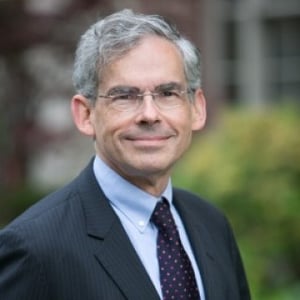
Andrew Sabin Professor of Professional Practice and Founder and Faculty Director of the Sabin Center for Climate Change Law, Columbia University Law School
The founder and faculty director of the groundbreaking Sabin Center for Climate Change Law and one of the foremost environmental lawyers in the nation, Michael Gerrard is an advocate, litigator, teacher, and scholar who has pioneered cutting-edge legal tools and strategies for addressing climate change. He writes and teaches courses on environmental law, climate change law, and energy regulation. He was the chair of the faculty of Columbia University’s renowned Earth Institute from 2015 to 2018 and now holds a joint appointment to the faculty of its successor, the Columbia Climate School.
For three decades, before joining the Columbia Law School faculty in 2009, Gerrard practiced law in New York, most recently as the partner in charge of the New York office of Arnold & Porter. As an environmental lawyer, he tried numerous cases and argued many appeals in federal and state courts and administrative tribunals. He also handled the environmental aspects of diverse transactions and development projects and provided regulatory compliance advice to an array of clients in the private and public sectors. Several publications rated him the leading environmental lawyer in New York and one of the leaders in the world.
Partner, Willkie Farr & Gallagher LLP
Francis J. Menton, Jr. is a partner in the Litigation Department and Co-Chair of the Business Litigation Practice Group of Willkie Farr & Gallagher LLP in New York. Mr. Menton specializes in complex and technical commercial litigation, principally contract and securities claims. He has a nationwide trial practice, and has tried cases in state and federal courts including Colorado, Kansas, Massachusetts, Michigan, New York, Puerto Rico, Texas, Virginia, and Washington.
Mr. Menton is the author of "New Opportunities for Defendants in Securities Class Actions," Engage (Fall 2007), "Can You Protect Yourself Against Identity Theft?" New York Law Journal (April 29, 2002), and "Top Ten Federal Government Efforts to Suppress Free Speech," Federalist Society Free Speech and Election Law News (Summer 2000, 1999, 1998). He also authored "Evaluating Claims Under The Securities Litigation Reform Act of 1995," New York Law Journal (January 6, 1996).

Controlling Legal Practice: Public Ownership of Stock in Law Firms - Podcast
Francis J. Menton, Thomas D. Morgan, John E. Thies, Dean Reuter
All U.S. jurisdictions (except DC) prohibit anyone not a lawyer from owning an equity interest...
Controlling Legal Practice: Public Ownership of Stock in Law Firms
The Future of Regulatory Review
Ronald A. Cass, E. Donald Elliott, Sally Katzen, Jeffrey Lubbers, A. Raymond Randolph
On January 18, President Obama announced through a Wall Street Journal opinion piece that he...
The Future of Regulatory Review
Ronald A. Cass, E. Donald Elliott, Sally Katzen, Jeffrey Lubbers, A. Raymond Randolph
On January 18, President Obama announced through a Wall Street Journal opinion piece that he...
The Future of Regulatory Review
Administrative Law & Regulation Practice Group
Washington, DCThe FTC and the Internet
New York, New YorkDoes Climate Science Warrant Greenhouse Gas Regulation?
New York, New York