
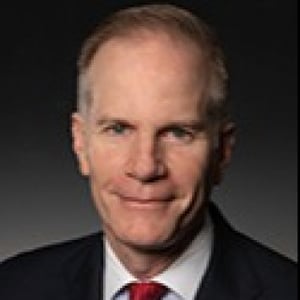
Partner, Duane Morris LLP
William M. (Bill) McSwain practices in the area of litigation with a focus on white-collar criminal matters, internal investigations and complex business litigation. Bill is the immediate past U.S. Attorney for the Eastern District of Pennsylvania (EDPA), which is one of the nation’s most populous districts, with nearly six million people residing within Philadelphia and its eight surrounding counties. As U.S. Attorney, he served as the chief federal law enforcement officer in the EDPA, responsible for all federal criminal prosecutions, investigations and civil litigation involving the United States. He supervised a staff of approximately 300, including more than 140 Assistant U.S. Attorneys, at offices in Philadelphia and Allentown, PA.
Most importantly, Bill is a fighter who knows how to win. For example, as U.S. Attorney, he personally served as lead counsel in United States v Safehouse, in which he challenged Philadelphia’s plan to be the first city in the country to open supervised heroin injection sites. He argued and won the case in the U.S. Court of Appeals for the Third Circuit, which ruled that such sites would violate the federal Controlled Substances Act.
A former U.S. Marine Corps infantry officer and scout/sniper platoon commander, Bill brings an aggressive and creative approach to private practice, representing clients involved in government investigations and high stakes litigation. In particular, he enjoys taking on the challenge of winning seemingly “impossible” cases. He has lived that mindset from the very outset of his legal career.
For example, prior to his service as U.S. Attorney, Bill took on the case of an Iranian immigrant, Ken Hamidi, who was locked in a battle with Intel over emails that Mr. Hamidi has sent to Intel employees. After Mr. Hamidi had lost his case in the trial and intermediate appellate courts with other counsel, Bill took over and argued the case in front of the Supreme Court of California. In Intel Corp. v. Hamidi, 30 Cal.4th 1342 (2003), he won a 4-3 decision that established the legal rules for trespass liability on the Internet, one of the most significant cyberlaw rulings in the United States. Soon thereafter, Bill represented Chester County, Pennsylvania in its dispute regarding the attempted removal of an historic Ten Commandments plaque hanging on the façade of the County Courthouse. After the County lost at trial with other counsel, Bill stepped in and argued the case in front of the U.S. Court of Appeals for the Third Circuit. In Chester County, PA v. Freethought Society, et al., 334 F.3d 247 (3d Cir. 2003), he won a 3-0 decision that preserved the plaque, which is hanging on the Courthouse to this day. In one of his most challenging assignments, Bill began representing the Boy Scouts in 2008 in its dispute with the City of Philadelphia. Facing eviction from its historic headquarters building, the Scouts sued the City, alleging a violation of their First Amendment rights. In Cradle of Liberty Council, Boy Scouts of America v. City of Philadelphia, No. 2:08-cv-02429-RB (E.D. Pa.), Bill won a nationally publicized, three-week jury trial, and even secured a court ruling that the City had to pay the Scouts’ attorney’s fees.
Bill understands that, in a very real sense, anybody or any organization squaring off against the government – especially against the federal government – is an underdog. Bill has a long record of success advocating for clients in those situations. For example, in United States v. Bruno, No. 2:13-cr-00039-LS-6 (E.D. Pa.), he represented a Pennsylvania judge against federal conspiracy, wire fraud and mail fraud charges and won a full acquittal after a two-month jury trial. In United States. v. Brown, No. 2:12-cr-00367-RBS-1 (E.D. Pa.), Bill represented a nationally renowned charter school educator who faced a massive 67-count indictment alleging conspiracy, wire fraud, obstruction of justice and witness tampering. After a two-month trial, the jury acquitted Bill’s client on several counts and deadlocked on the others. The government eventually withdrew all of the deadlocked charges.
His record in the courtroom notwithstanding, Bill is also a thoughtful, intellectually curious strategist who has resolved numerous contentious matters out of court on terms his clients found favorable. He is a graduate of Yale University (B.A., cum laude, 1991) and the Harvard Law School (J.D., 2000), where he was an editor of the Harvard Law Review, won the Ames Moot Court Competition and received the George Leisure Award as the Best Oralist in the Ames Competition. He is an adjunct lecturer in law at the University of Pennsylvania Law School. He began his legal career by clerking for the Hon. Marjorie O. Rendell, U.S. Circuit Judge of the U.S. Court of Appeals for the Third Circuit.
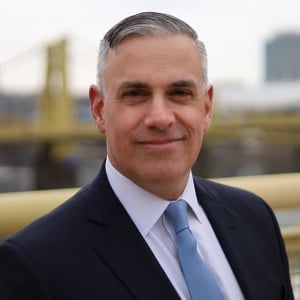
Partner, Jones Day
Scott Brady, a former United States Attorney, is an experienced litigator who represents companies and individuals in significant government investigations, complex civil litigation, and at trial. Scott's practice is focused on representing clients facing grand jury and regulatory investigations and government enforcement actions, conducting internal investigations, advising on the Foreign Corrupt Practices Act, and defending False Claims Act claims. He is the only former U.S. Attorney practicing actively in western Pennsylvania.
Prior to rejoining Jones Day, Scott served as the chief federal law enforcement officer for western Pennsylvania, responsible for enforcement of federal law in 25 counties with 4 million residents. During his tenure, Scott led coordinated actions with agencies across the United States and Europe to combat cybercrime, fight hate crime and terrorism, and prosecute fraud. Under his direction, the U.S. Attorney's Office led an international coalition in the prosecution of officers of the Russian Main Intelligence Directorate (GRU) for a series of cyberattacks around the world, brought charges following the tragic shooting at the Tree of Life Synagogue in Pittsburgh, and created a first-in-the-nation joint federal and state task force with the Pennsylvania Attorney General to investigate coronavirus-related fraud. Scott served on the Attorney General's Advisory Committee, advising on national policy for the Department of Justice.
Scott previously served as head of litigation for a publicly traded Pittsburgh-based financial management company, where he helped lead its expansion into new markets in Asia and Europe. He previously served as an Assistant U.S. Attorney, prosecuting white collar crime. Scott also worked in international relief and development in Europe, the Middle East, and Central Asia.
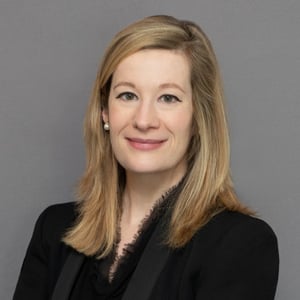
Partner, Williams & Connolly
Sarah Harris is a partner in Williams & Connolly’s Supreme Court and Appellate practice, where she represents clients in high-stakes appeals in the U.S. Supreme Court and federal and state appellate courts across the country. She has argued five cases before the U.S. Supreme Court, and she has presented many arguments in federal courts of appeals and state appellate courts. Her cases have run the gamut of substantive areas, including constitutional law—especially First Amendment and separation-of-powers issues—as well as administrative law, arbitration, class actions, antitrust, False Claims Act litigation, commercial litigation, and federal civil procedure.
Sarah is widely recognized for her appellate advocacy. Chambers USA has recognized her as “Up and Coming” in Appellate Law. She has been named to Bloomberg Law’s 40 Under 40 list of top lawyers nationwide and to Benchmark Litigation’s “40 & Under Hot List,” as well as a an appellate “Rising Star” by The National Law Journal and Law360, a “Next Generation Lawyer” by The Legal 500, and as one of Bloomberg Law’s “Five Fresh Faces to Know in Appellate.”
Sarah clerked for Justice Clarence Thomas on the Supreme Court of the United States, Judge Laurence Silberman on the United States Court of Appeals for the D.C. Circuit, and Judge Sandra Lynch on the United States Court of Appeals for the First Circuit. Before joining Williams & Connolly, she served as a Deputy Assistant Attorney General in the Department of Justice’s Office of Legal Counsel.
Sarah received her undergraduate degree summa cum laude from Princeton University, and her J.D. magna cum laude from Harvard Law School. She also holds a Ph.D. and M. Phil. from the University of Cambridge.
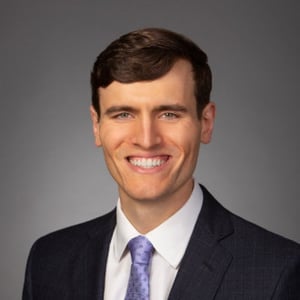
Solicitor General, Attorney General's Office, Alabama
Edmund LaCour is the current Solicitor General of Alabama, and as such, he serves as the chief appellate lawyer for the State, representing the State before the U.S. Supreme Court, the Alabama Supreme Court, and the U.S. Court of Appeals for the Eleventh Circuit. Before he joined the Attorney General’s Office, Edmund was a partner at the DC office of Kirkland & Ellis LLP, where he represented numerous clients before the Supreme Court, as well as courts of appeals and trial courts. Before joining Kirkland, Edmund practiced at Bancroft PLLC in Washington, DC, and Baker Botts LLP in Houston, Texas. Edmund clerked for the Hon. William H. Pryor Jr. of the U.S. Court of Appeals for the Eleventh Circuit. Edmund holds a J.D. from Yale Law School, an M. Phil. from Trinity College Dublin, and a B.A. from Birmingham-Southern College.
Partner, Duane Morris LLP
William M. (Bill) McSwain practices in the area of litigation with a focus on white-collar criminal matters, internal investigations and complex business litigation. Bill is the immediate past U.S. Attorney for the Eastern District of Pennsylvania (EDPA), which is one of the nation’s most populous districts, with nearly six million people residing within Philadelphia and its eight surrounding counties. As U.S. Attorney, he served as the chief federal law enforcement officer in the EDPA, responsible for all federal criminal prosecutions, investigations and civil litigation involving the United States. He supervised a staff of approximately 300, including more than 140 Assistant U.S. Attorneys, at offices in Philadelphia and Allentown, PA.
Most importantly, Bill is a fighter who knows how to win. For example, as U.S. Attorney, he personally served as lead counsel in United States v Safehouse, in which he challenged Philadelphia’s plan to be the first city in the country to open supervised heroin injection sites. He argued and won the case in the U.S. Court of Appeals for the Third Circuit, which ruled that such sites would violate the federal Controlled Substances Act.
A former U.S. Marine Corps infantry officer and scout/sniper platoon commander, Bill brings an aggressive and creative approach to private practice, representing clients involved in government investigations and high stakes litigation. In particular, he enjoys taking on the challenge of winning seemingly “impossible” cases. He has lived that mindset from the very outset of his legal career.
For example, prior to his service as U.S. Attorney, Bill took on the case of an Iranian immigrant, Ken Hamidi, who was locked in a battle with Intel over emails that Mr. Hamidi has sent to Intel employees. After Mr. Hamidi had lost his case in the trial and intermediate appellate courts with other counsel, Bill took over and argued the case in front of the Supreme Court of California. In Intel Corp. v. Hamidi, 30 Cal.4th 1342 (2003), he won a 4-3 decision that established the legal rules for trespass liability on the Internet, one of the most significant cyberlaw rulings in the United States. Soon thereafter, Bill represented Chester County, Pennsylvania in its dispute regarding the attempted removal of an historic Ten Commandments plaque hanging on the façade of the County Courthouse. After the County lost at trial with other counsel, Bill stepped in and argued the case in front of the U.S. Court of Appeals for the Third Circuit. In Chester County, PA v. Freethought Society, et al., 334 F.3d 247 (3d Cir. 2003), he won a 3-0 decision that preserved the plaque, which is hanging on the Courthouse to this day. In one of his most challenging assignments, Bill began representing the Boy Scouts in 2008 in its dispute with the City of Philadelphia. Facing eviction from its historic headquarters building, the Scouts sued the City, alleging a violation of their First Amendment rights. In Cradle of Liberty Council, Boy Scouts of America v. City of Philadelphia, No. 2:08-cv-02429-RB (E.D. Pa.), Bill won a nationally publicized, three-week jury trial, and even secured a court ruling that the City had to pay the Scouts’ attorney’s fees.
Bill understands that, in a very real sense, anybody or any organization squaring off against the government – especially against the federal government – is an underdog. Bill has a long record of success advocating for clients in those situations. For example, in United States v. Bruno, No. 2:13-cr-00039-LS-6 (E.D. Pa.), he represented a Pennsylvania judge against federal conspiracy, wire fraud and mail fraud charges and won a full acquittal after a two-month jury trial. In United States. v. Brown, No. 2:12-cr-00367-RBS-1 (E.D. Pa.), Bill represented a nationally renowned charter school educator who faced a massive 67-count indictment alleging conspiracy, wire fraud, obstruction of justice and witness tampering. After a two-month trial, the jury acquitted Bill’s client on several counts and deadlocked on the others. The government eventually withdrew all of the deadlocked charges.
His record in the courtroom notwithstanding, Bill is also a thoughtful, intellectually curious strategist who has resolved numerous contentious matters out of court on terms his clients found favorable. He is a graduate of Yale University (B.A., cum laude, 1991) and the Harvard Law School (J.D., 2000), where he was an editor of the Harvard Law Review, won the Ames Moot Court Competition and received the George Leisure Award as the Best Oralist in the Ames Competition. He is an adjunct lecturer in law at the University of Pennsylvania Law School. He began his legal career by clerking for the Hon. Marjorie O. Rendell, U.S. Circuit Judge of the U.S. Court of Appeals for the Third Circuit.
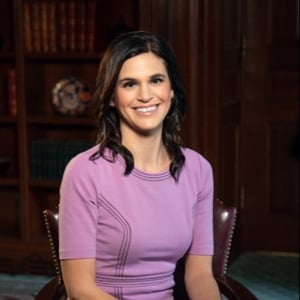
Natalie Mihalek is a member of the Pennsylvania House of Representatives. A native of Allegheny County, Natalie Mihalek’s commitment to public service began early. Immediately after high school graduation, she enlisted to serve in the US Navy and qualified to serve in the Navy’s elite nuclear power program. Her years spent in the engine room working on a nuclear power plant instilled in her a readiness for any situation that lay ahead.
Natalie returned to Pennsylvania after her service, earning her BA from the University of Pittsburgh and went on to earn a law degree from Appalachian School of Law. Her legal career began in the Allegheny County District Attorney’s Office where she served in the general trial division, prosecuting hundreds of cases in the Allegheny County Court of Common Pleas. She would spend the next 10 years in private practice with a focus on family law and criminal defense.
In 2018, suburban voters of Pittsburgh elected Natalie to the Pennsylvania House of Representatives. She quickly earned a reputation as a consensus builder focused on bringing good paying jobs to Pennsylvania and standing up for victims of crime.
Today, Natalie chairs the Southwest Delegation, the largest voting bloc in the General Assembly and a leading voice in conservative policy in the legislature.
Natalie and her husband, Jeremy, live in Peters Township, with their three children.
Partner, Duane Morris LLP
William M. (Bill) McSwain practices in the area of litigation with a focus on white-collar criminal matters, internal investigations and complex business litigation. Bill is the immediate past U.S. Attorney for the Eastern District of Pennsylvania (EDPA), which is one of the nation’s most populous districts, with nearly six million people residing within Philadelphia and its eight surrounding counties. As U.S. Attorney, he served as the chief federal law enforcement officer in the EDPA, responsible for all federal criminal prosecutions, investigations and civil litigation involving the United States. He supervised a staff of approximately 300, including more than 140 Assistant U.S. Attorneys, at offices in Philadelphia and Allentown, PA.
Most importantly, Bill is a fighter who knows how to win. For example, as U.S. Attorney, he personally served as lead counsel in United States v Safehouse, in which he challenged Philadelphia’s plan to be the first city in the country to open supervised heroin injection sites. He argued and won the case in the U.S. Court of Appeals for the Third Circuit, which ruled that such sites would violate the federal Controlled Substances Act.
A former U.S. Marine Corps infantry officer and scout/sniper platoon commander, Bill brings an aggressive and creative approach to private practice, representing clients involved in government investigations and high stakes litigation. In particular, he enjoys taking on the challenge of winning seemingly “impossible” cases. He has lived that mindset from the very outset of his legal career.
For example, prior to his service as U.S. Attorney, Bill took on the case of an Iranian immigrant, Ken Hamidi, who was locked in a battle with Intel over emails that Mr. Hamidi has sent to Intel employees. After Mr. Hamidi had lost his case in the trial and intermediate appellate courts with other counsel, Bill took over and argued the case in front of the Supreme Court of California. In Intel Corp. v. Hamidi, 30 Cal.4th 1342 (2003), he won a 4-3 decision that established the legal rules for trespass liability on the Internet, one of the most significant cyberlaw rulings in the United States. Soon thereafter, Bill represented Chester County, Pennsylvania in its dispute regarding the attempted removal of an historic Ten Commandments plaque hanging on the façade of the County Courthouse. After the County lost at trial with other counsel, Bill stepped in and argued the case in front of the U.S. Court of Appeals for the Third Circuit. In Chester County, PA v. Freethought Society, et al., 334 F.3d 247 (3d Cir. 2003), he won a 3-0 decision that preserved the plaque, which is hanging on the Courthouse to this day. In one of his most challenging assignments, Bill began representing the Boy Scouts in 2008 in its dispute with the City of Philadelphia. Facing eviction from its historic headquarters building, the Scouts sued the City, alleging a violation of their First Amendment rights. In Cradle of Liberty Council, Boy Scouts of America v. City of Philadelphia, No. 2:08-cv-02429-RB (E.D. Pa.), Bill won a nationally publicized, three-week jury trial, and even secured a court ruling that the City had to pay the Scouts’ attorney’s fees.
Bill understands that, in a very real sense, anybody or any organization squaring off against the government – especially against the federal government – is an underdog. Bill has a long record of success advocating for clients in those situations. For example, in United States v. Bruno, No. 2:13-cr-00039-LS-6 (E.D. Pa.), he represented a Pennsylvania judge against federal conspiracy, wire fraud and mail fraud charges and won a full acquittal after a two-month jury trial. In United States. v. Brown, No. 2:12-cr-00367-RBS-1 (E.D. Pa.), Bill represented a nationally renowned charter school educator who faced a massive 67-count indictment alleging conspiracy, wire fraud, obstruction of justice and witness tampering. After a two-month trial, the jury acquitted Bill’s client on several counts and deadlocked on the others. The government eventually withdrew all of the deadlocked charges.
His record in the courtroom notwithstanding, Bill is also a thoughtful, intellectually curious strategist who has resolved numerous contentious matters out of court on terms his clients found favorable. He is a graduate of Yale University (B.A., cum laude, 1991) and the Harvard Law School (J.D., 2000), where he was an editor of the Harvard Law Review, won the Ames Moot Court Competition and received the George Leisure Award as the Best Oralist in the Ames Competition. He is an adjunct lecturer in law at the University of Pennsylvania Law School. He began his legal career by clerking for the Hon. Marjorie O. Rendell, U.S. Circuit Judge of the U.S. Court of Appeals for the Third Circuit.
Partner, Duane Morris LLP
William M. (Bill) McSwain practices in the area of litigation with a focus on white-collar criminal matters, internal investigations and complex business litigation. Bill is the immediate past U.S. Attorney for the Eastern District of Pennsylvania (EDPA), which is one of the nation’s most populous districts, with nearly six million people residing within Philadelphia and its eight surrounding counties. As U.S. Attorney, he served as the chief federal law enforcement officer in the EDPA, responsible for all federal criminal prosecutions, investigations and civil litigation involving the United States. He supervised a staff of approximately 300, including more than 140 Assistant U.S. Attorneys, at offices in Philadelphia and Allentown, PA.
Most importantly, Bill is a fighter who knows how to win. For example, as U.S. Attorney, he personally served as lead counsel in United States v Safehouse, in which he challenged Philadelphia’s plan to be the first city in the country to open supervised heroin injection sites. He argued and won the case in the U.S. Court of Appeals for the Third Circuit, which ruled that such sites would violate the federal Controlled Substances Act.
A former U.S. Marine Corps infantry officer and scout/sniper platoon commander, Bill brings an aggressive and creative approach to private practice, representing clients involved in government investigations and high stakes litigation. In particular, he enjoys taking on the challenge of winning seemingly “impossible” cases. He has lived that mindset from the very outset of his legal career.
For example, prior to his service as U.S. Attorney, Bill took on the case of an Iranian immigrant, Ken Hamidi, who was locked in a battle with Intel over emails that Mr. Hamidi has sent to Intel employees. After Mr. Hamidi had lost his case in the trial and intermediate appellate courts with other counsel, Bill took over and argued the case in front of the Supreme Court of California. In Intel Corp. v. Hamidi, 30 Cal.4th 1342 (2003), he won a 4-3 decision that established the legal rules for trespass liability on the Internet, one of the most significant cyberlaw rulings in the United States. Soon thereafter, Bill represented Chester County, Pennsylvania in its dispute regarding the attempted removal of an historic Ten Commandments plaque hanging on the façade of the County Courthouse. After the County lost at trial with other counsel, Bill stepped in and argued the case in front of the U.S. Court of Appeals for the Third Circuit. In Chester County, PA v. Freethought Society, et al., 334 F.3d 247 (3d Cir. 2003), he won a 3-0 decision that preserved the plaque, which is hanging on the Courthouse to this day. In one of his most challenging assignments, Bill began representing the Boy Scouts in 2008 in its dispute with the City of Philadelphia. Facing eviction from its historic headquarters building, the Scouts sued the City, alleging a violation of their First Amendment rights. In Cradle of Liberty Council, Boy Scouts of America v. City of Philadelphia, No. 2:08-cv-02429-RB (E.D. Pa.), Bill won a nationally publicized, three-week jury trial, and even secured a court ruling that the City had to pay the Scouts’ attorney’s fees.
Bill understands that, in a very real sense, anybody or any organization squaring off against the government – especially against the federal government – is an underdog. Bill has a long record of success advocating for clients in those situations. For example, in United States v. Bruno, No. 2:13-cr-00039-LS-6 (E.D. Pa.), he represented a Pennsylvania judge against federal conspiracy, wire fraud and mail fraud charges and won a full acquittal after a two-month jury trial. In United States. v. Brown, No. 2:12-cr-00367-RBS-1 (E.D. Pa.), Bill represented a nationally renowned charter school educator who faced a massive 67-count indictment alleging conspiracy, wire fraud, obstruction of justice and witness tampering. After a two-month trial, the jury acquitted Bill’s client on several counts and deadlocked on the others. The government eventually withdrew all of the deadlocked charges.
His record in the courtroom notwithstanding, Bill is also a thoughtful, intellectually curious strategist who has resolved numerous contentious matters out of court on terms his clients found favorable. He is a graduate of Yale University (B.A., cum laude, 1991) and the Harvard Law School (J.D., 2000), where he was an editor of the Harvard Law Review, won the Ames Moot Court Competition and received the George Leisure Award as the Best Oralist in the Ames Competition. He is an adjunct lecturer in law at the University of Pennsylvania Law School. He began his legal career by clerking for the Hon. Marjorie O. Rendell, U.S. Circuit Judge of the U.S. Court of Appeals for the Third Circuit.
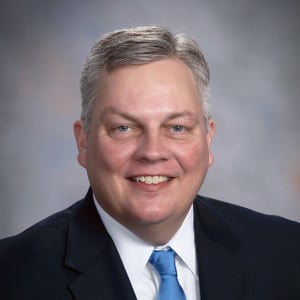
University Professor of Law and Religion and Director of the Eleanor H. McCullen Center for Law, Religion and Public Policy, Villanova University Charles Widger School of Law
Michael P. Moreland was appointed University Professor of Law and Religion and Director of the Eleanor H. McCullen Center for Law, Religion and Public Policy at Villanova University in 2017. Professor Moreland joined the Villanova faculty in 2006 and served as Vice Dean from 2012 to 2015. His research is primarily in the areas of torts, law and religion, constitutional law, and Catholic social thought, and he regularly teaches Torts, First Amendment, seminars in law and religion, and undergraduate courses in ethics.
Professor Moreland is the co-editor of Christianity and Private Law (Routledge, 2021), and his most recent publications include: “The Authority of Tradition: John Henry Newman and Legal Theory” in Christianity and the Making of Irish Law (Routledge, 2025); “Christianity and Torts” in The Oxford Handbook on Christianity and Law, (Oxford University Press, 2023); “Germaneness and Religious Liberty” in the Notre Dame Law Review (2023); “Contingency and Contestation in Christianity and Liberalism” in the Notre Dame Law Review (2023); “Friendship as the Primary Purpose of Law” in The American Journal of Jurisprudence 279 (2022); and “The Moral of Torts” (with Jeffrey Pojanowski) in Christianity and Private Law (Routledge, 2021).
Professor Moreland was a Visiting Professor of Law at the University of Notre Dame and the Mary Ann Remick Senior Visiting Fellow at the Notre Dame Center for Ethics and Culture from 2015 to 2017. He was the Forbes Visiting Fellow at Princeton University in the James Madison Program during academic year 2010-11. He has served as the project leader for grants from the John Templeton Foundation and the Charles Koch Foundation. He serves as the Chair of the Federalist Society’s Religious Liberties Practice Group Executive Committee and the Chair of the Board of Trustees of the Institute for Advanced Catholic Studies at the University of Southern California.
Professor Moreland received his BA in philosophy from the University of Notre Dame, his MA and PhD in theological ethics from Boston College, and his JD from the University of Michigan Law School. Following law school, Professor Moreland clerked for the Honorable Paul J. Kelly Jr., of the United States Court of Appeals for the Tenth Circuit and was an associate at Williams & Connolly LLP in Washington, DC, where he represented clients in First Amendment, professional liability, and products liability matters. Before coming to Villanova, he served as Associate Director for Domestic Policy at the White House under President George W. Bush, where he worked on a range of legal policy issues, including criminal justice, immigration, civil rights, and liability reform.
Temple University James E. Beasley School of Law

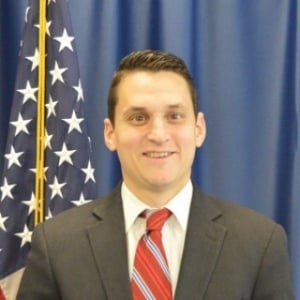
A Fireside Chat with Eastern District of Pennsylvania United States Attorney David Metcalf
Philadelphia Lawyer Chapter
Philadelphia, PAPanel 3: The Advocates: Arguing the Constitution and Achieving Results
2023 Third Circuit Chapters Conference
Philadelphia, PATopics
Safe-Injection Sites and the Importance of Text over Intent
In a corker of a brief filed on May 15, 2020 in the U.S. Court...
Closing Remarks - "Living the Rule of Law"
2018 Pennsylvania Chapters Conference
Philadelphia, PAExecutive Power in the Age of Trump
Philadelphia, Pennsylvania