
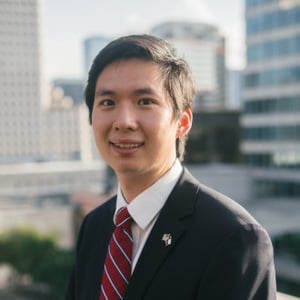
State District Judge, Austin, Texas
Cory Liu is a state district judge in Austin, Texas. He previously served as assistant general counsel to Texas Governor Greg Abbott. Mr. Liu clerked for Judge Andrew Oldham on the U.S. Court of Appeals for the Fifth Circuit and Judge Danny Boggs on the U.S. Court of Appeals for the Sixth Circuit. He was Editor-in-Chief of the Harvard Journal of Law & Public Policy and is a graduate of Harvard Law School and the University of Chicago.

Vice President for Legal Affairs, Goldwater Institute
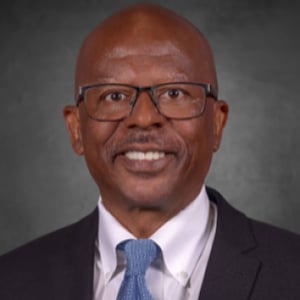
Fred Gray Endowed Chair for Civil Rights and Constitutional Law, Texas Tech University School of Law
Professor Kenneth Williams is a graduate of the University of Virginia School of Law and currently the Fred Gray Endowed Chair for Civil Rights and Constitutional Law at Texas Tech University School of Law where he teaches Race, Racism and the Law, Civil Rights, Constitutional Law and Capital Punishment, Professor Williams is also a national expert on Capital Punishment. He is the author of a book on the death penalty, “Most Deserving of Death?” Professor Williams is also a co-author of a Criminal Law textbook published by the Carolina Academic Press, Criminal Law: Concepts, Crimes and Defenses. He has also authored numerous law review articles on issues related to Criminal Law Constitutional Law and the Death Penalty. Professor Williams was selected as a Fulbright Specialist and during the summer of 2013 where he taught a course on the American Legal System at the Federal University of Bahia in Brazil. Professor Williams has continued his relationship with this institution as a visiting professor. Professor Williams has also taught in summer abroad programs in Argentina, Chile and Canada. In addition to his teaching responsibilities, Professor Williams has represented several death row inmates during their federal habeas corpus proceedings. In 2017, the U.S. Supreme Court granted a writ of certiorari that Professor Williams prepared on behalf of his death sentenced client. He has also been successful before both the United States Court of Appeals for the Fifth Circuit and the United States District Court for the Southern District of Texas in obtaining relief for inmates who were sentenced to death in violation of their constitutional rights. Professor Williams has also made numerous media appearances discussing issues related to criminal law and capital punishment. He has been quoted in the New York Times, Washington Post, Houston Chronicle, Charlotte Observer, NBC news, USA Today, Beaumont Enterprise, Daily Beast, Virginia Pilot, Texas Tribune and Associated Press. Professor Williams has also been interviewed on News nation, Al Jazeera, and local ABC, CBS, NBC and Fox affiliates. He has also been interviewed on numerous radio programs including National Public Radio.
State District Judge, Austin, Texas
Cory Liu is a state district judge in Austin, Texas. He previously served as assistant general counsel to Texas Governor Greg Abbott. Mr. Liu clerked for Judge Andrew Oldham on the U.S. Court of Appeals for the Fifth Circuit and Judge Danny Boggs on the U.S. Court of Appeals for the Sixth Circuit. He was Editor-in-Chief of the Harvard Journal of Law & Public Policy and is a graduate of Harvard Law School and the University of Chicago.
Vice President for Legal Affairs, Goldwater Institute
Fred Gray Endowed Chair for Civil Rights and Constitutional Law, Texas Tech University School of Law
Professor Kenneth Williams is a graduate of the University of Virginia School of Law and currently the Fred Gray Endowed Chair for Civil Rights and Constitutional Law at Texas Tech University School of Law where he teaches Race, Racism and the Law, Civil Rights, Constitutional Law and Capital Punishment, Professor Williams is also a national expert on Capital Punishment. He is the author of a book on the death penalty, “Most Deserving of Death?” Professor Williams is also a co-author of a Criminal Law textbook published by the Carolina Academic Press, Criminal Law: Concepts, Crimes and Defenses. He has also authored numerous law review articles on issues related to Criminal Law Constitutional Law and the Death Penalty. Professor Williams was selected as a Fulbright Specialist and during the summer of 2013 where he taught a course on the American Legal System at the Federal University of Bahia in Brazil. Professor Williams has continued his relationship with this institution as a visiting professor. Professor Williams has also taught in summer abroad programs in Argentina, Chile and Canada. In addition to his teaching responsibilities, Professor Williams has represented several death row inmates during their federal habeas corpus proceedings. In 2017, the U.S. Supreme Court granted a writ of certiorari that Professor Williams prepared on behalf of his death sentenced client. He has also been successful before both the United States Court of Appeals for the Fifth Circuit and the United States District Court for the Southern District of Texas in obtaining relief for inmates who were sentenced to death in violation of their constitutional rights. Professor Williams has also made numerous media appearances discussing issues related to criminal law and capital punishment. He has been quoted in the New York Times, Washington Post, Houston Chronicle, Charlotte Observer, NBC news, USA Today, Beaumont Enterprise, Daily Beast, Virginia Pilot, Texas Tribune and Associated Press. Professor Williams has also been interviewed on News nation, Al Jazeera, and local ABC, CBS, NBC and Fox affiliates. He has also been interviewed on numerous radio programs including National Public Radio.

Richard and Frances Mallery Professor of Law and Faculty Director, Constitutional Law Center, Stanford Law School
Michael W. McConnell is the Richard and Frances Mallery Professor and Faculty Director of the Constitutional Law Center at Stanford Law School, and a Senior Fellow at the Hoover Institution. From 2002 to 2009, he served as a Circuit Judge on the United States Court of Appeals for the Tenth Circuit. He was nominated by President George W. Bush, a Republican, and confirmed by a Democratic Senate by unanimous consent. McConnell has previously held chaired professorships at the University of Chicago and the University of Utah, and visiting professorships at Harvard and NYU. He teaches courses on constitutional law, constitutional history, First Amendment, and interpretive theory. He has published widely in the fields of constitutional law and theory, especially church and state, equal protection, and separation of powers. His book, “The President Who Would Not Be King: Executive Power Under the Constitution,” was published by Princeton University Press in 2020, based on the Tanner Lectures in Human Values, which he delivered at Princeton in 2019. His latest book, co-authored with Nathan Chapman, “Agreeing to Disagree: How the Establishment Clause Protects Religious Diversity and Freedom of Conscience,” was published by Oxford University Press in mid-2023. McConnell has argued sixteen cases in the United States Supreme Court, most recently Carney v. Adams (2020). defending a provision of the Delaware Constitution requiring political balance on that state’s courts. More recently, he was co-counsel in Gonzalez v. Google. He earned his B.A. from Michigan State University and his J.D. from the University of Chicago, and has received honorary degrees from Notre Dame University and Michigan State. He served as law clerk to Supreme Court Justice William J. Brennan, Jr. and D.C. Circuit Chief Judge J. Skelly Wright. He has been Assistant General Counsel of the Office of Management & Budget, Assistant to the Solicitor General of the Department of Justice, and a member of the President’s Intelligence Oversight Board. He is Senior of Counsel to the law firm Wilson, Sonsini, Goodrich & Rosati, and is co-chair of Meta’s Oversight Review Board.
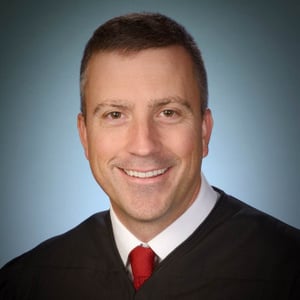
Judge, United States District Court, District of Columbia
Judge Trevor N. McFadden was appointed to the United States District Court for the District of Columbia in 2017. He received his B.A. in 2001 from Wheaton College, IL, magna cum laude. In 2006, he received his J.D. from the University of Virginia School of Law, where he graduated Order of the Coif and was an editor for the Virginia Law Review.
Following graduation from law school, Judge McFadden clerked for Judge Steven Colloton, U.S. Court of Appeals for the Eighth Circuit. He then joined the U.S. Department of Justice, where he served as Counsel to the Deputy Attorney General and as Assistant U.S. Attorney in the District of Columbia. Judge McFadden subsequently became a partner at Baker & McKenzie LLP in Washington, DC, where he focused on white collar investigations. He is also co-author of a treatise, Corporate Settlement Tools: DPAs, NPAs, and Cooperation Agreements.
After four years in private practice, Judge McFadden returned to the U.S. Department of Justice, where he was Deputy Assistant Attorney General and acted as the second-in-command of the Department's Criminal Division. As Deputy Assistant Attorney General, he managed the Division's Fraud and Appellate Sections.
Judge McFadden also has extensive experience in law enforcement. He served as an officer with the Fairfax County, VA, Police Department and as a deputy sheriff in Madison County, VA.
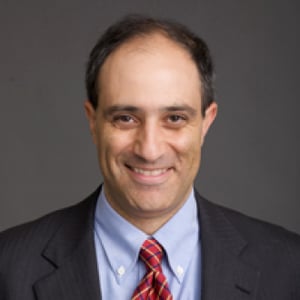
Carroll Professor of Jurisprudence, Georgetown Law
John Mikhail is the Carroll Professor of Jurisprudence at Georgetown University Law Center, where he has taught since 2004. He teaches and writes on a variety of topics, including constitutional law, moral psychology, moral and legal theory, and legal history. His recent scholarship has focused mainly on American constitutional history, including the original understanding of the Preamble, Tenth Amendment, and Emoluments, Ex Post Facto, and Necessary and Proper Clauses. Professor Mikhail received his B.A. from Amherst College, a Ph.D. in Philosophy from Cornell University, and his J.D. from Stanford Law School, where he was Senior Article Editor of the Stanford Law Review and Senior Submissions Editor of the Stanford Journal of International Law. Before coming to Georgetown, he was a Lecturer and Research Affiliate at MIT, an associate at Simpson, Thacher & Bartlett, and a judicial clerk to Judge Rosemary Barkett on the U.S. Court of Appeals for the Eleventh Circuit. Professor Mikhail served as the Law Center's Associate Dean for Research and Academic Programs from 2017 to 2020 and its Associate Dean for International and Transnational Programs from 2011 to 2013.

Patrick Hotung Professor of Constitutional Law, Georgetown University Law Center; Faculty Director, Georgetown Center for the Constitution
Randy E. Barnett is the Patrick Hotung Professor of Constitutional Law at the Georgetown University Law Center and is the Faculty Director of the Georgetown Center for the Constitution. After graduating from Northwestern University and Harvard Law School, he tried many felony cases as a prosecutor in the Cook County States’ Attorney’s Office in Chicago. A recipient of a Guggenheim Fellowship in Constitutional Studies and the Bradley Prize, Professor Barnett has been a visiting professor at Penn, Northwestern and Harvard Law School.
Professor Barnett’s publications includes thirteen books, more than one hundred articles and reviews, as well as numerous op-eds. His most recent book is Felony Review: Tales of True Crime and Corruption in Chicago (2026). His other books on the Constitution include: A Life for Liberty: The Making of an American Originalist (2024); The Original Meaning of the Fourteenth Amendment: Its Letter and Spirit (2021) (with Evan Bernick); An Introduction to Constitutional Law: 100 Supreme Court Cases Everyone Should Know (2019) (with Josh Blackman); Restoring the Lost Constitution: The Presumption of Liberty (2nd ed. 2013); Our Republican Constitution: Securing the Liberty and Sovereignty of We the People (2016); and Constitutional Law: Cases in Context (5th ed. forthcoming 2027) (with Josh Blackman). His books on contracts are The Oxford Introductions to U.S. Law: Contracts (2010) and Contracts: Cases and Doctrine (7th ed. 2021) (with Nate Oman). And he is the author of The Structure of Liberty: Justice and the Rule of Law (2nd ed. 2014).
In 2004, he argued the medical marijuana case of Gonzalez v. Raich before the U.S. Supreme Court. In 2012, he was one of the lawyers representing the National Federation of Independent Business in its constitutional challenge to the Affordable Care Act in NFIB v. Sebelius. He’s appeared in numerous documentaries and portrayed a prosecutor in the 2010 science-fiction feature film, InAlienable: The Movie. On X he is @RandyEBarnett
Associate Professor of Law, Notre Dame Law School
Professor and D’Alemberte Chair in Constitutional Law, Florida State University College of Law
Alexander Tsesis is the D’Alemberte chair in constitutional law at the Florida State University College of Law. He is also the general editor of the Cambridge Studies on Civil Rights and Civil Liberties and the Oxford Theoretical Foundations in Law. Tsesis’ scholarship and teaching focus on a breadth of subjects, including constitutional law, civil rights, constitutional reconstruction, interpretive methodology, free speech theory, and legal history.
Tsesis’ most recent book is Free Speech in the Balance (Cambridge University Press 2020). His previous books include Constitutional Ethos: Liberal Equality for the Common Good (Oxford University Press 2017) and For Liberty and Equality: The Life and Times of the Declaration of Independence (Oxford University Press 2012), We Shall Overcome: A History of Civil Rights and the Law (Yale University Press 2008), The Thirteenth Amendment and American Freedom (New York University Press 2004), and Destructive Messages: How Hate Speech Paved the Way for Harmful Social Movements (New York University Press 2002). He also edited a collection of essays in Promises of Liberty (Columbia University Press 2010). The subjects of his articles range from cyber speech, constitutional interpretation, civil rights law, and human rights. They have appeared or will appear in a variety of law reviews across the country, including the Boston University Law Review, Columbia Law Review, Cornell Law Review, Minnesota Law Review, Northwestern University Law Review, Southern California Law Review, Stanford Law Review, and Vanderbilt Law Review.
Associate Professor of Law,, St. Thomas University College of Law

Special Counsel, Hunton Andrews Kurth
After serving on the United State Court of Appeals for the D. C. Circuit from 2005, Judge Griffith stepped down from the bench in 2020. Currently he is a Lecturer on Law at Harvard Law School, a Fellow at the Wheatley Institute at Brigham Young University, and Special Counsel in the Washington, DC office of the law firm of Hunton Andrews Kurth. Most recently, he was a member of President Biden's Commission on the Supreme Court. He is the author of Civic Charity and the Constitution , and the co-author, along with former judges Michael Luttig and Michael McConnell, of Lost, Not Stolen: The Conservative Case that Trump Lost and Biden Won the 2020 Presidential Election. https://lostnotstolen.org/ . Before being appointed to the D. C. Circuit, Judge Griffith was the General Counsel at BYU; Senate Legal Counsel, the non-partisan chief legal officer of the U. S. Senate; and a partner at Wiley, Rein & Fielding. Long active in rule-of-law programs in former communist nations, Judge Griffith is a member of the international advisory board of the CEELI Institute in Prague. He is a graduate of BYU and the University of Virginia School of Law and is a member of the American Law Institute.

James Madison Distinguished Professor of Law and Class of 1941 Research Professor of Law, University of Virginia School of Law
Professor John C. Harrison is the James Madison Distinguished Professor of Law and Class of 1941 Research Professor of Law at the University of Virginia School of Law. He joined the faculty at University of Virginia in 1993 as an associate professor of law after a distinguished career with the U.S. Department of Justice. His teaching subjects include constitutional history, federal courts, remedies, corporations, civil procedure, legislation and property. In 2008 he was on leave from the Law School to serve as counselor on international law in the Office of the Legal Adviser at the U.S. Department of State.
A 1977 graduate of the University of Virginia, Harrison earned his law degree in 1980 at Yale, where he served as editor of the Yale Law Journal and editor and articles editor of the Yale Studies in World Public Order. He was an associate at Patton Boggs & Blow in Washington, D.C., and clerked for Judge Robert Bork on the U.S. Court of Appeals for the District of Columbia Circuit. He worked with the Department of Justice from 1983-93, serving in numerous capacities, including deputy assistant attorney general in the Office of Legal Counsel (1990-93).
W. St. John Garwood and W. St. John Garwood, Jr. Centennial Chair and Professor of Government, University of Texas at Austin School of Law
Sanford Levinson, who holds the W. St. John Garwood and W. St. John Garwood, Jr. Centennial Chair in Law, joined the University of Texas Law School in 1980. Previously a member of the Department of Politics at Princeton University, he is also a Professor in the Department of Government at the University of Texas. Levinson is the author of approximately 400 articles, book reviews, or commentaries in professional and popular journals--and a regular contributor to the popular blog Balkinization. He has also written six books: Constitutional Faith (1988, winner of the Scribes Award, 2d edition 2011); Written in Stone: Public Monuments in Changing Societies (1998); Wrestling With Diversity (2003); Our Undemocratic Constitution: Where the Constitution Goes Wrong (and How We the People Can Correct It)(2006); Framed: America's 51 Constitutions and the Crisis of Governance (2012); An Argument Open to All: Reading the Federalist in the 21st Century (2015); and, with Cynthia Levinson, Fault Lines in the Constitution: The Framers, Their Fights, and teh Flaws that Affect Us Today (forthcoming, September 2017). Edited or co-edited books include a leading constitutional law casebook, Processes of Constitutional Decisionmaking (6th ed. 2015, with Paul Brest, Jack Balkin, Akhil Amar, and Reva Siegel); Nullification and Secession in Modern Constitutional Thought (2016); Reading Law and Literature: A Hermeneutic Reader (1988, with Steven Mallioux); Responding to Imperfection: The Theory and Practice of Constitutional Amendment (1995); Constitutional Stupidities, Constitutional Tragedies (1998, with William Eskridge); Legal Canons (2000, with Jack Balkin); The Louisiana Purchase and American Expansion (2005, with Batholomew Sparrow); Torture: A Collection (2004, revised paperback edition, 2006); and The Oxford Handbook on the United States Constitution (with Mark Tushnet and Mark Graber, 2015). He received the Lifetime Achievement Award from the Law and Courts Section of the American Political Science Association in 2010.
He has been a visiting faculty member of the Boston University, Georgetown, Harvard, New York University, and Yale law schools in the United States and has taught abroad in programs of law in London; Paris; Jerusalem; Auckland, New Zealand; and Melbourne, Australia. He was a Fellow at the Institute for Advanced Study in Princeton in 1985-86 and a Member of the Ethics in the Professions Program at Harvard in 1991-92. He is also affiliated with the Shalom Hartman Institute of Jewish Philosophy in Jerusalem. A member of the American Law Institute, Levinson was elected to the American Academy of Arts and Sciences in 2001. He is married to Cynthia Y. Levinson, a writer of children's literature, and has two daughters and four grandchildren.

Julius E. Davis Professor of Law, University of Minnesota Law School
Ilan Wurman is the Julius E. Davis Professor of Law at the University of Minnesota, where he teaches administrative law and constitutional law. He previously taught at Arizona State University. He writes primarily on the Fourteenth Amendment, administrative law, separation of powers, and constitutionalism. His academic writing has appeared in the Yale Law Journal, the Stanford Law Review, the University of Chicago Law Review, the University of Pennsylvania Law Review, the Virginia Law Review, the Duke Law Journal, the Minnesota Law Review, the Notre Dame Law Review, and the Texas Law Review among other journals.
Professor Wurman is the author of the new book The Constitution of 1789: A New Introduction (Cambridge 2026). His previous books include A Debt Against the Living: An Introduction to Originalism (Cambridge 2017), and The Second Founding: An Introduction to the Fourteenth Amendment (Cambridge 2020). He is also the author of the casebook, Administrative Law Theory and Fundamentals: An Integrated Approach (Foundation Press 3d ed. 2025).
Professor Wurman practices law with the firm Tully Bailey. He has litigated a variety of administrative law and constitutional law cases, including cases involving COVID-19 restrictions, transmission lines, and Appointments Clause challenges. He also devised winning public nuisance theories to force city governments to address the increasingly challenging public camping crises throughout the country.

Emanuel S. Heller Professor of Law, University of California at Berkeley; Thomas Smith Senior Research Fellow, The Civitas Institute, University of Texas at Austin
John Yoo is the Emanuel Heller Professor of Law at the University of California at Berkeley. He is also the Thomas Smith Senior Research Fellow, Civitas Institute, at the University of Texas at Austin. He is also a Nonresident Senior Fellow at the American Enterprise Institute.
His most recent book, The Politically Incorrect Guide to the Supreme Court, co-authored with Robert Delahunty, was published in 2023. Professor Yoo’s other books include Defender-in-Chief: Trump’s Fight for Presidential Power; Striking Power: How Cyber, Robots, and Space Weapons Change the Rules for War; Point of Attack: Preventive War, International Law, and Global Welfare; and Crisis and Command: A History of Executive Power from George Washington to George Bush.
He is a co-author of volumes 1 and 2 of R. Rossum, G. Tarr, V. Munoz & J. Yoo American Constitution Law (Routledge, 2026), and a co-editor of the eight-volume series on the 250th anniversary of the American Revolution, We Hold These Truths, with Yuval Levin and Adam White of the American Enterprise Institute.
Professor Yoo has published more than 100 articles in academic journals on subjects including national security, constitutional law, international law, and the Supreme Court. He also regularly contributes to the editorial pages of the Wall Street Journal, New York Times, Washington Post, Los Angeles Times, and National Review, among others.
Professor Yoo has served in all three branches of government. He was an official in the U.S. Department of Justice, where he worked on national security and terrorism issues after the 9/11 attacks. He served as general counsel of the U.S. Senate Judiciary Committee. He has been a law clerk for Supreme Court Justice Clarence Thomas and federal appeals Judge Laurence Silberman. He has been a visiting professor at the University of Texas at Austin’s School of Civic Leadership, Seoul National University, the Interdisciplinary Center Herzliya, Keio University, Trento University, the University of Chicago, and the Free University of Amsterdam.
Professor Yoo supervises the Public Law and Policy Program and the California Constitution Center. He also serves on the boards of Founding Forward, the Washington Legal Foundation, the Pacific Legal Foundation, the Ulysses Grant Institute, the Federalist Society’s Separation of Powers and Federalism Division, the Universidad Cientifica del Sur Law School, and the Asia-Pacific Law Institute at Seoul National University. He is a winner of the Federalist Society’s Paul Bator award and the Heritage Foundation’s Edwin Meese III Originalism Lectureship.
Professor Yoo graduated from Yale Law School and summa cum laude from Harvard College.
Richard and Frances Mallery Professor of Law and Faculty Director, Constitutional Law Center, Stanford Law School
Michael W. McConnell is the Richard and Frances Mallery Professor and Faculty Director of the Constitutional Law Center at Stanford Law School, and a Senior Fellow at the Hoover Institution. From 2002 to 2009, he served as a Circuit Judge on the United States Court of Appeals for the Tenth Circuit. He was nominated by President George W. Bush, a Republican, and confirmed by a Democratic Senate by unanimous consent. McConnell has previously held chaired professorships at the University of Chicago and the University of Utah, and visiting professorships at Harvard and NYU. He teaches courses on constitutional law, constitutional history, First Amendment, and interpretive theory. He has published widely in the fields of constitutional law and theory, especially church and state, equal protection, and separation of powers. His book, “The President Who Would Not Be King: Executive Power Under the Constitution,” was published by Princeton University Press in 2020, based on the Tanner Lectures in Human Values, which he delivered at Princeton in 2019. His latest book, co-authored with Nathan Chapman, “Agreeing to Disagree: How the Establishment Clause Protects Religious Diversity and Freedom of Conscience,” was published by Oxford University Press in mid-2023. McConnell has argued sixteen cases in the United States Supreme Court, most recently Carney v. Adams (2020). defending a provision of the Delaware Constitution requiring political balance on that state’s courts. More recently, he was co-counsel in Gonzalez v. Google. He earned his B.A. from Michigan State University and his J.D. from the University of Chicago, and has received honorary degrees from Notre Dame University and Michigan State. He served as law clerk to Supreme Court Justice William J. Brennan, Jr. and D.C. Circuit Chief Judge J. Skelly Wright. He has been Assistant General Counsel of the Office of Management & Budget, Assistant to the Solicitor General of the Department of Justice, and a member of the President’s Intelligence Oversight Board. He is Senior of Counsel to the law firm Wilson, Sonsini, Goodrich & Rosati, and is co-chair of Meta’s Oversight Review Board.
Judge, United States Court of Appeals, Seventh Circuit
Judge Sykes was nominated to the Seventh Circuit by President George W. Bush and confirmed by the Senate in 2004. Prior to her appointment to the federal bench, Judge Sykes served as a justice on the Wisconsin Supreme Court. Governor Tommy G. Thompson appointed her in September 1999 to fill a mid-term vacancy on the state supreme court, and she was elected to a full ten-year term in April 2000. From 1992-1999, Judge Sykes served on the state trial bench in Milwaukee County (elected in 1992 and re-elected in 1998). From 1985-1992, Judge Sykes practiced law with the Milwaukee firm of Whyte & Hirschboeck, S.C., and from 1984-1985, was a law clerk to Federal Judge Terence T. Evans.
Born and raised in the Milwaukee area, Judge Sykes earned a bachelor’s degree in journalism from Northwestern University in 1980 and a law degree from Marquette University Law School in 1984. Between college and law school, Judge Sykes worked as a reporter for The Milwaukee Journal.
Judge Sykes has two sons.
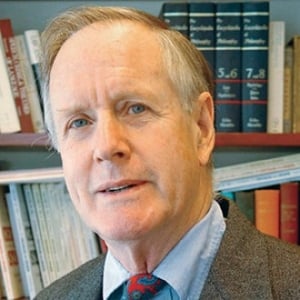
University Professor, Columbia Law School
Kent Greenawalt, an authority on constitutional law and legal philosophy, is a graduate of Columbia's School of Law, where he was a Kent Scholar and Editor-in-Chief of the Law Review. After graduation he clerked for Supreme Court Justice John M. Harlan and was an attorney for the Lawyers Committee for Civil Rights in Jackson, Miss., before joining the Columbia faculty in 1965. From 1966 to 1969, he served on the New York City Bar Association's civil rights committee. He was Deputy Solicity General in the Department of Justice in 1971-72 and served as chief reporter for the Revision of the Commentary of the Model Penal Code in the 1970s. In 1991 he was named University Professor, Columbia's highest academic honor and faculty rank, allowing him to cross departmental boundaries and teach in both the law school and department of philosophy. He was President of the American Society for Political and Legal Philosophy from 1991-93. He is the author of 13 books on jurisprudence as it relates to church and state, legal interpretation, discrimination, and freedom of speech.
He has been a visiting professor at Princeton University and has been a fellow several times at Clare Hall, Cambridge; All Souls College, University of Oxford; and the American Academy of Arts and Sciences.

Did the Constitution Lay the Groundwork for Abolition?
Cory R. Liu, Timothy Sandefur, Kenneth Williams
As the nation marked the 250th anniversary of the Declaration of Independence, renewed attention has...
Did the Constitution Lay the Groundwork for Abolition?
Cory R. Liu, Timothy Sandefur, Kenneth Williams
As the nation marked the 250th anniversary of the Declaration of Independence, renewed attention has...
IV: Resolved: The Federalists Designed a Constitution of Plenary Federal Power (Debate)
Michael W. McConnell, Trevor N. McFadden, John Mikhail
One of the principal disagreements between the Federalists and Anti-Federalists surrounded the role of the...
The Thirteenth Amendment 150 Years Later
Randy E. Barnett, Jennifer Mason McAward, Alexander Tsesis, David Upham
December 2015 marked 150 years since the ratification of the Thirteenth Amendment—an occasion of singular...
Panel 3: Perspectives on Executive Power: Czars, Libya, and Recent Developments
Mariano-Florentino Cuéllar, Thomas B. Griffith, John C. Harrison, Sanford V. Levinson, Ilan Wurman, John C. Yoo
This panel will address the role of Executive branch officials in making high-level policy decisions,...
The Role of Religion in Public Debate
Robert Audi, Michael W. McConnell, James W. Skillen, Diane S. Sykes, R. Kent Greenawalt
The Federalist Society's Religious Liberties Practice Group presented this panel discussion at the 2007 Annual...