
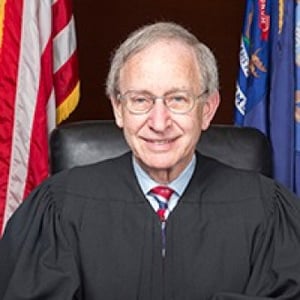
Justice, Michigan Supreme Court
Stephen Markman was appointed Justice of the Michigan Supreme Court on October 1, 1999. He served as the Chief Justice from 2017-2019. Before his appointment, he served as Judge on the Michigan Court of Appeals from 1995-1999. Prior to this, he practiced law with the firm of Miller, Canfield, Paddock & Stone in Detroit.
From 1989-1993, Justice Markman served as United States Attorney, or federal prosecutor, in Michigan, after having been nominated by President George H. W. Bush and confirmed by the United States Senate. From 1985-1989, he served as Assistant Attorney General of the United States, after having been nominated by President Ronald Reagan and confirmed by the United States Senate. In that position, he headed the Department of Justice’s Office of Legal Policy, which served as the principal policy development office within the Department, and which coordinated the federal judicial selection process. Prior to this, he served for seven years as Chief Counsel of the United States Senate Subcommittee on the Constitution, and as Deputy Chief Counsel of the United States Senate Judiciary Committee.
Justice Markman has authored articles for such publications as the University of Michigan Journal of Law Reform, the Detroit College of Law Review, the Stanford Law Review, the University of Chicago Law Review, the American Criminal Justice Law Review, the Barrister’s Law Journal, the Harvard Journal of Law & Public Policy, and the American University Law Review. He has also served as a contributing editor of National Review magazine, and has authored chapters in such books as “In the Name of Justice: The Aims of the Criminal Law,” “Still the Law of the Land,” and “Originalism: A Quarter Century of Debate.”
Justice Markman has taught constitutional law at Hillsdale College since 1993. He has served on the Board of Directors of the Western Michigan University Thomas M. Cooley Law School. He traveled to Ukraine on two occasions on behalf of the State Department, to provide assistance in the development of that nation’s post-Soviet constitution. He is a Fellow of the Michigan Bar Foundation, a Master of the Bench of the Inns of Court, and a member of the One Hundred Club. He has spoken before hundreds of youth, civic, charitable, and legal groups throughout Michigan and nationally, and has coached Little League baseball and basketball. He lives with his wife Mary Kathleen in Mason, and has two sons, James and Charles.
Justice Markman was re-elected to the Supreme Court in 2000, 2004, and 2012. His present term expires January 1, 2021.
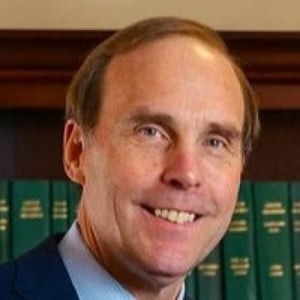
Distinguished Research Professor, Center for Citizenship and Constitutional Government, University of Notre Dame
Donald L. Drakeman is Distinguished Research Professor in the Center for Citizenship and Constitutional Government at the University of Notre Dame, and a Fellow of the Centre for Health Leadership and Enterprise at the University of Cambridge. His writings have been cited by the Supreme Courts of the United States and the Philippines. He has published seven books, including The Hollow Core of Constitutional Theory (Cambridge University Press, 2021), Why We Need the Humanities (Palgrave, 2016), and Church, State, and Original Intent (Cambridge University Press, 2010). He received an A.B. magna cum laude from Dartmouth College; a J.D. from Columbia Law School, where he was a Harlan Fiske Stone Scholar; and a Ph.D. from Princeton University. He is a Fellow of the Royal Historical Society, and he was the founding chair of the Advisory Council for the James Madison Program on American Ideals and Institutions at Princeton University.
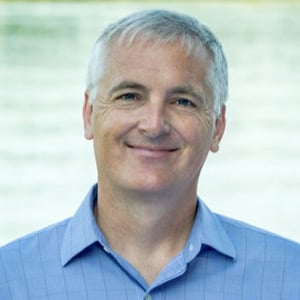
Partner, Donahue & Goldberg LLP
Sean H. Donahue's practice is focused on appellate litigation, including environmental cases in federal and state appellate courts, legal counseling, and helping clients communicate effectively to courts, agencies, and other audiences. He is a member of the bars of the District of Columbia and the State of California.
A 1992 graduate of University of Chicago Law School, Sean served as law clerk to Ruth Bader Ginsburg, then of the U.S. Court of Appeals for the D.C. Circuit, and to Justice John Paul Stevens. He entered private practice at Jenner & Block's Washington office, where he worked on civil matters including in telecommunications and First Amendment law. He then spent four years at the Department of Justice, Environmental and Natural Resources Division, Appellate Section, briefing and arguing cases in the United States Courts of Appeals, and state supreme courts concerning federal environmental and natural resources law, federal property law, takings, and Indian law.
Sean has argued approximately 50 cases in federal and state appellate courts. Since first establishing his own practice in 2002, he has represented environmental and public health organization parties in numerous major environmental and clean energy cases in the Supreme Court and the courts of appeals. His current practice includes representation of public interest organizations, governmental bodies, and private entities in environmental, energy, natural resources, and other cases. Sean has taught courses in environmental law, civil procedure, constitutional law and other subjects at Washington & Lee University School of Law, Iowa College of Law, and Georgetown University Law Center, and currently teaches climate change law and policy as a lecturer at Stanford Law School. He has given presentations at law schools including Berkeley, Columbia, Fordham, Harvard, Duke, Georgetown, Maryland, NYU, Northwestern, Stanford, University of Chicago, University of Florida, Vermont Law School, and Washington & Lee.
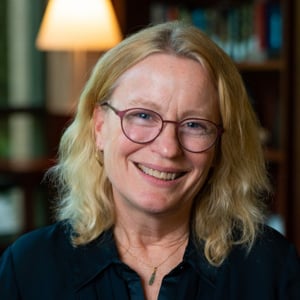
Justice William J. Brennan, Jr., Professor of Law, Georgetown University Law Center
Lisa Heinzerling is the Justice William J. Brennan, Jr. Professor of Law at Georgetown University. Her primary specialties are administrative law and environmental law. She is the author of several books, including Priceless: On Knowing the Price of Everything and the Value of Nothing, a critique of the use of cost-benefit analysis in environmental policy. Professor Heinzerling has received the Georgetown University President's Award for Distinguished Scholar-Teachers, the faculty teaching award at Georgetown Law, and several awards related to her scholarship and advocacy in environmental law. She was the lead author of the winning briefs in Massachusetts v. EPA, in which the Supreme Court held that the Clean Air Act gives EPA the authority to regulate greenhouse gases. From January 2009 to July 2009, Heinzerling served as Senior Climate Policy Counsel to the Administrator of the Environmental Protection Agency and then, from July 2009 to December 2010, she served as Associate Administrator of EPA’s Office of Policy. She was a law clerk to Judge Richard A. Posner of the U.S. Court of Appeals for the Seventh Circuit and Justice William J. Brennan, Jr. of the U.S. Supreme Court.

Executive Vice President, The Heritage Foundation
Derrick Morgan has thirty years’ experience in business, government, law, politics, and policy and now serves as the Executive Vice President of The Heritage Foundation, overseeing policy and government relations.
In business, Morgan led the American Fuel and Petrochemical Manufacturers’ (AFPM) advocacy efforts, testified before Congress, and wrote and spoke widely on fuels issues including energy security, fuel prices, and regulatory burdens such as the Renewable Fuel Standard. At AFPM and on the Hill, he opposed electric vehicle mandates and subsidies and warned against conventional wisdom, predicting EV adoption would be far from universal.
In government, law, and politics, Morgan served in all three branches of government including four senators and one representative in roles including campaign aide, counsel to the Senate Republican Policy Committee, and chief of staff to Senator Ben Sasse of Nebraska. In addition, he served as assistant, special counsel, and staff secretary for Vice President Richard B. Cheney, where he traveled frequently with the Vice President as a member of his senior staff and was the final substantive stop for all papers, remarks, and statements. As a leadership staffer for Senator Thune on Capitol Hill, Morgan helped organize opposition to “Card Check” legislation that would have eliminated the secret ballot for workers in union elections and harmful climate legislation like cap-and-trade and carbon taxes. Following law school and between stints at Gibson, Dunn & Crutcher LLP, Morgan clerked for a federal district judge in Texas.
In policy, Morgan previously worked at Heritage, first as Chief of Staff to the organization’s Founder and President, Ed Feulner, and later as Vice President of Domestic Policy. At Heritage, Morgan was privileged to fight “comprehensive” immigration reform that included amnesty for illegal immigrants when the Beltway political class overwhelmingly supported it.
A longtime movement leader on energy, the economy, and immigration, he has appeared on radio and television outlets including Fox News, Fox Business, Newsmax, CNN, CNBC, and C-SPAN. His commentary has been published widely including in The Wall Street Journal, The New York Times, Los Angeles Times, Politico, Real Clear Politics, and USA Today.
Morgan received his undergraduate degree at the University of Texas at Dallas, where he gave the honors commencement address and later received a Distinguished Alumni Award. He holds a JD from The Georgetown University Law Center.
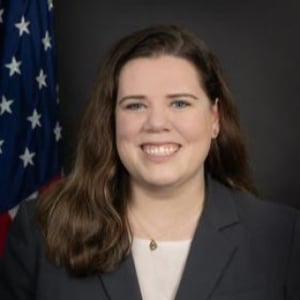
Commissioner, Federal Energy Regulatory Commission
Lindsay S. See joined the Federal Energy Regulatory Commission as a Commissioner in June 2024. Before her current role, Commissioner See served as the Solicitor General of West Virginia, where she managed appellate and high-stakes litigation for the State. With a particular focus on energy and administrative law, her work included leading multi-state and multi-interest coalitions on a variety of national issues. She argued twice before the U.S. Supreme Court, filed multi-state comments in dozens of agency rulemakings, and routinely appeared before the Supreme Court of Appeals of West Virginia and the federal courts of appeals.
Commissioner See previously practiced appellate and administrative law for several years with Gibson, Dunn & Crutcher in Washington, D.C. She graduated magna cum laude from Harvard Law School and clerked for the Hon. Thomas B. Griffith on the U.S. Court of Appeals for the D.C. Circuit. Originally from Michigan, See now considers herself both a proud Michigander and Mountaineer.
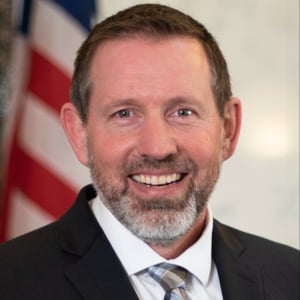
Judge, United States Court of Appeals, Ninth Circuit
Lawrence VanDyke serves as a circuit judge on the U.S. Court of Appeals for the Ninth Circuit. Prior to that appointment in January 2020, he served as a Deputy Assistant Attorney General in the Environment and Natural Resources Division of the United States Department of Justice. Before that, he served consecutively as the Solicitor General of two western states – Nevada and Montana. At the beginning of his legal career, he worked as an attorney in the Appellate and Constitutional Issues practice group at Gibson Dunn & Crutcher, LLP.
Judge VanDyke received his law degree magna cum laude from Harvard Law School, where he was an editor on the Harvard Law Review. He has engineering and theology undergraduate degrees and a masters degree in engineering management. He served as a law clerk to the Honorable Janice Rogers Brown of the United States Court of Appeals for the District of Columbia Circuit. Judge VanDyke and his wife Cheryl live in Reno, Nevada, and they have three children.
Partner, Donahue & Goldberg LLP
Sean H. Donahue's practice is focused on appellate litigation, including environmental cases in federal and state appellate courts, legal counseling, and helping clients communicate effectively to courts, agencies, and other audiences. He is a member of the bars of the District of Columbia and the State of California.
A 1992 graduate of University of Chicago Law School, Sean served as law clerk to Ruth Bader Ginsburg, then of the U.S. Court of Appeals for the D.C. Circuit, and to Justice John Paul Stevens. He entered private practice at Jenner & Block's Washington office, where he worked on civil matters including in telecommunications and First Amendment law. He then spent four years at the Department of Justice, Environmental and Natural Resources Division, Appellate Section, briefing and arguing cases in the United States Courts of Appeals, and state supreme courts concerning federal environmental and natural resources law, federal property law, takings, and Indian law.
Sean has argued approximately 50 cases in federal and state appellate courts. Since first establishing his own practice in 2002, he has represented environmental and public health organization parties in numerous major environmental and clean energy cases in the Supreme Court and the courts of appeals. His current practice includes representation of public interest organizations, governmental bodies, and private entities in environmental, energy, natural resources, and other cases. Sean has taught courses in environmental law, civil procedure, constitutional law and other subjects at Washington & Lee University School of Law, Iowa College of Law, and Georgetown University Law Center, and currently teaches climate change law and policy as a lecturer at Stanford Law School. He has given presentations at law schools including Berkeley, Columbia, Fordham, Harvard, Duke, Georgetown, Maryland, NYU, Northwestern, Stanford, University of Chicago, University of Florida, Vermont Law School, and Washington & Lee.
Justice William J. Brennan, Jr., Professor of Law, Georgetown University Law Center
Lisa Heinzerling is the Justice William J. Brennan, Jr. Professor of Law at Georgetown University. Her primary specialties are administrative law and environmental law. She is the author of several books, including Priceless: On Knowing the Price of Everything and the Value of Nothing, a critique of the use of cost-benefit analysis in environmental policy. Professor Heinzerling has received the Georgetown University President's Award for Distinguished Scholar-Teachers, the faculty teaching award at Georgetown Law, and several awards related to her scholarship and advocacy in environmental law. She was the lead author of the winning briefs in Massachusetts v. EPA, in which the Supreme Court held that the Clean Air Act gives EPA the authority to regulate greenhouse gases. From January 2009 to July 2009, Heinzerling served as Senior Climate Policy Counsel to the Administrator of the Environmental Protection Agency and then, from July 2009 to December 2010, she served as Associate Administrator of EPA’s Office of Policy. She was a law clerk to Judge Richard A. Posner of the U.S. Court of Appeals for the Seventh Circuit and Justice William J. Brennan, Jr. of the U.S. Supreme Court.
Executive Vice President, The Heritage Foundation
Derrick Morgan has thirty years’ experience in business, government, law, politics, and policy and now serves as the Executive Vice President of The Heritage Foundation, overseeing policy and government relations.
In business, Morgan led the American Fuel and Petrochemical Manufacturers’ (AFPM) advocacy efforts, testified before Congress, and wrote and spoke widely on fuels issues including energy security, fuel prices, and regulatory burdens such as the Renewable Fuel Standard. At AFPM and on the Hill, he opposed electric vehicle mandates and subsidies and warned against conventional wisdom, predicting EV adoption would be far from universal.
In government, law, and politics, Morgan served in all three branches of government including four senators and one representative in roles including campaign aide, counsel to the Senate Republican Policy Committee, and chief of staff to Senator Ben Sasse of Nebraska. In addition, he served as assistant, special counsel, and staff secretary for Vice President Richard B. Cheney, where he traveled frequently with the Vice President as a member of his senior staff and was the final substantive stop for all papers, remarks, and statements. As a leadership staffer for Senator Thune on Capitol Hill, Morgan helped organize opposition to “Card Check” legislation that would have eliminated the secret ballot for workers in union elections and harmful climate legislation like cap-and-trade and carbon taxes. Following law school and between stints at Gibson, Dunn & Crutcher LLP, Morgan clerked for a federal district judge in Texas.
In policy, Morgan previously worked at Heritage, first as Chief of Staff to the organization’s Founder and President, Ed Feulner, and later as Vice President of Domestic Policy. At Heritage, Morgan was privileged to fight “comprehensive” immigration reform that included amnesty for illegal immigrants when the Beltway political class overwhelmingly supported it.
A longtime movement leader on energy, the economy, and immigration, he has appeared on radio and television outlets including Fox News, Fox Business, Newsmax, CNN, CNBC, and C-SPAN. His commentary has been published widely including in The Wall Street Journal, The New York Times, Los Angeles Times, Politico, Real Clear Politics, and USA Today.
Morgan received his undergraduate degree at the University of Texas at Dallas, where he gave the honors commencement address and later received a Distinguished Alumni Award. He holds a JD from The Georgetown University Law Center.
Commissioner, Federal Energy Regulatory Commission
Lindsay S. See joined the Federal Energy Regulatory Commission as a Commissioner in June 2024. Before her current role, Commissioner See served as the Solicitor General of West Virginia, where she managed appellate and high-stakes litigation for the State. With a particular focus on energy and administrative law, her work included leading multi-state and multi-interest coalitions on a variety of national issues. She argued twice before the U.S. Supreme Court, filed multi-state comments in dozens of agency rulemakings, and routinely appeared before the Supreme Court of Appeals of West Virginia and the federal courts of appeals.
Commissioner See previously practiced appellate and administrative law for several years with Gibson, Dunn & Crutcher in Washington, D.C. She graduated magna cum laude from Harvard Law School and clerked for the Hon. Thomas B. Griffith on the U.S. Court of Appeals for the D.C. Circuit. Originally from Michigan, See now considers herself both a proud Michigander and Mountaineer.
Judge, United States Court of Appeals, Ninth Circuit
Lawrence VanDyke serves as a circuit judge on the U.S. Court of Appeals for the Ninth Circuit. Prior to that appointment in January 2020, he served as a Deputy Assistant Attorney General in the Environment and Natural Resources Division of the United States Department of Justice. Before that, he served consecutively as the Solicitor General of two western states – Nevada and Montana. At the beginning of his legal career, he worked as an attorney in the Appellate and Constitutional Issues practice group at Gibson Dunn & Crutcher, LLP.
Judge VanDyke received his law degree magna cum laude from Harvard Law School, where he was an editor on the Harvard Law Review. He has engineering and theology undergraduate degrees and a masters degree in engineering management. He served as a law clerk to the Honorable Janice Rogers Brown of the United States Court of Appeals for the District of Columbia Circuit. Judge VanDyke and his wife Cheryl live in Reno, Nevada, and they have three children.
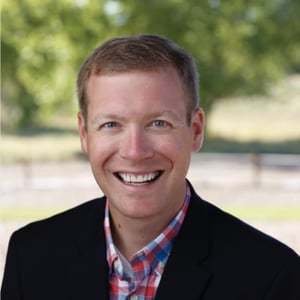
President, Center for American Rights
Daniel Suhr serves as president of the Center for American Rights, where he spends every day on the front lines of the fight to preserve our rights and liberties. The Center's mission is to advance free speech, free enterprise, and parental freedom in education through strategic, precedent-setting litigation.
Daniel formerly worked as policy director for Wisconsin Governor Scott Walker, as chief of staff for Wisconsin Lieutenant Governor Rebecca Kleefisch, and as a law clerk for Judge Diane Sykes of the U.S. Court of Appeals for the Seventh Circuit. He holds a B.A. and J.D. from Marquette University, and master’s degrees from Georgetown and the University of Missouri.

Chief Judge, United States Court of Appeals, Eleventh Circuit
William H. Pryor Jr. serves as Chief Circuit Judge on the United States Court of Appeals for the Eleventh Circuit.
In 2013–18, he served on the United States Sentencing Commission and, in 2017–18, served as Acting Chair.
He has taught as a visiting professor at the University of Alabama School of Law and previously taught as an adjunct professor at the Cumberland School of Law of Samford University.
He served as the 45th Attorney General of Alabama from 1997 to 2004. When he took office, he was the youngest attorney general in the nation. In his reelection, he received the highest percentage of votes of any statewide candidate.
He graduated magna cum laude from Tulane Law School where he finished first in the common-law curriculum and was editor in chief of the Tulane Law Review. He then served as a law clerk for Judge John Minor Wisdom of the U.S. Court of Appeals for the Fifth Circuit.
He is a member of The American Law Institute and an Adviser for the RESTATEMENT OF THE LAW THIRD, CONFLICT OF LAWS. He is a coauthor with Bryan Garner, Justices Gorsuch and Kavanaugh, and several other judges of a treatise, THE LAW OF JUDICIAL PRECEDENT. He has published in the Yale Law Journal, Columbia Law Review, Virginia Law Review, Notre Dame Law Review, Harvard Journal of Law & Public Policy, Yale Law & Policy Review, George Mason Law Review, Florida Law Review, Alabama Law Review, Case Western Reserve Law Review, and Tulane Law Review. He has published op-eds in The Wall Street Journal, The New York Times, National Review, and USA Today. He has debated at National Lawyers’ Conventions of the Federalist Society (including on National Public Radio) and at the Oxford Union in the United Kingdom. And he is listed among several “widely admired judicial writers” in Bryan Garner’s The Redbook: A Manual on Legal Style.
He is a member of the Tulane Law School Hall of Fame and has received the Defender of the Constitution Award from the Heritage Foundation, the Jurist of the Year Award from the Texas Review of Law & Politics, and the St. Thomas More Award from the St. Thomas More Society of Atlanta. Judge Pryor is also a proud member of the National Society of the Sons of the American Revolution.
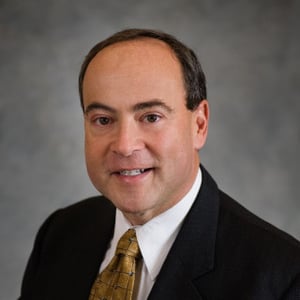
Justice, Supreme Court of Arizona
Clint Bolick was appointed by Governor Doug Ducey in January 2016 to serve on the Arizona Supreme Court and was retained by the voters in 2018 and 2024.
Prior to joining the Court, Justice Bolick litigated constitutional cases in state and federal courts from coast to coast, including the U.S. Supreme Court. Among other positions, he served as Vice President for Litigation at the Goldwater Institute and as Co-founder and Vice President for Litigation at the Institute for Justice. He has litigated in support of school choice, freedom of enterprise, private property rights, freedom of speech, and federalism, and against racial classifications and government subsidies.
Justice Bolick received his Juris Doctor degree from the University of California at Davis, where he has been recognized as a distinguished alumnus, and his Bachelor of Arts degree magna cum laude from Drew University. He serves as a research fellow with the Hoover Institution. Among other honors, he was named one of the 90 Greatest DC Lawyers in the Last 30 Years by Legal Times in 2008, received a Bradley Prize in 2006, and was recognized as one of the nation’s three lawyers of the year by American Lawyer in 2002 for his successful defense of school vouchers in Zelman v. Simmons-Harris.
Justice Bolick is a prolific author of a dozen books and hundreds of articles. Among his most recent books are Unshackled: Freeing America’s K-12 Education System: Immigration Wars: Forging an American Solution, co-authored with former Florida Governor Jeb Bush; and David’s Hammer: The Case for an Activist Judiciary. Bolick serves as an adjunct professor of constitutional law at Arizona State University’s Sandra Day O’Connor School of Law and has served as a lecturer at Harvard University’s John F. Kennedy School of Government.
Partner, Donahue & Goldberg LLP
Sean H. Donahue's practice is focused on appellate litigation, including environmental cases in federal and state appellate courts, legal counseling, and helping clients communicate effectively to courts, agencies, and other audiences. He is a member of the bars of the District of Columbia and the State of California.
A 1992 graduate of University of Chicago Law School, Sean served as law clerk to Ruth Bader Ginsburg, then of the U.S. Court of Appeals for the D.C. Circuit, and to Justice John Paul Stevens. He entered private practice at Jenner & Block's Washington office, where he worked on civil matters including in telecommunications and First Amendment law. He then spent four years at the Department of Justice, Environmental and Natural Resources Division, Appellate Section, briefing and arguing cases in the United States Courts of Appeals, and state supreme courts concerning federal environmental and natural resources law, federal property law, takings, and Indian law.
Sean has argued approximately 50 cases in federal and state appellate courts. Since first establishing his own practice in 2002, he has represented environmental and public health organization parties in numerous major environmental and clean energy cases in the Supreme Court and the courts of appeals. His current practice includes representation of public interest organizations, governmental bodies, and private entities in environmental, energy, natural resources, and other cases. Sean has taught courses in environmental law, civil procedure, constitutional law and other subjects at Washington & Lee University School of Law, Iowa College of Law, and Georgetown University Law Center, and currently teaches climate change law and policy as a lecturer at Stanford Law School. He has given presentations at law schools including Berkeley, Columbia, Fordham, Harvard, Duke, Georgetown, Maryland, NYU, Northwestern, Stanford, University of Chicago, University of Florida, Vermont Law School, and Washington & Lee.
Justice William J. Brennan, Jr., Professor of Law, Georgetown University Law Center
Lisa Heinzerling is the Justice William J. Brennan, Jr. Professor of Law at Georgetown University. Her primary specialties are administrative law and environmental law. She is the author of several books, including Priceless: On Knowing the Price of Everything and the Value of Nothing, a critique of the use of cost-benefit analysis in environmental policy. Professor Heinzerling has received the Georgetown University President's Award for Distinguished Scholar-Teachers, the faculty teaching award at Georgetown Law, and several awards related to her scholarship and advocacy in environmental law. She was the lead author of the winning briefs in Massachusetts v. EPA, in which the Supreme Court held that the Clean Air Act gives EPA the authority to regulate greenhouse gases. From January 2009 to July 2009, Heinzerling served as Senior Climate Policy Counsel to the Administrator of the Environmental Protection Agency and then, from July 2009 to December 2010, she served as Associate Administrator of EPA’s Office of Policy. She was a law clerk to Judge Richard A. Posner of the U.S. Court of Appeals for the Seventh Circuit and Justice William J. Brennan, Jr. of the U.S. Supreme Court.
Executive Vice President, The Heritage Foundation
Derrick Morgan has thirty years’ experience in business, government, law, politics, and policy and now serves as the Executive Vice President of The Heritage Foundation, overseeing policy and government relations.
In business, Morgan led the American Fuel and Petrochemical Manufacturers’ (AFPM) advocacy efforts, testified before Congress, and wrote and spoke widely on fuels issues including energy security, fuel prices, and regulatory burdens such as the Renewable Fuel Standard. At AFPM and on the Hill, he opposed electric vehicle mandates and subsidies and warned against conventional wisdom, predicting EV adoption would be far from universal.
In government, law, and politics, Morgan served in all three branches of government including four senators and one representative in roles including campaign aide, counsel to the Senate Republican Policy Committee, and chief of staff to Senator Ben Sasse of Nebraska. In addition, he served as assistant, special counsel, and staff secretary for Vice President Richard B. Cheney, where he traveled frequently with the Vice President as a member of his senior staff and was the final substantive stop for all papers, remarks, and statements. As a leadership staffer for Senator Thune on Capitol Hill, Morgan helped organize opposition to “Card Check” legislation that would have eliminated the secret ballot for workers in union elections and harmful climate legislation like cap-and-trade and carbon taxes. Following law school and between stints at Gibson, Dunn & Crutcher LLP, Morgan clerked for a federal district judge in Texas.
In policy, Morgan previously worked at Heritage, first as Chief of Staff to the organization’s Founder and President, Ed Feulner, and later as Vice President of Domestic Policy. At Heritage, Morgan was privileged to fight “comprehensive” immigration reform that included amnesty for illegal immigrants when the Beltway political class overwhelmingly supported it.
A longtime movement leader on energy, the economy, and immigration, he has appeared on radio and television outlets including Fox News, Fox Business, Newsmax, CNN, CNBC, and C-SPAN. His commentary has been published widely including in The Wall Street Journal, The New York Times, Los Angeles Times, Politico, Real Clear Politics, and USA Today.
Morgan received his undergraduate degree at the University of Texas at Dallas, where he gave the honors commencement address and later received a Distinguished Alumni Award. He holds a JD from The Georgetown University Law Center.
Commissioner, Federal Energy Regulatory Commission
Lindsay S. See joined the Federal Energy Regulatory Commission as a Commissioner in June 2024. Before her current role, Commissioner See served as the Solicitor General of West Virginia, where she managed appellate and high-stakes litigation for the State. With a particular focus on energy and administrative law, her work included leading multi-state and multi-interest coalitions on a variety of national issues. She argued twice before the U.S. Supreme Court, filed multi-state comments in dozens of agency rulemakings, and routinely appeared before the Supreme Court of Appeals of West Virginia and the federal courts of appeals.
Commissioner See previously practiced appellate and administrative law for several years with Gibson, Dunn & Crutcher in Washington, D.C. She graduated magna cum laude from Harvard Law School and clerked for the Hon. Thomas B. Griffith on the U.S. Court of Appeals for the D.C. Circuit. Originally from Michigan, See now considers herself both a proud Michigander and Mountaineer.
Judge, United States Court of Appeals, Ninth Circuit
Lawrence VanDyke serves as a circuit judge on the U.S. Court of Appeals for the Ninth Circuit. Prior to that appointment in January 2020, he served as a Deputy Assistant Attorney General in the Environment and Natural Resources Division of the United States Department of Justice. Before that, he served consecutively as the Solicitor General of two western states – Nevada and Montana. At the beginning of his legal career, he worked as an attorney in the Appellate and Constitutional Issues practice group at Gibson Dunn & Crutcher, LLP.
Judge VanDyke received his law degree magna cum laude from Harvard Law School, where he was an editor on the Harvard Law Review. He has engineering and theology undergraduate degrees and a masters degree in engineering management. He served as a law clerk to the Honorable Janice Rogers Brown of the United States Court of Appeals for the District of Columbia Circuit. Judge VanDyke and his wife Cheryl live in Reno, Nevada, and they have three children.
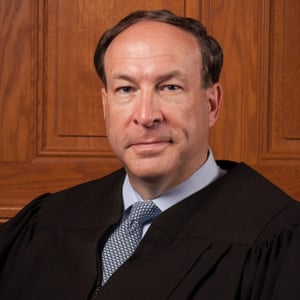
Judge, United States Court of Appeals, Seventh Circuit
Michael B. Brennan was confirmed and sworn in as a Circuit Judge for the U.S. Court of Appeals for the Seventh Circuit in May 2018.
He previously worked as a partner in the Milwaukee law firm of Gass Weber Mullins LLC, where he tried cases and handled appeals in federal and state courts, as a judge on the Milwaukee County Circuit, where he presided over a variety of criminal and civil calendars, and as an assistant district attorney in the Milwaukee County District Attorney’s office.
Brennan’s undergraduate degree is from the University of Notre Dame, and his law degree from Northwestern University School of Law, where he was an editor on the law review and the moot court champion. He served as a law clerk on the U.S. District Court for the Eastern District of Wisconsin and the U.S. Court of Appeals for the Seventh Circuit.
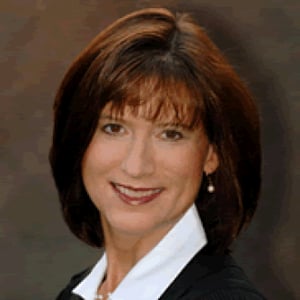
Judge, United States Court of Appeals, Seventh Circuit
Judge Sykes was nominated to the Seventh Circuit by President George W. Bush and confirmed by the Senate in 2004. Prior to her appointment to the federal bench, Judge Sykes served as a justice on the Wisconsin Supreme Court. Governor Tommy G. Thompson appointed her in September 1999 to fill a mid-term vacancy on the state supreme court, and she was elected to a full ten-year term in April 2000. From 1992-1999, Judge Sykes served on the state trial bench in Milwaukee County (elected in 1992 and re-elected in 1998). From 1985-1992, Judge Sykes practiced law with the Milwaukee firm of Whyte & Hirschboeck, S.C., and from 1984-1985, was a law clerk to Federal Judge Terence T. Evans.
Born and raised in the Milwaukee area, Judge Sykes earned a bachelor’s degree in journalism from Northwestern University in 1980 and a law degree from Marquette University Law School in 1984. Between college and law school, Judge Sykes worked as a reporter for The Milwaukee Journal.
Judge Sykes has two sons.
Judge, United States Court of Appeals, Seventh Circuit
Michael B. Brennan was confirmed and sworn in as a Circuit Judge for the U.S. Court of Appeals for the Seventh Circuit in May 2018.
He previously worked as a partner in the Milwaukee law firm of Gass Weber Mullins LLC, where he tried cases and handled appeals in federal and state courts, as a judge on the Milwaukee County Circuit, where he presided over a variety of criminal and civil calendars, and as an assistant district attorney in the Milwaukee County District Attorney’s office.
Brennan’s undergraduate degree is from the University of Notre Dame, and his law degree from Northwestern University School of Law, where he was an editor on the law review and the moot court champion. He served as a law clerk on the U.S. District Court for the Eastern District of Wisconsin and the U.S. Court of Appeals for the Seventh Circuit.
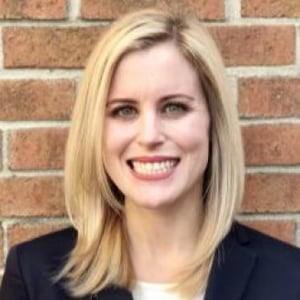
Lecturer in Law, University of Chicago Law School
Madeline Lansky is Lecturer in Law at the University of Chicago Law School. She received her B.A. in Political Science from the University of Southern California and her J.D. from the University of Chicago Law School. Since graduation, she has served as a law clerk to Judge William H. Pryor Jr. on the U.S. Court of Appeals for the Eleventh Circuit and Justices Clarence Thomas and Amy Coney Barrett on the U.S. Supreme Court.
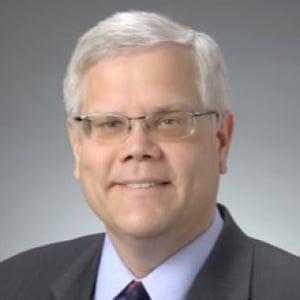
Partner and Business Lawyer, Foley & Lardner LLP
Eric Nelson is a partner and business lawyer with Foley & Lardner LLP, where he focuses his practice on contractual and distribution issues, including those involving manufacturers, service providers, utilities and energy marketers. Mr. Nelson received his bachelor’s degree in business administration in 1989 from the University of Wisconsin – Madison (where he received the School of Business Distinguished Student Award), and his J.D. degree in 1992 from Yale Law School. A member of the State Bar of Wisconsin, he served judicial clerkships with both the Hon. Clarence Thomas, Associate Justice of the U.S. Supreme Court (1993-1994), and the Hon. J. Michael Luttig, U.S. Court of Appeals for the Fourth Circuit (1992-1993), before joining the firm.
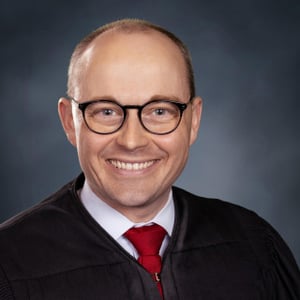
Judge, Illinois 18th Judicial Circuit
Judge Kenton Skarin serves on the Illinois 18th Judicial Circuit, a trial court of general jurisdiction that serves almost one million people in the western suburbs of Chicago.
Judge Skarin graduated first in his class from Northwestern University School of Law and summa cum laude from North Central College in Naperville, Illinois.
Earlier in his career, Judge Skarin clerked for Associate Justice Clarence Thomas at the United States Supreme Court and for Judge J. Harvie Wilkinson III at the United States Court of Appeals for the Fourth Circuit. Judge Skarin also practiced appellate law in the Chicago office of Jones Day and served as Deputy General Counsel to the Governor of Illinois.
Judge Skarin is a lifelong native of Wheaton, Illinois, where he lives with his wife and children.

Toward a More Confident State Constitutionalism
Steve J. Markman
This article is adapted from a speech Justice Markman delivered to the Florida Annual Education...
Establishing an Agreement to Disagree About Church and State
Donald L. Drakeman
A review of Nathan Chapman & Michael McConnell, Agreeing to Disagree: How the Establishment Clause...
Environmental Law After West Virginia v. EPA: Can the Biden Administration’s “Whole of Government” Approaches Survive Judicial Review?
Sean H. Donahue, Lisa Heinzerling, Derrick Morgan, Lindsay See, Lawrence VanDyke
The Biden Administration began with executive orders on an environmental policy agenda, directing a “whole...
Environmental Law After West Virginia v. EPA: Can the Biden Administration’s “Whole of Government” Approaches Survive Judicial Review?
Sean H. Donahue, Lisa Heinzerling, Derrick Morgan, Lindsay See, Lawrence VanDyke
The Biden Administration began with executive orders on an environmental policy agenda, directing a “whole...
Environmental Law After West Virginia v. EPA: Can the Biden Administration’s “Whole of Government” Approaches Survive Judicial Review?
2022 National Lawyers Convention
Washington, DCState Court Docket Watch: People v. Parks
Daniel Suhr
Under Michigan law, adults who commit the offense of first-degree murder are subject to a...
2022 Judge Rudolph T. Randa Lecture and Award
Milwaukee Lawyers Chapter
Milwaukee, WIAgainst Living Common Goodism
William H. Pryor
Today I want to discuss a new version of an old debate. In 1985, then-Attorney...
Principles of State Constitutional Interpretation
Clint Bolick
State constitutionalism—the practice of state courts deciding cases on independent state constitutional grounds—is a vital...
The Legacy of Justice Clarence Thomas
A Panel Discussion Moderated by the Honorable Michael B. Brennan
Milwaukee, WI