

Pioneers Chair in Telecommunications, Penn State University
Dr. Christopher Ali is the Pioneers Chair in Telecommunications and a full professor of telecommunications in the Bellisario College. He is also an affiliate faculty with the College of Information, Science and Technology (IST) at Penn State. He holds a Ph.D. in communication studies from the Annenberg School for Communication at the University of Pennsylvania (2013). His research interests include media and telecommunications policy and regulation, broadband policy, critical political economy, critical geography, comparative media systems, qualitative research methods, media localism, and local news.
Ali uses critical, qualitative methods to research broadband policy, planning, deployment and digital equity in the United States. Presently, he has a series of projects dedicated to “broadband stories,” where he is researching how community-based stories can influence public policy. These projects form the basis of his forthcoming book, Where the wires end: Stories from the Digital Divide to be published in Spring 2027 with the University of Chicago Press. In 2026, Dr. Ali also completed a major grant funded research project for the Center for Rural Pennsylvania analyzing how the digital divide impacts rural first responders in the Commonwealth of Pennsylvania.
Dr. Ali is the author or editor of four books: "Public Service Media’s Contribution to Society"(Nordicom, 2023, with Prof. Dr. Manuel Puppis), "Farm Fresh Broadband: The Politics of Rural Connectivity" (MIT Press, 2021), "Media Localism: The Policies of Place" (University of Illinois Press, 2017), "Echoes of Gabriel Tarde: What we know better or different 100 years later" (USC Annenberg Press, 2014, with Drs. Elihu Katz and Joohan Kim).
Based on his expertise, Ali was called to testify before the Senate Commerce Committee in 2021 on broadband funding and policy programs. He has also briefed members of the House Democrats Task Force on Rural Broadband, the New York State Blue Ribbon Commission on Re-Imagining New York, the Federal Communications Commission, and has presented before numerous state and county governments.
Dr. Ali has published over two dozen peer reviewed articles in high-ranking academic journals including, The Journal of Communication, Communication Theory, Media Culture & Society, and Telecommunications Policy. His writing has also been published in Tech Policy Press, The New York Times, The Hill, Realtor Magazine, Law & Political Economy, Digital Beat, GovTech, Zocalo Public Square, the Canadian Broadcasting Corporation, Washington Monthly, Columbia Journalism Review, and The Conversation. He is a frequent press commentator on the subjects of broadband, media policy, and local news, with interviews in the Associated Press, Hollywood Reporter, Business Insider, Washington Post, Philadelphia Inquirer, Los Angeles Times, NPR, CNET, CBC, Bloomberg, and other major national and international news outlets.
Ali presently serves as the Associate Editor of the journal Communication Law & Policy. He also sits on the advisory board of the Centre County Film Festival.
Previously, he served as the Chair of the Communication Law and Policy Division of the International Communication Association (2021-2023) and was an advisor to the Virginia Joint Committee on Technology & Science. He has also served on the Federal Communication Commission’s Communication Equity and Diversity Council Working Group and was a board member of Charlottesville Tomorrow, a non-profit news organization in Charlottesville, Virginia.
Dr. Ali has held fellowships or grants from the Center for Rural Pennsylvania (2025), the Benton Institute for Broadband and Society (2019-2020), the Global Future Council of the World Economic Forum (2018), the Center for Advanced Research in Global Communications (CARGC) at the University of Pennsylvania (2017 & 2022), the Tow Center for Digital Journalism at Columbia University (2016-2017 & 2019-2021), the University of Fribourg in Fribourg Switzerland (2015), and the Social Sciences and Humanities Research Council of Canada (2011).
Ali is an award-winning scholar, having been honored with the 2024 Bellisario Alumni Association Teaching Excellence Award, the 2025 Dean’s Excellence Award for Research & Creative Accomplishment, and the 2025 Broadband Hero Award.

Vice President and Deputy Chief Counsel, U.S. Chamber Litigation Center, U.S. Chamber of Commerce
Jennifer B. Dickey is vice president and deputy chief counsel at the U.S. Chamber Litigation Center, the litigation arm of the U.S. Chamber of Commerce. Dickey handles a variety of litigation matters for the Chamber.
Dickey joined the Chamber following her service as Acting Assistant Attorney General and Principal Deputy Assistant Attorney General in the Civil Division at the U.S. Department of Justice. She also previously served as Deputy Associate Attorney General, providing strategic oversight of the Civil Division, Civil Rights Division, and Foreign Claims Settlement Commission, as well as Special Assistant to the President and Associate Counsel to the President. In the latter capacity, she provided legal advice on a wide array of executive actions and rulemakings, civil litigation, and judicial nominations.
Dickey also practiced law at Kirkland & Ellis LLP before her government service. She was a commercial and appellate litigator, representing businesses in federal and state courts.
Earlier in her career, Dickey served as a law clerk for the Honorable Clarence Thomas of the Supreme Court of the United States and the Honorable William H. Pryor Jr. of the United States Court of Appeals for the Eleventh Circuit.
Dickey earned her law degree magna cum laude from Duke University School of Law, where she was an Executive Editor of the Duke Law Journal, and her undergraduate degree magna cum laude from Dartmouth College.
Counsel, U.S. House Energy and Commerce Committee
Partner, Wilkinson Barker Knauer, LLP
Dan leverages a deep understanding of telecommunications regulation and the broader legal landscape to help clients achieve their business goals. He provides practical and creative advice, develops persuasive policy advocacy, and represents clients in court appeals of agency matters. In an era in which courts play a larger role than ever in shaping regulation, Dan’s mix of legal depth, regulatory knowledge, and policymaking experience make him stand out.
His practice encompasses federal and state telecommunications regulation, emerging Internet issues, funding programs, online privacy frameworks, and consumer protection laws. He co-teaches a telecommunications law course at Georgetown Law School.
Prior to joining WBK, Dan spent eight years in leadership positions in the Federal Communications Commission’s Wireline Competition Bureau. There, Dan guided net neutrality and broadband infrastructure proceedings, implementation of caller ID authentication and the Robocall Mitigation Database, transaction reviews, and many other agency actions. He is especially proud of his contributions to establishing 988 as the three-digit code for the national suicide prevention hotline.
Today, courts make many of the most important decisions regarding agencies, and Dan regularly represents clients in court appeals concerning agency matters. He and the WBK team prevailed before the U.S. Supreme Court on behalf of industry associations in FCC v. Consumers’ Research, which affirmed the constitutionality of the Universal Service Fund.
Dan is a graduate of Yale University and Harvard Law School. Outside of work, Dan enjoys spending time with his kids, baking bread and cooking, playing card and board games, attempting to play sports, and science fiction/fantasy.
Pioneers Chair in Telecommunications, Penn State University
Dr. Christopher Ali is the Pioneers Chair in Telecommunications and a full professor of telecommunications in the Bellisario College. He is also an affiliate faculty with the College of Information, Science and Technology (IST) at Penn State. He holds a Ph.D. in communication studies from the Annenberg School for Communication at the University of Pennsylvania (2013). His research interests include media and telecommunications policy and regulation, broadband policy, critical political economy, critical geography, comparative media systems, qualitative research methods, media localism, and local news.
Ali uses critical, qualitative methods to research broadband policy, planning, deployment and digital equity in the United States. Presently, he has a series of projects dedicated to “broadband stories,” where he is researching how community-based stories can influence public policy. These projects form the basis of his forthcoming book, Where the wires end: Stories from the Digital Divide to be published in Spring 2027 with the University of Chicago Press. In 2026, Dr. Ali also completed a major grant funded research project for the Center for Rural Pennsylvania analyzing how the digital divide impacts rural first responders in the Commonwealth of Pennsylvania.
Dr. Ali is the author or editor of four books: "Public Service Media’s Contribution to Society"(Nordicom, 2023, with Prof. Dr. Manuel Puppis), "Farm Fresh Broadband: The Politics of Rural Connectivity" (MIT Press, 2021), "Media Localism: The Policies of Place" (University of Illinois Press, 2017), "Echoes of Gabriel Tarde: What we know better or different 100 years later" (USC Annenberg Press, 2014, with Drs. Elihu Katz and Joohan Kim).
Based on his expertise, Ali was called to testify before the Senate Commerce Committee in 2021 on broadband funding and policy programs. He has also briefed members of the House Democrats Task Force on Rural Broadband, the New York State Blue Ribbon Commission on Re-Imagining New York, the Federal Communications Commission, and has presented before numerous state and county governments.
Dr. Ali has published over two dozen peer reviewed articles in high-ranking academic journals including, The Journal of Communication, Communication Theory, Media Culture & Society, and Telecommunications Policy. His writing has also been published in Tech Policy Press, The New York Times, The Hill, Realtor Magazine, Law & Political Economy, Digital Beat, GovTech, Zocalo Public Square, the Canadian Broadcasting Corporation, Washington Monthly, Columbia Journalism Review, and The Conversation. He is a frequent press commentator on the subjects of broadband, media policy, and local news, with interviews in the Associated Press, Hollywood Reporter, Business Insider, Washington Post, Philadelphia Inquirer, Los Angeles Times, NPR, CNET, CBC, Bloomberg, and other major national and international news outlets.
Ali presently serves as the Associate Editor of the journal Communication Law & Policy. He also sits on the advisory board of the Centre County Film Festival.
Previously, he served as the Chair of the Communication Law and Policy Division of the International Communication Association (2021-2023) and was an advisor to the Virginia Joint Committee on Technology & Science. He has also served on the Federal Communication Commission’s Communication Equity and Diversity Council Working Group and was a board member of Charlottesville Tomorrow, a non-profit news organization in Charlottesville, Virginia.
Dr. Ali has held fellowships or grants from the Center for Rural Pennsylvania (2025), the Benton Institute for Broadband and Society (2019-2020), the Global Future Council of the World Economic Forum (2018), the Center for Advanced Research in Global Communications (CARGC) at the University of Pennsylvania (2017 & 2022), the Tow Center for Digital Journalism at Columbia University (2016-2017 & 2019-2021), the University of Fribourg in Fribourg Switzerland (2015), and the Social Sciences and Humanities Research Council of Canada (2011).
Ali is an award-winning scholar, having been honored with the 2024 Bellisario Alumni Association Teaching Excellence Award, the 2025 Dean’s Excellence Award for Research & Creative Accomplishment, and the 2025 Broadband Hero Award.
Vice President and Deputy Chief Counsel, U.S. Chamber Litigation Center, U.S. Chamber of Commerce
Jennifer B. Dickey is vice president and deputy chief counsel at the U.S. Chamber Litigation Center, the litigation arm of the U.S. Chamber of Commerce. Dickey handles a variety of litigation matters for the Chamber.
Dickey joined the Chamber following her service as Acting Assistant Attorney General and Principal Deputy Assistant Attorney General in the Civil Division at the U.S. Department of Justice. She also previously served as Deputy Associate Attorney General, providing strategic oversight of the Civil Division, Civil Rights Division, and Foreign Claims Settlement Commission, as well as Special Assistant to the President and Associate Counsel to the President. In the latter capacity, she provided legal advice on a wide array of executive actions and rulemakings, civil litigation, and judicial nominations.
Dickey also practiced law at Kirkland & Ellis LLP before her government service. She was a commercial and appellate litigator, representing businesses in federal and state courts.
Earlier in her career, Dickey served as a law clerk for the Honorable Clarence Thomas of the Supreme Court of the United States and the Honorable William H. Pryor Jr. of the United States Court of Appeals for the Eleventh Circuit.
Dickey earned her law degree magna cum laude from Duke University School of Law, where she was an Executive Editor of the Duke Law Journal, and her undergraduate degree magna cum laude from Dartmouth College.
Counsel, U.S. House Energy and Commerce Committee
Partner, Wilkinson Barker Knauer, LLP
Dan leverages a deep understanding of telecommunications regulation and the broader legal landscape to help clients achieve their business goals. He provides practical and creative advice, develops persuasive policy advocacy, and represents clients in court appeals of agency matters. In an era in which courts play a larger role than ever in shaping regulation, Dan’s mix of legal depth, regulatory knowledge, and policymaking experience make him stand out.
His practice encompasses federal and state telecommunications regulation, emerging Internet issues, funding programs, online privacy frameworks, and consumer protection laws. He co-teaches a telecommunications law course at Georgetown Law School.
Prior to joining WBK, Dan spent eight years in leadership positions in the Federal Communications Commission’s Wireline Competition Bureau. There, Dan guided net neutrality and broadband infrastructure proceedings, implementation of caller ID authentication and the Robocall Mitigation Database, transaction reviews, and many other agency actions. He is especially proud of his contributions to establishing 988 as the three-digit code for the national suicide prevention hotline.
Today, courts make many of the most important decisions regarding agencies, and Dan regularly represents clients in court appeals concerning agency matters. He and the WBK team prevailed before the U.S. Supreme Court on behalf of industry associations in FCC v. Consumers’ Research, which affirmed the constitutionality of the Universal Service Fund.
Dan is a graduate of Yale University and Harvard Law School. Outside of work, Dan enjoys spending time with his kids, baking bread and cooking, playing card and board games, attempting to play sports, and science fiction/fantasy.

Partner, HWG
Austin helps clients navigate the toughest challenges in technology and telecommunications law. As a regulatory strategist, she guides organizations and businesses through an evolving regulatory landscape by engaging policymakers and building coalitions. She has advised clients on regulatory actions at the FCC and other federal agencies, with a focus on internet regulation, spectrum issues, accessibility, and broadband. As a trusted advisor, Austin partners with product and engineering teams to confidently manage legal risks at the early stages of design — even when their technologies have outpaced the law. As an appellate advocate, shehas a proven track record of translating complex technical issues for judges.
Before returning to private practice, Austin held senior roles at the White House and the FCC. As Special Assistant to the President for Economic Policy and Deputy U.S. Chief Technology Officer for Policy, she spearheaded a wide range of White House initiatives on technology, telecommunications, and artificial intelligence – including the National Spectrum Strategy, communications security and reliability, national security issues, and competition. She also served as the inaugural Vice Chair of the Chief AI Officers Council and the Deputy Director of the National AI Initiative Office, aligning AI efforts across the federal government and facilitating transformative AI applications within federal agencies. At the FCC, Austin advised Commissioner Geoffrey Starks on wireline, public safety, and national security issues and served as his Acting Chief of Staff.
Chief of Staff, Federal Communications Commission (FCC)
Mr. Delacourt is Chief of Staff of the Federal Communications Commission. In this role, he manages the Chairman's policy agenda and strategic initiatives and serves as Chief Operating Officer for the Agency. He has a broad range of experience in telecommunications and technology law and policy spanning both the governmental and private sectors. Scott joined the FCC from Wiley Rein LLP where he served as Partner and Chair of the Wireless Practice Group. He previously served in leadership positions at the FCC, including Deputy Bureau Chief and Chief of Staff of the Wireless Bureau, Senior Counsel in the Office of General Counsel, and Legal Advisor to the Wireless Bureau Chief. Scott received his Law Degree, cum laude, from the University of Michigan Law School, and his Bachelor’s Degree, summa cum laude, from Georgetown University.
Chief of Staff, National Telecommunications and Information Administration (NTIA)
Brooke Donilon is Chief of Staff for the U.S. Department of Commerce’s National Telecommunications and Information Administration (NTIA).
Prior to NTIA, Donilon was Vice President of Government Relations for NCTA – The Internet & Television Association. She also served as Chief of Staff to Commissioner Michael O’Rielly at the Federal Communications Commission, Deputy Chief of Staff to Senator Ron Johnson, and Chief Counsel for the Senate Committee on Homeland Security & Governmental Affairs.
Donilon holds a J.D. from American University Washington College of Law and a B.A. in Journalism and Mass Communication and American Studies from the University of North Carolina at Chapel Hill.
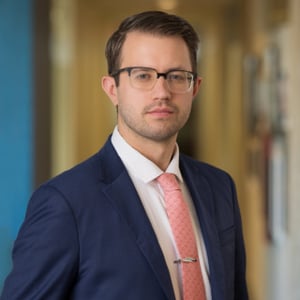
Legislative Counsel, Wilkinson Barker Knauer LLP
Slate joins WBK from his role as Counsel for the House Energy and Commerce Committee, where he represented the interests of Chairwoman Cathy McMorris Rodgers on the Communications and Technology Subcommittee.
During his tenure on the committee, he had primary responsibility over wireline and satellite communication policy and the National Telecommunications and Information Administration (NTIA). Slate played a role in drafting and revising legislation touching on a myriad of communications matters, including NTIA reauthorization, social media facing national security issues, cybersecurity, and satellite licensing. He also managed hearings discussing rural broadband deployment, administrative oversight of the NTIA, and the Broadband Equity, Access, and Deployment (BEAD) Program. Slate has also assisted in bipartisan, bicameral efforts to reform the FCC’s Universal Service Fund Program.
Prior to taking a position on Capitol Hill, Slate worked as an attorney advisor in NTIA’s Office of the Chief Counsel. In this position, he provided guidance on NTIA’s various grant programs, including the Connecting Minority Communities Program, the Broadband Infrastructure Program, the Tribal Broadband Connectivity Program, the Digital Equity Programs, and the BEAD Program. He also assisted in grant-related guidance surrounding the Infrastructure Investment and Jobs Act’s Build America, Buy America requirements.
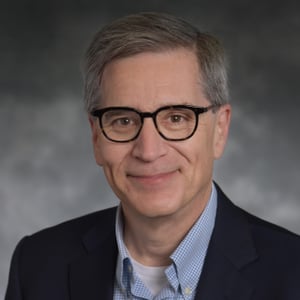
Affiliated Scholar, George Washington University Regulatory Studies Center
Roger Nober is a Professor of Practice at the Trachtenberg School of Public Policy and Public Administration. Nober served as director of the GW Regulatory Studies Center from 2024 to 2025. His career includes service as Executive Vice President and Chief Legal Officer at BNSF Railway, Chairman of the U.S. Surface Transportation Board and Chief Counsel of the Committee on Transportation and Infrastructure of the U.S. House of Representatives.
Nober retired from BNSF Railway Co. in December 2022, after 16 years as an Executive Vice President responsible for overseeing legal and regulatory matters, environmental claims, compliance, communications as well as state government and community affairs. He also served on the Board of BNSF Railway LLC. Prior to joining BNSF, Nober was a partner in the Washington office of Steptoe & Johnson LLP.
From 2002 to 2006, Nober was Chairman of the U.S. Surface Transportation Board. From 2001 to 2002, he served as Counselor to the Deputy Secretary at the U.S. Department of Transportation. From 1993 to 2001, he served in a variety of roles for the Committee on Transportation and Infrastructure of the U.S. House of Representatives, including serving as chief counsel from 1996 to 2001. He has a bachelor’s degree from Haverford College and a Juris Doctor from Harvard University School of Law.
He currently is an advisory board member at the Texas Transportation Institute at Texas A&M University, a member of the Business Advisory Council at Northwestern University Transportation Center, a member of the Texas Holocaust, Genocide, and Antisemitism Advisory Commission, and a past and current board member of a number of nonprofit organizations.
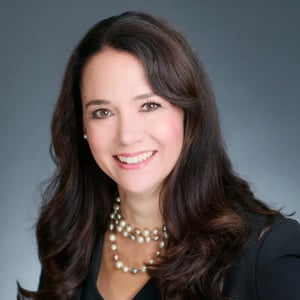
Principal, BGR Group
Robin Colwell is a Principal with BGR’s Commerce and Infrastructure Practice. She provides clients with strategic insights and skillful advocacy on complex telecommunications, technology, and cybersecurity policy issues. Robin’s wide-ranging experience includes key roles in the Executive, Legislative, and Judicial branches of government as well as the private sector.
A Florida native and Florida State University alumna, Robin received her law degree from the College of William & Mary School of Law, and first came to Washington as a law clerk to Chief Judge H. Robert Mayer of the Court of Appeals for the Federal Circuit. After several years representing mass media, communications, and technology clients in Wiley, Rein & Fielding LLP’s corporate practice, she developed deep expertise and passion for the public policy framework underlying these industries as Legislative Counsel for Senate Commerce Committee members including Senators Tim Scott, Jim DeMint, and Peter G. Fitzgerald, and as Counsel to the Senate Commerce Committee for Tourism, Competitiveness, and Innovation.
Robin next served as Chief of Staff to Commissioner Michael O’Rielly at the Federal Communications Commission, and later returned to the Hill as Chief Counsel to the House Energy & Commerce Committee for Communications and Technology. As Chief Counsel, Robin collaborated with majority and minority House and Senate Committee members and staff to secure enactment of major legislation including FOSTA/SESTA, protecting victims of online trafficking, and RAY BAUM’s Act, which funded repacking of spectrum following the broadcast incentive auction and included bicameral, bipartisan priorities such as MOBILE NOW and DIG ONCE.
Most recently, Robin served at the White House National Economic Council under former President Trump as a senior advisor to Director Larry Kudlow, developing Administration policy and leading interagency implementation of priorities including 5G deployment, security, and innovative network architecture; spectrum allocation; rural broadband deployment; data privacy and security; and domestic supply chain security. She was a key White House leader in the successful 2020 initiative to make a significant allocation of prime mid-band spectrum available to be auctioned in December 2021 for rapid U.S. deployment of commercial 5G networks.
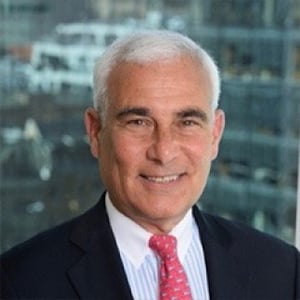
Managing Partner, Crest Hill Advisors
The founder and Managing Partner of Crest Hill Advisors, Scott Blake Harris has been a legal and policy professional in Washington, D.C. for forty-eight years, primarily focused on telecommunications, technology, and energy issues. He has deep experience both in government and in the private sector.
Prior to founding Crest Hill Advisors, Scott served as the Senior Spectrum Advisor and Director of the National Spectrum Strategy at the National Telecommunications and Information Administration (NTIA) in the U.S. Department of Commerce. He previously served in government as General Counsel of the Department of Energy, as the first Chief of the International Bureau at the Federal Communications Commission, and as Chief Counsel for Export Administration at the Department of Commerce. While at DOE, Scott also served as Co-Chair of the Broadband Subcommittee of the White House National Science and Technology Council.
In 1998, Scott co-founded the law firm of Harris, Wiltshire & Grannis LLP (now HWG LLP) and served as its first Managing Partner and later its first Chairman. Scott has also served as General Counsel of Neustar, Inc. and as Co-Managing Partner of Wilkinson Barker Knauer LLP. Earlier in his career, he was a partner at Gibson Dunn & Crutcher, where he was Chair of the Communications practice, and at Williams & Connolly, where began his career in private practice as a litigator in 1977. Scott served as a law clerk to the Hon. Gerhard A. Gesell on the U.S. District Court for the District of Columbia upon graduation from law school. He is a magna cum laude graduate of both Brown University and Harvard Law School.
Scott has received many honors during his career. He was named both as a “Visionary” and as one of the Top Ten Communications Lawyers by the Legal Times. He has been honored as a “Dean of the Bar” by, and received an award for Distinguished Service from, the Federal Communications Bar Association. He has also received awards for Outstanding Service from the National Association of State Energy Officials and for Special Achievement from the Chairman of the FCC. The National Association of Radio and Telecommunications Engineers presented Scott with the Marconi-Bell Award for his private sector work on unlicensed spectrum. He has also been deemed an “Eminent Practitioner” and “Senior Statesperson” by Chambers USA for his work in the telecommunications sector.
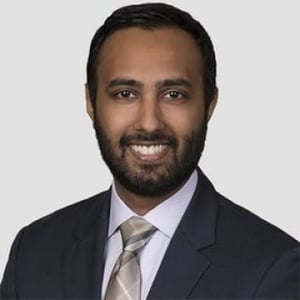
Senior Vice President & General Counsel, CTIA
Umair Javed serves as Senior Vice President and General Counsel. He joined CTIA in 2023 as Senior Vice President, Spectrum, where he was responsible for advancing the wireless industry’s spectrum priorities both domestically and internationally.
Prior to joining CTIA, Umair influenced global and domestic law and policy as Chief Counsel to FCC Chairwoman Jessica Rosenworcel. He served as the FCC designee on President Biden’s Competition Council, led the FCC’s National Security Policy Council, and represented the agency at international treaty-writing conferences. During his time at the FCC, Umair also crafted the FCC’s Spectrum Coordination Initiative, oversaw the third-highest grossing spectrum auction in FCC history, coordinated the deployment of 5G services in the C-band, and partnered with Congress on passage and FCC implementation of the Infrastructure Investment and Jobs Act, Secure and Trusted Communications Networks Act, and Secure Equipment Act.
From October 2017 to January 2019, Umair served as Legal Advisor, Wireless and International in the Office of FCC Commissioner Rosenworcel. He joined the FCC from Wiley Rein LLP, where he was an attorney in the firm’s Telecom, Media, and Technology Group.
Umair was named to the inaugural Lawyers of Color Hot List. He is also a 2021 HTTP “Tech Innovadores” recipient and the 2023 Public Safety Communications Leadership in Regulatory Service award recipient for his service at the FCC.
Umair has a Juris Doctor from the University of Virginia School of Law and a bachelor of arts in Political Philosophy, Policy, and Law from the University of Virginia. He is a member of the bar in the District of Columbia and Virginia. Umair also is a volunteer firefighter in Loudoun County, Virginia.
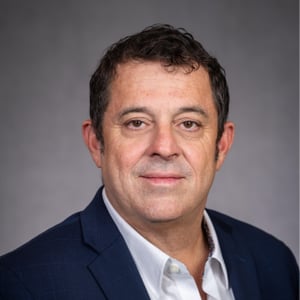
Senior Fellow for Law, Economics, and Technology, The Heritage Foundation; Professor, Florida International University
Mario Loyola is a Senior Fellow for Law, Economics, and Technology at The Heritage Foundation.
Loyola served in the Trump Administration as Associate Director for Regulatory Reform at the White House Council on Environmental Quality. In that role, he was one of the principal drafters of the One Federal Decision policy, which helped to streamline the permitting and environmental review of large infrastructure projects. While at CEQ, he was a member of the U.S. delegation to the USMCA free trade negotiations with Mexico and Canada, as well as the United Nations conference on biodiversity on the high seas. Loyola initially joined the White House in February 2017 as a Presidential Speechwriter, employing his expertise in many areas of foreign and domestic policy.
After beginning his career in M&A and corporate finance law, Loyola served in the Bush 43 Administration as a special assistant to the Undersecretary of Defense for Policy. He left that position to start writing on national defense issues in magazines such as National Review and The Weekly Standard, reporting from the front lines of the war on terrorism in Lebanon, Israel, and Iraq. He finished the Bush Administration as Foreign and Defense Counsel to the U.S. Senate Republican Policy Committee, then under the chairmanship of Senator Kay Bailey Hutchison of Texas. He subsequently moved to Texas and joined the Texas Public Policy Foundation, where he specialized in energy, environment, and federalism.
Loyola is a frequent contributor to The Wall Street Journal, National Review, and The Atlantic, among others. He teaches environmental and administrative law at Florida International University, where he is Founding Director of the Environmental Finance and Risk Management program in FIU’s prestigious Institute of Environment. He received a bachelor’s degree in European history from the University of Wisconsin–Madison and a J.D. from Washington University School of Law.
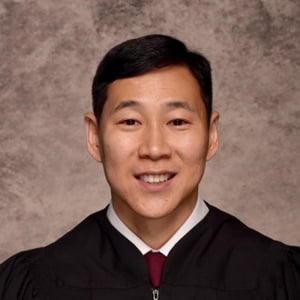
Circuit Judge, United States Court of Appeals for the Second Circuit
Michael H. Park was appointed to the U.S. Court of Appeals for the Second Circuit in May 2019. He earned his A.B. magna cum laude from Princeton University and his J.D. from Yale Law School, where he served as Managing Editor of the Yale Law Journal. Upon graduation from law school in 2001, Judge Park served as a law clerk to then-Judge Samuel A. Alito, Jr. on the Third Circuit, for whom he also clerked on the Supreme Court during the 2008 Term. Judge Park was an associate in the New York office of the Wilmer Hale law firm from 2002 to 2006, and he served as an Attorney-Adviser in the U.S. Department of Justice, Office of Legal Counsel from 2006 to 2008. Judge Park worked in the New York office of the Dechert law firm, first as counsel (2009-2011) and then as a partner (2012-2015). In 2015, Judge Park joined the law firm Consovoy McCarthy Park as a name partner, where he specialized in appellate and complex civil litigation. During that time, he also served as an adjunct professor at the Antonin Scalia Law School at George Mason University.

President, The Free State Foundation
Randolph J. May is Founder and President of The Free State Foundation. The Free State Foundation is an independent, non-profit free market-oriented think tank founded in 2006.
From October 1999-May 2006, May was a Senior Fellow and Director of Communications Policy Studies at The Progress & Freedom Foundation, a Washington, DC-based think tank. Prior to joining PFF, he practiced communications, administrative, and regulatory law as a partner at major national law firms. From 1978 to 1981, May served as Assistant General Counsel and Associate General Counsel at the Federal Communication Commission.
May has held numerous leadership positions in bar associations. He is a past Chair of the American Bar Association’s Section of Administrative Law and Regulatory Practice. He is a Fellow of the National Academy of Public Administration. Mr. May also has served as a Public Member of the Administrative Conference of the United States and currently is a Senior Fellow at ACUS.
Mr. May has published more than two hundred articles and essays on communications, administrative and constitutional law topics. He is author of A Call for a Radical New Communications Policy: Proposals for Free Market Reform, and co-author of #CommActUpdate: A Communications Law Fit for the Digital Age and The Constitutional Foundations of Intellectual Property. Mr. May is editor of two books, Communications Law and Policy in the Digital Age: The Next Five Years and New Directions in Communications Policy. In addition, he is the co-editor of two other books, Net Neutrality or Net Neutering: Should Broadband Internet Services Be Regulated? and Communications Deregulation and FCC Reform. In the past, Mr. May has written regular columns on legal and regulatory affairs for Legal Times and the National Law Journal, leading national legal periodicals.
He received his A.B. from Duke University and his J.D. from Duke Law School, where he serves as a member of the Board of Visitors.
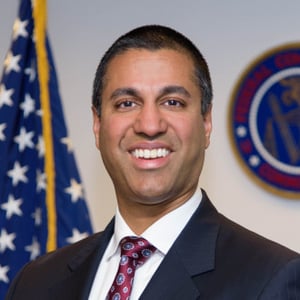
Nonresident Fellow, American Enterprise Institute
Ajit Pai, a former chairman of the Federal Communications Commission (FCC), is a nonresident fellow at the American Enterprise Institute, where he focuses on issues pertaining to technology and innovation, telecommunications regulatory policy, and market-based incentives for investment in broadband deployment. Concurrently, he is a partner at Searchlight Capital Partners, a global investment firm.
Mr. Pai’s distinguished career at the FCC includes two leadership roles following presidential appointments. He was appointed commissioner by President Barack Obama in 2012, designated chairman by President Donald Trump in 2017, and twice confirmed by the US Senate. While at the helm of the FCC, Mr. Pai had a transformative impact on the future of US technology and communications policy, implementing major initiatives to help close the digital divide; advance US leadership in 5G and other wireless technologies; promote innovation; protect consumers, public safety, and national security; and make the agency itself more open, transparent, and data-driven.
Earlier in his career, Mr. Pai served in various public-sector positions in the FCC’s Office of General Counsel, the US Department of Justice, the US Senate Judiciary Committee, and the US District Court for the Eastern District of Louisiana. He also worked as a partner at Jenner & Block and associate general counsel at Verizon Communications.
Mr. Pai graduated with honors from Harvard University, where he received a bachelor’s degree, and from the University of Chicago Law School, where he received a law degree and was an editor on the University of Chicago Law Review.

Partner, HWG LLP
Patricia Paoletta is a partner with the law firm of HWG LLP, where she specializes in telecommunications, trade and technology policy. Ms. Paoletta provides advice on regulatory, trade and legislative policy to clients before the FCC, Congress and the Administration. Her clients include providers of content, cloud, mobile broadband, VoIP, international telecommunications, small cells, cognitive radio, public safety and homeland security solutions. She serves on Advisory Boards for several entities engaged in information services, communications and technology.
Ms. Paoletta has accrued considerable experience with telecommunications trade and policy in the public sector. From 1990 to 1995, she was senior advisor to the International Bureau Chief and Office Director at the Federal Communications Commission. In the mid 1990s, Ms. Paoletta served as Director of Telecommunications Trade Policy in the Office of the U.S. Trade Representative, Executive Office of the President, where she worked on the WTO Information Technology Agreement (ITA) and the Basic Telecommunications Agreement. After USTR, Ms. Paoletta served as Majority Counsel to the House Energy and Commerce Committee. She then moved to Level 3 Communications, as Vice President, Government Relations.
Ms. Paoletta is on the Steering Committee of the Transatlantic Roundtable on Telecommunications and Information Technology of the European Institute. She is a member of the USTR Alumni Association, Washington International Trade Association, the Federal Communications Bar Association (FCBA), and Women in Technology. Ms. Paoletta has served on the Board of Advisors for the Inter-American Dialogue's Latin America Telecom Advisor, Co-Chairman of the American Bar Association International Communications Committee, and as a member of the U.S. Chamber of Commerce's Technology Policy Committee.
Ms. Paoletta served as a delegate in 2012 to the ITU-R's Study Group 6 Working Party 6A Meeting and in 2009 and 2010 to the ITU-R's Study Group I Working Party IB Meetings; the 2009 meetings of CITEL (the Committee on International Telecommunications at the Organization of American States) PCC-II; the International Telecommunication Union (ITU) World Telecommunications Standards Assembly (2000); the ITU Internet Protocol Telephony Experts Group and the ITU World Telecommunications Policy Forum in 2001; as Chairman of the National Reliability and Interoperability Council (NRIC) Steering Committee (2000-2001); as Board Member for the Voice on the Net Coalition (2001); as Co-Chairman of the FCBA's Annual Seminar Committee (2009-2011); as a member of the FCBA's Ad Hoc Speakers Committee (2006-2007); as Co-Chairman for the FCBA International Practice Committee (2001-2002 and 2005-2006); and as a Co-Chairman of the FCBA Legislative Practice Committee (1999-2000).

Managing Partner, Wilkinson Barker Knauer LLP
Bryan Tramont, the firm’s managing partner, offers strategic counsel to Fortune 100 companies and trade associations, as well as small and mid-sized telecommunications and media companies, on all aspects of communications law and regulation. He is regularly called on to advise companies as they develop and evaluate new business opportunities in the technology, media, and telecommunications sectors. Mr. Tramont also designs and leads the execution of the firm’s strategic plan and directs client management and development. Mr. Tramont has been recognized by leading publications like Legal 500, Chambers USA, and Washingtonian as one of the nation’s top communications lawyers. In 2017, he was named to the inaugural Legal 500 Hall of Fame List, which highlights individuals who have received constant praise by their clients and who have been recognized by the Legal 500 as an elite leading lawyer for six consecutive years. He has been awarded The Best Lawyers in America © 2017 “Lawyer of the Year” for Media Law and “Lawyer of the Year" in Communications Law in 2016. In 2016, he was also named one of the Top 10 Washington, DC Super Lawyers.
Mr. Tramont serves on the Commerce Spectrum Management Advisory Committee (CSMAC), advising the Assistant Secretary of Commerce for Communications and Information at NTIA. Appointed under the Bush and Obama Administrations, he also served as the committee’s Co-Chairman from 2008-2010. In addition, Mr. Tramont is active in the Federal Communications Bar Association, where he served in a variety of leadership roles, including as President from 2010-11 and has been awarded the organization’s Distinguished Service Award. Mr. Tramont chairs the Federalist Society’s Telecommunications Practice Group Executive Committee, serves on the International Institute of Communications Canada Board of Directors, and previously served on the Governing Committee of the ABA Forum on Communications Law. Mr. Tramont currently is an adjunct law professor at The Catholic University of America as part of the Communications Law Institute, is a senior adjunct fellow at the University of Colorado, Boulder, has served as the Syracuse University Law School’s Practitioner in Residence, and is on the Board of Trustees at William Woods University. Mr. Tramont is the author of numerous articles on communications policy and is a frequent speaker and lecturer at academic and industry events. Prior to joining Wilkinson Barker Knauer, Mr. Tramont served as Chief of Staff of the Federal Communications Commission under Chairman Michael Powell. As Chief of Staff, Mr. Tramont managed all aspects of the agency’s operations and directed FCC staff in implementing all components of the agency’s policy portfolio including media, broadband, mobility, and traditional telephone services. Before being elevated to Chief of Staff, Mr. Tramont was Chairman Powell’s Senior Legal Advisor, advising him on strategic policy matters and on wireless, international, technology, satellite, and consumer issues. Mr. Tramont also served as Senior Legal Advisor to Commissioner Kathleen Abernathy and, before that, to Commissioner Harold Furchtgott-Roth. He also served as a law clerk for the Honorable Duane Benton on the Supreme Court for his home state of Missouri. In addition, Mr. Tramont has served as an expert witness in a number of communications-related litigation matters.
Bryan Tramont graduated summa cum laude from The George Washington University with a degree in political science. He earned his law degree from Yale Law School, where he served as editor of the Yale Law & Policy Review.
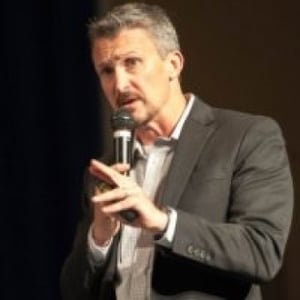
Chief Economist, The Phoenix Center for Advanced Legal & Economic Public Policy Studies
George S. Ford is the chief economist for the Phoenix Center for Advanced Legal and Economic Public Policy Studies, a nonprofit 501(c)(3) research organization that studies broad public-policy issues related to governance, social and economic conditions, with a particular emphasis on the law and economics of the digital age.
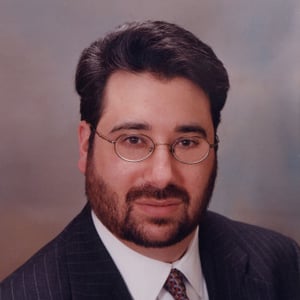
President, Phoenix Center for Advanced Legal and Economic Public Policy Studies
Lawrence J. Spiwak is President of the Phoenix Center for Advanced Legal & Economic Public Policy Studies, a non-profit 501(c)(3) organization that studies broad public-policy issues related to governance, social and economic conditions, with a particular emphasis on the law and economics of the digital age. Mr. Spiwak is a prolific scholar whose work is frequently cited by policymakers, major news media and academic journals around the world, and is in the top 1.3%of authors downloaded on the Social Science Research Network. Mr. Spiwak currently serves as the co-chair of the Federal Communications Bar Association’s (FCBA) committee responsible for overseeing the FEDERAL COMMUNICATIONS LAW JOURNAL and is a member of the program committee of the Telecommunications Policy Research Conference (“TPRC”). Mr. Spiwak is also the recipient of the FCBA’s Distinguished Service Award. Prior to joining the Phoenix Center, Mr. Spiwak was a Senior Attorney with the Competition Division in the FCC’s Office of General Counsel from 1994-1998. While in college, Mr. Spiwak was accepted into the Presidential Stay-In School program where he was responsible for delivering classified and confidential material among senior White House and Reagan Administration officials and received a full FBI security clearance. Mr. Spiwak received his B.A. with Special Honors from the George Washington University and his J.D. from the Benjamin N. Cardozo School of Law. Mr. Spiwak is a member in good standing of the bars of New York, Massachusetts, the District of Columbia, and the U.S. Court of Appeals for the D.C. Circuit.
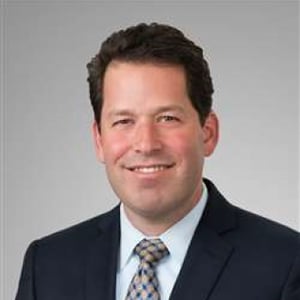
Partner, Latham & Watkins LLP
Matthew Brill, Global Chair of the Communications Law Practice and a member of the Supreme Court and Appellate Practice, is a nationally recognized communications lawyer and former FCC senior official. He represents clients in litigation, regulatory, and transactional matters.
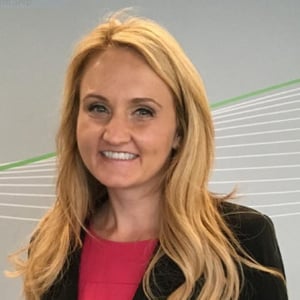
Vice President, Policy & Advocacy, USTelecom – The Broadband Association
Kristine (Fargotstein) Hackman serves as Vice President, Policy & Advocacy at USTelecom – The Broadband Association. In this role, she advocates on behalf of USTelecom members before the White House and Executive Branch, regulatory agencies, courts and other government entities in Washington, DC and state capitals to ensure members can compete, grow and thrive. Prior to joining USTelecom, she held several roles at the FCC, including Acting Wireline Advisor to Chairman Ajit Pai, Special Counsel in the Office of General Counsel, Legal Advisor to the Wireline Bureau Chief, and Attorney Advisor in the Wireline Competition Bureau. She also was detailed to the House Energy and Commerce Committee’s Communications and Technology Subcommittee where she worked on broadband infrastructure, net neutrality, and spectrum, among other connectivity matters. Before her legal career, Kristine led public service initiatives at the National Association of Broadcasters.
Kristine graduated from the George Mason University School of Law where she developed a dedicated communications law concentration, and for the past five years has served as an adjunct professor of Communications Law. She is an active member of the Federal Communications Bar Association and a former co-chair of its Young Lawyers Committee.
Partner, Wilkinson Barker Knauer LLP
Russell P. Hanser has nearly 20 years of experience working in communications law and commercial litigation. His practice focuses on the regulation of next-generation broadband services and IP-enabled applications, information privacy, Universal Service, intercarrier compensation, and a range of other issues faced by the information and communications technology industry. Mr. Hanser’s clients include wireline carriers, mobile wireless providers, cable operators, Internet service providers, equipment manufacturers, private equity funds, and investment advisors.
Prior to joining the firm, Mr. Hanser worked at the FCC, where he held senior positions in the Wireline Competition Bureau and the Office of General Counsel, and served as wireline Legal Advisor in the Office of Commissioner Kathleen Abernathy. He is an Adjunct Professor at the Catholic University of America's Columbus School of Law, where he teaches telecommunications law. He has previously been an Adjunct Professor of Law at the University of New Hampshire Law School and the George Washington University Law School. Following law school, Mr. Hanser clerked for Judge Norman H. Stahl on the United States Court of Appeals for the First Circuit.
President, Phoenix Center for Advanced Legal and Economic Public Policy Studies
Lawrence J. Spiwak is President of the Phoenix Center for Advanced Legal & Economic Public Policy Studies, a non-profit 501(c)(3) organization that studies broad public-policy issues related to governance, social and economic conditions, with a particular emphasis on the law and economics of the digital age. Mr. Spiwak is a prolific scholar whose work is frequently cited by policymakers, major news media and academic journals around the world, and is in the top 1.3%of authors downloaded on the Social Science Research Network. Mr. Spiwak currently serves as the co-chair of the Federal Communications Bar Association’s (FCBA) committee responsible for overseeing the FEDERAL COMMUNICATIONS LAW JOURNAL and is a member of the program committee of the Telecommunications Policy Research Conference (“TPRC”). Mr. Spiwak is also the recipient of the FCBA’s Distinguished Service Award. Prior to joining the Phoenix Center, Mr. Spiwak was a Senior Attorney with the Competition Division in the FCC’s Office of General Counsel from 1994-1998. While in college, Mr. Spiwak was accepted into the Presidential Stay-In School program where he was responsible for delivering classified and confidential material among senior White House and Reagan Administration officials and received a full FBI security clearance. Mr. Spiwak received his B.A. with Special Honors from the George Washington University and his J.D. from the Benjamin N. Cardozo School of Law. Mr. Spiwak is a member in good standing of the bars of New York, Massachusetts, the District of Columbia, and the U.S. Court of Appeals for the D.C. Circuit.
President, The Free State Foundation
Randolph J. May is Founder and President of The Free State Foundation. The Free State Foundation is an independent, non-profit free market-oriented think tank founded in 2006.
From October 1999-May 2006, May was a Senior Fellow and Director of Communications Policy Studies at The Progress & Freedom Foundation, a Washington, DC-based think tank. Prior to joining PFF, he practiced communications, administrative, and regulatory law as a partner at major national law firms. From 1978 to 1981, May served as Assistant General Counsel and Associate General Counsel at the Federal Communication Commission.
May has held numerous leadership positions in bar associations. He is a past Chair of the American Bar Association’s Section of Administrative Law and Regulatory Practice. He is a Fellow of the National Academy of Public Administration. Mr. May also has served as a Public Member of the Administrative Conference of the United States and currently is a Senior Fellow at ACUS.
Mr. May has published more than two hundred articles and essays on communications, administrative and constitutional law topics. He is author of A Call for a Radical New Communications Policy: Proposals for Free Market Reform, and co-author of #CommActUpdate: A Communications Law Fit for the Digital Age and The Constitutional Foundations of Intellectual Property. Mr. May is editor of two books, Communications Law and Policy in the Digital Age: The Next Five Years and New Directions in Communications Policy. In addition, he is the co-editor of two other books, Net Neutrality or Net Neutering: Should Broadband Internet Services Be Regulated? and Communications Deregulation and FCC Reform. In the past, Mr. May has written regular columns on legal and regulatory affairs for Legal Times and the National Law Journal, leading national legal periodicals.
He received his A.B. from Duke University and his J.D. from Duke Law School, where he serves as a member of the Board of Visitors.
Nonresident Fellow, American Enterprise Institute
Ajit Pai, a former chairman of the Federal Communications Commission (FCC), is a nonresident fellow at the American Enterprise Institute, where he focuses on issues pertaining to technology and innovation, telecommunications regulatory policy, and market-based incentives for investment in broadband deployment. Concurrently, he is a partner at Searchlight Capital Partners, a global investment firm.
Mr. Pai’s distinguished career at the FCC includes two leadership roles following presidential appointments. He was appointed commissioner by President Barack Obama in 2012, designated chairman by President Donald Trump in 2017, and twice confirmed by the US Senate. While at the helm of the FCC, Mr. Pai had a transformative impact on the future of US technology and communications policy, implementing major initiatives to help close the digital divide; advance US leadership in 5G and other wireless technologies; promote innovation; protect consumers, public safety, and national security; and make the agency itself more open, transparent, and data-driven.
Earlier in his career, Mr. Pai served in various public-sector positions in the FCC’s Office of General Counsel, the US Department of Justice, the US Senate Judiciary Committee, and the US District Court for the Eastern District of Louisiana. He also worked as a partner at Jenner & Block and associate general counsel at Verizon Communications.
Mr. Pai graduated with honors from Harvard University, where he received a bachelor’s degree, and from the University of Chicago Law School, where he received a law degree and was an editor on the University of Chicago Law Review.
Partner, HWG LLP
Patricia Paoletta is a partner with the law firm of HWG LLP, where she specializes in telecommunications, trade and technology policy. Ms. Paoletta provides advice on regulatory, trade and legislative policy to clients before the FCC, Congress and the Administration. Her clients include providers of content, cloud, mobile broadband, VoIP, international telecommunications, small cells, cognitive radio, public safety and homeland security solutions. She serves on Advisory Boards for several entities engaged in information services, communications and technology.
Ms. Paoletta has accrued considerable experience with telecommunications trade and policy in the public sector. From 1990 to 1995, she was senior advisor to the International Bureau Chief and Office Director at the Federal Communications Commission. In the mid 1990s, Ms. Paoletta served as Director of Telecommunications Trade Policy in the Office of the U.S. Trade Representative, Executive Office of the President, where she worked on the WTO Information Technology Agreement (ITA) and the Basic Telecommunications Agreement. After USTR, Ms. Paoletta served as Majority Counsel to the House Energy and Commerce Committee. She then moved to Level 3 Communications, as Vice President, Government Relations.
Ms. Paoletta is on the Steering Committee of the Transatlantic Roundtable on Telecommunications and Information Technology of the European Institute. She is a member of the USTR Alumni Association, Washington International Trade Association, the Federal Communications Bar Association (FCBA), and Women in Technology. Ms. Paoletta has served on the Board of Advisors for the Inter-American Dialogue's Latin America Telecom Advisor, Co-Chairman of the American Bar Association International Communications Committee, and as a member of the U.S. Chamber of Commerce's Technology Policy Committee.
Ms. Paoletta served as a delegate in 2012 to the ITU-R's Study Group 6 Working Party 6A Meeting and in 2009 and 2010 to the ITU-R's Study Group I Working Party IB Meetings; the 2009 meetings of CITEL (the Committee on International Telecommunications at the Organization of American States) PCC-II; the International Telecommunication Union (ITU) World Telecommunications Standards Assembly (2000); the ITU Internet Protocol Telephony Experts Group and the ITU World Telecommunications Policy Forum in 2001; as Chairman of the National Reliability and Interoperability Council (NRIC) Steering Committee (2000-2001); as Board Member for the Voice on the Net Coalition (2001); as Co-Chairman of the FCBA's Annual Seminar Committee (2009-2011); as a member of the FCBA's Ad Hoc Speakers Committee (2006-2007); as Co-Chairman for the FCBA International Practice Committee (2001-2002 and 2005-2006); and as a Co-Chairman of the FCBA Legislative Practice Committee (1999-2000).
Managing Partner, Wilkinson Barker Knauer LLP
Bryan Tramont, the firm’s managing partner, offers strategic counsel to Fortune 100 companies and trade associations, as well as small and mid-sized telecommunications and media companies, on all aspects of communications law and regulation. He is regularly called on to advise companies as they develop and evaluate new business opportunities in the technology, media, and telecommunications sectors. Mr. Tramont also designs and leads the execution of the firm’s strategic plan and directs client management and development. Mr. Tramont has been recognized by leading publications like Legal 500, Chambers USA, and Washingtonian as one of the nation’s top communications lawyers. In 2017, he was named to the inaugural Legal 500 Hall of Fame List, which highlights individuals who have received constant praise by their clients and who have been recognized by the Legal 500 as an elite leading lawyer for six consecutive years. He has been awarded The Best Lawyers in America © 2017 “Lawyer of the Year” for Media Law and “Lawyer of the Year" in Communications Law in 2016. In 2016, he was also named one of the Top 10 Washington, DC Super Lawyers.
Mr. Tramont serves on the Commerce Spectrum Management Advisory Committee (CSMAC), advising the Assistant Secretary of Commerce for Communications and Information at NTIA. Appointed under the Bush and Obama Administrations, he also served as the committee’s Co-Chairman from 2008-2010. In addition, Mr. Tramont is active in the Federal Communications Bar Association, where he served in a variety of leadership roles, including as President from 2010-11 and has been awarded the organization’s Distinguished Service Award. Mr. Tramont chairs the Federalist Society’s Telecommunications Practice Group Executive Committee, serves on the International Institute of Communications Canada Board of Directors, and previously served on the Governing Committee of the ABA Forum on Communications Law. Mr. Tramont currently is an adjunct law professor at The Catholic University of America as part of the Communications Law Institute, is a senior adjunct fellow at the University of Colorado, Boulder, has served as the Syracuse University Law School’s Practitioner in Residence, and is on the Board of Trustees at William Woods University. Mr. Tramont is the author of numerous articles on communications policy and is a frequent speaker and lecturer at academic and industry events. Prior to joining Wilkinson Barker Knauer, Mr. Tramont served as Chief of Staff of the Federal Communications Commission under Chairman Michael Powell. As Chief of Staff, Mr. Tramont managed all aspects of the agency’s operations and directed FCC staff in implementing all components of the agency’s policy portfolio including media, broadband, mobility, and traditional telephone services. Before being elevated to Chief of Staff, Mr. Tramont was Chairman Powell’s Senior Legal Advisor, advising him on strategic policy matters and on wireless, international, technology, satellite, and consumer issues. Mr. Tramont also served as Senior Legal Advisor to Commissioner Kathleen Abernathy and, before that, to Commissioner Harold Furchtgott-Roth. He also served as a law clerk for the Honorable Duane Benton on the Supreme Court for his home state of Missouri. In addition, Mr. Tramont has served as an expert witness in a number of communications-related litigation matters.
Bryan Tramont graduated summa cum laude from The George Washington University with a degree in political science. He earned his law degree from Yale Law School, where he served as editor of the Yale Law & Policy Review.

2026 Practice Groups Leadership Reception
Washington, DCLitigation Update: Minnesota Telecom Alliance v. FCC
Christopher Ali, Jennifer B. Dickey, Matthew Furlow, Daniel H. Kahn
The U.S. Court of Appeals for the Eighth Circuit recently vacated the Federal Communications Commission’s...
Litigation Update: Minnesota Telecom Alliance v. FCC
Christopher Ali, Jennifer B. Dickey, Matthew Furlow, Daniel H. Kahn
The U.S. Court of Appeals for the Eighth Circuit recently vacated the Federal Communications Commission’s...
DOGE Unleashed: Trump Executive Orders and Their Impact on Telecommunications Regulation
Austin Bonner, Scott D. Delacourt, Brooke Donilon, Slate Herman, Roger Nober
Join the Federalist Society for a discussion on the impact of President Trump's Executive Orders...
Telecommunications & Electronic Media Practice Group: Administration in Review and What Lies Ahead: Communications and Technology Policy Challenges in Times of Transformational Change
Robin Colwell, Scott Blake Harris, Umair Javed, Mario Loyola, Michael H. Park
Featuring a conversation addressing regulation of artificial intelligence, cybersecurity, tech platform regulation, privacy, spectrum policy,...
Chairman Ajit Pai's Tenure at the FCC: Fireside Chat and Panel Discussion
Randolph May, Ajit V. Pai, Patricia J. Paoletta, Bryan N. Tramont
As 2020 draws to a close, Federal Communications Commission Chairman Ajit Pai joins Bryan Tramont,...
Chairman Ajit Pai's Tenure at the FCC: Fireside Chat and Panel Discussion
TeleforumThe Law and Economics of Municipal Broadband
George Ford, Lawrence J. Spiwak
Now six months into the COVID pandemic, the Internet has offered Americans a welcome economic,...
The Restoring Internet Freedom Order on Remand: Next Steps for the Federal Communications Commission
Matthew A. Brill, Kristine (Fargotstein) Hackman, Russell P. Hanser, Lawrence J. Spiwak
In Mozilla v. FCC, the D.C. Circuit upheld the Federal Communications Commission’s 2018 Restoring Internet...
Topics
Fireside Chat with FTC Commissioner Christine Wilson
Earlier this month, the Federalist Society’s Telecommunications & Electronic Media Practice Group and Corporations, Securities...