
Dean & Henry R. Luce Professor of Journalism, Columbia Journalis, The New Yorker
Dean Steve Coll is a staff writer at The New Yorker, the author of seven books of nonfiction, and a two-time winner of the Pulitzer Prize. Between 1985 and 2005, he was a reporter, foreign correspondent and senior editor at the Washington Post. There he covered Wall Street, served as the paper’s South Asia correspondent in New Delhi, and was the Post’s first international investigative correspondent, based in London. He served as managing editor of the Post between 1998 and 2004. The following year, he joined The New Yorker, where he has written on international politics, American politics and national security, intelligence controversies and the media.
Coll is the author of “Ghost Wars: The Secret History of the CIA, Afghanistan, and Bin Laden, From the Soviet Invasion to September 10, 2001(link is external),” published in 2004, for which he received an Overseas Press Club Award and a Pulitzer Prize. His 2008 book, “The Bin Ladens: An Arabian Family in the American Century(link is external),” won the PEN/John Kenneth Galbraith Award for Nonfiction in 2009 and was a finalist for the Pulitzer Prize for Biography. His most recent book is “Private Empire: ExxonMobil and American Power(link is external),” which won the Financial Times/Goldman Sachs Award as the best business book of 2012.
He has four children and is married to Eliza Griswold, the journalist and poet. He has a B.A. in English and history from Occidental College.

Laurence A. Tisch Professor of Law and Director, Classical Liberal Institute, New York University School of Law; Director, Classical Liberal Institute, Civitas Institute University of Texas at Austin
Richard A. Epstein is the inaugural Laurence A. Tisch Professor of Law at NYU School of Law. Prior to his joining the faculty, he was a visiting law professor at NYU from 2007 through 2009. He served as the Peter and Kirstin Bedford Senior Fellow at the Hoover Institution from 2000 to 2024. Since 2024 to the present he is a senior lecturer at the Civitas Institute at the University of Texas—Austin. Epstein is also the James Parker Hall Distinguished Service Professor of Law Emeritus and a senior lecturer at the University of Chicago. His initial law school appointment was at the University of Southern California from 1968 to 1972. Epstein received an LL.D., h.c. from the University of Ghent, 2003. He has been a member of the American Academy of Arts and Sciences since 1985 and was a Senior Fellow of the Center for Clinical Medical Ethics at the University of Chicago Division of Biological Sciences, also from 1983. to 2022 He served as editor of the Journal of Legal Studies from 1981 to 1991, and of the Journal of Law and Economics from 1991-2001. From 2001 to 2010 he was a director of the John M. Olin Program in Law and Economics at the University of Chicago.
His newest book, The Myth of Birthright Citizenship: What the Fourteenth Amendment Really Says was published in 2026 (Encounter Books). Prior to that he has published many books including, The Dubious Morality of the Modern Administrative State (Roman & Littlefield 2020).Earlier he published th Classical Liberal Constitution: The Uncertain Quest for Limited Government (Harvard 2014) iHis previous books include Design for Liberty: Private Property, Public Administration and the Rule of Law (Harvard 2011); The Case Against the Employee Free Choice Act (Hoover 2009); Supreme Neglect: How to Revive the Constitutional Protection of Property Rights (Oxford 2008); Antitrust Decrees in Theory and Practice: Why Less is More (AEI 2007); Overdose: How Excessive Government Regulation Stifles Pharmaceutical Innovation (Yale University Press. 2006); How Progressives Rewrote the Constitution (Cato 2006); Cases and Materials on Torts (Aspen Law & Business; 8th ed. 2004); Skepticism and Freedom: A Modern Case for Classical Liberalism (University of Chicago, 2003); Torts (Aspen Law & Business 1999); Principles for a Free Society: Reconciling Individual Liberty with the Common Good (Perseus Books, 1998): Mortal Peril: Our Inalienable Rights to Health Care (Addison-Wesley, 1997); Simple Rules for a Complex World (Harvard, 1995); Bargaining With the State (Princeton, 1993); Forbidden Grounds: The Case Against Employment Discrimination Laws (Harvard , 1992); Takings: Private Property and the Power of Eminent Domain (Harvard, 1985); and Modern Products Liability Law (Greenwood Press, 1980). He has also edited(with Catherine M. Sharkey) Cases and Materials on the Law of Torts (10th edition 2012).
Professor Epstein has written numerous articles on a wide range of legal and interdisciplinary subjects. He has taught courses in administrative law, antitrust law, civil procedure, communications, constitutional law, contracts, corporations, criminal law, employment discrimination law, environmental law, food and drug law health law and policy, legal history, labor law, property, real estate development and finance, jurisprudence, labor law; land use planning, patents, individual, estate and corporate taxation, Roman Law; torts, and workers' compensation.
Professor Epstein also writes a regular column for Civitas Institute, which also sponsors his podcast, The Libertarian with Charles C.W. Cooke, and Law Talk, with Cooke and John Yoo. He also does a podcast with John Batchelor. And appears regularly on the Freedom File with Judge Andrew Napolitano.
Founding Director, Knight First Amendment Institute at Columbia University
Jameel Jaffer is the founding director of the Knight First Amendment Institute at Columbia University, which works to protect and expand the freedoms of speech and the press through strategic litigation, research, and public education. Until recently, Jaffer was deputy legal director at the American Civil Liberties Union and director of the ACLU’s Center for Democracy, in which role he oversaw the ACLU’s work relating to free speech, privacy, technology, national security, and international human rights.
Jaffer has litigated some of the most significant post-9/11 cases relating to national security and civil liberties, including cases concerning detention, interrogation, surveillance, targeted killing, and government secrecy. He co-led the litigation that resulted in the publication of the Bush administration’s “torture memos”—a lawsuit the New York Times described as “among the most successful in the history of public disclosure.” More recently, he led the ACLU’s litigation that resulted in the publication of the Obama administration’s “drone memos.”
Dean and Lucy G. Moses Professor of Law, Columbia Law School
Gillian Lester is Dean and the Lucy G. Moses Professor of Law at Columbia Law School.
She is a nationally recognized authority on employment law and policy whose research has explored workplace intellectual property law, public finance policy, and the design of social insurance laws and regulations. Dean Lester is the author of numerous books and articles and is co-author of one of the leading casebooks on employment law, Employment Law Cases and Materials. She is also a member of the American Law Institute and was an adviser to the ALI Restatement of Employment Law.
Dean Lester began her teaching career in 1994 at UCLA School of Law, becoming a full professor in 1999, and joined the Berkeley Law faculty in 2006. At Berkeley, she was the Alexander F. and May T. Morrison Professor of Law and Mimi Wolfen Research Professor, and also served as co-director of the Berkeley Center for Health, Economic and Family Security; Associate Dean for the J.D. Program and Curricular Planning; and, most recently, Acting Dean (2012-2014).
She has held external appointments as the Sidley Austin Visiting Professor at Harvard Law School and Sloan Fellow and Visiting Professor at Georgetown University Law Center. Dean Lester also held short-term visiting appointments at USC Gould School of Law, University of Chicago Law School, and Radzyner School of Law Interdisciplinary Center in Herzliya, Israel.
Dean Lester, Columbia Law School’s 15th dean, holds degrees from Stanford Law School and the University of Toronto Faculty of Law, where she served as Editor-in-Chief of the law review. She earned her undergraduate degree from the University of British Columbia.
Professor of Law and Director of the Center for Intellectual Property Law, Maurice A. Deane School of Law at Hofstra University
Professor Manta teaches intellectual property law subjects. Her research examines the intersection between intellectual property law and social science, with a focus on psychology. She has most recently written about the hedonic value of trademarks and its legal implications, the problem of cognitive bias in copyright infringement litigation, price discrimination through software licensing in the age of the Internet of Things, and the role of criminal sanctions in intellectual property. Professor Manta has published or has forthcoming work in the Emory Law Journal, William & Mary Law Review, Iowa Law Review, Alabama Law Review, Boston College Law Review, Ohio State Law Journal, Washington and Lee Law Review, Harvard Journal of Law & Technology, Stanford Technology Law Review, Florida Law Review, Arizona Law Review, and Cornell Law Review Online, among others. She is also a co-author for a forthcoming textbook on criminal law issues in intellectual property. Professor Manta has further been a guest blogger for PrawfsBlawg and for Concurring Opinions. In 2014, she received the Lawrence A. Stessin Prize for Outstanding Scholarly Publications, which is awarded to two junior faculty members across all disciplines at Hofstra University.
Before joining the law school faculty in 2012, Professor Manta was an Assistant Professor of Law at the Case Western Reserve University School of Law. She was a Bigelow Teaching Fellow and Lecturer in Law at the University of Chicago Law School from 2007 to 2009. Professor Manta has also served on the faculties of Brooklyn Law School, The George Washington University School of Law, and the University of Arkansas at Little Rock William H. Bowen School of Law. She clerked for Judge Morris S. Arnold on the U.S. Court of Appeals for the Eighth Circuit for the 2006-2007 term.
While earning her J.D. at Yale Law School, Professor Manta was the grand prize winner of the Foley & Lardner LLP Intellectual Property Writing Competition. She also served as tributes editor of the Yale Law Journal, articles editor of the Yale Law & Policy Review, and editor of the Yale Journal on Regulation. She graduated magna cum laude from Yale University with a B.A. in psychology.
U.S. Court of Appeals, Second Circuit
Reena Raggi is a United States Circuit Judge of the U.S. Court of Appeals for the Second Circuit. At the time of her appointment in 2002, she was a United States District Judge for the Eastern District of New York.
Judge Raggi earned her B.A. degree in 1973 from Wellesley College and her J.D. degree cum laude from Harvard Law School in 1976.
She was law clerk to Judge Thomas E. Fairchild of the U.S. Court of Appeals for the Seventh Circuit from 1976 to 1977. From 1977 to 1979 she was in private law practice as an associate with the New York law firm of Cahill, Gordon & Reindel. She served as an Assistant United States Attorney for the Eastern District of New York from 1979 to 1986, including assignments as Chief of the Narcotics Division (1982 to 1984), and Chief of the Special Prosecutions Division (1984 to 1986). Also in 1986, she served as United States Attorney for the Eastern District of New York under an interim court appointment. Later that year, she resumed the private practice of law as a partner in the New York firm of Windels, Marx, Davies & Ives. She remained there until her appointment in 1987 as a United States District Judge for the Eastern District of New York.
Dean & Henry R. Luce Professor of Journalism, Columbia Journalis, The New Yorker
Dean Steve Coll is a staff writer at The New Yorker, the author of seven books of nonfiction, and a two-time winner of the Pulitzer Prize. Between 1985 and 2005, he was a reporter, foreign correspondent and senior editor at the Washington Post. There he covered Wall Street, served as the paper’s South Asia correspondent in New Delhi, and was the Post’s first international investigative correspondent, based in London. He served as managing editor of the Post between 1998 and 2004. The following year, he joined The New Yorker, where he has written on international politics, American politics and national security, intelligence controversies and the media.
Coll is the author of “Ghost Wars: The Secret History of the CIA, Afghanistan, and Bin Laden, From the Soviet Invasion to September 10, 2001(link is external),” published in 2004, for which he received an Overseas Press Club Award and a Pulitzer Prize. His 2008 book, “The Bin Ladens: An Arabian Family in the American Century(link is external),” won the PEN/John Kenneth Galbraith Award for Nonfiction in 2009 and was a finalist for the Pulitzer Prize for Biography. His most recent book is “Private Empire: ExxonMobil and American Power(link is external),” which won the Financial Times/Goldman Sachs Award as the best business book of 2012.
He has four children and is married to Eliza Griswold, the journalist and poet. He has a B.A. in English and history from Occidental College.
Laurence A. Tisch Professor of Law and Director, Classical Liberal Institute, New York University School of Law; Director, Classical Liberal Institute, Civitas Institute University of Texas at Austin
Richard A. Epstein is the inaugural Laurence A. Tisch Professor of Law at NYU School of Law. Prior to his joining the faculty, he was a visiting law professor at NYU from 2007 through 2009. He served as the Peter and Kirstin Bedford Senior Fellow at the Hoover Institution from 2000 to 2024. Since 2024 to the present he is a senior lecturer at the Civitas Institute at the University of Texas—Austin. Epstein is also the James Parker Hall Distinguished Service Professor of Law Emeritus and a senior lecturer at the University of Chicago. His initial law school appointment was at the University of Southern California from 1968 to 1972. Epstein received an LL.D., h.c. from the University of Ghent, 2003. He has been a member of the American Academy of Arts and Sciences since 1985 and was a Senior Fellow of the Center for Clinical Medical Ethics at the University of Chicago Division of Biological Sciences, also from 1983. to 2022 He served as editor of the Journal of Legal Studies from 1981 to 1991, and of the Journal of Law and Economics from 1991-2001. From 2001 to 2010 he was a director of the John M. Olin Program in Law and Economics at the University of Chicago.
His newest book, The Myth of Birthright Citizenship: What the Fourteenth Amendment Really Says was published in 2026 (Encounter Books). Prior to that he has published many books including, The Dubious Morality of the Modern Administrative State (Roman & Littlefield 2020).Earlier he published th Classical Liberal Constitution: The Uncertain Quest for Limited Government (Harvard 2014) iHis previous books include Design for Liberty: Private Property, Public Administration and the Rule of Law (Harvard 2011); The Case Against the Employee Free Choice Act (Hoover 2009); Supreme Neglect: How to Revive the Constitutional Protection of Property Rights (Oxford 2008); Antitrust Decrees in Theory and Practice: Why Less is More (AEI 2007); Overdose: How Excessive Government Regulation Stifles Pharmaceutical Innovation (Yale University Press. 2006); How Progressives Rewrote the Constitution (Cato 2006); Cases and Materials on Torts (Aspen Law & Business; 8th ed. 2004); Skepticism and Freedom: A Modern Case for Classical Liberalism (University of Chicago, 2003); Torts (Aspen Law & Business 1999); Principles for a Free Society: Reconciling Individual Liberty with the Common Good (Perseus Books, 1998): Mortal Peril: Our Inalienable Rights to Health Care (Addison-Wesley, 1997); Simple Rules for a Complex World (Harvard, 1995); Bargaining With the State (Princeton, 1993); Forbidden Grounds: The Case Against Employment Discrimination Laws (Harvard , 1992); Takings: Private Property and the Power of Eminent Domain (Harvard, 1985); and Modern Products Liability Law (Greenwood Press, 1980). He has also edited(with Catherine M. Sharkey) Cases and Materials on the Law of Torts (10th edition 2012).
Professor Epstein has written numerous articles on a wide range of legal and interdisciplinary subjects. He has taught courses in administrative law, antitrust law, civil procedure, communications, constitutional law, contracts, corporations, criminal law, employment discrimination law, environmental law, food and drug law health law and policy, legal history, labor law, property, real estate development and finance, jurisprudence, labor law; land use planning, patents, individual, estate and corporate taxation, Roman Law; torts, and workers' compensation.
Professor Epstein also writes a regular column for Civitas Institute, which also sponsors his podcast, The Libertarian with Charles C.W. Cooke, and Law Talk, with Cooke and John Yoo. He also does a podcast with John Batchelor. And appears regularly on the Freedom File with Judge Andrew Napolitano.
Founding Director, Knight First Amendment Institute at Columbia University
Jameel Jaffer is the founding director of the Knight First Amendment Institute at Columbia University, which works to protect and expand the freedoms of speech and the press through strategic litigation, research, and public education. Until recently, Jaffer was deputy legal director at the American Civil Liberties Union and director of the ACLU’s Center for Democracy, in which role he oversaw the ACLU’s work relating to free speech, privacy, technology, national security, and international human rights.
Jaffer has litigated some of the most significant post-9/11 cases relating to national security and civil liberties, including cases concerning detention, interrogation, surveillance, targeted killing, and government secrecy. He co-led the litigation that resulted in the publication of the Bush administration’s “torture memos”—a lawsuit the New York Times described as “among the most successful in the history of public disclosure.” More recently, he led the ACLU’s litigation that resulted in the publication of the Obama administration’s “drone memos.”
Dean and Lucy G. Moses Professor of Law, Columbia Law School
Gillian Lester is Dean and the Lucy G. Moses Professor of Law at Columbia Law School.
She is a nationally recognized authority on employment law and policy whose research has explored workplace intellectual property law, public finance policy, and the design of social insurance laws and regulations. Dean Lester is the author of numerous books and articles and is co-author of one of the leading casebooks on employment law, Employment Law Cases and Materials. She is also a member of the American Law Institute and was an adviser to the ALI Restatement of Employment Law.
Dean Lester began her teaching career in 1994 at UCLA School of Law, becoming a full professor in 1999, and joined the Berkeley Law faculty in 2006. At Berkeley, she was the Alexander F. and May T. Morrison Professor of Law and Mimi Wolfen Research Professor, and also served as co-director of the Berkeley Center for Health, Economic and Family Security; Associate Dean for the J.D. Program and Curricular Planning; and, most recently, Acting Dean (2012-2014).
She has held external appointments as the Sidley Austin Visiting Professor at Harvard Law School and Sloan Fellow and Visiting Professor at Georgetown University Law Center. Dean Lester also held short-term visiting appointments at USC Gould School of Law, University of Chicago Law School, and Radzyner School of Law Interdisciplinary Center in Herzliya, Israel.
Dean Lester, Columbia Law School’s 15th dean, holds degrees from Stanford Law School and the University of Toronto Faculty of Law, where she served as Editor-in-Chief of the law review. She earned her undergraduate degree from the University of British Columbia.
Professor of Law and Director of the Center for Intellectual Property Law, Maurice A. Deane School of Law at Hofstra University
Professor Manta teaches intellectual property law subjects. Her research examines the intersection between intellectual property law and social science, with a focus on psychology. She has most recently written about the hedonic value of trademarks and its legal implications, the problem of cognitive bias in copyright infringement litigation, price discrimination through software licensing in the age of the Internet of Things, and the role of criminal sanctions in intellectual property. Professor Manta has published or has forthcoming work in the Emory Law Journal, William & Mary Law Review, Iowa Law Review, Alabama Law Review, Boston College Law Review, Ohio State Law Journal, Washington and Lee Law Review, Harvard Journal of Law & Technology, Stanford Technology Law Review, Florida Law Review, Arizona Law Review, and Cornell Law Review Online, among others. She is also a co-author for a forthcoming textbook on criminal law issues in intellectual property. Professor Manta has further been a guest blogger for PrawfsBlawg and for Concurring Opinions. In 2014, she received the Lawrence A. Stessin Prize for Outstanding Scholarly Publications, which is awarded to two junior faculty members across all disciplines at Hofstra University.
Before joining the law school faculty in 2012, Professor Manta was an Assistant Professor of Law at the Case Western Reserve University School of Law. She was a Bigelow Teaching Fellow and Lecturer in Law at the University of Chicago Law School from 2007 to 2009. Professor Manta has also served on the faculties of Brooklyn Law School, The George Washington University School of Law, and the University of Arkansas at Little Rock William H. Bowen School of Law. She clerked for Judge Morris S. Arnold on the U.S. Court of Appeals for the Eighth Circuit for the 2006-2007 term.
While earning her J.D. at Yale Law School, Professor Manta was the grand prize winner of the Foley & Lardner LLP Intellectual Property Writing Competition. She also served as tributes editor of the Yale Law Journal, articles editor of the Yale Law & Policy Review, and editor of the Yale Journal on Regulation. She graduated magna cum laude from Yale University with a B.A. in psychology.
U.S. Court of Appeals, Second Circuit
Reena Raggi is a United States Circuit Judge of the U.S. Court of Appeals for the Second Circuit. At the time of her appointment in 2002, she was a United States District Judge for the Eastern District of New York.
Judge Raggi earned her B.A. degree in 1973 from Wellesley College and her J.D. degree cum laude from Harvard Law School in 1976.
She was law clerk to Judge Thomas E. Fairchild of the U.S. Court of Appeals for the Seventh Circuit from 1976 to 1977. From 1977 to 1979 she was in private law practice as an associate with the New York law firm of Cahill, Gordon & Reindel. She served as an Assistant United States Attorney for the Eastern District of New York from 1979 to 1986, including assignments as Chief of the Narcotics Division (1982 to 1984), and Chief of the Special Prosecutions Division (1984 to 1986). Also in 1986, she served as United States Attorney for the Eastern District of New York under an interim court appointment. Later that year, she resumed the private practice of law as a partner in the New York firm of Windels, Marx, Davies & Ives. She remained there until her appointment in 1987 as a United States District Judge for the Eastern District of New York.
Managing Partner, Bigley Ranish, LLP
Sean M. Bigley is a national security attorney and managing partner of Bigley Ranish, LLP. Mr. Bigley’s practice primarily encompasses defending federal employees and contractors in security clearance denial cases. He also provides personnel security consulting to major international defense and aerospace corporations, and prosecutes intelligence community whistle-blower retaliation cases.
Since first opening his firm in 2013, Mr. Bigley has grown it from a solo practice to a five-attorney partnership with employees in three states. Bigley Ranish, LLP attorneys regularly appear before administrative tribunals at agencies ranging from the CIA to the Department of State, representing in excess of 200 American intelligence officers, diplomats, armed forces personnel, and other security clearance holders each year around the world. In 2016 alone, Mr. Bigley and his colleagues represented clients in roughly forty states and a dozen countries.
The idea for this unique practice was borne out of Mr. Bigley’s prior service as a federal background investigator. Prior to and during law school, Mr. Bigley was an investigator for the U.S. Office of Personnel Management, where he conducted some of that agency’s most sensitive security investigations in the Los Angeles metropolitan area. Mr. Bigley has also served on the faculty of Chapman University, teaching national security and criminal justice courses with an emphasis in U.S.-European security cooperation. Earlier in his career, Mr. Bigley worked for several years in the White House and Department of Homeland Security under President George W. Bush.
A recognized expert in national security law, Mr. Bigley’s commentary on the topic is frequently sought by major media outlets such as Fox News, The New York Times, and CNN. He is a contributing writer for Clearancejobs.com and GovExec.com.
Mr. Bigley earned his Juris Doctorate from Chapman University School of Law. He holds a Bachelor’s Degree from Washington D.C.’s American University and a Master’s Degree from Boston University.
Professor Emeritus of Law, Antonin Scalia Law School, George Mason University
Jeremy A. Rabkin is a Professor Emeritus of Law at the Antonin Scalia Law School, George Mason University. Before joining the faculty in June 2007, he was for over two decades a professor in the Department of Government at Cornell University. Professor Rabkin serves on the board of directors of the Center for Individual Rights, a public interest law firm based in Washington, D.C. Previously he was a board member of the U.S. Institute of Peace and the board of academic advisors of the American Enterprise Institute.
Professor Rabkin’s books include Law Without Nations? (Princeton University Press, 2005). He authored “If You Need a Friend, Don’t Call a Cosmopolitan,” a chapter in Varieties of Sovereignty and Citizenship (Sigal R. Ben-Porath & Rogers M. Smith eds., University of Pennsylvania Press, 2012). His articles have appeared in major law reviews and political science journals and his journalistic contributions in a range of magazines and newspapers, including the Washington Post and the Wall Street Journal.
Senior Fellow, Center for Energy and Environment, Competitive Enterprise Institute
Christopher C. Horner serves as a Senior Fellow at CEI. As an attorney in Washington, DC Horner has represented CEI as well as scientists and Members of the U.S. House and Senate on matters of environmental policy in the federal courts including the Supreme Court. He has written on numerous topics in publications ranging from law reviews to legal and industrial trade journals to print and online opinion pages, and is the author of two best-selling books: Red Hot Lies: How Global Warming Alarmists Use Threats, Fraud and Deception to Keep You Misinformed (Regnery, 2008) and The Politically Incorrect Guide to Global Warming and Environmentalism (Regnery, 2007), which spent half of 2007 on the New York Times bestseller list.
Horner has testified before the United States Senate Committees on Foreign Relations and Environment and Public Works, and works on a legal and policy level with numerous think tanks and policy organizations throughout the world. He has given numerous addresses to audiences in the European Parliament in Strasbourg and Brussels, and before policymakers in European capitals including London, Rome, Prague, Copenhagen, Madrid and Warsaw, on topics ranging from rail deregulation and unfunded pension liability to all manner of energy and environment issues. Horner serves on the international law practice group’s executive committee for an internationally respected assembly of lawyers, and has provided counsel and work product on other matters including intellectual property, WTO proceedings and treaty law and policy.
Greenpeace has repeatedly targeted Mr. Horner, by stealing his garbage on a weekly basis, issuing press releases announcing with whom he dines and including him in various other hysterical publications including most recently "A Field Guide to Climate Criminals" distributed at the UN climate meeting in Montreal in December 2005.
Mr. Horner has provided legal, policy and political commentary several hundred times each on both television and radio, in the United States, Europe, Canada, and Australia, including scores of visits each on the Fox News Channel, Court TV, MSNBC with repeat visits on The News Hour with Jim Lehrer, BBC, CNN, CNN International, ITN, CBC, Bloomberg and Reuters Television. Mr. Horner has also been a guest on The Daily Show with Jon Stewart. He has guest hosted television commentary programs and makes weekly appearances on and regularly guest hosts nationally and regionally syndicated radio shows in America.
He has been a frequent contributor in the Washington Times, National Review Online and TechCentralStation.com opinion pages, is a guest columnist for United Press International and OpinionEditorials.com, and has regularly contributed to the Brussels legislative news magazine EU Reporter .
Horner also regularly writes for Energy Tribune and Spain's Actualidad Economica.
He received his Juris Doctorate from Washington University in St. Louis where he received the Judge Samuel Breckenridge Award for Advocacy.
Dean & Henry R. Luce Professor of Journalism, Columbia Journalis, The New Yorker
Dean Steve Coll is a staff writer at The New Yorker, the author of seven books of nonfiction, and a two-time winner of the Pulitzer Prize. Between 1985 and 2005, he was a reporter, foreign correspondent and senior editor at the Washington Post. There he covered Wall Street, served as the paper’s South Asia correspondent in New Delhi, and was the Post’s first international investigative correspondent, based in London. He served as managing editor of the Post between 1998 and 2004. The following year, he joined The New Yorker, where he has written on international politics, American politics and national security, intelligence controversies and the media.
Coll is the author of “Ghost Wars: The Secret History of the CIA, Afghanistan, and Bin Laden, From the Soviet Invasion to September 10, 2001(link is external),” published in 2004, for which he received an Overseas Press Club Award and a Pulitzer Prize. His 2008 book, “The Bin Ladens: An Arabian Family in the American Century(link is external),” won the PEN/John Kenneth Galbraith Award for Nonfiction in 2009 and was a finalist for the Pulitzer Prize for Biography. His most recent book is “Private Empire: ExxonMobil and American Power(link is external),” which won the Financial Times/Goldman Sachs Award as the best business book of 2012.
He has four children and is married to Eliza Griswold, the journalist and poet. He has a B.A. in English and history from Occidental College.
Laurence A. Tisch Professor of Law and Director, Classical Liberal Institute, New York University School of Law; Director, Classical Liberal Institute, Civitas Institute University of Texas at Austin
Richard A. Epstein is the inaugural Laurence A. Tisch Professor of Law at NYU School of Law. Prior to his joining the faculty, he was a visiting law professor at NYU from 2007 through 2009. He served as the Peter and Kirstin Bedford Senior Fellow at the Hoover Institution from 2000 to 2024. Since 2024 to the present he is a senior lecturer at the Civitas Institute at the University of Texas—Austin. Epstein is also the James Parker Hall Distinguished Service Professor of Law Emeritus and a senior lecturer at the University of Chicago. His initial law school appointment was at the University of Southern California from 1968 to 1972. Epstein received an LL.D., h.c. from the University of Ghent, 2003. He has been a member of the American Academy of Arts and Sciences since 1985 and was a Senior Fellow of the Center for Clinical Medical Ethics at the University of Chicago Division of Biological Sciences, also from 1983. to 2022 He served as editor of the Journal of Legal Studies from 1981 to 1991, and of the Journal of Law and Economics from 1991-2001. From 2001 to 2010 he was a director of the John M. Olin Program in Law and Economics at the University of Chicago.
His newest book, The Myth of Birthright Citizenship: What the Fourteenth Amendment Really Says was published in 2026 (Encounter Books). Prior to that he has published many books including, The Dubious Morality of the Modern Administrative State (Roman & Littlefield 2020).Earlier he published th Classical Liberal Constitution: The Uncertain Quest for Limited Government (Harvard 2014) iHis previous books include Design for Liberty: Private Property, Public Administration and the Rule of Law (Harvard 2011); The Case Against the Employee Free Choice Act (Hoover 2009); Supreme Neglect: How to Revive the Constitutional Protection of Property Rights (Oxford 2008); Antitrust Decrees in Theory and Practice: Why Less is More (AEI 2007); Overdose: How Excessive Government Regulation Stifles Pharmaceutical Innovation (Yale University Press. 2006); How Progressives Rewrote the Constitution (Cato 2006); Cases and Materials on Torts (Aspen Law & Business; 8th ed. 2004); Skepticism and Freedom: A Modern Case for Classical Liberalism (University of Chicago, 2003); Torts (Aspen Law & Business 1999); Principles for a Free Society: Reconciling Individual Liberty with the Common Good (Perseus Books, 1998): Mortal Peril: Our Inalienable Rights to Health Care (Addison-Wesley, 1997); Simple Rules for a Complex World (Harvard, 1995); Bargaining With the State (Princeton, 1993); Forbidden Grounds: The Case Against Employment Discrimination Laws (Harvard , 1992); Takings: Private Property and the Power of Eminent Domain (Harvard, 1985); and Modern Products Liability Law (Greenwood Press, 1980). He has also edited(with Catherine M. Sharkey) Cases and Materials on the Law of Torts (10th edition 2012).
Professor Epstein has written numerous articles on a wide range of legal and interdisciplinary subjects. He has taught courses in administrative law, antitrust law, civil procedure, communications, constitutional law, contracts, corporations, criminal law, employment discrimination law, environmental law, food and drug law health law and policy, legal history, labor law, property, real estate development and finance, jurisprudence, labor law; land use planning, patents, individual, estate and corporate taxation, Roman Law; torts, and workers' compensation.
Professor Epstein also writes a regular column for Civitas Institute, which also sponsors his podcast, The Libertarian with Charles C.W. Cooke, and Law Talk, with Cooke and John Yoo. He also does a podcast with John Batchelor. And appears regularly on the Freedom File with Judge Andrew Napolitano.
Founding Director, Knight First Amendment Institute at Columbia University
Jameel Jaffer is the founding director of the Knight First Amendment Institute at Columbia University, which works to protect and expand the freedoms of speech and the press through strategic litigation, research, and public education. Until recently, Jaffer was deputy legal director at the American Civil Liberties Union and director of the ACLU’s Center for Democracy, in which role he oversaw the ACLU’s work relating to free speech, privacy, technology, national security, and international human rights.
Jaffer has litigated some of the most significant post-9/11 cases relating to national security and civil liberties, including cases concerning detention, interrogation, surveillance, targeted killing, and government secrecy. He co-led the litigation that resulted in the publication of the Bush administration’s “torture memos”—a lawsuit the New York Times described as “among the most successful in the history of public disclosure.” More recently, he led the ACLU’s litigation that resulted in the publication of the Obama administration’s “drone memos.”
Dean and Lucy G. Moses Professor of Law, Columbia Law School
Gillian Lester is Dean and the Lucy G. Moses Professor of Law at Columbia Law School.
She is a nationally recognized authority on employment law and policy whose research has explored workplace intellectual property law, public finance policy, and the design of social insurance laws and regulations. Dean Lester is the author of numerous books and articles and is co-author of one of the leading casebooks on employment law, Employment Law Cases and Materials. She is also a member of the American Law Institute and was an adviser to the ALI Restatement of Employment Law.
Dean Lester began her teaching career in 1994 at UCLA School of Law, becoming a full professor in 1999, and joined the Berkeley Law faculty in 2006. At Berkeley, she was the Alexander F. and May T. Morrison Professor of Law and Mimi Wolfen Research Professor, and also served as co-director of the Berkeley Center for Health, Economic and Family Security; Associate Dean for the J.D. Program and Curricular Planning; and, most recently, Acting Dean (2012-2014).
She has held external appointments as the Sidley Austin Visiting Professor at Harvard Law School and Sloan Fellow and Visiting Professor at Georgetown University Law Center. Dean Lester also held short-term visiting appointments at USC Gould School of Law, University of Chicago Law School, and Radzyner School of Law Interdisciplinary Center in Herzliya, Israel.
Dean Lester, Columbia Law School’s 15th dean, holds degrees from Stanford Law School and the University of Toronto Faculty of Law, where she served as Editor-in-Chief of the law review. She earned her undergraduate degree from the University of British Columbia.
Professor of Law and Director of the Center for Intellectual Property Law, Maurice A. Deane School of Law at Hofstra University
Professor Manta teaches intellectual property law subjects. Her research examines the intersection between intellectual property law and social science, with a focus on psychology. She has most recently written about the hedonic value of trademarks and its legal implications, the problem of cognitive bias in copyright infringement litigation, price discrimination through software licensing in the age of the Internet of Things, and the role of criminal sanctions in intellectual property. Professor Manta has published or has forthcoming work in the Emory Law Journal, William & Mary Law Review, Iowa Law Review, Alabama Law Review, Boston College Law Review, Ohio State Law Journal, Washington and Lee Law Review, Harvard Journal of Law & Technology, Stanford Technology Law Review, Florida Law Review, Arizona Law Review, and Cornell Law Review Online, among others. She is also a co-author for a forthcoming textbook on criminal law issues in intellectual property. Professor Manta has further been a guest blogger for PrawfsBlawg and for Concurring Opinions. In 2014, she received the Lawrence A. Stessin Prize for Outstanding Scholarly Publications, which is awarded to two junior faculty members across all disciplines at Hofstra University.
Before joining the law school faculty in 2012, Professor Manta was an Assistant Professor of Law at the Case Western Reserve University School of Law. She was a Bigelow Teaching Fellow and Lecturer in Law at the University of Chicago Law School from 2007 to 2009. Professor Manta has also served on the faculties of Brooklyn Law School, The George Washington University School of Law, and the University of Arkansas at Little Rock William H. Bowen School of Law. She clerked for Judge Morris S. Arnold on the U.S. Court of Appeals for the Eighth Circuit for the 2006-2007 term.
While earning her J.D. at Yale Law School, Professor Manta was the grand prize winner of the Foley & Lardner LLP Intellectual Property Writing Competition. She also served as tributes editor of the Yale Law Journal, articles editor of the Yale Law & Policy Review, and editor of the Yale Journal on Regulation. She graduated magna cum laude from Yale University with a B.A. in psychology.
U.S. Court of Appeals, Second Circuit
Reena Raggi is a United States Circuit Judge of the U.S. Court of Appeals for the Second Circuit. At the time of her appointment in 2002, she was a United States District Judge for the Eastern District of New York.
Judge Raggi earned her B.A. degree in 1973 from Wellesley College and her J.D. degree cum laude from Harvard Law School in 1976.
She was law clerk to Judge Thomas E. Fairchild of the U.S. Court of Appeals for the Seventh Circuit from 1976 to 1977. From 1977 to 1979 she was in private law practice as an associate with the New York law firm of Cahill, Gordon & Reindel. She served as an Assistant United States Attorney for the Eastern District of New York from 1979 to 1986, including assignments as Chief of the Narcotics Division (1982 to 1984), and Chief of the Special Prosecutions Division (1984 to 1986). Also in 1986, she served as United States Attorney for the Eastern District of New York under an interim court appointment. Later that year, she resumed the private practice of law as a partner in the New York firm of Windels, Marx, Davies & Ives. She remained there until her appointment in 1987 as a United States District Judge for the Eastern District of New York.
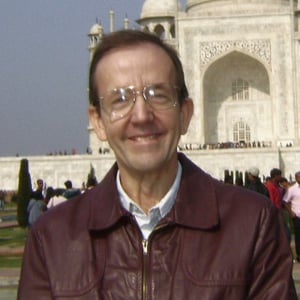
Adjunct Professor, Belmont Abbey College
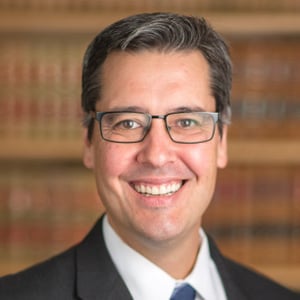
Associate Dean for Faculty; Charles W. Ebersold and Florence Whitcomb Ebersold Professor of Constitutional Law, The Ohio State University Mortiz College of Law
Professor Daniel Tokaji is an authority on the law of elections and democracy. He teaches courses on Election Law, Civil Rights, Civil Procedure, Comparative Law, Constitutional Law, Federal Courts, Legislation and Regulation, and the U.S. Legal System. His scholarship addresses questions of voting rights, racial justice, free speech, and the role of the courts in American democracy.
Professor Tokaji is the author of Election Law in a Nutshell (2d ed. 2016), and co-author of Election Law: Cases and Materials (6th ed. 2017) and The New Soft Money (2014). He has written numerous articles and book chapters on a wide variety of election and voting issues, including voting rights, voter ID, voter registration, redistricting, campaign finance regulation. Recent articles include “Gerrymandering and Association,” 59 William & Mary Law Review 2159 (2018), and “Denying Systemic Equality: The Last Words of the Kennedy Court,” 13 Harvard Law & Policy Review 539 (2019). His current research focuses on the challenges facing democracies around the globe, including the free speech issues surrounding digital disinformation and the need for trustworthy electoral institutions.
Media outlets frequently seek Professor Tokaji’s expertise on election and voting issues. He has been quoted in The New York Times, Los Angeles Times, The Columbus Dispatch, USA TODAY, and appeared on TODAY, FOX News, NBC News, and National Public Radio and many other media outlets.
A graduate of Harvard College and the Yale Law School, Professor Tokaji clerked for the Honorable Stephen Reinhardt of the U.S. Court of Appeals for the Ninth Circuit. Before arriving at Ohio State, he was a staff attorney with the ACLU Foundation of Southern California and Chair of California Common Cause.
Professor Tokaji has litigated many civil rights, civil liberties, and election law cases. He was lead counsel in a case that struck down an Ohio law requiring naturalized citizens to produce a certificate of naturalization when challenged at the polls. He also served as counsel in litigation challenging the state’s voting purges. He was also an attorney for plaintiffs in cases that kept open the window for simultaneous registration and early voting in Ohio’s 2008 general election, and that challenged punch-card voting systems in Ohio and California after the 2000 election.

Panel 1: Privacy and Freedom of the Press
Steve Coll, Richard A. Epstein, Jameel Jaffer, Gillian Lester, Irina D. Manta, Reena Raggi
The Internet has made information not only much more accessible, it has allowed almost anyone...
Panel 1: Privacy and Freedom of the Press
Steve Coll, Richard A. Epstein, Jameel Jaffer, Gillian Lester, Irina D. Manta, Reena Raggi
The Internet has made information not only much more accessible, it has allowed almost anyone...
Panel 1: Privacy and Freedom of the Press
2017 National Student Symposium
New York, NYPresidential Nominees and Foreign Influence: Mitigating National Security Risks
Sean M. Bigley
Note from the Editor: This article describes the procedures involved in determining whether to grant...
Book Review: America the Vulnerable: Inside the New Threat Matrix of Digital Espionage, Crime, and Warfare
Hartmann Young
America the Vulnerable: Inside the New Threat Matrix of Digital Espionage, Crime, and Warfare By...
NSA is in Trouble for Good Reason
Jeremy A. Rabkin
NSA is in Trouble for Good Reason Jeremy Rabkin* The surveillance programs conducted by the...
An Assessment of the June 2012 Rio+20 UN Conference on Sustainable Development
Christopher C. Horner
By its Resolution A/RES/64/236 of December 24, 2009,1 the United Nations General Assembly blessed preparations...
WikiLeaks and the Release of Classified Information
Wikileaks and the First Amendment