

Global Technology Counsel, Sony Corporation of America
Christopher Ekren is Global Technology Counsel for Sony. Based out of Silicon Valley, he is currently the lead US in house counsel for key Sony advanced technology initiatives in the areas of Artificial Intelligence (Sony AI, Inc.) , Gene Therapy (Sony Biotechnology Inc.), Satellite Communications (Sony Space Communications Inc.), Semiconductor and Component Technologies (Sony Semiconductor Solutions of America), Sony’s Research Labs US operations, as well as engineering and product development activities part of Sony’s North American core electronics business. He has concurrent global roles supporting Sony’s technology standards, open source software and special technology projects.
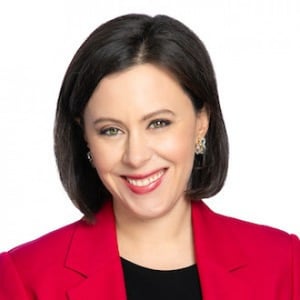
Executive Vice President and Senior Policy Advisor, Stephens, Inc.
Mary Kissel is Executive Vice President and Senior Policy Advisor at Stephens Inc., where she provides advice on geopolitical risk and macroeconomic trends to Stephens clients and the Stephens management team. Previously, she served as Senior Advisor to Secretary of State Michael R. Pompeo from October 2018 to January 2021. Prior to joining the State Department, she had a long and distinguished career on The Wall Street Journal editorial board, including stints as chief foreign policy commentator in New York City and Asia-Pacific editorial page editor, based in Hong Kong. Ms. Kissel hosts the Nixon Seminar on Conservative Realism and National Security, is a member of the Council on Foreign Relations, and serves on the boards of the American Australian Council, The Marathon Initiative, and RXO, Inc. She is a graduate of Harvard University and the Johns Hopkins School of Advanced International Studies.
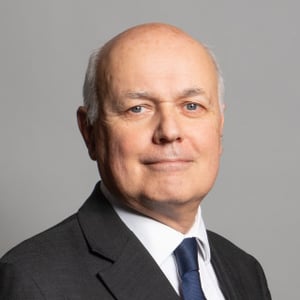
Member of Parliament for Chingford & Woodford Green, House of Commons
The Rt Hon Sir Iain Duncan Smith is the Conservative MP for Chingford and Woodford Green, and has been an MP continuously since 1992.
Between 1997 and 2001, he was Shadow Secretary of State for Social Security and then Shadow Secretary of State for Defence. From 2001 to 2003, he was leader of the Conservative Party.
He took a lead role in the Vote Leave campaign ahead of the EU referendum on 23 June 2016, appearing many times in the media and public debates, and is now working alongside colleagues to ensure the Government achieves a smooth and rapid exit from the EU and forms a new relationship based on trade, continuing friendship and cooperation.
Before entering politics, he served in the Scots Guards from 1975 to 1982. During this time, he saw service in Northern Ireland and Rhodesia/ Zimbabwe. After leaving the army, he worked in industry, first with the GUC, then as a Director of a property company and subsequently as a Director at the publishing company Jane’s Information Group.
Managing Director, Beacon Global Strategies LLC
From 2011-2013, Mr. Allen served as the Majority Staff Director of the House Permanent Select Committee on Intelligence (HPSCI). Under Chairman Mike Rogers’ (R-MI) direction, the HPSCI restored the process of an annual intelligence authorization bill to fund and give direction to the seventeen elements of the intelligence community, enacting measures for fiscal years 2011, 2012, and 2013. The HPSCI also led the House of Representatives’ consideration of cyber security legislation, passing the Cyber Information Sharing Protection Act (CISPA) with bipartisan majorities in 2012 and 2013.
Prior to joining the HPSCI, he was director for the Bipartisan Policy Center’s successor to the 9/11 Commission, the National Security Preparedness Group, co-chaired by former Congressman Lee Hamilton and former Governor Tom Kean.
Previously, Mr. Allen served in the White House for seven years in a variety of national security policy and legislative roles. At the National Security Council (NSC), he served as Special Assistant to the President and Senior Director for Counter-proliferation Strategy from June 2007 to January 2009 under National Security Advisor Steve Hadley. As Senior Director, he contributed to the development of the U.S. government’s policy on counter-proliferation issues, including on the Iranian, Syrian, and North Korean nuclear files; missile defense; civilian nuclear cooperation including the U.S.-India Civilian Nuclear Cooperation Agreement; U.S. exports controls; bio-defense; and WMD and terrorism.
As the Special Assistant to the President and Senior Director for Legislative Affairs from March 2005 to June 2007, Mr. Allen was the NSC’s chief liaison with the national security committees of Congress and led the confirmation teams of DNI nominees Negroponte and McConnell and CIA Director General Michael Hayden.
From December 2001 to February 2005, Mr. Allen worked in the legislative affairs office of the White House’s Homeland Security Council. As Special Assistant to the President for Legislative Affairs, Mr. Allen was part of team that managed the White House effort to enact the Intelligence Reform and Terrorism Prevention Act of 2004, which created the Office of the Director of National Intelligence.
At the beginning of the Bush Administration, Mr. Allen worked in the Bureau of Legislative Affairs at the Department of State. Mr. Allen received his L.L.M. with distinction in International Law from the Georgetown University Law Center, his J.D. from the University of Alabama (cum laude), and his B.A. from Vanderbilt University.
In addition to his work at the Bipartisan Policy Center, in 2009, Mr. Allen taught National Security Policymaking at the George Washington University Elliott School of International Affairs and served as an advisor for the congressionally-created Commission on WMD and Terrorism co-chaired by Senators Bob Graham and Jim Talent. Mr. Allen was the Intelligence Team Lead for the Romney for President Transition Team.
Mr. Allen is the author of Blinking Red: Crisis and Compromise in American Intelligence After 9/11. (Potomac Books, September 2013).
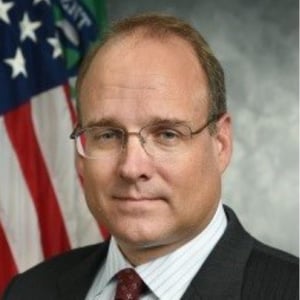
Senior Fellow, Hudson Institute
Former President Trump appointed Marshall S. Billingslea as Special Presidential Envoy for Arms Control on April 10, 2020 and accorded him the personal rank of Ambassador from May 18, 2020 to November 17, 2020. Billingslea leads arms control negotiations on behalf of the U.S. Government.
Billingslea most recently served as the Assistant Secretary for Terrorist Financing at the U.S. Department of Treasury since June 2017. In that role he built international coalitions and led U.S. efforts to counter illicit financial activities. In 2018 he was selected unanimously by the 37 member countries of the Financial Action Task Force (FATF) — the global anti-money laundering and counter-terrorist financing body — to serve as its President. He also co-chaired the global Counter-ISIS Finance Group and multiple bilateral negotiating fora with friendly and allied nations.
A former senior Pentagon official, Billingslea has deep expertise in arms control and broad experience in foreign policy and national security, having previously served in the Pentagon as the Deputy Under Secretary of the Navy, the Principal Deputy Assistant Secretary of Defense for Special Operations and Low-Intensity Conflict, and as the Deputy Assistant Secretary of Defense for Negotiations Policy. Billingslea has also worked as NATO’s Assistant Secretary General for Defense Investment, and as a Senior Professional Staff Member of the United States Senate Committee on Foreign Relations.
Billingslea holds a Bachelor of Arts from Dartmouth College and a Master of Arts in Law and Diplomacy from Tufts University. He has been decorated with numerous awards internationally including the Cross of Terra Mariana by the President of Estonia; the Knight’s Cross by the President of Poland; and the Cross of the Order of Merit of the Czech Republic. Throughout his years of public service, he has been awarded the Defense Medal for Distinguished Public Service by the U.S. Secretary of Defense; decorated by the U.S. Secretary of the Navy with the Distinguished Public Service medal; he was most recently awarded the Treasury Medal by the U.S. Secretary of the Treasury.
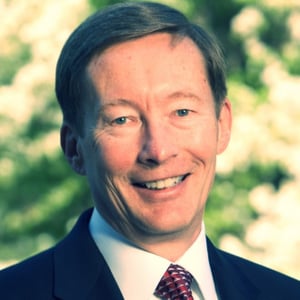
Professor of the Practice of Law and Executive Director, Center on Law, Ethics and National Security, Duke University Law School
Charles J. Dunlap Jr. joined the Duke Law faculty in July 2010 where he is currently a professor of the practice of law and Executive Director of the Center on Law, Ethics and National Security. His teaching and scholarly writing focus on national security, law of armed conflict, the use of force under international law, civil-military relations, cyberwar, airpower, military justice, and ethical issues related to the practice of national security law.
Dunlap retired from the Air Force in June 2010, having attained the rank of major general during a 34-year career in the Judge Advocate General Corps. In his capacity as Deputy Judge Advocate General spanning from May 2006 to March 2010, he assisted the Judge Advocate General in the professional supervision of more than 2,200 judge advocates, 350 civilian lawyers, 1,400 enlisted paralegals, and 500 civilians around the world. In addition to overseeing an array of military justice, operational, international, and civil law functions, he provided legal advice to commanders and civilian leaders at all levels.
In the course of his career, Dunlap has been involved in various high-profile interagency and policy matters, including his testimony before the U.S. House of Representatives concerning the Military Commissions Act of 2006.
Dunlap previously served as the senior lawyer (staff judge advocate) at Air Combat Command Headquarters at Langley Air Force Base in Virginia, at Air Education and Training Command Headquarters at Randolph Air Force Base in Texas, and at U.S. Strategic Command, Omaha, Nebraska, among other leadership posts. Additionally, he served on the faculty of the Air Force Judge Advocate General School where he taught various civil and criminal law topics. An experienced trial lawyer, he also spent two years as a military trial judge for a 22-state circuit. He served tours in the United Kingdom and Korea, and deployed for operations in the Middle East and Africa. He also led military-to-military delegations to Colombia, Uruguay, South Africa, and the Czech Republic.
A prolific author and accomplished public speaker, Dunlap’s commentary on a wide variety of national security topics has been published in leading newspapers and military journals. His 2001 essay written for Harvard University’s Carr Center on “lawfare,” a concept he defines as “the use or misuse of law as a substitute for traditional military means to accomplish an operational objective,” has been highly influential among military scholars and in the broader legal academy.
Dunlap is also the author of the prize-winning essay, “The Origins of the Military Coup of 2012”, originally published in 1992, which was selected for the 40th Anniversary Edition of Parameters (Winter 2010-2011).
Dunlap’s legal scholarship has been published in the Stanford Law Review, the Yale Journal of International Affairs, the Harvard Law’s National Security Journal, the Wake Forest Law Review, the Fletcher Forum of World Affairs, the University of Nebraska Law Review, the Texas Tech Law Review, Temple Law’s Journal of International & Comparative Law, the University of North Carolina’s Journal of International Law, the Connecticut Law Review, the Tennessee Law Review, and the Vanderbilt Journal of Transnational Law, among others.
He’s also authored numerous articles and opinion pieces in a range of publications including The Atlantic, the New York Times, the Washington Post, the Washington Times, the Air Force Times, Strategic Studies Quarterly, the Georgetown Journal of International Affairs, Business Insider, the Journal of Genocide Research, The Hill, Small Wars Journal, and the blogs, Lawfare and Just Security.
Maj Gen Dunlap founded his blog Lawfire in 2015 and has since written over 300 posts on a wide variety of subjects.
Dunlap's wife, Joy, was a vice president of the National Association of Broadcasters, and later a deputy director of Government Relations for the Military Officers Association of America. She served as the elected president of Duke Campus Club, and is a recipient of the prestigious Order of the Emerald by Kappa Delta sorority. Her blog, Speaking Joyfully, won 3rd place in the blog category at the 2021 Blue Ridge Mountains Christian Writers Conference. They reside in Durham.

Judge, United States Court of Appeals, Sixth Circuit
Judge Readler earned his undergraduate and law degrees from the University of Michigan. After graduating, he served as a law clerk to Judge Alan Norris of the United States Court of Appeals for the Sixth Circuit. Judge Readler then began practicing law in the Columbus office of the international law firm Jones Day, eventually spending ten years as a partner in the firm’s Issues and Appeals Practice Group. While at Jones Day, Judge Readler appeared in state and federal trial and appellate courts around the country, most frequently the Supreme Court of Ohio and the Sixth Circuit. Judge Readler also successfully argued before the United States Supreme Court in McQuiggin v. Perkins on behalf of an inmate claiming actual innocence. His other pro bono representations include representing capital defendants before the Tenth Circuit and the Supreme Court of Ohio, as well as representing defendants sentenced to life in prison before the Sixth Circuit. While at Jones Day, Judge Readler traveled to Nairobi with Lawyers Without Borders to train Kenyan lawyers in prosecuting domestic violence cases, and he was also a recipient of the American Marshall Memorial Fellowship awarded by the German Marshall Fund of the United States. Following his career in private practice, Judge Readler served as Acting Assistant Attorney General for the Civil Division of the United States Department of Justice from 2017 to 2019. In that role, Judge Readler led and supervised over 1,000 lawyers in the Department’s largest litigating division, briefing and arguing several cases on behalf of the United States in federal courts across the country, including high-profile cases significant to the Administration and the Department. In March 2019, Judge Readler was confirmed to serve as a Circuit Judge on the Sixth Circuit. He resides in Columbus.
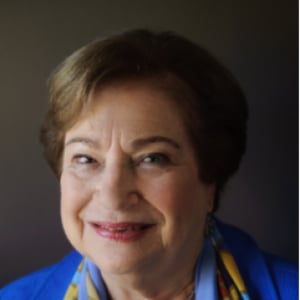
Director of the Center for Eurasian, Russian and East European Studies and Professor of Government and Foreign Service, Georgetown University
Angela Stent is Director of the Center for Eurasian, Russian and East European Studies and Professor of Government and Foreign Service at Georgetown University. She is also a Senior Fellow (non-resident) at the Brookings Institution and co-chairs its Hewett Forum on Post-Soviet Affairs. During the academic year 2015-2016 she is a fellow at the Transatlantic Academy of the German Marshall Fund. From 2004-2006 she served as National Intelligence Officer for Russia and Eurasia at the National Intelligence Council. From 1999 to 2001, she served in the Office of Policy Planning at the U.S. Department of State. Stent’s academic work focuses on the triangular political and economic relationship between the United Sates, Russia and Europe. Her publications include: Russia and Germany Reborn: Unification, The Soviet Collapse and The New Europe (Princeton University Pres, 1999); From Embargo to Ostpolitik: The Political Economy of West German-Soviet Relations, 1955-1980 (Cambridge University Press, 1981); “Repairing US-Russian Relations: A Long Road Ahead” (2009) “Restoration and Revolution in Putin’s Foreign Policy,” (2008), “An Energy Superpower? Russia and Europe” (2008) and “Reluctant Europeans: Three Centuries of Russian Ambivalence Toward the West,” (2007), “Putin’s World” (2014). Her latest book is The Limits of Partnership: US-Russian Relations in the Twenty-First Century (Princeton University Press, 2014), for which she won the American Academy of Diplomacy’s Douglas Dillon prize for the best book on the practice of American Diplomacy. She is a member of the senior advisory panel for NATO’s Supreme Allied Commander in Europe. She is a member of the Council on Foreign Relations. She is a contributing editor to Survival and is on the editorial boards of the Journal of Cold War Studies, World Policy Journal, Internationale Politik and Mirovaia Ekonomika i Mezhdunarodnie Otnosheniie. She has served on the World Economic Forum’s Global Agenda Council for Russia and Central Asia. She is a Trustee of the Eurasia Foundation and of Supporters of Civil Society in Russia. Dr. Stent received her B.A. from Cambridge University, her MSc. with distinction from the London School of Economics and Political Science and her M.A. and PhD. from Harvard University.
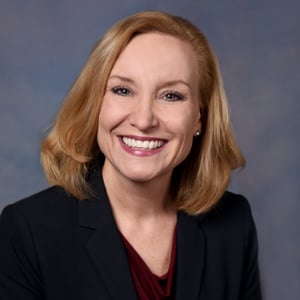
Judge, United States Court of Appeals, Sixth Circuit
The Honorable Joan L. Larsen is a judge of the United States Court of Appeals for the Sixth Circuit. She was nominated by the President on May 8, 2017 and confirmed by the Senate on November 1, 2017. Before her appointment to the federal bench, Judge Larsen served two terms as a Justice of the Michigan Supreme Court, where she was the court’s liaison to Michigan’s drug, sobriety, mental health and veteran’s courts.
Before becoming a judge, Judge Larsen was a faculty member at the University of Michigan Law School, where she was also Special Counsel to the Dean and received the L. Hart Wright Award for Excellence in Teaching. Judge Larsen's research and teaching interests included constitutional law, criminal procedure, statutory interpretation, and presidential power. Judge Larsen continues to assist the law school as the adviser to the Henry M. Campbell Moot Court Competition.
Judge Larsen began her legal career as a law clerk to the Hon. David B. Sentelle of the United States Court of Appeals for the D.C. Circuit and to Justice Antonin Scalia of the Supreme Court of the United States. Following her clerkships, she joined the law firm of Sidley Austin, where she was a member of the Constitutional, Criminal, and Civil Litigation Section. She later served as Deputy Assistant Attorney General in the United States Department of Justice, Office of Legal Counsel.
Judge Larsen graduated first in her class from Northwestern University School of Law, where she served as articles editor of the Northwestern University Law Review and earned the John Paul Stevens Award for Academic Excellence. She received her B.A., with highest honors, from the University of Northern Iowa.
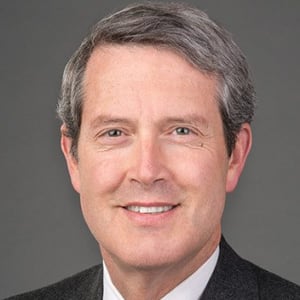
Chairman & Co-Founder, Cynosure Group
Randal Quarles is Chairman and co-founder of The Cynosure Group. Before founding Cynosure, Mr. Quarles was a long-time partner of the Carlyle Group, where he began the firm’s program of investments in the financial services industry during the 2008 financial crisis.
From October 2017 through October 2021, Mr. Quarles was Vice Chairman of the Federal Reserve System, serving as the system’s first Vice Chairman for Supervision, charged specifically with ensuring stability of the financial sector. He also served as the Chairman of the Financial Stability Board (“FSB”) from December 2018 until December 2021; a global body established after the Great Financial Crisis to coordinate international efforts to enhance financial stability. In both positions, he played a key role in crafting the US and international response to the economic and financial dislocations of COVID-19, successfully preventing widespread global disruption of the financial system. As FSB Chairman, he was a regular delegate to the finance ministers’ meetings of the G-7 and G20 Groups of nations and to the Summit meetings of the G20. As Fed Vice Chair, he was a permanent member of the Federal Open Market Committee, the body that sets monetary policy for the United States.
Earlier in his career, Mr. Quarles was Under Secretary of the U.S. Treasury, where he led the Department’s activities in financial sector and capital markets policy, including coordination of the President’s Working Group on Financial Markets.
Before serving as Under Secretary, Mr. Quarles was Assistant Secretary of the Treasury for International Affairs, where he had a key role in response to several international crises. Mr. Quarles was also the U.S. Executive Director of the International Monetary Fund, a member of the Air Transportation Stabilization Board, and board representative for the Pension Benefit Guaranty Corporation. In earlier public service, he was an integral member of the Treasury team in the George H. W. Bush Administration that developed the governmental response to the savings and loan crisis.
Between his tours of duty in public service, Mr. Quarles was a partner with the law firm of Davis Polk & Wardwell, working at various times in both the New York and London offices, where he was co-head of the firm’s financial institutions practice and advised on transactions that included a number of the largest financial sector mergers ever completed.
Mr. Quarles received an A.B. summa cum laude in philosophy and economics from Columbia in 1981 and a J.D. from the Yale Law School in 1984.
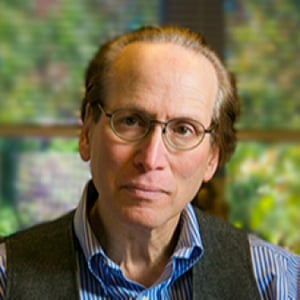
Duke University Law School, Stanley A. Star Distinguished Professor of Law & Business
Steven L. Schwarcz is the Stanley A. Star Distinguished Professor of Law & Business at Duke University and Founding Director of Duke’s interdisciplinary Global Capital Markets Center (now renamed the Global Financial Markets Center). His areas of research and scholarship include insolvency and bankruptcy law, international finance, capital markets, systemic risk, corporate governance, and commercial law. (Links to his scholarship are at http://law.duke.edu/fac/schwarcz/.) He holds a bachelor’s degree in aerospace engineering (summa cum laude) and a Juris Doctor from Columbia Law School. Prior to joining the Duke faculty, he was a partner at two of the world’s leading law firms and Visiting Lecturer at Yale Law School. He also helped to pioneer the field of asset securitization, and his book, Structured Finance, A Guide to the Principles of Asset Securitization (3d edition), is one of the most widely used texts in the field.
Professor Schwarcz has also been the Leverhulme Visiting Professor at the University of Oxford, Visiting Professor at the University of Geneva Faculty of Law, Lecturer in Law at Columbia Law School, Senior Fellow at The University of Melbourne Law School, Visiting Fellow at Ludwig-Maximilians-Universitat Munchen (LMU) Center for Advanced Studies, Guest Professor at Shanghai University of International Business and Economics, Distinguished Visiting Professor at University College London (UCL) Faculty of Laws, Distinguished Honorary Professor, University of Durham Law School, the MacCormick Fellow at The University of Edinburgh School of Law, the Liberty Fellow at the University of Leeds School of Law (scheduled for May-June 2020), and an adviser to the United Nations. He has given numerous endowed or distinguished public lectures, including at The University of Hong Kong, the University of Oxford (the Leverhulme Lectures 2010, available at http://www.law.ox.ac.uk/published/leverhulme2010.php), Georgetown University Law Center, National University of Singapore, University of Florence, Leiden University, Radboud University Nijmegen, Trinity College Dublin School of Law, and The National Assembly of the Republic of Korea. He has served as an expert at meetings of the World Economic Forum. He also has given numerous keynote speeches, including at annual conferences of the European Central Bank, the Corporate Law Teachers Association of Australia, New Zealand, and Asia-Pacific, the National Business Law Scholars Conference (at The University of Chicago Law School), Moody’s Corporation, and the Asian Securitisation Forum.
Additionally, Professor Schwarcz has testified before the U.S. Congress on topics including systemic risk, securitization, credit rating agencies, and financial regulation and has advised several U.S. and foreign governmental agencies on the financial crisis and shadow banking. His writings include Systemic Risk, 97 Georgetown Law Journal 193, the second most cited law review article of 2008; he also has been recognized as the world’s second most cited scholar, 2010-2014 and again 2013-2017, in commercial, contract, and bankruptcy law. He is also a Fellow of the American College of Bankruptcy, a Founding Member of the International Insolvency Institute, a Fellow of the American College of Commercial Finance Lawyers, Business Law Advisor to the American Bar Association Section on Business Law, a member of P.R.I.M.E. Finance’s Panel of Recognized International Market Experts in Finance, and Senior Fellow of The Centre for International Governance Innovation (CIGI).

George Mason University Foundation Professor of Law, Antonin Scalia Law School, George Mason University
TODD J. ZYWICKI is George Mason University Foundation Professor of Law at Antonin Scalia Law School at George Mason University and Research Fellow of the George Mason Law and Economics Center. During the Fall 2023 semester he served as the Visiting Scholar in Conservative Thought and Policy for the Bruce Benson Center for the Study of Western Civilization at the University of Colorado-Boulder. From 2020-2021 he was Chair of the Consumer Financial Protection Bureau Taskforce on Federal Consumer Financial Law. In 2021 he was inducted to the American College of Consumer Financial Services Lawyers. He is also a Senior Fellow of the F.A. Hayek Program for the Advanced Study of Politics, Philosophy, and Economics at George Mason University and a former Senior Fellow of the Cato Institute. From 2015-2017 he was Executive Director of the George Mason Law and Economics Center. He served as Co-Editor of the Supreme Court Economic Review from 2006-2017. From 2003-2004, Professor Zywicki served as the Director of the Office of Policy Planning at the Federal Trade Commission. He has also taught at Vanderbilt University Law School, Georgetown University Law Center, Boston College Law School, Mississippi College School of Law, and China University of Political Science and Law.
Professor Zywicki clerked for Judge Jerry E. Smith of the U.S. Court of Appeals for the Fifth Circuit and worked as an associate at Alston & Bird in Atlanta, Georgia, where he practiced bankruptcy and commercial law. He received his J.D. from the University of Virginia, where he was executive editor of the Virginia Tax Review and John M. Olin Scholar in Law and Economics. Professor Zywicki also received an M.A. in Economics from Clemson University and an A.B. cum Laude with high honors in his major from Dartmouth College.
Professor Zywicki is also a Lone Mountain Fellow of the Property and Environment Research Center, a Fellow of the International Centre for Economic Research in Turin, Italy, and a former Senior Fellow of the Goldwater Institute. During the Fall 2008 Semester Professor Zywicki was the Searle Fellow of the George Mason University School of Law and was a 2008-09 W. Glenn Campbell and Rita Ricardo-Campbell National Fellow and the Arch W. Shaw National Fellow at the Hoover Institution on War, Revolution and Peace. He has lectured and consulted with government officials around the world, including Iceland, Italy, Japan, and Guatemala. In 2006 Professor Zywicki served as a Member of the United States Department of Justice Study Group on “Identifying Fraud, Abuse and Errors in the United States Bankruptcy System.”
Professor Zywicki is the author of more than 130 articles in leading law reviews and peer-reviewed economics journals. He is one of the Top 10 most-cited law professors in the field of Commercial Law and one of the Top 25 law professors on Twitter as measured by engagement levels. He is one of the Top 50 Most Downloaded Law Authors at the Social Science Research Network. He has testified multiple times before Congress on issues of consumer bankruptcy law and consumer credit and is a frequent commentator on legal issues in the print and broadcast media, including the Wall Street Journal, New York Times, The Washington Post, The Washington Times, Nightline, The Newshour with Jim Lehrer, Neil Cavuto Show, Fox & Friends, Smerconish, Fox News @ Night with Shannon Bream, Fox Business, CNN, CNBC, Bloomberg News, BBC, The Diane Rehm Show, Lou Dobbs Show, Jerry Doyle Show, and The Laura Ingraham Show.
Professor Zywicki is former Chairman and a current member of the Board of Directors of the Competitive Enterprise Institute, and is a member of the Board of Directors of the Institute for Humane Studies, Bill of Rights Institute, the Executive Committee for the Federalist Society's Financial Institutions and E-Commerce Practice Group, the Board of Trustees of the Foundation for Research on Economics and the Environment. He formerly served on the Governing Board and the Advisory Council for the Financial Services Research Program at George Washington University School of Business. He is currently the Chair of the Academic Advisory Council for the following organizations: The Bill of Rights Institute, the film “We the People in IMAX,” and the McCormick-Tribune Foundation “Freedom Museum” in Chicago, Illinois. He is a member of the Board of Visitors of Ralston College and was a member of the Board of Trustees of Yorktown University. From 2005-2009 he served as an elected Alumni Trustee of the Dartmouth College Board of Trustees.
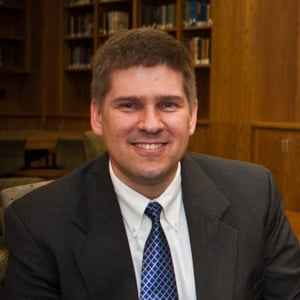
Associate Professor of Law, Brigham Young University J. Reuben Clark Law School
Eric Talbot Jensen teaches and writes in the areas of Public International Law, Criminal Law, The Law of Armed Conflict, International Criminal Law, and National Security Law. His recent scholarship has appeared in the Texas, Temple, Houston, and Israel Law Reviews, as well as the Stanford Law and Policy Review, Virginia Journal of International Law, Vanderbilt Journal of Transnational Law, and Stanford Journal of International Law. Professor Jensen is a co-author on an Oxford University text analyzing application of the laws of war to the war on terror and is also co-authoring a law school casebook on the Law of Armed Conflict for Aspen Publishing.
Prior to joining the BYU law faculty in 2011, Professor Jensen spent 2 years teaching at Fordham Law School in New York City and 20 years in the United States Army as both a Cavalry Officer and as a Judge Advocate. During his time as a Judge Advocate, Professor Jensen served in various positions including as the Chief of the Army’s International Law Branch; Deputy Legal Advisor for Task Force Baghdad; Professor of International and Operational Law at The Judge Advocate General’s Legal Center and School; legal advisor to the US contingent of UN Forces deployed to Skopje, Macedonia as part of UNPREDEP; and legal advisor in Bosnia in support of Operation Joint Endeavor/Guard.
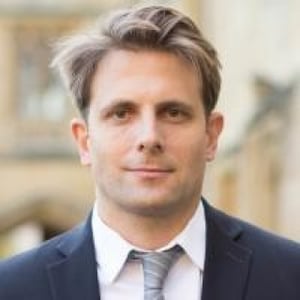
Associate Professor of International Relations, Oxford University
Lucas Kello is Associate Professor of International Relations at Oxford University. He serves as Senior Lecturer in the Department of Politics and International Relations and as co-Director of the interdisciplinary Centre for Doctoral Training in Cyber Security in the Department of Computer Science. His publications include The Virtual Weapon and International Order (Yale University Press), “The Meaning of the Cyber Revolution: Perils to Theory and Statecraft” in International Security, and “Security” in The Oxford Companion to International Relations (Oxford University Press).

Fellow, National Security Institute, Antonin Scalia Law School, George Mason University
Vince Vitkowsky chaired the Executive Committee of the Federalist Society’s International and National Security Law and Policy Practice Group for over a decade. He is also a Fellow at the National Security Institute of George Mason University Law School. Vince spent 45 years in private practice, primarily in AmLaw 100/200 firms and their spin-offs. His practice included domestic and international commercial arbitration and litigation, as well as cyber risks and liabilities. Vince's current focus is on national security policy, artificial intelligence, cybersecurity, and counterterrorism. He has often written and spoken on national security and other public policy issues. Among other affiliations, Vince has been an Adjunct Fellow at the Center for Law and Counterterrorism of the Foundation for the Defense of Democracies, a member of the Executive Committee of the American Branch of the International Law Association, and Co-Chair of the Committee on Interventions and Trial Observations of the International Bar Association’s Human Rights Institute. He received his B.A. from Northwestern University and his J.D. from Cornell Law School.

President, Cass & Associates, PC
Ronald A. Cass is Dean Emeritus of Boston University School of Law (where he was Dean from 1990-2004), President of Cass & Associates, PC, former Vice-Chairman and Commissioner of the U.S. International Trade Commission, former faculty member at Boston University School of Law and the University of Virginia Law School, and Distinguished Senior Fellow at the C. Boyden Gray Center for the Study of the Administrative State. Dean Cass also sits as an arbitrator for commercial, international, and intellectual property rights disputes, and is a former United States member of the Panel of Conciliators of the International Centre for Settlement of Investment Disputes. He is a member of the Council of the Administrative Conference of the United States and has received seven presidential appointments, spanning Presidents Ronald Reagan to Donald J. Trump.
As a law professor, lecturer, and scholar, Dean Cass has been teaching and writing about a wide array of legal issues on topics such as administrative law and regulation, antitrust, constitutional law, communications, intellectual property, international trade, separation of powers, and legal process. He has published more than 160 scholarly books, chapters, articles, and papers, including a leading casebook on administrative law. Dean Cass has taught judges as well as students in schools of law, economics, business, and public policy and has held academic appointments in the United States, Europe, and Latin America.
In addition to his academic work, Dean Cass has participated in numerous important legal cases as an amicus, consultant, or expert, and has advised businesses, law firms, investment funds, and government agencies on a range of trade, antitrust, intellectual property, and regulatory issues. He has a broad range of affiliations with professional groups, and has received numerous honors, fellowships and awards.
Dean Cass is a graduate of the University of Virginia and the University of Chicago Law School.

Professor Emeritus of Law, Antonin Scalia Law School, George Mason University
Jeremy A. Rabkin is a Professor Emeritus of Law at the Antonin Scalia Law School, George Mason University. Before joining the faculty in June 2007, he was for over two decades a professor in the Department of Government at Cornell University. Professor Rabkin serves on the board of directors of the Center for Individual Rights, a public interest law firm based in Washington, D.C. Previously he was a board member of the U.S. Institute of Peace and the board of academic advisors of the American Enterprise Institute.
Professor Rabkin’s books include Law Without Nations? (Princeton University Press, 2005). He authored “If You Need a Friend, Don’t Call a Cosmopolitan,” a chapter in Varieties of Sovereignty and Citizenship (Sigal R. Ben-Porath & Rogers M. Smith eds., University of Pennsylvania Press, 2012). His articles have appeared in major law reviews and political science journals and his journalistic contributions in a range of magazines and newspapers, including the Washington Post and the Wall Street Journal.
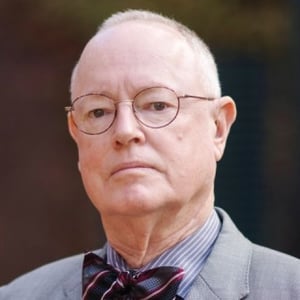
John C. Jeffries, Jr., Distinguished Professor of Law, University of Virginia School of Law
Paul B. Stephan is an expert on international business, international dispute resolution and comparative law, with an emphasis on Soviet and post-Soviet legal systems. In addition to writing prolifically in these fields, Stephan has advised governments and international organizations, taken part in cases in the Supreme Court of the United States, the federal courts, and various foreign judicial and arbitral proceedings, and lectured to professionals and scholarly groups around the world on issues raised by the globalization of the world economy. During 2006-07, he served as counselor on international law in the U.S. Department of State, and in 2020-21 as special counsel to the general counsel in the Department of Defense. He was a coordinating reporter for the American Law Institute’s Restatement (Fourth) of the Foreign Relations Law of the United States.
Stephan received his B.A. and M.A. from Yale University in 1973 and 1974, respectively, and his J.D. from the University of Virginia in 1977. Before returning to Virginia, he clerked for Judge Levin Campbell of the U.S. Court of Appeals for the First Circuit and for U.S. Supreme Court Justice Lewis F. Powell Jr. He has taught as a visiting professor at the Moscow State Institute for International Relations, the University of Vienna, Münster University, Lausanne University, Melbourne University, University of Pantheon-Assas (Paris II), Sciences Po, Paris I, the Interdisciplinary Centre Herzliya, Sydney University, the Peking University School of Transnational Law in Shenzhen, China, the University of Tartu’s Pärna College, and Liverpool University. He also has visited at Columbia Law School and Duke Law School, and served as a scholar in residence in the London office of Wilmer Hale.
After the collapse of the Soviet Union, Stephan took part in a variety of projects involving law reform in former socialist states. He worked in Russia, Georgia, Ukraine, Albania and Slovakia on behalf of the U.S. Treasury and in Kazakhstan and Azerbaijan on behalf of the International Monetary Fund. He also organized training programs for tax administrators and judges from all of the formerly socialist countries under the auspices of the Organization for Economic Cooperation and Development. His casebooks on international business, international trade and investment, and Doing Business in Emerging Markets are used at law schools both in the United States and abroad. He is the co-author, with Robert Scott, of The Limits of Leviathan: Contract Theory and the Enforcement of International Law (Cambridge University Press, 2006), and the author of The World Crisis and International Law: The Knowledge Economy and the Battle for the Future (2023). His current research focuses on the legal issues related to the Russian invasion of Ukraine and legal responses to the rise of big data.
Managing Director, Beacon Global Strategies LLC
From 2011-2013, Mr. Allen served as the Majority Staff Director of the House Permanent Select Committee on Intelligence (HPSCI). Under Chairman Mike Rogers’ (R-MI) direction, the HPSCI restored the process of an annual intelligence authorization bill to fund and give direction to the seventeen elements of the intelligence community, enacting measures for fiscal years 2011, 2012, and 2013. The HPSCI also led the House of Representatives’ consideration of cyber security legislation, passing the Cyber Information Sharing Protection Act (CISPA) with bipartisan majorities in 2012 and 2013.
Prior to joining the HPSCI, he was director for the Bipartisan Policy Center’s successor to the 9/11 Commission, the National Security Preparedness Group, co-chaired by former Congressman Lee Hamilton and former Governor Tom Kean.
Previously, Mr. Allen served in the White House for seven years in a variety of national security policy and legislative roles. At the National Security Council (NSC), he served as Special Assistant to the President and Senior Director for Counter-proliferation Strategy from June 2007 to January 2009 under National Security Advisor Steve Hadley. As Senior Director, he contributed to the development of the U.S. government’s policy on counter-proliferation issues, including on the Iranian, Syrian, and North Korean nuclear files; missile defense; civilian nuclear cooperation including the U.S.-India Civilian Nuclear Cooperation Agreement; U.S. exports controls; bio-defense; and WMD and terrorism.
As the Special Assistant to the President and Senior Director for Legislative Affairs from March 2005 to June 2007, Mr. Allen was the NSC’s chief liaison with the national security committees of Congress and led the confirmation teams of DNI nominees Negroponte and McConnell and CIA Director General Michael Hayden.
From December 2001 to February 2005, Mr. Allen worked in the legislative affairs office of the White House’s Homeland Security Council. As Special Assistant to the President for Legislative Affairs, Mr. Allen was part of team that managed the White House effort to enact the Intelligence Reform and Terrorism Prevention Act of 2004, which created the Office of the Director of National Intelligence.
At the beginning of the Bush Administration, Mr. Allen worked in the Bureau of Legislative Affairs at the Department of State. Mr. Allen received his L.L.M. with distinction in International Law from the Georgetown University Law Center, his J.D. from the University of Alabama (cum laude), and his B.A. from Vanderbilt University.
In addition to his work at the Bipartisan Policy Center, in 2009, Mr. Allen taught National Security Policymaking at the George Washington University Elliott School of International Affairs and served as an advisor for the congressionally-created Commission on WMD and Terrorism co-chaired by Senators Bob Graham and Jim Talent. Mr. Allen was the Intelligence Team Lead for the Romney for President Transition Team.
Mr. Allen is the author of Blinking Red: Crisis and Compromise in American Intelligence After 9/11. (Potomac Books, September 2013).

Executive Vice President, Chief Legal Officer, Gates Corporation
Matthew R. A. Heiman joined the Company in May 2026 and has served as the Company’s Chief Legal Officer and Corporate Secretary since June 2026. As Chief Legal Officer, Mr. Heiman is responsible for all legal functions for Gates, including securities and corporate governance, M&A, litigation, commercial, regulatory, compliance, patents and trademarks, real estate, employment and labor, sustainability and environmental matters. Prior to joining Gates, Mr. Heiman held senior legal leadership roles at Waystar, where he served as Chief Legal & Administrative Officer from 2023 to 2025 and as General Counsel and Corporate Secretary from 2020 to 2023. Prior to that, he was with Johnson Controls, where he served as Vice President, Corporate Secretary, and Associate General Counsel. Mr. Heiman has been a Senior Fellow for the National Security Institute at George Mason University’s Antonin Scalia School of Law since 2018.
Director of the Center for Eurasian, Russian and East European Studies and Professor of Government and Foreign Service, Georgetown University
Angela Stent is Director of the Center for Eurasian, Russian and East European Studies and Professor of Government and Foreign Service at Georgetown University. She is also a Senior Fellow (non-resident) at the Brookings Institution and co-chairs its Hewett Forum on Post-Soviet Affairs. During the academic year 2015-2016 she is a fellow at the Transatlantic Academy of the German Marshall Fund. From 2004-2006 she served as National Intelligence Officer for Russia and Eurasia at the National Intelligence Council. From 1999 to 2001, she served in the Office of Policy Planning at the U.S. Department of State. Stent’s academic work focuses on the triangular political and economic relationship between the United Sates, Russia and Europe. Her publications include: Russia and Germany Reborn: Unification, The Soviet Collapse and The New Europe (Princeton University Pres, 1999); From Embargo to Ostpolitik: The Political Economy of West German-Soviet Relations, 1955-1980 (Cambridge University Press, 1981); “Repairing US-Russian Relations: A Long Road Ahead” (2009) “Restoration and Revolution in Putin’s Foreign Policy,” (2008), “An Energy Superpower? Russia and Europe” (2008) and “Reluctant Europeans: Three Centuries of Russian Ambivalence Toward the West,” (2007), “Putin’s World” (2014). Her latest book is The Limits of Partnership: US-Russian Relations in the Twenty-First Century (Princeton University Press, 2014), for which she won the American Academy of Diplomacy’s Douglas Dillon prize for the best book on the practice of American Diplomacy. She is a member of the senior advisory panel for NATO’s Supreme Allied Commander in Europe. She is a member of the Council on Foreign Relations. She is a contributing editor to Survival and is on the editorial boards of the Journal of Cold War Studies, World Policy Journal, Internationale Politik and Mirovaia Ekonomika i Mezhdunarodnie Otnosheniie. She has served on the World Economic Forum’s Global Agenda Council for Russia and Central Asia. She is a Trustee of the Eurasia Foundation and of Supporters of Civil Society in Russia. Dr. Stent received her B.A. from Cambridge University, her MSc. with distinction from the London School of Economics and Political Science and her M.A. and PhD. from Harvard University.
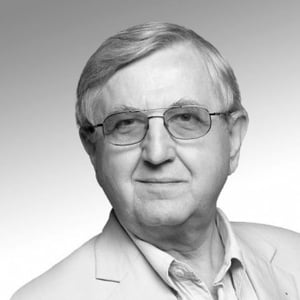
Former Czech Minister
Co-owner of the consulting company Euroffice Praha-Brusel as, former Czech minister. In December 1989, together with twelve other people, he founded ODA in his apartment. From January to June 1990, he worked at the headquarters of OF as vice-president of its foreign department and then for two years as a member of the Federal Assembly. This was followed by four years as a deputy at the Ministry of Foreign Affairs of the Czech Republic and, since 1996, 18 months in the Czech government as a minister without a portfolio. Since 1998, he has worked as a consultant for advocating for the interests of clients in the EU institutions and its Member States.
He was born in Bratislava on March 14, 1946. His mother was Czech, his father Slovak. In the identity card he therefore wrote: Slovak nationality. He studied solid state physics at the Faculty of Nuclear and Technical Physics, CTU. From July 1968 to November 1969 he was in the Netherlands, where he worked for a year on his diploma thesis in physics at the Technische Hogeschool in Delft and the rest of his stay in various manual jobs. On August 21, 1968, he specifically worked as a welder at the engineering plant in Dordrecht. During the Soviet occupation, he first worked at the Academy of Sciences as an aspirant. Due to political non-involvement, he was prevented from completing and defending his candidate's thesis, and his employment was terminated in 1974. For the next 7 years he worked as a technical officer at the Institute of Technical Development and Information, but in 1981 he was fired this time for political involvement, but on the "wrong" side. He spent one year as a cleaner in the Prague metro and the last seven years of the regime as a fireman in Metrostav.

Laurence A. Tisch Professor of Law and Director, Classical Liberal Institute, New York University School of Law; Senior Fellow, The Civitas Institute, University of Texas at Austin
Richard A. Epstein is the inaugural Laurence A. Tisch Professor of Law at NYU School of Law. Prior to his joining the faculty, he was a visiting law professor at NYU from 2007 through 2009. He served as the Peter and Kirstin Bedford Senior Fellow at the Hoover Institution from 2000 to 2024. Since 2024 to the present he is a senior lecturer at the Civitas Institute at the University of Texas—Austin. Epstein is also the James Parker Hall Distinguished Service Professor of Law Emeritus and a senior lecturer at the University of Chicago. His initial law school appointment was at the University of Southern California from 1968 to 1972. Epstein received an LL.D., h.c. from the University of Ghent, 2003. He has been a member of the American Academy of Arts and Sciences since 1985 and was a Senior Fellow of the Center for Clinical Medical Ethics at the University of Chicago Division of Biological Sciences, also from 1983. to 2022 He served as editor of the Journal of Legal Studies from 1981 to 1991, and of the Journal of Law and Economics from 1991-2001. From 2001 to 2010 he was a director of the John M. Olin Program in Law and Economics at the University of Chicago.
His newest book, The Myth of Birthright Citizenship: What the Fourteenth Amendment Really Says was published in 2026 (Encounter Books). Prior to that he has published many books including, The Dubious Morality of the Modern Administrative State (Roman & Littlefield 2020).Earlier he published th Classical Liberal Constitution: The Uncertain Quest for Limited Government (Harvard 2014) iHis previous books include Design for Liberty: Private Property, Public Administration and the Rule of Law (Harvard 2011); The Case Against the Employee Free Choice Act (Hoover 2009); Supreme Neglect: How to Revive the Constitutional Protection of Property Rights (Oxford 2008); Antitrust Decrees in Theory and Practice: Why Less is More (AEI 2007); Overdose: How Excessive Government Regulation Stifles Pharmaceutical Innovation (Yale University Press. 2006); How Progressives Rewrote the Constitution (Cato 2006); Cases and Materials on Torts (Aspen Law & Business; 8th ed. 2004); Skepticism and Freedom: A Modern Case for Classical Liberalism (University of Chicago, 2003); Torts (Aspen Law & Business 1999); Principles for a Free Society: Reconciling Individual Liberty with the Common Good (Perseus Books, 1998): Mortal Peril: Our Inalienable Rights to Health Care (Addison-Wesley, 1997); Simple Rules for a Complex World (Harvard, 1995); Bargaining With the State (Princeton, 1993); Forbidden Grounds: The Case Against Employment Discrimination Laws (Harvard , 1992); Takings: Private Property and the Power of Eminent Domain (Harvard, 1985); and Modern Products Liability Law (Greenwood Press, 1980). He has also edited(with Catherine M. Sharkey) Cases and Materials on the Law of Torts (10th edition 2012).
Professor Epstein has written numerous articles on a wide range of legal and interdisciplinary subjects. He has taught courses in administrative law, antitrust law, civil procedure, communications, constitutional law, contracts, corporations, criminal law, employment discrimination law, environmental law, food and drug law health law and policy, legal history, labor law, property, real estate development and finance, jurisprudence, labor law; land use planning, patents, individual, estate and corporate taxation, Roman Law; torts, and workers' compensation.
Professor Epstein also writes a regular column for Civitas Institute, which also sponsors his podcast, The Libertarian with Charles C.W. Cooke, and Law Talk, with Cooke and John Yoo. He also does a podcast with John Batchelor. And appears regularly on the Freedom File with Judge Andrew Napolitano.
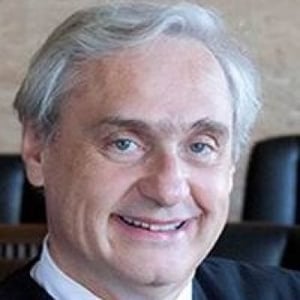
Former Judge, United States Court of Appeals, Ninth Circuit
Judge Kozinski served as a United States Circuit Judge for the Ninth Circuit from November 1985 until December 2017. He served as Chief Judge from 2007 to 2014. He graduated from UCLA, receiving an A.B. degree in 1972, and from UCLA Law School, receiving a J.D. degree in 1975.
Prior to his appointment to the appellate bench, Judge Kozinski served as Chief Judge of the United States Claims Court, 1982-85; Special Counsel, Merit Systems Protection Board, 1981-82; Assistant Counsel, Office of Counsel to the President, 1981; Deputy Legal Counsel, Office of President-Elect Reagan, 1980-81; Attorney, Covington & Burling, 1979-81; Attorney, Forry Golbert Singer & Gelles, 1977-79; Law Clerk to Chief Justice Warren E. Burger, 1976-77; and Law Clerk to Circuit Judge Anthony M. Kennedy, 1975-76.
Judge Kozinski is married to Marcy Jane Tiffany and has three children: Yale, Wyatt and Clayton, and three grandchildren: Quinn, Owen and Anna.

Ronald Reagan Distinguished Fellow Emeritus, The Heritage Foundation
Edwin Meese III, the prominent conservative leader, thinker and elder statesman, continues a quarter-century formal association with The Heritage Foundation as the leading think tank’s Ronald Reagan Distinguished Fellow Emeritus.
In that capacity, Meese oversees special projects and acts as an ambassador for Heritage within the conservative movement.
Meese was chairman of Heritage’s Center for Legal and Judicial Studies from its founding in 2001 until what he calls his “semi-retirement” on Feb. 1, 2013.
He joined Heritage in 1988 as the think tank's first Ronald Reagan Distinguished Fellow -- the only policy chair in the country to be officially named for the 40th president. His work focused on keeping President Reagan’s legacy of conservative principles alive in public debate and discourse.
The legal center now bears his name, in recognition of Meese’s contributions to the rule of law and the nation’s understanding of constitutional law. Its mission is to educate government officials, the media and the public about the Constitution and legal principles -- and how they affect public policy.
Perhaps best known as U.S. attorney general during Reagan’s second term, Meese’s service to the conservative icon stretched from the California governor’s mansion in 1966 to the White House in 1981 before he went to the Department of Justice four years later.
His Heritage “hats” kept Meese among the major conservative voices in national policy debates at an age when most men and women enjoyed quiet retirements.
In 2006, for example, Meese was named to the Iraq Study Group, a special presidential commission dedicated to examining the best resolutions for America's involvement in Iraq. In the past few years he wrote and spoke about constitutional topics ranging from religious liberty to the responsibility of Supreme Court justices.
Immediately after Reagan's death in 2004, and in the years since, Meese often agreed to major media appearances to discuss the lasting impact of his old friend, mentor and boss. He has summarized the Reagan legacy in three accomplishments: Reagan cut taxes and kept them low. He worked to defeat and end the Soviet Union and its worldwide push for communism. And he restored America's faith in itself after years of failure and "malaise."
"I admired him as a leader and cherish his friendship," Meese wrote in a 2004 essay for Heritage members and supporters. "Ronald Reagan had strong convictions. He was committed to the principles that had led to the founding of our nation. And he had the courage to follow his convictions against all odds." <[>Edwin Meese III was born Dec. 2, 1931, to Edwin Jr. and Leone Meese in Oakland, Calif. He graduated from Yale University in 1953 and holds a law degree from the University of California-Berkeley.
Meese spent much of his adult life working for Reagan, first after the former actor, sports announcer and athlete was elected as California’s governor in 1966 and then when he sought and won the presidency in 1980.
Reagan never forgot Meese's loyalty and hard work. During a press conference at which reporters questioned Meese's actions at the Justice Department, Reagan replied: "If Ed Meese is not a good man, there are no good men."
During the Reagan governorship, Meese served as executive assistant and chief of staff from 1969 through 1974 and as legal affairs secretary from 1967 through 1968. He previously was deputy district attorney in Alameda County, Calif.
From January 1981 to February 1985, Meese held the position of counsellor to the president -- the senior job on the White House staff -- and functioned as Reagan's chief policy adviser. In 1985, he received Government Executive magazine's annual award for excellence in management.
Meese served as the 75th attorney general of the United States from February 1985 to August 1988. As the nation's chief law enforcement officer, he directed the Justice Department and led international efforts to combat terrorism, drug trafficking and organized crime.
Meese’s relationship with Heritage began when he met with senior management to discuss the think tank's landmark policy guide, Mandate for Leadership, prepared for the incoming administration. Meese later recalled that Reagan personally handed out copies of the 1,093-page book to members of his Cabinet and asked them to read it. Nearly two-thirds of Mandate's 2,000 recommendations would be adopted or attempted by the Reagan administration.
More than a decade after joining Heritage, Meese assumed the chairmanship of its Center for Legal and Judicial Studies. Under his guidance, the center counseled White House staffers, Justice Department officials and Senate Judiciary Committee members on the importance of filling judicial vacancies with qualified men and women who are committed to interpreting the Constitution according to the founding document's original meaning.
The center became known for hosting "moot court" practice sessions to sharpen the arguments of attorneys slated to bring important cases before the Supreme Court. Those cases addressed constitutional issues ranging from property rights to racial preferences in primary and secondary schools to restrictions on free speech in campaign finance law.
Meese headed the legal center's Advisory Board for the writing and editing of the best-selling book, The Heritage Guide to the Constitution (Regnery, 2005). In it, 109 experts walked readers through a clause-by-clause analysis of the Constitution. Sen. Tom Coburn (R-Okla.) was among those keeping the reference work handy during Judiciary Committee hearings on Supreme Court nominees.
Meese's other books include “Leadership, Ethics and Policing” (Prentice Hall, 2004); “Making America Safer” (Heritage, 1997); and “With Reagan: The Inside Story” (Regnery Gateway, 1992).He wrote the Introduction to a well-received 2010 book on the “overcriminalization” trend, “One Nation Under Arrest,” by Heritage veterans Paul Rosenzweig and Brian W. Walsh.
He also is a distinguished visiting fellow at the Hoover Institution at Stanford University in California and lectures, writes and consults throughout the United States on a variety of subjects.
As both attorney general and counsellor to Reagan, Meese was a member of the Cabinet and the National Security Council. He served as chairman of the Domestic Policy Council and the National Drug Policy Board. After Reagan won the White House in the 1980 election, Meese headed the transition team. During the campaign, he was the Reagan-Bush Committee's senior official.
Meese had a career outside government and politics. From 1977 to 1981, he was a law professor at the University of San Diego, where he also directed the Center for Criminal Justice Policy and Management.
He was an executive in the aerospace and transportation industry as vice president for administration of Rohr Industries Inc. in Chula Vista, Calif. He left Rohr to return to the practice of law, doing corporate and general work in San Diego County.
A retired colonel in the Army Reserve, Meese remains active in numerous civic and educational organizations.
He and his wife, Ursula, have two grown children and reside in McLean, Va.
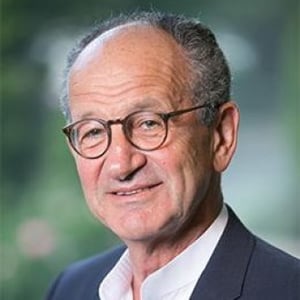
Daniel G. Ross Professor of Law; Joseph Solomon Professor of Wills, Trusts, and Estate Planning, Columbia Law School
A renowned authority on institutional economics, Andrzej Rapacznski works at the intersection of law, economics, philosophy, and political theory, and has published in the areas of constitutional law, institutional economics, and political philosophy. He is a co-founder of Project Syndicate, one of the world’s foremost publishers of commentary and analysis by distinguished economic, political, and cultural experts, business leaders, and civic activists.
With an interdisciplinary background, Rapaczynski is known for his research on the post-communist transition in Eastern Europe. He co-authored several books on the subject including Capitalism With a Comrade’s Face: Studies in the Postcommunist Transition and Privatization in Eastern Europe: Is the State Withering Away? He served as an expert adviser to the parliaments of Poland and the Russian Federation helping draft new constitutions and advised a number of governments on their privatization policies.
Before joining the Columbia Law School faculty in 1982, Rapaczynski was an assistant professor of philosophy at Yale University. He has also taught at the University of Tokyo and Princeton University, and he has been a research professor of economics at Central European University in Prague and Budapest.
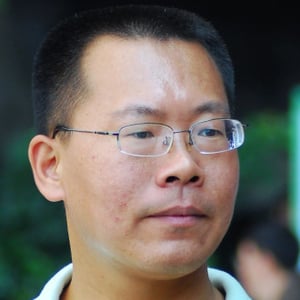
Grove Human Rights Scholar, Hunter College
Dr. Teng Biao is an academic lawyer, currently Grove Human Rights Scholar at Hunter College. He co-founded two human rights NGOs in Beijing –the Open Constitution Initiative, and China Against the Death Penalty. He is one of the earliest promoters of the Rights Defense Movement in China, and the manifesto Charter 08, for which Dr. Liu Xiaobo was awarded the Nobel Peace Prize. His research includes human rights, criminaljustice, social movement and political transition in China. Teng is working on two books, one is on China’s human rights movement, and another on China’s threat to global human rights and freedom.
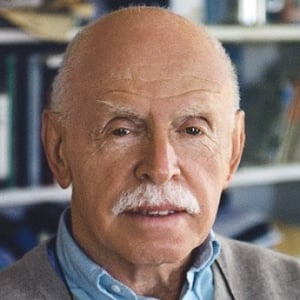
Faculty Director Emeritus, New York University School of Law
Jerome A. Cohen, a professor at NYU School of Law since 1990 and U.S.-Asia Law Institute Faculty Director Emeritus, is a leading American expert on Chinese law and government. A pioneer in the field, Prof. Cohen began studying and teaching about China’s legal system in the early 1960s and from 1964 to 1979 introduced the teaching of Asian law into the curriculum of Harvard Law School, where he served as Jeremiah Smith Professor, Associate Dean and Director of East Asian Legal Studies. Prof. Cohen served for several years as C.V. Starr Senior Fellow and Director of Asia Studies at the Council on Foreign Relations, where he currently is an Adjunct Senior Fellow. In addition, he has published hundreds of scholarly articles on various topics as well as a book, China Today, co-authored with his wife, Joan Lebold Cohen, and a regular series of journalistic opinion pieces for various newspapers. Today, Prof. Cohen continues his research and writing on Asian law, specifically focusing on legal institutions, criminal justice reform, dispute resolution, human rights and the role of international law relating to China and Taiwan.
Jerry has his and his wife's name in the chair professor of Harvard Law School in 2018 and received a honorary doctor degree from Yale University in 2020.
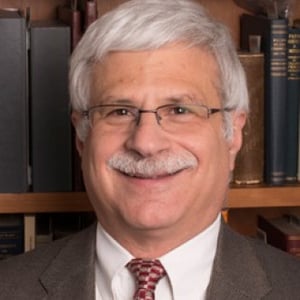
Professor of Law, Catholic University of America
Robert Destro served as Assistant Secretary for the Bureau of Democracy, Human Rights, and Labor (DRL). He has a long history as a human rights advocate and civil rights attorney with expertise in elections, employment, and constitutional law. Destro has served on the faculty at Catholic University’s Columbus School of Law since 1982 and served as its interim dean from 1999 to 2001. He was founding director of the Interdisciplinary Program in Law and Religion and served as the Director of the Institute for Policy Research and Catholic Studies from June 2017 to September 2019. He served as a commissioner on the U.S. Commission on Civil Rights from 1983-1989. His legal work includes collaboration with the Peace Research Institute Oslo in a fifteen-year dialogue among Muslim, Christian, and Jewish leaders in the legal, business, and religious fields in the United States and the Middle East as well as efforts promoting the release of political prisoners and prisoners of conscience in the Middle East. He has served as voting rights counsel for the Ohio Secretary of State and has advocated for the first amendment rights of individuals and organizations.
He earned a B.A. from Miami University, Ohio, and a J.D. from the University of California at Berkeley. He is an active member of the Bar in Ohio and California.
The rest of his bio including his publications are available on the Catholic University Faculty page linked here.
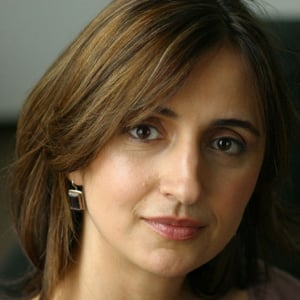
Author and Founding Member, Iran Human Rights Documentation Center
Roya Hakakian is a writer. Her opinion columns, essays and book reviews appear in English language publications like the New York Times, Wall Street Journal and NPR’s All Things Considered among many others. She has collaborated on over a dozen hours of programming for leading journalism units in network television, including CBS 60 Minutes. She currently serves as an editorial board member of World Affairs. An active thinker of foreign relations, Roya is a founding member of the Iran Human Rights Documentation Center. She has been featured in the Washington Post and the US News and World Report, among other publications. In the book, Political Awakenings by University of California at Berkeley’s Professor Harry Kreisler, she has been highlighted “among the most important activists, academics, and journalists of her generation.”
In 2008, she received a Guggenheim prize in nonfiction. It enabled her to complete the work on her most recent book, Assassins of the Turquoise Palace (Grove/Atlantic), about Iran’s terror campaign against exiled dissidents in Western Europe received the Asian American Literary Award for best non-fiction book in 2013. It was named a New York Times Notable Book in 2011, made Newsweek’s Top Ten Not-to-be-missed books and was among Kirkus Reviews Best Non-Fictions in the same year. Her account of the work of the German prosecutor of the case, a modern day Atticus Finch, moved the US Federal Bar Association to establish “the Rule of Law Award,” the first of which was bestowed upon that prosecutor in 2014 at the Daniel Moynihan Federal Courthouse in New York City.
Her memoir of growing up a Jewish teenager in post-revolutionary Iran, Journey from the Land of No: A Girlhood Caught in Revolutionary Iran (Crown) has been a celebrated Freshman Experience book at a number of colleges in the US. It was a Barnes and Noble’s Pick of the Week, Ms. Magazine Must Read of the Summer, Publishers Weekly’s Best Book of the Year, Elle Magazine’s Best Nonfiction Book of 2004, and was named Best Memoir by the Connecticut Center for the Book in 2005 and has been translated into several languages including German, Dutch, and Spanish.
She is currently at work on a new book at the The Woodrow Wilson International Center for Scholars where she has been awarded a fellowship in 2014. Talking to her readers is one of her great joys and she has addressed them at venues ranging from high schools on Native American reservations to the US Capitol and the CIA.
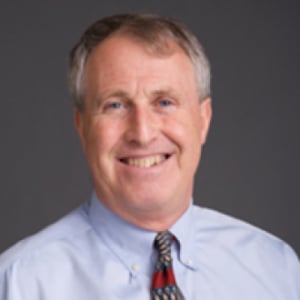
Professor of Law, Georgetown University Law Center
Professor Koplow specializes in the areas of public international law and national security law. He joined the Georgetown Law faculty in 1981. His principal courses have been International Law I (the introductory survey of public international law topics), a seminar in the area of arms control, non-proliferation and terrorism, and the pro-seminar for LLM students in national security law. In addition, he has directed a clinic, the Center for Applied Legal Studies, in which students provide pro bono representation to refugees who seek asylum in the United States because of persecution in their homelands. His government service has included stints as Special Counsel for Arms Control to the General Counsel of the Department of Defense (2009-2011); as Deputy General Counsel for International Affairs at the Department of Defense (1997-1999); and as Attorney-Advisor and Special Assistant to the Director of the U.S. Arms Control and Disarmament Agency (1978-1981). He is a graduate of Harvard College and Yale Law School and a Rhodes Scholar. Most of his scholarly writing concentrates on the intersection between international law and U.S. constitutional law, especially in the areas of arms control and national security and treaty negotiation and implementation.
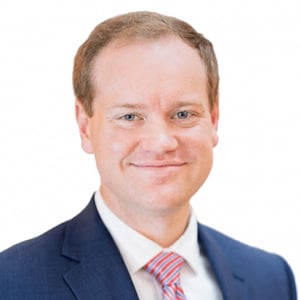
Legal Counsel, Global Religious Freedom, ADF International
Sean Nelson serves as Legal Counsel for Global Religious Freedom with ADF International, where he advocates on behalf of Christians and other religious minorities being persecuted for their faith around the world.
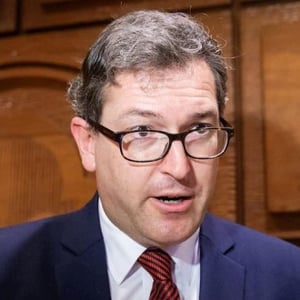
East Asia Team Leader, Christian Solidarity Worldwide
Benedict Rogers is a journalist and human rights advocate based in London. His work focuses mainly on Burma, North Korea and Indonesia. He is a regular contributor to The Wall Street Journal, The New York Times and The Huffington Post and has appeared on BBC, CNN, Sky, Al Jazeera and other television and radio stations. He is the co-founder and deputy chairman of the Conservative Party's human rights commission and the co-founder of the International Coalition to Stop Crimes Against Humanity in North Korea. He is also the East Asia Team Leader at Christian Solidarity Worldwide and the founder of Hong Kong Watch. He has written three books which focus on Burma, including A Land Without Evil: Stopping the Genocide of Burma's Karen People (Monarch, 2004) and Burma: A Nation at the Crossroads (2012), and co-authored two others on Christian human rights obligations.
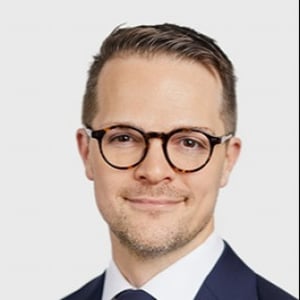
Vice President of Regulatory and Corporate Affairs, Cogeco Inc.
Paul Beaudry is Vice President, Regulatory and Corporate Affairs at Cogeco Inc. He leads Cogeco’s regulatory function in Canada and the United States, and represents the company in proceedings before the CRTC, the Federal Communications Commission and other government departments and regulatory agencies. He also oversees compliance with regulatory requirements imposed on the company at each level of government, in both countries. In addition, Paul leads Cogeco’s Sustainability team and the strategy for public disclosure of ESG matters. He joined Cogeco in November 2020 and has since held progressively larger leadership roles within the organization.
Prior to joining Cogeco, Paul served as Director of Regulatory Affairs at TELUS in Calgary. He also practiced competition and foreign investment law at Stikeman Elliott LLP and Ogilvy Renault LLP (now Norton Rose Fulbright) and served as a senior policy advisor to Canada’s Minister of Industry.
Paul is a graduate of the University of Montreal Faculty of Law and is a member of the Quebec Bar. He serve on the boards of the Institut national de santé publique du Québec, the Cable Public Affairs Channel (CPAC), La Fondation La Rue des Femmes and the Canadian chapter of the International Institute of Communications. He also sits on the Governors Council of Golf Canada.
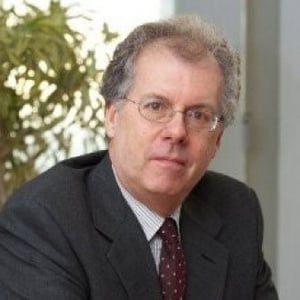
Principal, MHRyan Law
Michael H. Ryan is a lawyer specialising in international telecommunications, Internet and media law and regulation, withexperience in policy analysis and regulatory economics.
Senior Policy Counsel and Director, Government Affairs, Telecommunications Industry Association (TIA)
Dileep Srihari is Senior Policy Counsel and Director, Government Affairs at the Telecommunications Industry Association (TIA). He represents information and communications technology companies – those that manufacture chips, routers, switches, cell phones, base stations, and more – through policy development and advocacy before Congress and the FCC.
Srihari currently focuses on spectrum and broadband infrastructure deployment issues, including topics ranging from millimeter-wave spectrum for 5G to regulatory reform and funding for broadband deployment. He also provide counsel and supervise others on work spanning across TIA's Government Affairs department, including leading projects on national security issues related to the ICT supply chain as well as Internet of Things issues.
Srihari was previously an associate at law firm WilmerHale where he was a member of the firm’s Communications practice group. His work involved regulatory advocacy and appellate litigation on topics including wireless interference protections, television program access, and process safety management. He also previously worked on Capitol Hill for a somewhat-recognizable U.S. senator.
He holds a J.D. from Georgetown and a B.S. in Electrical Engineering and Computer Science from Cornell.

Western Business in China: Can We Sell Without Selling Out?
Christopher Ekren, Mary Kissel, Sir Iain Duncan Smith
China offers a paramount opportunity for corporate investment, due to its market size, supply chain...
The Russian Invasion of Ukraine and International Law, Order, and Security
Michael Allen, Marshall S. Billingslea, Charles J. Dunlap, Chad A. Readler, Angela Stent
In February, Russia began a full-scale military action against Ukraine. This war in Ukraine constitutes...
Central Bank Digital Currencies: A New Tool for Government Control?
Joan Larsen, Randal K. Quarles, Steven L. Schwarcz, Todd J. Zywicki
Central Bank Digital Currencies (CBDC) are the subject of global debate. While proponents see CBDC...
The 2022 Mike Lewis Memorial Teleforum: Peace in Cyberspace: How it was Lost and How to Restore It
Eric Jensen, Lucas Kello, Vincent Vitkowsky
Faced with relentless cyberattacks and intrusions that could imperil democracy, how should Western nations respond?...
Do Russian Oligarchs Retain Property Rights in the West?
Ronald A. Cass, Jeremy A. Rabkin, Paul B. Stephan
In response to Russia’s invasion of Ukraine, assets of Russian oligarchs have been frozen in...
Ukraine in Crisis
Michael Allen, Matthew R. A. Heiman, Angela Stent
A war is raging in Europe. Russia invaded Ukraine on February 24, 2022. Arguing that...
Property Rights and the New Legal Order [Archived Collection]
Pavel Bratinka, Janice L. Calabresi, Richard A. Epstein, Alex Kozinski, Edwin Meese, Andrzej Rapaczynski
On November 30- December 1, 1990, the Federalist Society hosted its annual National Lawyers Convention...
The Chinese Government's Record of Human Rights: Marking the June 4th Anniversary of Tiananmen Square
Teng Biao, Jerome A. Cohen, Robert A. Destro
On June 4th, 1989, after several weeks of pro-democracy protests, the Chinese Communist Party (CCP)...
Nuclear Arms Agreements and Human Rights
Roya Hakakian, David Koplow, Sean Nelson, Benedict Rogers
Governments that seek to acquire nuclear weapons, such as Iran and North Korea, are sometimes...
Supply-chain Security in a 5G World: What to do about Huawei and ZTE?
Paul Beaudry, Michael H. Ryan, Dileep Srihari
On March 6th, Huawei announced it was suing the United States government over policies banning...