

James Madison Distinguished Professor of Law and Class of 1941 Research Professor of Law, University of Virginia School of Law
Professor John C. Harrison is the James Madison Distinguished Professor of Law and Class of 1941 Research Professor of Law at the University of Virginia School of Law. He joined the faculty at University of Virginia in 1993 as an associate professor of law after a distinguished career with the U.S. Department of Justice. His teaching subjects include constitutional history, federal courts, remedies, corporations, civil procedure, legislation and property. In 2008 he was on leave from the Law School to serve as counselor on international law in the Office of the Legal Adviser at the U.S. Department of State.
A 1977 graduate of the University of Virginia, Harrison earned his law degree in 1980 at Yale, where he served as editor of the Yale Law Journal and editor and articles editor of the Yale Studies in World Public Order. He was an associate at Patton Boggs & Blow in Washington, D.C., and clerked for Judge Robert Bork on the U.S. Court of Appeals for the District of Columbia Circuit. He worked with the Department of Justice from 1983-93, serving in numerous capacities, including deputy assistant attorney general in the Office of Legal Counsel (1990-93).

Professor Emeritus of Law, Antonin Scalia Law School, George Mason University
Jeremy A. Rabkin is a Professor Emeritus of Law at the Antonin Scalia Law School, George Mason University. Before joining the faculty in June 2007, he was for over two decades a professor in the Department of Government at Cornell University. Professor Rabkin serves on the board of directors of the Center for Individual Rights, a public interest law firm based in Washington, D.C. Previously he was a board member of the U.S. Institute of Peace and the board of academic advisors of the American Enterprise Institute.
Professor Rabkin’s books include Law Without Nations? (Princeton University Press, 2005). He authored “If You Need a Friend, Don’t Call a Cosmopolitan,” a chapter in Varieties of Sovereignty and Citizenship (Sigal R. Ben-Porath & Rogers M. Smith eds., University of Pennsylvania Press, 2012). His articles have appeared in major law reviews and political science journals and his journalistic contributions in a range of magazines and newspapers, including the Washington Post and the Wall Street Journal.

Emanuel S. Heller Professor of Law, University of California at Berkeley; Thomas Smith Senior Research Fellow, Civitas Institute, University of Texas at Austin
John Yoo is the Emanuel Heller Professor of Law at the University of California at Berkeley. He is also the Thomas Smith Senior Research Fellow, Civitas Institute, at the University of Texas at Austin. He is also a Nonresident Senior Fellow at the American Enterprise Institute.
His most recent book, The Politically Incorrect Guide to the Supreme Court, co-authored with Robert Delahunty, was published in 2023. Professor Yoo’s other books include Defender-in-Chief: Trump’s Fight for Presidential Power; Striking Power: How Cyber, Robots, and Space Weapons Change the Rules for War; Point of Attack: Preventive War, International Law, and Global Welfare; and Crisis and Command: A History of Executive Power from George Washington to George Bush.
He is a co-author of volumes 1 and 2 of R. Rossum, G. Tarr, V. Munoz & J. Yoo American Constitution Law (Routledge, 2026), and a co-editor of the eight-volume series on the 250th anniversary of the American Revolution, We Hold These Truths, with Yuval Levin and Adam White of the American Enterprise Institute.
Professor Yoo has published more than 100 articles in academic journals on subjects including national security, constitutional law, international law, and the Supreme Court. He also regularly contributes to the editorial pages of the Wall Street Journal, New York Times, Washington Post, Los Angeles Times, and National Review, among others.
Professor Yoo has served in all three branches of government. He was an official in the U.S. Department of Justice, where he worked on national security and terrorism issues after the 9/11 attacks. He served as general counsel of the U.S. Senate Judiciary Committee. He has been a law clerk for Supreme Court Justice Clarence Thomas and federal appeals Judge Laurence Silberman. He has been a visiting professor at the University of Texas at Austin’s School of Civic Leadership, Seoul National University, the Interdisciplinary Center Herzliya, Keio University, Trento University, the University of Chicago, and the Free University of Amsterdam.
Professor Yoo supervises the Public Law and Policy Program and the California Constitution Center. He also serves on the boards of Founding Forward, the Washington Legal Foundation, the Pacific Legal Foundation, the Ulysses Grant Institute, the Federalist Society’s Separation of Powers and Federalism Division, the Universidad Cientifica del Sur Law School, and the Asia-Pacific Law Institute at Seoul National University. He is a winner of the Federalist Society’s Paul Bator award and the Heritage Foundation’s Edwin Meese III Originalism Lectureship.
Professor Yoo graduated from Yale Law School and summa cum laude from Harvard College.
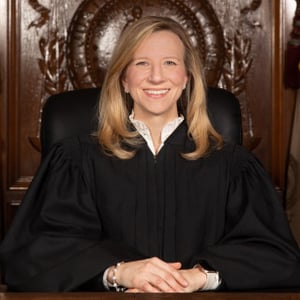
Justice, Supreme Court of Tennessee
Justice Sarah Campbell was confirmed to the Tennessee Supreme Court in 2022. She previously served as an Associate Solicitor General in the Tennessee Attorney General’s Office and as an associate at the law firm of Williams & Connolly LLP in Washington, DC. Justice Campbell earned her law degree from Duke University School of Law, a Master of Public Policy degree from Duke University, and her undergraduate degree from the University of Tennessee, where she received the Torchbearer Award. She served as a law clerk for Justice Samuel A. Alito, Jr. on the United States Supreme Court and Judge William H. Pryor Jr. on the U.S. Court of Appeals for the Eleventh Circuit.
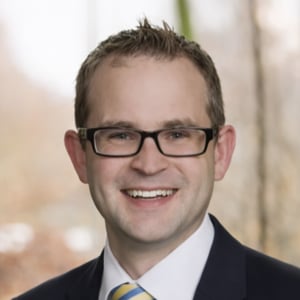
Commissioner, Sacramento County Superior Court
The Hon. Benjamin J. Cassady is a commissioner on the Sacramento County Superior Court in California. He was appointed to the bench by the judges of the Sacramento County Superior Court on February 13, 2024.
Prior to his appointment, Cassady was a deputy district attorney with the Placer County District Attorney’s Office, a position to which he was named in 2021. Before that, he handled law and motion and appellate work as an associate at Jones Day in Washington, D.C. (2017 to 2021).
Cassady earned a B.A. in political science and government from California State University, Chico. He then completed a J.D. at Yale Law School. He was licensed to practice in California (2013).
After graduating from law school, Cassady began his legal career as a judicial law clerk to the Hon. Thomas B. Griffith of the United States Court of Appeals for the District of Columbia Circuit. He also clerked for the Hon. Samuel A. Alito, Jr., of the Supreme Court of the United States.
He is from Marysville, California.
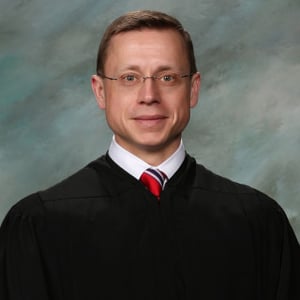
Judge, United States Court of Appeals, Fifth Circuit
Andrew Oldham is a Circuit Judge on the United States Court of Appeals for the Fifth Circuit. Before ascending to the bench, Judge Oldham served as General Counsel to Texas Governor Greg Abbott, where he advised the Governor on a range of issues under federal and state law and managed litigation in which the Governor was an interested party. Before that he served as Deputy Solicitor General for the State of Texas, where he represented Texas in federal courts across the country, including twice before the United States Supreme Court. Before moving to Texas, Judge Oldham was an attorney at Kellogg Hansen Todd Figel & Frederick in Washington, D.C. His practice focused on appellate litigation in federal courts of appeals throughout the country. Before entering private practice, Judge Oldham served as a law clerk to Justice Samuel A. Alito, Jr., at the Supreme Court of the United States and to Judge David B. Sentelle of the U.S. Court of Appeals for the District of Columbia Circuit. He also worked as an attorney-adviser in the Office of Legal Counsel at the U.S. Department of Justice from 2006 to 2008. Judge Oldham earned a B.A. from the University of Virginia with highest honors, a Truman Scholarship for graduate school, an M. Phil., first class (with distinction), from Cambridge University, and a J.D., magna cum laude, from Harvard Law School.

Judge, United States Court of Appeals, Sixth Circuit
Amul R. Thapar serves as a judge on the United States Court of Appeals for the Sixth Circuit. His judicial career began in 2007 when President George W. Bush nominated him to serve on the Eastern District of Kentucky, making him the first South Asian Article III judge in American history. In 2017, he became President Donald J. Trump’s first appellate court nominee.
Before joining the bench, Judge Thapar served as the United States Attorney for the Eastern District of Kentucky. While United States Attorney, Judge Thapar worked on the Attorney General’s Advisory Committee (“AGAC”) and chaired the AGAC’s Controlled Substances and Asset Forfeiture subcommittee. He also served on the Terrorism and National Security subcommittee, the Violent Crime subcommittee, and the Child Exploitation working group.
Judge Thapar has worked in private practice, at Williams & Connolly in Washington, D.C., and Squire, Sanders & Dempsey in Cincinnati, Ohio. He also served as an Assistant United States Attorney in both the Southern District of Ohio and the District of Columbia.
Judge Thapar received his undergraduate degree from Boston College and his law degree from the University of California, Berkeley. After graduating, Judge Thapar worked as a law clerk to the Honorable S. Arthur Spiegel of the United States District Court for the Southern District of Ohio, and the Honorable Nathaniel R. Jones of the United States Court of Appeals for the Sixth Circuit.
Judge Thapar has also published in the Yale Law Journal, Michigan Law Review, and Catholic University Law Review. He teaches courses on originalism, the Federalists and Anti-Federalists, and legal writing at Notre Dame Law School, the University of Virginia School of Law, and Vanderbilt Law School.
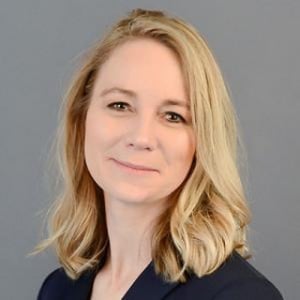
Supreme Court & Appellate Litigation Chair, Lex Politica; Of Counsel, Alliance Defending Freedom
Erin Morrow Hawley serves as Chair of Lex Politica's Supreme Court and Appellate Practice overseeing the firm’s strategic appellate litigation and critical motions practice in the trial courts. Erin is an experienced litigator who represents clients in constitutional, regulatory, and appellate matters in federal and state courts throughout the country.
Erin has represented dozens of clients before the Supreme Court of the United States, served as lead counsel in high-profile cases raising novel constitutional and statutory issues, and authored numerous successful petitions for certiorari and briefs in opposition. She has argued in state and federal appellate and trial courts throughout the country, including the Supreme Court of the United States. Erin represents diverse clients in high-stakes litigation from state governments to faith-based nonprofits to Fortune 100 companies. She possesses expertise on a wide range of subject matters including administrative law, the First Amendment, religious liberty, federal jurisdiction, federal preemption, equitable jurisdiction, tax law, the Affordable Care Act, and Title IX.
Erin represents clients in cases where public communications strategy is paramount. She is a sought-after speaker and writer, has testified multiple times before Congress, and is a frequent presenter on constitutional and administrative law issues, including at the Oxford Union, the National Federalist Society Convention, and university campuses across the country. She is a frequent commentator to media outlets, including Fox News, MSNBC, the Wall Street Journal, WORLD, USA Today, the Federalist, and the Hill.
Erin previously oversaw Alliance Defending Freedom’s--where she still serves as Of Counsel--litigation strategies to empower women and protect the dignity of life, defend pregnancy centers’ First Amendment rights from government overreach, and safeguard Americans’ freedoms from the ever-encroaching administrative state.
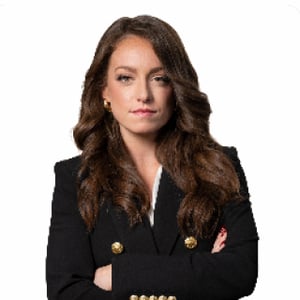
White House Correspondent, The Daily Wire
Mary Margaret Olohan is a senior reporter for The Daily Wire and the author of "Detrans: True Stories of Escaping The Gender Ideology Cult." She previously wrote for The Daily Signal and for The Daily Caller News Foundation. She is a graduate of the Catholic University of America.
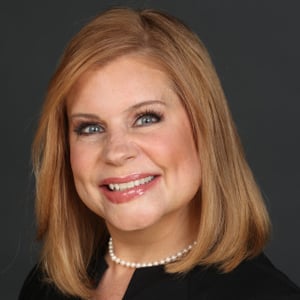
Vice President & Senior Legal Fellow, Defending Education
Sarah Parshall Perry is vice president and senior legal fellow at Defending Education.
Before coming to Defending Education, Sarah served as a Senior Legal Fellow for the Edwin Meese III Center for Legal and Judicial Studies, part of the Institute for Constitutional Government at Heritage, where her work centered on civil rights and the proper role of the courts.
Sarah joined Heritage after serving as Senior Counsel to the Assistant Secretary for Civil Rights at the U.S. Department of Education where she focused on policy reform, technical guidance, and the Office for Civil Rights’ (OCR) annual report to Congress. While at OCR, she was appointed by the Acting Assistant Secretary to co-chair the Employment Engagement, Diversity, & Inclusion Council and, in coordination with the Deputy Assistant Secretary for Enforcement oversee the hiring of dozens of attorneys for OCR’s 12 regional offices nationwide. Prior to her tenure at the Department of Education, she spent six years at the Family Research Council in Washington, D.C. where she was Senior Fellow for Education Reform and later, became the regular substitute host for the “Washington Watch” radio show. Her work at the Family Research Council also included the building and oversight of multiple policy coalitions geared toward the fight against antisemitism in academia, curbing tech censorship, and protecting religious liberty.
Before joining FRC, Sarah was in-house counsel and director of development for a Baltimore advertising agency, providing management of all new business transactions from pitch to contract execution for the multi-million-dollar enterprise. She began her practice at the litigation firm of Simms Showers, LLP where her work included Title VII employment discrimination, maritime/admiralty, and False Claims Act (“Qui Tam”) law. Sarah has a law degree from the University of Virginia School of Law, where she was an editor of the Virginia Journal of International Law, a recipient of the American Jurisprudence award, a Phi Delta Phi honor society member, and a student practitioner in the appellate litigation clinic where she argued before the 4th Circuit Court of Appeals. She holds a B.S. in Journalism with honors from Liberty University.
Her commentary and analysis have appeared in media outlets across the country, including the AP, BBC, Fox News, NPR, The Hill, Washington Post, Washington Times, and the New York Times. She is the mother of three children, and the author of just as many books on the trials and triumphs of parenting children on the autism spectrum. Sarah is a member of the Kirkpatrick Society at the American Enterprise Institute, and makes her home north of Baltimore, Maryland.
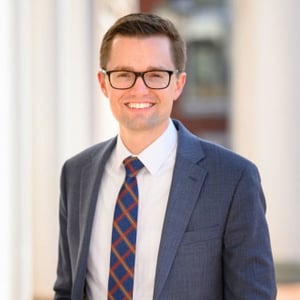
General Counsel, Center for American Liberty
Mark Trammell is the General Counsel at Center for American Liberty where he is dedicated to defending First Amendment freedoms and civil liberties.
Prior to joining the Center for American Liberty, Trammell served as in-house counsel to Young America’s Foundation, where he advocated for and defended students’ free speech rights on college campuses. He has also served as an attorney at Liberty Counsel and as an adjunct professor at Liberty University.
Trammell is a member of the Maryland bar and the Virginia bar. He is a graduate of Liberty University School of Law and Union University. Trammell currently serves on the Board of Trustees at Gateway Seminary of the Southern Baptist Convention.

President, Cass & Associates, PC
Ronald A. Cass is Dean Emeritus of Boston University School of Law (where he was Dean from 1990-2004), President of Cass & Associates, PC, former Vice-Chairman and Commissioner of the U.S. International Trade Commission, former faculty member at Boston University School of Law and the University of Virginia Law School, and Distinguished Senior Fellow at the C. Boyden Gray Center for the Study of the Administrative State. Dean Cass also sits as an arbitrator for commercial, international, and intellectual property rights disputes, and is a former United States member of the Panel of Conciliators of the International Centre for Settlement of Investment Disputes. He is a member of the Council of the Administrative Conference of the United States and has received seven presidential appointments, spanning Presidents Ronald Reagan to Donald J. Trump.
As a law professor, lecturer, and scholar, Dean Cass has been teaching and writing about a wide array of legal issues on topics such as administrative law and regulation, antitrust, constitutional law, communications, intellectual property, international trade, separation of powers, and legal process. He has published more than 160 scholarly books, chapters, articles, and papers, including a leading casebook on administrative law. Dean Cass has taught judges as well as students in schools of law, economics, business, and public policy and has held academic appointments in the United States, Europe, and Latin America.
In addition to his academic work, Dean Cass has participated in numerous important legal cases as an amicus, consultant, or expert, and has advised businesses, law firms, investment funds, and government agencies on a range of trade, antitrust, intellectual property, and regulatory issues. He has a broad range of affiliations with professional groups, and has received numerous honors, fellowships and awards.
Dean Cass is a graduate of the University of Virginia and the University of Chicago Law School.
Professor Emeritus of Law, Antonin Scalia Law School, George Mason University
Jeremy A. Rabkin is a Professor Emeritus of Law at the Antonin Scalia Law School, George Mason University. Before joining the faculty in June 2007, he was for over two decades a professor in the Department of Government at Cornell University. Professor Rabkin serves on the board of directors of the Center for Individual Rights, a public interest law firm based in Washington, D.C. Previously he was a board member of the U.S. Institute of Peace and the board of academic advisors of the American Enterprise Institute.
Professor Rabkin’s books include Law Without Nations? (Princeton University Press, 2005). He authored “If You Need a Friend, Don’t Call a Cosmopolitan,” a chapter in Varieties of Sovereignty and Citizenship (Sigal R. Ben-Porath & Rogers M. Smith eds., University of Pennsylvania Press, 2012). His articles have appeared in major law reviews and political science journals and his journalistic contributions in a range of magazines and newspapers, including the Washington Post and the Wall Street Journal.
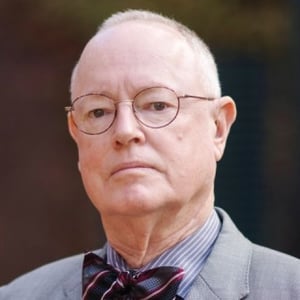
John C. Jeffries, Jr., Distinguished Professor of Law, University of Virginia School of Law
Paul B. Stephan is an expert on international business, international dispute resolution and comparative law, with an emphasis on Soviet and post-Soviet legal systems. In addition to writing prolifically in these fields, Stephan has advised governments and international organizations, taken part in cases in the Supreme Court of the United States, the federal courts, and various foreign judicial and arbitral proceedings, and lectured to professionals and scholarly groups around the world on issues raised by the globalization of the world economy. During 2006-07, he served as counselor on international law in the U.S. Department of State, and in 2020-21 as special counsel to the general counsel in the Department of Defense. He was a coordinating reporter for the American Law Institute’s Restatement (Fourth) of the Foreign Relations Law of the United States.
Stephan received his B.A. and M.A. from Yale University in 1973 and 1974, respectively, and his J.D. from the University of Virginia in 1977. Before returning to Virginia, he clerked for Judge Levin Campbell of the U.S. Court of Appeals for the First Circuit and for U.S. Supreme Court Justice Lewis F. Powell Jr. He has taught as a visiting professor at the Moscow State Institute for International Relations, the University of Vienna, Münster University, Lausanne University, Melbourne University, University of Pantheon-Assas (Paris II), Sciences Po, Paris I, the Interdisciplinary Centre Herzliya, Sydney University, the Peking University School of Transnational Law in Shenzhen, China, the University of Tartu’s Pärna College, and Liverpool University. He also has visited at Columbia Law School and Duke Law School, and served as a scholar in residence in the London office of Wilmer Hale.
After the collapse of the Soviet Union, Stephan took part in a variety of projects involving law reform in former socialist states. He worked in Russia, Georgia, Ukraine, Albania and Slovakia on behalf of the U.S. Treasury and in Kazakhstan and Azerbaijan on behalf of the International Monetary Fund. He also organized training programs for tax administrators and judges from all of the formerly socialist countries under the auspices of the Organization for Economic Cooperation and Development. His casebooks on international business, international trade and investment, and Doing Business in Emerging Markets are used at law schools both in the United States and abroad. He is the co-author, with Robert Scott, of The Limits of Leviathan: Contract Theory and the Enforcement of International Law (Cambridge University Press, 2006), and the author of The World Crisis and International Law: The Knowledge Economy and the Battle for the Future (2023). His current research focuses on the legal issues related to the Russian invasion of Ukraine and legal responses to the rise of big data.
President, Cass & Associates, PC
Ronald A. Cass is Dean Emeritus of Boston University School of Law (where he was Dean from 1990-2004), President of Cass & Associates, PC, former Vice-Chairman and Commissioner of the U.S. International Trade Commission, former faculty member at Boston University School of Law and the University of Virginia Law School, and Distinguished Senior Fellow at the C. Boyden Gray Center for the Study of the Administrative State. Dean Cass also sits as an arbitrator for commercial, international, and intellectual property rights disputes, and is a former United States member of the Panel of Conciliators of the International Centre for Settlement of Investment Disputes. He is a member of the Council of the Administrative Conference of the United States and has received seven presidential appointments, spanning Presidents Ronald Reagan to Donald J. Trump.
As a law professor, lecturer, and scholar, Dean Cass has been teaching and writing about a wide array of legal issues on topics such as administrative law and regulation, antitrust, constitutional law, communications, intellectual property, international trade, separation of powers, and legal process. He has published more than 160 scholarly books, chapters, articles, and papers, including a leading casebook on administrative law. Dean Cass has taught judges as well as students in schools of law, economics, business, and public policy and has held academic appointments in the United States, Europe, and Latin America.
In addition to his academic work, Dean Cass has participated in numerous important legal cases as an amicus, consultant, or expert, and has advised businesses, law firms, investment funds, and government agencies on a range of trade, antitrust, intellectual property, and regulatory issues. He has a broad range of affiliations with professional groups, and has received numerous honors, fellowships and awards.
Dean Cass is a graduate of the University of Virginia and the University of Chicago Law School.
Professor Emeritus of Law, Antonin Scalia Law School, George Mason University
Jeremy A. Rabkin is a Professor Emeritus of Law at the Antonin Scalia Law School, George Mason University. Before joining the faculty in June 2007, he was for over two decades a professor in the Department of Government at Cornell University. Professor Rabkin serves on the board of directors of the Center for Individual Rights, a public interest law firm based in Washington, D.C. Previously he was a board member of the U.S. Institute of Peace and the board of academic advisors of the American Enterprise Institute.
Professor Rabkin’s books include Law Without Nations? (Princeton University Press, 2005). He authored “If You Need a Friend, Don’t Call a Cosmopolitan,” a chapter in Varieties of Sovereignty and Citizenship (Sigal R. Ben-Porath & Rogers M. Smith eds., University of Pennsylvania Press, 2012). His articles have appeared in major law reviews and political science journals and his journalistic contributions in a range of magazines and newspapers, including the Washington Post and the Wall Street Journal.
John C. Jeffries, Jr., Distinguished Professor of Law, University of Virginia School of Law
Paul B. Stephan is an expert on international business, international dispute resolution and comparative law, with an emphasis on Soviet and post-Soviet legal systems. In addition to writing prolifically in these fields, Stephan has advised governments and international organizations, taken part in cases in the Supreme Court of the United States, the federal courts, and various foreign judicial and arbitral proceedings, and lectured to professionals and scholarly groups around the world on issues raised by the globalization of the world economy. During 2006-07, he served as counselor on international law in the U.S. Department of State, and in 2020-21 as special counsel to the general counsel in the Department of Defense. He was a coordinating reporter for the American Law Institute’s Restatement (Fourth) of the Foreign Relations Law of the United States.
Stephan received his B.A. and M.A. from Yale University in 1973 and 1974, respectively, and his J.D. from the University of Virginia in 1977. Before returning to Virginia, he clerked for Judge Levin Campbell of the U.S. Court of Appeals for the First Circuit and for U.S. Supreme Court Justice Lewis F. Powell Jr. He has taught as a visiting professor at the Moscow State Institute for International Relations, the University of Vienna, Münster University, Lausanne University, Melbourne University, University of Pantheon-Assas (Paris II), Sciences Po, Paris I, the Interdisciplinary Centre Herzliya, Sydney University, the Peking University School of Transnational Law in Shenzhen, China, the University of Tartu’s Pärna College, and Liverpool University. He also has visited at Columbia Law School and Duke Law School, and served as a scholar in residence in the London office of Wilmer Hale.
After the collapse of the Soviet Union, Stephan took part in a variety of projects involving law reform in former socialist states. He worked in Russia, Georgia, Ukraine, Albania and Slovakia on behalf of the U.S. Treasury and in Kazakhstan and Azerbaijan on behalf of the International Monetary Fund. He also organized training programs for tax administrators and judges from all of the formerly socialist countries under the auspices of the Organization for Economic Cooperation and Development. His casebooks on international business, international trade and investment, and Doing Business in Emerging Markets are used at law schools both in the United States and abroad. He is the co-author, with Robert Scott, of The Limits of Leviathan: Contract Theory and the Enforcement of International Law (Cambridge University Press, 2006), and the author of The World Crisis and International Law: The Knowledge Economy and the Battle for the Future (2023). His current research focuses on the legal issues related to the Russian invasion of Ukraine and legal responses to the rise of big data.
Visiting Scholar, Center for Citizenship & Constitutional Government, University of Notre Dame
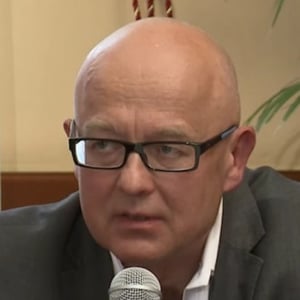
Professor, Jagiellonian University
Prof. Bryk is the director of the Institute of American Studies, Krakow Academy as well as a professor of constitutional law and history, political philosophy at the Krakow Academy and the Jagiellonian University in Krakow. He is also a visiting professor at such institutions as: Harvard University, Marquette University, Amherst College, University of New Hampshire, Institute of the European Studies, Vienna.
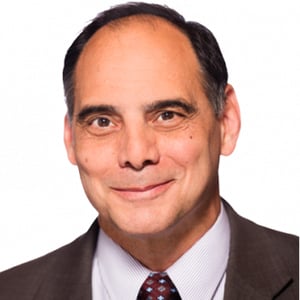
Vice President, Kathryn and Shelby Cullom Davis Institute for National Security and Foreign Policy, and the E. W. Richardson Fellow, The Heritage Foundation
James Jay Carafano, a leading expert in national security and foreign policy challenges, is the vice president of Heritage's Kathryn and Shelby Cullom Davis Institute for National Security and Foreign Policy and the E. W. Richardson Fellow.
Carafano is an accomplished historian and teacher as well as a prolific writer and researcher. His most recent publication is an e-book, “Surviving the End”, which addresses emergency preparedness. He also authored “Wiki at War: Conflict in a Socially Networked World” (Texas A&M University Press, 2012), a survey of the revolutionary impact of the Internet age on national security. He was selected from thousands to speak on cyber warfare at the 2014 South by Southwest (SXSW) Interactive Conference in Austin, Texas, the nation’s premier tech and social media conference.
Before assuming responsibility for Heritage’s entire defense and foreign policy team in December 2012, Carafano had served as deputy director of the Davis Institute as well as director of its Douglas and Sarah Allison Center for Foreign Policy Studies since 2009.
His recent research has focused on developing the national security required to secure the long-term interests of the United States -- protecting the public, providing for economic growth and preserving civil liberties.
He is editor of a book series, The Changing Face of War, which examines how emerging political, social, economic and cultural trends will affect the nature of armed conflict. From 2012 to 2014, he served on the Homeland Security Advisory Council convened by the secretary of the U.S. Department of Homeland Security.
Carafano, a 25-year Army veteran with a master’s and doctorate from Georgetown University, joined Heritage in 2003 as a senior research fellow in homeland security and missile defense. He worked with Kim R. Holmes, his predecessor as vice president and director of Davis Institute, to produce Heritage’s groundbreaking documentary film “33 Minutes: Protecting America in the New Missile Age.”
Carafano now directs Heritage's team of foreign and defense policy experts in three centers on the front lines of international affairs: the Allison Center, the Asian Studies Center, the Margaret Thatcher Center for Freedom, and the Center for National Defense.
Carafano also is president of a nonprofit organization, Esprit de Corps, which educates the public about veteran affairs. In this capacity he co-produced and co-wrote the documentary “Veteran Nation,” an official selection of the 2013 G.I. Film Festival.
Before coming to Heritage, Carafano was a senior fellow at the Center for Strategic and Budgetary Assessments, a Washington policy institute dedicated to defense issues.
In his Army career, Carafano rose to the rank of lieutenant colonel. He served in Europe, Korea and the United States. His assignments included head speechwriter for the Army Chief of Staff, the service's highest-ranking officer. Before retiring, Carafano was executive editor of Joint Force Quarterly, the Defense Department's premiere professional military journal.
A graduate of West Point, Carafano holds a master's degree and a doctorate from Georgetown University as well as a master's degree in strategy from the U.S. Army War College.
He is an adjunct professor at Georgetown University and serves as a visiting professor at National Defense University. He currently sits on the Board of Advisors for Daniel Morgan Academy. He previously served as an assistant professor at the U.S. Military Academy in West Point, N.Y., and as director of military studies at the Army's Center of Military History. He taught at Mount Saint Mary College in New York and was a fleet professor at the U.S. Naval War College.
He is the co-author with Paul Rosenzweig of Winning the Long War: Lessons from the Cold War for Defeating Terrorism and Preserving Freedom (2005). The authors, first to coin the term “the long war,” argued that a successful strategy requires a balance of prudent military and security measures, continued economic growth, zealous protection of civil liberties and prevailing in the “war of ideas” against terrorist ideologies.
Carafano also co-authored a textbook, Homeland Security (McGraw-Hill, second edition 2012), designed as a practical introduction to everyday life in the era of terrorism. The textbook addresses such key details as the roles of first responders and volunteers, family preparedness techniques and in-depth looks at weapons of mass destruction.
His other works include Private Sector/Public Wars: Contracting in Combat--Iraq, Afghanistan and Future Conflicts (2008); G.I. Ingenuity: Improvisation, Technology and Winning World War II (2006); Waltzing Into the Cold War (2002); and After D-Day (2000), a Military Book Club main selection.
As an expert on foreign affairs, defense, intelligence and homeland security issues, Carafano has testified many times before Congress.
He is a regular guest analyst for the major U.S. network and cable television news organizations, from ABC to Fox to MSNBC to PBS, as well as such outlets as National Public Radio, Pajamas TV, Voice of America and the History Channel. From SkyNews to Al Jazeera, he also has appeared on TV news programs originating in Australia, Austria, Canada, China, Estonia, France, Great Britain, Greece, Hong Kong, Ireland, Iran, Japan, Norway, Poland, Portugal, Russia, Spain, Sweden and Vietnam.
Carafano’s op-ed columns and commentary are published widely, including the Baltimore Sun, Boston Globe, New York Post, Philadelphia Inquirer, USA Today and Washington Times in addition to Forbes.
He served on the board of trustees of the Marine Corps University Foundation and advisory boards for the West Point Center of Oral History, the Hamilton Society, the Spirit of America, and the Operation Renewed Hope Foundation, which serves homeless veterans. He formerly was a senior fellow at George Washington University's Homeland Security Policy Institute. He also previously served on the congressionally-mandated Advisory Panel on Department of Defense Capabilities for Support of Civil Authorities, the National Academy's Board on Army Science and Technology and the Department of the Army Historical Advisory Committee.
In 2005, he received Heritage's prestigious W. Glenn and Rita Ricardo Campbell Award. The honor goes to the staff member determined to have made “an outstanding contribution to the analysis and promotion of the free society.”
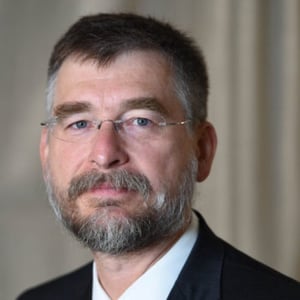
Associate Professor, Catholic University of America
Jakub Grygiel is an associate professor at the Catholic University of America (Washington, DC). In 2017-2018 he was a senior advisor to the Secretary of State in the Office of Policy Planning working on European affairs. Previously, he was a Senior Fellow at the Center for European Policy Analysis and on the faculty of SAIS-Johns Hopkins University in Washington DC. He is the author of Return of the Barbarians (Cambridge University Press, 2018), Great Powers and Geopolitical Change (JHU Press, 2006), and co-author with Wess Mitchell of The Unquiet Frontier (Princeton University Press, 2016). His writings on international relations and security studies have appeared in Foreign Affairs, The American Interest, Security Studies, Journal of Strategic Studies, Orbis, Commentary, Parameters, as well as several U.S. and foreign newspapers. He earned a Ph.D., M.A. and an MPA from Princeton University, and a BSFS Summa Cum Laude from Georgetown University.
President, Cass & Associates, PC
Ronald A. Cass is Dean Emeritus of Boston University School of Law (where he was Dean from 1990-2004), President of Cass & Associates, PC, former Vice-Chairman and Commissioner of the U.S. International Trade Commission, former faculty member at Boston University School of Law and the University of Virginia Law School, and Distinguished Senior Fellow at the C. Boyden Gray Center for the Study of the Administrative State. Dean Cass also sits as an arbitrator for commercial, international, and intellectual property rights disputes, and is a former United States member of the Panel of Conciliators of the International Centre for Settlement of Investment Disputes. He is a member of the Council of the Administrative Conference of the United States and has received seven presidential appointments, spanning Presidents Ronald Reagan to Donald J. Trump.
As a law professor, lecturer, and scholar, Dean Cass has been teaching and writing about a wide array of legal issues on topics such as administrative law and regulation, antitrust, constitutional law, communications, intellectual property, international trade, separation of powers, and legal process. He has published more than 160 scholarly books, chapters, articles, and papers, including a leading casebook on administrative law. Dean Cass has taught judges as well as students in schools of law, economics, business, and public policy and has held academic appointments in the United States, Europe, and Latin America.
In addition to his academic work, Dean Cass has participated in numerous important legal cases as an amicus, consultant, or expert, and has advised businesses, law firms, investment funds, and government agencies on a range of trade, antitrust, intellectual property, and regulatory issues. He has a broad range of affiliations with professional groups, and has received numerous honors, fellowships and awards.
Dean Cass is a graduate of the University of Virginia and the University of Chicago Law School.
Professor Emeritus of Law, Antonin Scalia Law School, George Mason University
Jeremy A. Rabkin is a Professor Emeritus of Law at the Antonin Scalia Law School, George Mason University. Before joining the faculty in June 2007, he was for over two decades a professor in the Department of Government at Cornell University. Professor Rabkin serves on the board of directors of the Center for Individual Rights, a public interest law firm based in Washington, D.C. Previously he was a board member of the U.S. Institute of Peace and the board of academic advisors of the American Enterprise Institute.
Professor Rabkin’s books include Law Without Nations? (Princeton University Press, 2005). He authored “If You Need a Friend, Don’t Call a Cosmopolitan,” a chapter in Varieties of Sovereignty and Citizenship (Sigal R. Ben-Porath & Rogers M. Smith eds., University of Pennsylvania Press, 2012). His articles have appeared in major law reviews and political science journals and his journalistic contributions in a range of magazines and newspapers, including the Washington Post and the Wall Street Journal.
John C. Jeffries, Jr., Distinguished Professor of Law, University of Virginia School of Law
Paul B. Stephan is an expert on international business, international dispute resolution and comparative law, with an emphasis on Soviet and post-Soviet legal systems. In addition to writing prolifically in these fields, Stephan has advised governments and international organizations, taken part in cases in the Supreme Court of the United States, the federal courts, and various foreign judicial and arbitral proceedings, and lectured to professionals and scholarly groups around the world on issues raised by the globalization of the world economy. During 2006-07, he served as counselor on international law in the U.S. Department of State, and in 2020-21 as special counsel to the general counsel in the Department of Defense. He was a coordinating reporter for the American Law Institute’s Restatement (Fourth) of the Foreign Relations Law of the United States.
Stephan received his B.A. and M.A. from Yale University in 1973 and 1974, respectively, and his J.D. from the University of Virginia in 1977. Before returning to Virginia, he clerked for Judge Levin Campbell of the U.S. Court of Appeals for the First Circuit and for U.S. Supreme Court Justice Lewis F. Powell Jr. He has taught as a visiting professor at the Moscow State Institute for International Relations, the University of Vienna, Münster University, Lausanne University, Melbourne University, University of Pantheon-Assas (Paris II), Sciences Po, Paris I, the Interdisciplinary Centre Herzliya, Sydney University, the Peking University School of Transnational Law in Shenzhen, China, the University of Tartu’s Pärna College, and Liverpool University. He also has visited at Columbia Law School and Duke Law School, and served as a scholar in residence in the London office of Wilmer Hale.
After the collapse of the Soviet Union, Stephan took part in a variety of projects involving law reform in former socialist states. He worked in Russia, Georgia, Ukraine, Albania and Slovakia on behalf of the U.S. Treasury and in Kazakhstan and Azerbaijan on behalf of the International Monetary Fund. He also organized training programs for tax administrators and judges from all of the formerly socialist countries under the auspices of the Organization for Economic Cooperation and Development. His casebooks on international business, international trade and investment, and Doing Business in Emerging Markets are used at law schools both in the United States and abroad. He is the co-author, with Robert Scott, of The Limits of Leviathan: Contract Theory and the Enforcement of International Law (Cambridge University Press, 2006), and the author of The World Crisis and International Law: The Knowledge Economy and the Battle for the Future (2023). His current research focuses on the legal issues related to the Russian invasion of Ukraine and legal responses to the rise of big data.
Professor, Jagiellonian University
Prof. Bryk is the director of the Institute of American Studies, Krakow Academy as well as a professor of constitutional law and history, political philosophy at the Krakow Academy and the Jagiellonian University in Krakow. He is also a visiting professor at such institutions as: Harvard University, Marquette University, Amherst College, University of New Hampshire, Institute of the European Studies, Vienna.
Vice President, Kathryn and Shelby Cullom Davis Institute for National Security and Foreign Policy, and the E. W. Richardson Fellow, The Heritage Foundation
James Jay Carafano, a leading expert in national security and foreign policy challenges, is the vice president of Heritage's Kathryn and Shelby Cullom Davis Institute for National Security and Foreign Policy and the E. W. Richardson Fellow.
Carafano is an accomplished historian and teacher as well as a prolific writer and researcher. His most recent publication is an e-book, “Surviving the End”, which addresses emergency preparedness. He also authored “Wiki at War: Conflict in a Socially Networked World” (Texas A&M University Press, 2012), a survey of the revolutionary impact of the Internet age on national security. He was selected from thousands to speak on cyber warfare at the 2014 South by Southwest (SXSW) Interactive Conference in Austin, Texas, the nation’s premier tech and social media conference.
Before assuming responsibility for Heritage’s entire defense and foreign policy team in December 2012, Carafano had served as deputy director of the Davis Institute as well as director of its Douglas and Sarah Allison Center for Foreign Policy Studies since 2009.
His recent research has focused on developing the national security required to secure the long-term interests of the United States -- protecting the public, providing for economic growth and preserving civil liberties.
He is editor of a book series, The Changing Face of War, which examines how emerging political, social, economic and cultural trends will affect the nature of armed conflict. From 2012 to 2014, he served on the Homeland Security Advisory Council convened by the secretary of the U.S. Department of Homeland Security.
Carafano, a 25-year Army veteran with a master’s and doctorate from Georgetown University, joined Heritage in 2003 as a senior research fellow in homeland security and missile defense. He worked with Kim R. Holmes, his predecessor as vice president and director of Davis Institute, to produce Heritage’s groundbreaking documentary film “33 Minutes: Protecting America in the New Missile Age.”
Carafano now directs Heritage's team of foreign and defense policy experts in three centers on the front lines of international affairs: the Allison Center, the Asian Studies Center, the Margaret Thatcher Center for Freedom, and the Center for National Defense.
Carafano also is president of a nonprofit organization, Esprit de Corps, which educates the public about veteran affairs. In this capacity he co-produced and co-wrote the documentary “Veteran Nation,” an official selection of the 2013 G.I. Film Festival.
Before coming to Heritage, Carafano was a senior fellow at the Center for Strategic and Budgetary Assessments, a Washington policy institute dedicated to defense issues.
In his Army career, Carafano rose to the rank of lieutenant colonel. He served in Europe, Korea and the United States. His assignments included head speechwriter for the Army Chief of Staff, the service's highest-ranking officer. Before retiring, Carafano was executive editor of Joint Force Quarterly, the Defense Department's premiere professional military journal.
A graduate of West Point, Carafano holds a master's degree and a doctorate from Georgetown University as well as a master's degree in strategy from the U.S. Army War College.
He is an adjunct professor at Georgetown University and serves as a visiting professor at National Defense University. He currently sits on the Board of Advisors for Daniel Morgan Academy. He previously served as an assistant professor at the U.S. Military Academy in West Point, N.Y., and as director of military studies at the Army's Center of Military History. He taught at Mount Saint Mary College in New York and was a fleet professor at the U.S. Naval War College.
He is the co-author with Paul Rosenzweig of Winning the Long War: Lessons from the Cold War for Defeating Terrorism and Preserving Freedom (2005). The authors, first to coin the term “the long war,” argued that a successful strategy requires a balance of prudent military and security measures, continued economic growth, zealous protection of civil liberties and prevailing in the “war of ideas” against terrorist ideologies.
Carafano also co-authored a textbook, Homeland Security (McGraw-Hill, second edition 2012), designed as a practical introduction to everyday life in the era of terrorism. The textbook addresses such key details as the roles of first responders and volunteers, family preparedness techniques and in-depth looks at weapons of mass destruction.
His other works include Private Sector/Public Wars: Contracting in Combat--Iraq, Afghanistan and Future Conflicts (2008); G.I. Ingenuity: Improvisation, Technology and Winning World War II (2006); Waltzing Into the Cold War (2002); and After D-Day (2000), a Military Book Club main selection.
As an expert on foreign affairs, defense, intelligence and homeland security issues, Carafano has testified many times before Congress.
He is a regular guest analyst for the major U.S. network and cable television news organizations, from ABC to Fox to MSNBC to PBS, as well as such outlets as National Public Radio, Pajamas TV, Voice of America and the History Channel. From SkyNews to Al Jazeera, he also has appeared on TV news programs originating in Australia, Austria, Canada, China, Estonia, France, Great Britain, Greece, Hong Kong, Ireland, Iran, Japan, Norway, Poland, Portugal, Russia, Spain, Sweden and Vietnam.
Carafano’s op-ed columns and commentary are published widely, including the Baltimore Sun, Boston Globe, New York Post, Philadelphia Inquirer, USA Today and Washington Times in addition to Forbes.
He served on the board of trustees of the Marine Corps University Foundation and advisory boards for the West Point Center of Oral History, the Hamilton Society, the Spirit of America, and the Operation Renewed Hope Foundation, which serves homeless veterans. He formerly was a senior fellow at George Washington University's Homeland Security Policy Institute. He also previously served on the congressionally-mandated Advisory Panel on Department of Defense Capabilities for Support of Civil Authorities, the National Academy's Board on Army Science and Technology and the Department of the Army Historical Advisory Committee.
In 2005, he received Heritage's prestigious W. Glenn and Rita Ricardo Campbell Award. The honor goes to the staff member determined to have made “an outstanding contribution to the analysis and promotion of the free society.”
Associate Professor, Catholic University of America
Jakub Grygiel is an associate professor at the Catholic University of America (Washington, DC). In 2017-2018 he was a senior advisor to the Secretary of State in the Office of Policy Planning working on European affairs. Previously, he was a Senior Fellow at the Center for European Policy Analysis and on the faculty of SAIS-Johns Hopkins University in Washington DC. He is the author of Return of the Barbarians (Cambridge University Press, 2018), Great Powers and Geopolitical Change (JHU Press, 2006), and co-author with Wess Mitchell of The Unquiet Frontier (Princeton University Press, 2016). His writings on international relations and security studies have appeared in Foreign Affairs, The American Interest, Security Studies, Journal of Strategic Studies, Orbis, Commentary, Parameters, as well as several U.S. and foreign newspapers. He earned a Ph.D., M.A. and an MPA from Princeton University, and a BSFS Summa Cum Laude from Georgetown University.

The Return of the Monroe Doctrine? Venezuela, Ecuador, and American Foreign Policy
John C. Harrison, Jeremy A. Rabkin, John C. Yoo
Nearly two centuries after President James Monroe announced a landmark foreign-policy principle in his 1823 address to...
Plenary Panel 3: Justice Alito’s Impact on Criminal Law & Procedure
Sarah Keeton Campbell, Benjamin J. Cassady, Andrew Oldham, Amul R. Thapar
Justice Alito has played a significant role in shaping contemporary criminal law and procedure, particularly...
Who is Liable in Detransition Cases?
Erin M. Hawley, Mary Margaret Olohan, Sarah Parshall Perry, Mark Trammell
In the first medical malpractice verdict of its kind, a New York jury awarded $2...
Do Russian Oligarchs Retain Property Rights in the West?
Ronald A. Cass, Jeremy A. Rabkin, Paul B. Stephan
In response to Russia’s invasion of Ukraine, assets of Russian oligarchs have been frozen in...
Do Russian Oligarchs Retain Property Rights in the West?
Ronald A. Cass, Jeremy A. Rabkin, Paul B. Stephan
In response to Russia’s invasion of Ukraine, assets of Russian oligarchs have been frozen in...
Do Russian Oligarchs Retain Property Rights in the West?
TeleforumRights Talk in a Post-Liberal Age: Mary Ann Glendon's Enduring Insight Into the American Rights Tradition
Gabrielle M. Girgis
Gross human rights violations occur every day, often invisibly to most of us. Media coverage...
Disestablishment and Religious Dissent
St. Louis Lawyers Chapter
Clayton, MOPoland: Renegade or Exemplar?
Andrzej Bryk, James Jay Carafano, Jakub Grygiel
Poland holds a position of economic, strategic, and political importance in Europe. While some former...
Poland: Renegade or Exemplar?
Teleforum