

Chairman and Founder, Institute for Free Speech; Josiah H. Blackmore II/Shirley M. Nault Designated Professor of Law, Capital University Law School

Partner and Section Chair for Environmental Safety & Incident Response, Baker Botts LLP
Nadira Clarke is a formidable litigator with first-chair trial experience, she focuses her practice on technically complex, high-stakes matters. She is sought after for her aggressive defense of corporations and executives facing large-scale, multi-faceted governmental investigations. Calm and decisive by nature, she provides leadership and valuable counsel in a crisis.
Nadira previously served as an Assistant United States Attorney for the District of Maryland, and a Special Assistant United States Attorney for the Eastern District of Virginia. Well versed in the area of corporate compliance and business ethics, she works with two separate corporate monitor teams appointed by the court to oversee compliance of companies in the wake of criminal prosecution. She previously served as counsel to the Department of Justice's Office of Professional Responsibility, where she led internal professional ethics investigations involving federal prosecutors and high-ranking Department of Justice officials.
Early in her career, Nadira served in the highly selective U.S. Attorney General's Honor Program for the Department of Justice, and worked as a trial attorney with the Environment and Natural Resources Division, including the Environmental Crimes Section and the Natural Resource Section. She was also selected to serve as a Special Assistant to the Assistant Attorney General for the Environmental and Natural Resources Division of the Department of Justice.
Nadira is a frequent industry speaker, and has been recognized as a "Rising Star" by the Minority Corporate Counsel Association (2013). Her pro bono work includes mentoring and litigating sex-discrimination and political asylum cases.

Partner, Briscoe Prows Kao Ivester & Bazel LLP
Tony Francois is experienced in Water and Real Property Law, Land Use and Zoning, Environmental Regulation, Natural Resources Development, Agricultural Law, and Constitutional Law. He has represented homeowners, builders, farmers and ranchers, trade associations, and water districts in administrative, civil, and criminal proceedings before state and federal administrative agencies and state and federal trial and appellate courts. He is a member of the California State Bar and the Northern, Eastern, and Central Districts of California and the Districts of New Mexico and North Dakota, and has litigated cases in federal courts in California, Oregon, Washington, Idaho, Montana, Nevada, Arizona, New Mexico, Colorado, North and South Dakota, Minnesota, Massachusetts, Maryland, South Carolina, and the District of Columbia, as well as the Sixth, Eighth, Ninth, and Tenth Circuit Courts of Appeals. He has appeared before the Supreme Courts of California, Idaho, Nevada, and the United States.
Prior to attending law school, he served as an infantry officer in the United States Army, and was stationed in the former West Germany during the fall of the Berlin Wall.
Tony was an Attorney at Pacific Legal Foundation from 2012 to 2021. He was a lobbyist for 10 years, first with California Farm Bureau Federation from 2003 to 2007, and then with KP Public Affairs from 2007 to 2012. He was an attorney at McQuaid, Bedford & Van Zandt in San Francisco from 1999 – 2003.

Judge, United States Court of Appeals, Sixth Circuit
The Honorable Joan L. Larsen is a judge of the United States Court of Appeals for the Sixth Circuit. She was nominated by the President on May 8, 2017 and confirmed by the Senate on November 1, 2017. Before her appointment to the federal bench, Judge Larsen served two terms as a Justice of the Michigan Supreme Court, where she was the court’s liaison to Michigan’s drug, sobriety, mental health and veteran’s courts.
Before becoming a judge, Judge Larsen was a faculty member at the University of Michigan Law School, where she was also Special Counsel to the Dean and received the L. Hart Wright Award for Excellence in Teaching. Judge Larsen's research and teaching interests included constitutional law, criminal procedure, statutory interpretation, and presidential power. Judge Larsen continues to assist the law school as the adviser to the Henry M. Campbell Moot Court Competition.
Judge Larsen began her legal career as a law clerk to the Hon. David B. Sentelle of the United States Court of Appeals for the D.C. Circuit and to Justice Antonin Scalia of the Supreme Court of the United States. Following her clerkships, she joined the law firm of Sidley Austin, where she was a member of the Constitutional, Criminal, and Civil Litigation Section. She later served as Deputy Assistant Attorney General in the United States Department of Justice, Office of Legal Counsel.
Judge Larsen graduated first in her class from Northwestern University School of Law, where she served as articles editor of the Northwestern University Law Review and earned the John Paul Stevens Award for Academic Excellence. She received her B.A., with highest honors, from the University of Northern Iowa.
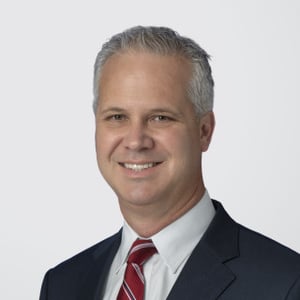
Partner, Hunton Andrews Kurth
Mr. Leopold is a Partner with the law firm of Hunton Andrews Kurth in Washington, DC. He is the former Senate-confirmed general counsel of the U.S. EPA from 2018-2020, and he previously was a litigator at the U.S. Department of Justice, Environment and Natural Resources Division form 2007-2013. As EPA General Counsel, he counseled on the development and defense of EPA’s most significant rulemakings, including the Affordable Clean Energy Rule, the Navigable Waters Protection Rule, and the Safe Affordable Fuel‐Efficient (SAFE) Vehicles Rule, as well as several pesticide actions. He was personally involved in defending EPA in litigation, including the County of Maui v. Hawaii Wildlife Fund in the U.S. Supreme Court. Mr. Leopold’s prior government service also includes working in Florida as general counsel of the Florida Department of Environmental Protection. He now represents clients in regulatory advocacy before federal agencies, litigates federal environmental actions, and defends clients with EPA enforcement issues.
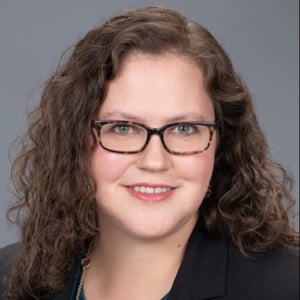
Staff Attorney, Environmental & Energy Law Program, Harvard Law School
Hana Vizcarra is a staff attorney at Harvard Law School’s Environmental & Energy Law Program where she leads EELP’s portfolio on private sector approaches to climate and environmental issues. She analyzes environmental regulatory developments, has written on the integration of climate-risk into corporate disclosures and financial risk management, and is developing the organization’s project on sea level rise. Before joining EELP in 2018, Hana practiced environmental law for over seven years with two national law firms. She handled complex environmental litigation, counseled on environmental compliance and regulation, and advised on environmental aspects of transactions. Hana previously worked in political research and communications for seven years. Hana received her J.D. from Georgetown University Law Center in 2010 and B.A. from Pomona College in California in 2003.

Tazewell Taylor Professor of Law and William H. Cabell Research Professor, William & Mary Law School
Jonathan H. Adler joined the William & Mary law faculty as the Tazwell Taylor Professor of Law and William H. Cabell Research Professor in 2025. Prior to joining the faculty, he was the inaugural Johan Verheij Memorial Professor of Law and the founding Director of the Coleman P. Burke Center for Environmental Law at the Case Western Reserve University School of Law.
Professor Adler is the author or editor of seven books, including Climate Liberalism: Perspectives on Liberty, Property and Pollution (Palgrave, 2023), Marijuana Federalism: Uncle Sam and Mary Jane (Brookings Institution Press, 2020), Business and the Roberts Court (Oxford University Press, 2016) and Rebuilding the Ark: New Perspectives on Endangered Species Act Reform (AEI Press, 2011).
His articles have appeared in publications ranging from the Harvard Environmental Law Review and Yale Journal on Regulation to the Wall Street Journal, New York Times, and Washington Post. He has testified before Congress a dozen times, and his work has been cited in the U.S. Supreme Court. A 2024 study identified Professor Adler as the seventh most cited legal academic in administrative and environmental law from 2019 to 2023.
Professor Adler is a contributing editor to Civitas Outlook and a regular contributor to the popular legal blog, The Volokh Conspiracy. A regular commentator on constitutional and regulatory issues, he has appeared on numerous radio and television programs, ranging from the PBS Newshour and National Public Radio to the Fox News Channel and Entertainment Tonight.
Professor Adler is a senior fellow at the Property & Environment Research Center in Bozeman, Montana. In 2018, Professor Adler was elected to membership in the American Law Institute and helped co-found the organization Checks and Balances. In 2024, Professor Adler was appointed a public member of the Administrative Conference of the United States.
Professor Adler clerked for the Honorable David B. Sentelle on the U.S. Court of Appeals for the District of Columbia Circuit.

Judge, United States Court of Appeals, Sixth Circuit
Judge Readler earned his undergraduate and law degrees from the University of Michigan. After graduating, he served as a law clerk to Judge Alan Norris of the United States Court of Appeals for the Sixth Circuit. Judge Readler then began practicing law in the Columbus office of the international law firm Jones Day, eventually spending ten years as a partner in the firm’s Issues and Appeals Practice Group. While at Jones Day, Judge Readler appeared in state and federal trial and appellate courts around the country, most frequently the Supreme Court of Ohio and the Sixth Circuit. Judge Readler also successfully argued before the United States Supreme Court in McQuiggin v. Perkins on behalf of an inmate claiming actual innocence. His other pro bono representations include representing capital defendants before the Tenth Circuit and the Supreme Court of Ohio, as well as representing defendants sentenced to life in prison before the Sixth Circuit. While at Jones Day, Judge Readler traveled to Nairobi with Lawyers Without Borders to train Kenyan lawyers in prosecuting domestic violence cases, and he was also a recipient of the American Marshall Memorial Fellowship awarded by the German Marshall Fund of the United States. Following his career in private practice, Judge Readler served as Acting Assistant Attorney General for the Civil Division of the United States Department of Justice from 2017 to 2019. In that role, Judge Readler led and supervised over 1,000 lawyers in the Department’s largest litigating division, briefing and arguing several cases on behalf of the United States in federal courts across the country, including high-profile cases significant to the Administration and the Department. In March 2019, Judge Readler was confirmed to serve as a Circuit Judge on the Sixth Circuit. He resides in Columbus.

Distinguished Senior Fellow and Antonin Scalia Chair in Constitutional Studies, Ethics and Public Policy Center
Edward Whelan is a Distinguished Senior Fellow of the Ethics and Public Policy Center and holds EPPC’s Antonin Scalia Chair in Constitutional Studies. He is the longest-serving President in EPPC’s history, having held that position from March 2004 through January 2021.
Mr. Whelan directs EPPC’s program on The Constitution, the Courts, and the Culture. His areas of expertise include constitutional law and the judicial confirmation process. As a contributor to National Review Online’s Bench Memos blog, he has been a leading commentator on nominations to the Supreme Court and the lower courts and on issues of constitutional law. He has written essays and op-eds for leading newspapers—including the Wall Street Journal, the New York Times, and the Washington Post—opinion journals, and academic symposia and law reviews. The National Law Journal has named Mr. Whelan among its “Champions and Visionaries” in the practice of law in D.C.
Mr. Whelan is co-editor of three volumes of Supreme Court Justice Antonin Scalia’s work: Scalia Speaks: Reflections on Law, Faith, and Life Well Lived (Crown Forum, 2017), a New York Times bestselling collection of speeches by Justice Scalia; On Faith: Lessons from an American Believer (Crown Forum, 2019), a collection of Justice Scalia’s writings on faith and religion; and The Essential Scalia: On the Constitution, the Courts, and the Rule of Law (Crown Forum, 2020), a collection of Justice Scalia’s views on legal issues.
Mr. Whelan, a lawyer and a former law clerk to Justice Scalia, has served in positions of responsibility in all three branches of the federal government. From just before the terrorist attacks of September 11, 2001, until joining EPPC in 2004, Mr. Whelan was the Principal Deputy Assistant Attorney General for the Office of Legal Counsel in the U.S. Department of Justice. In that capacity, he advised the White House Counsel’s Office, the Attorney General and other senior DOJ officials, and departments and agencies throughout the executive branch on difficult and sensitive legal questions. Mr. Whelan previously served on Capitol Hill as General Counsel to the U.S. Senate Committee on the Judiciary. In addition to clerking for Justice Scalia, he was a law clerk to Judge J. Clifford Wallace of the U.S. Court of Appeals for the Ninth Circuit.
In 1981 Mr. Whelan graduated with honors from Harvard College and was inducted into Phi Beta Kappa. He received his J.D. magna cum laude in 1985 from Harvard Law School, where he was a member of the Board of Editors of the Harvard Law Review.
For more on Mr. Whelan’s background, see this interview.

Emanuel S. Heller Professor of Law, University of California at Berkeley; Thomas Smith Senior Research Fellow, The Civitas Institute, University of Texas at Austin
John Yoo is the Emanuel Heller Professor of Law at the University of California at Berkeley. He is also the Thomas Smith Senior Research Fellow, Civitas Institute, at the University of Texas at Austin. He is also a Nonresident Senior Fellow at the American Enterprise Institute.
His most recent book, The Politically Incorrect Guide to the Supreme Court, co-authored with Robert Delahunty, was published in 2023. Professor Yoo’s other books include Defender-in-Chief: Trump’s Fight for Presidential Power; Striking Power: How Cyber, Robots, and Space Weapons Change the Rules for War; Point of Attack: Preventive War, International Law, and Global Welfare; and Crisis and Command: A History of Executive Power from George Washington to George Bush.
He is a co-author of volumes 1 and 2 of R. Rossum, G. Tarr, V. Munoz & J. Yoo American Constitution Law (Routledge, 2026), and a co-editor of the eight-volume series on the 250th anniversary of the American Revolution, We Hold These Truths, with Yuval Levin and Adam White of the American Enterprise Institute.
Professor Yoo has published more than 100 articles in academic journals on subjects including national security, constitutional law, international law, and the Supreme Court. He also regularly contributes to the editorial pages of the Wall Street Journal, New York Times, Washington Post, Los Angeles Times, and National Review, among others.
Professor Yoo has served in all three branches of government. He was an official in the U.S. Department of Justice, where he worked on national security and terrorism issues after the 9/11 attacks. He served as general counsel of the U.S. Senate Judiciary Committee. He has been a law clerk for Supreme Court Justice Clarence Thomas and federal appeals Judge Laurence Silberman. He has been a visiting professor at the University of Texas at Austin’s School of Civic Leadership, Seoul National University, the Interdisciplinary Center Herzliya, Keio University, Trento University, the University of Chicago, and the Free University of Amsterdam.
Professor Yoo supervises the Public Law and Policy Program and the California Constitution Center. He also serves on the boards of Founding Forward, the Washington Legal Foundation, the Pacific Legal Foundation, the Ulysses Grant Institute, the Federalist Society’s Separation of Powers and Federalism Division, the Universidad Cientifica del Sur Law School, and the Asia-Pacific Law Institute at Seoul National University. He is a winner of the Federalist Society’s Paul Bator award and the Heritage Foundation’s Edwin Meese III Originalism Lectureship.
Professor Yoo graduated from Yale Law School and summa cum laude from Harvard College.

Attorney General, State of Ohio
Dave Yost was re-elected as Ohio’s 51st attorney general on Nov. 8, 2022, receiving more votes than any other attorney general in the state’s history.
During his first term as the state’s chief legal officer, he quickly gained a national reputation as a fearless advocate for the rule of law — or, as he puts it, “the same rules for everybody.”
Yost’s goal is to “do big good” for the people of Ohio by protecting consumers, rooting out corruption, defending the environment, ensuring an open and competitive marketplace, and fulfilling the many other duties of the Ohio Attorney General’s Office.
Yost began his public-service career as Delaware County auditor, later winning election as that county’s prosecutor. From 2011 through 2018, he served as Ohio’s auditor of state and, in January 2019, began his first term as attorney general.
Yost earned his bachelor’s degree from The Ohio State University and law degree from Capital University. He and his wife, Darlene, live in Franklin County; they have three grown children and five grandchildren.
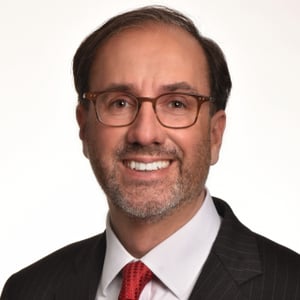
President and CEO, The Buckeye Institute
Robert Alt is the President and Chief Executive Officer of The Buckeye Institute where he has catalyzed exponential growth since he took the organization’s helm in 2012. He has since founded Buckeye’s renowned Economic Research Center and established its impactful Legal Center.
Alt is a distinguished scholar and attorney with particular expertise in legal policy, criminal justice, national security, and constitutional law. He previously worked for former U.S. Attorney General Edwin Meese III, regularly provides commentary on television and radio programs, and his writings have appeared in countless outlets.
In 2004, Alt spent five months in Iraq as an embedded war correspondent.
Alt has testified before Congress multiple times—including at the confirmation hearings for U.S. Supreme Court Justice Elena Kagan—the Federal Election Commission regarding matters of constitutional and administrative law, and numerous state legislatures.
Alt serves as an officer on the boards of The Philadelphia Society and the Federalist Society’s Columbus Lawyers Chapter. He taught national security law, criminal law, and legislation at Case Western Reserve University School of Law, as well as constitutional law and political parties and interest groups at Ashland University.
Alt earned his Doctor of Law degree from The University of Chicago Law School, where he was Symposium Editor and the winner of the Mulroy Prize for Excellence in Appellate Advocacy as well as research assistant to Professor Richard Epstein. Following law school, he clerked for Judge Alice Batchelder on the U.S. Court of Appeals for the Sixth Circuit. Alt graduated with his Bachelor of Arts in philosophy and political science magna cum laude from Azusa Pacific University where he also won the Outstanding Senior Award in Political Science.
Alt is an accomplished high-altitude alpinist and endurance athlete who has successfully climbed 6.75 of the famed Seven Summits of the World including Mount Everest. He is the creator of PROFOUND CLIMBING™ and a frequent speaker across the country and around the world on legal and public policy topics as well as effective leadership, management, decision-making, and teamwork in contexts ranging from extraordinary life/death situations to ordinary professional/business settings.
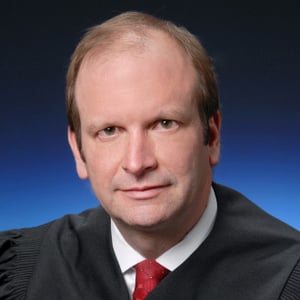
Associate Justice, Supreme Court of Ohio
Justice Pat DeWine began his six-year term on the Supreme Court of Ohio on Jan. 2, 2017, following his statewide election in November 2016. An excellent writer, Justice DeWine is known for the quality and thoroughness of his legal opinions. His opinions reflect his strong belief in judicial restraint and his respect for the constitutional roles of the other coequal branches of government.
Justice DeWine has served at all levels of the Ohio judiciary. Prior to his election to the Supreme Court, Justice DeWine served for four years on the First District Court of Appeals, and prior to that, for four years on the Hamilton County Common Pleas Court.
Justice DeWine has a strong commitment to furthering the rule of law through education. He is an adjunct professorat the University of Cincinnati College of Law where he teaches Appellate Practice and Procedure. In addition, he has taught undergraduate courses at the University of Cincinnati in Ohio Government & Politics and American Courts.
Justice DeWine has strong academic credentials. He graduated from the University of Michigan Law School in the top ten percent of his class with Order of the Coif honors. As an undergraduate student at Miami University, he maintained a perfect 4.0 grade point average and received summa cum laude honors. He was also a member of the Varsity Track and Cross Country teams.
After law school, he was selected for a clerkship on United States Court of Appeals for the Sixth Circuit. He served under the Honorable David A. Nelson, who had been appointed to the Sixth Circuit by President Ronald Reagan.
Justice DeWine understands the litigant’s perspective, having practiced law for 13 years with one of Cincinnati’s top law firms, Keating, Muething & Klekamp. He represented clients in appellate matters in Ohio and in federal courts across the country. He handled a diverse range of litigation matters, including mass tort bankruptcies, securities fraud litigation, and constitutional issues.
Other Public Service
Justice DeWine brings a unique perspective to the bench because of his public service as a County Commissioner and a member of Cincinnati City Council.
As a member of the Hamilton County Board of Commissioners, he focused on reforming County government, lowering the tax burden, eliminating unnecessary bureaucracy and promoting public safety. He led the citizens referendum that ultimately repealed the nearly $1 billion sales tax increase that was enacted by his colleagues on the Commission. The Reason Foundation named him an “Innovator in Action,” along with such leaders as Rudy Giuliani and Jeb Bush, for his efforts to reform County government.
On Cincinnati City Council, he was known as a taxpayer watchdog, successfully rooting out wasteful spending and abuse in city government. He helped eliminate unnecessary regulations, led the effort to crack down on quality of life issues affecting city neighborhoods and created a development fund that leveraged private capital to spur new housing development downtown and across city neighborhoods. He also led the Issue Four charter change that created a more accountable city government by allowing the city to hire the most qualified individuals for key positions in city government.
He was a founder of the Build Cincinnati reform group that successfully passed a charter amendment to allow Cincinnati voters to directly elect the Mayor.athon.
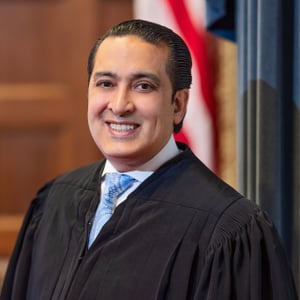
Judge, United States Court of Appeals, Sixth Circuit
John B. Nalbandian serves as a United States Circuit Judge from Kentucky on the U.S. Court of Appeals for the Sixth Circuit. He was nominated and confirmed to that position in 2018. Prior to that, Judge Nalbandian was a partner in the litigation practice group of Taft Stettinius & Hollister LLP in Cincinnati, where he served as the firm’s lead appellate lawyer and also practiced complex litigation in state and federal courts. Judge Nalbandian was board certified by the Ohio State Bar Association as a specialist in appellate law. Prior to joining Taft, Judge Nalbandian practiced for five years in the appellate section of Jones Day in Washington, DC. Upon graduation from law school, Judge Nalbandian clerked for the Honorable Jerry E. Smith of the U.S. Court of Appeals for the Fifth Circuit in Houston. While in private practice, he also served as a board member of the State Justice Institute, a nonprofit organization established by the federal government to improve the administration of justice in state courts. He served as President of the Cincinnati Lawyers Chapter of the Federalist Society. He has also been involved in his community as a board member of the Greater Cincinnati Minority Counsel Program, and as a board member of the Asian Pacific Bar Association of Southwest Ohio. Judge Nalbandian earned his B.S., magna cum laude, from the Wharton School at the University of Pennsylvania and his J.D. from the University of Virginia School of Law, where he was inducted into the Order of the Coif and served as managing editor of the Virginia Law Review.
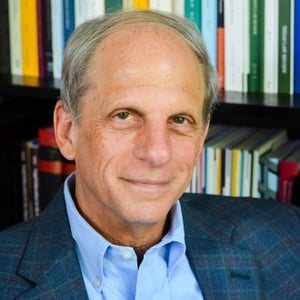
University Professor of Law and Political Science, Vanderbilt Law School
Edward Rubin is University Professor of Law and Political Science at Vanderbilt University. He specializes in administrative law, constitutional law and legal theory. He is the author of Soul, Self and Society: The New Morality and the Modern State (Oxford, 2015); Beyond Camelot: Rethinking Politics and Law for the Modern State (Princeton, 2005) and two books with Malcolm Feeley, Federalism: Political Identity and Tragic Compromise (Michigan, 2011) and Judicial Policy Making and the Modern State: How the Courts Reformed America's Prisons (Cambridge, 1998). In addition, he is the author of two casebooks, The Regulatory State (with Lisa Bressman and Kevin Stack) (3rd ed., 2019); The Payments System (with Robert Cooter) (West, 1990), three edited volumes (one forthcoming) and The Heatstroke Line (Sunbury, 2015) a science fiction novel about the fate of the United States if climate change is not brought under control. Professor Rubin joined Vanderbilt Law School as Dean and the first John Wade–Kent Syverud Professor of Law in July 2005, serving a four-year term that ended in June 2009. Previously, he taught at the University of Pennsylvania Law School from 1998 to 2005, and at the Berkeley School of Law from 1982 to 1998, where he served as an associate dean. Professor Rubin has been chair of the Association of American Law Schools' sections on Administrative Law and Socioeconomics and of its Committee on the Curriculum. He has served as a consultant to the People's Republic of China on administrative law and to the Russian Federation on payments law. He received his undergraduate degree from Princeton and his law degree from Yale.

Professor of Law and Associate Dean for Academic Administration and Strategic Initiatives, Chicago-Kent College of Law
Carolyn Shapiro is a Professor of Law and Associate Dean for Academic Administration and Strategic Initiatives at Chicago-Kent College of Law, where she is also the founder and co-director of Chicago-Kent's Institute on the Supreme Court of the United States (ISCOTUS), and the faculty director of the Constitutional Democracy Project, a civic education initiative. Professor Shapiro’s scholarship is largely focused on the Supreme Court, its relationship to other courts and institutions, and its role in our constitutional democracy, as well as on other structural constitutional matters. She teaches classes in constitutional law, legislation and statutory interpretation, and public interest law and policy, and she directs the Chicago-Kent Public Interest Certificate Program.
Professor Shapiro attended the University of Chicago Law School. After graduating, she served as a law clerk for Judge Richard A. Posner of the U.S. Court of Appeals for the Seventh Circuit and for Justice Stephen G. Breyer of the United States Supreme Court. Before joining the faculty at Chicago-Kent in 2003, she held a Skadden Fellowship at the Shriver National Center on Poverty Law and worked in private practice at a plaintiff’s side civil rights firm. From 2014 through mid-2016, she took a leave of absence from Chicago-Kent to serve as Illinois Solicitor General in the office of Illinois Attorney General Lisa Madigan. Professor Shapiro maintains a small appellate practice and is Of Counsel to Schnapper-Casteras PLLC.

Professor of Law, Antonin Scalia Law School, George Mason University
ILYA SOMIN is Professor of Law at George Mason University and the B. Kenneth Simon Chair in Constitutional Studies at the Cato Institute. His research focuses on constitutional law, property law, democratic theory, federalism, and migration rights. He is the author of Free to Move: Foot Voting, Migration, and Political Freedom (Oxford University Press, revised and expanded edition, 2022), Democracy and Political Ignorance: Why Smaller Government is Smarter (Stanford University Press, revised and expanded second edition, 2016), and The Grasping Hand: Kelo v. City of New London and the Limits of Eminent Domain (University of Chicago Press, 2015, rev. paperback ed., 2016), coauthor of A Conspiracy Against Obamacare: The Volokh Conspiracy and the Health Care Case (Palgrave Macmillan, 2013), and co-editor of Eminent Domain: A Comparative Perspective (Cambridge University Press, 2017). Democracy and Political Ignorance has been translated into Italian and Japanese.
Somin’s work has appeared in numerous scholarly journals, including the Yale Law Journal, Stanford Law Review, Northwestern University Law Review, Georgetown Law Journal, Critical Review, and others. Somin has also published articles in a variety of popular press outlets, including the New York Times, Washington Post, Wall Street Journal, Los Angeles Times, CNN, NBC, The Atlantic, USA Today, Boston Globe, US News and World Report, South China Morning Post, National Law Journal and Reason. He has been quoted or interviewed by the New York Times, Washington Post, Wall Street Journal, Time, Newsweek, The Economist, the Christian Science Monitor, the Financial Times, The Guardian, the Associated Press, CBS, MSNBC, NPR, BBC, Reuters, the Canadian Broadcasting Corporation, the Australian Broadcasting Corporation, Radio Free Europe/Radio Liberty, Al Jazeera, and the Voice of America, among other media.
Somin’s writings have been cited in decisions by the United States Supreme Court, multiple state supreme courts and lower federal courts, and the Supreme Court of Israel. He is co-counsel for the plaintiffs in VOS Selections, Inc. v. Trump, a case challenging the constitutionality of President Trump’s “Liberation Day” tariffs. Somin has testified on the use of drones for targeted killing in the War on Terror before the US Senate Judiciary Subcommittee on the Constitution, Civil Rights, and Human Rights. In 2009, he testified on property rights issues at the United States Senate Judiciary Committee confirmation hearings for Supreme Court Justice Sonia Sotomayor. Somin writes regularly for the popular Volokh Conspiracy law and politics blog, now affiliated with Reason magazine (previously affiliated with the Washington Post from 2014 to 2017). From 2006 to 2013, he served as Co-Editor of the Supreme Court Economic Review, one of the country’s top-rated law and economics journals.
Somin has served as a visiting professor at the University of Pennsylvania Law School. He has also been a visiting professor or scholar at the Georgetown University Law Center, the University of Hamburg, Germany, the University of Torcuato Di Tella in Buenos Aires, Argentina, Uriel Reichman University in Israel, and Zhengzhou University in China. He is a University Affiliate of the Schar School of Policy and Government at George Mason University, and an affiliated faculty member of the George Mason University Institute for Immigration Research. Before joining the faculty at George Mason, Somin was the John M. Olin Fellow in Law at Northwestern University Law School in 2002-2003. In 2001-2002, he clerked for the Hon. Judge Jerry E. Smith of the U.S. Court of Appeals for the Fifth Circuit. Professor Somin earned his B.A., Summa Cum Laude, at Amherst College, M.A. in Political Science from Harvard University, and J.D. from Yale Law School.

Senior Fellow and Director of Constitutional Studies, Manhattan Institute
Ilya Shapiro is a senior fellow and director of constitutional studies at the Manhattan Institute and a contributing editor of City Journal. Previously he was executive director and senior lecturer at the Georgetown Center for the Constitution, and before that a vice president of the Cato Institute.
Shapiro is the author of Lawless: The Miseducation of America’s Elites (2025) and Supreme Disorder: Judicial Nominations and the Politics of America’s Highest Court (2020), coauthor of Religious Liberties for Corporations? (2014), and editor of 11 volumes of the Cato Supreme Court Review (2008-18). He has contributed to a variety of academic, popular, and professional publications, including the Wall Street Journal, Harvard Journal of Law & Public Policy, Washington Post, Los Angeles Times, USA Today, National Review, and Newsweek. He also regularly provides commentary for various media outlets, writes the Shapiro’s Gavel newsletter on Substack, and once appeared on the Colbert Report.
Shapiro has testified many times before Congress and state legislatures and has filed more than 500 amicus curiae “friend of the court” briefs in the Supreme Court. He lectures regularly on behalf of the Federalist Society, is a member of the board of fellows of the Jewish Policy Center, was an inaugural Washington Fellow at the National Review Institute, and has been an adjunct law professor at the George Washington University and University of Mississippi. He is also the chairman of the board of advisers of the Mississippi Justice Institute, a barrister in the Edward Coke Appellate Inn of Court, and a former member of the Virginia Advisory Committee to the U.S. Commission on Civil Rights.
Earlier in his career, Shapiro was a special assistant/adviser to the Multi-National Force in Iraq on rule-of-law issues and practiced at Patton Boggs and Cleary Gottlieb. Before entering private practice, he clerked for Judge E. Grady Jolly of the U.S. Court of Appeals for the Fifth Circuit. He holds an AB from Princeton University, an MSc from the London School of Economics, and a JD from the University of Chicago Law School.
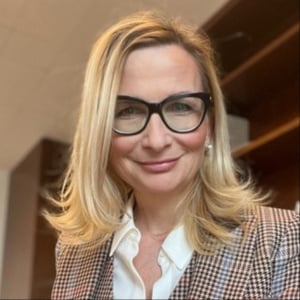
President, Corporate and External Affairs, Plaid
Jelena McWilliams is the former Managing Partner of the Washington, D.C. office of Cravath, Swaine, & Moore LLP and former Head of the Financial Institutions Group (FIG) Practice. She is a former Chairman of the Federal Deposit Insurance Corporation (FDIC). Ms. McWilliams focuses her practice on advising public and private companies, financial institutions, fintechs, and early-stage and venture companies on regulatory and corporate matters, as well as on mergers and acquisitions, IPO and other capital markets transactions.
While at the FDIC, Ms. McWilliams managed over 6,000 employees supervising approximately 5,000 banks, including through the COVID-19 pandemic. She participated in interagency negotiations, policy developments and joint agency rulemakings both as agency principal and as a voting member of the Financial Stability Oversight Council (FSOC). Ms. McWilliams chaired the Resolution Group at the Financial Stability Board (FSB); chaired and served on the Federal Financial Institutions Examination Council (FFIEC); and served on the Financial and Banking Information Infrastructure Committee (FBIIC). She testified before U.S. Congress on numerous occasions and engaged extensively with U.S. and international regulators, including the Basel Committee on Banking Supervision and the International Association of Deposit Insurers. She established the agency’s first office of innovation to implement technological advancements through supervisory channels and collaborative partnerships between banks and fintechs. Ms. McWilliams also spearheaded the agency’s effort to develop prudential banking policy on digital assets, including through a “crypto sprint” with the Office of the Currency Comptroller (OCC) and the Federal Reserve Board (FRB), and in collaboration with the President’s Working Group multiagency effort on stablecoins. She envisioned and created Mission Driven Bank Fund, a novel private/public partnership investment fund to support investments in low- and moderate-income communities served by the Minority Depository Institutions and Community Development Financial Institutions.
Ms. McWilliams is a frequent speaker on trends and topics in the financial services sector, including bank regulatory policy, governance trends, digital assets, fintechs and early-stage company regulatory policy. She is a member of the Economic Council of Washington, D.C., and serves on the Board of Trustees of the Southwestern Graduate School of Banking Foundation at Southern Methodist University.
Ms. McWilliams was born in Belgrade, Serbia. She received her B.A. with highest honors from the University of California, Berkeley in 1999 and her J.D. from the University of California, Berkeley, School of Law in 2002.
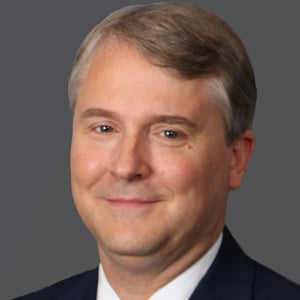
Partner, Mayer Brown
Andrew Olmem is a partner in Mayer Brown’s Washington DC office and a member of its Public Policy, Regulatory & Government Affairs, and Financial Services Regulatory & Enforcement practices. His practice focuses on complex financial services regulatory and public policy matters.
Andrew previously served as the Deputy Assistant to the President for Economic Policy and Deputy Director of the National Economic Council (NEC), where he oversaw the development and coordination of the administrations’ domestic economic policies, including for financial services, technology, telecom, energy, and infrastructure.
Earlier, he also served as the Republican Chief Counsel and Deputy Staff Director at the U.S. Senate Committee on Banking, Housing and Urban Affairs. Andrew began his legal career practicing corporate and securities law at Mayer Brown in New York City. Prior to attending law school, he served as an Assistant Economist at the Federal Reserve Bank of Richmond.

Head of U.S. Policy, Hyundai Urban Air Mobility
Diana is the Head of U.S. Policy for Hyundai Urban Air Mobility. She is responsible for working with legislators, regulators, local communities and industry to foster a forward-leaning regulatory and policy framework for UAM and to drive public acceptance. Diana is also co-leading the development of Hyundai UAM’s brand, and participating in the cabin design working group.
Diana previously served as SVP of Policy & Strategy at PrecisionHawk, and as Head of the UAS & Robotics Practice Group at the law firm of LaBarge Weinstein.
Diana is a member of the World Economic Forum UAM Working Group, and Special Advisor to the Chairman of the FAA Drone Advisory Committee.
Diana has held leadership roles across many industry associations including as President of the Small UAV Coalition and President of the Drone Operators Federation. She has participated in government advisory boards and rule-making committees focused on drones, and served as Legal Expert for the United Nations Working Group on Geospatial Information Management.
Diana has testified before the US Congress on aviation policy and regulations on numerous occasions, and frequently speaks at industry conferences.
Diana holds a BA in Politics & Governance, a MA in Globalization Studies and a JD in Law & Technology.

Legal Fellow, Center for Constitutional Studies, Cato Institute
Brent Skorup is a legal fellow in the Cato Institute’s Robert A. Levy Center for Constitutional Studies.
Before joining Cato, he was a senior research fellow at the Mercatus Center at the George Mason University. His research areas include free speech, technology law, Fourth Amendment protections, regulation, and property law. Skorup has published pieces in economics and law journals and in popular media, including The Wall Street Journal, The New York Times, Bloomberg Law, Reuters, and Wired. He’s appeared as a TV and radio interview guest for news outlets like C‑SPAN, NPR, CBS News, ABC News, and CNBC Asia.
The Pennsylvania Supreme Court, a dissenting opinion at the Illinois Supreme Court, and the ALI's Restatement of the Law of Property have cited his legal research and he has testified as a technology and legal expert in legislative hearings in several states. Skorup has been appointed to several federal and state advisory bodies and he is currently a member of the Texas Advanced Air Mobility Advisory Committee.
Skorup has a BA in economics from Wheaton College and a law degree from the George Mason University School of Law, where he was articles editor for the Civil Rights Law Journal. He was a legal clerk at the FCC’s wireless bureau and Office of General Counsel and at the Energy and Commerce Committee in the U.S. House of Representatives.

Senior Fellow, R Street Institute
Prior to R Street, Adam spent 12 years as a senior fellow at the Mercatus Center at George Mason University. Before the Mercatus Center, he served as the president of the Progress and Freedom Foundation. Adam has also worked for the Adam Smith Institute, the Heritage Foundation and the Cato Institute.
Adam has published 10 books on a wide range of topics, including online child safety, internet governance, intellectual property, telecommunications policy, media regulation and federalism.
In 2008, Adam received the Family Online Safety Institute’s “Award for Outstanding Achievement.”
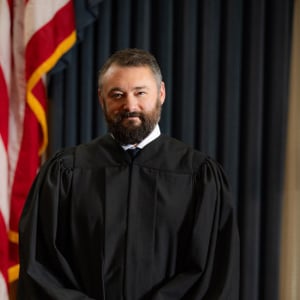
Judge, United States Court of Appeals for the Sixth Circuit
Ben Flowers is a judge on the United States Court of Appeals for the Sixth Circuit. President Donald J. Trump appointed Judge Flowers to the bench in 2026. At the time of his nomination, Flowers worked as a partner at Ashbrook Byrne Kresge Flowers, in Ohio. Before that, Judge Flowers served as Ohio’s Tenth Solicitor General. In that role he regularly represented the State of Ohio before the Supreme Court of the United States, the United States Court of Appeals for the Sixth Circuit, and the Supreme Court of Ohio.
Judge Flowers is a graduate of The Ohio State University and the University of Chicago Law School. He served as a law clerk for Sandra Ikuta of the U.S. Court of Appeals for the Ninth Circuit and for Justice Antonin Scalia of the Supreme Court of this United States.

Executive Vice President, The Federalist Society
Dean Reuter is Executive Vice President at the Federalist Society for Law and Public Policy Studies. He has served in two federal government agency Offices of the Inspector General, as Counsel to the Inspector General and Deputy Inspector General, responsible for policing the use of federal funds granted and contracted through those agencies. As such, he helped conduct and oversee criminal investigations across the country. He is the principal author of the non-fiction book, The Hidden Nazi: The Untold Story of America's Deal with the Devil, and editor of Liberty’s Nemesis: The Unchecked Expansion of the State and Confronting Terror: 9/11 and the Future of American National Security. He was appointed by the President and served as Vice-Chairman of the Board of Directors of the Corporation for National and Community Service, and recently served as an appointee on the U.S. Commission on Presidential Scholars. He is a graduate of Hood College (BA with Honors) and the University of Maryland School of Law.
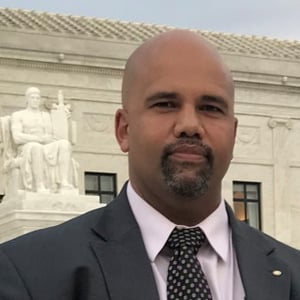
Professor of History, East Stroudsburg University
Dr. Brooks is currently professor of history at East Stroudsburg University, where he teaches several courses, including African Americans and the Courts and US Constitutional History and Law and other courses in legal history. Further to his work at ESU, he is also a founding member and vice president of the Harrisburg lawyers' chapter of the Federalist Society.
Professor Brooks received his BA and MA in US History from East Stroudsburg University of Pennsylvania. He then received a Rotary Ambassadorial Scholarship to Edinburgh University (Scotland), where he studied British influences on the US judiciary. He completed his doctoral work at Kassel University (Germany). There he worked on the international “Modern Constitutionalism” project, editing and translating constitutions from German to English and English to German. His doctoral work there focused in particular on eleventh amendment sovereignty issues and law during the US founding era.
While in Germany, Prof. Brooks was an active member of the Center for North American Research, where he focused on constitutional and legal history, especially as it pertained to jurisprudential matters. He ran a solo business where he trained attorneys in several mid- to large-sized German and international law firms in legal English and communication. Prof. Brooks also did legal translation for many firms and for Germany’s Federal Constitutional Court, that nation’s highest court. Two books resulting from his work there include German Employment Law: 618 Questions Frequently Asked by Foreigners (2014) and Expats in Germany - Inbound and Outbound: Questions Frequently Asked by Foreigners (2017).
Current areas of research include state appellate judicial selection reform, early black attorneys, and comparative employment law.
Dr. Brooks has also written extensively Real Clear Politics, Real Clear Pennsylvania, and Allentown’s The Morning Call. His work has also appeared in New York Daily News, Los Angeles Times, Chicago Tribune, and The Hill.

Professor of Law and Harry T. Ice Faculty Fellow, Indiana University Maurer School of Law
Professor Fuentes-Rohwer is the Harry T. Ice Faculty Fellow at the Indiana University Maurer School of Law, where he teaches and writes in the areas of civil rights and legal history, with a particular emphasis on constitutional law and the Reconstruction Era. His scholarship focuses on the intersection of race and democratic theory, as reflected in the law of democracy in general and the Voting Rights Act in particular. He is interested in the way that institutions—and especially courts—are asked to craft and implement the ground rules of American politics. He received a J.D. and a Ph.D from the University of Michigan and an LL.M. from Georgetown. He joined the faculty in 2002.
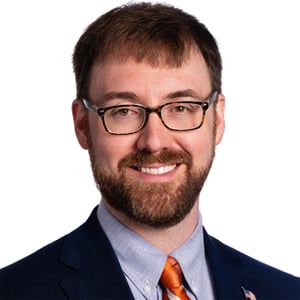
Senior Legal Fellow, Courts and the Constitution, Legal Policy Center, The Heritage Foundation
Zack is a Senior Legal Fellow of Courts and the Constitution at The Heritage Foundation.
He previously served for several years as an Assistant United States Attorney in the Northern District of Florida. Prior to that, he spent two years as an associate in the Washington, D.C. office of Cleary Gottlieb Steen & Hamilton, which he joined after clerking for the Hon. Emmett R. Cox on the United States Court of Appeals for the Eleventh Circuit.
Smith received his undergraduate, master’s, and law degrees from the University of Florida. During law school, Smith served as the Editor in Chief of the Florida Law Review and served on the executive boards of several student organizations, including the UF Chapter of the Federalist Society.
Chairman and Founder, Institute for Free Speech; Josiah H. Blackmore II/Shirley M. Nault Designated Professor of Law, Capital University Law School

H.R. 1, the For the People Act, Explained
Bradley A. Smith
The For the People Act was introduced in the House of Representatives in 2019 as H.R. 1,...
H.R. 1, the For the People Act, Explained
TeleforumClimate Change, Environmental Justice, and the Environmental Agenda
Nadira Clarke, Tony Francois, Joan Larsen, Matthew Z. Leopold, Hana Veselka Vizcarra
The Biden Administration has made it clear that its environmental agenda will be a top...
Departmentalism: What is the Executive Role in Interpreting laws?
Jonathan H. Adler, Chad A. Readler, Edward Whelan, John C. Yoo, Dave Yost, Robert Alt, Pat DeWine
On May 7, 2021, the Federalist Society's Ohio lawyers chapters hosted the 2021 Ohio Chapters...
State Sovereignty or Fair-Weather Federalism?
John B. Nalbandian, Edward L. Rubin, Carolyn Shapiro, Ilya Somin, Ilya Shapiro
The last few administrations have seen an increasing willingness by states to challenge the executive...
Topics
Remembering a Time When Broadband Policy Was Bipartisan
Last week, the House Energy and Commerce Committee held a hearing entitled Broadband Equity: Addressing...
Keynote Speaker: Jelena McWilliams
Jelena McWilliams, Andrew Olmem
Jelena McWilliams was sworn in as the 21st Chairman of the FDIC on June 5,...
Deep Dive Episode 174 – Legal Issues for Commercial Drones: Privacy, Property Rights, and Federalism
Diana Marina Cooper, Brent Skorup, Adam Thierer
Commercial drone technology advanced rapidly in the past decade, and companies like Walmart, Amazon, Verizon,...
Litigation Update: Ohio v. Yellen
Benjamin M. Flowers, Dean Reuter
In mid-March 2021, the state of Ohio's attorney general filed suit against Janet Yellen and...
DC Statehood: Constitutional or Not?
Christopher Brooks, Luis Fuentes-Rohwer, Zack Smith
On April 5, 2021, the Harrisburg Lawyers Chapter hosted a debate on the constitutionality of...