
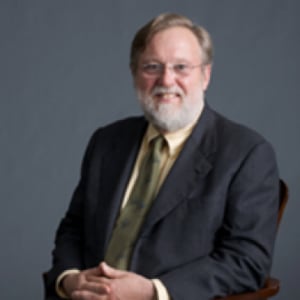
John Hampton Baumgartner, Jr. Professor of Real Property Law; Faculty Director, Georgetown Environmental Law and Policy Program; Faculty Director, Georgetown Climate Resource Center, Georgetown Law Center
Professor Byrne joined the Law Center faculty in 1985. After graduation from the University of Virginia law school, he served as a law clerk to Judge Frank Coffin and U.S. Supreme Court Justice Lewis Powell and then worked as an associate with the D.C. firm of Covington & Burling. He teaches and writes in the areas of Property, Land Use, Constitutional Law, and Higher Education Law and Policy. He served as Associate Dean for the JD Program from 1997 to 2000. He was John Carroll Research Professor in 1996-97.
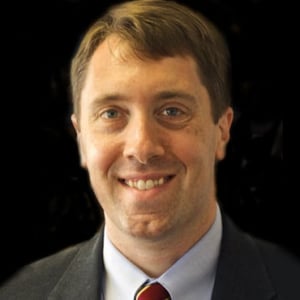
Professor of Law, Antonin Scalia Law School, George Mason University
Eric R. Claeys is Professor of Law at the Antonin Scalia Law School, George Mason University. He has written widely in the fields of property, private law, and constitutional law. Professor Claeys’s current research interests focus on flourishing- and labor-based natural rights justifications for property—in American property theory, in intellectual property, and in contemporary regulation of shale gas exploration and hydraulic fracturing. He is a member of the American Law Institute, he serves on the ALI’s Members’ Consultative Group for the first Restatement of Copyright, and he also serves as an adviser to the Restatement (Fourth) of the Law of Property.
Professor Claeys received his JD from the University of Southern California Gould School of Law. He received his AB from Princeton University, and he is a former visiting fellow and current member of Princeton’s Politics Department’s James Madison Program in American Ideals and Institutions. After law school, Professor Claeys clerked for the Hon. Melvin Brunetti, U.S. Court of Appeals for the Ninth Circuit, and the Hon. William H. Rehnquist, Chief Justice of the United States.
Professor Claeys’s main teaching interests include Property, Torts, Jurisprudence, and Intellectual Property. In recent years, he has also taught Water Law, Remedies, Estates and Trusts, Trade Secrecy, Constitutional Law, Torts, and Oil and Gas law. Spring 2018, he is teaching Torts and Jurisprudence as a Visiting Professor at Harvard Law School.
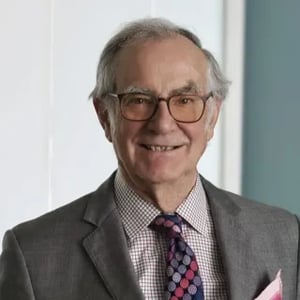
Of Counsel, McElroy, Deutsch, Mulvaney & Carpenter, LLP
WESLEY W. HORTON is Of Counsel in the Firm’s Hartford, Connecticut office. Mr. Horton’s appellate practice covers a wide variety of legal issues, from constitutional matters, to domestic relations, insurance, personal injury, and land use. He began his law career as the law clerk to Justice Charles House of the Connecticut Supreme Court (1970 to 1971). Building on that experience, he has participated in some of the most notable cases in Connecticut, representing individuals and corporations. The list of cases on which he appears as counsel, either at argument or on the brief, spans 50 years and numbers in the hundreds. He has argued more than 135 cases to the Connecticut Supreme Court and is well-known for representing the City of New London in Kelo v. New London before the U.S. Supreme Court in 2005.
Mr. Horton consults with counsel at the trial level to assist with complicated legal matters or in preparation for possible appellate issues. Such cases include representation of insurers and plaintiffs, contract questions, coverage issues and divorce litigation involving multi-million dollar estates.
He has been a Fellow of the American Academy of Appellate Lawyers since 1991. Membership in the Academy is by invitation only. Mr. Horton served as President of the American Counsel Association (2008-2009), of which he has been a member since 1991. He has been President of the Connecticut Supreme Court Historical Society since its founding in 2005.
Mr. Horton represents lawyers on ethical matters. He also testifies as an expert witness in Connecticut trial courts on ethical and malpractice matters as well as with regard to attorney’s fees. He served as the Chair of the Connecticut Bar Association’s Professional Ethics Committee (1997 through 2007), and has been a member of the Committee since 1976.
Mr. Horton is a graduate of Harvard College and the University of Connecticut School of Law, and the author or co-author of several scholarly publications and articles on legal topics. He is the recipient of many professional awards, including the University of Connecticut Law School Alumni Association’s Medal of Excellence; and currently serves on the Board of Editors for the Connecticut Law Tribune, and as a Lecturer and Adjunct Professor at the University of Connecticut School of Law . He has been co-author since 1978 of the annually published Connecticut Appellate Rules Annotated and the Connecticut Superior Court Rules Annotated, both published by Thomson/West. He also co-authored the “Connecticut Appellate Review,” an annual review of Connecticut Supreme and appellate Court cases, from1980 to 2022. Mr. Horton authored the History of the Connecticut Supreme Court, published by West Publishing. He also wrote The Connecticut State Constitution, an in-depth study of each provision of the Connecticut Constitution. Mr. Horton taught Appellate advocacy at the University of Connecticut School of Law most years from 1980 to 2023 and frequently lectures on constitutional and appellate issues.
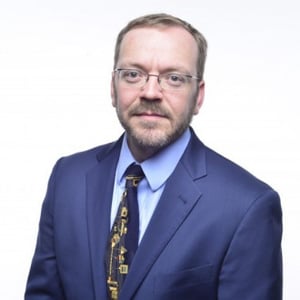
Vice President for Legal Affairs, Goldwater Institute

Professor of Law, Antonin Scalia Law School, George Mason University
ILYA SOMIN is Professor of Law at George Mason University and the B. Kenneth Simon Chair in Constitutional Studies at the Cato Institute. His research focuses on constitutional law, property law, democratic theory, federalism, and migration rights. He is the author of Free to Move: Foot Voting, Migration, and Political Freedom (Oxford University Press, revised and expanded edition, 2022), Democracy and Political Ignorance: Why Smaller Government is Smarter (Stanford University Press, revised and expanded second edition, 2016), and The Grasping Hand: Kelo v. City of New London and the Limits of Eminent Domain (University of Chicago Press, 2015, rev. paperback ed., 2016), coauthor of A Conspiracy Against Obamacare: The Volokh Conspiracy and the Health Care Case (Palgrave Macmillan, 2013), and co-editor of Eminent Domain: A Comparative Perspective (Cambridge University Press, 2017). Democracy and Political Ignorance has been translated into Italian and Japanese.
Somin’s work has appeared in numerous scholarly journals, including the Yale Law Journal, Stanford Law Review, Northwestern University Law Review, Georgetown Law Journal, Critical Review, and others. Somin has also published articles in a variety of popular press outlets, including the New York Times, Washington Post, Wall Street Journal, Los Angeles Times, CNN, NBC, The Atlantic, USA Today, Boston Globe, US News and World Report, South China Morning Post, National Law Journal and Reason. He has been quoted or interviewed by the New York Times, Washington Post, Wall Street Journal, Time, Newsweek, The Economist, the Christian Science Monitor, the Financial Times, The Guardian, the Associated Press, CBS, MSNBC, NPR, BBC, Reuters, the Canadian Broadcasting Corporation, the Australian Broadcasting Corporation, Radio Free Europe/Radio Liberty, Al Jazeera, and the Voice of America, among other media.
Somin’s writings have been cited in decisions by the United States Supreme Court, multiple state supreme courts and lower federal courts, and the Supreme Court of Israel. He is co-counsel for the plaintiffs in VOS Selections, Inc. v. Trump, a case challenging the constitutionality of President Trump’s “Liberation Day” tariffs. Somin has testified on the use of drones for targeted killing in the War on Terror before the US Senate Judiciary Subcommittee on the Constitution, Civil Rights, and Human Rights. In 2009, he testified on property rights issues at the United States Senate Judiciary Committee confirmation hearings for Supreme Court Justice Sonia Sotomayor. Somin writes regularly for the popular Volokh Conspiracy law and politics blog, now affiliated with Reason magazine (previously affiliated with the Washington Post from 2014 to 2017). From 2006 to 2013, he served as Co-Editor of the Supreme Court Economic Review, one of the country’s top-rated law and economics journals.
Somin has served as a visiting professor at the University of Pennsylvania Law School. He has also been a visiting professor or scholar at the Georgetown University Law Center, the University of Hamburg, Germany, the University of Torcuato Di Tella in Buenos Aires, Argentina, Uriel Reichman University in Israel, and Zhengzhou University in China. He is a University Affiliate of the Schar School of Policy and Government at George Mason University, and an affiliated faculty member of the George Mason University Institute for Immigration Research. Before joining the faculty at George Mason, Somin was the John M. Olin Fellow in Law at Northwestern University Law School in 2002-2003. In 2001-2002, he clerked for the Hon. Judge Jerry E. Smith of the U.S. Court of Appeals for the Fifth Circuit. Professor Somin earned his B.A., Summa Cum Laude, at Amherst College, M.A. in Political Science from Harvard University, and J.D. from Yale Law School.
John Hampton Baumgartner, Jr. Professor of Real Property Law; Faculty Director, Georgetown Environmental Law and Policy Program; Faculty Director, Georgetown Climate Resource Center, Georgetown Law Center
Professor Byrne joined the Law Center faculty in 1985. After graduation from the University of Virginia law school, he served as a law clerk to Judge Frank Coffin and U.S. Supreme Court Justice Lewis Powell and then worked as an associate with the D.C. firm of Covington & Burling. He teaches and writes in the areas of Property, Land Use, Constitutional Law, and Higher Education Law and Policy. He served as Associate Dean for the JD Program from 1997 to 2000. He was John Carroll Research Professor in 1996-97.
Professor of Law, Antonin Scalia Law School, George Mason University
Eric R. Claeys is Professor of Law at the Antonin Scalia Law School, George Mason University. He has written widely in the fields of property, private law, and constitutional law. Professor Claeys’s current research interests focus on flourishing- and labor-based natural rights justifications for property—in American property theory, in intellectual property, and in contemporary regulation of shale gas exploration and hydraulic fracturing. He is a member of the American Law Institute, he serves on the ALI’s Members’ Consultative Group for the first Restatement of Copyright, and he also serves as an adviser to the Restatement (Fourth) of the Law of Property.
Professor Claeys received his JD from the University of Southern California Gould School of Law. He received his AB from Princeton University, and he is a former visiting fellow and current member of Princeton’s Politics Department’s James Madison Program in American Ideals and Institutions. After law school, Professor Claeys clerked for the Hon. Melvin Brunetti, U.S. Court of Appeals for the Ninth Circuit, and the Hon. William H. Rehnquist, Chief Justice of the United States.
Professor Claeys’s main teaching interests include Property, Torts, Jurisprudence, and Intellectual Property. In recent years, he has also taught Water Law, Remedies, Estates and Trusts, Trade Secrecy, Constitutional Law, Torts, and Oil and Gas law. Spring 2018, he is teaching Torts and Jurisprudence as a Visiting Professor at Harvard Law School.
Of Counsel, McElroy, Deutsch, Mulvaney & Carpenter, LLP
WESLEY W. HORTON is Of Counsel in the Firm’s Hartford, Connecticut office. Mr. Horton’s appellate practice covers a wide variety of legal issues, from constitutional matters, to domestic relations, insurance, personal injury, and land use. He began his law career as the law clerk to Justice Charles House of the Connecticut Supreme Court (1970 to 1971). Building on that experience, he has participated in some of the most notable cases in Connecticut, representing individuals and corporations. The list of cases on which he appears as counsel, either at argument or on the brief, spans 50 years and numbers in the hundreds. He has argued more than 135 cases to the Connecticut Supreme Court and is well-known for representing the City of New London in Kelo v. New London before the U.S. Supreme Court in 2005.
Mr. Horton consults with counsel at the trial level to assist with complicated legal matters or in preparation for possible appellate issues. Such cases include representation of insurers and plaintiffs, contract questions, coverage issues and divorce litigation involving multi-million dollar estates.
He has been a Fellow of the American Academy of Appellate Lawyers since 1991. Membership in the Academy is by invitation only. Mr. Horton served as President of the American Counsel Association (2008-2009), of which he has been a member since 1991. He has been President of the Connecticut Supreme Court Historical Society since its founding in 2005.
Mr. Horton represents lawyers on ethical matters. He also testifies as an expert witness in Connecticut trial courts on ethical and malpractice matters as well as with regard to attorney’s fees. He served as the Chair of the Connecticut Bar Association’s Professional Ethics Committee (1997 through 2007), and has been a member of the Committee since 1976.
Mr. Horton is a graduate of Harvard College and the University of Connecticut School of Law, and the author or co-author of several scholarly publications and articles on legal topics. He is the recipient of many professional awards, including the University of Connecticut Law School Alumni Association’s Medal of Excellence; and currently serves on the Board of Editors for the Connecticut Law Tribune, and as a Lecturer and Adjunct Professor at the University of Connecticut School of Law . He has been co-author since 1978 of the annually published Connecticut Appellate Rules Annotated and the Connecticut Superior Court Rules Annotated, both published by Thomson/West. He also co-authored the “Connecticut Appellate Review,” an annual review of Connecticut Supreme and appellate Court cases, from1980 to 2022. Mr. Horton authored the History of the Connecticut Supreme Court, published by West Publishing. He also wrote The Connecticut State Constitution, an in-depth study of each provision of the Connecticut Constitution. Mr. Horton taught Appellate advocacy at the University of Connecticut School of Law most years from 1980 to 2023 and frequently lectures on constitutional and appellate issues.
Vice President for Legal Affairs, Goldwater Institute
Professor of Law, Antonin Scalia Law School, George Mason University
ILYA SOMIN is Professor of Law at George Mason University and the B. Kenneth Simon Chair in Constitutional Studies at the Cato Institute. His research focuses on constitutional law, property law, democratic theory, federalism, and migration rights. He is the author of Free to Move: Foot Voting, Migration, and Political Freedom (Oxford University Press, revised and expanded edition, 2022), Democracy and Political Ignorance: Why Smaller Government is Smarter (Stanford University Press, revised and expanded second edition, 2016), and The Grasping Hand: Kelo v. City of New London and the Limits of Eminent Domain (University of Chicago Press, 2015, rev. paperback ed., 2016), coauthor of A Conspiracy Against Obamacare: The Volokh Conspiracy and the Health Care Case (Palgrave Macmillan, 2013), and co-editor of Eminent Domain: A Comparative Perspective (Cambridge University Press, 2017). Democracy and Political Ignorance has been translated into Italian and Japanese.
Somin’s work has appeared in numerous scholarly journals, including the Yale Law Journal, Stanford Law Review, Northwestern University Law Review, Georgetown Law Journal, Critical Review, and others. Somin has also published articles in a variety of popular press outlets, including the New York Times, Washington Post, Wall Street Journal, Los Angeles Times, CNN, NBC, The Atlantic, USA Today, Boston Globe, US News and World Report, South China Morning Post, National Law Journal and Reason. He has been quoted or interviewed by the New York Times, Washington Post, Wall Street Journal, Time, Newsweek, The Economist, the Christian Science Monitor, the Financial Times, The Guardian, the Associated Press, CBS, MSNBC, NPR, BBC, Reuters, the Canadian Broadcasting Corporation, the Australian Broadcasting Corporation, Radio Free Europe/Radio Liberty, Al Jazeera, and the Voice of America, among other media.
Somin’s writings have been cited in decisions by the United States Supreme Court, multiple state supreme courts and lower federal courts, and the Supreme Court of Israel. He is co-counsel for the plaintiffs in VOS Selections, Inc. v. Trump, a case challenging the constitutionality of President Trump’s “Liberation Day” tariffs. Somin has testified on the use of drones for targeted killing in the War on Terror before the US Senate Judiciary Subcommittee on the Constitution, Civil Rights, and Human Rights. In 2009, he testified on property rights issues at the United States Senate Judiciary Committee confirmation hearings for Supreme Court Justice Sonia Sotomayor. Somin writes regularly for the popular Volokh Conspiracy law and politics blog, now affiliated with Reason magazine (previously affiliated with the Washington Post from 2014 to 2017). From 2006 to 2013, he served as Co-Editor of the Supreme Court Economic Review, one of the country’s top-rated law and economics journals.
Somin has served as a visiting professor at the University of Pennsylvania Law School. He has also been a visiting professor or scholar at the Georgetown University Law Center, the University of Hamburg, Germany, the University of Torcuato Di Tella in Buenos Aires, Argentina, Uriel Reichman University in Israel, and Zhengzhou University in China. He is a University Affiliate of the Schar School of Policy and Government at George Mason University, and an affiliated faculty member of the George Mason University Institute for Immigration Research. Before joining the faculty at George Mason, Somin was the John M. Olin Fellow in Law at Northwestern University Law School in 2002-2003. In 2001-2002, he clerked for the Hon. Judge Jerry E. Smith of the U.S. Court of Appeals for the Fifth Circuit. Professor Somin earned his B.A., Summa Cum Laude, at Amherst College, M.A. in Political Science from Harvard University, and J.D. from Yale Law School.
John Hampton Baumgartner, Jr. Professor of Real Property Law; Faculty Director, Georgetown Environmental Law and Policy Program; Faculty Director, Georgetown Climate Resource Center, Georgetown Law Center
Professor Byrne joined the Law Center faculty in 1985. After graduation from the University of Virginia law school, he served as a law clerk to Judge Frank Coffin and U.S. Supreme Court Justice Lewis Powell and then worked as an associate with the D.C. firm of Covington & Burling. He teaches and writes in the areas of Property, Land Use, Constitutional Law, and Higher Education Law and Policy. He served as Associate Dean for the JD Program from 1997 to 2000. He was John Carroll Research Professor in 1996-97.
Professor of Law, Antonin Scalia Law School, George Mason University
Eric R. Claeys is Professor of Law at the Antonin Scalia Law School, George Mason University. He has written widely in the fields of property, private law, and constitutional law. Professor Claeys’s current research interests focus on flourishing- and labor-based natural rights justifications for property—in American property theory, in intellectual property, and in contemporary regulation of shale gas exploration and hydraulic fracturing. He is a member of the American Law Institute, he serves on the ALI’s Members’ Consultative Group for the first Restatement of Copyright, and he also serves as an adviser to the Restatement (Fourth) of the Law of Property.
Professor Claeys received his JD from the University of Southern California Gould School of Law. He received his AB from Princeton University, and he is a former visiting fellow and current member of Princeton’s Politics Department’s James Madison Program in American Ideals and Institutions. After law school, Professor Claeys clerked for the Hon. Melvin Brunetti, U.S. Court of Appeals for the Ninth Circuit, and the Hon. William H. Rehnquist, Chief Justice of the United States.
Professor Claeys’s main teaching interests include Property, Torts, Jurisprudence, and Intellectual Property. In recent years, he has also taught Water Law, Remedies, Estates and Trusts, Trade Secrecy, Constitutional Law, Torts, and Oil and Gas law. Spring 2018, he is teaching Torts and Jurisprudence as a Visiting Professor at Harvard Law School.
Of Counsel, McElroy, Deutsch, Mulvaney & Carpenter, LLP
WESLEY W. HORTON is Of Counsel in the Firm’s Hartford, Connecticut office. Mr. Horton’s appellate practice covers a wide variety of legal issues, from constitutional matters, to domestic relations, insurance, personal injury, and land use. He began his law career as the law clerk to Justice Charles House of the Connecticut Supreme Court (1970 to 1971). Building on that experience, he has participated in some of the most notable cases in Connecticut, representing individuals and corporations. The list of cases on which he appears as counsel, either at argument or on the brief, spans 50 years and numbers in the hundreds. He has argued more than 135 cases to the Connecticut Supreme Court and is well-known for representing the City of New London in Kelo v. New London before the U.S. Supreme Court in 2005.
Mr. Horton consults with counsel at the trial level to assist with complicated legal matters or in preparation for possible appellate issues. Such cases include representation of insurers and plaintiffs, contract questions, coverage issues and divorce litigation involving multi-million dollar estates.
He has been a Fellow of the American Academy of Appellate Lawyers since 1991. Membership in the Academy is by invitation only. Mr. Horton served as President of the American Counsel Association (2008-2009), of which he has been a member since 1991. He has been President of the Connecticut Supreme Court Historical Society since its founding in 2005.
Mr. Horton represents lawyers on ethical matters. He also testifies as an expert witness in Connecticut trial courts on ethical and malpractice matters as well as with regard to attorney’s fees. He served as the Chair of the Connecticut Bar Association’s Professional Ethics Committee (1997 through 2007), and has been a member of the Committee since 1976.
Mr. Horton is a graduate of Harvard College and the University of Connecticut School of Law, and the author or co-author of several scholarly publications and articles on legal topics. He is the recipient of many professional awards, including the University of Connecticut Law School Alumni Association’s Medal of Excellence; and currently serves on the Board of Editors for the Connecticut Law Tribune, and as a Lecturer and Adjunct Professor at the University of Connecticut School of Law . He has been co-author since 1978 of the annually published Connecticut Appellate Rules Annotated and the Connecticut Superior Court Rules Annotated, both published by Thomson/West. He also co-authored the “Connecticut Appellate Review,” an annual review of Connecticut Supreme and appellate Court cases, from1980 to 2022. Mr. Horton authored the History of the Connecticut Supreme Court, published by West Publishing. He also wrote The Connecticut State Constitution, an in-depth study of each provision of the Connecticut Constitution. Mr. Horton taught Appellate advocacy at the University of Connecticut School of Law most years from 1980 to 2023 and frequently lectures on constitutional and appellate issues.
Vice President for Legal Affairs, Goldwater Institute
Professor of Law, Antonin Scalia Law School, George Mason University
ILYA SOMIN is Professor of Law at George Mason University and the B. Kenneth Simon Chair in Constitutional Studies at the Cato Institute. His research focuses on constitutional law, property law, democratic theory, federalism, and migration rights. He is the author of Free to Move: Foot Voting, Migration, and Political Freedom (Oxford University Press, revised and expanded edition, 2022), Democracy and Political Ignorance: Why Smaller Government is Smarter (Stanford University Press, revised and expanded second edition, 2016), and The Grasping Hand: Kelo v. City of New London and the Limits of Eminent Domain (University of Chicago Press, 2015, rev. paperback ed., 2016), coauthor of A Conspiracy Against Obamacare: The Volokh Conspiracy and the Health Care Case (Palgrave Macmillan, 2013), and co-editor of Eminent Domain: A Comparative Perspective (Cambridge University Press, 2017). Democracy and Political Ignorance has been translated into Italian and Japanese.
Somin’s work has appeared in numerous scholarly journals, including the Yale Law Journal, Stanford Law Review, Northwestern University Law Review, Georgetown Law Journal, Critical Review, and others. Somin has also published articles in a variety of popular press outlets, including the New York Times, Washington Post, Wall Street Journal, Los Angeles Times, CNN, NBC, The Atlantic, USA Today, Boston Globe, US News and World Report, South China Morning Post, National Law Journal and Reason. He has been quoted or interviewed by the New York Times, Washington Post, Wall Street Journal, Time, Newsweek, The Economist, the Christian Science Monitor, the Financial Times, The Guardian, the Associated Press, CBS, MSNBC, NPR, BBC, Reuters, the Canadian Broadcasting Corporation, the Australian Broadcasting Corporation, Radio Free Europe/Radio Liberty, Al Jazeera, and the Voice of America, among other media.
Somin’s writings have been cited in decisions by the United States Supreme Court, multiple state supreme courts and lower federal courts, and the Supreme Court of Israel. He is co-counsel for the plaintiffs in VOS Selections, Inc. v. Trump, a case challenging the constitutionality of President Trump’s “Liberation Day” tariffs. Somin has testified on the use of drones for targeted killing in the War on Terror before the US Senate Judiciary Subcommittee on the Constitution, Civil Rights, and Human Rights. In 2009, he testified on property rights issues at the United States Senate Judiciary Committee confirmation hearings for Supreme Court Justice Sonia Sotomayor. Somin writes regularly for the popular Volokh Conspiracy law and politics blog, now affiliated with Reason magazine (previously affiliated with the Washington Post from 2014 to 2017). From 2006 to 2013, he served as Co-Editor of the Supreme Court Economic Review, one of the country’s top-rated law and economics journals.
Somin has served as a visiting professor at the University of Pennsylvania Law School. He has also been a visiting professor or scholar at the Georgetown University Law Center, the University of Hamburg, Germany, the University of Torcuato Di Tella in Buenos Aires, Argentina, Uriel Reichman University in Israel, and Zhengzhou University in China. He is a University Affiliate of the Schar School of Policy and Government at George Mason University, and an affiliated faculty member of the George Mason University Institute for Immigration Research. Before joining the faculty at George Mason, Somin was the John M. Olin Fellow in Law at Northwestern University Law School in 2002-2003. In 2001-2002, he clerked for the Hon. Judge Jerry E. Smith of the U.S. Court of Appeals for the Fifth Circuit. Professor Somin earned his B.A., Summa Cum Laude, at Amherst College, M.A. in Political Science from Harvard University, and J.D. from Yale Law School.

20 Years Later: Kelo v. City of New London
J. Peter Byrne, Eric R. Claeys, Wesley W. Horton, Timothy Sandefur, Ilya Somin
In June of 2005, the U.S. Supreme Court held in Kelo v. City of New...
20 Years Later: Kelo v. City of New London
J. Peter Byrne, Eric R. Claeys, Wesley W. Horton, Timothy Sandefur, Ilya Somin
In June of 2005, the U.S. Supreme Court held in Kelo v. City of New...
20 Years Later: Kelo v. City of New London