

Milton R. Underwood Chair in Free Enterprise, Vanderbilt University Law School
Brian Fitzpatrick is the Milton R. Underwood Chair in Free Enterprise and Professor of Law at Vanderbilt Law School, where his research focuses on class action litigation, federal courts, judicial selection, and constitutional law. He is best known for his empirical studies of class action settlements as well as his book The Conservative Case for Class Actions (University of Chicago Press, 2019). Professor Fitzpatrick joined Vanderbilt's law faculty in 2007 after serving as the John M. Olin Fellow at New York University School of Law. He graduated first in his class from Harvard Law School and went on to clerk for Judge Diarmuid O'Scannlain on the U.S. Court of Appeals for the Ninth Circuit and Justice Antonin Scalia on the U.S. Supreme Court. After his clerkships, Professor Fitzpatrick practiced commercial and appellate litigation for several years at Sidley Austin in Washington, D.C., and served as Special Counsel for Supreme Court Nominations to U.S. Senator John Cornyn. Before earning his law degree, Fitzpatrick graduated summa cum laude with a bachelor's of science in chemical engineering from the University of Notre Dame. He has received the Hall-Hartman Outstanding Professor Award, which recognizes excellence in classroom teaching, for his Civil Procedure and Federal Courts courses.

Director of Litigation and Senior Attorney, Hamilton Lincoln Law Institute
Theodore H. Frank is director at the Hamilton Lincoln Law Institute and the Center for Class Action Fairness. Frank founded and ran CCAF as a non-profit, public interest law firm in 2009.
Frank has won several landmark appeals and tens of millions of dollars for consumers and other plaintiffs through his class action work. Adam Liptak of The New York Times calls Frank “the leading critic of abusive class action settlements” and the American Lawyer Litigation Daily referred to him as “the indefatigable scourge of underwhelming class action settlements.”
Previously, Frank clerked for the Honorable Frank H. Easterbrook on the Seventh Circuit Court of Appeals, and was a litigator at firms in Washington and Los Angeles and a resident fellow at the American Enterprise Institute. Frank is a frequent public speaker and has testified before Congress multiple times on legal issues. He has been profiled by The Wall Street Journal, Forbes, GQ, and the ABA Journal, among other publications.
In 2008, Frank was elected to membership in the American Law Institute. He also serves on the Executive Committee of the Federalist Society Litigation Practice Group. Frank graduated from The University of Chicago Law School in 1994 with high honors and as a member of the Order of the Coif and the Law Review. He is a member of the District of Columbia Bar and the state bars of California and Illinois.
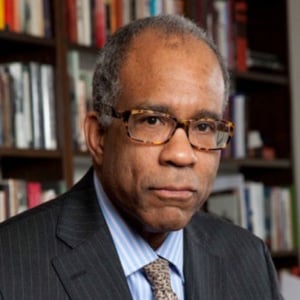
Michael R. Klein Professor of Law, Harvard Law School
Randall Kennedy is Michael R. Klein Professor at Harvard Law School where he teaches courses on contracts, criminal law, and the regulation of race relations. He was born in Columbia, South Carolina. For his education he attended St. Albans School, Princeton University, Oxford University, and Yale Law School. He served as a law clerk for Judge J. Skelly Wright of the United States Court of Appeals and for Justice Thurgood Marshall of the United States Supreme Court. He is a member of the bar of the District of Columbia and the Supreme Court of the United States. Awarded the 1998 Robert F. Kennedy Book Award for Race, Crime, and the Law, Mr Kennedy writes for a wide range of scholarly and general interest publications. His other books are For Discrimination: Race, Affirmative Action, and the Law (2013), The Persistence of the Color Line: Racial Politics and the Obama Presidency (2011), Sellout: The Politics of Racial Betrayal (2008), Interracial Intimacies: Sex, Marriage, Identity, and Adoption (2003), and Nigger: The Strange Career of a Troublesome Word (2002). A member of the American Law Institute, the American Academy of Arts and Sciences, and the American Philosophical Association, Mr. Kennedy is also a Trustee emeritus of Princeton University.
Director, Cleveland Scholarship and Tutoring Program
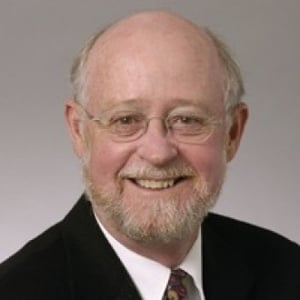
Professor Emeritus of Public Affairs & Political Science, University of Wisconsin-Madison
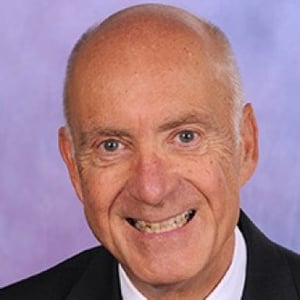
Distinguished Service Professor of Law; Chair, Levin Center at Wayne Law Faculty Committee, Wayne State University Law School
Following graduation with distinction from The University of Michigan Law School in 1964, where he served on the law review and was elected a member of the Order of the Coif, Professor Mogk practiced law with Shearman & Sterling in New York City. In addition to corporate law and litigation, his practice included providing legal counsel to the pioneering program revitalizing the Bedford-Stuyvesant neighborhood of Brooklyn, New York.
He joined the Wayne Law faculty in 1968, one year after Detroit's major civil disturbance, to focus upon critical issues facing America's distressed urban communities. His work has included research, teaching and engagement in the field of urban law and policy on such issues as economic development, neighborhood rehabilitation and intergovernmental cooperation. Professor Mogk frequently contributes editorial commentary on critical urban issues to the major media outlets.
Professor Mogk has assumed many public leadership positions, including his recent position as Chair of the Michigan Council on Labor and Economic Growth and as past Chair of Habitat for Humanity Detroit from 1999 to 2006. He has been an adviser to the state, Wayne County and the city of Detroit on a variety of urban development initiatives, including the Michigan State Housing Development Authority and the City of Detroit Planning and Development Department. He has also served on the Detroit Board of Education, Executive Committee of the Southeast Michigan Council of Governments and Michigan Construction Code Commission. From 1974-1994 he was executive director of the Michigan Energy and Resource Research Association, a nonprofit state, university and industry scientific partnership developing renewable energy policy and projects for Michigan.
He has received special commendations from the Michigan Legislature and Detroit Common Council and was selected Outstanding Professor by the law school student body in 1979, 1983 and 1994, 1997, 2003 and 2016 by the alumni in 1993. Professor Mogk was named one of the Ten Outstanding Young Men in the Unites States (U.S. Jaycees) in 1973.
He teaches courses in Property, State and Local Government Law, Land Use Planning, and Urban Development. Professor Mogk was a visiting fellow at the University of Warwick in England during 1985-86, and the University of Utrecht, the Netherlands, in 2001. He has served as editor of the Michigan International Lawyer, published by the State Bar of Michigan, and a member of the State Bar's Land Title Standards Committee.
Urban Agriculture Policy Paper
Professor Mogk led two former students, Sarah Kwiatkowski and Mary Jo Weindorf, on an urban agriculture policy paper for the city of Detroit. The paper, titled Promoting Urban Agriculture as an Alternative Land Use for Vacant Properties in the City of Detroit: Benefits, Problems and Proposals for a Regulatory Framework for Successful Land Use Integration, was submitted to Detroit Mayor Dave Bing and Detroit City Council President Charles Pugh in August 2010 .
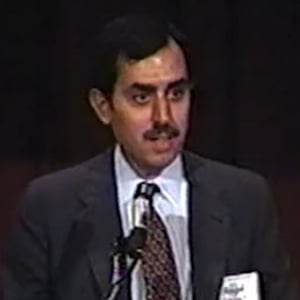
Distinguished Professor of Law, Wayne State University Law School
Professor Grano received his A.B. and J.D. degrees from Temple University in 1965 and 1968. He received an LL.M. from the University of Illinois in 1970. He was an Assistant District Attorney in Philadelphia in 1970-1971. In 1971 he joined the University of Detroit School of Law faculty, where he remained until 1975, serving as Interim Dean during the 1974-5 school year. He joined the Wayne State University Law School as a Professor of Law in 1975 and was named Distinguished Professor of Law in 1984. Professor Grano has also visited at the University of California Berkeley Law School, Cornell Law School, University of Illinois College of Law, and Temple University School of Law.
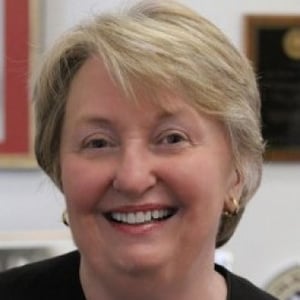
Judge, Contra Costa County Superior Court in California
Judge Haight was appointed to Contra Costa County Superior Court by Governor Pete Wilson in 1993.
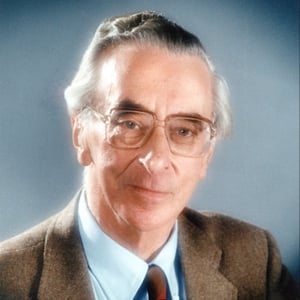
Julius Kreeger Professor of Law and Criminology Emeritus, University of Chicago Law School
Norval Morris was the Julius Kreeger Professor of Law and Criminology Emeritus, former Dean of the University of Chicago Law School (1975-78), and founding director of the Law School’s Center for Studies in Criminal Justice.
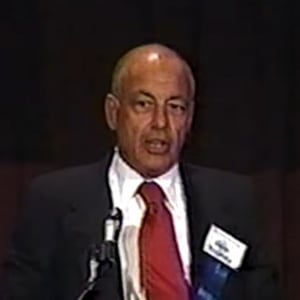
President, Center for Research on Institutions & Social Policy, Inc. (CRISP)
Adam Walinsky was born on January 10, 1937 in New York City. He received his Bachelor of Arts from Cornell University in 1957 and his Bachelor of Laws from Yale University in 1961.
Career
Bar: New York 1962, United States District Court (southern district) New York 1971, United States Court 2nd District Court of Appea circuit) 1971, Supreme Court of the United States Court 1982. Law clerk United States Court Appeals for 2d Circuit, New York City, 1961-1962. Associate Winthrop, Stimson, Putnam & Roberts, New York City, 1962-1963.
Attorney Department Justice, Washington, 1963-1964.
Legislation assistant to Senator Robert F. Kennedy, Washington, 1964-1968. Partner Kronish, Lieb, Weiner & Hellman, New York City, 1971-1994.
President Center for Research on Institutions and Social Policy, 1994. Chairman New York State communications of Investigation, 1978-1981.
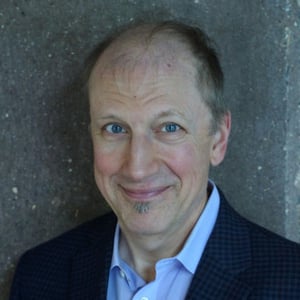
James L. Oberstar Professor of Law and Public Policy, University of St. Thomas School of Law
Associate Professor of Law, Wayne State University Law School
Christopher C. Lund is an associate professor of law at Wayne State University Law School, where he teaches a variety of courses, including Torts, Contracts, Constitutional Law, Religious Liberty in the United States and Evidence. Excited to teach students, he has been voted Professor of the Year five times.
Prof. Lund's scholarly interests vary, but his principal focus has been in the field of religious liberty. His academic work has been (or shortly will be) published in student-edited law reviews, such as the Northwestern University Law Review, the Virginia Law Review, and the Minnesota Law Review; peer-reviewed legal journals, such as the Journal of Law and Religion; and peer-reviewed interdisciplinary journals, such as History of Religions. He recently joined Michael McConnell and Thomas Berg as the new co-author on their leading casebook, Religion and the Constitution, the fourth edition of which was published by Aspen in 2016.
Prof. Lund's academic work has been cited in articles, books and judicial opinions. He is regularly called on for his expertise by media outlets, civil rights organizations and religious groups. Two of his amicus briefs have been quoted in opinions of the U.S. Supreme Court, with Justice Stephen Breyer calling one of them "very excellent" at oral argument. He is a past chair of the Law and Religion Section of the Association of American Law Schools, as well as past chair of the Section on New Law Professors. He sits on the lawyers' committee of the ACLU of Michigan.
Prof. Lund joined Wayne University Law School in 2009 from the Mississippi College School of Law. Before teaching, he clerked for the Honorable Karen Nelson Moore on the U.S. Court of Appeals for the Sixth Circuit, served as the Madison Fellow at Americans United for Separation of Church and State, and practiced law at Dechert LLP in Philadelphia. Prof. Lund earned his law degree with high honors from the University of Texas School of Law and his bachelor of arts from Rice University, summa cum laude, with majors in mathematics and psychology.
During fall semester 2013, Lund was on leave from Wayne Law, teaching at the University of Notre Dame Law School.
Professor from Practice, Georgetown University Law Center
James L. Oberstar Professor of Law and Public Policy, University of St. Thomas School of Law
Professor from Practice, Georgetown University Law Center
Associate Professor of Law, Wayne State University Law School
Christopher C. Lund is an associate professor of law at Wayne State University Law School, where he teaches a variety of courses, including Torts, Contracts, Constitutional Law, Religious Liberty in the United States and Evidence. Excited to teach students, he has been voted Professor of the Year five times.
Prof. Lund's scholarly interests vary, but his principal focus has been in the field of religious liberty. His academic work has been (or shortly will be) published in student-edited law reviews, such as the Northwestern University Law Review, the Virginia Law Review, and the Minnesota Law Review; peer-reviewed legal journals, such as the Journal of Law and Religion; and peer-reviewed interdisciplinary journals, such as History of Religions. He recently joined Michael McConnell and Thomas Berg as the new co-author on their leading casebook, Religion and the Constitution, the fourth edition of which was published by Aspen in 2016.
Prof. Lund's academic work has been cited in articles, books and judicial opinions. He is regularly called on for his expertise by media outlets, civil rights organizations and religious groups. Two of his amicus briefs have been quoted in opinions of the U.S. Supreme Court, with Justice Stephen Breyer calling one of them "very excellent" at oral argument. He is a past chair of the Law and Religion Section of the Association of American Law Schools, as well as past chair of the Section on New Law Professors. He sits on the lawyers' committee of the ACLU of Michigan.
Prof. Lund joined Wayne University Law School in 2009 from the Mississippi College School of Law. Before teaching, he clerked for the Honorable Karen Nelson Moore on the U.S. Court of Appeals for the Sixth Circuit, served as the Madison Fellow at Americans United for Separation of Church and State, and practiced law at Dechert LLP in Philadelphia. Prof. Lund earned his law degree with high honors from the University of Texas School of Law and his bachelor of arts from Rice University, summa cum laude, with majors in mathematics and psychology.
During fall semester 2013, Lund was on leave from Wayne Law, teaching at the University of Notre Dame Law School.

Topics
Do Title IX Proceedings Count as Legal Processes, or Don’t They?
This post was originally published at the James G. Martin Center for Academic Renewal. The...
"The Diversity Lie" 20 Years Later
Brian T. Fitzpatrick, Theodore "Ted" Frank, Randall Kennedy
In 2003, Professor Brian Fitzpatrick published a piece titled "The Diversity Lie" in which he...
Panel Four: School Choice in Action [Archive Collection]
Roberta Holt, Myron Lieberman, Ann Payne, Bob Smith, John Witte
On March 26, 1999, the Federalist Society co-sponsored the Stranahan National Issues Forum with the...
Eminent Domain and Public Use | Taking Poletown
John Mogk
In the early 1980s, General Motors found the perfect place to build a new factory...
Personal Responsibility in Criminal Law [Archive Collection]
Joseph D. Grano, Lois Haight Herrington, Norval Morris, Adam Walinsky
On September 13-14, 1991, the Federalist Society hosted its fifth annual National Lawyers Convention at...
Topics
Lessons for University Administrators: Courts Protect Religious Student Groups on Campus
This fall, University of Iowa officials and their lawyer heard this from a federal judge:...
Church Playgrounds & Blaine Amendments - Podcast
Thomas C. Berg, Christopher C. Lund, Martin S. Lederman
The Supreme Court has agreed to hear Trinity Lutheran Church of Columbia, Inc. v. Pauley....
Church Playgrounds & Blaine Amendments
TeleforumTopics
FDA's Amarin settlement fails to establish clear guidelines for speech
It’s a shame that in a nation that prizes free speech, the government routinely censors...
The Constitutionalization of the Sexual Revolution and What it Means for Religious Liberty, Federalism and Self- Government