
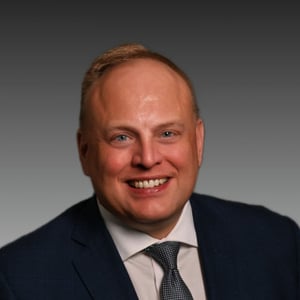
Executive Vice President and Director of Litigation, EdChoice Legal Advocates
Before founding a public interest law firm at EdChoice, Tom Fisher served as Indiana’s first Solicitor General from 2005-2023. Fisher has argued dozens of high-profile cases before both the Indiana Supreme Court and the Seventh Circuit U.S. Court of Appeals and five cases before the U.S. Supreme Court. A two-time recipient of the National Association of Attorneys General Best Brief Award, Fisher is a Fellow of the American Academy of Appellate Lawyers and a Sagamore of the Wabash. Fisher is a graduate of Wabash College and Indiana University Maurer School of Law, where he serves as an Adjunct Professor of Law.
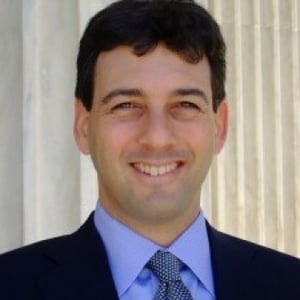
Vice President for Litigation, Institute for Free Speech
Alan joined the Institute for Free Speech as Vice President for Litigation in February 2021. In this role, Alan directs the Institute’s litigation and legal advocacy, leads our in-house legal team, and manages and works to expand our network of volunteer attorneys.
Prior to joining the Institute, Alan litigated complex federal matters for twenty years, in his own practice and as a partner in various Washington-area firms. He argued and won landmark constitutional cases in the United States Supreme Court and has appeared before numerous appellate and district courts throughout the country. Alan often speaks at law schools and continuing legal education seminars. He also teaches strategic/public interest litigation as an adjunct professor at the Georgetown University Law Center.
Alan began his career clerking for the Hon. Terrence W. Boyle, United States District Judge for the Eastern District of North Carolina. He has also served as a Deputy Attorney General for the State of California, a litigation associate at the Washington office of Sidley Austin, and as counsel to the United States Senate Judiciary Committee.
Alan earned his J.D. at Georgetown (1995) and his B.A. at Cornell University (1992). He is an active member in good standing of the Virginia, District of Columbia, and California bars, the Bar of the United States Supreme Court, and various federal appellate and district court bars.
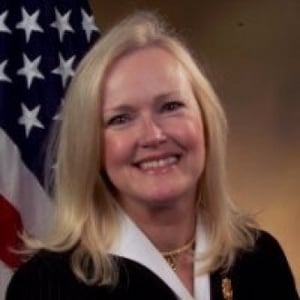
Founder, Law Office of Eileen J. O'Connor PLLC
After nearly 30 years as a national tax specialist with the IRS and major accounting firms, Eileen J. O’Connor, now an attorney in private practice, was Assistant Attorney General for the Justice Department’s Tax Division for six years during the administration of President George W. Bush and a member of then-President-elect Trump’s Treasury Department Transition Team. She focuses on federal administrative and tax law.
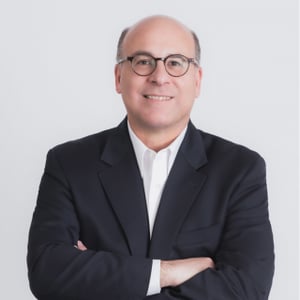
Partner, Wiley
Lee served as Chairman and Commissioner of the Federal Election Commission (FEC), where he successfully led the rulemaking to conform the agency's regulations to the Supreme Court's Citizens United and McCutcheon decisions and championed free speech on the Internet and free press rights. He previously had served as legal counsel and policy advisor to the Governor of Virginia and Attorney General of Virginia, associate general counsel of the University of Virginia, and general counsel to numerous political organizations. His experience covers a broad range of policy-oriented subjects, including federal and state campaign finance and ethics laws, First Amendment rights of political speech and association, political action on the Internet, taxation of the Internet, interstate regulation, and academic freedom. He has extensive experience in all aspects of election administration, having litigated state, local and congressional recounts, election contests, ballot access, voting rights, late poll openings, and delegate credentials.
He has been named a "Top Campaign & Elections Lawyer" by Washingtonian magazine. The Washington Examiner called Lee “a leading voice among conservative regulators in Washington” (2016) and “a tireless voice for First Amendment rights on the Internet” (2018); the Richmond Times-Dispatch dubbed him a “free-speech champion” (2018); The Hill labeled him “a happy warrior for the First Amendment” (2018); and the Washington Post called him a “sharp policy wonk” (1999). He is a frequent lecturer at law schools, universities, civic organizations, and continuing legal education programs. He has authored numerous articles on election law and a chapter on regulation of political speech on the Internet in Law and Election Politics: The Rules of the Game (Routledge 2013), and his writings have appeared in The Wall Street Journal, Richmond Times-Dispatch, Washington Examiner, Washington Times, Politico and other publications. He has served on the boards of several educational, cultural, and political non-profit organizations.
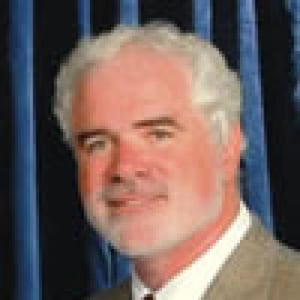
Chairman and President, The Becket Fund for Religious Liberty
Kevin J. "Seamus" Hasson is Founder and President of The Becket Fund for Religious Liberty, a bipartisan, public-interest law firm that protects the free expression of all religious traditions. Since 1994, Hasson and the Becket Fund have successfully represented clients from nearly every faith tradition including Christians, Jews, Muslims, Buddhists, Sikhs, Hindus, Native Americans, Unitarians and Zoroastrians. Along the way, The Becket Fund has won kudos from thinkers from Pope John Paul II to Elie Wiesel.
Hasson enjoys broad credibility in the national media. He has been widely quoted, appearing for example, in Newsweek, US News and World Report, The New York Times, The Washington Post, The Wall Street Journal, The Christian Science Monitor and USA Today, as well as in regional media from The L.A. Times to The Chicago Tribune to The Philadelphia Enquirer. He has appeared on broadcast news programs including The Today Show, Dateline NBC, McLaughlin One on One, NPR's Talk of the Nation, and CNN Talkback Live. He's also appeared twice on Al-Jazeera, debating Saudi clerics.
Hasson lectures and debates frequently, in venues ranging from Oxford to the Vatican, from Harvard to BYU. He is the author of The Right to be Wrong: Ending the Culture War over Religion in America.
Before founding the Becket Fund in 1994, Hasson was an attorney at Williams & Connolly in Washington D.C., where he focused on religious liberty litigation. From 1986 to 1987, he served in the Office of Legal Counsel at the Justice Department where he advised the White House and cabinet departments on church-state relations. He is a 1985 magna cum laude graduate of Notre Dame Law School and also holds a Master's degree in theology from Notre Dame.

President, American Council of Trustees and Alumni
Ms. Neal co-founded the American Council of Trustees and Alumni and has been president since 2003.
For over 15 years, Ms. Neal has been a prominent national player in higher education reform, publishing widely and appearing frequently on radio and television, including the PBS NewsHour, Fox Business News, CNN, Fox News, WGN, and National Public Radio. She has authored or co-authored numerous ACTA studies on historical illiteracy, federal accreditation, governance, intellectual pluralism, and cost, and contributed chapters to Reforming the Politically Correct University (AEI Press, 2009), Accountability in American Higher Education(Palgrave MacMillan, 2010), and Intellectual Property Rights and Capital Formation in the Next Decade (University Press, 1988). She has also convened higher education conferences under the auspices of the Philanthropy Roundtable. In 2007, and again in 2010, Ms. Neal was appointed to the National Advisory Committee on Institutional Quality and Integrity which advises the U.S. Secretary of Education on federal accreditation.
Ms. Neal has provided expert testimony before the Commission on the Future of Higher Education, the U.S. Senate Health, Education, Labor, and Pensions Committee, the Louisiana Postsecondary Education Commission, the California Advisory Committee to the U.S. Civil Rights Commission, and in many state capitals, and presented at conferences sponsored by the American Enterprise Institute, the University of Notre Dame, the Association of American Colleges and Universities, Montana State University, the American Association of University Professors, and the Council for Higher Education Accreditation.
Prior to joining ACTA, Ms. Neal served as General Counsel and Congressional Liaison for the National Endowment for the Humanities. She also worked as a First Amendment and communications lawyer for Rogers & Wells and Wiley, Rein & Fielding.
Ms. Neal graduated Phi Beta Kappa and magna cum laude from Harvard College with an A.B. in American history and literature. She received her J.D. from Harvard Law School where she was president of the Harvard Journal on Legislation. She also holds an honorary doctorate from Colorado Christian University. She has served on the boards of many cultural and civic organizations, and currently is a director of the Mount Vernon Ladies' Association and the Alexander Hamilton Institute.
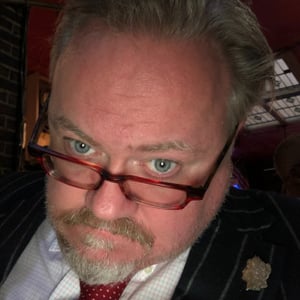
Supreme Court correspondent, The Epoch Times
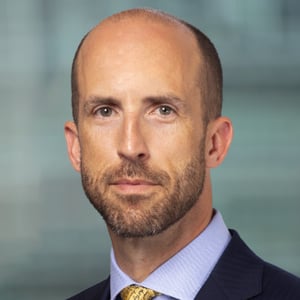
Director of Health Policy Studies, Cato Institute
Michael F. Cannon is the Cato Institute’s director of health policy studies. His scholarship spans public health; regulation of clinicians, medical facilities, pharmaceuticals, and medical devices; employer‐sponsored and other private health insurance; Medicare; Medicaid; CHIP; the Veterans Health Administration; medical malpractice litigation; administrative law; international health systems; political philosophy; and more. Cannon is “an influential health‐care wonk” (Washington Post) and “the most famous libertarian health care scholar” (Washington Examiner). Washingtonian magazine named Cannon one of Washington, DC’s “Most Influential People” in 2021, 2022, and 2023.
Cannon has appeared on ABC, Al Jazeera, BBC, CBS, CNN, CNBC, C‑SPAN, Fox News Channel, NPR, and other broadcast media. His articles have appeared in the Wall Street Journal; the New York Times; USA Today; the Washington Post; the Los Angeles Times; SCOTUSBlog; Forum for Health Economics and Policy; JAMA Internal Medicine; Health Matrix: Journal of Law‐Medicine; Harvard Health Policy Review; the Yale Journal of Health Policy, Law, and Ethics; the Journal of Health Politics, Policy and Law; and Quinnipiac Health Law Journal. His latest book is Recovery: A Guide to Reforming the U.S. Health Sector.
Cannon was previously a domestic policy analyst for the U.S. Senate Republican Policy Committee, where he advised the Senate leadership on health, education, labor, welfare, and the Second Amendment. He is a member of the Board of Advisers of Harvard Health Policy Review and the Federalist Society Regulatory Transparency Project’s FDA & Health Working Group.
Cannon holds an MA in economics and a JM in law and economics from George Mason University and a BA in American government from the University of Virginia.
Founder, Law Office of Eileen J. O'Connor PLLC
After nearly 30 years as a national tax specialist with the IRS and major accounting firms, Eileen J. O’Connor, now an attorney in private practice, was Assistant Attorney General for the Justice Department’s Tax Division for six years during the administration of President George W. Bush and a member of then-President-elect Trump’s Treasury Department Transition Team. She focuses on federal administrative and tax law.
Partner, Wiley
Lee served as Chairman and Commissioner of the Federal Election Commission (FEC), where he successfully led the rulemaking to conform the agency's regulations to the Supreme Court's Citizens United and McCutcheon decisions and championed free speech on the Internet and free press rights. He previously had served as legal counsel and policy advisor to the Governor of Virginia and Attorney General of Virginia, associate general counsel of the University of Virginia, and general counsel to numerous political organizations. His experience covers a broad range of policy-oriented subjects, including federal and state campaign finance and ethics laws, First Amendment rights of political speech and association, political action on the Internet, taxation of the Internet, interstate regulation, and academic freedom. He has extensive experience in all aspects of election administration, having litigated state, local and congressional recounts, election contests, ballot access, voting rights, late poll openings, and delegate credentials.
He has been named a "Top Campaign & Elections Lawyer" by Washingtonian magazine. The Washington Examiner called Lee “a leading voice among conservative regulators in Washington” (2016) and “a tireless voice for First Amendment rights on the Internet” (2018); the Richmond Times-Dispatch dubbed him a “free-speech champion” (2018); The Hill labeled him “a happy warrior for the First Amendment” (2018); and the Washington Post called him a “sharp policy wonk” (1999). He is a frequent lecturer at law schools, universities, civic organizations, and continuing legal education programs. He has authored numerous articles on election law and a chapter on regulation of political speech on the Internet in Law and Election Politics: The Rules of the Game (Routledge 2013), and his writings have appeared in The Wall Street Journal, Richmond Times-Dispatch, Washington Examiner, Washington Times, Politico and other publications. He has served on the boards of several educational, cultural, and political non-profit organizations.
Chairman and President, The Becket Fund for Religious Liberty
Kevin J. "Seamus" Hasson is Founder and President of The Becket Fund for Religious Liberty, a bipartisan, public-interest law firm that protects the free expression of all religious traditions. Since 1994, Hasson and the Becket Fund have successfully represented clients from nearly every faith tradition including Christians, Jews, Muslims, Buddhists, Sikhs, Hindus, Native Americans, Unitarians and Zoroastrians. Along the way, The Becket Fund has won kudos from thinkers from Pope John Paul II to Elie Wiesel.
Hasson enjoys broad credibility in the national media. He has been widely quoted, appearing for example, in Newsweek, US News and World Report, The New York Times, The Washington Post, The Wall Street Journal, The Christian Science Monitor and USA Today, as well as in regional media from The L.A. Times to The Chicago Tribune to The Philadelphia Enquirer. He has appeared on broadcast news programs including The Today Show, Dateline NBC, McLaughlin One on One, NPR's Talk of the Nation, and CNN Talkback Live. He's also appeared twice on Al-Jazeera, debating Saudi clerics.
Hasson lectures and debates frequently, in venues ranging from Oxford to the Vatican, from Harvard to BYU. He is the author of The Right to be Wrong: Ending the Culture War over Religion in America.
Before founding the Becket Fund in 1994, Hasson was an attorney at Williams & Connolly in Washington D.C., where he focused on religious liberty litigation. From 1986 to 1987, he served in the Office of Legal Counsel at the Justice Department where he advised the White House and cabinet departments on church-state relations. He is a 1985 magna cum laude graduate of Notre Dame Law School and also holds a Master's degree in theology from Notre Dame.
President, American Council of Trustees and Alumni
Ms. Neal co-founded the American Council of Trustees and Alumni and has been president since 2003.
For over 15 years, Ms. Neal has been a prominent national player in higher education reform, publishing widely and appearing frequently on radio and television, including the PBS NewsHour, Fox Business News, CNN, Fox News, WGN, and National Public Radio. She has authored or co-authored numerous ACTA studies on historical illiteracy, federal accreditation, governance, intellectual pluralism, and cost, and contributed chapters to Reforming the Politically Correct University (AEI Press, 2009), Accountability in American Higher Education(Palgrave MacMillan, 2010), and Intellectual Property Rights and Capital Formation in the Next Decade (University Press, 1988). She has also convened higher education conferences under the auspices of the Philanthropy Roundtable. In 2007, and again in 2010, Ms. Neal was appointed to the National Advisory Committee on Institutional Quality and Integrity which advises the U.S. Secretary of Education on federal accreditation.
Ms. Neal has provided expert testimony before the Commission on the Future of Higher Education, the U.S. Senate Health, Education, Labor, and Pensions Committee, the Louisiana Postsecondary Education Commission, the California Advisory Committee to the U.S. Civil Rights Commission, and in many state capitals, and presented at conferences sponsored by the American Enterprise Institute, the University of Notre Dame, the Association of American Colleges and Universities, Montana State University, the American Association of University Professors, and the Council for Higher Education Accreditation.
Prior to joining ACTA, Ms. Neal served as General Counsel and Congressional Liaison for the National Endowment for the Humanities. She also worked as a First Amendment and communications lawyer for Rogers & Wells and Wiley, Rein & Fielding.
Ms. Neal graduated Phi Beta Kappa and magna cum laude from Harvard College with an A.B. in American history and literature. She received her J.D. from Harvard Law School where she was president of the Harvard Journal on Legislation. She also holds an honorary doctorate from Colorado Christian University. She has served on the boards of many cultural and civic organizations, and currently is a director of the Mount Vernon Ladies' Association and the Alexander Hamilton Institute.
Supreme Court correspondent, The Epoch Times
Partner, Wiley
Lee served as Chairman and Commissioner of the Federal Election Commission (FEC), where he successfully led the rulemaking to conform the agency's regulations to the Supreme Court's Citizens United and McCutcheon decisions and championed free speech on the Internet and free press rights. He previously had served as legal counsel and policy advisor to the Governor of Virginia and Attorney General of Virginia, associate general counsel of the University of Virginia, and general counsel to numerous political organizations. His experience covers a broad range of policy-oriented subjects, including federal and state campaign finance and ethics laws, First Amendment rights of political speech and association, political action on the Internet, taxation of the Internet, interstate regulation, and academic freedom. He has extensive experience in all aspects of election administration, having litigated state, local and congressional recounts, election contests, ballot access, voting rights, late poll openings, and delegate credentials.
He has been named a "Top Campaign & Elections Lawyer" by Washingtonian magazine. The Washington Examiner called Lee “a leading voice among conservative regulators in Washington” (2016) and “a tireless voice for First Amendment rights on the Internet” (2018); the Richmond Times-Dispatch dubbed him a “free-speech champion” (2018); The Hill labeled him “a happy warrior for the First Amendment” (2018); and the Washington Post called him a “sharp policy wonk” (1999). He is a frequent lecturer at law schools, universities, civic organizations, and continuing legal education programs. He has authored numerous articles on election law and a chapter on regulation of political speech on the Internet in Law and Election Politics: The Rules of the Game (Routledge 2013), and his writings have appeared in The Wall Street Journal, Richmond Times-Dispatch, Washington Examiner, Washington Times, Politico and other publications. He has served on the boards of several educational, cultural, and political non-profit organizations.
Chairman and President, The Becket Fund for Religious Liberty
Kevin J. "Seamus" Hasson is Founder and President of The Becket Fund for Religious Liberty, a bipartisan, public-interest law firm that protects the free expression of all religious traditions. Since 1994, Hasson and the Becket Fund have successfully represented clients from nearly every faith tradition including Christians, Jews, Muslims, Buddhists, Sikhs, Hindus, Native Americans, Unitarians and Zoroastrians. Along the way, The Becket Fund has won kudos from thinkers from Pope John Paul II to Elie Wiesel.
Hasson enjoys broad credibility in the national media. He has been widely quoted, appearing for example, in Newsweek, US News and World Report, The New York Times, The Washington Post, The Wall Street Journal, The Christian Science Monitor and USA Today, as well as in regional media from The L.A. Times to The Chicago Tribune to The Philadelphia Enquirer. He has appeared on broadcast news programs including The Today Show, Dateline NBC, McLaughlin One on One, NPR's Talk of the Nation, and CNN Talkback Live. He's also appeared twice on Al-Jazeera, debating Saudi clerics.
Hasson lectures and debates frequently, in venues ranging from Oxford to the Vatican, from Harvard to BYU. He is the author of The Right to be Wrong: Ending the Culture War over Religion in America.
Before founding the Becket Fund in 1994, Hasson was an attorney at Williams & Connolly in Washington D.C., where he focused on religious liberty litigation. From 1986 to 1987, he served in the Office of Legal Counsel at the Justice Department where he advised the White House and cabinet departments on church-state relations. He is a 1985 magna cum laude graduate of Notre Dame Law School and also holds a Master's degree in theology from Notre Dame.
President, American Council of Trustees and Alumni
Ms. Neal co-founded the American Council of Trustees and Alumni and has been president since 2003.
For over 15 years, Ms. Neal has been a prominent national player in higher education reform, publishing widely and appearing frequently on radio and television, including the PBS NewsHour, Fox Business News, CNN, Fox News, WGN, and National Public Radio. She has authored or co-authored numerous ACTA studies on historical illiteracy, federal accreditation, governance, intellectual pluralism, and cost, and contributed chapters to Reforming the Politically Correct University (AEI Press, 2009), Accountability in American Higher Education(Palgrave MacMillan, 2010), and Intellectual Property Rights and Capital Formation in the Next Decade (University Press, 1988). She has also convened higher education conferences under the auspices of the Philanthropy Roundtable. In 2007, and again in 2010, Ms. Neal was appointed to the National Advisory Committee on Institutional Quality and Integrity which advises the U.S. Secretary of Education on federal accreditation.
Ms. Neal has provided expert testimony before the Commission on the Future of Higher Education, the U.S. Senate Health, Education, Labor, and Pensions Committee, the Louisiana Postsecondary Education Commission, the California Advisory Committee to the U.S. Civil Rights Commission, and in many state capitals, and presented at conferences sponsored by the American Enterprise Institute, the University of Notre Dame, the Association of American Colleges and Universities, Montana State University, the American Association of University Professors, and the Council for Higher Education Accreditation.
Prior to joining ACTA, Ms. Neal served as General Counsel and Congressional Liaison for the National Endowment for the Humanities. She also worked as a First Amendment and communications lawyer for Rogers & Wells and Wiley, Rein & Fielding.
Ms. Neal graduated Phi Beta Kappa and magna cum laude from Harvard College with an A.B. in American history and literature. She received her J.D. from Harvard Law School where she was president of the Harvard Journal on Legislation. She also holds an honorary doctorate from Colorado Christian University. She has served on the boards of many cultural and civic organizations, and currently is a director of the Mount Vernon Ladies' Association and the Alexander Hamilton Institute.
Supreme Court correspondent, The Epoch Times
Director of Health Policy Studies, Cato Institute
Michael F. Cannon is the Cato Institute’s director of health policy studies. His scholarship spans public health; regulation of clinicians, medical facilities, pharmaceuticals, and medical devices; employer‐sponsored and other private health insurance; Medicare; Medicaid; CHIP; the Veterans Health Administration; medical malpractice litigation; administrative law; international health systems; political philosophy; and more. Cannon is “an influential health‐care wonk” (Washington Post) and “the most famous libertarian health care scholar” (Washington Examiner). Washingtonian magazine named Cannon one of Washington, DC’s “Most Influential People” in 2021, 2022, and 2023.
Cannon has appeared on ABC, Al Jazeera, BBC, CBS, CNN, CNBC, C‑SPAN, Fox News Channel, NPR, and other broadcast media. His articles have appeared in the Wall Street Journal; the New York Times; USA Today; the Washington Post; the Los Angeles Times; SCOTUSBlog; Forum for Health Economics and Policy; JAMA Internal Medicine; Health Matrix: Journal of Law‐Medicine; Harvard Health Policy Review; the Yale Journal of Health Policy, Law, and Ethics; the Journal of Health Politics, Policy and Law; and Quinnipiac Health Law Journal. His latest book is Recovery: A Guide to Reforming the U.S. Health Sector.
Cannon was previously a domestic policy analyst for the U.S. Senate Republican Policy Committee, where he advised the Senate leadership on health, education, labor, welfare, and the Second Amendment. He is a member of the Board of Advisers of Harvard Health Policy Review and the Federalist Society Regulatory Transparency Project’s FDA & Health Working Group.
Cannon holds an MA in economics and a JM in law and economics from George Mason University and a BA in American government from the University of Virginia.
Founder, Law Office of Eileen J. O'Connor PLLC
After nearly 30 years as a national tax specialist with the IRS and major accounting firms, Eileen J. O’Connor, now an attorney in private practice, was Assistant Attorney General for the Justice Department’s Tax Division for six years during the administration of President George W. Bush and a member of then-President-elect Trump’s Treasury Department Transition Team. She focuses on federal administrative and tax law.
Director of Health Policy Studies, Cato Institute
Michael F. Cannon is the Cato Institute’s director of health policy studies. His scholarship spans public health; regulation of clinicians, medical facilities, pharmaceuticals, and medical devices; employer‐sponsored and other private health insurance; Medicare; Medicaid; CHIP; the Veterans Health Administration; medical malpractice litigation; administrative law; international health systems; political philosophy; and more. Cannon is “an influential health‐care wonk” (Washington Post) and “the most famous libertarian health care scholar” (Washington Examiner). Washingtonian magazine named Cannon one of Washington, DC’s “Most Influential People” in 2021, 2022, and 2023.
Cannon has appeared on ABC, Al Jazeera, BBC, CBS, CNN, CNBC, C‑SPAN, Fox News Channel, NPR, and other broadcast media. His articles have appeared in the Wall Street Journal; the New York Times; USA Today; the Washington Post; the Los Angeles Times; SCOTUSBlog; Forum for Health Economics and Policy; JAMA Internal Medicine; Health Matrix: Journal of Law‐Medicine; Harvard Health Policy Review; the Yale Journal of Health Policy, Law, and Ethics; the Journal of Health Politics, Policy and Law; and Quinnipiac Health Law Journal. His latest book is Recovery: A Guide to Reforming the U.S. Health Sector.
Cannon was previously a domestic policy analyst for the U.S. Senate Republican Policy Committee, where he advised the Senate leadership on health, education, labor, welfare, and the Second Amendment. He is a member of the Board of Advisers of Harvard Health Policy Review and the Federalist Society Regulatory Transparency Project’s FDA & Health Working Group.
Cannon holds an MA in economics and a JM in law and economics from George Mason University and a BA in American government from the University of Virginia.
Founder, Law Office of Eileen J. O'Connor PLLC
After nearly 30 years as a national tax specialist with the IRS and major accounting firms, Eileen J. O’Connor, now an attorney in private practice, was Assistant Attorney General for the Justice Department’s Tax Division for six years during the administration of President George W. Bush and a member of then-President-elect Trump’s Treasury Department Transition Team. She focuses on federal administrative and tax law.

District of Columbia v. Heller: D.C. Gun Ban in the Cross-Hairs
Charlotte, North CarolinaVoter ID Act Lecture
The D.C. Handgun Ban: District of Columbia v. Heller
Panel II: Charity: Whether and, if so, How Our Tax Laws Affect Charitable Activities, Religious Institutions, and Free Speech
Lee E. Goodman, Kevin J. Hasson, Anne D. Neal, Matthew Vadum
The Federalist Society's 2008 Tax Policy Conference titled "Our Nation's Founding Principles and Our Tax Code...
Panel II: Charity: Whether and, if so, How Our Tax Laws Affect Charitable Activities, Religious Institutions, and Free Speech
Lee E. Goodman, Kevin J. Hasson, Anne D. Neal, Matthew Vadum
The Federalist Society's 2008 Tax Policy Conference titled "Our Nation's Founding Principles and Our Tax Code...
Welcome and Panel I: Health Care: How Our Tax Laws Affect How Health Care is Paid for and Delivered
Michael F. Cannon, Robert B. Helms, Amy Monahan, Eileen J. O'Connor, Mark V. Pauly
The Honorable Eileen J. O'Connor of Pillsbury Winthrop Shaw Pittman LLP, and former Assistant Attorney...
Welcome and Panel I: Health Care: How Our Tax Laws Affect How Health Care is Paid for and Delivered
Michael F. Cannon, Robert B. Helms, Amy Monahan, Eileen J. O'Connor, Mark V. Pauly
The Honorable Eileen J. O'Connor of Pillsbury Winthrop Shaw Pittman LLP, and former Assistant Attorney...
Panel III: "Tax Expenditures": The Wisdom and Efficacy of Using the Tax Code to Implement Social Policy
Our Nation's Founding Principles and Our Tax Code - Consistent or In Conflict?
Washington, DCPanel II: Charity: Whether and, if so, How Our Tax Laws Affect Charitable Activities, Religious Institutions, and Free Speech
Our Nation's Founding Principles and Our Tax Code - Consistent or In Conflict?
Washington, DCWelcome and Panel I: Health Care: How Our Tax Laws Affect How Health Care is Paid for and Delivered
Our Nation's Founding Principles and Our Tax Code - Consistent or In Conflict?
Washington, DC