
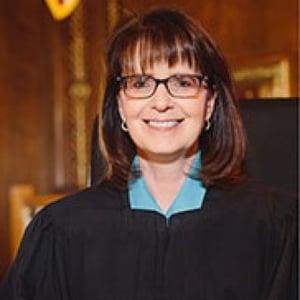
Justice, Ohio Supreme Court
Judi French became a justice of the Supreme Court of Ohio in January 2013 and was elected to her first full term on November 4, 2014. She has traveled throughout Ohio, visiting all 88 counties in her first two years on the bench. With a history of public service and special interest in civic education, Justice French is committed to serving as a resource for the people of Ohio.
A History of Public Service
For the past two decades, Justice French has dedicated her career to public service. In that time, she has served the State of Ohio as a lawyer for a state agency, an assistant attorney general, counsel to the Governor, and, finally, as a judge.
In 1993, she joined the Ohio Environmental Protection Agency as deputy director for legal affairs. From 1997 to 2002, she worked for Attorney General Betty Montgomery as an assistant attorney general, and later as chief counsel.
During her time in the Attorney General’s Office, Justice French argued two cases before the United States Supreme Court. One of those cases was the Cleveland School Vouchers case, in which she served as lead counsel. Her successful presentation of the state’s position helped ensure equitable educational opportunities for every Ohio student.
From 2002 to 2004, Justice French served as chief legal counsel to Governor Bob Taft. In that role, she served as the chair of the Sex Offender Registration and Notification Task Force, which made recommendations to the legislature for making Ohio’s sex-offender laws more effective.
In 2004, Justice French was elected as a judge on the Tenth District Court of Appeals, which hears appeals from Franklin County courts and state administrative agencies. While a judge on the court of appeals for eight years, she authored more than 800 legal opinions.
In December 2012, Governor John Kasich appointed Justice French to fill a vacancy on the Supreme Court of Ohio. She became the 155th justice of the Ohio Supreme Court on January 1, 2013.
A Wide Breadth of Legal Experience
Although her two decades of public service are critical to her understanding of state laws and the Ohio judicial system, Justice French also has the benefit of experience in the corporate and private-practice arenas. She began her career as an attorney with the Columbus law firm of Porter, Wright, Morris & Arthur, specializing in environmental law. Justice French also served as in-house counsel for a large manufacturing company.
A Commitment to Education
The daughter of a schoolteacher, Justice French appreciates her Ohio roots and education, and she is committed to being a part of civic education in Ohio. As an attorney, she served as a tutor and mentor in the Columbus Public Schools. As a justice, she speaks frequently to students from around Ohio, particularly those studying the Ohio Judicial system, whether it be in their classroom or a tour group visiting the Thomas J. Moyer Ohio Judicial Center.
Justice French grew up in Sebring, Ohio, a small town in Mahoning County. She graduated from Sebring McKinley High School in 1980, when she started her undergraduate studies at The Ohio State University.
She received three degrees from OSU: a B.A. in political science, an M.A. in history (with a concentration in military history and strategic studies), and a J.D., with honors. She currently serves her alma mater as a member of the Moritz College of Law National Council.
Justice Judi French currently resides in Grandview Heights, near Columbus, with her husband. They have two children.

Chief Judge, United States Court of Appeals, Sixth Circuit
JEFFREY S. SUTTON is the Chief Judge of the United States Court of Appeals for the Sixth Circuit. He has served as Chair of the Federal Judicial Conference Committee on Rules of Practice and Procedure, Chair of the Advisory Committee on Appellate Rules, and Chair of the Supreme Court Fellows Commission. He currently serves as Chair of the Executive Committee of the Judicial Conference of the United States. Since 1993, Chief Judge Sutton has been an adjunct professor at The Ohio State University College of Law, where he teaches seminars on State Constitutional Law, the United States Supreme Court, and Appellate Advocacy. He also teaches a class on State Constitutional Law at Harvard Law School. Among other publications, he is the author of Who Decides? States as Laboratories of Constitutional Experimentation and 51 Imperfect Solutions: States and the Making of American Constitutional Law. He is the co-author of a casebook, State Constitutional Law: The Modern Experience, as well as The Law of Judicial Precedent. He is also the co-editor of The Essential Scalia: On the Constitution, the Courts, and the Rule of Law. In 2006, Chief Judge Sutton was elected to the American Law Institute, and in 2017 he was elected to its Council.
Ohio Sixth District Court of Appeals (ret.)
Stephen Yarbrough was a judge for the Ohio Sixth District Court of Appeals. He was elected to the court in November 2010 and assumed office on February 9, 2011. His six-year term ended on February 8, 2017.
Yarbrough received his undergraduate, master's, and J.D. degrees from the University of Toledo.

Vice President, Edwin Meese III Institute for the Rule of Law, Advancing American Freedom
John G. Malcolm oversees Advancing American Freedom’s work to increase understanding of the Constitution and the rule of law as Vice President of the organization’s Edwin Meese III Institute for the Rule of Law. Malcolm brings to the challenge a wealth of legal expertise and experience in both the public and private sectors.
Prior to joining Advancing American Freedom in 2025, Malcolm was the Vice President of the Institute for Constitutional Government and the Director of the Meese Center for Legal and Judicial Studies at the Heritage Foundation. Prior to joining Heritage in 2012, Malcolm was general counsel at the U.S. Commission on International Religious Freedom, as well as a distinguished practitioner in residence at Pepperdine Law School. From 2004 to 2009, Malcolm was executive vice president and director of worldwide anti-piracy operations for the Motion Picture Association.
Malcolm served as a deputy assistant attorney general in the Department of Justice’s Criminal Division from 2001 to 2004, where he oversaw sections on computer crime and intellectual property, domestic security, child exploitation and obscenity, and special investigations. Immediately prior to that, he was a founding partner in the Atlanta law firm of Malcolm & Schroeder, LLP.
From 1990 to 1997, Malcolm was an assistant U.S. attorney in Atlanta, assigned to the fraud and public corruption section, and also an associate independent counsel, investigating fraud and abuse in the Department of Housing and Urban Development. He was honored with the Director’s Award for Superior Performance for his work in connection with the successful prosecution of Walter Leroy Moody Jr., who assassinated an 11th Circuit judge and the head of the Savannah chapter of the NAACP.
A graduate of Harvard Law School and Columbia College, Malcolm began his career as a law clerk to a federal district court judge and a federal appellate court judge, and as an associate at the Atlanta-based law firm of Sutherland, Asbill & Brennan (new Eversheds Sutherland).
Malcolm, who resides in Washington, D.C., serves on the Board of Trustees of the Washington National Opera and is a Senate-confirmed member of the Board of Directors of the Legal Services Corporation, the largest funder of civil legal aid in the United States.
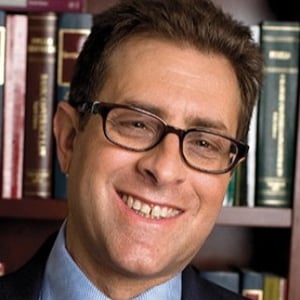
Jacob D. Fuchsberg Professor of Law, New York University School of Law
Professor Friedman is one of the country’s leading authorities on constitutional law and the federal courts. He is a prolific scholar, working at the intersections of law, politics and history. Friedman teaches a wide variety of courses including Constitutional Law, Federal Courts, and Criminal Procedure. He writes extensively about judicial review, constitutional law and theory, federal jurisdiction and judicial behavior. His scholarship appears regularly in the nation’s top law and peer-edited reviews. He is the author of widely-recognized The Will of the People: How Public Opinion Has Influenced the Supreme Court and Shaped the Meaning of the Constitution (Farrar, Strauss & Giroux, 2009), which examines the history of the relationship between popular opinion and the Supreme Court, from 1776 to the present. Along with his co-author Stephen Burbank, Friedman co-edited and contributed to Judicial Independence at the Crossroads: An Interdisciplinary Approach, which questions common assumptions about the nature of judicial independence and how it can be protected. The book has been cited and relied upon countless times by scholars and policymakers alike. Professor Friedman is a frequent contributor to the nation's leading journals, both on-line and print. His work has appeared in The New York Times, Salon, The Los Angeles Times, Politico andThe New Republic, among others.
Professor Friedman is a frequent speaker at events of all sorts. Given the interdisciplinary nature of his work, Professor Friedman regularly appears at conferences in law, political science and history. He is a founder and co-convener of the “roughly biennial” Constitutional Theory Conference. He organizes many multi-disciplinary conferences, including one on Modeling Law, and another – done under the auspices of the American Constitution Society – on Reconstruction: America’s Second Founding. He presents papers regularly at home and abroad. He has been a visiting scholar and lecturer at the Rockefeller Foundation Study and Conference Center in Bellagio, Italy, the Groupe d’Etudes et de Recherches sur law Justice Constitutionnelle Aix-en-Provence, Sciences-Po in Aix-en-Provence, and Hong Kong University.
Professor Friedman regularly serves as a litigator or litigation consultant in a variety of matters in the federal and state courts. He has represented a wide range of clients, both public and private. Notably, he represents both civil liberties claimants and state and local governments. He has been active in the areas of reproductive rights, the jurisdictional allocation of cases between the federal and state courts, and the proper scope of the federal government’s commerce power. He has filed a number of amicus briefs with the U.S. Supreme Court.
Actively engaged in a range of important service activities, at NYU Professor Friedman created the Academic Careers Program and founded and is now co-director of the Furman Academic Program. Both programs are dedicated to preparing young scholars for academic careers. In the past he was extensively involved with the American Judicature Society, was President of the Tennessee Civil Liberties Union, served on the Board of the State and Local Legal Center, and on the steering committee of New York University’s Institute for Law and Society. He recently completed a term as Vice Dean of New York University School of Law.
Professor Friedman graduated from the University of Chicago and received his law degree magna cum laude from Georgetown University Law Center. He clerked for the Honorable Phyllis A. Kravitch of the U.S. Court of Appeals for the 11th Circuit and also worked as a litigation associate at Davis, Polk & Wardwell in Washington D.C. He was a professor at Vanderbilt Law School before joining the NYU faculty in 2000. In 1995 he won the Clarence Darrow Award from the ACLU of Tennessee for his work in defense of civil liberties.
J.D., Georgetown University Law Center, 1982
B.A., University of Chicago, 1978

Professor of Law, Stanford Law School
Orin S. Kerr is a Professor of Law at Stanford Law School, where he teaches and writes in the areas of criminal procedure and computer crime law. Kerr earned mechanical engineering degrees from Princeton University and Stanford University before graduating with a J.D. from Harvard Law School. He is a former law clerk to Justice Anthony M. Kennedy at the United States Supreme Court and Judge Leonard I. Garth of the U.S. Court of Appeals for the Third Circuit.

Justice, Supreme Court of Arizona
Clint Bolick was appointed by Governor Doug Ducey in January 2016 to serve on the Arizona Supreme Court and was retained by the voters in 2018 and 2024.
Prior to joining the Court, Justice Bolick litigated constitutional cases in state and federal courts from coast to coast, including the U.S. Supreme Court. Among other positions, he served as Vice President for Litigation at the Goldwater Institute and as Co-founder and Vice President for Litigation at the Institute for Justice. He has litigated in support of school choice, freedom of enterprise, private property rights, freedom of speech, and federalism, and against racial classifications and government subsidies.
Justice Bolick received his Juris Doctor degree from the University of California at Davis, where he has been recognized as a distinguished alumnus, and his Bachelor of Arts degree magna cum laude from Drew University. He serves as a research fellow with the Hoover Institution. Among other honors, he was named one of the 90 Greatest DC Lawyers in the Last 30 Years by Legal Times in 2008, received a Bradley Prize in 2006, and was recognized as one of the nation’s three lawyers of the year by American Lawyer in 2002 for his successful defense of school vouchers in Zelman v. Simmons-Harris.
Justice Bolick is a prolific author of a dozen books and hundreds of articles. Among his most recent books are Unshackled: Freeing America’s K-12 Education System: Immigration Wars: Forging an American Solution, co-authored with former Florida Governor Jeb Bush; and David’s Hammer: The Case for an Activist Judiciary. Bolick serves as an adjunct professor of constitutional law at Arizona State University’s Sandra Day O’Connor School of Law and has served as a lecturer at Harvard University’s John F. Kennedy School of Government.
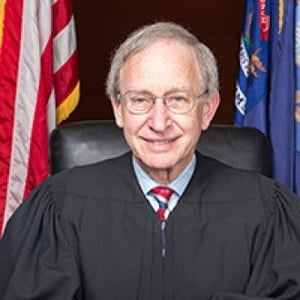
Justice, Michigan Supreme Court
Stephen Markman was appointed Justice of the Michigan Supreme Court on October 1, 1999. He served as the Chief Justice from 2017-2019. Before his appointment, he served as Judge on the Michigan Court of Appeals from 1995-1999. Prior to this, he practiced law with the firm of Miller, Canfield, Paddock & Stone in Detroit.
From 1989-1993, Justice Markman served as United States Attorney, or federal prosecutor, in Michigan, after having been nominated by President George H. W. Bush and confirmed by the United States Senate. From 1985-1989, he served as Assistant Attorney General of the United States, after having been nominated by President Ronald Reagan and confirmed by the United States Senate. In that position, he headed the Department of Justice’s Office of Legal Policy, which served as the principal policy development office within the Department, and which coordinated the federal judicial selection process. Prior to this, he served for seven years as Chief Counsel of the United States Senate Subcommittee on the Constitution, and as Deputy Chief Counsel of the United States Senate Judiciary Committee.
Justice Markman has authored articles for such publications as the University of Michigan Journal of Law Reform, the Detroit College of Law Review, the Stanford Law Review, the University of Chicago Law Review, the American Criminal Justice Law Review, the Barrister’s Law Journal, the Harvard Journal of Law & Public Policy, and the American University Law Review. He has also served as a contributing editor of National Review magazine, and has authored chapters in such books as “In the Name of Justice: The Aims of the Criminal Law,” “Still the Law of the Land,” and “Originalism: A Quarter Century of Debate.”
Justice Markman has taught constitutional law at Hillsdale College since 1993. He has served on the Board of Directors of the Western Michigan University Thomas M. Cooley Law School. He traveled to Ukraine on two occasions on behalf of the State Department, to provide assistance in the development of that nation’s post-Soviet constitution. He is a Fellow of the Michigan Bar Foundation, a Master of the Bench of the Inns of Court, and a member of the One Hundred Club. He has spoken before hundreds of youth, civic, charitable, and legal groups throughout Michigan and nationally, and has coached Little League baseball and basketball. He lives with his wife Mary Kathleen in Mason, and has two sons, James and Charles.
Justice Markman was re-elected to the Supreme Court in 2000, 2004, and 2012. His present term expires January 1, 2021.

Judge, Arizona Court of Appeals, Division One
The Honorable Jennifer M. Perkins began service on the Arizona Court of Appeals, Division One, on October 30, 2017. At the time of her appointment by Governor Douglas Ducey, Judge Perkins was Assistant Solicitor General for the State of Arizona.
Judge Perkins was born in Portales, New Mexico, and primarily raised in Albuquerque. She attended the prestigious Albuquerque Academy from 1988-1995, before moving to Washington D.C. to attend the Elliott School of International Affairs at the George Washington University as a National Merit Scholar. Therafter, she relocated again to Dallas, Texas, and earned her juris doctor from the SMU Dedman School of Law, graduating cum laude in 2002.
Judge Perkins started her career at the law firm of Browning & Peifer (now Peifer, Hanson, Mullins, and Baker) in Albuquerque, New Mexico. While there, she litigated complex commercial matters including class action plaintiff and defense work, and assisted with employment and contract litigation. In 2003, the judge accompanied the Honorable James O. Browning in transitioning to the federal district court bench, serving as his first law clerk.
After her clerkship, Judge Perkins moved to Arizona to work for the Institute for Justice, Arizona Chapter, a public interest law firm. She spent five years with IJ-AZ litigating civil rights cases in Arizona and across the country. In 2009, the judge became Disciplinary Counsel for the Arizona Commission on Judicial Conduct, where she reviewed and prosecuted ethics complaints against state court judges throughout Arizona. After five years serving the state in this capacity, Judge Perkins entered private practice by joining an appellate law firm in Phoenix. While there, she worked on state and federal appeals involving a wide range of legal subjects, including complex business disputes, property rights, judicial ethics, and personal injury matters.
In January 2015, Judge Perkins joined the Office of the Arizona Attorney General to serve as the first Assistant Solicitor General; in that capacity, she was responsible for oversight of Attorney General Opinions and served as ethics counsel to the entire office. In addition to these two primary roles, the judge assisted on a variety of matters including trial and appellate litigation of election-related matters; federal appellate litigation with the Federalism Unit; state criminal appeals; and drafting amicus briefs on behalf of Arizona in state and federal courts.

Judge, United States Court of Appeals, Seventh Circuit
Judge Sykes was nominated to the Seventh Circuit by President George W. Bush and confirmed by the Senate in 2004. Prior to her appointment to the federal bench, Judge Sykes served as a justice on the Wisconsin Supreme Court. Governor Tommy G. Thompson appointed her in September 1999 to fill a mid-term vacancy on the state supreme court, and she was elected to a full ten-year term in April 2000. From 1992-1999, Judge Sykes served on the state trial bench in Milwaukee County (elected in 1992 and re-elected in 1998). From 1985-1992, Judge Sykes practiced law with the Milwaukee firm of Whyte & Hirschboeck, S.C., and from 1984-1985, was a law clerk to Federal Judge Terence T. Evans.
Born and raised in the Milwaukee area, Judge Sykes earned a bachelor’s degree in journalism from Northwestern University in 1980 and a law degree from Marquette University Law School in 1984. Between college and law school, Judge Sykes worked as a reporter for The Milwaukee Journal.
Judge Sykes has two sons.
Member, Foster Pepper PLLC
Tom Ahearne has over 30 years of litigation experience. His practice focuses on two distinct areas: (1) representing policyholders in insurance coverage disputes, and (2) representing litigants in suits based on constitutional law, statutory rights, and election disputes.
Insurance Coverage: Tom has been successfully representing insureds and claimants in a wide array of state and federal court coverage litigation since the 1980s. He’s a frequent speaker on insurance coverage at trade association and legal industry seminars, and was named the Best Lawyers® 2011 Insurance Law “Lawyer of the Year” in Seattle.
Constitutional Law, Statutory Rights, & Elections: Tom’s experience over the past three decades includes major constitutional suits such as the McCleary education funding litigation, election disputes such as the Rossi-Gregoire Governor’s election lawsuits, numerous ballot title challenges including I-933, I-895, I-892, I-885, I-884, I-864, & I-860, and cases resolving the enforcement or validity of statutes and initiatives such as Washington’s Top-Two primary system and various Tim Eyman measures. Tom’s related work has been recognized in publications such as Washington Super Lawyers (2012 “Paramount Duty” article) and Seattle Magazine (“2010 Most Influential Lawyer of the Year”).

Joel focuses his litigation practice on the defense of patent infringement claims and challenges to patent validity as well as disputes over trademarks, copyrights and other intellectual property. A registered patent attorney, he has deep experience in post-grant practice before the Patent Office, particularly contested review conducted in parallel with patent infringement litigation. Joel works closely with trial teams preparing patent portfolios for assertive litigation through rigorous “pre-examination” claim validity review and owner-directed re-examination and correction. He has also represented clients in copyright matters and related questions involving the rights surrounding various methods of copying, storing, reproducing and streaming digital media.
Joel litigates and advises candidates, election officials and members of the public on election law, including ballot access and integrity provisions of federal law. He has extensive experience in voter roll integrity and language minority ballot access provisions of federal election statutes. Joel has investigated and enforced statewide violations of Section 8 of the National Voter Registration Act, and implemented election day polling place observers in primary and general elections in numerous jurisdictions.

Senior Attorney, Institute for Justice
Paul Avelar is the Managing Attorney of the Institute for Justice Arizona Office. He joined the Institute in March 2010 and litigates free speech, property rights, economic liberty, school choice and other constitutional cases in federal and state courts.
As the head of IJ’s national Braiding Freedom Initiative, Paul represents natural hair braiders across the country to protect their right to earn an honest living. The Initiative uses lawsuits, activism and research to remove laws that require potential braiders to undergo hundreds of costly training hours just to braid hair. Since IJ launched the Braiding Freedom Initiative in 2014, 12 additional states have freed braiders from unnecessary licensing burdens. Paul drafted the model Natural Hair Braiding Protection Act, which has been adopted in Arkansas, Indiana, Iowa, Kentucky, Nebraska, New Hampshire, Texas and South Dakota. He is currently representing braiders in Missouri, where state laws infringe upon their right to earn an honest living.
In his free speech work, Paul has challenged numerous laws that trample First Amendment rights. In Arizona Freedom Club PAC v. Bennett, he represented candidates and independent groups in a successful U.S. Supreme Court challenge to the “matching funds” provision of Arizona’s publicly financed elections system. He represented grassroots groups and individuals in Arizona, Mississippi and Washington, where state laws burdened their political speech by requiring them to register with the government, to navigate complex regulations and to face fines and possible criminal penalties merely because they talked about political issues. In Washington, Paul protected a lawyer’s right to defend, pro-bono, the First Amendment rights of political speakers. Through litigation and legislation, Paul leads the fight against abusive civil forfeiture laws in Arizona and elsewhere.
Paul also co-authored the most comprehensive published study of economic liberty protections in the Arizona Constitution. The Chief Justice of the Arizona Supreme Court appointed Paul to the Task Force on the Review of the Role and Governance Structure of the State Bar of Arizona, where he dissented from the majority report and called on leaders to substantially reform the Bar and state regulation of the practice of law. He often speaks at law schools across the country about constitutional issues and his work at IJ.
Prior to joining IJ-AZ, Paul worked as an attorney in Philadelphia. He clerked for Judge Roger Miner on the 2nd U.S. Circuit Court of Appeals, Justice Andrew Hurwitz on the Arizona Supreme Court, and Judge Daniel Barker on the Arizona Court of Appeals.
Paul graduated manga cum laude from the Arizona State University College of Law in 2004 and was elected to the Order of the Coif. He received his undergraduate degree from Princeton University in 2000.
Director, Sitren Legal
Carrie Ann Donnell joined Arizona’s legal community after graduating law school from Wake Forest University. While clerking at a civil liberties firm in Phoenix (the Institute for Justice), Carrie Ann undertook two milestone voyages – to the courthouse to file her first legal brief, and to the wilderness to spend her first night in a tent. True to character, Carrie Ann spent months diligently preparing for both, and set her sights high. Her brief went to the Arizona Supreme Court, and her camping trip spanned four nights in the Grand Canyon. Carrie Ann soon made her home in the valley, where she enjoys rafting, hiking, and camping with her children.
Carrie Ann began her professional career at the Goldwater Institute, filling three roles simultaneously. As litigation attorney, paralegal, and administrative support for the brand new two-person legal team, Carrie Ann quickly became familiar with all aspects of representing clients. Her first lawsuit went to the Arizona Supreme Court to vindicate the Gift Clause of the Arizona Constitution on behalf of taxpayers in a $100 million subsidy challenge. Carrie Ann later launched the American Freedom Network for pro bono service at the Goldwater Institute.
Carrie Ann is honored to have directed the Pro Bono Center at the Federalist Society, where she remains an active member.
Superior Court of California for the County of Los Angeles
Carolyn Barbara Kuhl is a judge on the Superior Court of California for the County of Los Angeles and a former nominee to the United States Court of Appeals for the Ninth Circuit. After receiving her law degree in 1977 from Duke Law School, she clerked for future Supreme Court Justice, Anthony M. Kennedy, from 1977–78. From 1981–86, she served in the United States Department of Justice. She worked as a partner in the Los Angeles law firm of Munger, Tolles & Olson, focusing on civil business litigation with a specialty in appellate litigation, from 1986–95. She became a judge on the Superior Court of California for the County of Los Angeles in 1995 and was nominated to a seat on the United States Court of Appeals for the Ninth Circuit on June 22, 2001 by President George W. Bush.
Partner, Horvitz & Levy LLP
Jeremy Rosen is nationally renowned for his proficiency in numerous issues arising under the First Amendment and California’s anti-SLAPP law. Using that knowledge, Jeremy has helped a wide variety of clients – including churches, private businesses, and individuals – defeat lawsuits that seek to impose liability on clients for exercising their rights of petition, free speech, and free exercise of religion. He has also handled hundreds of appeals in numerous appellate courts, including the Ninth Circuit Court of Appeals, the California Supreme Court, and California’s intermediate appellate courts. In addition to First Amendment and anti-SLAPP cases, his cases have involved numerous important issues regarding anti-trust, class actions, wage and hour law, employment law, breach of contract, California’s Unfair Competition Law, CEQA, the enforceability of arbitration clauses, hospital peer review, the scope of public employee whistleblower protection, and the application of the primary assumption of risk doctrine.
Jeremy is a partner at the firm, which he joined in 2001. He is a California State Bar Certified Appellate Specialist and a member of the California Academy of Appellate Lawyers.
Jeremy directed the Pepperdine University School of Law Ninth Circuit Appellate Advocacy Clinic for 6 years. The Clinic represents individuals in the Ninth Circuit who are identified by the court as needing pro bono counsel. Jeremy also previously served a three-year term where he was appointed by the Ninth Circuit to serve as one of 18 appellate lawyer representatives to the court.
Jeremy is a member of the National Chamber Litigation Center’s California Litigation Advisory Committee. Before joining the firm, Jeremy was a Litigation Associate with Munger, Tolles & Olson.
U.S. Court of Appeals, Ninth Circuit
Jay Scott Bybee is a federal judge on the United States Court of Appeals for the Ninth Circuit. He has published numerous articles in law journals and has taught in law school. His primary research interests are in constitutional and administrative law.
Interim Dean; SUNY Distinguished Professor; Bridget and Thomas B, University at Buffalo School of Law
On December, 2014, SUNY Distinguished Professor James A. Gardner was named interim dean by Provost Charles F. Zukoski.
A member of the law faculty since 2001, Gardner is a highly regarded specialist in constitutional and election law. He is a prolific scholar who has published six books, as well as numerous book chapters, articles and review essays. Gardner recently was recognized as one of the 10 most frequently cited scholars in the field of election law by Election Law blog.
He has served as the director of the law school’s Jaeckle Center for Law, Democracy, and Governance and formerly served as the school’s vice dean for academic affairs, 2005-2012.
Gardner has served as the elected chair of the School of Law’s ad hoc Strategic Planning Committee, which was charged with evaluating the current state of the school and identifying strategies to preserve and enhance its strengths moving forward.
His most recent publications include Election Law in the American Political System (Aspen), What Are Campaigns For? The Role of Persuasion in Electoral Law and Politics (Oxford University Press) and a new revision of his Legal Argument: The Structure and Language of Effective Advocacy (LexisNexis).
He has taught at Western New England University, William and Mary, the University of Connecticut and Florida State University, and in 2012 held the Fulbright Visiting Research Chair in the Theory and Practice of Constitutionalism and Federalism at McGill University in Montreal.
Gardner received his BA from Yale University in 1980 and his J.D. from the University of Chicago in 1984. From 1984 to 1988, he practiced law in the Civil Division of the U.S. Department of Justice in Washington, D.C.

Former President & CEO, The Federalist Society for Law and Public Policy Studies
Eugene B. Meyer, former President and CEO of the Federalist Society, has served as Executive Director, CEO, and/or President of the organization for more than 40 years. He is responsible for shepherding the organization from a small group of law students to a community of 90,000 lawyers, law students, academics, judges, and others interested in the rule of law. The Society now includes a Student Chapter at nearly every ABA-accredited law school in the country and Lawyers Chapters in 220 major cities across the nation. Gene earned his B.A. in history at Yale in 1975 and his M.A. in political science from the London School of Economics in 1976. Gene currently serves on the boards of the U.S. Chess Center, the Holman Foundation, the Sarah Scaife Foundation, and the advisory board of the Adam Smith Society. He holds the title of International Chess Master.
Associate Professor and Associate Director, Rose Institute of St, Claremont McKenna College
Dr. Ken Miller became Associate Director of the Rose Institute in 2009. He has served as a member of CMC’s Government faculty since 2003. Dr. Miller’s research focuses on state government institutions, with emphasis on direct democracy (initiative, referendum, and recall) and the interaction between law and politics. His publications include Direct Democracy and the Courts (Cambridge University Press 2009) and a co-edited volume The New Political Geography of California(Berkeley Public Policy Press 2008). Dr. Miller has worked with Rose Institute students on several research projects, including the 24-state Miller-Rose Institute Initiative Database. Dr. Miller returns this year after a year-long sabbatical at Princeton University in Princeton, New Jersey.

Professor of Law, Notre Dame Law School
Professor Derek Muller is a nationally-recognized scholar in the field of election law. His research focuses on the role of states in the administration of federal elections, the constitutional contours of voting rights and election administration, the limits of judicial power in the domain of elections, and the Electoral College.
He has published more than two dozen academic works, and his op-eds have appeared in the New York Times, the Los Angeles Times, and the Wall Street Journal. He has testified before Congress, and he is a contributor at the Election Law Blog. He is a co-author on a Federal Courts casebook published by Carolina Academic Press. He is also the co-reporter on a new Restatement of the Law, Election Litigation, an effort led by the American Law Institute.
Professor Muller teaches Election Law, Civil Procedure, and Evidence.
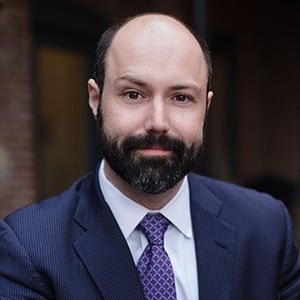
Senior Counsel, Compass Legal Group
Andrew Kloster is Senior Counsel at the nonprofit Compass Legal Group. He is a long-time fixture of the conservative movement, advising clients on the new right on a wide variety of matters criminal, civil, political / electoral, and administrative. Recently, he served as Chief of Staff to the Wisconsin Office of Special Counsel investigation into election administration. Prior to that, he served in the Trump administration, including concurrently as Associate Director in the White House Office of Presidential Personnel and as Deputy General Counsel (and later, Acting General Counsel) in the United States Office of Personnel Management. He has also served in senior positions in regulatory and legal positions at the United States Department of Transportation and the Environmental Protection Agency, and was appointed by President Trump to serve a three-year term on the Council of the Administrative Conference of the United States. Previously, he worked at the Heritage Foundation, the Scalia Law School, and other movement groups. He is a graduate of the University of Miami and the New York University School of Law, and he served as a law clerk on the United States Court of Appeals for the Seventh Circuit.
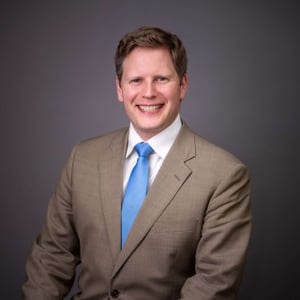
Director, Center for American Freedom, America First Policy Institute
James Sherk was born in Ontario, Canada, and immigrated with his family to Midland, Michigan while in middle school. He serves as AFPI’s Director of the Center for American Freedom. Sherk previously served as Special Assistant to the President for Domestic Policy on the White House Domestic Policy Council under President Donald Trump. James served as the Administration’s top civil service reform and labor policy advisor from 2017 to 2021. At the White House, he was the principal author of and/or policy lead for approximately two dozen executive orders and presidential memoranda. Sherk also served as a member of the President’s Council on Improving Federal Civic Architecture. Prior to his White House service, Sherk was a Research Fellow at the Heritage Foundation, where he was a nationally recognized expert on the civil service and labor policy. Sherk received a Bachelor of Science in Mathematics and Economics from Hillsdale College and an Master of Arts in Economics from the University of Rochester. Sherk and his wife, Jill, live in Northern Virginia with three beloved children who teach their parents to ponder inscrutable questions like “how much drawing can go on the walls before we have to repaint them?”
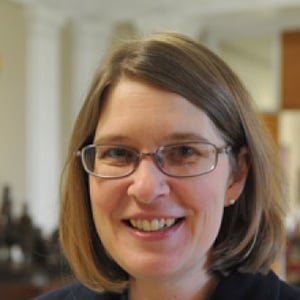
Professor of Law, University of Louisville Brandeis School of Law
Ariana R. Levinson is a nationally acclaimed and internationally recognized labor and employment law scholar and focuses her teaching on practical legal skills. She has often presented her research, including at Berkeley Law School, Fordham Law School, University of Leeds, and Universidad Carlos II de Madrid. Levinson’s work has been published in the Columbia Business Law Review and the Cornell Journal of Law and Public Policy. She has a forthcoming student co-authored article in the Harvard Journal on Legislation and is working on a hornbook on arbitration.
Professor Levinson received a Corey Rosen Research Fellowship from the Rutgers School of Management and Labor Relations for the 2012-13 academic year, and a Michael W. Huber Fellowship for the 2013-14 academic year. In conjunction with the fellowships, she published "Founding Worker Cooperatives: Social Movement Theory and the Law" in the Nevada Law Journal and is working on a research project about the Cincinnati Union Co-op Initiative. Her article "What the Awards Tell Us about Labor Arbitration of Employment Discrimination Claims", published in the University of Michigan Journal of Law Reform was selected by blind review by Vanderbilt Law School faculty for presentation at the Branstetter New Voices in Civil Justice Workshop in May 2012.
In addition to writing about worker ownership and arbitration, Professor Levinson has also written a number of articles about workplace technology and privacy. Her most recent publications on this topic include a book chapter in the Research Handbook on Electronic Commerce Law.
Professor Levinson is the faculty liaison to the Peggy Browning Fund and a co-planner of the Warns-Render Labor and Employment Law Institute, an annual labor and employment law continuing legal education program. She coaches the mock arbitration team and advises the Wagner moot court team. She is a Reviewer for the American Business Law Journal. Professor Levinson is admitted to practice in Indiana and California.
Prior to teaching at Brandeis School of Law, Professor Levinson taught at USC Gould School of Law and at UCLA School of Law. She clerked for the Honorable John G. Davies (United States District Court, Central District of California) and for the Honorable Myra C. Selby (Supreme Court of Indiana) and practiced labor law, including serving as a fellow for the AFL-CIO's Legal Department.
She graduated magna cum laude from the University of Michigan Law School. During law school, she served as a contributing editor on the Michigan Law Review and was awarded the Robert S. Feldman Labor Law Award for the most outstanding work in that field. She also received a 2014-15 faculty favorite award from the University of Louisville Delphi Center for Teaching and Learning.
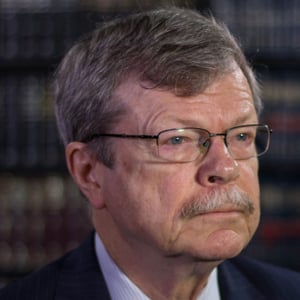
Vice President & Legal Director, National Right To Work Legal Defense Foundation
Raymond J. LaJeunesse, Jr., is Vice President and Legal Director of the National Right to Work Legal Defense Foundation, a non-profit legal aid organization. He was the first Staff Attorney employed by the Foundation and has more than forty-five years of experience helping workers in litigation in federal and state courts and administrative agencies over the abuses of compulsory unionism.
Mr. LaJeunesse has argued four cases in the United States Supreme Court. Those cases include Lehnert v. Ferris Faculty Ass’n, 500 U.S. 507 (1991), which limited the purposes for which compulsory union fees collected from public employees may lawfully be spent; Air Line Pilots Ass’n v. Miller, 523 U.S. 866 (1998), which established that unions cannot compel nonmembers to exhaust union-established remedies before going to court to challenge compulsory union fees; and Marquez v. Screen Actors Guild, 525 U.S. 33 (1998), in which the Court recognized that unions must notify employees that they can satisfy the “membership” requirement of “union shop” agreements by just paying fees for union bargaining activities and need not join and pay full dues to keep their jobs. He also was lead attorney in Hohe v. Casey, 956 F.2d 399 (3d Cir. 1992), in which more than $8.3 million in compulsory agency fees was recovered from the American Federation of State, County and Municipal Employees for a class of 57,000 nonmembers.
Mr. LaJeunesse is the author of several published articles about labor law, has testified before Congressional committees several times, and was an Advisor on the Transition Team for Labor- Related Agencies, Office of the President-Elect, in 1980-81 and a legislative aide to a member of the Virginia state legislature. He is a Vice Chairman of the Federalist Society’s Labor and Employment Law Practice Group and has spoken or debated at the Society’s National Lawyers Convention and at many Lawyers and Student Chapters on such topics as Right to Work laws, compulsory unionism arrangements, the misuse of union dues for politics, union organizing tactics (“card check” vs. secret-ballot elections), and the future of the union movement.
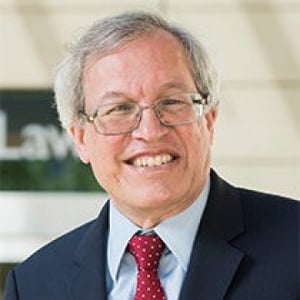
Dean and Jesse H. Choper Distinguished Professor of Law, UC Berkeley School of Law
Erwin Chemerinsky became the 13th Dean of Berkeley Law on July 1, 2017, when he joined the faculty as the Jesse H. Choper Distinguished Professor of Law.
Prior to assuming this position, from 2008-2017, he was the founding Dean and Distinguished Professor of Law, and Raymond Pryke Professor of First Amendment Law, at University of California, Irvine School of Law, with a joint appointment in Political Science. Before that he was the Alston and Bird Professor of Law and Political Science at Duke University from 2004-2008, and from 1983-2004 was a professor at the University of Southern California Law School, including as the Sydney M. Irmas Professor of Public Interest Law, Legal Ethics, and Political Science. He also has taught at DePaul College of Law and UCLA Law School.
He is the author of eleven books, including leading casebooks and treatises about constitutional law, criminal procedure, and federal jurisdiction. His most recent books are, We the People: A Progressive Reading of the Constitution for the Twenty-First Century (Picador Macmillan) published in November 2018, and two books published by Yale University Press in 2017, Closing the Courthouse Doors: How Your Constitutional Rights Became Unenforceable and Free Speech on Campus (with Howard Gillman).
He also is the author of more than 200 law review articles. He writes a regular column for the Sacramento Bee, monthly columns for the ABA Journal and the Daily Journal, and frequent op-eds in newspapers across the country. He frequently argues appellate cases, including in the United States Supreme Court.
In 2016, he was named a fellow of the American Academy of Arts and Sciences. In 2017, National Jurist magazine again named Dean Chemerinsky as the most influential person in legal education in the United States.
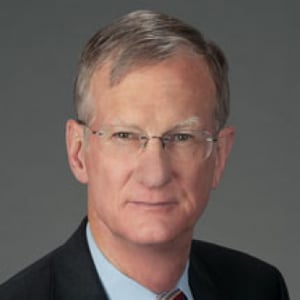
Legal Scholar and Solo Practitioner
Jack received his B.A. in History from the University of Virginia in 1977, graduating with Highest Distinction. After graduating Yale Law School in 1980, he served active duty in the U.S. Army's JAG Corps, rising to the rank of Major, where he represented the United States in more than 250 cases.
He practiced for a decade as an Associate for Bradley Arant in Birmingham, Alabama. He proudly served the State of Alabama in the Office of the Attorney General, both as Deputy and Assistant Attorney General, handling complex civil and criminal litigation cases for the people of Alabama. In 2000, he won the "Best Brief Award" from the National Association of Attorneys General for his brief in a case decided by the U.S. Supreme Court, James Alexander v. Martha Sandoval – a case he won. He was Special Assistant to the Inspector General for the Corporation for National and Community Service, Visiting Legal Fellow for the Center for Judicial and Legal Studies for the Heritage Foundation, Of Counsel at Strickland Brockington Lewis, a solo practitioner, and General Counsel for Indigo Energy.
Most recently, he "re-upped" for military service, volunteering his legal services to the Georgia State Defense Force where twice each month he provided legal services for National Guardsmen who were being deployed. He wore his military uniform for the last time in October 2024.
Jack Park passed away on March 16, 2026.
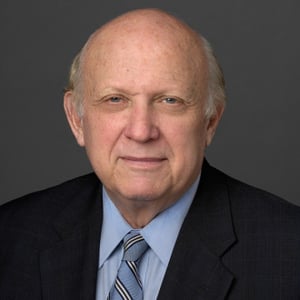
Senior Counsel, Cahill Gordon & Reindel LLP
Floyd Abrams is Senior Counsel in Cahill Gordon & Reindel LLP's litigation practice group.
Floyd has a national trial and appellate practice and extensive experience in high-visibility matters, often involving First Amendment, securities litigation, intellectual property, public policy and regulatory issues. He has argued frequently in the Supreme Court in cases raising issues as diverse as the scope of the First Amendment, the interpretation of ERISA, the nature of broadcast regulation, the impact of copyright law and the continuing viability of the Miranda rule. Most recently, Floyd prevailed in his argument before the Supreme Court on behalf of Senator Mitch McConnell as amicus curiae, defending the rights of corporations and unions to speak publicly about politics and elections in Citizens United v. Federal Election Commission. Floyd's clients have included The McGraw-Hill Companies in a large number of litigations around the country involving claims against its subsidiary, Standard & Poor’s Financial Services LLC, The New York Times in the Pentagon Papers case and others, ABC, NBC, CBS, CNN, Time Magazine, Business Week, The Nation, Reader's Digest, Hearst, AIG, and others in trials, appeals and investigations.
Floyd has represented Standard & Poor’s in litigations about its ratings; he defended the Brooklyn Museum of Art in its legal battles with Mayor Rudolph Giuliani; he represented two of the nation’s largest insurers in litigation under Section 17200 in California and he has frequently testified before congressional committees and prepared clients to do so. In 1998, he represented CNN in investigating and issuing a report on its broadcast accusing the United States of using nerve gas on a military mission in Laos in 1970, and again in 1999 in seeking to persuade the United States Senate to permit the public to view its deliberations as it determined whether or not to convict President Clinton of alleged high crimes and misdemeanors. He represented Nina Totenberg and National Public Radio in the 1992 "leak" investigation conducted by the United States Senate arising out of the confirmation hearing of Justice Clarence Thomas and, in 2004 and 2005, Judith Miller and Matthew Cooper in their efforts to avoid revealing their confidential sources.
In 2006, Floyd was elected to the American Academy of Arts & Sciences, an independent research center that conducts multidisciplinary studies of complex and emerging problems advanced by its 4,600 elected members, who are leaders in the academic disciplines, the arts, business and public affairs from around the world. In 2015, Floyd was honored by Yale Law School with its prestigious Award of Merit. Also in 2015, Floyd received the Walter Cronkite Freedom of Information Award presented by the Connecticut Foundation for Open Government. In 2011, Floyd was awarded the CUNY Graduate School of Journalism's Lifetime Achievement Award. In 1998, Floyd was the recipient of the William J. Brennan, Jr. Award for outstanding contribution to public discourse; the Learned Hand Award of the American Jewish Committee; and the Thurgood Marshall Award of the Association of the Bar of the City of New York. In November, 1999, he received the William J. Brennan, Jr. award of the Libel Defense Resource Center. Floyd was awarded, in 1997, the Milton S. Gould Award for outstanding appellate advocacy by the Office of the Appellate Defender in New York. Previously he had been awarded the Ross Essay Prize of the American Bar Association for his study of the Ninth Amendment of the United States Constitution. He has also received awards from, among others, the American Jewish Congress, Catholic University, the New York and Philadelphia Chapters of the Society of Professional Journalists, Sigma Delta Chi, the New York Civil Liberties Union, the Association for Education in Journalism and Mass Communication, and the National Broadcast Editorial Association.
In November, 2011, Yale Law School announced the formation of The Floyd Abrams Institute for Freedom of Expression, whose mission is to promote free speech, scholarship and law reform on emerging questions concerning traditional and new media. Developed in cooperation with Floyd, the Institute includes a clinic for Yale Law students to engage in litigation, draft model legislation, and advise lawmakers and policy makers on issues of media freedom and informational access.
The American Bar Association awarded Floyd its Certificate of Merit for his article published in The New York Times Magazine entitled "The New Effort to Control Information," which was described by the ABA as a "noteworthy contribution to public understanding of the American system of law and justice."
Described by Senator Daniel Patrick Moynihan as "the most significant First Amendment lawyer of our age," Floyd is top-ranked by Chambers USA. He is listed in Who’s Who Legal, Who’s Who in American Law, and has been awarded with Lifetime Achievement Awards by The New York Law Journal and The American Lawyer (2013).
Floyd, who served as chairman of Mayor Edward Koch's Committee on Appointments, New York City, served as the Chairman of the New York State Zenger Commemoration Planning Committee. Previously, he served as the Chairman of the Communications Committee of the Association of the Bar of the City of New York, as well as Chairman of the Committee on Freedom of Speech and of the Press of the Individual Rights Section of the American Bar Association and of the Committee on Freedom of Expression of the Litigation Section of the American Bar Association.
He has appeared frequently on television on Nightline, the News Hour with Jim Lehrer, Charlie Rose and other programs and has published articles and reviews in The New York Times, The Washington Post, The Yale Law Journal, The Harvard Law Review, and elsewhere.
Floyd served on the Technology and Privacy Advisory Committee of the U.S. Department of Defense in 2003-4 and as the Chair of the New York State Commission on Public Access to Court Records in 2004.
For fifteen years, Floyd was the William J. Brennan, Jr. Visiting Professor of First Amendment Law at the Columbia Graduate School of Journalism. He has, as well, been a Visiting Lecturer at Yale Law School and Columbia Law School and he is author of Friend of the Court: On the Front Lines with the First Amendment, published by Yale University Press (2013) and Speaking Freely: Trials of the First Amendment, published by Viking Press (2005).

Richard and Frances Mallery Professor of Law and Faculty Director, Constitutional Law Center, Stanford Law School
Michael W. McConnell is the Richard and Frances Mallery Professor and Faculty Director of the Constitutional Law Center at Stanford Law School, and a Senior Fellow at the Hoover Institution. From 2002 to 2009, he served as a Circuit Judge on the United States Court of Appeals for the Tenth Circuit. He was nominated by President George W. Bush, a Republican, and confirmed by a Democratic Senate by unanimous consent. McConnell has previously held chaired professorships at the University of Chicago and the University of Utah, and visiting professorships at Harvard and NYU. He teaches courses on constitutional law, constitutional history, First Amendment, and interpretive theory. He has published widely in the fields of constitutional law and theory, especially church and state, equal protection, and separation of powers. His book, “The President Who Would Not Be King: Executive Power Under the Constitution,” was published by Princeton University Press in 2020, based on the Tanner Lectures in Human Values, which he delivered at Princeton in 2019. His latest book, co-authored with Nathan Chapman, “Agreeing to Disagree: How the Establishment Clause Protects Religious Diversity and Freedom of Conscience,” was published by Oxford University Press in mid-2023. McConnell has argued sixteen cases in the United States Supreme Court, most recently Carney v. Adams (2020). defending a provision of the Delaware Constitution requiring political balance on that state’s courts. More recently, he was co-counsel in Gonzalez v. Google. He earned his B.A. from Michigan State University and his J.D. from the University of Chicago, and has received honorary degrees from Notre Dame University and Michigan State. He served as law clerk to Supreme Court Justice William J. Brennan, Jr. and D.C. Circuit Chief Judge J. Skelly Wright. He has been Assistant General Counsel of the Office of Management & Budget, Assistant to the Solicitor General of the Department of Justice, and a member of the President’s Intelligence Oversight Board. He is Senior of Counsel to the law firm Wilson, Sonsini, Goodrich & Rosati, and is co-chair of Meta’s Oversight Review Board.
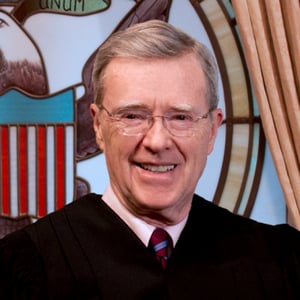
Judge, United States Court of Appeals, Ninth Circuit
Judge O’Scannlain was appointed United States Circuit Judge for the Ninth Circuit by President Reagan on September 26, 1986. He received a J.D. degree in 1963 from Harvard Law School and a B.A. in 1957 from St. John’s University. He also earned the LL.M. (Judicial Process) degree at University of Virginia Law School in 1992. He was awarded the LL.D. (honoris causa) degree by the University of Notre Dame in 2002, the LL.D. (honoris causa) degree by Lewis & Clark College in 2003 and the LL.D. (honoris causa) degree by the University of Portland in 2011.
As a judge on the U.S. Court of Appeals for the Ninth Circuit, Judge O’Scannlain has participated in over 6,000 federal cases and has written hundreds of published opinions on a broad range of subjects including constitutional law, international law, securities law, administrative law, and criminal law. He hears appeals in San Francisco (court headquarters), as well as in Los Angeles (Pasadena), Portland, Seattle, Anchorage and Honolulu. The late Chief Justice Rehnquist appointed Judge O'Scannlain to the Federal Judicial Center's Advisory Committee on Appellate Judge Education. In 2009, Chief Justice Roberts appointed Judge O’Scannlain to the International Judicial Relations Committee of the U.S. Judicial Conference and subsequently appointed him Chairman in 2010.
President George W. Bush appointed Judge O’Scannlain to the Board of Trustees of the James Madison Memorial Fellowship Foundation in 2004. Pope Benedict XVI conferred the Order of Saint Gregory the Great on Judge and Mrs. O’Scannlain in 2007.
Judge O’Scannlain’s professional interests also include judicial administration and reform, and continuing legal education. Judge O’Scannlain is former Chair of the Judicial Division of the American Bar Association and has previously chaired the ABA’s Appellate Judges Conference, its Committee on Appellate Practice, and its 9th Appellate Practice Institute. He has testified before the Senate Judiciary Committee on several occasions, the House Judiciary Subcommittee on Courts and Intellectual Property, and the Commission on Structural Alternatives for the Federal Courts of Appeals on the subject of court reorganization. In addition to serving as a faculty member at numerous federal appellate practice seminars for judges and attorneys, including New York University Law School’s Institute for Judicial Administration, Judge O’Scannlain is an Adjunct Professor at Lewis & Clark Law School where he teaches a seminar on the Supreme Court. He has served as a Moot Court Judge at distinguished law schools across the United States including Harvard, Yale Stanford, Boalt Hall (Berkeley Law), Virginia, Cornell, Notre Dame, Fordham, Alabama, University of Southern California, King Hall (U.C. Davis) and Loyola Marymount University and in China at Xiamen and Renmin Universities.
Between graduation from Harvard and investiture as a federal judge, Judge O’Scannlain was primarily engaged in private law practice. Between 1969 and 1974, he was consecutively the Deputy Attorney General of Oregon, the Public Utility Commissioner of Oregon, and Director of the Oregon Department of Environmental Quality. He retired from the U.S. Army Reserve in 1978 as a Major after 23 years Reserve and National Guard service, including four years as an enlisted man.
A first generation Irish-American son of immigrant parents from Sligo and Derry, Judge O’Scannlain is married to the former Maura Nolan and has eight children: Sean, Jane, Brendan, Kevin, Megan, Christopher, Anne, and Kate, and nineteen grandchildren. His chambers are in the Pioneer Courthouse in Portland, Oregon.
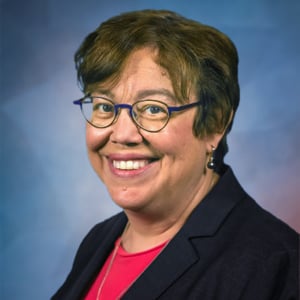
Executive Vice President and Senior Counselor to the President, The Federalist Society for Law and Public Policy Studies
B.A., Yale; J.D., University of Chicago. Lee Liberman Otis is the Executive Vice President and Senior Counselor to the President at the Federalist Society. She also serves as a member of the American Law Institute (ALI), a senior fellow of the Administrative Conference (ACUS), and as the co-chair of the National Constitution Center's Coalition of Freedom Advisory Board. She previously was a special assistant and an Associate Deputy Attorney General at the U.S. Department of Justice, General Counsel of the Department of Energy, an associate in the appellate section of Jones, Day, Reavis & Pogue, an associate counsel to President George H.W. Bush, and a law clerk to Associate Justice Antonin Scalia. She also served as an assistant professor of law at George Mason, where she taught legislation, federal jurisdiction, constitutional law, civil procedure, and appellate advocacy. Ms. Otis has been an important member of the Federalist Society team since the organization’s beginnings. Together with David McIntosh, she led the effort to start what became the Chicago chapter of the Society. She also helped organize the Society’s first conference at Yale, its second conference at Chicago, and its first Lawyers Division chapter in Washington DC, as well as the effort to incorporate the Society, recruit its permanent staff, and obtain its early funding. She was a Founding Director of the Federalist Society.

Judge, United States Court of Appeals, Eighth Circuit
David Stras became a judge on the United States Court of Appeals for the Eighth Circuit on January 31, 2018. Before serving on the Eighth Circuit, Judge Stras was an Associate Justice of the Minnesota Supreme Court, a position he occupied from July 1, 2010 until his appointment to the Eighth Circuit.
Prior to becoming a judge, Stras was a member of the faculty of the University of Minnesota Law School from 2004 through 2010. He taught and wrote in the areas of federal courts and jurisdiction, constitutional law, criminal law, and law and politics.
Judge Stras received his Bachelor of Arts degree, with highest distinction, in 1995 and his Master of Business Administration in 1999, both from the University of Kansas. He also received his law degree from the University of Kansas School of Law in 1999, where he served as Editor-in-Chief of the Criminal Procedure Edition of the Kansas Law Review.
Following law school, Stras clerked for The Honorable Melvin Brunetti of the United States Court of Appeals for the Ninth Circuit and then for The Honorable J. Michael Luttig of the United States Court of Appeals for the Fourth Circuit.
From 2001 to 2002, he practiced white-collar criminal and appellate litigation with the Washington, D.C., office of Sidley Austin Brown & Wood. Following his year in practice, he clerked for The Honorable Clarence Thomas of the Supreme Court of the United States.
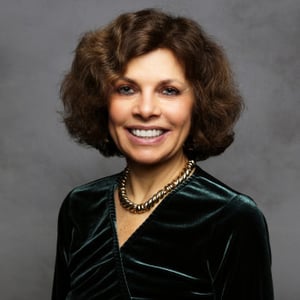
John Marshall Harlan II Professor of Law Emerita, New York Law School; Former President, American Civil Liberties Union
Nadine Strossen, New York Law School Professor Emerita and Senior Fellow at FIRE (the Foundation for Individual Rights and Expression), was national President of the American Civil Liberties Union from 1991 to 2008. An internationally acclaimed free speech scholar and advocate, who regularly addresses diverse audiences and provides media commentary around the world, Strossen is also the Host and Project Consultant for Free To Speak, a 3-hour documentary film series distributed on public television in 2023. Her books about free speech include: Free Speech: What Everyone Needs to Know® (Oxford University Press 2023); HATE: Why We Should Resist It with Free Speech, Not Censorship (Oxford University Press 2018); and Defending Pornography: Free Speech, Sex, and the Fight for Women’s Rights (Scribner 1995), which was republished with a new Preface in 2024 as part of the NYU Classics Series. Her many honors and awards include the National Coalition Against Censorship’s Judy Blume Lifetime Achievement Award for Free Speech. She serves on the Advisory Boards of several organizations that do free speech work, including: ACLU, Academic Freedom Alliance, Foundation Against Intolerance and Racism (FAIR), Heterodox Academy, National Coalition Against Censorship, and the University of Austin.

Thomas M. Siebel Senior Fellow, The Hoover Institution, Stanford University; Gary T. Schwartz Distinguished Professor of Law Emeritus, UCLA School of Law
Eugene Volokh is the Thomas M. Siebel Senior Fellow at the Hoover Institution (Stanford), as well as the Gary T. Schwartz Distinguished Professor of Law Emeritus and Distinguished Research Professor at UCLA School of Law. He recently retired from teaching at UCLA, after 30 years there, and is now focusing on research.
Volokh is the author of the textbooks The First Amendment and Related Statutes (8th ed. 2023), and Academic Legal Writing (5th ed. 2016), as well as over 100 academic law journal articles, mostly on First Amendment law. He is a member of The American Law Institute; the editor-in-chief of the Journal of Free Speech Law; and the creator and coauthor of The Volokh Conspiracy, a leading legal blog founded in 2002 (hosted at the Washington Post from 2014 to 2017 and now at Reason Magazine).

Distinguished Senior Fellow and Antonin Scalia Chair in Constitutional Studies, Ethics and Public Policy Center
Edward Whelan is a Distinguished Senior Fellow of the Ethics and Public Policy Center and holds EPPC’s Antonin Scalia Chair in Constitutional Studies. He is the longest-serving President in EPPC’s history, having held that position from March 2004 through January 2021.
Mr. Whelan directs EPPC’s program on The Constitution, the Courts, and the Culture. His areas of expertise include constitutional law and the judicial confirmation process. As a contributor to National Review Online’s Bench Memos blog, he has been a leading commentator on nominations to the Supreme Court and the lower courts and on issues of constitutional law. He has written essays and op-eds for leading newspapers—including the Wall Street Journal, the New York Times, and the Washington Post—opinion journals, and academic symposia and law reviews. The National Law Journal has named Mr. Whelan among its “Champions and Visionaries” in the practice of law in D.C.
Mr. Whelan is co-editor of three volumes of Supreme Court Justice Antonin Scalia’s work: Scalia Speaks: Reflections on Law, Faith, and Life Well Lived (Crown Forum, 2017), a New York Times bestselling collection of speeches by Justice Scalia; On Faith: Lessons from an American Believer (Crown Forum, 2019), a collection of Justice Scalia’s writings on faith and religion; and The Essential Scalia: On the Constitution, the Courts, and the Rule of Law (Crown Forum, 2020), a collection of Justice Scalia’s views on legal issues.
Mr. Whelan, a lawyer and a former law clerk to Justice Scalia, has served in positions of responsibility in all three branches of the federal government. From just before the terrorist attacks of September 11, 2001, until joining EPPC in 2004, Mr. Whelan was the Principal Deputy Assistant Attorney General for the Office of Legal Counsel in the U.S. Department of Justice. In that capacity, he advised the White House Counsel’s Office, the Attorney General and other senior DOJ officials, and departments and agencies throughout the executive branch on difficult and sensitive legal questions. Mr. Whelan previously served on Capitol Hill as General Counsel to the U.S. Senate Committee on the Judiciary. In addition to clerking for Justice Scalia, he was a law clerk to Judge J. Clifford Wallace of the U.S. Court of Appeals for the Ninth Circuit.
In 1981 Mr. Whelan graduated with honors from Harvard College and was inducted into Phi Beta Kappa. He received his J.D. magna cum laude in 1985 from Harvard Law School, where he was a member of the Board of Editors of the Harvard Law Review.
For more on Mr. Whelan’s background, see this interview.
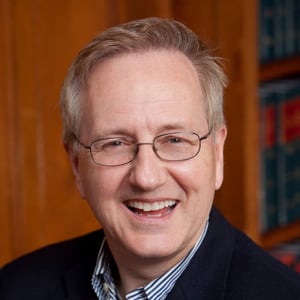
Alexander M. Bickel Professor of Public Law, Yale Law School
Degrees from Davidson College, B.A. summa cum laude, 1973; Harvard University, M.A., 1974; Yale Law School, J.D, 1978. Clerked for Edward Weinfeld, 1978-79; Attorney at Shea & Gardner, 1979-82; Law Professor since 1982, tenured at Georgetown and Yale, visiting professor at Stanford, NYU, Toronto, Harvard, Columbia, Penn, Fordham, Vanderbilt. Author of casebooks on legislation and sexuality, gender and law, as well as monographs on statutory interpretation and the rights of sexual and gender minorities. Author of dozens of articles, by one empirical count a top ten most cited law professors.
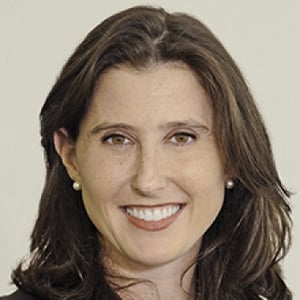
Professor of Law and Faculty Director, Solomon Center for Health Law and Policy, Yale Law School
Abbe R. Gluck is a Professor of Law and the Faculty Director of the Solomon Center for Health Law and Policy at Yale Law School. She joined Yale Law School in 2012, having previously served on the faculty of Columbia Law School. She is an expert on Congress and the political process, federalism, civil procedure, and health law, and is the chair emerita of Section on Legislation and the Law of the Political Process for the Association of American Law Schools. Gluck has extensive experience working as a lawyer in all levels of government. Prior to joining Columbia, she served in the administration of New Jersey Governor Jon Corzine as the special counsel and senior advisor to the New Jersey Attorney General; and in the administration of New York City Mayor Michael Bloomberg, as chief of staff and counsel to the Deputy Mayor for Health and Human Services, senior counsel in the New York City Office of Legal Counsel, and deputy special counsel to the New York City Charter Revision Commission. Prior to law school, she worked in the U.S. Senate for Senator Paul S. Sarbanes of Maryland. Before returning to government work after law school, Professor Gluck was associated with the Paul Weiss firm in New York. She earned her B.A. from Yale University, summa cum laude, and her J.D. from Yale Law School. Following law school, she clerked for then-Chief Judge Ralph K. Winter on the U.S. Court of Appeals for the Second Circuit, and for U.S. Supreme Court Justice Ruth Bader Ginsburg. Gluck's scholarship has been published in the Yale Law Journal, the Harvard Law Review, the Stanford Law Review, the Columbia Law Review, the New England Journal of Medicine, Health Affairs, and many other journals. Among her most recent work is the most extensive empirical study ever conducted about the realities of the congressional law-making process (published in the Stanford Law Review) and the Harvard Law Review's Supreme Court issue comment on King v. Burwell, the 2015 challenge to the Affordable Care Act. She also served as co-counsel on a Supreme Court brief in both King and the 2012 ACA challenge, NFIB v. Sebelius. Professor Gluck currently serves on numerous boards and commissions, including as an appointed member of both the Uniform Law Commission and the New York State Taskforce on Life and the Law, and as an elected member of the American Law Institute. In 2015, Gluck received the Law School's teaching award.
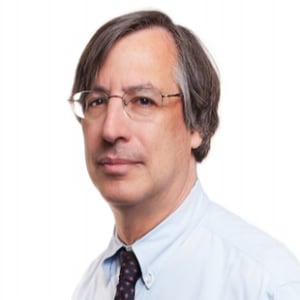
Levin, Mabie & Levin Professor of Law, University of Florida Levin College of Law
Professor Gary Lawson joined the University of Florida Levin College of Law faculty on July 1, 2024, after twenty-four years at Boston University School of Law and eleven years at Northwestern University School of Law. While at Boston University, he was named a William Fairfield Warren Distinguished Professor in 2022 – the highest faculty honor within the university. He has authored or co-authored nine editions of a textbook on administrative law, a textbook on constitutional law, five university press books, one popular press book, and more than one hundred scholarly articles on topics ranging from aspects of constitutional theory and history to the proof of legal propositions. His works have been cited in more than twenty opinions of United States Supreme Court justices. He is a founding member, and serves on the Board of Directors, of the Federalist Society for Law and Public Policy Studies and is on the Editorial Advisory Board of the Heritage Guide to the Constitution.

Executive Vice President, The Federalist Society
Dean Reuter is Executive Vice President at the Federalist Society for Law and Public Policy Studies. He has served in two federal government agency Offices of the Inspector General, as Counsel to the Inspector General and Deputy Inspector General, responsible for policing the use of federal funds granted and contracted through those agencies. As such, he helped conduct and oversee criminal investigations across the country. He is the principal author of the non-fiction book, The Hidden Nazi: The Untold Story of America's Deal with the Devil, and editor of Liberty’s Nemesis: The Unchecked Expansion of the State and Confronting Terror: 9/11 and the Future of American National Security. He was appointed by the President and served as Vice-Chairman of the Board of Directors of the Corporation for National and Community Service, and recently served as an appointee on the U.S. Commission on Presidential Scholars. He is a graduate of Hood College (BA with Honors) and the University of Maryland School of Law.

Professor of Law, Georgetown University Law Center
Nicholas Quinn Rosenkranz teaches constitutional law and federal jurisdiction, and he writes articles for the Harvard Law Review and the Stanford Law Review.
He is currently developing a new theory of constitutional interpretation and judicial review. The first installment, entitledThe Subjects of the Constitution, was published in the Stanford Law Review in May of 2010, and it is among the most downloaded articles about constitutional interpretation, judicial review, and/or federal courts in the history of SSRN. The second installment, The Objects of the Constitution, was published in May of 2011, also in the Stanford Law Review. And the comprehensive version is forthcoming as a book by Oxford University Press.
Rosenkranz has served and advised the federal government in a variety of capacities. He clerked for Judge Frank H. Easterbrook on the U.S. Court of Appeals for the Seventh Circuit (1999-2000) and for Justice Anthony M. Kennedy at the U.S. Supreme Court (October Term 2001). He served as an Attorney-Advisor at the Office of Legal Counsel in the U.S. Department of Justice (November 2002 - July 2004). He often testifies before Congress as a constitutional expert—most recently before the House Financial Services Oversight Subcommittee, regarding the Obama Administration's use of bank settlement agreements to circumvent the Appropriations Clause. He has also filed briefs and presented oral argument before the U.S. Supreme Court. His most recent Supreme Court brief, in Los Angeles v. Patel, was cited by Justice Alito in dissent.
Rosenkranz is a member of the New York Bar and the U.S. Supreme Court Bar. He is a Senior Fellow at the Cato Institute. He serves on the Board of Directors of the Foundation for Individual Rights in Education (FIRE). He is a founding member of Heterodox Academy and a member of its Executive Committee. He also serves on the Board of Directors of the Federalist Society and as the faculty advisor to the Georgetown chapter.
Judge, United States Court of Appeals, Seventh Circuit
Judge Sykes was nominated to the Seventh Circuit by President George W. Bush and confirmed by the Senate in 2004. Prior to her appointment to the federal bench, Judge Sykes served as a justice on the Wisconsin Supreme Court. Governor Tommy G. Thompson appointed her in September 1999 to fill a mid-term vacancy on the state supreme court, and she was elected to a full ten-year term in April 2000. From 1992-1999, Judge Sykes served on the state trial bench in Milwaukee County (elected in 1992 and re-elected in 1998). From 1985-1992, Judge Sykes practiced law with the Milwaukee firm of Whyte & Hirschboeck, S.C., and from 1984-1985, was a law clerk to Federal Judge Terence T. Evans.
Born and raised in the Milwaukee area, Judge Sykes earned a bachelor’s degree in journalism from Northwestern University in 1980 and a law degree from Marquette University Law School in 1984. Between college and law school, Judge Sykes worked as a reporter for The Milwaukee Journal.
Judge Sykes has two sons.

Differing Levels of Scrutiny for Economic Regulations: "Anything Goes" Rational Basis v. Rational Basis "With Bite"
Recently, the South Carolina Supreme Court issued a decision striking down a state law that...
Interpreting State Constitutions
Judith L. French, Jeffrey S. Sutton, Steve Yarbrough
State courts are often faced with cases raising arguments under state and federal law. If...
Unwarranted: Policing Without Permission by Barry Friedman - Podcast
John G. Malcolm, Barry Friedman, Orin S. Kerr
In June 2013, documents leaked by Edward Snowden sparked widespread debate about secret government surveillance...
Conversation with State Supreme Court Justices
Clint Bolick, Steve J. Markman, Jennifer Perkins, Diane S. Sykes
What is the proper role of the State judiciary when considering questions of federal law? ...
Litigating State Constitutional Issues
Thomas Ahearne, Joel Ard, Paul Avelar, Carrie Ann S. Donnell, Carolyn B. Kuhl, Jeremy B. Rosen
The past forty years have seen a surge in efforts to litigate under state constitutional provisions...
Forty Years Later: The Brennan Article and State Constitutions
Jay S. Bybee, James A. Gardner, Eugene B. Meyer, Kenneth P. Miller, Derek T. Muller
In 1977, the publication of Justice William Brennan’s article, “State Constitutions and the Protection of...
Statewide vs. Local Right to Work Laws - Podcast
Andrew Kloster, James Sherk, Ariana R. Levinson, Raymond J. LaJeunesse
In 1957, an article in the Stanford Law Review asked the question: can counties and cities pass...
The Morality of Consent - Podcast
Erwin Chemerinsky, James A. Haynes, John J. Park
The Federalist Society's Legal Classics Revisited series returns to the writing of Professor Alexander Bickel...
Showcase Panel IV: ROUNDTABLE: Areas of Constitutional Doctrine Transformed
Floyd Abrams, Michael W. McConnell, Diarmuid F. O'Scannlain, Lee Liberman Otis, David R. Stras, Nadine Strossen, Eugene Volokh, Edward Whelan
The final Showcase panel examines Justice Scalia's transformation of five very important areas of Supreme...
Showcase Panel III: Transforming Statutory Interpretation
William N. Eskridge, Abbe R. Gluck, Gary Lawson, Dean Reuter, Nicholas Quinn Rosenkranz, Diane S. Sykes
Justice Scalia also greatly influenced the law of statutory interpretation. By eliminating legislative history as...