
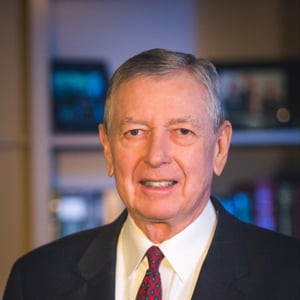
Chairman, The Ashcroft Law Firm LLC, and former United States Attorney General
Former U.S. Attorney General, Governor and U.S. Senator John Ashcroft serves as the firm’s founder and chairman. As Attorney General, and the U.S. Justice Department’s CEO, Mr. Ashcroft led the world’s largest and foremost international law firm and law enforcement agency—an organization larger than most Fortune 500 companies, with over 122,000 employees. Mr. Ashcroft integrated strategic planning, budgeting, and performance measures, which resulted in the DOJ earning a clean audit for the first time in its history.
Mr. Ashcroft boldly led the Department of Justice through the transformational period after the September 11, 2001, terrorist attacks. He subsequently reorganized the Department to focus on its number one priority: preventing terrorism. The tough antiterrorism campaign he directed helped keep America safe throughout his tenure and resulted in the dismantling of terrorist cells across America and the disruption of over 150 terrorist plots worldwide.
Within two months of the attacks, and with financial markets still reeling, the unprecedented corporate scandals at ENRON, WorldCom and dozens more unfolded, further destabilizing the weakened economy. John Ashcroft was called upon to restore America’s faith in the integrity of our marketplace. He marshaled the resources of the federal government to bring to justice those guilty of massive corporate fraud. At all times, he demanded that cases be brought swiftly, with appropriate serious penalties—always taking into account the best interests of the employees and shareholders whose lives were most directly affected.
From 1985 to 1993, as Governor of Missouri, Ashcroft balanced eight consecutive budgets, built a $120 million budget surplus and established a $190 million operating reserve. His management and fiscal integrity helped generate 338,000 new jobs state-wide, a triple-A bond rating from the three major Wall Street rating agencies, a per capita state and local tax burden ranked 49th in the United States and a 12 percent increase in personal income. His new education performance standards led Fortune magazine to name him as one of the nation’s top ten Education Governors. In 1991, the non-partisan National Governors Association voted him Chairman.
Elected to the U.S. Senate in 1994, he brought his management skills to Washington where he authored budget rules protecting Social Security and Medicare and helped balance the federal budget for the first time in decades. As a member of the Senate Judiciary, Foreign Relations and Commerce Committees, he worked to reform laws regulating the banking, telecommunications, aviation, transportation and information technology industries.
In 1973, Mr. Ashcroft served as Missouri Auditor, followed by two terms as Missouri Attorney General. He was raised in Springfield, Missouri, received his undergraduate degree from Yale University and his Juris Doctor from the University of Chicago.
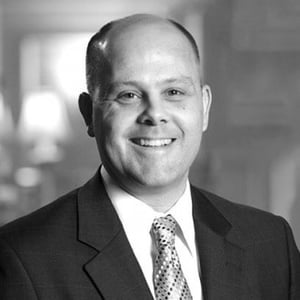
Founding Partner, PNT Law Firm
Austin R. Nimocks has litigated in state and federal courts across the country. Mr. Nimocks focuses his practice on civil litigation (plaintiff and defense), commercial litigation, corporate matters, federal compliance, internal investigations, government relations, white-collar criminal defense, and religious freedom.
Litigating for over 25 years, including three as a public defender, Mr. Nimocks has practiced law within the private, government, and non-profit sectors, geographically spanning the United States and beyond.
Prior to starting the PNT Law Firm (www.pntlawfirm.com), Mr. Nimocks worked for former U.S. Attorney General John Ashcroft in the Ashcroft Law Firm in Austin, Texas. For General Ashcroft, Mr. Nimocks litigated cases against all levels of government (federal, state, and local).
Prior to joining General Ashcroft, Mr. Nimocks served in the Executive Administration of Texas Attorney General Ken Paxton as both Special Counsel and the Associate Deputy Attorney General for Special Litigation. During his time with General Paxton, Mr. Nimocks coordinated and led myriad multi-state lawsuits and strategic litigation against the federal government, other states, and local government entities. On behalf of Texas (and other states), Mr. Nimocks’ teams achieved many victories against the federal government, including the U.S. Department of Justice, U.S. Department of Labor, U.S. Department of Health and Human Services, and other federal agencies
Before joining the Texas Attorney General’s Office, Mr. Nimocks served as Senior Counsel for Alliance Defending Freedom (“ADF”) in Washington, D.C. While at ADF, Mr. Nimocks handled appeals and litigated constitutional cases in state and federal courts across the country, including matters regarding marriage, parental rights, voters’ rights, and religious freedom. Mr. Nimocks also authored several pieces of legislation and policy memoranda and testified before numerous state legislatures, as well as Congress. While with ADF, Mr. Nimocks made regular public appearances, speaking at numerous events and participating in hundreds of television, radio, and newspaper interviews with all major national media outlets.
Mr. Nimocks began practicing law on the Mississippi Gulf Coast. In addition to his time spent as a public defender, Mr. Nimocks’ law practice in Mississippi was extremely diverse, involving personal injury, commercial litigation, appellate, contracts, real estate, administrative law, bankruptcy, libel & defamation, insurance defense, general civil litigation, and other matters.
In addition to his state bar admissions (TX, DC, MI, AZ, AL, MS), Mr. Nimocks is admitted to practice law before the U.S. Supreme Court, the U.S. Courts of Appeals for the D.C., First, Second, Third, Fourth, Fifth, Sixth, Seventh, Ninth, Tenth, and Eleventh Circuits, as well as numerous federal district courts.
Mr. Nimocks is a native Texan, born and raised in the Fort Worth area. Mr. Nimocks resides and attends church in Dripping Springs, Texas, along with his wife and three daughters.
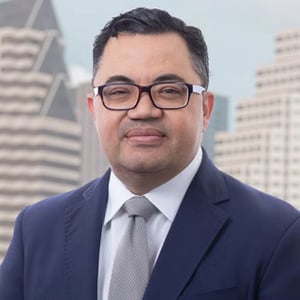
Partner, Troutman Pepper Locke
Lu is a former senior U.S. government official with a wealth of experience advising U.S. and international clients with complex regulatory and enforcement challenges. He has extensive experience representing clients facing state or federal government investigations and enforcement actions, conducting internal investigations, and advising corporate clients on regulatory compliance practices and in crisis response scenarios. As an accomplished legal strategist, Lu provides counsel to CEOs, CLO’s, and other executives, as well as boards of directors across various industries on a myriad of complex issues.
Lu’s clients benefit from his decades of experience providing strategic advice to top-tier government leaders, including the President of the United States and multiple United States Attorneys General. His career is marked by significant roles in federal and state government.
As Deputy Assistant to President George W. Bush, he was a chief advisor to the President and a member of the White House Senior Staff. In that role he provided strategic and human capital related policy advice directly to the President regarding all legal, national security, and international affairs, and presidential appointments administration-wide.
As Deputy Associate Attorney General at the U.S. Department of Justice, he served as Chief of Staff to the Associate Attorney General and had oversight of litigation emanating from the Tax, Civil Rights, Civil, and Community Relations Service Divisions of the agency. At the Department, he also previously served as Counselor to the Assistant Attorney General of the Civil Rights Division, and as Counsel to the Assistant Attorney General for the Civil Division, the division responsible for representing the U.S. in all constitutional challenges to U.S. law and defending the U.S. on all torts, federal programs, and immigration-related litigation.
Prior to joining private practice, Lu also served as the General Counsel for the federal law enforcement agency charged with rooting out waste, fraud, and abuse of the $50+ billion appropriated for the reconstruction of Iraq where he oversaw several federal fraud prosecutions in conjunction with the U.S. Department of Justice Criminal Frauds Section.
Earlier in his career, Lu served as an Assistant Attorney General and Trial Attorney for the Office of the Texas Attorney General, where he handled a robust civil litigation practice at the trial and appellate levels in both state and federal court.

Senior Vice President for Legal Studies, Cato Institute
Clark Neily is senior vice president for legal studies at the Cato Institute. His areas of interest include constitutional law, overcriminalization, civil forfeiture, police accountability, and gun rights. Neily is the author of Terms of Engagement: How Our Courts Should Enforce the Constitution’s Promise of Limited Government. His writing has appeared in the Wall Street Journal, Forbes, and National Review Online, as well as various law reviews, including the Harvard Journal of Law and Public Policy, George Mason Law Review, Georgetown Journal of Law and Public Policy, NYU Journal of Law and Liberty, and Texas Review of Law and Politics. Neily is a frequent guest speaker and lecturer for the Federalist Society, Institute for Humane Studies, and American Constitution Society.
Before joining Cato in 2017, Neily was a senior attorney and constitutional litigator at the Institute for Justice and director of the Institute’s Center for Judicial Engagement. He is also an adjunct professor at the University of Texas School of Law, where he teaches constitutional litigation and public-interest law.
Neily served as co-counsel in District of Columbia v. Heller, the historic case in which the Supreme Court held for the first time that the Second Amendment protects an individual right to own a gun for self-defense.
Neily began his legal career as a law clerk to Judge Royce Lamberth on the U.S. District Court for the District of Columbia. After that he spent four years in the trial department of the Dallas-based firm Thompson & Knight. Neily received his undergraduate and law degrees from the University of Texas, where he was Chief Articles Editor of the Texas Law Review.
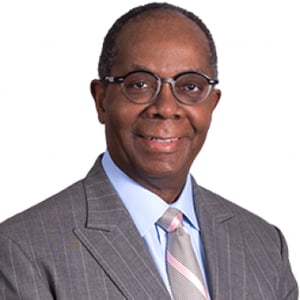
Managing Partner, Crabbe Brown & James LLP
Larry James has been at the heart of the Columbus business, legal, civic, and political scene for the last thirty years. He is a respected litigator, as well as an advisor to local and national leaders. In recognition of his many achievements, the law firm changed its name from Crabbe, Brown, Jones, Potts & Schmidt to Crabbe, Brown & James in January 2001.
In 2011, The Ohio State University selected Mr. James as lead counsel to represent its student athletes in NCAA investigations. In 2013, Armen Keteyian published his book The System: The Glory and Scandal of Big-Time College Football, a chapter of which is dedicated to Larry’s work in representing the OSU football players.
In 2012, Mr. James and his wife, Donna, were awarded the American Red Cross of Greater Columbus’ Humanitarians of the Year Award. In 2015, noted journalist Wil Haygood published his award-winning book Showdown: Thurgood Marshall and the Supreme Court Nomination That Changed America, which he dedicated to Mr. James.
Mr. James is a life member of the Sixth Circuit Judicial Conference, and he has served as General Counsel of the National Fraternal Order of Police since 2001.
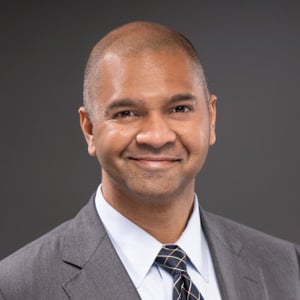
Senior Fellow, Stand Together Trust
Vikrant Reddy is a senior fellow at Stand Together Trust, specializing in the area of criminal justice reform. Reddy previously served as a senior policy analyst at the Texas Public Policy Foundation (TPPF), where he managed the launch of TPPF’s national Right on Crime initiative in 2010. He has worked as a research assistant at the Cato Institute, as a judicial clerk to the Hon. Gina M. Benavides in Texas, and as an attorney in private practice. He is a member of the State Bar of Texas, and he serves on the Executive Committee of the Criminal Law Practice Group of the Federalist Society. He is also an appointee to the U.S. Commission on Civil Rights Texas State Advisory Committee.
Reddy’s research and scholarly opinions have appeared in a range of national media outlets, including USA Today, National Review, The Federalist, and others.
Reddy earned his law degree from the Southern Methodist University School of Law. He received his undergraduate degree from the University of Texas at Austin.
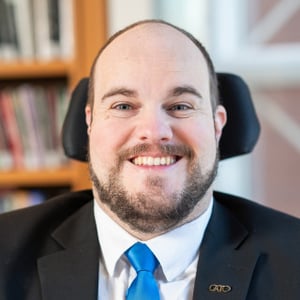
Director, Project on Criminal Justice, Cato Institute
Matthew Cavedon is the Director of the Cato Institute’s Project on Criminal Justice. He focuses on reforming plea-driven mass adjudication, ensuring police accountability, and defending constitutional criminal originalism. Cavedon’s scholarship has been published (or is forthcoming in) publications including the Arizona State Law Journal, Cato Supreme Court Review, Seattle University Law Review, and Georgetown Journal of Law and Public Policy. Formerly a Georgia public defender and fellow at the Institute for Justice, Cavedon has taught law school courses on criminal law and procedure, as well as the First Amendment. Cavedon clerked for a U.S. district court and the Supreme Court of Georgia. He came to Cato following a fellowship at the Emory University Center for the Study of Law and Religion.
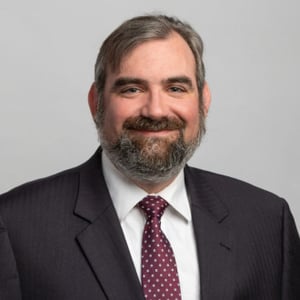
Senior Attorney, Institute for Justice
Robert Frommer serves as a senior attorney with the Institute for Justice. He joined the Institute in August 2008 and is currently litigating on behalf of SpeechNow.org, a group challenging the federal campaign finance laws regarding free speech.
Before joining IJ, Robert was an attorney with the Washington, D.C., office of Gibson, Dunn & Crutcher LLP, where he litigated both complex litigation and public-interest matters. He is a former law clerk to Judge Morris Sheppard Arnold of the U.S. Court of Appeals for the Eighth Circuit.
Robert received his law degree magna cum laude from the University of Michigan Law School in 2004, where he was elected to the Order of the Coif and served as both a book review editor for the Michigan Law Review and president of the Federalist Society student chapter. Before going to law school, Robert earned a master's degree in economics from George Mason University.

Executive Vice President, Chief Legal Officer, Gates Corporation
Matthew R. A. Heiman joined the Company in May 2026 and has served as the Company’s Chief Legal Officer and Corporate Secretary since June 2026. As Chief Legal Officer, Mr. Heiman is responsible for all legal functions for Gates, including securities and corporate governance, M&A, litigation, commercial, regulatory, compliance, patents and trademarks, real estate, employment and labor, sustainability and environmental matters. Prior to joining Gates, Mr. Heiman held senior legal leadership roles at Waystar, where he served as Chief Legal & Administrative Officer from 2023 to 2025 and as General Counsel and Corporate Secretary from 2020 to 2023. Prior to that, he was with Johnson Controls, where he served as Vice President, Corporate Secretary, and Associate General Counsel. Mr. Heiman has been a Senior Fellow for the National Security Institute at George Mason University’s Antonin Scalia School of Law since 2018.

Senior Fellow, Technology Policy, Cato Institute
Jennifer’s research focuses on the intersection of emerging technology and law with a particular interest in the interactions between technology and the administrative state. Her work covers topics including judicial deference, liability protection for Internet platforms, autonomous vehicles and other disruptive transportation technologies, the regulation of data privacy, and the benefits of technology and innovation. Her work has appeared in USA Today, the Chicago Tribune, the New York Daily News, the Sacramento Bee, the Washington Times, Real Clear Policy, and U.S. News and World Report. Jennifer has a JD from the University of Alabama School of Law and a BA in political science at Wellesley College.
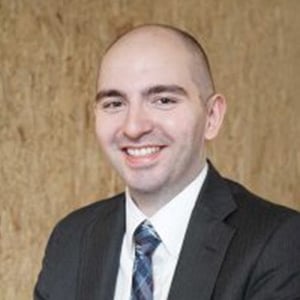
Multistate Policy Director, Common Sense Media
Joseph Jerome serves as Director for Multistate Policy at Common Sense Media, where he focuses on common-sense legislative and policy solutions that support kids’ digital well-being. Joseph has worked at the intersection of law and technology, and has written about AR/VR, the privacy implications of big data, trust deficits in the online sharing economy, and emerging technologies in video games. Previously, he was part of the Privacy & Data Project at the Center for Democracy & Technology, an associate in the cybersecurity and privacy practice at WilmerHale, and counsel at the Future of Privacy Forum. He was a fellow with the Internet Law & Policy Foundry and has taught courses on cybersecurity and privacy compliance. Joseph has a J.D. from the New York University School of Law, where he was an International Law and Human Rights Student Fellow.
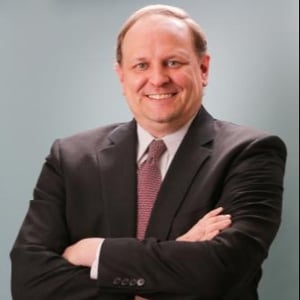
Director, Center for Legal Policy, Manhattan Institute for Policy Research
James R. Copland is a senior fellow at the Manhattan Institute and director of Legal Policy. In those roles, he develops and communicates novel, sound ideas on how to improve America’s civil- and criminal-justice systems. His forthcoming book, The Unelected: How an Unaccountable Elite is Governing America (Encounter Books) will be released on September 8, 2020. He has testified before Congress as well as state and municipal legislatures; and has authored many policy briefs, book chapters, articles and opinion pieces in a variety of publications, including the Harvard Business Law Review and Yale Journal on Regulation, the Wall Street Journal, National Law Journal, and USA Today. Copland speaks regularly on civil- and criminal-justice issues; has made hundreds of media appearances in such outlets as PBS, Fox News, MSNBC, CNBC, Fox Business, Bloomberg, C-Span, and NPR; and is frequently cited in news articles in the New York Times, Washington Post, The Economist, and Forbes. In 2011 and 2012, he was named to the National Association of Corporate Directors “Directorship 100” list, which designates the individuals most influential over U.S. corporate governance.
Prior to joining MI, Copland was a management consultant with McKinsey and Company in New York. Earlier, he was a law clerk for Ralph K. Winter on the U.S. Court of Appeals for the Second Circuit. Copland has been a director of two privately held manufacturing companies since 1997 and has served on many public and nonprofit boards. He holds a J.D. and an M.B.A. from Yale, where he was an Olin Fellow in Law and Economics; an M.Sc. in the politics of the world economy from the London School of Economics; and a B.A. in economics from the University of North Carolina at Chapel Hill, where he was a Morehead Scholar.
Adjunct Professor, George Washington University
Howard W. Cox is a former federal prosecutor, criminal investigator and Senior Intelligence Service officer. After almost 40 years of federal service, he retired as the Assistant Inspector General for Investigations of the Central Intelligence Agency. In this capacity, Mr. Cox supervised criminal, civil and administrative investigations conducted by the Office of Inspector General (OIG). Prior to his employment with the CIA, Mr. Cox was the Assistant Deputy Chief of the Computer Crime and Intellectual Property Section of the Department of Justice, where he was responsible for supervising criminal prosecutions of federal hacking and identity theft cases. While at the Department of Justice, Mr. Cox received the Attorney General’s Distinguished Service Award.
Prior to his service with the Department of Justice, Mr. Cox served as a manager, attorney and criminal investigator at OIG offices at the US Postal Service, the Department of Defense, and the General Services Administration. He also served as Staff Counsel for the US Senate Permanent Subcommittee on Investigations. Prior to his federal civilian service, Mr. Cox was also a Captain and trial attorney in the US Army’s Judge Advocate General’s Corps. Mr. Cox also served as Law Secretary to the Hon. Sherwin D. Lester, NJ Superior Court.
Mr. Cox is an adjunct professor at George Washington University, where he teaches graduate level courses in computer forensics. He is also an instructor with the Graduate School USA, and the Federal Law Enforcement Training Center, where he teaches courses related to procurement fraud and electronic search and seizure. Mr. Cox received his AB degree from Seton Hall University, South Orange, NJ. He received his law degree from Georgetown University Law Center, Washington, DC.
Assistant Professor of Law, UNT Dallas College of Law
Professor Brian L. Owsley is an Assistant Professor of Law at UNT Dallas College of Law. Professor Owsley received his J.D. from Columbia University School of Law, where he was a Harlan Fiske Stone Scholar. He served as Executive Editor of the Columbia Human Rights Law Review. He also received a master’s degree in International Affairs from the Columbia School of International and Public Affairs. After law school, he served as law clerk to the Honorable Janis Graham Jack, United States District Judge for the Southern District of Texas; served as Leonard H. Sadler Fellow for Human Rights Watch in New York City; and clerked for the Honorable Martha Craig Daughtrey, United States Court of Appeals for the Sixth Circuit. After his appellate court clerkship, he practiced with the Southern Poverty Law Center as a legal fellow in Montgomery, Alabama; the United States Equal Employment Opportunity Commission in Washington, D.C.; and with a private law firm in Washington, D.C., which now has merged with the international firm of Troutman, Sanders. After private practice, Professor Owsley returned to government practice, working as a trial attorney for the United States Department of Justice in Washington, D.C. Following this period, he was appointed as a United States Magistrate Judge for the Southern District of Texas, where he served from 2005 until 2013. With this extensive and varied practice and judicial experience, he entered law teaching in 2013. He has taught at Texas Tech and Indiana Tech Law Schools. Professor Owsley teaches Torts, Constitutional Law, and other courses.

Vice President, Edwin Meese III Institute for the Rule of Law, Advancing American Freedom
John G. Malcolm oversees Advancing American Freedom’s work to increase understanding of the Constitution and the rule of law as Vice President of the organization’s Edwin Meese III Institute for the Rule of Law. Malcolm brings to the challenge a wealth of legal expertise and experience in both the public and private sectors.
Prior to joining Advancing American Freedom in 2025, Malcolm was the Vice President of the Institute for Constitutional Government and the Director of the Meese Center for Legal and Judicial Studies at the Heritage Foundation. Prior to joining Heritage in 2012, Malcolm was general counsel at the U.S. Commission on International Religious Freedom, as well as a distinguished practitioner in residence at Pepperdine Law School. From 2004 to 2009, Malcolm was executive vice president and director of worldwide anti-piracy operations for the Motion Picture Association.
Malcolm served as a deputy assistant attorney general in the Department of Justice’s Criminal Division from 2001 to 2004, where he oversaw sections on computer crime and intellectual property, domestic security, child exploitation and obscenity, and special investigations. Immediately prior to that, he was a founding partner in the Atlanta law firm of Malcolm & Schroeder, LLP.
From 1990 to 1997, Malcolm was an assistant U.S. attorney in Atlanta, assigned to the fraud and public corruption section, and also an associate independent counsel, investigating fraud and abuse in the Department of Housing and Urban Development. He was honored with the Director’s Award for Superior Performance for his work in connection with the successful prosecution of Walter Leroy Moody Jr., who assassinated an 11th Circuit judge and the head of the Savannah chapter of the NAACP.
A graduate of Harvard Law School and Columbia College, Malcolm began his career as a law clerk to a federal district court judge and a federal appellate court judge, and as an associate at the Atlanta-based law firm of Sutherland, Asbill & Brennan (new Eversheds Sutherland).
Malcolm, who resides in Washington, D.C., serves on the Board of Trustees of the Washington National Opera and is a Senate-confirmed member of the Board of Directors of the Legal Services Corporation, the largest funder of civil legal aid in the United States.
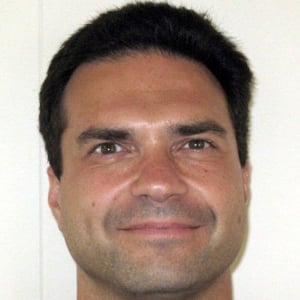
Assistant Attorney General & Senior Trial Counsel to the Criminal Bureau, Massachusetts Attorney General

Executive Vice President of Global Governance, Chief Legal Officer and Corporate Secretary, Walmart Inc.
Rachel Brand is Walmart’s executive vice president of global governance, chief legal officer, and corporate secretary. She oversees the company’s global legal, compliance, ethics, corporate governance, digital citizenship, aviation, investigative, and corporate security functions, including Walmart’s Emergency Operations Center.
Immediately before joining Walmart, Rachel served as the United States Associate Attorney General and holds the distinction of being the first woman to serve in this role. She had previously served in the U.S. Department of Justice as the Assistant Attorney General for the Office of Legal Policy during President George W. Bush’s administration. Her other government service includes an appointment by President Obama to serve as a Member of the U.S. Privacy and Civil Liberties Oversight Board, service as an Associate Counsel to the President at the White House, and judicial clerkships with Justice Charles Fried of the Supreme Judicial Court of Massachusetts and Justice Anthony Kennedy at the Supreme Court of the United States. In the private sector, Rachel was a lawyer in private practice at two law firms in Washington, D.C. and served as the Vice President and Chief Counsel for Regulatory Litigation at the U.S. Chamber of Commerce Litigation Center.
Rachel serves on the board of directors for the Walmart Foundation and is the executive sponsor for Walmart’s Tribal Voices Associate Resource Group. Outside of Walmart, she serves on the board of directors for the International Justice Mission and is a member of The American Law Institute.
Rachel earned her Bachelor of Arts degree from the University of Minnesota-Morris and her J.D. from Harvard Law School.

Senior Counsel, Center for Democracy & Technology
James X. Dempsey is a Senior Counsel at CDT, working on Fourth Amendment issues, consumer privacy, and other topics. He has been with CDT since 1997, serving in a variety of roles, including as Executive Director from 2003 to 2005. In 2005, he established CDT West, in San Francisco. He coordinates the Digital Due Process coalition, a diverse group of companies, advocacy groups, and think tanks working to update the Electronic Communications Privacy Act of 1986. From 2001 to 2007, he led CDT’s Global Internet Policy Initiative (GIPI), which worked with government officials, industry and human rights organizations on Internet policy issues in developing and transitional countries.
Mr. Dempsey is the author or co-author of numerous articles in law reviews and other journals on privacy and Internet policy. He is co-author of the book Terrorism & the Constitution: Sacrificing Civil Liberties in the Name of National Security (New Press, Third edition, 2006) (with Prof. David Cole of Georgetown). He is widely quoted in the media and has testified numerous times before Congressional committees.
Mr. Dempsey began his career as an associate with the Washington, D.C. law firm of Arnold & Porter. From 1985 to 1995, he was assistant counsel to the House Judiciary Committee’s Subcommittee on Civil and Constitutional Rights. He worked on issues at the intersection of national security and constitutional rights, including terrorism, counter-intelligence, oversight of the Federal Bureau of Investigation, and electronic surveillance laws, as well as criminal justice issues. Prior to joining CDT, Jim was Deputy Director of the non-profit Center for National Security Studies and special counsel to the National Security Archive, a non-governmental organization that uses the Freedom of Information Act to gain the declassification of documents on U.S. foreign policy.
Mr. Dempsey is a graduate of Yale College (BA 1975) and Harvard Law School (JD 1979). He is a member of the bar of the District of Columbia.
Executive Vice President, Chief Legal Officer, Gates Corporation
Matthew R. A. Heiman joined the Company in May 2026 and has served as the Company’s Chief Legal Officer and Corporate Secretary since June 2026. As Chief Legal Officer, Mr. Heiman is responsible for all legal functions for Gates, including securities and corporate governance, M&A, litigation, commercial, regulatory, compliance, patents and trademarks, real estate, employment and labor, sustainability and environmental matters. Prior to joining Gates, Mr. Heiman held senior legal leadership roles at Waystar, where he served as Chief Legal & Administrative Officer from 2023 to 2025 and as General Counsel and Corporate Secretary from 2020 to 2023. Prior to that, he was with Johnson Controls, where he served as Vice President, Corporate Secretary, and Associate General Counsel. Mr. Heiman has been a Senior Fellow for the National Security Institute at George Mason University’s Antonin Scalia School of Law since 2018.

Fourth Annual Gregory S. Coleman Memorial Lecture & Luncheon
John Ashcroft, Austin R. Nimocks, Lu A. Reyes
On September 17-18, 2021, The Federalist Society's Texas chapters sponsored the seventh annual Texas Chapters...
Lange v. California - Post-Decision SCOTUScast
Clark Neily, Larry H. James, Vikrant P. Reddy
On June 23rd, 2021 the Supreme Court decided Lange v. California, a case which concerned...
Courthouse Steps Decision Teleforum: Caniglia v. Strom
Matthew P. Cavedon, Robert Frommer
On May 17, 2021, the Supreme Court released its decision in Caniglia v. Strom, which focused...
Deep Dive Episode 147 – The State of State Data Privacy Laws Post-2020 Election
Matthew R. A. Heiman, Jennifer Huddleston, Joseph Jerome
In the absence of federal data privacy legislation, some states have acted to pass their...
Race and Policing
James R. Copland
In this teleforum, James R. Copland will discuss competing legislative proposals in Congress, in the...
Topics
Overturning Auer Deference
In conjunction with the Supreme Court Clinic at Antonin Scalia Law School, Garco Construction, Inc....
Privacy and Cell-Site Simulators - Podcast
Howard W. Cox, Brian L. Owsley
Cell-site simulators are devices used by law enforcement. In response to the signals emitted by...
Topics
Second Circuit Issues Landmark Decision Regarding Electronic Privacy And The Territorial Scope Of U.S. Law
On July 14, 2016, the U.S. Court of Appeals for the Second Circuit issued a...
Supreme Court Criminal Law Round Up - October Term 2014 - Podcast
John G. Malcolm, Dean A. Mazzone
The Supreme Court issued a number of notable opinions in the area of criminal law...
Surveillance, National Security, and Privacy: The PCLOB Report on Section 702 Surveillance - Podcast
Rachel L. Brand, James X. Dempsey, Matthew R. A. Heiman
The Privacy and Civil Liberties Oversight Board (PCLOB) recently released its report on the surveillance...