
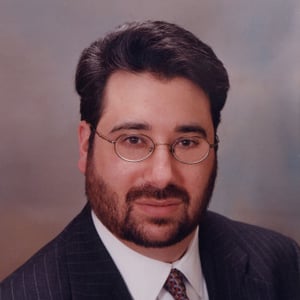
President, Phoenix Center for Advanced Legal and Economic Public Policy Studies
Lawrence J. Spiwak is President of the Phoenix Center for Advanced Legal & Economic Public Policy Studies, a non-profit 501(c)(3) organization that studies broad public-policy issues related to governance, social and economic conditions, with a particular emphasis on the law and economics of the digital age. Mr. Spiwak is a prolific scholar whose work is frequently cited by policymakers, major news media and academic journals around the world, and is in the top 1.3%of authors downloaded on the Social Science Research Network. Mr. Spiwak currently serves as the co-chair of the Federal Communications Bar Association’s (FCBA) committee responsible for overseeing the FEDERAL COMMUNICATIONS LAW JOURNAL and is a member of the program committee of the Telecommunications Policy Research Conference (“TPRC”). Mr. Spiwak is also the recipient of the FCBA’s Distinguished Service Award. Prior to joining the Phoenix Center, Mr. Spiwak was a Senior Attorney with the Competition Division in the FCC’s Office of General Counsel from 1994-1998. While in college, Mr. Spiwak was accepted into the Presidential Stay-In School program where he was responsible for delivering classified and confidential material among senior White House and Reagan Administration officials and received a full FBI security clearance. Mr. Spiwak received his B.A. with Special Honors from the George Washington University and his J.D. from the Benjamin N. Cardozo School of Law. Mr. Spiwak is a member in good standing of the bars of New York, Massachusetts, the District of Columbia, and the U.S. Court of Appeals for the D.C. Circuit.

Founding Partner, Boyden Gray & Associates
Ambassador C. Boyden Gray is the founding partner of Boyden Gray & Associates, a law and strategy firm in Washington, D.C., focused on constitutional and regulatory issues.
Mr. Gray worked in the White House for twelve years, first as counsel to the Vice President during the Reagan administration and then as White House Counsel to President George H.W. Bush. In the Reagan administration, he was Counsel to the Presidential Task Force on Regulatory Relief, for which he wrote the original Executive Order 12291 requiring cost-benefit analysis and White House review of regulations (later renumbered as current EO 12866). In the George H.W. Bush Administration, Mr. Gray was in charge of judicial selection and was also instrumental in the enactment of the Clean Air Act Amendments of 1990, the Energy Policy Act of 1992, and a cap-and-trade system for acid rain emissions. In 1993, he received the Presidential Citizens Medal. Under President George W. Bush, Mr. Gray was U.S. Ambassador to the European Union and U.S. Special Envoy to Europe for Eurasian Energy.
Mr. Gray practiced law for 25 years at the law firm of Wilmer, Cutler & Pickering and was chairman of the Administrative Law and Regulatory Practice Section of the American Bar Association from 2000 to 2002. Early in his career, Mr. Gray helped to develop the Business Roundtable and served as its first counsel. He is an adjunct professor at Antonin Scalia Law School and a former adjunct professor at NYU Law School (teaching energy and environmental law). Mr. Gray is on the Board of Directors of the Atlantic Council, the Federalist Society, Reason Foundation, and the Trust for the National Mall.
Mr. Gray earned his A.B. magna cum laude from Harvard, where he was an editor of the Crimson, and his J.D. with high honors from the University of North Carolina at Chapel Hill, where he was editor-in-chief of the Law Review. Mr. Gray served in the United States Marine Corps, and after law school, he clerked for Earl Warren, Chief Justice of the United States Supreme Court.
Professor of Law, Vanderbilt University Law School
Richard A. Nagareda, whose scholarship focuses on mass tort litigation, heads the law school's Cecil D. Branstetter Litigation & Dispute Resolution Program. Professor Nagareda's recent scholarship explores the impact of class action lawsuits on the pursuit of legal rights. In 2003, he was appointed as Associate Reporter for the American Law Institute project on Principles of the Law of Aggregate Litigation. He teaches courses on evidence and complex litigation and a year-long seminar for third-year students on the civil litigation system. Professor Nagareda previously taught on the faculty of the University of Georgia School of Law and as a visitor at the University of Texas School of Law. Before joining the academy, Professor Nagareda clerked for Judge Douglas H. Ginsburg, of the D.C. Circuit, and practiced in the Office of Legal Counsel of the United States Department of Justice and as an associate at Shea & Gardner in Washington, D.C. In 2002 he won the Hartman Award for Excellence in Teaching.
J.D. University of Chicago
A.B. Stanford University
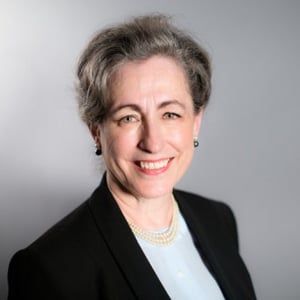
Senior Litigation Counsel, New Civil Liberties Alliance
Peggy Little, Senior Counsel at New Civil Liberties Alliance, a new public interest law firm challenging the administrative state founded in 2017 by Professor Philip Hamburger, has over three decades of experience as a trial and appellate litigator in complex, high-stakes regulatory, mass-tort, class-action, products liability, securities, commercial and civil rights litigation representing individuals and high-profile litigants including Fortune 50 companies, financial institutions, public companies, and universities in state and federal courts, including the United States Supreme Court.
Peggy is a graduate of Yale College and Yale Law School, where she was awarded the Potter Stewart Prize. She was a law clerk to the Hon. Ralph K. Winter on the U.S. Court of Appeals for the Second Circuit. Prior to starting her own trial and appellate law firm in 1997, where she was appellate consulting counsel to the New Haven firefighters in Ricci v.DeStefano, a landmark 2009 United States Supreme Court decision, Peggy was a partner at Tyler, Cooper & Alcorn in New Haven, Connecticut. From 2004 to early 2018, Peggy directed, part-time, the Federalist Society Pro Bono Center.
Peggy has participated in many national conferences and symposia addressing issues of current importance in constitutional law – specifically state and federal constitutional questions regarding the separation of powers and the first amendment – and regularly speaks, blogs and publishes on the topic of the unconstitutional exercise of governmental power. In May of 2017, she presented her paper, Pirates at the Parchment Gates, to a conference of state and federal judges at the Law and Economics Center at the Antonin Scalia Law School. Her work has been published by law reviews, legal publications, the Federalist Society, the Wall Street Journal, Law and Liberty and the Manhattan Institute.
Recent publications include: How the SEC silences its critics, The SEC should listen to Sen. Cotton, Lucia v. SEC, Opening Salvos in the Opioid Litigation Wars, Straight Dope on the Opioid Crisis
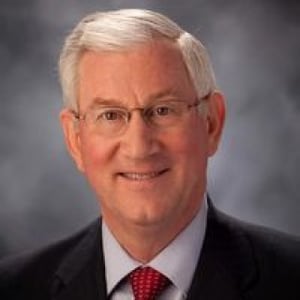
Of Counsel, Erickson & Sederstrom
Professional Positions
Former Member of National Association of Attorneys General Executive Committee (2002)
Member, Society of Attorneys General Emeritus (SAGE)
Washington Legal Foundation, Policy Advisory Board
Federalist Society, Member of the Federalism Subcommittee for Federalism and Separation of Powers
Former Member, TRANSLink Transmission Co., Board of Directors
Former Member, U.S. Chamber of Commerce Federalism Working Group
Former Chair, Nebraska Crime Commission
Honors and Accomplishments
Argued cases in the United States Supreme Court
Phi Beta Kappa
Republican Nominee for U.S. Senate in Nebraska (2000)
Founding Member of the Republican Attorneys General Association
Nebraska Fertilizer and Ag Chemical Institute's Government Official of the Year (2000)
Nebraska Coalition for Victims of Crime's Public Policy Award (1999)
Lincoln Independent Business Association's Business Champion Award (1997)
Lincoln Jaycees Outstanding Young Individual Award (1981)
Prior to Becoming of Counsel to Erickson & Sederstrom, P.C.
Attorney General of Nebraska (1991-2003)
Legal Counsel to the Governor of Nebraska (1979-1983)
University of Nebraska, Lincoln, B.A. (1970)
Harvard Business School, M.B.A. (1974)
Harvard Law School, J.D. (cum laude) (1974)
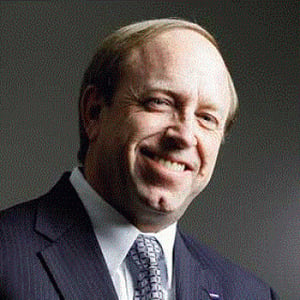
Attorney General, State of Colorado
John W. Suthers is a lifetime resident of Colorado. He graduated magna cum laude from the University of Notre Dame with a degree in Government in 1974 and from the University of Colorado Law School in 1977. From 1977 to 1981, he served as a deputy and chief deputy district attorney in Colorado Springs. From September of 1979 to January of 1981, he headed the Economic Crime Division of the District Attorney’s Office and co-authored a nationally published book on consumer fraud and white-collar crime.
In January of 1981, Mr. Suthers entered private practice and became a litigation partner in the Colorado Springs firm of Sparks Dix, P.C. He remained with the firm until November of 1988, when he defeated an incumbent to be elected District Attorney of the Fourth Judicial District. He was elected to a second term as District Attorney in November of 1992. At the conclusion of that second term in January of 1997, he returned to Sparks Dix, P.C. as Senior Counsel in charge of the firm’s litigation section.
On January 12, 1999, Gov. Bill Owens appointed Mr. Suthers as the executive director of the Colorado Department of Corrections. As head of the Colorado correctional system, he was in charge of an organization with nearly 6,000 employees and an annual operational budget of approximately $500 million.
On July 30, 2001, Mr. Suthers was nominated by President George W. Bush to be the United States Attorney for the District of Colorado. He was unanimously confirmed by the U.S. Senate. As U.S. Attorney, Mr. Suthers represented the United States in all criminal and civil matters within the District of Colorado.
On January 4, 2005, Mr. Suthers was appointed Attorney General of Colorado. After serving as Attorney General for nearly two years, in November 2006, the voters of Colorado elected Mr. Suthers by a large margin to serve a four-year term. Mr. Suthers was again re-elected in 2010 by the biggest margin or any statewide race that year. As Attorney General, he represents and defends the interests of the people of the state of Colorado and is chief legal counsel and adviser to state government and its many state agencies, boards and commissions.
Mr. Suthers has served on the board of numerous civic organizations. He has served as President of the El Paso County Bar Association in 1990-91 and as Senior Vice President of the Colorado Bar Association in 1996-97. He served as President of the Colorado District Attorney’s Council in 1994-95. In 1992, he was appointed by the Colorado legislature to serve as a Colorado delegate to the National Conference on Uniform State Laws and served until January of 1997. In the Summer of 2000, Mr. Suthers received a Gates Foundation Fellowship to attend the Government Executives Program at Harvard University’s Kennedy School of Government.
John and his wife Janet have two adult daughters. Alison is a Deputy District Attorney in Denver. Kate is a procurement analyst for the Defense Department in Pearl Harbor and a Lieutenant Commander in the U.S. Navy Reserves.
Suthers has authored five books, including his most recent, No Higher Calling, No Greater Responsibility: A Prosecutor Makes His Case (Fulcrum Publishing, 2008).
In his tenure as Attorney General, Mr. Suthers has initiated successful programs to protect children from Internet predators and to reduce mortgage and foreclosure fraud. He has served as Chairman of the Conference of Western Attorneys General, a member of the NAAG Executive Committee, Co-Chair of the NAAG Criminal Law Committee and as a member of the U.S. Attorney General’s Executive Working Group.
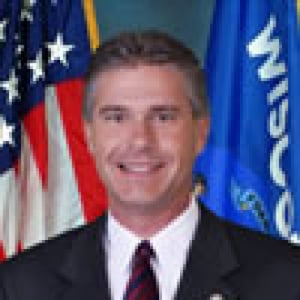
Wisconsin Attorney General
John Byron ("J.B.") Van Hollen, Wisconsin's 43rd Attorney General, was elected on November 7, 2006, and assuming office on January 1, 2007.
During his campaign for Attorney General, Van Hollen identified the backlog of forensic DNA evidence in the State Crime Lab as the single most important public safety issue facing the Department of Justice and Wisconsin's justice system. Within weeks of becoming Attorney General, General Van Hollen worked with members of both parties in the Legislature and Governor Jim Doyle to secure an unprecedented 31 positions to address the Wisconsin Crime Lab backlog. With efficiencies and the cooperation of partner agencies, the State Crime Lab is on track to eliminate the backlog by 2010.
As Wisconsin's "Top Cop," General Van Hollen identified Internet Crimes Against Children (ICAC) as another priority vital to protecting Wisconsin's children from on-line predators. By raising awareness and partnering with the Legislature and the Governor, General Van Hollen secured additional resources to educate parents and children, identify, stop, and prosecute these predators. Working in partnership with local law enforcement authorities, the Department offers education, resources, and its expertise in this fight for the safety of some of our most vulnerable victims: children.
General Van Hollen has also restored an emphasis on the rule of law to the Department of Justice. Professionally-reasoned legal advice and client representation is now a hallmark of the Department's work.
General Van Hollen has been clear that restoring integrity and fighting crime would define his work as Attorney General. A philosophy of first principles, limited government, and the Department's role as an "exist to assist" state agency has guided his tenure as Attorney General.
Van Hollen graduated from St. Olaf College in 1988 with an undergraduate degree in Political Science and Economics. He earned his law degree two years later from the University of Wisconsin Law School.
Van Hollen began his public service career as an Assistant State Public Defender in Spooner, Wisconsin. In 1991, he became a federal prosecutor, serving as an Assistant United States Attorney for the Western District of Wisconsin. Governor Tommy Thompson appointed Van Hollen as District Attorney in Ashland County, where he served for six years. He was subsequently appointed by Governor Thompson to serve as Bayfield County District Attorney. Van Hollen was later elected to the position, enjoying bi-partisan support as Bayfield County's only elected Republican.
Prior to becoming Attorney General, J.B. was appointed United States Attorney for Wisconsin's Western District in 2002 and served there until 2005.

Chief Judge, United States Court of Appeals, Eleventh Circuit
William H. Pryor Jr. serves as Chief Circuit Judge on the United States Court of Appeals for the Eleventh Circuit.
In 2013–18, he served on the United States Sentencing Commission and, in 2017–18, served as Acting Chair.
He has taught as a visiting professor at the University of Alabama School of Law and previously taught as an adjunct professor at the Cumberland School of Law of Samford University.
He served as the 45th Attorney General of Alabama from 1997 to 2004. When he took office, he was the youngest attorney general in the nation. In his reelection, he received the highest percentage of votes of any statewide candidate.
He graduated magna cum laude from Tulane Law School where he finished first in the common-law curriculum and was editor in chief of the Tulane Law Review. He then served as a law clerk for Judge John Minor Wisdom of the U.S. Court of Appeals for the Fifth Circuit.
He is a member of The American Law Institute and an Adviser for the RESTATEMENT OF THE LAW THIRD, CONFLICT OF LAWS. He is a coauthor with Bryan Garner, Justices Gorsuch and Kavanaugh, and several other judges of a treatise, THE LAW OF JUDICIAL PRECEDENT. He has published in the Yale Law Journal, Columbia Law Review, Virginia Law Review, Notre Dame Law Review, Harvard Journal of Law & Public Policy, Yale Law & Policy Review, George Mason Law Review, Florida Law Review, Alabama Law Review, Case Western Reserve Law Review, and Tulane Law Review. He has published op-eds in The Wall Street Journal, The New York Times, National Review, and USA Today. He has debated at National Lawyers’ Conventions of the Federalist Society (including on National Public Radio) and at the Oxford Union in the United Kingdom. And he is listed among several “widely admired judicial writers” in Bryan Garner’s The Redbook: A Manual on Legal Style.
He is a member of the Tulane Law School Hall of Fame and has received the Defender of the Constitution Award from the Heritage Foundation, the Jurist of the Year Award from the Texas Review of Law & Politics, and the St. Thomas More Award from the St. Thomas More Society of Atlanta. Judge Pryor is also a proud member of the National Society of the Sons of the American Revolution.

Ensuring Due Process at the Surface Transportation Board
Lawrence J. Spiwak
Note from the Editor: The Federalist Society takes no positions on particular legal and public...
EPA’s Use of Co-Benefits
C. Boyden Gray
Note from the Editor: This article is about environmental regulation and the EPA’s questionable practice...
Conservative & Libertarian Legal Scholarship: Administrative & Regulatory Practice
[Return to Table of Contents] VI. Administrative & Regulatory Practice Introductory Materials Peter Schuck, Foundations...
SCOTUScast 2-26-08 featuring Richard Nagareda
Richard A. Nagareda
On February 20, 2008 the Supreme Court decided Riegel v. Medtronic. In Riegel, the Court...
Reaching Too Far? The Role of State Attorneys General
Margaret A. Little, Robert F. McDonnell, Donald B. Stenberg, John W. Suthers, J.B Van Hollen
Recently there has been growing discussion concerning the appropriate role of state Attorneys General. Some...
Engage Volume 3, Issue 3, October 2002
ADMINISTRATIVE LAW & REGULATION Restoring Congress’ Proper Role in Oversight of Covert Intelligence Operations by...
Novel Government Lawsuits Against Industries: An Assault on the Rule of Law
William H. Pryor
Presentation by Bill Pryor, Attorney General of Alabama Tuesday, June 22, 1999, U.S. Chamber of...