
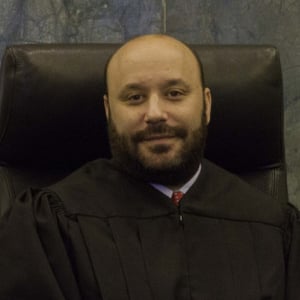
Judge, United States District Court, Eastern District of Arkansas
Lee Philip Rudofsky is a judge on the United States District Court for the Eastern District of Arkansas. Prior to his 2019 appointment by President Trump, Judge Rudofsky served as the Solicitor General of Arkansas, an Assistant General Counsel at Walmart, a Senior Litigation Associate at Kirkland & Ellis, and counsel to several Republican political campaigns. Today, in addition to his judicial service, Judge Rudofsky teaches law school classes on founding-era constitutional history and, separately, speaks to students across the country about the October 7th Massacre and the subsequent Israeli response. In 2024, Judge Rudofsky helped establish an annual judicial education mission to Israel that offers American judges the opportunity to learn first-hand about the Israeli legal system, Israeli society, and legal issues related to the Israel-Hamas war.

Board Member, Center for Equal Opportunity
Roger Clegg is a Board Member at and former President and General Counsel of the Center for Equal Opportunity. He focuses on legal issues arising from civil rights laws--including the regulatory impact on business and the problems in higher education created by affirmative action. A former Deputy Assistant Attorney General in the Reagan and Bush administrations, Clegg held the second highest positions in both the Civil Rights Division (1987-91) and in the Environment and Natural Resources Division (1991-93). He has held several other positions at the U.S. Justice Department, including Assistant to the Solicitor General (1985-87), Associate Deputy Attorney General (1984-85), and Acting Assistant Attorney General in the Office of Legal Policy (1984). Clegg is a graduate of Yale University Law School (1981).
Bell, McAndrews & Hiltachk, LLP
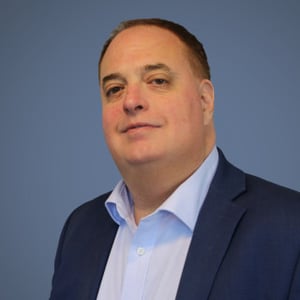
Director of the Center for Energy and Environment and Senior Fellow, Competitive Enterprise Institute
Daren Bakst is Director of the Competitive Enterprise Institute’s Center for Energy and Environment and a Senior Fellow. In this role, he manages, develops, and leads the coalition, advocacy, and research activities of the Center, which is one of the most effective advocates for Free Market Environmentalism.
Before joining CEI as Deputy Director in March, 2023, Daren was a Senior Research Fellow in Environmental Policy and Regulation at the Heritage Foundation, where he played a leading role in the launch of the organization’s new energy and environment center, and created and hosted the Heritage Foundation’s energy and environment podcast the “PowerCast.” During his decade at Heritage, Daren wrote about energy and environmental policy, food and agricultural policy (including editing and co-authoring the book Farms and Free Enterprise), regulation, and trade among other topics.
Daren also worked on environmental policy and regulation at the U.S. Chamber of Commerce, where he was a policy counsel and served as the executive to the association’s Government Oversight, Operations & Consumer Affairs committee, which was responsible for issues such as regulatory process reform. Daren has significant state level experience, working for seven years at the Raleigh, N.C.-based John Locke Foundation, one of the largest state-based, free-market think tanks. As director of legal and regulatory studies, his broad portfolio included energy and environmental policy, regulatory reform, and property rights.
Daren has testified numerous times before Congress, regularly submits comments to federal agencies and has appeared in or been quoted by a wide range of media outlets such as The Wall Street Journal, USA Today, The Washington Times, CNN, Fox Business News, Al-Jazeera America, and U.S. News and World Report. He is a member of the Federalist Society’s Environmental Law and Property Rights Executive Committee and serves on the College Level Advisory Board for Constituting America, an organization that informs and educates about the importance of the U.S. Constitution.
Daren, who hails from Florida, received his bachelor’s and master’s degrees from George Washington University. A licensed attorney, he holds a law degree from the University of Miami and a master of laws degree from American University.
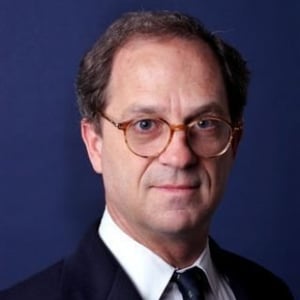
Professor of Law and Political Science, International University of Rabat, Emory University School of Law
Gunn specializes in the study of human rights and the separation of church and state. He has written and edited more than 50 books and articles, including No Establishment of Religion: America’s Original Contribution to Religious Liberty (Oxford University Press, 2002), which he co-edited with CSLR Director John Witte, Jr., A Standard for Repair: The Establishment Clause, Equality, and Natural Rights (Routledge, 1992), and Spiritual Weapons: The Cold War and the Forging of an American National Religion (Praeger, 2008).
Gunn was previously Associate Professor in the School of Humanities and Social Sciences at Al Akhawayn University and served as a visiting professor at many institutions, including Franklin College, Peking University, and Université Aix-Marseille III. He served as a member of the Advisory Council on Freedom of Religion and Belief of the Office of Democratic Institutions and Human Rights of the Organization for Security and Cooperation in Europe (OSCE). He was also the executive director of the JFK Assassination Records Review Board and a senior fellow at the United States Institute of Peace.
Gunn holds a doctorate from Harvard University, a juris doctor from Boston University School of Law, a master of arts in humanities from the University of Chicago, and a bachelor of arts in international relations and humanities from Brigham Young University.
Senior Legal Counsel, Alliance Defense fund
Chairman, Department of Economics, George Mason University
Professor of Law and Economics, Fordham University School of Law
Professor of Corporate & Antitrust Law, Fordham University School of Law
Deputy District Attorney, Philadelphia District Attorney's Office
Ronald Eisenberg heads the Law Division of the Philadelphia District Attorney's Office. The 60 lawyers in the division handle appeals, habeas corpus and civil litigation, and legislative matters. Mr. Eisenberg has appeared at all levels of the state and federal court system, and has argued several cases in the United States Supreme Court.
Mr. Eisenberg is a member of the Pennsylvania Supreme Court Investigating Grand Jury Task Force and the Advisory Committee for the Pennsylvania Suggested Standard Criminal Jury Instructions. He has represented his office on the Pennsylvania Advisory Committee on Wrongful Convictions, was an adjunct professor at Temple University School of Law, teaching legal writing and research, and has served on the Pennsylvania Criminal Rules and Appellate Rules Committees. He is a past president and current board member of the Association of Government Attorneys in Capital Litigation, a national organization of capital prosecutors.
Mr. Eisenberg received his bachelor's degree from Haverford College in 1978 and his law degree from the University of Pennsylvania Law School in 1981.
J.D., University of Pennsylvania
B.A., Haverford College
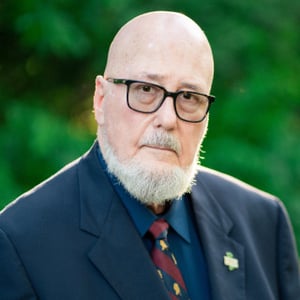
Senior Fellow, National Security Institute, Antonin Scalia School of Law, George Mason University; Retired Professor, Distinguished Fellow and Co-Founder, Center for National Security Law, University of Virginia School of Law (1987-2020)
Robert F. Turner holds both professional and academic doctorates from the University of Virginia School of Law. He co-founded the Center for National Security Law with Professor John Norton Moore in April 1981 and served as its associate director for 39 years, except for two periods of government service in the 1980s and during 1994-95, when he occupied the Charles H. Stockton Chair of International Law at the U.S. Naval War College in Newport, Rhode Island. He retired from UVA in January 2020 and currently serves as a non-resident senior fellow at the GMU National Security Institute. He also served briefly in 2020 as President of the Crime Prevention Research Center—one of the most respected pro-Second Amendment groups in the country—while its founder, Dr. John Lott, was on leave of absence.
A former Army captain and veteran of two tours in Vietnam, Turner served as a research associate and public affairs fellow at Stanford's Hoover Institution on War, Revolution and Peace before spending five years in the mid-1970s as national security adviser to U.S. Senator Robert P. Griffin, a member of the Senate Foreign Relations Committee (where Turner anticipated by seven years the Supreme Court’s landmark INS v. Chadha decision, striking down legislative vetoes). He also served in the executive branch during the Reagan administration as a member of the Senior Executive Service, first in the Pentagon as special assistant to the undersecretary of defense for policy, then in the White House as counsel to the President's Intelligence Oversight Board, and at the State Department as principal deputy and then acting assistant secretary for legislative affairs. In 1986, he became the first president of the congressionally established United States Institute of Peace.
A former three-term chairman of the ABA Standing Committee on Law and National Security (and for many years editor of the ABA National Security Law Report), Turner also chaired the Executive-Congressional Relations Subcommittee of the ABA Section on International Law and Practice and chaired or co-chaired the National Security Law Subcommittee of the Federalist Society’s International and National Security Law Practice Group for several years.
Turner taught undergraduate courses at Virginia on international law, U.S. foreign policy, the Vietnam War and foreign policy and the law in what is now the Woodrow Wilson Department of Politics. In addition, he co-taught National Security Law and advanced national security law seminars on the Indochina War and on war and peace with Moore at the Law School.
The author or editor of 18 books and monographs (including co-editor of the Center's 1,600-page National Security Law & Policy casebook, National Security Law Documents, and Legal Issues in the Struggle Against Terror) and numerous articles in law reviews and other professional journals, Turner has also contributed articles to most of the major U.S. newspapers, including The New York Times and USA Today. In an op-ed published in The International Herald Tribune in September 1990, he and Moore were the first to call for a war-crimes trial for Iraqi dictator Saddam Hussein and for international controls over Iraq's weapons of mass destruction, and the following month he wrote the lead story in The Washington Post Sunday Outlook Section, “Killing Saddam: Would It Be a Crime?,” arguing that Hussein would be a lawful target during Operation Desert Storm. (His reasoning contributed to the modern legal justification for drone strikes targeting specific terrorist leaders.) Three years before the terrorist attacks of September 11, 2001, Turner published an op-ed in USA Today entitled: “In Self-defense, U.S. Has Right to Kill bin Laden.”
In July 2007, he co-authored an article in The Washington Post with former U.S. Marine Corps Commandant General P.X. Kelley, “War Crimes and the White House,” criticizing the use of unlawful “enhanced interrogation techniques” by the Central Intelligence Agency. On the 40th anniversary of the fall of Saigon he authored an article in The Wall Street Journal, “Saigon’s Fall Still Echoes Today,” noting that after the war ended, Hanoi admitted it had made a decision in 1959 to open the Ho Chi Minh Trail and start sending troops, weapons and supplies into South Vietnam to overthrow its government — just as the United States had charged. In 2010 Turner received the first “person of the year” award from SACEI, a major Vietnamese-American human rights organization.
A frequent lecturer and debater, Turner has spoken at more than 100 law schools around the nation and in other fora — taking on as many as four opponents at a time. His debate opponents have included former or future deans of Yale, Stanford, the University of Chicago and Berkeley law schools. Following a 1987 debate against Dean Harlan Cleveland (Rhodes Scholar, U.S. Ambassador to NATO, and Presidential Medal of Freedom recipient) in which Turner defended the legality of U.S. support for the Nicaraguan contras during the Reagan Administration, the host student debating societies awarded Turner the victory by an 85-to-15 percent margin.
Turner has also written and lectured widely on University of Virginia founder and America’s third president Thomas Jefferson. In 2000-2001 he chaired the Jefferson-Hemings Scholars Commission. In his 2012 book Master of the Mountain, Jefferson critic Henry Wiencek described Turner as “Jefferson’s chief scholarly defender."
A former distinguished lecturer at the U.S. Military Academy at West Point, Turner is a member of the Council on Foreign Relations, the Academy of Political Science, the Committee on the Present Danger, The Heterodox Academy, and other professional organizations. He maintained a 4.0 gpa as a graduate student at Stanford in History and Political Science and in the UVA Department of Government and Foreign Affairs and was the first person admitted directly to the UVA academic law doctorate (SJD) program without first being required to earn an LL.M. master’s degree. He was selected for inclusion in Who’s Who in American Law less than two years after graduating from law school and Who’s Who in the World before he reached the age of 40. Turner has testified before more than a dozen different congressional committees on issues of international or constitutional law and other topics.

A Wave of ADA Public Accommodation Lawsuits Moves from Florida and California to the Rest of the United States
Gregory P. McGuire
There recently has been a surge of private plaintiff lawsuits filed under the public accommodation...
Mountaintop Coal Mining: A Permitting Process In Flux
Lee Rudofsky
Brought to you by the Environmental Law & Property Rights Practice GroupMountaintop coal mining is a...
ACORN Sues Pennsylvania AG Corbett Over Voter Fraud Allegations
Aaron Merrill
On July 22nd in Pittsburgh's federal court, the Association of Community Organizers for Reform Now...
Race-Based Attack on the SAT II
Roger B. Clegg
Standardized testing has been widely relied on by educators and college admission boards as a...
Elections; Universal Voter Registration; Same Day Voter Registration
Charles H. Bell
Brought to you by the Free Speech & Election Law Practice Group BackgroundVoter registration has traditionally been...
Mandatory Greenhouse Gas Reporting: The GHG Registry
Daren Bakst
Brought to you by the Environmental Law & Property Rights Practice GroupOn March 10, 2009, the...
Why the Vietnam War was Just and Necessary: Reconsidering the Liberal Mythology
Orange County Lawyers Chapter
Irvine, CAWhat Place Does Religion Have in the Public Square?
T. Jeremy Gunn, Jeffrey Shafer
The George Mason Student Chapter held this event on March 18, 2009. Speakers: Dr. Jeremy Gunn,...
To Stimulate, or Not to Stimulate: The Proper Government Response to an Economic Crisis
Reuvain Borchardt, Donald J. Boudreaux, John Pfaff, Richard Squire
The Fordham Student Chapter hosted this debate at Fordham University School of Law on February...
SCOTUScast 1-13-09 featuring Ronald Eisenberg
Ronald Eisenberg
On Wednesday, November 12, the Supreme Court heard oral argument in Bell v. Kelly, and...