
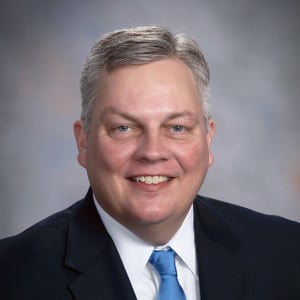
University Professor of Law and Religion and Director of the Eleanor H. McCullen Center for Law, Religion and Public Policy, Villanova University Charles Widger School of Law
Michael P. Moreland was appointed University Professor of Law and Religion and Director of the Eleanor H. McCullen Center for Law, Religion and Public Policy at Villanova University in 2017. Professor Moreland joined the Villanova faculty in 2006 and served as Vice Dean from 2012 to 2015. His research is primarily in the areas of torts, law and religion, constitutional law, and Catholic social thought, and he regularly teaches Torts, First Amendment, seminars in law and religion, and undergraduate courses in ethics.
Professor Moreland is the co-editor of Christianity and Private Law (Routledge, 2021), and his most recent publications include: “The Authority of Tradition: John Henry Newman and Legal Theory” in Christianity and the Making of Irish Law (Routledge, 2025); “Christianity and Torts” in The Oxford Handbook on Christianity and Law, (Oxford University Press, 2023); “Germaneness and Religious Liberty” in the Notre Dame Law Review (2023); “Contingency and Contestation in Christianity and Liberalism” in the Notre Dame Law Review (2023); “Friendship as the Primary Purpose of Law” in The American Journal of Jurisprudence 279 (2022); and “The Moral of Torts” (with Jeffrey Pojanowski) in Christianity and Private Law (Routledge, 2021).
Professor Moreland was a Visiting Professor of Law at the University of Notre Dame and the Mary Ann Remick Senior Visiting Fellow at the Notre Dame Center for Ethics and Culture from 2015 to 2017. He was the Forbes Visiting Fellow at Princeton University in the James Madison Program during academic year 2010-11. He has served as the project leader for grants from the John Templeton Foundation and the Charles Koch Foundation. He serves as the Chair of the Federalist Society’s Religious Liberties Practice Group Executive Committee and the Chair of the Board of Trustees of the Institute for Advanced Catholic Studies at the University of Southern California.
Professor Moreland received his BA in philosophy from the University of Notre Dame, his MA and PhD in theological ethics from Boston College, and his JD from the University of Michigan Law School. Following law school, Professor Moreland clerked for the Honorable Paul J. Kelly Jr., of the United States Court of Appeals for the Tenth Circuit and was an associate at Williams & Connolly LLP in Washington, DC, where he represented clients in First Amendment, professional liability, and products liability matters. Before coming to Villanova, he served as Associate Director for Domestic Policy at the White House under President George W. Bush, where he worked on a range of legal policy issues, including criminal justice, immigration, civil rights, and liability reform.
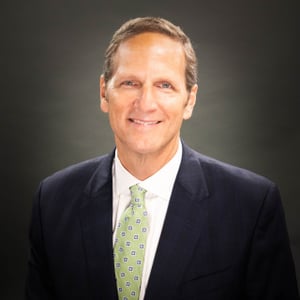
Senior Counsel, Alliance Defending Freedom
Phil Sechler serves as senior counsel at Alliance Defending Freedom, where he focuses on academic and religious freedom.
Before joining ADF, Sechler had a long career in private practice, with substantial first-chair trial experience in courts around the country on a variety of complex litigation matters. Sechler spent most of his career as a partner in the powerhouse law firm of Williams & Connolly LLP in Washington, D.C. He also was a partner in the litigation boutique of Robbins, Russell, Englert, Orseck & Untereiner LLP.
In August 2013, Sechler took a break from law practice to become a Distinguished Visitor from Practice at Penn State Law School, where he spent four years teaching courses in Evidence, Professional Responsibility, and Advocacy. He also taught at the Antonin Scalia School of Law at George Mason University and at the Georgetown University Law Center, where he continues to teach a course on Professional Responsibility.
Sechler received his bachelor’s degree with high distinction from Pennsylvania State University, and he earned his Juris Doctor from Georgetown University Law Center, where he graduated summa cum laude and was Editor-in-Chief of The Georgetown Law Journal. Following law school, he clerked for the Honorable Francis D. Murnaghan, Jr., of the U.S. Court of Appeals for the 4th Circuit.
Sechler is an active member of the District of Columbia Bar and is admitted to practice before the U.S. Supreme Court and numerous federal appellate and trial courts.
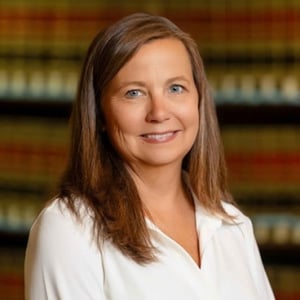
John P. Murphy Foundation Professor of Law and Associate Dean for External Engagement, University of Notre Dame Law School
Nicole Stelle Garnett is the John P. Murphy Foundation Professor of Law at Notre Dame Law School, where she also serves as the Associate Dean for External Engagement and directs the Notre Dame Education Law Project. Her teaching and research focus on education law and policy, religious liberty, and topics related to property law (especially land use and urban development policies). In addition to dozens of articles on these subjects, she is the author of Lost Classroom, Lost Community: Catholic Schools' Importance in Urban America (University of Chicago Press, 2014) and Ordering the City: Land Use, Policing and the Restoration of Urban America (Yale University Press, 2009).
Garnett received her B.A. with distinction in Political Science from Stanford University and her J.D. from Yale Law School. After law school, she clerked for the Honorable Morris S. Arnold of the United States Court of Appeals for the Eighth Circuit and for Associate Justice Clarence Thomas of the Supreme Court of the United States. Before joining the law school faculty in 1999, she worked for two years as a staff attorney at the Institute for Justice, a non-profit public-interest law firm in Washington, D.C., where she helped to defend the constitutionality of the nation's first private-school-choice programs.
At Notre Dame, Garnett is a faculty fellow in the Institute for Educational Initiatives, Kellogg Institute for International Studies, Fitzgerald Institute for Real Estate, and deNicola Center for Ethics and Culture. She also is an elected member of the American Law Institute and a Senior Fellow at the Manhattan Institute.
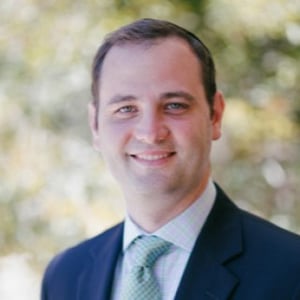
Brenden Mann Foundation Chair in Law and Religion and Co-Director of the Nootbaar Institute for Law, Pepperdine Caruso School of Law
Professor Michael Helfand is the Brenden Mann Foundation Chair in Law and Religion and Co-Director of the Nootbaar Institute for Law, Religion and Ethics at Pepperdine Caruso School of Law. During the Spring, he serves as the Florence Rogatz Visiting Professor at Yale Law School. In addition to his academic appointments, Professor Helfand serves as the Senior Legal Advisor to the Orthodox Union’s Teach Coalition and a Senior Fellow at the Shalom Hartman Institute.
An expert on questions of church and state, Professor Helfand’s work considers how U.S. law treats religious law, custom and practice. His academic articles have appeared in numerous law journals, including the Yale Law Journal, New York University Law Review, Duke Law Journal, Minnesota Law Review, Washington University Law Review, and Southern California Law Review. In addition, Professor Helfand often provides commentary on clashes between law and religion, writing for various public audience publications, including the Wall Street Journal, the Los Angeles Times, and the Forward.
Professor Helfand joined the Pepperdine Caruso Law faculty in 2010 where he has taught Contracts, Arbitration Law, Jewish Law and seminars in Law and Religion as well as Multiculturalism and the Law. Prior to joining the Pepperdine Caruso Law faculty, Professor Helfand was an associate at Davis Polk & Wardwell LLP, where his practice focused on complex commercial litigation. Before entering private practice, Professor Helfand clerked for the Honorable Julia Smith Gibbons of the U.S. Court of Appeals for the Sixth Circuit.
University Professor of Law and Religion and Director of the Eleanor H. McCullen Center for Law, Religion and Public Policy, Villanova University Charles Widger School of Law
Michael P. Moreland was appointed University Professor of Law and Religion and Director of the Eleanor H. McCullen Center for Law, Religion and Public Policy at Villanova University in 2017. Professor Moreland joined the Villanova faculty in 2006 and served as Vice Dean from 2012 to 2015. His research is primarily in the areas of torts, law and religion, constitutional law, and Catholic social thought, and he regularly teaches Torts, First Amendment, seminars in law and religion, and undergraduate courses in ethics.
Professor Moreland is the co-editor of Christianity and Private Law (Routledge, 2021), and his most recent publications include: “The Authority of Tradition: John Henry Newman and Legal Theory” in Christianity and the Making of Irish Law (Routledge, 2025); “Christianity and Torts” in The Oxford Handbook on Christianity and Law, (Oxford University Press, 2023); “Germaneness and Religious Liberty” in the Notre Dame Law Review (2023); “Contingency and Contestation in Christianity and Liberalism” in the Notre Dame Law Review (2023); “Friendship as the Primary Purpose of Law” in The American Journal of Jurisprudence 279 (2022); and “The Moral of Torts” (with Jeffrey Pojanowski) in Christianity and Private Law (Routledge, 2021).
Professor Moreland was a Visiting Professor of Law at the University of Notre Dame and the Mary Ann Remick Senior Visiting Fellow at the Notre Dame Center for Ethics and Culture from 2015 to 2017. He was the Forbes Visiting Fellow at Princeton University in the James Madison Program during academic year 2010-11. He has served as the project leader for grants from the John Templeton Foundation and the Charles Koch Foundation. He serves as the Chair of the Federalist Society’s Religious Liberties Practice Group Executive Committee and the Chair of the Board of Trustees of the Institute for Advanced Catholic Studies at the University of Southern California.
Professor Moreland received his BA in philosophy from the University of Notre Dame, his MA and PhD in theological ethics from Boston College, and his JD from the University of Michigan Law School. Following law school, Professor Moreland clerked for the Honorable Paul J. Kelly Jr., of the United States Court of Appeals for the Tenth Circuit and was an associate at Williams & Connolly LLP in Washington, DC, where he represented clients in First Amendment, professional liability, and products liability matters. Before coming to Villanova, he served as Associate Director for Domestic Policy at the White House under President George W. Bush, where he worked on a range of legal policy issues, including criminal justice, immigration, civil rights, and liability reform.
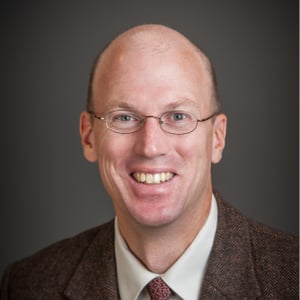
Professor of Law, Villanova University
Todd Aagaard joined the Villanova Law School faculty in 2008. He served as vice dean of the Law School from 2015 to 2019. His scholarship focuses on environmental law, energy law, and administrative law. His publications include Energy-Environment Policy Alignments, 90 Wash. L. Rev. 1517 (2015); Environmental Law Outside the Canon, 89 Ind. L.J. 1239 (2014); Environmental Harms, Use Conflicts, and Neutral Baselines in Environmental Law, 60 Duke L.J. 1505 (2011); Environmental Law as a Legal Field: An Inquiry in Legal Taxonomy, 95 Cornell L. Rev. 221 (2010); and Factual Premises of Statutory Interpretation in Agency Review Cases, 77 Geo. Wash. L. Rev. (2009). In addition, he is a co-author of Practicing Environmental Law, a practice-based environmental law casebook published in 2017 by Foundation Press.
Aagaard received his BA with honors from Pomona College, his MS from the University of Michigan School of Natural Resources and the Environment, and his JD magna cum laude from the University of Michigan Law School. While at Michigan, he was the editor-in-chief of the Michigan Law Review and an executive editor of the Michigan Journal of Race & Law. Following completion of his JD and MS degrees, he clerked for Second Circuit Judge Guido Calabresi, before joining the Environment and Natural Resources Division of the U.S. Department of Justice as an attorney in the Appellate Section. At the Justice Department, he briefed and argued civil and criminal cases in federal courts of appeals in the areas of environmental law, natural resources law, Indian law and administrative law.

Judge, United States Court of Appeals, Third Circuit
Judge Hardiman was appointed to the United States Court of Appeals for the Third Circuit on January 9, 2007 and was confirmed by the Senate (95-0) on March 15, 2007. Prior to becoming an appellate judge, Judge Hardiman served as a trial judge on the United States District Court for the Western District of Pennsylvania as of November 1, 2003. In 2008, Chief Justice John Roberts appointed Judge Hardiman to the Information Technology Committee of the Judicial Conference of the United States. Judge Hardiman was appointed Chairman of the IT Committee in 2013 and served in that capacity until September 2021. In 2021 he was appointed by the Director of the Administrative Office of the United States Courts to serve as Chair of the Judiciary IT Security Task Force, which completed its work in fall 2023. Chief Justice Roberts appointed Judge Hardiman to the Board of the Federal Judicial Center to serve from March 2020 until March 2024. As part of his work with the Center, Judge Hardiman now serves as Editor in Chief for the Manual for Complex Civil Litigation, Fifth.
Before entering judicial service, Judge Hardiman handled a wide variety of litigation matters in state and federal trial and appellate courts as a partner at Reed Smith LLP (1999-2003), a partner at Titus & McConomy LLP (1996-1999), and as an associate with its predecessor firm, Cindrich & Titus (1992-1996). Judge Hardiman began his legal career as an associate in the Washington, D.C. office of Skadden, Arps, Slate, Meagher & Flom (1990-1992).
A 1987 honors graduate of the University of Notre Dame, Judge Hardiman received his law degree in 1990 from the Georgetown University Law Center, where he served as a Notes and Comments Editor on the Georgetown Law Journal. In 2012, Judge Hardiman was elected as a member of the American Law Institute and was elected to its Council in 2019 and its Executive Committee in 2025. Judge Hardiman regularly teaches a seminar on Advanced Constitutional Law at Duquesne University School of Law and a one-week course entitled “Constitutional Law: the First and Second Amendments” at Georgetown University Law Center.
A native of Waltham, Massachusetts, Judge Hardiman has chambers in Pittsburgh, Pennsylvania. He and his wife Lori married in 1992 and have three children.
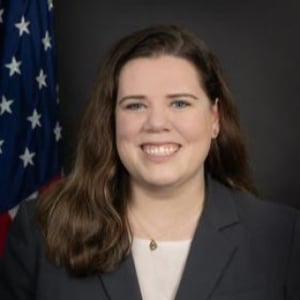
Commissioner, Federal Energy Regulatory Commission
Lindsay S. See joined the Federal Energy Regulatory Commission as a Commissioner in June 2024. Before her current role, Commissioner See served as the Solicitor General of West Virginia, where she managed appellate and high-stakes litigation for the State. With a particular focus on energy and administrative law, her work included leading multi-state and multi-interest coalitions on a variety of national issues. She argued twice before the U.S. Supreme Court, filed multi-state comments in dozens of agency rulemakings, and routinely appeared before the Supreme Court of Appeals of West Virginia and the federal courts of appeals.
Commissioner See previously practiced appellate and administrative law for several years with Gibson, Dunn & Crutcher in Washington, D.C. She graduated magna cum laude from Harvard Law School and clerked for the Hon. Thomas B. Griffith on the U.S. Court of Appeals for the D.C. Circuit. Originally from Michigan, See now considers herself both a proud Michigander and Mountaineer.
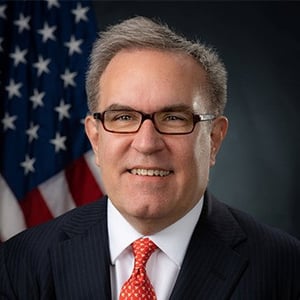
Holland & Hart, Partner
On February 28, 2019, the U.S. Senate confirmed Andrew Wheeler as the fifteenth Administrator of the Environmental Protection Agency. President Donald J. Trump had announced his appointment as the Acting EPA Administrator on July 5, 2018. Mr. Wheeler had previously been confirmed by the U.S. Senate as the EPA Deputy Administrator on April 12, 2018.
Mr. Wheeler has dedicated his career to advancing sound environmental policies. He began his career during the George H. W. Bush Administration as a Special Assistant in EPA’s Pollution Prevention and Toxics office.
He was a Principal and the team leader of the Energy and Environment Practice Group at FaegreBD Consulting, as well as Counsel at Faegre Baker Daniels law firm, where he practiced since 2009. He also served as the Co-chair of the Energy and Natural Resources Industry team across the entire firm.
Prior to his work with the firm, Mr. Wheeler served for six years as the Majority Staff Director and Chief Counsel, as well as the Minority Staff Director, of the Senate Committee on Environment and Public Works. Before his time at the full Senate EPW Committee, Mr. Wheeler served in a similar capacity for six years for the Subcommittee on Clean Air, Climate Change, Wetlands and Nuclear Safety.
Mr. Wheeler is the past Chairman of the National Energy Resource Organization (NERO) and a Stennis Fellow. Mr. Wheeler is also an Eagle Scout.
Mr. Wheeler is from Fairfield, Ohio. He completed his law degree at Washington University in St. Louis, his MBA at George Mason University, and his undergraduate work at Case Western Reserve University in English and Biology.
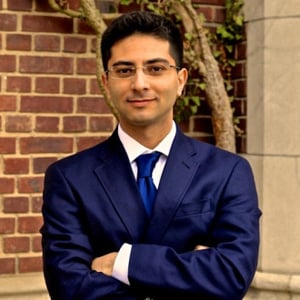
Associate Professor of Law, University of Notre Dame Law School
Sherif Girgis joined Notre Dame Law School in 2021. Prior to joining Notre Dame Law, Sherif practiced law at Jones Day in Washington, D.C., where he focused on appellate and complex civil litigation. Before that, Girgis served as a law clerk to Justice Samuel Alito, Jr., of the U.S. Supreme Court and Judge Thomas B. Griffith of the U.S. Court of Appeals for the D.C. Circuit. Now completing his Ph.D. in philosophy at Princeton, Girgis earned his J.D. at Yale Law School, where he served as an editor of the Yale Law Journal and won the Felix S. Cohen Prize for best paper in legal philosophy. Before law school, he earned a master's degree (B.Phil.) in philosophy from the University of Oxford as a Rhodes Scholar, and his bachelor's degree in philosophy from Princeton, Phi Beta Kappa and summa cum laude. Girgis is coauthor of What Is Marriage? Man and Woman: A Defense, cited in a dissent in United States v. Windsor, and Debating Religious Liberty and Discrimination, released by Oxford University Press in 2017. His work at the intersection of philosophy and law--including criminal law, constitutional liberties, and jurisprudence--has appeared in academic and popular venues including the Yale Law Journal, the Virginia Law Review, the University of Pennsylvania Law Review, the Harvard Journal of Law and Public Policy, the American Journal of Jurisprudence, the Cambridge Companion to Philosophy of Law, The New York Times, and The Wall Street Journal.
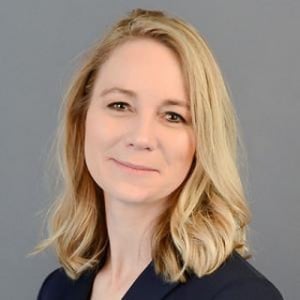
Supreme Court & Appellate Litigation Chair, Lex Politica; Of Counsel, Alliance Defending Freedom
Erin Morrow Hawley serves as Chair of Lex Politica's Supreme Court and Appellate Practice overseeing the firm’s strategic appellate litigation and critical motions practice in the trial courts. Erin is an experienced litigator who represents clients in constitutional, regulatory, and appellate matters in federal and state courts throughout the country.
Erin has represented dozens of clients before the Supreme Court of the United States, served as lead counsel in high-profile cases raising novel constitutional and statutory issues, and authored numerous successful petitions for certiorari and briefs in opposition. She has argued in state and federal appellate and trial courts throughout the country, including the Supreme Court of the United States. Erin represents diverse clients in high-stakes litigation from state governments to faith-based nonprofits to Fortune 100 companies. She possesses expertise on a wide range of subject matters including administrative law, the First Amendment, religious liberty, federal jurisdiction, federal preemption, equitable jurisdiction, tax law, the Affordable Care Act, and Title IX.
Erin represents clients in cases where public communications strategy is paramount. She is a sought-after speaker and writer, has testified multiple times before Congress, and is a frequent presenter on constitutional and administrative law issues, including at the Oxford Union, the National Federalist Society Convention, and university campuses across the country. She is a frequent commentator to media outlets, including Fox News, MSNBC, the Wall Street Journal, WORLD, USA Today, the Federalist, and the Hill.
Erin previously oversaw Alliance Defending Freedom’s--where she still serves as Of Counsel--litigation strategies to empower women and protect the dignity of life, defend pregnancy centers’ First Amendment rights from government overreach, and safeguard Americans’ freedoms from the ever-encroaching administrative state.
Brenden Mann Foundation Chair in Law and Religion and Co-Director of the Nootbaar Institute for Law, Pepperdine Caruso School of Law
Professor Michael Helfand is the Brenden Mann Foundation Chair in Law and Religion and Co-Director of the Nootbaar Institute for Law, Religion and Ethics at Pepperdine Caruso School of Law. During the Spring, he serves as the Florence Rogatz Visiting Professor at Yale Law School. In addition to his academic appointments, Professor Helfand serves as the Senior Legal Advisor to the Orthodox Union’s Teach Coalition and a Senior Fellow at the Shalom Hartman Institute.
An expert on questions of church and state, Professor Helfand’s work considers how U.S. law treats religious law, custom and practice. His academic articles have appeared in numerous law journals, including the Yale Law Journal, New York University Law Review, Duke Law Journal, Minnesota Law Review, Washington University Law Review, and Southern California Law Review. In addition, Professor Helfand often provides commentary on clashes between law and religion, writing for various public audience publications, including the Wall Street Journal, the Los Angeles Times, and the Forward.
Professor Helfand joined the Pepperdine Caruso Law faculty in 2010 where he has taught Contracts, Arbitration Law, Jewish Law and seminars in Law and Religion as well as Multiculturalism and the Law. Prior to joining the Pepperdine Caruso Law faculty, Professor Helfand was an associate at Davis Polk & Wardwell LLP, where his practice focused on complex commercial litigation. Before entering private practice, Professor Helfand clerked for the Honorable Julia Smith Gibbons of the U.S. Court of Appeals for the Sixth Circuit.
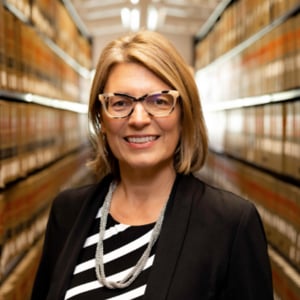
Associate Dean and Professor of Law, Case Western Reserve University School of Law
Jessie Hill’s teaching and scholarship focus on constitutional law, civil rights, reproductive rights, and law and religion. Her articles have been published in the Michigan Law Review, Duke Law Journal, Georgetown Law Journal, and Texas Law Review, among others. She has also appeared in numerous local and national press outlets, including CNN, the New York Times, Ms. Magazine, and NPR.
She is the founding director of the Reproductive Rights Law Initiative at the School of Law, which provides education and legal support relating to reproductive rights. Her work was recently profiled in the Case Law-Med magazine. She is a recipient of the university’s Distinguished Research Award. She has also been appointed a Nootbaar Fellow in Law and Religion at Pepperdine University Caruso School of Law. In 2023, she received both the Black Law Students Association Faculty Award and the Champion for Women Award from the Cuyahoga Democratic Women’s Caucus, and she has been recognized by the ACLU of Ohio for her reproductive rights advocacy.
Professor Hill joined the faculty in 2003 after practicing First Amendment and civil rights law with the firm of Berkman, Gordon, Murray & DeVan in Cleveland. Before entering private practice, Professor Hill worked at the Reproductive Freedom Project of the National ACLU office in New York. She also served as law clerk to the Honorable Karen Nelson Moore of the United States Court of Appeals for the Sixth Circuit. She received her JD, magna cum laude, from Harvard University and her AB, magna cum laude, from Brown University.
University Professor of Law and Religion and Director of the Eleanor H. McCullen Center for Law, Religion and Public Policy, Villanova University Charles Widger School of Law
Michael P. Moreland was appointed University Professor of Law and Religion and Director of the Eleanor H. McCullen Center for Law, Religion and Public Policy at Villanova University in 2017. Professor Moreland joined the Villanova faculty in 2006 and served as Vice Dean from 2012 to 2015. His research is primarily in the areas of torts, law and religion, constitutional law, and Catholic social thought, and he regularly teaches Torts, First Amendment, seminars in law and religion, and undergraduate courses in ethics.
Professor Moreland is the co-editor of Christianity and Private Law (Routledge, 2021), and his most recent publications include: “The Authority of Tradition: John Henry Newman and Legal Theory” in Christianity and the Making of Irish Law (Routledge, 2025); “Christianity and Torts” in The Oxford Handbook on Christianity and Law, (Oxford University Press, 2023); “Germaneness and Religious Liberty” in the Notre Dame Law Review (2023); “Contingency and Contestation in Christianity and Liberalism” in the Notre Dame Law Review (2023); “Friendship as the Primary Purpose of Law” in The American Journal of Jurisprudence 279 (2022); and “The Moral of Torts” (with Jeffrey Pojanowski) in Christianity and Private Law (Routledge, 2021).
Professor Moreland was a Visiting Professor of Law at the University of Notre Dame and the Mary Ann Remick Senior Visiting Fellow at the Notre Dame Center for Ethics and Culture from 2015 to 2017. He was the Forbes Visiting Fellow at Princeton University in the James Madison Program during academic year 2010-11. He has served as the project leader for grants from the John Templeton Foundation and the Charles Koch Foundation. He serves as the Chair of the Federalist Society’s Religious Liberties Practice Group Executive Committee and the Chair of the Board of Trustees of the Institute for Advanced Catholic Studies at the University of Southern California.
Professor Moreland received his BA in philosophy from the University of Notre Dame, his MA and PhD in theological ethics from Boston College, and his JD from the University of Michigan Law School. Following law school, Professor Moreland clerked for the Honorable Paul J. Kelly Jr., of the United States Court of Appeals for the Tenth Circuit and was an associate at Williams & Connolly LLP in Washington, DC, where he represented clients in First Amendment, professional liability, and products liability matters. Before coming to Villanova, he served as Associate Director for Domestic Policy at the White House under President George W. Bush, where he worked on a range of legal policy issues, including criminal justice, immigration, civil rights, and liability reform.
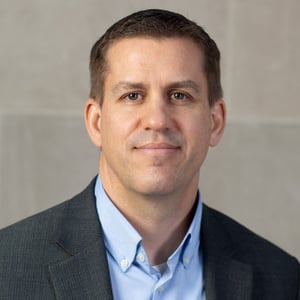
Clinical Professor, University of Texas at Austin School of Law
Steven T. Collis researches and teaches on religion and law and other First Amendment topics. He is the founding faculty director of the Bech-Loughlin First Amendment Center and of Texas's Law & Religion Clinic. On the topic of religious freedom law, he is a sought-after speaker to academic and lay audiences across the United States, including foreign diplomats from countries in Europe, the Middle East, Asia, and South America on behalf of the United States State Department. He has been interviewed by and quoted in various news and media outlets, including The Deseret News, Bloomberg, The Washington Times, Law360, The Salt Lake Tribune, PBS, The Denver Business Journal, Law Week Colorado, CBN News, and numerous podcasts and television shows. His scholarly work has appeared in The Michigan Law Review, The Nebraska Law Review, The University of Denver Law Review Online, and in his book Deep Conviction, which brings to life the history of free exercise law in the United States for lay audiences.
Prior to joining Texas, Steven was the Olin-Darling Research Fellow in the Constitutional Law Center at Stanford Law School.
Earlier in his career, he was an equity partner at Holland & Hart LLP, where he chaired the firm’s nationwide religious institutions and First Amendment practice group and was a member of the firm's complex civil litigation and employment practice groups. He also taught religious liberty law at the University of Denver Sturm College of Law and clerked for Chief Judge Timothy M. Tymkovich of the United States Court of Appeals for the Tenth Circuit.
Steven graduated magna cum laude from the University of Michigan Law School, where he was elected to the Order of the Coif and served as an editor on The Michigan Law Review and The Michigan Journal of Race and Law. He also holds an M.F.A. in creative writing from Virginia Commonwealth University, where he served as the associate editor of the literary journal Blackbird. He completed his undergraduate studies, with university honors, at Brigham Young University.
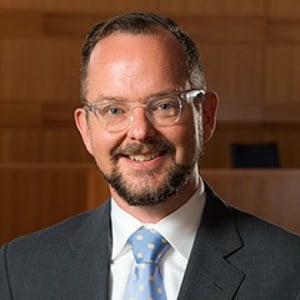
T.J. Maloney Chair in Business Law, Fordham University School of Law
Professor Griffith is an expert in corporate and financial regulatory law. He writes and speaks on corporate law, political economy, and the constitutional rights of corporations and other business associations. In addition to his academic writing, he has authored or contributed to many amicus briefs, including: Iowa v SEC, NCPPR v SEC, AFBR v SEC, and In re Tesla.
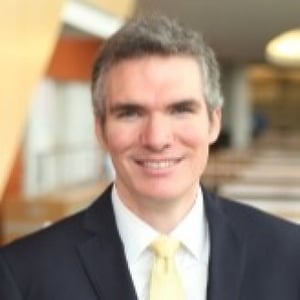
Associate Professor of Law, University of Florida Levin College of Law
Professor Ben Johnson is an Associate Professor of Law at the University of Florida Levin College of Law. He researches and writes on governance by committees. Sometimes, the governing committee is a board of directors. Other times, it is a committee of justices at the Supreme Court. His research has won awards from national organizations in law (AALS) and political science (APSA) and can be found in law reviews and peer reviewed outlets. His recent work on the Supreme Court has been published in the Columbia Law Review and Alabama Law Review. Earlier work on district judges with financial conflicts (published in the North Carolina Law Review) led to a large exposé in the Wall Street Journal. His game theoretic model of corporate fiduciary duties is forthcoming at the BYU Law Review. He has ongoing projects on the Supreme Court’s Shadow Docket, corporate fiduciary duties, shareholder voting, and machine learning.
Professor Johnson teaches Corporations (the only course in the curriculum where students learn to build and maintain institutions that can make the world a better place long after they are gone), Empirical Methods for Lawyers, and topics on the federal judiciary.
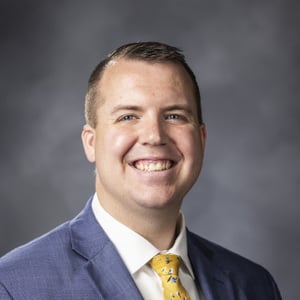
Associate Professor of Law, J. Reuben Clark Law School at Brigham Young University
Tyler Lindley joined BYU Law School in 2024 as an Associate Professor of Law. His research centers on the judicial role and the historical evolution of the judiciary in America. He has extensively examined and published on judicial remedies, federal courts, constitutional law, and administrative law. His scholarly contributions have been or will be featured in the Alabama Law Review, BYU Law Review, Georgia Law Review, Virginia Law Review, and Wake Forest Law Review.
Professor Lindley holds a bachelor's degree in economics from Brigham Young University (2018) and a Juris Doctor from The University of Chicago Law School (2021). During his legal studies, he served as a judicial extern for Judge Ryan Nelson on the US Court of Appeals for the Ninth Circuit. Prior to joining the faculty at BYU Law, he clerked for Chief Judge William Pryor on the US Court of Appeals for the Eleventh Circuit and Judge Gregory Katsas on the US Court of Appeals for the D.C. Circuit. He also served as a Research Fellow at BYU Law between his clerkships.
University Professor of Law and Religion and Director of the Eleanor H. McCullen Center for Law, Religion and Public Policy, Villanova University Charles Widger School of Law
Michael P. Moreland was appointed University Professor of Law and Religion and Director of the Eleanor H. McCullen Center for Law, Religion and Public Policy at Villanova University in 2017. Professor Moreland joined the Villanova faculty in 2006 and served as Vice Dean from 2012 to 2015. His research is primarily in the areas of torts, law and religion, constitutional law, and Catholic social thought, and he regularly teaches Torts, First Amendment, seminars in law and religion, and undergraduate courses in ethics.
Professor Moreland is the co-editor of Christianity and Private Law (Routledge, 2021), and his most recent publications include: “The Authority of Tradition: John Henry Newman and Legal Theory” in Christianity and the Making of Irish Law (Routledge, 2025); “Christianity and Torts” in The Oxford Handbook on Christianity and Law, (Oxford University Press, 2023); “Germaneness and Religious Liberty” in the Notre Dame Law Review (2023); “Contingency and Contestation in Christianity and Liberalism” in the Notre Dame Law Review (2023); “Friendship as the Primary Purpose of Law” in The American Journal of Jurisprudence 279 (2022); and “The Moral of Torts” (with Jeffrey Pojanowski) in Christianity and Private Law (Routledge, 2021).
Professor Moreland was a Visiting Professor of Law at the University of Notre Dame and the Mary Ann Remick Senior Visiting Fellow at the Notre Dame Center for Ethics and Culture from 2015 to 2017. He was the Forbes Visiting Fellow at Princeton University in the James Madison Program during academic year 2010-11. He has served as the project leader for grants from the John Templeton Foundation and the Charles Koch Foundation. He serves as the Chair of the Federalist Society’s Religious Liberties Practice Group Executive Committee and the Chair of the Board of Trustees of the Institute for Advanced Catholic Studies at the University of Southern California.
Professor Moreland received his BA in philosophy from the University of Notre Dame, his MA and PhD in theological ethics from Boston College, and his JD from the University of Michigan Law School. Following law school, Professor Moreland clerked for the Honorable Paul J. Kelly Jr., of the United States Court of Appeals for the Tenth Circuit and was an associate at Williams & Connolly LLP in Washington, DC, where he represented clients in First Amendment, professional liability, and products liability matters. Before coming to Villanova, he served as Associate Director for Domestic Policy at the White House under President George W. Bush, where he worked on a range of legal policy issues, including criminal justice, immigration, civil rights, and liability reform.
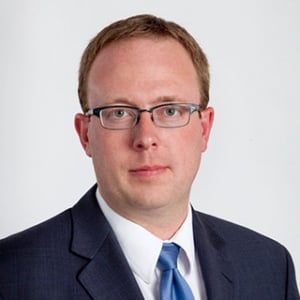
Professor, Canada Research Chair in Indigenous Rights in Constitutional and International Law, University of Saskatchewan College of Law
Dwight Newman, B.A. in Economics (Regina), J.D. (Saskatchewan), B.C.L., M.Phil., D.Phil. in Legal Philosophy (Oxford), is a Professor of Law and Canada Research Chair in Indigenous Rights in Constitutional and International Law at the University of Saskatchewan, where he started in a faculty position in 2005 and has also served a three-year term as Associate Dean. He has been a Canada Research Chair since 2013.
Dr. Newman has also taught during visiting terms at Alberta, McGill, Osgoode Hall (PD), and Oxford. During the 2015-16 year, he was a James Madison Visiting Fellow at Princeton University, and during the second half of the 2016-17 year he was a Professeur invité at the Université de Montréal Faculté de Droit and a Herbert Smith Freehills Visitor at Cambridge University. In 2017 he became a member of the College of the Royal Society of Canada.
Dr. Newman has published close to a hundred articles or book chapters and ten books. His books include: The Duty to Consult: New Relationships with Aboriginal Peoples (Purich/UBC, 2009), Community and Collective Rights: A Theoretical Framework for Rights Held by Groups (Hart/Bloomsbury, 2011), Natural Resource Jurisdiction in Canada (LexisNexis, 2013), Revisiting the Duty to Consult Aboriginal Peoples (Purich/UBC, 2014) and both the Charter of Rights volume of Halsbury’s Laws of Canada and The Law of the Canadian Constitution (with co-author Guy Régimbald) (LexisNexis, 2013, 2nd edn 2017). His forthcoming books include Mining Law of Canada (LexisNexis), an edited collection on Business Implications of Aboriginal Law (LexisNexis), and the Edward Elgar Research Handbook on the International Law of Indigenous Rights (Edward Elgar). His writing has been cited by all levels of Canadian courts, including a number of times by the Supreme Court of Canada, and in argument before the United States Supreme Court.
Dr. Newman is a Munk Senior Fellow of the Macdonald-Laurier Institute and has contributed to policy discussions by publishing a number of think tank reports. He also serves as an expert member of the International Law Association (ILA) Committee on Implementation of the Rights of Indigenous Peoples and contributes to ongoing discussion on international norms on related issues. He has delivered dozens of presentations to a variety of audiences on six continents and has published many op eds in leading Canadian and American newspapers.
Prior to entering a faculty role, Dr. Newman clerked for Chief Justice Lamer and Justice LeBel at the Supreme Court of Canada, worked for NGOs in South Africa and Hong Kong and for the Canadian Department of Justice, and completed his graduate studies at Oxford University, where he studied as a Rhodes Scholar. He has lived in half a dozen countries and has travelled to over seventy countries.
Dr. Newman is a member of the Ontario and Saskatchewan bars and he does selective legal work for industry, government, and Indigenous communities focused mainly on constitutional issues associated with resource development as well as consulting work on related issues for international investment entities.
Some of his publications are available on his Google Scholar page and his SSRN page.
John P. Murphy Foundation Professor of Law and Associate Dean for External Engagement, University of Notre Dame Law School
Nicole Stelle Garnett is the John P. Murphy Foundation Professor of Law at Notre Dame Law School, where she also serves as the Associate Dean for External Engagement and directs the Notre Dame Education Law Project. Her teaching and research focus on education law and policy, religious liberty, and topics related to property law (especially land use and urban development policies). In addition to dozens of articles on these subjects, she is the author of Lost Classroom, Lost Community: Catholic Schools' Importance in Urban America (University of Chicago Press, 2014) and Ordering the City: Land Use, Policing and the Restoration of Urban America (Yale University Press, 2009).
Garnett received her B.A. with distinction in Political Science from Stanford University and her J.D. from Yale Law School. After law school, she clerked for the Honorable Morris S. Arnold of the United States Court of Appeals for the Eighth Circuit and for Associate Justice Clarence Thomas of the Supreme Court of the United States. Before joining the law school faculty in 1999, she worked for two years as a staff attorney at the Institute for Justice, a non-profit public-interest law firm in Washington, D.C., where she helped to defend the constitutionality of the nation's first private-school-choice programs.
At Notre Dame, Garnett is a faculty fellow in the Institute for Educational Initiatives, Kellogg Institute for International Studies, Fitzgerald Institute for Real Estate, and deNicola Center for Ethics and Culture. She also is an elected member of the American Law Institute and a Senior Fellow at the Manhattan Institute.
Brenden Mann Foundation Chair in Law and Religion and Co-Director of the Nootbaar Institute for Law, Pepperdine Caruso School of Law
Professor Michael Helfand is the Brenden Mann Foundation Chair in Law and Religion and Co-Director of the Nootbaar Institute for Law, Religion and Ethics at Pepperdine Caruso School of Law. During the Spring, he serves as the Florence Rogatz Visiting Professor at Yale Law School. In addition to his academic appointments, Professor Helfand serves as the Senior Legal Advisor to the Orthodox Union’s Teach Coalition and a Senior Fellow at the Shalom Hartman Institute.
An expert on questions of church and state, Professor Helfand’s work considers how U.S. law treats religious law, custom and practice. His academic articles have appeared in numerous law journals, including the Yale Law Journal, New York University Law Review, Duke Law Journal, Minnesota Law Review, Washington University Law Review, and Southern California Law Review. In addition, Professor Helfand often provides commentary on clashes between law and religion, writing for various public audience publications, including the Wall Street Journal, the Los Angeles Times, and the Forward.
Professor Helfand joined the Pepperdine Caruso Law faculty in 2010 where he has taught Contracts, Arbitration Law, Jewish Law and seminars in Law and Religion as well as Multiculturalism and the Law. Prior to joining the Pepperdine Caruso Law faculty, Professor Helfand was an associate at Davis Polk & Wardwell LLP, where his practice focused on complex commercial litigation. Before entering private practice, Professor Helfand clerked for the Honorable Julia Smith Gibbons of the U.S. Court of Appeals for the Sixth Circuit.
University Professor of Law and Religion and Director of the Eleanor H. McCullen Center for Law, Religion and Public Policy, Villanova University Charles Widger School of Law
Michael P. Moreland was appointed University Professor of Law and Religion and Director of the Eleanor H. McCullen Center for Law, Religion and Public Policy at Villanova University in 2017. Professor Moreland joined the Villanova faculty in 2006 and served as Vice Dean from 2012 to 2015. His research is primarily in the areas of torts, law and religion, constitutional law, and Catholic social thought, and he regularly teaches Torts, First Amendment, seminars in law and religion, and undergraduate courses in ethics.
Professor Moreland is the co-editor of Christianity and Private Law (Routledge, 2021), and his most recent publications include: “The Authority of Tradition: John Henry Newman and Legal Theory” in Christianity and the Making of Irish Law (Routledge, 2025); “Christianity and Torts” in The Oxford Handbook on Christianity and Law, (Oxford University Press, 2023); “Germaneness and Religious Liberty” in the Notre Dame Law Review (2023); “Contingency and Contestation in Christianity and Liberalism” in the Notre Dame Law Review (2023); “Friendship as the Primary Purpose of Law” in The American Journal of Jurisprudence 279 (2022); and “The Moral of Torts” (with Jeffrey Pojanowski) in Christianity and Private Law (Routledge, 2021).
Professor Moreland was a Visiting Professor of Law at the University of Notre Dame and the Mary Ann Remick Senior Visiting Fellow at the Notre Dame Center for Ethics and Culture from 2015 to 2017. He was the Forbes Visiting Fellow at Princeton University in the James Madison Program during academic year 2010-11. He has served as the project leader for grants from the John Templeton Foundation and the Charles Koch Foundation. He serves as the Chair of the Federalist Society’s Religious Liberties Practice Group Executive Committee and the Chair of the Board of Trustees of the Institute for Advanced Catholic Studies at the University of Southern California.
Professor Moreland received his BA in philosophy from the University of Notre Dame, his MA and PhD in theological ethics from Boston College, and his JD from the University of Michigan Law School. Following law school, Professor Moreland clerked for the Honorable Paul J. Kelly Jr., of the United States Court of Appeals for the Tenth Circuit and was an associate at Williams & Connolly LLP in Washington, DC, where he represented clients in First Amendment, professional liability, and products liability matters. Before coming to Villanova, he served as Associate Director for Domestic Policy at the White House under President George W. Bush, where he worked on a range of legal policy issues, including criminal justice, immigration, civil rights, and liability reform.
John P. Murphy Foundation Professor of Law and Associate Dean for External Engagement, University of Notre Dame Law School
Nicole Stelle Garnett is the John P. Murphy Foundation Professor of Law at Notre Dame Law School, where she also serves as the Associate Dean for External Engagement and directs the Notre Dame Education Law Project. Her teaching and research focus on education law and policy, religious liberty, and topics related to property law (especially land use and urban development policies). In addition to dozens of articles on these subjects, she is the author of Lost Classroom, Lost Community: Catholic Schools' Importance in Urban America (University of Chicago Press, 2014) and Ordering the City: Land Use, Policing and the Restoration of Urban America (Yale University Press, 2009).
Garnett received her B.A. with distinction in Political Science from Stanford University and her J.D. from Yale Law School. After law school, she clerked for the Honorable Morris S. Arnold of the United States Court of Appeals for the Eighth Circuit and for Associate Justice Clarence Thomas of the Supreme Court of the United States. Before joining the law school faculty in 1999, she worked for two years as a staff attorney at the Institute for Justice, a non-profit public-interest law firm in Washington, D.C., where she helped to defend the constitutionality of the nation's first private-school-choice programs.
At Notre Dame, Garnett is a faculty fellow in the Institute for Educational Initiatives, Kellogg Institute for International Studies, Fitzgerald Institute for Real Estate, and deNicola Center for Ethics and Culture. She also is an elected member of the American Law Institute and a Senior Fellow at the Manhattan Institute.
Brenden Mann Foundation Chair in Law and Religion and Co-Director of the Nootbaar Institute for Law, Pepperdine Caruso School of Law
Professor Michael Helfand is the Brenden Mann Foundation Chair in Law and Religion and Co-Director of the Nootbaar Institute for Law, Religion and Ethics at Pepperdine Caruso School of Law. During the Spring, he serves as the Florence Rogatz Visiting Professor at Yale Law School. In addition to his academic appointments, Professor Helfand serves as the Senior Legal Advisor to the Orthodox Union’s Teach Coalition and a Senior Fellow at the Shalom Hartman Institute.
An expert on questions of church and state, Professor Helfand’s work considers how U.S. law treats religious law, custom and practice. His academic articles have appeared in numerous law journals, including the Yale Law Journal, New York University Law Review, Duke Law Journal, Minnesota Law Review, Washington University Law Review, and Southern California Law Review. In addition, Professor Helfand often provides commentary on clashes between law and religion, writing for various public audience publications, including the Wall Street Journal, the Los Angeles Times, and the Forward.
Professor Helfand joined the Pepperdine Caruso Law faculty in 2010 where he has taught Contracts, Arbitration Law, Jewish Law and seminars in Law and Religion as well as Multiculturalism and the Law. Prior to joining the Pepperdine Caruso Law faculty, Professor Helfand was an associate at Davis Polk & Wardwell LLP, where his practice focused on complex commercial litigation. Before entering private practice, Professor Helfand clerked for the Honorable Julia Smith Gibbons of the U.S. Court of Appeals for the Sixth Circuit.
University Professor of Law and Religion and Director of the Eleanor H. McCullen Center for Law, Religion and Public Policy, Villanova University Charles Widger School of Law
Michael P. Moreland was appointed University Professor of Law and Religion and Director of the Eleanor H. McCullen Center for Law, Religion and Public Policy at Villanova University in 2017. Professor Moreland joined the Villanova faculty in 2006 and served as Vice Dean from 2012 to 2015. His research is primarily in the areas of torts, law and religion, constitutional law, and Catholic social thought, and he regularly teaches Torts, First Amendment, seminars in law and religion, and undergraduate courses in ethics.
Professor Moreland is the co-editor of Christianity and Private Law (Routledge, 2021), and his most recent publications include: “The Authority of Tradition: John Henry Newman and Legal Theory” in Christianity and the Making of Irish Law (Routledge, 2025); “Christianity and Torts” in The Oxford Handbook on Christianity and Law, (Oxford University Press, 2023); “Germaneness and Religious Liberty” in the Notre Dame Law Review (2023); “Contingency and Contestation in Christianity and Liberalism” in the Notre Dame Law Review (2023); “Friendship as the Primary Purpose of Law” in The American Journal of Jurisprudence 279 (2022); and “The Moral of Torts” (with Jeffrey Pojanowski) in Christianity and Private Law (Routledge, 2021).
Professor Moreland was a Visiting Professor of Law at the University of Notre Dame and the Mary Ann Remick Senior Visiting Fellow at the Notre Dame Center for Ethics and Culture from 2015 to 2017. He was the Forbes Visiting Fellow at Princeton University in the James Madison Program during academic year 2010-11. He has served as the project leader for grants from the John Templeton Foundation and the Charles Koch Foundation. He serves as the Chair of the Federalist Society’s Religious Liberties Practice Group Executive Committee and the Chair of the Board of Trustees of the Institute for Advanced Catholic Studies at the University of Southern California.
Professor Moreland received his BA in philosophy from the University of Notre Dame, his MA and PhD in theological ethics from Boston College, and his JD from the University of Michigan Law School. Following law school, Professor Moreland clerked for the Honorable Paul J. Kelly Jr., of the United States Court of Appeals for the Tenth Circuit and was an associate at Williams & Connolly LLP in Washington, DC, where he represented clients in First Amendment, professional liability, and products liability matters. Before coming to Villanova, he served as Associate Director for Domestic Policy at the White House under President George W. Bush, where he worked on a range of legal policy issues, including criminal justice, immigration, civil rights, and liability reform.
Professor of Law, Villanova University
Todd Aagaard joined the Villanova Law School faculty in 2008. He served as vice dean of the Law School from 2015 to 2019. His scholarship focuses on environmental law, energy law, and administrative law. His publications include Energy-Environment Policy Alignments, 90 Wash. L. Rev. 1517 (2015); Environmental Law Outside the Canon, 89 Ind. L.J. 1239 (2014); Environmental Harms, Use Conflicts, and Neutral Baselines in Environmental Law, 60 Duke L.J. 1505 (2011); Environmental Law as a Legal Field: An Inquiry in Legal Taxonomy, 95 Cornell L. Rev. 221 (2010); and Factual Premises of Statutory Interpretation in Agency Review Cases, 77 Geo. Wash. L. Rev. (2009). In addition, he is a co-author of Practicing Environmental Law, a practice-based environmental law casebook published in 2017 by Foundation Press.
Aagaard received his BA with honors from Pomona College, his MS from the University of Michigan School of Natural Resources and the Environment, and his JD magna cum laude from the University of Michigan Law School. While at Michigan, he was the editor-in-chief of the Michigan Law Review and an executive editor of the Michigan Journal of Race & Law. Following completion of his JD and MS degrees, he clerked for Second Circuit Judge Guido Calabresi, before joining the Environment and Natural Resources Division of the U.S. Department of Justice as an attorney in the Appellate Section. At the Justice Department, he briefed and argued civil and criminal cases in federal courts of appeals in the areas of environmental law, natural resources law, Indian law and administrative law.
Judge, United States Court of Appeals, Third Circuit
Judge Hardiman was appointed to the United States Court of Appeals for the Third Circuit on January 9, 2007 and was confirmed by the Senate (95-0) on March 15, 2007. Prior to becoming an appellate judge, Judge Hardiman served as a trial judge on the United States District Court for the Western District of Pennsylvania as of November 1, 2003. In 2008, Chief Justice John Roberts appointed Judge Hardiman to the Information Technology Committee of the Judicial Conference of the United States. Judge Hardiman was appointed Chairman of the IT Committee in 2013 and served in that capacity until September 2021. In 2021 he was appointed by the Director of the Administrative Office of the United States Courts to serve as Chair of the Judiciary IT Security Task Force, which completed its work in fall 2023. Chief Justice Roberts appointed Judge Hardiman to the Board of the Federal Judicial Center to serve from March 2020 until March 2024. As part of his work with the Center, Judge Hardiman now serves as Editor in Chief for the Manual for Complex Civil Litigation, Fifth.
Before entering judicial service, Judge Hardiman handled a wide variety of litigation matters in state and federal trial and appellate courts as a partner at Reed Smith LLP (1999-2003), a partner at Titus & McConomy LLP (1996-1999), and as an associate with its predecessor firm, Cindrich & Titus (1992-1996). Judge Hardiman began his legal career as an associate in the Washington, D.C. office of Skadden, Arps, Slate, Meagher & Flom (1990-1992).
A 1987 honors graduate of the University of Notre Dame, Judge Hardiman received his law degree in 1990 from the Georgetown University Law Center, where he served as a Notes and Comments Editor on the Georgetown Law Journal. In 2012, Judge Hardiman was elected as a member of the American Law Institute and was elected to its Council in 2019 and its Executive Committee in 2025. Judge Hardiman regularly teaches a seminar on Advanced Constitutional Law at Duquesne University School of Law and a one-week course entitled “Constitutional Law: the First and Second Amendments” at Georgetown University Law Center.
A native of Waltham, Massachusetts, Judge Hardiman has chambers in Pittsburgh, Pennsylvania. He and his wife Lori married in 1992 and have three children.
Commissioner, Federal Energy Regulatory Commission
Lindsay S. See joined the Federal Energy Regulatory Commission as a Commissioner in June 2024. Before her current role, Commissioner See served as the Solicitor General of West Virginia, where she managed appellate and high-stakes litigation for the State. With a particular focus on energy and administrative law, her work included leading multi-state and multi-interest coalitions on a variety of national issues. She argued twice before the U.S. Supreme Court, filed multi-state comments in dozens of agency rulemakings, and routinely appeared before the Supreme Court of Appeals of West Virginia and the federal courts of appeals.
Commissioner See previously practiced appellate and administrative law for several years with Gibson, Dunn & Crutcher in Washington, D.C. She graduated magna cum laude from Harvard Law School and clerked for the Hon. Thomas B. Griffith on the U.S. Court of Appeals for the D.C. Circuit. Originally from Michigan, See now considers herself both a proud Michigander and Mountaineer.
Holland & Hart, Partner
On February 28, 2019, the U.S. Senate confirmed Andrew Wheeler as the fifteenth Administrator of the Environmental Protection Agency. President Donald J. Trump had announced his appointment as the Acting EPA Administrator on July 5, 2018. Mr. Wheeler had previously been confirmed by the U.S. Senate as the EPA Deputy Administrator on April 12, 2018.
Mr. Wheeler has dedicated his career to advancing sound environmental policies. He began his career during the George H. W. Bush Administration as a Special Assistant in EPA’s Pollution Prevention and Toxics office.
He was a Principal and the team leader of the Energy and Environment Practice Group at FaegreBD Consulting, as well as Counsel at Faegre Baker Daniels law firm, where he practiced since 2009. He also served as the Co-chair of the Energy and Natural Resources Industry team across the entire firm.
Prior to his work with the firm, Mr. Wheeler served for six years as the Majority Staff Director and Chief Counsel, as well as the Minority Staff Director, of the Senate Committee on Environment and Public Works. Before his time at the full Senate EPW Committee, Mr. Wheeler served in a similar capacity for six years for the Subcommittee on Clean Air, Climate Change, Wetlands and Nuclear Safety.
Mr. Wheeler is the past Chairman of the National Energy Resource Organization (NERO) and a Stennis Fellow. Mr. Wheeler is also an Eagle Scout.
Mr. Wheeler is from Fairfield, Ohio. He completed his law degree at Washington University in St. Louis, his MBA at George Mason University, and his undergraduate work at Case Western Reserve University in English and Biology.
Professor of Law, Villanova University
Todd Aagaard joined the Villanova Law School faculty in 2008. He served as vice dean of the Law School from 2015 to 2019. His scholarship focuses on environmental law, energy law, and administrative law. His publications include Energy-Environment Policy Alignments, 90 Wash. L. Rev. 1517 (2015); Environmental Law Outside the Canon, 89 Ind. L.J. 1239 (2014); Environmental Harms, Use Conflicts, and Neutral Baselines in Environmental Law, 60 Duke L.J. 1505 (2011); Environmental Law as a Legal Field: An Inquiry in Legal Taxonomy, 95 Cornell L. Rev. 221 (2010); and Factual Premises of Statutory Interpretation in Agency Review Cases, 77 Geo. Wash. L. Rev. (2009). In addition, he is a co-author of Practicing Environmental Law, a practice-based environmental law casebook published in 2017 by Foundation Press.
Aagaard received his BA with honors from Pomona College, his MS from the University of Michigan School of Natural Resources and the Environment, and his JD magna cum laude from the University of Michigan Law School. While at Michigan, he was the editor-in-chief of the Michigan Law Review and an executive editor of the Michigan Journal of Race & Law. Following completion of his JD and MS degrees, he clerked for Second Circuit Judge Guido Calabresi, before joining the Environment and Natural Resources Division of the U.S. Department of Justice as an attorney in the Appellate Section. At the Justice Department, he briefed and argued civil and criminal cases in federal courts of appeals in the areas of environmental law, natural resources law, Indian law and administrative law.
Judge, United States Court of Appeals, Third Circuit
Judge Hardiman was appointed to the United States Court of Appeals for the Third Circuit on January 9, 2007 and was confirmed by the Senate (95-0) on March 15, 2007. Prior to becoming an appellate judge, Judge Hardiman served as a trial judge on the United States District Court for the Western District of Pennsylvania as of November 1, 2003. In 2008, Chief Justice John Roberts appointed Judge Hardiman to the Information Technology Committee of the Judicial Conference of the United States. Judge Hardiman was appointed Chairman of the IT Committee in 2013 and served in that capacity until September 2021. In 2021 he was appointed by the Director of the Administrative Office of the United States Courts to serve as Chair of the Judiciary IT Security Task Force, which completed its work in fall 2023. Chief Justice Roberts appointed Judge Hardiman to the Board of the Federal Judicial Center to serve from March 2020 until March 2024. As part of his work with the Center, Judge Hardiman now serves as Editor in Chief for the Manual for Complex Civil Litigation, Fifth.
Before entering judicial service, Judge Hardiman handled a wide variety of litigation matters in state and federal trial and appellate courts as a partner at Reed Smith LLP (1999-2003), a partner at Titus & McConomy LLP (1996-1999), and as an associate with its predecessor firm, Cindrich & Titus (1992-1996). Judge Hardiman began his legal career as an associate in the Washington, D.C. office of Skadden, Arps, Slate, Meagher & Flom (1990-1992).
A 1987 honors graduate of the University of Notre Dame, Judge Hardiman received his law degree in 1990 from the Georgetown University Law Center, where he served as a Notes and Comments Editor on the Georgetown Law Journal. In 2012, Judge Hardiman was elected as a member of the American Law Institute and was elected to its Council in 2019 and its Executive Committee in 2025. Judge Hardiman regularly teaches a seminar on Advanced Constitutional Law at Duquesne University School of Law and a one-week course entitled “Constitutional Law: the First and Second Amendments” at Georgetown University Law Center.
A native of Waltham, Massachusetts, Judge Hardiman has chambers in Pittsburgh, Pennsylvania. He and his wife Lori married in 1992 and have three children.
Commissioner, Federal Energy Regulatory Commission
Lindsay S. See joined the Federal Energy Regulatory Commission as a Commissioner in June 2024. Before her current role, Commissioner See served as the Solicitor General of West Virginia, where she managed appellate and high-stakes litigation for the State. With a particular focus on energy and administrative law, her work included leading multi-state and multi-interest coalitions on a variety of national issues. She argued twice before the U.S. Supreme Court, filed multi-state comments in dozens of agency rulemakings, and routinely appeared before the Supreme Court of Appeals of West Virginia and the federal courts of appeals.
Commissioner See previously practiced appellate and administrative law for several years with Gibson, Dunn & Crutcher in Washington, D.C. She graduated magna cum laude from Harvard Law School and clerked for the Hon. Thomas B. Griffith on the U.S. Court of Appeals for the D.C. Circuit. Originally from Michigan, See now considers herself both a proud Michigander and Mountaineer.
Holland & Hart, Partner
On February 28, 2019, the U.S. Senate confirmed Andrew Wheeler as the fifteenth Administrator of the Environmental Protection Agency. President Donald J. Trump had announced his appointment as the Acting EPA Administrator on July 5, 2018. Mr. Wheeler had previously been confirmed by the U.S. Senate as the EPA Deputy Administrator on April 12, 2018.
Mr. Wheeler has dedicated his career to advancing sound environmental policies. He began his career during the George H. W. Bush Administration as a Special Assistant in EPA’s Pollution Prevention and Toxics office.
He was a Principal and the team leader of the Energy and Environment Practice Group at FaegreBD Consulting, as well as Counsel at Faegre Baker Daniels law firm, where he practiced since 2009. He also served as the Co-chair of the Energy and Natural Resources Industry team across the entire firm.
Prior to his work with the firm, Mr. Wheeler served for six years as the Majority Staff Director and Chief Counsel, as well as the Minority Staff Director, of the Senate Committee on Environment and Public Works. Before his time at the full Senate EPW Committee, Mr. Wheeler served in a similar capacity for six years for the Subcommittee on Clean Air, Climate Change, Wetlands and Nuclear Safety.
Mr. Wheeler is the past Chairman of the National Energy Resource Organization (NERO) and a Stennis Fellow. Mr. Wheeler is also an Eagle Scout.
Mr. Wheeler is from Fairfield, Ohio. He completed his law degree at Washington University in St. Louis, his MBA at George Mason University, and his undergraduate work at Case Western Reserve University in English and Biology.

Courthouse Steps Oral Argument: Oklahoma Statewide Charter School Board v. Drummond
Tracking and Ending Religious Discrimination
Nicole Stelle Garnett, Michael A. Helfand, Michael P. Moreland
A new project sponsored by a coalition of organizations seeks to track the various ways...
Tracking and Ending Religious Discrimination
Nicole Stelle Garnett, Michael A. Helfand, Michael P. Moreland
A new project sponsored by a coalition of organizations seeks to track the various ways...
Tracking and Ending Religious Discrimination
Environmental Law & Property Rights: Environmental Law in a Post-Chevron World— How Should Congress, Agencies, and States Respond?
Todd Aagaard, Thomas M. Hardiman, Lindsay See, Andrew Wheeler
This year, in a pair of decisions known as Loper Bright, the Supreme Court overruled...
Environmental Law & Property Rights: Environmental Law in a Post-Chevron World— How Should Congress, Agencies, and States Respond?
Todd Aagaard, Thomas M. Hardiman, Lindsay See, Andrew Wheeler
This year, in a pair of decisions known as Loper Bright, the Supreme Court overruled...
Environmental Law & Property Rights: Environmental Law in a Post-Chevron World— How Should Congress, Agencies, and States Respond?
2024 National Lawyers Convention
Washington, DCFree Exercise and Abortion
7 Minute Presentations of Works in Progress Panel 1-A
Washington, DC25th Annual Federalist Society Faculty Conference
Washington, DC