
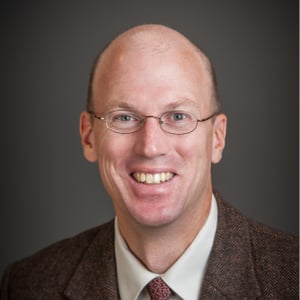
Professor of Law, Villanova University
Todd Aagaard joined the Villanova Law School faculty in 2008. He served as vice dean of the Law School from 2015 to 2019. His scholarship focuses on environmental law, energy law, and administrative law. His publications include Energy-Environment Policy Alignments, 90 Wash. L. Rev. 1517 (2015); Environmental Law Outside the Canon, 89 Ind. L.J. 1239 (2014); Environmental Harms, Use Conflicts, and Neutral Baselines in Environmental Law, 60 Duke L.J. 1505 (2011); Environmental Law as a Legal Field: An Inquiry in Legal Taxonomy, 95 Cornell L. Rev. 221 (2010); and Factual Premises of Statutory Interpretation in Agency Review Cases, 77 Geo. Wash. L. Rev. (2009). In addition, he is a co-author of Practicing Environmental Law, a practice-based environmental law casebook published in 2017 by Foundation Press.
Aagaard received his BA with honors from Pomona College, his MS from the University of Michigan School of Natural Resources and the Environment, and his JD magna cum laude from the University of Michigan Law School. While at Michigan, he was the editor-in-chief of the Michigan Law Review and an executive editor of the Michigan Journal of Race & Law. Following completion of his JD and MS degrees, he clerked for Second Circuit Judge Guido Calabresi, before joining the Environment and Natural Resources Division of the U.S. Department of Justice as an attorney in the Appellate Section. At the Justice Department, he briefed and argued civil and criminal cases in federal courts of appeals in the areas of environmental law, natural resources law, Indian law and administrative law.

Judge, United States Court of Appeals, Third Circuit
Judge Hardiman was appointed to the United States Court of Appeals for the Third Circuit on January 9, 2007 and was confirmed by the Senate (95-0) on March 15, 2007. Prior to becoming an appellate judge, Judge Hardiman served as a trial judge on the United States District Court for the Western District of Pennsylvania as of November 1, 2003. In 2008, Chief Justice John Roberts appointed Judge Hardiman to the Information Technology Committee of the Judicial Conference of the United States. Judge Hardiman was appointed Chairman of the IT Committee in 2013 and served in that capacity until September 2021. In 2021 he was appointed by the Director of the Administrative Office of the United States Courts to serve as Chair of the Judiciary IT Security Task Force, which completed its work in fall 2023. Chief Justice Roberts appointed Judge Hardiman to the Board of the Federal Judicial Center to serve from March 2020 until March 2024. As part of his work with the Center, Judge Hardiman now serves as Editor in Chief for the Manual for Complex Civil Litigation, Fifth.
Before entering judicial service, Judge Hardiman handled a wide variety of litigation matters in state and federal trial and appellate courts as a partner at Reed Smith LLP (1999-2003), a partner at Titus & McConomy LLP (1996-1999), and as an associate with its predecessor firm, Cindrich & Titus (1992-1996). Judge Hardiman began his legal career as an associate in the Washington, D.C. office of Skadden, Arps, Slate, Meagher & Flom (1990-1992).
A 1987 honors graduate of the University of Notre Dame, Judge Hardiman received his law degree in 1990 from the Georgetown University Law Center, where he served as a Notes and Comments Editor on the Georgetown Law Journal. In 2012, Judge Hardiman was elected as a member of the American Law Institute and was elected to its Council in 2019 and its Executive Committee in 2025. Judge Hardiman regularly teaches a seminar on Advanced Constitutional Law at Duquesne University School of Law and a one-week course entitled “Constitutional Law: the First and Second Amendments” at Georgetown University Law Center.
A native of Waltham, Massachusetts, Judge Hardiman has chambers in Pittsburgh, Pennsylvania. He and his wife Lori married in 1992 and have three children.
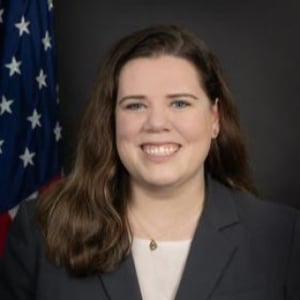
Commissioner, Federal Energy Regulatory Commission
Lindsay S. See joined the Federal Energy Regulatory Commission as a Commissioner in June 2024. Before her current role, Commissioner See served as the Solicitor General of West Virginia, where she managed appellate and high-stakes litigation for the State. With a particular focus on energy and administrative law, her work included leading multi-state and multi-interest coalitions on a variety of national issues. She argued twice before the U.S. Supreme Court, filed multi-state comments in dozens of agency rulemakings, and routinely appeared before the Supreme Court of Appeals of West Virginia and the federal courts of appeals.
Commissioner See previously practiced appellate and administrative law for several years with Gibson, Dunn & Crutcher in Washington, D.C. She graduated magna cum laude from Harvard Law School and clerked for the Hon. Thomas B. Griffith on the U.S. Court of Appeals for the D.C. Circuit. Originally from Michigan, See now considers herself both a proud Michigander and Mountaineer.
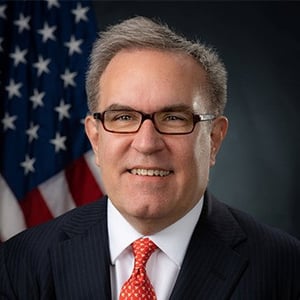
Holland & Hart, Partner
On February 28, 2019, the U.S. Senate confirmed Andrew Wheeler as the fifteenth Administrator of the Environmental Protection Agency. President Donald J. Trump had announced his appointment as the Acting EPA Administrator on July 5, 2018. Mr. Wheeler had previously been confirmed by the U.S. Senate as the EPA Deputy Administrator on April 12, 2018.
Mr. Wheeler has dedicated his career to advancing sound environmental policies. He began his career during the George H. W. Bush Administration as a Special Assistant in EPA’s Pollution Prevention and Toxics office.
He was a Principal and the team leader of the Energy and Environment Practice Group at FaegreBD Consulting, as well as Counsel at Faegre Baker Daniels law firm, where he practiced since 2009. He also served as the Co-chair of the Energy and Natural Resources Industry team across the entire firm.
Prior to his work with the firm, Mr. Wheeler served for six years as the Majority Staff Director and Chief Counsel, as well as the Minority Staff Director, of the Senate Committee on Environment and Public Works. Before his time at the full Senate EPW Committee, Mr. Wheeler served in a similar capacity for six years for the Subcommittee on Clean Air, Climate Change, Wetlands and Nuclear Safety.
Mr. Wheeler is the past Chairman of the National Energy Resource Organization (NERO) and a Stennis Fellow. Mr. Wheeler is also an Eagle Scout.
Mr. Wheeler is from Fairfield, Ohio. He completed his law degree at Washington University in St. Louis, his MBA at George Mason University, and his undergraduate work at Case Western Reserve University in English and Biology.
Professor of Law, Villanova University
Todd Aagaard joined the Villanova Law School faculty in 2008. He served as vice dean of the Law School from 2015 to 2019. His scholarship focuses on environmental law, energy law, and administrative law. His publications include Energy-Environment Policy Alignments, 90 Wash. L. Rev. 1517 (2015); Environmental Law Outside the Canon, 89 Ind. L.J. 1239 (2014); Environmental Harms, Use Conflicts, and Neutral Baselines in Environmental Law, 60 Duke L.J. 1505 (2011); Environmental Law as a Legal Field: An Inquiry in Legal Taxonomy, 95 Cornell L. Rev. 221 (2010); and Factual Premises of Statutory Interpretation in Agency Review Cases, 77 Geo. Wash. L. Rev. (2009). In addition, he is a co-author of Practicing Environmental Law, a practice-based environmental law casebook published in 2017 by Foundation Press.
Aagaard received his BA with honors from Pomona College, his MS from the University of Michigan School of Natural Resources and the Environment, and his JD magna cum laude from the University of Michigan Law School. While at Michigan, he was the editor-in-chief of the Michigan Law Review and an executive editor of the Michigan Journal of Race & Law. Following completion of his JD and MS degrees, he clerked for Second Circuit Judge Guido Calabresi, before joining the Environment and Natural Resources Division of the U.S. Department of Justice as an attorney in the Appellate Section. At the Justice Department, he briefed and argued civil and criminal cases in federal courts of appeals in the areas of environmental law, natural resources law, Indian law and administrative law.
Judge, United States Court of Appeals, Third Circuit
Judge Hardiman was appointed to the United States Court of Appeals for the Third Circuit on January 9, 2007 and was confirmed by the Senate (95-0) on March 15, 2007. Prior to becoming an appellate judge, Judge Hardiman served as a trial judge on the United States District Court for the Western District of Pennsylvania as of November 1, 2003. In 2008, Chief Justice John Roberts appointed Judge Hardiman to the Information Technology Committee of the Judicial Conference of the United States. Judge Hardiman was appointed Chairman of the IT Committee in 2013 and served in that capacity until September 2021. In 2021 he was appointed by the Director of the Administrative Office of the United States Courts to serve as Chair of the Judiciary IT Security Task Force, which completed its work in fall 2023. Chief Justice Roberts appointed Judge Hardiman to the Board of the Federal Judicial Center to serve from March 2020 until March 2024. As part of his work with the Center, Judge Hardiman now serves as Editor in Chief for the Manual for Complex Civil Litigation, Fifth.
Before entering judicial service, Judge Hardiman handled a wide variety of litigation matters in state and federal trial and appellate courts as a partner at Reed Smith LLP (1999-2003), a partner at Titus & McConomy LLP (1996-1999), and as an associate with its predecessor firm, Cindrich & Titus (1992-1996). Judge Hardiman began his legal career as an associate in the Washington, D.C. office of Skadden, Arps, Slate, Meagher & Flom (1990-1992).
A 1987 honors graduate of the University of Notre Dame, Judge Hardiman received his law degree in 1990 from the Georgetown University Law Center, where he served as a Notes and Comments Editor on the Georgetown Law Journal. In 2012, Judge Hardiman was elected as a member of the American Law Institute and was elected to its Council in 2019 and its Executive Committee in 2025. Judge Hardiman regularly teaches a seminar on Advanced Constitutional Law at Duquesne University School of Law and a one-week course entitled “Constitutional Law: the First and Second Amendments” at Georgetown University Law Center.
A native of Waltham, Massachusetts, Judge Hardiman has chambers in Pittsburgh, Pennsylvania. He and his wife Lori married in 1992 and have three children.
Commissioner, Federal Energy Regulatory Commission
Lindsay S. See joined the Federal Energy Regulatory Commission as a Commissioner in June 2024. Before her current role, Commissioner See served as the Solicitor General of West Virginia, where she managed appellate and high-stakes litigation for the State. With a particular focus on energy and administrative law, her work included leading multi-state and multi-interest coalitions on a variety of national issues. She argued twice before the U.S. Supreme Court, filed multi-state comments in dozens of agency rulemakings, and routinely appeared before the Supreme Court of Appeals of West Virginia and the federal courts of appeals.
Commissioner See previously practiced appellate and administrative law for several years with Gibson, Dunn & Crutcher in Washington, D.C. She graduated magna cum laude from Harvard Law School and clerked for the Hon. Thomas B. Griffith on the U.S. Court of Appeals for the D.C. Circuit. Originally from Michigan, See now considers herself both a proud Michigander and Mountaineer.
Holland & Hart, Partner
On February 28, 2019, the U.S. Senate confirmed Andrew Wheeler as the fifteenth Administrator of the Environmental Protection Agency. President Donald J. Trump had announced his appointment as the Acting EPA Administrator on July 5, 2018. Mr. Wheeler had previously been confirmed by the U.S. Senate as the EPA Deputy Administrator on April 12, 2018.
Mr. Wheeler has dedicated his career to advancing sound environmental policies. He began his career during the George H. W. Bush Administration as a Special Assistant in EPA’s Pollution Prevention and Toxics office.
He was a Principal and the team leader of the Energy and Environment Practice Group at FaegreBD Consulting, as well as Counsel at Faegre Baker Daniels law firm, where he practiced since 2009. He also served as the Co-chair of the Energy and Natural Resources Industry team across the entire firm.
Prior to his work with the firm, Mr. Wheeler served for six years as the Majority Staff Director and Chief Counsel, as well as the Minority Staff Director, of the Senate Committee on Environment and Public Works. Before his time at the full Senate EPW Committee, Mr. Wheeler served in a similar capacity for six years for the Subcommittee on Clean Air, Climate Change, Wetlands and Nuclear Safety.
Mr. Wheeler is the past Chairman of the National Energy Resource Organization (NERO) and a Stennis Fellow. Mr. Wheeler is also an Eagle Scout.
Mr. Wheeler is from Fairfield, Ohio. He completed his law degree at Washington University in St. Louis, his MBA at George Mason University, and his undergraduate work at Case Western Reserve University in English and Biology.
Professor of Law, Villanova University
Todd Aagaard joined the Villanova Law School faculty in 2008. He served as vice dean of the Law School from 2015 to 2019. His scholarship focuses on environmental law, energy law, and administrative law. His publications include Energy-Environment Policy Alignments, 90 Wash. L. Rev. 1517 (2015); Environmental Law Outside the Canon, 89 Ind. L.J. 1239 (2014); Environmental Harms, Use Conflicts, and Neutral Baselines in Environmental Law, 60 Duke L.J. 1505 (2011); Environmental Law as a Legal Field: An Inquiry in Legal Taxonomy, 95 Cornell L. Rev. 221 (2010); and Factual Premises of Statutory Interpretation in Agency Review Cases, 77 Geo. Wash. L. Rev. (2009). In addition, he is a co-author of Practicing Environmental Law, a practice-based environmental law casebook published in 2017 by Foundation Press.
Aagaard received his BA with honors from Pomona College, his MS from the University of Michigan School of Natural Resources and the Environment, and his JD magna cum laude from the University of Michigan Law School. While at Michigan, he was the editor-in-chief of the Michigan Law Review and an executive editor of the Michigan Journal of Race & Law. Following completion of his JD and MS degrees, he clerked for Second Circuit Judge Guido Calabresi, before joining the Environment and Natural Resources Division of the U.S. Department of Justice as an attorney in the Appellate Section. At the Justice Department, he briefed and argued civil and criminal cases in federal courts of appeals in the areas of environmental law, natural resources law, Indian law and administrative law.
Judge, United States Court of Appeals, Third Circuit
Judge Hardiman was appointed to the United States Court of Appeals for the Third Circuit on January 9, 2007 and was confirmed by the Senate (95-0) on March 15, 2007. Prior to becoming an appellate judge, Judge Hardiman served as a trial judge on the United States District Court for the Western District of Pennsylvania as of November 1, 2003. In 2008, Chief Justice John Roberts appointed Judge Hardiman to the Information Technology Committee of the Judicial Conference of the United States. Judge Hardiman was appointed Chairman of the IT Committee in 2013 and served in that capacity until September 2021. In 2021 he was appointed by the Director of the Administrative Office of the United States Courts to serve as Chair of the Judiciary IT Security Task Force, which completed its work in fall 2023. Chief Justice Roberts appointed Judge Hardiman to the Board of the Federal Judicial Center to serve from March 2020 until March 2024. As part of his work with the Center, Judge Hardiman now serves as Editor in Chief for the Manual for Complex Civil Litigation, Fifth.
Before entering judicial service, Judge Hardiman handled a wide variety of litigation matters in state and federal trial and appellate courts as a partner at Reed Smith LLP (1999-2003), a partner at Titus & McConomy LLP (1996-1999), and as an associate with its predecessor firm, Cindrich & Titus (1992-1996). Judge Hardiman began his legal career as an associate in the Washington, D.C. office of Skadden, Arps, Slate, Meagher & Flom (1990-1992).
A 1987 honors graduate of the University of Notre Dame, Judge Hardiman received his law degree in 1990 from the Georgetown University Law Center, where he served as a Notes and Comments Editor on the Georgetown Law Journal. In 2012, Judge Hardiman was elected as a member of the American Law Institute and was elected to its Council in 2019 and its Executive Committee in 2025. Judge Hardiman regularly teaches a seminar on Advanced Constitutional Law at Duquesne University School of Law and a one-week course entitled “Constitutional Law: the First and Second Amendments” at Georgetown University Law Center.
A native of Waltham, Massachusetts, Judge Hardiman has chambers in Pittsburgh, Pennsylvania. He and his wife Lori married in 1992 and have three children.
Commissioner, Federal Energy Regulatory Commission
Lindsay S. See joined the Federal Energy Regulatory Commission as a Commissioner in June 2024. Before her current role, Commissioner See served as the Solicitor General of West Virginia, where she managed appellate and high-stakes litigation for the State. With a particular focus on energy and administrative law, her work included leading multi-state and multi-interest coalitions on a variety of national issues. She argued twice before the U.S. Supreme Court, filed multi-state comments in dozens of agency rulemakings, and routinely appeared before the Supreme Court of Appeals of West Virginia and the federal courts of appeals.
Commissioner See previously practiced appellate and administrative law for several years with Gibson, Dunn & Crutcher in Washington, D.C. She graduated magna cum laude from Harvard Law School and clerked for the Hon. Thomas B. Griffith on the U.S. Court of Appeals for the D.C. Circuit. Originally from Michigan, See now considers herself both a proud Michigander and Mountaineer.
Holland & Hart, Partner
On February 28, 2019, the U.S. Senate confirmed Andrew Wheeler as the fifteenth Administrator of the Environmental Protection Agency. President Donald J. Trump had announced his appointment as the Acting EPA Administrator on July 5, 2018. Mr. Wheeler had previously been confirmed by the U.S. Senate as the EPA Deputy Administrator on April 12, 2018.
Mr. Wheeler has dedicated his career to advancing sound environmental policies. He began his career during the George H. W. Bush Administration as a Special Assistant in EPA’s Pollution Prevention and Toxics office.
He was a Principal and the team leader of the Energy and Environment Practice Group at FaegreBD Consulting, as well as Counsel at Faegre Baker Daniels law firm, where he practiced since 2009. He also served as the Co-chair of the Energy and Natural Resources Industry team across the entire firm.
Prior to his work with the firm, Mr. Wheeler served for six years as the Majority Staff Director and Chief Counsel, as well as the Minority Staff Director, of the Senate Committee on Environment and Public Works. Before his time at the full Senate EPW Committee, Mr. Wheeler served in a similar capacity for six years for the Subcommittee on Clean Air, Climate Change, Wetlands and Nuclear Safety.
Mr. Wheeler is the past Chairman of the National Energy Resource Organization (NERO) and a Stennis Fellow. Mr. Wheeler is also an Eagle Scout.
Mr. Wheeler is from Fairfield, Ohio. He completed his law degree at Washington University in St. Louis, his MBA at George Mason University, and his undergraduate work at Case Western Reserve University in English and Biology.
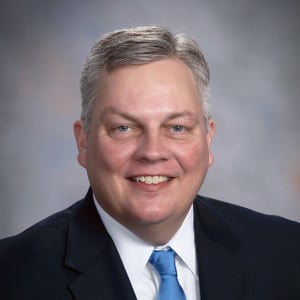
University Professor of Law and Religion and Director of the Eleanor H. McCullen Center for Law, Religion and Public Policy, Villanova University Charles Widger School of Law
Michael P. Moreland was appointed University Professor of Law and Religion and Director of the Eleanor H. McCullen Center for Law, Religion and Public Policy at Villanova University in 2017. Professor Moreland joined the Villanova faculty in 2006 and served as Vice Dean from 2012 to 2015. His research is primarily in the areas of torts, law and religion, constitutional law, and Catholic social thought, and he regularly teaches Torts, First Amendment, seminars in law and religion, and undergraduate courses in ethics.
Professor Moreland is the co-editor of Christianity and Private Law (Routledge, 2021), and his most recent publications include: “The Authority of Tradition: John Henry Newman and Legal Theory” in Christianity and the Making of Irish Law (Routledge, 2025); “Christianity and Torts” in The Oxford Handbook on Christianity and Law, (Oxford University Press, 2023); “Germaneness and Religious Liberty” in the Notre Dame Law Review (2023); “Contingency and Contestation in Christianity and Liberalism” in the Notre Dame Law Review (2023); “Friendship as the Primary Purpose of Law” in The American Journal of Jurisprudence 279 (2022); and “The Moral of Torts” (with Jeffrey Pojanowski) in Christianity and Private Law (Routledge, 2021).
Professor Moreland was a Visiting Professor of Law at the University of Notre Dame and the Mary Ann Remick Senior Visiting Fellow at the Notre Dame Center for Ethics and Culture from 2015 to 2017. He was the Forbes Visiting Fellow at Princeton University in the James Madison Program during academic year 2010-11. He has served as the project leader for grants from the John Templeton Foundation and the Charles Koch Foundation. He serves as the Chair of the Federalist Society’s Religious Liberties Practice Group Executive Committee and the Chair of the Board of Trustees of the Institute for Advanced Catholic Studies at the University of Southern California.
Professor Moreland received his BA in philosophy from the University of Notre Dame, his MA and PhD in theological ethics from Boston College, and his JD from the University of Michigan Law School. Following law school, Professor Moreland clerked for the Honorable Paul J. Kelly Jr., of the United States Court of Appeals for the Tenth Circuit and was an associate at Williams & Connolly LLP in Washington, DC, where he represented clients in First Amendment, professional liability, and products liability matters. Before coming to Villanova, he served as Associate Director for Domestic Policy at the White House under President George W. Bush, where he worked on a range of legal policy issues, including criminal justice, immigration, civil rights, and liability reform.
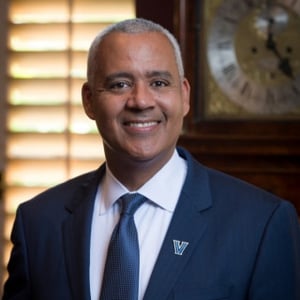
Arthur J. Kania Dean and Professor of Law, Villanova University, Charles Widger School of Law
Mark C. Alexander, JD is the Arthur J. Kania Dean and Professor of Law at the Villanova University Charles Widger School of Law. As the School’s chief administrator and chairperson of the faculty, Alexander is responsible for all facets of the Law School, including its long-term strategic and academic planning, curricular initiatives, faculty research and teaching support, student services, and fundraising and alumni relations.
Alexander previously served as Associate Dean for Academics at Seton Hall University’s School of Law. His responsibilities included oversight of the curriculum’s academic components, collaboration with the faculty and administration on implementation of the School’s strategic plan, and management of the career, enrollment and student services offices. A member of Seton Hall’s Law School faculty for two decades, he was honored as Professor of the Year on numerous occasions.
Alexander’s areas of expertise include constitution law, election law, the First Amendment and criminal procedure. His research interests focus on the constitutional dimensions of election law and campaign reform. Alexander has authored several books on the First Amendment and constitutional law, and his scholarship has been published in leading journals such as Harvard Journal of Law & Public Policy, Stanford Law & Policy Review and NYU Review of Law & Social Change.
Regularly interviewed by national print and broadcast media, Alexander is a sought-after speaker and panelist for national and international law symposiums and academic forums. He possesses significant international experience, having spent a year in Spain teaching American law and politics on a Fulbright Scholarship, as well as teaching in the Seton Hall Law-in-Italy program. He is also a fellow of the U.S.-Japan Leadership Program. Alexander served on the J. William Fulbright Foreign Scholarship Board from 2010 to 2014, having been appointed by President Barack Obama.
In addition to his leadership in academia, Alexander has also served as an adviser and issues director for several high-profile political campaigns. Prior to joining the Seton Hall Law School faculty in 1996, he clerked for Chief Judge Thelton Henderson of the United States District Court for the Northern District of California and was a litigator with Gibson, Dunn & Crutcher in San Francisco. Alexander earned a Juris Doctor from Yale University Law School and a Bachelor of Arts in Architecture from Yale University.

Senior Fellow and Director of Constitutional Studies, Manhattan Institute
Ilya Shapiro is a senior fellow and director of constitutional studies at the Manhattan Institute and a contributing editor of City Journal. Previously he was executive director and senior lecturer at the Georgetown Center for the Constitution, and before that a vice president of the Cato Institute.
Shapiro is the author of Lawless: The Miseducation of America’s Elites (2025) and Supreme Disorder: Judicial Nominations and the Politics of America’s Highest Court (2020), coauthor of Religious Liberties for Corporations? (2014), and editor of 11 volumes of the Cato Supreme Court Review (2008-18). He has contributed to a variety of academic, popular, and professional publications, including the Wall Street Journal, Harvard Journal of Law & Public Policy, Washington Post, Los Angeles Times, USA Today, National Review, and Newsweek. He also regularly provides commentary for various media outlets, writes the Shapiro’s Gavel newsletter on Substack, and once appeared on the Colbert Report.
Shapiro has testified many times before Congress and state legislatures and has filed more than 500 amicus curiae “friend of the court” briefs in the Supreme Court. He lectures regularly on behalf of the Federalist Society, is a member of the board of fellows of the Jewish Policy Center, was an inaugural Washington Fellow at the National Review Institute, and has been an adjunct law professor at the George Washington University and University of Mississippi. He is also the chairman of the board of advisers of the Mississippi Justice Institute, a barrister in the Edward Coke Appellate Inn of Court, and a former member of the Virginia Advisory Committee to the U.S. Commission on Civil Rights.
Earlier in his career, Shapiro was a special assistant/adviser to the Multi-National Force in Iraq on rule-of-law issues and practiced at Patton Boggs and Cleary Gottlieb. Before entering private practice, he clerked for Judge E. Grady Jolly of the U.S. Court of Appeals for the Fifth Circuit. He holds an AB from Princeton University, an MSc from the London School of Economics, and a JD from the University of Chicago Law School.
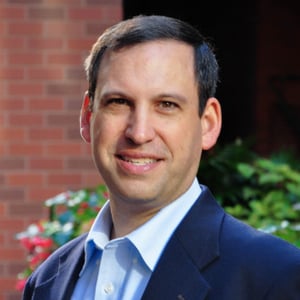
President, Becket Fund for Religious Liberty; Professor of Law and Co-Director of the Center for Religious Liberty, Catholic University; Visiting Professor, Harvard Law School
Mark joined the Becket team in 2011 and splits his time as Associate Professor at The Catholic University of America, Columbus School of Law, and as Visiting Professor at Harvard Law School. Mark teaches constitutional law, religious liberty, torts, and evidence. He has been voted Teacher of the Year three years in a row by the Law School’s Student Bar Association.
Mark has broad experience litigating First Amendment religious exercise and free speech cases. He has represented the winning parties in a variety of Supreme Court First Amendment cases including Hobby Lobby, Little Sisters, Wheaton College, and Holt. In January 2014, Mark argued before the Supreme Court in McCullen v. Coakley, a First Amendment challenge to a Massachusetts speech restriction outside of abortion clinics. The Justices ruled in favor of his clients 9-0. Mark also led a successful eight-year litigation battle against Governor Blagojevich’s effort to force religious pharmacists to distribute the morning-after and week-after pills.
Mark’s academic writing focuses on the First and Fourteenth Amendments, and has appeared in a variety of prestigious journals, including the Harvard Law Review.
Mark is a widely sought after speaker on constitutional issues, particularly concerning abortion and the First Amendment. Professor Rienzi has been invited to discuss these issues at Harvard Law School, Columbia University Law School, Georgetown University Law Center, Boston College Law School, Notre Dame Law School, the National Press Club, and the Capitol. He has been quoted on constitutional law issues on NPR, in the Washington Times, The New York Daily News, and the Chicago Sun-Times. Mark has also been featured on the Kelly File, Fox News Sunday, Your World with Neil Cavuto, Geraldo at Large, CNN Tonight, CNN Live, Andrea Mitchell Reports, and Wall Street Journal Live.
Prior to joining Becket, Mark served as counsel for the litigation department and the intellectual property litigation practice group of WilmerHale LLP. His practice focused on complex civil and appellate litigation with a particular emphasis on intellectual property and First Amendment issues. Prior to joining WilmerHale, he served as law clerk to the Hon. Stephen F. Williams, senior circuit judge for the U.S. Court of Appeals for the D.C. Circuit. Prior to that, Mark was an editor of the Harvard Law Review, and earned his J.D. from Harvard Law School and B.A. from Princeton University, both with honors.
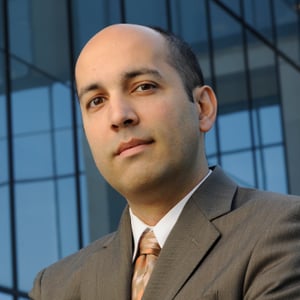
Professor of Law, Villanova University Charles Widger School of Law
Tuan Samahon teaches and writes in the areas of federal courts and constitutional law. His articles have been published in the Stanford Law Review, Ohio State Law Journal, Hastings Law Journal, William & Mary Bill of Rights Journal, University of Chicago Legal Forum, Denver Law Review, and Villanova Law Review, among others.
Beyond his scholarship, Tuan is engaged in interpreting and fashioning federal constitutional law. He has testified before the U.S. Senate Judiciary Committee, Subcommittee on the Constitution, and has served as counsel in separation-of-powers and Freedom of Information Act litigation in federal trial and appellate courts. Recently, Tuan prevailed against the CIA in a civil action for the release of the draft fifth volume of its secret history of the 1961 Bay of Pigs operation. In addition to representing others, for a book he is researching, Tuan successfully sued the FBI for the release of agency records detailing high-ranking executive and judicial officers' abuses of power.
Tuan received his B.A. from Brigham Young University and his J.D. from Georgetown University Law Center, where he was an Olin Law and Economics Research Fellow and was co-awarded the Olin Prize in Law and Economics. Prior to entering teaching, he clerked for U.S. District Judge Raymond A. Jackson on the Eastern District of Virginia and for U.S. Circuit Judge Jay S. Bybee on the Ninth Circuit. He also practiced in the Washington, D.C. office of Covington & Burling. Professor Samahon was named "Professor of the Year" by his students at the University of Nevada, Las Vegas. He teaches civil procedure, federal courts, and constitutional law subjects.
During spring 2017, Tuan served as a Fulbright scholar with the law faculty at the University of Zagreb, Croatia.
Former Adjunct Professor of Law; former Special Counsel to the President; former federal prosecutor, Georgetown Law (ret.)
Bill Otis is a former Adjunct Professor of Law at Georgetown University, a one-time federal prosecutor, and a former Special White House Counsel for President George H. W. Bush. After graduating from Stanford Law School, he started his career in the Criminal Division of the Justice Department, then became chief of appeals for the US Attorney's Office for the Eastern District of Virginia. In the 1980's he served on the Department's "Train the Trainer" team, which taught US Attorneys Offices across the county how to implement the then-new Sentencing Reform Act. He has held several posts in the federal government, including Special Assistant to the Secretary of Energy and Counselor to the head of the Drug Enforcement Administration, in addition to the White House post. He has testified before Congress on issues in criminal procedure, illegal drugs, the US Sentencing Commission, and the death penalty, and has given numerous media interviews on those and other subjects. He currently teaches a seminar at Georgetown Law titled "Conservatism in Law in America" with his wife, Federalist Society co-founder Lee Liberman Otis.
Legal Director, Foundation for Individual Rights and Expression
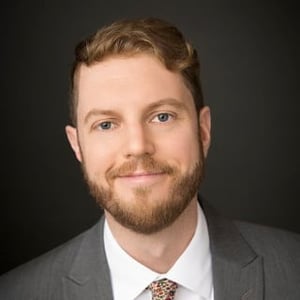
Will began defending student and faculty rights for FIRE in 2006 after graduating from New York University School of Law, where he served as an associate executive editor for the New York University Law Review. Will has appeared on national cable television and radio on behalf of FIRE and has spoken to students, faculty, administrators, and attorneys at events across the country. Will’s writing has been published by The New York Times, the Wall Street Journal, The Washington Post, the Chronicle of Higher Education, Jurist, Inside Higher Ed, Daily Journal, the Charleston Law Review, and many other outlets. Will edited the second edition of FIRE’s Guide to Due Process and Campus Justice, co-edited the second edition of FIRE’s Guide to Free Speech on Campus, and has coauthored amicus curiae briefs submitted to a number of courts, including the Supreme Court of the United States and the United States Courts of Appeals for the Third, Ninth, and Eleventh Circuits. Will has taught FIRE’s Continuing Legal Education programs in New York, Pennsylvania, and online. A member of the New York State Bar and the First Amendment Lawyers Association, Will serves as Co-Chair of the Education Subcommittee of the American Bar Association’s Section of Administrative Law and Regulatory Practice.
Will graduated magna cum laude from New York University’s Gallatin School of Individualized Study in 2003. A proud native of Buffalo, New York, Will now lives in New Jersey with his wife and two children.
Professor of Law, Villanova University Charles Widger School of Law
Tuan Samahon teaches and writes in the areas of federal courts and constitutional law. His articles have been published in the Stanford Law Review, Ohio State Law Journal, Hastings Law Journal, William & Mary Bill of Rights Journal, University of Chicago Legal Forum, Denver Law Review, and Villanova Law Review, among others.
Beyond his scholarship, Tuan is engaged in interpreting and fashioning federal constitutional law. He has testified before the U.S. Senate Judiciary Committee, Subcommittee on the Constitution, and has served as counsel in separation-of-powers and Freedom of Information Act litigation in federal trial and appellate courts. Recently, Tuan prevailed against the CIA in a civil action for the release of the draft fifth volume of its secret history of the 1961 Bay of Pigs operation. In addition to representing others, for a book he is researching, Tuan successfully sued the FBI for the release of agency records detailing high-ranking executive and judicial officers' abuses of power.
Tuan received his B.A. from Brigham Young University and his J.D. from Georgetown University Law Center, where he was an Olin Law and Economics Research Fellow and was co-awarded the Olin Prize in Law and Economics. Prior to entering teaching, he clerked for U.S. District Judge Raymond A. Jackson on the Eastern District of Virginia and for U.S. Circuit Judge Jay S. Bybee on the Ninth Circuit. He also practiced in the Washington, D.C. office of Covington & Burling. Professor Samahon was named "Professor of the Year" by his students at the University of Nevada, Las Vegas. He teaches civil procedure, federal courts, and constitutional law subjects.
During spring 2017, Tuan served as a Fulbright scholar with the law faculty at the University of Zagreb, Croatia.
University Professor of Law and Religion and Director of the Eleanor H. McCullen Center for Law, Religion and Public Policy, Villanova University Charles Widger School of Law
Michael P. Moreland was appointed University Professor of Law and Religion and Director of the Eleanor H. McCullen Center for Law, Religion and Public Policy at Villanova University in 2017. Professor Moreland joined the Villanova faculty in 2006 and served as Vice Dean from 2012 to 2015. His research is primarily in the areas of torts, law and religion, constitutional law, and Catholic social thought, and he regularly teaches Torts, First Amendment, seminars in law and religion, and undergraduate courses in ethics.
Professor Moreland is the co-editor of Christianity and Private Law (Routledge, 2021), and his most recent publications include: “The Authority of Tradition: John Henry Newman and Legal Theory” in Christianity and the Making of Irish Law (Routledge, 2025); “Christianity and Torts” in The Oxford Handbook on Christianity and Law, (Oxford University Press, 2023); “Germaneness and Religious Liberty” in the Notre Dame Law Review (2023); “Contingency and Contestation in Christianity and Liberalism” in the Notre Dame Law Review (2023); “Friendship as the Primary Purpose of Law” in The American Journal of Jurisprudence 279 (2022); and “The Moral of Torts” (with Jeffrey Pojanowski) in Christianity and Private Law (Routledge, 2021).
Professor Moreland was a Visiting Professor of Law at the University of Notre Dame and the Mary Ann Remick Senior Visiting Fellow at the Notre Dame Center for Ethics and Culture from 2015 to 2017. He was the Forbes Visiting Fellow at Princeton University in the James Madison Program during academic year 2010-11. He has served as the project leader for grants from the John Templeton Foundation and the Charles Koch Foundation. He serves as the Chair of the Federalist Society’s Religious Liberties Practice Group Executive Committee and the Chair of the Board of Trustees of the Institute for Advanced Catholic Studies at the University of Southern California.
Professor Moreland received his BA in philosophy from the University of Notre Dame, his MA and PhD in theological ethics from Boston College, and his JD from the University of Michigan Law School. Following law school, Professor Moreland clerked for the Honorable Paul J. Kelly Jr., of the United States Court of Appeals for the Tenth Circuit and was an associate at Williams & Connolly LLP in Washington, DC, where he represented clients in First Amendment, professional liability, and products liability matters. Before coming to Villanova, he served as Associate Director for Domestic Policy at the White House under President George W. Bush, where he worked on a range of legal policy issues, including criminal justice, immigration, civil rights, and liability reform.

Environmental Law & Property Rights: Environmental Law in a Post-Chevron World— How Should Congress, Agencies, and States Respond?
Todd Aagaard, Thomas M. Hardiman, Lindsay See, Andrew Wheeler
This year, in a pair of decisions known as Loper Bright, the Supreme Court overruled...
Environmental Law & Property Rights: Environmental Law in a Post-Chevron World— How Should Congress, Agencies, and States Respond?
Todd Aagaard, Thomas M. Hardiman, Lindsay See, Andrew Wheeler
This year, in a pair of decisions known as Loper Bright, the Supreme Court overruled...
Environmental Law & Property Rights: Environmental Law in a Post-Chevron World— How Should Congress, Agencies, and States Respond?
2024 National Lawyers Convention
Washington, DC[Construction] 2024 NLC
Religious Liberty: Covid-19 and Beyond
Indianapolis Lawyers Chapter
Indianapolis, INCampaign Finance and Citizens United
Religious Liberty and Tire Scraps: Trinity Lutheran
Villanova Student Chapter
Villanova, PASentencing Reform
Free Speech on Campus
Villanova Student Chapter
Villanova, PAReligious Freedom Restoration Acts and Free Exercise of Religion in 2015
Philadelphia, Pennsylvania