
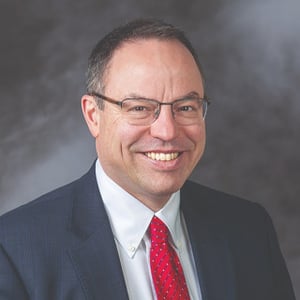
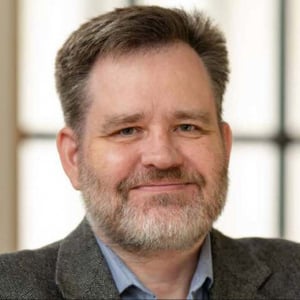
Professor of Law and J. Philip Johnson Faculty Fellow, University of North Dakota School of Law
Michael S. McGinniss is Professor of Law and J. Philip Johnson Faculty Fellow at the University of North Dakota School of Law, where he joined the faculty in 2010 and served as the Dean from 2019 to 2022. He chairs the executive committee for the Federalist Society's Practice Group on Professional Responsibility and Legal Education.
Before entering the legal academy, Professor McGinniss served for twelve years as a Disciplinary Counsel for the Supreme Court of Delaware. He currently teaches courses on Professional Responsibility, Advanced Legal Ethics, Civil Procedure, and Federal Courts. He also serves as Faculty Advisor for the North Dakota Law Review and the UND Law Federalist Society student chapter.
Professor McGinniss’ research and scholarship interests are wide-ranging and include lawyer and judicial ethics, lawyer discipline and regulation of the profession, constitutional law (especially First Amendment, separation of powers, and federalism), and cultural challenges faced by conservatives in the law schools and the legal profession. His most recent law review article, Declaring Independence to Secure Integrity: The Supreme Court Justices' Code of Conduct, was published in the Federalist Society Review. His article Expressing Conscience with Candor: Saint Thomas More and First Freedoms in the Legal Profession, was published in the Harvard Journal of Law & Public Policy.
Professor McGinniss has spoken to Federalist Society lawyer and student chapters across the country about judicial independence and ethics, especially relating to the federal courts and the United States Supreme Court Justices. In addition, he has spoken to several chapters about rising challenges to ideological diversity and targeting of conservative viewpoints in law schools and the legal profession. Although he is very pleased to speak on these and many other topics that may be of interest to lawyer and student chapters, in 2026-2027, he has particular interest in speaking on the topic “Lawyer Discipline as Political ‘Resistance’: Separation of Powers, Federalism, and the Rule of Law,” concerning his work-in-progress on the weaponization of professional disciplinary processes against conservative lawyers for political and ideological purposes.
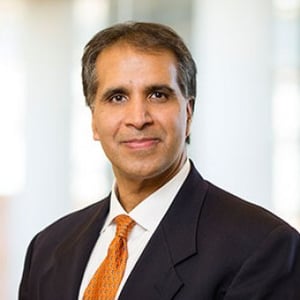
Dean and Iwan Foundation Professor of Law, University of Illinois College of Law
Dean Amar joined the College of Law as its dean in 2015, after having been a professor of law for many years at law schools in the University of California System, most recently the UC Davis School of Law, where he served as Senior Associate Dean for Academic Affairs. Amar is one of the most eminent and frequently cited authorities in constitutional law, federal courts, and civil procedure. He has produced several books and over 60 articles in leading law reviews. He is a co-author (along with Akhil Reed Amar and Steven Calabresi) of the upcoming edition of the six-volume Treatise on Constitutional Law (West Publishing Co., 6th ed. 2021) pioneered by Ron Rotunda and John Nowak, as well as the hardbound and soft-cover one-volume hornbooks that derive from it. He is also a co-author (along with Jonathan Varat) of Constitutional Law: Cases and Materials (Foundation Press, 15th ed. 2017), a co-author on multiple volumes of the Wright & Miller Federal Practice and Procedure Treatise (West Publishing Co. 2006), and a co-author (along with John Oakley) of a one-volume treatise on American Civil Procedure (Kluwer, 2008). He writes a biweekly column on constitutional matters for Justia.com and a monthly column on legal education for abovethelaw.com, is a frequent commentator on local and national radio and TV, and has penned dozens of op-ed pieces for major newspapers and magazines.
A strong proponent of public and professional engagement, Amar is an elected member of the American Law Institute and has served as a consultant for, among others, the National Association of Attorneys General, the United States Department of Justice, the California Attorney General’s Office, the ACLU of Southern California, and the Center for Civic Education. For one year he chaired the Civil Procedure Section of the Association of American Law Schools.
Amar earned his bachelor’s degree from UC Berkeley and his juris doctor from Yale Law School, where he was an articles editor for the Yale Law Journal. He then clerked for Judge William A. Norris of the United States Court of Appeals for the Ninth Circuit and for Justice Harry A. Blackmun of the United States Supreme Court before joining Gibson, Dunn & Crutcher, where he handled a variety of complex civil and white-collar criminal matters. It appears that dean Amar was the first person of South Asian heritage to clerk at the U.S. Supreme Court, and was the first American-born person of Indian descent to serve as a dean of a major American law school. Follow Dean Amar’s bi-weekly column on Justia.com and his monthly column on Above the Law, and read archived posts from his FindLaw.com column.
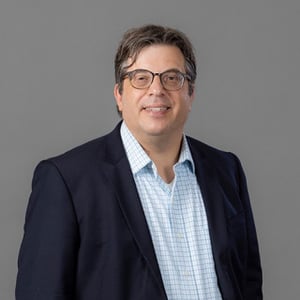
University Professor of Law and Executive Director, Liberty & Law Center, Antonin Scalia Law School, George Mason University
David Bernstein holds a University Professorship chair at the Antonin Scalia Law School, where he has been teaching since 1995. He has also been a visiting professor at the University of Michigan, Georgetown University, William & Mary, Brooklyn Law School, the University of Turin, and Hebrew University. Professor Bernstein teaches Constitutional Law, Evidence, and Products Liability.
A prolific author, Professor Bernstein often challenges the conventional wisdom with prodigious research and sharp, original analysis. He is the author of five books, and coauthor of two more. Professor Bernstein’s book Rehabilitating Lochner was praised across the political spectrum as “intellectual history in its highest form,” a “fresh perspective and a cogent analysis,” “delightful and informative,” “sharp and iconoclastic,” and “a terrific work of historical revisionism.” Columnist George Will praised Bernstein’s most recent book, Classified, The Untold Story of Racial Classification in America, as “perhaps the most consequential American book of 2022.”
Professor Bernstein has also written dozens of articles and essays published in major law reviews, including the California Law Review, Columbia Law Review, Michigan Law Review, and Yale Law Journal. An article he coauthored, Defending Daubert: It’s Time to Amend Federal Rule of Evidence 702, directly inspired a pending amendment to Rule 702.
Professor Bernstein blogs at the Instapundit.com, the Times of Israel, and the Volokh Conspiracy. He is a graduate of the Yale Law School, where he was senior editor of the Yale Law Journal and a John M. Olin Fellow in Law, Economics, and Public Policy.
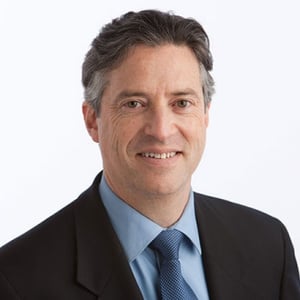
Dean Emeritus and Branch Rickey Collegiate Professor of Law, University of Michigan Law School
Evan H. Caminker, the Branch Rickey Collegiate Professor of Law, served as dean of the Law School from 2003 to 2013. During his tenure he helped design and oversee a significant expansion and renovation of the Law School's historic facilities, emphasized and shaped a curricular and co-curricular focus on skills-based and experiential learning, and helped nurture the unique culture at Michigan Law that creates a vibrant and collegial student-faculty community. He recently spent several years (both full- and part-time) serving as a special assistant U.S. attorney for the Detroit office, where he specialized in appellate litigation. Professor Caminker writes, teaches, and litigates about various issues of American constitutional law, including individual rights, allocation of governmental powers, and judicial decision-making. He has taught in the fields of appellate advocacy, constitutional law, federal courts, and civil procedure, and has lectured widely before various professional, scholarly, and student audiences. Professor Caminker came to Michigan Law from the University of California, Los Angeles, School of Law, where he was a faculty member from 1991 to 1999. He received his BA in political economy and environmental studies, summa cum laude, from UCLA and his JD from Yale Law School. He clerked for Justice William Brennan Jr. of the U.S. Supreme Court and for The Hon. William Norris of the U.S. Court of Appeals for the Ninth Circuit. Professor Caminker also practiced law with the Center for Law in the Public Interest in Los Angeles and with Wilmer, Cutler & Pickering in Washington, D.C. From May 2000 through January 2001, he served as deputy assistant attorney general in the Office of Legal Counsel, U.S. Department of Justice.

Judge, United States Court of Appeals, Sixth Circuit
Judge Readler earned his undergraduate and law degrees from the University of Michigan. After graduating, he served as a law clerk to Judge Alan Norris of the United States Court of Appeals for the Sixth Circuit. Judge Readler then began practicing law in the Columbus office of the international law firm Jones Day, eventually spending ten years as a partner in the firm’s Issues and Appeals Practice Group. While at Jones Day, Judge Readler appeared in state and federal trial and appellate courts around the country, most frequently the Supreme Court of Ohio and the Sixth Circuit. Judge Readler also successfully argued before the United States Supreme Court in McQuiggin v. Perkins on behalf of an inmate claiming actual innocence. His other pro bono representations include representing capital defendants before the Tenth Circuit and the Supreme Court of Ohio, as well as representing defendants sentenced to life in prison before the Sixth Circuit. While at Jones Day, Judge Readler traveled to Nairobi with Lawyers Without Borders to train Kenyan lawyers in prosecuting domestic violence cases, and he was also a recipient of the American Marshall Memorial Fellowship awarded by the German Marshall Fund of the United States. Following his career in private practice, Judge Readler served as Acting Assistant Attorney General for the Civil Division of the United States Department of Justice from 2017 to 2019. In that role, Judge Readler led and supervised over 1,000 lawyers in the Department’s largest litigating division, briefing and arguing several cases on behalf of the United States in federal courts across the country, including high-profile cases significant to the Administration and the Department. In March 2019, Judge Readler was confirmed to serve as a Circuit Judge on the Sixth Circuit. He resides in Columbus.
David Boies Professor of Law, Yale Law School
Dean and Iwan Foundation Professor of Law, University of Illinois College of Law
Dean Amar joined the College of Law as its dean in 2015, after having been a professor of law for many years at law schools in the University of California System, most recently the UC Davis School of Law, where he served as Senior Associate Dean for Academic Affairs. Amar is one of the most eminent and frequently cited authorities in constitutional law, federal courts, and civil procedure. He has produced several books and over 60 articles in leading law reviews. He is a co-author (along with Akhil Reed Amar and Steven Calabresi) of the upcoming edition of the six-volume Treatise on Constitutional Law (West Publishing Co., 6th ed. 2021) pioneered by Ron Rotunda and John Nowak, as well as the hardbound and soft-cover one-volume hornbooks that derive from it. He is also a co-author (along with Jonathan Varat) of Constitutional Law: Cases and Materials (Foundation Press, 15th ed. 2017), a co-author on multiple volumes of the Wright & Miller Federal Practice and Procedure Treatise (West Publishing Co. 2006), and a co-author (along with John Oakley) of a one-volume treatise on American Civil Procedure (Kluwer, 2008). He writes a biweekly column on constitutional matters for Justia.com and a monthly column on legal education for abovethelaw.com, is a frequent commentator on local and national radio and TV, and has penned dozens of op-ed pieces for major newspapers and magazines.
A strong proponent of public and professional engagement, Amar is an elected member of the American Law Institute and has served as a consultant for, among others, the National Association of Attorneys General, the United States Department of Justice, the California Attorney General’s Office, the ACLU of Southern California, and the Center for Civic Education. For one year he chaired the Civil Procedure Section of the Association of American Law Schools.
Amar earned his bachelor’s degree from UC Berkeley and his juris doctor from Yale Law School, where he was an articles editor for the Yale Law Journal. He then clerked for Judge William A. Norris of the United States Court of Appeals for the Ninth Circuit and for Justice Harry A. Blackmun of the United States Supreme Court before joining Gibson, Dunn & Crutcher, where he handled a variety of complex civil and white-collar criminal matters. It appears that dean Amar was the first person of South Asian heritage to clerk at the U.S. Supreme Court, and was the first American-born person of Indian descent to serve as a dean of a major American law school. Follow Dean Amar’s bi-weekly column on Justia.com and his monthly column on Above the Law, and read archived posts from his FindLaw.com column.
University Professor of Law and Executive Director, Liberty & Law Center, Antonin Scalia Law School, George Mason University
David Bernstein holds a University Professorship chair at the Antonin Scalia Law School, where he has been teaching since 1995. He has also been a visiting professor at the University of Michigan, Georgetown University, William & Mary, Brooklyn Law School, the University of Turin, and Hebrew University. Professor Bernstein teaches Constitutional Law, Evidence, and Products Liability.
A prolific author, Professor Bernstein often challenges the conventional wisdom with prodigious research and sharp, original analysis. He is the author of five books, and coauthor of two more. Professor Bernstein’s book Rehabilitating Lochner was praised across the political spectrum as “intellectual history in its highest form,” a “fresh perspective and a cogent analysis,” “delightful and informative,” “sharp and iconoclastic,” and “a terrific work of historical revisionism.” Columnist George Will praised Bernstein’s most recent book, Classified, The Untold Story of Racial Classification in America, as “perhaps the most consequential American book of 2022.”
Professor Bernstein has also written dozens of articles and essays published in major law reviews, including the California Law Review, Columbia Law Review, Michigan Law Review, and Yale Law Journal. An article he coauthored, Defending Daubert: It’s Time to Amend Federal Rule of Evidence 702, directly inspired a pending amendment to Rule 702.
Professor Bernstein blogs at the Instapundit.com, the Times of Israel, and the Volokh Conspiracy. He is a graduate of the Yale Law School, where he was senior editor of the Yale Law Journal and a John M. Olin Fellow in Law, Economics, and Public Policy.
Dean Emeritus and Branch Rickey Collegiate Professor of Law, University of Michigan Law School
Evan H. Caminker, the Branch Rickey Collegiate Professor of Law, served as dean of the Law School from 2003 to 2013. During his tenure he helped design and oversee a significant expansion and renovation of the Law School's historic facilities, emphasized and shaped a curricular and co-curricular focus on skills-based and experiential learning, and helped nurture the unique culture at Michigan Law that creates a vibrant and collegial student-faculty community. He recently spent several years (both full- and part-time) serving as a special assistant U.S. attorney for the Detroit office, where he specialized in appellate litigation. Professor Caminker writes, teaches, and litigates about various issues of American constitutional law, including individual rights, allocation of governmental powers, and judicial decision-making. He has taught in the fields of appellate advocacy, constitutional law, federal courts, and civil procedure, and has lectured widely before various professional, scholarly, and student audiences. Professor Caminker came to Michigan Law from the University of California, Los Angeles, School of Law, where he was a faculty member from 1991 to 1999. He received his BA in political economy and environmental studies, summa cum laude, from UCLA and his JD from Yale Law School. He clerked for Justice William Brennan Jr. of the U.S. Supreme Court and for The Hon. William Norris of the U.S. Court of Appeals for the Ninth Circuit. Professor Caminker also practiced law with the Center for Law in the Public Interest in Los Angeles and with Wilmer, Cutler & Pickering in Washington, D.C. From May 2000 through January 2001, he served as deputy assistant attorney general in the Office of Legal Counsel, U.S. Department of Justice.
Judge, United States Court of Appeals, Sixth Circuit
Judge Readler earned his undergraduate and law degrees from the University of Michigan. After graduating, he served as a law clerk to Judge Alan Norris of the United States Court of Appeals for the Sixth Circuit. Judge Readler then began practicing law in the Columbus office of the international law firm Jones Day, eventually spending ten years as a partner in the firm’s Issues and Appeals Practice Group. While at Jones Day, Judge Readler appeared in state and federal trial and appellate courts around the country, most frequently the Supreme Court of Ohio and the Sixth Circuit. Judge Readler also successfully argued before the United States Supreme Court in McQuiggin v. Perkins on behalf of an inmate claiming actual innocence. His other pro bono representations include representing capital defendants before the Tenth Circuit and the Supreme Court of Ohio, as well as representing defendants sentenced to life in prison before the Sixth Circuit. While at Jones Day, Judge Readler traveled to Nairobi with Lawyers Without Borders to train Kenyan lawyers in prosecuting domestic violence cases, and he was also a recipient of the American Marshall Memorial Fellowship awarded by the German Marshall Fund of the United States. Following his career in private practice, Judge Readler served as Acting Assistant Attorney General for the Civil Division of the United States Department of Justice from 2017 to 2019. In that role, Judge Readler led and supervised over 1,000 lawyers in the Department’s largest litigating division, briefing and arguing several cases on behalf of the United States in federal courts across the country, including high-profile cases significant to the Administration and the Department. In March 2019, Judge Readler was confirmed to serve as a Circuit Judge on the Sixth Circuit. He resides in Columbus.
David Boies Professor of Law, Yale Law School
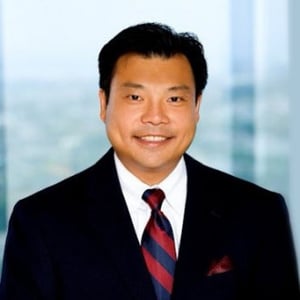
Attorney and Legal Commentator
John Shu is an attorney and legal commentator. His focus areas include constitutional law, securities & corporate law, antitrust law, administrative law, politics, and international affairs. Mr. Shu has lectured and published on a wide variety of issues.
Mr. Shu served President George H.W. Bush and President George W. Bush. He also served Judge Stanley Sporkin, U.S. District Court for the District of Columbia, who was Director of Enforcement at the U.S. Securities & Exchange Commission and General Counsel at the Central Intelligence Agency, and Judge Paul Roney, U.S. Court of Appeals for the Eleventh Circuit, who was Presiding Judge of the Foreign Intelligence Surveillance Court of Review.
Mr. Shu is a member of the National Committee on U.S. - China Relations, the Pacific Council on International Policy, and the Foreign Policy Association.
Dean and Iwan Foundation Professor of Law, University of Illinois College of Law
Dean Amar joined the College of Law as its dean in 2015, after having been a professor of law for many years at law schools in the University of California System, most recently the UC Davis School of Law, where he served as Senior Associate Dean for Academic Affairs. Amar is one of the most eminent and frequently cited authorities in constitutional law, federal courts, and civil procedure. He has produced several books and over 60 articles in leading law reviews. He is a co-author (along with Akhil Reed Amar and Steven Calabresi) of the upcoming edition of the six-volume Treatise on Constitutional Law (West Publishing Co., 6th ed. 2021) pioneered by Ron Rotunda and John Nowak, as well as the hardbound and soft-cover one-volume hornbooks that derive from it. He is also a co-author (along with Jonathan Varat) of Constitutional Law: Cases and Materials (Foundation Press, 15th ed. 2017), a co-author on multiple volumes of the Wright & Miller Federal Practice and Procedure Treatise (West Publishing Co. 2006), and a co-author (along with John Oakley) of a one-volume treatise on American Civil Procedure (Kluwer, 2008). He writes a biweekly column on constitutional matters for Justia.com and a monthly column on legal education for abovethelaw.com, is a frequent commentator on local and national radio and TV, and has penned dozens of op-ed pieces for major newspapers and magazines.
A strong proponent of public and professional engagement, Amar is an elected member of the American Law Institute and has served as a consultant for, among others, the National Association of Attorneys General, the United States Department of Justice, the California Attorney General’s Office, the ACLU of Southern California, and the Center for Civic Education. For one year he chaired the Civil Procedure Section of the Association of American Law Schools.
Amar earned his bachelor’s degree from UC Berkeley and his juris doctor from Yale Law School, where he was an articles editor for the Yale Law Journal. He then clerked for Judge William A. Norris of the United States Court of Appeals for the Ninth Circuit and for Justice Harry A. Blackmun of the United States Supreme Court before joining Gibson, Dunn & Crutcher, where he handled a variety of complex civil and white-collar criminal matters. It appears that dean Amar was the first person of South Asian heritage to clerk at the U.S. Supreme Court, and was the first American-born person of Indian descent to serve as a dean of a major American law school. Follow Dean Amar’s bi-weekly column on Justia.com and his monthly column on Above the Law, and read archived posts from his FindLaw.com column.
University Professor of Law and Executive Director, Liberty & Law Center, Antonin Scalia Law School, George Mason University
David Bernstein holds a University Professorship chair at the Antonin Scalia Law School, where he has been teaching since 1995. He has also been a visiting professor at the University of Michigan, Georgetown University, William & Mary, Brooklyn Law School, the University of Turin, and Hebrew University. Professor Bernstein teaches Constitutional Law, Evidence, and Products Liability.
A prolific author, Professor Bernstein often challenges the conventional wisdom with prodigious research and sharp, original analysis. He is the author of five books, and coauthor of two more. Professor Bernstein’s book Rehabilitating Lochner was praised across the political spectrum as “intellectual history in its highest form,” a “fresh perspective and a cogent analysis,” “delightful and informative,” “sharp and iconoclastic,” and “a terrific work of historical revisionism.” Columnist George Will praised Bernstein’s most recent book, Classified, The Untold Story of Racial Classification in America, as “perhaps the most consequential American book of 2022.”
Professor Bernstein has also written dozens of articles and essays published in major law reviews, including the California Law Review, Columbia Law Review, Michigan Law Review, and Yale Law Journal. An article he coauthored, Defending Daubert: It’s Time to Amend Federal Rule of Evidence 702, directly inspired a pending amendment to Rule 702.
Professor Bernstein blogs at the Instapundit.com, the Times of Israel, and the Volokh Conspiracy. He is a graduate of the Yale Law School, where he was senior editor of the Yale Law Journal and a John M. Olin Fellow in Law, Economics, and Public Policy.
Dean Emeritus and Branch Rickey Collegiate Professor of Law, University of Michigan Law School
Evan H. Caminker, the Branch Rickey Collegiate Professor of Law, served as dean of the Law School from 2003 to 2013. During his tenure he helped design and oversee a significant expansion and renovation of the Law School's historic facilities, emphasized and shaped a curricular and co-curricular focus on skills-based and experiential learning, and helped nurture the unique culture at Michigan Law that creates a vibrant and collegial student-faculty community. He recently spent several years (both full- and part-time) serving as a special assistant U.S. attorney for the Detroit office, where he specialized in appellate litigation. Professor Caminker writes, teaches, and litigates about various issues of American constitutional law, including individual rights, allocation of governmental powers, and judicial decision-making. He has taught in the fields of appellate advocacy, constitutional law, federal courts, and civil procedure, and has lectured widely before various professional, scholarly, and student audiences. Professor Caminker came to Michigan Law from the University of California, Los Angeles, School of Law, where he was a faculty member from 1991 to 1999. He received his BA in political economy and environmental studies, summa cum laude, from UCLA and his JD from Yale Law School. He clerked for Justice William Brennan Jr. of the U.S. Supreme Court and for The Hon. William Norris of the U.S. Court of Appeals for the Ninth Circuit. Professor Caminker also practiced law with the Center for Law in the Public Interest in Los Angeles and with Wilmer, Cutler & Pickering in Washington, D.C. From May 2000 through January 2001, he served as deputy assistant attorney general in the Office of Legal Counsel, U.S. Department of Justice.
Judge, United States Court of Appeals, Sixth Circuit
Judge Readler earned his undergraduate and law degrees from the University of Michigan. After graduating, he served as a law clerk to Judge Alan Norris of the United States Court of Appeals for the Sixth Circuit. Judge Readler then began practicing law in the Columbus office of the international law firm Jones Day, eventually spending ten years as a partner in the firm’s Issues and Appeals Practice Group. While at Jones Day, Judge Readler appeared in state and federal trial and appellate courts around the country, most frequently the Supreme Court of Ohio and the Sixth Circuit. Judge Readler also successfully argued before the United States Supreme Court in McQuiggin v. Perkins on behalf of an inmate claiming actual innocence. His other pro bono representations include representing capital defendants before the Tenth Circuit and the Supreme Court of Ohio, as well as representing defendants sentenced to life in prison before the Sixth Circuit. While at Jones Day, Judge Readler traveled to Nairobi with Lawyers Without Borders to train Kenyan lawyers in prosecuting domestic violence cases, and he was also a recipient of the American Marshall Memorial Fellowship awarded by the German Marshall Fund of the United States. Following his career in private practice, Judge Readler served as Acting Assistant Attorney General for the Civil Division of the United States Department of Justice from 2017 to 2019. In that role, Judge Readler led and supervised over 1,000 lawyers in the Department’s largest litigating division, briefing and arguing several cases on behalf of the United States in federal courts across the country, including high-profile cases significant to the Administration and the Department. In March 2019, Judge Readler was confirmed to serve as a Circuit Judge on the Sixth Circuit. He resides in Columbus.
David Boies Professor of Law, Yale Law School
Dean and Iwan Foundation Professor of Law, University of Illinois College of Law
Dean Amar joined the College of Law as its dean in 2015, after having been a professor of law for many years at law schools in the University of California System, most recently the UC Davis School of Law, where he served as Senior Associate Dean for Academic Affairs. Amar is one of the most eminent and frequently cited authorities in constitutional law, federal courts, and civil procedure. He has produced several books and over 60 articles in leading law reviews. He is a co-author (along with Akhil Reed Amar and Steven Calabresi) of the upcoming edition of the six-volume Treatise on Constitutional Law (West Publishing Co., 6th ed. 2021) pioneered by Ron Rotunda and John Nowak, as well as the hardbound and soft-cover one-volume hornbooks that derive from it. He is also a co-author (along with Jonathan Varat) of Constitutional Law: Cases and Materials (Foundation Press, 15th ed. 2017), a co-author on multiple volumes of the Wright & Miller Federal Practice and Procedure Treatise (West Publishing Co. 2006), and a co-author (along with John Oakley) of a one-volume treatise on American Civil Procedure (Kluwer, 2008). He writes a biweekly column on constitutional matters for Justia.com and a monthly column on legal education for abovethelaw.com, is a frequent commentator on local and national radio and TV, and has penned dozens of op-ed pieces for major newspapers and magazines.
A strong proponent of public and professional engagement, Amar is an elected member of the American Law Institute and has served as a consultant for, among others, the National Association of Attorneys General, the United States Department of Justice, the California Attorney General’s Office, the ACLU of Southern California, and the Center for Civic Education. For one year he chaired the Civil Procedure Section of the Association of American Law Schools.
Amar earned his bachelor’s degree from UC Berkeley and his juris doctor from Yale Law School, where he was an articles editor for the Yale Law Journal. He then clerked for Judge William A. Norris of the United States Court of Appeals for the Ninth Circuit and for Justice Harry A. Blackmun of the United States Supreme Court before joining Gibson, Dunn & Crutcher, where he handled a variety of complex civil and white-collar criminal matters. It appears that dean Amar was the first person of South Asian heritage to clerk at the U.S. Supreme Court, and was the first American-born person of Indian descent to serve as a dean of a major American law school. Follow Dean Amar’s bi-weekly column on Justia.com and his monthly column on Above the Law, and read archived posts from his FindLaw.com column.
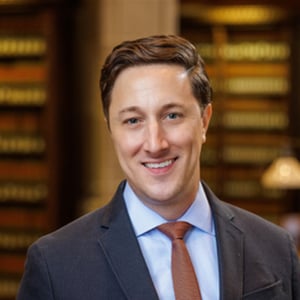
Professor of Law, Notre Dame Law School
Professor Derek Muller is a nationally-recognized scholar in the field of election law. His research focuses on the role of states in the administration of federal elections, the constitutional contours of voting rights and election administration, the limits of judicial power in the domain of elections, and the Electoral College.
He has published more than two dozen academic works, and his op-eds have appeared in the New York Times, the Los Angeles Times, and the Wall Street Journal. He has testified before Congress, and he is a contributor at the Election Law Blog. He is a co-author on a Federal Courts casebook published by Carolina Academic Press. He is also the co-reporter on a new Restatement of the Law, Election Litigation, an effort led by the American Law Institute.
Professor Muller teaches Election Law, Civil Procedure, and Evidence.
Dean and Iwan Foundation Professor of Law, University of Illinois College of Law
Dean Amar joined the College of Law as its dean in 2015, after having been a professor of law for many years at law schools in the University of California System, most recently the UC Davis School of Law, where he served as Senior Associate Dean for Academic Affairs. Amar is one of the most eminent and frequently cited authorities in constitutional law, federal courts, and civil procedure. He has produced several books and over 60 articles in leading law reviews. He is a co-author (along with Akhil Reed Amar and Steven Calabresi) of the upcoming edition of the six-volume Treatise on Constitutional Law (West Publishing Co., 6th ed. 2021) pioneered by Ron Rotunda and John Nowak, as well as the hardbound and soft-cover one-volume hornbooks that derive from it. He is also a co-author (along with Jonathan Varat) of Constitutional Law: Cases and Materials (Foundation Press, 15th ed. 2017), a co-author on multiple volumes of the Wright & Miller Federal Practice and Procedure Treatise (West Publishing Co. 2006), and a co-author (along with John Oakley) of a one-volume treatise on American Civil Procedure (Kluwer, 2008). He writes a biweekly column on constitutional matters for Justia.com and a monthly column on legal education for abovethelaw.com, is a frequent commentator on local and national radio and TV, and has penned dozens of op-ed pieces for major newspapers and magazines.
A strong proponent of public and professional engagement, Amar is an elected member of the American Law Institute and has served as a consultant for, among others, the National Association of Attorneys General, the United States Department of Justice, the California Attorney General’s Office, the ACLU of Southern California, and the Center for Civic Education. For one year he chaired the Civil Procedure Section of the Association of American Law Schools.
Amar earned his bachelor’s degree from UC Berkeley and his juris doctor from Yale Law School, where he was an articles editor for the Yale Law Journal. He then clerked for Judge William A. Norris of the United States Court of Appeals for the Ninth Circuit and for Justice Harry A. Blackmun of the United States Supreme Court before joining Gibson, Dunn & Crutcher, where he handled a variety of complex civil and white-collar criminal matters. It appears that dean Amar was the first person of South Asian heritage to clerk at the U.S. Supreme Court, and was the first American-born person of Indian descent to serve as a dean of a major American law school. Follow Dean Amar’s bi-weekly column on Justia.com and his monthly column on Above the Law, and read archived posts from his FindLaw.com column.
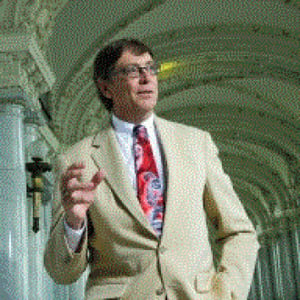
Professor of Law, University of California Hastings College of the Law
Professor Rory Little began teaching at UC Hastings in 1994 after a distinguished 12-year career as a practicing litigator, criminal defense and prosecution lawyer, and appellate lawyer. He is today a nationally recognized authority on criminal litigation ethics, federal criminal law, appellate litigation, and constitutional issues. On three occasions he has been awarded the “Best Professor” designation by the UC Hastings third-year class.
Professor Little chairs and serves on various committees in the American Bar Association and Federal Bar Association; annually publishes a Review of the Supreme Court’s Term: Criminal Cases for the ABA; and serves as Reporter to the ABA’s Task Force to Revise the Criminal Justice Standards, Prosecution and Defense Functions. He also occasionally serves as an expert witness in litigation matters; provides commentary on current legal issues for various print and electronic media; and maintains an Of Counsel position for appellate matters with the international law firm of McDermott, Will & Emery.
After graduating from Yale Law School, Professor Little served as law clerk to U.S. District Judge Louis F. Oberdorfer (Washington DC); Justice Potter Stewart (ret.), working on matters before the First, Third and Sixth Circuit Courts of Appeal; and Justice William J. Brennan, Jr. Professor Little also clerked for Justices Powell, Stevens, and Chief Justice Burger—a unique one-year experience.
Professor Little then practiced privately at Miller, Cassidy, Larroca & Lewin in Washington D.C. In 1987, he joined the U.S. Department of Justice’s Organized Crime & Racketeering Strike Force as a Trial Attorney. In 1989, he became the Appellate Chief for the U.S. Attorney’s Office in the Northern District of California, and has now argued over 60 federal and state appeals while briefing many more. In 1996 to 1997, Professor Little took a leave of absence from UC Hastings to serve as an Associate Deputy Attorney General in Washington D.C. under Attorney General Janet Reno and Deputy AG Jamie Gorelick.
Dean and Iwan Foundation Professor of Law, University of Illinois College of Law
Dean Amar joined the College of Law as its dean in 2015, after having been a professor of law for many years at law schools in the University of California System, most recently the UC Davis School of Law, where he served as Senior Associate Dean for Academic Affairs. Amar is one of the most eminent and frequently cited authorities in constitutional law, federal courts, and civil procedure. He has produced several books and over 60 articles in leading law reviews. He is a co-author (along with Akhil Reed Amar and Steven Calabresi) of the upcoming edition of the six-volume Treatise on Constitutional Law (West Publishing Co., 6th ed. 2021) pioneered by Ron Rotunda and John Nowak, as well as the hardbound and soft-cover one-volume hornbooks that derive from it. He is also a co-author (along with Jonathan Varat) of Constitutional Law: Cases and Materials (Foundation Press, 15th ed. 2017), a co-author on multiple volumes of the Wright & Miller Federal Practice and Procedure Treatise (West Publishing Co. 2006), and a co-author (along with John Oakley) of a one-volume treatise on American Civil Procedure (Kluwer, 2008). He writes a biweekly column on constitutional matters for Justia.com and a monthly column on legal education for abovethelaw.com, is a frequent commentator on local and national radio and TV, and has penned dozens of op-ed pieces for major newspapers and magazines.
A strong proponent of public and professional engagement, Amar is an elected member of the American Law Institute and has served as a consultant for, among others, the National Association of Attorneys General, the United States Department of Justice, the California Attorney General’s Office, the ACLU of Southern California, and the Center for Civic Education. For one year he chaired the Civil Procedure Section of the Association of American Law Schools.
Amar earned his bachelor’s degree from UC Berkeley and his juris doctor from Yale Law School, where he was an articles editor for the Yale Law Journal. He then clerked for Judge William A. Norris of the United States Court of Appeals for the Ninth Circuit and for Justice Harry A. Blackmun of the United States Supreme Court before joining Gibson, Dunn & Crutcher, where he handled a variety of complex civil and white-collar criminal matters. It appears that dean Amar was the first person of South Asian heritage to clerk at the U.S. Supreme Court, and was the first American-born person of Indian descent to serve as a dean of a major American law school. Follow Dean Amar’s bi-weekly column on Justia.com and his monthly column on Above the Law, and read archived posts from his FindLaw.com column.
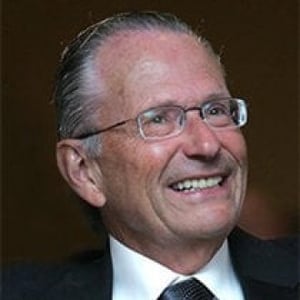
Earl Warren Professor of Public Law (Emeritus), UC Berkeley School of Law
Jesse Choper served as law clerk to Chief Justice Earl Warren of the U.S. Supreme Court following graduation from law school. He taught at the Wharton School of the University of Pennsylvania from 1957 to 1960, and at the University of Minnesota Law School from 1961 to 1965. He joined the Berkeley Law faculty in 1965. Choper has been a visiting professor at Harvard Law School, Fordham Law School, University of Milan, Free University in Amsterdam, Autonoma University in Barcelona, University of New South Wales in Sydney, University of Lucerne in Switzerland, and Catholic University of Portugal in Lisbon and Porto. He served as Berkeley Law’s dean from 1982 to 1992.
From 1979 to 1998, Choper was one of the three major lecturers at U.S. Law Week’s Annual Constitutional Law Conference in Washington, D.C. He has delivered 20 titled lectures at major universities throughout the country, including the Cooley Lectures at Michigan, the Stevens Lecture at Cornell, the Baum Lecture at Illinois, and the Lockhart Lecture at Minnesota. He has served on the executive committee of the Association of American Law Schools, and on the executive council of the American Academy of Arts and Sciences (of which he was vice president for more than ten years). He was national president of the Order of the Coif and is a member of the American Law Institute. In 1998 he received the UC Berkeley Distinguished Teaching Award and the Rutter Award for Teaching Distinction at Berkeley Law in 2006. In 2005 the Berkeley Law Alumni Association presented Choper with the Faculty Lifetime Achievement Award and the University of Pennsylvania Law School gave him the James Wilson Award, its highest award for alumni.
Choper’s major publications include the books, Judicial Review and the National Political Process: A Functional Reconsideration of the Role of the Supreme Court, which received the Order of the Coif Triennial Book Award in 1982, and Securing Religious Liberty: Principles for Judicial Interpretation of the Religion Clauses. His recent publications include the thirteenth edition of his Constitutional Law casebooks; the eighth edition of his Corporations casebook; the second edition of The Supreme Court and Its Justices; “The Political Question Doctrine: Suggested Criteria,” in Duke Law Journal (2005); “Wartime Process: A Dialogue on Congressional Power to Remove Issues From the Federal Courts,” in California Law Review (2007) (co-author); and “Who’s Afraid of the Eleventh Amendment? The Limited Impact of the Court’s Sovereign Immunity Rulings,” in Columbia Law Review (2006) (co-author).
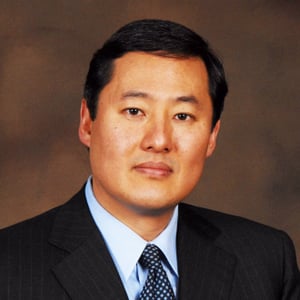
Emanuel S. Heller Professor of Law, University of California at Berkeley; Senior Research Fellow, School of Civic Leadership, Civitas Institute, University of Texas at Austin; Nonresident Senior Fellow, American Enterprise Institute
John Yoo is the Emanuel Heller Professor of Law. He is also Distinguished Visiting Scholar, School of Civic Leadership and Senior Research Fellow, Civitas Institute, at the University of Texas at Austin. He is also a Nonresident Senior Fellow at the American Enterprise Institute.
His most recent book, The Politically Incorrect Guide to the Supreme Court, co-authored with Robert Delahunty, was published in 2023. Professor Yoo’s other books include Defender-in-Chief: Trump’s Fight for Presidential Power; Striking Power: How Cyber, Robots, and Space Weapons Change the Rules for War, Point of Attack: Preventive War, International Law, and Global Welfare, and Crisis and Command: A History of Executive Power from George Washington to George Bush.
Professor Yoo has published more than 100 articles in academic journals on subjects including national security, constitutional law, international law, and the Supreme Court. He also regularly contributes to the editorial pages of the Wall Street Journal, New York Times, Washington Post, Los Angeles Times, and National Review, among others.
Professor Yoo has served in all three branches of government. He was an official in the U.S. Department of Justice, where he worked on national security and terrorism issues after the 9/11 attacks. He served as general counsel of the U.S. Senate Judiciary Committee. He has been a law clerk for Supreme Court Justice Clarence Thomas and federal appeals Judge Laurence Silberman. He has been a visiting professor at Seoul National University in South Korea, the Interdisciplinary Center in Israel, Keio University in Japan, Trento University in Italy, the University of Chicago, and the Free University of Amsterdam.
Professor Yoo supervises the Public Law and Policy Program and the California Constitution Center. He also serves on the boards of the Pacific Legal Foundation, the Federalist Society’s Separation of Powers and Federalism Division, the Universidad Cientifica del Sur Law School, and the Asia-Pacific Law Institute at Seoul National University. He is a winner of the Federalist Society’s Paul Bator award and been the Edwin Meese III Originalism Lecturer at the Heritage Foundation.
Professor Yoo graduated from Yale Law School and summa cum laude from Harvard College.
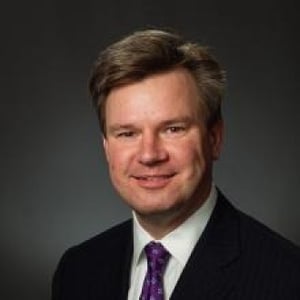
Senior Counsel & Director of the Center for Religious Schools, Alliance Defending Freedom
Gregory S. Baylor serves as senior counsel with Alliance Defending Freedom, where he is the director of the Center for Religious Schools and senior counsel with the Center for Public Policy.
Since joining ADF in 2009, Baylor has focused on defending and advancing the religious freedom of faith-based educational institutions through advice, education, legislative and public advocacy, and representation in disputes. He has testified about religious liberty issues three times before congressional committees and numerous times before state legislative committees.
Greg serves on the board of directors of the International Alliance for Christian Education, the board of directors of the Association for Biblical Higher Education, the board of directors of the Association for Christian Schools International, the board of advisors of the Museum of the Bible, and advisory board of the Center for Academic Faithfulness and Flourishing.
Greg earned his Juris Doctor in 1990 from Duke University School of Law, where he graduated Order of the Coif, with high honors, and served on the editorial board of the Duke Law Journal. He received his bachelor’s degree in Honors English in 1987 from Dartmouth College. Following graduation from law school, he served as law clerk to the Hon. Jerry E. Smith on the U.S. Court of Appeals for the Fifth Circuit. He practiced labor and employment law at two large international law firms for three years before joining the staff of Christian Legal Society’s Center for Law and Religious Freedom, where he served for 15 years prior to joining ADF. He lives in Northern Virginia with his wife (a medical doctor) and two daughters.
Professor of Law, New England Law | Boston
Professor Victor Hansen teaches Criminal Law, Criminal Procedure, Evidence, and Prosecutorial Ethics at New England Law ¦Boston. Before joining the New England Law faculty in 2005, he served a 20-year career in the Army, most of that time as a JAG Corps officer. In his last military assignment he served as a regional defense counsel for the United States Army Trial Defense Service. His previous assignments include work as a military prosecutor and supervising prosecutor. He has been involved in military capital litigation as a prosecutor and as a defense attorney. He also served as an associate professor of law at The Judge Advocate General's Legal Center and School in Charlottesville, VA. He is the author of several articles and books on criminal and military law, evidence, and national security issues, and is an elected member of the American Law Institute.
Senior Counsel & Director of the Center for Religious Schools, Alliance Defending Freedom
Gregory S. Baylor serves as senior counsel with Alliance Defending Freedom, where he is the director of the Center for Religious Schools and senior counsel with the Center for Public Policy.
Since joining ADF in 2009, Baylor has focused on defending and advancing the religious freedom of faith-based educational institutions through advice, education, legislative and public advocacy, and representation in disputes. He has testified about religious liberty issues three times before congressional committees and numerous times before state legislative committees.
Greg serves on the board of directors of the International Alliance for Christian Education, the board of directors of the Association for Biblical Higher Education, the board of directors of the Association for Christian Schools International, the board of advisors of the Museum of the Bible, and advisory board of the Center for Academic Faithfulness and Flourishing.
Greg earned his Juris Doctor in 1990 from Duke University School of Law, where he graduated Order of the Coif, with high honors, and served on the editorial board of the Duke Law Journal. He received his bachelor’s degree in Honors English in 1987 from Dartmouth College. Following graduation from law school, he served as law clerk to the Hon. Jerry E. Smith on the U.S. Court of Appeals for the Fifth Circuit. He practiced labor and employment law at two large international law firms for three years before joining the staff of Christian Legal Society’s Center for Law and Religious Freedom, where he served for 15 years prior to joining ADF. He lives in Northern Virginia with his wife (a medical doctor) and two daughters.
Professor of Law, New England Law | Boston
Professor Victor Hansen teaches Criminal Law, Criminal Procedure, Evidence, and Prosecutorial Ethics at New England Law ¦Boston. Before joining the New England Law faculty in 2005, he served a 20-year career in the Army, most of that time as a JAG Corps officer. In his last military assignment he served as a regional defense counsel for the United States Army Trial Defense Service. His previous assignments include work as a military prosecutor and supervising prosecutor. He has been involved in military capital litigation as a prosecutor and as a defense attorney. He also served as an associate professor of law at The Judge Advocate General's Legal Center and School in Charlottesville, VA. He is the author of several articles and books on criminal and military law, evidence, and national security issues, and is an elected member of the American Law Institute.

Declaring Independence to Secure Integrity: The Supreme Court Justices' Code of Conduct
Michael S. McGinniss
[T]he judiciary is beyond comparison the weakest of the three departments of power; that it...
Panel III: Do Changing Norms Undermine Support for Our System of Government?
Vikram D. Amar, David Bernstein, Evan H. Caminker, Chad A. Readler, Keith E. Whittington
On March 14, 2020, the Federalist Society held its 39th National Student Symposium. The Symposium...
Panel III: Do Changing Norms Undermine Support for Our System of Government?
Vikram D. Amar, David Bernstein, Evan H. Caminker, Chad A. Readler, Keith E. Whittington
On March 14, 2020, the Federalist Society held its 39th National Student Symposium. The Symposium...
Panel III: Do Changing Norms Undermine Support for Our System of Government?
2020 National Student Symposium
Ann Arbor, MIIs It Time to Ditch the Electoral College
U.S. Supreme Court Mid-Term Review
Gay Marriage Update: New England, Iowa, Wisconsin, and California
John Shu
Litigation regarding gay marriage and other gay rights issues continues throughout the several states, and...
The U.S. Supreme Court’s 2009-10 Term
Christian Legal Society v. Martinez
Christian Legal Society v. Martinez