
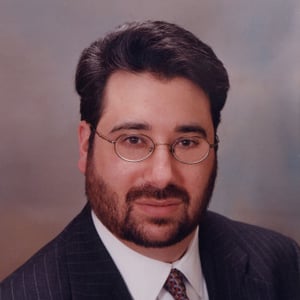
President, Phoenix Center for Advanced Legal and Economic Public Policy Studies
Lawrence J. Spiwak is President of the Phoenix Center for Advanced Legal & Economic Public Policy Studies, a non-profit 501(c)(3) organization that studies broad public-policy issues related to governance, social and economic conditions, with a particular emphasis on the law and economics of the digital age. Mr. Spiwak is a prolific scholar whose work is frequently cited by policymakers, major news media and academic journals around the world, and is in the top 1.3%of authors downloaded on the Social Science Research Network. Mr. Spiwak currently serves as the co-chair of the Federal Communications Bar Association’s (FCBA) committee responsible for overseeing the FEDERAL COMMUNICATIONS LAW JOURNAL and is a member of the program committee of the Telecommunications Policy Research Conference (“TPRC”). Mr. Spiwak is also the recipient of the FCBA’s Distinguished Service Award. Prior to joining the Phoenix Center, Mr. Spiwak was a Senior Attorney with the Competition Division in the FCC’s Office of General Counsel from 1994-1998. While in college, Mr. Spiwak was accepted into the Presidential Stay-In School program where he was responsible for delivering classified and confidential material among senior White House and Reagan Administration officials and received a full FBI security clearance. Mr. Spiwak received his B.A. with Special Honors from the George Washington University and his J.D. from the Benjamin N. Cardozo School of Law. Mr. Spiwak is a member in good standing of the bars of New York, Massachusetts, the District of Columbia, and the U.S. Court of Appeals for the D.C. Circuit.
President, Phoenix Center for Advanced Legal and Economic Public Policy Studies
Lawrence J. Spiwak is President of the Phoenix Center for Advanced Legal & Economic Public Policy Studies, a non-profit 501(c)(3) organization that studies broad public-policy issues related to governance, social and economic conditions, with a particular emphasis on the law and economics of the digital age. Mr. Spiwak is a prolific scholar whose work is frequently cited by policymakers, major news media and academic journals around the world, and is in the top 1.3%of authors downloaded on the Social Science Research Network. Mr. Spiwak currently serves as the co-chair of the Federal Communications Bar Association’s (FCBA) committee responsible for overseeing the FEDERAL COMMUNICATIONS LAW JOURNAL and is a member of the program committee of the Telecommunications Policy Research Conference (“TPRC”). Mr. Spiwak is also the recipient of the FCBA’s Distinguished Service Award. Prior to joining the Phoenix Center, Mr. Spiwak was a Senior Attorney with the Competition Division in the FCC’s Office of General Counsel from 1994-1998. While in college, Mr. Spiwak was accepted into the Presidential Stay-In School program where he was responsible for delivering classified and confidential material among senior White House and Reagan Administration officials and received a full FBI security clearance. Mr. Spiwak received his B.A. with Special Honors from the George Washington University and his J.D. from the Benjamin N. Cardozo School of Law. Mr. Spiwak is a member in good standing of the bars of New York, Massachusetts, the District of Columbia, and the U.S. Court of Appeals for the D.C. Circuit.
Kathleen Q. Abernathy recently returned to Wilkinson Barker Knauer LLP as special counsel. She was previously elected to the Board of Directors of Frontier Communications as an independent director in 2006 following her term as a Commissioner at the Federal Communications Commission from 2001 to 2005. In 2010 she joined the company as Chief Legal Officer and Executive Vice President, Regulatory and Governmental Affairs. Prior to her term as an FCC Commissioner, Ms. Abernathy worked for a number of different telecommunications companies and law firms. She has received numerous awards in recognition of her professional accomplishments and has taught as an adjunct professor at Georgetown University Law Center and Catholic University’s Columbus School of Law. She received her B.S. from Marquette University and her J.D. from Catholic University’s Columbus School of Law.
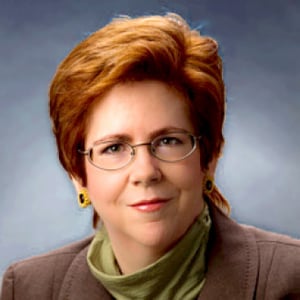
Partner, Wilkinson Barker Knauer LLP
Rosemary C. Harold joined the firm as a partner in 2011, specializing in media, broadband, and First Amendment issues. She advises a wide range of clients – including commercial and noncommercial broadcasters, cable operators, video programmers, wireless providers, and satellite operators – on legal, regulatory, and policy matters. Her work includes representation of clients in major rulemakings, transactions both large and small, and regulatory compliance counseling. Ms. Harold also regularly provides investors and others in the financial community with insights into developments at the FCC and on Capitol Hill, including the interplay between the agency and lawmakers, as well as inter-agency dealings among the FCC, the Department of Justice, and the Federal Trade Commission on competition issues.
From 2005 to 2011, Ms. Harold served at the Federal Communications Commission, most recently as Legal Advisor to FCC Commissioner Robert M. McDowell for media and broadband issues, with a particular focus on First Amendment concerns. She earlier served as Deputy Chief of the FCC’s Media Bureau, where she led the staff teams working on major rulemakings such as video franchising reform and media ownership, as well as on major transactional reviews such as the Sirius/XM merger.
Before her government service, Ms. Harold’s work in private practice included FCC regulatory proceedings in the media, satellite, and wireless areas, diversity and EEO matters at the FCC and EEOC, and First Amendment commercial speech matters before the FTC, FDA and federal appellate courts. She began her career as a journalist, including work as a reporter and bureau chief for the Miami Herald, an editor at C-SPAN and, during law school, a columnist for the ABA Student Lawyer magazine.
Ms. Harold frequently speaks at industry conferences and events on media and broadband issues. She currently serves as the co-chair of the Women in Communications Law subcommittee of the American Bar Association’s Forum Committee on Communications Law, an adjunct professor in the Communications Law Institute at Catholic University’s Columbus School of Law, and member of Board of Advisors for the Thomas Jefferson Public Policy Program at the College of William and Mary. An active member of the Federal Communications Bar Association, Ms. Harold has served on the FCBA’s Executive Committee and co-chaired the FCBA’s Mass Media Committee, Video Programming & Distribution Committee, and Professional Responsibility Committee.
J.D., Georgetown University Law Center, 1991, magna cum laude
M.A., University of Missouri, 1985
B.A., College of William and Mary, 1980
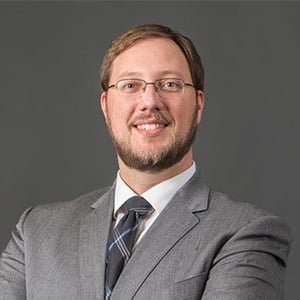
Laurence H. Silberman Chair in Constitutional Governance and Senior Fellow, American Enterprise Institute; Co-Director, Antonin Scalia Law School’s C. Boyden Gray Center for the Study of the Administrative State
Adam J. White is the Laurence H. Silberman Chair in Constitutional Governance and senior fellow at the American Enterprise Institute, where he focuses on the Supreme Court and the administrative state. Concurrently, he codirects the Antonin Scalia Law School’s C. Boyden Gray Center for the Study of the Administrative State.
Mr. White practiced constitutional and administrative law, particularly in the regulation of energy and financial markets. He started his legal career as a law clerk for Judge David B. Sentelle at the US Court of Appeals for the DC Circuit.
Mr. White has written for the Wall Street Journal, the New York Times, the Washington Post, National Affairs, Commentary, Harvard Journal of Law & Public Policy, and Notre Dame Law Review, among other publications. He is a regular contributor to the Yale Journal on Regulation’s Notice and Comment blog, and for many years, he was one of the Weekly Standard’s lead writers on constitutional law and the Supreme Court.
Mr. White has testified often before Congress, including before the Senate’s Committees on the Judiciary; Commerce, Science, and Transportation; and Homeland Security and Governmental Affairs and before the House’s Judiciary and Financial Services Committees. In 2018, the Senate Committee on the Judiciary called him to testify in Brett Kavanaugh’s Supreme Court confirmation hearings to advise senators on Kavanaugh’s approach to administrative law.
In 2021, he served on the Presidential Commission on the Supreme Court of the United States, where he criticized “Court packing” and other efforts to restructure the Supreme Court. In 2017, he was appointed to serve on the Administrative Conference of the United States. He also serves on the leadership council for the American Bar Association’s Administrative Law and Regulatory Practice Section, which he will chair in 2023–24. Before joining AEI, he was a research fellow at Stanford University’s Hoover Institution and an adjunct fellow at the Manhattan Institute.
Mr. White has a JD from Harvard Law School and a bachelor of business administration from the College of Business at the University of Iowa.
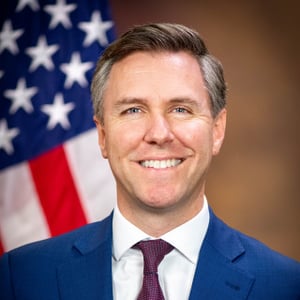
Assistant Attorney General, Civil Division, United States Department of Justice
Brett A. Shumate was sworn in as the Civil Division’s 36th Assistant Attorney General on June 11, 2025. He previously served in the Civil Division from 2017 to 2019 as the Deputy Assistant Attorney General for the Federal Programs Branch. Prior to rejoining the Department, Mr. Shumate was a partner at Jones Day in Washington, D.C.
Mr. Shumate clerked for Judge Edith H. Jones on the United States Court of Appeals for the Fifth Circuit. He graduated from Wake Forest University School of Law and Furman University.

Founding Partner, Lodestar Law and Economics PLLC
Josh is the founder of Lodestar Law and Economics, PLLC. On January 1, 2013, the U.S. Senate unanimously confirmed Wright as a Commissioner of the Federal Trade Commission (FTC). He is a leading scholar in antitrust law, economics, intellectual property, regulation, and consumer protection, and has published more than 100 articles and book chapters, co-authored a leading antitrust casebook, and edited several book volumes focusing on these issues. Commentators have recognized Wright as “widely considered his generation’s greatest mind on antitrust law,” and his academic work ranks him as one of the most cited antitrust academics in the world. Wright was also awarded the Paul M. Bator Award by the Federalist Society in 2014 to “an academic who demonstrated excellence in legal scholarship, a commitment to teaching, a concern for students, and who has made a significant public impact.” Wright also served as the Executive Director of the Global Antitrust Institute, the world’s premiere academic institute focused upon antitrust education for judges and regulators and has taught hundreds of judges and thousands of regulators from dozens of countries.
Wright’s practice focuses upon helping clients solve complex competition, consumer protection, and regulatory problems by providing legal and economic analysis, strategic advice and counseling, and economic expert testimony.
Assistant Attorney General, Civil Division, United States Department of Justice
Brett A. Shumate was sworn in as the Civil Division’s 36th Assistant Attorney General on June 11, 2025. He previously served in the Civil Division from 2017 to 2019 as the Deputy Assistant Attorney General for the Federal Programs Branch. Prior to rejoining the Department, Mr. Shumate was a partner at Jones Day in Washington, D.C.
Mr. Shumate clerked for Judge Edith H. Jones on the United States Court of Appeals for the Fifth Circuit. He graduated from Wake Forest University School of Law and Furman University.

Chairman Emeritus, Wiley Rein LLP
Dick, co-founder and name partner of the firm, has received numerous accolades throughout his storied career, including being named a Washington “Visionary” by The National Law Journal, the “most influential media and telecommunications lawyer in the United States” by the International Herald Tribune, one of the top “100 Men of the Century” by Broadcasting & Cable, and the “Father of High-Definition” television by The Globe and Mail. As Chairman of the Federal Communications Commission (FCC), he fostered increased competition and lessened regulation in the communications field. Dick played a pivotal role in the development of HDTV in this country, serving for nine years as Chairman of the FCC’s Advisory Committee on Advanced Television Service. He has represented a number of major communications-oriented organizations, including Verizon, AT&T, JP Morgan, Credit Suisse, Newspaper Association of America, Motorola, CBS, Belo, Gannett, Sirius/XM, Emmis, Gray Television, and LG. Dick also is a frequent author and lecturer on telecommunications and information law.

Director of Policy Studies & Senior Fellow, The Free State Foundation
Seth L. Cooper is Director of Policy Studies & Senior Fellow at The Free State Foundation. His work on federal communications and technology policy at the Free State Foundation began in 2009.
With Randolph May, Mr. Cooper is the co-author of Modernizing Copyright Law for the Digital Age: Constitutional Foundations for Reform (2020) and Constitutional Foundations of Intellectual Property: A Natural Rights Perspective (2015), both published by Carolina Academic Press. Along with Mr. May, Mr. Cooper also co-authored A Reader on Net Neutrality and Restoring Internet Freedom (2018) and #CommActUpdate: A Communications Law Fit for the Digital Age (2017), both published by Free State Foundation Press. He previously contributed to two chapters in Communications Law and Policy in the Digital Age (2012), published by Carolina Academic Press. Mr. Cooper's work has also appeared in such publications as CommLaw Conspectus, the San Jose Mercury News, Forbes.com, the Des Moines Register, the Baltimore Sun, the Washington Examiner, and the Washington Times.
Mr. Cooper previously served as Director to the Telecommunications and Information Technology Task Force at the American Legislative Exchange Council (ALEC). Mr. Cooper served as judicial clerk to the Honorable James Johnson at the Washington State Supreme Court. His co-writings about the Washington Supreme Court have appeared in the Gonzaga Law Review and in Federalist Society publications. He has worked in law and policy staff positions at the Washington State Senate and at the Discovery Institute's Center for Science & Culture. Mr. Cooper is a 2009 Lincoln Fellow at the Claremont Institute. He also has worked in private practice in the State of Washington, handling civil legal matters involving personal injuries, small business, contracts, and wills, trusts, and estates.
Mr. Cooper earned his B.A. degree in Political Science from Pacific Lutheran University and received his J.D. from Seattle University School of Law.

President, The Free State Foundation
Randolph J. May is Founder and President of The Free State Foundation. The Free State Foundation is an independent, non-profit free market-oriented think tank founded in 2006.
From October 1999-May 2006, May was a Senior Fellow and Director of Communications Policy Studies at The Progress & Freedom Foundation, a Washington, DC-based think tank. Prior to joining PFF, he practiced communications, administrative, and regulatory law as a partner at major national law firms. From 1978 to 1981, May served as Assistant General Counsel and Associate General Counsel at the Federal Communication Commission.
May has held numerous leadership positions in bar associations. He is a past Chair of the American Bar Association’s Section of Administrative Law and Regulatory Practice. He is a Fellow of the National Academy of Public Administration. Mr. May also has served as a Public Member of the Administrative Conference of the United States and currently is a Senior Fellow at ACUS.
Mr. May has published more than two hundred articles and essays on communications, administrative and constitutional law topics. He is author of A Call for a Radical New Communications Policy: Proposals for Free Market Reform, and co-author of #CommActUpdate: A Communications Law Fit for the Digital Age and The Constitutional Foundations of Intellectual Property. Mr. May is editor of two books, Communications Law and Policy in the Digital Age: The Next Five Years and New Directions in Communications Policy. In addition, he is the co-editor of two other books, Net Neutrality or Net Neutering: Should Broadband Internet Services Be Regulated? and Communications Deregulation and FCC Reform. In the past, Mr. May has written regular columns on legal and regulatory affairs for Legal Times and the National Law Journal, leading national legal periodicals.
He received his A.B. from Duke University and his J.D. from Duke Law School, where he serves as a member of the Board of Visitors.
Assistant Attorney General, Civil Division, United States Department of Justice
Brett A. Shumate was sworn in as the Civil Division’s 36th Assistant Attorney General on June 11, 2025. He previously served in the Civil Division from 2017 to 2019 as the Deputy Assistant Attorney General for the Federal Programs Branch. Prior to rejoining the Department, Mr. Shumate was a partner at Jones Day in Washington, D.C.
Mr. Shumate clerked for Judge Edith H. Jones on the United States Court of Appeals for the Fifth Circuit. He graduated from Wake Forest University School of Law and Furman University.
Laurence H. Silberman Chair in Constitutional Governance and Senior Fellow, American Enterprise Institute; Co-Director, Antonin Scalia Law School’s C. Boyden Gray Center for the Study of the Administrative State
Adam J. White is the Laurence H. Silberman Chair in Constitutional Governance and senior fellow at the American Enterprise Institute, where he focuses on the Supreme Court and the administrative state. Concurrently, he codirects the Antonin Scalia Law School’s C. Boyden Gray Center for the Study of the Administrative State.
Mr. White practiced constitutional and administrative law, particularly in the regulation of energy and financial markets. He started his legal career as a law clerk for Judge David B. Sentelle at the US Court of Appeals for the DC Circuit.
Mr. White has written for the Wall Street Journal, the New York Times, the Washington Post, National Affairs, Commentary, Harvard Journal of Law & Public Policy, and Notre Dame Law Review, among other publications. He is a regular contributor to the Yale Journal on Regulation’s Notice and Comment blog, and for many years, he was one of the Weekly Standard’s lead writers on constitutional law and the Supreme Court.
Mr. White has testified often before Congress, including before the Senate’s Committees on the Judiciary; Commerce, Science, and Transportation; and Homeland Security and Governmental Affairs and before the House’s Judiciary and Financial Services Committees. In 2018, the Senate Committee on the Judiciary called him to testify in Brett Kavanaugh’s Supreme Court confirmation hearings to advise senators on Kavanaugh’s approach to administrative law.
In 2021, he served on the Presidential Commission on the Supreme Court of the United States, where he criticized “Court packing” and other efforts to restructure the Supreme Court. In 2017, he was appointed to serve on the Administrative Conference of the United States. He also serves on the leadership council for the American Bar Association’s Administrative Law and Regulatory Practice Section, which he will chair in 2023–24. Before joining AEI, he was a research fellow at Stanford University’s Hoover Institution and an adjunct fellow at the Manhattan Institute.
Mr. White has a JD from Harvard Law School and a bachelor of business administration from the College of Business at the University of Iowa.

A Change in Direction for the Federal Trade Commission?
Lawrence J. Spiwak
While antitrust and regulation are supposed to be two sides of the same coin,[1] there...
The Preemption Predicament Over Broadband Internet Access Services
Lawrence J. Spiwak
Note from the Editor: The Federalist Society takes no positions on particular legal and public...
How to Regulate the Internet
Kathleen Q. Abernathy
Note from the Editor: This article traces the history of the FCC’s approach to regulating...
The FCC Forgot Something in Piecing Together Its Complex Proposal for Broadband Privacy Regulation: Consumers
Rosemary C. Harold
Note from the Editor: This article discusses the FCC’s proposed rules for broadband privacy, and...
Net Neutrality Litigation - Podcast
Adam White, Brett Shumate
After suffering two judicial setbacks, most recently in the D.C. Circuit’s Verizon v. FCC decision...
Net Neutrality Litigation
TeleforumTopics
Net Neutrality and the Rule of Law
After suffering two judicial setbacks, most recently in the D.C. Circuit’s Verizon v. FCC decision...
Net Neutrality Meets Regulatory Economics 101
Joshua D. Wright
Note from the Editor: This article reproduces then-Commissioner Joshua D. Wright's remarks at the Federalist...
Net Neutrality and the Rule of Law
Brett Shumate, Richard E. Wiley
This article is about the Federal Communications Commission’s net neutrality rules. As always, the Federalist...
FCC Preemption of State Restrictions on Government-owned Broadband Networks: An Affront to Federalism
Seth L. Cooper, Randolph May
Note from the Editor: This article is about the Federal Communications Commission’s Order preempting state...