
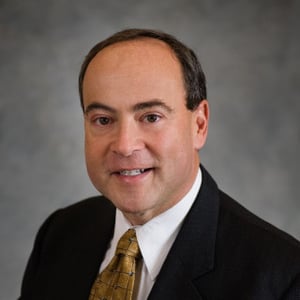
Justice, Supreme Court of Arizona
Clint Bolick was appointed by Governor Doug Ducey in January 2016 to serve on the Arizona Supreme Court and was retained by the voters in 2018 and 2024.
Prior to joining the Court, Justice Bolick litigated constitutional cases in state and federal courts from coast to coast, including the U.S. Supreme Court. Among other positions, he served as Vice President for Litigation at the Goldwater Institute and as Co-founder and Vice President for Litigation at the Institute for Justice. He has litigated in support of school choice, freedom of enterprise, private property rights, freedom of speech, and federalism, and against racial classifications and government subsidies.
Justice Bolick received his Juris Doctor degree from the University of California at Davis, where he has been recognized as a distinguished alumnus, and his Bachelor of Arts degree magna cum laude from Drew University. He serves as a research fellow with the Hoover Institution. Among other honors, he was named one of the 90 Greatest DC Lawyers in the Last 30 Years by Legal Times in 2008, received a Bradley Prize in 2006, and was recognized as one of the nation’s three lawyers of the year by American Lawyer in 2002 for his successful defense of school vouchers in Zelman v. Simmons-Harris.
Justice Bolick is a prolific author of a dozen books and hundreds of articles. Among his most recent books are Unshackled: Freeing America’s K-12 Education System: Immigration Wars: Forging an American Solution, co-authored with former Florida Governor Jeb Bush; and David’s Hammer: The Case for an Activist Judiciary. Bolick serves as an adjunct professor of constitutional law at Arizona State University’s Sandra Day O’Connor School of Law and has served as a lecturer at Harvard University’s John F. Kennedy School of Government.

Senior Fellow, Center for American Progress
Cynthia G. Brown is a Senior Fellow at American Progress. She was previously the Vice President for Education Policy at American Progress and formerly served as director of the “Renewing Our Schools, Securing Our Future National Task Force on Public Education,” a joint initiative of the Center for American Progress and the Institute for America’s Future. Brown has spent more than 35 years working in a variety of professional positions addressing high-quality, equitable public education.
Prior to joining American Progress, she was an independent education consultant who advised and wrote for local and state school systems, education associations, foundations, nonprofit organizations, and a corporation. From 1986 through September 2001, Brown served as director of the Resource Center on Educational Equity of the Council of Chief State School Officers. In 1980, she was appointed by President Carter as the first assistant secretary for civil rights in the U.S. Department of Education. Prior to that position, she served as principal deputy of the Department of Health, Education and Welfare’s Office for Civil Rights. Subsequent to this government service, she was co-director of the nonprofit Equality Center. Before the Carter administration, she worked for the Lawyers’ Committee for Civil Rights Under Law, the Children’s Defense Fund, and began her career in the HEW Office for Civil Rights as an investigator.
Brown has a master’s degree in public administration from the Maxwell School at Syracuse University and a B.A. from Oberlin College. She serves on the Board of Directors of the American Youth Policy Forum and Perry Street Preparatory Public Charter School.
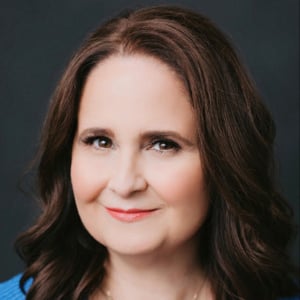
Chief Judge, United States Court of Appeals, Fifth Circuit
Jennifer Walker Elrod is the Chief Judge of the United States Court of Appeals for the Fifth Circuit. She was nominated to the Fifth Circuit in 2007, and she served as a Circuit Judge on the court until assuming the role of Chief Judge in October 2024. Prior to serving as a Circuit Judge, Chief Judge Elrod was appointed and then twice elected Judge of the 190th District Court of Harris County, Texas, where she spent over five years presiding over more than 200 jury and non-jury trials.
Chief Judge Elrod graduated cum laude from Harvard Law School, where she was an active member of the Harvard Federalist Society, an Ames Moot Court finalist, and a Senior Editor of the Harvard Journal of Law & Public Policy. She clerked for the Honorable Sim Lake in the Southern District of Texas. Before serving as a judge, Chief Judge Elrod worked in private practice, focusing on civil litigation, antitrust, and employment matters.
She has been repeatedly recognized for her work as a jurist, as well as for her pro bono work and contributions to the community. She has been named the 2022 Texas Review of Law & Politics’ Jurist of the Year, the 2018 Harvard Federalist Society’s Alumni of the Year, the 2016–17 Texas Association of Civil Trial and Appellate Specialists’ Appellate Judge of the Year, and the 2008 Mexican-American Bar Association of Texas’s Judge of the Year.
Chief Judge Elrod is actively engaged in the academic and legal communities. Chief Judge Elrod currently serves on the Board of Directors and as the Jurist-in-Residence at the South Texas College of Law, where she teaches civil procedure and First Amendment law. She is also a member of the American Law Institute and of the Board of Advisors for the Harvard Journal of Law & Public Policy, and she is a former member of the Board of Regents of her alma mater, Baylor University, and the Board of Visitors at Brigham Young University Law School. She previously served as the Chair of the Codes of Conduct Committee for the Judicial Conference of the United States. She has also served as the M.D. Anderson Visiting Public Service Professor at the Texas Tech University School of Law and as Jurist-in-Residence at Brigham Young University Law School, and she has taught legal writing at the University of Houston Law Center. She presented the Lewis F. Powell, Jr. Distinguished Lecture at the Washington and Lee University School of Law and is a frequent speaker on the topics of trial and appellate procedure, ethics, employment law, and constitutional law. Chief Judge Elrod also serves on the board of the Garland R. Walker Inn of Court, and co-produces an annual musical CLE, for which her pupilage group has won multiple national awards.
Chief Judge Elrod’s publications include: Trial by Siri: AI Comes to the Courtroom; Don’t Mess with Texas Judges: In Praise of the State Judiciary; For Good: Enriching Your Practice and Your Life Through Pro Bono and Community Service; Is the Jury Still Out?: A Case for the Continued Viability of the American Jury; and W(h)ither the Jury? The Diminishing Role of the Jury Trial in our Legal System.
Senior Fellow, Governance Studies, The Brookings Institution
William A. Galston holds the Ezra K. Zilkha Chair in the Brookings Institution’s Governance Studies Program, where he serves as a senior fellow. A former policy advisor to President Clinton and presidential candidates, Galston is an expert on domestic policy, political campaigns, and elections. His current research focuses on designing a new social contract and the implications of political polarization.
He is also College Park Professor at the University of Maryland. Prior to January 2006, he was Saul Stern Professor and Acting Dean at the School of Public Policy, University of Maryland, director of the Institute for Philosophy and Public Policy, founding director of the Center for Information and Research on Civic Learning and Engagement (CIRCLE), and executive director of the National Commission on Civic Renewal, co-chaired by William Bennett and Sam Nunn. A participant in six presidential campaigns, he served from 1993 to 1995 as Deputy Assistant to President Clinton for Domestic Policy. From 1969 to 1970 Galston served as a member of the United States Marine Corps and was honorably discharged.
Galston is the author of eight books and more than 100 articles in the fields of political theory, public policy, and American politics. His most recent books are Liberal Pluralism (Cambridge, 2002), The Practice of Liberal Pluralism (Cambridge, 2004), and Public Matters (Rowman & Littlefield, 2005). A winner of the American Political Science Association’s Hubert H. Humphrey Award, he was elected a Fellow of the American Academy of Arts and Sciences in 2004.
Galston has appeared on all the principal television networks and is a frequent commentator on NPR. He writes a weekly column for the Wall Street Journal.
1L Committee Co-Chair, University of Virginia School of Law Student Chapter
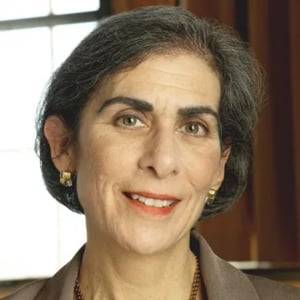
Robert Mundheim Professor of Law, University of Pennsylvania Law School
Amy Wax's work addresses issues in social welfare law and policy as well as the relationship of the family, the workplace, and labor markets. By bringing to bear her training in biomedical sciences and appellate practice as well as her interest in economic analysis, Wax has developed a uniquely insightful approach to problems in her areas of expertise.
Wax's career has been stellar. As an Assistant to the Solicitor General in the Office of the Solicitor General at the U.S. Department of Justice in the late 1980s and early 1990s, Wax argued 15 cases before the United States Supreme Court. She taught for seven years at the University of Virginia Law School before joining the Penn Law faculty in 2001.
Wax has published widely in law journals, including Chicago, Virginia, Villanova, Indiana, Emory, the Virginia Journal of Social Policy and Law, Yale Journal on Regulation and the Michigan Journal of Race and Law. Papers in press address liberal theory and welfare work requirements as well as the economics of federal disability laws. Current work in progress includes articles on law and evolutionary psychology, the political psychology of social security reform, and economic models of the family-friendly workplace. Wax has also received the A. Leo Levin Award for Excellence in an Introductory Course.
Associate Professor, UNH Franklin Pierce School of Law
Zvi S. Rosen is an Associate Professor at UNH Franklin Pierce School of Law and the Faculty Director of the Franklin Pierce Society for Intellectual Property. He has served as a Assistant Professor at the Southern Illinois University School of Law, as a Visiting Assistant Professor at the Maurice A. Deane School of Law at Hofstra University, and as a Visiting Scholar and Professorial Lecturer in Law at George Washington University School of Law.
In 2015-2016, he was the Abraham L. Kaminstein Scholar in Residence at the U.S. Copyright Office. Mr. Rosen received his J.D. from Northwestern University School of Law in 2005 and LLM in Intellectual Property in 2006 from the George Washington University Law School. He has practiced at Fried, Frank, Harris, Shriver & Jacobson LLP as well as smaller firms and his own practice, and clerked for the Hon. Thomas B. Bennett of the U.S. Bankruptcy Court for the Northern District of Alabama. He has written extensively on the development of modern copyright and trademark law, as well as on bankruptcy law.
Joel A. Katz Distinguished Professor of Law, University of Tennessee College of Law
Professor Plank joined the UT faculty in 1994 and became the Joel A. Katz Distinguished Professor of Law in 2004. His scholarly interests include the nature of property, the relationship between bankruptcy and non-bankruptcy law, and the historical development and comparison of commercial law and property law systems. He is a nationally recognized expert on mortgage backed and asset backed securities. Before joining the UT faculty, he was a partner with Kutak Rock LLP specializing in real estate finance, commercial finance, bankruptcy, and securities, in particular serving as issuer’s counsel and bankruptcy counsel in securitization transactions. Since joining the UT faculty he has served as an expert witness on securitization and other bankruptcy and commercial law matters, and as a consultant for securitization law firms, providing advice on bankruptcy, commercial law, and real estate issues in connection with securitizations and other transactions. During the 2002-2003 academic year, Professor Plank was a visiting Professor of Law at the Notre Dame Law School.
Professor Plank graduated with honors from Princeton University with a degree in history and a Certificate of Proficiency in Russian Area Studies and then served three years in the United States Marine Corps, including eight months in Vietnam as an infantry platoon commander. He graduated 5th in his class from the University of Maryland School of Law, where he was Editor-in-Chief of the Maryland Law Review. He was a law clerk for the Chief Judge of the Maryland Court of Appeals, an associate with Piper & Marbury in Baltimore, MD, and an assistant attorney general for the State of Maryland. Initially, his practice included a wide variety of transactions and litigation, including a four month trial on the constitutionality of the Maryland public school finance system and oral arguments in the United States Supreme Court and federal and state appellate courts. He then concentrated his practice in real estate, commercial finance, public finance and securities transactions.
S. Samuel Arsht Professor of Corporate Law, University of Pennsylvania Law School
David Skeel is the Caryl Louise Boies Visiting Professor of Law at New York University, and the S. Samuel Arsht Professor of Corporate Law at the University of Pennsylvania. He is the author of The New Financial Deal: Understanding the Dodd-Frank Act and its (Unintended) Consequences (Wiley, 2011); Icarus in the Boardroom: The Fundamental Flaws in Corporate America and Where They Came From (Oxford University Press, 2005); Debt’s Dominion: A History of Bankruptcy Law in America (Princeton University Press, 2001); and numerous articles on bankruptcy, corporate law, financial regulation, Christianity and law, and other topics. Professor Skeel has also written commentaries for the New York Times, Wall Street Journal, Books & Culture, The Weekly Standard, and other publications.
Professor of Law, Yeshiva University Benjamin N. Cardozo School of Law
Professor Brickman teaches Contracts, Professional Responsibility, and Land Use, among other courses. His areas of expertise include legal ethics, contingency fees, mass torts, and asbestos litigation. His writings on these and other subjects are widely cited and he is frequently quoted in the press.
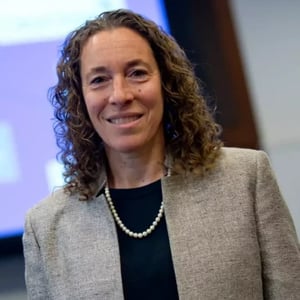
Perry Golkin Professor of Law; Co-Director, Institute for Law an, University of Pennsylvania Law School
Jill E. Fisch is the Saul A. Fox Distinguished Professor of Business Law and co-director of the Institute for Law and Economics at the University of Pennsylvania Law School where she teaches and writes on corporate law, corporate governance and securities regulation. Prior to joining Penn Law, Professor Fisch was the T.J. Maloney Professor of Business Law at Fordham Law School and Founding Director of the Fordham Corporate Law Center. Professor Fisch has also served as a visiting professor at Harvard, Columbia, Berkeley and Georgetown.
Fisch is the recipient of various awards including the Penn LLM Prize for Excellence in Teaching and the Robert A. Gorman Award for Excellence in Teaching (twice). She is an associate reporter for the American Law Institute’s Restatement of Corporate Governance and a director of the European Corporate Governance Institute. Before entering academia, Professor Fisch practiced law as a trial attorney with the United States Department of Justice, Criminal Division, and as an associate at the law firm of Cleary, Gottlieb, Steen & Hamilton. She received her B.A. from Cornell University and her J.D. from Yale Law School.
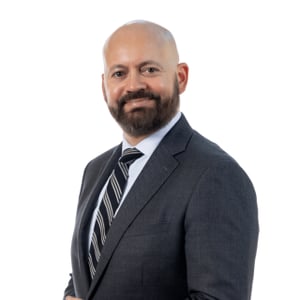
Milton R. Underwood Chair in Free Enterprise, Vanderbilt University Law School
Brian Fitzpatrick is the Milton R. Underwood Chair in Free Enterprise and Professor of Law at Vanderbilt Law School, where his research focuses on class action litigation, federal courts, judicial selection, and constitutional law. He is best known for his empirical studies of class action settlements as well as his book The Conservative Case for Class Actions (University of Chicago Press, 2019). Professor Fitzpatrick joined Vanderbilt's law faculty in 2007 after serving as the John M. Olin Fellow at New York University School of Law. He graduated first in his class from Harvard Law School and went on to clerk for Judge Diarmuid O'Scannlain on the U.S. Court of Appeals for the Ninth Circuit and Justice Antonin Scalia on the U.S. Supreme Court. After his clerkships, Professor Fitzpatrick practiced commercial and appellate litigation for several years at Sidley Austin in Washington, D.C., and served as Special Counsel for Supreme Court Nominations to U.S. Senator John Cornyn. Before earning his law degree, Fitzpatrick graduated summa cum laude with a bachelor's of science in chemical engineering from the University of Notre Dame. He has received the Hall-Hartman Outstanding Professor Award, which recognizes excellence in classroom teaching, for his Civil Procedure and Federal Courts courses.
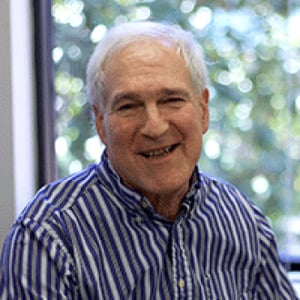
Professorial Lecturer in Law, George Washington University Law School
Gene is a graduate of Brown University and holds a J.D. from the University of Virginia where he received the Fortsman Fellowship. He was also a Fulbright Fellow.
He presently serves as Adjunct Law Professor at George Washington University School of Law; Fellow at the Shorenstein Center on Media, Politics and Public Policy of the Harvard Kennedy School; Non-Resident Senior Fellow at The Digital Innovation & Democracy Initiative of The German Marshall Fund; Senior Fellow at the Silicon Flatirons Center for Law, Technology, and Entrepreneurship at the University of Colorado; and on the boards of International Media Support and Global Partners Digital.
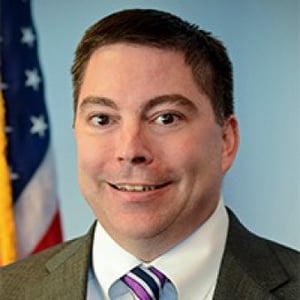
Visiting Fellow, Hudson Institute
Michael O’Rielly is a visiting fellow with Hudson Institute’s Center for the Economics of the Internet.
Comm. O'Rielly was nominated for a seat on the Federal Communications Commission by President Barack Obama on August 1, 2013 and was confirmed unanimously by the United States Senate on October 29, 2013. He was sworn into office on November 4, 2013. On January 29, 2015, he was sworn into office for a new term, following his re-nomination by the President and confirmation by the United States Senate and served through December 11, 2020.
Prior to joining the agency Commissioner O’Rielly served as a Policy Advisor in the Office of the Senate Republican Whip, led by U.S. Senator John Cornyn, since January 2013. He worked in the Republican Whip’s Office since 2010, as an Advisor from 2010 to 2012 and Deputy Chief of Staff and Policy Director from 2012 to 2013 for U.S. Senator Jon Kyl.
He previously worked for the Republican Policy Committee in the U.S. Senate as a Policy Analyst for Banking, Technology, Transportation, Trade, and Commerce issues from 2009 to 2010. Prior to this, Commissioner O’Rielly worked in the Office of U.S. Senator John Sununu, as Legislative Director from 2007 to 2009, and Senior Legislative Assistant from 2003 to 2007. Before his tenure as a Senate staffer, he served as a Professional Staff Member on the Committee on Energy and Commerce in the United States House of Representatives from 1998 to 2003, and Telecommunications Policy Analyst from 1995 to 1998.
He began his career as a Legislative Assistant to U.S. Congressman Tom Bliley from 1994 to 1995.
Commissioner O’Rielly received his B.A. from the University of Rochester.
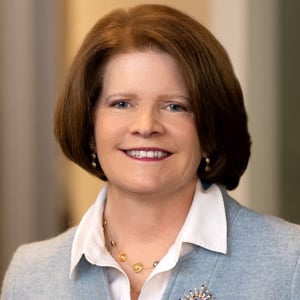
Partner, Antitrust and Competition, Wilson Sonsini Goodrich & Rosati
Maureen Ohlhausen is a partner in the Washington, D.C., office of Wilson Sonsini Goodrich & Rosati, where she advises industry-leading clients on complex antitrust and litigation matters, with a focus on high-profile cases. Sought after for her depth of experience on antitrust and Federal Trade Commission (FTC)-related issues, Maureen is known for her relationships with officials in the U.S. and abroad.
After finishing law school and clerking at the U.S. Court of Appeals for the D.C. Circuit, Maureen joined the FTC in 1997. She held a series of roles at the agency over the next 12 years, rising to the position of Director of the FTC Office of Policy Planning, where she led the agency’s work on e-commerce and headed the FTC’s Internet Access Task Force, which produced an influential report analyzing competition and consumer protection legal issues in the broadband and internet sectors. She then went into private practice at a leading telecommunications law firm, where she headed the FTC practice group.
In 2012, Maureen was confirmed by the Senate as a Commissioner of the FTC and was appointed Acting Chairman in January 2017, a role she held until May 2018. As Acting Chairman, Maureen directed all aspects of the agency’s antitrust work, including merger review, conduct enforcement, and all consumer protection enforcement, with an emphasis on privacy and technology issues. Under her leadership, the FTC won several influential merger challenges in court and reached a number of key digital privacy settlements.
To date, Maureen is the only FTC Commissioner to have received the Robert Pitofsky Lifetime Achievement Award in recognition of her contributions to the FTC.
Following the end of her term at the FTC, and immediately prior to joining Wilson Sonsini, Maureen was chair of the global antitrust and competition practice at Baker Botts, based in that firm’s Washington, D.C., office.
A recognized thought leader, Maureen is a frequent author and speaker, and is often quoted by leading print and broadcast media on antitrust, FTC, and privacy and data security matters. She has published dozens of articles on antitrust, privacy, intellectual property, regulation, FTC litigation, telecommunications, and international law issues in prestigious publications. During her tenure at the FTC and in private practice, she testified more than two dozen times before Congress, including before the Senate Commerce Committee and the House Energy and Commerce Antitrust Sub-Committee. She also testified before the Antitrust Modernization Commission.
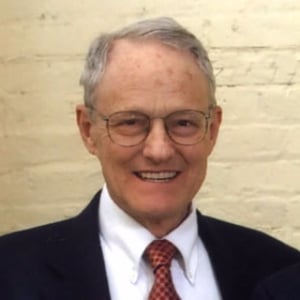
U.S. Court of Appeals, D.C. Circuit
Judge Williams practiced law in New York City (at the firm of Debevoise Plimpton and as an Assistant U.S. Attorney) and then taught law at the University of Colorado Law School from 1969 to 1986, with visiting years at UCLA, SMU, and the University of Chicago (where he was also a fellow in law and economics). He was appointed to the U.S. Court of Appeals for the D.C. Circuit in 1986. His most recent book is a biography of Vasily Maklakov, The Reformer: How One Liberal Fought to Preempt the Russian Revolution (Encounter Books, 2017).
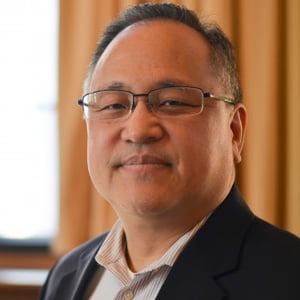
John H. Chestnut Professor of Law, Communication, and Computer & Information Science; Founding Director, Center for Technology, Innovation and Competition, University of Pennsylvania Law School
Christopher S. Yoo is the John H. Chestnut Professor of Law and a Professor at the Annenberg School for Communication and in the Computer & Information Science Department of School of Engineering and Applied Science at the University of Pennsylvania, where he is also the Founding Director of the Center for Technology, Innovation and Competition. He is the author of over one hundred scholarly works and has taught at over a dozen universities around the world. Professor Yoo received his A.B. from Harvard, his M.B.A. from UCLA, and his J.D. from Northwestern University. Before entering the academy, Professor Yoo clerked for Justice Anthony M. Kennedy of the Supreme Court of the United States and practiced law with the predecessor firm to Hogan Lovells under the supervision of now-Chief Justice John G. Roberts, Jr. Before joining the University of Pennsylvania, he taught for eight years at the Vanderbilt Law School. He is frequently called to testify before the U.S. Congress, Federal Trade Commission, Department of Justice Antitrust Division, Federal Communications Commission, foreign governments, and international organizations.
Professorial Lecturer in Law, George Washington University Law School
Gene is a graduate of Brown University and holds a J.D. from the University of Virginia where he received the Fortsman Fellowship. He was also a Fulbright Fellow.
He presently serves as Adjunct Law Professor at George Washington University School of Law; Fellow at the Shorenstein Center on Media, Politics and Public Policy of the Harvard Kennedy School; Non-Resident Senior Fellow at The Digital Innovation & Democracy Initiative of The German Marshall Fund; Senior Fellow at the Silicon Flatirons Center for Law, Technology, and Entrepreneurship at the University of Colorado; and on the boards of International Media Support and Global Partners Digital.
Visiting Fellow, Hudson Institute
Michael O’Rielly is a visiting fellow with Hudson Institute’s Center for the Economics of the Internet.
Comm. O'Rielly was nominated for a seat on the Federal Communications Commission by President Barack Obama on August 1, 2013 and was confirmed unanimously by the United States Senate on October 29, 2013. He was sworn into office on November 4, 2013. On January 29, 2015, he was sworn into office for a new term, following his re-nomination by the President and confirmation by the United States Senate and served through December 11, 2020.
Prior to joining the agency Commissioner O’Rielly served as a Policy Advisor in the Office of the Senate Republican Whip, led by U.S. Senator John Cornyn, since January 2013. He worked in the Republican Whip’s Office since 2010, as an Advisor from 2010 to 2012 and Deputy Chief of Staff and Policy Director from 2012 to 2013 for U.S. Senator Jon Kyl.
He previously worked for the Republican Policy Committee in the U.S. Senate as a Policy Analyst for Banking, Technology, Transportation, Trade, and Commerce issues from 2009 to 2010. Prior to this, Commissioner O’Rielly worked in the Office of U.S. Senator John Sununu, as Legislative Director from 2007 to 2009, and Senior Legislative Assistant from 2003 to 2007. Before his tenure as a Senate staffer, he served as a Professional Staff Member on the Committee on Energy and Commerce in the United States House of Representatives from 1998 to 2003, and Telecommunications Policy Analyst from 1995 to 1998.
He began his career as a Legislative Assistant to U.S. Congressman Tom Bliley from 1994 to 1995.
Commissioner O’Rielly received his B.A. from the University of Rochester.
Partner, Antitrust and Competition, Wilson Sonsini Goodrich & Rosati
Maureen Ohlhausen is a partner in the Washington, D.C., office of Wilson Sonsini Goodrich & Rosati, where she advises industry-leading clients on complex antitrust and litigation matters, with a focus on high-profile cases. Sought after for her depth of experience on antitrust and Federal Trade Commission (FTC)-related issues, Maureen is known for her relationships with officials in the U.S. and abroad.
After finishing law school and clerking at the U.S. Court of Appeals for the D.C. Circuit, Maureen joined the FTC in 1997. She held a series of roles at the agency over the next 12 years, rising to the position of Director of the FTC Office of Policy Planning, where she led the agency’s work on e-commerce and headed the FTC’s Internet Access Task Force, which produced an influential report analyzing competition and consumer protection legal issues in the broadband and internet sectors. She then went into private practice at a leading telecommunications law firm, where she headed the FTC practice group.
In 2012, Maureen was confirmed by the Senate as a Commissioner of the FTC and was appointed Acting Chairman in January 2017, a role she held until May 2018. As Acting Chairman, Maureen directed all aspects of the agency’s antitrust work, including merger review, conduct enforcement, and all consumer protection enforcement, with an emphasis on privacy and technology issues. Under her leadership, the FTC won several influential merger challenges in court and reached a number of key digital privacy settlements.
To date, Maureen is the only FTC Commissioner to have received the Robert Pitofsky Lifetime Achievement Award in recognition of her contributions to the FTC.
Following the end of her term at the FTC, and immediately prior to joining Wilson Sonsini, Maureen was chair of the global antitrust and competition practice at Baker Botts, based in that firm’s Washington, D.C., office.
A recognized thought leader, Maureen is a frequent author and speaker, and is often quoted by leading print and broadcast media on antitrust, FTC, and privacy and data security matters. She has published dozens of articles on antitrust, privacy, intellectual property, regulation, FTC litigation, telecommunications, and international law issues in prestigious publications. During her tenure at the FTC and in private practice, she testified more than two dozen times before Congress, including before the Senate Commerce Committee and the House Energy and Commerce Antitrust Sub-Committee. She also testified before the Antitrust Modernization Commission.
U.S. Court of Appeals, D.C. Circuit
Judge Williams practiced law in New York City (at the firm of Debevoise Plimpton and as an Assistant U.S. Attorney) and then taught law at the University of Colorado Law School from 1969 to 1986, with visiting years at UCLA, SMU, and the University of Chicago (where he was also a fellow in law and economics). He was appointed to the U.S. Court of Appeals for the D.C. Circuit in 1986. His most recent book is a biography of Vasily Maklakov, The Reformer: How One Liberal Fought to Preempt the Russian Revolution (Encounter Books, 2017).
John H. Chestnut Professor of Law, Communication, and Computer & Information Science; Founding Director, Center for Technology, Innovation and Competition, University of Pennsylvania Law School
Christopher S. Yoo is the John H. Chestnut Professor of Law and a Professor at the Annenberg School for Communication and in the Computer & Information Science Department of School of Engineering and Applied Science at the University of Pennsylvania, where he is also the Founding Director of the Center for Technology, Innovation and Competition. He is the author of over one hundred scholarly works and has taught at over a dozen universities around the world. Professor Yoo received his A.B. from Harvard, his M.B.A. from UCLA, and his J.D. from Northwestern University. Before entering the academy, Professor Yoo clerked for Justice Anthony M. Kennedy of the Supreme Court of the United States and practiced law with the predecessor firm to Hogan Lovells under the supervision of now-Chief Justice John G. Roberts, Jr. Before joining the University of Pennsylvania, he taught for eight years at the Vanderbilt Law School. He is frequently called to testify before the U.S. Congress, Federal Trade Commission, Department of Justice Antitrust Division, Federal Communications Commission, foreign governments, and international organizations.
Justice, Supreme Court of Arizona
Clint Bolick was appointed by Governor Doug Ducey in January 2016 to serve on the Arizona Supreme Court and was retained by the voters in 2018 and 2024.
Prior to joining the Court, Justice Bolick litigated constitutional cases in state and federal courts from coast to coast, including the U.S. Supreme Court. Among other positions, he served as Vice President for Litigation at the Goldwater Institute and as Co-founder and Vice President for Litigation at the Institute for Justice. He has litigated in support of school choice, freedom of enterprise, private property rights, freedom of speech, and federalism, and against racial classifications and government subsidies.
Justice Bolick received his Juris Doctor degree from the University of California at Davis, where he has been recognized as a distinguished alumnus, and his Bachelor of Arts degree magna cum laude from Drew University. He serves as a research fellow with the Hoover Institution. Among other honors, he was named one of the 90 Greatest DC Lawyers in the Last 30 Years by Legal Times in 2008, received a Bradley Prize in 2006, and was recognized as one of the nation’s three lawyers of the year by American Lawyer in 2002 for his successful defense of school vouchers in Zelman v. Simmons-Harris.
Justice Bolick is a prolific author of a dozen books and hundreds of articles. Among his most recent books are Unshackled: Freeing America’s K-12 Education System: Immigration Wars: Forging an American Solution, co-authored with former Florida Governor Jeb Bush; and David’s Hammer: The Case for an Activist Judiciary. Bolick serves as an adjunct professor of constitutional law at Arizona State University’s Sandra Day O’Connor School of Law and has served as a lecturer at Harvard University’s John F. Kennedy School of Government.
Senior Fellow, Center for American Progress
Cynthia G. Brown is a Senior Fellow at American Progress. She was previously the Vice President for Education Policy at American Progress and formerly served as director of the “Renewing Our Schools, Securing Our Future National Task Force on Public Education,” a joint initiative of the Center for American Progress and the Institute for America’s Future. Brown has spent more than 35 years working in a variety of professional positions addressing high-quality, equitable public education.
Prior to joining American Progress, she was an independent education consultant who advised and wrote for local and state school systems, education associations, foundations, nonprofit organizations, and a corporation. From 1986 through September 2001, Brown served as director of the Resource Center on Educational Equity of the Council of Chief State School Officers. In 1980, she was appointed by President Carter as the first assistant secretary for civil rights in the U.S. Department of Education. Prior to that position, she served as principal deputy of the Department of Health, Education and Welfare’s Office for Civil Rights. Subsequent to this government service, she was co-director of the nonprofit Equality Center. Before the Carter administration, she worked for the Lawyers’ Committee for Civil Rights Under Law, the Children’s Defense Fund, and began her career in the HEW Office for Civil Rights as an investigator.
Brown has a master’s degree in public administration from the Maxwell School at Syracuse University and a B.A. from Oberlin College. She serves on the Board of Directors of the American Youth Policy Forum and Perry Street Preparatory Public Charter School.
Chief Judge, United States Court of Appeals, Fifth Circuit
Jennifer Walker Elrod is the Chief Judge of the United States Court of Appeals for the Fifth Circuit. She was nominated to the Fifth Circuit in 2007, and she served as a Circuit Judge on the court until assuming the role of Chief Judge in October 2024. Prior to serving as a Circuit Judge, Chief Judge Elrod was appointed and then twice elected Judge of the 190th District Court of Harris County, Texas, where she spent over five years presiding over more than 200 jury and non-jury trials.
Chief Judge Elrod graduated cum laude from Harvard Law School, where she was an active member of the Harvard Federalist Society, an Ames Moot Court finalist, and a Senior Editor of the Harvard Journal of Law & Public Policy. She clerked for the Honorable Sim Lake in the Southern District of Texas. Before serving as a judge, Chief Judge Elrod worked in private practice, focusing on civil litigation, antitrust, and employment matters.
She has been repeatedly recognized for her work as a jurist, as well as for her pro bono work and contributions to the community. She has been named the 2022 Texas Review of Law & Politics’ Jurist of the Year, the 2018 Harvard Federalist Society’s Alumni of the Year, the 2016–17 Texas Association of Civil Trial and Appellate Specialists’ Appellate Judge of the Year, and the 2008 Mexican-American Bar Association of Texas’s Judge of the Year.
Chief Judge Elrod is actively engaged in the academic and legal communities. Chief Judge Elrod currently serves on the Board of Directors and as the Jurist-in-Residence at the South Texas College of Law, where she teaches civil procedure and First Amendment law. She is also a member of the American Law Institute and of the Board of Advisors for the Harvard Journal of Law & Public Policy, and she is a former member of the Board of Regents of her alma mater, Baylor University, and the Board of Visitors at Brigham Young University Law School. She previously served as the Chair of the Codes of Conduct Committee for the Judicial Conference of the United States. She has also served as the M.D. Anderson Visiting Public Service Professor at the Texas Tech University School of Law and as Jurist-in-Residence at Brigham Young University Law School, and she has taught legal writing at the University of Houston Law Center. She presented the Lewis F. Powell, Jr. Distinguished Lecture at the Washington and Lee University School of Law and is a frequent speaker on the topics of trial and appellate procedure, ethics, employment law, and constitutional law. Chief Judge Elrod also serves on the board of the Garland R. Walker Inn of Court, and co-produces an annual musical CLE, for which her pupilage group has won multiple national awards.
Chief Judge Elrod’s publications include: Trial by Siri: AI Comes to the Courtroom; Don’t Mess with Texas Judges: In Praise of the State Judiciary; For Good: Enriching Your Practice and Your Life Through Pro Bono and Community Service; Is the Jury Still Out?: A Case for the Continued Viability of the American Jury; and W(h)ither the Jury? The Diminishing Role of the Jury Trial in our Legal System.
Senior Fellow, Governance Studies, The Brookings Institution
William A. Galston holds the Ezra K. Zilkha Chair in the Brookings Institution’s Governance Studies Program, where he serves as a senior fellow. A former policy advisor to President Clinton and presidential candidates, Galston is an expert on domestic policy, political campaigns, and elections. His current research focuses on designing a new social contract and the implications of political polarization.
He is also College Park Professor at the University of Maryland. Prior to January 2006, he was Saul Stern Professor and Acting Dean at the School of Public Policy, University of Maryland, director of the Institute for Philosophy and Public Policy, founding director of the Center for Information and Research on Civic Learning and Engagement (CIRCLE), and executive director of the National Commission on Civic Renewal, co-chaired by William Bennett and Sam Nunn. A participant in six presidential campaigns, he served from 1993 to 1995 as Deputy Assistant to President Clinton for Domestic Policy. From 1969 to 1970 Galston served as a member of the United States Marine Corps and was honorably discharged.
Galston is the author of eight books and more than 100 articles in the fields of political theory, public policy, and American politics. His most recent books are Liberal Pluralism (Cambridge, 2002), The Practice of Liberal Pluralism (Cambridge, 2004), and Public Matters (Rowman & Littlefield, 2005). A winner of the American Political Science Association’s Hubert H. Humphrey Award, he was elected a Fellow of the American Academy of Arts and Sciences in 2004.
Galston has appeared on all the principal television networks and is a frequent commentator on NPR. He writes a weekly column for the Wall Street Journal.
1L Committee Co-Chair, University of Virginia School of Law Student Chapter
Robert Mundheim Professor of Law, University of Pennsylvania Law School
Amy Wax's work addresses issues in social welfare law and policy as well as the relationship of the family, the workplace, and labor markets. By bringing to bear her training in biomedical sciences and appellate practice as well as her interest in economic analysis, Wax has developed a uniquely insightful approach to problems in her areas of expertise.
Wax's career has been stellar. As an Assistant to the Solicitor General in the Office of the Solicitor General at the U.S. Department of Justice in the late 1980s and early 1990s, Wax argued 15 cases before the United States Supreme Court. She taught for seven years at the University of Virginia Law School before joining the Penn Law faculty in 2001.
Wax has published widely in law journals, including Chicago, Virginia, Villanova, Indiana, Emory, the Virginia Journal of Social Policy and Law, Yale Journal on Regulation and the Michigan Journal of Race and Law. Papers in press address liberal theory and welfare work requirements as well as the economics of federal disability laws. Current work in progress includes articles on law and evolutionary psychology, the political psychology of social security reform, and economic models of the family-friendly workplace. Wax has also received the A. Leo Levin Award for Excellence in an Introductory Course.
Joel A. Katz Distinguished Professor of Law, University of Tennessee College of Law
Professor Plank joined the UT faculty in 1994 and became the Joel A. Katz Distinguished Professor of Law in 2004. His scholarly interests include the nature of property, the relationship between bankruptcy and non-bankruptcy law, and the historical development and comparison of commercial law and property law systems. He is a nationally recognized expert on mortgage backed and asset backed securities. Before joining the UT faculty, he was a partner with Kutak Rock LLP specializing in real estate finance, commercial finance, bankruptcy, and securities, in particular serving as issuer’s counsel and bankruptcy counsel in securitization transactions. Since joining the UT faculty he has served as an expert witness on securitization and other bankruptcy and commercial law matters, and as a consultant for securitization law firms, providing advice on bankruptcy, commercial law, and real estate issues in connection with securitizations and other transactions. During the 2002-2003 academic year, Professor Plank was a visiting Professor of Law at the Notre Dame Law School.
Professor Plank graduated with honors from Princeton University with a degree in history and a Certificate of Proficiency in Russian Area Studies and then served three years in the United States Marine Corps, including eight months in Vietnam as an infantry platoon commander. He graduated 5th in his class from the University of Maryland School of Law, where he was Editor-in-Chief of the Maryland Law Review. He was a law clerk for the Chief Judge of the Maryland Court of Appeals, an associate with Piper & Marbury in Baltimore, MD, and an assistant attorney general for the State of Maryland. Initially, his practice included a wide variety of transactions and litigation, including a four month trial on the constitutionality of the Maryland public school finance system and oral arguments in the United States Supreme Court and federal and state appellate courts. He then concentrated his practice in real estate, commercial finance, public finance and securities transactions.
Associate Professor, UNH Franklin Pierce School of Law
Zvi S. Rosen is an Associate Professor at UNH Franklin Pierce School of Law and the Faculty Director of the Franklin Pierce Society for Intellectual Property. He has served as a Assistant Professor at the Southern Illinois University School of Law, as a Visiting Assistant Professor at the Maurice A. Deane School of Law at Hofstra University, and as a Visiting Scholar and Professorial Lecturer in Law at George Washington University School of Law.
In 2015-2016, he was the Abraham L. Kaminstein Scholar in Residence at the U.S. Copyright Office. Mr. Rosen received his J.D. from Northwestern University School of Law in 2005 and LLM in Intellectual Property in 2006 from the George Washington University Law School. He has practiced at Fried, Frank, Harris, Shriver & Jacobson LLP as well as smaller firms and his own practice, and clerked for the Hon. Thomas B. Bennett of the U.S. Bankruptcy Court for the Northern District of Alabama. He has written extensively on the development of modern copyright and trademark law, as well as on bankruptcy law.
S. Samuel Arsht Professor of Corporate Law, University of Pennsylvania Law School
David Skeel is the Caryl Louise Boies Visiting Professor of Law at New York University, and the S. Samuel Arsht Professor of Corporate Law at the University of Pennsylvania. He is the author of The New Financial Deal: Understanding the Dodd-Frank Act and its (Unintended) Consequences (Wiley, 2011); Icarus in the Boardroom: The Fundamental Flaws in Corporate America and Where They Came From (Oxford University Press, 2005); Debt’s Dominion: A History of Bankruptcy Law in America (Princeton University Press, 2001); and numerous articles on bankruptcy, corporate law, financial regulation, Christianity and law, and other topics. Professor Skeel has also written commentaries for the New York Times, Wall Street Journal, Books & Culture, The Weekly Standard, and other publications.
Partner, Davis Polk & Wardwell LLP
Mr. Guynn is head of Davis Polk’s Financial Institutions Group. He has been recognized as a thought-leader on financial regulatory reform and as one of the most widely consulted U.S. legal advisers during the financial crisis. See “In the Red Zone,”The American Lawyer, January 2009 and “For Davis Polk, Dodd-Frank Pays,” The American Lawyer, December 2010.
He has advised the Securities Industry and Financial Markets Association (SIFMA), the principal trade organization for U.S. banks, securities firms and asset managers, all of the U.S.’s six-largest banks and several foreign banks on the Dodd-Frank Act and its regulatory implementation.
His practice focuses on providing strategic bank and regulatory and enforcement advice and advising on M&A and capital markets transactions when the target or issuer is a banking organization or other financial institution. He also advises on bank failures and recapitalizations, corporate governance and internal controls, cross-border collateral transactions, credit risk management, securities settlement systems and payment systems.
S. Samuel Arsht Professor of Corporate Law, University of Pennsylvania Law School
David Skeel is the Caryl Louise Boies Visiting Professor of Law at New York University, and the S. Samuel Arsht Professor of Corporate Law at the University of Pennsylvania. He is the author of The New Financial Deal: Understanding the Dodd-Frank Act and its (Unintended) Consequences (Wiley, 2011); Icarus in the Boardroom: The Fundamental Flaws in Corporate America and Where They Came From (Oxford University Press, 2005); Debt’s Dominion: A History of Bankruptcy Law in America (Princeton University Press, 2001); and numerous articles on bankruptcy, corporate law, financial regulation, Christianity and law, and other topics. Professor Skeel has also written commentaries for the New York Times, Wall Street Journal, Books & Culture, The Weekly Standard, and other publications.
Partner, Millstein & Co.
James Wigand is a Partner at Millstein & Co.
From January 2011 to November 2013, Mr. Wigand served as the first Director of the Federal Deposit Insurance Corporation’s Office of Complex Financial Institutions (OCFI) and as a Senior Advisor to the Chairman, FDIC. The OCFI was created to better position the FDIC to carry out its new resolution responsibilities for systemically important financial institutions under the Dodd Frank Wall Street Reform and Consumer Protection Act.
Prior to assuming this position, Mr. Wigand served as the Deputy Director for Franchise and Asset Marketing, Division of Resolutions and Receiverships, FDIC, and oversaw the resolution of failing insured financial institutions and the sale of their assets from 1997 to 2010. From 1995 to 1997, he was the Assistant Director for Capital Markets, Division of Depositor and Asset Services, FDIC, overseeing the issuance and servicing of residential and commercial mortgage backed securities.
Mr. Wigand served in various executive positions at the Resolution Trust Corporation from December 1989 until its closing in December 1995. During this period, he supervised the Asset Management and Sales Division's loan and owned real estate management, seller financing, equity partnership and loan workout programs. He also had responsibility for receivership operations and the conclusion of RTC's conservatorship program.
Before RTC, Mr. Wigand worked in the Division of Liquidation, FDIC, the Federal Savings and Loan Insurance Corporation's Operations and Liquidation Division, and Ferris & Company.
During his career, Mr. Wigand has been involved with the management, sale or resolution of $1 trillion of financial institution assets.
Born in New York City, Mr. Wigand received a Bachelor of Science degree from the University of Maryland and a Master of Business Administration degree with a specialization in finance from the University of Chicago Graduate School of Business.
Professor of Law, Yeshiva University Benjamin N. Cardozo School of Law
Professor Brickman teaches Contracts, Professional Responsibility, and Land Use, among other courses. His areas of expertise include legal ethics, contingency fees, mass torts, and asbestos litigation. His writings on these and other subjects are widely cited and he is frequently quoted in the press.
Perry Golkin Professor of Law; Co-Director, Institute for Law an, University of Pennsylvania Law School
Jill E. Fisch is the Saul A. Fox Distinguished Professor of Business Law and co-director of the Institute for Law and Economics at the University of Pennsylvania Law School where she teaches and writes on corporate law, corporate governance and securities regulation. Prior to joining Penn Law, Professor Fisch was the T.J. Maloney Professor of Business Law at Fordham Law School and Founding Director of the Fordham Corporate Law Center. Professor Fisch has also served as a visiting professor at Harvard, Columbia, Berkeley and Georgetown.
Fisch is the recipient of various awards including the Penn LLM Prize for Excellence in Teaching and the Robert A. Gorman Award for Excellence in Teaching (twice). She is an associate reporter for the American Law Institute’s Restatement of Corporate Governance and a director of the European Corporate Governance Institute. Before entering academia, Professor Fisch practiced law as a trial attorney with the United States Department of Justice, Criminal Division, and as an associate at the law firm of Cleary, Gottlieb, Steen & Hamilton. She received her B.A. from Cornell University and her J.D. from Yale Law School.
Milton R. Underwood Chair in Free Enterprise, Vanderbilt University Law School
Brian Fitzpatrick is the Milton R. Underwood Chair in Free Enterprise and Professor of Law at Vanderbilt Law School, where his research focuses on class action litigation, federal courts, judicial selection, and constitutional law. He is best known for his empirical studies of class action settlements as well as his book The Conservative Case for Class Actions (University of Chicago Press, 2019). Professor Fitzpatrick joined Vanderbilt's law faculty in 2007 after serving as the John M. Olin Fellow at New York University School of Law. He graduated first in his class from Harvard Law School and went on to clerk for Judge Diarmuid O'Scannlain on the U.S. Court of Appeals for the Ninth Circuit and Justice Antonin Scalia on the U.S. Supreme Court. After his clerkships, Professor Fitzpatrick practiced commercial and appellate litigation for several years at Sidley Austin in Washington, D.C., and served as Special Counsel for Supreme Court Nominations to U.S. Senator John Cornyn. Before earning his law degree, Fitzpatrick graduated summa cum laude with a bachelor's of science in chemical engineering from the University of Notre Dame. He has received the Hall-Hartman Outstanding Professor Award, which recognizes excellence in classroom teaching, for his Civil Procedure and Federal Courts courses.
Professorial Lecturer in Law, George Washington University Law School
Gene is a graduate of Brown University and holds a J.D. from the University of Virginia where he received the Fortsman Fellowship. He was also a Fulbright Fellow.
He presently serves as Adjunct Law Professor at George Washington University School of Law; Fellow at the Shorenstein Center on Media, Politics and Public Policy of the Harvard Kennedy School; Non-Resident Senior Fellow at The Digital Innovation & Democracy Initiative of The German Marshall Fund; Senior Fellow at the Silicon Flatirons Center for Law, Technology, and Entrepreneurship at the University of Colorado; and on the boards of International Media Support and Global Partners Digital.
Visiting Fellow, Hudson Institute
Michael O’Rielly is a visiting fellow with Hudson Institute’s Center for the Economics of the Internet.
Comm. O'Rielly was nominated for a seat on the Federal Communications Commission by President Barack Obama on August 1, 2013 and was confirmed unanimously by the United States Senate on October 29, 2013. He was sworn into office on November 4, 2013. On January 29, 2015, he was sworn into office for a new term, following his re-nomination by the President and confirmation by the United States Senate and served through December 11, 2020.
Prior to joining the agency Commissioner O’Rielly served as a Policy Advisor in the Office of the Senate Republican Whip, led by U.S. Senator John Cornyn, since January 2013. He worked in the Republican Whip’s Office since 2010, as an Advisor from 2010 to 2012 and Deputy Chief of Staff and Policy Director from 2012 to 2013 for U.S. Senator Jon Kyl.
He previously worked for the Republican Policy Committee in the U.S. Senate as a Policy Analyst for Banking, Technology, Transportation, Trade, and Commerce issues from 2009 to 2010. Prior to this, Commissioner O’Rielly worked in the Office of U.S. Senator John Sununu, as Legislative Director from 2007 to 2009, and Senior Legislative Assistant from 2003 to 2007. Before his tenure as a Senate staffer, he served as a Professional Staff Member on the Committee on Energy and Commerce in the United States House of Representatives from 1998 to 2003, and Telecommunications Policy Analyst from 1995 to 1998.
He began his career as a Legislative Assistant to U.S. Congressman Tom Bliley from 1994 to 1995.
Commissioner O’Rielly received his B.A. from the University of Rochester.
Partner, Antitrust and Competition, Wilson Sonsini Goodrich & Rosati
Maureen Ohlhausen is a partner in the Washington, D.C., office of Wilson Sonsini Goodrich & Rosati, where she advises industry-leading clients on complex antitrust and litigation matters, with a focus on high-profile cases. Sought after for her depth of experience on antitrust and Federal Trade Commission (FTC)-related issues, Maureen is known for her relationships with officials in the U.S. and abroad.
After finishing law school and clerking at the U.S. Court of Appeals for the D.C. Circuit, Maureen joined the FTC in 1997. She held a series of roles at the agency over the next 12 years, rising to the position of Director of the FTC Office of Policy Planning, where she led the agency’s work on e-commerce and headed the FTC’s Internet Access Task Force, which produced an influential report analyzing competition and consumer protection legal issues in the broadband and internet sectors. She then went into private practice at a leading telecommunications law firm, where she headed the FTC practice group.
In 2012, Maureen was confirmed by the Senate as a Commissioner of the FTC and was appointed Acting Chairman in January 2017, a role she held until May 2018. As Acting Chairman, Maureen directed all aspects of the agency’s antitrust work, including merger review, conduct enforcement, and all consumer protection enforcement, with an emphasis on privacy and technology issues. Under her leadership, the FTC won several influential merger challenges in court and reached a number of key digital privacy settlements.
To date, Maureen is the only FTC Commissioner to have received the Robert Pitofsky Lifetime Achievement Award in recognition of her contributions to the FTC.
Following the end of her term at the FTC, and immediately prior to joining Wilson Sonsini, Maureen was chair of the global antitrust and competition practice at Baker Botts, based in that firm’s Washington, D.C., office.
A recognized thought leader, Maureen is a frequent author and speaker, and is often quoted by leading print and broadcast media on antitrust, FTC, and privacy and data security matters. She has published dozens of articles on antitrust, privacy, intellectual property, regulation, FTC litigation, telecommunications, and international law issues in prestigious publications. During her tenure at the FTC and in private practice, she testified more than two dozen times before Congress, including before the Senate Commerce Committee and the House Energy and Commerce Antitrust Sub-Committee. She also testified before the Antitrust Modernization Commission.
U.S. Court of Appeals, D.C. Circuit
Judge Williams practiced law in New York City (at the firm of Debevoise Plimpton and as an Assistant U.S. Attorney) and then taught law at the University of Colorado Law School from 1969 to 1986, with visiting years at UCLA, SMU, and the University of Chicago (where he was also a fellow in law and economics). He was appointed to the U.S. Court of Appeals for the D.C. Circuit in 1986. His most recent book is a biography of Vasily Maklakov, The Reformer: How One Liberal Fought to Preempt the Russian Revolution (Encounter Books, 2017).
John H. Chestnut Professor of Law, Communication, and Computer & Information Science; Founding Director, Center for Technology, Innovation and Competition, University of Pennsylvania Law School
Christopher S. Yoo is the John H. Chestnut Professor of Law and a Professor at the Annenberg School for Communication and in the Computer & Information Science Department of School of Engineering and Applied Science at the University of Pennsylvania, where he is also the Founding Director of the Center for Technology, Innovation and Competition. He is the author of over one hundred scholarly works and has taught at over a dozen universities around the world. Professor Yoo received his A.B. from Harvard, his M.B.A. from UCLA, and his J.D. from Northwestern University. Before entering the academy, Professor Yoo clerked for Justice Anthony M. Kennedy of the Supreme Court of the United States and practiced law with the predecessor firm to Hogan Lovells under the supervision of now-Chief Justice John G. Roberts, Jr. Before joining the University of Pennsylvania, he taught for eight years at the Vanderbilt Law School. He is frequently called to testify before the U.S. Congress, Federal Trade Commission, Department of Justice Antitrust Division, Federal Communications Commission, foreign governments, and international organizations.

Panel IV: Education Reform and Equality of Opportunity
Clint Bolick, Cynthia G. Brown, Jennifer Walker Elrod, William A. Galston, Abby Warren, Amy Wax
Equality of opportunity is supposed to be a fundamental American principle. But it is not...
Panel IV: Education Reform and Equality of Opportunity
2016 National Student Symposium
Charlottesville, VASupreme Court Bankruptcy Round Up - October Term 2014 - Podcast
Zvi Rosen, Thomas Eldridge Plank, David Skeel
The Supreme Court issued a number of notable opinions in the area of bankruptcy law...
Supreme Court Bankruptcy Round Up - October Term 2014
TeleforumSingle Point of Entry – A Response to Paul Kupiec and Peter Wallison
TeleforumDebate: The Private Attorney General: Good or Bad
Lester Brickman, Jill Fisch, Brian T. Fitzpatrick
This debate was part of the 17th Annual Federalist Society Faculty Conference held on January...
Debate: The Private Attorney General: Good or Bad
17th Annual Faculty Conference
Washington, DCCompetition Policy in the Telecommunications Space
Gene Kimmelman, Michael O'Rielly, Maureen K. Ohlhausen, Stephen F. Williams, Christopher S. Yoo
In today’s rapidly evolving telecommunications landscape, the development of new technologies and distribution platforms are...
Competition Policy in the Telecommunications Space
Gene Kimmelman, Michael O'Rielly, Maureen K. Ohlhausen, Stephen F. Williams, Christopher S. Yoo
In today’s rapidly evolving telecommunications landscape, the development of new technologies and distribution platforms are...
Competition Policy in the Telecommunications Space
2014 National Lawyers Convention
Washington, DC