
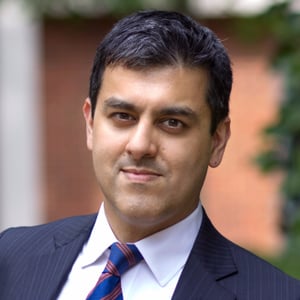
Professor of Law, University of Virginia School of Law
Aditya Bamzai is a professor of law at the University of Virginia. He teaches administrative law, civil procedure, computer crime and conflicts of law, and he has written about these and related subjects. He has argued cases relating to the separation of powers and national security in the U.S. Supreme Court, Foreign Intelligence Surveillance Court of Review, D.C. Circuit and other federal courts of appeals. From 2019 to 2021, he served as a Member of the Privacy and Civil Liberties Oversight Board, a federal agency charged with ensuring that the government’s national security efforts are balanced with the need to protect privacy and civil liberties. Before entering the academy, Bamzai was an attorney-adviser in the Office of Legal Counsel of the U.S. Department of Justice, and an appellate attorney in both private practice and for the National Security Division of the Department of Justice. Earlier in his career, he was a law clerk to Justice Antonin Scalia of the Supreme Court of the United States and to Judge Jeffrey Sutton of the Sixth Circuit Court of Appeals.
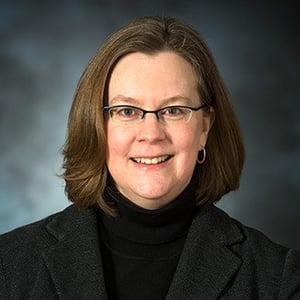
Associate Dean for Research and Intellectual Life, McKnight Presidential Professor in Law, Distinguished McKnight University Professor, Harlan Albert Rogers Professor in Law, Associate Director, Corporate Institute, University of Minnesota Law School
Professor Kristin E. Hickman is the McKnight Presidential Professor in Law, a Distinguished McKnight University Professor, and Harlan Albert Rogers Professor in Law at the University of Minnesota Law School. She also has taught at Harvard Law School and Northwestern University School of Law. Professor Hickman teaches and writes primarily in the areas of administrative law, tax administration, and statutory interpretation. Her articles on these topics have appeared in the Columbia Law Review, Cornell Law Review, Virginia Law Review, Duke Law Journal, and other publications. She also co-authors the Administrative Law Treatise with Richard J. Pierce, Jr., and a casebook on federal administrative law with Pierce and Christopher J. Walker. Her scholarly work has been cited several times in opinions of the United States Supreme Court as well as regularly in lower court judicial opinions and court briefs.
In 2018-19, Professor Hickman served as Special Adviser to the Administrator of the Office of Information and Regulatory Affairs in Washington, D.C. She presently serves as a Senior Fellow, and previously served as a public member and chair of the judicial review committee, for the Administrative Conference of the United States. She also is a Fellow of the American College of Tax Counsel.
Professor Hickman received her B.S. degree in business administration with a concentration in accounting and a secondary major in history from Trinity University in San Antonio, Texas. After practicing for several years as a certified public accountant, Professor Hickman earned her J.D. degree, magna cum laude, from Northwestern University School of Law, where she was awarded the Raoul Berger Prize and the Lowden Wigmore Prize for her scholarly writings. Following law school, Professor Hickman clerked for The Honorable David B. Sentelle of the United States Court of Appeals for the District of Columbia Circuit and practiced law as an associate with the Chicago office of Skadden, Arps, Slate, Meagher & Flom, concentrating on corporate and international tax transactions and matters.

Associate Professor of Law, Washington University School of Law
Andrea Scoseria Katz is an Associate Professor of Law at Washington University School of Law in St. Louis. She teaches and writes about constitutional law, with a focus on presidential power. Her work draws from constitutional law, legal history, political theory and comparative politics to explore questions of separation-of-powers theory, constitutionalism, and the development of the American president and the modern administrative state, especially during the Progressive Era (1890-1920). Professor Katz received a PhD in Political Science from Yale University and a JD from Yale Law School. After law school, Professor Katz clerked at the European Court of Human Rights in Strasbourg, France for Judge András Sajó, and in the District of Massachusetts for Judge Michael A. Ponsor. She has been a visiting researcher at the University of Rio de Janeiro, the University of São Paulo, the University of Tokyo, and was a Golieb Fellow in Legal History at NYU Law School before joining the Washington University faculty in Fall 2020.

Patrick Hotung Professor of Constitutional Law, Georgetown University Law Center
Randy Barnett is the Patrick Hotung Professor of Constitutional Law at Georgetown University Law Center. He has argued before the United States Supreme Court, tried murder cases to juries as a prosecutor in Chicago, and appeared as a prosecutor in the feature film Inalienable. He is the author of numerous books, including Restoring the Lost Constitution, The Structure of Liberty, Our Republican Constitution, and The Original Meaning of the Fourteenth Amendment. He has published two memoirs, A Life for Liberty: The Making of an American Originalist, and Felony Review: Tales of True Crime and Corruption in Chicago. He is currently working on a new book, Freedom and Flourishing: Libertarianism for the Real World.
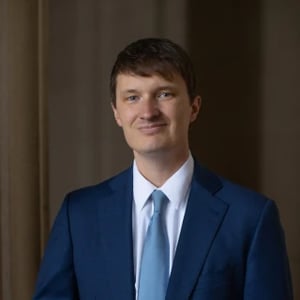
Partner, Boyden Gray PLLC
Trent McCotter is a partner with Boyden Gray PLLC. He previously served as Deputy Associate Attorney General of the United States and as an Assistant U.S. Attorney.
Mr. McCotter maintains an extensive appellate practice. He has considerable experience identifying and briefing cases that draw the Supreme Court’s attention, having persuaded the Court to grant certiorari in numerous cases raising issues of sovereignty, constitutional rights, due process, and criminal law. He has authored and submitted over 60 briefs at the Court.
He has also personally argued more than fifteen federal appeals across the Second, Fourth, Fifth, Sixth, Ninth, Eleventh, Federal, and D.C. Circuits—including once arguing three separate appeals in just four days. He has also twice argued before the 17-judge en banc Fifth Circuit. He has been counsel in over 50 other appeals raising matters from FOIA and the APA to constitutional rights and statutory construction.
As Deputy Associate Attorney General, Mr. McCotter oversaw DOJ’s Civil Appellate and Federal Programs branches, which are responsible for defending nearly all major litigation against the federal government. During his three years as a federal trial attorney in the Eastern District of Virginia’s “Rocket Docket,” Mr. McCotter won the Attorney General’s Award for Distinguished Service.
During his DOJ tenures, Mr. McCotter also assisted with the confirmations of two Supreme Court justices and over a dozen lower-court judges.
Mr. McCotter served as an inaugural clerk to the Hon. Steven J. Menashi on the U.S. Court of Appeals for the Second Circuit and also clerked for the Hon. R. Lanier Anderson III on the U.S. Court of Appeals for the Eleventh Circuit.
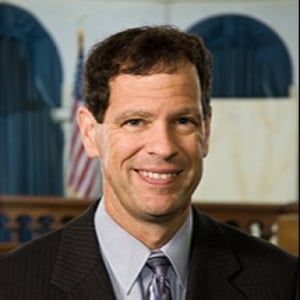
Warren Distinguished Professor of Law, University of San Diego School of Law
Michael D. Ramsey is Warren Distinguished Professor of Law at the University of San Diego School of Law, where he teaches and writes in the areas of Constitutional Law, Foreign Relations Law and International Law. He is the author of The Constitution’s Text in Foreign Affairs (Harvard University Press), co-editor of International Law in the U.S. Supreme Court: Continuity and Change (Cambridge University Press), and co-author of two casebooks, Transnational Law and Practice (2d ed., Aspen) and International Business Transactions: A Problem-Oriented Coursebook (14th ed., West). His scholarly articles have appeared in publications such as the Yale Law Journal, the University of Chicago Law Review, the Georgetown Law Journal and the American Journal of International Law. He received his B.A. magna cum laude from Dartmouth College and his J.D. summa cum laude from Stanford Law School. Prior to teaching, he served as a judicial clerk for Judge J. Clifford Wallace of the United States Court of Appeals for the Ninth Circuit and for Justice Antonin Scalia of the United States Supreme Court, and practiced law with the law firm of Latham & Watkins, where he specialized in international finance and investment. He has taught as a visiting professor at the University of California, San Diego, in the Department of Political Science and at the University of Paris – Sorbonne, in the Department of Comparative Law.

Professor, University of Minnesota Law School
Ilan Wurman is the Julius E. Davis Professor of Law at the University of Minnesota, where he teaches administrative law and constitutional law. He previously taught at Arizona State University. He writes primarily on the Fourteenth Amendment, administrative law, separation of powers, and constitutionalism. His academic writing has appeared in the Yale Law Journal, the Stanford Law Review, the University of Chicago Law Review, the University of Pennsylvania Law Review, the Virginia Law Review, the Duke Law Journal, the Minnesota Law Review, the Notre Dame Law Review, and the Texas Law Review among other journals.
Professor Wurman is the author of a casebook, Administrative Law Theory and Fundamentals: An Integrated Approach (Foundation Press 2d ed. 2024). He is also the author of A Debt Against the Living: An Introduction to Originalism (Cambridge 2017), and The Second Founding: An Introduction to the Fourteenth Amendment (Cambridge 2020). His next book, The Constitution of 1789: A New Introduction, is also forthcoming with Cambridge University Press.
Professor Wurman practices law with the firm Tully Bailey. He has litigated a variety of administrative law and constitutional law cases, including cases involving COVID-19 restrictions, transmission lines, and Appointments Clause challenges. He also devised winning public nuisance theories to force city governments to address the increasingly challenging public camping crises throughout the country.
Associate Dean for Research and Intellectual Life, McKnight Presidential Professor in Law, Distinguished McKnight University Professor, Harlan Albert Rogers Professor in Law, Associate Director, Corporate Institute, University of Minnesota Law School
Professor Kristin E. Hickman is the McKnight Presidential Professor in Law, a Distinguished McKnight University Professor, and Harlan Albert Rogers Professor in Law at the University of Minnesota Law School. She also has taught at Harvard Law School and Northwestern University School of Law. Professor Hickman teaches and writes primarily in the areas of administrative law, tax administration, and statutory interpretation. Her articles on these topics have appeared in the Columbia Law Review, Cornell Law Review, Virginia Law Review, Duke Law Journal, and other publications. She also co-authors the Administrative Law Treatise with Richard J. Pierce, Jr., and a casebook on federal administrative law with Pierce and Christopher J. Walker. Her scholarly work has been cited several times in opinions of the United States Supreme Court as well as regularly in lower court judicial opinions and court briefs.
In 2018-19, Professor Hickman served as Special Adviser to the Administrator of the Office of Information and Regulatory Affairs in Washington, D.C. She presently serves as a Senior Fellow, and previously served as a public member and chair of the judicial review committee, for the Administrative Conference of the United States. She also is a Fellow of the American College of Tax Counsel.
Professor Hickman received her B.S. degree in business administration with a concentration in accounting and a secondary major in history from Trinity University in San Antonio, Texas. After practicing for several years as a certified public accountant, Professor Hickman earned her J.D. degree, magna cum laude, from Northwestern University School of Law, where she was awarded the Raoul Berger Prize and the Lowden Wigmore Prize for her scholarly writings. Following law school, Professor Hickman clerked for The Honorable David B. Sentelle of the United States Court of Appeals for the District of Columbia Circuit and practiced law as an associate with the Chicago office of Skadden, Arps, Slate, Meagher & Flom, concentrating on corporate and international tax transactions and matters.
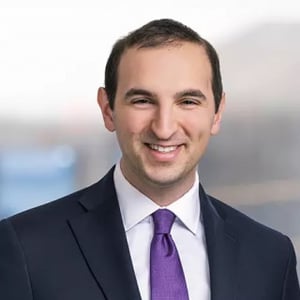
Associate, Covington & Burling LLP
Eli Nachmany is an associate at Covington & Burling LLP in the Washington, DC, office. He clerked for Judge Steven J. Menashi of the U.S. Court of Appeals for the Second Circuit. Eli graduated magna cum laude from Harvard Law School, where he was Editor-in-Chief of the Harvard Journal of Law & Public Policy. Prior to law school, Eli served as the speechwriter to the U.S. Secretary of the Interior and as a domestic policy aide in the White House Office of American Innovation. He graduated summa cum laude from New York University with a B.S. in Sports Management. Eli’s scholarship on administrative law and executive power has appeared in the BYU Law Review, George Mason Law Review, Wake Forest Law Review, and Yale Law Journal Forum.
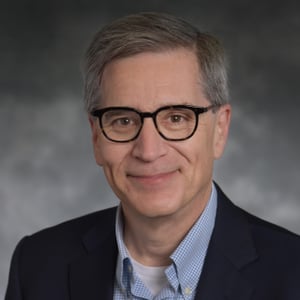
Affiliated Scholar, George Washington University Regulatory Studies Center
Roger Nober is a Professor of Practice at the Trachtenberg School of Public Policy and Public Administration. Nober served as director of the GW Regulatory Studies Center from 2024 to 2025. His career includes service as Executive Vice President and Chief Legal Officer at BNSF Railway, Chairman of the U.S. Surface Transportation Board and Chief Counsel of the Committee on Transportation and Infrastructure of the U.S. House of Representatives.
Nober retired from BNSF Railway Co. in December 2022, after 16 years as an Executive Vice President responsible for overseeing legal and regulatory matters, environmental claims, compliance, communications as well as state government and community affairs. He also served on the Board of BNSF Railway LLC. Prior to joining BNSF, Nober was a partner in the Washington office of Steptoe & Johnson LLP.
From 2002 to 2006, Nober was Chairman of the U.S. Surface Transportation Board. From 2001 to 2002, he served as Counselor to the Deputy Secretary at the U.S. Department of Transportation. From 1993 to 2001, he served in a variety of roles for the Committee on Transportation and Infrastructure of the U.S. House of Representatives, including serving as chief counsel from 1996 to 2001. He has a bachelor’s degree from Haverford College and a Juris Doctor from Harvard University School of Law.
He currently is an advisory board member at the Texas Transportation Institute at Texas A&M University, a member of the Business Advisory Council at Northwestern University Transportation Center, a member of the Texas Holocaust, Genocide, and Antisemitism Advisory Commission, and a past and current board member of a number of nonprofit organizations.
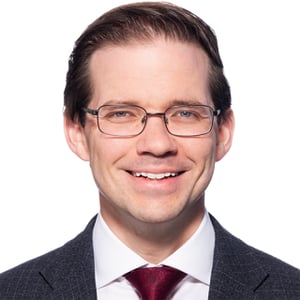
Of Counsel, Covington & Burling LLP
The Honorable Paul J. Ray is currently Of Counsel at Covington & Burling LLP where he advises clients on regulatory opportunities and challenges and helps them formulate and execute advocacy strategies for their regulatory policy priorities before the executive branch and Congress.
During the first Trump Administration, Paul held various senior positions at the Office of Information and Regulatory Affairs (OIRA) within the White House’s Office of Management and Budget, including as acting, and then Senate-confirmed, head of the office. As OIRA Administrator (the "regulations czar"), Paul supervised the review of hundreds of regulations from across the government, drafted numerous executive orders governing the regulatory process, and led the Administration’s regulatory reform effort. As a result of this experience, Paul is well-positioned to help clients understand and achieve regulatory policy priorities in the context of the government’s regulatory agenda and ongoing reform efforts.
Most recently, Paul was also the Director of the Roe Institute for Economic Policy Studies at The Heritage Foundation. In that role, he supervised the formulation of the Foundation’s economic and regulatory policy recommendations and provided technical assistance to congressional committees and staff regarding legislative changes to the regulatory process. In addition to his role at The Heritage Foundation, Paul also served as a Senior Advisor at a strategic advisory firm. Before his time in government, Paul practiced law at a law firm in Washington, specializing in administrative law matters.
Prior to his role at the White House, Paul was Counselor to the Secretary at the U.S. Department of Labor. There he led departmental efforts in high-profile rulemakings and helped formulate the Department’s legal positions and strategy.
Paul served as a law clerk to Supreme Court Justice Samuel Alito and as a law clerk to the Honorable Debra Livingston of the U.S. Court of Appeals for the Second Circuit.
Paul is a thought leader in the conservative legal movement and is a frequent commentator and speaker on regulatory policy and reform matters, including at law schools, professional gatherings, and other venues. He is the Chairman of Innovations in Peacebuilding International and the Regulatory Process Working Group of the Federalist Society’s Regulatory Transparency Project and a public member of the Administrative Conference of the United States. Paul is also an adjunct lecturer at the Hillsdale College School of Government.
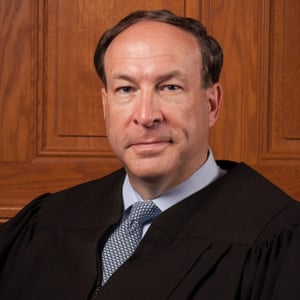
Judge, United States Court of Appeals, Seventh Circuit
Michael B. Brennan was confirmed and sworn in as a Circuit Judge for the U.S. Court of Appeals for the Seventh Circuit in May 2018.
He previously worked as a partner in the Milwaukee law firm of Gass Weber Mullins LLC, where he tried cases and handled appeals in federal and state courts, as a judge on the Milwaukee County Circuit, where he presided over a variety of criminal and civil calendars, and as an assistant district attorney in the Milwaukee County District Attorney’s office.
Brennan’s undergraduate degree is from the University of Notre Dame, and his law degree from Northwestern University School of Law, where he was an editor on the law review and the moot court champion. He served as a law clerk on the U.S. District Court for the Eastern District of Wisconsin and the U.S. Court of Appeals for the Seventh Circuit.

Supreme Court Director, Institute for Constitutional Advocacy & Protection, Georgetown Law
Kelsi Corkran is the Supreme Court Director at the Institute for Constitutional Advocacy & Protection and a Senior Lecturer at Georgetown Law. Kelsi has served as lead counsel in numerous civil rights cases before the Supreme Court, including Trump v. CASA, Grants Pass v. Johnson, Acheson Hotels v. Laufer, Torres v. Madrid, and City of Hays v. Vogt. She has also argued over 30 cases in the courts of appeals, including 12 of the 13 U.S. Courts of Appeals and the en banc Sixth and Ninth Circuits.
Immediately prior to joining ICAP, Kelsi was the Head of the Supreme Court Practice at Orrick, Herrington & Sutcliffe. She previously served as a law clerk to Justice Ruth Bader Ginsburg of the United States Supreme Court and Judge David S. Tatel of the U.S. Court of Appeals for the D.C. Circuit. Among other positions, she was as an attorney with the Civil Appellate Staff at the U.S. Department of Justice and in the Communications Office of the White House’s Executive Office of the President, where she assisted with judicial nominations, including the confirmation hearings of Justice Sonia Sotomayor. Before law school, she was a social worker in Philadelphia’s foster care system.
Kelsi is a member of the American Law Institute, the Executive Committee of the Board of Directors for the Washington Lawyers Committee for Civil Rights and Urban Affairs, and the D.C. Circuit Advisory Committee on Procedures. She previously served on the Supreme Court Practitioners’ Committee for the Presidential Commission on the Supreme Court of the United States and on the Executive Committee of the Board of Trustees for the Legal Aid Society of the District of Columbia. She received her B.A. from the University of Pennsylvania and her J.D. and M.P.P. from the University of Chicago.
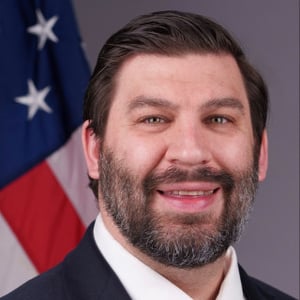
Deputy Counsel, the President
Gary currently is the Deputy Counsel to the President. He was previously a partner at the Dhillon Law Group and worked at the Department of the Interior and Federal Election Commission. He is a native of Virginia, and earned his B.A. and J.D. from the University of Virginia.
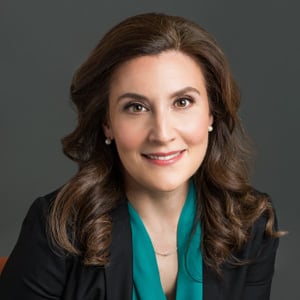
Board Member, U.S. Privacy and Civil Liberties Oversight Board
Beth A. Williams is a Board Member of the United States Privacy and Civil Liberties Oversight Board, an agency whose mission is to ensure that the federal government's efforts to prevent terrorism are balanced with the need to protect privacy and civil liberties.
Prior to her Board service, Ms. Williams was the Assistant Attorney General for the Office of Legal Policy at the United States Department of Justice from August 2017 to December 2020. In that role, she served as the primary policy advisor to the Attorney General and the Deputy Attorney General, and as the Chief Regulatory Officer for the Department. Ms. Williams also led the judicial nomination process for the Department, assisting in the selection and confirmation of more than 230 Article III judges to the bench.
Prior to becoming Assistant Attorney General, Ms. Williams was a litigation and appellate partner at a national law firm, where her practice focused on complex commercial, securities, appellate, and First Amendment litigation. From 2005-2006, Ms. Williams served as Special Counsel to the United States Senate Committee on the Judiciary, where she assisted with the confirmation of Chief Justice John G. Roberts, Jr. and Associate Justice Samuel A. Alito, Jr. to the United States Supreme Court.
Ms. Williams clerked for the Hon. Richard C. Wesley on the United State Court of Appeals for the Second Circuit. She graduated from Harvard College magna cum laude, with a degree in History and Literature, and she earned her law degree from Harvard Law School, where she served as Executive Editor of the Harvard Journal of Law and Public Policy.
Professor, University of Minnesota Law School
Ilan Wurman is the Julius E. Davis Professor of Law at the University of Minnesota, where he teaches administrative law and constitutional law. He previously taught at Arizona State University. He writes primarily on the Fourteenth Amendment, administrative law, separation of powers, and constitutionalism. His academic writing has appeared in the Yale Law Journal, the Stanford Law Review, the University of Chicago Law Review, the University of Pennsylvania Law Review, the Virginia Law Review, the Duke Law Journal, the Minnesota Law Review, the Notre Dame Law Review, and the Texas Law Review among other journals.
Professor Wurman is the author of a casebook, Administrative Law Theory and Fundamentals: An Integrated Approach (Foundation Press 2d ed. 2024). He is also the author of A Debt Against the Living: An Introduction to Originalism (Cambridge 2017), and The Second Founding: An Introduction to the Fourteenth Amendment (Cambridge 2020). His next book, The Constitution of 1789: A New Introduction, is also forthcoming with Cambridge University Press.
Professor Wurman practices law with the firm Tully Bailey. He has litigated a variety of administrative law and constitutional law cases, including cases involving COVID-19 restrictions, transmission lines, and Appointments Clause challenges. He also devised winning public nuisance theories to force city governments to address the increasingly challenging public camping crises throughout the country.
Patrick Hotung Professor of Constitutional Law, Georgetown University Law Center
Randy Barnett is the Patrick Hotung Professor of Constitutional Law at Georgetown University Law Center. He has argued before the United States Supreme Court, tried murder cases to juries as a prosecutor in Chicago, and appeared as a prosecutor in the feature film Inalienable. He is the author of numerous books, including Restoring the Lost Constitution, The Structure of Liberty, Our Republican Constitution, and The Original Meaning of the Fourteenth Amendment. He has published two memoirs, A Life for Liberty: The Making of an American Originalist, and Felony Review: Tales of True Crime and Corruption in Chicago. He is currently working on a new book, Freedom and Flourishing: Libertarianism for the Real World.
Partner, Boyden Gray PLLC
Trent McCotter is a partner with Boyden Gray PLLC. He previously served as Deputy Associate Attorney General of the United States and as an Assistant U.S. Attorney.
Mr. McCotter maintains an extensive appellate practice. He has considerable experience identifying and briefing cases that draw the Supreme Court’s attention, having persuaded the Court to grant certiorari in numerous cases raising issues of sovereignty, constitutional rights, due process, and criminal law. He has authored and submitted over 60 briefs at the Court.
He has also personally argued more than fifteen federal appeals across the Second, Fourth, Fifth, Sixth, Ninth, Eleventh, Federal, and D.C. Circuits—including once arguing three separate appeals in just four days. He has also twice argued before the 17-judge en banc Fifth Circuit. He has been counsel in over 50 other appeals raising matters from FOIA and the APA to constitutional rights and statutory construction.
As Deputy Associate Attorney General, Mr. McCotter oversaw DOJ’s Civil Appellate and Federal Programs branches, which are responsible for defending nearly all major litigation against the federal government. During his three years as a federal trial attorney in the Eastern District of Virginia’s “Rocket Docket,” Mr. McCotter won the Attorney General’s Award for Distinguished Service.
During his DOJ tenures, Mr. McCotter also assisted with the confirmations of two Supreme Court justices and over a dozen lower-court judges.
Mr. McCotter served as an inaugural clerk to the Hon. Steven J. Menashi on the U.S. Court of Appeals for the Second Circuit and also clerked for the Hon. R. Lanier Anderson III on the U.S. Court of Appeals for the Eleventh Circuit.
Warren Distinguished Professor of Law, University of San Diego School of Law
Michael D. Ramsey is Warren Distinguished Professor of Law at the University of San Diego School of Law, where he teaches and writes in the areas of Constitutional Law, Foreign Relations Law and International Law. He is the author of The Constitution’s Text in Foreign Affairs (Harvard University Press), co-editor of International Law in the U.S. Supreme Court: Continuity and Change (Cambridge University Press), and co-author of two casebooks, Transnational Law and Practice (2d ed., Aspen) and International Business Transactions: A Problem-Oriented Coursebook (14th ed., West). His scholarly articles have appeared in publications such as the Yale Law Journal, the University of Chicago Law Review, the Georgetown Law Journal and the American Journal of International Law. He received his B.A. magna cum laude from Dartmouth College and his J.D. summa cum laude from Stanford Law School. Prior to teaching, he served as a judicial clerk for Judge J. Clifford Wallace of the United States Court of Appeals for the Ninth Circuit and for Justice Antonin Scalia of the United States Supreme Court, and practiced law with the law firm of Latham & Watkins, where he specialized in international finance and investment. He has taught as a visiting professor at the University of California, San Diego, in the Department of Political Science and at the University of Paris – Sorbonne, in the Department of Comparative Law.
Professor, University of Minnesota Law School
Ilan Wurman is the Julius E. Davis Professor of Law at the University of Minnesota, where he teaches administrative law and constitutional law. He previously taught at Arizona State University. He writes primarily on the Fourteenth Amendment, administrative law, separation of powers, and constitutionalism. His academic writing has appeared in the Yale Law Journal, the Stanford Law Review, the University of Chicago Law Review, the University of Pennsylvania Law Review, the Virginia Law Review, the Duke Law Journal, the Minnesota Law Review, the Notre Dame Law Review, and the Texas Law Review among other journals.
Professor Wurman is the author of a casebook, Administrative Law Theory and Fundamentals: An Integrated Approach (Foundation Press 2d ed. 2024). He is also the author of A Debt Against the Living: An Introduction to Originalism (Cambridge 2017), and The Second Founding: An Introduction to the Fourteenth Amendment (Cambridge 2020). His next book, The Constitution of 1789: A New Introduction, is also forthcoming with Cambridge University Press.
Professor Wurman practices law with the firm Tully Bailey. He has litigated a variety of administrative law and constitutional law cases, including cases involving COVID-19 restrictions, transmission lines, and Appointments Clause challenges. He also devised winning public nuisance theories to force city governments to address the increasingly challenging public camping crises throughout the country.
Patrick Hotung Professor of Constitutional Law, Georgetown University Law Center
Randy Barnett is the Patrick Hotung Professor of Constitutional Law at Georgetown University Law Center. He has argued before the United States Supreme Court, tried murder cases to juries as a prosecutor in Chicago, and appeared as a prosecutor in the feature film Inalienable. He is the author of numerous books, including Restoring the Lost Constitution, The Structure of Liberty, Our Republican Constitution, and The Original Meaning of the Fourteenth Amendment. He has published two memoirs, A Life for Liberty: The Making of an American Originalist, and Felony Review: Tales of True Crime and Corruption in Chicago. He is currently working on a new book, Freedom and Flourishing: Libertarianism for the Real World.
Partner, Boyden Gray PLLC
Trent McCotter is a partner with Boyden Gray PLLC. He previously served as Deputy Associate Attorney General of the United States and as an Assistant U.S. Attorney.
Mr. McCotter maintains an extensive appellate practice. He has considerable experience identifying and briefing cases that draw the Supreme Court’s attention, having persuaded the Court to grant certiorari in numerous cases raising issues of sovereignty, constitutional rights, due process, and criminal law. He has authored and submitted over 60 briefs at the Court.
He has also personally argued more than fifteen federal appeals across the Second, Fourth, Fifth, Sixth, Ninth, Eleventh, Federal, and D.C. Circuits—including once arguing three separate appeals in just four days. He has also twice argued before the 17-judge en banc Fifth Circuit. He has been counsel in over 50 other appeals raising matters from FOIA and the APA to constitutional rights and statutory construction.
As Deputy Associate Attorney General, Mr. McCotter oversaw DOJ’s Civil Appellate and Federal Programs branches, which are responsible for defending nearly all major litigation against the federal government. During his three years as a federal trial attorney in the Eastern District of Virginia’s “Rocket Docket,” Mr. McCotter won the Attorney General’s Award for Distinguished Service.
During his DOJ tenures, Mr. McCotter also assisted with the confirmations of two Supreme Court justices and over a dozen lower-court judges.
Mr. McCotter served as an inaugural clerk to the Hon. Steven J. Menashi on the U.S. Court of Appeals for the Second Circuit and also clerked for the Hon. R. Lanier Anderson III on the U.S. Court of Appeals for the Eleventh Circuit.
Warren Distinguished Professor of Law, University of San Diego School of Law
Michael D. Ramsey is Warren Distinguished Professor of Law at the University of San Diego School of Law, where he teaches and writes in the areas of Constitutional Law, Foreign Relations Law and International Law. He is the author of The Constitution’s Text in Foreign Affairs (Harvard University Press), co-editor of International Law in the U.S. Supreme Court: Continuity and Change (Cambridge University Press), and co-author of two casebooks, Transnational Law and Practice (2d ed., Aspen) and International Business Transactions: A Problem-Oriented Coursebook (14th ed., West). His scholarly articles have appeared in publications such as the Yale Law Journal, the University of Chicago Law Review, the Georgetown Law Journal and the American Journal of International Law. He received his B.A. magna cum laude from Dartmouth College and his J.D. summa cum laude from Stanford Law School. Prior to teaching, he served as a judicial clerk for Judge J. Clifford Wallace of the United States Court of Appeals for the Ninth Circuit and for Justice Antonin Scalia of the United States Supreme Court, and practiced law with the law firm of Latham & Watkins, where he specialized in international finance and investment. He has taught as a visiting professor at the University of California, San Diego, in the Department of Political Science and at the University of Paris – Sorbonne, in the Department of Comparative Law.
Professor, University of Minnesota Law School
Ilan Wurman is the Julius E. Davis Professor of Law at the University of Minnesota, where he teaches administrative law and constitutional law. He previously taught at Arizona State University. He writes primarily on the Fourteenth Amendment, administrative law, separation of powers, and constitutionalism. His academic writing has appeared in the Yale Law Journal, the Stanford Law Review, the University of Chicago Law Review, the University of Pennsylvania Law Review, the Virginia Law Review, the Duke Law Journal, the Minnesota Law Review, the Notre Dame Law Review, and the Texas Law Review among other journals.
Professor Wurman is the author of a casebook, Administrative Law Theory and Fundamentals: An Integrated Approach (Foundation Press 2d ed. 2024). He is also the author of A Debt Against the Living: An Introduction to Originalism (Cambridge 2017), and The Second Founding: An Introduction to the Fourteenth Amendment (Cambridge 2020). His next book, The Constitution of 1789: A New Introduction, is also forthcoming with Cambridge University Press.
Professor Wurman practices law with the firm Tully Bailey. He has litigated a variety of administrative law and constitutional law cases, including cases involving COVID-19 restrictions, transmission lines, and Appointments Clause challenges. He also devised winning public nuisance theories to force city governments to address the increasingly challenging public camping crises throughout the country.
Associate Dean for Research and Intellectual Life, McKnight Presidential Professor in Law, Distinguished McKnight University Professor, Harlan Albert Rogers Professor in Law, Associate Director, Corporate Institute, University of Minnesota Law School
Professor Kristin E. Hickman is the McKnight Presidential Professor in Law, a Distinguished McKnight University Professor, and Harlan Albert Rogers Professor in Law at the University of Minnesota Law School. She also has taught at Harvard Law School and Northwestern University School of Law. Professor Hickman teaches and writes primarily in the areas of administrative law, tax administration, and statutory interpretation. Her articles on these topics have appeared in the Columbia Law Review, Cornell Law Review, Virginia Law Review, Duke Law Journal, and other publications. She also co-authors the Administrative Law Treatise with Richard J. Pierce, Jr., and a casebook on federal administrative law with Pierce and Christopher J. Walker. Her scholarly work has been cited several times in opinions of the United States Supreme Court as well as regularly in lower court judicial opinions and court briefs.
In 2018-19, Professor Hickman served as Special Adviser to the Administrator of the Office of Information and Regulatory Affairs in Washington, D.C. She presently serves as a Senior Fellow, and previously served as a public member and chair of the judicial review committee, for the Administrative Conference of the United States. She also is a Fellow of the American College of Tax Counsel.
Professor Hickman received her B.S. degree in business administration with a concentration in accounting and a secondary major in history from Trinity University in San Antonio, Texas. After practicing for several years as a certified public accountant, Professor Hickman earned her J.D. degree, magna cum laude, from Northwestern University School of Law, where she was awarded the Raoul Berger Prize and the Lowden Wigmore Prize for her scholarly writings. Following law school, Professor Hickman clerked for The Honorable David B. Sentelle of the United States Court of Appeals for the District of Columbia Circuit and practiced law as an associate with the Chicago office of Skadden, Arps, Slate, Meagher & Flom, concentrating on corporate and international tax transactions and matters.
Associate, Covington & Burling LLP
Eli Nachmany is an associate at Covington & Burling LLP in the Washington, DC, office. He clerked for Judge Steven J. Menashi of the U.S. Court of Appeals for the Second Circuit. Eli graduated magna cum laude from Harvard Law School, where he was Editor-in-Chief of the Harvard Journal of Law & Public Policy. Prior to law school, Eli served as the speechwriter to the U.S. Secretary of the Interior and as a domestic policy aide in the White House Office of American Innovation. He graduated summa cum laude from New York University with a B.S. in Sports Management. Eli’s scholarship on administrative law and executive power has appeared in the BYU Law Review, George Mason Law Review, Wake Forest Law Review, and Yale Law Journal Forum.
Affiliated Scholar, George Washington University Regulatory Studies Center
Roger Nober is a Professor of Practice at the Trachtenberg School of Public Policy and Public Administration. Nober served as director of the GW Regulatory Studies Center from 2024 to 2025. His career includes service as Executive Vice President and Chief Legal Officer at BNSF Railway, Chairman of the U.S. Surface Transportation Board and Chief Counsel of the Committee on Transportation and Infrastructure of the U.S. House of Representatives.
Nober retired from BNSF Railway Co. in December 2022, after 16 years as an Executive Vice President responsible for overseeing legal and regulatory matters, environmental claims, compliance, communications as well as state government and community affairs. He also served on the Board of BNSF Railway LLC. Prior to joining BNSF, Nober was a partner in the Washington office of Steptoe & Johnson LLP.
From 2002 to 2006, Nober was Chairman of the U.S. Surface Transportation Board. From 2001 to 2002, he served as Counselor to the Deputy Secretary at the U.S. Department of Transportation. From 1993 to 2001, he served in a variety of roles for the Committee on Transportation and Infrastructure of the U.S. House of Representatives, including serving as chief counsel from 1996 to 2001. He has a bachelor’s degree from Haverford College and a Juris Doctor from Harvard University School of Law.
He currently is an advisory board member at the Texas Transportation Institute at Texas A&M University, a member of the Business Advisory Council at Northwestern University Transportation Center, a member of the Texas Holocaust, Genocide, and Antisemitism Advisory Commission, and a past and current board member of a number of nonprofit organizations.
Of Counsel, Covington & Burling LLP
The Honorable Paul J. Ray is currently Of Counsel at Covington & Burling LLP where he advises clients on regulatory opportunities and challenges and helps them formulate and execute advocacy strategies for their regulatory policy priorities before the executive branch and Congress.
During the first Trump Administration, Paul held various senior positions at the Office of Information and Regulatory Affairs (OIRA) within the White House’s Office of Management and Budget, including as acting, and then Senate-confirmed, head of the office. As OIRA Administrator (the "regulations czar"), Paul supervised the review of hundreds of regulations from across the government, drafted numerous executive orders governing the regulatory process, and led the Administration’s regulatory reform effort. As a result of this experience, Paul is well-positioned to help clients understand and achieve regulatory policy priorities in the context of the government’s regulatory agenda and ongoing reform efforts.
Most recently, Paul was also the Director of the Roe Institute for Economic Policy Studies at The Heritage Foundation. In that role, he supervised the formulation of the Foundation’s economic and regulatory policy recommendations and provided technical assistance to congressional committees and staff regarding legislative changes to the regulatory process. In addition to his role at The Heritage Foundation, Paul also served as a Senior Advisor at a strategic advisory firm. Before his time in government, Paul practiced law at a law firm in Washington, specializing in administrative law matters.
Prior to his role at the White House, Paul was Counselor to the Secretary at the U.S. Department of Labor. There he led departmental efforts in high-profile rulemakings and helped formulate the Department’s legal positions and strategy.
Paul served as a law clerk to Supreme Court Justice Samuel Alito and as a law clerk to the Honorable Debra Livingston of the U.S. Court of Appeals for the Second Circuit.
Paul is a thought leader in the conservative legal movement and is a frequent commentator and speaker on regulatory policy and reform matters, including at law schools, professional gatherings, and other venues. He is the Chairman of Innovations in Peacebuilding International and the Regulatory Process Working Group of the Federalist Society’s Regulatory Transparency Project and a public member of the Administrative Conference of the United States. Paul is also an adjunct lecturer at the Hillsdale College School of Government.
Supreme Court Director, Institute for Constitutional Advocacy & Protection, Georgetown Law
Kelsi Corkran is the Supreme Court Director at the Institute for Constitutional Advocacy & Protection and a Senior Lecturer at Georgetown Law. Kelsi has served as lead counsel in numerous civil rights cases before the Supreme Court, including Trump v. CASA, Grants Pass v. Johnson, Acheson Hotels v. Laufer, Torres v. Madrid, and City of Hays v. Vogt. She has also argued over 30 cases in the courts of appeals, including 12 of the 13 U.S. Courts of Appeals and the en banc Sixth and Ninth Circuits.
Immediately prior to joining ICAP, Kelsi was the Head of the Supreme Court Practice at Orrick, Herrington & Sutcliffe. She previously served as a law clerk to Justice Ruth Bader Ginsburg of the United States Supreme Court and Judge David S. Tatel of the U.S. Court of Appeals for the D.C. Circuit. Among other positions, she was as an attorney with the Civil Appellate Staff at the U.S. Department of Justice and in the Communications Office of the White House’s Executive Office of the President, where she assisted with judicial nominations, including the confirmation hearings of Justice Sonia Sotomayor. Before law school, she was a social worker in Philadelphia’s foster care system.
Kelsi is a member of the American Law Institute, the Executive Committee of the Board of Directors for the Washington Lawyers Committee for Civil Rights and Urban Affairs, and the D.C. Circuit Advisory Committee on Procedures. She previously served on the Supreme Court Practitioners’ Committee for the Presidential Commission on the Supreme Court of the United States and on the Executive Committee of the Board of Trustees for the Legal Aid Society of the District of Columbia. She received her B.A. from the University of Pennsylvania and her J.D. and M.P.P. from the University of Chicago.
Judge, United States Court of Appeals, Seventh Circuit
Michael B. Brennan was confirmed and sworn in as a Circuit Judge for the U.S. Court of Appeals for the Seventh Circuit in May 2018.
He previously worked as a partner in the Milwaukee law firm of Gass Weber Mullins LLC, where he tried cases and handled appeals in federal and state courts, as a judge on the Milwaukee County Circuit, where he presided over a variety of criminal and civil calendars, and as an assistant district attorney in the Milwaukee County District Attorney’s office.
Brennan’s undergraduate degree is from the University of Notre Dame, and his law degree from Northwestern University School of Law, where he was an editor on the law review and the moot court champion. He served as a law clerk on the U.S. District Court for the Eastern District of Wisconsin and the U.S. Court of Appeals for the Seventh Circuit.
Deputy Counsel, the President
Gary currently is the Deputy Counsel to the President. He was previously a partner at the Dhillon Law Group and worked at the Department of the Interior and Federal Election Commission. He is a native of Virginia, and earned his B.A. and J.D. from the University of Virginia.
Board Member, U.S. Privacy and Civil Liberties Oversight Board
Beth A. Williams is a Board Member of the United States Privacy and Civil Liberties Oversight Board, an agency whose mission is to ensure that the federal government's efforts to prevent terrorism are balanced with the need to protect privacy and civil liberties.
Prior to her Board service, Ms. Williams was the Assistant Attorney General for the Office of Legal Policy at the United States Department of Justice from August 2017 to December 2020. In that role, she served as the primary policy advisor to the Attorney General and the Deputy Attorney General, and as the Chief Regulatory Officer for the Department. Ms. Williams also led the judicial nomination process for the Department, assisting in the selection and confirmation of more than 230 Article III judges to the bench.
Prior to becoming Assistant Attorney General, Ms. Williams was a litigation and appellate partner at a national law firm, where her practice focused on complex commercial, securities, appellate, and First Amendment litigation. From 2005-2006, Ms. Williams served as Special Counsel to the United States Senate Committee on the Judiciary, where she assisted with the confirmation of Chief Justice John G. Roberts, Jr. and Associate Justice Samuel A. Alito, Jr. to the United States Supreme Court.
Ms. Williams clerked for the Hon. Richard C. Wesley on the United State Court of Appeals for the Second Circuit. She graduated from Harvard College magna cum laude, with a degree in History and Literature, and she earned her law degree from Harvard Law School, where she served as Executive Editor of the Harvard Journal of Law and Public Policy.
Professor, University of Minnesota Law School
Ilan Wurman is the Julius E. Davis Professor of Law at the University of Minnesota, where he teaches administrative law and constitutional law. He previously taught at Arizona State University. He writes primarily on the Fourteenth Amendment, administrative law, separation of powers, and constitutionalism. His academic writing has appeared in the Yale Law Journal, the Stanford Law Review, the University of Chicago Law Review, the University of Pennsylvania Law Review, the Virginia Law Review, the Duke Law Journal, the Minnesota Law Review, the Notre Dame Law Review, and the Texas Law Review among other journals.
Professor Wurman is the author of a casebook, Administrative Law Theory and Fundamentals: An Integrated Approach (Foundation Press 2d ed. 2024). He is also the author of A Debt Against the Living: An Introduction to Originalism (Cambridge 2017), and The Second Founding: An Introduction to the Fourteenth Amendment (Cambridge 2020). His next book, The Constitution of 1789: A New Introduction, is also forthcoming with Cambridge University Press.
Professor Wurman practices law with the firm Tully Bailey. He has litigated a variety of administrative law and constitutional law cases, including cases involving COVID-19 restrictions, transmission lines, and Appointments Clause challenges. He also devised winning public nuisance theories to force city governments to address the increasingly challenging public camping crises throughout the country.

Welcome & Luncheon Debate: Resolved: The President Has the Indefeasible Power of Removal
New Orleans, LA27th Annual Faculty Conference
New Orleans, LACourthouse Steps Preview: Trump v. Barbara
Randy E. Barnett, Trent McCotter, Michael D. Ramsey, Ilan Wurman
On June 27, 2025, a class action lawsuit was filed in the United States District...
Courthouse Steps Preview: Trump v. Barbara
Randy E. Barnett, Trent McCotter, Michael D. Ramsey, Ilan Wurman
On June 27, 2025, a class action lawsuit was filed in the United States District...
Courthouse Steps Preview: Trump v. Barbara
Independent Agencies and the OIRA Review Process
Kristin E. Hickman, Eli Nachmany, Roger Nober, Paul J. Ray
The question of agency independence is front and center in modern political and legal discourse—the...
Independent Agencies and the OIRA Review Process
The Forces Shaping Administrative Law: Executive, Courts, and Beyond
Recent Supreme Court decisions—often via the interim, or emergency, docket—are redefining administrative law’s boundaries and...
The Forces Shaping Administrative Law: Executive, Courts, and Beyond
Kelsi Corkran, Michael B. Brennan, Gary Lawkowski, Beth A. Williams, Ilan Wurman
CLE credit for this event is available at On-Demand CLE. Recent Supreme Court decisions—often via the...
The Forces Shaping Administrative Law: Executive, Courts, and Beyond
Administrative Law Practice Group
Washington, DC