
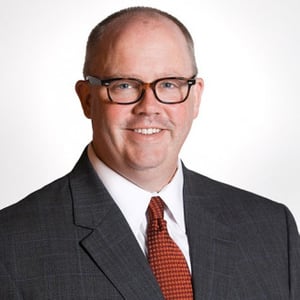
Professor of Law and Assistant Director, Criminal Justice Center, University of Florida Levin College of Law
Professor Stinneford teaches and writes about legal ethics, criminal law, criminal procedure, and constitutional law. His work has been cited by the United States Supreme Court, several state supreme courts and federal courts of appeal, and numerous scholars. It has published in numerous scholarly journals including the Georgetown Law Journal, the Northwestern University Law Review, the Virginia Law Review, the Notre Dame Law Review, and the William & Mary Law Review. The Stanford-Yale Junior faculty forum selected one of his articles as the best paper in the category of Constitutional History, and the AALS Criminal Justice Section named another article as the best paper in its Junior Scholars Paper Competition. In the fall of 2015, he was a Visiting Scholar at the Georgetown Law Center, Center for the Constitution.
Before joining the Florida faculty in 2009, Stinneford clerked for the Hon. James Moran of the United States District Court for the Northern District of Illinois, served as an Assistant United States Attorney, and practiced law with Winston & Strawn in Chicago. Stinneford teaches first-year courses in Criminal Law and Constitutional Law, and upper-level courses in Professional Responsibility, Criminal Procedure, Federal Criminal Law, Law & Literature, and White Collar Crime.

Clayton J. and Henry R. Barber Professor of Law, Northwestern University Pritzker School of Law and Co-Chairman, Board of Directors, The Federalist Society
STEVEN GOW CALABRESI is the Clayton J. & Henry R. Barber Professor at Northwestern Pritzker School of Law. He has also co-taught in the Fall semester at Yale Law School from 2013 to the present. Calabresi clerked for Justice Antonin Scalia and Judges Robert H. Bork and Ralph K. Winter. He was a Special Assistant to Attorney General Meese from 1985 to 1987 and worked with Ken Cribb as his deputy in 1987 on the second floor of the West Wing of the Reagan White House. Calabresi has written books on presidential power and comparative constitutional law and the origins of judicial review. He and Gary Lawson are the co-editors of a casebook on U.S. Constitutional Law, and Calabresi is also the co-editor of a casebook on comparative constitutional law. He has written over seventy law review articles since 1990.
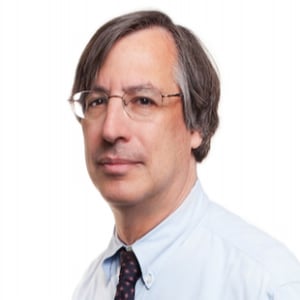
Levin, Mabie & Levin Professor of Law, University of Florida Levin College of Law
Professor Gary Lawson joined the University of Florida Levin College of Law faculty on July 1, 2024, after twenty-four years at Boston University School of Law and eleven years at Northwestern University School of Law. While at Boston University, he was named a William Fairfield Warren Distinguished Professor in 2022 – the highest faculty honor within the university. He has authored or co-authored nine editions of a textbook on administrative law, a textbook on constitutional law, five university press books, one popular press book, and more than one hundred scholarly articles on topics ranging from aspects of constitutional theory and history to the proof of legal propositions. His works have been cited in more than twenty opinions of United States Supreme Court justices. He is a founding member, and serves on the Board of Directors, of the Federalist Society for Law and Public Policy Studies and is on the Editorial Advisory Board of the Heritage Guide to the Constitution.
Clayton J. and Henry R. Barber Professor of Law, Northwestern University Pritzker School of Law and Co-Chairman, Board of Directors, The Federalist Society
STEVEN GOW CALABRESI is the Clayton J. & Henry R. Barber Professor at Northwestern Pritzker School of Law. He has also co-taught in the Fall semester at Yale Law School from 2013 to the present. Calabresi clerked for Justice Antonin Scalia and Judges Robert H. Bork and Ralph K. Winter. He was a Special Assistant to Attorney General Meese from 1985 to 1987 and worked with Ken Cribb as his deputy in 1987 on the second floor of the West Wing of the Reagan White House. Calabresi has written books on presidential power and comparative constitutional law and the origins of judicial review. He and Gary Lawson are the co-editors of a casebook on U.S. Constitutional Law, and Calabresi is also the co-editor of a casebook on comparative constitutional law. He has written over seventy law review articles since 1990.
Levin, Mabie & Levin Professor of Law, University of Florida Levin College of Law
Professor Gary Lawson joined the University of Florida Levin College of Law faculty on July 1, 2024, after twenty-four years at Boston University School of Law and eleven years at Northwestern University School of Law. While at Boston University, he was named a William Fairfield Warren Distinguished Professor in 2022 – the highest faculty honor within the university. He has authored or co-authored nine editions of a textbook on administrative law, a textbook on constitutional law, five university press books, one popular press book, and more than one hundred scholarly articles on topics ranging from aspects of constitutional theory and history to the proof of legal propositions. His works have been cited in more than twenty opinions of United States Supreme Court justices. He is a founding member, and serves on the Board of Directors, of the Federalist Society for Law and Public Policy Studies and is on the Editorial Advisory Board of the Heritage Guide to the Constitution.
Levin, Mabie & Levin Professor of Law, University of Florida Levin College of Law
Professor Gary Lawson joined the University of Florida Levin College of Law faculty on July 1, 2024, after twenty-four years at Boston University School of Law and eleven years at Northwestern University School of Law. While at Boston University, he was named a William Fairfield Warren Distinguished Professor in 2022 – the highest faculty honor within the university. He has authored or co-authored nine editions of a textbook on administrative law, a textbook on constitutional law, five university press books, one popular press book, and more than one hundred scholarly articles on topics ranging from aspects of constitutional theory and history to the proof of legal propositions. His works have been cited in more than twenty opinions of United States Supreme Court justices. He is a founding member, and serves on the Board of Directors, of the Federalist Society for Law and Public Policy Studies and is on the Editorial Advisory Board of the Heritage Guide to the Constitution.
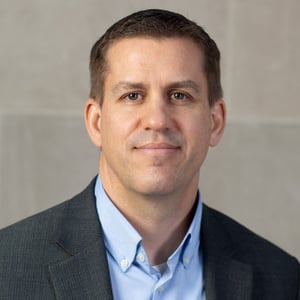
Clinical Professor, University of Texas at Austin School of Law
Steven T. Collis researches and teaches on religion and law and other First Amendment topics. He is the founding faculty director of the Bech-Loughlin First Amendment Center and of Texas's Law & Religion Clinic. On the topic of religious freedom law, he is a sought-after speaker to academic and lay audiences across the United States, including foreign diplomats from countries in Europe, the Middle East, Asia, and South America on behalf of the United States State Department. He has been interviewed by and quoted in various news and media outlets, including The Deseret News, Bloomberg, The Washington Times, Law360, The Salt Lake Tribune, PBS, The Denver Business Journal, Law Week Colorado, CBN News, and numerous podcasts and television shows. His scholarly work has appeared in The Michigan Law Review, The Nebraska Law Review, The University of Denver Law Review Online, and in his book Deep Conviction, which brings to life the history of free exercise law in the United States for lay audiences.
Prior to joining Texas, Steven was the Olin-Darling Research Fellow in the Constitutional Law Center at Stanford Law School.
Earlier in his career, he was an equity partner at Holland & Hart LLP, where he chaired the firm’s nationwide religious institutions and First Amendment practice group and was a member of the firm's complex civil litigation and employment practice groups. He also taught religious liberty law at the University of Denver Sturm College of Law and clerked for Chief Judge Timothy M. Tymkovich of the United States Court of Appeals for the Tenth Circuit.
Steven graduated magna cum laude from the University of Michigan Law School, where he was elected to the Order of the Coif and served as an editor on The Michigan Law Review and The Michigan Journal of Race and Law. He also holds an M.F.A. in creative writing from Virginia Commonwealth University, where he served as the associate editor of the literary journal Blackbird. He completed his undergraduate studies, with university honors, at Brigham Young University.
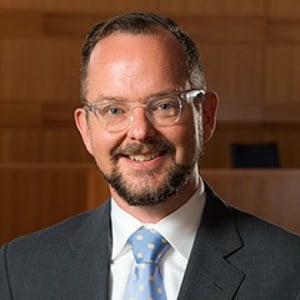
T.J. Maloney Chair in Business Law, Fordham University School of Law
Professor Griffith is an expert in corporate and financial regulatory law. He writes and speaks on corporate law, political economy, and the constitutional rights of corporations and other business associations. In addition to his academic writing, he has authored or contributed to many amicus briefs, including: Iowa v SEC, NCPPR v SEC, AFBR v SEC, and In re Tesla.
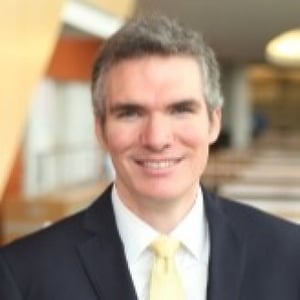
Associate Professor of Law, University of Florida Levin College of Law
Professor Ben Johnson is an Associate Professor of Law at the University of Florida Levin College of Law. He researches and writes on governance by committees. Sometimes, the governing committee is a board of directors. Other times, it is a committee of justices at the Supreme Court. His research has won awards from national organizations in law (AALS) and political science (APSA) and can be found in law reviews and peer reviewed outlets. His recent work on the Supreme Court has been published in the Columbia Law Review and Alabama Law Review. Earlier work on district judges with financial conflicts (published in the North Carolina Law Review) led to a large exposé in the Wall Street Journal. His game theoretic model of corporate fiduciary duties is forthcoming at the BYU Law Review. He has ongoing projects on the Supreme Court’s Shadow Docket, corporate fiduciary duties, shareholder voting, and machine learning.
Professor Johnson teaches Corporations (the only course in the curriculum where students learn to build and maintain institutions that can make the world a better place long after they are gone), Empirical Methods for Lawyers, and topics on the federal judiciary.
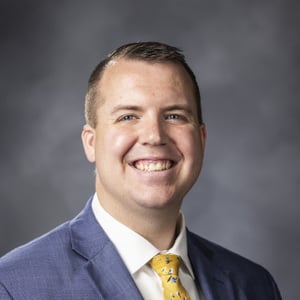
Associate Professor of Law, J. Reuben Clark Law School at Brigham Young University
Tyler Lindley joined BYU Law School in 2024 as an Associate Professor of Law. His research centers on the judicial role and the historical evolution of the judiciary in America. He has extensively examined and published on judicial remedies, federal courts, constitutional law, and administrative law. His scholarly contributions have been or will be featured in the Alabama Law Review, BYU Law Review, Georgia Law Review, Virginia Law Review, and Wake Forest Law Review.
Professor Lindley holds a bachelor's degree in economics from Brigham Young University (2018) and a Juris Doctor from The University of Chicago Law School (2021). During his legal studies, he served as a judicial extern for Judge Ryan Nelson on the US Court of Appeals for the Ninth Circuit. Prior to joining the faculty at BYU Law, he clerked for Chief Judge William Pryor on the US Court of Appeals for the Eleventh Circuit and Judge Gregory Katsas on the US Court of Appeals for the D.C. Circuit. He also served as a Research Fellow at BYU Law between his clerkships.
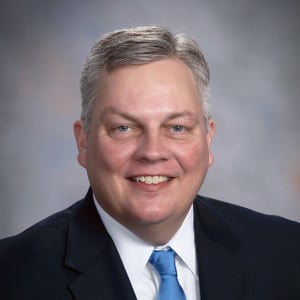
University Professor of Law and Religion and Director of the Eleanor H. McCullen Center for Law, Religion and Public Policy, Villanova University Charles Widger School of Law
Michael P. Moreland was appointed University Professor of Law and Religion and Director of the Eleanor H. McCullen Center for Law, Religion and Public Policy at Villanova University in 2017. Professor Moreland joined the Villanova faculty in 2006 and served as Vice Dean from 2012 to 2015. His research is primarily in the areas of torts, law and religion, constitutional law, and Catholic social thought, and he regularly teaches Torts, First Amendment, seminars in law and religion, and undergraduate courses in ethics.
Professor Moreland is the co-editor of Christianity and Private Law (Routledge, 2021), and his most recent publications include: “The Authority of Tradition: John Henry Newman and Legal Theory” in Christianity and the Making of Irish Law (Routledge, 2025); “Christianity and Torts” in The Oxford Handbook on Christianity and Law, (Oxford University Press, 2023); “Germaneness and Religious Liberty” in the Notre Dame Law Review (2023); “Contingency and Contestation in Christianity and Liberalism” in the Notre Dame Law Review (2023); “Friendship as the Primary Purpose of Law” in The American Journal of Jurisprudence 279 (2022); and “The Moral of Torts” (with Jeffrey Pojanowski) in Christianity and Private Law (Routledge, 2021).
Professor Moreland was a Visiting Professor of Law at the University of Notre Dame and the Mary Ann Remick Senior Visiting Fellow at the Notre Dame Center for Ethics and Culture from 2015 to 2017. He was the Forbes Visiting Fellow at Princeton University in the James Madison Program during academic year 2010-11. He has served as the project leader for grants from the John Templeton Foundation and the Charles Koch Foundation. He serves as the Chair of the Federalist Society’s Religious Liberties Practice Group Executive Committee and the Chair of the Board of Trustees of the Institute for Advanced Catholic Studies at the University of Southern California.
Professor Moreland received his BA in philosophy from the University of Notre Dame, his MA and PhD in theological ethics from Boston College, and his JD from the University of Michigan Law School. Following law school, Professor Moreland clerked for the Honorable Paul J. Kelly Jr., of the United States Court of Appeals for the Tenth Circuit and was an associate at Williams & Connolly LLP in Washington, DC, where he represented clients in First Amendment, professional liability, and products liability matters. Before coming to Villanova, he served as Associate Director for Domestic Policy at the White House under President George W. Bush, where he worked on a range of legal policy issues, including criminal justice, immigration, civil rights, and liability reform.
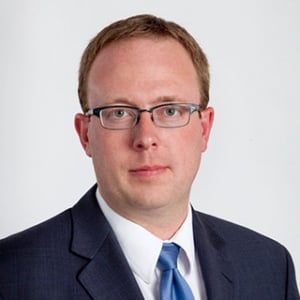
Professor, Canada Research Chair in Indigenous Rights in Constitutional and International Law, University of Saskatchewan College of Law
Dwight Newman, B.A. in Economics (Regina), J.D. (Saskatchewan), B.C.L., M.Phil., D.Phil. in Legal Philosophy (Oxford), is a Professor of Law and Canada Research Chair in Indigenous Rights in Constitutional and International Law at the University of Saskatchewan, where he started in a faculty position in 2005 and has also served a three-year term as Associate Dean. He has been a Canada Research Chair since 2013.
Dr. Newman has also taught during visiting terms at Alberta, McGill, Osgoode Hall (PD), and Oxford. During the 2015-16 year, he was a James Madison Visiting Fellow at Princeton University, and during the second half of the 2016-17 year he was a Professeur invité at the Université de Montréal Faculté de Droit and a Herbert Smith Freehills Visitor at Cambridge University. In 2017 he became a member of the College of the Royal Society of Canada.
Dr. Newman has published close to a hundred articles or book chapters and ten books. His books include: The Duty to Consult: New Relationships with Aboriginal Peoples (Purich/UBC, 2009), Community and Collective Rights: A Theoretical Framework for Rights Held by Groups (Hart/Bloomsbury, 2011), Natural Resource Jurisdiction in Canada (LexisNexis, 2013), Revisiting the Duty to Consult Aboriginal Peoples (Purich/UBC, 2014) and both the Charter of Rights volume of Halsbury’s Laws of Canada and The Law of the Canadian Constitution (with co-author Guy Régimbald) (LexisNexis, 2013, 2nd edn 2017). His forthcoming books include Mining Law of Canada (LexisNexis), an edited collection on Business Implications of Aboriginal Law (LexisNexis), and the Edward Elgar Research Handbook on the International Law of Indigenous Rights (Edward Elgar). His writing has been cited by all levels of Canadian courts, including a number of times by the Supreme Court of Canada, and in argument before the United States Supreme Court.
Dr. Newman is a Munk Senior Fellow of the Macdonald-Laurier Institute and has contributed to policy discussions by publishing a number of think tank reports. He also serves as an expert member of the International Law Association (ILA) Committee on Implementation of the Rights of Indigenous Peoples and contributes to ongoing discussion on international norms on related issues. He has delivered dozens of presentations to a variety of audiences on six continents and has published many op eds in leading Canadian and American newspapers.
Prior to entering a faculty role, Dr. Newman clerked for Chief Justice Lamer and Justice LeBel at the Supreme Court of Canada, worked for NGOs in South Africa and Hong Kong and for the Canadian Department of Justice, and completed his graduate studies at Oxford University, where he studied as a Rhodes Scholar. He has lived in half a dozen countries and has travelled to over seventy countries.
Dr. Newman is a member of the Ontario and Saskatchewan bars and he does selective legal work for industry, government, and Indigenous communities focused mainly on constitutional issues associated with resource development as well as consulting work on related issues for international investment entities.
Some of his publications are available on his Google Scholar page and his SSRN page.
Levin, Mabie & Levin Professor of Law, University of Florida Levin College of Law
Professor Gary Lawson joined the University of Florida Levin College of Law faculty on July 1, 2024, after twenty-four years at Boston University School of Law and eleven years at Northwestern University School of Law. While at Boston University, he was named a William Fairfield Warren Distinguished Professor in 2022 – the highest faculty honor within the university. He has authored or co-authored nine editions of a textbook on administrative law, a textbook on constitutional law, five university press books, one popular press book, and more than one hundred scholarly articles on topics ranging from aspects of constitutional theory and history to the proof of legal propositions. His works have been cited in more than twenty opinions of United States Supreme Court justices. He is a founding member, and serves on the Board of Directors, of the Federalist Society for Law and Public Policy Studies and is on the Editorial Advisory Board of the Heritage Guide to the Constitution.
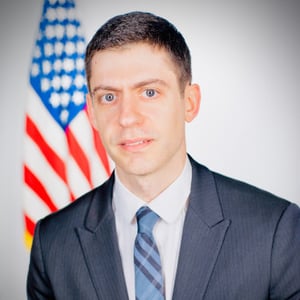
Partner, Quinn Emanuel
John F. Bash is an American attorney who served as the United States Attorney for the Western District of Texas from 2017 to 2020. After graduating from Harvard Law School, Mr. Bash clerked for Judge Kavanaugh during his first year on the bench and went on to clerk for Justice Antonin Scalia. He then served as an Assistant to the Solicitor General in the U.S. Department of Justice, where he argued ten cases in the United States Supreme Court. He also served briefly as Special Assistant to the President and Associate Counsel to the President before his appointment as United States Attorney.
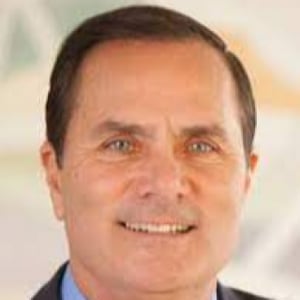
Federal Public Defender for the Southern District of Florida
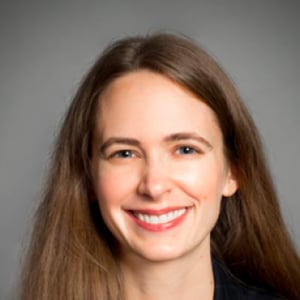
Co-Director, Tsai Center for Law, Science and Innovation, Altshuler Distinguished Teaching Professor, and Professor of Law, Southern Methodist University Dedman School of Law, SMU Dedman School of Law
Meghan J. Ryan is an award-winning teacher and scholar working at the intersection of criminal law & procedure, torts, and law & science. Her current research focuses on the impact of evolving science, technology, and cultural values on criminal convictions and punishments, as well as on civil liability and remedies. This includes research on forensic science, wrongful convictions, sentencing, cruel & unusual punishments, and toxic torts.
Professor Ryan received her A.B., magna cum laude, in Chemistry from Harvard University. She earned her J.D., magna cum laude, from the University of Minnesota Law School, where she was a member of the Order of the Coif and received the American Law Institute-American Bar Association Scholarship and Leadership Award. She was also a member of both the Minnesota Law Review and the Minnesota Journal of Global Trade.
After graduation, Professor Ryan clerked for the Honorable Roger L. Wollman of the U.S. Court of Appeals for the Eighth Circuit. She also practiced law in the trial group at the Minneapolis-based law firm of Dorsey & Whitney LLP, where she focused her practice on commercial and intellectual property litigation, as well as on white collar defense and compliance. Additionally, Professor Ryan has conducted research in the areas of bioinorganic chemistry, molecular biology, and experimental therapeutics at the Mayo Clinic and the University of Minnesota. Prior to joining the SMU faculty, Professor Ryan was a Visiting Assistant Professor at the University of Minnesota Law School, where she taught Criminal Law, Criminal Process, and Sales.
Professor of Law and Assistant Director, Criminal Justice Center, University of Florida Levin College of Law
Professor Stinneford teaches and writes about legal ethics, criminal law, criminal procedure, and constitutional law. His work has been cited by the United States Supreme Court, several state supreme courts and federal courts of appeal, and numerous scholars. It has published in numerous scholarly journals including the Georgetown Law Journal, the Northwestern University Law Review, the Virginia Law Review, the Notre Dame Law Review, and the William & Mary Law Review. The Stanford-Yale Junior faculty forum selected one of his articles as the best paper in the category of Constitutional History, and the AALS Criminal Justice Section named another article as the best paper in its Junior Scholars Paper Competition. In the fall of 2015, he was a Visiting Scholar at the Georgetown Law Center, Center for the Constitution.
Before joining the Florida faculty in 2009, Stinneford clerked for the Hon. James Moran of the United States District Court for the Northern District of Illinois, served as an Assistant United States Attorney, and practiced law with Winston & Strawn in Chicago. Stinneford teaches first-year courses in Criminal Law and Constitutional Law, and upper-level courses in Professional Responsibility, Criminal Procedure, Federal Criminal Law, Law & Literature, and White Collar Crime.
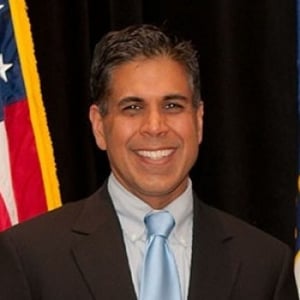
Judge, United States Court of Appeals, Sixth Circuit
Amul R. Thapar serves as a judge on the United States Court of Appeals for the Sixth Circuit. His judicial career began in 2007 when President George W. Bush nominated him to serve on the Eastern District of Kentucky, making him the first South Asian Article III judge in American history. In 2017, he became President Donald J. Trump’s first appellate court nominee.
Before joining the bench, Judge Thapar served as the United States Attorney for the Eastern District of Kentucky. While United States Attorney, Judge Thapar worked on the Attorney General’s Advisory Committee (“AGAC”) and chaired the AGAC’s Controlled Substances and Asset Forfeiture subcommittee. He also served on the Terrorism and National Security subcommittee, the Violent Crime subcommittee, and the Child Exploitation working group.
Judge Thapar has worked in private practice, at Williams & Connolly in Washington, D.C., and Squire, Sanders & Dempsey in Cincinnati, Ohio. He also served as an Assistant United States Attorney in both the Southern District of Ohio and the District of Columbia.
Judge Thapar received his undergraduate degree from Boston College and his law degree from the University of California, Berkeley. After graduating, Judge Thapar worked as a law clerk to the Honorable S. Arthur Spiegel of the United States District Court for the Southern District of Ohio, and the Honorable Nathaniel R. Jones of the United States Court of Appeals for the Sixth Circuit.
Judge Thapar has also published in the Yale Law Journal, Michigan Law Review, and Catholic University Law Review. He teaches courses on originalism, the Federalists and Anti-Federalists, and legal writing at Notre Dame Law School, the University of Virginia School of Law, and Vanderbilt Law School.
Partner, Quinn Emanuel
John F. Bash is an American attorney who served as the United States Attorney for the Western District of Texas from 2017 to 2020. After graduating from Harvard Law School, Mr. Bash clerked for Judge Kavanaugh during his first year on the bench and went on to clerk for Justice Antonin Scalia. He then served as an Assistant to the Solicitor General in the U.S. Department of Justice, where he argued ten cases in the United States Supreme Court. He also served briefly as Special Assistant to the President and Associate Counsel to the President before his appointment as United States Attorney.
Federal Public Defender for the Southern District of Florida
Co-Director, Tsai Center for Law, Science and Innovation, Altshuler Distinguished Teaching Professor, and Professor of Law, Southern Methodist University Dedman School of Law, SMU Dedman School of Law
Meghan J. Ryan is an award-winning teacher and scholar working at the intersection of criminal law & procedure, torts, and law & science. Her current research focuses on the impact of evolving science, technology, and cultural values on criminal convictions and punishments, as well as on civil liability and remedies. This includes research on forensic science, wrongful convictions, sentencing, cruel & unusual punishments, and toxic torts.
Professor Ryan received her A.B., magna cum laude, in Chemistry from Harvard University. She earned her J.D., magna cum laude, from the University of Minnesota Law School, where she was a member of the Order of the Coif and received the American Law Institute-American Bar Association Scholarship and Leadership Award. She was also a member of both the Minnesota Law Review and the Minnesota Journal of Global Trade.
After graduation, Professor Ryan clerked for the Honorable Roger L. Wollman of the U.S. Court of Appeals for the Eighth Circuit. She also practiced law in the trial group at the Minneapolis-based law firm of Dorsey & Whitney LLP, where she focused her practice on commercial and intellectual property litigation, as well as on white collar defense and compliance. Additionally, Professor Ryan has conducted research in the areas of bioinorganic chemistry, molecular biology, and experimental therapeutics at the Mayo Clinic and the University of Minnesota. Prior to joining the SMU faculty, Professor Ryan was a Visiting Assistant Professor at the University of Minnesota Law School, where she taught Criminal Law, Criminal Process, and Sales.
Professor of Law and Assistant Director, Criminal Justice Center, University of Florida Levin College of Law
Professor Stinneford teaches and writes about legal ethics, criminal law, criminal procedure, and constitutional law. His work has been cited by the United States Supreme Court, several state supreme courts and federal courts of appeal, and numerous scholars. It has published in numerous scholarly journals including the Georgetown Law Journal, the Northwestern University Law Review, the Virginia Law Review, the Notre Dame Law Review, and the William & Mary Law Review. The Stanford-Yale Junior faculty forum selected one of his articles as the best paper in the category of Constitutional History, and the AALS Criminal Justice Section named another article as the best paper in its Junior Scholars Paper Competition. In the fall of 2015, he was a Visiting Scholar at the Georgetown Law Center, Center for the Constitution.
Before joining the Florida faculty in 2009, Stinneford clerked for the Hon. James Moran of the United States District Court for the Northern District of Illinois, served as an Assistant United States Attorney, and practiced law with Winston & Strawn in Chicago. Stinneford teaches first-year courses in Criminal Law and Constitutional Law, and upper-level courses in Professional Responsibility, Criminal Procedure, Federal Criminal Law, Law & Literature, and White Collar Crime.
Judge, United States Court of Appeals, Sixth Circuit
Amul R. Thapar serves as a judge on the United States Court of Appeals for the Sixth Circuit. His judicial career began in 2007 when President George W. Bush nominated him to serve on the Eastern District of Kentucky, making him the first South Asian Article III judge in American history. In 2017, he became President Donald J. Trump’s first appellate court nominee.
Before joining the bench, Judge Thapar served as the United States Attorney for the Eastern District of Kentucky. While United States Attorney, Judge Thapar worked on the Attorney General’s Advisory Committee (“AGAC”) and chaired the AGAC’s Controlled Substances and Asset Forfeiture subcommittee. He also served on the Terrorism and National Security subcommittee, the Violent Crime subcommittee, and the Child Exploitation working group.
Judge Thapar has worked in private practice, at Williams & Connolly in Washington, D.C., and Squire, Sanders & Dempsey in Cincinnati, Ohio. He also served as an Assistant United States Attorney in both the Southern District of Ohio and the District of Columbia.
Judge Thapar received his undergraduate degree from Boston College and his law degree from the University of California, Berkeley. After graduating, Judge Thapar worked as a law clerk to the Honorable S. Arthur Spiegel of the United States District Court for the Southern District of Ohio, and the Honorable Nathaniel R. Jones of the United States Court of Appeals for the Sixth Circuit.
Judge Thapar has also published in the Yale Law Journal, Michigan Law Review, and Catholic University Law Review. He teaches courses on originalism, the Federalists and Anti-Federalists, and legal writing at Notre Dame Law School, the University of Virginia School of Law, and Vanderbilt Law School.

Don’t Make A Federal Case Out of It: Subsidiarity, Federalism, and Federal Prosecution of Street Crime
Cleveland Lawyers Chapter
Cleveland, OHBook Signing
2024 National Lawyers Convention
Washington, DCBook Signings
2024 National Lawyers Convention
Washington, DCGhosts of Chevron [The FedSoc Films Podcast]
Gary Lawson
In this episode of the FedSoc Films Podcast, Professor Gary Lawson of the University of...
The Death of Chevron and the Future of the Administrative State
Orlando Lawyers Chapter
Winter Park, FLMaking Corporate Law Efficient and Moral
Montgomery Lawyers Chapter
Montgomery, AL7 Minute Presentations of Works in Progress Panel 1-A
Washington, DC25th Annual Federalist Society Faculty Conference
Washington, DCAfter Dobbs and Samia: The Potential Implications of Applying a Dobbs Lens to the Supreme Court’s Constitutional Criminal Jurisprudence
John F. Bash, Michael Caruso, Meghan J. Ryan, John F. Stinneford, Amul R. Thapar
Stare Decisis, a Latin term meaning “let it stand,” is a key element of how...
After Dobbs and Samia: The Potential Implications of Applying a Dobbs Lens to the Supreme Court’s Constitutional Criminal Jurisprudence
John F. Bash, Michael Caruso, Meghan J. Ryan, John F. Stinneford, Amul R. Thapar
Stare Decisis, a Latin term meaning “let it stand,” is a key element of how...