
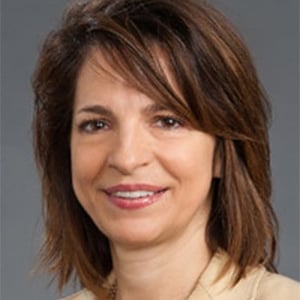
Chief Manufacturing Development Center Officer, Wake Forest Institute for Regenerative Medicine
Julie has more than 25 years of experience in clinical translation of cellular therapies and regenerative medicine products, including business management and board directorship experience. She has eight years of experience as an executive officer with a publicly traded company building services for cellular banking, including licensure of technology with more than 30 affiliates. She is an experienced scientist who excels at delivering innovation, driving milestones, maintaining sensitivity to financial considerations, building multidisciplinary teams, as well as strategic planning, project management, and regulatory expertise. Dr. Allickson has a history of creating value in clinical development and translation.

Vice President, Networks, The Federalist Society for Law and Public Policy Studies
Nathan Kaczmarek is Vice President for Networks at the Federalist Society. He began his legal career in Detroit representing nationwide clients in all phases of healthcare litigation and complex medical malpractice claims. He has since served as a Senior Legal and Policy Advisor in the U.S. House of Representatives and as Counsel for the Subcommittee on Regulatory Affairs and Federal Management in the U.S. Senate. Prior to overseeing the Networks, he was Director of the Practice Groups, the Regulatory Transparency Project, and the Article I Initiative for the Federalist Society.
Nathan holds degrees from Hillsdale College and Thomas M. Cooley Law School. He is a Liaison Representative for The Administrative Conference of the United States. He also serves as Vice President of the Associates of St. John Bosco, a Virginia based non-profit dedicated to Catholic high school and college students.

Chairman, Committee to Reduce Infection Deaths
Betsy McCaughey is a patient advocate and former Lt. Governor of New York State. In 2004, she founded and is now Chairman of the Committee to Reduce Infection Deaths (also known as RID), a nationwide educational campaign to stop hospital-acquired infections. RID has made hospital infections a major public issue. It has provided compelling evidence that preventing infection improves hospital profitability as well as saving lives, and RID has won legislation in 34 states and Washington, D.C. for public reporting of infection rates. RID has become synonymous with patient safety and clean hospital care.
Betsy McCaughey’s research on how to prevent infection deaths has been featured on Good Morning America, the CBS Morning Show, ABC’s 20/20, and many other national programs.
Betsy McCaughey is the author of more than one hundred scholarly and popular articles on health policy, infection, medical innovation, the economics of aging, and Medicare. Her writings have appeared in The New York Times, The Wall Street Journal, New Republic, Policy Review, Forbes Magazine, New York Law Journal, Los Angeles Times, U.S. News & World Report, and many other national publications. Her 1994 analysis of the dangers of the Clinton health plan in The New Republic won a National Magazine Award for the best article in the nation on public policy. She has been profiled in The New Yorker, The New York Times Magazine, New York Magazine, The Washington Post, and other publications.
Prior to entering the health policy field, Betsy McCaughey earned a Ph.D. in constitutional history from Columbia University. She is the author of two books on that subject. She has taught at Vassar College and Columbia University, and she produced prize-winning studies while at two think tanks, the Manhattan Institute and later the Hudson Institute.
From 1995 to 1998, she served as Lt. Governor of New York State. She focused on health issues, and her bills became models for legislation in many states and in Congress.

Executive Vice President, Goldwater Institute
Christina Sandefur is the Executive Vice President at the Goldwater Institute. She develops policies and litigates cases advancing healthcare freedom, free enterprise, private property rights, free speech, and taxpayer rights.
Christina is a co-drafter of the Right to Try initiative, now federal law, which protects terminally ill patients' right to try safe investigational treatments that have been prescribed by their physician but are not yet FDA-approved. She has won important victories for property rights in Arizona and works nationally to promote the Institute's Private Property Rights Protection Act, a state-level reform that requires government to pay owners when regulations destroy property rights and reduce property values.
Christina is the co-author of the book Cornerstone of Liberty: Private Property Rights in 21st Century America (2016). She is a frequent guest on national television and radio programs, has provided expert legal testimony to various legislative committees, and is a frequent speaker at conferences. She is the recipient of the 2018 Buckley Award in recognition of her leadership in the freedom movement, and she is an Advisory Board Member of the Network of enlightened Women. Christina serves on the board of the Phoenix Lawyers Chapter of the Federalist Society and is a member of the executive committee for the Federalist Society's Regulatory Transparency Project: FDA & Health.
Christina is a graduate of Michigan State University College of Law and Hillsdale College.
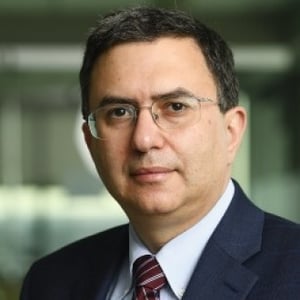
Vice Dean for Public Health Practice and Community Engagement, Bloomberg School of Public Health, Johns Hopkins University
Dr. Joshua M. Sharfstein is Vice Dean for Public Health Practice and Community Engagement and Professor of the Practice in Health Policy and Management at the Johns Hopkins Bloomberg School of Public Health. He is also the Director of the Bloomberg American Health Initiative. He is the author of the Public Health Crisis Survival Guide: Leadership and Management in Trying Times, and the co-author of The Opioid Epidemic: What Everyone Needs to Know.
Previously, Dr. Sharfstein served as Secretary of the Maryland Department of Health and Mental Hygiene from January 2011 to December 2014. In this position, he led efforts to align Maryland’s health care system with improved health outcomes, culminating in the adoption of a revised payment model for all hospital care for Maryland residents. He also oversaw the development of a statewide health improvement process with 18 local public-private coalitions and the reshaping of state’s approach to health information exchange, long-term care, and behavioral health.
From March 2009 to January 2011, Dr. Sharfstein served as Principal Deputy Commissioner of the U.S. Food and Drug Administration, where he oversaw the agency’s successful performance management and transparency initiatives. From December 2005 to March 2009, as Commissioner of Health for Baltimore City, Dr. Sharfstein led innovative efforts that contributed to major declines in both overdose deaths and infant mortality rates. From July 2001 to December 2005, as minority professional staff and health policy advisor for Congressman Henry A. Waxman, Dr. Sharfstein was engaged in a wide range of oversight and legislative activities on health care topics, including emergency preparedness, HIV, and the politicization of science.
Dr. Sharfstein graduated summa cum laude with an A.B. in Social Studies from Harvard College in 1991. From August 1991 to August 1992, he worked on public health projects in Guatemala and Costa Rica with a Frederick Sheldon Prize Fellowship. He graduated from Harvard Medical School in 1996, from the Boston Combined Residency Program in Pediatrics at Boston Medical Center and Children’s Hospital in 1999, and from the fellowship in general academic pediatrics at the Boston University School of Medicine in 2001.
Dr. Sharfstein is an elected member of the Institute of Medicine (2014) and fellow of the National Academy of Public Administration (2013). He serves on the editorial board of the Journal of the American Medical Association. His awards have included the Jay S. Drotman Memorial Award from the American Public Health Association (1994), Public Official of the Year from Governing Magazine (2008) and the Circle of Commendation Award from the Consumer Product Safety Commission (2013).
Dr. Sharfstein lives with his family in Baltimore, Maryland.
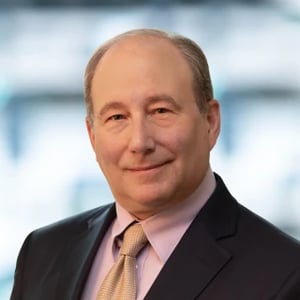
Managing Director, Berkeley Research Group
Dan Troy is the Managing Director at Berkeley Research Group.
Prior to that, he was the Chief Business Officer, Chief Administrative Officer, and General Counsel of Valo in Boston, Massachusetts.
Prior to joining Valo, he served as the Senior Vice President & General Counsel of GlaxoSmithKline and was a member of its Corporate Executive Team. Dan joined GSK in September 2008 and was responsible for leading the company’s legal department in protecting GSK’s intellectual property; managing litigation; supporting business development transactions; and business compliance and risk management. In 2012, Dan led the integration team following the acquisition of Human Genome Sciences, which later resulted in the launch of Benlysta, the first lupus treatment in 50 years. Dan led GSK’s Contributions Committee in the US and also led the Government Affairs, Public Policy and Patient Advocacy team from 2012 until 2014.
Prior to joining GSK, he was a Partner at the Washington law firm Sidley Austin LLP, where he principally represented pharmaceutical companies and trade associations on matters related to the US Food and Drug Administration (FDA) and government regulations. Dan was formerly Chief Counsel for the FDA, where he served as a primary liaison to the White House and the US Department of Health and Human Services.
Dan has chaired the American Bar Association's Section of Administrative Law and is a member of the American Law Institute. He currently chairs the US Chamber of Commerce Litigation Center. He has also chaired the Civil Justice Reform Group, as well as the PhRMA Law Section Executive Committee. He was the 2012 CPR Corporate Leadership Award recipient and, in 2013, was named a 'Legend in the Law' at the Burton Awards.
Dan holds a B.S. in Industrial and Labor Relations from Cornell University and a J.D. from Columbia University School of Law, where he was a member of the Law Review and a Kent Scholar. After graduation from law school, he was a law clerk for the US Circuit Court of Appeals for the District of Columbia Circuit.
Chief Manufacturing Development Center Officer, Wake Forest Institute for Regenerative Medicine
Julie has more than 25 years of experience in clinical translation of cellular therapies and regenerative medicine products, including business management and board directorship experience. She has eight years of experience as an executive officer with a publicly traded company building services for cellular banking, including licensure of technology with more than 30 affiliates. She is an experienced scientist who excels at delivering innovation, driving milestones, maintaining sensitivity to financial considerations, building multidisciplinary teams, as well as strategic planning, project management, and regulatory expertise. Dr. Allickson has a history of creating value in clinical development and translation.
Chairman, Committee to Reduce Infection Deaths
Betsy McCaughey is a patient advocate and former Lt. Governor of New York State. In 2004, she founded and is now Chairman of the Committee to Reduce Infection Deaths (also known as RID), a nationwide educational campaign to stop hospital-acquired infections. RID has made hospital infections a major public issue. It has provided compelling evidence that preventing infection improves hospital profitability as well as saving lives, and RID has won legislation in 34 states and Washington, D.C. for public reporting of infection rates. RID has become synonymous with patient safety and clean hospital care.
Betsy McCaughey’s research on how to prevent infection deaths has been featured on Good Morning America, the CBS Morning Show, ABC’s 20/20, and many other national programs.
Betsy McCaughey is the author of more than one hundred scholarly and popular articles on health policy, infection, medical innovation, the economics of aging, and Medicare. Her writings have appeared in The New York Times, The Wall Street Journal, New Republic, Policy Review, Forbes Magazine, New York Law Journal, Los Angeles Times, U.S. News & World Report, and many other national publications. Her 1994 analysis of the dangers of the Clinton health plan in The New Republic won a National Magazine Award for the best article in the nation on public policy. She has been profiled in The New Yorker, The New York Times Magazine, New York Magazine, The Washington Post, and other publications.
Prior to entering the health policy field, Betsy McCaughey earned a Ph.D. in constitutional history from Columbia University. She is the author of two books on that subject. She has taught at Vassar College and Columbia University, and she produced prize-winning studies while at two think tanks, the Manhattan Institute and later the Hudson Institute.
From 1995 to 1998, she served as Lt. Governor of New York State. She focused on health issues, and her bills became models for legislation in many states and in Congress.
Vice Dean for Public Health Practice and Community Engagement, Bloomberg School of Public Health, Johns Hopkins University
Dr. Joshua M. Sharfstein is Vice Dean for Public Health Practice and Community Engagement and Professor of the Practice in Health Policy and Management at the Johns Hopkins Bloomberg School of Public Health. He is also the Director of the Bloomberg American Health Initiative. He is the author of the Public Health Crisis Survival Guide: Leadership and Management in Trying Times, and the co-author of The Opioid Epidemic: What Everyone Needs to Know.
Previously, Dr. Sharfstein served as Secretary of the Maryland Department of Health and Mental Hygiene from January 2011 to December 2014. In this position, he led efforts to align Maryland’s health care system with improved health outcomes, culminating in the adoption of a revised payment model for all hospital care for Maryland residents. He also oversaw the development of a statewide health improvement process with 18 local public-private coalitions and the reshaping of state’s approach to health information exchange, long-term care, and behavioral health.
From March 2009 to January 2011, Dr. Sharfstein served as Principal Deputy Commissioner of the U.S. Food and Drug Administration, where he oversaw the agency’s successful performance management and transparency initiatives. From December 2005 to March 2009, as Commissioner of Health for Baltimore City, Dr. Sharfstein led innovative efforts that contributed to major declines in both overdose deaths and infant mortality rates. From July 2001 to December 2005, as minority professional staff and health policy advisor for Congressman Henry A. Waxman, Dr. Sharfstein was engaged in a wide range of oversight and legislative activities on health care topics, including emergency preparedness, HIV, and the politicization of science.
Dr. Sharfstein graduated summa cum laude with an A.B. in Social Studies from Harvard College in 1991. From August 1991 to August 1992, he worked on public health projects in Guatemala and Costa Rica with a Frederick Sheldon Prize Fellowship. He graduated from Harvard Medical School in 1996, from the Boston Combined Residency Program in Pediatrics at Boston Medical Center and Children’s Hospital in 1999, and from the fellowship in general academic pediatrics at the Boston University School of Medicine in 2001.
Dr. Sharfstein is an elected member of the Institute of Medicine (2014) and fellow of the National Academy of Public Administration (2013). He serves on the editorial board of the Journal of the American Medical Association. His awards have included the Jay S. Drotman Memorial Award from the American Public Health Association (1994), Public Official of the Year from Governing Magazine (2008) and the Circle of Commendation Award from the Consumer Product Safety Commission (2013).
Dr. Sharfstein lives with his family in Baltimore, Maryland.
Managing Director, Berkeley Research Group
Dan Troy is the Managing Director at Berkeley Research Group.
Prior to that, he was the Chief Business Officer, Chief Administrative Officer, and General Counsel of Valo in Boston, Massachusetts.
Prior to joining Valo, he served as the Senior Vice President & General Counsel of GlaxoSmithKline and was a member of its Corporate Executive Team. Dan joined GSK in September 2008 and was responsible for leading the company’s legal department in protecting GSK’s intellectual property; managing litigation; supporting business development transactions; and business compliance and risk management. In 2012, Dan led the integration team following the acquisition of Human Genome Sciences, which later resulted in the launch of Benlysta, the first lupus treatment in 50 years. Dan led GSK’s Contributions Committee in the US and also led the Government Affairs, Public Policy and Patient Advocacy team from 2012 until 2014.
Prior to joining GSK, he was a Partner at the Washington law firm Sidley Austin LLP, where he principally represented pharmaceutical companies and trade associations on matters related to the US Food and Drug Administration (FDA) and government regulations. Dan was formerly Chief Counsel for the FDA, where he served as a primary liaison to the White House and the US Department of Health and Human Services.
Dan has chaired the American Bar Association's Section of Administrative Law and is a member of the American Law Institute. He currently chairs the US Chamber of Commerce Litigation Center. He has also chaired the Civil Justice Reform Group, as well as the PhRMA Law Section Executive Committee. He was the 2012 CPR Corporate Leadership Award recipient and, in 2013, was named a 'Legend in the Law' at the Burton Awards.
Dan holds a B.S. in Industrial and Labor Relations from Cornell University and a J.D. from Columbia University School of Law, where he was a member of the Law Review and a Kent Scholar. After graduation from law school, he was a law clerk for the US Circuit Court of Appeals for the District of Columbia Circuit.
Executive Vice President, Goldwater Institute
Christina Sandefur is the Executive Vice President at the Goldwater Institute. She develops policies and litigates cases advancing healthcare freedom, free enterprise, private property rights, free speech, and taxpayer rights.
Christina is a co-drafter of the Right to Try initiative, now federal law, which protects terminally ill patients' right to try safe investigational treatments that have been prescribed by their physician but are not yet FDA-approved. She has won important victories for property rights in Arizona and works nationally to promote the Institute's Private Property Rights Protection Act, a state-level reform that requires government to pay owners when regulations destroy property rights and reduce property values.
Christina is the co-author of the book Cornerstone of Liberty: Private Property Rights in 21st Century America (2016). She is a frequent guest on national television and radio programs, has provided expert legal testimony to various legislative committees, and is a frequent speaker at conferences. She is the recipient of the 2018 Buckley Award in recognition of her leadership in the freedom movement, and she is an Advisory Board Member of the Network of enlightened Women. Christina serves on the board of the Phoenix Lawyers Chapter of the Federalist Society and is a member of the executive committee for the Federalist Society's Regulatory Transparency Project: FDA & Health.
Christina is a graduate of Michigan State University College of Law and Hillsdale College.
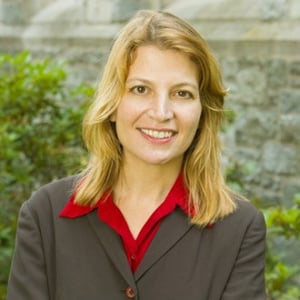
Wallace Stevens Professor of Law, University of Connecticut School of Law
Professor Bethany Berger is a widely read scholar of Property Law and Legal History and one of the leading federal Indian Law scholars in the country. She is a co-author and member of the Editorial Board of Felix S. Cohen's Handbook of Federal Indian Law, the foundational treatise in the field, and co-author of leading casebooks in both Property Law and American Indian Law. Her articles have appeared in the Michigan Law Review, California Law Review, UCLA Law Review, and the Duke Law Journal, among other publications, and have been excerpted and discussed in many casebooks and edited collections as well as in briefs to the Supreme Court and testimony before Congress.
Professor Berger graduated with honors from Wesleyan University, where she was elected to phi beta kappa, and from Yale Law School. After law school, Professor Berger went to the Navajo and Hopi Nations to serve as the Director of the Native American Youth Law Project of DNA-People's Legal Services. There, she conducted litigation challenging discrimination against Indian children, drafted and secured the passage of tribal laws affecting children, and helped to create a Navajo alternative to detention program. She then became Managing Attorney of Advocates for Children of New York, where she worked on impact litigation and policy reform concerning the rights of children in public education.
At the University of Connecticut School of Law, Professor Berger teaches American Indian Law, Property, Tribal Law, and Conflict of Laws. She is also the Wallace Stevens Professor of Law, a chair named for one of America’s greatest poets, a lawyer who lived and worked in Hartford for most of his life. She has served as a judge for the Southwest Intertribal Court of Appeals and as a visiting professor at Harvard Law School and the University of Michigan Law School.
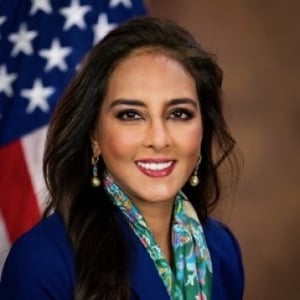
Assistant Attorney General for Civil Rights, U.S. Department of Justice
Harmeet K. Dhillon is the Assistant Attorney General for Civil Rights at the U.S. Department of Justice. She was nominated by President Donald Trump in December 2024. She was confirmed by the U.S. Senate on April 3, 2025, and sworn in as AAG by Attorney General Pam Bondi on April 7, 2025.
Prior to joining the Division, Ms. Dhillon founded both the Dhillon Law Group, Inc., a successful legal practice with offices in California, Florida, Virginia, and New Jersey; and the Center for American Liberty, a nonprofit organization dedicated to pursuing civil liberties legal claims. Her law practice focused on First Amendment / free speech, civil rights, and campaign and election law issues. Among her many notable cases, Ms. Dhillon brought legal challenges against the University of California, Berkeley over its free speech policy, against an Antifa organization for an assault on a conservative journalist, against several states for their restrictive responses to Covid-19, and against various large tech companies for a host of civil rights issues.
Assistant Attorney General Dhillon was born in Chandigarh, India, and lived in London before moving to The Bronx, New York. Her family ultimately settled in rural Smithfield, North Carolina. After graduating high school at age 16, Ms. Dhillon attended Dartmouth College where she became editor-in-chief of The Dartmouth Review. After earning her bachelor’s degree in Classical Studies, she attended the University of Virginia School of Law and served on the editorial board of the Virginia Law Review. She later clerked for the Honorable Paul V. Niemeyer of the United States Court of Appeals for the Fourth Circuit in Baltimore, Maryland.
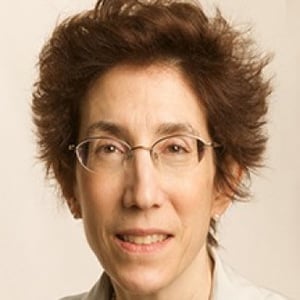
U.S. Court of Appeals, Ninth Circuit
Sandra Segal Ikuta was confirmed as a judge of the U.S. Court of Appeals for the Ninth Circuit on June 19, 2006. She filled a judgeship vacant since September 1, 2000, when Chief Judge Emeritus James R. Browning took senior status.
Before becoming a U.S. Circuit Judge, California Gov. Arnold Schwarzenegger appointed her to be deputy secretary and general counsel of the California Resources Agency in January 2004.
Prior to her political appointment, Judge Ikuta was a partner at the Los Angeles office of O'Melveny & Myers LLP. She joined the law firm in 1990 as an associate and became a partner in 1997. She specialized in environmental and natural resources law and co-chaired the firm's environmental practice group. She previously served as a law clerk for U.S. Supreme Court Justice Sandra Day O'Connor, 1989-90, and Judge Alex Kozinski of the U.S. Court of Appeals for the Ninth Circuit, 1988-89.
Prior to her legal career, Judge Ikuta took an unorthodox career path, which included serving as the first female editor-in-chief of a national martial arts magazine.
She received her J.D. from the University of California at Los Angeles School of Law and a Master of Science from Columbia University School of Journalism. She earned her undergraduate degree from the University of California at Berkeley in 1976.
In addition to her duties as an active U.S. Circuit Judge, Judge Ikuta was an appointed member of the Judicial Conference of the U.S. Advisory Committee on Bankruptcy Rules.

Richard and Frances Mallery Professor of Law and Faculty Director, Constitutional Law Center, Stanford Law School
Michael W. McConnell is the Richard and Frances Mallery Professor and Faculty Director of the Constitutional Law Center at Stanford Law School, and a Senior Fellow at the Hoover Institution. From 2002 to 2009, he served as a Circuit Judge on the United States Court of Appeals for the Tenth Circuit. He was nominated by President George W. Bush, a Republican, and confirmed by a Democratic Senate by unanimous consent. McConnell has previously held chaired professorships at the University of Chicago and the University of Utah, and visiting professorships at Harvard and NYU. He teaches courses on constitutional law, constitutional history, First Amendment, and interpretive theory. He has published widely in the fields of constitutional law and theory, especially church and state, equal protection, and separation of powers. His book, “The President Who Would Not Be King: Executive Power Under the Constitution,” was published by Princeton University Press in 2020, based on the Tanner Lectures in Human Values, which he delivered at Princeton in 2019. His latest book, co-authored with Nathan Chapman, “Agreeing to Disagree: How the Establishment Clause Protects Religious Diversity and Freedom of Conscience,” was published by Oxford University Press in mid-2023. McConnell has argued sixteen cases in the United States Supreme Court, most recently Carney v. Adams (2020). defending a provision of the Delaware Constitution requiring political balance on that state’s courts. More recently, he was co-counsel in Gonzalez v. Google. He earned his B.A. from Michigan State University and his J.D. from the University of Chicago, and has received honorary degrees from Notre Dame University and Michigan State. He served as law clerk to Supreme Court Justice William J. Brennan, Jr. and D.C. Circuit Chief Judge J. Skelly Wright. He has been Assistant General Counsel of the Office of Management & Budget, Assistant to the Solicitor General of the Department of Justice, and a member of the President’s Intelligence Oversight Board. He is Senior of Counsel to the law firm Wilson, Sonsini, Goodrich & Rosati, and is co-chair of Meta’s Oversight Review Board.
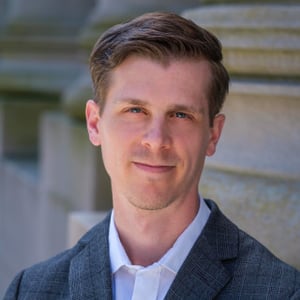
Assistant Clinical Professor of Law & Director, Religious Freedom Clinic, Harvard Law School
Josh is the Director of Harvard Law School’s Religious Freedom Clinic, a pro bono program that gives students a hands-on, supervised experience representing a diverse group of clients in First Amendment and religious freedom cases.
Before entering clinical teaching, Josh clerked for the Honorable Cormac J. Carney of the U.S. District Court for the Central District of California and the Honorable Jay S. Bybee of the U.S. Court of Appeals for the Ninth Circuit. In addition to serving as a staff attorney in the clinic’s inaugural semester in 2020, he was previously a trial litigator at Munger, Tolles & Olson and an appellate litigator at Horvitz & Levy, where he specialized in representing individual and organizational clients in both commercial and civil rights cases, with particular expertise in First Amendment and religious freedom issues.
While in private practice, Josh received a Daily Journal 2022 California Lawyer Attorneys of the Year (CLAY) award, was twice named a “One to Watch” in appellate law by Best Lawyers, and argued in numerous appellate courts and courts of last resort, including twice before the California Supreme Court. His amicus brief for Jewish schools in a case before the U.S. Supreme Court was quoted by Justice Kavanaugh at oral argument.
Josh earned his B.A., magna cum laude, from Brigham Young University and graduated first in his class from UCLA School of Law.
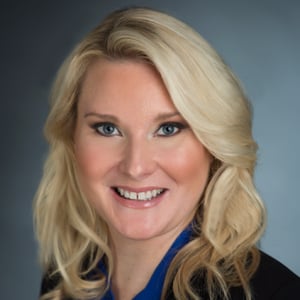
President, Constitutional Accountability Center
Elizabeth is Constitutional Accountability Center’s President. From 2008-2016, she served as CAC's Chief Counsel, representing the Center as well as clients including preeminent constitutional scholars and historians, state and local government organizations, and groups such as the League of Women Voters and the AARP. She frequently participates in Supreme Court litigation and her legal brief writing has been recognized as “exemplary” by the Green Bag Almanac & Reader. Elizabeth has also argued several important cases in the federal courts of appeals on a range of issues, including immigration law, habeas corpus, and sovereign immunity. She joined CAC from private practice at Quinn Emanuel Urquhart & Sullivan in San Francisco, where she was an attorney working with former Stanford Law School Dean Kathleen Sullivan in the firm’s Supreme Court/appellate practice. Previously, Elizabeth was a supervising attorney and teaching fellow at the Georgetown University Law Center appellate litigation clinic, a law clerk for Judge James R. Browning of the U.S. Court of Appeals for the Ninth Circuit, and a lawyer at Pillsbury Winthrop Shaw Pittman, a law firm in Washington. She has appeared as a legal expert for NBC, ABC, PBS, CNN, Fox News, the BBC, Current TV, and NPR, among other outlets. Elizabeth has been quoted extensively in the print media and is a regular contributor to the ABA’s Preview of United States Supreme Court Cases. Her writings have appeared in The New York Times, Reuters, USA Today, Politico, CNN.com, Slate, and on numerous political and legal blogs, such as Huffington Post, SCOTUSblog, and ACSblog. She has also published in the UCLA Journal of Environmental Law & Policy, Syracuse Law Review, The Cato Institute’s Supreme Court Review, and the Yale Journal of International Law. Elizabeth is a graduate of Yale Law School.
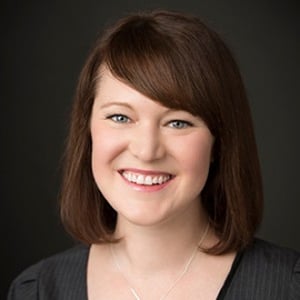
Director of Litigation, The Foundation for Individual Rights in Education
A native of the Philadelphia area, Marieke graduated summa cum laude from New York University’s Gallatin School of Individualized Study in 2004. Marieke continued her studies at Temple University’s Beasley School of Law, graduating magna cum laude in 2008.
After law school, Marieke clerked for the Honorable A. Richard Caputo in the U.S. District Court for the Middle District of Pennsylvania before joining the American Civil Liberties Union of Pennsylvania as a legal fellow in 2009. She later joined the Philadelphia firm of Schnader Harrison Segal & Lewis as a commercial litigation associate, where she continued to work on civil rights cases on a pro bono basis, focusing primarily on the First Amendment. Right before joining FIRE, she served as a Project Coordinator for the nonprofit Resources for Human Development, where she implemented projects addressing disability discrimination and health care reform. Outside the office, she loves to be around horses and volunteers for a therapeutic riding program.
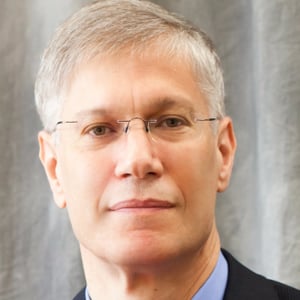
Chairman of the Board, The Ayn Rand Institute
Yaron Brook is chairman of the board of the Ayn Rand Institute. He wears many hats at the institute and travels extensively as ARI’s spokesman.
Brook can be heard weekly on The Yaron Brook Show, which airs live on the BlogTalkRadio podcast. He is also a frequent guest on national radio and television programs.
An internationally sought-after speaker and debater, Brook also pens works that make one think. As coauthor, with Don Watkins, of the national best-seller Free Market Revolution: How Ayn Rand's Ideas Can End Big Government, Brook and Watkins argue that the answer to our current economic woes lies not in "trickle-down government" but in Rand's inspiring philosophy of capitalism and self-interest. Last year, Brook and Watkins released a new book, Equal Is Unfair: America's Misguided Fight Against Income Inequality, a book that shows the real key to making America a freer, fairer, more prosperous nation is to protect and celebrate the pursuit of success―not pull down the high fliers in the name of equality. Brook is also contributing author to Neoconservatism: An Obituary for an Idea, Winning the Unwinnable War: America’s Self-Crippled Response to Islamic Totalitarianism and Big Tent: The Story of the Conservative Revolution — As Told by the Thinkers and Doers Who Made It Happen. He was a columnist at Forbes.com, and his articles have been featured in the Wall Street Journal, USA Today, Investor’s Business Daily and many other publications.
Brook was born and raised in Israel. He served as a first sergeant in Israeli military intelligence and earned a BSc in civil engineering from Technion-Israel Institute of Technology in Haifa, Israel. In 1987 he moved to the United States where he received his MBA and PhD in finance from the University of Texas at Austin; he became an American citizen in 2003. For seven years he was an award-winning finance professor at Santa Clara University, and in 1998 he cofounded BH Equity Research, a private equity and hedge fund manager, of which he is managing founder and director.
Brook serves on the boards of the Ayn Rand Institute, the Clemson Institute for the Study of Capitalism and CEHE (Center for Excellence in Higher Education), and he is a member of the Association of Private Enterprise Education and the Mont Pelerin Society.
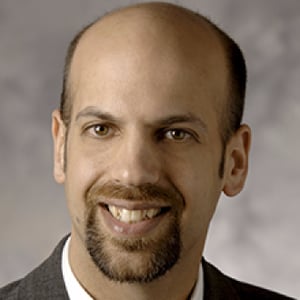
Guido Calabresi Professor of Law, Yale Law School
Daniel Markovits is Guido Calabresi Professor of Law at Yale Law School. He works in the philosophical foundations of private law, moral and political philosophy, and behavioral economics. He has written articles on contract, legal ethics, distributive justice, democratic theory, and other-regarding preferences. Professor Markovits concentrates, in each area, on the ways in which legal orderings engage the human instinct in favor of sociality to sustain cooperation even among persons who pursue conflicting interests and endorse competing moral ideals. He finds respectful relations in surprising places, for example in contracts between self-interested buyers and sellers, litigation between adversary disputants, and political competition between partisan parties. In each case, Markovits argues, seemingly competitive interactions contain, in their immanent logic, forms of reciprocal recognition and respect. After earning a B.A. in Mathematics, summa cum laude from Yale University, Markovits received a British Marshall Scholarship to study in England, where he was awarded an M.Sc. in Econometrics and Mathematical Economics from the L.S.E. and a B.Phil. and D.Phil. in Philosophy from the University of Oxford. Markovits then returned to Yale to study law and, after clerking for the Honorable Guido Calabresi, joined the faculty at Yale.
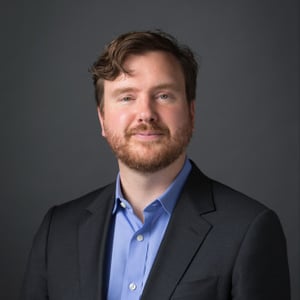
President and CEO, Foundation for Individual Rights in Education (FIRE)
Greg Lukianoff is an attorney, New York Times best-selling author, and the President and CEO of the Foundation for Individual Rights in Education (FIRE). He is the author of Unlearning Liberty: Campus Censorship and the End of American Debate, Freedom From Speech, and FIRE’s Guide to Free Speech on Campus. Most recently, he co-authored The Coddling of the American Mind: How Good Intentions and Bad Ideas Are Setting Up a Generation for Failure with Jonathan Haidt. This New York Times best-seller expands on their September 2015 Atlantic cover story of the same name. Greg is also an Executive Producer of Can We Take a Joke? (2015), a feature-length documentary that explores the collision between comedy, censorship, and outrage culture, both on and off campus, and of Mighty Ira: A Civil Liberties Story (2020), a feature-length film about the life and career of former ACLU Executive Director Ira Glasser.
Greg has been published in The New York Times, The Wall Street Journal, The Washington Post, Los Angeles Times, The Boston Globe, and numerous other publications. He frequently appears on TV shows and radio programs, including the CBS Evening News, The Today Show, and NPR’s Morning Edition. In 2008, he became the first-ever recipient of the Playboy Foundation’s Freedom of Expression Award, and he has testified before both the U.S. Senate and the House of Representatives about free speech issues on America’s college campuses.
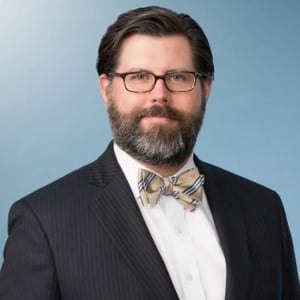
Partner, Faegre Drinker Biddle & Reath LLP
Brian J. Paul is an appellate lawyer and leads law teams in high-stakes commercial litigation. He has briefed and argued everything from weighty abstract constitutional issues to dollars-and-cents business issues and everything in-between, both on appeal and in trial courts around the country. A member of the American Law Institute, recent past-president of the Seventh Circuit Bar Association and top-tier ranked Chambers appellate lawyer, Brian had one client say about him: “Brian is one of the most respected and skilled appellate lawyers, not only in Indianapolis but across the country. He is trusted to deliver timely guidance on complex issues.” Another said: “He is excellent. I enjoyed working with him. He is able to put things into layman’s terms and explains things really well. His written and oral advocacy are short, crisp and to the point.”
Clients hire Brian to digest the complex, and make the complex simple and compelling for busy, generalist judges. In his writing, he strives to cut through jargon and legalese, and distill things down to what’s important. In his oral advocacy, by intense preparation, he strives to be the advocate whom judges trust for the right answers. In the dozens of cases he has argued, Brian has helped clients win on both sides of the “v.” His recent representations include:
Wallace Stevens Professor of Law, University of Connecticut School of Law
Professor Bethany Berger is a widely read scholar of Property Law and Legal History and one of the leading federal Indian Law scholars in the country. She is a co-author and member of the Editorial Board of Felix S. Cohen's Handbook of Federal Indian Law, the foundational treatise in the field, and co-author of leading casebooks in both Property Law and American Indian Law. Her articles have appeared in the Michigan Law Review, California Law Review, UCLA Law Review, and the Duke Law Journal, among other publications, and have been excerpted and discussed in many casebooks and edited collections as well as in briefs to the Supreme Court and testimony before Congress.
Professor Berger graduated with honors from Wesleyan University, where she was elected to phi beta kappa, and from Yale Law School. After law school, Professor Berger went to the Navajo and Hopi Nations to serve as the Director of the Native American Youth Law Project of DNA-People's Legal Services. There, she conducted litigation challenging discrimination against Indian children, drafted and secured the passage of tribal laws affecting children, and helped to create a Navajo alternative to detention program. She then became Managing Attorney of Advocates for Children of New York, where she worked on impact litigation and policy reform concerning the rights of children in public education.
At the University of Connecticut School of Law, Professor Berger teaches American Indian Law, Property, Tribal Law, and Conflict of Laws. She is also the Wallace Stevens Professor of Law, a chair named for one of America’s greatest poets, a lawyer who lived and worked in Hartford for most of his life. She has served as a judge for the Southwest Intertribal Court of Appeals and as a visiting professor at Harvard Law School and the University of Michigan Law School.
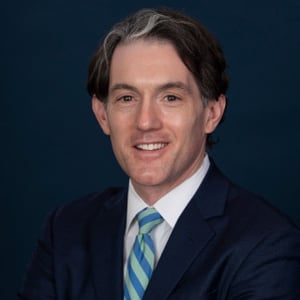
Chief Economist, U.S. Chamber of Commerce
Curtis Dubay is the Chief Economist at the U.S. Chamber of Commerce. He tracks the condition of the economy, analyzes the impact of public policy on economic growth, and runs the Chamber’s Chief Economists Committee. Previously, he was senior economist at the American Bankers Association and a research fellow in tax and economic policy at The Heritage Foundation. He also worked at the accounting firm PricewaterhouseCoopers (PwC) and at the Tax Foundation.
Dubay has researched and published frequently on a wide range of tax and economic issues. He isregularly quoted by the press and has appeared often in the media, including on CNBC, Fox Business, Fox News, and C-SPAN. He has testified before Congress several times and been cited in newspapers such as The Wall Street Journal, The New York Times, The Washington Post, USA Today, and Politico.
Dubay received his master’s degree in economics from the University of Connecticut and his bachelor’s degree in economics and leadership studies from the University of Richmond. He resides in Washington, D.C., with his wife and three sons.

It Can Be Done Live: The Future of Our Health
Julie Allickson, Nathan Kaczmarek, Betsy McCaughey, Christina Sandefur, Joshua Sharfstein, Dan Troy
The creators of the award-winning documentary, They Say It Can't Be Done, in partnership with the...
Deep Dive Episode 136 – It Can Be Done Live: The Future of Our Health
Julie Allickson, Betsy McCaughey, Joshua Sharfstein, Dan Troy, Christina Sandefur
The creators of the award-winning documentary, They Say It Can’t Be Done, in partnership with...
Litigation Update: Cedar Point Nursery v. Shiroma
Bethany Berger
On May 8, 2019, the Ninth Circuit issued a 2-1 decision in Cedar Point Nursery...
Litigation Update: Cedar Point Nursery v. Shiroma
TeleforumThe First Amendment and Campus Speech
Harmeet K. Dhillon, Sandra Segal Ikuta, Michael W. McConnell, Joshua C. McDaniel, Elizabeth B. Wydra, Marieke Beck-Coon
Free speech on college campuses has been under attack in recent years, increasingly from students...
Income Inequality: Is It Fair or Unfair?
Yaron Brook, Daniel Markovits
The Yale Federalist Society presents a conversation and Q&A on income inequality. Is it fair...
Topics
Two Members of U.S. Commission on Civil Rights Criticize Racially Themed Housing on College Campuses
Should colleges and universities be in the business of operating racially separate “theme housing?” Two...
Jock Taxes, Internet Taxes & Corporate Inversions: Recent Tax Controversies
Cleveland, OhioUnlearning Liberty: Campus Censorship and the End of American Debate
Greg Lukianoff, Brian J. Paul
On April 11, 2013, the Indianapolis Lawyers Chapter of the Federalist Society hosted an event...
The Supreme Court’s Campaign Finance Decision in Citizen’s United: Victory for Free Speech or Defeat for Good Government?