

Senior Fellow and Director of Constitutional Studies, Manhattan Institute
Ilya Shapiro is a senior fellow and director of constitutional studies at the Manhattan Institute and a contributing editor of City Journal. Previously he was executive director and senior lecturer at the Georgetown Center for the Constitution, and before that a vice president of the Cato Institute.
Shapiro is the author of Lawless: The Miseducation of America’s Elites (2025) and Supreme Disorder: Judicial Nominations and the Politics of America’s Highest Court (2020), coauthor of Religious Liberties for Corporations? (2014), and editor of 11 volumes of the Cato Supreme Court Review (2008-18). He has contributed to a variety of academic, popular, and professional publications, including the Wall Street Journal, Harvard Journal of Law & Public Policy, Washington Post, Los Angeles Times, USA Today, National Review, and Newsweek. He also regularly provides commentary for various media outlets, writes the Shapiro’s Gavel newsletter on Substack, and once appeared on the Colbert Report.
Shapiro has testified many times before Congress and state legislatures and has filed more than 500 amicus curiae “friend of the court” briefs in the Supreme Court. He lectures regularly on behalf of the Federalist Society, is a member of the board of fellows of the Jewish Policy Center, was an inaugural Washington Fellow at the National Review Institute, and has been an adjunct law professor at the George Washington University and University of Mississippi. He is also the chairman of the board of advisers of the Mississippi Justice Institute, a barrister in the Edward Coke Appellate Inn of Court, and a former member of the Virginia Advisory Committee to the U.S. Commission on Civil Rights.
Earlier in his career, Shapiro was a special assistant/adviser to the Multi-National Force in Iraq on rule-of-law issues and practiced at Patton Boggs and Cleary Gottlieb. Before entering private practice, he clerked for Judge E. Grady Jolly of the U.S. Court of Appeals for the Fifth Circuit. He holds an AB from Princeton University, an MSc from the London School of Economics, and a JD from the University of Chicago Law School.
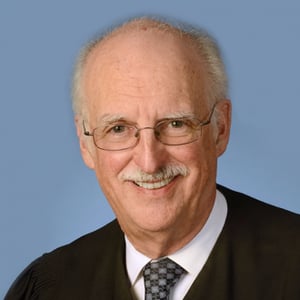
Senior Judge, United States Court of Appeals, District of Columbia Circuit
Circuit Judge Douglas H. Ginsburg was appointed to the United States Court of Appeals for the District of Columbia in 1986. After receiving his B.S. from Cornell University in 1970, and his J.D. from the University of Chicago Law School in 1973, he clerked on the D.C. Circuit and for Justice Thurgood Marshall on the United States Supreme Court. Thereafter, Judge Ginsburg was a professor at the Harvard Law School, the Deputy Assistant and then Assistant Attorney General for the Antitrust Division of the Department of Justice, as well as the Administrator of the Office of Information and Regulatory Affairs in the Office of Management and Budget. Concurrent with his service as a federal judge, Judge Ginsburg has taught at the University of Chicago Law School and the New York University School of Law. Judge Ginsburg is currently a Professor of Law at the George Mason University and a visiting professor at University College London, Faculty of Laws.
Judge Ginsburg is the Chairman of the International Advisory Board of the Global Antitrust Institute at the Law and Economics Center of the George Mason University School of Law. He also serves on the Advisory Boards of: Competition Policy International; the Harvard Journal of Law and Public Policy; the Journal of Competition Law and Economics; the Journal of Law, Economics & Policy; the Supreme Court Economic Review; the University of Chicago Law Review; the New York University Journal of Law and Liberty; and, at University College London, both the Centre for Law, Economics and Society and the Jevons Institute for Competition Law and Economics.
In 2020, Judge Ginsburg was the 11th recipient of the John Sherman Award, presented by the Antitrust Division of the Department of Justice in recognition of the awardee’s Lifetime Contributions to Antitrust Law and Policy.
In 2014, Judge Ginsburg received the Lifetime Achievement Award given annually by the Global Competition Review.
He is the author or co-author of several books and more than 100 articles on competition and regulation, including, most recently, Growing Convergence: The Limited Role of Antitrust in Standard Essential Patent Disputes, in CPI Antitrust Chronicle, Summer 2021, Vol. 1, No. 2.
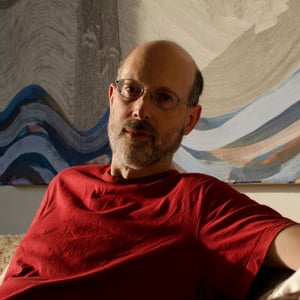
Maurice and Hilda Friedman Professor of Law, Columbia Law School; CEO, New Civil Liberties Alliance
Philip Hamburger is the Maurice and Hilda Friedman Professor of Law at Columbia Law School, and Chief Executive Officer at the New Civil Liberties Alliance. Before coming to Columbia, he was the John P. Wilson Professor at the University of Chicago Law School.
He writes on constitutional law and its history—with particular emphasis on religious liberty, freedom of speech and the press, judicial office, administrative power, and unconstitutional conditions.
His books are Separation of Church and State (Harvard 2002), Law and Judicial Duty (Harvard 2008), Is Administrative Law Unlawful? (Chicago 2014), The Administrative Threat (Encounter 2017), and Liberal Suppression: Section 501(c)(3) and the Taxation of Speech (Chicago 2018). A forthcoming book is Purchasing Submission: Conditions, Power, and Freedom (Harvard 2021).
He is a member of the American Academy of Arts and Sciences, and he has served on the board of directors of the American Society for Legal History. He has twice received the Sutherland Prize for the most significant contribution to English legal history, and has been awarded the Henry Paolucci - Walter Bagehot Book Award, the Hayek Book Prize, and the Bradley Prize.

U.S. Court of Appeals, Seventh Circuit
Frank H. Easterbrook is a judge of the United States Court of Appeals for the Seventh Circuit and a Senior Lecturer at the Law School of the University of Chicago. He was Chief Judge from 2006–2013. Before joining the court in 1985, he was the Lee andBrena Freeman Professor of Law at the University of Chicago, where he taught and wrote in antitrust, securities, corporate law, jurisprudence, and criminal procedure. He has published The Economic Structure of Corporate Law (with Daniel R. Fischel) and about 100 scholarly articles. He served as Co-Editor of the Journal of Law and Economics from 1982 to 1991 and as a member of the Judicial Conference’s Standing Committee on Rules of Practice and Procedure from 1991 to 1997. Before joining the faculty of the Law School in 1979, Judge Easterbrook was Deputy Solicitor General of the United States. He holds degrees from Swarthmore College (B.A. with high honors, 1970) and the University of Chicago (J.D. cum laude, 1973), and is a member of the American Academy of Arts and Sciences, the American Law Institute, the Mont Pelerin Society, Phi Beta Kappa, and the Order of the Coif.

Laurence A. Tisch Professor of Law and Director, Classical Liberal Institute, New York University School of Law; Director, Classical Liberal Institute, Civitas Institute University of Texas at Austin
Richard A. Epstein is the Laurence A. Tisch Professor of Law, at New York University, a senior research fellow at the Civitas Institute at the University of Texas Austin, and a senior Lecturer, the University of Chicago. He received an LL.D., h.c . from the University of Ghent, 2003 , and an LLD h.c . from the University of Siegen in 2018 and the Bradley Prize in 2011. He has been a member of the American Academy of Arts and Sciences since 1985. He has edited both the Journal of Legal Studies (1981-1991) and the Journal of Law and Economics (1991-2001). He is also a founder and director of the Classical Liberal Institute at NYU Law School. His most recent book is The Classical Liberal Constitution: The Uncertain Quest for Limited Government (2014). His other books include Takings: Private Property and the Power of Eminent Domain ( 1985); Bargaining with the State (1993); Simple Rules for a Complex World (1995); Principles for a Free Society: Reconciling Individual Liberty and the Common Good (1998); Skepticism and Freedom: A Modern Theory of Classical Liberalism (2003); Design for Liberty: Private Property, Public Administration and the Rule of Law (2011), and most recently, The Myth of Birthright citizenship—and Beyond (2026). He has taught courses in , administrative law, antitrust, constitutional, contracts, environmental law, land use planning; real property, torts and water law. He has written and spoken extensively on a wide range of topics, and is writes a regular column for Defining Ideas.
Lecturer in Law and Director of The Institute for Justice Clinic, University of Chicago Law School
Elizabeth Kregor received her BA magna cum laude in comparative literature from Yale University. She attended law school at the University of Michigan, where she served as managing editor of the Michigan Law Review. After graduating magna cum laude, Ms. Kregor clerked for the Hon. Bruce M. Selya on the U.S. Court of Appeals for the First Circuit.
Ms. Kregor practiced law with Sidley Austin Brown & Wood for several years, with a focus on intellectual property litigation. In the fall of 2003, she joined the IJ Clinic on Entrepreneurship. As director, she supervises students in the representation of lower- to middle-income entrepreneurs in the inner city. She is expanding the clinic's practice in the field of intellectual property law.
The University of Michigan Law School
JD, magna cum laude, May 1999
Yale University
BA, magna cum laude in comparative literature, May 1996

George C. Dix Professor in Constitutional Law, Northwestern University Pritzker School of Law
John O. McGinnis is a graduate of Harvard College and Harvard Law School where he was an editor of the Harvard Law Review. He also has an MA degree from Balliol College, Oxford, in philosophy and theology. Professor McGinnis clerked on the U.S. Court of Appeals for the District of Columbia. From 1987 to 1991, he was deputy assistant attorney general in the Office of Legal Counsel at the Department of Justice. He is the author of Accelerating Democracy: Transforming Government Through Technology (Princeton 2013) and Originalism and the Good Constitution (Harvard 2013) (with M. Rappaport). He is a past winner of the Paul Bator award given by the Federalist Society to an outstanding academic under 40. He has been listed by the United States on the roster of panelists who may be called upon to decide World Trade Organization Disputes.
U.S. Court of Appeals, Seventh Circuit
Frank H. Easterbrook is a judge of the United States Court of Appeals for the Seventh Circuit and a Senior Lecturer at the Law School of the University of Chicago. He was Chief Judge from 2006–2013. Before joining the court in 1985, he was the Lee andBrena Freeman Professor of Law at the University of Chicago, where he taught and wrote in antitrust, securities, corporate law, jurisprudence, and criminal procedure. He has published The Economic Structure of Corporate Law (with Daniel R. Fischel) and about 100 scholarly articles. He served as Co-Editor of the Journal of Law and Economics from 1982 to 1991 and as a member of the Judicial Conference’s Standing Committee on Rules of Practice and Procedure from 1991 to 1997. Before joining the faculty of the Law School in 1979, Judge Easterbrook was Deputy Solicitor General of the United States. He holds degrees from Swarthmore College (B.A. with high honors, 1970) and the University of Chicago (J.D. cum laude, 1973), and is a member of the American Academy of Arts and Sciences, the American Law Institute, the Mont Pelerin Society, Phi Beta Kappa, and the Order of the Coif.
Laurence A. Tisch Professor of Law and Director, Classical Liberal Institute, New York University School of Law; Director, Classical Liberal Institute, Civitas Institute University of Texas at Austin
Richard A. Epstein is the Laurence A. Tisch Professor of Law, at New York University, a senior research fellow at the Civitas Institute at the University of Texas Austin, and a senior Lecturer, the University of Chicago. He received an LL.D., h.c . from the University of Ghent, 2003 , and an LLD h.c . from the University of Siegen in 2018 and the Bradley Prize in 2011. He has been a member of the American Academy of Arts and Sciences since 1985. He has edited both the Journal of Legal Studies (1981-1991) and the Journal of Law and Economics (1991-2001). He is also a founder and director of the Classical Liberal Institute at NYU Law School. His most recent book is The Classical Liberal Constitution: The Uncertain Quest for Limited Government (2014). His other books include Takings: Private Property and the Power of Eminent Domain ( 1985); Bargaining with the State (1993); Simple Rules for a Complex World (1995); Principles for a Free Society: Reconciling Individual Liberty and the Common Good (1998); Skepticism and Freedom: A Modern Theory of Classical Liberalism (2003); Design for Liberty: Private Property, Public Administration and the Rule of Law (2011), and most recently, The Myth of Birthright citizenship—and Beyond (2026). He has taught courses in , administrative law, antitrust, constitutional, contracts, environmental law, land use planning; real property, torts and water law. He has written and spoken extensively on a wide range of topics, and is writes a regular column for Defining Ideas.
Lecturer in Law and Director of The Institute for Justice Clinic, University of Chicago Law School
Elizabeth Kregor received her BA magna cum laude in comparative literature from Yale University. She attended law school at the University of Michigan, where she served as managing editor of the Michigan Law Review. After graduating magna cum laude, Ms. Kregor clerked for the Hon. Bruce M. Selya on the U.S. Court of Appeals for the First Circuit.
Ms. Kregor practiced law with Sidley Austin Brown & Wood for several years, with a focus on intellectual property litigation. In the fall of 2003, she joined the IJ Clinic on Entrepreneurship. As director, she supervises students in the representation of lower- to middle-income entrepreneurs in the inner city. She is expanding the clinic's practice in the field of intellectual property law.
The University of Michigan Law School
JD, magna cum laude, May 1999
Yale University
BA, magna cum laude in comparative literature, May 1996
George C. Dix Professor in Constitutional Law, Northwestern University Pritzker School of Law
John O. McGinnis is a graduate of Harvard College and Harvard Law School where he was an editor of the Harvard Law Review. He also has an MA degree from Balliol College, Oxford, in philosophy and theology. Professor McGinnis clerked on the U.S. Court of Appeals for the District of Columbia. From 1987 to 1991, he was deputy assistant attorney general in the Office of Legal Counsel at the Department of Justice. He is the author of Accelerating Democracy: Transforming Government Through Technology (Princeton 2013) and Originalism and the Good Constitution (Harvard 2013) (with M. Rappaport). He is a past winner of the Paul Bator award given by the Federalist Society to an outstanding academic under 40. He has been listed by the United States on the roster of panelists who may be called upon to decide World Trade Organization Disputes.
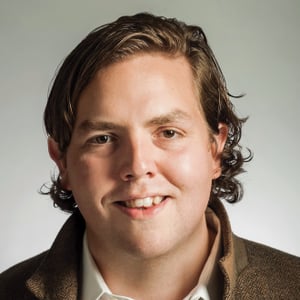
Harry Kalven, Jr. Professor of Law & Faculty Director, Constitutional Law Institute, University of Chicago Law School
William Baude is a Professor of Law and the Faculty Director of the Constitutional Law Institute at the University of Chicago Law School, where he teaches federal courts, constitutional law, and conflict of laws. His current research interests include different aspects of the Fourteenth Amendment (particularly both Section One and Section Three) and the nature of judicial discretion.
Among his other activities Baude is: the co-editor of two textbooks, The Constitution of the United States and Hart & Wechsler's Federal Courts in the Federal System; an Affiliated Scholar at the Center for the Study of Constitutional Originalism; a founding member of the Academic Freedom Alliance; a member of the American Law Institute; an occasional blogger at The Volokh Conspiracy; and a podcaster on Divided Argument. He also recently served on the Presidential Commission on the Supreme Court of the United States.
Professor Baude received his BS in Mathematics from the University of Chicago and his JD from Yale Law School. He then clerked for then-Judge Michael McConnell on the United States Court of Appeals, and Chief Justice John Roberts on the United States Supreme Court. Before joining the Chicago faculty, he was a fellow at the Stanford Constitutional Law Center, and a lawyer in Washington, DC.
Associate, Covington & Burling LLP
Kathryn Bi is an Associate at Covington & Burling LLP. She graduated from the University of Chicago Law School in 2015 and from Dartmouth College in 2009 where she earned Bachelor of Engineering and Bachelor of Arts degrees. Prior to law school Kathryn worked for three years as a chemical engineer at DuPont Corporation in Palo Alto and Genzyme Corporation in Boston.
Senior Associate to the President and Secretary of the University of Arizona
Jon Dudas has served as the Senior Associate to the President and Secretary of the University of Arizona since July 2014.
Mr. Dudas spent fourteen years in service to the U.S. Government, and as head of the USPTO, he led a performance-based government agency with 9,000 employees and a nearly $2 billion annual budget. During his tenure, the USPTO achieved record-level performance in meeting key annual objectives, and led key patent cooperation and development missions with China, India, Europe, Brazil and several other countries.
In addition to holding his post as Director of the USPTO from 2004 – 2009, Mr. Dudas’s public sector experience includes serving as Counsel for Legal Policy and Senior Floor Assistant for The Speaker of the House for the U.S. House of Representatives and Staff Director and Deputy General Counsel for the Committee on the Judiciary. After his appointment as Director of the USPTO, Mr. Dudas was a partner at Foley & Lardner LLP in Washington D.C. and then President of FIRST (For Inspiration and Recognition of Science and Technology), a national nonprofit that works to educate and inspire children to pursue careers in technology, science and innovation. He also served as a member of the Board of Directors for Conversant Intellectual Property Management, Inc., of Ottowa, Ontario. Mr. Dudas holds a J.D. from the University of Chicago and a bachelor’s degree in finance from the University of Illinois.
Chief Counsel, U.S. Chamber Litigation Center
Steven P. Lehotsky has significant experience developing and executing litigation strategies to help businesses and trade associations address their most important regulatory and public-policy challenges.
Before founding Lehotsky Keller LLP, Mr. Lehotsky directed the litigation strategy of the U.S. Chamber of Commerce, the world's leading business federation, where he worked from 2013-2021. While at the U.S. Chamber’s Litigation Center, he served as chief litigation counsel. Mr. Lehotsky led the Chamber's efforts to bring successful challenges to federal, state, and local regulations of business. He also directed the U.S. Chamber's efforts to defend pro-growth regulatory reforms. Mr. Lehotsky also led and implemented the U.S. Chamber’s strategies for filing hundreds of amicus curiae briefs in the U.S. Supreme Court, federal appellate and district courts, and state supreme and appellate courts. He is a frequent speaker at events and conferences on litigation and regulatory trends.
Mr. Lehotsky previously was an attorney at WilmerHale LLP in both the Washington D.C. and Boston offices, where he practiced government and regulatory litigation, appellate litigation, and counseling on constitutional, statutory, and regulatory issues for clients across a wide variety of industry sectors. He also previously practiced as a commercial litigator at Goodwin Procter LLP in Boston.
In addition, Mr. Lehotsky was an Attorney-Adviser in the Office of Legal Counsel of the U.S. Department of Justice from 2006-2009, advising the White House and executive departments and agencies on constitutional and statutory issues relating to national security, immigration, international sanctions under the International Emergency Economic Powers Act and other programs, the response to the 2008 financial crisis, pandemic influenza and infectious-disease mitigation, cybersecurity, and congressional investigations, among many other subjects.
Mr. Lehotsky was a law clerk for Justice Antonin Scalia of the Supreme Court of the United States and Chief Judge Douglas H. Ginsburg of the U.S. Court of Appeals for the District of Columbia Circuit.
Justice, Michigan Supreme Court
Stephen Markman was appointed Justice of the Michigan Supreme Court on October 1, 1999. He served as the Chief Justice from 2017-2019. Before his appointment, he served as Judge on the Michigan Court of Appeals from 1995-1999. Prior to this, he practiced law with the firm of Miller, Canfield, Paddock & Stone in Detroit.
From 1989-1993, Justice Markman served as United States Attorney, or federal prosecutor, in Michigan, after having been nominated by President George H. W. Bush and confirmed by the United States Senate. From 1985-1989, he served as Assistant Attorney General of the United States, after having been nominated by President Ronald Reagan and confirmed by the United States Senate. In that position, he headed the Department of Justice’s Office of Legal Policy, which served as the principal policy development office within the Department, and which coordinated the federal judicial selection process. Prior to this, he served for seven years as Chief Counsel of the United States Senate Subcommittee on the Constitution, and as Deputy Chief Counsel of the United States Senate Judiciary Committee.
Justice Markman has authored articles for such publications as the University of Michigan Journal of Law Reform, the Detroit College of Law Review, the Stanford Law Review, the University of Chicago Law Review, the American Criminal Justice Law Review, the Barrister’s Law Journal, the Harvard Journal of Law & Public Policy, and the American University Law Review. He has also served as a contributing editor of National Review magazine, and has authored chapters in such books as “In the Name of Justice: The Aims of the Criminal Law,” “Still the Law of the Land,” and “Originalism: A Quarter Century of Debate.”
Justice Markman has taught constitutional law at Hillsdale College since 1993. He has served on the Board of Directors of the Western Michigan University Thomas M. Cooley Law School. He traveled to Ukraine on two occasions on behalf of the State Department, to provide assistance in the development of that nation’s post-Soviet constitution. He is a Fellow of the Michigan Bar Foundation, a Master of the Bench of the Inns of Court, and a member of the One Hundred Club. He has spoken before hundreds of youth, civic, charitable, and legal groups throughout Michigan and nationally, and has coached Little League baseball and basketball. He lives with his wife Mary Kathleen in Mason, and has two sons, James and Charles.
Justice Markman was re-elected to the Supreme Court in 2000, 2004, and 2012. His present term expires January 1, 2021.
Professor of Law, University of Chicago Law School
Jennifer Nou is Professor of Law at the University of Chicago Law School. Nou’s main research interests are in administrative law, executive branch dynamics, regulatory policy, and constitutional separation-of-powers. Prior to joining the faculty, she was a Public Law Fellow at the Law School and also worked as a policy analyst and special assistant at the Office of Information and Regulatory Affairs. Nou is a graduate of Yale College and Yale Law School, and received an MPhil in Politics from Oxford University as a Marshall Scholar. After law school, she was a law clerk to Judge Richard Posner of the US Court of Appeals for the Seventh Circuit and then to Justice Stephen Breyer of the US Supreme Court. She is currently a public member of the Administrative Conference of the United States.
Harry Kalven, Jr. Professor of Law & Faculty Director, Constitutional Law Institute, University of Chicago Law School
William Baude is a Professor of Law and the Faculty Director of the Constitutional Law Institute at the University of Chicago Law School, where he teaches federal courts, constitutional law, and conflict of laws. His current research interests include different aspects of the Fourteenth Amendment (particularly both Section One and Section Three) and the nature of judicial discretion.
Among his other activities Baude is: the co-editor of two textbooks, The Constitution of the United States and Hart & Wechsler's Federal Courts in the Federal System; an Affiliated Scholar at the Center for the Study of Constitutional Originalism; a founding member of the Academic Freedom Alliance; a member of the American Law Institute; an occasional blogger at The Volokh Conspiracy; and a podcaster on Divided Argument. He also recently served on the Presidential Commission on the Supreme Court of the United States.
Professor Baude received his BS in Mathematics from the University of Chicago and his JD from Yale Law School. He then clerked for then-Judge Michael McConnell on the United States Court of Appeals, and Chief Justice John Roberts on the United States Supreme Court. Before joining the Chicago faculty, he was a fellow at the Stanford Constitutional Law Center, and a lawyer in Washington, DC.
Associate, Covington & Burling LLP
Kathryn Bi is an Associate at Covington & Burling LLP. She graduated from the University of Chicago Law School in 2015 and from Dartmouth College in 2009 where she earned Bachelor of Engineering and Bachelor of Arts degrees. Prior to law school Kathryn worked for three years as a chemical engineer at DuPont Corporation in Palo Alto and Genzyme Corporation in Boston.
Senior Associate to the President and Secretary of the University of Arizona
Jon Dudas has served as the Senior Associate to the President and Secretary of the University of Arizona since July 2014.
Mr. Dudas spent fourteen years in service to the U.S. Government, and as head of the USPTO, he led a performance-based government agency with 9,000 employees and a nearly $2 billion annual budget. During his tenure, the USPTO achieved record-level performance in meeting key annual objectives, and led key patent cooperation and development missions with China, India, Europe, Brazil and several other countries.
In addition to holding his post as Director of the USPTO from 2004 – 2009, Mr. Dudas’s public sector experience includes serving as Counsel for Legal Policy and Senior Floor Assistant for The Speaker of the House for the U.S. House of Representatives and Staff Director and Deputy General Counsel for the Committee on the Judiciary. After his appointment as Director of the USPTO, Mr. Dudas was a partner at Foley & Lardner LLP in Washington D.C. and then President of FIRST (For Inspiration and Recognition of Science and Technology), a national nonprofit that works to educate and inspire children to pursue careers in technology, science and innovation. He also served as a member of the Board of Directors for Conversant Intellectual Property Management, Inc., of Ottowa, Ontario. Mr. Dudas holds a J.D. from the University of Chicago and a bachelor’s degree in finance from the University of Illinois.
Chief Counsel, U.S. Chamber Litigation Center
Steven P. Lehotsky has significant experience developing and executing litigation strategies to help businesses and trade associations address their most important regulatory and public-policy challenges.
Before founding Lehotsky Keller LLP, Mr. Lehotsky directed the litigation strategy of the U.S. Chamber of Commerce, the world's leading business federation, where he worked from 2013-2021. While at the U.S. Chamber’s Litigation Center, he served as chief litigation counsel. Mr. Lehotsky led the Chamber's efforts to bring successful challenges to federal, state, and local regulations of business. He also directed the U.S. Chamber's efforts to defend pro-growth regulatory reforms. Mr. Lehotsky also led and implemented the U.S. Chamber’s strategies for filing hundreds of amicus curiae briefs in the U.S. Supreme Court, federal appellate and district courts, and state supreme and appellate courts. He is a frequent speaker at events and conferences on litigation and regulatory trends.
Mr. Lehotsky previously was an attorney at WilmerHale LLP in both the Washington D.C. and Boston offices, where he practiced government and regulatory litigation, appellate litigation, and counseling on constitutional, statutory, and regulatory issues for clients across a wide variety of industry sectors. He also previously practiced as a commercial litigator at Goodwin Procter LLP in Boston.
In addition, Mr. Lehotsky was an Attorney-Adviser in the Office of Legal Counsel of the U.S. Department of Justice from 2006-2009, advising the White House and executive departments and agencies on constitutional and statutory issues relating to national security, immigration, international sanctions under the International Emergency Economic Powers Act and other programs, the response to the 2008 financial crisis, pandemic influenza and infectious-disease mitigation, cybersecurity, and congressional investigations, among many other subjects.
Mr. Lehotsky was a law clerk for Justice Antonin Scalia of the Supreme Court of the United States and Chief Judge Douglas H. Ginsburg of the U.S. Court of Appeals for the District of Columbia Circuit.
Justice, Michigan Supreme Court
Stephen Markman was appointed Justice of the Michigan Supreme Court on October 1, 1999. He served as the Chief Justice from 2017-2019. Before his appointment, he served as Judge on the Michigan Court of Appeals from 1995-1999. Prior to this, he practiced law with the firm of Miller, Canfield, Paddock & Stone in Detroit.
From 1989-1993, Justice Markman served as United States Attorney, or federal prosecutor, in Michigan, after having been nominated by President George H. W. Bush and confirmed by the United States Senate. From 1985-1989, he served as Assistant Attorney General of the United States, after having been nominated by President Ronald Reagan and confirmed by the United States Senate. In that position, he headed the Department of Justice’s Office of Legal Policy, which served as the principal policy development office within the Department, and which coordinated the federal judicial selection process. Prior to this, he served for seven years as Chief Counsel of the United States Senate Subcommittee on the Constitution, and as Deputy Chief Counsel of the United States Senate Judiciary Committee.
Justice Markman has authored articles for such publications as the University of Michigan Journal of Law Reform, the Detroit College of Law Review, the Stanford Law Review, the University of Chicago Law Review, the American Criminal Justice Law Review, the Barrister’s Law Journal, the Harvard Journal of Law & Public Policy, and the American University Law Review. He has also served as a contributing editor of National Review magazine, and has authored chapters in such books as “In the Name of Justice: The Aims of the Criminal Law,” “Still the Law of the Land,” and “Originalism: A Quarter Century of Debate.”
Justice Markman has taught constitutional law at Hillsdale College since 1993. He has served on the Board of Directors of the Western Michigan University Thomas M. Cooley Law School. He traveled to Ukraine on two occasions on behalf of the State Department, to provide assistance in the development of that nation’s post-Soviet constitution. He is a Fellow of the Michigan Bar Foundation, a Master of the Bench of the Inns of Court, and a member of the One Hundred Club. He has spoken before hundreds of youth, civic, charitable, and legal groups throughout Michigan and nationally, and has coached Little League baseball and basketball. He lives with his wife Mary Kathleen in Mason, and has two sons, James and Charles.
Justice Markman was re-elected to the Supreme Court in 2000, 2004, and 2012. His present term expires January 1, 2021.
Professor of Law, University of Chicago Law School
Jennifer Nou is Professor of Law at the University of Chicago Law School. Nou’s main research interests are in administrative law, executive branch dynamics, regulatory policy, and constitutional separation-of-powers. Prior to joining the faculty, she was a Public Law Fellow at the Law School and also worked as a policy analyst and special assistant at the Office of Information and Regulatory Affairs. Nou is a graduate of Yale College and Yale Law School, and received an MPhil in Politics from Oxford University as a Marshall Scholar. After law school, she was a law clerk to Judge Richard Posner of the US Court of Appeals for the Seventh Circuit and then to Justice Stephen Breyer of the US Supreme Court. She is currently a public member of the Administrative Conference of the United States.

Supreme Court Round Up
Tallahassee, Florida2015 ABA Annual Meeting Report: Programming
From July 30th to August 4th, the American Bar Association met in Chicago for its...
Limiting Federal Power: Legal and Ethical Lessons from Practicing Indian Law
Denver, ColoradoThe Federalist Paper, Summer 2015
Dear Friend of the Society, We are pleased to bring you the fall issue of The...
Judge Douglas H. Ginsburg on Antitrust and Innovation
Stanford, CaliforniaIs Administrative Law Unlawful?
Denver, ColoradoPanel IV: Innovation and Inequality: Conservative and Libertarian Perspectives
Frank H. Easterbrook, Richard A. Epstein, Elizabeth Kregor, John O. McGinnis
We are in an age of accelerating technology but many fear we are also in...
Panel IV: Innovation and Inequality: Conservative and Libertarian Perspectives
Frank H. Easterbrook, Richard A. Epstein, Elizabeth Kregor, John O. McGinnis
We are in an age of accelerating technology but many fear we are also in...
Panel I: Innovation and the Administrative State
William Baude, Kathryn Bi, Jon Dudas, Steven Lehotsky, Steve J. Markman, Jennifer Nou
Regulation can be a significant barrier to innovation, protecting incumbents and making it harder to...
Panel I: Innovation and the Administrative State
William Baude, Kathryn Bi, Jon Dudas, Steven Lehotsky, Steve J. Markman, Jennifer Nou
Regulation can be a significant barrier to innovation, protecting incumbents and making it harder to...