
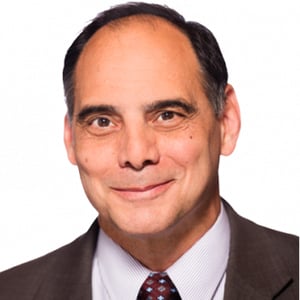
Vice President, Kathryn and Shelby Cullom Davis Institute for National Security and Foreign Policy, and the E. W. Richardson Fellow, The Heritage Foundation
James Jay Carafano, a leading expert in national security and foreign policy challenges, is the vice president of Heritage's Kathryn and Shelby Cullom Davis Institute for National Security and Foreign Policy and the E. W. Richardson Fellow.
Carafano is an accomplished historian and teacher as well as a prolific writer and researcher. His most recent publication is an e-book, “Surviving the End”, which addresses emergency preparedness. He also authored “Wiki at War: Conflict in a Socially Networked World” (Texas A&M University Press, 2012), a survey of the revolutionary impact of the Internet age on national security. He was selected from thousands to speak on cyber warfare at the 2014 South by Southwest (SXSW) Interactive Conference in Austin, Texas, the nation’s premier tech and social media conference.
Before assuming responsibility for Heritage’s entire defense and foreign policy team in December 2012, Carafano had served as deputy director of the Davis Institute as well as director of its Douglas and Sarah Allison Center for Foreign Policy Studies since 2009.
His recent research has focused on developing the national security required to secure the long-term interests of the United States -- protecting the public, providing for economic growth and preserving civil liberties.
He is editor of a book series, The Changing Face of War, which examines how emerging political, social, economic and cultural trends will affect the nature of armed conflict. From 2012 to 2014, he served on the Homeland Security Advisory Council convened by the secretary of the U.S. Department of Homeland Security.
Carafano, a 25-year Army veteran with a master’s and doctorate from Georgetown University, joined Heritage in 2003 as a senior research fellow in homeland security and missile defense. He worked with Kim R. Holmes, his predecessor as vice president and director of Davis Institute, to produce Heritage’s groundbreaking documentary film “33 Minutes: Protecting America in the New Missile Age.”
Carafano now directs Heritage's team of foreign and defense policy experts in three centers on the front lines of international affairs: the Allison Center, the Asian Studies Center, the Margaret Thatcher Center for Freedom, and the Center for National Defense.
Carafano also is president of a nonprofit organization, Esprit de Corps, which educates the public about veteran affairs. In this capacity he co-produced and co-wrote the documentary “Veteran Nation,” an official selection of the 2013 G.I. Film Festival.
Before coming to Heritage, Carafano was a senior fellow at the Center for Strategic and Budgetary Assessments, a Washington policy institute dedicated to defense issues.
In his Army career, Carafano rose to the rank of lieutenant colonel. He served in Europe, Korea and the United States. His assignments included head speechwriter for the Army Chief of Staff, the service's highest-ranking officer. Before retiring, Carafano was executive editor of Joint Force Quarterly, the Defense Department's premiere professional military journal.
A graduate of West Point, Carafano holds a master's degree and a doctorate from Georgetown University as well as a master's degree in strategy from the U.S. Army War College.
He is an adjunct professor at Georgetown University and serves as a visiting professor at National Defense University. He currently sits on the Board of Advisors for Daniel Morgan Academy. He previously served as an assistant professor at the U.S. Military Academy in West Point, N.Y., and as director of military studies at the Army's Center of Military History. He taught at Mount Saint Mary College in New York and was a fleet professor at the U.S. Naval War College.
He is the co-author with Paul Rosenzweig of Winning the Long War: Lessons from the Cold War for Defeating Terrorism and Preserving Freedom (2005). The authors, first to coin the term “the long war,” argued that a successful strategy requires a balance of prudent military and security measures, continued economic growth, zealous protection of civil liberties and prevailing in the “war of ideas” against terrorist ideologies.
Carafano also co-authored a textbook, Homeland Security (McGraw-Hill, second edition 2012), designed as a practical introduction to everyday life in the era of terrorism. The textbook addresses such key details as the roles of first responders and volunteers, family preparedness techniques and in-depth looks at weapons of mass destruction.
His other works include Private Sector/Public Wars: Contracting in Combat--Iraq, Afghanistan and Future Conflicts (2008); G.I. Ingenuity: Improvisation, Technology and Winning World War II (2006); Waltzing Into the Cold War (2002); and After D-Day (2000), a Military Book Club main selection.
As an expert on foreign affairs, defense, intelligence and homeland security issues, Carafano has testified many times before Congress.
He is a regular guest analyst for the major U.S. network and cable television news organizations, from ABC to Fox to MSNBC to PBS, as well as such outlets as National Public Radio, Pajamas TV, Voice of America and the History Channel. From SkyNews to Al Jazeera, he also has appeared on TV news programs originating in Australia, Austria, Canada, China, Estonia, France, Great Britain, Greece, Hong Kong, Ireland, Iran, Japan, Norway, Poland, Portugal, Russia, Spain, Sweden and Vietnam.
Carafano’s op-ed columns and commentary are published widely, including the Baltimore Sun, Boston Globe, New York Post, Philadelphia Inquirer, USA Today and Washington Times in addition to Forbes.
He served on the board of trustees of the Marine Corps University Foundation and advisory boards for the West Point Center of Oral History, the Hamilton Society, the Spirit of America, and the Operation Renewed Hope Foundation, which serves homeless veterans. He formerly was a senior fellow at George Washington University's Homeland Security Policy Institute. He also previously served on the congressionally-mandated Advisory Panel on Department of Defense Capabilities for Support of Civil Authorities, the National Academy's Board on Army Science and Technology and the Department of the Army Historical Advisory Committee.
In 2005, he received Heritage's prestigious W. Glenn and Rita Ricardo Campbell Award. The honor goes to the staff member determined to have made “an outstanding contribution to the analysis and promotion of the free society.”

Professor of Law, Antonin Scalia Law School, George Mason University
ILYA SOMIN is Professor of Law at George Mason University and the B. Kenneth Simon Chair in Constitutional Studies at the Cato Institute. His research focuses on constitutional law, property law, democratic theory, federalism, and migration rights. He is the author of Free to Move: Foot Voting, Migration, and Political Freedom (Oxford University Press, revised and expanded edition, 2022), Democracy and Political Ignorance: Why Smaller Government is Smarter (Stanford University Press, revised and expanded second edition, 2016), and The Grasping Hand: Kelo v. City of New London and the Limits of Eminent Domain (University of Chicago Press, 2015, rev. paperback ed., 2016), coauthor of A Conspiracy Against Obamacare: The Volokh Conspiracy and the Health Care Case (Palgrave Macmillan, 2013), and co-editor of Eminent Domain: A Comparative Perspective (Cambridge University Press, 2017). Democracy and Political Ignorance has been translated into Italian and Japanese.
Somin’s work has appeared in numerous scholarly journals, including the Yale Law Journal, Stanford Law Review, Northwestern University Law Review, Georgetown Law Journal, Critical Review, and others. Somin has also published articles in a variety of popular press outlets, including the New York Times, Washington Post, Wall Street Journal, Los Angeles Times, CNN, NBC, The Atlantic, USA Today, Boston Globe, US News and World Report, South China Morning Post, National Law Journal and Reason. He has been quoted or interviewed by the New York Times, Washington Post, Wall Street Journal, Time, Newsweek, The Economist, the Christian Science Monitor, the Financial Times, The Guardian, the Associated Press, CBS, MSNBC, NPR, BBC, Reuters, the Canadian Broadcasting Corporation, the Australian Broadcasting Corporation, Radio Free Europe/Radio Liberty, Al Jazeera, and the Voice of America, among other media.
Somin’s writings have been cited in decisions by the United States Supreme Court, multiple state supreme courts and lower federal courts, and the Supreme Court of Israel. He is co-counsel for the plaintiffs in VOS Selections, Inc. v. Trump, a case challenging the constitutionality of President Trump’s “Liberation Day” tariffs. Somin has testified on the use of drones for targeted killing in the War on Terror before the US Senate Judiciary Subcommittee on the Constitution, Civil Rights, and Human Rights. In 2009, he testified on property rights issues at the United States Senate Judiciary Committee confirmation hearings for Supreme Court Justice Sonia Sotomayor. Somin writes regularly for the popular Volokh Conspiracy law and politics blog, now affiliated with Reason magazine (previously affiliated with the Washington Post from 2014 to 2017). From 2006 to 2013, he served as Co-Editor of the Supreme Court Economic Review, one of the country’s top-rated law and economics journals.
Somin has served as a visiting professor at the University of Pennsylvania Law School. He has also been a visiting professor or scholar at the Georgetown University Law Center, the University of Hamburg, Germany, the University of Torcuato Di Tella in Buenos Aires, Argentina, Uriel Reichman University in Israel, and Zhengzhou University in China. He is a University Affiliate of the Schar School of Policy and Government at George Mason University, and an affiliated faculty member of the George Mason University Institute for Immigration Research. Before joining the faculty at George Mason, Somin was the John M. Olin Fellow in Law at Northwestern University Law School in 2002-2003. In 2001-2002, he clerked for the Hon. Judge Jerry E. Smith of the U.S. Court of Appeals for the Fifth Circuit. Professor Somin earned his B.A., Summa Cum Laude, at Amherst College, M.A. in Political Science from Harvard University, and J.D. from Yale Law School.
Professor of Law and the Vice Dean for Academic Affairs, University at Buffalo School of Law
Professor S. Todd Brown is a Professor of Law and the Vice Dean for Academic Affairs. Prior to joining the law school, Professor Brown was the managing partner of a small business, an attorney with WilmerHale in Washington, D.C., and Jones Day in Washington and Cleveland, and a Freedman Fellow at Temple University. He teaches bankruptcy, contracts, corporations, torts, mass torts, and related courses at the School of Law.
Brown is a frequent author and lecturer on bankruptcy trusts, chapter 11, complex litigation and mass torts. His scholarship has been cited in a variety of state and federal opinions, and he has testified concerning these issues before the U.S. House Judiciary Committee, state legislatures, the ABA Task Force on Asbestos and the Bankruptcy Trusts, and the American Bankruptcy Institute's Commission to Reform Chapter 11. His current research focuses on legal rules concerning corruption, fraud and abuse.
Brown received his J.D. in 1999 from Columbia Law School, where he served as articles editor of the Columbia Business Law Review, and an LL.M. in 2009 from the Beasley School of Law at Temple University. Prior to law school, he received his B.A. in philosophy, summa cum laude, from Loyola University in New Orleans.
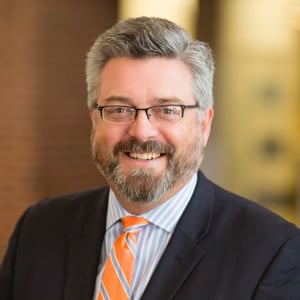
Carl L. Vacketta Professor of Law, University of Illinois College of Law
Considered one of the leading bankruptcy scholars of his generation, Professor Brubaker is the Carl L. Vacketta Professor of Law. He served as Interim Dean of the College of Law in 2008-09 after serving as Associate Dean for Academic Affairs for the previous two years. Professor Brubaker rejoined the Illinois faculty in 2004, returning to his alma mater after serving as a member of the faculty at the Emory University School of Law in Atlanta, Georgia for 10 years, where he was also the faculty adviser to the Emory Bankruptcy Developments Journal.
After earning an undergraduate degree with Bronze Tablet distinction at Illinois, Professor Brubaker passed the CPA exam before pursuing a dual JD/MBA degree. Professor Brubaker received his JD summa cum laude from the College of Law, where he was a member of the Order of the Coif, a Harno Fellow, and recipient of Rickert Awards for Excellence in Academic Achievement and in Legal Writing. He also served as articles editor for the University of Illinois Law Review.
Following graduation, Professor Brubaker clerked for Judge James K. Logan of the United States Court of Appeals for the Tenth Circuit. Later, he practiced in the bankruptcy and corporate reorganization group of Squire, Sanders & Dempsey (now Squire Patton Boggs) in Cleveland, Ohio, where he gained extensive experience in large- and medium-sized Chapter 11 bankruptcy reorganization proceedings, including prepackaged, leveraged buy-out, and mass-tort bankruptcies.
Professor Brubaker began teaching at the College of Law, later joining the Emory faculty in 1995. He is co-author of Bankruptcy Law: Principles, Policies, and Practice (with Charles J. Tabb) and has written dozens of journal articles and essays exploring all facets of federal bankruptcy law, particularly Chapter 11 corporate reorganizations and the complex jurisdictional and procedural aspects of federal bankruptcy proceedings. He was awarded the 2003 Editors’ Prize from The American Bankruptcy Law Journal for his article, “Of State Sovereign Immunity and Prospective Remedies: The Bankruptcy Discharge as Statutory Ex parte Young Relief,” 76 American Bankruptcy Law Journal 461 (2002).
Professor Brubaker is the editor-in-chief and a contributing author for West’s Bankruptcy Law Letter, and he has served on the editorial advisory boards of The American Bankruptcy Law Journal and the American Bankruptcy Institute Law Review. He is a member of the American Law Institute and a Fellow of the American College of Bankruptcy, for which he currently serves as the Scholar-in-Residence. Professor Brubaker has been a member of the executive committee of the board of directors for the American Bankruptcy Institute, and he was a member of the advisory committee on 363 sales for the ABI’s 2014 Commission to Study the Reform of Chapter 11.
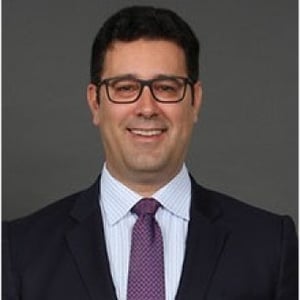
Partner, DLA Piper Global Law Firm
Dan Prieto focuses his practices on representing high-profile companies in successful chapter 11 reorganizations, including by assisting numerous companies in achieving permanent resolutions of mass asbestos tort liabilities through section 524(g) plans of reorganization. He also represents clients in out-of-court restructurings and distressed M&A transactions.
Prieto represented Bondex, Kaiser Aluminum and USG Corporation in their respective section 524(g) chapter 11 reorganizations that fully resolved their asbestos liabilities, and RadioShack in its successful chapter 11 reorganization, including in connection with a going concern sale of a substantial portion of RadioShack's business. Recently, he represented the owners of the Vogtle nuclear plant in connection with Westinghouse's chapter 11 case and a guarantee provided by Toshiba. He is also represented Hanson Permanente Cement and Kaiser Gypsum in chapter 11 cases they filed to resolve their asbestos and environmental liabilities. Other significant engagements include representing Turnbridge Capital Partners in its separate acquisitions of substantially all the assets of Diverse Energy and Abutec Industries and representing Highbrook Investment Management as the largest creditor in the chapter 11 cases of certain single asset real estate subsidiaries of American Spectrum Realty, Inc.
Professor of Law and the Vice Dean for Academic Affairs, University at Buffalo School of Law
Professor S. Todd Brown is a Professor of Law and the Vice Dean for Academic Affairs. Prior to joining the law school, Professor Brown was the managing partner of a small business, an attorney with WilmerHale in Washington, D.C., and Jones Day in Washington and Cleveland, and a Freedman Fellow at Temple University. He teaches bankruptcy, contracts, corporations, torts, mass torts, and related courses at the School of Law.
Brown is a frequent author and lecturer on bankruptcy trusts, chapter 11, complex litigation and mass torts. His scholarship has been cited in a variety of state and federal opinions, and he has testified concerning these issues before the U.S. House Judiciary Committee, state legislatures, the ABA Task Force on Asbestos and the Bankruptcy Trusts, and the American Bankruptcy Institute's Commission to Reform Chapter 11. His current research focuses on legal rules concerning corruption, fraud and abuse.
Brown received his J.D. in 1999 from Columbia Law School, where he served as articles editor of the Columbia Business Law Review, and an LL.M. in 2009 from the Beasley School of Law at Temple University. Prior to law school, he received his B.A. in philosophy, summa cum laude, from Loyola University in New Orleans.
Carl L. Vacketta Professor of Law, University of Illinois College of Law
Considered one of the leading bankruptcy scholars of his generation, Professor Brubaker is the Carl L. Vacketta Professor of Law. He served as Interim Dean of the College of Law in 2008-09 after serving as Associate Dean for Academic Affairs for the previous two years. Professor Brubaker rejoined the Illinois faculty in 2004, returning to his alma mater after serving as a member of the faculty at the Emory University School of Law in Atlanta, Georgia for 10 years, where he was also the faculty adviser to the Emory Bankruptcy Developments Journal.
After earning an undergraduate degree with Bronze Tablet distinction at Illinois, Professor Brubaker passed the CPA exam before pursuing a dual JD/MBA degree. Professor Brubaker received his JD summa cum laude from the College of Law, where he was a member of the Order of the Coif, a Harno Fellow, and recipient of Rickert Awards for Excellence in Academic Achievement and in Legal Writing. He also served as articles editor for the University of Illinois Law Review.
Following graduation, Professor Brubaker clerked for Judge James K. Logan of the United States Court of Appeals for the Tenth Circuit. Later, he practiced in the bankruptcy and corporate reorganization group of Squire, Sanders & Dempsey (now Squire Patton Boggs) in Cleveland, Ohio, where he gained extensive experience in large- and medium-sized Chapter 11 bankruptcy reorganization proceedings, including prepackaged, leveraged buy-out, and mass-tort bankruptcies.
Professor Brubaker began teaching at the College of Law, later joining the Emory faculty in 1995. He is co-author of Bankruptcy Law: Principles, Policies, and Practice (with Charles J. Tabb) and has written dozens of journal articles and essays exploring all facets of federal bankruptcy law, particularly Chapter 11 corporate reorganizations and the complex jurisdictional and procedural aspects of federal bankruptcy proceedings. He was awarded the 2003 Editors’ Prize from The American Bankruptcy Law Journal for his article, “Of State Sovereign Immunity and Prospective Remedies: The Bankruptcy Discharge as Statutory Ex parte Young Relief,” 76 American Bankruptcy Law Journal 461 (2002).
Professor Brubaker is the editor-in-chief and a contributing author for West’s Bankruptcy Law Letter, and he has served on the editorial advisory boards of The American Bankruptcy Law Journal and the American Bankruptcy Institute Law Review. He is a member of the American Law Institute and a Fellow of the American College of Bankruptcy, for which he currently serves as the Scholar-in-Residence. Professor Brubaker has been a member of the executive committee of the board of directors for the American Bankruptcy Institute, and he was a member of the advisory committee on 363 sales for the ABI’s 2014 Commission to Study the Reform of Chapter 11.
Partner, DLA Piper Global Law Firm
Dan Prieto focuses his practices on representing high-profile companies in successful chapter 11 reorganizations, including by assisting numerous companies in achieving permanent resolutions of mass asbestos tort liabilities through section 524(g) plans of reorganization. He also represents clients in out-of-court restructurings and distressed M&A transactions.
Prieto represented Bondex, Kaiser Aluminum and USG Corporation in their respective section 524(g) chapter 11 reorganizations that fully resolved their asbestos liabilities, and RadioShack in its successful chapter 11 reorganization, including in connection with a going concern sale of a substantial portion of RadioShack's business. Recently, he represented the owners of the Vogtle nuclear plant in connection with Westinghouse's chapter 11 case and a guarantee provided by Toshiba. He is also represented Hanson Permanente Cement and Kaiser Gypsum in chapter 11 cases they filed to resolve their asbestos and environmental liabilities. Other significant engagements include representing Turnbridge Capital Partners in its separate acquisitions of substantially all the assets of Diverse Energy and Abutec Industries and representing Highbrook Investment Management as the largest creditor in the chapter 11 cases of certain single asset real estate subsidiaries of American Spectrum Realty, Inc.
U.S. Court of Appeals, Ninth Circuit
Jay Scott Bybee is a federal judge on the United States Court of Appeals for the Ninth Circuit. He has published numerous articles in law journals and has taught in law school. His primary research interests are in constitutional and administrative law.
Interim Dean; SUNY Distinguished Professor; Bridget and Thomas B, University at Buffalo School of Law
On December, 2014, SUNY Distinguished Professor James A. Gardner was named interim dean by Provost Charles F. Zukoski.
A member of the law faculty since 2001, Gardner is a highly regarded specialist in constitutional and election law. He is a prolific scholar who has published six books, as well as numerous book chapters, articles and review essays. Gardner recently was recognized as one of the 10 most frequently cited scholars in the field of election law by Election Law blog.
He has served as the director of the law school’s Jaeckle Center for Law, Democracy, and Governance and formerly served as the school’s vice dean for academic affairs, 2005-2012.
Gardner has served as the elected chair of the School of Law’s ad hoc Strategic Planning Committee, which was charged with evaluating the current state of the school and identifying strategies to preserve and enhance its strengths moving forward.
His most recent publications include Election Law in the American Political System (Aspen), What Are Campaigns For? The Role of Persuasion in Electoral Law and Politics (Oxford University Press) and a new revision of his Legal Argument: The Structure and Language of Effective Advocacy (LexisNexis).
He has taught at Western New England University, William and Mary, the University of Connecticut and Florida State University, and in 2012 held the Fulbright Visiting Research Chair in the Theory and Practice of Constitutionalism and Federalism at McGill University in Montreal.
Gardner received his BA from Yale University in 1980 and his J.D. from the University of Chicago in 1984. From 1984 to 1988, he practiced law in the Civil Division of the U.S. Department of Justice in Washington, D.C.

Former President & CEO, The Federalist Society for Law and Public Policy Studies
Eugene B. Meyer, former President and CEO of the Federalist Society, has served as Executive Director, CEO, and/or President of the organization for more than 40 years. He is responsible for shepherding the organization from a small group of law students to a community of 90,000 lawyers, law students, academics, judges, and others interested in the rule of law. The Society now includes a Student Chapter at nearly every ABA-accredited law school in the country and Lawyers Chapters in 220 major cities across the nation. Gene earned his B.A. in history at Yale in 1975 and his M.A. in political science from the London School of Economics in 1976. Gene currently serves on the boards of the U.S. Chess Center, the Holman Foundation, the Sarah Scaife Foundation, and the advisory board of the Adam Smith Society. He holds the title of International Chess Master.
Associate Professor and Associate Director, Rose Institute of St, Claremont McKenna College
Dr. Ken Miller became Associate Director of the Rose Institute in 2009. He has served as a member of CMC’s Government faculty since 2003. Dr. Miller’s research focuses on state government institutions, with emphasis on direct democracy (initiative, referendum, and recall) and the interaction between law and politics. His publications include Direct Democracy and the Courts (Cambridge University Press 2009) and a co-edited volume The New Political Geography of California(Berkeley Public Policy Press 2008). Dr. Miller has worked with Rose Institute students on several research projects, including the 24-state Miller-Rose Institute Initiative Database. Dr. Miller returns this year after a year-long sabbatical at Princeton University in Princeton, New Jersey.

Professor of Law, Notre Dame Law School
Professor Derek Muller is a nationally-recognized scholar in the field of election law. His research focuses on the role of states in the administration of federal elections, the constitutional contours of voting rights and election administration, the limits of judicial power in the domain of elections, and the Electoral College.
He has published more than two dozen academic works, and his op-eds have appeared in the New York Times, the Los Angeles Times, and the Wall Street Journal. He has testified before Congress, and he is a contributor at the Election Law Blog. He is a co-author on a Federal Courts casebook published by Carolina Academic Press. He is also the co-reporter on a new Restatement of the Law, Election Litigation, an effort led by the American Law Institute.
Professor Muller teaches Election Law, Civil Procedure, and Evidence.

The Constitutionality of Birthright Citizenship
Buffalo Lawyers Chapter
Buffalo, NYMass Tort Bankruptcy Cases
Steven Todd Brown, Ralph Brubaker, Dan Prieto
Companies are increasingly resorting to the bankruptcy system to resolve mass tort litigation. Recent examples...
Mass Tort Bankruptcy Cases
TeleforumForty Years Later: The Brennan Article and State Constitutions
Jay S. Bybee, James A. Gardner, Eugene B. Meyer, Kenneth P. Miller, Derek T. Muller
In 1977, the publication of Justice William Brennan’s article, “State Constitutions and the Protection of...
Whether Congress Should Pass Legislation to Combat Man-Made Climate Change
Learning to Talk About Race
Politics and Policy: Moving Toward a Coherent Immigration Reform